


RandallPnkFloyd
-
Posts
533 -
Joined
-
Last visited
Content Type
Profiles
Joomla Posts 1
Chicago Cubs Videos
Chicago Cubs Free Agent & Trade Rumors, Notes, & Tidbits
2026 Chicago Cubs Top Prospects Ranking
News
2023 Chicago Cubs Draft Picks
Guides & Resources
2024 Chicago Cubs Draft Picks
The Chicago Cubs Players Project
2025 Chicago Cubs Draft Pick Tracker
2026 Chicago Cubs Draft Tracker: Picks & Bonuses
Blogs
Events
Forums
Store
Gallery
Everything posted by RandallPnkFloyd
-
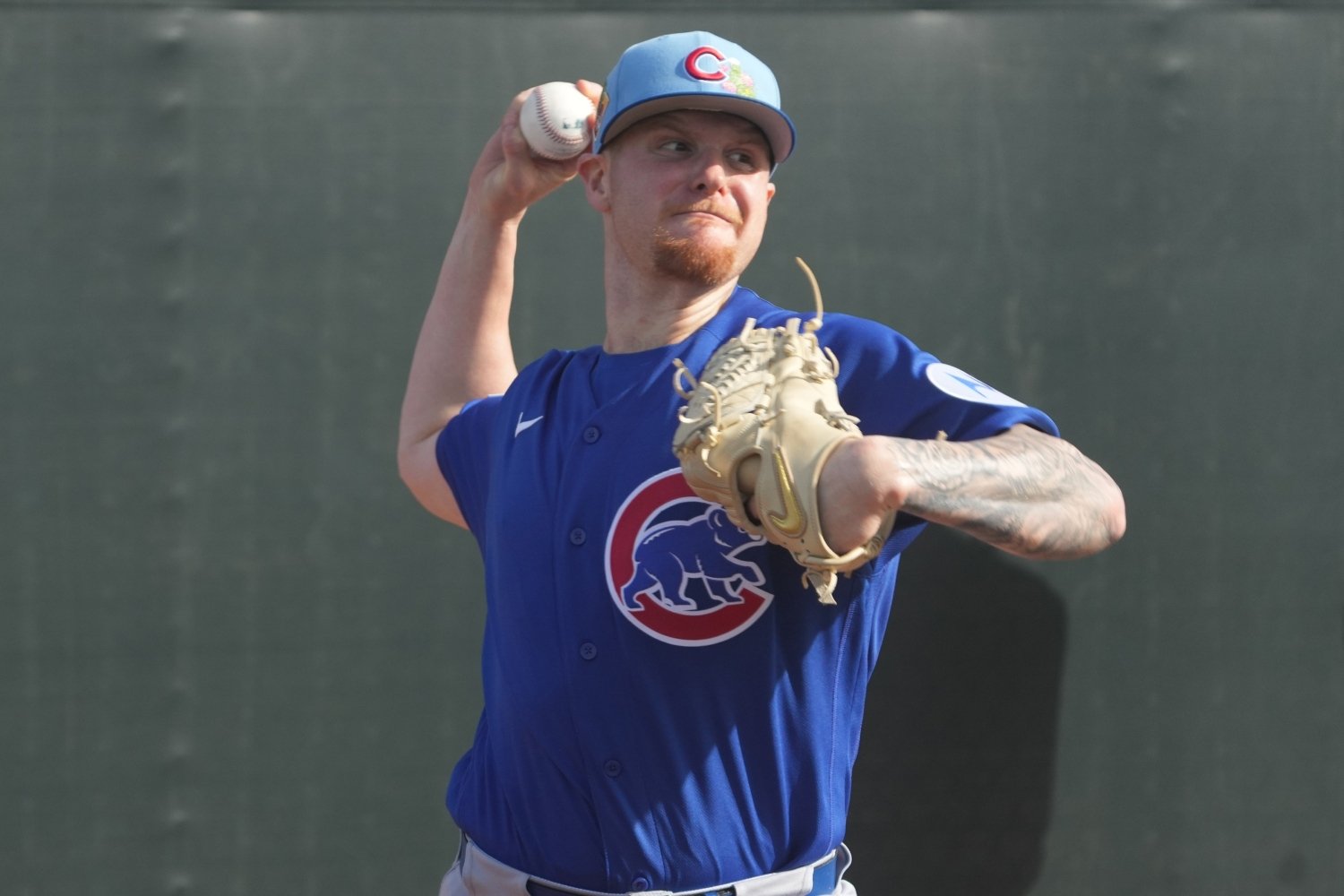 The buzz around the 2026 Chicago Cubs is real. They have a new marquee bat in Alex Bregman and a new marquee arm in Edward Cabrera, and are coming off a postseason berth primed to compete for a division title. Among their burgeoning set of high-end talents, one stands out: Cade Horton. It's difficult to overstate how much of a success Horton's rookie campaign was. Across 22 starts at the major-league level last year, he pitched to an 11-4 record, a 2.67 ERA, and a 20.4% strikeout rate, with a 6.9 percent walk rate. Even with room for growth in missing bats and a fractured rib that cut his season short, Horton finished second in the National League Rookie of the Year voting to Atlanta's Drake Baldwin. It sets the stage for one of the most hyped pitching prospects that the organization has seen in decades. That might seem like hyperbole; it isn't. The Cubs have done well in drafting and developing hitters over the last decade-plus. They've been able to acquire prospects from the lower levels of other organizations' minor-league ranks and do the same. Pitching, however, has not been as consistent an area of excellence. The odd reclamation project or mid-rotation arm notwithstanding, it's been an area in which the team has lacked going back multiple generations of front office leadership. That perception of the Cubs and their pitching development could shift dramatically if Horton is able to continue the ascent he began after being selected 7th overall in 2022. We know that the upside is beyond what Horton turned in across the 118 innings of his rookie campaign, particularly in regard to the strikeouts. While the control was a healthy element, he'd been running strikeout rates between 28% and 30% in the minor leagues. Generating whiffs outside the strike zone should help him to do just that. Opponents made contact on about 52% of their out-of-zone swings against Horton at the big-league level last year; he's shown the ability to generate whiffs much more often on chase pitches. Horton isn't an overwhelming strikeout pitcher, but by virtue of generating more swings with his secondary offerings alone, that number should increase. What should work farther in Horton's favor is the continued development of his changeup. Once thought of as a tertiary pitch, that offering has become arguably his best. Matt Trueblood examined this as a concept following Horton's 10-strikeout outburst against Cleveland on Monday. In that outing, Horton garnered whiffs on 11 of 15 changeups thrown, which could be indicative of where some of that additional whiff might be found. Ultimately, though, the projections don't love Horton to build on that aspect of his game too much. The following is where the various models have him performing in 2026: Steamer: 24 GS, 8-9, 4.34 ERA, 4.40 FIP, 20.4 K%, 7.9 BB%, 1.2 fWAR ZiPS: 25 GS, 8-7, 3.89 ERA, 4.06 FIP, 21.2 K%, 7.2 BB%, 1.6 fWAR ATC: 23 GS, 9-7, 3.91 ERA, 4.14 FIP, 20.6 K%, 7.5 BB%, 1.7 fWAR THE BAT X: 23 GS, 8-8, 4.06 ERA, 3.89 FIP, 21.0 K%, 7.5 BB%, 2.3 fWAR OOPSY: 24 GS, 8-8, 3.96 ERA, 4.12 FIP, 22.4 K%, 8.3 BB%, 1.7 fWAR Pitching projections are notoriously difficult to gauge, given the position's reliance on other factors beyond their own skill set. Nevertheless, there's a fair bit of consistency here, and each projection speaks to a central idea: Horton will experience regression in run prevention, with essentially similar peripheral numbers. You could do worse than a season like that. A season of 23-25 starts, an ERA around 4.00, and a strikeout rate working its way slightly more toward average would keep Horton in the thicket of mid-rotation starters. At the same time, it's fair to hope for more than that. Horton's fastball-sweeper combination was already going to be adept at getting outs. Use that combination against right-handed hitters, offer the changeup against lefties, and you're in a good spot. If Horton can sustain the results he's getting in the spring on that changeup, you're not looking for middle-tier results. You're looking for something that finishes closer to the top tier of all starting pitchers in the sport. It doesn't feel unrealistic to expect that out of Horton in 2026. His first taste of big-league action proved that he's a resourceful, intense competitor with plus stuff. If he stays healthy, those traits should carry him to a stronger 2026 than the raw numbers imply.
 -
Image courtesy of © Mark J. Rebilas-Imagn Images The Chicago Cubs came into this offseason with questions. They'll enter the next one with different questions. None of those, however, surround the shortstop position. For the last three years, and at least for this next one, the position belongs to Dansby Swanson. Swanson had an interesting season. We'll talk about the enigmatic nature of his offense throughout his career, but the stat sheet looks fantastic in certain areas—and less great in others. He slashed just .244/.300/.417, with a 26.0% strikeout rate that was his highest since 2022 and a walk rate that declined for a third consecutive season (7.3%). He did hit 24 home runs and steal 20 bases, while showcasing some impressive power metrics. But when all was said and done, his wRC+ checked in as essentially average: 99, where 100 is exactly average and higher is better. Lucky for him, his status as the team's starting shortstop isn't in any kind of question. Nico Hoerner resumes duties as the backup, while Matt Shaw could fill in in a pinch. It's a position of certainty and of depth, but that doesn't mean it's an ideal one for the Cubs ahead of the new season. SHORTSTOPS AT A GLANCE Starter: Dansby Swanson Backup: Nico Hoerner Depth & Prospects: Matt Shaw, Scott Kingery, Ben Cowles, Jefferson Rojas fWAR Ranking Last Year: 15th (3.3) fWAR Projection This Year: 13th (3.9) THE GOOD Swanson had his best power season since he signed with the Cubs, by a pretty wide margin. That's not completely reflected in his ISO, as a .173 mark in 2025 just barely edges the .172 figure he posted in 2023, and 24 home runs is not that much more than 22 home runs. Under the hood, though, better things were happening. Each of Swanson's barrel rate, hard-hit rate, and average exit velocity were his highest in a Cub uniform. These are objectively good things, despite what the rest of the stat sheet might say. He was in heavily on the fastballs that are a prerequisite for his success (more on that later), with his pitch selection helping to drive regular contributions in the power game. He also produced the results he did in a year when the ball was a bit less lively than it's been at any time in the last decade. The drag coefficient on the ball was higher than at any point since the very earliest days of the Statcast Era. In this chart, the higher a daily datum is, the less well the ball carried that day, on average. Swanson also continued to be an above-average defender. The numbers were tamped a bit by some early struggles, but Outs Above Average still liked him for 4 OAA. The good is furthered by the fact that the team has a built-in backup to Swanson in the form of Nico Hoerner. Flipped over to the keystone upon Swanson's arrival, Hoerner is more than capable of providing stability at the position in the event of an injury or some extra rest, while Matt Shaw would then slide into Hoerner's vacated spot at second in either instance. There's a bit of unconventional depth here, but it all speaks to the idea that this is one of the more stable positions on the roster. THE BAD Swanson is an immensely difficult player to figure out. At the same time, he's also a very easy player to figure out. Let me explain. The best years of Dansby Swanson's career have come when he's hunting fastballs. In 2021, he was a 99 wRC+ player, but had a .201 ISO. It was the only time in his career his isolated power number eclipsed that .200 mark. In 2022, he went for a wRC+ of 117 while still maintaining much of that power; his ISO was .170 and he hit 25 home runs. He followed that with a 105 wRC+ campaign and a .172 ISO in his first year with the Cubs. Those seasons saw his three highest rates of swinging at fastballs (prior to 2025). The 2022 season is particularly notable, as he swung at fastballs more than any other pitch type (53.6%). He'd never done that over a full season—until 2025. Swanson swung at 55.6% of fastballs in 2025. He maintained a hard-hit rate of 56.1%, found the barrel 13.8% of the time, and carried a .483 slugging percentage against heaters. The issue with that, dear reader, lies here: Swanson became so obsessed with swinging at them that he lost his grip on the zone. There was a threshold somewhere, and Swanson crossed it with his aggression against that specific pitch type. The outcomes were positive when he made contact inside the zone, but swinging at the heater outside the zone (and missing more often when he did so) cut into the benefits of that adjustment quite a bit. Additionally, Swanson continued a trend that began when he arrived in Chicago. At 17.3%, his opposite-field percentage was the lowest of his career. In fact, each of his three seasons have seen a noticeable drop in how frequently he makes contact to the opposite field. That element has its own nuance within his mechanics, but speaks to another factor pinning down some of the production from Swanson, beyond the approach. The good news is that Swanson still found ways to produce. The better news is that he's worked with Dustin Kelly on some changes this offseason. Those details are somewhat vague, but could indicate some refinement to blend the uptick in power with a more robust ability to reach base in 2026. THE BOTTOM LINE This position is Swanson's to lose in the short and medium term. Hoerner could leave as a free agent next winter. Neither of Scott Kingery or Ben Cowles are going to push for playing time. Jefferson Rojas is still a ways away. Swanson could move to second as soon as next year, but for now, he's the shortstop. It's just a matter of which iteration we see. Is Swanson going to refine the approach in a way that allows him to maintain power but work counts more effectively in his favor? How much can going the other way with authority again augment his production, and can he accomplish that? Is the defensive decline actually the result of a poor start, or should we start to worry about aging at a premium position? These are all questions in need of answers in the new season, but Swanson will have plenty of runway to do just that. View full article
-
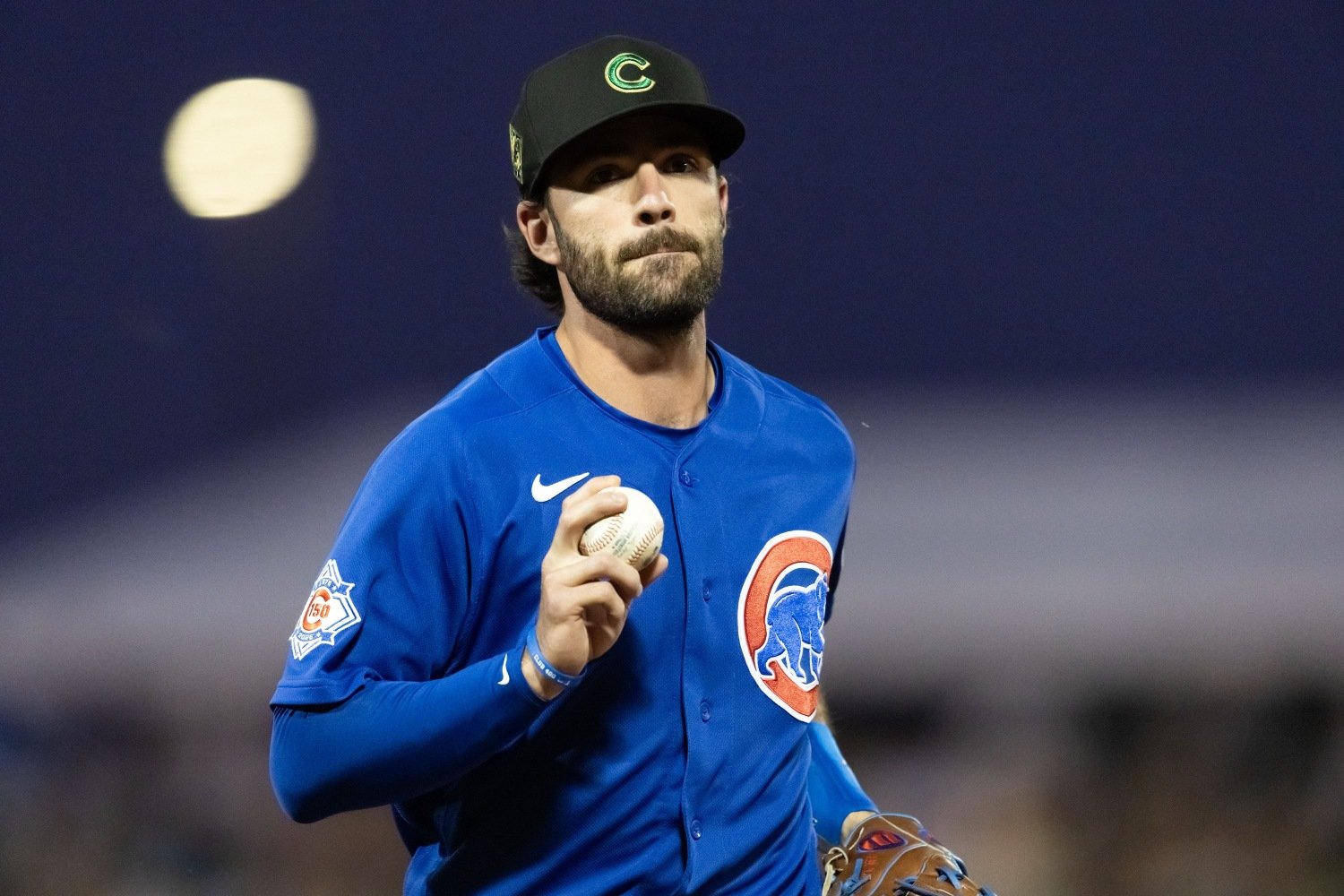 The Chicago Cubs came into this offseason with questions. They'll enter the next one with different questions. None of those, however, surround the shortstop position. For the last three years, and at least for this next one, the position belongs to Dansby Swanson. Swanson had an interesting season. We'll talk about the enigmatic nature of his offense throughout his career, but the stat sheet looks fantastic in certain areas—and less great in others. He slashed just .244/.300/.417, with a 26.0% strikeout rate that was his highest since 2022 and a walk rate that declined for a third consecutive season (7.3%). He did hit 24 home runs and steal 20 bases, while showcasing some impressive power metrics. But when all was said and done, his wRC+ checked in as essentially average: 99, where 100 is exactly average and higher is better. Lucky for him, his status as the team's starting shortstop isn't in any kind of question. Nico Hoerner resumes duties as the backup, while Matt Shaw could fill in in a pinch. It's a position of certainty and of depth, but that doesn't mean it's an ideal one for the Cubs ahead of the new season. SHORTSTOPS AT A GLANCE Starter: Dansby Swanson Backup: Nico Hoerner Depth & Prospects: Matt Shaw, Scott Kingery, Ben Cowles, Jefferson Rojas fWAR Ranking Last Year: 15th (3.3) fWAR Projection This Year: 13th (3.9) THE GOOD Swanson had his best power season since he signed with the Cubs, by a pretty wide margin. That's not completely reflected in his ISO, as a .173 mark in 2025 just barely edges the .172 figure he posted in 2023, and 24 home runs is not that much more than 22 home runs. Under the hood, though, better things were happening. Each of Swanson's barrel rate, hard-hit rate, and average exit velocity were his highest in a Cub uniform. These are objectively good things, despite what the rest of the stat sheet might say. He was in heavily on the fastballs that are a prerequisite for his success (more on that later), with his pitch selection helping to drive regular contributions in the power game. He also produced the results he did in a year when the ball was a bit less lively than it's been at any time in the last decade. The drag coefficient on the ball was higher than at any point since the very earliest days of the Statcast Era. In this chart, the higher a daily datum is, the less well the ball carried that day, on average. Swanson also continued to be an above-average defender. The numbers were tamped a bit by some early struggles, but Outs Above Average still liked him for 4 OAA. The good is furthered by the fact that the team has a built-in backup to Swanson in the form of Nico Hoerner. Flipped over to the keystone upon Swanson's arrival, Hoerner is more than capable of providing stability at the position in the event of an injury or some extra rest, while Matt Shaw would then slide into Hoerner's vacated spot at second in either instance. There's a bit of unconventional depth here, but it all speaks to the idea that this is one of the more stable positions on the roster. THE BAD Swanson is an immensely difficult player to figure out. At the same time, he's also a very easy player to figure out. Let me explain. The best years of Dansby Swanson's career have come when he's hunting fastballs. In 2021, he was a 99 wRC+ player, but had a .201 ISO. It was the only time in his career his isolated power number eclipsed that .200 mark. In 2022, he went for a wRC+ of 117 while still maintaining much of that power; his ISO was .170 and he hit 25 home runs. He followed that with a 105 wRC+ campaign and a .172 ISO in his first year with the Cubs. Those seasons saw his three highest rates of swinging at fastballs (prior to 2025). The 2022 season is particularly notable, as he swung at fastballs more than any other pitch type (53.6%). He'd never done that over a full season—until 2025. Swanson swung at 55.6% of fastballs in 2025. He maintained a hard-hit rate of 56.1%, found the barrel 13.8% of the time, and carried a .483 slugging percentage against heaters. The issue with that, dear reader, lies here: Swanson became so obsessed with swinging at them that he lost his grip on the zone. There was a threshold somewhere, and Swanson crossed it with his aggression against that specific pitch type. The outcomes were positive when he made contact inside the zone, but swinging at the heater outside the zone (and missing more often when he did so) cut into the benefits of that adjustment quite a bit. Additionally, Swanson continued a trend that began when he arrived in Chicago. At 17.3%, his opposite-field percentage was the lowest of his career. In fact, each of his three seasons have seen a noticeable drop in how frequently he makes contact to the opposite field. That element has its own nuance within his mechanics, but speaks to another factor pinning down some of the production from Swanson, beyond the approach. The good news is that Swanson still found ways to produce. The better news is that he's worked with Dustin Kelly on some changes this offseason. Those details are somewhat vague, but could indicate some refinement to blend the uptick in power with a more robust ability to reach base in 2026. THE BOTTOM LINE This position is Swanson's to lose in the short and medium term. Hoerner could leave as a free agent next winter. Neither of Scott Kingery or Ben Cowles are going to push for playing time. Jefferson Rojas is still a ways away. Swanson could move to second as soon as next year, but for now, he's the shortstop. It's just a matter of which iteration we see. Is Swanson going to refine the approach in a way that allows him to maintain power but work counts more effectively in his favor? How much can going the other way with authority again augment his production, and can he accomplish that? Is the defensive decline actually the result of a poor start, or should we start to worry about aging at a premium position? These are all questions in need of answers in the new season, but Swanson will have plenty of runway to do just that.
 -
Image courtesy of © Rick Scuteri-Imagn Images As stable as the collective lineup has been for the Chicago Cubs over the last handful of seasons, third base has been a position more commonly associated with turnover than performance. It was Christopher Morel before it was Isaac Paredes before it was a smattering of below average options — Gage Workman, Jon Berti, and Vidal Bruján among them — before Matt Shaw eventually established himself as something resembling a viable option at the spot down the stretch. However, even much of Shaw's value was wrapped up in his glove, with the bat still needing levels of development before team leadership would be inclined to trust him as an everyday player. Which was likely a factor in why the team chose to pursue Alex Bregman this winter. Not that it was their first of him. But in signing Bregman to a five-year deal, the team was able to establish actual stability at third base moving forward. A steady player on both sides of the ball, Bregman projects for 94 percent of the time at third, bringing a blend of performance and intangible qualities that appear poised to bring the Cubs from the depths of the league rankings in positional performance to among its best. Chicago Cubs Third Baseman At A Glance Starter: Alex Bregman Backup: Matt Shaw Depth & Prospects: Scott Kingery, BJ Murray, Jonathon Long, Pedro Ramirez fWAR Ranking Last Year: 27th (0.0) fWAR Projection This Year: 6th (3.8) The Good The positive outlook of the position for 2026 centers almost exclusively around Alex Bregman. The fielding remains solid, the intangibles are there, and he's long demonstrated an approach that allows him to be aggressive while also posting strong figures in both strikeout and walk totals. Bregman was above the 90th percentile in both chase and whiff rates last year and also sat safely in the 88th in K% (14.1 percent). When the team signed him, though, one of the immediate concerns was how poor Wrigley Field has been as an environment for right-handed hitters. Bregman's hit distribution should help to quell those concerns rather quickly: That's Bregman's spray chart overlayed with Wrigley Field. Getting away from the Green Monster in Fenway (and the Crawford Boxes in Houston) is scary at a glance. But the most important aspect is that, unlike someone like Isaac Paredes, Bregman brings a distribution that falls much more into the gaps than working as a dead-pull hitter. Combine that with a penchant for elevation (23.5 PullAIR% for his career), and you have someone who should be able to overcome the negative effects of his new home park. The Bad The absence of depth remains a concern. Bregman on his own is a fine player and raises the floor of the position significantly. However, he also missed time with a quad injury last year. That injury limited him to 114 games. Should anything like that befall him in 2026, it presents a rather precarious situation for the Cubs. In such a doomsday scenario, that would force Shaw back into regular duty. We know he'd be fine defensively, though there's no certainty as to where the bat will land in Year 2 of his major-league action. That would, in turn, sap some juice from the bench, where Shaw is projected to open the year in an effort to stretch out his versatility. The minor leagues don't offer a lot of additional hope on that front, either. Scott Kingery is a versatile player with virtually no bat to speak of. He also has an opt-out included in his minor-league deal down the line. Jonathon Long is much more first baseman than third baseman at this point. BJ Murray had to repeat Double-A in 2025 after a brutal time in Iowa the previous year. Pedro Ramirez is in Double-A to start the year. It feels like something of a positive that the "bad" of the position would only manifest in the event of a long-term injury to an otherwise above-average player. Nevertheless, the specter looming is that lack of depth behind him. The Bottom Line Unlike last year, where the position was saved only by the glove of Matt Shaw, third base stands to be one of the better aspects of the Cubs' lineup in 2026. Alex Bregman doesn't offer as much power as he once did, but there's something to be said for the remarkable amount of stability provided by his blend of approach, squared-up contact, and quality defense. Subsequently, it flips Matt Shaw into a utility player that strengthens the bench in a way that was sorely needed coming off last year's rotating cast of reserves. View full article
-
 As stable as the collective lineup has been for the Chicago Cubs over the last handful of seasons, third base has been a position more commonly associated with turnover than performance. It was Christopher Morel before it was Isaac Paredes before it was a smattering of below average options — Gage Workman, Jon Berti, and Vidal Bruján among them — before Matt Shaw eventually established himself as something resembling a viable option at the spot down the stretch. However, even much of Shaw's value was wrapped up in his glove, with the bat still needing levels of development before team leadership would be inclined to trust him as an everyday player. Which was likely a factor in why the team chose to pursue Alex Bregman this winter. Not that it was their first of him. But in signing Bregman to a five-year deal, the team was able to establish actual stability at third base moving forward. A steady player on both sides of the ball, Bregman projects for 94 percent of the time at third, bringing a blend of performance and intangible qualities that appear poised to bring the Cubs from the depths of the league rankings in positional performance to among its best. Chicago Cubs Third Baseman At A Glance Starter: Alex Bregman Backup: Matt Shaw Depth & Prospects: Scott Kingery, BJ Murray, Jonathon Long, Pedro Ramirez fWAR Ranking Last Year: 27th (0.0) fWAR Projection This Year: 6th (3.8) The Good The positive outlook of the position for 2026 centers almost exclusively around Alex Bregman. The fielding remains solid, the intangibles are there, and he's long demonstrated an approach that allows him to be aggressive while also posting strong figures in both strikeout and walk totals. Bregman was above the 90th percentile in both chase and whiff rates last year and also sat safely in the 88th in K% (14.1 percent). When the team signed him, though, one of the immediate concerns was how poor Wrigley Field has been as an environment for right-handed hitters. Bregman's hit distribution should help to quell those concerns rather quickly: That's Bregman's spray chart overlayed with Wrigley Field. Getting away from the Green Monster in Fenway (and the Crawford Boxes in Houston) is scary at a glance. But the most important aspect is that, unlike someone like Isaac Paredes, Bregman brings a distribution that falls much more into the gaps than working as a dead-pull hitter. Combine that with a penchant for elevation (23.5 PullAIR% for his career), and you have someone who should be able to overcome the negative effects of his new home park. The Bad The absence of depth remains a concern. Bregman on his own is a fine player and raises the floor of the position significantly. However, he also missed time with a quad injury last year. That injury limited him to 114 games. Should anything like that befall him in 2026, it presents a rather precarious situation for the Cubs. In such a doomsday scenario, that would force Shaw back into regular duty. We know he'd be fine defensively, though there's no certainty as to where the bat will land in Year 2 of his major-league action. That would, in turn, sap some juice from the bench, where Shaw is projected to open the year in an effort to stretch out his versatility. The minor leagues don't offer a lot of additional hope on that front, either. Scott Kingery is a versatile player with virtually no bat to speak of. He also has an opt-out included in his minor-league deal down the line. Jonathon Long is much more first baseman than third baseman at this point. BJ Murray had to repeat Double-A in 2025 after a brutal time in Iowa the previous year. Pedro Ramirez is in Double-A to start the year. It feels like something of a positive that the "bad" of the position would only manifest in the event of a long-term injury to an otherwise above-average player. Nevertheless, the specter looming is that lack of depth behind him. The Bottom Line Unlike last year, where the position was saved only by the glove of Matt Shaw, third base stands to be one of the better aspects of the Cubs' lineup in 2026. Alex Bregman doesn't offer as much power as he once did, but there's something to be said for the remarkable amount of stability provided by his blend of approach, squared-up contact, and quality defense. Subsequently, it flips Matt Shaw into a utility player that strengthens the bench in a way that was sorely needed coming off last year's rotating cast of reserves.
 -
Image courtesy of © Matt Marton-Imagn Images The Chicago Cubs enter 2026 in a rather interesting position in center field. On the one hand, they have Pete Crow-Armstrong entrenched as the anchor of the outfield grass. His speed, obscene glove, and baserunning acumen will keep him in the lineup even when the bat is being pinned down by a still-developing approach. We know the upside is in there; Crow-Armstrong took steps toward stardom in 2025 courtesy of a 109 wRC+ and impressive counting stats that included 31 home runs and 35 stolen bases. However, he's held back by his immaturity, with chase and whiff rates that were among the league's worst and strikeout and walk numbers to match. The hope is that some growth is in the tank and a more measured approach can yield larger gains on the offensive side. Even so, though, he's the guy in the longer-term. Behind him, however, things are a bit cloudy. Ethan Conrad and Kane Kepley are interesting prospects near the top of any prognostication of the team's system, but each at least a couple of years away. Brett Bateman is closer but features less upside. That means that beyond Crow-Armstrong in the short term, you're looking at some combination of Kevin Alcántara or whichever of the smattering of non-roster invitees stick around past spring camp. Not that it's cause for concern when you're employing someone like Crow-Armstrong, but you'd like perhaps just a bit more certainty, especially if the starter proves as susceptible to burnout as he appeared to be in the latter portion of 2025. Cubs' Center Fielders At A Glance Starter: Pete Crow-Armstrong Backup: Kevin Alcántara Depth & Prospects: Dylan Carlson, Chas McCormick, Justin Dean, Ethan Conrad, Kane Kepley, Brett Bateman fWAR Ranking Last Year: 4th (5.4) fWAR Projection This Year: 2nd (4.8) The Good The center field position for the Cubs features one of the most exciting players in baseball. While some growth is needed on the offensive side, the glove plays. Crow-Armstrong's Outs Above Average finished at 24 in 2025, leading all defenders regardless of position. He was three ahead of Ceddanne Rafaela in OAA and seven in front of the next-closest outfielder. It's not a mystery where the strongest facet of his game lives. Even with the development still needed at the plate, Crow-Armstrong has the chops to bring that same level of excitement on offense. His Barrel% sat at 13.0 percent, which helped to feed into the .234 ISO he posted. A leveling out of his contact — his fly-ball rate was up near 50 percent — could allow his offense to take off on on-base gains alone. That'd allow him to utilize his 96th-percentile sprint speed with even more regularity. Beyond Crow-Armstrong, the prospects the Cubs have in their center field pool represent another layer of good for this group. Ethan Conrad may be destined for a corner before long, but possesses intriguing offensive upside. Kane Kepley represents a more traditional archetype at the position as a high-speed, high-contact guy. Along with Alcántara in Iowa, it's a position worth watching in a system that doesn't run too deep in terms of impact offensive talent. The Bad Swing-and-miss is a fairly prominent trait among this group. Crow-Armstrong did it 28.9 percent of the time last year and punched out 24.0 percent of the time overall. Alcántara did so at nearly a 30 percent clip while in Iowa. Neither will be able to fully realize their offensive potential if that element remains as it is. Given that he's the starter at the major-league level, though, Crow-Armstrong remains the focus. It's not so much the idea that he's an aggressive hitter. He very much is, but it's about the inconsistency within that aggression and the inability to make consistent contact as a result. Aggressive hitters can thrive, but too often Crow-Armstrong fails in maintaining a steady approach. That's how you get something that looks like this: Note that this graph charts his swings and misses inside of the strike zone. It's unlikely he's going to be able to eliminate the aggression entirely. Aggressive hitters generally stay aggressive. But he's going to have to find something consistent in terms a plate approach in order to stave off some of the streakiness we've seen to this point. Some mechanical tweaks could also be in the cards to level things out as well, but everything's going to have to start with some level of a plan when he steps into the batter's box. The Bottom Line This is a fun position in the organization. Not only do the Cubs employ one of the most exciting players in the sport in the middle of their outfield, but some of the most interesting prospects in the system come from that same spot. As such, Crow-Armstrong represents one of the most intriguing storylines in the game. Can he take the appropriate next steps forward? How far can the other names ascend in the system? These are legitimately fun questions to ask and the results will be worth monitoring regularity throughout 2026. View full article
-
 The Chicago Cubs enter 2026 in a rather interesting position in center field. On the one hand, they have Pete Crow-Armstrong entrenched as the anchor of the outfield grass. His speed, obscene glove, and baserunning acumen will keep him in the lineup even when the bat is being pinned down by a still-developing approach. We know the upside is in there; Crow-Armstrong took steps toward stardom in 2025 courtesy of a 109 wRC+ and impressive counting stats that included 31 home runs and 35 stolen bases. However, he's held back by his immaturity, with chase and whiff rates that were among the league's worst and strikeout and walk numbers to match. The hope is that some growth is in the tank and a more measured approach can yield larger gains on the offensive side. Even so, though, he's the guy in the longer-term. Behind him, however, things are a bit cloudy. Ethan Conrad and Kane Kepley are interesting prospects near the top of any prognostication of the team's system, but each at least a couple of years away. Brett Bateman is closer but features less upside. That means that beyond Crow-Armstrong in the short term, you're looking at some combination of Kevin Alcántara or whichever of the smattering of non-roster invitees stick around past spring camp. Not that it's cause for concern when you're employing someone like Crow-Armstrong, but you'd like perhaps just a bit more certainty, especially if the starter proves as susceptible to burnout as he appeared to be in the latter portion of 2025. Cubs' Center Fielders At A Glance Starter: Pete Crow-Armstrong Backup: Kevin Alcántara Depth & Prospects: Dylan Carlson, Chas McCormick, Justin Dean, Ethan Conrad, Kane Kepley, Brett Bateman fWAR Ranking Last Year: 4th (5.4) fWAR Projection This Year: 2nd (4.8) The Good The center field position for the Cubs features one of the most exciting players in baseball. While some growth is needed on the offensive side, the glove plays. Crow-Armstrong's Outs Above Average finished at 24 in 2025, leading all defenders regardless of position. He was three ahead of Ceddanne Rafaela in OAA and seven in front of the next-closest outfielder. It's not a mystery where the strongest facet of his game lives. Even with the development still needed at the plate, Crow-Armstrong has the chops to bring that same level of excitement on offense. His Barrel% sat at 13.0 percent, which helped to feed into the .234 ISO he posted. A leveling out of his contact — his fly-ball rate was up near 50 percent — could allow his offense to take off on on-base gains alone. That'd allow him to utilize his 96th-percentile sprint speed with even more regularity. Beyond Crow-Armstrong, the prospects the Cubs have in their center field pool represent another layer of good for this group. Ethan Conrad may be destined for a corner before long, but possesses intriguing offensive upside. Kane Kepley represents a more traditional archetype at the position as a high-speed, high-contact guy. Along with Alcántara in Iowa, it's a position worth watching in a system that doesn't run too deep in terms of impact offensive talent. The Bad Swing-and-miss is a fairly prominent trait among this group. Crow-Armstrong did it 28.9 percent of the time last year and punched out 24.0 percent of the time overall. Alcántara did so at nearly a 30 percent clip while in Iowa. Neither will be able to fully realize their offensive potential if that element remains as it is. Given that he's the starter at the major-league level, though, Crow-Armstrong remains the focus. It's not so much the idea that he's an aggressive hitter. He very much is, but it's about the inconsistency within that aggression and the inability to make consistent contact as a result. Aggressive hitters can thrive, but too often Crow-Armstrong fails in maintaining a steady approach. That's how you get something that looks like this: Note that this graph charts his swings and misses inside of the strike zone. It's unlikely he's going to be able to eliminate the aggression entirely. Aggressive hitters generally stay aggressive. But he's going to have to find something consistent in terms a plate approach in order to stave off some of the streakiness we've seen to this point. Some mechanical tweaks could also be in the cards to level things out as well, but everything's going to have to start with some level of a plan when he steps into the batter's box. The Bottom Line This is a fun position in the organization. Not only do the Cubs employ one of the most exciting players in the sport in the middle of their outfield, but some of the most interesting prospects in the system come from that same spot. As such, Crow-Armstrong represents one of the most intriguing storylines in the game. Can he take the appropriate next steps forward? How far can the other names ascend in the system? These are legitimately fun questions to ask and the results will be worth monitoring regularity throughout 2026.
 -
Chicago Cubs 2026 Top 20 Prospects, No. 1: Moisés Ballesteros
RandallPnkFloyd posted an article in Cubs
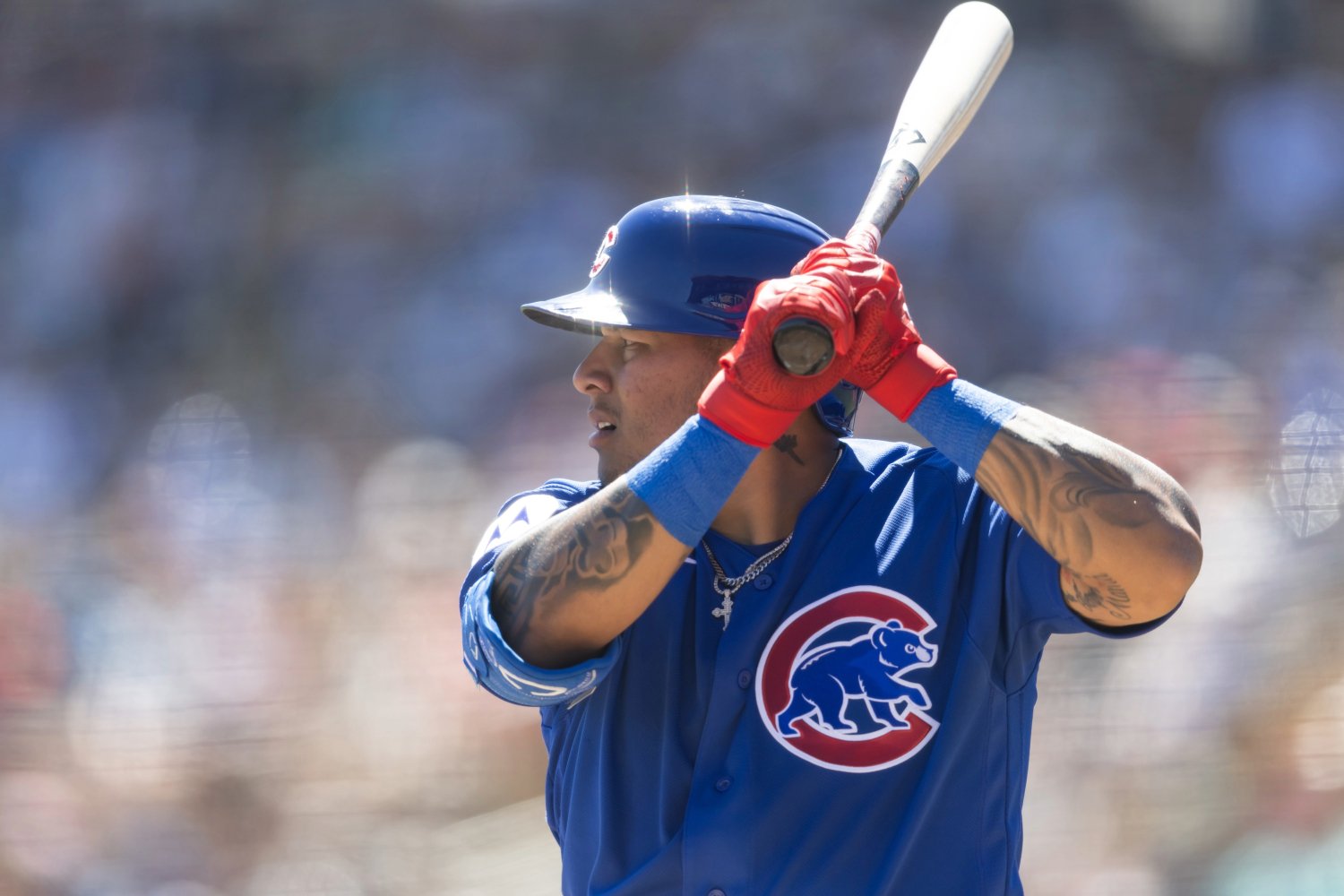 Having spent the last couple of weeks examining the top 20 prospects in the Chicago Cubs organization (as voted on by our North Side Baseball writers), we, at last, turn our attention to the man in the top spot who may lack a position but not a future in Chicago. Be sure to check out all of our previous rankings! Prospects #20-16 Prospects #15-11 Prospect #10 - James Triantos Prospect #9 - Josiah Hartshorn Prospect #8 - Kane Kepley Prospect #7 - Pedro Ramirez Prospect #6 - Ethan Conrad Prospect #5 - Jonathon Long Prospect #4 - Kevin Alcantara Prospect #3 - Jefferson Rojas Prospect #2 - Jaxon Wiggins #1 - Moisés Ballesteros (Iowa Cubs, Triple-A) A relatively quick riser through the Cubs' system after being signed out of Venezuela in 2021, the 2025 campaign was Ballesteros' first extended action in Triple-A. The year prior, he split between Knoxville and Iowa, with his first taste of the higher level leading to an uptick in strikeouts, a dip in walks, and a fall in his wRC+ (to exactly average, 100). An adjustment manifested quickly, however. Last year, Ballesteros was back in Iowa to start the year. Across more than 500 plate appearances, he slashed .316/.385/.473, with a 13.2 percent strikeout rate that was eight points lower than when he initially reached that level. The walk rate crept back up (9.6 percent), and his total body of work featured a wRC+ that came in at 121. One might have hoped for a bit more in the power game (.157 ISO), but the bat-to-ball skills were on display enough that Ballesteros was able to earn a cup of coffee with the Cubs. In 20 games, he finished at a 143 wRC+ and showcased some particularly encouraging signs toward what his future could look like in the lineup. What To Like The bat is big-league ready. Ballesteros has already proven that much, both through the evidence in Iowa and his small body of work in Chicago. Ballesteros made contact at an 81.8 percent rate in Iowa last year and didn't experience too much of a downturn upon his call-up (77.6 percent). In addition to quality contact skills, he's plenty capable of driving it to all fields; he split between a 35.6 percent pull rate and a 33.4 percent opposite-field rate in Iowa. What's more is that his swing is adaptable. Our Matt Trueblood recently explored this as a benefit within Ballesteros' game. Not only is he capable of creating consistent contact, but he's able to generate different types of it based on pitch type. While that skill will continue to evolve, that's part of the reason we see such a wide distribution of his hits to each portion of the field. For an organization that likes efficiency in their swings, it's hard to find a better prototype. However, there's just a bit more nuance needed within that offensive profile before we're ready to declare Moisés Ballesteros an everyday bat for the 2026 Cubs. What To Work On From an offensive standpoint, Ballesteros has work to do on two fronts. The first is adjusting the approach to suit his skill set. Yes, he can create contact from various parts of the zone and spin that into hits in any part of the field. But he could also be seizing more opportunities to create impactful contact: There's just a touch too much aggression in Ballesteros' approach at present. He's able to compensate well given the aforementioned bat-to-ball skills and inherent ability to avoid whiffs, but he's also not finding the barrel at the type of rate one might expect, and there's room for growth in his overall hard-hit rate. Further, there's a bit more elevation needed if Ballesteros is to get his game moving to the next level. He spent 49.6 percent of the time on the ground with his contact last year and was up over 62 percent in his small sample with the major-league club. While the all-fields contact offers its share of benefits, the nature of such an adaptable swing should allow him to lean into the pull side just a bit more. If Ballesteros' ability to recognize pitches continues to develop, that varying swing path should be able to produce such results to a degree that will allow him to reap the benefits of an increased barrel and hard-hit rate. On the defensive side, the picture has been murky for quite some time. The Cubs are continuing to develop Ballesteros as a catcher, despite the fact that he appeared there just once in his 20 major-league games last season. His arm is decent from behind the plate, but he has enough work to do in virtually every facet with the glove that any answers about his long-term position might have to wait until the end of 2026 at the soonest. Nevertheless, his offensive profile should earn him regular work as a designated hitter, and demonstration of the refinement needed in his bat could make a defined defensive position somewhat unnecessary. What's Next There are two paths before Moisés Ballesteros ahead of 2026. The first is that Seiya Suzuki slides back into regular work in right field following Kyle Tucker's departure, freeing up the designated hitter role for Ballesteros. Perhaps he gets occasional work behind the plate, but he factors into the lineup on the strength of his bat almost exclusively. Maybe he draws an occasional start or appearance at first base, but that part seems less likely for a player standing 5'8". That's assuming he doesn't falter at the plate, with some adjustments to his approach manifesting into one of the better hitters on the team. Of course, the possibility exists that the team goes in a different direction, wherein Ballesteros gets just a bit more seasoning in Triple-A, especially to work on his defensive game. With Carson Kelly reaching free agency following the year, the Cubs will have some space behind the dish. Extra time to develop the glove and all of the intricacies that come with being a big-league catcher could do Ballesteros some good. Injuries could land him back up on the Cubs' roster at a decent rate, but the focus remains on development in this case. In terms of a one-or-the-other scenario, the former feels far more likely. The Cubs could certainly work with Ballesteros the catcher at the top level throughout the year, even if it features fewer game reps. They could go that route while keeping Ballesteros the batter in the lineup on a regular basis. With a decent volume of bench options remaining in camp, though, it might not be entirely unreasonable to see them go the latter path, either. Either way, we're likely to see a whole bunch of the hitting artist known as Mo Baller throughout the 2026 season.
 -
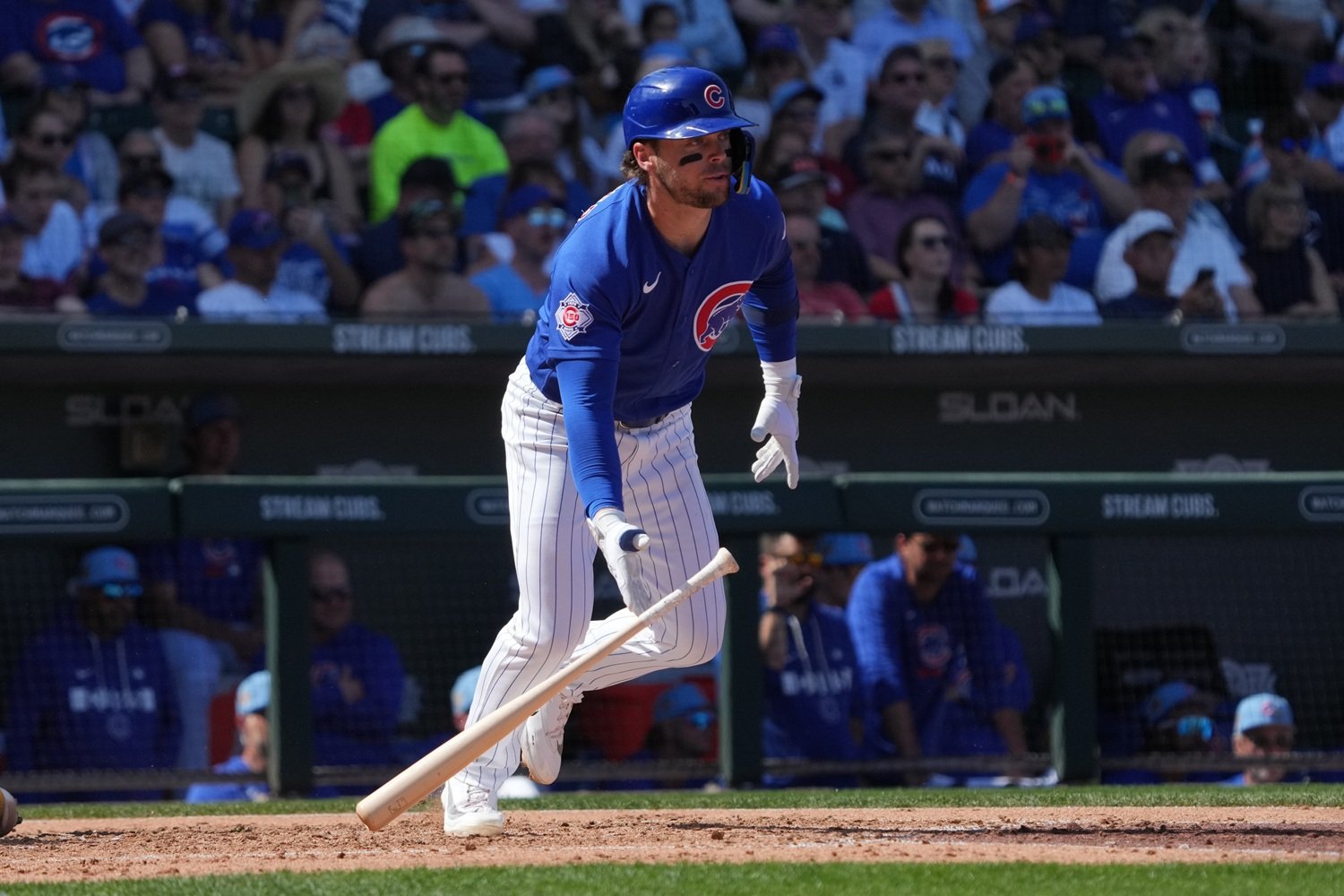 The 2025 iteration of second baseman Nico Hoerner was the best version the Cubs have yet seen. Sure, he'd hit more than .297 in a season. He'd reached base at a clip better than the .345 mark he posted. He's also stolen more bases in a season than the 29 bags he swiped, and he's hit for better power than indicated by a .097 isolated power (ISO). Yet, in terms of his total value, both his wRC+ (109) and his fWAR (4.8) were above any figure he'd posted in his three previous seasons of full-time action. Much of the value lies in Hoerner's glove. His 15 Outs Above Average ranked 12th among qualifying players regardless of position, ninth among infielders, and at the top of the list of players who log regular time at the keystone. While much of his value may be wrapped up in that facet of his game, however, last season saw him consolidate his skills at the plate, too. Hoerner's 2025 season was his best in the contact game. His 48.5% swing rate was his highest since 2022, as was a 31.9% chase rate. But the aggression didn't mitigate his ability to make contact. He touched 89.8% of the pitches at which he swung, continuing a four-year progression of improvement there and sitting fourth on the leaderboard among qualifying batters. He whiffed on just 4.9% of all pitches he saw, both a career best and a number which landed in the 99th percentile of hitters. Of course, very little of that was hard contact. Hoerner logged Statcast Barrels on just 2.3% of his batted balls—the league average is 7.2%—and hit the ball 95 MPH or harder just 30.3% of the time (league average: 37.0%). Both rates put him among the bottom 10% of batters who saw substantial time. When one encounters high swing rates alongside such a dearth of power, the player who comes to mind is Luis Arráez, whose value has been mitigated by his approach and his shortcomings. Hoerner, though, has a bit more to his offensive profile than that. The version of Hoerner we saw in the second half of 2025 was a bit different than the one in the first. His hard hit rate was 32.1% in July, and progressively increased over the final three months of the year. His ISO was essentially flat from the first half to the second, but it ticked up a tiny bit (.094 to .100), while his line-drive rate jumped by seven percentage points. He swung at a higher rate against fastballs over that span, which is encouraging, given most players' penchant for generating more line drives and some extra power against that pitch type. As the year went along, he found a consistent feel for pulling the ball neatly and undefendably, on a line. To update the key stat from the linked article in the last sentence, he had 41 pulled batted balls at launch angles between 5° and 13° last season, compared to: 17 in 2022 23 in 2023 21 in 2024 He had more hits (30) on that kind of batted ball last year than he'd had batted balls matching those criteria in any previous season, regardless of outcome. Earlier this offseason, I broke down where in the zone Hoerner needs to focus in order to produce more consistent power in 2026. Part of that is simply attacking more on the inner half of the plate. Between the adjustments that led to a slight uptick in impact and the knowledge that there is an area of the plate where Hoerner can tap into a bit more, there's reason to think he could clear the fence a bit more often this year. His hard-hit rate (35%), average exit velocity (89.3 MPH) and 90th-percentile exit velocity (102.9 MPH) are all higher this spring than in 2025, which is good news. But is that what fans should be expecting: more power, from a player whose game isn't primarily about that? Realistically, the expectation should be for Hoerner to repeat much of what he did in 2025. With his defense and baserunning, continuing to make contact at an elite rate, control the strike zone and hit for average with solid line drives is plenty. Hoerner's process has improved to the point where he can be a great player even without finding double-digit home-run power. That's the key takeaway. Whatever their superficial similarities, Hoerner is not Arráez. Not only does he sport a more impressive profile on the bases and in the field, he has a broader array of offensive skills, beyond batting average. A repeat of 2025 with an ISO that creeps back to multiple points above .100 would represent a blend of each of his career trends to date and the final frontier of his development. The most impressive thing is that none of that feels unrealistic.
 -
Image courtesy of © Rick Scuteri-Imagn Images The 2025 iteration of second baseman Nico Hoerner was unlike anything the Chicago Cubs had seen before. Sure, he'd hit more than .297 in a season. He'd also reached base at a clip better than the .345 mark he posted. He's also stolen more bases in a season than the 29 bags he swiped, and he's hit for better power than indicated by a .097 isolated power number. Yet in terms of his total value, both his wRC+ (109) and his fWAR (4.8) were above any figure he'd posted in the three previous seasons of full-time action. Much of the value on the Wins Above Replacement side of things lies in Hoerner's glove. His 15 Outs Above Average sat 12th among qualifying players regardless of position, ninth among infielders, and at the top of the list of players who log regular time at the keystone. While much of his value may be wrapped up in that facet of his game, it shouldn't lead to an understatement of the value in his bat. Hoerner's 2025 season was his best in the contact game. His 48.5 percent swing rate was his highest since 2022, as was a 31.9 percent chase rate. But the aggression didn't tamp his ability to make contact. He made contact at an 89.8 percent clip, continuing a four-year progression of improvement there and sitting fourth on the leaderboard among qualifiers. His whiff rate was just 4.9 percent, both a career best and a number which landed in the 99th percentile of hitters. Of course, very little of that was hard contact. In terms of quality of contact, Hoerner's barrel rate was just 2.3 percent. His hard-hit rate was 30.3. Those two percentages landed in the sixth and eighth percentile, respectively. When one considers high swing rates alongside hard contact rates that feature a dearth of quality contact, you start to imagine a player akin to Luis Arráez, whose value has been questioned in recent years as a contact-exclusive bat. Hoerner, though, has a bit more to his offensive profile than that. The version of Nico Hoerner that we saw in the second half of 2025 was a bit different than the one in the first. His hard hit rate was at 32.1 percent in July and progressively increased over the final three months of the year. His ISO graduated from .094 to .100 between the two halves of the year while his line drive rate jumped seven percent. He also swung at an ascending rate of fastballs over that span, which is encouraging given most players' penchant for generating more line drives and some extra power against that pitch type. Earlier this offseason, we also looked at where in the zone Hoerner needed to focus in matters of the zone. He's able to derive more power on the inner portion of the plate. Between the adjustments that led to a slight uptick in impact and the knowledge that there is an area of the plate where Hoerner's able to tap into a bit more, there's reason to think he could return to even the modest levels of power output we saw from him back in 2022 and 2023. But is that what fans should be expecting if we're to quantify Hoerner's 2026 as a "good" season? Realistically, the expectation should be for Hoerner to repeat much of what he did in 2025. The contact and the strikeout avoidance while providing quality baserunning and elite defense is a dynamic player entrenched in this lineup, even sans power. And it's not as if he was running into some luck in maintaining solid rates in the box score alongside a contact-focused profile; his .313 BABIP was barely a notch above a .307 mark for his career. Given that we saw the power flash at all in the second half, however, leaves an expectation for a bit more of it in the season ahead. That, dear reader, should be where the expectations rest. Nico Hoerner is not Luis Arráez. Not only does he sport a more impressive profile on the bases and in the field, he can occasionally tap into some legitimate impact. A repeat of 2025 with an ISO that creeps back to multiple points above .100 would represent a blend of each of his career trends to date and the final frontier of his development. The most impressive thing is that none of that feels unrealistic. View full article
-
Image courtesy of © Rick Scuteri-Imagn Images It's possible that this is an observation rooted in bias of some sort, but it feels like few moves across the landscape of Major League Baseball have generated more buzz for a team's 2026 prospects than the Chicago Cubs' signing of Alex Bregman. A combination of his offensive profile, defensive stability, and intangible leadership qualities have certainly contributed to that type of vibe. At the same time, we also know that players who sign for significant dollars with a new team are prone to an adjustment period. Year 1 doesn't always roll as smoothly as one's reputation might suspect. Fortunately, we're talking about a player who has not only done the change-of-scenery thing once, but did it recently after spending his entire career in Houston. And, aside from a quad injury that limited him to 114 games, his .273/.360/.462 line and 125 wRC+ with the Boston Red Sox last year indicated that he's well-suited to such an adjustment, especially with an organization that has as much stability at the top level as the Cubs appear to have. With that in mind, what should Cub fans be expecting — and hoping for — out of their new star acquisition ahead of this upcoming season? For one thing, we know the offensive approach is going to yield results. We'll talk about the power in a moment, but for his money, Bregman is one of the most conscious hitters in the league in matters of the strike zone and creating opportunities to reach base beyond just walks. He's run a mere 13.4 percent strikeout rate for his career, courteous of brilliant swing decisions that often yield 90th-percentile finishes in chase and whiff rate. Perhaps "selective aggression" is an appropriate way to label a profile such as Bregman's. While he doesn't figure heavily into the world of bat speed or hard contact by the statistical definition, he squares up contact at an elite rate. His squared-up rate in 2025 finished at 37.5 percent and in the 97th percentile. That's a higher rate than any of the Cubs' regulars from last year, meaning that Bregman offers an upgrade on a profile (read: swing efficiency over bat speed) that the team is already familiar with. Even better, Bregman is also able to parlay that awareness of the zone into plenty of fly balls to the pull side. His 24.5 PullAIR% ranked 37th in the league among 251 hitters. Of course, the caveat in all of that is that Bregman is moving to a park that is among the league's least-favorable for right-handed hitters. Statcast's Park Factors ranks Wrigley Field 27th in the league over the last three years for righties, ahead of only Seattle's T-Mobile Park in its favorability (the Rays and Athletics don't figure into the rankings because they've switched parks). As such, plenty of (digital) ink has been spilt over how well his swing will translate to Wrigley, and much of it has invoked the team's previous right-handed third base addition: Isaac Paredes. The big difference between the two is that Bregman's bat plays much more in the gaps, while Paredes was a hitter more of the dead-pull variety. The former's spray chart should yield far more positive results than one of his predecessors at the position. With all that out of the way, let's look at where the various projection models predict Alex Bregman to fall in 2026: Steamer: .260/.345/.439, 23 HR, 14.3 K%, 11.0 BB%, 121 wRC+ ZiPS: .240/.336/.403, 18 HR, 14.6 K%, 11.4 BB%, 110 wRC+ ATC: .253/.337/.427, 23 HR, 14.0 K%, 10.2 BB%, 114 wRC+ THE BAT X: .252/.333/.425, 23 HR, 14.1 K%, 9.9 BB%, 114 wRC+ OOPSY: .247/.332/.395, 19 HR, 13.8 K%, 10.3 BB%, 106 wRC+ Steamer tends to like veteran players a bit more, so it's logical to see the best production from that model. There's a fair bit of consistency spread throughout otherwise, with the biggest variance manifesting in his potential power output. Even if that element of his game does end up modest in its results, there's enough in his ability to avoid strikeouts and work his way on base that should help to compensate well. Then, there's the matter of his defense. As it turns out, Bregman is pretty good there as well. He's had some years where Outs Above Average grades him as average, but is coming off a season where he posted 3 OAA in Boston. That was top 10 among third basemen in 2025. Interestingly, Bregman also struggled moving to his left, where his OAA fell to -4. Much of that should be helped by having Dansby Swanson playing next to him, indicating that he could be in for an uptick on the stat sheet as far as his glove goes. Ultimately, the excitement surrounding the addition of Alex Bregman for the next five years is something that feels warranted. Even if the projections are a little bit lighter on optimism, the combination of approach, contact, and fly balls to the pull side should help him to be a productive piece of this lineup. There's a certain steadiness to his game that should serve the middle of the Cubs' lineup well, to say nothing of what he brings on the intangibles front. View full article
-
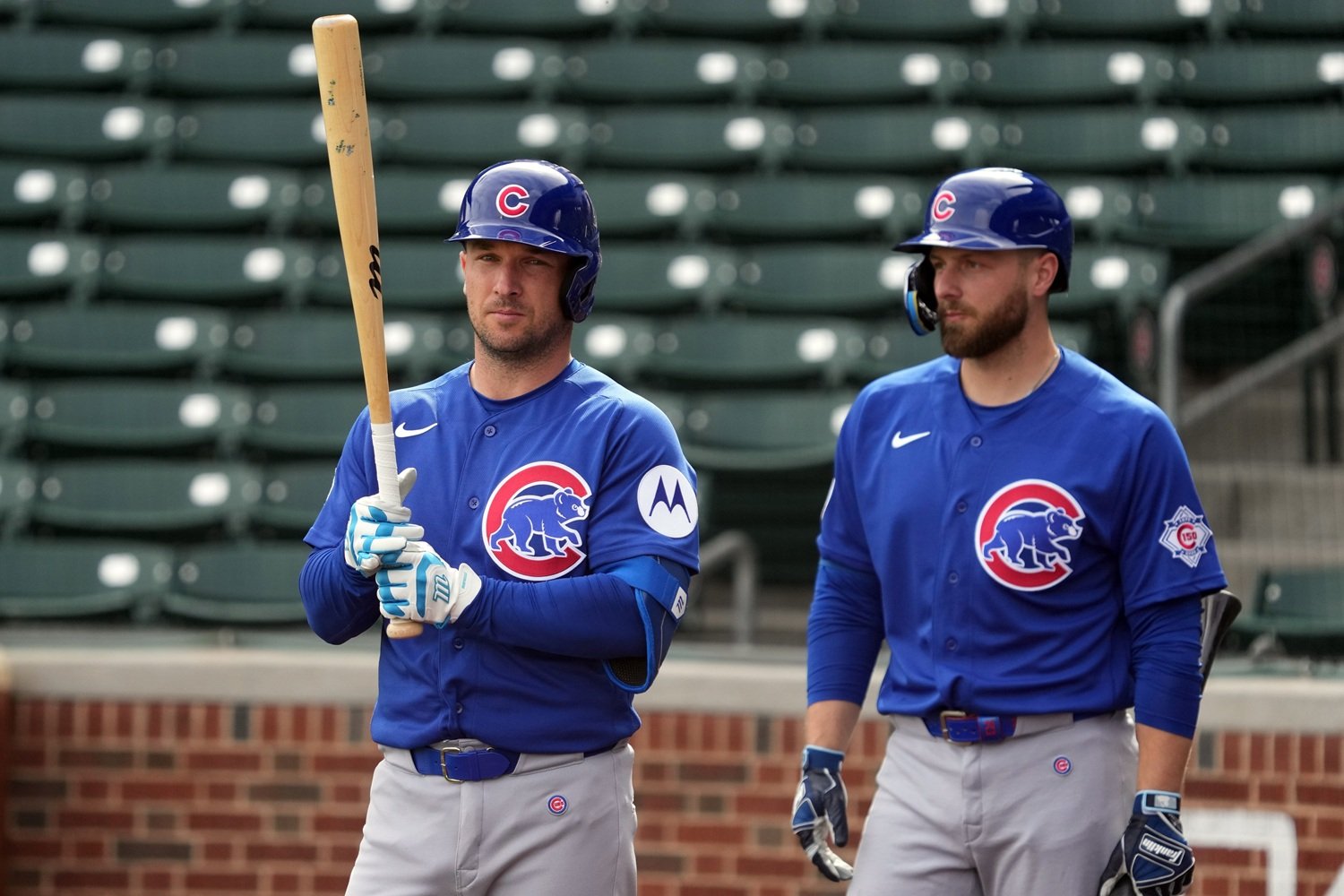 It's possible that this is an observation rooted in bias of some sort, but it feels like few moves across the landscape of Major League Baseball have generated more buzz for a team's 2026 prospects than the Chicago Cubs' signing of Alex Bregman. A combination of his offensive profile, defensive stability, and intangible leadership qualities have certainly contributed to that type of vibe. At the same time, we also know that players who sign for significant dollars with a new team are prone to an adjustment period. Year 1 doesn't always roll as smoothly as one's reputation might suspect. Fortunately, we're talking about a player who has not only done the change-of-scenery thing once, but did it recently after spending his entire career in Houston. And, aside from a quad injury that limited him to 114 games, his .273/.360/.462 line and 125 wRC+ with the Boston Red Sox last year indicated that he's well-suited to such an adjustment, especially with an organization that has as much stability at the top level as the Cubs appear to have. With that in mind, what should Cub fans be expecting — and hoping for — out of their new star acquisition ahead of this upcoming season? For one thing, we know the offensive approach is going to yield results. We'll talk about the power in a moment, but for his money, Bregman is one of the most conscious hitters in the league in matters of the strike zone and creating opportunities to reach base beyond just walks. He's run a mere 13.4 percent strikeout rate for his career, courteous of brilliant swing decisions that often yield 90th-percentile finishes in chase and whiff rate. Perhaps "selective aggression" is an appropriate way to label a profile such as Bregman's. While he doesn't figure heavily into the world of bat speed or hard contact by the statistical definition, he squares up contact at an elite rate. His squared-up rate in 2025 finished at 37.5 percent and in the 97th percentile. That's a higher rate than any of the Cubs' regulars from last year, meaning that Bregman offers an upgrade on a profile (read: swing efficiency over bat speed) that the team is already familiar with. Even better, Bregman is also able to parlay that awareness of the zone into plenty of fly balls to the pull side. His 24.5 PullAIR% ranked 37th in the league among 251 hitters. Of course, the caveat in all of that is that Bregman is moving to a park that is among the league's least-favorable for right-handed hitters. Statcast's Park Factors ranks Wrigley Field 27th in the league over the last three years for righties, ahead of only Seattle's T-Mobile Park in its favorability (the Rays and Athletics don't figure into the rankings because they've switched parks). As such, plenty of (digital) ink has been spilt over how well his swing will translate to Wrigley, and much of it has invoked the team's previous right-handed third base addition: Isaac Paredes. The big difference between the two is that Bregman's bat plays much more in the gaps, while Paredes was a hitter more of the dead-pull variety. The former's spray chart should yield far more positive results than one of his predecessors at the position. With all that out of the way, let's look at where the various projection models predict Alex Bregman to fall in 2026: Steamer: .260/.345/.439, 23 HR, 14.3 K%, 11.0 BB%, 121 wRC+ ZiPS: .240/.336/.403, 18 HR, 14.6 K%, 11.4 BB%, 110 wRC+ ATC: .253/.337/.427, 23 HR, 14.0 K%, 10.2 BB%, 114 wRC+ THE BAT X: .252/.333/.425, 23 HR, 14.1 K%, 9.9 BB%, 114 wRC+ OOPSY: .247/.332/.395, 19 HR, 13.8 K%, 10.3 BB%, 106 wRC+ Steamer tends to like veteran players a bit more, so it's logical to see the best production from that model. There's a fair bit of consistency spread throughout otherwise, with the biggest variance manifesting in his potential power output. Even if that element of his game does end up modest in its results, there's enough in his ability to avoid strikeouts and work his way on base that should help to compensate well. Then, there's the matter of his defense. As it turns out, Bregman is pretty good there as well. He's had some years where Outs Above Average grades him as average, but is coming off a season where he posted 3 OAA in Boston. That was top 10 among third basemen in 2025. Interestingly, Bregman also struggled moving to his left, where his OAA fell to -4. Much of that should be helped by having Dansby Swanson playing next to him, indicating that he could be in for an uptick on the stat sheet as far as his glove goes. Ultimately, the excitement surrounding the addition of Alex Bregman for the next five years is something that feels warranted. Even if the projections are a little bit lighter on optimism, the combination of approach, contact, and fly balls to the pull side should help him to be a productive piece of this lineup. There's a certain steadiness to his game that should serve the middle of the Cubs' lineup well, to say nothing of what he brings on the intangibles front.
 -
Having spent the last couple of weeks examining the top 20 prospects in the Chicago Cubs organization (as voted on by our North Side Baseball writers), we, at last turn our attention to the man in the top spot who may lack a position but not a future in Chicago. #1 - Moisés Ballesteros (Iowa Cubs, Triple-A) A relatively quick riser throughout the Cubs' system after being signed out of Venezuela in 2021, the 2025 campaign was Ballesteros' first extended action in Triple-A. The year prior, he split between Double-A & Iowa, with his first taste of the higher level leading to an uptick in strikeouts, a dip in walks, and a fall in his wRC+ to exactly average (100). An adjustment manifested quickly, however. Last year, Ballesteros was back in Iowa to start the year. Across more than 500 plate appearances, he slashed .316/.385/.473, with a 13.2 percent strikeout rate that was eight points lower than when he initially reached that level. The walk rate crept back up (9.6 percent), and his total body of work featured a wRC+ that came in at 121. One might have hoped for a bit more in the power game (.157 ISO), but the bat-to-ball skills were on display enough that Ballesteros was able to earn a cup of coffee with the Cubs. In 20 games, he finished at a 143 wRC+ and showcased some particularly encouraging signs toward what his future could look like in the lineup. What To Like The bat is big-league ready. Ballesteros has already proven that much, both through the evidence in Iowa and his small body of work at Wrigley Field: Ballesteros made contact at an 81.8 percent rate in Iowa last year and didn't experience too much of a downturn upon his call-up (77.6 percent). In addition to quality contact skills, he's plenty capable of driving it to all fields; he split between a 35.6 percent pull rate and a 33.4 percent oppo rate in Iowa last year. What's more is that his swing is adaptable. Matt Trueblood recently explored this as a benefit within Ballesteros' game. Not only is he capable of creating consistent contact, but he's able to generate different types of it based on pitch type. While it'll continue to evolve, that's part of the reason we see such a wide distribution to each portion of the field. When that component is considered in conjunction with the overall ability to make contact, it's a really enticing bat for an organization that likes efficiency in their swings. However, there's just a bit more nuance needed within that offensive profile before we're ready to declare Moisés Ballesteros an everyday bat for the 2026 Cubs. What To Work On From an offensive standpoint, Ballesteros has work to do on two fronts. The first is adjusting the approach to suit his skill set. Yes, he can create contact from various parts of the zone and spin that into hits in any part of the field. But he could also be seizing more opportunities to create impactful contact: There's just a touch too much aggression in Ballesteros' approach at present. He's able to compensate well given the aforementioned bat-to-ball skills and inherent ability to avoid whiffs, but he's also not finding the barrel at the type of rate one might expect, and there's room for growth in his overall hard hit rate. Further, there's a bit more elevation needed if Ballesteros is to get his game moving to the next level. He spent 49.6 percent of the time on the ground with his contact last year and was up over 62 percent in his small sample with the major-league club. While the all-fields contact offers its share of benefits, the nature of such an adaptable swing should allow him to lean into the pull side just a bit more. If Ballesteros' ability to recognize pitches continues to develop, that varying swing path should be able to produce such results to a degree that will allow him to reap the benefits of an increased barrel and hard hit rate. On the defensive side, the picture has been murky for quite some time. The Cubs are continuing to develop Ballesteros as a catcher, despite the fact that he appeared there just once in his 20 major-league games last season. His arm is decent from behind the plate, but he has enough work to do in virtually every facet that any answers about his long-term position might have to wait until the end of 2026, at the soonest. Nevertheless, the contact skills being what they are could help him to regular work as a designated hitter, and demonstration of the refinement needed could make a defensive position for a bat like that somewhat superfluous. What's Next There are two paths before Moisés Ballesteros ahead of 2026. The first is that Seiya Suzuki slides back into regular work in right field following Kyle Tucker's departure, freeing up the designated hitter role for Ballesteros. Perhaps he gets occasional work behind the plate but comes into a lineup on the strength of his bat almost exclusively. Maybe he draws an occasional start or appearance at first base, but that part seems less likely for a player standing 5'8". That's assuming the bat continues as it is, with the adjustments to the approach manifesting into something that makes keeping him entrenched in a spot Craig Counsell might've preferred to rotate justified. Of course, the possibility exists that the team goes in a different direction, wherein Ballesteros gets just a bit more seasoning in Triple-A, especially to work on his defensive game. With Carson Kelly reaching free agency following the year, the Cubs will have some space behind the dish. Extra time to develop the glove and all of the intricacies that come with being a big-league catcher could do Ballesteros some good. Injuries could land him back up on the Cubs' roster at a decent rate, but the focus remains on development in this case. In terms of a one-or-the-other scenario, the former feels far more likely. The Cubs could certainly work with Ballesteros at the top level throughout the year, even if it features fewer game reps. They could go that route while keeping one of the organization's best bats in tow for the long-term. With a decent volume of bench options remaining in camp, though, it might not be entirely unreasonable to see them go the latter path, either. Either way, though, we're likely to see a whole bunch of the hitting artist known as Mo Baller throughout the 2026 season. View full article
-
Chicago Cubs 2026 Top 20 Prospects, No. 4: Kevin Alcántara
RandallPnkFloyd posted an article in Minor Leagues
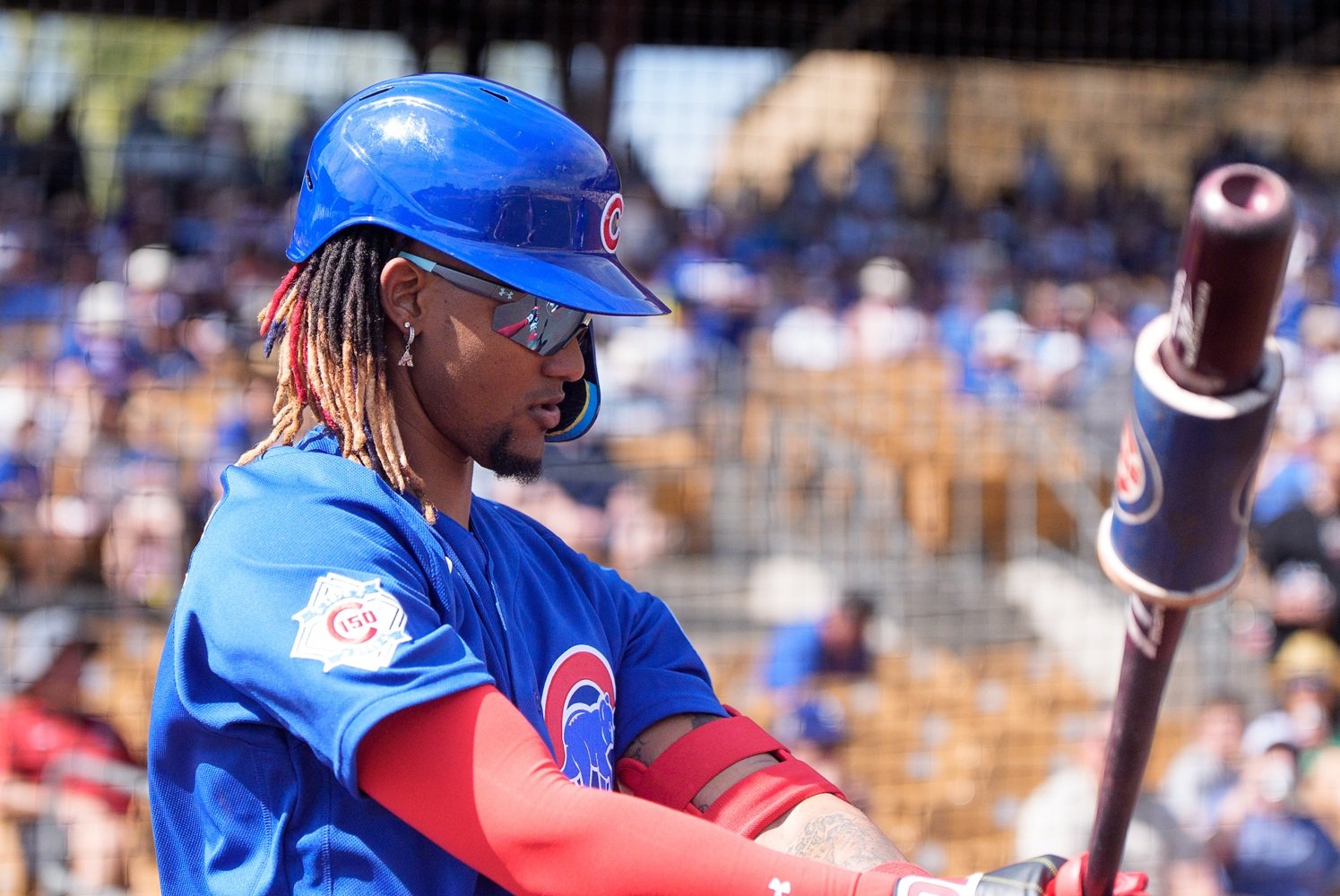 Having already examined the top 16 prospects in the Chicago Cubs' system as voted on by our North Side Baseball writers, we now turn to a player that has appeared on the cusp for a couple of years now: Kevin Alcantara. Don't forget to catch up on our previous pieces before you jump into our next installment! Prospects #20-16 Prospects #15-11 Prospect #10 - James Triantos Prospect #9 - Josiah Hartshorn Prospect #8 - Kane Kepley Prospect #7 - Pedro Ramirez Prospect #6 - Ethan Conrad Prospect #5 - Jonathon Long #4 - Kevin Alcántara (Iowa Cubs, Triple-A) Acquired in the deal that sent Anthony Rizzo to the New York Yankees, Alcántara's tools have remained as tantalizing as the prospect of him flashing said tools on the outfield grass at Wrigley. Loaded up on athleticism, it wouldn't be unreasonable to project him for an eventual 20-homer, 20-steal season at some point in the big leagues. As it is, Alcántara remains intriguing but heavily flawed. His .266/.349/.470 line in 2025 was a bit of a decrease across the board, though he did remain an above average hitter at a 110 wRC+. The concerning element was in the strikeout game, where his rate approached 30 percent (29.8) against an 11.2 percent walk rate. He did get an even dozen plate appearances at the top level, where he contributed four hits but where the punchouts followed him as well (33.3 percent). Ultimately, we don't know what the immediate or long-term outlook looks like for Alcántara as part of the Cubs organization. In the interim, though, we know where he looks the part and where he still needs to grow if he's to be a factor in either timeline. What To Like The athleticism highlights what we like about Alcántara. He's capable of driving the ball in those instances where he does make contact; while his average and on-base percentage each fell between 2024 and 2025, he did bump his isolated power from .177 to .203 between the two seasons in Iowa. A 10.9 percent barrel rate (88th percentile) and 46.4 percent hard-hit rate (81st percentile) are further indicative of the type of damage Alcántara can create when he puts the bat on the baseball. One imagines there's more than 17 homers (his current career-high mark) in the tank with more consistent contact. There's a baserunning component to Alcántara's game that drives the intrigue just that much more. FanGraphs has his speed graded a 60, indicating firmly above average. While he's only totaled 17 steals between two years (213 games) in Iowa, the possibility exists that there is more upside to be found there with a more sustained on-base presence. Alcántara also offers a steady glove and strong arm from any of the three outfield spots. Most of his work in Triple-A has come in center and right, with right field being a particularly intriguing position for him based on the arm. What To Work On This is where things get a bit dicey for Kevin Alcántara. It's not so much that he's an overaggressive swinger. Instead, there's a compounding of a long swing and some issues with pitch recognition that are pinning down his overall production. Alcántara's swing rate in Iowa last year was 44.2 percent. That's not out of the ordinary. Even a 29.2 percent chase rate might not be unreasonable for an organization that sends Pete Crow-Armstrong to the plate on an everyday basis. However, the contact rates themselves represent something much more concerning: Everything in Alcántara's percentile distribution is screaming about his approach. He's a bit too patient inside the zone, which exacerbates the problem when he chooses to chase. As a result, he doesn't make nearly enough contact to put his glistening tools to work. It's a visibly comprehensive issue. Alcántara's poor pitch recognition combines with a long swing that leaves him unable to compensate. He finds the walks and the hard contact, sure. But there's no sustainability in anything he's doing. It's difficult to suggest any kind of mechanical changes could be on the horizon given such positive outcomes when he does make contact. Anything that Alcántara needs to fix begins with mental work at the plate. The sooner he can start to dial in his eye, the sooner he becomes a viable piece at the major-league level. What's Next A combination of Alcántara's strikeout woes and a glut of right-handed bats on the current Cubs roster are likely to work in unison to send him back to Iowa to start 2026. Even if we were to strip him of the former, the outfield configuration doesn't leave much space for him to latch onto a spot. Ian Happ has left field on lock. Crow-Armstrong is the everyday guy in center. Seiya Suzuki figures to resume his old post in right field. Even if Suzuki were to factor into the designated hitter role on a consistent basis, it's likely the Cubs want Alcántara getting everyday work rather than sitting around as a reserve outfielder. Beyond 2026, however, it stands to reason that we'll see him holding down an outfield corner — Happ and Suzuki are each free agents to be. Considering the tools, if the Cubs get close to seeing what they want from Alcántara, he could very well get a crack at an everyday gig ahead of the 2027 campaign (assuming there is one).
 -
Chicago Cubs 2026 Top 20 Prospects, No. 5: Jonathon Long
RandallPnkFloyd posted an article in Minor Leagues
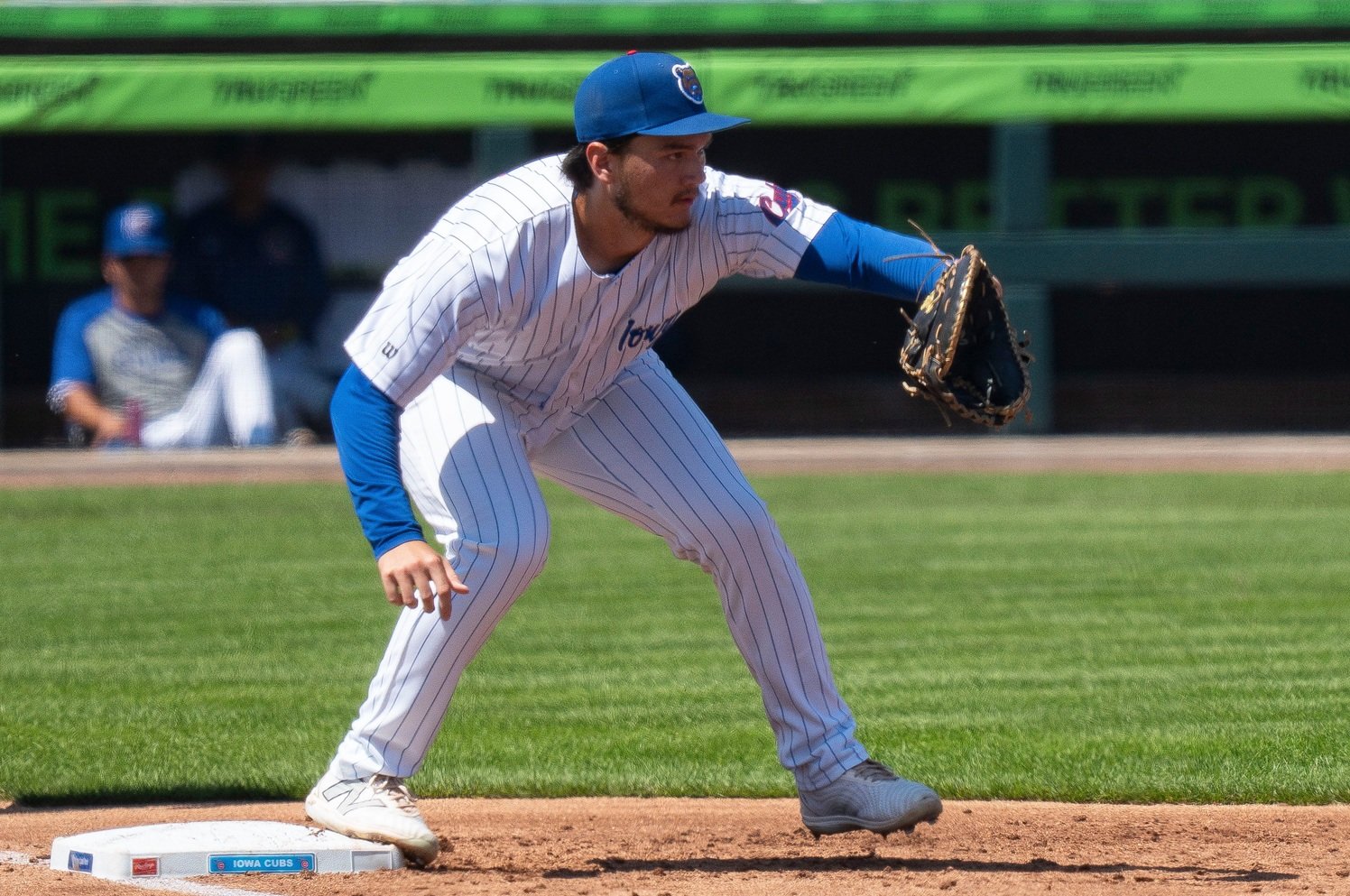 North Side Baseball's top-20 prospect rankings for the Chicago Cubs have reached the final quarter. That rundown continues today, with a look at our No. 5 prospect: corner infielder Jonathon Long. Don't forget to catch up on our previous pieces before you jump into our next installment! Prospects #20-16 Prospects #15-11 Prospect #10 - James Triantos Prospect #9 - Josiah Hartshorn Prospect #8 - Kane Kepley Prospect #7 - Pedro Ramirez Prospect #6 - Ethan Conrad No. 5: Jonathon Long (Triple-A Iowa) After splitting time between two levels in 2024, Long saw his first taste of Triple-A last year. He proved that he could hang around to the tune of a .305/.404/.479 batting line, a 19.1 percent strikeout rate against a 13.0 walk rate, and a 131 wRC+ across more than 600 plate appearances. Home runs were a fixture in his game, as he swatted 20 of them, including a multi-homer outing on July 4th of last year: It's an interesting profile, but one that needs just a bit more refinement before we start projecting a regular role for him at Wrigley Field. What To Like As evidenced by the above video, Long has plenty of pop in his game. His advanced approach allows him to create quality contact with a certain steadiness. As such, there's plenty to like in what Long turned in on the percentile side with the Iowa Cubs last year: Such an output is indicative of both the approach and the contact generated by it. The quality in the approach begets the quality of contact. However, as we've seen at the top level with the likes of Seiya Suzuki, there's also a line where the patience goes too far. Nevertheless, Long demonstrated a healthy balance between the two more often than he hasn't. In addition to driving the ball, he's also able to avoid strikeouts and draw walks. Which is important, since we don't always see those aspects collaborate in such a way as they did with Long last season. There's a significant amount of offensive upside in that bat, with the ability to log time at either corner. What To Work On The knock on Long's game is in the elevation and his lack of pull-side power. Sure, he popped 20 homers in 2025, but he also only ISO'd .173. Much of that is due to the fact that he put the ball on the ground to such a heavy extent. The rest of it comes a result of a virtually even split between pull and opposite field contact. Long pulled the ball at a 36.4 percent clip last year while going the other way 35.7 percent of the time. It speaks to the power upside that exists that Long was able to turn in such quality in his line even with each of those factors working against him. There's an obvious benefit in being able to drive the ball to all fields. But there's an even more obvious one in being able to elevate to the pull side, and Long's Pull-AIR rate falling at the extreme-low-end of the spectrum is going to pin those numbers down quite a bit until he adjusts. Employing such a patient approach should at least make such an adjustment a matter of pitch or zone selection rather than anything mechanical, though. What's Next Despite the fact that the bat is just about where it needs to be, Long doesn't have an obvious path to playing time with the Cubs. He logged time at first base, third base, and left field last year, but only 15 of those appearances combined came at either of the latter two spots. Which means that, for all intents and purposes, Long is blocked by Michael Busch. Craig Counsell is also more likely to rotate out the designated hitter spot or give something closer to a full-time look to Moisés Ballesteros, given how right-handed the Cubs' starting group currently figures to be. That doesn't mean that Long is too far off, however. While it'd be a tough sell to have one of your higher upside offensive prospects riding pine for much of the week, there may be just enough versatility that he could crack the roster for at least a cup of coffee at some point in 2026, barring injury or a reconfiguration of the roster that creates spots elsewhere that could lead to an extended stay. Ultimately, though, the positional aspect of Long might make him too rigid a prospect to see for an extended run on the North Side anytime soon. The offensive profile is certainly intriguing enough, but the Cubs lack the opening or the logistics on the roster that will instead result in Long logging a heavy share of his time back in Iowa for the foreseeable future. Should one of the longer-term scenarios arise, that could leave just the sliver of roster space that Jonathon Long needs to make his big-league debut.
 -
Image courtesy of © Thomas Shea-Imagn Images One of the more important developments for the 2025 Chicago Cubs was the evolution of Pete Crow-Armstrong from elite defender to all-around impact player. After finishing well into the below-average end of the wRC+ threshold in 2024 (86), Crow-Armstrong launched his offensive contribution up to a 112 mark in that respect, driven by a massive increase in power. The 2024 iteration of Crow-Armstrong posted 10 home runs and a .148 isolated slugging across 410 plate appearances, while this improved version went for 31 homers and a .234 ISO. He finished as the first Cubs player with 30 home runs and 30 steals in a season since Sammy Sosa did it twice in the early 1990s. That doesn't mean it was perfect, however. The concerns around Crow-Armstrong's plate discipline continued to manifest, and it's those very issues that played a significant role in a second half swoon from the team's star center fielder. While it wouldn't be out of line to discuss Crow-Armstrong's 2025 in the context of "breakout," it was very much a tale of two halves. Here's the breakdown from each side of the All-Star break for him last year: 1st Half: .265/.302/.544, 25 HR, 27 SB, 22.9 K%, 4.5 BB%, 131 wRC+ 2nd Half: .216/.262/.372, 6 HR, 8 SB, 25.6 K%, 4.5 BB%, 72 wRC+ There's some nuance to the splits in the sample (401 vs. 246 PA, respectively) and some bad luck on batted balls (.259 BABIP in the second half), but the difference in the numbers speak to some of the concerns that one might've had around Crow-Armstrong's profile from the jump. The strikeout rate climbed, but it wasn't an issue of being too aggressive in the way that one might also expect. His swing rate actually dropped in August to its lowest in an individual month (27.6 percent). Instead, it was a contact issue. Crow-Armstrong's chase rate went down, but his chase-and-miss rate reached its height in August (56.3 percent) while he struggled mightily against fastballs specifically by the end of the year. In September, his whiff rate against that pitch type (36.1 percent) was his highest in an individual month against any pitch from the three groups (fastball, breaking ball, off-speed). There are myriad factors that we could examine as to why there was such a drop-off in the second half; approach, mechanics, and burnout might've all played their role. Regardless of the root causes, it's clear that the second half decline in production is being taken into account heavily by projection systems. The following is how the various projection models figure Pete Crow-Armstrong for 2026: Steamer: .252/.301/.451, 20 HR, 27 SB, 23.5 K%, 5.5 BB%, 108 wRC+ ZiPS: .255/.304/.461, 25 HR, 32 SB, 24.6 K%, 5.4 BB%, 111 wRC+ ATC: .246/.296/.436, 23 HR, 33 SB, 24.2 K%, 5.6 BB%, 100 RC+ THE BAT X: .244/.296/.430, 22 HR, 35 SB, 24.9 K%, 5.8 BB%, 101 wRC+ OOPSY: .255/.306/.452, 25 HR, 37 SB, 24.1 K%, 5.7 BB%, 110 wRC+ The big takeaway is that it's mildly unusual to see projections so universal on an individual player. With the exception of slugging percentage where we see it a little more, there's very little variance across the board. Pretty much all of the systems like Crow-Armstrong to turn in a season quite similar to what we saw in 2025. But would that be satisfactory? If we wanted to be more pointed about it, what would a good season from Pete Crow-Armstrong actually look like? When he's "on," this is one of the most exciting players in the game. That manifests in terms of both power and speed offensively, with Crow-Armstrong possessing the ability to add to that excitement defensively. If we were going to quantify "good" for him, it likely starts with a continuation of those components on offense. Maintaining the counting stats (homers, steals) should allow him to keep that narrative alive. If we're going to classify it as a good year, though, the rate element will need to start to see some growth. That means that the approach needs to be reined in. It's very difficult for an aggressive hitter to tamp down on that aggression altogether, but if Crow-Armstrong can at least refine the approach to mitigate the strikeouts and create more balls-in-play opportunities, that can create a carryover into the other facets of his game. A few more walks or a few more infield hits should yield tremendous results for him as an individual and the collective lineup. There may not be much more than 30 homers in that bat, but there is certainly more upside to be realized in the swipes game if he's able to work his way on base with more consistency. And that's really what it comes down to for Pete Crow-Armstrong. We know what he adds on the defensive side; this is one of the best gloves in the sport regardless of position. For him, it's about getting that energy into something a bit more focused so that he can begin to drive his production up. The good news is that the projections anticipate at least a slight uptick in walks, which could be indicative of an increased focus on that element of his game. Expectations are a tricky quandary to solve, especially when someone as exciting as him does something like hit multiple home runs for Team USA in the World Baseball Classic. But if Crow-Armstrong can show a little more maturity at the plate while not sacrificing too much of what makes him so exciting to watch, it'll be hard to consider 2026 anything but a resounding success. View full article
-
 One of the more important developments for the 2025 Chicago Cubs was the evolution of Pete Crow-Armstrong from elite defender to all-around impact player. After finishing well into the below-average end of the wRC+ threshold in 2024 (86), Crow-Armstrong launched his offensive contribution up to a 112 mark in that respect, driven by a massive increase in power. The 2024 iteration of Crow-Armstrong posted 10 home runs and a .148 isolated slugging across 410 plate appearances, while this improved version went for 31 homers and a .234 ISO. He finished as the first Cubs player with 30 home runs and 30 steals in a season since Sammy Sosa did it twice in the early 1990s. That doesn't mean it was perfect, however. The concerns around Crow-Armstrong's plate discipline continued to manifest, and it's those very issues that played a significant role in a second half swoon from the team's star center fielder. While it wouldn't be out of line to discuss Crow-Armstrong's 2025 in the context of "breakout," it was very much a tale of two halves. Here's the breakdown from each side of the All-Star break for him last year: 1st Half: .265/.302/.544, 25 HR, 27 SB, 22.9 K%, 4.5 BB%, 131 wRC+ 2nd Half: .216/.262/.372, 6 HR, 8 SB, 25.6 K%, 4.5 BB%, 72 wRC+ There's some nuance to the splits in the sample (401 vs. 246 PA, respectively) and some bad luck on batted balls (.259 BABIP in the second half), but the difference in the numbers speak to some of the concerns that one might've had around Crow-Armstrong's profile from the jump. The strikeout rate climbed, but it wasn't an issue of being too aggressive in the way that one might also expect. His swing rate actually dropped in August to its lowest in an individual month (27.6 percent). Instead, it was a contact issue. Crow-Armstrong's chase rate went down, but his chase-and-miss rate reached its height in August (56.3 percent) while he struggled mightily against fastballs specifically by the end of the year. In September, his whiff rate against that pitch type (36.1 percent) was his highest in an individual month against any pitch from the three groups (fastball, breaking ball, off-speed). There are myriad factors that we could examine as to why there was such a drop-off in the second half; approach, mechanics, and burnout might've all played their role. Regardless of the root causes, it's clear that the second half decline in production is being taken into account heavily by projection systems. The following is how the various projection models figure Pete Crow-Armstrong for 2026: Steamer: .252/.301/.451, 20 HR, 27 SB, 23.5 K%, 5.5 BB%, 108 wRC+ ZiPS: .255/.304/.461, 25 HR, 32 SB, 24.6 K%, 5.4 BB%, 111 wRC+ ATC: .246/.296/.436, 23 HR, 33 SB, 24.2 K%, 5.6 BB%, 100 RC+ THE BAT X: .244/.296/.430, 22 HR, 35 SB, 24.9 K%, 5.8 BB%, 101 wRC+ OOPSY: .255/.306/.452, 25 HR, 37 SB, 24.1 K%, 5.7 BB%, 110 wRC+ The big takeaway is that it's mildly unusual to see projections so universal on an individual player. With the exception of slugging percentage where we see it a little more, there's very little variance across the board. Pretty much all of the systems like Crow-Armstrong to turn in a season quite similar to what we saw in 2025. But would that be satisfactory? If we wanted to be more pointed about it, what would a good season from Pete Crow-Armstrong actually look like? When he's "on," this is one of the most exciting players in the game. That manifests in terms of both power and speed offensively, with Crow-Armstrong possessing the ability to add to that excitement defensively. If we were going to quantify "good" for him, it likely starts with a continuation of those components on offense. Maintaining the counting stats (homers, steals) should allow him to keep that narrative alive. If we're going to classify it as a good year, though, the rate element will need to start to see some growth. That means that the approach needs to be reined in. It's very difficult for an aggressive hitter to tamp down on that aggression altogether, but if Crow-Armstrong can at least refine the approach to mitigate the strikeouts and create more balls-in-play opportunities, that can create a carryover into the other facets of his game. A few more walks or a few more infield hits should yield tremendous results for him as an individual and the collective lineup. There may not be much more than 30 homers in that bat, but there is certainly more upside to be realized in the swipes game if he's able to work his way on base with more consistency. And that's really what it comes down to for Pete Crow-Armstrong. We know what he adds on the defensive side; this is one of the best gloves in the sport regardless of position. For him, it's about getting that energy into something a bit more focused so that he can begin to drive his production up. The good news is that the projections anticipate at least a slight uptick in walks, which could be indicative of an increased focus on that element of his game. Expectations are a tricky quandary to solve, especially when someone as exciting as him does something like hit multiple home runs for Team USA in the World Baseball Classic. But if Crow-Armstrong can show a little more maturity at the plate while not sacrificing too much of what makes him so exciting to watch, it'll be hard to consider 2026 anything but a resounding success.
 -
Image courtesy of © Lily Smith/The Register / USA TODAY NETWORK via Imagn Images In the weeks leading up to this, we've explored the 11th- through 20th-ranked prospects in the Chicago Cubs system — as voted on by our North Side Baseball writers — with two installments of the down-the-list names and the top 10 being featured in individual profiles. That process continues today, with a look at our no. 5 prospect: corner infielder Jonathon Long. #9 - Jonathon Long (Iowa Cubs, Triple-A) After splitting time between two levels in 2024, Long saw his first taste of Triple-A the following season. He proved that he could hang around to the tune of a .305/.404/.479 batting line, a 19.1 percent strikeout rate against a 13.0 walk rate, and a 131 wRC+ across more than 600 plate appearances. Home runs were a fixture in his game, as he swatted 20 of them, including a multi-homer outing on July 4th of last year: It's an interesting profile, but one that needs just a bit more refinement before we start projecting a regular role for him at Wrigley Field. What To Like As evidenced by the above video, Long has plenty of pop in his game. His advanced approach allows him to create quality contact with a certain steadiness. As such, there's plenty to like in what Long turned in on the percentile side with the Iowa Cubs last year: Such an output is indicative of both the approach and the contact generated by it. For the most part, there's a blend of both. The quality in the approach begets the quality of contact. However, as we've seen at the top level with the likes of Seiya Suzuki, there's also a line where the patience goes too far. Nevertheless, Long demonstrated a healthy balance between the two more often than he hasn't. In addition to driving the ball off the approach, he's also able to avoid strikeouts and draw walks. Which is important, since we don't always see those aspects collaborate in such a way as they did with Long last season. There's a significant amount of offensive upside in that bat, with the ability to log time at either corner. What To Work On The knock on Long's game is in the elevation and the lack of work on the pull side. Sure, he popped 20 homers in 2025, but he also only ISO'd .173. Much of that is due to the fact that he put the ball on the ground to such a heavy extent. The rest of it comes a result of a virtually even split between pull and opposite field contact. Long pulled the ball at a 36.4 percent clip last year while going oppo 35.7 percent of the time. It speaks to the power upside that exists that Long was able to turn in such quality in his line even with each of those factors working against him. There's an obvious benefit in being able to drive the ball to all fields. But there's an even more obvious one in being able to elevate to the pull side, and Long's Pull AIR rate falling at the extreme-low-end of the spectrum is going to pin those numbers down quite a bit until he adjusts. Employing such a patient approach should at least make such an adjustment a matter of pitch or zone selection rather than anything mechanical, though. What's Next Despite the fact that the bat is just about where it needs to be, Long doesn't have an obvious path to playing time with the Cubs. He logged time at first base, third base, and left field last year, but only 15 of those appearances combined came at either of the latter two spots. Which means that, for all intents and purposes, Long is blocked by Michael Busch. Craig Counsell is also more likely to rotate out the designated hitter spot or something closer to a full-time look to Moisés Ballesteros than he'd be with long, given how right-handed the Cubs' starting group currently figures to be. That doesn't mean that Long is too far off, however. While it'd be a tough sell to have one of your higher upside offensive prospects riding pine for much of the week, there may be just enough versatility that he could crack the roster for at least a cup of coffee at some point in 2026, barring injury or a reconfiguration of the roster that creates left-handed spots elsewhere that could lead to an extended stay. Ultimately, though, the positional aspect of Long might make him too rigid a prospect to see for an extended run on the North Side anytime soon. The offensive profile is certainly intriguing enough, but the Cubs lack the opening or the logistics on the roster that will instead result in Long logging a heavy share of his time back in Iowa for the foreseeable future. Should one of the longer-term scenarios arise, however, that could leave just the sliver of roster space that Jonathon Long needs to make his big-league debut. View full article
-
Image courtesy of © Allan Henry-Imagn Images Having already examined the top 16 prospects in the Chicago Cubs' system as voted on by our North Side Baseball Writers we now turn to a player that has appeared on the cusp for a couple of years now: Kevin Alcántara. #4 - Kevin Alcántara (Iowa Cubs, Triple-A) Acquired in the deal that sent Anthony Rizzo to the New York Yankees, Alcántara's tools have remained as tantalizing as the prospect of him flashing said tools on the outfield grass at Wrigley. Loaded up on athleticism, it wouldn't be unreasonable to project him for an eventual 20 homer, 20 steal season at some point in the big leagues. As it is, Alcántara remains intriguing but heavily flawed. His .266/.349/.470 line was a bit of a decrease across the board, though he did remain an above average hitter at a 110 wRC+. The concerning element was in the strikeout game, where his rate approached 30 percent (29.8) against an 11.2 percent walk rate. He did get an even dozen plate appearances at the top level, where he contributed four hits but where the punchouts followed him as well (33.3 percent). Ultimately, we don't know what the immediate or long-term outlook looks like for Alcántara as part of the Cubs organization. In the interim, though, we know where he looks the part and where he still needs to grow if he's to be a factor in either timeline. What To Like The athleticism highlights what we like about Alcántara. He's capable of driving the ball in those instances where he does make contact; while his average and on-base percentage each fell between 2024 and 2025, he did bump the isolated power from .177 to .203 between the two seasons in Iowa. A 10.9 percent barrel rate (88th percentile) and 46.4 percent hard hit rate (81st percentile) are further indicative of the type of damage Alcántara can create when he puts the bat on the baseball. One imagines there's more than 17 homers (his current career mark) in the tank with more consistent contact. There's a baserunning component to Alcántara's game that drives the intrigue just that much more. FanGraphs has his speed graded a 60, indicating above average. While he's only totaled 17 steals between two years (213 games) in Iowa, the possibility exists that there is more upside to be found there with a more sustained on base presence. Alcántara also offers a steady glove and strong arm from any of the three outfield spots. Most of his work in Triple-A has come in center and right, with right field being a particularly intriguing position for him based on the arm. What To Work On This is where things get a bit dicey for Kevin Alcántara. It's not so much that he's an overaggressive swinger. Instead, there's a compounding of a long swing and some issues with pitch recognition that are pinning down his overall production. Alcántara's swing rate in Iowa last year was 44.2 percent. That's not out of the ordinary. Even a 29.2 percent chase rate might not be unreasonable for an organization that sends Pete Crow-Armstrong to the plate on an everyday basis. However, the contact rates themselves represent something much more concerning: Everything in Alcántara's percentile distribution is screaming about his approach. He's a bit too patient inside the zone, which exacerbates the problem when he chooses to chase. As a result, he doesn't make nearly enough contact to put the tools to work. It's a visibly comprehensive issue. Alcántara's poor pitch recognition combines with a long swing that leaves him unable to compensate. He finds the walks and the hard contact, sure. But there's no sustainability in anything he's doing. It's difficult to suggest any kind of mechanical changes could be on the horizon given such positive outcomes when he does make contact. Anything that Alcántara needs to fix begins with the mental work at the plate. The sooner he can start to dial in the eye, the sooner he becomes a viable piece at the major-league level. What's Next A combination of Alcántara's strikeout woes and a glut of right-handed bats on the current Cubs roster are likely to work in unison to send him back to Iowa to start 2026. Even we were to strip him of the former, the outfield configuration doesn't leave much space for him to latch onto a spot. Ian Happ has left field on lock. Crow-Armstrong is the everyday guy in center. Seiya Suzuki figures to resume his old post bag in right field. Even if Suzuki were to factor into the designated hitter role on a consistent basis, it's likely the Cubs want Alcántara getting everyday work rather than sitting as a reserve outfielder. Beyond 2026, however, it stands to reason that we'll see him holding down an outfield corner. Happ & Suzuki are each free agents. Considering the tools, if the Cubs get close to seeing what they want from Alcántara, he could very well get a crack at an everyday gig ahead of the 2027 campaign (assuming we have one). View full article
-
Image courtesy of © Rick Scuteri-Imagn Images With the spring exhibition season underway, there isn't a ton for the Chicago Cubs to figure out—at least when it comes to their regulars. Their lineup is largely set and, with the exception of the Alex Bregman signing, really has been all winter. Instead, the positional focus this spring is on who will round out the positional half of the roster from the bench. We know that Matt Shaw will assume a utility role on the infield and get occasional outfield work. We also know that Miguel Amaya will serve as the de facto no. 2 behind the plate (though it's likely to be a relatively even timeshare with Carson Kelly). If we're to assume Tyler Austin gets the third bench spot as a right-handed complement for Michael Busch at first base and occasional designated hitter, that leaves just one spot. We know that spot will go to an outfielder. Which outfielder, however, is arguably camp's most active question. It's not just that the Cubs have a set outfield. They have a trio of which each figures to log heavy playing time (barring injury). At present, FanGraphs projects Ian Happ for 93 percent of the time in left field, Pete Crow-Armstrong for 92 percent of it in center, and Seiya Suzuki in right field 76 percent of the time. That workload further supports the idea of the fourth spot going to someone from the outfield mix, which means you're looking at four names for one opening. Kevin Alcántara and Justin Dean are the options currently on the Cubs' 40-man roster. They're joined by non-roster invitees Dylan Carlson and Chas McCormick. On Monday, the Cubs added Michael Conforto to that latter group. The foursome enter the picture at very different stages of their respective careers, the nuance of which could inform the choice that Craig Counsell and company make about who resides on the roster by the end of March. The following is what each produced at the level at which they spent the most time in 2025: Kevin Alcántara (Iowa Cubs): 430 PA, .266/.349/.470, 29.8 K%, 11.2 BB%, 110 wRC+ Chas McCormick (Astros): 116 PA, .210/.279/.290, 26.7 K%, 7.8 BB%, 62 wRC+ Dylan Carlson (Orioles): 241 PA, .203/.278/.336, 22.4 K%, 8.7 BB%, 74 wRC+ Michael Conforto (Dodgers): 486 PA, .199/.305/.333, 24.9 K%, 11.5 BB%, 83 wRC+ Justin Dean (Oklahoma City Comets): 347 PA, .289/.378/.431, 23.6 K%, 11.2 BB%, 110 wRC+ It's not a particularly inspiring group. But they all have at least a history of upside. Even Dean, a late bloomer who wasn't even a high draft pick when he entered pro ball years ago, has defensive value and put up good enough numbers in Triple-A to earn a place with the eventual champion Dodgers during October. Alcántara's case is a little bit different than the others. In a perfect world, his best days are ahead of him. He's done solid work in the minors and is capable of holding down all three spots, but his strikeout rate remains concerning. Meanwhile, McCormick missed a good chunk of last season with an oblique injury and is two years removed from a 22-homer, 19-steal season with Houston. Carlson has never quite lived up to his billing as a prospect, with health issues of his own playing their part since a third-place finish in the Rookie of the Year voting back in 2021. Conforto has his own spotty history but a longer track record, with his approach remaining a steady component of an otherwise deteriorating offensive skill set. Before we can determine which outfielder may best serve the Cubs' needs off the bench, though, it's important to determine exactly what profile they may be looking for. The starting outfield features a nice mix of skill sets. Happ brings a switch-hitting, on-base-driven approach. Crow-Armstrong offers significant power and speed from the left side of the plate, if the contact can come through enough for each to be maximized. Suzuki blends patience with power as a right-handed hitter. However, it's also not so much a need to supplement the outfield group itself as it is to supplement the rest of the lineup. The Cubs are a righty-heavy group. They have Suzuki, Bregman, Dansby Swanson, Nico Hoerner, and both Kelly and Amaya. Moisés Ballesteros could balance things somewhat if he wins the first crack at the DH gig, but the possibility exists that he spends at least a little bit of time in Iowa to start the year. That means Crow-Armstrong and Busch are the only lefties projected to get regular work at present. With one of Kelly or Amaya, Shaw, and Austin on the bench, it's a group thin on lefties—which automatically begins to point us in a particular direction. Interestingly, the one that feels the easiest to eliminate from the discussion is the one who performed at the highest level in 2025, albeit in the minor leagues. Alcántara presents decent power, 10-15 steal potential, and athleticism to hold down any of the three spots. At the same time, he'd worsen that rightward lean for the overall group. Besides, the Cubs would probably want to ensure that he's playing as close to an everyday capacity as possible. Unless the Cubs find themselves in a situation where Ballesteros isn't ready and the DH remains more in flux, the assumption should be for Alcántara to start the year back in Iowa until a consistent spot at which to play opens up. McCormick also feels unlikely to be a part of the Opening Day roster. His power vanished entirely last year, and his splits against lefties (137 wRC+) are considerably better than they are against pitchers of the same handedness (93 wRC+). Even as a steady fielder—30 Outs Above Average in his career at all three spots—the fit just isn't apparent. Dean is McCormick, without the pop McCormick once showed. That leaves us with Carlson and Conforto. Carlson, at least, offers a presence as a switch-hitter. He has prospect pedigree and a steady approach, the latter of which he was able to parlay into a strong strikeout-to-walk ratio and consistently squared-up contact. Then, you look at the splits. Against right-handed pitching, Carlson's career wRC+ is just 83. His career average (.217) is nearly 60 points lower than it is against lefties. The power is consistent on both sides, but the strikeouts and walks are also each slightly worse. If the purpose of a hitter capable of swinging lefty is to combat tougher righties or swing in as a designated hitter, Carlson's probably not your guy. That means that the Cubs could very well find themselves in position to rely upon Michael Conforto as their bench bat, to start the season. Conforto does have some things going for him. His chase rate (23.2 percent) was in the 82nd percentile, which begot an 84th percentile walk rate. However, his quality-of-contact metrics regressed in 2025. His barrel rate fell by about two percentage points, and his hard-hit rate did about the same. While that is an obvious decrease, though, it also doesn't justify a 30-point drop in batting average on balls in play, to .247. Despite his own checkered history on the health front, Conforto has shown offensive chops more recently than his counterparts in this discussion. His barrel rate in 2024 (11.8%) was in the 80th percentile, and his hard-hit rate was in the 77th (46.0%). If the Cubs think they can make the tweaks to get him back in that direction, then his being a left-handed bat should, automatically, give him the edge. At that point, though, the Cubs would have to account for the fact that he hasn't appeared in center field since 2019. With Conforto on the bench, you're looking at Suzuki or Shaw sliding over when Crow-Armstrong needs a day off. Regardless, one imagines that the team would prioritize the bat over the glove. In a lineup that leans so heavily to one side, that feels like the more immediate concern. Given what we're looking at with this group, Conforto is the leading candidate for the final bench spot. With the ability to option Dean and Alcántara to Iowa, the team can afford to let them wait in the minors. View full article
-
 With the spring exhibition season underway, there isn't a ton for the Chicago Cubs to figure out—at least when it comes to their regulars. Their lineup is largely set and, with the exception of the Alex Bregman signing, really has been all winter. Instead, the positional focus this spring is on who will round out the positional half of the roster from the bench. We know that Matt Shaw will assume a utility role on the infield and get occasional outfield work. We also know that Miguel Amaya will serve as the de facto no. 2 behind the plate (though it's likely to be a relatively even timeshare with Carson Kelly). If we're to assume Tyler Austin gets the third bench spot as a right-handed complement for Michael Busch at first base and occasional designated hitter, that leaves just one spot. We know that spot will go to an outfielder. Which outfielder, however, is arguably camp's most active question. It's not just that the Cubs have a set outfield. They have a trio of which each figures to log heavy playing time (barring injury). At present, FanGraphs projects Ian Happ for 93 percent of the time in left field, Pete Crow-Armstrong for 92 percent of it in center, and Seiya Suzuki in right field 76 percent of the time. That workload further supports the idea of the fourth spot going to someone from the outfield mix, which means you're looking at four names for one opening. Kevin Alcántara and Justin Dean are the options currently on the Cubs' 40-man roster. They're joined by non-roster invitees Dylan Carlson and Chas McCormick. On Monday, the Cubs added Michael Conforto to that latter group. The foursome enter the picture at very different stages of their respective careers, the nuance of which could inform the choice that Craig Counsell and company make about who resides on the roster by the end of March. The following is what each produced at the level at which they spent the most time in 2025: Kevin Alcántara (Iowa Cubs): 430 PA, .266/.349/.470, 29.8 K%, 11.2 BB%, 110 wRC+ Chas McCormick (Astros): 116 PA, .210/.279/.290, 26.7 K%, 7.8 BB%, 62 wRC+ Dylan Carlson (Orioles): 241 PA, .203/.278/.336, 22.4 K%, 8.7 BB%, 74 wRC+ Michael Conforto (Dodgers): 486 PA, .199/.305/.333, 24.9 K%, 11.5 BB%, 83 wRC+ Justin Dean (Oklahoma City Comets): 347 PA, .289/.378/.431, 23.6 K%, 11.2 BB%, 110 wRC+ It's not a particularly inspiring group. But they all have at least a history of upside. Even Dean, a late bloomer who wasn't even a high draft pick when he entered pro ball years ago, has defensive value and put up good enough numbers in Triple-A to earn a place with the eventual champion Dodgers during October. Alcántara's case is a little bit different than the others. In a perfect world, his best days are ahead of him. He's done solid work in the minors and is capable of holding down all three spots, but his strikeout rate remains concerning. Meanwhile, McCormick missed a good chunk of last season with an oblique injury and is two years removed from a 22-homer, 19-steal season with Houston. Carlson has never quite lived up to his billing as a prospect, with health issues of his own playing their part since a third-place finish in the Rookie of the Year voting back in 2021. Conforto has his own spotty history but a longer track record, with his approach remaining a steady component of an otherwise deteriorating offensive skill set. Before we can determine which outfielder may best serve the Cubs' needs off the bench, though, it's important to determine exactly what profile they may be looking for. The starting outfield features a nice mix of skill sets. Happ brings a switch-hitting, on-base-driven approach. Crow-Armstrong offers significant power and speed from the left side of the plate, if the contact can come through enough for each to be maximized. Suzuki blends patience with power as a right-handed hitter. However, it's also not so much a need to supplement the outfield group itself as it is to supplement the rest of the lineup. The Cubs are a righty-heavy group. They have Suzuki, Bregman, Dansby Swanson, Nico Hoerner, and both Kelly and Amaya. Moisés Ballesteros could balance things somewhat if he wins the first crack at the DH gig, but the possibility exists that he spends at least a little bit of time in Iowa to start the year. That means Crow-Armstrong and Busch are the only lefties projected to get regular work at present. With one of Kelly or Amaya, Shaw, and Austin on the bench, it's a group thin on lefties—which automatically begins to point us in a particular direction. Interestingly, the one that feels the easiest to eliminate from the discussion is the one who performed at the highest level in 2025, albeit in the minor leagues. Alcántara presents decent power, 10-15 steal potential, and athleticism to hold down any of the three spots. At the same time, he'd worsen that rightward lean for the overall group. Besides, the Cubs would probably want to ensure that he's playing as close to an everyday capacity as possible. Unless the Cubs find themselves in a situation where Ballesteros isn't ready and the DH remains more in flux, the assumption should be for Alcántara to start the year back in Iowa until a consistent spot at which to play opens up. McCormick also feels unlikely to be a part of the Opening Day roster. His power vanished entirely last year, and his splits against lefties (137 wRC+) are considerably better than they are against pitchers of the same handedness (93 wRC+). Even as a steady fielder—30 Outs Above Average in his career at all three spots—the fit just isn't apparent. Dean is McCormick, without the pop McCormick once showed. That leaves us with Carlson and Conforto. Carlson, at least, offers a presence as a switch-hitter. He has prospect pedigree and a steady approach, the latter of which he was able to parlay into a strong strikeout-to-walk ratio and consistently squared-up contact. Then, you look at the splits. Against right-handed pitching, Carlson's career wRC+ is just 83. His career average (.217) is nearly 60 points lower than it is against lefties. The power is consistent on both sides, but the strikeouts and walks are also each slightly worse. If the purpose of a hitter capable of swinging lefty is to combat tougher righties or swing in as a designated hitter, Carlson's probably not your guy. That means that the Cubs could very well find themselves in position to rely upon Michael Conforto as their bench bat, to start the season. Conforto does have some things going for him. His chase rate (23.2 percent) was in the 82nd percentile, which begot an 84th percentile walk rate. However, his quality-of-contact metrics regressed in 2025. His barrel rate fell by about two percentage points, and his hard-hit rate did about the same. While that is an obvious decrease, though, it also doesn't justify a 30-point drop in batting average on balls in play, to .247. Despite his own checkered history on the health front, Conforto has shown offensive chops more recently than his counterparts in this discussion. His barrel rate in 2024 (11.8%) was in the 80th percentile, and his hard-hit rate was in the 77th (46.0%). If the Cubs think they can make the tweaks to get him back in that direction, then his being a left-handed bat should, automatically, give him the edge. At that point, though, the Cubs would have to account for the fact that he hasn't appeared in center field since 2019. With Conforto on the bench, you're looking at Suzuki or Shaw sliding over when Crow-Armstrong needs a day off. Regardless, one imagines that the team would prioritize the bat over the glove. In a lineup that leans so heavily to one side, that feels like the more immediate concern. Given what we're looking at with this group, Conforto is the leading candidate for the final bench spot. With the ability to option Dean and Alcántara to Iowa, the team can afford to let them wait in the minors.
- 9 comments
-
- 1
-

-
- justin dean
- chas mccormick
- (and 3 more)
-
Image courtesy of © Rick Scuteri-Imagn Images The Chicago Cubs enter 2026 as a team that looks largely the same offensively. Some dynamics will shift, of course. Alex Bregman is replacing both Matt Shaw and Kyle Tucker, in two different ways. Moisés Ballesteros is likely to get the first shot as the team's designated hitter, and the platoon partner for both Ballesteros and first baseman Michael Busch is newcomer Tyler Austin. On a team with so little turnover, certain adjustments are going to need to be made on an individual level in order for this offense to ascend. What those adjustments look like, however, differs from hitter to hitter. Let's take a look at what the team's presumed starters at each position (sans Ballesteros, given uncertainty around his role) need to tweak ahead of the upcoming season. Carson Kelly: Sustain the Approach Few hitters were better than Carson Kelly last April, regardless of position. Kelly slashed .360/.507/.840, for a 257 wRC+. It was the kind of month that props up your numbers for the entire year. Unfortunately, things didn't really carry over into the subsequent months for the Cubs' starting catcher. Some of that is natural regression, but a lot of it is due to him losing his approach. Kelly's only two above-average months were April & July. It's not a coincidence that those two months featured his lowest chase rates (very impressive 17% marks). That rate increased steadily over the past two months of the year. The result? His walk rate was nearly cut in half and his strikeout rate spiked by nearly eight percentage points. Plate discipline erodes when players don't get enough time off, and Kelly took on a heavy workload after injuries sidelined Miguel Amaya. Regardless of how much he plays, though, Kelly needs to exercise more consistent patience. Michael Busch: Improve Bat Speed Busch had an excellent 2025. He continued to improve his approach and drove his power figure up, to the tune of 34 home runs and a .261 ISO that was nearly 70 points above what he posted as a rookie. However, Busch's swing is extraordinarily slow for a slugger. His 69.6 MPH average swing speed was ahead of only Nico Hoerner among Cubs hitters last season. He generates tons of squared-up contact (28.9 percent of swings), but didn't gain much traction in the blasts department, which links the ideal contact with a fast swing. While Busch's home run and ISO totals each landed in the top 15, his blast rate was just 76th in the league. There's a nearly unavoidable tradeoff between swing speed and barrel accuracy, and Busch favored the former last year, with stellar results. Still, he might need to rebalance those two objectives to have a similarly strong 2026. Nico Hoerner: Zone Awareness We recently profiled Hoerner, who saw a slight bump in his power output in the second half of 2025 after it was absent for most of the year. There's a bit of evidence that it was due to increased action on fastballs inside the strike zone, but there is more that indicates it was due to where in the zone Hoerner was swinging. Much of his power comes on the inner third of the plate. Even with the slowest swing on the current roster, it stands to reason that a fusion of the two ideas—wherein Hoerner concentrates on fastballs within that preferred zone—could yield more consistent power outcomes. They'd still be modest, but it would be a way for Hoerner to take a step forward. It might cost him plate coverage, though, so he'd need to be slightly more disciplined in order to make that shift in focus work. Dansby Swanson: Swap Power for Contact Swanson's .173 ISO in 2025 was his best since 2021. Despite just average bat speed, he finished in the 80th percentile in hard-hit rate (47.8%) and the 74th percentile in barrel rate (11.7%). A concentration on fastballs helped, as his 55.6% swing rate against them was not only his highest against any pitch group but the highest rate of his career. The issue is that he's not generating enough contact to make the power outcomes as impactful. His contact rate was down about two percentage points from the two previous years, and he whiffed at a higher frequency than at any point in his career (14.3% of all pitches seen). His contact rate on pitches outside the zone dropped by roughly 12 percentage points, too, which is indicative of a player selling out on a pitch type (fastballs) even if not totally selling out for power itself. That loss of out-of-zone contact is also part of the aging curve for most hitters, so he's unlikely to recover it. He'll have to be more focused on contact just to sustain his current level. There's still value in the bat, but more contact would help it to be realized with more regularity—even if it has to come at the expense of taking the occasional fastball. Alex Bregman: Sustain This is more of an incomplete case, as we haven't seen Alex Bregman suit up for the Cubs yet. In theory, Bregman's profile should play better at Wrigley Field than most right-handed hitters. He's not a pure pull-side guy, leaning on left-center for his power more than yanking it down the line like Isaac Paredes. Everything else about his profile screams success; he has a relentless approach with upper-tier contact skills. Given that he's not a barrel merchant, though, continuing to make the type of contact that he does will be crucial for him to avoid the pitfalls that ruined the Chicago stays of guys like Paredes and Trey Mancini. Ian Happ: Increased Aggression Much of Happ's value lies in his plate discipline, so it'd be foolhardy to suggest he overhaul his approach. Part of the nature of working deep counts, though, is that you miss out on fastballs earlier in at-bats and are prone to an above-average strikeout rate. He obviously compensates well with his walk rate, but there's something to be said for Happ trying to be more aggressive in certain instances. In five of the last six seasons, Happ's biggest slugging output came on fastballs. Generally, however, it's that pitch type against which he swings least often (something that is even more true inside the zone). While he shouldn't abandon his sense of the zone, being more selectively aggressive could lead to a more impactful presence wherever he lands in the 2026 lineup. Pete Crow-Armstrong: Make More Contact The upside—the superstar potential—for Crow-Armstrong is obvious. The issue is that neither his speed nor his power can show up if he's forever chasing, and missing. He swung at roughly the same rate of pitches in 2025 as the year before, with a nice bump in the in-zone rate against the chase rate. He also made significantly less contact when he did chase, though. It might be unreasonable to expect him to tamp down the swing rate itself, but more contact could beget more positive results, especially given that speed. He wouldn't be the first aggressive hitter to make that profile work, but it's going to require more competence in generating contact than we've seen to date. Of course, the surest path to more contact is better swing decisions. Seiya Suzuki: Work the Edges Seiya Suzuki is one of the game's most patient hitters, but his approach is highly specific—and the problematic aspects of his patience show up in one particular segment of the hitting zone. As such, Suzuki's situation isn't all that similar to Happ, who could stand to swing with more regularity in general. Suzuki needs to figure out how, on occasion, to anticipate and attack even well-executed pitches on the edges of the zone. His -21 run value on pitches on the shadow of the zone (within a ball's diameter of the edge of the zone, in either direction) was better than only Swanson's -25, among last year's Cubs. Only Busch and Tucker featured a better cumulative run value than Suzuki's 18, which speaks to the opportunities missed by being so precise with the approach. It's not about opening up the zone fully, but taking advantage of better preparation by not giving in to pitchers who locate well. View full article
-
 The Chicago Cubs enter 2026 as a team that looks largely the same offensively. Some dynamics will shift, of course. Alex Bregman is replacing both Matt Shaw and Kyle Tucker, in two different ways. Moisés Ballesteros is likely to get the first shot as the team's designated hitter, and the platoon partner for both Ballesteros and first baseman Michael Busch is newcomer Tyler Austin. On a team with so little turnover, certain adjustments are going to need to be made on an individual level in order for this offense to ascend. What those adjustments look like, however, differs from hitter to hitter. Let's take a look at what the team's presumed starters at each position (sans Ballesteros, given uncertainty around his role) need to tweak ahead of the upcoming season. Carson Kelly: Sustain the Approach Few hitters were better than Carson Kelly last April, regardless of position. Kelly slashed .360/.507/.840, for a 257 wRC+. It was the kind of month that props up your numbers for the entire year. Unfortunately, things didn't really carry over into the subsequent months for the Cubs' starting catcher. Some of that is natural regression, but a lot of it is due to him losing his approach. Kelly's only two above-average months were April & July. It's not a coincidence that those two months featured his lowest chase rates (very impressive 17% marks). That rate increased steadily over the past two months of the year. The result? His walk rate was nearly cut in half and his strikeout rate spiked by nearly eight percentage points. Plate discipline erodes when players don't get enough time off, and Kelly took on a heavy workload after injuries sidelined Miguel Amaya. Regardless of how much he plays, though, Kelly needs to exercise more consistent patience. Michael Busch: Improve Bat Speed Busch had an excellent 2025. He continued to improve his approach and drove his power figure up, to the tune of 34 home runs and a .261 ISO that was nearly 70 points above what he posted as a rookie. However, Busch's swing is extraordinarily slow for a slugger. His 69.6 MPH average swing speed was ahead of only Nico Hoerner among Cubs hitters last season. He generates tons of squared-up contact (28.9 percent of swings), but didn't gain much traction in the blasts department, which links the ideal contact with a fast swing. While Busch's home run and ISO totals each landed in the top 15, his blast rate was just 76th in the league. There's a nearly unavoidable tradeoff between swing speed and barrel accuracy, and Busch favored the former last year, with stellar results. Still, he might need to rebalance those two objectives to have a similarly strong 2026. Nico Hoerner: Zone Awareness We recently profiled Hoerner, who saw a slight bump in his power output in the second half of 2025 after it was absent for most of the year. There's a bit of evidence that it was due to increased action on fastballs inside the strike zone, but there is more that indicates it was due to where in the zone Hoerner was swinging. Much of his power comes on the inner third of the plate. Even with the slowest swing on the current roster, it stands to reason that a fusion of the two ideas—wherein Hoerner concentrates on fastballs within that preferred zone—could yield more consistent power outcomes. They'd still be modest, but it would be a way for Hoerner to take a step forward. It might cost him plate coverage, though, so he'd need to be slightly more disciplined in order to make that shift in focus work. Dansby Swanson: Swap Power for Contact Swanson's .173 ISO in 2025 was his best since 2021. Despite just average bat speed, he finished in the 80th percentile in hard-hit rate (47.8%) and the 74th percentile in barrel rate (11.7%). A concentration on fastballs helped, as his 55.6% swing rate against them was not only his highest against any pitch group but the highest rate of his career. The issue is that he's not generating enough contact to make the power outcomes as impactful. His contact rate was down about two percentage points from the two previous years, and he whiffed at a higher frequency than at any point in his career (14.3% of all pitches seen). His contact rate on pitches outside the zone dropped by roughly 12 percentage points, too, which is indicative of a player selling out on a pitch type (fastballs) even if not totally selling out for power itself. That loss of out-of-zone contact is also part of the aging curve for most hitters, so he's unlikely to recover it. He'll have to be more focused on contact just to sustain his current level. There's still value in the bat, but more contact would help it to be realized with more regularity—even if it has to come at the expense of taking the occasional fastball. Alex Bregman: Sustain This is more of an incomplete case, as we haven't seen Alex Bregman suit up for the Cubs yet. In theory, Bregman's profile should play better at Wrigley Field than most right-handed hitters. He's not a pure pull-side guy, leaning on left-center for his power more than yanking it down the line like Isaac Paredes. Everything else about his profile screams success; he has a relentless approach with upper-tier contact skills. Given that he's not a barrel merchant, though, continuing to make the type of contact that he does will be crucial for him to avoid the pitfalls that ruined the Chicago stays of guys like Paredes and Trey Mancini. Ian Happ: Increased Aggression Much of Happ's value lies in his plate discipline, so it'd be foolhardy to suggest he overhaul his approach. Part of the nature of working deep counts, though, is that you miss out on fastballs earlier in at-bats and are prone to an above-average strikeout rate. He obviously compensates well with his walk rate, but there's something to be said for Happ trying to be more aggressive in certain instances. In five of the last six seasons, Happ's biggest slugging output came on fastballs. Generally, however, it's that pitch type against which he swings least often (something that is even more true inside the zone). While he shouldn't abandon his sense of the zone, being more selectively aggressive could lead to a more impactful presence wherever he lands in the 2026 lineup. Pete Crow-Armstrong: Make More Contact The upside—the superstar potential—for Crow-Armstrong is obvious. The issue is that neither his speed nor his power can show up if he's forever chasing, and missing. He swung at roughly the same rate of pitches in 2025 as the year before, with a nice bump in the in-zone rate against the chase rate. He also made significantly less contact when he did chase, though. It might be unreasonable to expect him to tamp down the swing rate itself, but more contact could beget more positive results, especially given that speed. He wouldn't be the first aggressive hitter to make that profile work, but it's going to require more competence in generating contact than we've seen to date. Of course, the surest path to more contact is better swing decisions. Seiya Suzuki: Work the Edges Seiya Suzuki is one of the game's most patient hitters, but his approach is highly specific—and the problematic aspects of his patience show up in one particular segment of the hitting zone. As such, Suzuki's situation isn't all that similar to Happ, who could stand to swing with more regularity in general. Suzuki needs to figure out how, on occasion, to anticipate and attack even well-executed pitches on the edges of the zone. His -21 run value on pitches on the shadow of the zone (within a ball's diameter of the edge of the zone, in either direction) was better than only Swanson's -25, among last year's Cubs. Only Busch and Tucker featured a better cumulative run value than Suzuki's 18, which speaks to the opportunities missed by being so precise with the approach. It's not about opening up the zone fully, but taking advantage of better preparation by not giving in to pitchers who locate well.
 -
Image courtesy of © Rick Scuteri-Imagn Images As observers of the Chicago Cubs, we've all become accustomed to their standard process in building a bullpen. It's the waiver claims, the projects, and the last-chance veterans. Somehow, they've made it work. In the face of that success, though, Jed Hoyer and Carter Hawkins chose to revamp the approach this winter in creating more early certainty that (they hope) will yield some long-term stability. The Cubs' leaders in relief innings in 2025 were Brad Keller, Caleb Thielbar, and Drew Pomeranz. Chris Flexen was a bit further down the list, in sixth. Keller was a minor-league signing who'd last flashed upside nearly seven years prior. Thielbar was a 37-year-old coming off the worst year of his career with the only team for which he'd ever pitched. Pomeranz was in camp with Seattle on a minor-league deal prior to being acquired by the Cubs that April. Flexen was on a non-guaranteed pact of his own. That's four of the top-six arms in terms of volume bearing very little margin for error on a career-level scope. A last chance, if you will. Let's work back farther in the chronology. In 2024, the Cubs had the likes of Tyson Miller, Héctor Neris, Mark Leiter Jr. and Jorge López logging a good chunk of innings in relief. Miller had thrown for three teams the year prior, Neris went unsigned deep into the offseason due to some wildly concerning peripherals, Leiter was an active reclamation project for the team, and Lopez was a very public castoff from the New York Mets. Even the year prior, the Cubs were led in relief innings by waiver claim Julian Merryweather, Leiter on his second minor-league deal, and free-agent signee Michael Fulmer who was playing on a cheap one-year pact. It obviously doesn't account for all of said innings, but it speaks to what we've come to understand as a part of Jed Hoyer's process. Not that the results illustrate reason to be critical of such process. The Cubs ranked 11th in bullpen ERA in 2025 (3.78), 12th in 2024 (3.81), and 13th in 2023 (3.85). If anything, they've managed to improve the process every so slightly over the past handful of years. Results notwithstanding, though, the Cubs, simply, have not been a team that likes to invest heavy finances into their bullpen. They prefer to work it on the cheap via the development of their own arms, a waiver claim of an arm with upside, or hope they can catch fire with a buy-low free agent either past his prime or aimlessly searching for the upside they flashed earlier in their career. Given that, the 2025-26 offseason has represented a sharp deviation from the team's modus operandi in matters of the relief corps. At the onset of the winter, the Cubs lost a number of names to free agency. Keller, Pomeranz, Taylor Rogers, Ryan Brasier, and Aaron Civale were all among those who departed this offseason after logging time in relief for the 2025 Cubs. They also traded Andrew Kittredge back to Baltimore before things even really got moving. Ryan Pressly was gone before the season was. They did, however, re-sign Thielbar. Which means that, of the team's top 15 arms in terms of relief volume, only six remain in the organization: Thielbar, Daniel Palencia, Porter Hodge, Colin Rea, and Jordan Wicks. Only three of those are even likely to be guaranteed work (Thielbar, Palencia, and Rea). In replacing such volume, the team sought a new approach. The waiver claims and collection of minor-league signings are still there. But it may be difficult for them to log too many innings with the likes of Thielbar, Hoby Milner, Phil Maton, Jacob Webb, and Hunter Harvey in the mix. This means that five of the team's (likely) eight relief pitchers are not only established big league arms, but still working to enough effect to be on guaranteed contracts. Maton is coming off the best year of his career. Thielbar and Milner are extremely efficient against hitters of the same handedness. Although limited by injury, Harvey didn't allow a run across 12 appearances last year. Even Webb threw to a 3.00 ERA in 55 appearances. That's a robust group of arms that each feature a track record of sustained success. Sure, there might be a niche quality to some of them (Milner, most notably), but this group takes on an entirely different shape than previous bullpen iterations on the North Side of Chicago. Now, instead of requiring more inexperienced or erratic arms to shoulder innings loads, you're able to put them in more favorable spots and deploy them as supplemental pieces to the puzzle. It's not necessarily about getting a group that favors one result more than the other. Jed Hoyer didn't drive up the strikeout rates or the groundballs. He limited variance. That's the key here. Perhaps even more notably, the Cubs have built this group with an eye on 2027, too. Webb has a club option for the following year. Maton has a second year on his deal. Harvey and Thielbar each have mutual options, which stand as good a chance at being non-fiction entities as any other mutual option in the sport. Let's not overlook Shelby Miller in all of this, who was signed with the express purpose of being part of the year-after's group. Rather than waiting for the bullpen picture to take shape, Hoyer and Hawkins have been much more explicit in shaping it themselves. And while the multi-year factor may be significant, it's ultimately that decrease in variance that rings as the true victory for how the relief corps has been assembled this winter. In a division with a team like the Milwaukee Brewers, you want to force a degree of certainty on your opponents. Rather than let the natural happenings of a game unfold, a bullpen comprised of established guys helps to generate some stability and clearer outcomes, rather than letting a level of control escape your grasp. It won't all work, and the Ryan Rolisons and Trent Thorntons of the world may very well have their day. But the direction is encouraging for a team that hasn't sought to establish certainty in the bullpen this early in a calendar year in quite some time. View full article
-
 As observers of the Chicago Cubs, we've all become accustomed to their standard process in building a bullpen. It's the waiver claims, the projects, and the last-chance veterans. Somehow, they've made it work. In the face of that success, though, Jed Hoyer and Carter Hawkins chose to revamp the approach this winter in creating more early certainty that (they hope) will yield some long-term stability. The Cubs' leaders in relief innings in 2025 were Brad Keller, Caleb Thielbar, and Drew Pomeranz. Chris Flexen was a bit further down the list, in sixth. Keller was a minor-league signing who'd last flashed upside nearly seven years prior. Thielbar was a 37-year-old coming off the worst year of his career with the only team for which he'd ever pitched. Pomeranz was in camp with Seattle on a minor-league deal prior to being acquired by the Cubs that April. Flexen was on a non-guaranteed pact of his own. That's four of the top-six arms in terms of volume bearing very little margin for error on a career-level scope. A last chance, if you will. Let's work back farther in the chronology. In 2024, the Cubs had the likes of Tyson Miller, Héctor Neris, Mark Leiter Jr. and Jorge López logging a good chunk of innings in relief. Miller had thrown for three teams the year prior, Neris went unsigned deep into the offseason due to some wildly concerning peripherals, Leiter was an active reclamation project for the team, and Lopez was a very public castoff from the New York Mets. Even the year prior, the Cubs were led in relief innings by waiver claim Julian Merryweather, Leiter on his second minor-league deal, and free-agent signee Michael Fulmer who was playing on a cheap one-year pact. It obviously doesn't account for all of said innings, but it speaks to what we've come to understand as a part of Jed Hoyer's process. Not that the results illustrate reason to be critical of such process. The Cubs ranked 11th in bullpen ERA in 2025 (3.78), 12th in 2024 (3.81), and 13th in 2023 (3.85). If anything, they've managed to improve the process every so slightly over the past handful of years. Results notwithstanding, though, the Cubs, simply, have not been a team that likes to invest heavy finances into their bullpen. They prefer to work it on the cheap via the development of their own arms, a waiver claim of an arm with upside, or hope they can catch fire with a buy-low free agent either past his prime or aimlessly searching for the upside they flashed earlier in their career. Given that, the 2025-26 offseason has represented a sharp deviation from the team's modus operandi in matters of the relief corps. At the onset of the winter, the Cubs lost a number of names to free agency. Keller, Pomeranz, Taylor Rogers, Ryan Brasier, and Aaron Civale were all among those who departed this offseason after logging time in relief for the 2025 Cubs. They also traded Andrew Kittredge back to Baltimore before things even really got moving. Ryan Pressly was gone before the season was. They did, however, re-sign Thielbar. Which means that, of the team's top 15 arms in terms of relief volume, only six remain in the organization: Thielbar, Daniel Palencia, Porter Hodge, Colin Rea, and Jordan Wicks. Only three of those are even likely to be guaranteed work (Thielbar, Palencia, and Rea). In replacing such volume, the team sought a new approach. The waiver claims and collection of minor-league signings are still there. But it may be difficult for them to log too many innings with the likes of Thielbar, Hoby Milner, Phil Maton, Jacob Webb, and Hunter Harvey in the mix. This means that five of the team's (likely) eight relief pitchers are not only established big league arms, but still working to enough effect to be on guaranteed contracts. Maton is coming off the best year of his career. Thielbar and Milner are extremely efficient against hitters of the same handedness. Although limited by injury, Harvey didn't allow a run across 12 appearances last year. Even Webb threw to a 3.00 ERA in 55 appearances. That's a robust group of arms that each feature a track record of sustained success. Sure, there might be a niche quality to some of them (Milner, most notably), but this group takes on an entirely different shape than previous bullpen iterations on the North Side of Chicago. Now, instead of requiring more inexperienced or erratic arms to shoulder innings loads, you're able to put them in more favorable spots and deploy them as supplemental pieces to the puzzle. It's not necessarily about getting a group that favors one result more than the other. Jed Hoyer didn't drive up the strikeout rates or the groundballs. He limited variance. That's the key here. Perhaps even more notably, the Cubs have built this group with an eye on 2027, too. Webb has a club option for the following year. Maton has a second year on his deal. Harvey and Thielbar each have mutual options, which stand as good a chance at being non-fiction entities as any other mutual option in the sport. Let's not overlook Shelby Miller in all of this, who was signed with the express purpose of being part of the year-after's group. Rather than waiting for the bullpen picture to take shape, Hoyer and Hawkins have been much more explicit in shaping it themselves. And while the multi-year factor may be significant, it's ultimately that decrease in variance that rings as the true victory for how the relief corps has been assembled this winter. In a division with a team like the Milwaukee Brewers, you want to force a degree of certainty on your opponents. Rather than let the natural happenings of a game unfold, a bullpen comprised of established guys helps to generate some stability and clearer outcomes, rather than letting a level of control escape your grasp. It won't all work, and the Ryan Rolisons and Trent Thorntons of the world may very well have their day. But the direction is encouraging for a team that hasn't sought to establish certainty in the bullpen this early in a calendar year in quite some time.
