Matthew Trueblood
-
Posts
2,477 -
Joined
-
Last visited
-
Days Won
2
Content Type
Profiles
Joomla Posts 1
Chicago Cubs Videos
Chicago Cubs Free Agent & Trade Rumors, Notes, & Tidbits
2026 Chicago Cubs Top Prospects Ranking
News
2023 Chicago Cubs Draft Picks
Guides & Resources
2024 Chicago Cubs Draft Picks
The Chicago Cubs Players Project
2025 Chicago Cubs Draft Pick Tracker
2026 Chicago Cubs Draft Tracker: Picks & Bonuses
Blogs
Events
Forums
Store
Gallery
Everything posted by Matthew Trueblood
-
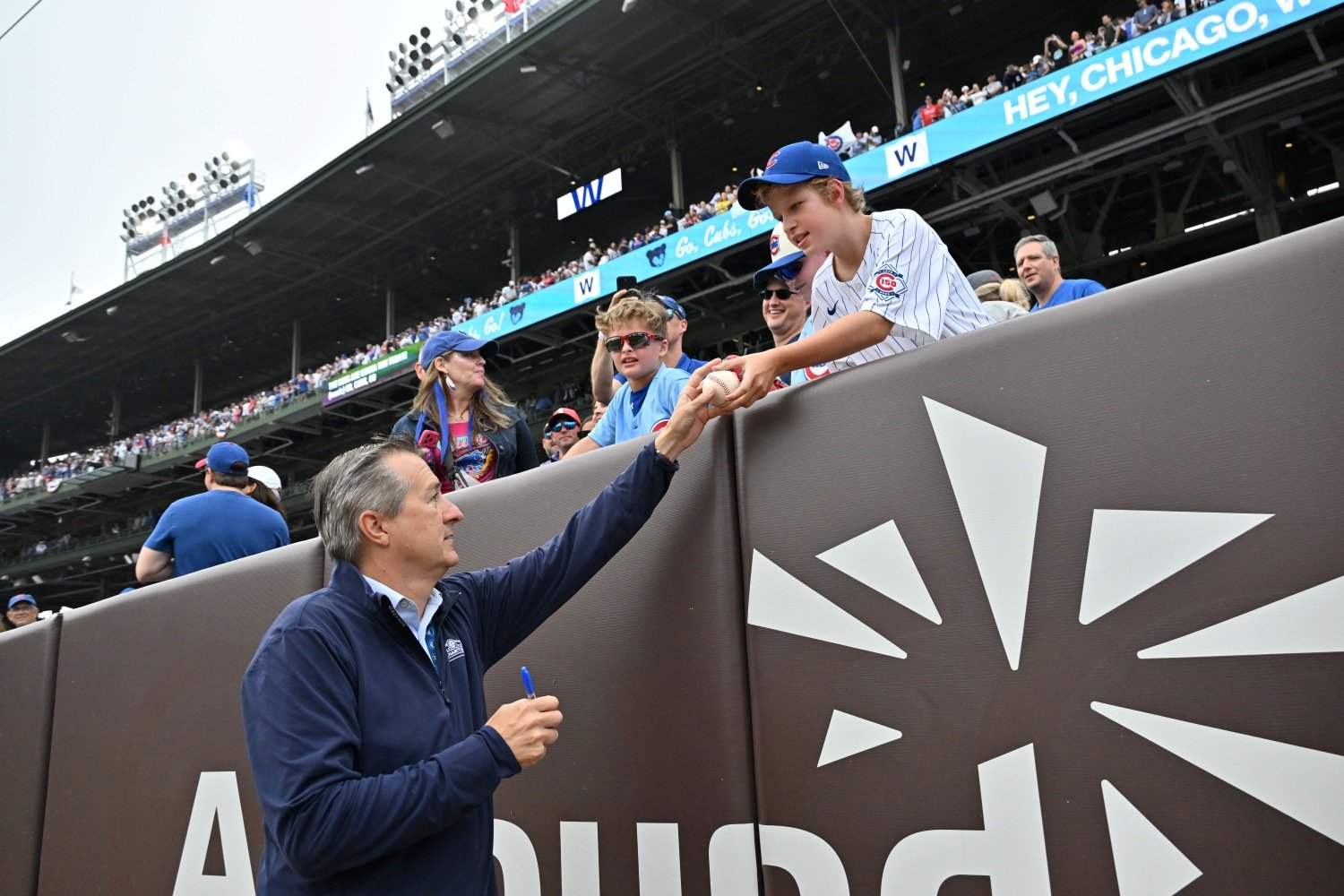 Before this season, Jed Hoyer and the rest of the front office secured permission from the Cubs' ownership group to spend beyond the first threshold of the competitive-balance tax, in order to sign Alex Bregman. Now, after injuries to the pitching staff threatened to derail their season, ownership has doubled down, according a team source. The Cubs can "spend whatever they want" as they hunt for upgrades to the roster over the next six days, according to a source briefed on the team's plans and discussions between ownership and baseball operations leaders. If Hoyer and Carter Hawkins eventually decide to make a move that would result in a major payroll increase, they would still circle back to Tom Ricketts and others to inform them of the plan, but the team has made room in its budget to bolster a roster that badly needs reinforcement. Right now, the Cubs sit halfway between the first and second thresholds of the competitive-balance tax ladder, according to Cot's Contracts, which projects their CBT payroll number to be around $254 million. The first threshold is $244 million; the second is at $264 million. The only increase in penalties for surpassing the second threshold, though, is a slightly larger surcharge on expenditures beyond that $264 million number. Other penalties (like receiving worse draft picks in return for departing free agents and repeater penalties if the team is over the threshold again in 2027) are unaffected by whether or not they exceed any secondary thresholds. Though long-range planning conversations do occasionally happen between Hoyer and ownership figures including Tom Ricketts and team president Crane Kenney, the same source indicated that no firm answer has been established as to whether the team will be allowed to exceed the tax threshold again in 2027. Any deal that brings in a player with a locked-in salary for that year will have to fit "into the broader plan," according to another source, but the Cubs have ample room to maneuver as they look toward the winter. Seiya Suzuki, Ian Happ, Shota Imanaga, Jameson Taillon and Matthew Boyd all have eight-figure salaries that come off the books this fall. The team will have to replace a lot of talent via free agency and trades, because their farm system isn't ready to backfill such heavy losses, but the team views this week as an opportunity to get a head start on that very work. By trading for a player (or two) under team control beyond this year, they hope to check one or more boxes off their offseason shopping list, gaining cost certainty and a planning advantage heading into a winter that will be disrupted by a lockout. This marks a minor departure from this winter, when the club was very focused on 2026 and some could-be trade partners felt they were assigning little value to 2027 and 2028 in their negotiations. It's possible that the extensions to which they signed Nico Hoerner and Pete Crow-Armstrong this spring shifted the team's thinking, and that Crow-Armstrong's emergence as a superstar capable of carrying a team into October has altered their ambitions for the medium-term future. Having this freedom to spend gives the team some flexibility in the days ahead. In deals for starters like Seth Lugo, Michael Wacha, Sandy Alcantara or Robbie Ray, one way the team could reduce the prospect cost would be to absorb the whole of those players' remaining salaries. Knowing they can spend more than $10 million for the balance of the year if needed also makes it much easier to bring in multiple players. Relievers Antonio Senzatela ($12 million) and Luke Weaver ($9.5 million) have substantial salaries this year and would still be owed a few million apiece when acquired; having spending room means such players still fit into a plan even after prioritizing a starter. Again, players (like Lugo, Wacha and Weaver) with 2027 obligations are slightly more complicated cases, but because so much money is coming off the Cubs' books, the team should be able to take on at least one such deal without flinching. All will depend on their evaluations of those players and their ability to help the team, of course, but it's good to know that money won't stand in the way of a valuable short-term upgrade.
 -
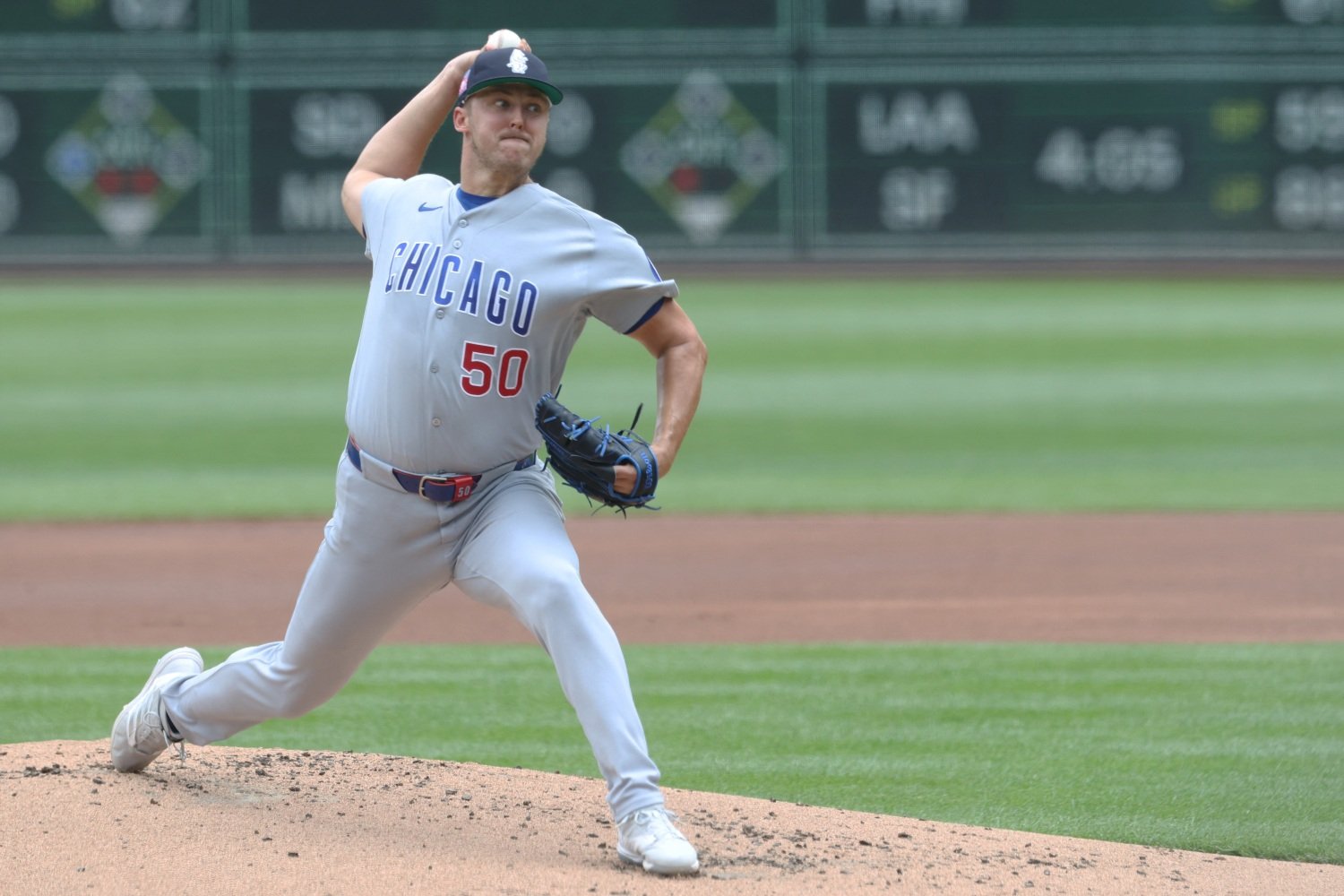 The Chicago Cubs designated Jameson Taillon for assignment Monday, the team announced. Righty reliever Andrew Wantz, signed last month after being released by the Tampa Bay Rays, will be promoted to take Taillon's place on the active roster. It's a sad but necessary end to the four-year Cubs tenure of Taillon, 34, who had a 5.92 ERA in 15 starts with the team this year. Wantz, 30, is a fringe arm who made seven appearances as a quasi-starter with the Triple-A Iowa Cubs before being called up, with a 4.32 ERA. He's ready to give the team length, but is even less of a viable starter than Taillon was. He's here strictly as a fresh arm; the team will replace him very soon. The timing of this move makes it fascinating, even though it was dictated by logistics as much as by any specific plan to complete an imminent deal. According to a source close to the team, no trade to immediately replace Taillon is close to completion, but it's clear that a spot is now open in the rotation. By Friday (rather than next Monday, Aug. 3, when the trade deadline hits), the team needs a new starter. They could always patch things together with a bullpen game, but ideally, at this point, the team will move within the next 72 hours to acquire a starter to reinforce their rotation. David Peterson, Colin Rea, Matthew Boyd and Shota Imanaga are slated to start the four games the team will play in St. Louis to start this week. Theoretically, the team could hold back Javier Assad (who pitched three innings Saturday night) and have him ready to start Friday, but that would mean operating with a seven-man bullpen during a series that will be emotionally draining and sweltering—and, again, on the front end of a stretch of 17 games between off days. Realistically, the team is likely to need Assad in one of the two latter games against the Cardinals. The trade deadline will arrive just in time to refresh a pitching staff that has been stretched to its breaking point by injuries and poor performances all season. Jed Hoyer and Carter Hawkins had to make this move now, but that they were willing to do so speaks volumes about their negotiating position heading into the final week before the deadline: Everyone knows they need pitchers. Everyone knows they need multiple pitchers. There's no leverage, and there's little depth on the farm, so the team will simply have to pay up for the help they require. This transaction is an acknowledgment of that. Though his contract won't be well-remembered, there were stretches during which Taillon was a key part of Cubs teams fighting to keep their heads above water. Since the middle of last season, he has largely been compromised, pitching through various injuries as much as possible but often not even being able to. He had a 4.21 ERA in 525 1/3 innings with Chicago, including a good year in 2024 and solid work before the injuries began pulling him apart in 2025. One of the most well-liked players in the game, he leaves a void to fill in the clubhouse, but the team is full of leaders and positive presences. They'll have to rally to one another and embrace the accountability to results implied by this loss. Taillon's contract expires at the end of the World Series, so he wasn't going to be part of the team beyond this year, anyway. The clock is ticking, and the Cubs' position is clear. They have glaring weaknesses and huge needs—and an equally massive opportunity to win the first Wild Card spot again and host another playoff series at Wrigley Field. By letting Taillon go Monday, they all but announced that they'll be fighting to secure that position down the stretch. It won't be cheap, but multiple additions lie close ahead.
 -
Image courtesy of Charles LeClaire-Imagn Images The Chicago Cubs designated Jameson Taillon for assignment Monday, the team announced. Righty reliever Andrew Wantz, signed last month after being released by the Tampa Bay Rays, will be promoted to take Taillon's place on the active roster. It's a sad but necessary end to the four-year Cubs tenure of Taillon, 34, who had a 5.92 ERA in 15 starts with the team this year. Wantz, 30, is a fringe arm who made seven appearances as a quasi-starter with the Triple-A Iowa Cubs before being called up, with a 4.32 ERA. He's ready to give the team length, but is even less of a viable starter than Taillon was. He's here strictly as a fresh arm; the team will replace him very soon. The timing of this move makes it fascinating, even though it was dictated by logistics as much as by any specific plan to complete an imminent deal. According to a source close to the team, no trade to immediately replace Taillon is close to completion, but it's clear that a spot is now open in the rotation. By Friday (rather than next Monday, Aug. 3, when the trade deadline hits), the team needs a new starter. They could always patch things together with a bullpen game, but ideally, at this point, the team will move within the next 72 hours to acquire a starter to reinforce their rotation. David Peterson, Colin Rea, Matthew Boyd and Shota Imanaga are slated to start the four games the team will play in St. Louis to start this week. Theoretically, the team could hold back Javier Assad (who pitched three innings Saturday night) and have him ready to start Friday, but that would mean operating with a seven-man bullpen during a series that will be emotionally draining and sweltering—and, again, on the front end of a stretch of 17 games between off days. Realistically, the team is likely to need Assad in one of the two latter games against the Cardinals. The trade deadline will arrive just in time to refresh a pitching staff that has been stretched to its breaking point by injuries and poor performances all season. Jed Hoyer and Carter Hawkins had to make this move now, but that they were willing to do so speaks volumes about their negotiating position heading into the final week before the deadline: Everyone knows they need pitchers. Everyone knows they need multiple pitchers. There's no leverage, and there's little depth on the farm, so the team will simply have to pay up for the help they require. This transaction is an acknowledgment of that. Though his contract won't be well-remembered, there were stretches during which Taillon was a key part of Cubs teams fighting to keep their heads above water. Since the middle of last season, he has largely been compromised, pitching through various injuries as much as possible but often not even being able to. He had a 4.21 ERA in 525 1/3 innings with Chicago, including a good year in 2024 and solid work before the injuries began pulling him apart in 2025. One of the most well-liked players in the game, he leaves a void to fill in the clubhouse, but the team is full of leaders and positive presences. They'll have to rally to one another and embrace the accountability to results implied by this loss. Taillon's contract expires at the end of the World Series, so he wasn't going to be part of the team beyond this year, anyway. The clock is ticking, and the Cubs' position is clear. They have glaring weaknesses and huge needs—and an equally massive opportunity to win the first Wild Card spot again and host another playoff series at Wrigley Field. By letting Taillon go Monday, they all but announced that they'll be fighting to secure that position down the stretch. It won't be cheap, but multiple additions lie close ahead. View full article
-
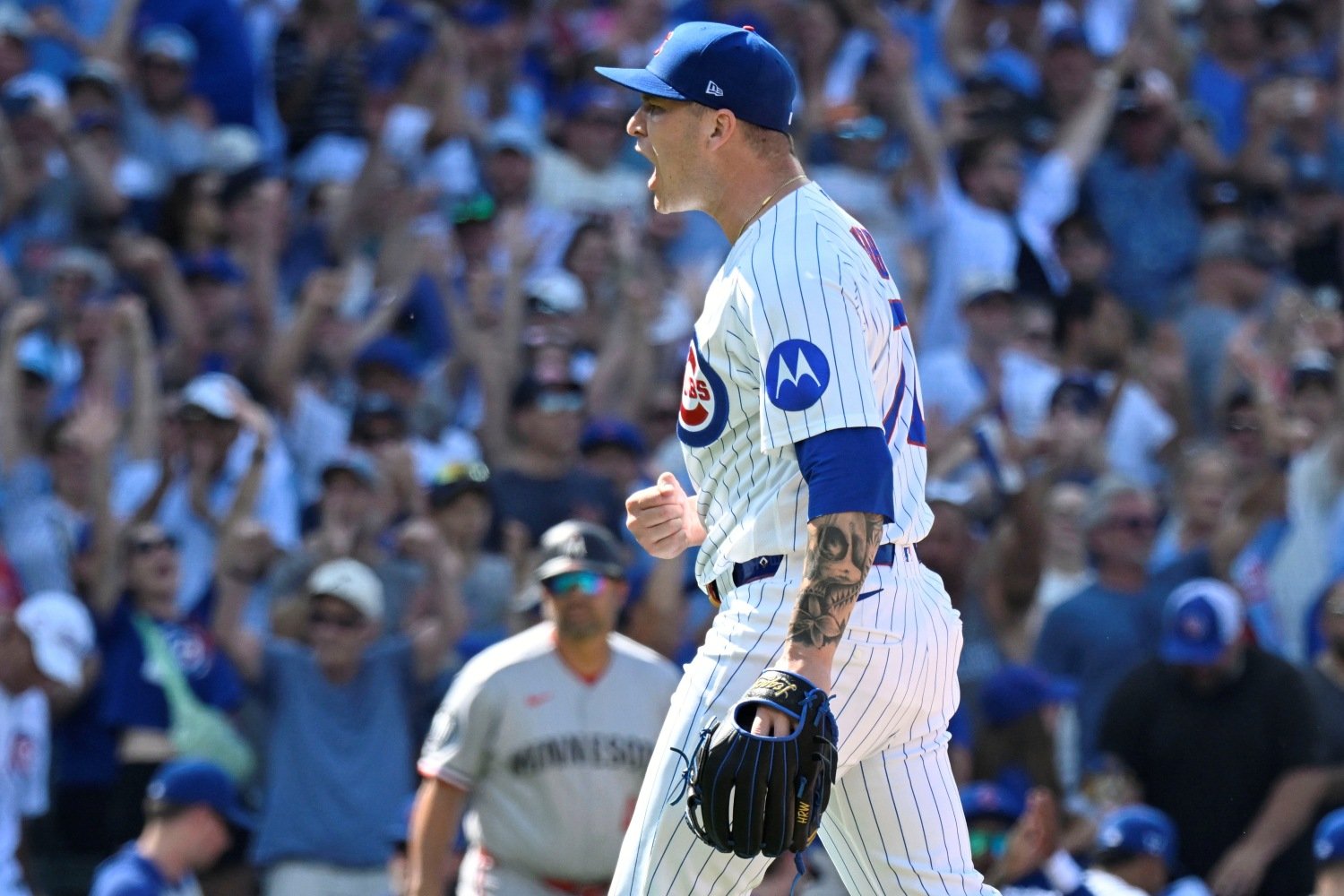 The synergy of the Cubs' pitching infrastructure is never more clear, these days, than when Jacob Webb takes the mound. The de facto relief ace of a team currently missing Daniel Palencia, Phil Maton, Hunter Harvey and more, Webb has a 2.84 ERA and a team-leading 5 saves. He's also struck out 27% of the batters he's faced, which is a career-best mark. He doesn't throw especially hard, and he knows he's gotten some good fortune here and there, but he's thriving in his new home on the North Side. That's thanks to a skill set that surely jumped off the page for Tyler Zombro, the Cubs' vice president of pitching, but also to the diligent coaching of pitching coach Tommy Hottovy. Those two leaders play off one another brilliantly in cases like Webb's, where there's plenty of appealing clay but a bit of molding is required. Webb's changeup is his signature weapon. That's been the case almost as long as he's been in pro ball. However, unlike most pitchers' changeups, Webb's doesn't tumble due to low spin, and it doesn't have much vertical depth. It's a pitch that runs to his arm side based on a lot of spin, in fact. It's just a change in spin axis created by the way he throws the pitch. "I think the four-seam changeup will always have a little more spin than other ones," Webb said on July 19, standing next to his locker in the Cubs' clubhouse at Wrigley Field. "Yeah, I just use the standard four-seam, straight changeup grip. It’s kind of like I grip the fastball and then just slide it over in my hand a little bit." Most pitchers try out grips that are a bit more elaborate, like the circle-change, the splitter, or the newfangled kick-change, in order to find a pitch that moves as much and has as great a speed differential from the fastball as Webb's. The big right-handed hurler has the luxury of sticking to something similar to his heater, because he's comfortable doing what most pitchers aren't. "A lot of it comes from, I supinate a little bit on the fastball, cut it a little," Webb said, referring to a slight turn of the wrist to make the palm face inward as he releases the pitch, "and with the changeup, I pronate." That sounds like a very simple statement, but for those who know pitching, its profundity and uniqueness are obvious—and that goes extra for Zombro. Tread Athletic, the pitching-forward training facility where Zombro got his start as a pitching guru and development wonk, emphasizes the importance of understanding motor preference. Most pitchers naturally either supinate or pronate as they release a pitch; Tread and Zombro help them identify that tendency and problem-solve around it. Rare are the hurlers who can truly do both, though, and Zombro loves guys who have that much facility with the ball. "It’s definitely harder, and it all comes down to throwing it," Webb said. "You have to get that feel for it, for that little bit different way of releasing each pitch. Catchers and hitters have told me a lot that it looks pretty similar, so I just try to lock that in and make sure I’m executing that slight turn every time." Zombro and Hottovy have helped Webb lock in those invaluable manipulations, which is why Webb has a sensational 42% whiff rate on the changeup this year. His fastball has what amounts to cut-ride properties, relative to his low-three-quarter arm slot; that sets up the changeup beautifully. "You can get used to pronating and supinating, both. It takes a lot of throwing," Webb said. "And I’m not too extreme with the pronating. If you watch Devin Williams, he really pronates hard and kind of drops his slot on that pitch. I want to stay in the same slot and just turn it the other way from my fastball." Webb is above-average in that ability to turn both ways, but he's not elite. Only a handful of pitchers in each generation show a real ability to move the ball up and down, left and right, all with well-dialed tweaks of the wrist. If Webb were on that level, you'd have heard much more about him by now, and he wouldn't have signed a cheap one-year deal to be a middle reliever for the Cubs over the winter. There has, for most of his career, been a glaring weakness in his game. "The last few years, I threw the sweeper, but I felt like I could never quite find the feel for it," he said. "I had to think too hard about supinating, getting around that ball more, and I just couldn’t consistently do that with command. So they actually showed me a grip, here, for more of a bullet-spin slider, a tight slider. That feels a lot more comfortable, because I can just kind of rip down through it. It’s a lot more like my fastball; I don’t have to exaggerate as much and get around it the same way." Indeed, you can see a progression at work. Here's what Webb's movement profile looked like against righties in 2025: Over the first two months of this season, Webb kept trying the sweeper, while he and the Cubs also explored a curveball and that new slider: Finally, though, over the last two months, he's locked in on that slider, pulling down through the side of the ball and not exaggerating the supination. He can comfortably throw that pitch without losing feel for it, or for his fastball or changeup. Instead of more extreme a turn in one direction, he's now leaning into smaller turns in both directions. It's precisely the kind of thing both Zombro and Hottovy love. "It’s a great feeling for me, to have something for righties," Webb said. "Because I’ve had a lot of trouble with righties in my career before this. Just having something that, moves away from them but I can keep it on the plate, match that with my fastball, it makes a big difference in terms of comfort facing them in a big spot." Forcing righties to respect the outer half of the plate—throwing the high fastball and then a slider out there on the edge, for instance—also sets them up to swing over or be tied up by a well-placed changeup running in on them. The slider taking the place of the sweeper makes Webb a more complete and versatile reliever. Craig Counsell is deeply appreciative of his righty's evolution. "Jacob’s been, amidst all the change and all the turnover, a real consistent presence down there," the skipper said. "He’s taking the ball kind of whenever, and oftentimes, kind of in the most important spot in the game, and he’s handled that part really, really well. He’s been available, and durable. He’s been a really important part of putting this puzzle together." For his part, Webb hopes to continue in that kind of role—although not the same one, exactly—for the rest of the year. "I don’t think I’m really a defined closer or anything, but I feel really good about working in those leverage spots," he said. "I definitely hope to stay in an important role like that once Danny returns, hopefully. That trust always feels good." Whether it's a returning Palencia or an incoming relief acquisition, someone is likely to push Webb one rung down the bullpen ladder down the stretch. From where he is now, though, even one rung down is pretty high. Thanks to that new slider and the delightful fit of his skill set with the philosophies and competencies of Zombro and Hottovy, Webb has been good enough to keep an injury-torpedoed bullpen afloat. He won't have to do it single-handedly for much longer.
 -
Image courtesy of Matt Marton-Imagn Images The synergy of the Cubs' pitching infrastructure is never more clear, these days, than when Jacob Webb takes the mound. The de facto relief ace of a team currently missing Daniel Palencia, Phil Maton, Hunter Harvey and more, Webb has a 2.84 ERA and a team-leading 5 saves. He's also struck out 27% of the batters he's faced, which is a career-best mark. He doesn't throw especially hard, and he knows he's gotten some good fortune here and there, but he's thriving in his new home on the North Side. That's thanks to a skill set that surely jumped off the page for Tyler Zombro, the Cubs' vice president of pitching, but also to the diligent coaching of pitching coach Tommy Hottovy. Those two leaders play off one another brilliantly in cases like Webb's, where there's plenty of appealing clay but a bit of molding is required. Webb's changeup is his signature weapon. That's been the case almost as long as he's been in pro ball. However, unlike most pitchers' changeups, Webb's doesn't tumble due to low spin, and it doesn't have much vertical depth. It's a pitch that runs to his arm side based on a lot of spin, in fact. It's just a change in spin axis created by the way he throws the pitch. "I think the four-seam changeup will always have a little more spin than other ones," Webb said on July 19, standing next to his locker in the Cubs' clubhouse at Wrigley Field. "Yeah, I just use the standard four-seam, straight changeup grip. It’s kind of like I grip the fastball and then just slide it over in my hand a little bit." Most pitchers try out grips that are a bit more elaborate, like the circle-change, the splitter, or the newfangled kick-change, in order to find a pitch that moves as much and has as great a speed differential from the fastball as Webb's. The big right-handed hurler has the luxury of sticking to something similar to his heater, because he's comfortable doing what most pitchers aren't. "A lot of it comes from, I supinate a little bit on the fastball, cut it a little," Webb said, referring to a slight turn of the wrist to make the palm face inward as he releases the pitch, "and with the changeup, I pronate." That sounds like a very simple statement, but for those who know pitching, its profundity and uniqueness are obvious—and that goes extra for Zombro. Tread Athletic, the pitching-forward training facility where Zombro got his start as a pitching guru and development wonk, emphasizes the importance of understanding motor preference. Most pitchers naturally either supinate or pronate as they release a pitch; Tread and Zombro help them identify that tendency and problem-solve around it. Rare are the hurlers who can truly do both, though, and Zombro loves guys who have that much facility with the ball. "It’s definitely harder, and it all comes down to throwing it," Webb said. "You have to get that feel for it, for that little bit different way of releasing each pitch. Catchers and hitters have told me a lot that it looks pretty similar, so I just try to lock that in and make sure I’m executing that slight turn every time." Zombro and Hottovy have helped Webb lock in those invaluable manipulations, which is why Webb has a sensational 42% whiff rate on the changeup this year. His fastball has what amounts to cut-ride properties, relative to his low-three-quarter arm slot; that sets up the changeup beautifully. "You can get used to pronating and supinating, both. It takes a lot of throwing," Webb said. "And I’m not too extreme with the pronating. If you watch Devin Williams, he really pronates hard and kind of drops his slot on that pitch. I want to stay in the same slot and just turn it the other way from my fastball." Webb is above-average in that ability to turn both ways, but he's not elite. Only a handful of pitchers in each generation show a real ability to move the ball up and down, left and right, all with well-dialed tweaks of the wrist. If Webb were on that level, you'd have heard much more about him by now, and he wouldn't have signed a cheap one-year deal to be a middle reliever for the Cubs over the winter. There has, for most of his career, been a glaring weakness in his game. "The last few years, I threw the sweeper, but I felt like I could never quite find the feel for it," he said. "I had to think too hard about supinating, getting around that ball more, and I just couldn’t consistently do that with command. So they actually showed me a grip, here, for more of a bullet-spin slider, a tight slider. That feels a lot more comfortable, because I can just kind of rip down through it. It’s a lot more like my fastball; I don’t have to exaggerate as much and get around it the same way." Indeed, you can see a progression at work. Here's what Webb's movement profile looked like against righties in 2025: Over the first two months of this season, Webb kept trying the sweeper, while he and the Cubs also explored a curveball and that new slider: Finally, though, over the last two months, he's locked in on that slider, pulling down through the side of the ball and not exaggerating the supination. He can comfortably throw that pitch without losing feel for it, or for his fastball or changeup. Instead of more extreme a turn in one direction, he's now leaning into smaller turns in both directions. It's precisely the kind of thing both Zombro and Hottovy love. "It’s a great feeling for me, to have something for righties," Webb said. "Because I’ve had a lot of trouble with righties in my career before this. Just having something that, moves away from them but I can keep it on the plate, match that with my fastball, it makes a big difference in terms of comfort facing them in a big spot." Forcing righties to respect the outer half of the plate—throwing the high fastball and then a slider out there on the edge, for instance—also sets them up to swing over or be tied up by a well-placed changeup running in on them. The slider taking the place of the sweeper makes Webb a more complete and versatile reliever. Craig Counsell is deeply appreciative of his righty's evolution. "Jacob’s been, amidst all the change and all the turnover, a real consistent presence down there," the skipper said. "He’s taking the ball kind of whenever, and oftentimes, kind of in the most important spot in the game, and he’s handled that part really, really well. He’s been available, and durable. He’s been a really important part of putting this puzzle together." For his part, Webb hopes to continue in that kind of role—although not the same one, exactly—for the rest of the year. "I don’t think I’m really a defined closer or anything, but I feel really good about working in those leverage spots," he said. "I definitely hope to stay in an important role like that once Danny returns, hopefully. That trust always feels good." Whether it's a returning Palencia or an incoming relief acquisition, someone is likely to push Webb one rung down the bullpen ladder down the stretch. From where he is now, though, even one rung down is pretty high. Thanks to that new slider and the delightful fit of his skill set with the philosophies and competencies of Zombro and Hottovy, Webb has been good enough to keep an injury-torpedoed bullpen afloat. He won't have to do it single-handedly for much longer. View full article
-
Of course not. They just won the bidding war for him five months ago and he's having a down year as he heads into his mid-30s. But I do think the premise of the question is mistaken, too. Yes, he lacks the power you want/need from him, but he's still getting on base and playing very good defense. Alex Bregman isn't the problem with this team. The problem is that they never had enough pitching depth to withstand bad injury luck and they've had lots of bad injury luck.
-
They need him. Trading him wouldn't be like trading Ramirez for them; it would be like trading Hoerner. I haven't heard even a whisper from anyone working for a team that he's available. Certainly, to convince them to move him, you'd have to add quite a bit to Ramirez.
- 13 replies
-
- 1
-

-
- pedro ramirez
- jaxon wiggins
- (and 3 more)
-
That's the second time today I've heard someone mention Emerson Hancock. The Mariners aren't trading him. Did someone suggest otherwise? Jim Bowden or Dan O'Dowd someone?
-
Sources: Pedro Ramírez Becoming Focal Point in Chicago Cubs Trade Talks
Matthew Trueblood posted an article in Cubs
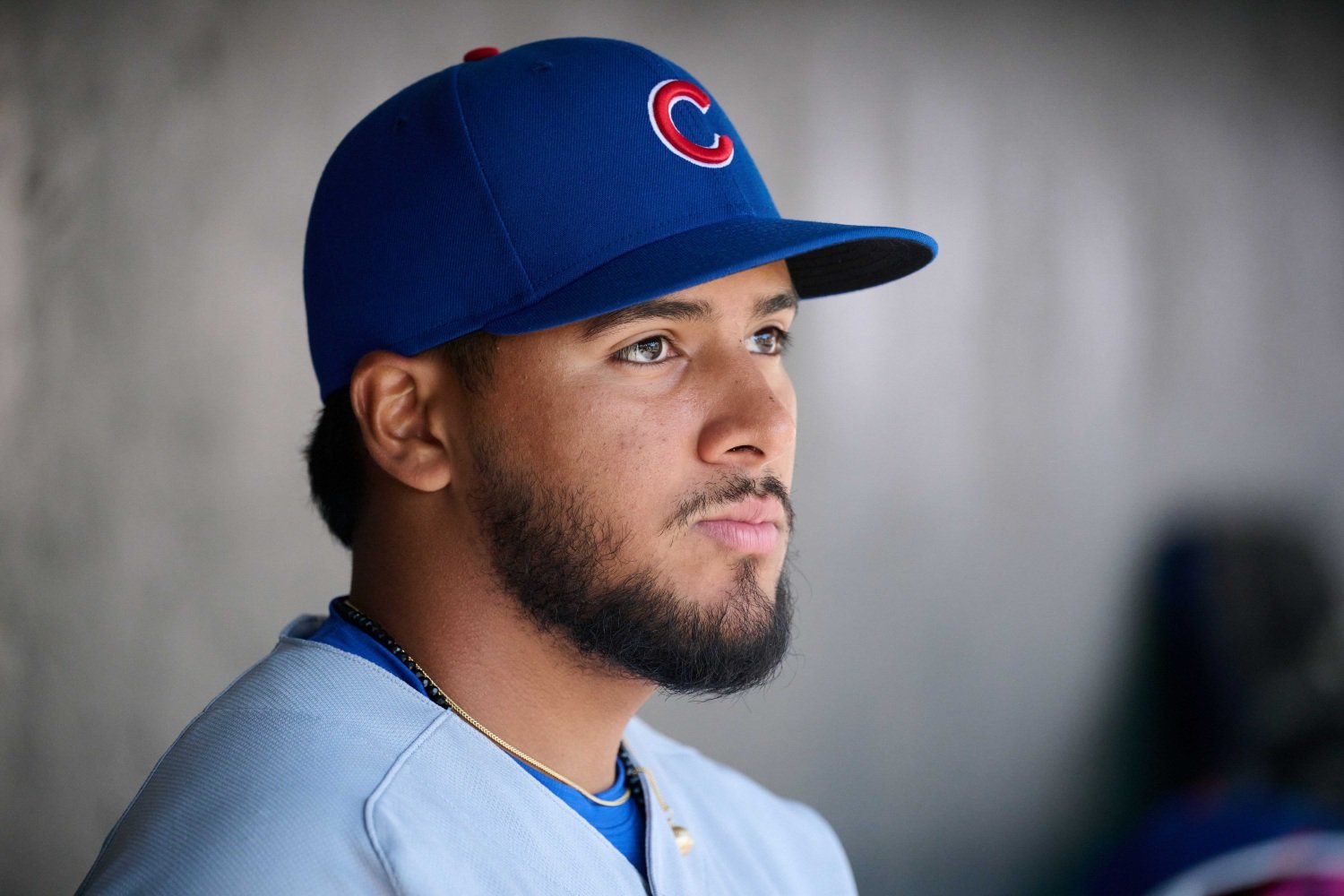 As the Chicago Cubs have talked with other teams about their top targets ahead of next week's MLB trade deadline, one name has come up a lot more often than the team or its fans would prefer: Pedro Ramírez. The rookie infielder has been impressive in a small amount of playing time since coming up for the first time two months ago, and his combination of solid athleticism, youth, team control and a plus left-handed bat has led many of the clubs with whom the Cubs hope to deal to ask about his availability. In theory, it makes sense for Chicago to give up Ramírez in the right deal. Though he's only 22 years old and is batting .295/.341/.449 in 86 big-league plate appearances, he has no apparent path to regular playing time on the North Side. Nico Hoerner and Alex Bregman are locked into the positions where Ramírez profiles as a solid defender for the next half-decade, and his bat would be stretched a bit as an everyday corner outfielder. The utility role he's filled since roughly Memorial Day is the only one he's likely to fit neatly into at any point with the Cubs. Lately, though, he's often been the designated hitter for the team when they face right-handed starting pitchers. His left-handed swing is impressively quick and produces well-struck line drives to all fields. He provides depth and length in the lineup, plus a modicum of versatility on defense. Weakening the bench is the last thing contending teams want to do ahead of the trade deadline. Unfortunately for Jed Hoyer and Carter Hawkins, they might not have a choice. As they've scoured the market for the right deal to bolster their injury-ravaged pitching staff, the Cubs have heard Ramírez's name a lot, according to sources familiar with their conversations. The team is jealously guarding breakout top prospect Josiah Hartshorn, treating him as almost untouchable. Beyond Hartshorn, there's no one else other teams view as more desirable in the team's weak farm system than Ramírez. A few months ago, that Ramírez might be such a gem would have been almost unthinkable. His ceiling just isn't that high, for such a young player already showing well in the majors. However, his bat (at least from the left side) has passed its first tests against big-league pitching, which goes a long way. Meanwhile, Jefferson Rojas has started playing third base almost exclusively at Double-A Knoxville, and scouts with other clubs view the 21-year-old as likely to stay at that spot. Rojas's bat has been almost as inconsistent this year as it was in 2025, worrying those who already had questions about his hit tool. Jaxon Wiggins dealt with arm trouble earlier this year and has had a rocky return to Triple-A Iowa. His fastball still has exciting rising action, but it's not climbing toward 100 MPH the way it used to, even in abbreviated outings. He's also not throwing strikes. This spring, the Cubs held out hope that he would make a major contribution at the highest level this year. Now, he doesn't even have as much trade value as they'd like. Meanwhile, Matt Shaw remains sidelined with a wrist issue and is "weeks" away from resuming swinging. He'll be almost impossible to trade in the next eight days. The Cubs' pipeline hasn't been robust enough at any point in the last decade, and it's not recovering as fast as the team hoped when they reorganized their scouting and player development departments a few years ago. They don't particularly want to give up Moisés Ballesteros, but nor are prospective trade partners especially excited about him, according to a league source. Kevin Alcántara looks like he'll follow in the footsteps of fellow toolsy outfielders Alexander Canario and Nelson Velázquez, in that he'll probably leave the organization for a disappointing return, but probably not make anyone miss him much; his hit tool has turned out to be insufficient to sustain his prospect hype. That's not to suggest that the cupboard is entirely bare. The Cubs are willing and eager to trade from the lowest rungs of their system, where they have a handful of up-arrow guys. Upper-level catchers Owen Ayers and Ariel Armas each have admirers in other teams' front offices. They're in a tough spot, though, because they lack the depth to make any meaningful trade without feeling the loss deeply. The last time the team was in this particular position, they made a trade most fans regret, rather than celebrating—though it accomplished at least some of what the team hoped. In July 2017, the Cubs traded Jeimer Candelario to the Detroit Tigers, after he'd played just a fistful of games for them over the previous year. That deal patched their glaring hole at backup catcher, as they acquired Alex Avila, but it was primarily about solidifying their bullpen with controllable lefty Justin Wilson. Avila was just a rental role player, but he panned out as well as Wilson did. Candelario became a solid player in Detroit, but the deal also required Chicago to throw in another infielder, a bit further from ready: Isaac Paredes. Moving Ramírez might necessitate going out and finding a lesser Ramírez, eating into the benefit of trading him for a useful pitcher. Without including either Hartshorn or Ramírez, though, the team won't have access to the kind of help fans crave at this deadline. Ramírez is the one the Cubs would rather deal, if it comes to that—and it might. Of course, they also might opt to protect the future and buy low on someone with more uncertainty but a lower price tag. They could try to swing a better version of that Tigers deal from nine years ago, swapping Ramírez and a player far from the majors (like pitching prospect Kaleb Wing, for instance) for a controllable arm and a utility man with less club control and a higher salary than Ramírez. The risks of that type of move are extremely salient to Hoyer, though, and whereas the 2017 Cubs were trying to sew up a division title, this year's group is playing for Wild Card position. The Cubs keep shopping for starters and for relievers, but to find one who makes a material difference in their hopes for a long run this October, they might have to give up one of the few young position players who have shown the ability to buffer them against injuries and underperformance this year. It's not clear whether they'll find that risk worthwhile, given the limitations of the club and the need to regain some balance between youth and experience.
 -
Image courtesy of © Robert Edwards-Imagn Images As the Chicago Cubs have talked with other teams about their top targets ahead of next week's MLB trade deadline, one name has come up a lot more often than the team or its fans would prefer: Pedro Ramírez. The rookie infielder has been impressive in a small amount of playing time since coming up for the first time two months ago, and his combination of solid athleticism, youth, team control and a plus left-handed bat has led many of the clubs with whom the Cubs hope to deal to ask about his availability. In theory, it makes sense for Chicago to give up Ramírez in the right deal. Though he's only 22 years old and is batting .295/.341/.449 in 86 big-league plate appearances, he has no apparent path to regular playing time on the North Side. Nico Hoerner and Alex Bregman are locked into the positions where Ramírez profiles as a solid defender for the next half-decade, and his bat would be stretched a bit as an everyday corner outfielder. The utility role he's filled since roughly Memorial Day is the only one he's likely to fit neatly into at any point with the Cubs. Lately, though, he's often been the designated hitter for the team when they face right-handed starting pitchers. His left-handed swing is impressively quick and produces well-struck line drives to all fields. He provides depth and length in the lineup, plus a modicum of versatility on defense. Weakening the bench is the last thing contending teams want to do ahead of the trade deadline. Unfortunately for Jed Hoyer and Carter Hawkins, they might not have a choice. As they've scoured the market for the right deal to bolster their injury-ravaged pitching staff, the Cubs have heard Ramírez's name a lot, according to sources familiar with their conversations. The team is jealously guarding breakout top prospect Josiah Hartshorn, treating him as almost untouchable. Beyond Hartshorn, there's no one else other teams view as more desirable in the team's weak farm system than Ramírez. A few months ago, that Ramírez might be such a gem would have been almost unthinkable. His ceiling just isn't that high, for such a young player already showing well in the majors. However, his bat (at least from the left side) has passed its first tests against big-league pitching, which goes a long way. Meanwhile, Jefferson Rojas has started playing third base almost exclusively at Double-A Knoxville, and scouts with other clubs view the 21-year-old as likely to stay at that spot. Rojas's bat has been almost as inconsistent this year as it was in 2025, worrying those who already had questions about his hit tool. Jaxon Wiggins dealt with arm trouble earlier this year and has had a rocky return to Triple-A Iowa. His fastball still has exciting rising action, but it's not climbing toward 100 MPH the way it used to, even in abbreviated outings. He's also not throwing strikes. This spring, the Cubs held out hope that he would make a major contribution at the highest level this year. Now, he doesn't even have as much trade value as they'd like. Meanwhile, Matt Shaw remains sidelined with a wrist issue and is "weeks" away from resuming swinging. He'll be almost impossible to trade in the next eight days. The Cubs' pipeline hasn't been robust enough at any point in the last decade, and it's not recovering as fast as the team hoped when they reorganized their scouting and player development departments a few years ago. They don't particularly want to give up Moisés Ballesteros, but nor are prospective trade partners especially excited about him, according to a league source. Kevin Alcántara looks like he'll follow in the footsteps of fellow toolsy outfielders Alexander Canario and Nelson Velázquez, in that he'll probably leave the organization for a disappointing return, but probably not make anyone miss him much; his hit tool has turned out to be insufficient to sustain his prospect hype. That's not to suggest that the cupboard is entirely bare. The Cubs are willing and eager to trade from the lowest rungs of their system, where they have a handful of up-arrow guys. Upper-level catchers Owen Ayers and Ariel Armas each have admirers in other teams' front offices. They're in a tough spot, though, because they lack the depth to make any meaningful trade without feeling the loss deeply. The last time the team was in this particular position, they made a trade most fans regret, rather than celebrating—though it accomplished at least some of what the team hoped. In July 2017, the Cubs traded Jeimer Candelario to the Detroit Tigers, after he'd played just a fistful of games for them over the previous year. That deal patched their glaring hole at backup catcher, as they acquired Alex Avila, but it was primarily about solidifying their bullpen with controllable lefty Justin Wilson. Avila was just a rental role player, but he panned out as well as Wilson did. Candelario became a solid player in Detroit, but the deal also required Chicago to throw in another infielder, a bit further from ready: Isaac Paredes. Moving Ramírez might necessitate going out and finding a lesser Ramírez, eating into the benefit of trading him for a useful pitcher. Without including either Hartshorn or Ramírez, though, the team won't have access to the kind of help fans crave at this deadline. Ramírez is the one the Cubs would rather deal, if it comes to that—and it might. Of course, they also might opt to protect the future and buy low on someone with more uncertainty but a lower price tag. They could try to swing a better version of that Tigers deal from nine years ago, swapping Ramírez and a player far from the majors (like pitching prospect Kaleb Wing, for instance) for a controllable arm and a utility man with less club control and a higher salary than Ramírez. The risks of that type of move are extremely salient to Hoyer, though, and whereas the 2017 Cubs were trying to sew up a division title, this year's group is playing for Wild Card position. The Cubs keep shopping for starters and for relievers, but to find one who makes a material difference in their hopes for a long run this October, they might have to give up one of the few young position players who have shown the ability to buffer them against injuries and underperformance this year. It's not clear whether they'll find that risk worthwhile, given the limitations of the club and the need to regain some balance between youth and experience. View full article
-
One Way or The Other
Matthew Trueblood replied to Matthew Trueblood's topic in North Side Baseball Front Page News
Thanks, Thayne! No pressure to change your very healthy commenting habits. We're happy to have you around though. -
Image courtesy of © Charles LeClaire-Imagn Images I'm a ruminator, and one of my unfortunate habits is the rewatch. When I find a great piece of media, I prefer to marinate in it—to revisit and reexamine it—than to venture forth and try to find the next thing with something to say. Eventually, I do find new things, but I spend a lot of time going back to things I've seen and read and heard before, whether it be by actually consuming them again or by considering them in the context of some other experience or product. In season 4 of The Wire, the show's most unabashed villain takes the stage. Marlo Stanfield isn't soulless; that's just a front he uses to project and accumulate power. But the process of proving himself hard, cold and ruthless has transformed him in ways he can't perceive. Marlo is a fool. He believes he's building a kingdom—making himself ruler of all he surveys. In reality, he's renting that world, the same way a drunk rents a bottle of whiskey. Just like the drunk is destroyed by that which he clamors to obtain and arrogantly believes he controls, Marlo is hollowed out by his consumption of power. But just like the drunk, he's dangerous and destructive to others, too, for every second he breathes and refuses to reform. One episode opens with Marlo at a convenience store, where he buys a bottle of water—and, at the same time, brazenly steals something from the counter while the cashier is distracted by the transaction, in full view of the security guard near the door. It's a cheap display of immaturity and greed—the kind of thing a fool mistakes for power. It's an assertion of power over the guard, which is made plain to us when the guard follows Marlo outside. He confronts Stanfield, telling him he understands the power imbalance at play but challenging the budding kingpin to show more respect for his community and for working people. "You want it to be one way," says the dead-eyed Marlo. He repeats it several times, flustering and (eventually) spooking the guard. Finally, he lets the other shoe drop, just before walking away. "But it's the other way." In the scene itself, that means what it appears to mean. The guard, by putting on that uniform each day and trying to enforce a bare-minimum kind of order and justice at the store, is offering a mission statement for life. He wants a world where the rules apply to everyone; he wants even the drug lords of the projects to see a few lines they won't cross unless it's absolutely necessary. Marlo's reply is, essentially: no. The scene is also a metamessage to the audience of the show, which sometimes lamented the extremes to which creator David Simon pushed the characters and the awful fates met by just about anyone who tried to make a positive difference. By that point in the show's life, Simon had heard those criticisms; they did not deter him. In fact, he himself characterized the show as "angry" more than once. His background was in journalism. He wanted to press reality (as he saw and understood it) up against the TV screen and make the world reckon with it. To the viewers, this scene said, "You want a world where morality matters. You want to believe that the powerful harbor a secret wish to consort with the powerless, and conform to their hopeful view of the world. You, who watch this from (in many cases, if not most) seats of privilege and comfort and whiteness, want to believe you've helped create and now occupy a governable, essentially fair world. You don't." All of this ran through my head in the top of the seventh inning Friday night. In a 1-1 game, Ian Happ swung at an 0-2 pitch diving toward his back foot, and he hit a nothing ball—a tapper toward first base. The Pirates' Ryan O'Hearn came to collect the ball and flipped casually to Wilber Dotel for the out—or was it one? Happ, to the surprise of the Pirates, had absolutely busted it out of the box and all the way up the first-base line. The play was shockingly close. In fact, the Cubs asked for a replay review. And in fact, Happ had been safe. He beat out an infield single, on a ball that had no business being one. It took the failures of two Pirates defenders to turn that sure out into a hit, but by hustling unreservedly at the end of what should have been a third straight empty, frustrating plate appearance, Happ created a chance for a game-winning rally. On a 2-2 count, Nico Hoerner then hit a flare to center field. Happ got a perfect read, knowing not only that the ball would fall in but that it would die (it was off the end of Hoerner's bat) and take time for center fielder Jake Mangum to field and fire in. He made it to third base on the play, putting him in position to score the go-ahead run. The combined exit velocities of Happ's and Hoerner's hits (121.8 MPH) was lower than those of two individual batted balls in the career of Pirates outfielder Oneil Cruz, who has twice hit it harder than 122 MPH. But because of Happ's hustle and his smarts, he had a great chance to tick the telling tally in a crucial game. He didn't, though. Pedro Ramírez struck out looking, and Carson Kelly grounded into a fielder's choice. The rally died. You want it to be one way, in baseball and in life. You want effort and preparation and instinct and solemn, high purpose to be rewarded. But it's the other way. Baseball, like the world, is not a democracy or even a meritocracy but an oligarchy. Talent tells. Hustlers and scrappers can hustle for scraps once the big dogs eat. Of course, the Cubs were the big dogs in this fight, really. They pushed the game all the way to a 10th inning, and then they won it. Happ made a dazzling defensive play, because although he's not a superstar, he's immensely talented in his own right. In the bottom of that same seventh inning, the Pirates took their turn putting runners on the corners with one out, and they managed to hit the fly ball the Cubs needed from Ramírez. It was a medium-depth fly to left field, shallow enough to give Happ a chance to throw out the runner in terms of sheer distance, but it wasn't hit as lazily as one might have liked. Happ had less time to get behind it and start his movement toward home plate than he'd have liked; he had to generate all the power for a strong throw in a short span and (because a crow hop was a luxury he could ill afford) a small space. Doing that is difficult, and being accurate while doing it is almost impossible. Happ doesn't have an elite outfield arm in terms of sheer arm strength. But in this way, he's elite. He got off the throw, and fast. It was strong, and it was true, and the play wasn't even terribly close. Happ was the Manfred Man in the top of the 10th inning, too. He came around to score the go-ahead run on a hard single to center by Dansby Swanson, and though his nimbly-adjusted slide to the inside of home plate first left him coming in too fast and his front foot bouncing over the plate, his tucked leg still reached its destination before the tag from an awkwardly lunging Henry Davis. It was another great bit of baseball from Happ, and although the play was breathtakingly close to heartbreaking, it turned out all right. That's not meant to imply that Happ's refusal to jog it out in the seventh or his perspicacity on the bases in that inning somehow earned him a smile from karma in the 10th. The Cubs won the game because of Happ's talent in left field, and because they've patched together an adequate string of pitching performances lately in front of an elite defense, and because Pete Crow-Armstrong is an incandescent superstar. Crow-Armstrong homered in the sixth to give the Cubs their only run in regulation, and when pitcher Yohan Ramírez fell behind 2-0 on him in the 10th, the Pirates intentionally walked Crow-Armstrong to load the bases with two outs. First base wasn't even open; they already trailed; and Ramírez has poor control. Seiya Suzuki exploited the moment by waiting out Ramírez and accepting an RBI walk, pushing across the insurance run that would prove to be the margin of victory. Crow-Armstrong's maturation into a patient hitter who won't get himself out earned him that free pass. In the past, the Pirates could and would have kept pitching to him in that spot, expecting him to expand his zone. He's a truly great player right now. Suzuki is a fearsome and disciplined hitter, too. There is another reading of Marlo's encounter with that security guard that's worth pondering, though. Maybe it's one only watching the series from a place of privilege and comfort would ever produce, but here goes: Marlo is, in a sense, wrong. The guard is, in a sense, right. Don't get me wrong: the world is as ruthless and as avaricious as Marlo Stanfield is. But real goodness is also unkillable. Marlo has that guard killed, and Simon would probably prefer that we take a sobering, dour lesson from that: the powerful will respond to your demands for dignity only by pulverizing you. Certainly, whether a person lives or dies is the ultimate equivalent to pointing toward the outfield and saying, "Scoreboard." What matters most, to most people, is who lives and who dies. What matters most, to most baseball fans, is which team wins each game. Why did Stanfield really have that guy killed, though? To make an example of him, sure, a little. To announce his dominance over everything and everyone. But deeper, down on a level Marlo couldn't even reach or understand, he did it because the guard had revealed the truth to him. Whether we try does matter, and so does whether we persist when our first attempts fail. Morality does matter. The world will not reward your good thoughts, words or deeds, in an extrinsic way; the world will come closer to punishing you for them. But it's your duty to think good thoughts, say good words, and do good deeds, anyway. Sometimes, you'll have enough power and enough opportunity and enough luck to be celebrated for that goodness. Sometimes, you won't. But life isn't counted out in dollars or in influence. Those are outputs. The real measure of our time is our inputs. Happ struck out both times he saw Jared Jones Friday night. In his third at-bat, against Dotel, he swung at a bad pitch, took a good pitch, then swung at another bad one. He happened to just touch that third offering, though, and when the least window opened for him to turn a bad day for the better, he seized on it like he understands the difference between a thing done well and a thing done ill. He was fully present. To him, the right things mattered, and doing things right was his way of expressing what mattered. As most Cubs fans know, Happ is from Pittsburgh. Many forget (or never knew) that, 11 years ago, he lost his father to brain cancer, just a few months after he was drafted by the Cubs. The emotions tying him to Pittsburgh aren't simple; they must be equal parts joyous and painful. When he takes the field in his hometown, his surface-level stoicism burns off a bit, and you can see the same attention to detail and insistence on consistency that was handed down to him by Keith Happ, an agronomist for the United States Golf Association. He was a .306/.387/.528 career hitter at PNC Park before Friday. On a night when his bat wasn't doing the job, he found no fewer than three other ways to will the Cubs to a win. Not all of those efforts directly contributed to the win, in a tangible way, but that's not the same as saying they didn't all matter. They did. You can't win 'em all. Nor can you run 'em all out. Nobody is on their game and on fire with intelligent intensity all the time. Games played the way Happ played Friday night deserve special recognition, though. It's easy to give that recognition, because he ended up making a big and obvious contribution to an important victory. Even if the Cubs had lost, though, that seventh-inning sequence would have been valuable. Not all rewards are extrinsic. You can win every day, if not every game—one way, or the other. View full article
-
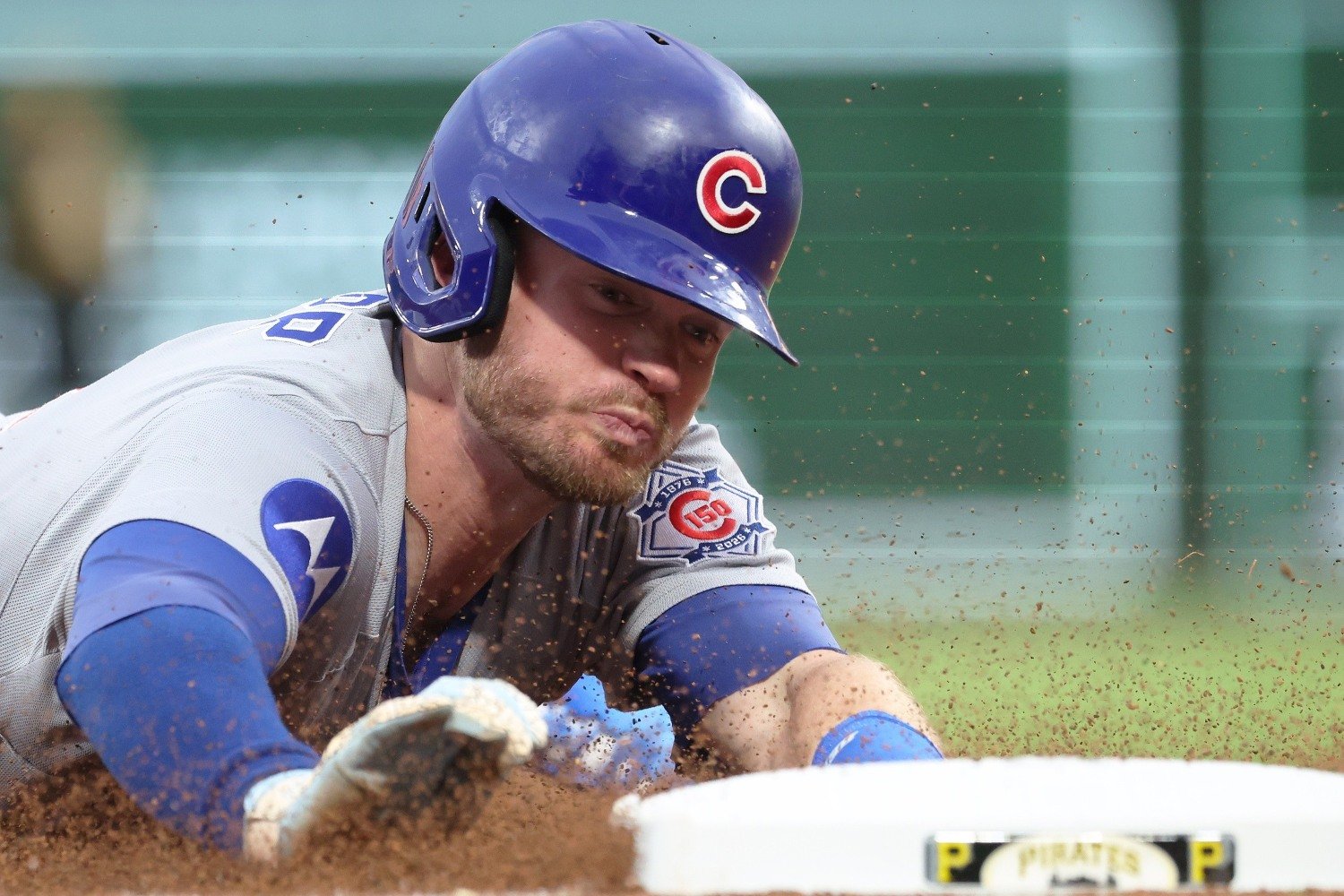 I'm a ruminator, and one of my unfortunate habits is the rewatch. When I find a great piece of media, I prefer to marinate in it—to revisit and reexamine it—than to venture forth and try to find the next thing with something to say. Eventually, I do find new things, but I spend a lot of time going back to things I've seen and read and heard before, whether it be by actually consuming them again or by considering them in the context of some other experience or product. In season 4 of The Wire, the show's most unabashed villain takes the stage. Marlo Stanfield isn't soulless; that's just a front he uses to project and accumulate power. But the process of proving himself hard, cold and ruthless has transformed him in ways he can't perceive. Marlo is a fool. He believes he's building a kingdom—making himself ruler of all he surveys. In reality, he's renting that world, the same way a drunk rents a bottle of whiskey. Just like the drunk is destroyed by that which he clamors to obtain and arrogantly believes he controls, Marlo is hollowed out by his consumption of power. But just like the drunk, he's dangerous and destructive to others, too, for every second he breathes and refuses to reform. One episode opens with Marlo at a convenience store, where he buys a bottle of water—and, at the same time, brazenly steals something from the counter while the cashier is distracted by the transaction, in full view of the security guard near the door. It's a cheap display of immaturity and greed—the kind of thing a fool mistakes for power. It's an assertion of power over the guard, which is made plain to us when the guard follows Marlo outside. He confronts Stanfield, telling him he understands the power imbalance at play but challenging the budding kingpin to show more respect for his community and for working people. "You want it to be one way," says the dead-eyed Marlo. He repeats it several times, flustering and (eventually) spooking the guard. Finally, he lets the other shoe drop, just before walking away. "But it's the other way." In the scene itself, that means what it appears to mean. The guard, by putting on that uniform each day and trying to enforce a bare-minimum kind of order and justice at the store, is offering a mission statement for life. He wants a world where the rules apply to everyone; he wants even the drug lords of the projects to see a few lines they won't cross unless it's absolutely necessary. Marlo's reply is, essentially: no. The scene is also a metamessage to the audience of the show, which sometimes lamented the extremes to which creator David Simon pushed the characters and the awful fates met by just about anyone who tried to make a positive difference. By that point in the show's life, Simon had heard those criticisms; they did not deter him. In fact, he himself characterized the show as "angry" more than once. His background was in journalism. He wanted to press reality (as he saw and understood it) up against the TV screen and make the world reckon with it. To the viewers, this scene said, "You want a world where morality matters. You want to believe that the powerful harbor a secret wish to consort with the powerless, and conform to their hopeful view of the world. You, who watch this from (in many cases, if not most) seats of privilege and comfort and whiteness, want to believe you've helped create and now occupy a governable, essentially fair world. You don't." All of this ran through my head in the top of the seventh inning Friday night. In a 1-1 game, Ian Happ swung at an 0-2 pitch diving toward his back foot, and he hit a nothing ball—a tapper toward first base. The Pirates' Ryan O'Hearn came to collect the ball and flipped casually to Wilber Dotel for the out—or was it one? Happ, to the surprise of the Pirates, had absolutely busted it out of the box and all the way up the first-base line. The play was shockingly close. In fact, the Cubs asked for a replay review. And in fact, Happ had been safe. He beat out an infield single, on a ball that had no business being one. It took the failures of two Pirates defenders to turn that sure out into a hit, but by hustling unreservedly at the end of what should have been a third straight empty, frustrating plate appearance, Happ created a chance for a game-winning rally. On a 2-2 count, Nico Hoerner then hit a flare to center field. Happ got a perfect read, knowing not only that the ball would fall in but that it would die (it was off the end of Hoerner's bat) and take time for center fielder Jake Mangum to field and fire in. He made it to third base on the play, putting him in position to score the go-ahead run. The combined exit velocities of Happ's and Hoerner's hits (121.8 MPH) was lower than those of two individual batted balls in the career of Pirates outfielder Oneil Cruz, who has twice hit it harder than 122 MPH. But because of Happ's hustle and his smarts, he had a great chance to tick the telling tally in a crucial game. He didn't, though. Pedro Ramírez struck out looking, and Carson Kelly grounded into a fielder's choice. The rally died. You want it to be one way, in baseball and in life. You want effort and preparation and instinct and solemn, high purpose to be rewarded. But it's the other way. Baseball, like the world, is not a democracy or even a meritocracy but an oligarchy. Talent tells. Hustlers and scrappers can hustle for scraps once the big dogs eat. Of course, the Cubs were the big dogs in this fight, really. They pushed the game all the way to a 10th inning, and then they won it. Happ made a dazzling defensive play, because although he's not a superstar, he's immensely talented in his own right. In the bottom of that same seventh inning, the Pirates took their turn putting runners on the corners with one out, and they managed to hit the fly ball the Cubs needed from Ramírez. It was a medium-depth fly to left field, shallow enough to give Happ a chance to throw out the runner in terms of sheer distance, but it wasn't hit as lazily as one might have liked. Happ had less time to get behind it and start his movement toward home plate than he'd have liked; he had to generate all the power for a strong throw in a short span and (because a crow hop was a luxury he could ill afford) a small space. Doing that is difficult, and being accurate while doing it is almost impossible. Happ doesn't have an elite outfield arm in terms of sheer arm strength. But in this way, he's elite. He got off the throw, and fast. It was strong, and it was true, and the play wasn't even terribly close. Happ was the Manfred Man in the top of the 10th inning, too. He came around to score the go-ahead run on a hard single to center by Dansby Swanson, and though his nimbly-adjusted slide to the inside of home plate first left him coming in too fast and his front foot bouncing over the plate, his tucked leg still reached its destination before the tag from an awkwardly lunging Henry Davis. It was another great bit of baseball from Happ, and although the play was breathtakingly close to heartbreaking, it turned out all right. That's not meant to imply that Happ's refusal to jog it out in the seventh or his perspicacity on the bases in that inning somehow earned him a smile from karma in the 10th. The Cubs won the game because of Happ's talent in left field, and because they've patched together an adequate string of pitching performances lately in front of an elite defense, and because Pete Crow-Armstrong is an incandescent superstar. Crow-Armstrong homered in the sixth to give the Cubs their only run in regulation, and when pitcher Yohan Ramírez fell behind 2-0 on him in the 10th, the Pirates intentionally walked Crow-Armstrong to load the bases with two outs. First base wasn't even open; they already trailed; and Ramírez has poor control. Seiya Suzuki exploited the moment by waiting out Ramírez and accepting an RBI walk, pushing across the insurance run that would prove to be the margin of victory. Crow-Armstrong's maturation into a patient hitter who won't get himself out earned him that free pass. In the past, the Pirates could and would have kept pitching to him in that spot, expecting him to expand his zone. He's a truly great player right now. Suzuki is a fearsome and disciplined hitter, too. There is another reading of Marlo's encounter with that security guard that's worth pondering, though. Maybe it's one only watching the series from a place of privilege and comfort would ever produce, but here goes: Marlo is, in a sense, wrong. The guard is, in a sense, right. Don't get me wrong: the world is as ruthless and as avaricious as Marlo Stanfield is. But real goodness is also unkillable. Marlo has that guard killed, and Simon would probably prefer that we take a sobering, dour lesson from that: the powerful will respond to your demands for dignity only by pulverizing you. Certainly, whether a person lives or dies is the ultimate equivalent to pointing toward the outfield and saying, "Scoreboard." What matters most, to most people, is who lives and who dies. What matters most, to most baseball fans, is which team wins each game. Why did Stanfield really have that guy killed, though? To make an example of him, sure, a little. To announce his dominance over everything and everyone. But deeper, down on a level Marlo couldn't even reach or understand, he did it because the guard had revealed the truth to him. Whether we try does matter, and so does whether we persist when our first attempts fail. Morality does matter. The world will not reward your good thoughts, words or deeds, in an extrinsic way; the world will come closer to punishing you for them. But it's your duty to think good thoughts, say good words, and do good deeds, anyway. Sometimes, you'll have enough power and enough opportunity and enough luck to be celebrated for that goodness. Sometimes, you won't. But life isn't counted out in dollars or in influence. Those are outputs. The real measure of our time is our inputs. Happ struck out both times he saw Jared Jones Friday night. In his third at-bat, against Dotel, he swung at a bad pitch, took a good pitch, then swung at another bad one. He happened to just touch that third offering, though, and when the least window opened for him to turn a bad day for the better, he seized on it like he understands the difference between a thing done well and a thing done ill. He was fully present. To him, the right things mattered, and doing things right was his way of expressing what mattered. As most Cubs fans know, Happ is from Pittsburgh. Many forget (or never knew) that, 11 years ago, he lost his father to brain cancer, just a few months after he was drafted by the Cubs. The emotions tying him to Pittsburgh aren't simple; they must be equal parts joyous and painful. When he takes the field in his hometown, his surface-level stoicism burns off a bit, and you can see the same attention to detail and insistence on consistency that was handed down to him by Keith Happ, an agronomist for the United States Golf Association. He was a .306/.387/.528 career hitter at PNC Park before Friday. On a night when his bat wasn't doing the job, he found no fewer than three other ways to will the Cubs to a win. Not all of those efforts directly contributed to the win, in a tangible way, but that's not the same as saying they didn't all matter. They did. You can't win 'em all. Nor can you run 'em all out. Nobody is on their game and on fire with intelligent intensity all the time. Games played the way Happ played Friday night deserve special recognition, though. It's easy to give that recognition, because he ended up making a big and obvious contribution to an important victory. Even if the Cubs had lost, though, that seventh-inning sequence would have been valuable. Not all rewards are extrinsic. You can win every day, if not every game—one way, or the other.
 -
Image courtesy of © Jerome Miron-Imagn Images Jed Hoyer and Carter Hawkins have reached out to front offices of several teams tipping toward selling in the days since the resumption of the season after the All-Star break, sources with knowledge of the talks indicated this week. They're looking for help in the bullpen, but the team's top priority is to shore up its starting rotation. More depth there would allow them to backfill the relief corps by demoting Colin Rea and cushion them against the risk of further injuries to the incumbent options. However, the team hasn't talked (yet, at least) about what it would cost to acquire Tarik Skubal from the Detroit Tigers, said one league source. Instead, their preferred targets appear to be hurlers who offer either team control beyond this season or an opportunity to swing a deal without surrendering their top prospects. The Miami Marlins are on a nine-game losing streak, and their apparent status as buyers is now very much in jeopardy. The Cubs could feel a bit sour about the disappointing early returns on the Edward Cabrera deal or the previous winter's scuppered Jesús Luzardo trade, but the team has sounded the Marlins out on their willingness to move Sandy Alcantara. Though no longer a Cy Young-caliber power arm, Alcantara is as reliable a workhorse as any starter in the league, and if Miami continues its spiral, they could be open to moving Alcantara to save the substantial money left on his contract. One reason for the Cubs' interest is that Alcantara's unimpressive numbers and high salary put a cap on what the Marlins can demand from him. The same goes, in one form or another, for Clay Holmes of the Mets, who made a rehab start Thursday with Triple-A Syracuse as he works his way back from a broken leg; Seth Lugo of the Royals, who's owed $21.5 million next season and has ceased to miss bats the way he needs to; and Michael King of the Padres, who (like Holmes) can become a free agent at the end of this year but (unlike Holmes) is still due over $8 million for the balance of the year. Alcantara, Holmes, Lugo and King are each high-volume starters who lack front-line upside. Each could end up being with the team beyond the end of this season, but none are guaranteed to be. They're the arms the Cubs might land on, but it feels like early contact with the teams in question is as much about establishing a good fallback plan as about prioritizing any of them. Not so for Joe Ryan, about whom the Cubs contacted the Twins recently, according to a source informed of the discussion. Right now, the Twins aren't selling, and they'd have to be blown away to move Ryan, who just went to his second All-Star Game and is under team control for 2027. Ryan is an obvious fit for the Cubs, though, in that he manipulates the ball masterfully; doesn't throw especially hard; and racks up strikeouts despite that dearth of raw power. Ryan would be a great pickup, but it's not clear how the Cubs would match up with Minnesota on a deal. Matt Shaw could be a fit for the Twins, for whom Shaw would instantly become the best defensive second baseman on the team and where he would have multiple paths to regular playing time. The Cubs' farm system is weak and top-heavy, though, so piecing together the right package around Shaw might be tough. To be sure, Minnesota is in a position where they'll balk at any move that doesn't make them better right away in 2027, so even if Chicago were willing to part with Jefferson Rojas or Josiah Hartshorn in a Ryan trade, it wouldn't get them over the hump. The Angels and Mets are more obvious sellers, and the Cubs have been in touch about multiple players on each club's pitching staff. As they did last summer, the team has checked in on Jose Soriano, but even under interim baseball operations head John Mozeliak, the Halos are setting a higher price on Soriano than on Reid Detmers, league sources say. That works out fine for the Cubs, who prefer Detmers to Soriano since the lefty's reemergence this spring. A report Thursday at The Athletic seemed to suggest that the Angels might accept catcher Owen Ayers as a centerpiece in a deal for either hurler. I asked around about that; it's a mischaracterization. Ayers is a prospect with rising stock, but not one with much ceiling, and the Angels' interest in him would be as a co-headliner, at most. If the Cubs deal for Soriano or Detmers, it's more likely to be the latter—and it's likely to hurt. Rojas is one player the Angels have liked when scouting the Cubs system in the recent past; the newly promoted James Triantos is another. However, it's not clear to anyone I talked to how much Mozeliak will try to put his own stamp on the team via the moves he makes at this deadline, as opposed to trusting the scouts and staffers who were there under previous GM Perry Minasian. The final starter I can confirm the Cubs have checked on is Freddy Peralta, a teammate of Holmes and (formerly) of David Peterson, whom the team already acquired from New York this summer. Peralta, of course, also has major familiarity with Craig Counsell. He's the most obvious happy medium among the choices the team has actively explored so far, with rough numbers that have forced Mets president of baseball operations David Stearns to lower his expectations in a deal; impending free agency, further curtailing his acquisition cost; and a low salary for this season, but also with major upside that shows up with even a glance at his Baseball Reference page. A rough order of the impact these eight hurlers would have, if the team landed them, might go: Ryan Soriano King Detmers Peralta Alcantara Holmes Lugo Ordering them from most to least costly to acquire probably looks like this: Ryan Soriano Detmers Alcantara King Peralta Holmes Lugo With a deadline coming, it's always a good idea to cross off the first couple of names on a list like this one. The team is doing due diligence, but it's extremely unlikely they get a deal done if a player is both obviously good and coveted by their current team. The bottom two names on the list, by contrast, are a little too available; you're settling. In between, here, the value plays would seem to be King and Peralta. Alcantara will cost more to pry loose than he's worth. Detmers is a fine little dream to dream, but it's important not to get carried away. Over the next week, the Cubs will talk seriously about another eight or nine starters, putting out feelers to rival clubs and trying to gain leverage or exhaust their options before making a move. They'll also work to reinforce the bullpen, and how high they end up aiming in that pursuit might determine which way they go when it comes to bolstering the rotation. It's possible that they even upgrade both parts of the pitching staff in a single, package-style deal, with multiple players going in each direction. For now, though, King and Peralta stand out as the fits who could survive the friction and frenzy of the deadline and end up with the Cubs most easily. View full article
-
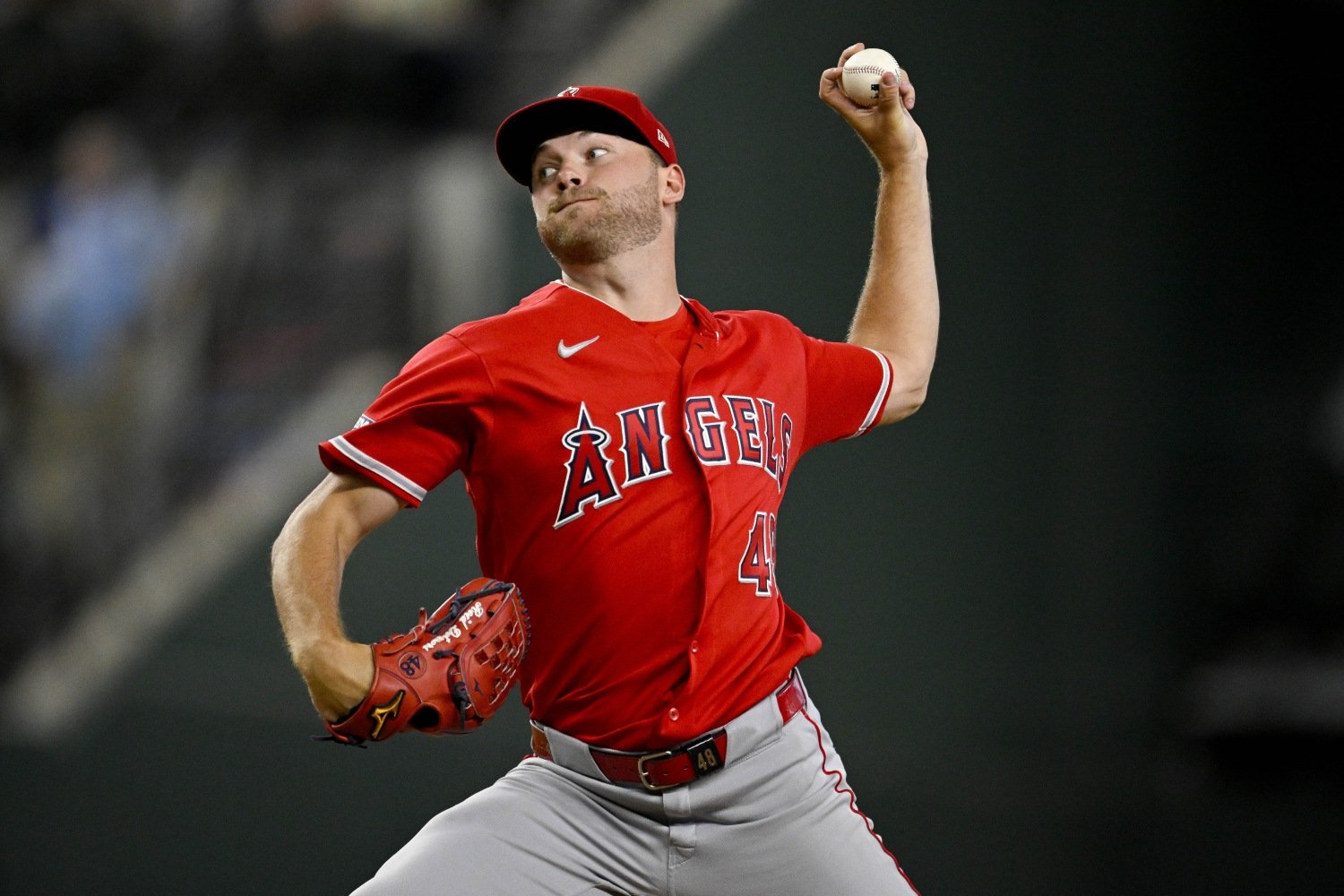 Jed Hoyer and Carter Hawkins have reached out to front offices of several teams tipping toward selling in the days since the resumption of the season after the All-Star break, sources with knowledge of the talks indicated this week. They're looking for help in the bullpen, but the team's top priority is to shore up its starting rotation. More depth there would allow them to backfill the relief corps by demoting Colin Rea and cushion them against the risk of further injuries to the incumbent options. However, the team hasn't talked (yet, at least) about what it would cost to acquire Tarik Skubal from the Detroit Tigers, said one league source. Instead, their preferred targets appear to be hurlers who offer either team control beyond this season or an opportunity to swing a deal without surrendering their top prospects. The Miami Marlins are on a nine-game losing streak, and their apparent status as buyers is now very much in jeopardy. The Cubs could feel a bit sour about the disappointing early returns on the Edward Cabrera deal or the previous winter's scuppered Jesús Luzardo trade, but the team has sounded the Marlins out on their willingness to move Sandy Alcantara. Though no longer a Cy Young-caliber power arm, Alcantara is as reliable a workhorse as any starter in the league, and if Miami continues its spiral, they could be open to moving Alcantara to save the substantial money left on his contract. One reason for the Cubs' interest is that Alcantara's unimpressive numbers and high salary put a cap on what the Marlins can demand from him. The same goes, in one form or another, for Clay Holmes of the Mets, who made a rehab start Thursday with Triple-A Syracuse as he works his way back from a broken leg; Seth Lugo of the Royals, who's owed $21.5 million next season and has ceased to miss bats the way he needs to; and Michael King of the Padres, who (like Holmes) can become a free agent at the end of this year but (unlike Holmes) is still due over $8 million for the balance of the year. Alcantara, Holmes, Lugo and King are each high-volume starters who lack front-line upside. Each could end up being with the team beyond the end of this season, but none are guaranteed to be. They're the arms the Cubs might land on, but it feels like early contact with the teams in question is as much about establishing a good fallback plan as about prioritizing any of them. Not so for Joe Ryan, about whom the Cubs contacted the Twins recently, according to a source informed of the discussion. Right now, the Twins aren't selling, and they'd have to be blown away to move Ryan, who just went to his second All-Star Game and is under team control for 2027. Ryan is an obvious fit for the Cubs, though, in that he manipulates the ball masterfully; doesn't throw especially hard; and racks up strikeouts despite that dearth of raw power. Ryan would be a great pickup, but it's not clear how the Cubs would match up with Minnesota on a deal. Matt Shaw could be a fit for the Twins, for whom Shaw would instantly become the best defensive second baseman on the team and where he would have multiple paths to regular playing time. The Cubs' farm system is weak and top-heavy, though, so piecing together the right package around Shaw might be tough. To be sure, Minnesota is in a position where they'll balk at any move that doesn't make them better right away in 2027, so even if Chicago were willing to part with Jefferson Rojas or Josiah Hartshorn in a Ryan trade, it wouldn't get them over the hump. The Angels and Mets are more obvious sellers, and the Cubs have been in touch about multiple players on each club's pitching staff. As they did last summer, the team has checked in on Jose Soriano, but even under interim baseball operations head John Mozeliak, the Halos are setting a higher price on Soriano than on Reid Detmers, league sources say. That works out fine for the Cubs, who prefer Detmers to Soriano since the lefty's reemergence this spring. A report Thursday at The Athletic seemed to suggest that the Angels might accept catcher Owen Ayers as a centerpiece in a deal for either hurler. I asked around about that; it's a mischaracterization. Ayers is a prospect with rising stock, but not one with much ceiling, and the Angels' interest in him would be as a co-headliner, at most. If the Cubs deal for Soriano or Detmers, it's more likely to be the latter—and it's likely to hurt. Rojas is one player the Angels have liked when scouting the Cubs system in the recent past; the newly promoted James Triantos is another. However, it's not clear to anyone I talked to how much Mozeliak will try to put his own stamp on the team via the moves he makes at this deadline, as opposed to trusting the scouts and staffers who were there under previous GM Perry Minasian. The final starter I can confirm the Cubs have checked on is Freddy Peralta, a teammate of Holmes and (formerly) of David Peterson, whom the team already acquired from New York this summer. Peralta, of course, also has major familiarity with Craig Counsell. He's the most obvious happy medium among the choices the team has actively explored so far, with rough numbers that have forced Mets president of baseball operations David Stearns to lower his expectations in a deal; impending free agency, further curtailing his acquisition cost; and a low salary for this season, but also with major upside that shows up with even a glance at his Baseball Reference page. A rough order of the impact these eight hurlers would have, if the team landed them, might go: Ryan Soriano King Detmers Peralta Alcantara Holmes Lugo Ordering them from most to least costly to acquire probably looks like this: Ryan Soriano Detmers Alcantara King Peralta Holmes Lugo With a deadline coming, it's always a good idea to cross off the first couple of names on a list like this one. The team is doing due diligence, but it's extremely unlikely they get a deal done if a player is both obviously good and coveted by their current team. The bottom two names on the list, by contrast, are a little too available; you're settling. In between, here, the value plays would seem to be King and Peralta. Alcantara will cost more to pry loose than he's worth. Detmers is a fine little dream to dream, but it's important not to get carried away. Over the next week, the Cubs will talk seriously about another eight or nine starters, putting out feelers to rival clubs and trying to gain leverage or exhaust their options before making a move. They'll also work to reinforce the bullpen, and how high they end up aiming in that pursuit might determine which way they go when it comes to bolstering the rotation. It's possible that they even upgrade both parts of the pitching staff in a single, package-style deal, with multiple players going in each direction. For now, though, King and Peralta stand out as the fits who could survive the friction and frenzy of the deadline and end up with the Cubs most easily.
 -
I'll take you at your word. Make good on that word by not circling back to reignite an argument two weeks later (like on that Boyd piece), and by moderating this stance. They're in no position at all to tear it down again, they will not do so, and that's so unreasonable a position as to be unavoidably trollish, even if that's not your underlying intent. They're going to add at this deadline. Engage with that fact and make your case for protecting their long-term talent pipeline within that context.
-
[Re: Patrick88: Don't feed the trolls, everyone. They only get stronger that way.]
-
That's way too pessimistic. I don't like plunging resources into a team with no chance to win its division, but they're still leveraged toward the present, at the expense of the future. They still need to take advantage of a good chance to reach the postseason, both to build momentum for the future and to get decent odds on the dice roll that is a Wild Card playoff entry. Get in, and get in with a respectable chance. Just don't mortgage the future when the upside isn't there for the present. I totally get how that sounds like talking out both sides of my mouth, but hopefully it's clear what I mean. This team, unfortunately, demands a middle-road approach.
-
On the first score: You gotta remember the format now. The Cubs aren't catching the Brewers. They have to win a best-of-3 just to get to a best-of-5. Skubal can give you a leg up in that first series (though it's not, like, a guarantee; he started the game in which the Tigers were eliminated each of the last two Octobers), but then he can't start twice for you in the second one unless you get that series to a Game 5. I don't think their rotation or their bullpen is strong enough to beat the Dodgers or the Brewers in enough of the non-Skubal innings (including, of course, innings he doesn't pitch even in the games he starts) to get past them. On the second front: man, I just think that's telling yourself a story. It doesn't happen that way. Skubal will go where the money is biggest this winter and there's no way on Earth the Cubs will be the high bidders on a top-5 pitcher in the sport. It's not remotely how they operate. And finally, you have to think about opportunity cost. Rojas is unlikely to play a starring role for this team, but you can get Skubal for him, or you can get a guy like Detmers or Jose Soriano or Mason Miller for him—someone who still incrementally improves your chances for this year but also boosts you for the next two seasons or so. Given where this team is, I think you have to opt for the latter. They're not in a position to go all-in on this season, even though they absolutely have to invest more in this season. If they're going to give up one of the few impact players in their farm system, it has to be for more than a few months.
-
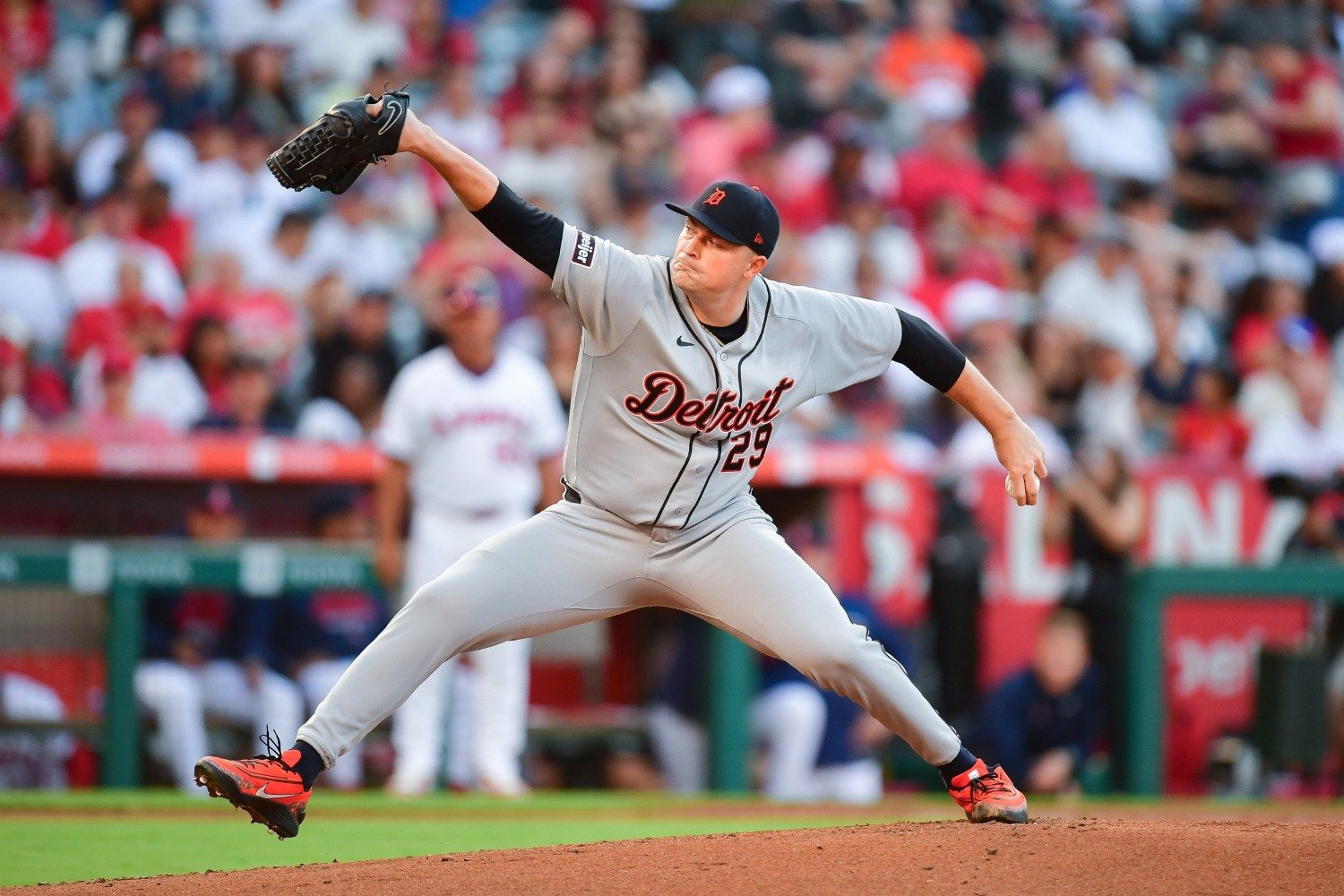 The Cubs have started their second half 3-3, which is nowhere near good enough. That sounds cruel, but life in the NL Central these days is that unforgiving. The Brewers, who were already sailing toward their fifth division title in six years, have gone 5-1 over the same span, pushing Chicago back to 7 games behind in the standings. FanGraphs still gives the Cubs a handsome 80.7% chance to make the playoffs, and they still offer them fair odds to advance a bit in October. But the truth of the matter is that this isn't going to be The Year, or anything like it, for this team. They have too many flaws, and their competition is too strong. They won't win the division, and their chances for a deep run in October are slim. Fans and media personalities have tethered the team to Tarik Skubal in trade rumors throughout the early summer, after the Cubs lost Cade Horton, Edward Cabrera and Ben Brown to injuries. Without those three, the club desperately needs a frontline starter to brace the rotation, and with the Tigers falling out of contention, Skubal does appear to be available. Here's what I wrote about him for our DiamondCentric Top Trade Candidates list: However, here, I'll also add what I've heard from multiple sources in front offices around the league: the price tag on Skubal is high. You need to start with a top-100-caliber prospect or an equivalently gifted major leaguer under long-term team control, and then you need to throw in at least one meaningful secondary piece. For the Cubs, this would mean trading Jefferson Rojas or Josiah Hartshorn, plus a lottery-ticket arm like Kaleb Wing or Dominick Reid. The Tigers are not high on Moisés Ballesteros or Matt Shaw, according to sources familiar with the team's thinking, so making either of those players the headliner in a Skubal deal is a non-starter. In the Cubs' current position, with their current roster and given that Skubal will be a free agent at season's end, it doesn't make sense for the team to pay what it would cost to get him. They don't have enough depth in the farm system to make a trade with that much desperation in it. Instead, here are the names to watch most closely for the team over the next week and a half. Reid Detmers feels more like a Cub than does Skubal, anyway. He doesn't throw as hard, but he's still a lefty, and he comes with two years of team control Skubal doesn't have. That timeline means he could pitch alongside healthy versions of Horton, Cabrera, Brown, Justin Steele and more, if those pitchers ever are truly healthy again, and in the meantime, he would also bolster this team's chances to win a series or two in October. The cost would be as great as the cost of acquiring Skubal, but it would make more sense to pay that price for Detmers. If the team does end up defaulting to a rental starter, they could still get their shopping done in Detroit. They just need to do it on a budget. Casey Mize won't cost anywhere near what Skubal would. He could be had for a package headlined by Kevin Alcántara, whose stock is way down anyway, or by bundling a couple of half-promising lower-level pieces. He's a good mid-tier option to insure the team against outright collapse, which is still a very real threat right now. As well as they've played of late, they're still under .500 since the end of their 20-3 stretch in late April and early May, and the reasons why—some key hitters slumping, and the pitching staff ravaged by attrition—could easily rear up again on them in the final two months of the season. A starter in the Mize range is a need even to keep the team in good shape for a Wild Card berth. He'd be more about averting disaster than about chasing glory, but averting disaster could be this team's slogan, anyway. Finally, let's consider what the bare minimum looks like. As of Thursday morning, I rank Skubal No. 2 on the aforelinked trade candidates list; Detmers No. 5; and Mize No. 15. Eduardo Rodríguez ranks 62nd. His raw stuff is fading; he's smoke and mirrors. He's also expensive this year, and owed a bunch of money next year. He would be a kind of second David Peterson, and Peterson might even have more upside. However, Rodríguez would also cost virtually nothing. That, plus the chance to pencil him in as a fifth or sixth starter on next year's team, makes him appealing in a way the other names discussed here aren't. The Diamondbacks are in no position to ask for a substantial prospect return, although they could get a little bit more by being willing to eat a chunk of the $6.5 million or so that will be left on his deal for 2026 by the deadline. He wouldn't be good enough to materially improve the Cubs' chances of doing anything in the playoffs, but he'd be almost as good a backstop for the rotation as Mize, and he'd come cheaper and with an extra year of control. A Skubal trade would be splashy and sexy. It would also be a mistake. It's fair to say that the Cubs are heavily invested in 2026, financially and in terms of the timelines on their key players. Unimposing though he's been at the plate, Alex Bregman is unlikely to be better in any future year than he is right now, at age 32. Ditto for Dansby Swanson. Seiya Suzuki and Ian Happ will depart as free agents this winter, and the Cubs' farm system is thin. Those are reasons to wonder whether they'll be better in any of the next several years than they are right now. On the other hand, they're also reasons not to throw caution to the wind. There's still a chance that the team can be better than this, with sustained commitment to scouting and player development and with a bit better luck in the health department. They need to avoid annihilating that chance by swinging for the fences at this deadline; they're just not a good enough team to warrant taking that risk.
 -
Image courtesy of © Gary A. Vasquez-Imagn Images The Cubs have started their second half 3-3, which is nowhere near good enough. That sounds cruel, but life in the NL Central these days is that unforgiving. The Brewers, who were already sailing toward their fifth division title in six years, have gone 5-1 over the same span, pushing Chicago back to 7 games behind in the standings. FanGraphs still gives the Cubs a handsome 80.7% chance to make the playoffs, and they still offer them fair odds to advance a bit in October. But the truth of the matter is that this isn't going to be The Year, or anything like it, for this team. They have too many flaws, and their competition is too strong. They won't win the division, and their chances for a deep run in October are slim. Fans and media personalities have tethered the team to Tarik Skubal in trade rumors throughout the early summer, after the Cubs lost Cade Horton, Edward Cabrera and Ben Brown to injuries. Without those three, the club desperately needs a frontline starter to brace the rotation, and with the Tigers falling out of contention, Skubal does appear to be available. Here's what I wrote about him for our DiamondCentric Top Trade Candidates list: However, here, I'll also add what I've heard from multiple sources in front offices around the league: the price tag on Skubal is high. You need to start with a top-100-caliber prospect or an equivalently gifted major leaguer under long-term team control, and then you need to throw in at least one meaningful secondary piece. For the Cubs, this would mean trading Jefferson Rojas or Josiah Hartshorn, plus a lottery-ticket arm like Kaleb Wing or Dominick Reid. The Tigers are not high on Moisés Ballesteros or Matt Shaw, according to sources familiar with the team's thinking, so making either of those players the headliner in a Skubal deal is a non-starter. In the Cubs' current position, with their current roster and given that Skubal will be a free agent at season's end, it doesn't make sense for the team to pay what it would cost to get him. They don't have enough depth in the farm system to make a trade with that much desperation in it. Instead, here are the names to watch most closely for the team over the next week and a half. Reid Detmers feels more like a Cub than does Skubal, anyway. He doesn't throw as hard, but he's still a lefty, and he comes with two years of team control Skubal doesn't have. That timeline means he could pitch alongside healthy versions of Horton, Cabrera, Brown, Justin Steele and more, if those pitchers ever are truly healthy again, and in the meantime, he would also bolster this team's chances to win a series or two in October. The cost would be as great as the cost of acquiring Skubal, but it would make more sense to pay that price for Detmers. If the team does end up defaulting to a rental starter, they could still get their shopping done in Detroit. They just need to do it on a budget. Casey Mize won't cost anywhere near what Skubal would. He could be had for a package headlined by Kevin Alcántara, whose stock is way down anyway, or by bundling a couple of half-promising lower-level pieces. He's a good mid-tier option to insure the team against outright collapse, which is still a very real threat right now. As well as they've played of late, they're still under .500 since the end of their 20-3 stretch in late April and early May, and the reasons why—some key hitters slumping, and the pitching staff ravaged by attrition—could easily rear up again on them in the final two months of the season. A starter in the Mize range is a need even to keep the team in good shape for a Wild Card berth. He'd be more about averting disaster than about chasing glory, but averting disaster could be this team's slogan, anyway. Finally, let's consider what the bare minimum looks like. As of Thursday morning, I rank Skubal No. 2 on the aforelinked trade candidates list; Detmers No. 5; and Mize No. 15. Eduardo Rodríguez ranks 62nd. His raw stuff is fading; he's smoke and mirrors. He's also expensive this year, and owed a bunch of money next year. He would be a kind of second David Peterson, and Peterson might even have more upside. However, Rodríguez would also cost virtually nothing. That, plus the chance to pencil him in as a fifth or sixth starter on next year's team, makes him appealing in a way the other names discussed here aren't. The Diamondbacks are in no position to ask for a substantial prospect return, although they could get a little bit more by being willing to eat a chunk of the $6.5 million or so that will be left on his deal for 2026 by the deadline. He wouldn't be good enough to materially improve the Cubs' chances of doing anything in the playoffs, but he'd be almost as good a backstop for the rotation as Mize, and he'd come cheaper and with an extra year of control. A Skubal trade would be splashy and sexy. It would also be a mistake. It's fair to say that the Cubs are heavily invested in 2026, financially and in terms of the timelines on their key players. Unimposing though he's been at the plate, Alex Bregman is unlikely to be better in any future year than he is right now, at age 32. Ditto for Dansby Swanson. Seiya Suzuki and Ian Happ will depart as free agents this winter, and the Cubs' farm system is thin. Those are reasons to wonder whether they'll be better in any of the next several years than they are right now. On the other hand, they're also reasons not to throw caution to the wind. There's still a chance that the team can be better than this, with sustained commitment to scouting and player development and with a bit better luck in the health department. They need to avoid annihilating that chance by swinging for the fences at this deadline; they're just not a good enough team to warrant taking that risk. View full article
-
Image courtesy of © Kamil Krzaczynski-Imagn Images When the Cubs traded for David Peterson late last month, it was as much out of desperation as out of proactivity. True though it was, Jed Hoyer's asseveration that the team had had interest in Peterson already didn't mean they actually would have pulled the trigger when they did, but for the massive injury trouble that struck their starting rotation just before the trade. With Ben Brown and Edward Cabrera landing on the injured list simultaneously, they needed a warm body and a working arm. They couldn't afford to be especially picky. Count them lucky, then, as well as good, because in Peterson, they found the right stopgap to fit their needs not only in the moment, but for the balance of the season. He's no more than a backend starter, but he's also no less than one, whatever his numbers in a brief and cursed start to the season with the star-laden and star-crossed Mets might have implied. Moreover, his stuff suits the Cubs' predilections gorgeously—and just before they acquired him, he made some changes that made him even more perfect as a prospective Tommy Hottovy pupil. Peterson's four-seam fastball has natural cut, which the Cubs have long loved. However, he also has a good sinker, and he tends to lean on that more heavily when he has a good feel for it. The two pitches work well as a tandem, not because of the way they play off each other, but because the four-seamer's unique shape sets up his fading changeup, while the sinker can prime hitters to misread and mishit his breaking stuff. However, he ran into major alignment problems early in the season with the Mets, which left him unable to locate either hitter well enough to set up much of anything. Since neither offering is thrown especially hard or has lively enough movement to make up for that, their newfound failure to help the other pieces of his repertoire play up became a huge problem. The fix, however, was simple—so much so that even the Mets figured it out. About a week before he was dealt to Chicago, Peterson moved from the center of the rubber to the third-base side. Here are side-by=side looks at him mid-delivery at Wrigley. One shot is from when the Mets visited the Cubs early in the season, and the southpaw was working on behalf of the visitors. The other is from his start against the Tigers Tuesday night, in which he pitched 6 2/3 impressive innings in a breezy Cubs win. Sliding over toward the side to which (relatively speaking, and to the eye of the hitter) the four-seamer already wants to move has made it much easier for Peterson to target the up-and-in quadrant against right-handed batters. That's extremely valuable; God hasn't yet created the hitter who feels comfortable when a pitcher can spot the ball there. Working along the entire top rail of the zone, as Peterson was doing before he came to Chicago, sounds good in theory. In practice, with a fastball that has neither good rising action nor average-or-better velocity, it left him running into barrels too often. Being able to force that pitch to the glove-side half without losing the height on it is a cure for that condition, and moving over on the rubber has been enough to accomplish it. Meanwhile, the sinker—in fact, let's call it a two-seamer; it's much more of a runner than a heavy, dropping pitch—can be thrown with more conviction and action now. Being closer to the glove-side edge of home gives Peterson more real estate with which to work. He can let the two-seamer run a bit more, which makes him harder to square up. That change in starting position happened before he joined the team, but Peterson has also tweaked his approach to suit the shift, and that adjustment has a more distinctly Cubs flavor. In his first several appearances for the team, Peterson threw more sinkers than he did in most of his appearances with the Mets this year. He leaned into the pitch he already had the best command of. However, Tuesday night against a heavily right-handed Tigers lineup, that changed. Peterson went to the four-seamer more, and found even more success. There's nothing more to unlock here. Peterson won't be an ace, no matter how he continues refining his approach under the Cubs' tutelage. He can be a very good mid-rotation arm with this team, but even if so, he'll owe much of the credit to the excellent Cubs defense. Still, what he can be is plenty for this team, which has gotten a bit healthier in the rotation since acquiring him and which figures to add another starter in the next 10 days. Peterson was already a Cubs-coded hurler and made the most important changes needed to get back to his best self before the club even dealt for him. Now, he just needs to execute each time he takes the mound, and keep trusting both his coaches and his on-field support staff, the defense. View full article
-
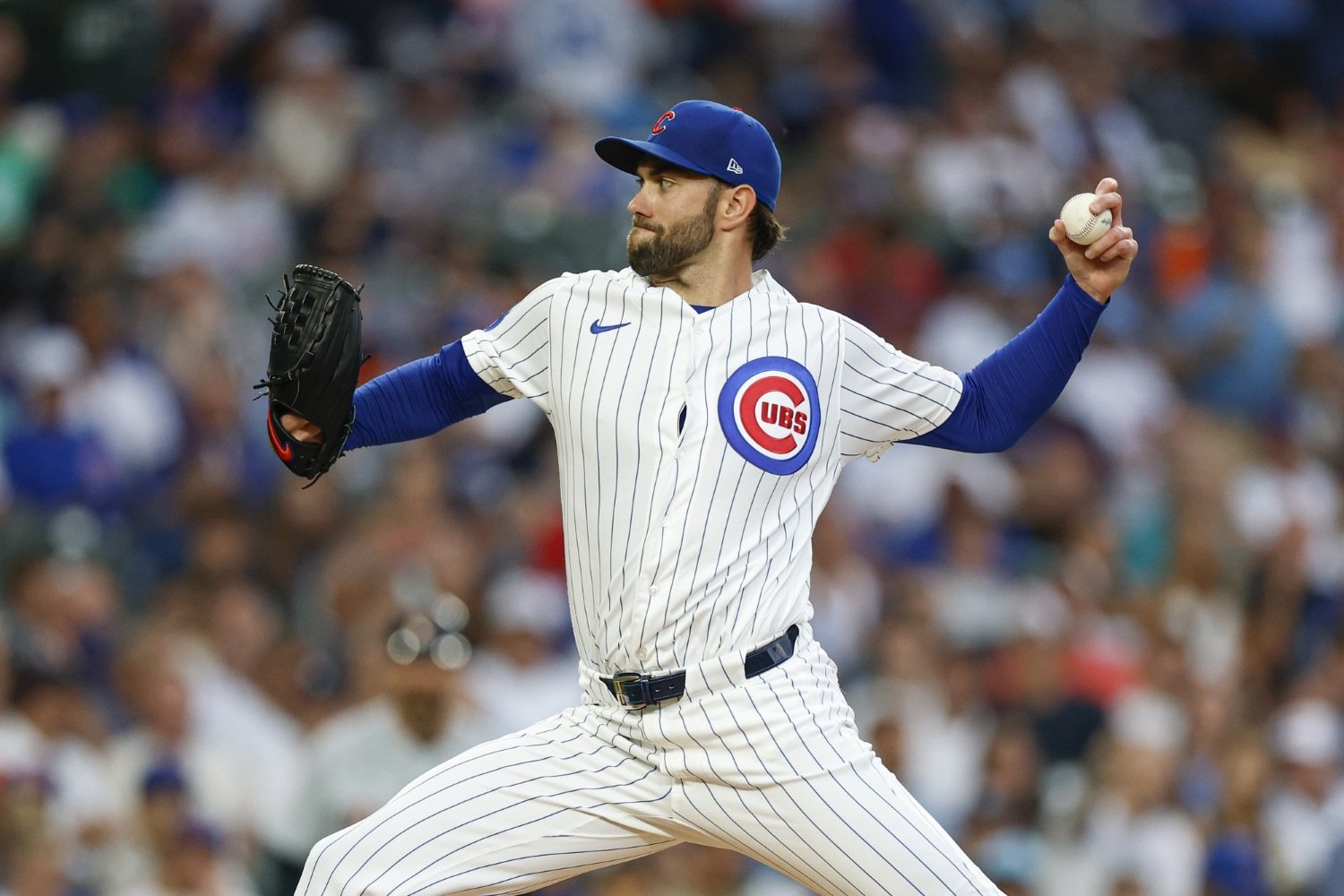 When the Cubs traded for David Peterson late last month, it was as much out of desperation as out of proactivity. True though it was, Jed Hoyer's asseveration that the team had had interest in Peterson already didn't mean they actually would have pulled the trigger when they did, but for the massive injury trouble that struck their starting rotation just before the trade. With Ben Brown and Edward Cabrera landing on the injured list simultaneously, they needed a warm body and a working arm. They couldn't afford to be especially picky. Count them lucky, then, as well as good, because in Peterson, they found the right stopgap to fit their needs not only in the moment, but for the balance of the season. He's no more than a backend starter, but he's also no less than one, whatever his numbers in a brief and cursed start to the season with the star-laden and star-crossed Mets might have implied. Moreover, his stuff suits the Cubs' predilections gorgeously—and just before they acquired him, he made some changes that made him even more perfect as a prospective Tommy Hottovy pupil. Peterson's four-seam fastball has natural cut, which the Cubs have long loved. However, he also has a good sinker, and he tends to lean on that more heavily when he has a good feel for it. The two pitches work well as a tandem, not because of the way they play off each other, but because the four-seamer's unique shape sets up his fading changeup, while the sinker can prime hitters to misread and mishit his breaking stuff. However, he ran into major alignment problems early in the season with the Mets, which left him unable to locate either hitter well enough to set up much of anything. Since neither offering is thrown especially hard or has lively enough movement to make up for that, their newfound failure to help the other pieces of his repertoire play up became a huge problem. The fix, however, was simple—so much so that even the Mets figured it out. About a week before he was dealt to Chicago, Peterson moved from the center of the rubber to the third-base side. Here are side-by=side looks at him mid-delivery at Wrigley. One shot is from when the Mets visited the Cubs early in the season, and the southpaw was working on behalf of the visitors. The other is from his start against the Tigers Tuesday night, in which he pitched 6 2/3 impressive innings in a breezy Cubs win. Sliding over toward the side to which (relatively speaking, and to the eye of the hitter) the four-seamer already wants to move has made it much easier for Peterson to target the up-and-in quadrant against right-handed batters. That's extremely valuable; God hasn't yet created the hitter who feels comfortable when a pitcher can spot the ball there. Working along the entire top rail of the zone, as Peterson was doing before he came to Chicago, sounds good in theory. In practice, with a fastball that has neither good rising action nor average-or-better velocity, it left him running into barrels too often. Being able to force that pitch to the glove-side half without losing the height on it is a cure for that condition, and moving over on the rubber has been enough to accomplish it. Meanwhile, the sinker—in fact, let's call it a two-seamer; it's much more of a runner than a heavy, dropping pitch—can be thrown with more conviction and action now. Being closer to the glove-side edge of home gives Peterson more real estate with which to work. He can let the two-seamer run a bit more, which makes him harder to square up. That change in starting position happened before he joined the team, but Peterson has also tweaked his approach to suit the shift, and that adjustment has a more distinctly Cubs flavor. In his first several appearances for the team, Peterson threw more sinkers than he did in most of his appearances with the Mets this year. He leaned into the pitch he already had the best command of. However, Tuesday night against a heavily right-handed Tigers lineup, that changed. Peterson went to the four-seamer more, and found even more success. There's nothing more to unlock here. Peterson won't be an ace, no matter how he continues refining his approach under the Cubs' tutelage. He can be a very good mid-rotation arm with this team, but even if so, he'll owe much of the credit to the excellent Cubs defense. Still, what he can be is plenty for this team, which has gotten a bit healthier in the rotation since acquiring him and which figures to add another starter in the next 10 days. Peterson was already a Cubs-coded hurler and made the most important changes needed to get back to his best self before the club even dealt for him. Now, he just needs to execute each time he takes the mound, and keep trusting both his coaches and his on-field support staff, the defense.
 -
Image courtesy of © Jeff Hanisch-Imagn Images It was hot in Chicago on Sunday, It had been hotter on Saturday, and more oppressive on Friday, when the air was filled with down-drifting smoke, but Sunday was hot. Watch carefully on Sunday mornings at the ballpark, and you can see players allowing themselves tiny breaks. The season is grueling; surviving it means taking micro-vacations, like lingering over a breakfast plate in the team dining area an extra few minutes or attending some church gathering, be it one of the peer-led Bible studies or a miniature Catholic Mass. Two hours before first pitch, though, Justin Dean was already halfway through his demanding daily routine. "First thing, before I even get out here, I try to be one of the first guys through the cage, getting my flips in, my live pitching looks in," Dean said, standing and stretching on the steps leading down from the field toward the tunnel in the Cubs dugout. "That gives me time to do this, too." The "this" of which he speaks is a progression of defensive drills with third-base coach and outfield instructor Quintin Berry. Interestingly, their work together begins with Dean donning a mini-glove—a tool more often associated with infielders. Kneeling a few feet from Dean, Berry throws him a series of short hops, which Dean fields in several different positions. Unlike an infielder, he doesn't start down on his knees himself; this work is different. Instead, he goes through a series of arrangements of his feet, each one looking like he's reaching a ground-ball single at a different moment in his stride. The mini-glove forces him to get and stay even lower than he would in a game. "It’s so important. Getting to the ball quickly and getting rid of it, just stopping that guy from advancing, whatever I can do to be ready for that, I want to do it," he said. "So I try to do this every day. Make every kind of play that I might need to make out there. Be ready for anything." Dean has a preferred foot on which to plant as he swoops down to collect a ball, but he knows the game doesn't always operate on your rhythm, so he and Berry practice picking the ball up directly in front of him and to each side, with each foot forward. Relatively soon, the mini-glove is cast aside, and Dean switches to his custom-colored outfielder's mitt. Berry goes to work, then, with his fungo bat, and the drills are repeated, but with slightly greater distance between coach and pupil and slightly more pace on the balls being fielded. After going (again) through that exhaustive set of body positions and arrangements of Dean's feet, the two move farther and farther apart, until Berry is camped on the foul line about 40 feet beyond third base and Dean is out in shallow center. Now the balls are hit a greater distance from him, and the same ballet takes place with broader sweeps. Dean runs anywhere from three to 10 steps after each ball, fielding them exactly the way he did in the previous drills. He's locking in the same reliable set of movements, while making sure that the variety of those movements is great enough to prepare him for game action. "You want to be ready for anything. Not every ball you get out there is gonna be the same," Dean said of one move repeated at each level of the progression, wherein he backhands the ball like an infielder. (Nine times in 10, outfielders, will find a way to get around balls hit to their throwing-arm side and field it with their glove in a forehand position, surrounding the ball, but that's not always possible or preferable.) "I try to move some ways here that I might not do very often in a game, but then if I need to, I’m ready." That's Dean's credo, and the motto of any good fifth outfielder. "Be ready." It's much easier said than done, but that's why Dean works up a real sweat long before gametime—and does it every day. In all that time with Berry, he didn't make even one effortful throw; he returned the ball softly to his bare-handed coach on bounces or rolls. He'll play catch with a teammate closer to game time; this is just bonus work. "It can make a big difference; you never know what will," Dean said. "And so my main thing has been to have a routine. One, it wakes the body up, just get moving and get out there. Especially when you know that your playing time isn’t going to be that consistent, you want to be ready. You want to make that play when you’re called upon; it can be the difference." Dean said that, although he's always tried to get in extra work on occasion, he learned just how important a routine and a daily plan for improvement and preparedness were when he got a taste of life in the big leagues with the Dodgers last year. Then-teammate Mookie Betts talked him through it; Dean called Betts "my guy" and said the two still connect when needed. A 17th-round pick in 2018, Dean is a late bloomer. He's already, technically, a World Series champion, having been with the 2025 Dodgers, and he appeared in 13 games for Los Angeles in October last year. He didn't come to bat even once in those contests, though, and in what adds up to about four months of time on big-league rosters, he has only 42 games played and a hilariously low 10 career plate appearances. That's playing time being inconsistent, alright. It's a testament to Dean's dedication and his popularity in a clubhouse that both the Dodgers and the Cubs have been willing to carry him for so long while using him so little. He stays ready, even if it's only for a few innings' defensive work in blowouts. He knows that, one way or another, there's always a chance that he's called upon to play defense in a much higher-pressure, higher-leverage situation. He also keeps himself sharp as a hitter, leaning on the game's improved technological infrastructure. Dean said he got some reps in on the Trajekt machine while with the Dodgers last summer and fall, but has developed even more of a routine with it since coming to the Cubs. Unlike Los Angeles, Chicago has a machine at their Triple-A affiliate, as well as one at Wrigley Field; Dean built a pregame plan for utilizing that tool, too. "It can definitely help, just visually," Dean said of the machine, which uses video and data inputs to mimic the real experience of facing hurlers in a cage setting. "It doesn’t have to be about facing a specific pitcher or anything, but to feel like you’re getting more real reps that way." On the rare occasions when he's gotten to swing for the Cubs, that work, too, has paid off; he has his first two career hits this year. His role is a paltry thing, on a team loaded with outfield talent and three guys who (each for slightly different reasons) hate to come out of the lineup for any reason. Dean doesn't mind, and said that Craig Counsell doesn't need to coddle him by communicating constantly about what to expect. "I think it goes without saying, in a way," Dean said. "That’s what the job is. I can’t predict when the chance is going to come, but the work gets me ready to, when they need me, I want to make whatever play we need that day." Most days, the Cubs don't need any play from Dean. That hasn't diminished his passion for the preparation. Listening to and watching Betts, going along for the ride with that championship team as a 28-year-old rookie, and working under managers Dave Roberts and Counsell, Dean has soaked up a lot of experience in his short time in the majors, after spending the better part of a decade riding buses in the minors. He's making the most of his chance to stay in the bigs now, even if 'the most' of a role like this still isn't much. The metaphor of those reps where he's stationary and has to field the ball cleanly with each foot in each possible position is an apt one. The game can't wrong-foot you if you have no wrong foot. That's why Dean puts in the work, and the respect his teammates have for him is because he puts in the work. View full article
-
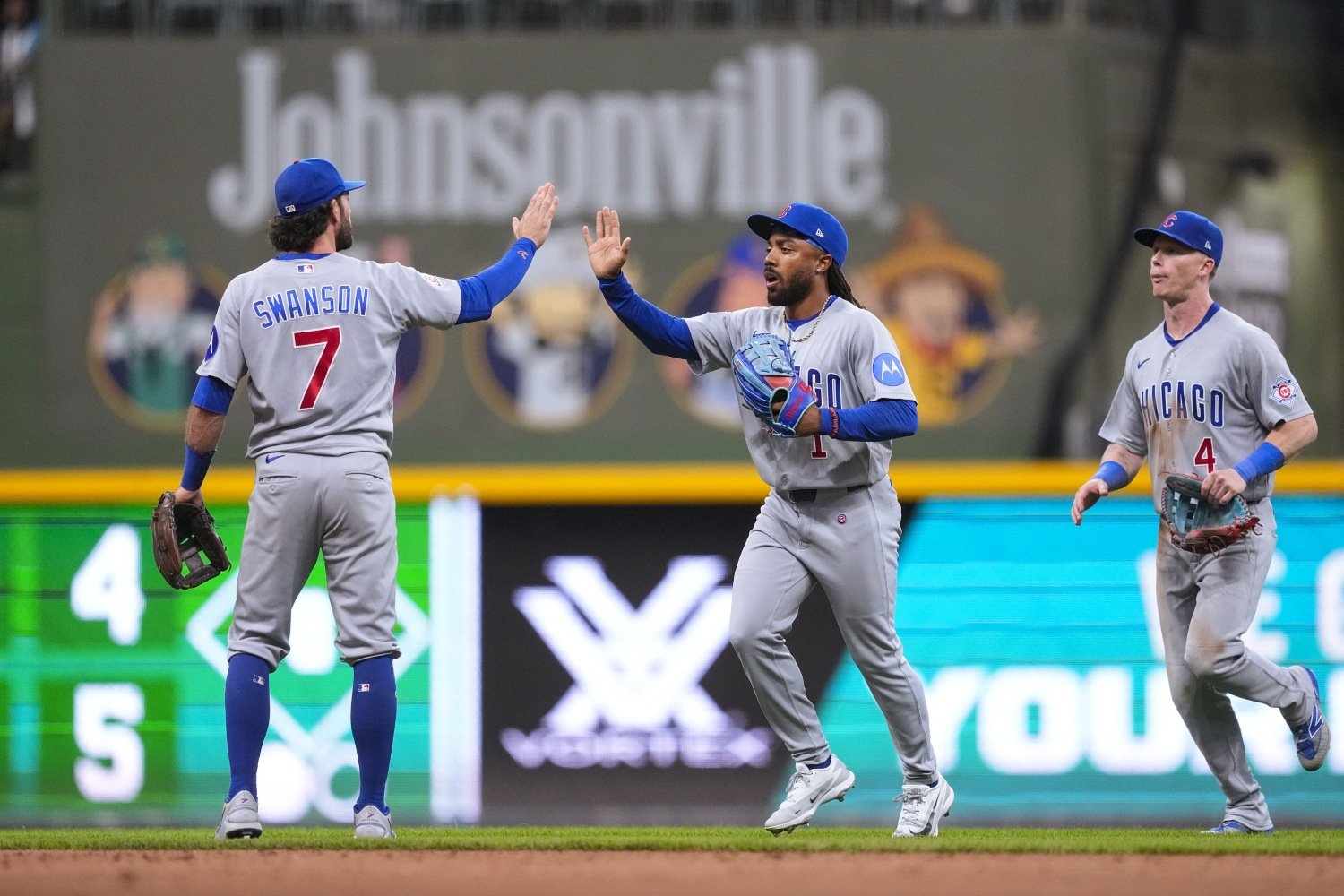 It was hot in Chicago on Sunday, It had been hotter on Saturday, and more oppressive on Friday, when the air was filled with down-drifting smoke, but Sunday was hot. Watch carefully on Sunday mornings at the ballpark, and you can see players allowing themselves tiny breaks. The season is grueling; surviving it means taking micro-vacations, like lingering over a breakfast plate in the team dining area an extra few minutes or attending some church gathering, be it one of the peer-led Bible studies or a miniature Catholic Mass. Two hours before first pitch, though, Justin Dean was already halfway through his demanding daily routine. "First thing, before I even get out here, I try to be one of the first guys through the cage, getting my flips in, my live pitching looks in," Dean said, standing and stretching on the steps leading down from the field toward the tunnel in the Cubs dugout. "That gives me time to do this, too." The "this" of which he speaks is a progression of defensive drills with third-base coach and outfield instructor Quintin Berry. Interestingly, their work together begins with Dean donning a mini-glove—a tool more often associated with infielders. Kneeling a few feet from Dean, Berry throws him a series of short hops, which Dean fields in several different positions. Unlike an infielder, he doesn't start down on his knees himself; this work is different. Instead, he goes through a series of arrangements of his feet, each one looking like he's reaching a ground-ball single at a different moment in his stride. The mini-glove forces him to get and stay even lower than he would in a game. "It’s so important. Getting to the ball quickly and getting rid of it, just stopping that guy from advancing, whatever I can do to be ready for that, I want to do it," he said. "So I try to do this every day. Make every kind of play that I might need to make out there. Be ready for anything." Dean has a preferred foot on which to plant as he swoops down to collect a ball, but he knows the game doesn't always operate on your rhythm, so he and Berry practice picking the ball up directly in front of him and to each side, with each foot forward. Relatively soon, the mini-glove is cast aside, and Dean switches to his custom-colored outfielder's mitt. Berry goes to work, then, with his fungo bat, and the drills are repeated, but with slightly greater distance between coach and pupil and slightly more pace on the balls being fielded. After going (again) through that exhaustive set of body positions and arrangements of Dean's feet, the two move farther and farther apart, until Berry is camped on the foul line about 40 feet beyond third base and Dean is out in shallow center. Now the balls are hit a greater distance from him, and the same ballet takes place with broader sweeps. Dean runs anywhere from three to 10 steps after each ball, fielding them exactly the way he did in the previous drills. He's locking in the same reliable set of movements, while making sure that the variety of those movements is great enough to prepare him for game action. "You want to be ready for anything. Not every ball you get out there is gonna be the same," Dean said of one move repeated at each level of the progression, wherein he backhands the ball like an infielder. (Nine times in 10, outfielders, will find a way to get around balls hit to their throwing-arm side and field it with their glove in a forehand position, surrounding the ball, but that's not always possible or preferable.) "I try to move some ways here that I might not do very often in a game, but then if I need to, I’m ready." That's Dean's credo, and the motto of any good fifth outfielder. "Be ready." It's much easier said than done, but that's why Dean works up a real sweat long before gametime—and does it every day. In all that time with Berry, he didn't make even one effortful throw; he returned the ball softly to his bare-handed coach on bounces or rolls. He'll play catch with a teammate closer to game time; this is just bonus work. "It can make a big difference; you never know what will," Dean said. "And so my main thing has been to have a routine. One, it wakes the body up, just get moving and get out there. Especially when you know that your playing time isn’t going to be that consistent, you want to be ready. You want to make that play when you’re called upon; it can be the difference." Dean said that, although he's always tried to get in extra work on occasion, he learned just how important a routine and a daily plan for improvement and preparedness were when he got a taste of life in the big leagues with the Dodgers last year. Then-teammate Mookie Betts talked him through it; Dean called Betts "my guy" and said the two still connect when needed. A 17th-round pick in 2018, Dean is a late bloomer. He's already, technically, a World Series champion, having been with the 2025 Dodgers, and he appeared in 13 games for Los Angeles in October last year. He didn't come to bat even once in those contests, though, and in what adds up to about four months of time on big-league rosters, he has only 42 games played and a hilariously low 10 career plate appearances. That's playing time being inconsistent, alright. It's a testament to Dean's dedication and his popularity in a clubhouse that both the Dodgers and the Cubs have been willing to carry him for so long while using him so little. He stays ready, even if it's only for a few innings' defensive work in blowouts. He knows that, one way or another, there's always a chance that he's called upon to play defense in a much higher-pressure, higher-leverage situation. He also keeps himself sharp as a hitter, leaning on the game's improved technological infrastructure. Dean said he got some reps in on the Trajekt machine while with the Dodgers last summer and fall, but has developed even more of a routine with it since coming to the Cubs. Unlike Los Angeles, Chicago has a machine at their Triple-A affiliate, as well as one at Wrigley Field; Dean built a pregame plan for utilizing that tool, too. "It can definitely help, just visually," Dean said of the machine, which uses video and data inputs to mimic the real experience of facing hurlers in a cage setting. "It doesn’t have to be about facing a specific pitcher or anything, but to feel like you’re getting more real reps that way." On the rare occasions when he's gotten to swing for the Cubs, that work, too, has paid off; he has his first two career hits this year. His role is a paltry thing, on a team loaded with outfield talent and three guys who (each for slightly different reasons) hate to come out of the lineup for any reason. Dean doesn't mind, and said that Craig Counsell doesn't need to coddle him by communicating constantly about what to expect. "I think it goes without saying, in a way," Dean said. "That’s what the job is. I can’t predict when the chance is going to come, but the work gets me ready to, when they need me, I want to make whatever play we need that day." Most days, the Cubs don't need any play from Dean. That hasn't diminished his passion for the preparation. Listening to and watching Betts, going along for the ride with that championship team as a 28-year-old rookie, and working under managers Dave Roberts and Counsell, Dean has soaked up a lot of experience in his short time in the majors, after spending the better part of a decade riding buses in the minors. He's making the most of his chance to stay in the bigs now, even if 'the most' of a role like this still isn't much. The metaphor of those reps where he's stationary and has to field the ball cleanly with each foot in each possible position is an apt one. The game can't wrong-foot you if you have no wrong foot. That's why Dean puts in the work, and the respect his teammates have for him is because he puts in the work.