


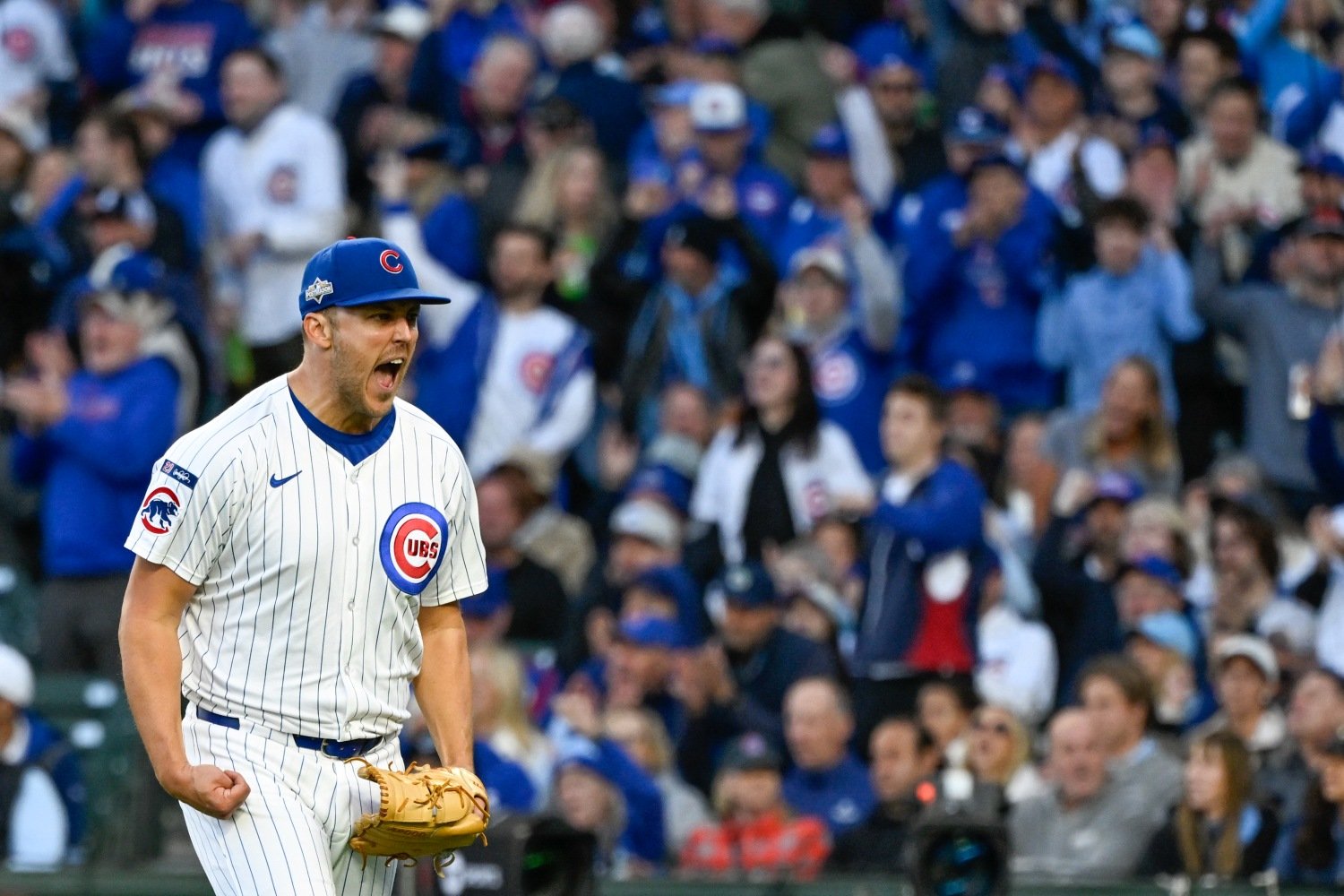
Cubs Video
The Chicago Cubs bowed out early in the bidding for top starting pitcher Dylan Cease. They came much nearer to landing Japanese import Tatsuya Imai, but ultimately, Imai signed with the Astros instead. Michael King re-signed with the Padres, and Merrill Kelly returned to the Diamondbacks after they traded him to Texas in July. Trades have moved Mike Burrows to Houston and Sonny Gray and Johan Oviedo to Boston, Some of the top reclamation projects and below-the-radar starters (Dustin May, Tyler Mahle, Cody Ponce, and more) have found their new homes. The market has moved, and the only movements the Cubs have made with it were the proactive choice to extend Colin Rea and the half-welcomed return of Shota Imanaga.
In Rea, Imanaga, Cade Horton, Matthew Boyd and Jameson Taillon, the Cubs have five pitchers penciled into their rotation for the coming season. A healthy Javier Assad and a returning Justin Steele would push that number to seven. By the end of last season, that group was insufficient to power the team past the Brewers in the NLDS, but the biggest reasons for that (Horton getting hurt in mid-September and Steele having undergone elbow surgery in April) will be out of the way by the middle of this year.
Boyd will pitch for Team USA in the World Baseball Classic in March, further reducing what were already slim chances of another 180-inning campaign from him. Imanaga inspired so little confidence in October that the team didn't use him at all in the decisive Game 5 of that NLDS, but they did then make the decision to extend him the qualifying offer, so they have demonstrated some faith in his durability and performance. It's not hard to find places where the team might still need innings from a starter, but there's no obvious vacancy in that corps. In fact, with Jaxon Wiggins on the cusp of the majors and more pitchers capable of providing length already in the mix, their depth is their strength.
As we've discussed several times this winter, that doesn't mean Jed Hoyer shouldn't or won't add another starter. The Cubs remain engaged in both trade and free-agent starter markets, because beyond Horton, their starters all come with important questions about either durability or quality. Should they bring in a starter like Zac Gallen, Ranger Suárez or MacKenzie Gore, though, they'd begin to face a roster crunch in the rotation—especially because they've committed themselves to several out-of-options relief pitchers this winter.
Let's imagine, then, that they do make an addition. Will it come with a subtraction? Trading a starter could give the team a much-needed crumb of added depth in the farm system; free up some money for the offensive improvements they also want to make before Opening Day; and clarify the plan for the starting rotation in 2026. It would be complicated, but it might be necessary.
Imanaga can't be traded without his permission until June 15; he was technically a free agent before accepting the qualifying offer. Rea doesn't enjoy that protection, but he would save the team less money than most of the alternatives and they've already made an active decision to retain him. Boyd is the type of pitcher the Cubs systematically value more highly than the rest of the league, and was so important to last year's team that trading him feels unimaginable. Trading Horton actually is unimaginable. Steele, coming off surgery, would be hard to trade and isn't going to make that much money, either.
The candidates to be dealt are Taillon and Assad. Entering the last year of his four-year deal with the team, Taillon has made some important strides, increasing the utility of his cutter and discovering the kick-change that changed his game in 2025. He's due $18 million this year, and he only has partial no-trade protection, in the form of a 10-team list he can tweak each fall and to which he can block deals. He makes the most sense as a trade chip, because his low strikeout rate and multiple minor injuries in 2025 leave more question marks about his future than are attached to most of the team's other options.
Assad comes with just as many questions, but his salary for 2026 will be much lower than Taillon's. He can be traded without restriction, and he has three years of team control remaining, so his trade value will be higher. The key downside of moving him is simple: Assad can be optioned to the minors. He's the most flexible piece of their projected rotation picture, so dealing him would leave them with very little optionality.
Because they re-signed Rea and fell back into a short-term arrangement with Imanaga, the Cubs aren't desperate to improve their rotation. Arguably, they should be, but that hasn't been the sense either agents or teams discussing trade candidates with Chicago have gotten. Instead, Hoyer appears to be focused on finding the right way to bolster his offense and build more medium-term upside for a team facing a fistful of free-agent departures after 2026. The team is still open to adding a starter, though, and if they do, it could mean a Taillon trade is in the offing. Such a trade would probably feel much like a salary dump than a win in itself, the same way the team traded Cody Bellinger for little return last winter. In doing that, though, they upgraded from Bellinger to Kyle Tucker, which helped them reach the NLDS for the first time since 2017. This time, the upgrade could be from Taillon to a player like Gallen or Suárez, giving them more team control, this time, as well as a short-term increase in playoff odds.





Recommended Comments
Create an account or sign in to comment
You need to be a member in order to leave a comment
Create an account
Sign up for a new account in our community. It's easy!
Register a new accountSign in
Already have an account? Sign in here.
Sign In Now