


Bertz
-
Posts
13,439 -
Joined
-
Last visited
-
Days Won
39
Content Type
Profiles
Joomla Posts 1
Chicago Cubs Videos
Chicago Cubs Free Agent & Trade Rumors, Notes, & Tidbits
2026 Chicago Cubs Top Prospects Ranking
News
2023 Chicago Cubs Draft Picks
Guides & Resources
2024 Chicago Cubs Draft Picks
The Chicago Cubs Players Project
2025 Chicago Cubs Draft Pick Tracker
2026 Chicago Cubs Draft Tracker: Picks & Bonuses
Blogs
Events
Forums
Store
Gallery
Everything posted by Bertz
-
Cubs Winter Top Prospects Rankings: #12 Jefferson Rojas
Bertz replied to Jason Ross's topic in Cubs Minor League Talk
For a long time, just getting to full season ball as an 18 year old portended big things. If you actually produced, you were going to be a star. These days because of minor league contraction (and a few orgs like the Padres who race prospects up the ladder) the former doesn't mean a whole lot, but the latter still very much feels like it does. So Rojas putting up a 115 wRC+ as an 18 year old, and keeping that up for 300+ plate appearances, that's a lot. That's some real production, and over enough time to assure us it's not just one hot streak holding those numbers up. The mid-season prospect rankings for him were mostly (and understandably) "holy crap look what he's doing at 18". But I'm hoping we get more info over the winter about what scouts think his ultimate upside is. -
NL Central: Reds, Pirates and others
Bertz replied to Hairyducked Idiot's topic in General Baseball Talk
Brewers considering a full teardown? -
Going somewhere, Soto? Yes, to the Yankees
Bertz replied to Bobson Dugnutt's topic in Chicago Cubs Talk
I would move Horton for Soto. He's probably the only guy we know is available I'd do it for but I'd do it. That would have to do like 90% of the heavy lifting though. San Diego is not getting Horton and Caissie for instance. They're getting like Horton and Christian Franklin, or Horton and Matt Mervis. Realistically though, I don't expect Horton is available or necessary. This report makes me think the return is one of Caissie/Alcantara and one of Assad/Wicks/Brown, which is basically where my head was at until the Morel rumors popped up. -
Curious if he very specifically means in free agency or if he meana in totality for the offseason. If it's the latter it would likely point to the payroll cap being the 2nd LT threshold
-
What's your prospect trade hierarchy this offseason?
Bertz replied to Transmogrified Tiger's topic in Cubs Minor League Talk
One other thing on this, and I've mentioned it in some of the more transaction-oriented threads, is that there are a couple pockets of depth that we should look to take advantage of. All of these exist in the upper minors or early into MLB. Close Proximity RHH Outfielders: Canario, Alcantara, C. Franklin MLB Ready-ish SPs: Assad, Brown, Wicks, Wesneski Potentially Special bats with more or less no position: Morel, Triantos, Ballesteros, McGeary For these guys, maybe sans context you'd have them in tier 1 or tier 2, but the existence of the others in their cohort I think ought to lend itself to making them more available (e.g. I could live with dealing Wicks only because we do have those other guys right behind him). At the same time, I'd be extremely reticent to double or triple dip from a single category, even if they're both 3rd or 4th tier (e.g. I wouldn't move Ballesteros and Triantos). -
It's very weird to me that you're giving this credit to Counsell and not the front office and/or pitching coach?
-
When Theo left Rogers became by far the most connected guy in town. He's always been tight with Hoyer, I remember them having an annual interview Jed would take from the car on his way down to Arizona. He was the first with Darvish (Hoyer's first big post-Theo move), etc. So yeah if Rogers says things we should listen closely.
-
Is that because Ross couldn't see what was coming or because Ross had fewer alternatives available? Maybe at times the former but IMO generally it's the latter. I don't want to diminish Counsell but having twice as many "circle of trust" caliber arms is going to make any manager look smarter.
-
What's your prospect trade hierarchy this offseason?
Bertz replied to Transmogrified Tiger's topic in Cubs Minor League Talk
One thing for me is how lopsided the farm is in terms of guys having an ETA in the next ~24 months. On the one hand, it's awesome that we finally have so much talent so close to the majors. You'd much rather have that than the other way around. But the flipside we don't have the waves and waves coming, we have like two ginormous ones. So while not untouchable I'm very much unwilling to deal Ferris, Rojas and even though he's a step down as a prospect Gray because we need guys with some potential oomph with 2025/2026 ETAs. Otherwise I think my tier list would look similar to yours. I'd include Wicks in that Caissie/Brown tier, and I'd drop Shaw down there (though I think from just a human angle since he was just drafted he's exceedingly unlikely to get moved thus winter). But generally this feels right. -
I am very unconvinced that record in close games is something that should all or even mostly ascribed to the manager. It's primarily luck/variance and what isn't variance is mostly bullpen. Craig Counsell had six relievers with an ERA under 3.5 this year, including three guys with an ERA under 2. David Ross...did not have that to put it lightly. So like blaming the Cubs record on Patrick Wisdom bunting or whatever the perceived slight of the day is misses the forest for the trees pretty badly. That said, David Ross wasn't perfect and some of the things Counsell does helps him make his own luck. Ross's circle of trust was surprisingly hard to penetrate. Julian Merryweather, after his disaster first outing of the year, was clearly in the doghouse. He only had 2 high leverage outings in April/May, and the second of those was May 30th. So it took 2 months for Ross to give Merryweather the rock when it mattered even as the bullpen was immolating in May. Watching from afar, the Brewers Counsell appears to make those changes in weeks, not months. For another example look at Abner Uribe. He is remarkably similar to Daniel Palencia. Whether In terms of the quality of the stuff (140 Stuff+ for Palencia, 139 for Uribe), the spottiness of the command (15.7% walk rate for Uribe, 11.8% for Palencia), or the timeline (Palencia debuted very memorably on July 4th, Uribe was a few days later on July 8th) the guys are very similar. Yet Uribe was part of the late inning rotation for Counsell while Palencia was very much a "if I have to" option for Ross. There's another thing Counsell does that I think helps his cause, but the fans are going to horsefeathering HATE it. Counsell is more willing than most managers to punt games that are not totally out of reach. He's not bringing his setup man into a game his team is losing 5-3 in the 9th. He's going to like the 6th or 7th guy on the totem pole and hoping for the best. Cubs fans (Matt Clapp on Twitter being the most notable in my experience) throw coniptions when Ross does the same (or when he doesn't bring a guy in for the 3rd day in a row, but don't get me started on how that dumb horsefeathers is). I'm excited for Counsell, he's currently the best around, but Ross was fine. Counsell will make a number of different decisions that give the Cubs a 60/40 edge over more of a 50/50 one, but that's going to ultimately be like maybe 2-3 wins.
-
Let's take at least the AAVs here as gospel. A couple example ways to spend roughly $80M (the realistic upper bound for payroll) this winter: - Juan Soto ($35M, trade), Shota Imanaga ($17M), Rhys Hoskins ($18M), Jordan Hicks ($10M) - Pete Alonso ($22M, trade), Yoshi Yamamoto ($25M), Jeimer Candelario ($17.5M), Yuki Matsui ($8M), Liam Hendriks, ($6M) - Tyler Glasnow ($25M, trade), Josh Hader ($18.3M), Brandon Belt ($15M), Mitch Garver ($13M), Jorge Polanco ($10.5M, trade) Jed should be able to add quite a bit of talent this winter. Even if available payroll is closer to $60M it just requires less name brand options in the bullpen and/or a bit more heavy lifting via trade.
-
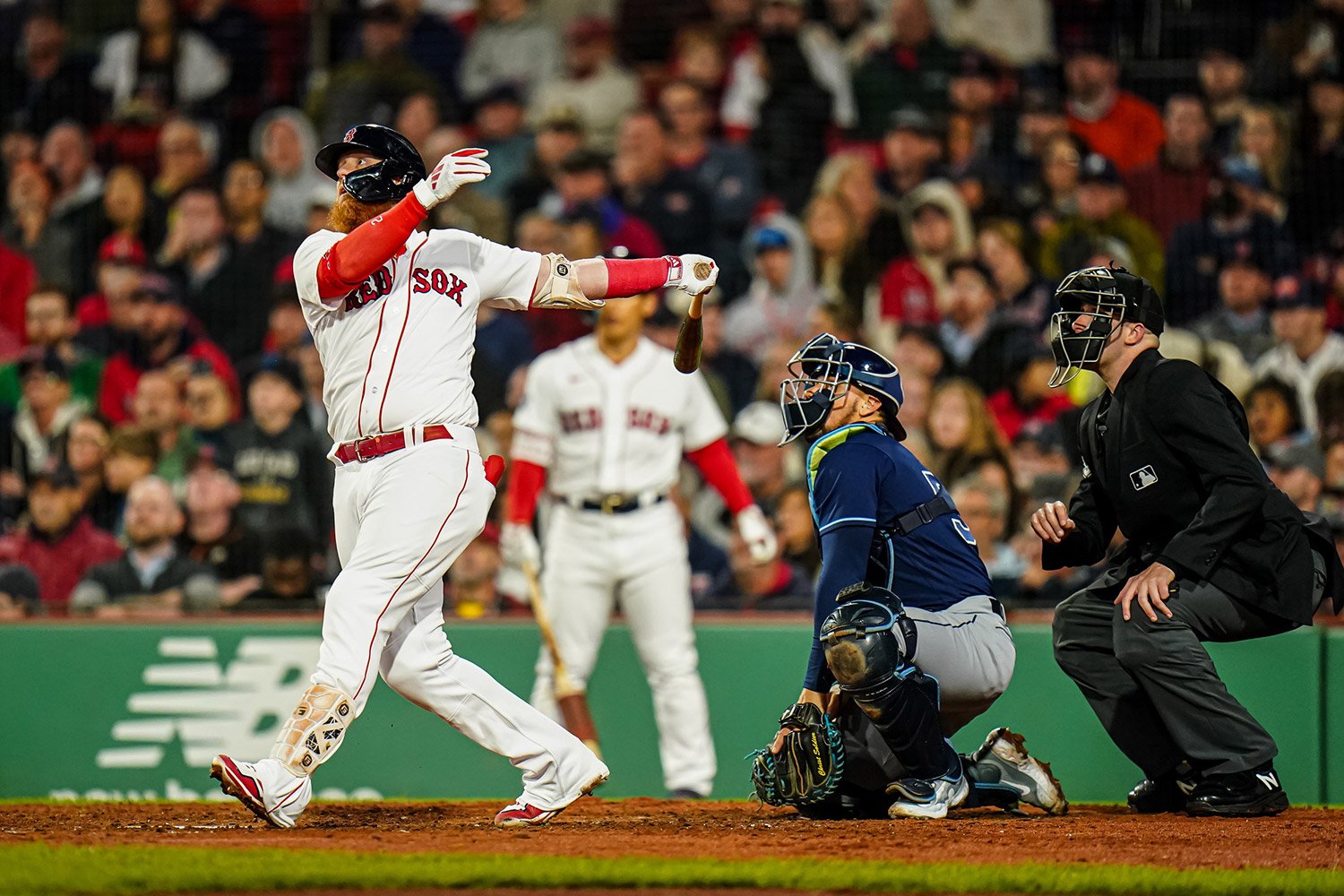 Justin Turner is still a very solid hitter, but probably has no business at third base at this point. Jon Morosi tweeted that Turner is a good match for the Cubs and points out that the Brewers (while Counsell was manager there) made a push to sign him following the 2020 season. The Cubs are in need of a third baseman but it requires some squinting to see Turner being a guy you want to trot out to the hot corner every day, or even maybe most days.
 -
Justin Turner is still a very solid hitter, but probably has no business at third base at this point. Jon Morosi tweeted that Turner is a good match for the Cubs and points out that the Brewers (while Counsell was manager there) made a push to sign him following the 2020 season. The Cubs are in need of a third baseman but it requires some squinting to see Turner being a guy you want to trot out to the hot corner every day, or even maybe most days. View full rumor
-
These predictions, particularly the contract values (moreso than the team destinations), tend to be the most accurate each year. So pretty wild to see some of these numbers. Bellinger in particular seems nuts, but then again probably less nuts than predicting Xander Bogaerts would get what he ended up with last year
-
Cubs didn't have any super tough protection decisions, this feels pretty much what was expected. Maybe an Aliendo or one of the Iowa/Tenn relievers could have been added, but also not shocking to not see any.
-
Yeah all of these guys will decline. None of the guys who were iffy like Hoskins got extended an offer. Hader is interesting. A lot of relievers who've gotten the QO have had their markets absolutely crushed. With The Cubs likely getting a pick back for Bellinger does Hader's market drop enough to bring him into Jed range?
-
Cubs Winter Top Prospects Rankings: #13 Matt Mervis
Bertz replied to Jason Ross's topic in Cubs Minor League Talk
In the same way that we can look at the Cubs actions and intimate that they think Chris Morel can't play 3rd, I think we can look at the Cubs actions and intimate that they think Matt Mervis sucks. Edwin Rios broke camp with the team as the primary LHH bench bat. It took more than a month of intense suckitude from Rios, Mancini and Hosmer to get Mervis up. Once he was up, he didn't get a ton of playing time. After he got sent down, he stayed down even as Jared Young got called up multiple times. He stayed down even as Miles Mastrobuoni (who was mostly a LHH pinch hitter until September) got called up multiple times. Maybe this is one of the things Ross and the FO disagreed about? But the Jared Young of it all tells me Jed and co also don't like Mervis. I expect him to be one of the other guys in a trade this winter. Padres make some sense? -
So what do we think Counsell replacing Ross means for the roster itself? Especially since we don't watch day-to-day it can be hard to separate what the FO is pushing for vs. what the manager is pushing for, but it's still interesting to think about. Some initial guesses: - The team is less likely to carry 3 catchers. It's a bit tough to say how much of this was a specific response to having Willson Contreras as our main guy, but having 3 catchers feels like it was a David Ross request - In the bullpen, less of a focus on funk/being able to keep the ball on the ground and more of a focus on pure stuff and being able to beat hitters in the strike zone. So e.g. expect Luke Little to get more shots at MLB innings than Brandon Hughes - Not that Ross didn't care about it, but for Counsell the platoon advantage is key. I remember multiple Alzolay and Wesneski blowup starts because Counsell stuffed like 7 lefties into the lineup - Catcher framing über alles. That said, he and his staff were able to take terrible framers and not just make them solid but make them absolutely fantastic. Very quickly too - Related to the catcher framing thing, do generally expect a continued emphasis on defense pretty much all over the diamond. So if you're team "play Christopher Morel at 3B" maybe brace for some disappointment - This is the one I feel least comfortable ascribing specifically to Counsell, but his Brewer teams generally had a lot of dongs and a lot of strikeouts. I'm sure they didn't want the strikeouts, but priority 1 was dongs. And with the Brewers' limited resources the strikeouts were the cost Anything else we can think of?
-
Dansby Swanson got details/assurances last winter about what other stuff was coming down the pipe in the next 18-24 months, Craig Counsell surely got updated versions of those as well. Probably in much greater detail given his job scope.
-
I'm probably the most vocal cheerleader for Hottovy around. But the Brewers are one of the few teams arguably doing better in the pitching coach department. Hottovy moving upstairs and Counsell bringing someone south with him from Milwaukee would be a real way to fight brain-drain from losing Breslow and potentially others.
- 43 replies
-
- 1
-

-
- craig counsell
- david ross
- (and 1 more)
-
Things I'm excited for - I generally liked Ross, but I do think he was slow to allow guys into the circle of trust. Particularly with the bullpen, Counsell's going to be a lot quicker to throw stuff monsters like Daniel Palencia, Luke Little, and Ben Brown into the mix - I don't know how much Brewers devil magic is left at this point (I feel like I haven't wondered how they're pulling it off in like 2-3 years), but now it's gone. If Craig can bring it here awesome, but at minimum the veil is lifted - Brewers fans are going to be sooooo salty about this Things I'm not excited for: - Counsell's a whiner. I get working the umps, it unfortunately works and is thus the right/smart thing to do, but I still kind of hate it
-
Wow. I think a lot of the criticisms of Ross were mostly dumb and overreactive but by most accounts and measures Counsell's pretty much the best going right now. Pretty ballsy move, right on
-
As a guy certainly looking for just a 1 year deal at our position of greatest need Hoskins should probably be closer to top of mind.
-
Aaron Nola: Jon Lester For a New Era?
Bertz commented on Transmogrified Tiger's blog entry in Wrigley Optimist
Two things scare me about Nola, both somewhat interrelated: - He took a step back last year. I don't mean his ERA, that can probably be blamed on the clownshow defense the Phillies ran out every day early in the year. But his peripherals all went the wrong direction as well. Strikeouts, walks, and groundball rate were all worse than his 3-yeat totals from '20-'22. In Jon Lester's deal he was more or less peak Lester in '15/'16, still good in '17-'19, and bad in '20. I worry the descent has started with Nola already, and we end up with only one great year - Nola's innings are a double-edged sword. It's awesome for the Phillies that he threw all those innings, but it does make me worry that he's wearing down/about to wear down. To draw it back to Lester, his drop-off from '16 to '17 was clearly due to the deep playoff run in 2016. He threw 237 innings (regular + postseason) that year and was never the same after. Are we going to look back at Nola's 230 innings in '22 and say something similar? That said, he hasn't lost a ton of velo yet, and 2022 aside his inning totals wouldn't make anyone bat an eyelash a decade ago
