.jpg.900f6d1bc80a5a156f3ba09ea0e4b3d7.jpg)

Jason Ross
-
Posts
8,153 -
Joined
-
Last visited
-
Days Won
74
Content Type
Profiles
Joomla Posts 1
Chicago Cubs Videos
Chicago Cubs Free Agent & Trade Rumors, Notes, & Tidbits
2026 Chicago Cubs Top Prospects Ranking
News
2023 Chicago Cubs Draft Picks
Guides & Resources
2024 Chicago Cubs Draft Picks
The Chicago Cubs Players Project
2025 Chicago Cubs Draft Pick Tracker
2026 Chicago Cubs Draft Tracker: Picks & Bonuses
Blogs
Events
Forums
Store
Gallery
Everything posted by Jason Ross
-
Makes perfect sense too. The Cubs love fastballs up and did some good work with sliders last year. And they love some pronation.
-
Do You Consider 2025 to Be a Successful Season?
Jason Ross replied to Outshined_One's topic in Chicago Cubs Talk
But by that logic, they were much closer to winning a World Series from 2024 to 2025, so last year was a success from that viewpoint. To be clear, last year was a definite success from me. They out did projections and young players all took step forwards. Contextually they weren't the best team in the league and I won't force them to win a WS for that to be a successful year. As we progress further with this roster, I'd set the barometer for success higher. Will 2026 be better? Hard to say, we still have two months and change to see what the roster looks like. I will say I'm not as convinced as some people on this board that the team won't do much or that they're going to be taking a step back when the off-season comes to an end. -
Too many to list. People like Jeff Passan, Ken Rosenthal, and Jon Heyman are usually on it. They have a reputation to maintain. Locally, Sharma and Mooney of the Athletic, Jesse Rogers, Bruce Levine, and Michael Cerami all are pretty reliable, though will sometimes put opinions in. Every team has their versions of this; find those people as well. Others, like Bob Nightengale, Fracys Romero, and Hector Gomez all have reps that are in the gutter and they consistently are doing damage to themselves. Rep matters. Beyond that, just ask if it passes a sniff test. Does it seem real? Does the account on X have people who you trust who follows is? Are they attaching their name to it or are they hiding behind anonymity? Are they just making opinion sound like reporting?
-
Jack Curry of YES network, which is their team owned network just said the Yankees weren't likely to be the team signing him. Aaron Boone said the team hasn't even met with him. The Yankees are telling you how interested they are. Imagine that the Craig Counsell said the Cubs hadn't met with him and Marquee Network said the Cubs weren't signing him. Would you immediately believe the Cubs were the front runner? We don't get get to talk out of both sides of our mouths. Everyone here is freaking out because of a Dave Kaplan (someone who hasn't been a top Cubs news information for 15+ years now) report. I think we on know the answer here. I don't have a percentage for you. I think today the Cubs should be seen as one of the most likely destinations for whatever that's worth. Just as an aide; SI is a terrible source now a days. I wouldn't use it as legitimate. It was sold off and is just a relic of a name now. Their source is "Yankees Source" on that article. No one nationally has picked up on that, as well, his agent is Scott Boras. You pick Boras because money is your end game, not a destination.
-
If there is a mystery team, it's probably someone like the Giants who are acting like the they don't have money. Another option is that the big, $150m offers aren't coming right now and that the Cubs will be able to have their cake (not offer that kind of deal) and eat it too (sign Imai).
-
This is coming from those coming from the Yankees side of things.
-
The Cubs have been connected with enough hitters and pitchers that I think it's probably a trade and a signing. One for each.
-
In the Heyman podcast where he mentioned the Cubs as Okamoto-suitors, he guessed the Cubs would make one big deal this off-season and that prediction was Imai. It's probably just speculation but Heyman is also close to Boras. So TIFWIW
-
Also, another incredibly cheap contract. Either the Cubs are just not spending anything at all this off-season or they're saving this money for something specific and expensive.
-
Yep! This is another one of those "guys who just get outs" that you can drop into the 6th/7th inning mix. Nothing special, but another cheap contract that allows you to remain flexible financially for whatever else you want to do. Feels like equally a move you'd be hard pressed to be excited about or upset about.
-
NEWS: Cubs Sign Right-Handed Reliever Jacob Webb to One-Year Contract
Jason Ross posted an article in Cubs
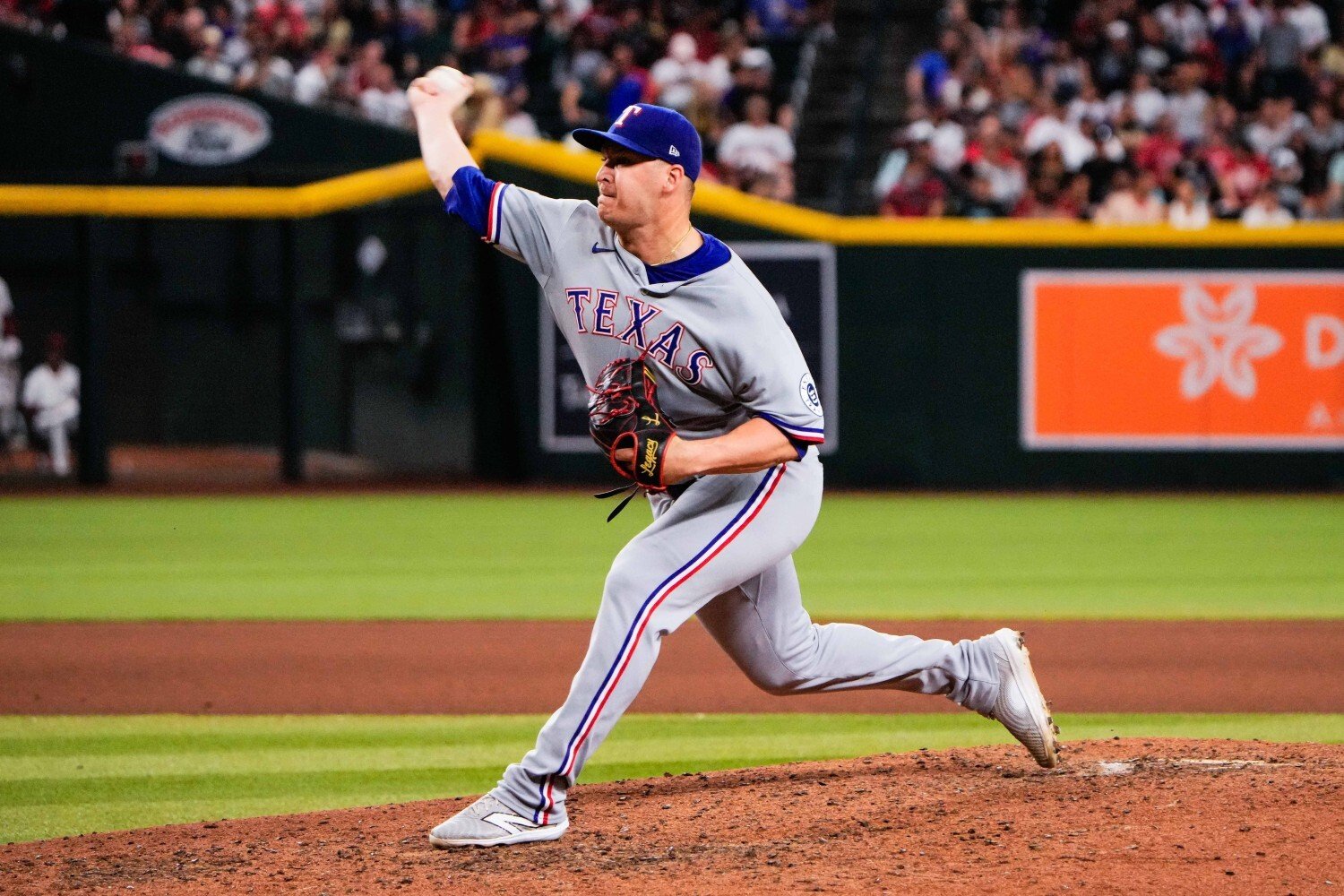 On Tuesday, the Chicago Cubs agreed to a contract with right handed reliever Jacob Webb, formerly of the Texas Rangers. The contact, as reported by Patrick Mooney, is a one-year deal with an option for 2027. Jacob Webb had a successful 2025 season with the Texas Rangers, as the 32-year old posted a 3.00 ERA over 66 innings. Webb features a fastball that sits around 93-mph while featuring a changeup and a sweeper. The reliever saw his K% drop from around 24% to 21% last year but still gets a lot of weak contact and forces hitters to get under the ball. One thing the pitcher does well; he gets pop-outs, inducing 21 of them last season. Webb did a great job of limiting damage across all three of his offerings last season, with xwOBA's on his three major offerings all under the .300 level with a .291 on the fastball, a .265 on his changeup, and a .257 on his sweeper. Because of his changeup, Webb actually had reverse splits last year, limiting lefties to a .243 wOBA in total (and has a better wOBA against LHH over his career). While the team has not added a "major" reliever to their bullpen, the Cubs have added a handful of useful arms between Phil Maton, Hoby Milner, Caleb Thielbar and now Jacob Webb to help stabilize their pen. Webb likely won't settle into a back-end role, but could help to stabilize the middle-innings and could give the Cubs more match-up-options with his reverse splits. As well, Webb represents another contract that should not break the bank at $1,500,000, allowing the Cubs the flexibility this offseason on who or what their "big additions" could be. Tatsuya Imai or Alex Bregman both remain more-than-in-play from a salary standpoint after this contract. What do you think of the addition of Jacob Webb? Do you think he will help bring stability into the middle-innings? Sound off in the comments below!
 -
Image courtesy of Arianna Grainey-Imagn Images On Tuesday, the Chicago Cubs agreed to a contract with right handed reliever Jacob Webb, formerly of the Texas Rangers. The contact, as reported by Patrick Mooney, is a one-year deal with an option for 2027. Jacob Webb had a successful 2025 season with the Texas Rangers, as the 32-year old posted a 3.00 ERA over 66 innings. Webb features a fastball that sits around 93-mph while featuring a changeup and a sweeper. The reliever saw his K% drop from around 24% to 21% last year but still gets a lot of weak contact and forces hitters to get under the ball. One thing the pitcher does well; he gets pop-outs, inducing 21 of them last season. Webb did a great job of limiting damage across all three of his offerings last season, with xwOBA's on his three major offerings all under the .300 level with a .291 on the fastball, a .265 on his changeup, and a .257 on his sweeper. Because of his changeup, Webb actually had reverse splits last year, limiting lefties to a .243 wOBA in total (and has a better wOBA against LHH over his career). While the team has not added a "major" reliever to their bullpen, the Cubs have added a handful of useful arms between Phil Maton, Hoby Milner, Caleb Thielbar and now Jacob Webb to help stabilize their pen. Webb likely won't settle into a back-end role, but could help to stabilize the middle-innings and could give the Cubs more match-up-options with his reverse splits. As well, Webb represents another contract that should not break the bank at $1,500,000, allowing the Cubs the flexibility this offseason on who or what their "big additions" could be. Tatsuya Imai or Alex Bregman both remain more-than-in-play from a salary standpoint after this contract. What do you think of the addition of Jacob Webb? Do you think he will help bring stability into the middle-innings? Sound off in the comments below! View full article
-
I have a hard time believing the team is under some impression than Imai is signing a short term deal. That doesn't pass a sniff test. Either they have always been mostly out on him, and all of the reporting that they've been interested in him has been wrong, or that the team is actually interested in him on a longer deal. No one has thought Imai was signing a short term contract. His agent is Boras. Also of note; the Cubs were seemingly less excited about a short term deal with King. Any short term contract with Imai would obviously be opt out heavy and the Cubs basically punted that option per Sharma and Mooney around the WM. Kaplan has connections to Crane Kenney but he also doesn't break news often about the Cubs. So hard to tell whether this is something we should place a lot of belief on or not a lot of belief in.
-
Image courtesy of © Nathan Ray Seebeck-Imagn Images The Chicago Cubs have agreed to a split-level contract with free agent catcher Christian Bethancourt, which would pay the player $1,600,000 if he is on the major league roster. The catcher spent his most recent season in the Toronto Blue Jays' system, appearing in 58 games with their Triple-A affiliate, the Buffalo Bisons, where he struggled with a 42 wRC+. Despite his struggles in 2025, Bethancourt had a successful stint with the Chicago Cubs the year prior, after being acquired from the Miami Marlins. He would go on to post a .281/.305/.509 line, smashing three home runs and finishing with a 125 wRC+ in 59 plate appearances. Bethancourt is not being signed with an eye toward starting with the major league club, as the team projects to have Carson Kelly and Miguel Amaya (as he returns from injury) man the backstop. However, as we saw with Amaya last year, you can never count out a rash of injuries at the position, which will strengthen the organization's depth there. This contract will allow the Cubs to stash their new signing in Iowa and have him serve as a "break glass in case of emergency" type of player. It's true that the club also has top prospect Moises Ballesteros available at the position, but he's still a work-in-progress defensively. He may be able to make a lot of strides over the winter, or he may still need work. With as many as 40-man spots on the team, they can afford this kind of luxury, having a few different options to choose from. If everything goes to plan, you'd hope you'll never need him, but having someone capable of playing the position is always important, as the team has learned in previous seasons. What do you think of Christian Bethancourt? Do you think he's a good addition as a third- or fourth-option at the position organizationally? Let us know in the comments below! View full article
-
Cubs Sign Catcher Christian Bethancourt to Split-Level Contract
Jason Ross posted an article in Cubs
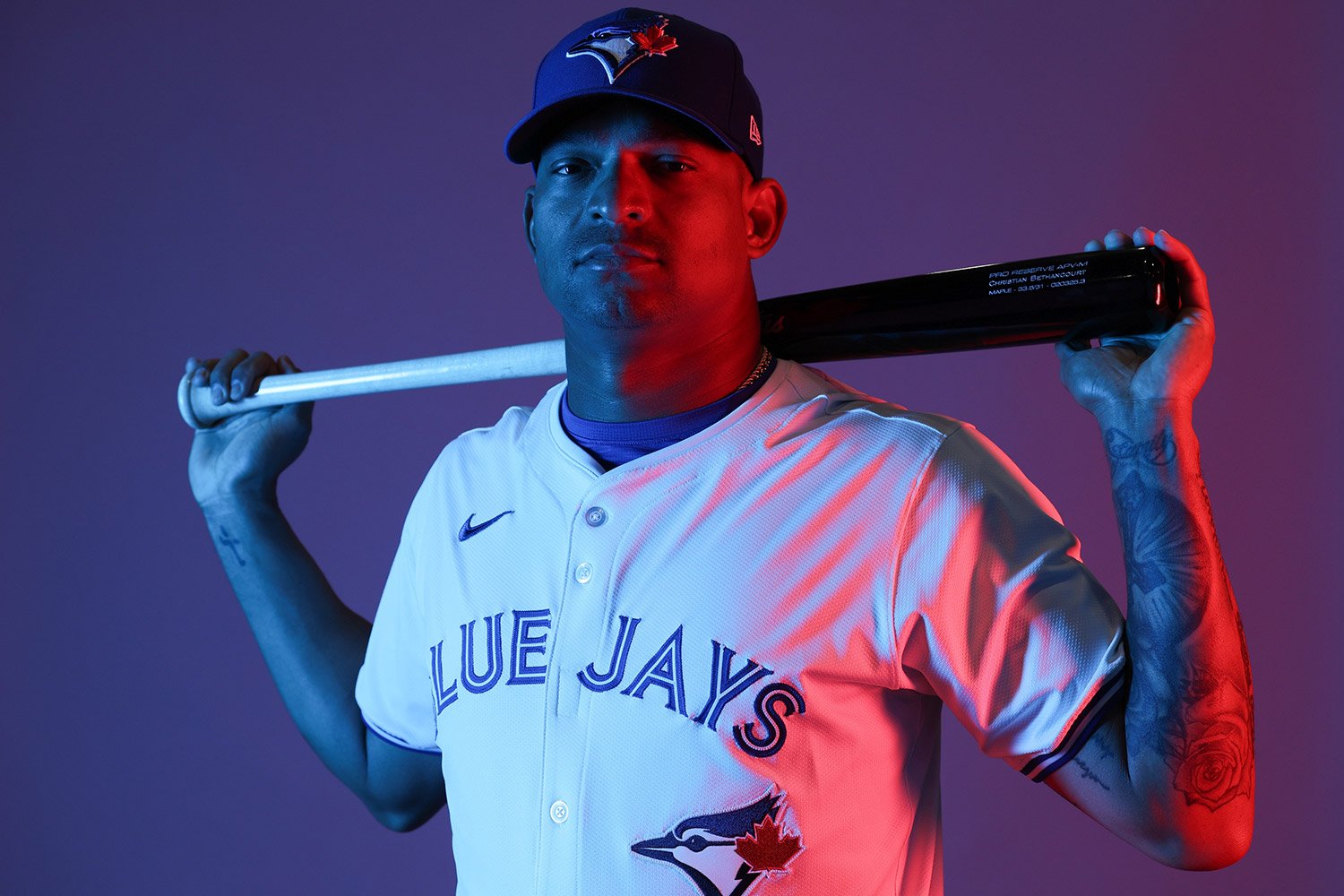 The Chicago Cubs have agreed to a split-level contract with free agent catcher Christian Bethancourt, which would pay the player $1,600,000 if he is on the major league roster. The catcher spent his most recent season in the Toronto Blue Jays' system, appearing in 58 games with their Triple-A affiliate, the Buffalo Bisons, where he struggled with a 42 wRC+. Despite his struggles in 2025, Bethancourt had a successful stint with the Chicago Cubs the year prior, after being acquired from the Miami Marlins. He would go on to post a .281/.305/.509 line, smashing three home runs and finishing with a 125 wRC+ in 59 plate appearances. Bethancourt is not being signed with an eye toward starting with the major league club, as the team projects to have Carson Kelly and Miguel Amaya (as he returns from injury) man the backstop. However, as we saw with Amaya last year, you can never count out a rash of injuries at the position, which will strengthen the organization's depth there. This contract will allow the Cubs to stash their new signing in Iowa and have him serve as a "break glass in case of emergency" type of player. It's true that the club also has top prospect Moises Ballesteros available at the position, but he's still a work-in-progress defensively. He may be able to make a lot of strides over the winter, or he may still need work. With as many as 40-man spots on the team, they can afford this kind of luxury, having a few different options to choose from. If everything goes to plan, you'd hope you'll never need him, but having someone capable of playing the position is always important, as the team has learned in previous seasons. What do you think of Christian Bethancourt? Do you think he's a good addition as a third- or fourth-option at the position organizationally? Let us know in the comments below!
 -
It depends. There have been projections as low as $80m and high as $200m. It's hard to determine his market right now; who is in? Yankees have been reported to be mostly out, as have the Red Sox. The Giants are acting like they don't have money. The Dodgers don't seem to be in on the top end pitching market. So it's hard to figure out who's bidding this thing up to $190m. It could happen; teams "out" might not be, for example. We will see. I think it'll end up at $22m-24m AAV over about 6.
-
It's a split level deal so he can accept going to Iowa. I would bet he's on the 40 man so that the Cubs don't have to kick someone off if they need him. They have a ton of space on the 40, too.
-
That's your Reese McGuire for the 2026 season.
-
If this is the case, it would clear out another team who may be in on Imai. There was a little smoke, though not a lot, about Imai/Boston, but if they're done with pitching...
-
-
Yeah, my concern is far less about the velo and far more about the breaking ball issues. If you can get this guy to hit breaking balls, there's a Joey Gallo career in him, but that feels like a tall task. The White Sox are in a great place to take the gamble though. They can't really lose.
-
League average fastball is around 91-92mph. Tatsuya Imai, who averages 95mph threw the second hardest fastball in NPV last year. MLB league average fastball is mid-94mph. NPB doesn't have anywhere near the velo we have in MLB. This is with a slightly smaller baseball, too.
-
4-5 years around the same AAV.
-
-
Fangraphs isn't a great prospect resource right now. They aren't dumb, but they are slow to update - I try not to use FG unless they're an outlier (for example, Logenhagen was the high-man on the pitcher that went for Shane Bieber at the deadline - but that's also around when FG updates things). As well, the Orioles have a super-deep system and guys like Bassalo are still on the list, even though they're MLB players now (he just still has "prospect" status due to a lack of PA). Instead of using FG's prospect rankings, use this article, also written by Logenhagen. This is a significant return for Baz. Caden Bodine had first-round-hype and fell because of signability more than talent, Slater de Brun got the highest bonus of any non-first round pick in the same draft. And there's a Comp-A pick. The Rays just essentially got three first round picks + two other prospects for a pitcher who has some cool under the hood stuff but hasn't put it all together, despite being with the Rays (a good pitching team). Don't get me wrong; I like Shane Baz! But this is considered an excellent return by the baseball community.