.jpg.900f6d1bc80a5a156f3ba09ea0e4b3d7.jpg)

Jason Ross
-
Posts
8,154 -
Joined
-
Last visited
-
Days Won
74
Content Type
Profiles
Joomla Posts 1
Chicago Cubs Videos
Chicago Cubs Free Agent & Trade Rumors, Notes, & Tidbits
2026 Chicago Cubs Top Prospects Ranking
News
2023 Chicago Cubs Draft Picks
Guides & Resources
2024 Chicago Cubs Draft Picks
The Chicago Cubs Players Project
2025 Chicago Cubs Draft Pick Tracker
2026 Chicago Cubs Draft Tracker: Picks & Bonuses
Blogs
Events
Forums
Store
Gallery
Everything posted by Jason Ross
-
Well, so two things: 1. His line from OD was: 4IP, 4 BB, 2K, and 0ER. He didn't give up runs but battled poor control all day. He had an xFIP over 7.00 on the day. 2. I think the velocity and the control go hand in hand. His pitches require a little extra velo to ride up. The tweet-thread from Chis Langin is helpful to understand that; I wish I could take credit for his amazing work, he's a bright-dude. But yeah, I think he'll be much better. I'm thinking the guy over his last 120 IP in 2024 feel do-able; the high 3's ERA/xFIP type of a guy. A good, however, non-dominant, SP.
-
Are you a sports nutritionalist? I'm not. I'm assuming you're not. Let's leave that aspect to the Cubs who have their own weight goals and experts to determine. The people who actually have sat in a room with Moises Ballesteros and have worked with him over years. What we can assume is that the Cubs don't find his body shape nearly as disqualifying as home fans do. They have not only ensured to not trade him, but are seemingly just fine turning over the keys to the DH position to him in 2025. He's probably going to catch some too this year. I am non-plussed as long as he shows back up in "normal Moises Ballesteros" shape. If he shows up extra large, we can begin to worry, but beyond that; I think it is what it is and we need to stop thinking he's going to have a massive transformation. Getting to Michael Busch levels of shape would be a massive transformation. Busch is listed at 210lbs, and it's likely Ballesteros is something like 30lbs more than that.
-
Yeah 195 lbs would be very generous for him. Alejandro Kirk is listed at 245lbs and I'd guess Mo is closer to that.
-
Don't use official MLB listings for players like Ballesteros who have not really established themselves in MLB. They are rarely updated and sit out of date for years. They're especially bad for IFA signings like Ballesteros. I'd guess he was 195lbs three or four years ago. He's well over 200 today, I'd bet my house on it. Example: Jefferson Rojas is listed at 150lbs. There's no chance he's 150lbs any more.
-
He wasn't any different from 2024 to 2025. There was one or two pictures that initially made him seem in different shape, but this is video from him in April of 2024 and then last year in 2025, also Aprirl. https://www.milb.com/milb/video/moises-ballesteros-third-home-run-of-the-season?t=chicago-cubs-affiliates https://www.milb.com/iowa/video/moises-ballesteros-two-homer-four-hit-game There is no "much better shape" from those videos. Same guy, almost 365 days apart. And while I don't have an image of him from his first day in camp, it's highly unlikely that after being with the team for 2 months playing baseball that he just added the bulk back. It wasn't like he was on vacation between camp and mid-April. This is what we should expect Ballesteros to look like when he gets to camp now and we should probably stop thinking it'll be any different. I also don't think he's lazy like many think he is. Some people carry weight differently than others naturally.
-
I think people expecting some magical transformation in body are setting themselves up for failure. Some people just have different body types than others. This is likely what you get here. What's important is that to date, at no level had Ballesteros body stopped him from being a highly successful player.
-
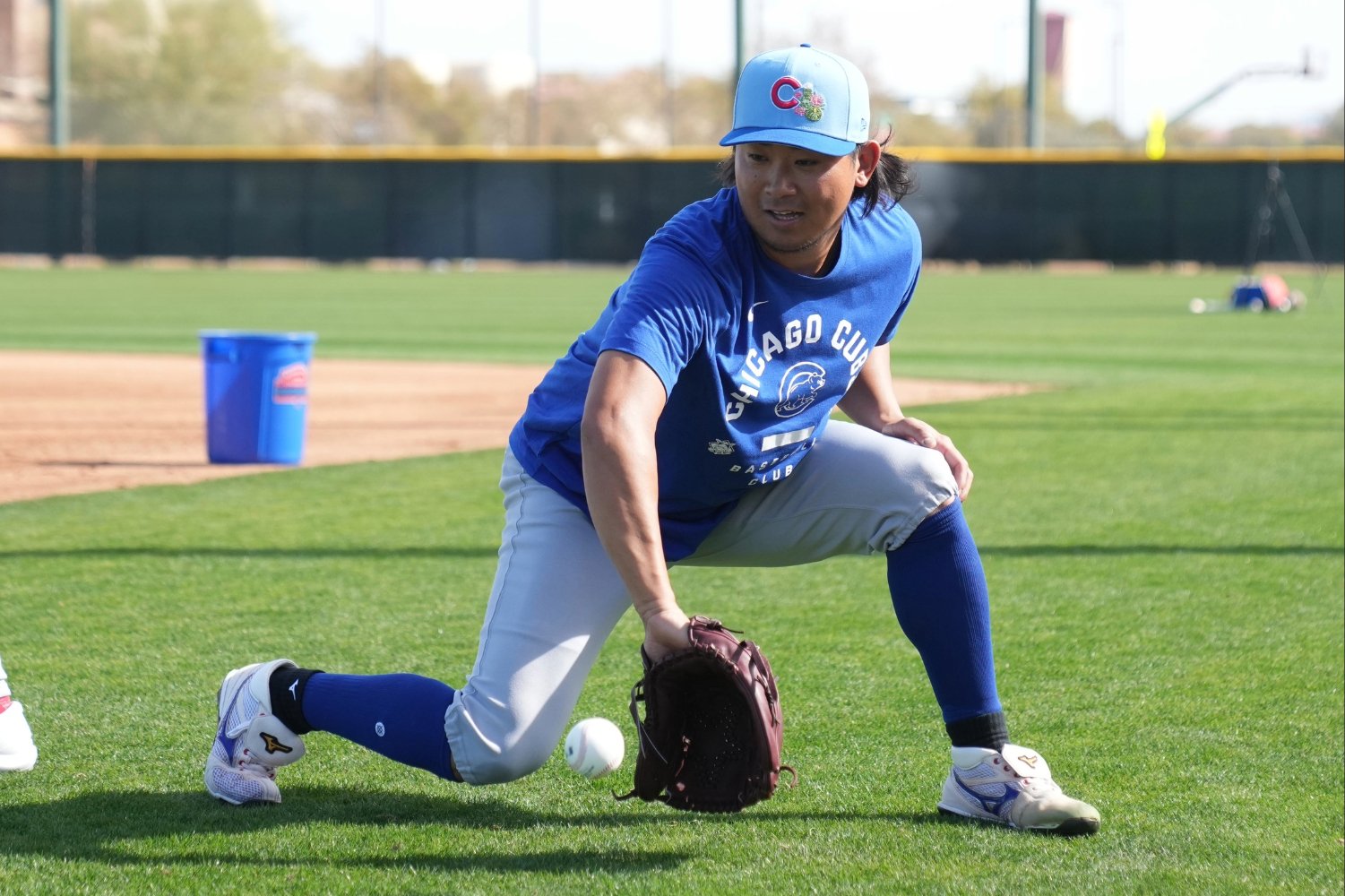 The moment Shota Imanaga first took the mound in Chicago, there was an electricity in the air. On a cold night, with the help of the Wrigley wind, against a hapless Colorado Rockies lineup, Imanaga carved up hitters left and right. Through his first 53 innings in Major League Baseball, the left-handed pitcher had a sub 1.00 ERA, and hadn't recorded a loss; a phenom was born, albeit, one that could never live up to that kind of hype. The rest of his debut season was good, but wasn't as good, as over his next 119 innings, Imanaga posted a 3.82 ERA, a 3.78 xFIP, to go along with a 23.9 K%. These are good, nearly very good, numbers, but short of "ace" territory — the kind of pitcher you want in your rotation but probably not good enough to lead your rotation. Heading into 2025, he was probably a bit overrated by the general populace. Then, 2025 happened. The narrative around Imanaga has shifted dramatically as a result. To put it lightly, last year was not a good one for the Cubs' left-handed pitcher. Right away, Imanaga struggled in the Tokyo Dome in front of a raucous crowd and against a tough Dodgers team. On May 4, Imanaga would suffer a hamstring injury that would hamper the rest of his season. The left-hander showed diminished velocity all year long, with a fastball down a few MPH. He never got fully right in 2025, struggling with (potentially) tipping pitches against the lowly White Sox and never really getting back to the guy we saw the year before. It looked like maybe he was bouncing back after the rough start, posted a 3.54 ERA (with a 3.61 xFIP) over his next 54 innings after facing the Pale Hose, but the wheels fell off in his last two regular season starts, then once again in the playoffs. Something was wrong and the Cubs decided to skip over their Opening Day starting pitcher in the do-or-die Game 5 of the NLDS. This led the team to difficult decisions when it came to his contract; eventually, both sides decided that playing out 2026 on the qualifying offer, a one-year, $22.025 million pact, would be best for everyone involved. For the pitcher, this represents a pay-increase over what he was expecting, but a loss of guaranteed years behind; for the team, it's a chance to evaluate the hurler before they commit to more seasons. It's an imperfect solution for both, however, the two probably need each other still and this allows that partnership to continue. Entering the 2026 season, it's hard to figure out what to make of Imanaga, however (and why the team was so hesitant to pick up his three-year option). Is he the 2024 guy, who, even when taking out his amazing start, was the kind of arm you'd slot into a top-three spot in your rotation? Is he the home-run-soft-tosser he looked like in 2025? A lot of this is going to come down to one thing: velocity. The worst part is we probably won't know the answer to that concern until the season truly begins. Chris Langin, a former Driveline instructor, expertly broke down the velocity cliff that Imanaga faced last year. His best pitch is his fastball and it's not particularly close. Because his fastball is so good, it allows his other stuff to play up despite mediocre shapes. But he's also living in a razor-thin land of velocity; at 92-93mph, his fastball has such unique outlier characteristics that allow it to front his arsenal. Hitters have to protect against the fastball, and thus, they swing at the sweeper and the splitter which generate a ton of chase. However, at 90-91mph, the fastball loses much of it's uniqueness, and now instead of protecting against the pitch hitters are hunting the fastball. And this is where he sat last year. It's a no-man's land and Imanaga suffered the consequences. This can be easily seen with a quick glance at Imanaga's Baseball Savant page, as well. He still generated a lot of chases, as outlined in the above tweet-thread by Langin, but his whiff and K% dropped significantly. Hitters made significantly better contact as well. Imanaga's fastball value plummeted, so while hitters still struggled against his off-speed offerings, his fastball was the clear issue. Diving into his individual offerings, the whiff% is also highlighted there. While Imanaga's whiff% on his fastball wasn't significantly lower year over year, the batted ball data against that pitch (especially his expected data) was much worse. But beyond jus the fastball, his whiff% against his split-finger is telling, as hitters simply weren't swinging and missing as much on that pitch or getting put away as often. Imanaga is a primary fastball-splitter guy, and if both pitches aren't getting the same results, it's not shocking that the overall results suffered. So, then, what's the fix? For the Cubs and Imanaga, the hope here is clear: health. Craig Counsell spoke before the Cubs' first spring training game and voiced that he believed that the hamstring injury took velocity out of Imanaga's game in 2025. And it would appear as though his velocity is up, at least from the team. This is all good news. As Langin outlined, if Imanaga gets back to the velocity shown in 2024, there's top-30 starter upside there. The fastball velocity tracking seems to support this to a degree. Before his hamstring injury, Shota was averaging 91.2 mph on his fastball, while after, it dipped to 90.7 mph. And while 91.2 mph is still down from Imanaga's 91.9 mph average in 2024, some of that may be attributed to throwing a bunch in a very cold Wrigley Field early in the season. The other good news is that the fastball velocity isn't the only thing that stands out in his data. Following his injury, his arm angle also dropped significantly. While this could have been designed to give him extra run on his sweeper, it could also be because of the injury to his left hamstring. Because he's left-handed, that hamstring is his anchor and where he's driving from to generate power. Not only could that cause velocity drop, but it could also create those bad mechanics that led to a homer binge at the end of the campaign. If you're following the Cubs this spring, we're in luck: Sloan Park, the home of the Cubs in Mesa, will have Statcast tracking this year for all of their spring training games (as will all spring stadiums)! There will be plenty of fun things to keep an eye on, but maybe none as important as the velocity that Imanaga shows. If he's hitting 92-93mph, there's probably a good reason to believe he's back, at least to some degree, to his 2024 self. The Cubs have done a good job of making sure they're not too invested in his fastball velocity. So, while the team will be significantly better if Imanaga is significantly better, they aren't counting on him in 2026 like they were last year. The team has Cade Horton, Matthew Boyd, Jameson Taillon, and Edward Cabrera slotting in ahead of the lefty in the rotational pecking order, while also rostering a returning Justin Steele. Rookie Jaxon Wiggins is also waiting in the wings, and swing starters such as Colin Rea, Javier Assad, Jordan Wicks and Ben Brown could slot in if Imanaga continues to falter. But the Cubs could also be in a situation in which they have an embarrassment of riches if Imanaga shows 2024-type-velocity on his fastball as well. It's a worthwhile gamble, and heading into this upcoming season, it likely means Shota Imanaga has once again become underrated by the fanbase to a degree, much like he was when he made his first fateful start in Chicago. What do you think about Shota Imanaga as we head into 2026? Do you think he will be an asset to the team? Or was it a mistake to give him a qualifying offer? Let us know in the comments below!
 -
Image courtesy of © Rick Scuteri-Imagn Images The moment Shota Imanaga first took the mound in Chicago, there was an electricity in the air. On a cold night, with the help of the Wrigley wind, against a hapless Colorado Rockies lineup, Imanaga carved up hitters left and right. Through his first 53 innings in Major League Baseball, the left-handed pitcher had a sub 1.00 ERA, and hadn't recorded a loss; a phenom was born, albeit, one that could never live up to that kind of hype. The rest of his debut season was good, but wasn't as good, as over his next 119 innings, Imanaga posted a 3.82 ERA, a 3.78 xFIP, to go along with a 23.9 K%. These are good, nearly very good, numbers, but short of "ace" territory — the kind of pitcher you want in your rotation but probably not good enough to lead your rotation. Heading into 2025, he was probably a bit overrated by the general populace. Then, 2025 happened. The narrative around Imanaga has shifted dramatically as a result. To put it lightly, last year was not a good one for the Cubs' left-handed pitcher. Right away, Imanaga struggled in the Tokyo Dome in front of a raucous crowd and against a tough Dodgers team. On May 4, Imanaga would suffer a hamstring injury that would hamper the rest of his season. The left-hander showed diminished velocity all year long, with a fastball down a few MPH. He never got fully right in 2025, struggling with (potentially) tipping pitches against the lowly White Sox and never really getting back to the guy we saw the year before. It looked like maybe he was bouncing back after the rough start, posted a 3.54 ERA (with a 3.61 xFIP) over his next 54 innings after facing the Pale Hose, but the wheels fell off in his last two regular season starts, then once again in the playoffs. Something was wrong and the Cubs decided to skip over their Opening Day starting pitcher in the do-or-die Game 5 of the NLDS. This led the team to difficult decisions when it came to his contract; eventually, both sides decided that playing out 2026 on the qualifying offer, a one-year, $22.025 million pact, would be best for everyone involved. For the pitcher, this represents a pay-increase over what he was expecting, but a loss of guaranteed years behind; for the team, it's a chance to evaluate the hurler before they commit to more seasons. It's an imperfect solution for both, however, the two probably need each other still and this allows that partnership to continue. Entering the 2026 season, it's hard to figure out what to make of Imanaga, however (and why the team was so hesitant to pick up his three-year option). Is he the 2024 guy, who, even when taking out his amazing start, was the kind of arm you'd slot into a top-three spot in your rotation? Is he the home-run-soft-tosser he looked like in 2025? A lot of this is going to come down to one thing: velocity. The worst part is we probably won't know the answer to that concern until the season truly begins. Chris Langin, a former Driveline instructor, expertly broke down the velocity cliff that Imanaga faced last year. His best pitch is his fastball and it's not particularly close. Because his fastball is so good, it allows his other stuff to play up despite mediocre shapes. But he's also living in a razor-thin land of velocity; at 92-93mph, his fastball has such unique outlier characteristics that allow it to front his arsenal. Hitters have to protect against the fastball, and thus, they swing at the sweeper and the splitter which generate a ton of chase. However, at 90-91mph, the fastball loses much of it's uniqueness, and now instead of protecting against the pitch hitters are hunting the fastball. And this is where he sat last year. It's a no-man's land and Imanaga suffered the consequences. This can be easily seen with a quick glance at Imanaga's Baseball Savant page, as well. He still generated a lot of chases, as outlined in the above tweet-thread by Langin, but his whiff and K% dropped significantly. Hitters made significantly better contact as well. Imanaga's fastball value plummeted, so while hitters still struggled against his off-speed offerings, his fastball was the clear issue. Diving into his individual offerings, the whiff% is also highlighted there. While Imanaga's whiff% on his fastball wasn't significantly lower year over year, the batted ball data against that pitch (especially his expected data) was much worse. But beyond jus the fastball, his whiff% against his split-finger is telling, as hitters simply weren't swinging and missing as much on that pitch or getting put away as often. Imanaga is a primary fastball-splitter guy, and if both pitches aren't getting the same results, it's not shocking that the overall results suffered. So, then, what's the fix? For the Cubs and Imanaga, the hope here is clear: health. Craig Counsell spoke before the Cubs' first spring training game and voiced that he believed that the hamstring injury took velocity out of Imanaga's game in 2025. And it would appear as though his velocity is up, at least from the team. This is all good news. As Langin outlined, if Imanaga gets back to the velocity shown in 2024, there's top-30 starter upside there. The fastball velocity tracking seems to support this to a degree. Before his hamstring injury, Shota was averaging 91.2 mph on his fastball, while after, it dipped to 90.7 mph. And while 91.2 mph is still down from Imanaga's 91.9 mph average in 2024, some of that may be attributed to throwing a bunch in a very cold Wrigley Field early in the season. The other good news is that the fastball velocity isn't the only thing that stands out in his data. Following his injury, his arm angle also dropped significantly. While this could have been designed to give him extra run on his sweeper, it could also be because of the injury to his left hamstring. Because he's left-handed, that hamstring is his anchor and where he's driving from to generate power. Not only could that cause velocity drop, but it could also create those bad mechanics that led to a homer binge at the end of the campaign. If you're following the Cubs this spring, we're in luck: Sloan Park, the home of the Cubs in Mesa, will have Statcast tracking this year for all of their spring training games (as will all spring stadiums)! There will be plenty of fun things to keep an eye on, but maybe none as important as the velocity that Imanaga shows. If he's hitting 92-93mph, there's probably a good reason to believe he's back, at least to some degree, to his 2024 self. The Cubs have done a good job of making sure they're not too invested in his fastball velocity. So, while the team will be significantly better if Imanaga is significantly better, they aren't counting on him in 2026 like they were last year. The team has Cade Horton, Matthew Boyd, Jameson Taillon, and Edward Cabrera slotting in ahead of the lefty in the rotational pecking order, while also rostering a returning Justin Steele. Rookie Jaxon Wiggins is also waiting in the wings, and swing starters such as Colin Rea, Javier Assad, Jordan Wicks and Ben Brown could slot in if Imanaga continues to falter. But the Cubs could also be in a situation in which they have an embarrassment of riches if Imanaga shows 2024-type-velocity on his fastball as well. It's a worthwhile gamble, and heading into this upcoming season, it likely means Shota Imanaga has once again become underrated by the fanbase to a degree, much like he was when he made his first fateful start in Chicago. What do you think about Shota Imanaga as we head into 2026? Do you think he will be an asset to the team? Or was it a mistake to give him a qualifying offer? Let us know in the comments below! View full article
-
Honestly, color balance the Cubs/Cuba look isn't bad! I think a script CUBS/CUBA look at home works in theory (if they weren't so ingrained with patch on left breast).
-
But that's the issue; it doesn't follow the correct uniform conventions! If you're the road team it doesn't tell you where they are from. It's the one of the only times in Chicago Cubs history where CHICAGO was not listed on the road uniform. You can do a script Chicago, but the White Sox kind of own hat look on the road. Script "CUBS" both ignores the city-name-on-road rule and becomes a bit illegible as reading CUBA is possible (not that I really have an issue with the Cold War thing, but the illegibility thing). I could find a repurposing of the blue-80's roads as a home alternate but with the gray look, those are road-only. I'll give you a preview of the sister article to that; it's up for the worst Cubs' road uniform, IMO.
-
Image courtesy of © Rick Scuteri-Imagn Images Uniforms are an integral part of sports. It may not have started out that way, but today, a team's uniform fleshes out an entire identity. Some teams are able to transcend on-the-field success into off-the-field relevancy simply because of the uniforms they have created (e.g., the Oakland/Los Angeles/Vegas Raiders). Thankfully for us fans of the Chicago Cubs, the team not only has a long and rich history on the field, but lots of good looks to complement it. But what is the team's best look? Which years have given us the most visually impressive Cubs team? For this exercise, we need a few rules. The first is that we must follow the MLB uniform guidelines for teams, in that they are allowed four total uniforms (a home, an away, and two alternates) as well a City Connect, for a total of five looks. I'm also going to limit myself to official-game and on-field looks only and not allow myself to choose fashion or batting practice apparel (no rocker bear hat, sadly). So with those rules in mind, what is the Cubs' best look? Home Uniform: 1998 For the keen-eyed uniform dorks out there, you may already know this, but the Chicago Cubs have not always worn pinstripes at home, introducing them in the summer of 1957. Prior to that year, the Cubs tended to wear a logo on the left breast (dabbling with a few alterations and changes) but remained without the iconic stripes most of the time. From 1957 on, there haven't been a ton of changes in the essential home look; a slight re-imagining of the Cubs' primary logo here or there, the addition of the sans-a-belt and pullover variations in the 1970s and the 1980s, and a few patches on the shoulders. Weighing all these details, I land on the Cubs' 1998 version as the ultimate basic look at home. While the Cubs may not have invented the idea of pinstripes, we're going on 70 years of running with that look at home. Secondly, I couldn't in good conscience pick their uniforms today, with an ugly ad patch adorning the shoulder. The '98 look combines their beautiful vertical striping pattern with the introduction of the Harry Caray memorial patch, which I think balances out the uniform quite well. While there are some fans who enjoyed the Cubs going without names on the back (which they did prior to 1993, and then again for two years in 2005 and 2006), I like knowing who's playing. That season also feels like a safe choice here because they had success. This uniform (down to the Harry patch) was what Kerry Wood wore when he struck out 20 hitters, what Sammy Sosa wore breaking Roger Maris' home run record, and what the team wore when celebrating the victory over the San Francisco Giants in the Wild Card tie-breaker. Add it all up, and I don't think the Chicago Cubs have ever looked as good at home. Road Uniform: 1962 These are my favorite road uniforms in the history of the Cubs. I think they're almost perfect (I'll add one tweak I'd make later). First, for those who are less inclined to nerd out over baseball uniform lore, there is a proper way to make a baseball road look: it has to have the city on the front, not the nickname. Why is that? Uniform guru Paul Lukas (founder of Uni-Watch) explains here in an article for ESPN back in 2017, but the answer is simple. Back in the early days of the game, people didn't know where the visiting team was from, and this helped to identify them. This uniform certainly checks off that aspect, with a beautiful royal-blue "CHICAGO" across the front, and I love that it is outlined in red. Beyond just the naming conventions, what really sets the set aside for me is the addition of the Cubbie bear patch on the left shoulder. Prior to '62, the Cubs had already been using this standard set for years, but 1962 was the first year that they added the adorable little patch. Maybe you think it's too cutesy, but I think it adds a charm that uniforms once had, that we have lost today, as so many teams have tried to look tougher. My one tweak would be to give this set a front number! It just fills out the look a little bit. The Cubs did add that in 1969...but then dropped the red borders on the "CHICAGO", and I feel as though it's too blue-heavy. It's a good look, but give me those '62 beauties over them. Alternate 1: 1984 Blues The Cubs have been using a form of a blue uniform on-and-off sometime since 1978, when they first wore their blue-on-baby-blue pinstriped uniforms. In 1984, this look was their primary "road" look, and while I think they're a bad road uniform (it doesn't say where the Cubs are from on it), I do think they're a beautiful secondary/alternate look. They paired these with white pants, which make them a beautiful look to be worn at home, and that's where they'd go in my "perfect world". I'm even willing to forgive the "softball"/pullover look. I prefer a button down, but these hit a perfect balance of color and nostalgia for me. It's true that 1984 wasn't the first year the Cubs broke these tops out, but 1984 was the first year that they had sustained success in them. Despite the fact that this was the uniform they were wearing when they dropped a heartbreaking five-game set to San Diego, this version of the uniform is the one they went the furthest in. And as with the home look, I think it's important that a look has some history with it on the field if you can. Why not the current look that they won a championship in? I just like these better, on pure aesthetics. The current look is okay, but they feel like they're lacking some of that extra "oomph" these have. There's no color on the sleeves, nothing on the collar... they're just a bit plain. They won the World Series in them, which does give them juice, but not so much I can ignore that I just like these better. Fight me. Alternate 2: 1929 Home Every team needs to have a proper "throwback" look, and while I think the top three could realistically look very modern, the 1930 set screams "back in my day, we walked uphill to school both ways". Starting with the socks, this kind of striped hosiery simply isn't seen nowadays, but absolutely pops on this set, giving it a very distinct feel. Moving to the top, look at the placket (the placket is the section where the buttons sit) and notice how the piping cuts off about 90% of the way down the front; also something we just don't see today. It's a little weird, a little funky, but history is a little weird and funky! If you think these oddities and weird aspects make them bad, I just won't agree. C'mon, these things are beautiful; have some whimsy! The Cubs even threw back to these in 2014, and they looked so good on the field. The off-white color and the socks really stood out. I wouldn't wear these every day, but give me this look five to ten times a year, please. City Connect: Current (Ok, technically, these aren't City Connects. But they replaced City Connects, and they come with a bunch of branded storytelling like the City Connects, and we're absolutely not leaving them out.) So, that's it, that's the definitive best-looking Chicago Cubs team I can come up with. There's a little mix of present and past, some history of winning and some cutesy charm thrown in for good measure. There are some arguments you could make adding one uniform over another, but I think generally speaking, it's hard to get better than this set of options overall. Most importantly, I feel it's cohesive and creates a brand. The Cubs are a historic team and need to be treated as such. Do you agree? Disagree? What's your best look? Fight me in the comment section and argue for your favorite uniform. View full article
-
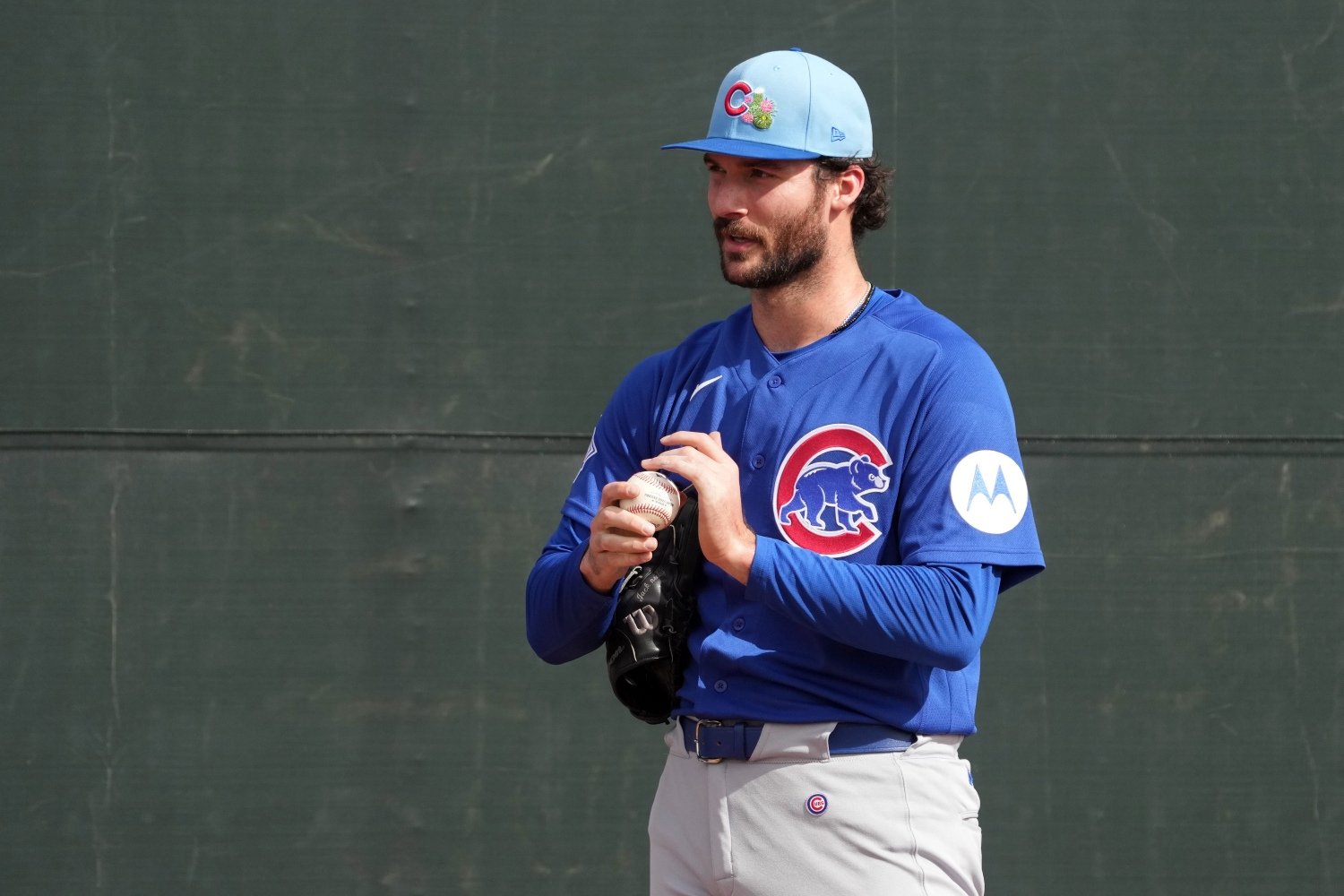 Uniforms are an integral part of sports. It may not have started out that way, but today, a team's uniform fleshes out an entire identity. Some teams are able to transcend on-the-field success into off-the-field relevancy simply because of the uniforms they have created (e.g., the Oakland/Los Angeles/Vegas Raiders). Thankfully for us fans of the Chicago Cubs, the team not only has a long and rich history on the field, but lots of good looks to complement it. But what is the team's best look? Which years have given us the most visually impressive Cubs team? For this exercise, we need a few rules. The first is that we must follow the MLB uniform guidelines for teams, in that they are allowed four total uniforms (a home, an away, and two alternates) as well a City Connect, for a total of five looks. I'm also going to limit myself to official-game and on-field looks only and not allow myself to choose fashion or batting practice apparel (no rocker bear hat, sadly). So with those rules in mind, what is the Cubs' best look? Home Uniform: 1998 For the keen-eyed uniform dorks out there, you may already know this, but the Chicago Cubs have not always worn pinstripes at home, introducing them in the summer of 1957. Prior to that year, the Cubs tended to wear a logo on the left breast (dabbling with a few alterations and changes) but remained without the iconic stripes most of the time. From 1957 on, there haven't been a ton of changes in the essential home look; a slight re-imagining of the Cubs' primary logo here or there, the addition of the sans-a-belt and pullover variations in the 1970s and the 1980s, and a few patches on the shoulders. Weighing all these details, I land on the Cubs' 1998 version as the ultimate basic look at home. While the Cubs may not have invented the idea of pinstripes, we're going on 70 years of running with that look at home. Secondly, I couldn't in good conscience pick their uniforms today, with an ugly ad patch adorning the shoulder. The '98 look combines their beautiful vertical striping pattern with the introduction of the Harry Caray memorial patch, which I think balances out the uniform quite well. While there are some fans who enjoyed the Cubs going without names on the back (which they did prior to 1993, and then again for two years in 2005 and 2006), I like knowing who's playing. That season also feels like a safe choice here because they had success. This uniform (down to the Harry patch) was what Kerry Wood wore when he struck out 20 hitters, what Sammy Sosa wore breaking Roger Maris' home run record, and what the team wore when celebrating the victory over the San Francisco Giants in the Wild Card tie-breaker. Add it all up, and I don't think the Chicago Cubs have ever looked as good at home. Road Uniform: 1962 These are my favorite road uniforms in the history of the Cubs. I think they're almost perfect (I'll add one tweak I'd make later). First, for those who are less inclined to nerd out over baseball uniform lore, there is a proper way to make a baseball road look: it has to have the city on the front, not the nickname. Why is that? Uniform guru Paul Lukas (founder of Uni-Watch) explains here in an article for ESPN back in 2017, but the answer is simple. Back in the early days of the game, people didn't know where the visiting team was from, and this helped to identify them. This uniform certainly checks off that aspect, with a beautiful royal-blue "CHICAGO" across the front, and I love that it is outlined in red. Beyond just the naming conventions, what really sets the set aside for me is the addition of the Cubbie bear patch on the left shoulder. Prior to '62, the Cubs had already been using this standard set for years, but 1962 was the first year that they added the adorable little patch. Maybe you think it's too cutesy, but I think it adds a charm that uniforms once had, that we have lost today, as so many teams have tried to look tougher. My one tweak would be to give this set a front number! It just fills out the look a little bit. The Cubs did add that in 1969...but then dropped the red borders on the "CHICAGO", and I feel as though it's too blue-heavy. It's a good look, but give me those '62 beauties over them. Alternate 1: 1984 Blues The Cubs have been using a form of a blue uniform on-and-off sometime since 1978, when they first wore their blue-on-baby-blue pinstriped uniforms. In 1984, this look was their primary "road" look, and while I think they're a bad road uniform (it doesn't say where the Cubs are from on it), I do think they're a beautiful secondary/alternate look. They paired these with white pants, which make them a beautiful look to be worn at home, and that's where they'd go in my "perfect world". I'm even willing to forgive the "softball"/pullover look. I prefer a button down, but these hit a perfect balance of color and nostalgia for me. It's true that 1984 wasn't the first year the Cubs broke these tops out, but 1984 was the first year that they had sustained success in them. Despite the fact that this was the uniform they were wearing when they dropped a heartbreaking five-game set to San Diego, this version of the uniform is the one they went the furthest in. And as with the home look, I think it's important that a look has some history with it on the field if you can. Why not the current look that they won a championship in? I just like these better, on pure aesthetics. The current look is okay, but they feel like they're lacking some of that extra "oomph" these have. There's no color on the sleeves, nothing on the collar... they're just a bit plain. They won the World Series in them, which does give them juice, but not so much I can ignore that I just like these better. Fight me. Alternate 2: 1929 Home Every team needs to have a proper "throwback" look, and while I think the top three could realistically look very modern, the 1930 set screams "back in my day, we walked uphill to school both ways". Starting with the socks, this kind of striped hosiery simply isn't seen nowadays, but absolutely pops on this set, giving it a very distinct feel. Moving to the top, look at the placket (the placket is the section where the buttons sit) and notice how the piping cuts off about 90% of the way down the front; also something we just don't see today. It's a little weird, a little funky, but history is a little weird and funky! If you think these oddities and weird aspects make them bad, I just won't agree. C'mon, these things are beautiful; have some whimsy! The Cubs even threw back to these in 2014, and they looked so good on the field. The off-white color and the socks really stood out. I wouldn't wear these every day, but give me this look five to ten times a year, please. City Connect: Current (Ok, technically, these aren't City Connects. But they replaced City Connects, and they come with a bunch of branded storytelling like the City Connects, and we're absolutely not leaving them out.) So, that's it, that's the definitive best-looking Chicago Cubs team I can come up with. There's a little mix of present and past, some history of winning and some cutesy charm thrown in for good measure. There are some arguments you could make adding one uniform over another, but I think generally speaking, it's hard to get better than this set of options overall. Most importantly, I feel it's cohesive and creates a brand. The Cubs are a historic team and need to be treated as such. Do you agree? Disagree? What's your best look? Fight me in the comment section and argue for your favorite uniform.
 -
Considering this is brand new, there is almost nothing we can tell right now. Teams are not going to publicly state what or how they will use this.
-
I don't think of it as "only 2". Think of it as "you get to be wrong twice" because if you're right, you keep the challenge. So in essence, if you're always correct, you'll never run out. I believe it's to ensure that they're only used on borderline calls and that we aren't stacking these things up all day. Watching MiLB games that had it in it last year, it never felt like too few (at least that I can remember)
-
It's incredibly fast. You call for the challenge, they show it on the jumbotron and it's done. Like 15-30 seconds type stuff. And you keep your challenges if you get it right.
-
Just to add to this, the most valuable player in FV according to Statcast arm value was +7 runs and the worst was -5 runs. Assuming that Shaw isn't a full time player in the OF and gets part time out there, he's probably going to settle in the middle. Only three fielders in the league were worse than -3 and 14 were above +2 and all of them were full time players. So it's probably immaterial to the point of disqualifying him from the position he's going to be asked to do: play out there some of the time.
-
Question of the week: grade the offseason
Jason Ross replied to Brock Beauchamp's topic in Chicago Cubs Talk
It's a really solid "A" for me. Heading into the offseason I think the biggest questions were: 1. Rotation and rotational depth - How would the team add players with upside and how could they avoid the issues at the end of last year? 2. Kyle Tucker - How does the team address that loss? 3. Bullpen - Would the team go back to the "spaghetti toss" system? 4. Budget - Would the Cubs act like a team coming off a 92-win year or would they revert back into their profits? I think the Cubs answered all of those questions well. They brought in Edward Cabrera while maintaining a strong rotation. Think of it this way; last year's Opening Day starter is now arguably the fifth best arm in the rotation when Steele returns. Now, that isn't entirely because the Cubs added four more starters above him, but I think it highlights some of the added depth between Cabrera, Horton, and how well Boyd has worked out. Position-player-wise, the Cubs have adequately replaced Kyle Tucker with a great player in Alex Bregman while strengthening the bench with Matt Shaw. Bullpen wise the Cubs are probably close to where we last saw them. There's going to be attrition, but there's real upside. It's probably short of "bullpen of death" but added whiff, strikeouts and is probably more solidly a "good bullpen" that doesn't have to rely as heavily on defense. And there's probably one young reliever who will pop through too. Budget wise the Cubs didn't go full-miser. They could always spend more, but they didn't do what many thought in going with one-year deals and fearful of some potential lockout scenarios. They spent enough money that I'm not upset. It's not an A+ or anything, but they addressed almost any question they had, they built off of a 92-win year and enter 2026 as the likely favorites in the division and a top-3 side in the NL and that feels like an A offseason to me. -
Exploring the Best- and Worst-Case Scenarios for the 2026 Chicago Cubs
Jason Ross posted an article in Cubs
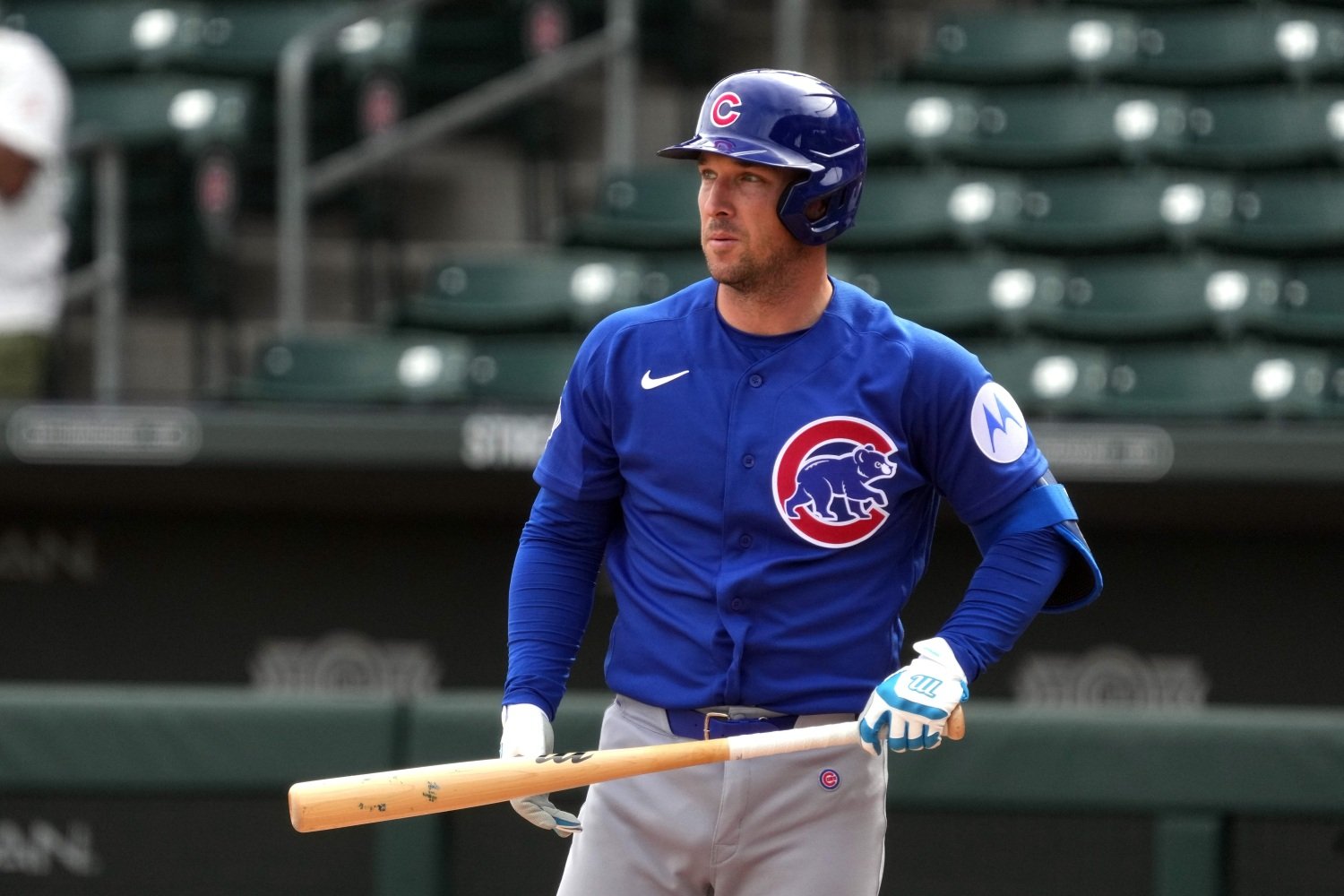 The close we get to Opening Day, the more projection systems help illuminate the path (and the season) ahead. PECOTA, for example, loves the Cubs in the 2026 season and thinks they have a 72.5% chance to win their division. However, within that single projection, PECOTA is telling you that the Cubs still have a 27.5% chance of not winning the division. and even a 13.4% chance of missing the playoffs altogether. This is just one system, others will have different outlooks on what the Cubs might be. So, what does the worst-case scenario for the 2026 Chicago Cubs look like? Conversely, what would the best-case scenario look like? Can the team win a World Series? Can they miss the playoffs entirely? Together, let's peer into the crystal ball. What does the worst-case scenario look like for the Cubs? The 2026 season starts with hope, and an immediate boost thereto. The team has an early six-game homestand facing the lowly Nationals and Angels. Alas, cold weather in northern Illinois begins to derail the season right away, as Pete Crow-Armstrong pulls a hamstring in frigid Chicago temperatures, forcing rookie Kevin Alcántara into starting duty. The injury keeps the Cubs' center fielder out through May, as the team is cautious bringing him back, and Alcántara struggles to stay afloat. The team let at least one of Chas McCormick and Dylan Carlson leave at the end of spring training, and Justin Dean offers no relief. While Crow-Armstrong eventually returns, the hamstring injury hurts his defense and speed and the lefty has a down season. PECOTA's depth charts project Alcántara and Dean for a combined 385 plate appearances, and Crow-Armstrong for 595. In this scenario, those numbers get reversed. Pitching-wise, the injury bug bites and the itch spreads. Matthew Boyd, fresh off the most productive season of his career, suffers from early-season arm fatigue, with his velocity dipping two ticks on the radar gun. In an effort to give the hurler some time to recover, Colin Rea jumps into the rotation but cannot reproduce his excellent 2025, either. The most tragic of the injuries happens a little later when Edward Cabrera feels something tugging in his elbow. An MRI reveals the worst-case scenario; it's Tommy John surgery for the newest Cub in the rotation. Before it's officially summer, the Cubs have lost their prized pitching addition. Hope begins to turn to frustration, as the much-anticipated return of Justin Steele takes longer than hoped. Steele, much like Boyd, shows diminished velocity in rehab starts in Iowa. After three or four starts, it's clear he's not entirely right yet, so the Cubs shut him down for a few extra weeks. The left-hander eventually returns to his pre-surgery velocity, but it's already July and the team is in a hole. Just up the interstate, Milwaukee has once again turned lemons into lemonade. Kyle Harrison, the once-ballyhooed prospect in San Francisco has added a little velocity and looks like a menace. The Brewers have also found a few more short kings to plug into their lineup and hold a four-game lead over the Cubs headed into the All-Star-Break; there's no stopping that machine. The upstart Pirates nip at the Cubs' heels as well. Jed Hoyer, hoping that the second half of the season will see a return to health for Crow-Armstrong, Boyd, and Steele, mostly sits the deadline out, choosing to add a few depth arms to the bullpen and half-heartedly upgrade the bench. Disaster strikes in mid-August, just as it seems like the Cubs are gaining momentum; Alex Bregman gets hit with a 95-mph fastball, breaking his wrist. While Matt Shaw has been an upgrade over 2025 nightmares Jon Berti and Vidal Bruján on the bench, his low-90s wRC+ doesn't include the second-half pop he had in 2025. Bouncing around the diamond has made his defense more suspect. He's not terrible, but the loss of the Cubs' newfound leader is profound. The Cubs have lost both of their biggest offseason additions. V0F3ZFpfWGw0TUFRPT1fVXdjRFhBWURWZ2NBWEZvS1Z3QUhCZ0FDQUZsV1cxTUFBVndDQ0FaUkF3SUJWZ2RS.mp4 August and September begin a downward slide. While the team never truly flatlines, they are an unexciting, frustrating mess. For every 8-run outburst or defensive masterclass, they drop a 2-1 tilt to the Reds, or surrender six to the Pirates at home. Watching becomes a chore, but the team remains just close enough you can never stop watching. When October starts, the Cubs are left out of the playoffs. They finish third in the division, a handful of games behind both Milwaukee and Pittsburgh, with 81 wins. Injuries are mostly to blame, but Ballesteros was just okay; Shaw is unable to sustain gains made last year; Cade Horton's unable to beat his xFIP like he did in 2025; and many of the Cubs' young players will now enter a winter lockout with big questions hanging over them. Fans rage at the team for extending Hoyer last summer. Many wonder if the team will have the same resources in the upcoming offseason that they had this time, to retain players such as Nico Hoerner, Ian Happ and Seiya Suzuki. What does the best case scenario for the Cubs look like? On the sunny side of Future Street, the Cubs exit spring training with no notable injuries. March 26 is unseasonably warm on the lakefront, with the thermometer reading a balmy 52° F. Alex Bregman, in his first home at-bat as a Cub, sends a ball 105 mph off the bat into the bleachers in left-center; the Wrigley faithful goes wild. The Cubs win a laugher, posting double-digit runs, and everything snowballs from there. In an inversion of last year's gauntlet of a start, the team faces only one playoff team from last season in their first 25 games (the aging, injury-depleted Philadelphia Phillies) and get off to an early NL Central lead. 343d734c-094ec5e3-29839735-csvm-diamondx64-asset_1280x720_59_4000K.mp4 As the temperature warms, the Cubs remain hot. Offensively, Ballesteros looks like the real deal; Shaw's bat looks like the guy who showed up post-All-Star break last year; and Bregman is the stick that stirs the coffee. Pitching-wise, the Cubs have a two-headed monster at the top of the rotation, as a healthy Cabrera and Horton have both come into their own. The pitching staff requires some Colin Rea interventions, as others in the rotation have small, annoying injuries, but nothing major. Justin Steele continues a smooth rehab, and by the end of May, he's on the cusp of a return. When Jameson Taillon pulls a quad fielding a ball, the lefty is called to the rescue and the Cubs add another excellent arm to the equation. When the All-Star break begins, the Cubs feature heavily in the festivities. Pete Crow-Armstrong and Bregman are selected via fan vote. Hoerner, Horton, Cabrera and Daniel Palencia all make the team, and it's clear to all that Michael Busch got snubbed. In the standings, the Cubs have the second-best record in the NL, while it's clear that at least for this year. the Brewers' pixie dust has run out. The North Siders have no major injuries come July, and the teams add a resurgent AJ Puk from a despondent Arizona Diamondbacks team to round out the bullpen. This team is cruising, and the vibes are great. 445951f4-90da5b2f-2b45ba19-csvm-diamondgcp-asset-4000K.mp4 By September, the division is all but sewn up. The Brewers are in a second-place battle with the Pirates, but both teams are barely on the periphery of the Wild Card race. This allows the Cubs to rest players where they can and give valuable innings to top prospect Jaxon Wiggins. The team enters the playoffs rested, with the second seed in the NL. The Dodgers were good, but haven't been the dominating force many thought they were. The Cubs easily dispatch their first foe in the playoffs in just four games, setting up a date with the new Evil Empire out west. In what is a very hard-fought battle, the Cubs persevere and upset the two-time defending champs. No one player plays hero; but in a full-team effort, the visitors win a decisive Game 7, sending the team to the World Series. Surpassingly, an 83-win Baltimore team has gotten hot and found themselves between the Cubs and a championship. Sadly for the Orioles, they run out of steam. Chicago grounds the Birds in six games, winning the Series in front of their home crowd. Who cares about the impending lockout? The Cubs have climbed the mountain. Celebrate, rejoice and enjoy; we'll worry about the rest later. If your first thought is that these are extreme outcomes and are unlikely: of course they are! Remember, these are the "best" and the "worst" scenarios. For better and worse, both are plausible, however unlikely they may be. PECOTA gives the Cubs a 7% chance to win the World Series and a 17% chance to miss the playoffs outright; neither of these outcomes are impossible. The 2026 season will likely fall somewhere between the best and the worst cases. There will be injuries at inopportune times, to important players. There will be players who overachieve, and some who disappoint. This a very good baseball team, but likely not an elite one. Even in the best-case scenarios I can fathom. they're unlikely to be better over 162 games than the Dodgers. But at the same time, even in the event of the worst-case tailspin, it's probably a team who will offer entertainment and hope until the bitter end. Milwaukee is a good team, probably better than PECOTA thinks they are, but they probably aren't a 95-win team this year, either. Even with injuries, the Cubs have a good roster and should be able to take a few lumps. This is going to be a fun year, but we'll have to wait a little longer to see just how fun it can be. What are your predictions for the 2026 Cubs? Can the best case scenario of winning a Title happen? What's your worst case outcome? Sound off in the comments below!
 -
Image courtesy of © Rick Scuteri-Imagn Images The close we get to Opening Day, the more projection systems help illuminate the path (and the season) ahead. PECOTA, for example, loves the Cubs in the 2026 season and thinks they have a 72.5% chance to win their division. However, within that single projection, PECOTA is telling you that the Cubs still have a 27.5% chance of not winning the division. and even a 13.4% chance of missing the playoffs altogether. This is just one system, others will have different outlooks on what the Cubs might be. So, what does the worst-case scenario for the 2026 Chicago Cubs look like? Conversely, what would the best-case scenario look like? Can the team win a World Series? Can they miss the playoffs entirely? Together, let's peer into the crystal ball. What does the worst-case scenario look like for the Cubs? The 2026 season starts with hope, and an immediate boost thereto. The team has an early six-game homestand facing the lowly Nationals and Angels. Alas, cold weather in northern Illinois begins to derail the season right away, as Pete Crow-Armstrong pulls a hamstring in frigid Chicago temperatures, forcing rookie Kevin Alcántara into starting duty. The injury keeps the Cubs' center fielder out through May, as the team is cautious bringing him back, and Alcántara struggles to stay afloat. The team let at least one of Chas McCormick and Dylan Carlson leave at the end of spring training, and Justin Dean offers no relief. While Crow-Armstrong eventually returns, the hamstring injury hurts his defense and speed and the lefty has a down season. PECOTA's depth charts project Alcántara and Dean for a combined 385 plate appearances, and Crow-Armstrong for 595. In this scenario, those numbers get reversed. Pitching-wise, the injury bug bites and the itch spreads. Matthew Boyd, fresh off the most productive season of his career, suffers from early-season arm fatigue, with his velocity dipping two ticks on the radar gun. In an effort to give the hurler some time to recover, Colin Rea jumps into the rotation but cannot reproduce his excellent 2025, either. The most tragic of the injuries happens a little later when Edward Cabrera feels something tugging in his elbow. An MRI reveals the worst-case scenario; it's Tommy John surgery for the newest Cub in the rotation. Before it's officially summer, the Cubs have lost their prized pitching addition. Hope begins to turn to frustration, as the much-anticipated return of Justin Steele takes longer than hoped. Steele, much like Boyd, shows diminished velocity in rehab starts in Iowa. After three or four starts, it's clear he's not entirely right yet, so the Cubs shut him down for a few extra weeks. The left-hander eventually returns to his pre-surgery velocity, but it's already July and the team is in a hole. Just up the interstate, Milwaukee has once again turned lemons into lemonade. Kyle Harrison, the once-ballyhooed prospect in San Francisco has added a little velocity and looks like a menace. The Brewers have also found a few more short kings to plug into their lineup and hold a four-game lead over the Cubs headed into the All-Star-Break; there's no stopping that machine. The upstart Pirates nip at the Cubs' heels as well. Jed Hoyer, hoping that the second half of the season will see a return to health for Crow-Armstrong, Boyd, and Steele, mostly sits the deadline out, choosing to add a few depth arms to the bullpen and half-heartedly upgrade the bench. Disaster strikes in mid-August, just as it seems like the Cubs are gaining momentum; Alex Bregman gets hit with a 95-mph fastball, breaking his wrist. While Matt Shaw has been an upgrade over 2025 nightmares Jon Berti and Vidal Bruján on the bench, his low-90s wRC+ doesn't include the second-half pop he had in 2025. Bouncing around the diamond has made his defense more suspect. He's not terrible, but the loss of the Cubs' newfound leader is profound. The Cubs have lost both of their biggest offseason additions. V0F3ZFpfWGw0TUFRPT1fVXdjRFhBWURWZ2NBWEZvS1Z3QUhCZ0FDQUZsV1cxTUFBVndDQ0FaUkF3SUJWZ2RS.mp4 August and September begin a downward slide. While the team never truly flatlines, they are an unexciting, frustrating mess. For every 8-run outburst or defensive masterclass, they drop a 2-1 tilt to the Reds, or surrender six to the Pirates at home. Watching becomes a chore, but the team remains just close enough you can never stop watching. When October starts, the Cubs are left out of the playoffs. They finish third in the division, a handful of games behind both Milwaukee and Pittsburgh, with 81 wins. Injuries are mostly to blame, but Ballesteros was just okay; Shaw is unable to sustain gains made last year; Cade Horton's unable to beat his xFIP like he did in 2025; and many of the Cubs' young players will now enter a winter lockout with big questions hanging over them. Fans rage at the team for extending Hoyer last summer. Many wonder if the team will have the same resources in the upcoming offseason that they had this time, to retain players such as Nico Hoerner, Ian Happ and Seiya Suzuki. What does the best case scenario for the Cubs look like? On the sunny side of Future Street, the Cubs exit spring training with no notable injuries. March 26 is unseasonably warm on the lakefront, with the thermometer reading a balmy 52° F. Alex Bregman, in his first home at-bat as a Cub, sends a ball 105 mph off the bat into the bleachers in left-center; the Wrigley faithful goes wild. The Cubs win a laugher, posting double-digit runs, and everything snowballs from there. In an inversion of last year's gauntlet of a start, the team faces only one playoff team from last season in their first 25 games (the aging, injury-depleted Philadelphia Phillies) and get off to an early NL Central lead. 343d734c-094ec5e3-29839735-csvm-diamondx64-asset_1280x720_59_4000K.mp4 As the temperature warms, the Cubs remain hot. Offensively, Ballesteros looks like the real deal; Shaw's bat looks like the guy who showed up post-All-Star break last year; and Bregman is the stick that stirs the coffee. Pitching-wise, the Cubs have a two-headed monster at the top of the rotation, as a healthy Cabrera and Horton have both come into their own. The pitching staff requires some Colin Rea interventions, as others in the rotation have small, annoying injuries, but nothing major. Justin Steele continues a smooth rehab, and by the end of May, he's on the cusp of a return. When Jameson Taillon pulls a quad fielding a ball, the lefty is called to the rescue and the Cubs add another excellent arm to the equation. When the All-Star break begins, the Cubs feature heavily in the festivities. Pete Crow-Armstrong and Bregman are selected via fan vote. Hoerner, Horton, Cabrera and Daniel Palencia all make the team, and it's clear to all that Michael Busch got snubbed. In the standings, the Cubs have the second-best record in the NL, while it's clear that at least for this year. the Brewers' pixie dust has run out. The North Siders have no major injuries come July, and the teams add a resurgent AJ Puk from a despondent Arizona Diamondbacks team to round out the bullpen. This team is cruising, and the vibes are great. 445951f4-90da5b2f-2b45ba19-csvm-diamondgcp-asset-4000K.mp4 By September, the division is all but sewn up. The Brewers are in a second-place battle with the Pirates, but both teams are barely on the periphery of the Wild Card race. This allows the Cubs to rest players where they can and give valuable innings to top prospect Jaxon Wiggins. The team enters the playoffs rested, with the second seed in the NL. The Dodgers were good, but haven't been the dominating force many thought they were. The Cubs easily dispatch their first foe in the playoffs in just four games, setting up a date with the new Evil Empire out west. In what is a very hard-fought battle, the Cubs persevere and upset the two-time defending champs. No one player plays hero; but in a full-team effort, the visitors win a decisive Game 7, sending the team to the World Series. Surpassingly, an 83-win Baltimore team has gotten hot and found themselves between the Cubs and a championship. Sadly for the Orioles, they run out of steam. Chicago grounds the Birds in six games, winning the Series in front of their home crowd. Who cares about the impending lockout? The Cubs have climbed the mountain. Celebrate, rejoice and enjoy; we'll worry about the rest later. If your first thought is that these are extreme outcomes and are unlikely: of course they are! Remember, these are the "best" and the "worst" scenarios. For better and worse, both are plausible, however unlikely they may be. PECOTA gives the Cubs a 7% chance to win the World Series and a 17% chance to miss the playoffs outright; neither of these outcomes are impossible. The 2026 season will likely fall somewhere between the best and the worst cases. There will be injuries at inopportune times, to important players. There will be players who overachieve, and some who disappoint. This a very good baseball team, but likely not an elite one. Even in the best-case scenarios I can fathom. they're unlikely to be better over 162 games than the Dodgers. But at the same time, even in the event of the worst-case tailspin, it's probably a team who will offer entertainment and hope until the bitter end. Milwaukee is a good team, probably better than PECOTA thinks they are, but they probably aren't a 95-win team this year, either. Even with injuries, the Cubs have a good roster and should be able to take a few lumps. This is going to be a fun year, but we'll have to wait a little longer to see just how fun it can be. What are your predictions for the 2026 Cubs? Can the best case scenario of winning a Title happen? What's your worst case outcome? Sound off in the comments below! View full article
-
Ballesteros is not on a WBC roster.
-
Just to add: Trevor Bauer was shipped to the minor leagues of Japanese baseball last year at one point because he was getting knocked around so often.
-
2026 MLB Draft
Jason Ross replied to CaliforniaRaisin's topic in MLB Draft, International Signings, Amateur Baseball
Friday the 13th, man. -
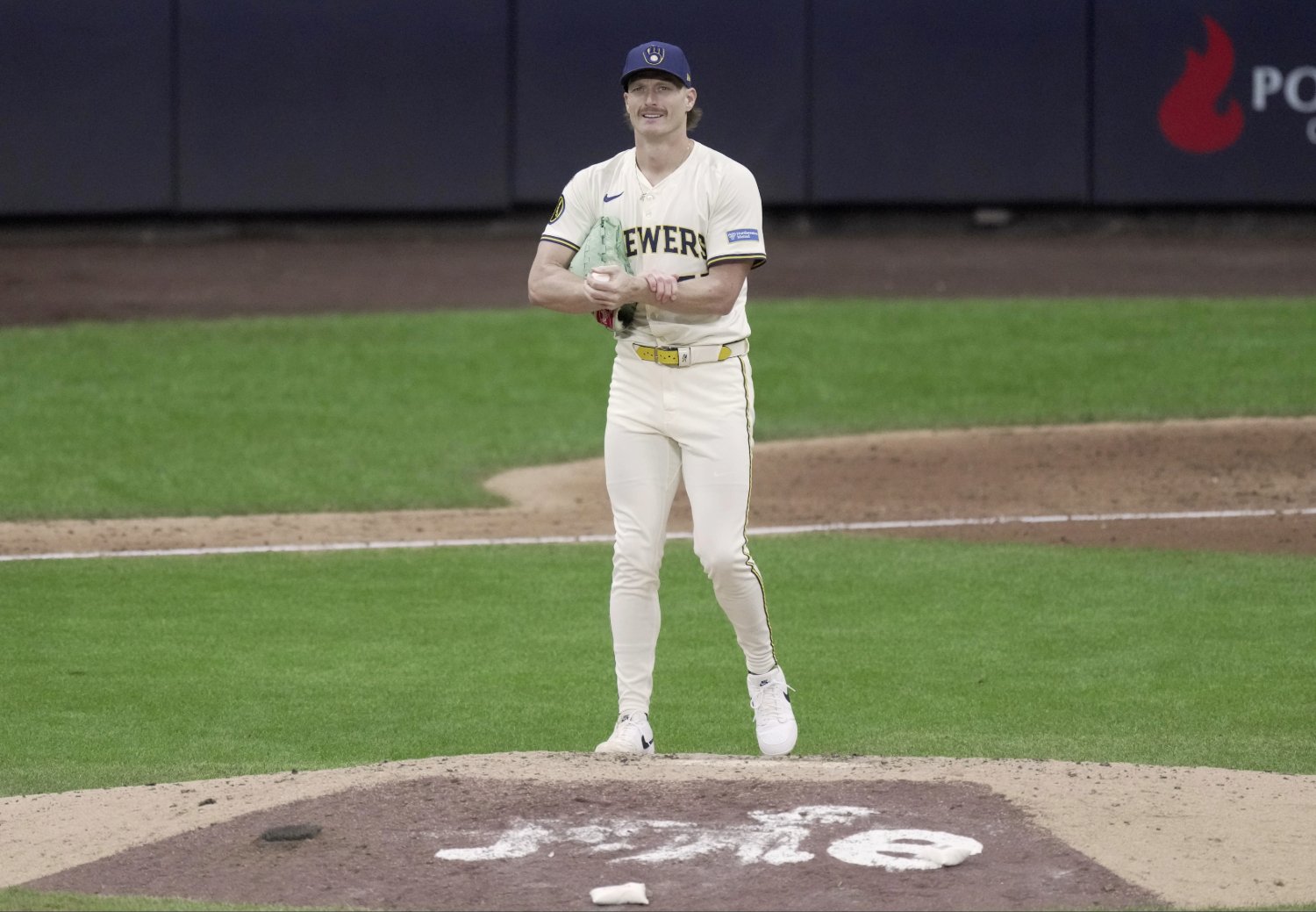 A few days after pitchers and catchers reported to camp, the Chicago Cubs agreed to a multi-year contract with right-handed pitcher Shelby Miller. This will be Miller's second stint with the Cubs organization, though it will undoubtedly be longer than his cup of coffee with the team in 2021 where he totaled just two innings. Miller has reinvented himself between now, then, and when he (eventually) takes the mound at Wrigley again. Miller was forced to change after 2022. Between 2016 and that season, the former first-round pick battled injuries and ineffectiveness and had been dropped from MLB rotations as a whole. Facing a future where it appeared he would only be MLB depth, toiling away in Triple-A, the hurler underwent some changes in arsenal and arm slot. When the Cubs last saw Miller in their organization, he threw more overhand and featured a fastball-sweeper mix with some cutters thrown in for good measure. His four-seam fastball sat a touch under 94 mph, which was fine for the time, but not a particularly overpowering offering. He struggled to strike hitters out with a K-rate under 13%, and was knocked around to the tune of an ERA over nine during the 2021 season. But that was then, and this is now. 3f8d21c6-5c66799f-47dc5b50-csvm-diamondgcp-asset_1280x720_59_4000K.mp4 The Cubs are hoping that they're signing a version that looks much more like the guy Miller turned into during the 2023 season and beyond. Featuring an arm angle that has dipped over six degrees, Miller is a different beast. The velocity has ticked up, now sitting over 95mph. Coupled with the lower arm slot, the pitch now features more arm-side run. Combined with his new fastball shape is a fun little split-finger that has become the bane of hitters' existences: last year, it sported a batting average against of just .135. Hitters are no longer teeing off Miller; now, they're striking out at a 29% rate (at least, they did in 2025). The reason he has increased his effectiveness is in how these two pitches play off of each other. They have similar induced spin patterns, but offer distinct observed motion (pictured above). This is due to seam-shifted wake, essentially, playing with the grip of the baseball to create added deception. They also work well in terms of location; Miller throws the fastball up while the split finger falls off the table (pictured below). These two pitches make life incredibly difficult for hitters, much more so than Miller's fastball-sweeper combination. Those pitches offered enough distinction on plane for hitters to easily determine what was coming. Now, with seam-shifted wake characteristics creating deception in spin, as well as the pitches working in tandem on the same vertical plane, Miller seems to have finally found the best version of himself. The split-finger is also an important weapon in attacking opposite-handed hitters. The 35-year-old limited left-handed batters to a .233 wOBA last year and just a .139 batting average against. Over his career, Miller has struggled against LHH, so adding a pitch designed specifically to get those kinds of hitters outs helped create such impressive splits. In many ways, Miller has turned into a better version of what Mark Leiter Jr. was with the Cubs — a right-handed pitcher who is particularly useful against lefties. If you're asking yourself "How did the Cubs find such a useful reliever this late into the offseason?", the answer is because Shelby Miller is slated to miss most, if not all, of the upcoming season due to Tommy John surgery. Because this is a multi-year contract, this is less of a signing for 2026, but an upside play for 2027. This will allow the Cubs to monitor the rehab process and bring him along within the organization. If it works out, this deal ensures they have a useful bullpen option heading into next year. There's certainly a chance that when he does return to the mound that he's a shell of himself, but with how far TJ-surgery recovery has come, there's a good chance he'll be able to bounce back just fine. This might not change the outlook of the 2026 season, but represents a smart flier for the future. How do you grade the Shelby Miller addition? Are you excited? Do you think this will work out for the Cubs? Let us know in the comments below!
 -
Image courtesy of © Mark Hoffman-USAToday Network via Imagn Images A few days after pitchers and catchers reported to camp, the Chicago Cubs agreed to a multi-year contract with right-handed pitcher Shelby Miller. This will be Miller's second stint with the Cubs organization, though it will undoubtedly be longer than his cup of coffee with the team in 2021 where he totaled just two innings. Miller has reinvented himself between now, then, and when he (eventually) takes the mound at Wrigley again. Miller was forced to change after 2022. Between 2016 and that season, the former first-round pick battled injuries and ineffectiveness and had been dropped from MLB rotations as a whole. Facing a future where it appeared he would only be MLB depth, toiling away in Triple-A, the hurler underwent some changes in arsenal and arm slot. When the Cubs last saw Miller in their organization, he threw more overhand and featured a fastball-sweeper mix with some cutters thrown in for good measure. His four-seam fastball sat a touch under 94 mph, which was fine for the time, but not a particularly overpowering offering. He struggled to strike hitters out with a K-rate under 13%, and was knocked around to the tune of an ERA over nine during the 2021 season. But that was then, and this is now. 3f8d21c6-5c66799f-47dc5b50-csvm-diamondgcp-asset_1280x720_59_4000K.mp4 The Cubs are hoping that they're signing a version that looks much more like the guy Miller turned into during the 2023 season and beyond. Featuring an arm angle that has dipped over six degrees, Miller is a different beast. The velocity has ticked up, now sitting over 95mph. Coupled with the lower arm slot, the pitch now features more arm-side run. Combined with his new fastball shape is a fun little split-finger that has become the bane of hitters' existences: last year, it sported a batting average against of just .135. Hitters are no longer teeing off Miller; now, they're striking out at a 29% rate (at least, they did in 2025). The reason he has increased his effectiveness is in how these two pitches play off of each other. They have similar induced spin patterns, but offer distinct observed motion (pictured above). This is due to seam-shifted wake, essentially, playing with the grip of the baseball to create added deception. They also work well in terms of location; Miller throws the fastball up while the split finger falls off the table (pictured below). These two pitches make life incredibly difficult for hitters, much more so than Miller's fastball-sweeper combination. Those pitches offered enough distinction on plane for hitters to easily determine what was coming. Now, with seam-shifted wake characteristics creating deception in spin, as well as the pitches working in tandem on the same vertical plane, Miller seems to have finally found the best version of himself. The split-finger is also an important weapon in attacking opposite-handed hitters. The 35-year-old limited left-handed batters to a .233 wOBA last year and just a .139 batting average against. Over his career, Miller has struggled against LHH, so adding a pitch designed specifically to get those kinds of hitters outs helped create such impressive splits. In many ways, Miller has turned into a better version of what Mark Leiter Jr. was with the Cubs — a right-handed pitcher who is particularly useful against lefties. If you're asking yourself "How did the Cubs find such a useful reliever this late into the offseason?", the answer is because Shelby Miller is slated to miss most, if not all, of the upcoming season due to Tommy John surgery. Because this is a multi-year contract, this is less of a signing for 2026, but an upside play for 2027. This will allow the Cubs to monitor the rehab process and bring him along within the organization. If it works out, this deal ensures they have a useful bullpen option heading into next year. There's certainly a chance that when he does return to the mound that he's a shell of himself, but with how far TJ-surgery recovery has come, there's a good chance he'll be able to bounce back just fine. This might not change the outlook of the 2026 season, but represents a smart flier for the future. How do you grade the Shelby Miller addition? Are you excited? Do you think this will work out for the Cubs? Let us know in the comments below! View full article
-
2026 MLB Draft
Jason Ross replied to CaliforniaRaisin's topic in MLB Draft, International Signings, Amateur Baseball
Jaxon Jelkin was killer for Kentucky today. Struck out 10, walked none, in just 4 innings. Fastball was hitting 96mph from a low slot. Kid has had all sorts of arm issues but had TJS and is fresh off it. Name I'm going to follow through the year; he looked legit today.