.jpg.900f6d1bc80a5a156f3ba09ea0e4b3d7.jpg)

Jason Ross
-
Posts
8,149 -
Joined
-
Last visited
-
Days Won
74
Content Type
Profiles
Joomla Posts 1
Chicago Cubs Videos
Chicago Cubs Free Agent & Trade Rumors, Notes, & Tidbits
2026 Chicago Cubs Top Prospects Ranking
News
2023 Chicago Cubs Draft Picks
Guides & Resources
2024 Chicago Cubs Draft Picks
The Chicago Cubs Players Project
2025 Chicago Cubs Draft Pick Tracker
2026 Chicago Cubs Draft Tracker: Picks & Bonuses
Blogs
Events
Forums
Store
Gallery
Everything posted by Jason Ross
-
In his defense, that's the best pitcher in baseball throwing arguably the best pitch in baseball. Most people look overmatched there.
-
Man, that pesky mound got to Jacob again in the first. Damn.
-
-
He didn't have back injury in college, however. This is a new back injury suffered this year. He was coming off of a season ending surgery last season, however.
-
This is a freezing cold take, and one that is beyond the pale. I like Ramirez. But Swanson has been excellent. Swanson has been the 7th best SS in baseball this year.
-
Oh, I'm with you in that end. I swear some people forget that more than yesterday happened. And with the NFL, I can almost get it. Sample size of 17? Yeah last week is like a big part of the whole picture. But my brother, they play 162 baseball games. Why do we live in a world where two games matters?
-
To be fair, that's not what I'm suggesting however. In the regular season I'd go with Shota for five and then use a regular BP. In the playoffs I'd pick your favorite RHP to attack RHH in the 1st, Shota for 4 and then a normal BP. I do not want to pick Civale and make him the Shota piggyback. I think it takes away a lot of BP options and choices.
-
I do think he was pretty good Tuesday. 8 whiffs isn't amazing but not bad, thought he got BABIP'd a little (Brewers had an .222 xBA all game and his BABIP was nearing .400). I think if you get that version of Boyd here on out, it's a good start most days and probably a little more considering the competition. That said, we haven't seen that from him a lot recently, so we have to really, ya know, see it for the next few starts. If he is that guy the rest of the way you can probably coin flip Boyd or Opener/Shota as far as I care.
-
This is exactly why I think Playoff Shota can be a real thing. Give me a guy who can go an beat up RHH in the first inning to give Shota the ability to skip seeing the top of the order a third time and the best RHH on a team, turn Shota loose for ~18 hitters (maybe it's 12 outs) and I think you can really put yourself in a good position as you enter the 6th. You'll be on a little extra rest, you're letting him empty the tank a bit more to keep the velo up and you can skip the third order penalty that really affects him.
-
On Shota's last start there was plenty of good and bad. The good: - avg fastball was 92.0mph - 15 whiffs - 67% strike% The bad: - 5th inning fastball velo was 90.9 - Of the three home runs, they all came with two out in the 4th inning or later - Of the three home runs, two were on fastballs with average velo of 91.1mph and 90.6mph When his fastball sits north of 91mph it's useful and last start was a good microcosm of that. He was great early, he struggled to maintain that velocity late, and he got tagged on two fastballs when the velo was dipping. No, the Cubs should not treat him as a four-inning arm here on out; you can in the playoffs and for that aspect I think he's going. to be an asset. As squally said, the Cubs shouldn't treat the next month as an extended playoff series. But also as Berz said the hand wringing on Shota is just bonkers. He's a fine pitcher. He does give up home runs. The trick to him is that you know they're coming so it's a lot of sequencing. Imanaga has a 4.01 ERA and a 3.80 xERA. He's better than some of ya'll act, despite the obvious flaws.
-
Bummer they couldn't take three of four, but the split is fine. The division wasn't happening at this point but they battled hard, there looks like a few more reinforcements working their way back in Steele, Cabrera and Swanson, and the team knocked around the best pitcher on the planet. Long way to go to grab WC1 back and there's some easier teams on the schedule coming up. Worse outcomes than this and it shows they're good enough to hang with the Brewers if they see them in a playoff set again.
-
Chicago Cubs Minor League Hitter of the Month: August 2026
Jason Ross replied to Jason Ross's topic in Cubs Minor League Talk
If he hit 100 wRC+ at the MLB level he'd probably be around a top-10 catcher in baseball. There are only 15 catchers in baseball (250 PAs) with over a 100 wRC+ and a few of them aren't great defensively. Truly, he just has to hit enough to be a bit better than Hedges offensively assuming he won't be that elite defensively. He will find a home at the highest level if he can just be like an 85 wRC+ guy at the MLB level. -
Image courtesy of © Michael Clubb/South Bend Tribune / USA TODAY NETWORK via Imagn Images August always marks the last "full" season of the minor leagues. Some teams like the Triple-A Iowa Cubs will wrap up their year on September 18th (as they have not had a good enough season to quality for the International League playoffs), whereas others such as the Double-A Knoxville Smokies will add a few postseason games to their schedule. Regardless, the season is wrapping up for the Cubs' up-and-coming youngsters. So, as we get ready to put the MiLB season to bed soon, let's look at who had big offensive months in August. Ranking Cubs' Best Minor-League Hitters In August Honorable Mention - James Triantos, Triple-A Iowa Cubs James Triantos was called up to the MLB side of things at the end of July and spent a cup-of-coffee with the parent club on the bench. As the 26th man, he wasn't used often and as such, was sent back to Iowa midway through August. Since his return to Triple-A, the utility infielder has been on fire, posting a 143 wRC+, hitting two home runs, and walking seven times in just 39 PAs. Had this been a full-month's worth of plate appearances, he'd be higher than this, but he deserves a mention here for how good he's been since returning. Honorable Mention - Kane Kepley, Double-A Knoxville Smokies Kane Kepley got promoted (finally) from South Bend to Knoxville at the start of the month. On the surface, the outfielder's .206 batting average since his promotion may scare you off; but the good news is that it's hiding some underlying data that's pretty positive. Since getting to Knoxville, Kepley has walked (19 times) more than he's struck out (13 times), and has seven extra-base hits, including three home runs. His 135 wRC+ tells a far different story than the batting average. Obviously, it's best when these things work in tandem, but even so, his positive start despite the talent jump deserves an honorable mention. Third Place - Angel Cepeda, High-A South Bend Cubs Angel Cepeda may have finally seen it "click" for him at the plate at High-A. Cepeda, a former high-profile IFA signing out of Venezuela, has always oozed potential but has yet to fully break out for the organization. Posting a 116 wRC+ on the year last season (with a similar late-season breakout at Myrtle Beach), the hope was that would continue into 2026. While he hasn't been bad, he's flown a bit under the radar as "just good enough." Lately, however, that's changing. While his 114 wRC+ in August is right at his season's number, over his last 45 PA's of the month the shortstop posted a 145 wRC+, highlighted by six long balls. And while I didn't consider it for this list, it's probably important to note that he smashed two more on September 1. Second Place - Ariel Armas, Double-A Knoxville Smokies Ariel Armas is a very good defensive catcher; this much has been known dating back to his days in college when he won an NCAA Gold Glove award for his work behind the dish. Because of his position and defensive acumen, the bar for Armas to clear offensively to remain interesting is very low. The good news for the Cubs is that the 23-year old may be in the midst of a late-season breakout of his own, landing him into the top three for this list. Hitting .289 and four home runs has given the backstop a very promising 121 wRC+ over the month of August, a significant improvement over his 72 wRC+ prior to that. First Place - Josiah Hartshorn, High-A South Bend Cubs Another month and another award for the Cubs' top prospect (ho-hum). Hartshorn has just been amazing this season and better than anyone would have expected. He hit a little bit of a snag for a brief spell in July, but August was a return to form for the Cubs' burly outfielder. Hitting .333, smacking six bombs, and walking 19 times while only striking out 23 times (good for a a 164 wRC+) is a recipe for another award. One more thing; just like Cepeda, Hartshorn went and homered in his first game in September, as well; there's no stopping the guy. There just aren't enough good things or superlatives to lay at his feet. He's probably one of only two hitters system-wide who can even be considered for MiLB hitter of the year (with Owen Ayers) and months like this are exactly why. View full article
-
Chicago Cubs Minor League Hitter of the Month: August 2026
Jason Ross posted an article in Minor Leagues
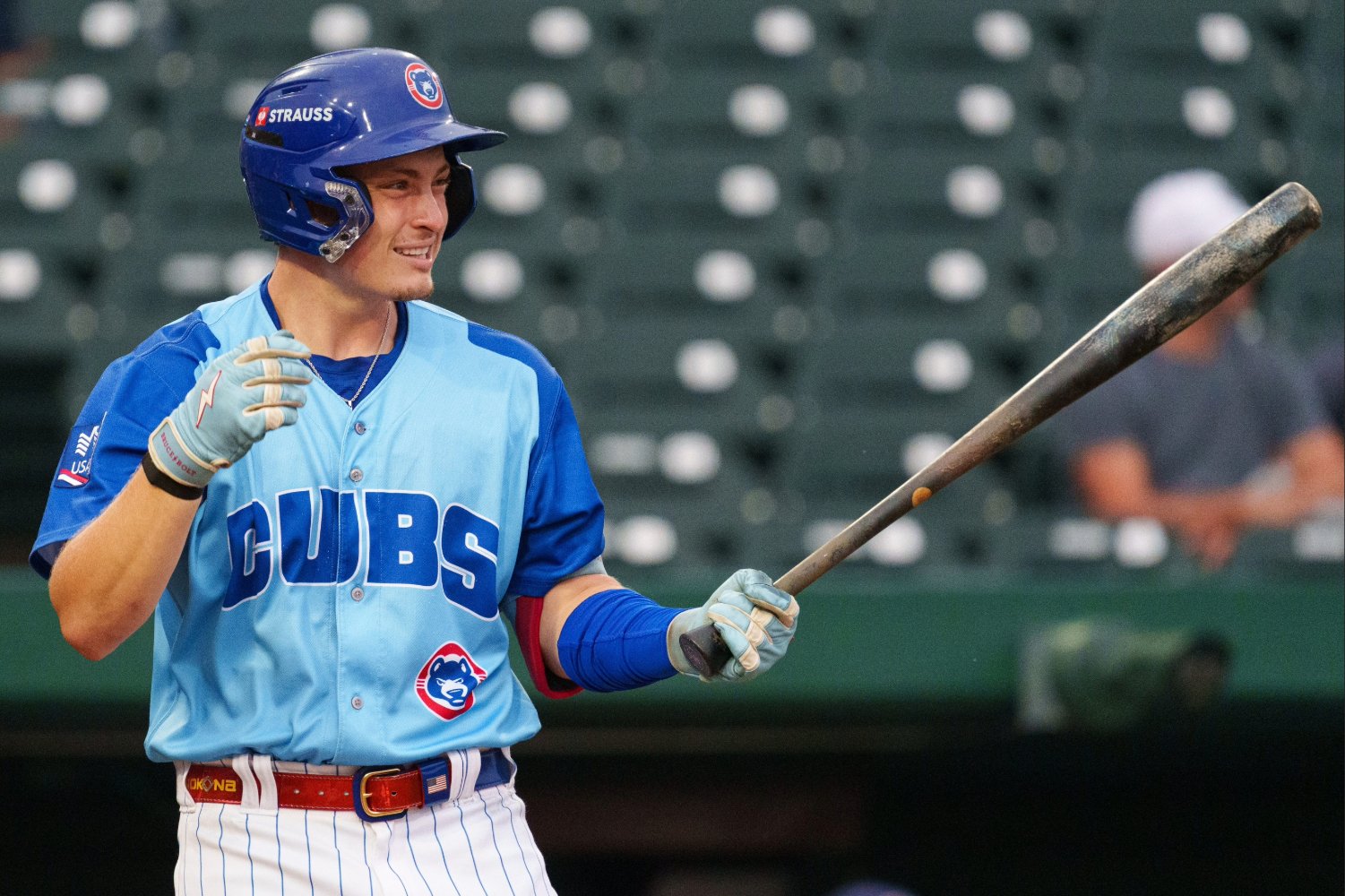 August always marks the last "full" season of the minor leagues. Some teams like the Triple-A Iowa Cubs will wrap up their year on September 18th (as they have not had a good enough season to quality for the International League playoffs), whereas others such as the Double-A Knoxville Smokies will add a few postseason games to their schedule. Regardless, the season is wrapping up for the Cubs' up-and-coming youngsters. So, as we get ready to put the MiLB season to bed soon, let's look at who had big offensive months in August. Ranking Cubs' Best Minor-League Hitters In August Honorable Mention - James Triantos, Triple-A Iowa Cubs James Triantos was called up to the MLB side of things at the end of July and spent a cup-of-coffee with the parent club on the bench. As the 26th man, he wasn't used often and as such, was sent back to Iowa midway through August. Since his return to Triple-A, the utility infielder has been on fire, posting a 143 wRC+, hitting two home runs, and walking seven times in just 39 PAs. Had this been a full-month's worth of plate appearances, he'd be higher than this, but he deserves a mention here for how good he's been since returning. Honorable Mention - Kane Kepley, Double-A Knoxville Smokies Kane Kepley got promoted (finally) from South Bend to Knoxville at the start of the month. On the surface, the outfielder's .206 batting average since his promotion may scare you off; but the good news is that it's hiding some underlying data that's pretty positive. Since getting to Knoxville, Kepley has walked (19 times) more than he's struck out (13 times), and has seven extra-base hits, including three home runs. His 135 wRC+ tells a far different story than the batting average. Obviously, it's best when these things work in tandem, but even so, his positive start despite the talent jump deserves an honorable mention. Third Place - Angel Cepeda, High-A South Bend Cubs Angel Cepeda may have finally seen it "click" for him at the plate at High-A. Cepeda, a former high-profile IFA signing out of Venezuela, has always oozed potential but has yet to fully break out for the organization. Posting a 116 wRC+ on the year last season (with a similar late-season breakout at Myrtle Beach), the hope was that would continue into 2026. While he hasn't been bad, he's flown a bit under the radar as "just good enough." Lately, however, that's changing. While his 114 wRC+ in August is right at his season's number, over his last 45 PA's of the month the shortstop posted a 145 wRC+, highlighted by six long balls. And while I didn't consider it for this list, it's probably important to note that he smashed two more on September 1. Second Place - Ariel Armas, Double-A Knoxville Smokies Ariel Armas is a very good defensive catcher; this much has been known dating back to his days in college when he won an NCAA Gold Glove award for his work behind the dish. Because of his position and defensive acumen, the bar for Armas to clear offensively to remain interesting is very low. The good news for the Cubs is that the 23-year old may be in the midst of a late-season breakout of his own, landing him into the top three for this list. Hitting .289 and four home runs has given the backstop a very promising 121 wRC+ over the month of August, a significant improvement over his 72 wRC+ prior to that. First Place - Josiah Hartshorn, High-A South Bend Cubs Another month and another award for the Cubs' top prospect (ho-hum). Hartshorn has just been amazing this season and better than anyone would have expected. He hit a little bit of a snag for a brief spell in July, but August was a return to form for the Cubs' burly outfielder. Hitting .333, smacking six bombs, and walking 19 times while only striking out 23 times (good for a a 164 wRC+) is a recipe for another award. One more thing; just like Cepeda, Hartshorn went and homered in his first game in September, as well; there's no stopping the guy. There just aren't enough good things or superlatives to lay at his feet. He's probably one of only two hitters system-wide who can even be considered for MiLB hitter of the year (with Owen Ayers) and months like this are exactly why.
 -
Alex Bregman is now 15th in baseball in fWAR. You could try to tell reddit and X/Twitter that, however...
-
What an embarrassment by Milwaukee. I get it, you're losing and it's the rules. But this horsefeathers is horsefeathers pathetic.
-
Could be the heat. Could be just warming up. But Harrison's velo is down.
-
If there was a case where the Cubs called up a 1b/3b today as opposed to tomorrow, it's not because of the backup SS. It's almost assuredly for a pretty bad situation. Thankfully, he's just the Sept 1st callup. So crisis averted.
-
We're clear. No injuries to report. Murray will be the September callup. He won't be active today.
-
Because it's August 31st, I would assume someone is unable to play today or that this move is pending a tomorrow official call-up. If he is officially called today. I would be concerned that Busch has a knock we don't know about. However, I hope it's more of a "Michael Busch is having a kid!" and can't play for two days type thing.
-
I think it makes some sense. You need a 1b somewhere on this roster. He's Rule-5 eligible (and we should assume it's going to happen until it isn't...even if it feels likely to follow the 2021-2022 offseason). So I have no issue with it. He's not exciting but as a 28th man you probably aren't going to be exciting.
-
Asking to see BJ Murray start at 1b immediately is the ultimate shiny-new-toy syndrome. He's put in a lot of work and has had a pretty good year. He's also 26 and a repeater who had to go to Double-A to figure baseball-life out again. He doesn't need to start tonight. The Cubs are playing Milwaukee. Play the best players.
-
We should take every scouting report at the time of the 2020 draft with an extreme grain of salt. Even the ones that ended up being nailed on. Most of these players had barely been seen in a full year prior to that draft. And teams were working on shoestring scouting budgets beyond even that. They were at best using junior year data on prep guys for just about all of it. And with how much those things change from year to year? Those aren't worth much. 2020 was a flat out luck driven draft. Truly, the scouting report on Ed Howard wasn't much different than PCA. Premium positions. Great perceived gloves. Sucks that Howard got hurt and we never saw what he could be. Great for PCA for turning into an MVP candidate. But that draft was an impossible ask for any organization.
-
You do know that even the best relievers sometimes have a few rough patches, right?