


Brandon Glick
-
Posts
1,153 -
Joined
-
Last visited
Content Type
Profiles
Joomla Posts 1
Chicago Cubs Videos
Chicago Cubs Free Agent & Trade Rumors, Notes, & Tidbits
2026 Chicago Cubs Top Prospects Ranking
News
2023 Chicago Cubs Draft Picks
Guides & Resources
2024 Chicago Cubs Draft Picks
The Chicago Cubs Players Project
2025 Chicago Cubs Draft Pick Tracker
2026 Chicago Cubs Draft Tracker: Picks & Bonuses
Blogs
Events
Forums
Store
Gallery
Everything posted by Brandon Glick
-
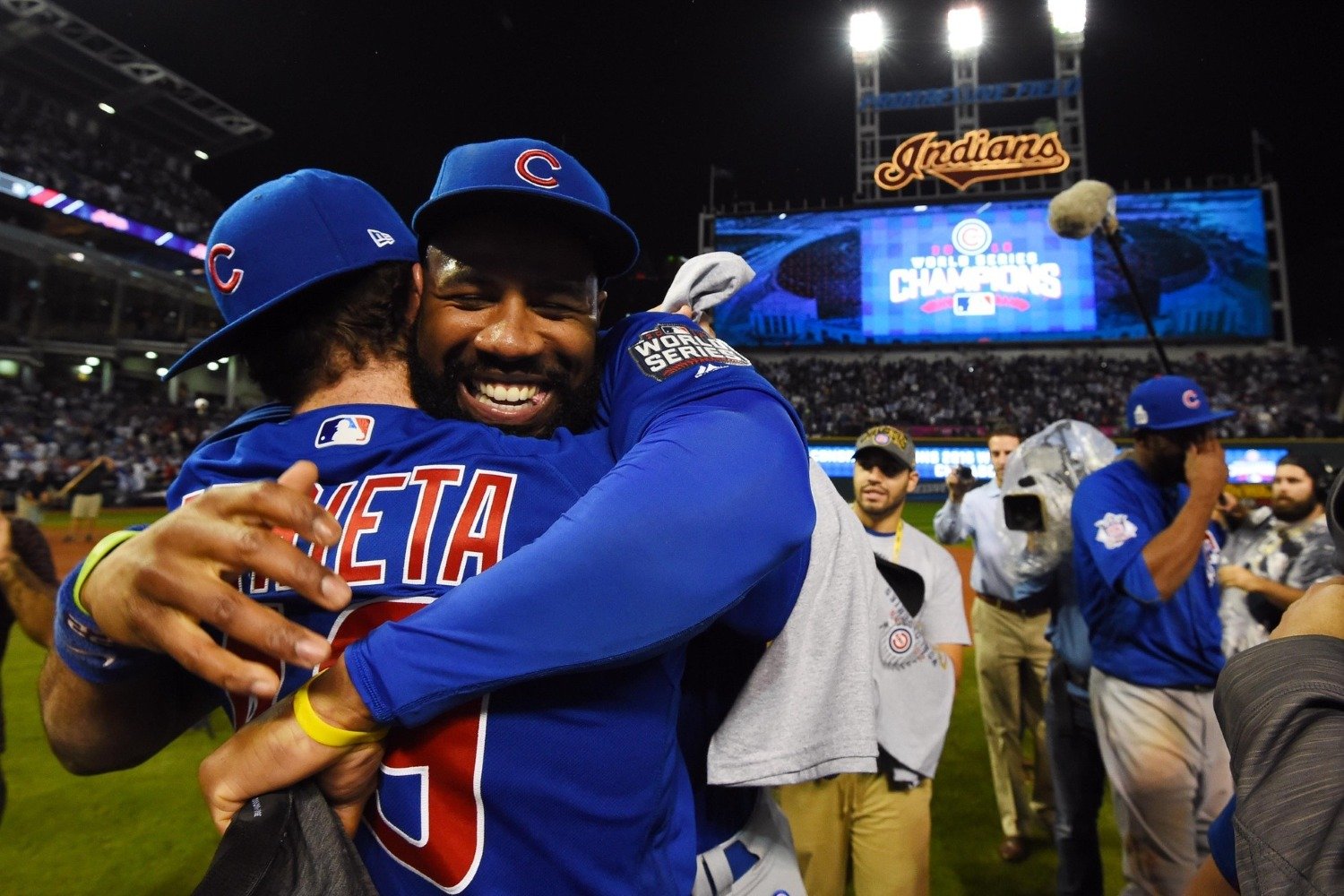 Before we dive into the nitty-gritty of Jason Heyward’s time with the Cubs, I want to note that this article (and others like it) is done in conjunction with North Side Baseball’s Chicago Cubs Players Project. It’s a wiki-style project that anyone—including you, dear reader—can contribute to. There, we’re chronicling the careers of every player who’s ever put on a Cubs uniform (including, for example, Mike Olt), and adding any personal memories or particularly favorite experiences fans have from that player’s tenure. It’s a community project, and we hope you’ll contribute to it. Jason Heyward, known cheekily as “The J-Hey Kid”, was a first-round pick (14th overall) of the Atlanta Braves in the 2007 MLB Draft. He began his minor-league career at just 17 years old, appearing in three minor-league All-Star games and winning two Minor League Player of the Year awards. By the time 2010 rolled around, multiple media outlets named Heyward the top prospect in baseball. He won the Braves’ right-field job as a 20-year-old rookie that year, making his debut on Opening Day against the Cubs. His first at-bat proved to be a memorable one. That home run proved to be a positive omen, as Heyward went on to earn an All-Star nod as the National League’s starting right fielder during his rookie campaign (though he would miss the festivities due to a thumb injury). That would actually be the only All-Star honor in Heyward’s career (er, so far), though he continued to produce at an above-average level for years. In his first five seasons in Atlanta, he racked up 23.0 bWAR, slashing .262/.351/.429 (117 wRC+) while winning the first two of five career Gold Gloves. In Nov. 2014, just one year out from free agency, Atlanta dealt Heyward to the Cardinals, for a package highlighted by Shelby Miller. For Atlanta, the hope was that they'd find a long-term ace. For St. Louis, Heyward had to replace the tragically deceased Oscar Taveras. Heyward thrived in his lone season in St. Louis, accruing a career-best 6.9 bWAR and hitting for a .797 OPS (122 wRC+) in 2015. After losing to the Cubs in the NLDS, Heyward deemed their future to be bright and the money to be right; he joined the franchise in free agency. It remains the largest deal in Cubs history (for now): $184 million, spread out over eight years. At this point, a lot of emotions will bubble to the surface. Heyward was, for all intents and purposes, not worth his contract in terms of on-field production. Though he won his final two Gold Gloves in 2016 and 2017—and continued to provide stellar defensive value after, totaling 35 Fielding Run Value (FRV) in his time in Chicago—he was a disaster at the plate. From 2016-22, Heyward slashed .245/.323/.377 (88 wRC+)—which, I have to be honest, is significantly better than I remember. Over the four-year stretch from 2017-20, Heyward actually posted a .752 OPS, which, when coupled with his defensive skills, made him worth 8.2 bWAR. Is that good enough for a guy getting paid $23 million per year? No, but it was only in the final two years of his time on the North Side that he really fell off (-0.3 bWAR, 67 wRC+). That was all after a truly lost 2016, though, too. Of course, his most memorable moment with the Cubs didn’t even happen on the field. During Game 7 of the 2016 World Series, Heyward gave the famous “Rain Delay Speech” during the 17-minute, weather-induced intermission before extra-innings began. He rallied a team that had just squandered a three-run lead with four outs to go, and the Cubs returned in the top of the tenth to bring home two runs, including the lead-taking RBI by World Series MVP Ben Zobrist. Heyward batted just .150 in that World Series (and had a sub-.350 OPS in the 2016 postseason), but that speech defined his Cubs legacy. Sure, the Cubs would have liked to get some more production in the ensuing seasons, but that was a $184 million speech, and it was worth every penny. Heyward was a model citizen away from the game, and served as an invaluable mentor to the team’s young players once the World Series core was traded away. While it can’t be ignored, Heyward’s bat was the only thing that lagged behind during his time with the Cubs. Toward the end of the 2022 season, Jed Hoyer confirmed that Heyward would be released. He took a one-year deal with the Dodgers in free agency and had his best season in years while serving as part of an outfield platoon for the NL West champs. He re-signed with Los Angeles for the 2024 season, though he was released in August. He joined the Houston Astros for the stretch run, posting a .756 OPS in limited work for the best team in the AL West. Heyward will be awarded a ring for his services with the Dodgers in 2024, and he is currently a free agent. It’s possible that Heyward’s playing career has come to an end. If so, he’ll be remembered with bittersweet fondness for his time with the Cubs, who probably don’t win that 2016 championship without him.
 -
Matthew Scott Garza is a 12-year MLB veteran, and he spent two-and-a-half of those seasons with the Chicago Cubs. Prior to joining the professional ranks, Garza was an MLB and CFB prospect in high school in California before taking a scholarship to pitch at Fresno State. Garza's college career was topsy-turvy, though he would parlay an excellent junior season into becoming a first-round draft pick of the Minnesota Twins in the 2005 MLB Draft (25th overall). His time with Minnesota was brief yet notable, as he made the climb from Single-A all the way to the majors in his first full professional season. He made his MLB debut on August 11, 2006, and won the USA Today Minor League Player of the Year Award that same year thanks to a ridiculous 1.99 ERA and 154 strikeouts in 135 2/3 innings. He would play just one more season with the Twins before being dealt to the Tampa Bay Rays prior to 2008 in the trade that landed Delmon Young in Minnesota. Garza was at his best in Tampa, throwing back-to-back 200+ inning seasons in 2009 and 2010. He won the ALCS MVP in 2008 after notching the win in the decisive Game 7, and he remains the only pitcher in the franchise's history to have thrown an official no-hitter, having done so against the Tigers on July 26, 2010. The Rays traded him to the Cubs following the 2010 season in a massive eight-player swap, which notably landed Chris Archer in Tampa Bay. Garza took his place alongside Carlos Zambrano and Ryan Dempster atop the Cubs' rotation, though he was the only pitcher on the starting staff in 2011 to post an ERA below 4.40 (he finished with a 3.32 mark). Garza did his best to keep a sinking ship afloat, accruing 21-18 record, 3.45 ERA (3.44 FIP), 355 strikeouts, and 1.21 WHIP in 60 starts. The Cubs, however, were downright awful during his tenure, finishing fifth in the NL Central from 2011-13. The right-hander did deal with serious injury issues after his debut season on the North Side, pitching just 174 2/3 innings in his final 1.5 seasons after a 198.0 inning performance in his inaugural campaign with the Cubs. The trade for Garza was one of the last notable moves made by general manager Jim Hendry before Theo Epstein and Jed Hoyer took over in October 2011. He was the subject of constant trade rumors during his time in Chicago, and the team never seriously made him an extension offer prior to his walk year in 2013. The team infamously signed free agent Edwin Jackson to a comparable four-year, $52 million deal that January, which frustrated Garza, who felt he deserved priority as the incumbent. It all but put the writing on the wall that Garza's time with the Cubs was coming to a premature end. At the 2013 trade deadline, Garza was traded to the Texas Rangers for a four-player package that included relievers Justin Grimm, C.J. Edwards, and Neil Ramirez, as well as third base prospect Mike Olt. Garza was pedestrian in his half-season in Arlington, posting a 4.38 ERA in 84 1/3 innings as the Rangers fell shy of the postseason in Game 163 against Garza's old employer, the Tampa Bay Rays. After that season concluded, he joined the Milwaukee Brewers on the then-largest deal in franchise history at four years and $50 million. He struggled badly with the Cubs' rival, accumulating -0.7 WAR and a 4.65 ERA in 96 starts. Garza retired following the 2017 season. He suffered a torn labrum in his throwing shoulder that required him to get surgery, pushing him to a premature conclusion to his playing career. View full player
-
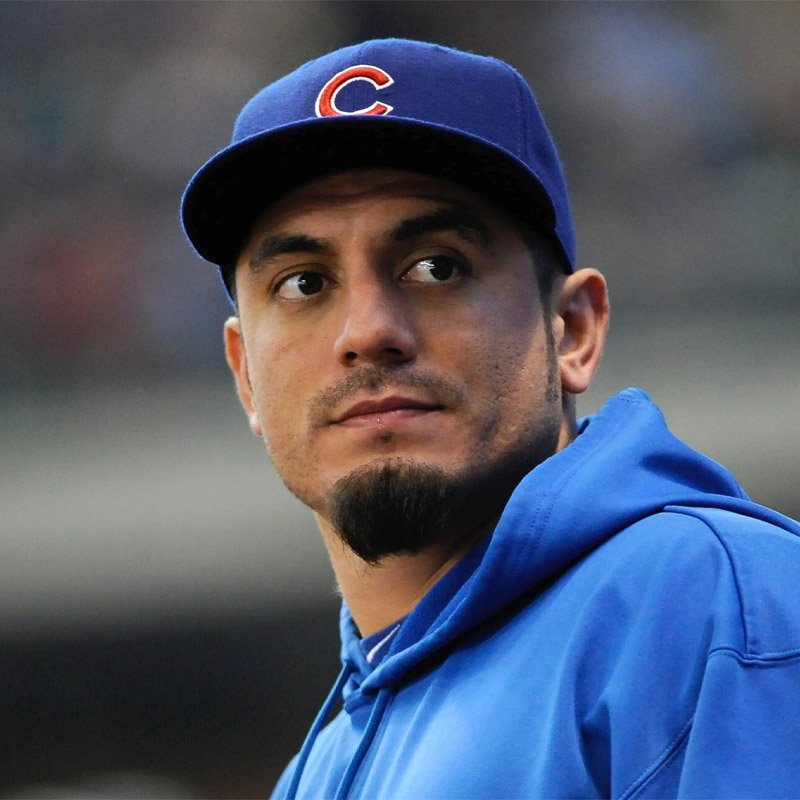 Matthew Scott Garza is a 12-year MLB veteran, and he spent two-and-a-half of those seasons with the Chicago Cubs. Prior to joining the professional ranks, Garza was an MLB and CFB prospect in high school in California before taking a scholarship to pitch at Fresno State. Garza's college career was topsy-turvy, though he would parlay an excellent junior season into becoming a first-round draft pick of the Minnesota Twins in the 2005 MLB Draft (25th overall). His time with Minnesota was brief yet notable, as he made the climb from Single-A all the way to the majors in his first full professional season. He made his MLB debut on August 11, 2006, and won the USA Today Minor League Player of the Year Award that same year thanks to a ridiculous 1.99 ERA and 154 strikeouts in 135 2/3 innings. He would play just one more season with the Twins before being dealt to the Tampa Bay Rays prior to 2008 in the trade that landed Delmon Young in Minnesota. Garza was at his best in Tampa, throwing back-to-back 200+ inning seasons in 2009 and 2010. He won the ALCS MVP in 2008 after notching the win in the decisive Game 7, and he remains the only pitcher in the franchise's history to have thrown an official no-hitter, having done so against the Tigers on July 26, 2010. The Rays traded him to the Cubs following the 2010 season in a massive eight-player swap, which notably landed Chris Archer in Tampa Bay. Garza took his place alongside Carlos Zambrano and Ryan Dempster atop the Cubs' rotation, though he was the only pitcher on the starting staff in 2011 to post an ERA below 4.40 (he finished with a 3.32 mark). Garza did his best to keep a sinking ship afloat, accruing 21-18 record, 3.45 ERA (3.44 FIP), 355 strikeouts, and 1.21 WHIP in 60 starts. The Cubs, however, were downright awful during his tenure, finishing fifth in the NL Central from 2011-13. The right-hander did deal with serious injury issues after his debut season on the North Side, pitching just 174 2/3 innings in his final 1.5 seasons after a 198.0 inning performance in his inaugural campaign with the Cubs. The trade for Garza was one of the last notable moves made by general manager Jim Hendry before Theo Epstein and Jed Hoyer took over in October 2011. He was the subject of constant trade rumors during his time in Chicago, and the team never seriously made him an extension offer prior to his walk year in 2013. The team infamously signed free agent Edwin Jackson to a comparable four-year, $52 million deal that January, which frustrated Garza, who felt he deserved priority as the incumbent. It all but put the writing on the wall that Garza's time with the Cubs was coming to a premature end. At the 2013 trade deadline, Garza was traded to the Texas Rangers for a four-player package that included relievers Justin Grimm, C.J. Edwards, and Neil Ramirez, as well as third base prospect Mike Olt. Garza was pedestrian in his half-season in Arlington, posting a 4.38 ERA in 84 1/3 innings as the Rangers fell shy of the postseason in Game 163 against Garza's old employer, the Tampa Bay Rays. After that season concluded, he joined the Milwaukee Brewers on the then-largest deal in franchise history at four years and $50 million. He struggled badly with the Cubs' rival, accumulating -0.7 WAR and a 4.65 ERA in 96 starts. Garza retired following the 2017 season. He suffered a torn labrum in his throwing shoulder that required him to get surgery, pushing him to a premature conclusion to his playing career.
 -
Updating the Cubs' Outfield Logjam After Cody Bellinger, Kyle Tucker Trades
Brandon Glick posted an article in Cubs
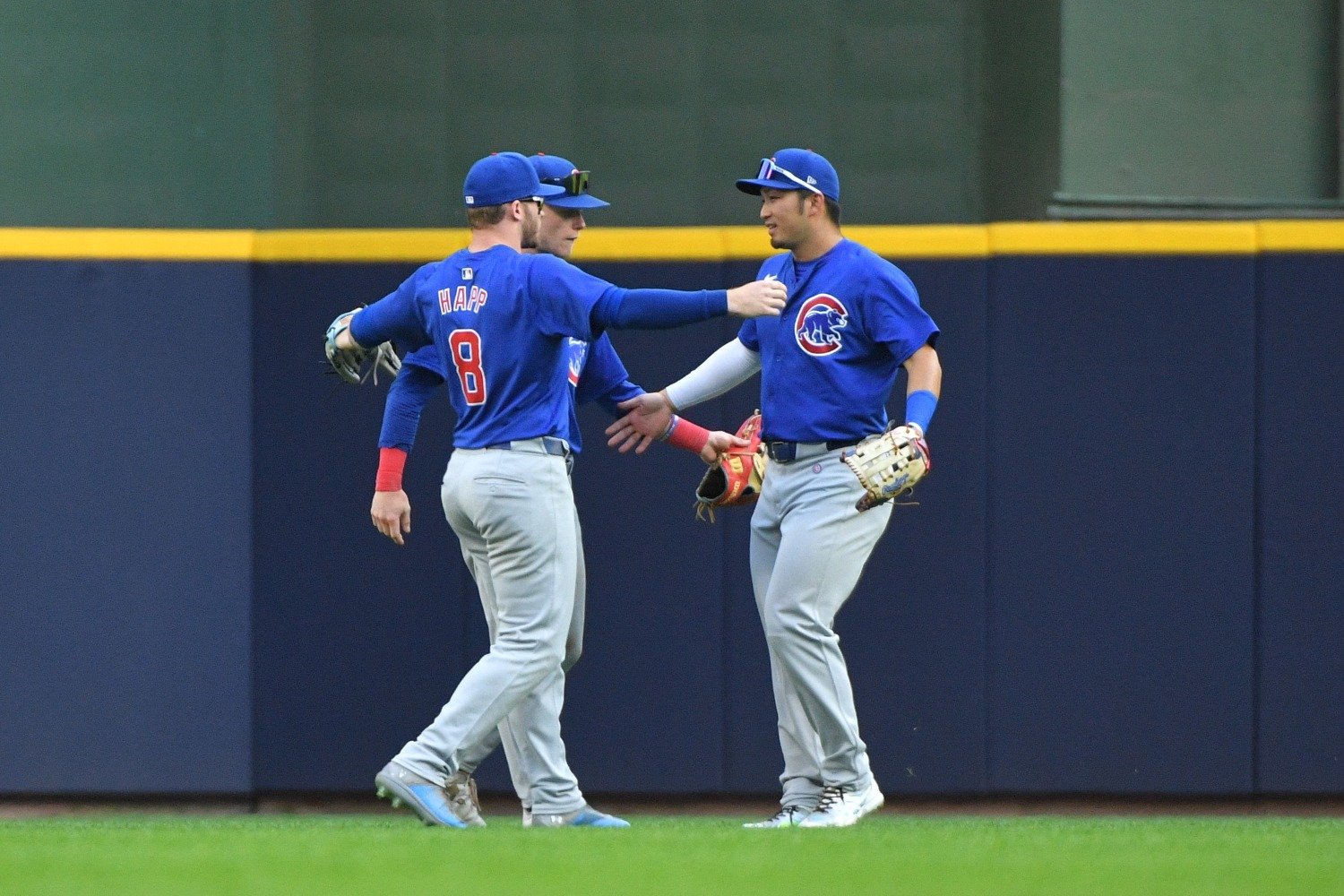 To recap: since the Winter Meetings, the Cubs have brought in right fielder Kyle Tucker and traded away outfielder/first baseman Cody Bellinger. Also, Seiya Suzuki (via his agent) has informed the team that he has no interest in being a full-time designated hitter. On top of that, top prospects Owen Caissie and Kevin Alcántara have been floated as potential trade bait for a starting pitcher, including the now-dead rumors surrounding Jesús Luzardo, who ended up in Philadelphia instead. Let’s start with the position least in flux: left field. Ian Happ, now the longest-tenured Cubs player with Kyle Hendricks in Los Angeles, has won three consecutive Gold Gloves in left field, and he remains a marvelously consistent hitter. Over the last three seasons, he’s been worth 11.1 bWAR, slashing .254/.348/.437 (120 wRC+), with a 23.6% strikeout rate and 11.9% walk rate. His OPSes have finished within .010 of each other in every season during that window; his wRC+ has topped out at 122 and bottomed out at 119. Happ has his streaky moments, but he’s a known quantity at the plate and in the field. The 30-year-old has two years and $40 million remaining on the extension he signed just after Opening Day in 2023. In center field, speed demon Pete Crow-Armstrong is locked in as (we hope) the long-term starter. Just 22 years old, Crow-Armstrong established himself as an everyday regular in 2024, accruing 2.3 bWAR despite posting just a .670 OPS and 87 wRC+. Of course, much of his value comes from his speed (27 steals; 99th percentile sprint speed, according to Statcast) and absurdly polished glove (14 Outs Above Average in 2024). Just take a look at his Baseball Savant page and hone in on his defense; it’s a thing of pure beauty. Of course, he was below-average in every notable hitting metric according to the same source, and he unequivocally has to improve at the plate if he’s going to live up to his prospect billing, but Crow-Armstrong is already one of the most valuable members of the team, thanks to his carrying traits. His floor is very high—he’ll always be worth 2-3 WAR on his defense and baserunning alone—and his ceiling would be the stratosphere if his bat ever comes around. In right field, the newly-acquired Tucker will be the starter. In Tucker’s tenure in Houston, his batting line was .274/.353/.516 (139 wRC+), and he posted three consecutive 5.0+ bWAR seasons before 2024—when he was worth 4.7 in 78 games played. He’s a former Gold Glove Award recipient, and he’s always been a great baserunner despite having middling speed. We’ve broken down his fit in Chicago every which way here on North Side Baseball, and now it’s up to the Cubs to ensure he’s part of their long-term future. Of course, there’s still one player remaining in this crowded outfield mix: Suzuki. He hasn’t been a disappointment since signing a five-year, $85-million deal with the Cubs in Mar. 2022, with an OPS that has climbed every year he’s been in the majors and topped out at .848 in 2024. His 138 wRC+ last season was also a career best. Outside of a strikeout rate that climbed to 27.4% this past season, Suzuki has improved nearly every part of his game since first debuting stateside. Case in point: his bWAR in 2024 was a career-high 3.5. It’s true that Suzuki won five Gold Gloves during his time in the NBP—and his Statcast metrics show promising, if inconsistent, data in support of him being an above-average outfielder—but the Cubs have three of the best defensive outfielders at their respective positions now on the roster. The Japanese star deserves to get plenty of run in the outfield corners next year, but the team’s ideal defensive alignment features Suzuki at DH. Beyond that core four, Caissie and Alcántara are knocking on the door of the majors (Alcántara already made his debut at the end of last season), and should provide valuable depth and injury insurance for next season. Caissie is more of a true corner outfielder, while Alcantara is more versatile and might be Crow-Armstrong’s backup in center field next season now that Bellinger is in New York and Mike Tauchman is with the White Sox. The team could also always make a trade for a utility player—Willi Castro, anyone?—to add center-field depth, though there’s probably enough talent in-house where that’s more of a luxury move. None of this mentions Alexander Canario, either, who has limited experience in center and is also on the 40-man roster. The Cubs’ roster is taking shape for the 2025 season, and the outfield looks like the strongest part of the team at the moment. More moves will be coming as the team looks to fortify any weak points, but the foursome of Happ, Crow-Armstrong, Tucker, and Suzuki is one of the best position groups in all of baseball.
 -
There have been a lot of moving parts in the outfield in recent weeks. Let’s regain some clarity about who’s playing where. Image courtesy of © Michael McLoone-Imagn Images To recap: since the Winter Meetings, the Cubs have brought in right fielder Kyle Tucker and traded away outfielder/first baseman Cody Bellinger. Also, Seiya Suzuki (via his agent) has informed the team that he has no interest in being a full-time designated hitter. On top of that, top prospects Owen Caissie and Kevin Alcántara have been floated as potential trade bait for a starting pitcher, including the now-dead rumors surrounding Jesús Luzardo, who ended up in Philadelphia instead. Let’s start with the position least in flux: left field. Ian Happ, now the longest-tenured Cubs player with Kyle Hendricks in Los Angeles, has won three consecutive Gold Gloves in left field, and he remains a marvelously consistent hitter. Over the last three seasons, he’s been worth 11.1 bWAR, slashing .254/.348/.437 (120 wRC+), with a 23.6% strikeout rate and 11.9% walk rate. His OPSes have finished within .010 of each other in every season during that window; his wRC+ has topped out at 122 and bottomed out at 119. Happ has his streaky moments, but he’s a known quantity at the plate and in the field. The 30-year-old has two years and $40 million remaining on the extension he signed just after Opening Day in 2023. In center field, speed demon Pete Crow-Armstrong is locked in as (we hope) the long-term starter. Just 22 years old, Crow-Armstrong established himself as an everyday regular in 2024, accruing 2.3 bWAR despite posting just a .670 OPS and 87 wRC+. Of course, much of his value comes from his speed (27 steals; 99th percentile sprint speed, according to Statcast) and absurdly polished glove (14 Outs Above Average in 2024). Just take a look at his Baseball Savant page and hone in on his defense; it’s a thing of pure beauty. Of course, he was below-average in every notable hitting metric according to the same source, and he unequivocally has to improve at the plate if he’s going to live up to his prospect billing, but Crow-Armstrong is already one of the most valuable members of the team, thanks to his carrying traits. His floor is very high—he’ll always be worth 2-3 WAR on his defense and baserunning alone—and his ceiling would be the stratosphere if his bat ever comes around. In right field, the newly-acquired Tucker will be the starter. In Tucker’s tenure in Houston, his batting line was .274/.353/.516 (139 wRC+), and he posted three consecutive 5.0+ bWAR seasons before 2024—when he was worth 4.7 in 78 games played. He’s a former Gold Glove Award recipient, and he’s always been a great baserunner despite having middling speed. We’ve broken down his fit in Chicago every which way here on North Side Baseball, and now it’s up to the Cubs to ensure he’s part of their long-term future. Of course, there’s still one player remaining in this crowded outfield mix: Suzuki. He hasn’t been a disappointment since signing a five-year, $85-million deal with the Cubs in Mar. 2022, with an OPS that has climbed every year he’s been in the majors and topped out at .848 in 2024. His 138 wRC+ last season was also a career best. Outside of a strikeout rate that climbed to 27.4% this past season, Suzuki has improved nearly every part of his game since first debuting stateside. Case in point: his bWAR in 2024 was a career-high 3.5. It’s true that Suzuki won five Gold Gloves during his time in the NBP—and his Statcast metrics show promising, if inconsistent, data in support of him being an above-average outfielder—but the Cubs have three of the best defensive outfielders at their respective positions now on the roster. The Japanese star deserves to get plenty of run in the outfield corners next year, but the team’s ideal defensive alignment features Suzuki at DH. Beyond that core four, Caissie and Alcántara are knocking on the door of the majors (Alcántara already made his debut at the end of last season), and should provide valuable depth and injury insurance for next season. Caissie is more of a true corner outfielder, while Alcantara is more versatile and might be Crow-Armstrong’s backup in center field next season now that Bellinger is in New York and Mike Tauchman is with the White Sox. The team could also always make a trade for a utility player—Willi Castro, anyone?—to add center-field depth, though there’s probably enough talent in-house where that’s more of a luxury move. None of this mentions Alexander Canario, either, who has limited experience in center and is also on the 40-man roster. The Cubs’ roster is taking shape for the 2025 season, and the outfield looks like the strongest part of the team at the moment. More moves will be coming as the team looks to fortify any weak points, but the foursome of Happ, Crow-Armstrong, Tucker, and Suzuki is one of the best position groups in all of baseball. View full article
-
The Chicago Cubs Players Project Round Up: 2016 World Series Edition
Brandon Glick posted an article in History
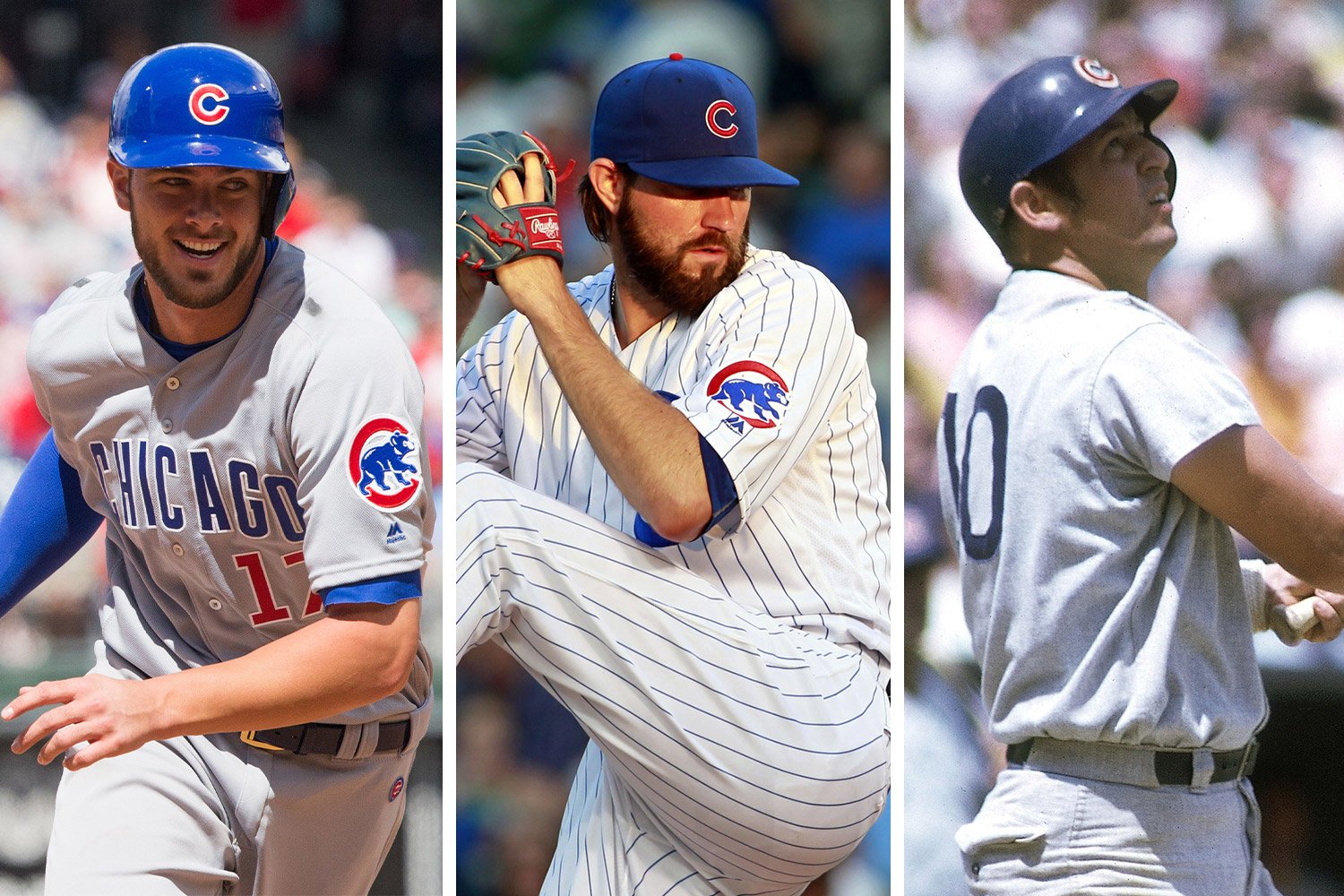 What is the Players Project? It's a community-driven, wiki-style project that focuses on Cubs players of all stripes. It's open to all North Side Baseball users and we've had contributions for current players, past players, and players who never even made the major leagues but played in the Cubs’ farm system. Create your favorite player today! Welcome, everyone! We've got lots to promote here about the Chicago Cubs Players Project, which has seen a lot of great entries already! @Brock Beauchamp and I have been working hard to add pre-written bios into the database, and many of you have helped add some of the most notable players in this franchise's history! Last week, I added Kris Bryant, 2016 MVP and World Series champion, to the Players Project. He's one of the most notable figures from that championship core, having led the senior circuit in WAR (7.3) and runs scored (121) in 2016, and adding 39 home runs and a .939 OPS for good measure. He was just as valuable in the postseason, slashing .308/.400/.523 on the way to the team's World Series victory. Our own @matto1233 wrote up Jason Hammel's career with the Cubs in a Remember Some Cubs article, detailing his trade to the Oakland Athletics and eventual re-signing with Chicago. For a fun bit of trivia: Hammel is one of four pitchers — along with Jon Lester, Jake Arrieta, and Kyle Hendricks — who started at least 30 games for the Cubs in both 2015 and 2016. Even though he definitely was not a member of that 2016 team, I also want to highlight a great community post by @Mont. They wrote up Cubs legend Ron Santo, going in depth on everything from his playing career, to his death, to his eventual posthumous Hall of Fame induction. Did you know that Santo was the first player to invoke the ten-and-five rule under the collective bargaining agreement that allows veterans with sufficient tenures to veto trades? Thanks to the Players Project, now you do. The project has seen a number of other entries, from Mike Olt to Alfonso Soriano to Jerome Walton. The Chicago Cubs Players Project is open to all North Side Baseball users. If you're a Cubs history buff or just want to dive into the background of your favorite player, come on board! Please stop by the Players Project by hitting the button below!
 -
A new community-driven project at North Side Baseball is underway, with some notable Cubs getting some love. What is the Players Project? It's a community-driven, wiki-style project that focuses on Cubs players of all stripes. It's open to all North Side Baseball users and we've had contributions for current players, past players, and players who never even made the major leagues but played in the Cubs’ farm system. Create your favorite player today! Welcome, everyone! We've got lots to promote here about the Chicago Cubs Players Project, which has seen a lot of great entries already! @Brock Beauchamp and I have been working hard to add pre-written bios into the database, and many of you have helped add some of the most notable players in this franchise's history! Last week, I added Kris Bryant, 2016 MVP and World Series champion, to the Players Project. He's one of the most notable figures from that championship core, having led the senior circuit in WAR (7.3) and runs scored (121) in 2016, and adding 39 home runs and a .939 OPS for good measure. He was just as valuable in the postseason, slashing .308/.400/.523 on the way to the team's World Series victory. Our own @matto1233 wrote up Jason Hammel's career with the Cubs in a Remember Some Cubs article, detailing his trade to the Oakland Athletics and eventual re-signing with Chicago. For a fun bit of trivia: Hammel is one of four pitchers — along with Jon Lester, Jake Arrieta, and Kyle Hendricks — who started at least 30 games for the Cubs in both 2015 and 2016. Even though he definitely was not a member of that 2016 team, I also want to highlight a great community post by @Mont. They wrote up Cubs legend Ron Santo, going in depth on everything from his playing career, to his death, to his eventual posthumous Hall of Fame induction. Did you know that Santo was the first player to invoke the ten-and-five rule under the collective bargaining agreement that allows veterans with sufficient tenures to veto trades? Thanks to the Players Project, now you do. The project has seen a number of other entries, from Mike Olt to Alfonso Soriano to Jerome Walton. The Chicago Cubs Players Project is open to all North Side Baseball users. If you're a Cubs history buff or just want to dive into the background of your favorite player, come on board! Please stop by the Players Project by hitting the button below! View full article
-
The Brewers have owned the division since 2018. Is a changing of the guard due in 2025? Image courtesy of © Erik Williams-Imagn Images Since 2017, when the Cubs won the National League Central with a 92-70 record, there have been seven seasons, four of which ended with the Brewers atop the division. Only once since then have the Cubs finished the year in the top spot, and that was in the COVID-shortened 2020 campaign (which doesn't count). The Cardinals won the remaining two division titles, as the Reds and Pirates have been shut out for more than a decade. Those latter two teams are a good place to start when discussing the NL Central hierarchy heading into 2025. The Pirates were the Central's caboose last season with a 76-86 record, with the Reds barely in front of them at 77-85. Pittsburgh has an obvious strength to build around: starting pitching. That mostly stems from their trifecta of aces, Paul Skenes, Mitch Keller, and Jared Jones (assuming they don’t trade one of them)—but the rest of their team leaves much to be desired. They've finished in the bottom three in the NL in runs scored five years running, and outside of outfielders Bryan Reynolds and Oneil Cruz, there isn’t much in the way of star power in the lineup. They did trade for first baseman Spencer Horwitz and second baseman Enmanuel Valdez this offseason, but those are the only moves they’ve made that have impacted the big-league roster. Even with a new right side of the infield, the Pirates need far too much help on offense to be taken seriously as a contender in the division. Until proven otherwise, the Pirates are going to be an annoying team to play (expect a lot of low-scoring affairs in Pittsburgh next year), and not much else. The Reds are a bit more interesting, if only because their position players are actually interesting. They hired Terry Francona as manager earlier in the offseason and are bringing back a sneakily loaded roster, led by Elly De La Cruz and Hunter Greene. The only issue is: they haven’t done much to meaningfully advance toward their goal of contending. They selected second baseman Cooper Bowman in the Rule 5 Draft, and Nick Martinez accepted his qualifying offer. They made a notable trade to realign talent on their roster, sending second baseman Jonathan India to the Royals in exchange for starting pitcher Brady Singer, but that move feels more like a lateral move than a perfectly timed shakeup. Until they’re willing to more meaningfully supplement a talented young core, they’re going to continue to be also-rans, too. That brings us to the Cardinals, who (for all intents and purposes) are entering a rebuild. They’ve been even less active than the Reds, unless you want to count their constant updates on trading third baseman Nolan Arenado. Paul Goldschmidt, Lance Lynn, Kyle Gibson, and Andrew Kittredge all hit free agency, and most or all of them will find new teams at some point in the coming months. Sonny Gray could be traded, too, but things are quiet on that front for now. Either way, the point stands: St. Louis is going to be a worse team in 2025, and that likely means a second last-place finish in three years, after avoiding that fate entirely since 1990. Thus, we arrive at the meat and potatoes of the division: the Brewers and Cubs. Milwaukee has won the NL Central in consecutive seasons and claimed three of the past four titles. They’re the cream of the crop as far as track record is concerned, though this offseason may have fundamentally altered that perception. They dealt Devin Williams in a blockbuster with the Yankees, receiving injury-prone starter Nestor Cortes and second base prospect Caleb Durbin in return. Cortes is an upside play that comes loaded with baggage — including serving up that Freddie Freeman walk-off grand slam in Game One of the World Series — but the Brewers’ voodoo magic pitching factory will probably turn him back into an All-Star in 2025. Durbin is the more interesting piece in the deal, with speed and aggressiveness on the bases and a good feel to hit, but without any meaningful over-the-fence power. He's a versatile defender, but at his best spot (second base), he's blocked by Platinum Glove winner Brice Turang. In some formulations, Turang could always take Willy Adames’s vacant spot at shortstop—another notable loss for the Brew Crew this winter—but taking him away from his best position will only hurt the defense. More likely, Durbin will be asked to take over at third base, where Oliver Dunn currently resides. Besides that Williams move, the Brewers have mostly been inactive. They took a couple of players in the Rule 5 Draft, but losing Adames and Williams is going to sting. They’re banking on in-house improvements from their young core, which is led by phenom Jackson Chourio. Just because they’ve lost some stars doesn’t mean they’ll be pushovers come 2025. However, the Cubs clearly see the opening the Brewers have left them. They’ve been among the most active teams this winter, bringing in Eli Morgan, Matthew Boyd, Gage Workman, Carson Kelly, Cody Poteet, and, of course, Kyle Tucker to supplement a roster that went 83-79 last year. They’ve lost some talent, too, including Cody Bellinger and Isaac Paredes, but on the whole, this is a much better team on paper than it was when the season ended. If they can pull off a trade for a “big-name starter” as has been rumored recently, they’ll enter spring training as one of baseball’s most improved teams. Is all that change enough to bridge the gap between Milwaukee and Chicago? It’s hard to say, especially since the offseason is only halfway over, but the Cubs evidently don’t want to leave things to chance this year. Either way, the Cubs can’t stop now. Aggressiveness has been the name of the game since the calendar flipped to December, and the reward for keeping it up is a straight path to the division crown come 2025. View full article
-
Previewing the 2025 NL Central: Are Cubs Favorites With Kyle Tucker?
Brandon Glick posted an article in Cubs
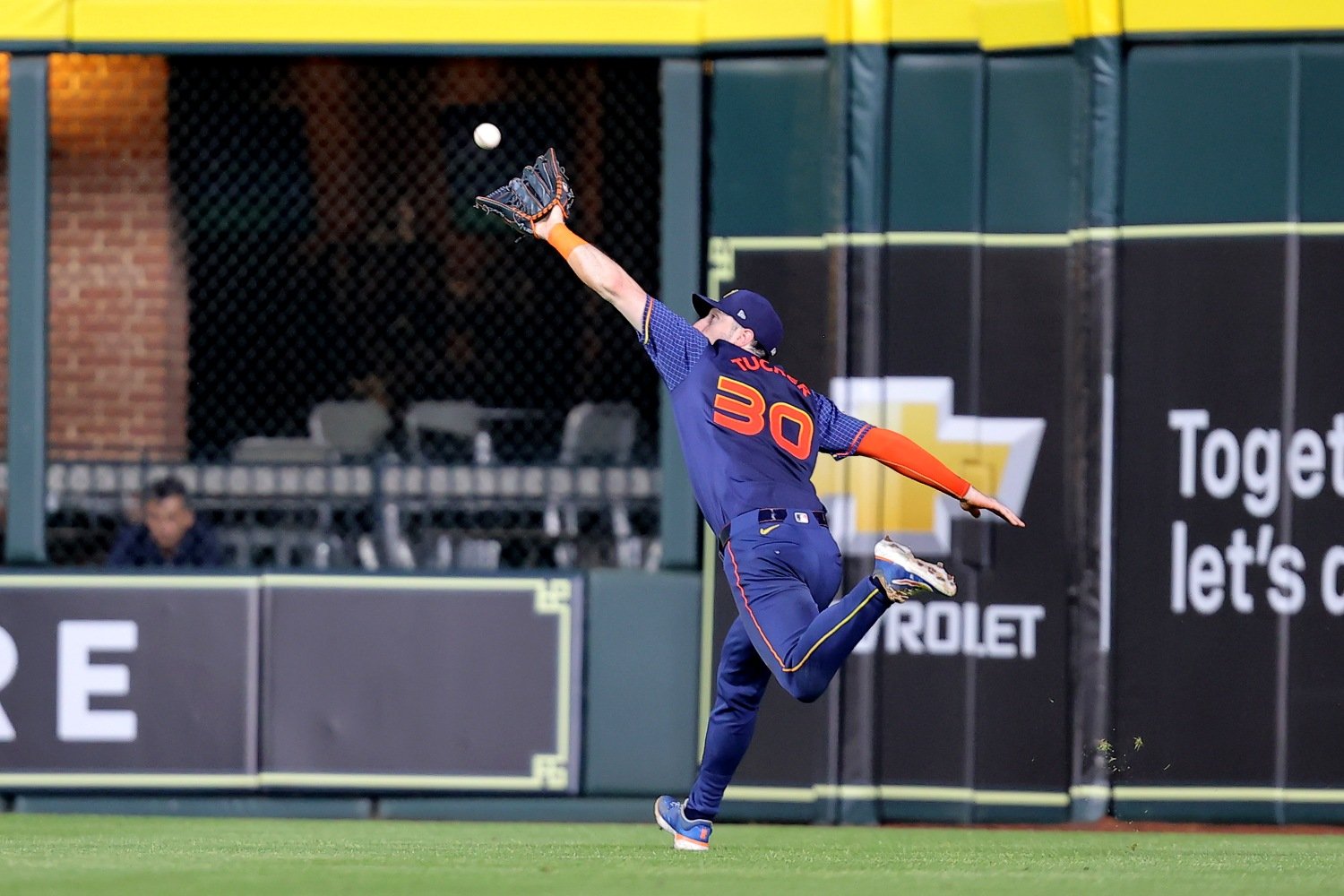 Since 2017, when the Cubs won the National League Central with a 92-70 record, there have been seven seasons, four of which ended with the Brewers atop the division. Only once since then have the Cubs finished the year in the top spot, and that was in the COVID-shortened 2020 campaign (which doesn't count). The Cardinals won the remaining two division titles, as the Reds and Pirates have been shut out for more than a decade. Those latter two teams are a good place to start when discussing the NL Central hierarchy heading into 2025. The Pirates were the Central's caboose last season with a 76-86 record, with the Reds barely in front of them at 77-85. Pittsburgh has an obvious strength to build around: starting pitching. That mostly stems from their trifecta of aces, Paul Skenes, Mitch Keller, and Jared Jones (assuming they don’t trade one of them)—but the rest of their team leaves much to be desired. They've finished in the bottom three in the NL in runs scored five years running, and outside of outfielders Bryan Reynolds and Oneil Cruz, there isn’t much in the way of star power in the lineup. They did trade for first baseman Spencer Horwitz and second baseman Enmanuel Valdez this offseason, but those are the only moves they’ve made that have impacted the big-league roster. Even with a new right side of the infield, the Pirates need far too much help on offense to be taken seriously as a contender in the division. Until proven otherwise, the Pirates are going to be an annoying team to play (expect a lot of low-scoring affairs in Pittsburgh next year), and not much else. The Reds are a bit more interesting, if only because their position players are actually interesting. They hired Terry Francona as manager earlier in the offseason and are bringing back a sneakily loaded roster, led by Elly De La Cruz and Hunter Greene. The only issue is: they haven’t done much to meaningfully advance toward their goal of contending. They selected second baseman Cooper Bowman in the Rule 5 Draft, and Nick Martinez accepted his qualifying offer. They made a notable trade to realign talent on their roster, sending second baseman Jonathan India to the Royals in exchange for starting pitcher Brady Singer, but that move feels more like a lateral move than a perfectly timed shakeup. Until they’re willing to more meaningfully supplement a talented young core, they’re going to continue to be also-rans, too. That brings us to the Cardinals, who (for all intents and purposes) are entering a rebuild. They’ve been even less active than the Reds, unless you want to count their constant updates on trading third baseman Nolan Arenado. Paul Goldschmidt, Lance Lynn, Kyle Gibson, and Andrew Kittredge all hit free agency, and most or all of them will find new teams at some point in the coming months. Sonny Gray could be traded, too, but things are quiet on that front for now. Either way, the point stands: St. Louis is going to be a worse team in 2025, and that likely means a second last-place finish in three years, after avoiding that fate entirely since 1990. Thus, we arrive at the meat and potatoes of the division: the Brewers and Cubs. Milwaukee has won the NL Central in consecutive seasons and claimed three of the past four titles. They’re the cream of the crop as far as track record is concerned, though this offseason may have fundamentally altered that perception. They dealt Devin Williams in a blockbuster with the Yankees, receiving injury-prone starter Nestor Cortes and second base prospect Caleb Durbin in return. Cortes is an upside play that comes loaded with baggage — including serving up that Freddie Freeman walk-off grand slam in Game One of the World Series — but the Brewers’ voodoo magic pitching factory will probably turn him back into an All-Star in 2025. Durbin is the more interesting piece in the deal, with speed and aggressiveness on the bases and a good feel to hit, but without any meaningful over-the-fence power. He's a versatile defender, but at his best spot (second base), he's blocked by Platinum Glove winner Brice Turang. In some formulations, Turang could always take Willy Adames’s vacant spot at shortstop—another notable loss for the Brew Crew this winter—but taking him away from his best position will only hurt the defense. More likely, Durbin will be asked to take over at third base, where Oliver Dunn currently resides. Besides that Williams move, the Brewers have mostly been inactive. They took a couple of players in the Rule 5 Draft, but losing Adames and Williams is going to sting. They’re banking on in-house improvements from their young core, which is led by phenom Jackson Chourio. Just because they’ve lost some stars doesn’t mean they’ll be pushovers come 2025. However, the Cubs clearly see the opening the Brewers have left them. They’ve been among the most active teams this winter, bringing in Eli Morgan, Matthew Boyd, Gage Workman, Carson Kelly, Cody Poteet, and, of course, Kyle Tucker to supplement a roster that went 83-79 last year. They’ve lost some talent, too, including Cody Bellinger and Isaac Paredes, but on the whole, this is a much better team on paper than it was when the season ended. If they can pull off a trade for a “big-name starter” as has been rumored recently, they’ll enter spring training as one of baseball’s most improved teams. Is all that change enough to bridge the gap between Milwaukee and Chicago? It’s hard to say, especially since the offseason is only halfway over, but the Cubs evidently don’t want to leave things to chance this year. Either way, the Cubs can’t stop now. Aggressiveness has been the name of the game since the calendar flipped to December, and the reward for keeping it up is a straight path to the division crown come 2025.
 -
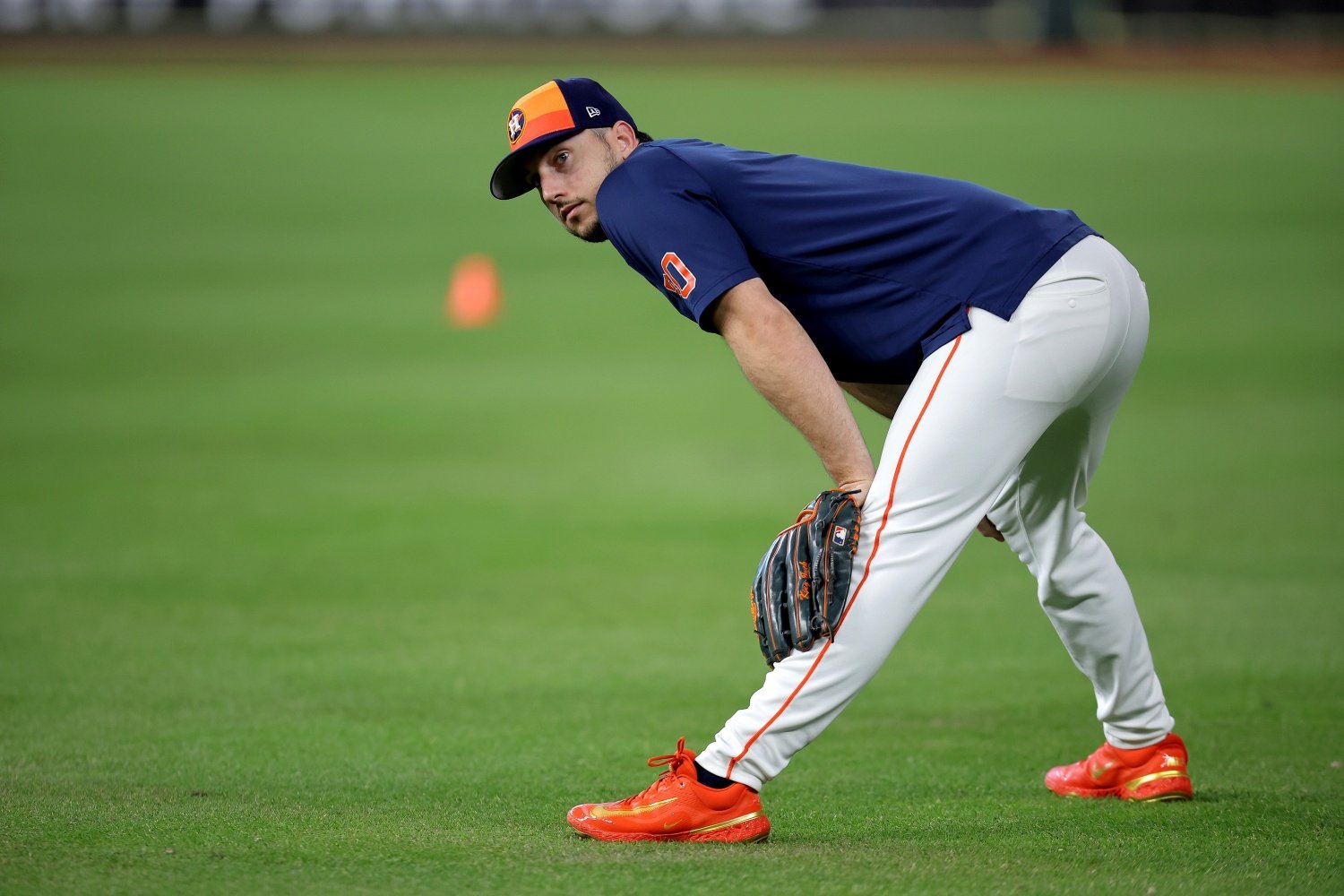 When the Cubs landed Kyle Tucker in a blockbuster trade on Friday, the general reaction was thus: “Holy s**t”. It was a narrative-changing move for the Jed Hoyer-Carter Hawkins front office, which, to this point, has been more reluctant to add stars than Orion’s Belt. The lineup fundamentally looks more complete with Tucker in tow, even if the outfield logjam will have to be resolved with a trade or two. The cost—pitcher Hayden Wesneski, third baseman Isaac Paredes, and Top-100 prospect Cam Smith—was steep, but Tucker is a bona fide superstar, which the Cubs haven’t had since the Great Chicago Fire Sale of 2021. Here’s the issue, though: Tucker is an impending free agent. He’ll spend 2025 on the North Side, wowing fans with his well-rounded skill set, and then he’ll hit the open market. Lest you think otherwise, the open market is not a place you want your in-house stars to get to. Just ask the New York Yankees about Juan Soto, or the Los Angeles Angels about Shohei Ohtani. Or the Washington Nationals about Bryce Harper. Or… well, you get the idea. As such, you can bet your bottom dollar Tucker is going to want to see what’s out there for him. He’ll be just 28 when he hits free agency, and assuming things don’t go completely off the rails in Chicago, his profile will include four consecutive All-Star nods, (hopefully multiple) top-five MVP finishes, and some extra hardware, like a Gold Glove and Silver Slugger award. Still: What if, against all odds, the Cubs choose to open their wallets? What would an extension for Tucker even look like? The first bit of good news, on that front, is that Tucker is not represented by mega-agent/known extension-hater Scott Boras. His agency is Excel Sports Management, which also represents shortstop Dansby Swanson, who (you might remember) signed the largest contract (seven years, $177 million) in Hoyer’s time leading the team. Tucker also has said in the past that he’s open to an extension, though that was with the Astros, with whom he won the 2022 World Series. The closest analog to Tucker in the last decade, both in terms of age and production, is Harper. He was 26 at the time he signed his 13-year, $330-million contract with the Phillies, though his production was far less consistent than Tucker’s. Harper won the NL MVP in an all-time great, 9.7-bWAR 2015 season, though that was sandwiched between injury-marred seasons in which he was worth just 2.5 bWAR collectively. Tucker, on the other hand, had three consecutive 5.0+ bWAR seasons before 2024, when he was worth 4.7 in 78 games played. Now, obviously, WAR isn’t the only stat that determines a player’s value. In Harper’s first seven seasons with the Nationals, he posted a slash line of .279/.388/.512 (good for a 140 wRC+); in Tucker’s tenure in Houston, his batting line was .274/.353/.516 (139 wRC+). Those are pretty similar profiles, even if Tucker is a higher-floor, lower-ceiling player than Harper—which, in all fairness, is probably far more appealing to the Cubs, who have had an affinity for high-floor players since Hoyer took over. Of course, some of Tucker’s value also comes from his pristine glove in right field, where he’s totaled 8 Outs Above Average (OAA). There’s been a lot of inflation in baseball since Harper signed his deal in early 2019; Soto and Ohtani have both signed contracts in excess of $700 million. Soto presents an interesting case, since his contract is the most recent data point for elite outfielders, though his age (he just turned 26), ceiling (career .989 OPS), and status as the best hitter in baseball (career 158 wRC+) was always going to ensure that his contract (15-years, $765 million, with a void option that can take it above $800 million) far outpaced anything other players could reasonably expect. The Soto sweepstakes also illustrate the folly of letting your star players hit the market. The Yankees—the almighty “Evil Empire”—found themselves effectively outbid by their crosstown rival New York Mets. If the Cubs let Tucker hit free agency, you can be sure any of the Yankees, Mets, Dodgers, or even Red Sox will be happy to outbid them for his services. Even in what appears to be a loaded class of position-player free agents in 2025, Tucker stands out. He’ll be the prize of the winter if he’s available. Going back to Harper’s contract, Tucker probably won't get as many years given that he’ll begin his next deal at 29, but a decade-plus is a reasonable expectation for the length of his contract. The longest the Cubs have ever gone on a deal is eight years, given to both Jason Heyward ($184 million in 2015) and Alfonso Soriano ($136 million in 2006). In terms of money, it’s exceedingly hard to project in today’s market. The Cubs would benefit from getting a deal done now—and they’ve shown a proclivity for getting extensions done around Opening Day, signing both Ian Happ and Nico Hoerner to three-year deals in 2023—lest Tucker produce an MVP campaign in 2025 and price himself way beyond the Cubs’ comfort zone. Some have questioned if Tucker could get a $40 million AAV on his next deal, and a 10-year, $400-million contract could be feasible. The AAV would be right in line with Aaron Judge’s nine-year deal, so Tucker may have to settle for slightly less per year. Judge, after all, was coming off a truly historic campaign. Regardless of the exact dollar amount, it’s going to blow anything the Cubs have done previously out of the water, and will likely at least double Heyward’s franchise-record total of $184 million. Ten years and $345 million is probably the floor, since that would narrowly edge out extensions signed by Francisco Lindor and Fernando Tatis Jr. The Cubs got their face of the franchise, swinging a trade many didn’t think this front office had the cojones to pull off. As a result, Tucker will be a star for the team in 2025. If it will last beyond then, it’ll be up to the team to complete an unprecedented extension.
 -
The Cubs got their man in a trade with the Houston Astros last week. Can they keep him in town? Image courtesy of © Erik Williams-Imagn Images When the Cubs landed Kyle Tucker in a blockbuster trade on Friday, the general reaction was thus: “Holy s**t”. It was a narrative-changing move for the Jed Hoyer-Carter Hawkins front office, which, to this point, has been more reluctant to add stars than Orion’s Belt. The lineup fundamentally looks more complete with Tucker in tow, even if the outfield logjam will have to be resolved with a trade or two. The cost—pitcher Hayden Wesneski, third baseman Isaac Paredes, and Top-100 prospect Cam Smith—was steep, but Tucker is a bona fide superstar, which the Cubs haven’t had since the Great Chicago Fire Sale of 2021. Here’s the issue, though: Tucker is an impending free agent. He’ll spend 2025 on the North Side, wowing fans with his well-rounded skill set, and then he’ll hit the open market. Lest you think otherwise, the open market is not a place you want your in-house stars to get to. Just ask the New York Yankees about Juan Soto, or the Los Angeles Angels about Shohei Ohtani. Or the Washington Nationals about Bryce Harper. Or… well, you get the idea. As such, you can bet your bottom dollar Tucker is going to want to see what’s out there for him. He’ll be just 28 when he hits free agency, and assuming things don’t go completely off the rails in Chicago, his profile will include four consecutive All-Star nods, (hopefully multiple) top-five MVP finishes, and some extra hardware, like a Gold Glove and Silver Slugger award. Still: What if, against all odds, the Cubs choose to open their wallets? What would an extension for Tucker even look like? The first bit of good news, on that front, is that Tucker is not represented by mega-agent/known extension-hater Scott Boras. His agency is Excel Sports Management, which also represents shortstop Dansby Swanson, who (you might remember) signed the largest contract (seven years, $177 million) in Hoyer’s time leading the team. Tucker also has said in the past that he’s open to an extension, though that was with the Astros, with whom he won the 2022 World Series. The closest analog to Tucker in the last decade, both in terms of age and production, is Harper. He was 26 at the time he signed his 13-year, $330-million contract with the Phillies, though his production was far less consistent than Tucker’s. Harper won the NL MVP in an all-time great, 9.7-bWAR 2015 season, though that was sandwiched between injury-marred seasons in which he was worth just 2.5 bWAR collectively. Tucker, on the other hand, had three consecutive 5.0+ bWAR seasons before 2024, when he was worth 4.7 in 78 games played. Now, obviously, WAR isn’t the only stat that determines a player’s value. In Harper’s first seven seasons with the Nationals, he posted a slash line of .279/.388/.512 (good for a 140 wRC+); in Tucker’s tenure in Houston, his batting line was .274/.353/.516 (139 wRC+). Those are pretty similar profiles, even if Tucker is a higher-floor, lower-ceiling player than Harper—which, in all fairness, is probably far more appealing to the Cubs, who have had an affinity for high-floor players since Hoyer took over. Of course, some of Tucker’s value also comes from his pristine glove in right field, where he’s totaled 8 Outs Above Average (OAA). There’s been a lot of inflation in baseball since Harper signed his deal in early 2019; Soto and Ohtani have both signed contracts in excess of $700 million. Soto presents an interesting case, since his contract is the most recent data point for elite outfielders, though his age (he just turned 26), ceiling (career .989 OPS), and status as the best hitter in baseball (career 158 wRC+) was always going to ensure that his contract (15-years, $765 million, with a void option that can take it above $800 million) far outpaced anything other players could reasonably expect. The Soto sweepstakes also illustrate the folly of letting your star players hit the market. The Yankees—the almighty “Evil Empire”—found themselves effectively outbid by their crosstown rival New York Mets. If the Cubs let Tucker hit free agency, you can be sure any of the Yankees, Mets, Dodgers, or even Red Sox will be happy to outbid them for his services. Even in what appears to be a loaded class of position-player free agents in 2025, Tucker stands out. He’ll be the prize of the winter if he’s available. Going back to Harper’s contract, Tucker probably won't get as many years given that he’ll begin his next deal at 29, but a decade-plus is a reasonable expectation for the length of his contract. The longest the Cubs have ever gone on a deal is eight years, given to both Jason Heyward ($184 million in 2015) and Alfonso Soriano ($136 million in 2006). In terms of money, it’s exceedingly hard to project in today’s market. The Cubs would benefit from getting a deal done now—and they’ve shown a proclivity for getting extensions done around Opening Day, signing both Ian Happ and Nico Hoerner to three-year deals in 2023—lest Tucker produce an MVP campaign in 2025 and price himself way beyond the Cubs’ comfort zone. Some have questioned if Tucker could get a $40 million AAV on his next deal, and a 10-year, $400-million contract could be feasible. The AAV would be right in line with Aaron Judge’s nine-year deal, so Tucker may have to settle for slightly less per year. Judge, after all, was coming off a truly historic campaign. Regardless of the exact dollar amount, it’s going to blow anything the Cubs have done previously out of the water, and will likely at least double Heyward’s franchise-record total of $184 million. Ten years and $345 million is probably the floor, since that would narrowly edge out extensions signed by Francisco Lindor and Fernando Tatis Jr. The Cubs got their face of the franchise, swinging a trade many didn’t think this front office had the cojones to pull off. As a result, Tucker will be a star for the team in 2025. If it will last beyond then, it’ll be up to the team to complete an unprecedented extension. View full article
-
Mike George Olt is a former MLB third baseman who plied his trade with the Texas Rangers, Chicago Cubs, and Chicago White Sox after being selected in the first round of the 2010 MLB Draft (49th overall). Olt had a notable high school and collegiate career, starring as Branford High School's starting varsity shortstop for four seasons (winning the Connecticut state championship in 2006), and earning a nod as an All-American Freshman for the Connecticut Huskies of UConn. The Rangers would select him in the supplemental portion of the first round of the 2010 draft, Funnily enough, Olt was assigned to the High-A Myrtle Beach Pelicans to start the 2011 season, who, at the time, were an affiliate of the Rangers (the Cubs would later make them their Single-A affiliate in 2015). Olt's prospect rankings took a huge jump during the 2011 offseason, after he led the Arizona Fall League with 13 home runs. Olt was named to the 2012 All-Star Future's Game, and made his MLB debut shortly thereafter, on August 2, 2012. He struggled in his brief time in the big leagues, eventually requiring corrective eye drops when it was found that his depth perception issues were caused by a problem with his lacrimal glands not producing tears. Eventually, he was included as a centerpiece in the Matt Garza trade at the 2013 trade deadline, that saw Justin Grimm, C.J. Edwards, and Neil Ramirez join him on the journey to Chicago in exchange for the right-handed starter. Olt's career in a Cubs uniform was defined more by unrealized potential than anything. He opened the 2014 season on the roster — hitting his first career home run on April 3 — though he split time with Luis Valbuena at the hot corner. He was demoted to Triple-A Iowa in mid-July after batting a ghastly .139 during the first half of the season. Twelve of his 31 hits were home runs by the time he was demoted, setting an all-time MLB single-season record for most home runs hit by a batter with an average below .170. He wrapped up his first season on the North Side slashing .160/.248/.356, accruing -0.7 WAR in 89 games. Following the trade of Valbuena during the 2014-15 offseason, Olt began the following year as the team's Opening Day third baseman, though the writing was on the wall with top prospect Kris Bryant knocking on the door of the majors. On April 17, 2015, Olt was placed on the 15-day disabled list with a hairline fracture in his right wrist, and Bryant was called up to replace him. Just a few days later, he was moved to the 60-day disabled list, and he would never play a game for the Cubs again, returning to the Iowa Cubs once healthy with Bryant entrenched in the majors. He would be DFA'd by the Cubs on August 31, ending his brief tenure on the North Side with a .599 OPS (64 OPS+). Olt would make a few more stops before calling it quits, including an end-of-season cup of coffee with the White Sox that allowed him to make some unique history: Olt is the only player in MLB history to homer for both the Cubs and White Sox in the same season. He signed a few minor league pacts with various teams, including the San Diego Padres, Boston Red Sox, and Minnesota Twins, before wrapping up his career in the Mexican League. He officially retired on October 25, 2019. View full player
-
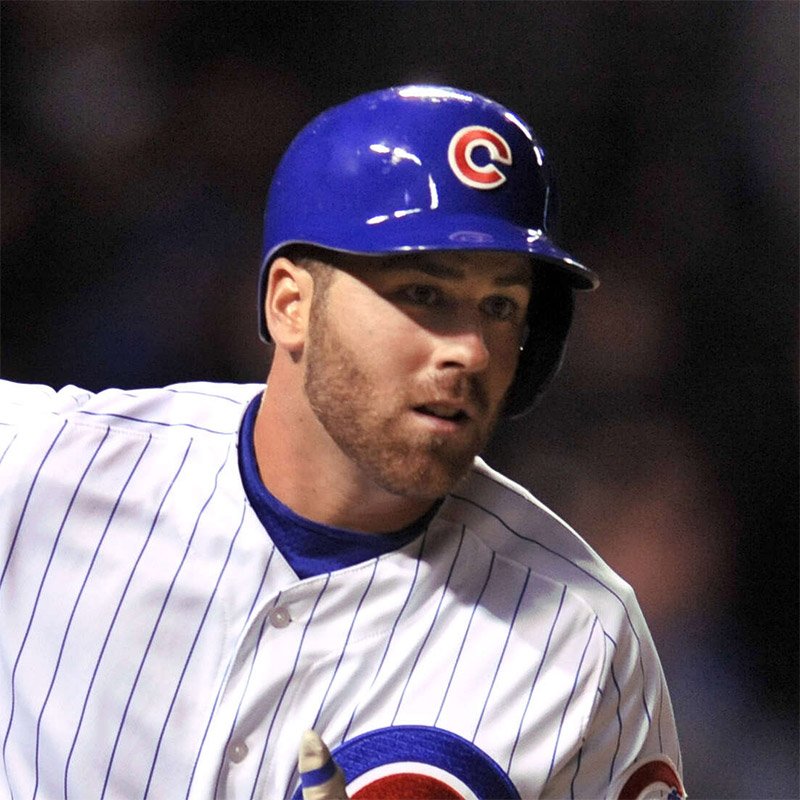 Mike George Olt is a former MLB third baseman who plied his trade with the Texas Rangers, Chicago Cubs, and Chicago White Sox after being selected in the first round of the 2010 MLB Draft (49th overall). Olt had a notable high school and collegiate career, starring as Branford High School's starting varsity shortstop for four seasons (winning the Connecticut state championship in 2006), and earning a nod as an All-American Freshman for the Connecticut Huskies of UConn. The Rangers would select him in the supplemental portion of the first round of the 2010 draft, Funnily enough, Olt was assigned to the High-A Myrtle Beach Pelicans to start the 2011 season, who, at the time, were an affiliate of the Rangers (the Cubs would later make them their Single-A affiliate in 2015). Olt's prospect rankings took a huge jump during the 2011 offseason, after he led the Arizona Fall League with 13 home runs. Olt was named to the 2012 All-Star Future's Game, and made his MLB debut shortly thereafter, on August 2, 2012. He struggled in his brief time in the big leagues, eventually requiring corrective eye drops when it was found that his depth perception issues were caused by a problem with his lacrimal glands not producing tears. Eventually, he was included as a centerpiece in the Matt Garza trade at the 2013 trade deadline, that saw Justin Grimm, C.J. Edwards, and Neil Ramirez join him on the journey to Chicago in exchange for the right-handed starter. Olt's career in a Cubs uniform was defined more by unrealized potential than anything. He opened the 2014 season on the roster — hitting his first career home run on April 3 — though he split time with Luis Valbuena at the hot corner. He was demoted to Triple-A Iowa in mid-July after batting a ghastly .139 during the first half of the season. Twelve of his 31 hits were home runs by the time he was demoted, setting an all-time MLB single-season record for most home runs hit by a batter with an average below .170. He wrapped up his first season on the North Side slashing .160/.248/.356, accruing -0.7 WAR in 89 games. Following the trade of Valbuena during the 2014-15 offseason, Olt began the following year as the team's Opening Day third baseman, though the writing was on the wall with top prospect Kris Bryant knocking on the door of the majors. On April 17, 2015, Olt was placed on the 15-day disabled list with a hairline fracture in his right wrist, and Bryant was called up to replace him. Just a few days later, he was moved to the 60-day disabled list, and he would never play a game for the Cubs again, returning to the Iowa Cubs once healthy with Bryant entrenched in the majors. He would be DFA'd by the Cubs on August 31, ending his brief tenure on the North Side with a .599 OPS (64 OPS+). Olt would make a few more stops before calling it quits, including an end-of-season cup of coffee with the White Sox that allowed him to make some unique history: Olt is the only player in MLB history to homer for both the Cubs and White Sox in the same season. He signed a few minor league pacts with various teams, including the San Diego Padres, Boston Red Sox, and Minnesota Twins, before wrapping up his career in the Mexican League. He officially retired on October 25, 2019.
 -
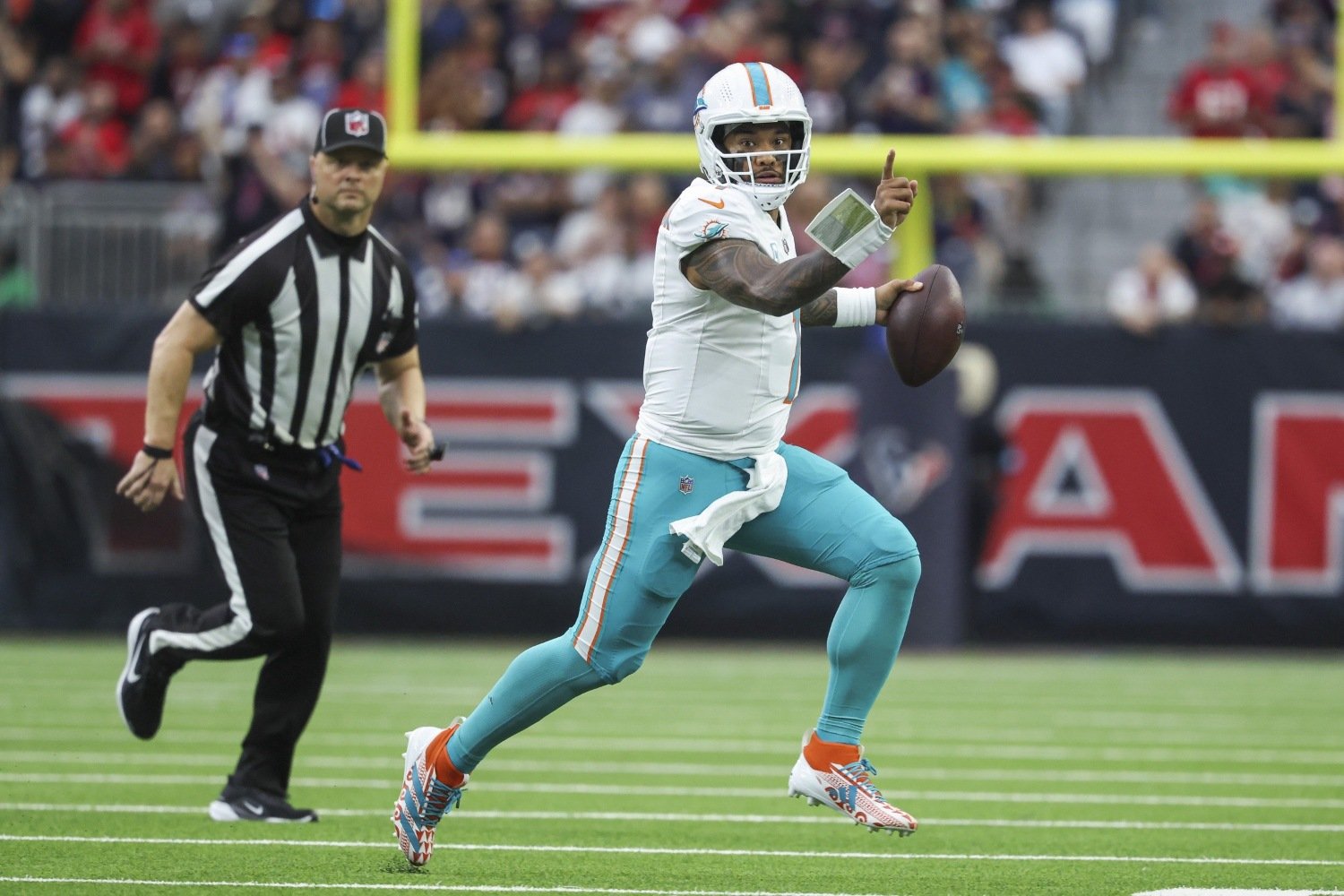 Well, the Cubs’ sort-of, maybe-real pursuit of Garrett Crochet ended with a thud last week, as the Red Sox paid a gargantuan price to land the southpaw ace of the South Siders. While a disappointment for those dreaming of a winning 2025 Cubs team, it also marked a seemingly unceremonious end to one of POBO Jed Hoyer’s longest-standing aspirations: building an all-southpaw rotation. Weirdly, it doesn't seem like much else matters to Hoyer at this point. He's just chasing lefties, man. Hoyer acknowledged that seeing the Red Sox steal his man was more painful than any breakup he’s ever experienced: “I won’t lie: it’s crushing, man. I really thought the Mariners and White Sox were going to bite on our ‘godfather offer’ of Nico Hoerner, Isaac Paredes, and the stats from Marlon Byrd’s 2010 All-Star season, but no dice. Kyle Teel is a pretty good ballplayer. I just don’t know who we’re going to start in Game 4 of the Backfield Championships in between Cactus League games.” After wallowing in his own self-pity for 20 more seconds, Hoyer reflected on the positives in life: “I gotta tell you, this game [MLB: The Show] is way more relaxing than the version I usually play," he said, absent-mindedly chatting with reporters but seemingly absorbed in the video game in his hands. "Do you think I can sign José Quintana to a three-year deal in free agency in this game?” The team already has a pair of lefty co-aces in Justin Steele and Shota Imanaga, and free-agent addition Matthew Boyd should find a home at the back end of manager Craig Counsell’s rotation. Southpaw Jordan Wicks stands as a likely candidate to serve as valuable depth in Hoyer’s unholy abomination of a rotation. With Max Fried already off the market, however, the Cubs have been left to scour the furthest depths of the free-agent waters in order to round out their starting staff, since they seem not to have any tolerance left for the Right—or at least, right-handed hurlers. After tense negotiations, Hoyer agreed to share his top two targets if I could beat him in that same video game. I won 19-0, and the game ended after four innings due to the mercy rule. He never sent up a right-handed batter or gave the ball to a right-handed pitcher, parading Drew Smyly and Mike Tauchman through the pixelated stadium with real tears staining his cheeks. Kowtowing to the parameters of our wager, Hoyer admitted that the Cubs were deep in negotiations with Hall of Fame pitcher Randy Johnson and Miami Dolphins quarterback Tua Tagovailoa: “First off, the Big Unit is a legend. I remember watching him back when I worked under Theo [Epstein] in Boston. Those were simpler times. And Tua, I mean, c’mon. There’s no way he wants to keep getting his bell rung on the gridiron. Why play quarterback in Miami when you could play September baseball in Chicago for the 75-75 Cubs?” When pressed on the fact that Johnson retired in 2009 and is now 61 years old, Hoyer merely shrugged and said that anything was better than having to watch another right-handed starter throw an inning at Wrigley Field. He would not comment further on Tagovailoa, who has no known baseball background, but did confirm to the Cubs front office that he can throw a baseball with his left hand. It’s unclear at this time what Hoyer plans to do with Jameson Taillon and Javier Assad, as they try (while waiting for a call back from Tagovailoa) to acquire Marlins southpaw Jesús Luzardo. Some insiders have suggested that general manager Carter Hawkins will spend all offseason trying to convert Taillon, Assad, and Ben Brown into lefties, lest they be banished to baseball’s equivalent of the Shadow Realm (pitching at Coors Field).
 -
This is a work of satire. Please enjoy. Image courtesy of © Troy Taormina-Imagn Images Well, the Cubs’ sort-of, maybe-real pursuit of Garrett Crochet ended with a thud last week, as the Red Sox paid a gargantuan price to land the southpaw ace of the South Siders. While a disappointment for those dreaming of a winning 2025 Cubs team, it also marked a seemingly unceremonious end to one of POBO Jed Hoyer’s longest-standing aspirations: building an all-southpaw rotation. Weirdly, it doesn't seem like much else matters to Hoyer at this point. He's just chasing lefties, man. Hoyer acknowledged that seeing the Red Sox steal his man was more painful than any breakup he’s ever experienced: “I won’t lie: it’s crushing, man. I really thought the Mariners and White Sox were going to bite on our ‘godfather offer’ of Nico Hoerner, Isaac Paredes, and the stats from Marlon Byrd’s 2010 All-Star season, but no dice. Kyle Teel is a pretty good ballplayer. I just don’t know who we’re going to start in Game 4 of the Backfield Championships in between Cactus League games.” After wallowing in his own self-pity for 20 more seconds, Hoyer reflected on the positives in life: “I gotta tell you, this game [MLB: The Show] is way more relaxing than the version I usually play," he said, absent-mindedly chatting with reporters but seemingly absorbed in the video game in his hands. "Do you think I can sign José Quintana to a three-year deal in free agency in this game?” The team already has a pair of lefty co-aces in Justin Steele and Shota Imanaga, and free-agent addition Matthew Boyd should find a home at the back end of manager Craig Counsell’s rotation. Southpaw Jordan Wicks stands as a likely candidate to serve as valuable depth in Hoyer’s unholy abomination of a rotation. With Max Fried already off the market, however, the Cubs have been left to scour the furthest depths of the free-agent waters in order to round out their starting staff, since they seem not to have any tolerance left for the Right—or at least, right-handed hurlers. After tense negotiations, Hoyer agreed to share his top two targets if I could beat him in that same video game. I won 19-0, and the game ended after four innings due to the mercy rule. He never sent up a right-handed batter or gave the ball to a right-handed pitcher, parading Drew Smyly and Mike Tauchman through the pixelated stadium with real tears staining his cheeks. Kowtowing to the parameters of our wager, Hoyer admitted that the Cubs were deep in negotiations with Hall of Fame pitcher Randy Johnson and Miami Dolphins quarterback Tua Tagovailoa: “First off, the Big Unit is a legend. I remember watching him back when I worked under Theo [Epstein] in Boston. Those were simpler times. And Tua, I mean, c’mon. There’s no way he wants to keep getting his bell rung on the gridiron. Why play quarterback in Miami when you could play September baseball in Chicago for the 75-75 Cubs?” When pressed on the fact that Johnson retired in 2009 and is now 61 years old, Hoyer merely shrugged and said that anything was better than having to watch another right-handed starter throw an inning at Wrigley Field. He would not comment further on Tagovailoa, who has no known baseball background, but did confirm to the Cubs front office that he can throw a baseball with his left hand. It’s unclear at this time what Hoyer plans to do with Jameson Taillon and Javier Assad, as they try (while waiting for a call back from Tagovailoa) to acquire Marlins southpaw Jesús Luzardo. Some insiders have suggested that general manager Carter Hawkins will spend all offseason trying to convert Taillon, Assad, and Ben Brown into lefties, lest they be banished to baseball’s equivalent of the Shadow Realm (pitching at Coors Field). View full article
-
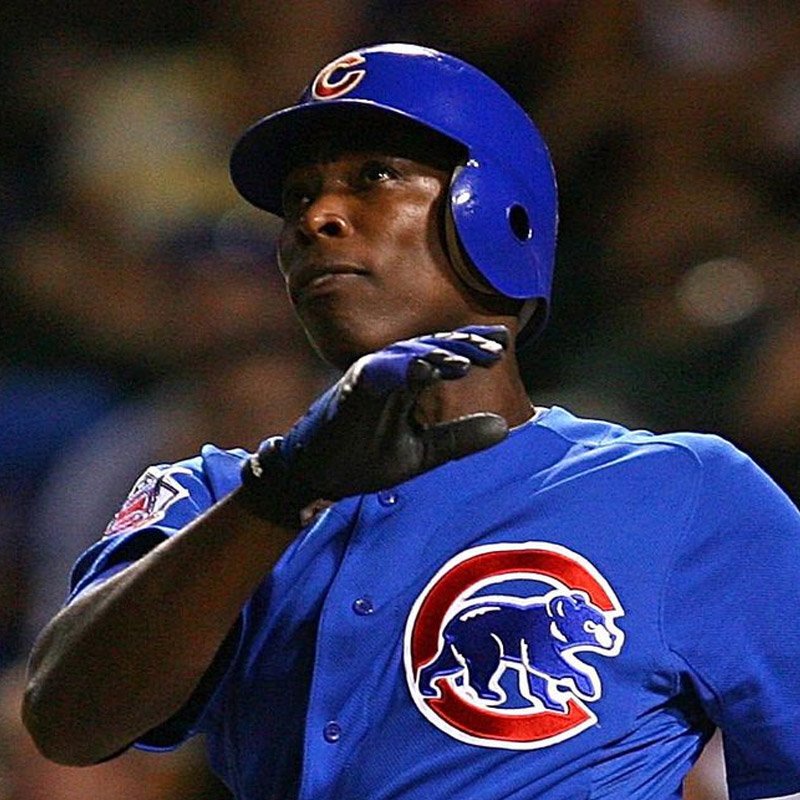 Alfonso Soriano was a Dominican baseball star who began his professional career in Hiroshima with the Toyo Carp as part of the NPBL. He was signed as an international free agent in 1998 with the New York Yankees, though because of his age (22 at the time), he was required to sign a minor-league contract. He won MVP in the All-Star Futures Game in 1999, and made his MLB debut at the tail-end of the same season. Soriano established himself as the Yankees' primary second baseman in the 2001 season, though he did win a ring with the team in 2000. After finishing third in Rookie of the Year voting, Soriano had the best season of his career in '02, leading the American League in plate appearances (741), at-bats (696), runs (128), hits (209), and steals (41). He finished third in AL MVP voting that season, and also began a streak of seven consecutive All-Star campaigns. He fell just one home run shy of the 40-40 club, though he would later make his way into that hallowed circle, in 2006 with the Washington Nationals. The Yankees traded Soriano after the conclusion of the 2003 season to the Texas Rangers, who would trade him after two seasons to the Nationals, who converted him into an outfielder. An established star with prodigious power and blazing speed, Soriano signed a then-Cubs record eight-year, $136 million deal with Chicago after a 2006 season in which the team finished last in the National League with a 66-96 record. At the time, it was the fifth-biggest deal in baseball history, behind just Alex Rodriguez ($252 million for 10 years), Derek Jeter ($189 million for 10 years), Manny Ramirez ($160 million for eight years) and Todd Helton ($141.5 million for 11 years). In the first two years of the contract, Soriano more or less lived up to his deal. He was initially asked to play center field by manager Lou Piniella, though he moved to left field after struggling with injuries. He won National League Player of the Month in June of 2007, helping the Cubs erase an eight-game deficit to the Milwaukee Brewers in the NL Central. He suffered a torn quadricep in early August, missing most of the month, though he would return with a vengeance. He proceeded to have the most productive September in the franchise's history, hitting fourteen home runs, twenty-seven runs batted in, and recorded a .320 batting average in 29 games. The Cubs won the division, though they were swept in the NLDS by the upstart Arizona Diamondbacks. In 2008, Soriano was an All-Star yet again, though he had to miss the festivities due to a broken finger in his left hand. He hit 29 home runs and posted an .876 OPS in just 109 games played. The team won the division again with a 97-64 record, though they were swept in the NLDS for a second straight year, this time by the Dodgers. That would, unfortunately, be the last great season for Soriano on the North Side. From 2009 to his eventual trade back to the Yankees at the 2013 trade deadline, he was worth just 2.0 WAR. His defense continued to decline to the point where he was nearly unplayable in the outfield, and he went from being an annual 30-30 threat to huge strikeout totals and a waning batting average. Still, his OPS never dipped below .700 during his entire contract with the Cubs, and from 2001-13, his OPS never finished below .726. Soriano retired after a difficult, -1.2 WAR 2014 season with the Yankees. Soriano is one of only 58 major league players to hit 400 or more career home runs, and was seventh among active players in home runs at the time of his retirement. He is one of just six players in the 40-40 club, and was the most recent member prior to Ronald Acuna Jr. (2023) and Shohei Ohtani (2024).
 -
Alfonso Soriano was a Dominican baseball star who began his professional career in Hiroshima with the Toyo Carp as part of the NPBL. He was signed as an international free agent in 1998 with the New York Yankees, though because of his age (22 at the time), he was required to sign a minor-league contract. He won MVP in the All-Star Futures Game in 1999, and made his MLB debut at the tail-end of the same season. Soriano established himself as the Yankees' primary second baseman in the 2001 season, though he did win a ring with the team in 2000. After finishing third in Rookie of the Year voting, Soriano had the best season of his career in '02, leading the American League in plate appearances (741), at-bats (696), runs (128), hits (209), and steals (41). He finished third in AL MVP voting that season, and also began a streak of seven consecutive All-Star campaigns. He fell just one home run shy of the 40-40 club, though he would later make his way into that hallowed circle, in 2006 with the Washington Nationals. The Yankees traded Soriano after the conclusion of the 2003 season to the Texas Rangers, who would trade him after two seasons to the Nationals, who converted him into an outfielder. An established star with prodigious power and blazing speed, Soriano signed a then-Cubs record eight-year, $136 million deal with Chicago after a 2006 season in which the team finished last in the National League with a 66-96 record. At the time, it was the fifth-biggest deal in baseball history, behind just Alex Rodriguez ($252 million for 10 years), Derek Jeter ($189 million for 10 years), Manny Ramirez ($160 million for eight years) and Todd Helton ($141.5 million for 11 years). In the first two years of the contract, Soriano more or less lived up to his deal. He was initially asked to play center field by manager Lou Piniella, though he moved to left field after struggling with injuries. He won National League Player of the Month in June of 2007, helping the Cubs erase an eight-game deficit to the Milwaukee Brewers in the NL Central. He suffered a torn quadricep in early August, missing most of the month, though he would return with a vengeance. He proceeded to have the most productive September in the franchise's history, hitting fourteen home runs, twenty-seven runs batted in, and recorded a .320 batting average in 29 games. The Cubs won the division, though they were swept in the NLDS by the upstart Arizona Diamondbacks. In 2008, Soriano was an All-Star yet again, though he had to miss the festivities due to a broken finger in his left hand. He hit 29 home runs and posted an .876 OPS in just 109 games played. The team won the division again with a 97-64 record, though they were swept in the NLDS for a second straight year, this time by the Dodgers. That would, unfortunately, be the last great season for Soriano on the North Side. From 2009 to his eventual trade back to the Yankees at the 2013 trade deadline, he was worth just 2.0 WAR. His defense continued to decline to the point where he was nearly unplayable in the outfield, and he went from being an annual 30-30 threat to huge strikeout totals and a waning batting average. Still, his OPS never dipped below .700 during his entire contract with the Cubs, and from 2001-13, his OPS never finished below .726. Soriano retired after a difficult, -1.2 WAR 2014 season with the Yankees. Soriano is one of only 58 major league players to hit 400 or more career home runs, and was seventh among active players in home runs at the time of his retirement. He is one of just six players in the 40-40 club, and was the most recent member prior to Ronald Acuna Jr. (2023) and Shohei Ohtani (2024). View full player
-
The Cubs didn't do much in Dallas, but they find themselves in the thick of some of the biggest rumors surrounding the team in years.
-
The Cubs didn't do much in Dallas, but they find themselves in the thick of some of the biggest rumors surrounding the team in years. View full video
-
Kristopher Lee Bryant, also known as "KB" or one-half of the famed "Bryzzo" duo, is a Chicago legend for his contributions to the Cubs franchise during their championship window in the mid-2010s. Bryant was a high school star at Bonanza High School in Las Vegas. He batted .418 over his four-year varsity career, and was drafted by the Toronto Blue Jays in the 18th round of the 2010 MLB Draft. He turned down the chance to sign with the Blue Jays, instead opting to honor his commitment to play college baseball at the University of San Diego. In college, he was named an All-American in 2012 and 2013, and won the Dick Howser Trophy (college baseball's version of the Hesiman Trophy) and Golden Spikes Award (best amateur baseball player) in 2013. The Cubs proceeded to select him with the second overall selection in the 2013 MLB Draft, benefitting from the Houston Astros' mistake of taking Mark Appel first overall. He quickly became one of the top prospects in baseball, winning the USA Today Minor League Player of the Year Award and Baseball America Minor League Player of the Year Award in 2014. Bryant made his Cubs debut on April 17, 2015 — after notoriously being sent to Triple-A after an electric spring training performance due to service time manipulation — going 0-for-4 with three strikeouts at Wrigley Field. Luckily, that was not a sign of what was to come, as Bryant would win the 2015 National League Rookie of the Year award on the back of a strong .275/.369/.488 slash line. Along with the team's band of other elite prospects — and an inhuman second-half performance from Jake Arrieta — Bryant led the Cubs to the their first NLCS appearance since 2003. The next season would prove to be Bryant and the Cubs' finest, as the team finally ended their 108-year championship drought, in large part thanks to the third baseman's MVP performance. Bryant led the senior circuit in WAR (7.3) and runs scored (121) in 2016, hitting 39 home runs and posting a .939 OPS for good measure. He was just as valuable in the postseason, slashing .308/.400/.523 on the way to the team's World Series victory. Over the next several years, Bryant's decline mirrored that of the team. He was still an elite 5.7 WAR player in 2017 as the team made their third straight NLCS appearance, though injuries began to sap some of his effectiveness at the plate. Over a three-season stretch from 2018-20, Bryant accumulated 7.2 WAR, 48 home runs, and an. 846 OPS in 283 games (1,238 plate appearances). In 2021, the team elected to run it back one final time with the championship core, and while Bryant earned his fourth All-Star appearance, the team fell flat. On July 30, 2021, just minutes before the trade deadline, the Cubs traded Bryant to the San Francisco Giants in exchange for Alexander Canario and Caleb Killian. Bryant finished the season strong on the West Coast, piloting the Giants to an NL West title, though they fell to the Dodgers in Game 5 of the NLDS. He would depart San Francisco for the Rocky Mountains, signing a monstrous seven-year, $182 million deal with the Colorado Rockies that offseason. In the years since, Bryant has struggled tremendously with injuries, never playing in more than 80 games in any season with the Rockies. Despite playing in the high altitude of Colorado, Bryant's OPS in 2023 and 2024 was below .700. His contract with the Rockies has often been cited as one of the worst in modern sports. View full player
-
 Kristopher Lee Bryant, also known as "KB" or one-half of the famed "Bryzzo" duo, is a Chicago legend for his contributions to the Cubs franchise during their championship window in the mid-2010s. Bryant was a high school star at Bonanza High School in Las Vegas. He batted .418 over his four-year varsity career, and was drafted by the Toronto Blue Jays in the 18th round of the 2010 MLB Draft. He turned down the chance to sign with the Blue Jays, instead opting to honor his commitment to play college baseball at the University of San Diego. In college, he was named an All-American in 2012 and 2013, and won the Dick Howser Trophy (college baseball's version of the Hesiman Trophy) and Golden Spikes Award (best amateur baseball player) in 2013. The Cubs proceeded to select him with the second overall selection in the 2013 MLB Draft, benefitting from the Houston Astros' mistake of taking Mark Appel first overall. He quickly became one of the top prospects in baseball, winning the USA Today Minor League Player of the Year Award and Baseball America Minor League Player of the Year Award in 2014. Bryant made his Cubs debut on April 17, 2015 — after notoriously being sent to Triple-A after an electric spring training performance due to service time manipulation — going 0-for-4 with three strikeouts at Wrigley Field. Luckily, that was not a sign of what was to come, as Bryant would win the 2015 National League Rookie of the Year award on the back of a strong .275/.369/.488 slash line. Along with the team's band of other elite prospects — and an inhuman second-half performance from Jake Arrieta — Bryant led the Cubs to the their first NLCS appearance since 2003. The next season would prove to be Bryant and the Cubs' finest, as the team finally ended their 108-year championship drought, in large part thanks to the third baseman's MVP performance. Bryant led the senior circuit in WAR (7.3) and runs scored (121) in 2016, hitting 39 home runs and posting a .939 OPS for good measure. He was just as valuable in the postseason, slashing .308/.400/.523 on the way to the team's World Series victory. Over the next several years, Bryant's decline mirrored that of the team. He was still an elite 5.7 WAR player in 2017 as the team made their third straight NLCS appearance, though injuries began to sap some of his effectiveness at the plate. Over a three-season stretch from 2018-20, Bryant accumulated 7.2 WAR, 48 home runs, and an. 846 OPS in 283 games (1,238 plate appearances). In 2021, the team elected to run it back one final time with the championship core, and while Bryant earned his fourth All-Star appearance, the team fell flat. On July 30, 2021, just minutes before the trade deadline, the Cubs traded Bryant to the San Francisco Giants in exchange for Alexander Canario and Caleb Killian. Bryant finished the season strong on the West Coast, piloting the Giants to an NL West title, though they fell to the Dodgers in Game 5 of the NLDS. He would depart San Francisco for the Rocky Mountains, signing a monstrous seven-year, $182 million deal with the Colorado Rockies that offseason. In the years since, Bryant has struggled tremendously with injuries, never playing in more than 80 games in any season with the Rockies. Despite playing in the high altitude of Colorado, Bryant's OPS in 2023 and 2024 was below .700. His contract with the Rockies has often been cited as one of the worst in modern sports.
 -
Matthew Boyd is joining the club on a two-year, $29 million deal. Is that enough, or do the Cubs need to do more work on the rotation?
-
Matthew Boyd is joining the club on a two-year, $29 million deal. Is that enough, or do the Cubs need to do more work on the rotation? View full video
-
Cubs Winter Meeting Predictions: Hopes and Fears
Brandon Glick posted a video in Chicago Cubs Videos
The Cubs haven't been willing to splurge much under Jed Hoyer. Will that change at this year's Winter Meetings? -
The Cubs haven't been willing to splurge much under Jed Hoyer. Will that change at this year's Winter Meetings? View full video
