RandallPnkFloyd
-
Posts
533 -
Joined
-
Last visited
Content Type
Profiles
Joomla Posts 1
Chicago Cubs Videos
Chicago Cubs Free Agent & Trade Rumors, Notes, & Tidbits
2026 Chicago Cubs Top Prospects Ranking
News
2023 Chicago Cubs Draft Picks
Guides & Resources
2024 Chicago Cubs Draft Picks
The Chicago Cubs Players Project
2025 Chicago Cubs Draft Pick Tracker
2026 Chicago Cubs Draft Tracker: Picks & Bonuses
Blogs
Events
Forums
Store
Gallery
Everything posted by RandallPnkFloyd
-
Overselling Pete Crow-Armstrong Has Become Kind Of Impossible
RandallPnkFloyd posted an article in Cubs
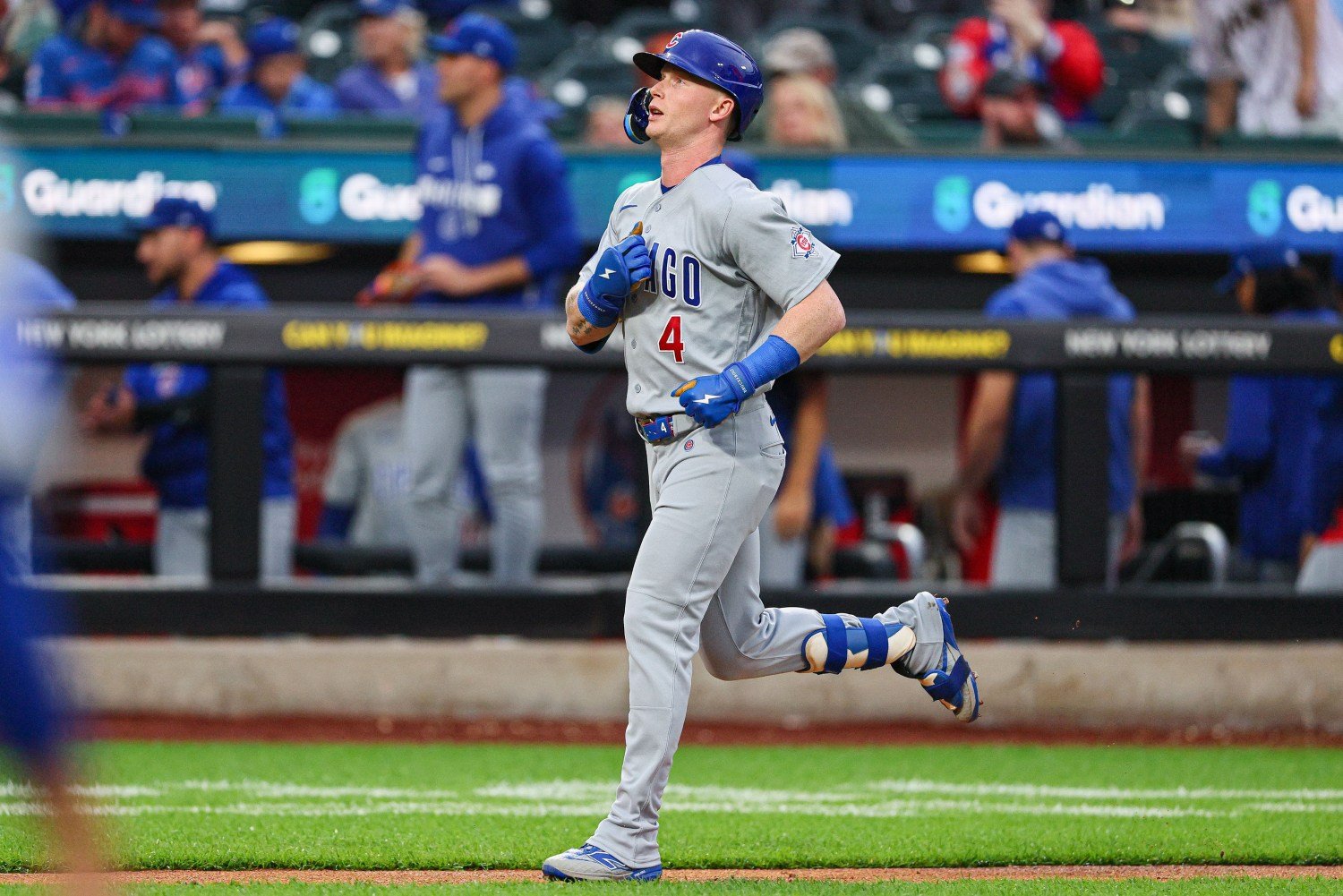 Pete Crow-Armstrong contains multitudes. Almost immediately upon making his Chicago Cubs debut with a 2023 cup of coffee, it was clear that there would be multiple sides of the Crow-Armstrong experience. He's a player with loud tools capable of doing things rarely seen on a baseball field, in all phases of the game. There's also an erratic quality to his game, wherein his immaturity as a hitter can compromise those tools in a way that prevents them from manifesting with as much consistency as one might prefer. Since he became a full-time player during the 2024 season, we've seen each end of that spectrum. The 2025 season, specifically, illustrated the layers of his performance, with a first half that garnered buzz as a National League MVP candidate before it faded entirely in the second. But we've never seen a Pete Crow-Armstrong like we're seeing this June. It's hard to imagine this is where we are after the start in which Crow-Armstrong found himself mired back in April. He finished that month with a .241/.307/.362 line and a 88 wRC+, while striking out roughly 30 percent of the time. Things progressed steadily in May, and his blazing hot streak really began on May 22, but (like Sammy Sosa did back in 1998) he really began to find the national spotlight once we reached June. The numbers this month read as follows (79 plate appearances): Batting Average: .437 On-Base Percentage: .481 Slugging Percentage: .930 K%: 22.8 BB%: 7.6 Isolated Power: .493 wRC+: 282 It's nearly impossible to communicate the immensity of that output, especially when the month is just about gone. The sample isn't exactly small at this point. To add some further context, this is where the second-best hitter ranks in each of the above this month (save strikeout and walk rates, which are only notable given how reasonable they are within Crow-Armstrong's wider body of work with respect to plate discipline): Batting Average: .391 (Yordan Álvarez) On-Base Percentage: .473 (Shohei Ohtani, though Álvarez is tied with Crow-Armstrong) Slugging Percentage: .783 (Ohtani) Isolated Power: .433 (Ohtani) wRC+: 234 (Ohtani) It would be unreasonable to suggest that Crow-Armstrong possesses the comprehensive skill set and consistency required to match hitters like Álvarez or Ohtani over a larger sample. However, the fact that he isn't just ahead of them but comfortably so speaks to just how obscene his output this month has actually been. It far exceeds anything he did in in the first half of his breakout 2025 season. And the above was all before he did this on Tuesday: Such is the nature of a stretch like this that Matt Trueblood already invoked Sosa's 1998 heater when discussing his output earlier this month (with plenty of additional nuance beyond the numbers). To update the comparison, since May 22, Crow-Armstrong is batting .387/.466/.811, with 21 extra-base hits. From May 22 through June 23 in 1998, Sosa hit .325/.358/.921, with 24 extra-base hits. Only 12 of Crow-Armstrong's long hits were homers, whereas an impossible 22 of Sosa's were, but this is what a run like Sosa's looks like in the modern game. Perhaps, though, there's a former NL MVP out of the Cubs organization of an even more recent vintage to which we can draw comparisons. Kris Bryant took home the award in 2016 as a sophomore, in what would end up being the peak of his career. That season, he posted a line that ran .292/.385/.554 with a .262 ISO and a 148 wRC+. The output that season was massive. His best month that season was August, wherein he went .383/.472/.748, which looks a whole lot like Crow-Armstrong's line over the last 31 days—but is worse. The best player in his best month on a championship team falls short of where we're seeing Pete Crow-Armstrong in June of 2026. We could even extend it to a player who has been a comp for Crow-Armstrong since the two were part of the same 2021 trade: Javier Báez. In 2018, there was a real case to be made that Báez should have taken home the MVP award over Christian Yelich—though he peaked a little too early to make it convincing. His best month that year came in July, with a line of .333/.347/.606, an ISO of .273 (though his .288 in August was higher), and a 155 wRC+. Again, we're not even in the same ballpark in comparing that to Crow-Armstrong's June. Of course, none of this is to cast aspersions on some of the most beloved Cubs of the modern era at the individual peak at the absolute pinnacle of their powers. It's to showcase just how absurd this version of Pete Crow-Armstrong has been in June. With the torrid month he's had, he's run his overall line on the season up to .287/.366/.529. He's been 50% more productive than an average batter for the year. There isn't a player in the sport who has accrued more fWAR on the season than Crow-Armstrong has, which also speaks to the fact that he's remained the sport's best defensive center fielder in the midst of this offensive explosion, an impressive feat in itself. It often feels like as long as Shohei Ohtani is in Major League Baseball, he's the National League's lock for the MVP award, but there's a real case emerging for Crow-Armstrong to steal one. Regardless of the award implications, it feels like there's something of a foundation being laid for Pete Crow-Armstrong this month. Between the steady improvement in May and the explosion in June, it does feel like we're watching a player settle into his skill set and demonstrate a level of maturation at the plate that can fuel a lasting brilliance. The month itself is important because it's among the most enjoyable things in the sport to watch a player performing at this level for nearly four consecutive weeks. What happens next, though, could prove just how important it is, for the long run.
 -
Image courtesy of © Robert Edwards-Imagn Images Moisés Ballesteros' second-half audition in 2025 was so impressive that the Chicago Cubs felt comfortable handing him the reigns to the designated hitter spot full-time in 2026. Through 66 plate appearances, he posted a .298/.394/.474 line with proportionally-appropriate 18.2 percent strikeout and 13.6 percent walk rates and a 143 wRC+. The power remained fairly modest (.175 ISO), but he showcased enough of his steadiness that the role was his ahead of this season. Unfortunately, that small sample has not translated into increased success for Ballesteros. He's gotten his opportunity and even the occasional assignment behind the plate, but the iteration of "Mo Baller" the team is seeing over a much more expanded sample in 2026 is a far cry from last year's version. Prior to his gut-punch of a demotion, Ballesteros accrued 175 plate appearances to his name. His line reads a disappointing .231/.303/.385, with a 20.6 percent strikeout rate and a 9.7 percent walk rate. The power that did manifest last season has basically evaporated so far this year, with an ISO of just .154. There's a bit of bad luck baked in there, with a .259 batting average on balls in play, but it otherwise adds up to a hitter that has been below average as illustrated by his 93 wRC+. Much of the reason for this has come as a result of Ballesteros' inability to adjust to how opposing pitchers are working him. Part of what made Ballesteros such an appealing hitter for this group was his contact-oriented profile, supplemented by his ability to make adjustments. He's a mature hitter with fluid mechanics capable of handling various parts of the zone with good efficiency. That combination of factors is what had many believing he could stave off regression after a hot start to the season. Yet the regression monster has, nevertheless, come for Ballesteros due to declining battled ball luck working in conjunction with a deliberate approach on the part of opposing pitchers. The waning luck in his batted-ball fortunes is a little bit less in his control, of course. Ballesteros went for a .345 BABIP in April before it plummeted to just .122 in May. It's rose back up to .300 in June, but that leads us into the second issue with Ballesteros' performance at the plate: Ballesteros' bat path is leading to him both leaning a bit on the late side and consistently under fastballs. Despite above-average bat speed (73.3 MPH), he's working with a 9 degree attack angle that lands close to the flatter side. The former can't compensate for the latter. Which is why we're seeing this kind of trend from opposing arms: In kind of an inverse from what the rest of the Cub hitters are getting, Ballesteros is getting a steady diet of fastballs rather than an increase in breaking pitches. His 51.8 percent rate of fastballs seen represents a seven-percent increase from the season's opening month. That's problematic for Ballesteros, given his run value of -3 against four-seam fastballs and a -1 run value against sinkers. That distinction is important, too. Because while the overall fastball rate has jumped as the months have progressed, sinkers have become an especially relied-upon pitch for opposing hurlers. The nature of his flat bat means that the sinker is going to yield the type of groundball contact that it's designed to. That's when you get something like the obscene 65 percent groundball rate we saw from Ballesteros this month. Of course, the breaking pitches still play their role in all of this. Once pitchers get ahead of Ballesteros via the fastball, whether four-seam or sinker, they're able to get him with a pitch type against which he has a 29.6 percent swing-and-miss rate. That's his highest against any of the three primary pitch groups, which also fails to mention that breaking balls generate the lowest rate of hard contact of any pitching against Ballesteros (36.1 percent). This all means that a significant adjustment must be made on the part of Ballesteros for him to begin to reach the levels of success he demonstrated last year. Either he needs to adjust his swing to get out on the fastball quicker, or adjust the plane of the swing so that he can generate more positive contact against the increasing amount of sinkers and the steady amount of breaking pitches. Luckily, it appears that at least one of those adjustments was beginning to manifest just before his trip back to Iowa. Ballesteros had an intercept point just three inches in front of the plate from March to May that has since progressed to 6.5 inches in June. That could help him to combat fastballs, at least early in counts. The mechanical adjustment likely remains the more paramount one, however, considering his rapidly rising groundball rate. Regardless, that the Cubs have let their young bat go this far into the season without mechanical adjustments does look like something of an indictment of this coaching staff. As opposing pitchers adjust to a young hitter, there's a certain onus on the staff to aid in making the proper adjustments. Craig Counsell quipped about not messing with Ballesteros given his natural IQ. Perhaps some time in Triple-A will allow the organization to revisit that approach. View full article
-
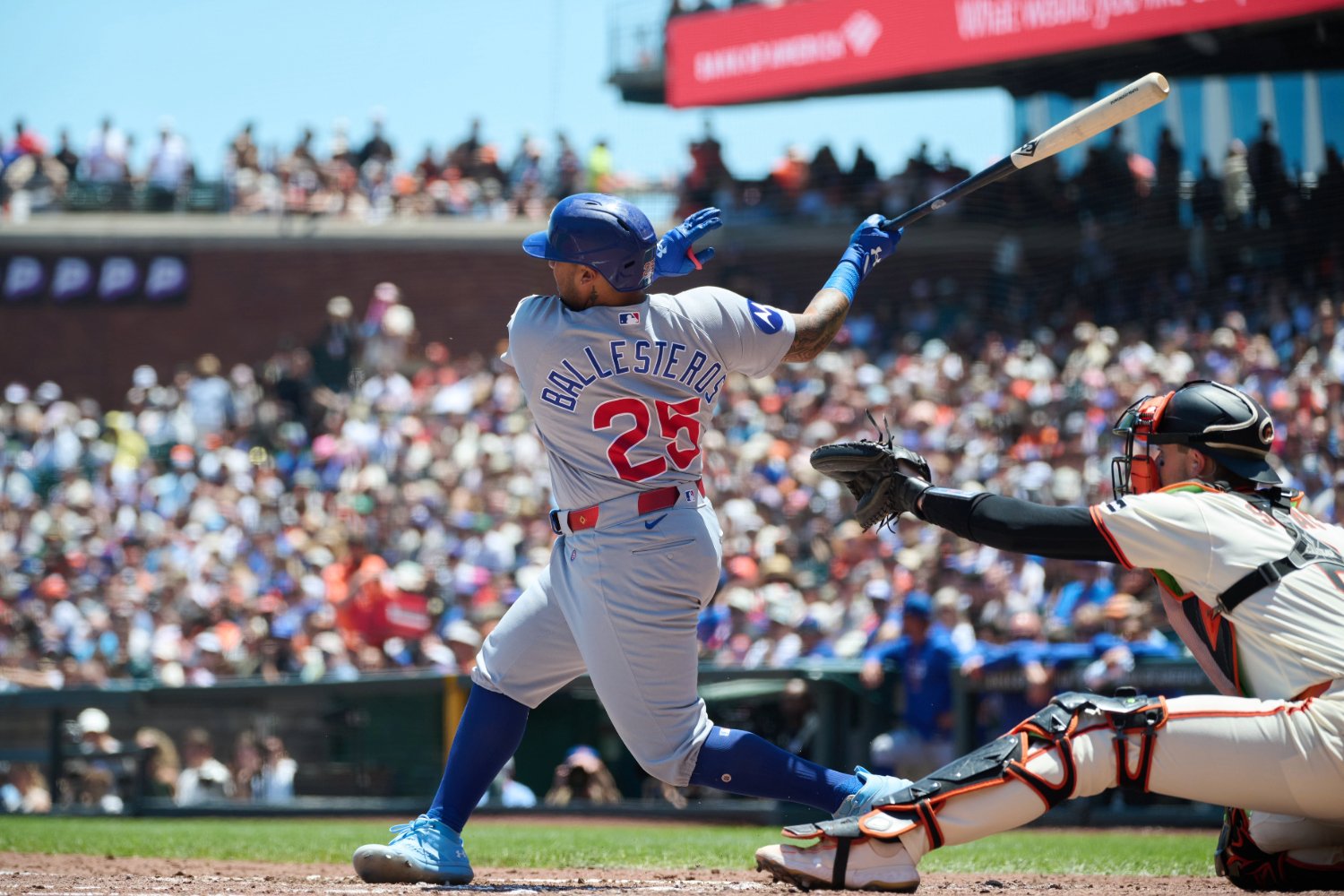 Moisés Ballesteros' second-half audition in 2025 was so impressive that the Chicago Cubs felt comfortable handing him the reigns to the designated hitter spot full-time in 2026. Through 66 plate appearances, he posted a .298/.394/.474 line with proportionally-appropriate 18.2 percent strikeout and 13.6 percent walk rates and a 143 wRC+. The power remained fairly modest (.175 ISO), but he showcased enough of his steadiness that the role was his ahead of this season. Unfortunately, that small sample has not translated into increased success for Ballesteros. He's gotten his opportunity and even the occasional assignment behind the plate, but the iteration of "Mo Baller" the team is seeing over a much more expanded sample in 2026 is a far cry from last year's version. Prior to his gut-punch of a demotion, Ballesteros accrued 175 plate appearances to his name. His line reads a disappointing .231/.303/.385, with a 20.6 percent strikeout rate and a 9.7 percent walk rate. The power that did manifest last season has basically evaporated so far this year, with an ISO of just .154. There's a bit of bad luck baked in there, with a .259 batting average on balls in play, but it otherwise adds up to a hitter that has been below average as illustrated by his 93 wRC+. Much of the reason for this has come as a result of Ballesteros' inability to adjust to how opposing pitchers are working him. Part of what made Ballesteros such an appealing hitter for this group was his contact-oriented profile, supplemented by his ability to make adjustments. He's a mature hitter with fluid mechanics capable of handling various parts of the zone with good efficiency. That combination of factors is what had many believing he could stave off regression after a hot start to the season. Yet the regression monster has, nevertheless, come for Ballesteros due to declining battled ball luck working in conjunction with a deliberate approach on the part of opposing pitchers. The waning luck in his batted-ball fortunes is a little bit less in his control, of course. Ballesteros went for a .345 BABIP in April before it plummeted to just .122 in May. It's rose back up to .300 in June, but that leads us into the second issue with Ballesteros' performance at the plate: Ballesteros' bat path is leading to him both leaning a bit on the late side and consistently under fastballs. Despite above-average bat speed (73.3 MPH), he's working with a 9 degree attack angle that lands close to the flatter side. The former can't compensate for the latter. Which is why we're seeing this kind of trend from opposing arms: In kind of an inverse from what the rest of the Cub hitters are getting, Ballesteros is getting a steady diet of fastballs rather than an increase in breaking pitches. His 51.8 percent rate of fastballs seen represents a seven-percent increase from the season's opening month. That's problematic for Ballesteros, given his run value of -3 against four-seam fastballs and a -1 run value against sinkers. That distinction is important, too. Because while the overall fastball rate has jumped as the months have progressed, sinkers have become an especially relied-upon pitch for opposing hurlers. The nature of his flat bat means that the sinker is going to yield the type of groundball contact that it's designed to. That's when you get something like the obscene 65 percent groundball rate we saw from Ballesteros this month. Of course, the breaking pitches still play their role in all of this. Once pitchers get ahead of Ballesteros via the fastball, whether four-seam or sinker, they're able to get him with a pitch type against which he has a 29.6 percent swing-and-miss rate. That's his highest against any of the three primary pitch groups, which also fails to mention that breaking balls generate the lowest rate of hard contact of any pitching against Ballesteros (36.1 percent). This all means that a significant adjustment must be made on the part of Ballesteros for him to begin to reach the levels of success he demonstrated last year. Either he needs to adjust his swing to get out on the fastball quicker, or adjust the plane of the swing so that he can generate more positive contact against the increasing amount of sinkers and the steady amount of breaking pitches. Luckily, it appears that at least one of those adjustments was beginning to manifest just before his trip back to Iowa. Ballesteros had an intercept point just three inches in front of the plate from March to May that has since progressed to 6.5 inches in June. That could help him to combat fastballs, at least early in counts. The mechanical adjustment likely remains the more paramount one, however, considering his rapidly rising groundball rate. Regardless, that the Cubs have let their young bat go this far into the season without mechanical adjustments does look like something of an indictment of this coaching staff. As opposing pitchers adjust to a young hitter, there's a certain onus on the staff to aid in making the proper adjustments. Craig Counsell quipped about not messing with Ballesteros given his natural IQ. Perhaps some time in Triple-A will allow the organization to revisit that approach.
 -
Image courtesy of © Matt Marton-Imagn Images Despite a home run on Wednesday night, Dansby Swanson has been one of the more consistently broken components of a collectively broken Chicago Cubs lineup. His line of .176/.280/.318 features career worsts across each of the three categories while his wRC+ of just 71 is indicative of a player performing well below average at the plate. Despite the value he's still able to provide with his plate approach (and with his work with the glove and on the basepaths), he's been objectively bad as a hitter in 2026. Swanson has long been considered a player who needs to sit on four-seam fastballs to find success. The 2025 campaign notwithstanding, his run value — indicating his runs added or prevented within a specific situation or specific pitch — has landed on the positive end of the spectrum in each year of his career. In most of those cases, that pitch has served as his highest mark in that category. Things started to shift last year, when Swanson posted a run value of -10 against four-seam heat. While he was still able to generate hard contact (62.1 percent of the time) and find some positive outcomes (.409 slugging percentage) against it, he also whiffed more than 30 percent of the time, a career-worst rate by a wide margin. His chase rate jumped up to 27.1 percent (his highest since 2018), indicating a potential over-reliance on four-seamers, at least in the sense that it didn't necessarily matter where it landed in the zone, he was going for it. Nevertheless, the fastball still represented an area of success when you consider the volume he was getting against the outcomes. The run value came as more of a byproduct of his aggression rather than a regression against the pitch itself. Unfortunately for Swanson, opposing pitchers are keen to his history. For the third consecutive season, Swanson has seen a decrease in four-seamers his way, with the rate he's seeing the pitch sitting at 24.0 percent in 2026. Worse yet in his case, that rate has continued to decline as the season has progressed: Not only is Swanson seeing far fewer four-seam fastballs, it's happening while he's getting pounded with sinkers. The rate of four-seamers he's seeing has dropped by about seven percent while the sinker rate has jumped by about the same. This presents a couple of different issues for Swanson. The first is his actual outcomes against the sinker. He's putting the ball on the ground 44.1 percent of the time, feeding directly into what the pitch is designed to do. Of course, that's when he actually makes contact. He's had a tremendously difficult time adapting to this world of increased sinkers, with a swing-and-miss rate that sat at 12.5 percent in May now resting at an obscene 52.9 percent in June. It's no mystery what's happening here: The swing timing data only shows fastballs, with May and June illustrated above. Swanson's distribution in May looks largely like it should, but when you shift attention to the orange portion of the above (indicating June), it gets rather messy. The veteran shortstop is swinging over the baseball 24 percent of the time in June. That's an alarmingly high rate that is 11 percent higher than the next closest hitter against that pitch type. When you consider that data along with the visual above, it's clear that this is an exclusive byproduct of the increase in sinkers. A central issue within all of this is that we haven't seen the appropriate adjustment from Swanson. There hasn't been anything in his approach to help mitigate this. Nearly all of his mechanics that we can track (tilt, attack angle, etc.) remain nearly identical to what we've seen in the past few seasons. That there hasn't been a discernible change as the year has wore on and this has become more evident represents a paramount concern actively working against hope for Swanson to work his way out of this. There was this perception of Swanson that he, a hitter who needed the hard stuff to survive, was getting hit heavily with breaking and off-speed pitches as a means for opposing pitchers to minimize his impact at the plate. Instead, the call is coming from inside the house. It's the heaters proving to be his enemy this year. Coming at him in this new form appears to be something he's not yet ready to combat. View full article
-
Dansby Swanson is Fighting a Losing Battle Against Changing Opposition
RandallPnkFloyd posted an article in Cubs
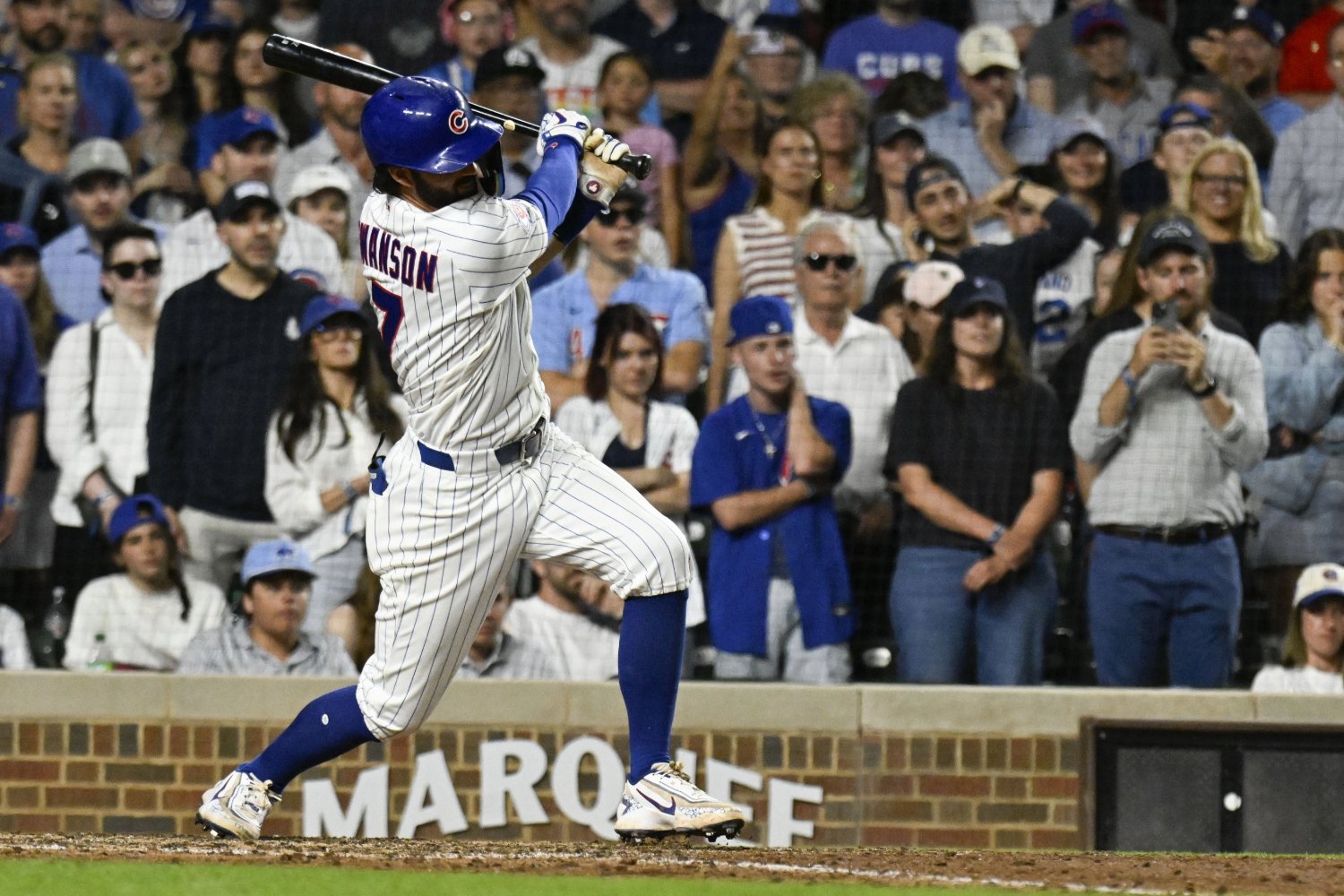 Despite a home run on Wednesday night, Dansby Swanson has been one of the more consistently broken components of a collectively broken Chicago Cubs lineup. His line of .176/.280/.318 features career worsts across each of the three categories while his wRC+ of just 71 is indicative of a player performing well below average at the plate. Despite the value he's still able to provide with his plate approach (and with his work with the glove and on the basepaths), he's been objectively bad as a hitter in 2026. Swanson has long been considered a player who needs to sit on four-seam fastballs to find success. The 2025 campaign notwithstanding, his run value — indicating his runs added or prevented within a specific situation or specific pitch — has landed on the positive end of the spectrum in each year of his career. In most of those cases, that pitch has served as his highest mark in that category. Things started to shift last year, when Swanson posted a run value of -10 against four-seam heat. While he was still able to generate hard contact (62.1 percent of the time) and find some positive outcomes (.409 slugging percentage) against it, he also whiffed more than 30 percent of the time, a career-worst rate by a wide margin. His chase rate jumped up to 27.1 percent (his highest since 2018), indicating a potential over-reliance on four-seamers, at least in the sense that it didn't necessarily matter where it landed in the zone, he was going for it. Nevertheless, the fastball still represented an area of success when you consider the volume he was getting against the outcomes. The run value came as more of a byproduct of his aggression rather than a regression against the pitch itself. Unfortunately for Swanson, opposing pitchers are keen to his history. For the third consecutive season, Swanson has seen a decrease in four-seamers his way, with the rate he's seeing the pitch sitting at 24.0 percent in 2026. Worse yet in his case, that rate has continued to decline as the season has progressed: Not only is Swanson seeing far fewer four-seam fastballs, it's happening while he's getting pounded with sinkers. The rate of four-seamers he's seeing has dropped by about seven percent while the sinker rate has jumped by about the same. This presents a couple of different issues for Swanson. The first is his actual outcomes against the sinker. He's putting the ball on the ground 44.1 percent of the time, feeding directly into what the pitch is designed to do. Of course, that's when he actually makes contact. He's had a tremendously difficult time adapting to this world of increased sinkers, with a swing-and-miss rate that sat at 12.5 percent in May now resting at an obscene 52.9 percent in June. It's no mystery what's happening here: The swing timing data only shows fastballs, with May and June illustrated above. Swanson's distribution in May looks largely like it should, but when you shift attention to the orange portion of the above (indicating June), it gets rather messy. The veteran shortstop is swinging over the baseball 24 percent of the time in June. That's an alarmingly high rate that is 11 percent higher than the next closest hitter against that pitch type. When you consider that data along with the visual above, it's clear that this is an exclusive byproduct of the increase in sinkers. A central issue within all of this is that we haven't seen the appropriate adjustment from Swanson. There hasn't been anything in his approach to help mitigate this. Nearly all of his mechanics that we can track (tilt, attack angle, etc.) remain nearly identical to what we've seen in the past few seasons. That there hasn't been a discernible change as the year has wore on and this has become more evident represents a paramount concern actively working against hope for Swanson to work his way out of this. There was this perception of Swanson that he, a hitter who needed the hard stuff to survive, was getting hit heavily with breaking and off-speed pitches as a means for opposing pitchers to minimize his impact at the plate. Instead, the call is coming from inside the house. It's the heaters proving to be his enemy this year. Coming at him in this new form appears to be something he's not yet ready to combat.
 -
Image courtesy of © Patrick Gorski-Imagn Images When the Chicago Cubs signed Alex Bregman this past winter, there was an immediate thought that pushing Matt Shaw to the bench and, subsequently, into a utility role, would help to boost a reserve group that had been quite lackluster during Jed Hoyer's term as president of baseball operations. That sentiment itself was something of an oversimplification, but 2026 has shown us that it had at least a kernel of truth embedded within it. Hoyer's time atop the Cubs' front office has been anything but black-and-white. While the choices made under his stewardship merit their own lengthy discussion, he's largely been adept at finding value for certain spots, like Michael Busch at first base or a host of reclamation arms for the bullpen, while struggling in other respects. One of those latter components has been his consistent inability to build out a bench. Consider, for a moment, some of the players we've seen on the pine at Wrigley Field since 2023: Mike Tauchman (751 PA, 109 wRC+) Patrick Wisdom (476 PA, 97 wRC+) Miles Mastrobuoni (255 PA, 57 wRC+) Trey Mancini (263 PA, 75 wRC+) Justin Turner (191 PA, 71 wRC+) Jon Berti (107 PA, 42 wRC+) David Bote (48 PA, 104 wRC+) Vidal Bruján (47 PA, 42 wRC+) There was also a smattering of small-sample names like Edwin Ríos, Garrett Cooper, Willi Castro, Gage Workman, Carlos Santana, and two turns of Nicky Lopez at various stages. To say nothing of the rotating cast of characters that have been utilized as depth behind the plate (Tucker Barnhart, Tomás Nido, Luis Torrens, etc.). Context and associated mileage varies for each — Tauchman, for example, was closer to a regular than a true bench player — but it otherwise lands as a wide net of past-prime, post-hype names from which the Cubs were hoping to get some level of contribution and got very little outside of defensive versatility. That's an important note within all of this, too. Hoyer and company have often sacrificed production from their bench in favor of movable pieces that lacked offensive tools. There's a certain logic in that mindset when you're utilizing maybe the last piece or two on your roster, but when the collective reserves over the last handful of years are mutually exclusive with any notable offensive contribution, you run into the types of problems which this organization has experienced. The good news to all of this is that those issues appear to be at least moderately behind the Cubs in 2026. There are four names now locked into bench roles for at least the short-term: Shaw, Miguel Amaya, Michael Conforto, and Pedro Ramírez. From a logistical standpoint, that's a group that covers the top objective in your reserves in that they're able to cover each position on the field. More importantly, though, it's a quartet that provides actual value off the bench. From your reserves, you're not necessarily looking for loud offensive production. You want players who can help the team to remain stable defensively while keeping them afloat offensively in the event of an injury or a starter's singular off day. With Seiya Suzuki staving off a longer-term injury over the weekend, the Cubs are finally in a position where they appear to have that. Shaw is central to this given his increasing flexibility around the diamond. He's logged time at first base, second base, third base, and each of the three outfield spots, including 16 appearances in right field. While his bat remains a relative deficiency, his penchant for at least avoiding strikeouts has his wRC+ afloat at 105. It's not a completely dissimilar profile from someone like Ramírez, whose first 40-ish plate appearances have yielded identical 8.1 percent walk and strikeout rates and a 108 wRC+. The real offensive value off the bench has come in the form of Conforto and Amaya. Conforto's June is off to a rough start, but he's still turned in a .216 isolated power figure and a 118 wRC+ across more than 100 plate appearances to date. He's also walked at a 14 percent clip, which has compounded with his power output to compensate for a strikeout rate over 30 percent. Amaya, meanwhile, has an on-base percentage over .350 and a 109 wRC+ when stepping in for Carson Kelly behind the plate. That's a group that Craig Counsell can work with. Save for someone like Tauchman in the last few years, the Cubs have been forced to deploy an extensive collection of bodies capable of handling a glove but not so much a bat. Even if hasn't come together with complete intention — Ramírez was called up upon an injury to Shaw, Conforto emerged from a group of four potential throw-it-at-the-wall candidates in the spring — the result is a bench that finally looks respectable in comparison with what the Cubs have worked with in the past few seasons. Jed Hoyer doesn't have a ton of recent wins to his name considering the state of the pitching staff and absence of early returns on Alex Bregman, but the bench is certainly something for him to hang his hat on. View full article
-
 When the Chicago Cubs signed Alex Bregman this past winter, there was an immediate thought that pushing Matt Shaw to the bench and, subsequently, into a utility role, would help to boost a reserve group that had been quite lackluster during Jed Hoyer's term as president of baseball operations. That sentiment itself was something of an oversimplification, but 2026 has shown us that it had at least a kernel of truth embedded within it. Hoyer's time atop the Cubs' front office has been anything but black-and-white. While the choices made under his stewardship merit their own lengthy discussion, he's largely been adept at finding value for certain spots, like Michael Busch at first base or a host of reclamation arms for the bullpen, while struggling in other respects. One of those latter components has been his consistent inability to build out a bench. Consider, for a moment, some of the players we've seen on the pine at Wrigley Field since 2023: Mike Tauchman (751 PA, 109 wRC+) Patrick Wisdom (476 PA, 97 wRC+) Miles Mastrobuoni (255 PA, 57 wRC+) Trey Mancini (263 PA, 75 wRC+) Justin Turner (191 PA, 71 wRC+) Jon Berti (107 PA, 42 wRC+) David Bote (48 PA, 104 wRC+) Vidal Bruján (47 PA, 42 wRC+) There was also a smattering of small-sample names like Edwin Ríos, Garrett Cooper, Willi Castro, Gage Workman, Carlos Santana, and two turns of Nicky Lopez at various stages. To say nothing of the rotating cast of characters that have been utilized as depth behind the plate (Tucker Barnhart, Tomás Nido, Luis Torrens, etc.). Context and associated mileage varies for each — Tauchman, for example, was closer to a regular than a true bench player — but it otherwise lands as a wide net of past-prime, post-hype names from which the Cubs were hoping to get some level of contribution and got very little outside of defensive versatility. That's an important note within all of this, too. Hoyer and company have often sacrificed production from their bench in favor of movable pieces that lacked offensive tools. There's a certain logic in that mindset when you're utilizing maybe the last piece or two on your roster, but when the collective reserves over the last handful of years are mutually exclusive with any notable offensive contribution, you run into the types of problems which this organization has experienced. The good news to all of this is that those issues appear to be at least moderately behind the Cubs in 2026. There are four names now locked into bench roles for at least the short-term: Shaw, Miguel Amaya, Michael Conforto, and Pedro Ramírez. From a logistical standpoint, that's a group that covers the top objective in your reserves in that they're able to cover each position on the field. More importantly, though, it's a quartet that provides actual value off the bench. From your reserves, you're not necessarily looking for loud offensive production. You want players who can help the team to remain stable defensively while keeping them afloat offensively in the event of an injury or a starter's singular off day. With Seiya Suzuki staving off a longer-term injury over the weekend, the Cubs are finally in a position where they appear to have that. Shaw is central to this given his increasing flexibility around the diamond. He's logged time at first base, second base, third base, and each of the three outfield spots, including 16 appearances in right field. While his bat remains a relative deficiency, his penchant for at least avoiding strikeouts has his wRC+ afloat at 105. It's not a completely dissimilar profile from someone like Ramírez, whose first 40-ish plate appearances have yielded identical 8.1 percent walk and strikeout rates and a 108 wRC+. The real offensive value off the bench has come in the form of Conforto and Amaya. Conforto's June is off to a rough start, but he's still turned in a .216 isolated power figure and a 118 wRC+ across more than 100 plate appearances to date. He's also walked at a 14 percent clip, which has compounded with his power output to compensate for a strikeout rate over 30 percent. Amaya, meanwhile, has an on-base percentage over .350 and a 109 wRC+ when stepping in for Carson Kelly behind the plate. That's a group that Craig Counsell can work with. Save for someone like Tauchman in the last few years, the Cubs have been forced to deploy an extensive collection of bodies capable of handling a glove but not so much a bat. Even if hasn't come together with complete intention — Ramírez was called up upon an injury to Shaw, Conforto emerged from a group of four potential throw-it-at-the-wall candidates in the spring — the result is a bench that finally looks respectable in comparison with what the Cubs have worked with in the past few seasons. Jed Hoyer doesn't have a ton of recent wins to his name considering the state of the pitching staff and absence of early returns on Alex Bregman, but the bench is certainly something for him to hang his hat on.
 -
Image courtesy of © John Hefti-Imagn Images When the Chicago Cubs acquired Michael Busch ahead of the 2024 season, they were acquiring a player with significant offensive upside but without a defensive home. They gave him one almost immediately, taking a player who had primarily held his post at third base (with the occasional spell at second) and inserting him as the team's full-time first baseman. The early returns on Busch's defense were varying levels of fine. In that 2024 season, he ranked eighth in Outs Above Average among first basemen (2). That painted him as an above-average defender at the position, but it was the gradual improvement that was notable. His -1 OAA in March and April ranked just 21st before he jumped to the top of the leaderboard with 4 OAA in May. He remained above the average threshold for each of the next two months before slipping back under it in the final two months of the season. It's difficult to gauge a defender's quality over a one-month sample at any point during the season given the need for defensive metrics to develop over a larger one, but the variance in the OAA figure does speak to a player adjusting over time. There was steady improvement before some regression, and unfortunately for Busch, that kind of adjustment wasn't a mere one-year thing. The 2025 iteration of Busch found himself under that average threshold, finishing at -1 OAA for the year. He particularly struggled in moving to his right, where he posted -4 OAA (working to his left, he was at 1). This is where we run into a couple of notes about the nature of being a first baseman, especially as it applies to the world of defensive metrics. For one, players are not always entirely within your control. As a first baseman, you are more at the mercy of your teammates as the endpoint of a defensive play rather than the starting line. The Cubs got top-five play out of their middle infield in 2024, which compensated for the bottom-five work they got from third base. In 2025, though, Dansby Swanson's play at short slipped closer to the middle of the pack, while third base play remained in the bottom 10 of the league. So while Busch was still adjusting to the position, the fact that he wasn't getting the same brilliance from his infield cohort didn't do him any favors. There are also myriad factors that go into a metric like Outs Above Average that present certain limitations for a first baseman. Distance and time to the ball in play, distance from the base, and the speed of the runner are all factors. Positioning for first baseman helps them in this sense, but also leaves out some nuance that we might need to measure players at other positions given that they're where a play typically ends. The sample itself is smaller, and it ends up a bit more black-and-white for a first baseman. In Busch's case, the fact that he was still adjusting to the position while getting less consistent play from his infielders didn't indicate linear development between 2024 and 2025 in the way you might want to see from a player expected to hold it down in the long-term. The struggles he had moving to his right represented a need in an individual area of improvement, while bumping up the quality at a spot like third base would mitigate factors beyond his control. Because of that, we're able to see the value of the combination of steady play from Busch himself as a first baseman and the impact his fielders have on that. Which is likely why his play is looking better than ever in 2026. This season, Busch is atop the leaderboard for OAA by first basemen (6). It's a number matched by only Atlanta's Matt Olson, and one that not only serves as the best among his position but ranks 16th in the league overall. Perhaps even more important are some of the secondary elements that illustrate defensive quality. While Busch struggled mightily moving to his right in 2025, he's been extremely good at it in 2026. He's at 1 OAA moving in each direction and at 3 OAA moving in on the ball. Further, after posting a 76% success rate against a 76% estimated success rate last year, he's actually making more plays than expected this season. He's at a 79% success rate against an expected figure of 75%. Only San Diego's Ty France has a higher success rate added than Busch. Busch has his own role within all of this, of course. Now in his third year in the position, we're seeing a player settling in. That's evidenced by the fact that these numbers have improved despite almost no change in his starting position (both in depth and in angle). He's just become more adept at making plays, with his 10 scoops this year also setting him on pace to exceed his number in each of the last two years. Making the plays you need to make is one thing, but being able to make the read on picks is such a crucial part of first base play that the growth is evident within each part of this defensive spectrum. Quality infield play has helped. The Cubs are seventh in the league in defense at second (5 OAA), third at shortstop (8 OAA), and 10th at third base (1 OAA). The latter figure is obviously the most notable given where it's sat in each of the last two years, but Swanson's play regaining its form after a tough spell has also aided Busch in his defensive growth. When you factor in the offensive production from Busch, there's a certain confidence in his ability to man the position as a long-term staple. Not that either of the last two years were putting that in doubt, but we're looking at a player who has made strides without significant adjustment, indicating that time itself can be a great equalizer when you're hoping for a player to develop a specific facet of their game. That and the quality of his infield peers, of course. View full article
-
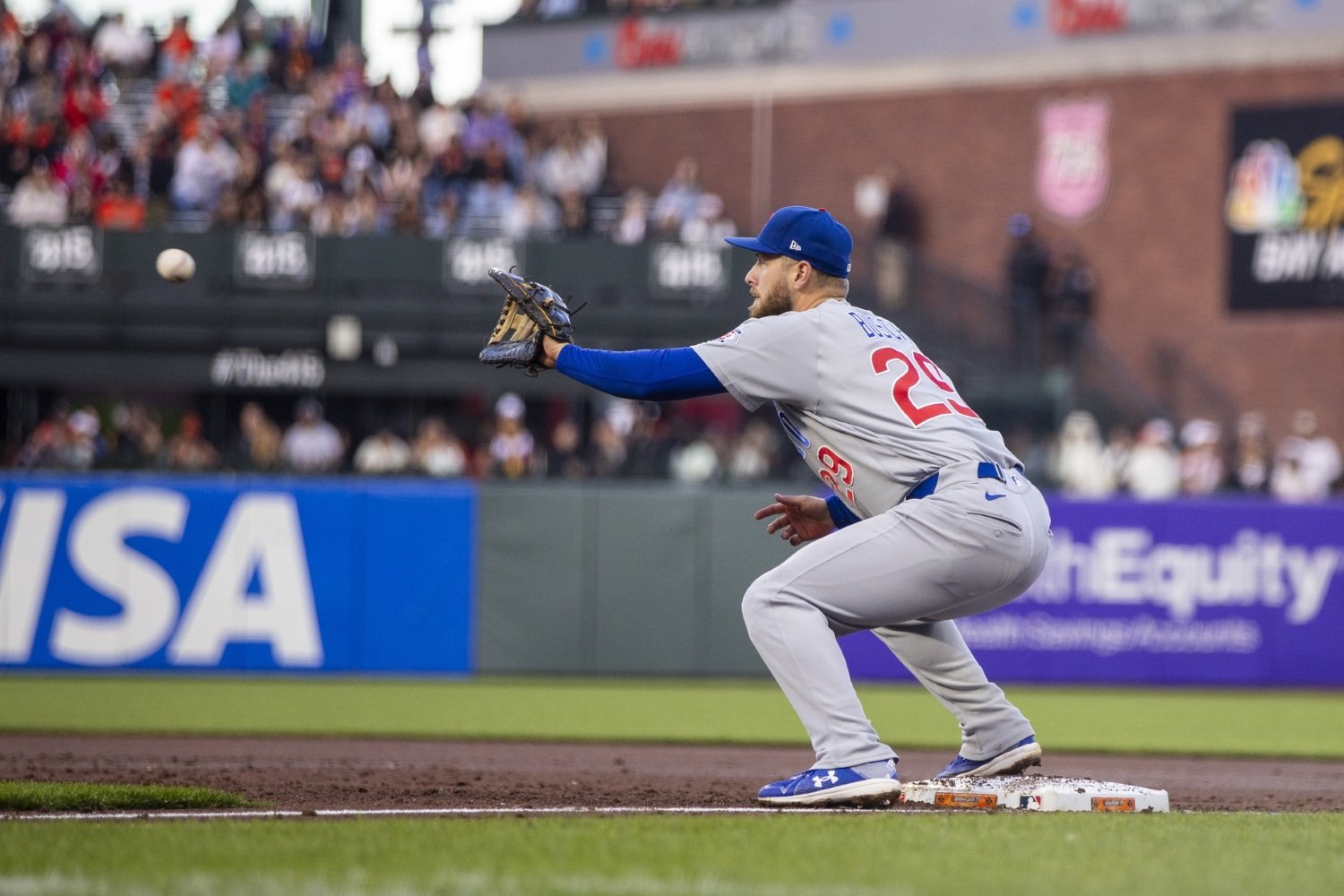 When the Chicago Cubs acquired Michael Busch ahead of the 2024 season, they were acquiring a player with significant offensive upside but without a defensive home. They gave him one almost immediately, taking a player who had primarily held his post at third base (with the occasional spell at second) and inserting him as the team's full-time first baseman. The early returns on Busch's defense were varying levels of fine. In that 2024 season, he ranked eighth in Outs Above Average among first basemen (2). That painted him as an above-average defender at the position, but it was the gradual improvement that was notable. His -1 OAA in March and April ranked just 21st before he jumped to the top of the leaderboard with 4 OAA in May. He remained above the average threshold for each of the next two months before slipping back under it in the final two months of the season. It's difficult to gauge a defender's quality over a one-month sample at any point during the season given the need for defensive metrics to develop over a larger one, but the variance in the OAA figure does speak to a player adjusting over time. There was steady improvement before some regression, and unfortunately for Busch, that kind of adjustment wasn't a mere one-year thing. The 2025 iteration of Busch found himself under that average threshold, finishing at -1 OAA for the year. He particularly struggled in moving to his right, where he posted -4 OAA (working to his left, he was at 1). This is where we run into a couple of notes about the nature of being a first baseman, especially as it applies to the world of defensive metrics. For one, players are not always entirely within your control. As a first baseman, you are more at the mercy of your teammates as the endpoint of a defensive play rather than the starting line. The Cubs got top-five play out of their middle infield in 2024, which compensated for the bottom-five work they got from third base. In 2025, though, Dansby Swanson's play at short slipped closer to the middle of the pack, while third base play remained in the bottom 10 of the league. So while Busch was still adjusting to the position, the fact that he wasn't getting the same brilliance from his infield cohort didn't do him any favors. There are also myriad factors that go into a metric like Outs Above Average that present certain limitations for a first baseman. Distance and time to the ball in play, distance from the base, and the speed of the runner are all factors. Positioning for first baseman helps them in this sense, but also leaves out some nuance that we might need to measure players at other positions given that they're where a play typically ends. The sample itself is smaller, and it ends up a bit more black-and-white for a first baseman. In Busch's case, the fact that he was still adjusting to the position while getting less consistent play from his infielders didn't indicate linear development between 2024 and 2025 in the way you might want to see from a player expected to hold it down in the long-term. The struggles he had moving to his right represented a need in an individual area of improvement, while bumping up the quality at a spot like third base would mitigate factors beyond his control. Because of that, we're able to see the value of the combination of steady play from Busch himself as a first baseman and the impact his fielders have on that. Which is likely why his play is looking better than ever in 2026. This season, Busch is atop the leaderboard for OAA by first basemen (6). It's a number matched by only Atlanta's Matt Olson, and one that not only serves as the best among his position but ranks 16th in the league overall. Perhaps even more important are some of the secondary elements that illustrate defensive quality. While Busch struggled mightily moving to his right in 2025, he's been extremely good at it in 2026. He's at 1 OAA moving in each direction and at 3 OAA moving in on the ball. Further, after posting a 76% success rate against a 76% estimated success rate last year, he's actually making more plays than expected this season. He's at a 79% success rate against an expected figure of 75%. Only San Diego's Ty France has a higher success rate added than Busch. Busch has his own role within all of this, of course. Now in his third year in the position, we're seeing a player settling in. That's evidenced by the fact that these numbers have improved despite almost no change in his starting position (both in depth and in angle). He's just become more adept at making plays, with his 10 scoops this year also setting him on pace to exceed his number in each of the last two years. Making the plays you need to make is one thing, but being able to make the read on picks is such a crucial part of first base play that the growth is evident within each part of this defensive spectrum. Quality infield play has helped. The Cubs are seventh in the league in defense at second (5 OAA), third at shortstop (8 OAA), and 10th at third base (1 OAA). The latter figure is obviously the most notable given where it's sat in each of the last two years, but Swanson's play regaining its form after a tough spell has also aided Busch in his defensive growth. When you factor in the offensive production from Busch, there's a certain confidence in his ability to man the position as a long-term staple. Not that either of the last two years were putting that in doubt, but we're looking at a player who has made strides without significant adjustment, indicating that time itself can be a great equalizer when you're hoping for a player to develop a specific facet of their game. That and the quality of his infield peers, of course.
 -
Image courtesy of © Charles LeClaire-Imagn Images When the Chicago Cubs signed Michael Conforto to a minor-league deal late in the offseason, it was not a move met with much enthusiasm. Even as a needed left-handed bat off the bench that wasn't expected to fill a key role for the team, the fact that Conforto was coming off his worst season at the big-league level merely added him to a group of past-prime, post-hype bats to potentially fill such a role. And yet, not only did he emerge from that group with a roster spot out of camp, he found success. Across March & April, he slashed .300/.421/.433 with a 145 wRC+. What he lost in the average and on-base rate in May (.250 & .345, respectively) he compensated for in power; no Cub touched the .354 isolated power he posted in his 55 plate appearances that month. Even as the warning signs of a waning offense began to manifest, Conforto continued to provide steady value. The calendar has since flipped to June, and Conforto finds himself in a much different place and standing with the team. It's a minuscule sample thus far (16 plate appearances), but that offensive value that Conforto was providing has begun to not only decline, but evaporate altogether. For the 33-year-old, it's not so much the absence of production in a small sample; struggling at the plate is not an uncommon trend among the collective given how things have transpired for the lineup over the past few weeks. You could almost forgive him for turning in a .067/.125/.067 line with a -46 wRC+ considering that it wouldn't look entirely out of place when juxtaposed with his peers. Instead, the much larger concern lies here: Conforto's ability to make contact has plummeted. His already-modest 73 percent contact rate between the first two months of the year has fallen to just 62.5 percent in June, while his whiff rate has leapt from 28.6 percent in May to 46.9 percent here in June. His chase rate has also risen by roughly 12 percent, sitting at 35.1 percent in our current month. When the zone expands in the way that we're seeing from Conforto, the result is a player who has struck out eight times in 16 plate appearances. That's where the understanding of some struggle begins to dissolve. If Conforto was still demonstrating a quality command of the strike zone and putting balls in play, you could accept some substandard production considering that it wouldn't be unique for this group. However, losing all semblance of an approach and contact makes it a different story entirely. Considering those comprehensive struggles, it's not as if Conforto is at risk of losing his roster spot. As a key source of left-handed hitting off the bench, he'll likely be given an opportunity to straighten things out, even if Matt Shaw's return eats into some of his playing time. However, Conforto was already walking a fine line as a guy in on a minor-league pact from the start. Those type of players don't get the same type of run to learn by making mistakes. Which means that his path will be narrow and he'll have to navigate these newfound struggles within a much lower volume of playing time than a starter might. With how driven this cold snap is by a complete collapse in his plate approach, rather than any mechanical deficiency, there could be some optimism that Conforto reigns it back in. If not, his Cinderella run may already be at its end. View full article
-
Like Cubs' Season, Michael Conforto's Cinderella Run Is Reaching Midnight
RandallPnkFloyd posted an article in Cubs
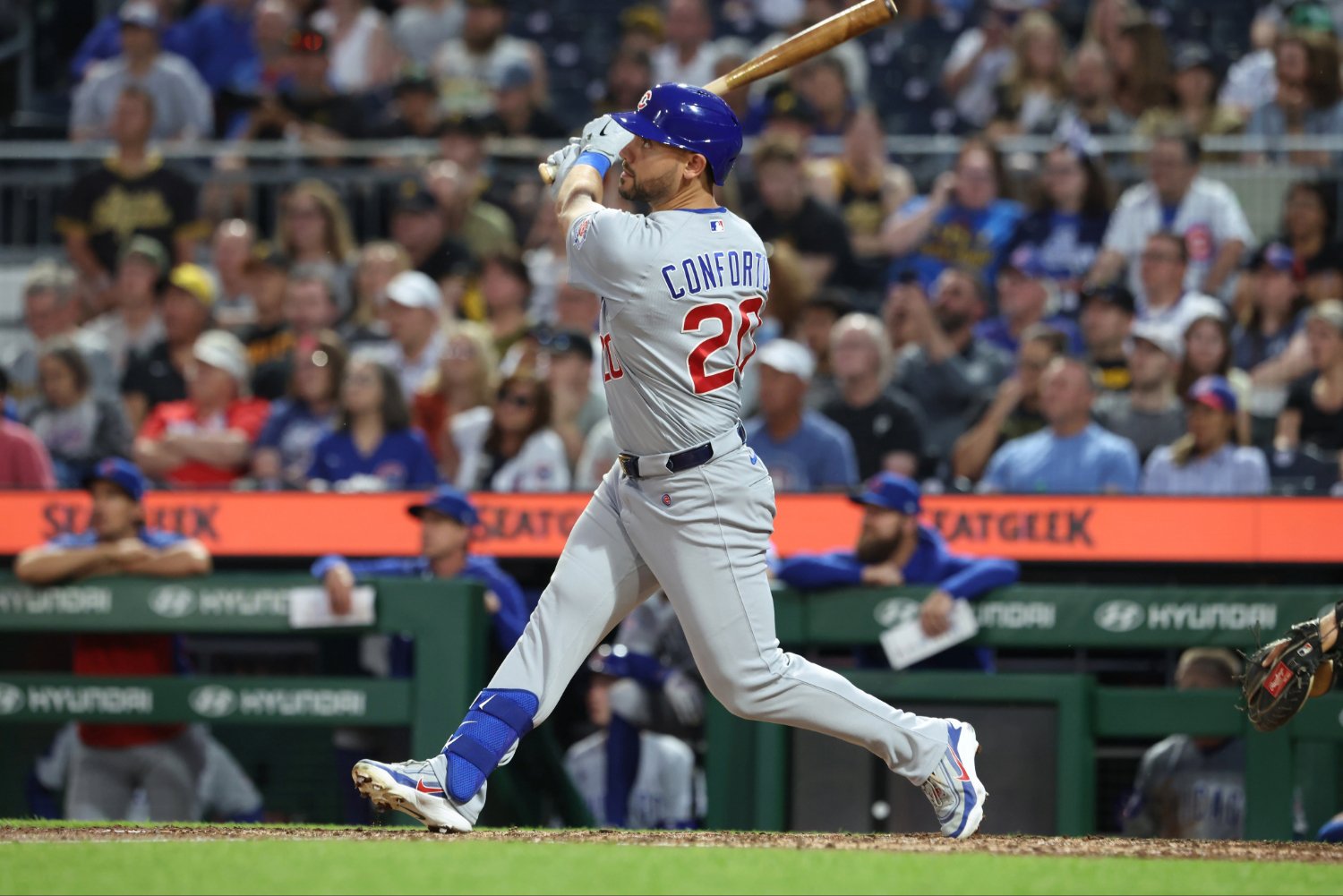 When the Chicago Cubs signed Michael Conforto to a minor-league deal late in the offseason, it was not a move met with much enthusiasm. Even as a needed left-handed bat off the bench that wasn't expected to fill a key role for the team, the fact that Conforto was coming off his worst season at the big-league level merely added him to a group of past-prime, post-hype bats to potentially fill such a role. And yet, not only did he emerge from that group with a roster spot out of camp, he found success. Across March & April, he slashed .300/.421/.433 with a 145 wRC+. What he lost in the average and on-base rate in May (.250 & .345, respectively) he compensated for in power; no Cub touched the .354 isolated power he posted in his 55 plate appearances that month. Even as the warning signs of a waning offense began to manifest, Conforto continued to provide steady value. The calendar has since flipped to June, and Conforto finds himself in a much different place and standing with the team. It's a minuscule sample thus far (16 plate appearances), but that offensive value that Conforto was providing has begun to not only decline, but evaporate altogether. For the 33-year-old, it's not so much the absence of production in a small sample; struggling at the plate is not an uncommon trend among the collective given how things have transpired for the lineup over the past few weeks. You could almost forgive him for turning in a .067/.125/.067 line with a -46 wRC+ considering that it wouldn't look entirely out of place when juxtaposed with his peers. Instead, the much larger concern lies here: Conforto's ability to make contact has plummeted. His already-modest 73 percent contact rate between the first two months of the year has fallen to just 62.5 percent in June, while his whiff rate has leapt from 28.6 percent in May to 46.9 percent here in June. His chase rate has also risen by roughly 12 percent, sitting at 35.1 percent in our current month. When the zone expands in the way that we're seeing from Conforto, the result is a player who has struck out eight times in 16 plate appearances. That's where the understanding of some struggle begins to dissolve. If Conforto was still demonstrating a quality command of the strike zone and putting balls in play, you could accept some substandard production considering that it wouldn't be unique for this group. However, losing all semblance of an approach and contact makes it a different story entirely. Considering those comprehensive struggles, it's not as if Conforto is at risk of losing his roster spot. As a key source of left-handed hitting off the bench, he'll likely be given an opportunity to straighten things out, even if Matt Shaw's return eats into some of his playing time. However, Conforto was already walking a fine line as a guy in on a minor-league pact from the start. Those type of players don't get the same type of run to learn by making mistakes. Which means that his path will be narrow and he'll have to navigate these newfound struggles within a much lower volume of playing time than a starter might. With how driven this cold snap is by a complete collapse in his plate approach, rather than any mechanical deficiency, there could be some optimism that Conforto reigns it back in. If not, his Cinderella run may already be at its end.
 -
Image courtesy of © Charles LeClaire-Imagn Images It wasn't so long ago that the vibes around the Chicago Cubs felt immaculate. Fresh off an offseason that had them signing a notable bat in Alex Bregman, acquiring a closer-to-frontline-than-the-rest-of-their-rotation arm in Edward Cabrera, and leaning more heavily on established arms for the bullpen than reclamation projects, the thought was that their busy winter would yield benefits in the National League contention picture. The buzz was so palpable that MLB.com's Thomas Harrigan asked the following question after the release of Baseball Prospectus' PECOTA projections: Just how large is the Cubs’ edge in the NL Central? Such a line of questioning seemed warranted upon PECOTA's release, which had the Cubs atop the National League Central with 90.5 projected wins. That was exactly 10 better than the Brewers' 80.5-win projection and carried with it a nice 69.0% chance of winning the division and a robust 95.7% chance of reaching the postseason. That same energy carried over to FanGraphs upon their own release. While not quite as bullish on the percentages, FanGraphs had the Cubs at a 35.6% chance of winning their division on March 23. That was more than 10 percentage points better than Milwaukee's 24.3% odds. The gap was even wider in the general postseason odds, with the Cubs checking in at 53.9% and the Brewers at just 41.7%. Then came the Cubs' strong start. On May 7, the Cubs' chance of winning the division reached 63.4%, while their playoff odds topped out at 91.2%. The former figure trounced the Brewers' mere 12.4% odds, while the latter was up on their division rivals by roughly 40 points (50.8%). Since that point in the calendar, the Cubs have won just eight times while losing 20, with a 10-game losing skid baked into the middle of all that. It's done a number on their odds of both winning the division: And reaching the playoffs at all: The first visual comes as little surprise; the Cubs' struggles (in conjunction with the rapid ascent of the Brewers) has created a significant gap between the two sides in the standings. At this point, the 7.5-game gap not only has the Cubs in fourth, but may also be too much to overcome, given the teams' respective projections for the remainder of the year. That the Cubs' odds are looking so grim in a more general NL context speaks to the overall magnitude of their recent struggles. Since May 8, only the San Diego Padres have scored fewer runs than the Cubs' 95 and no team has demonstrated less on the power side than their .121 ISO. While that's happening, their staff ERA (4.93) is one of the league's five worst, with a home-run rate on fly balls (17.7%) that easily leads the league. Given that, it's not as if the waning optimism surrounding the Cubs' playoff odds is limited to FanGraphs. PECOTA may not have the Cubs following these struggles through to a massive decline in wins in their current projections (87.4), but the odds are not in their favor. They're currently looking at division odds that have shrunk to a mere 25.8% and playoff odds that are resting at 78.5%. It's not an unsurmountable deficit to overcome, according to these data, but it does speak to just how much these recent woes have impacted them in their postseason outlook. Whether that will or can change given the team's current roster construction and injury situation remains to be seen. But even at this point in early June, a swoon like the one the Cubs are on has massive ramifications for later on. Even if it still feels kind of early to be worried, it isn't. View full article
-
Cubs' Recent Struggles Have Done Real Damage to Playoff Hopes
RandallPnkFloyd posted an article in Cubs
 It wasn't so long ago that the vibes around the Chicago Cubs felt immaculate. Fresh off an offseason that had them signing a notable bat in Alex Bregman, acquiring a closer-to-frontline-than-the-rest-of-their-rotation arm in Edward Cabrera, and leaning more heavily on established arms for the bullpen than reclamation projects, the thought was that their busy winter would yield benefits in the National League contention picture. The buzz was so palpable that MLB.com's Thomas Harrigan asked the following question after the release of Baseball Prospectus' PECOTA projections: Just how large is the Cubs’ edge in the NL Central? Such a line of questioning seemed warranted upon PECOTA's release, which had the Cubs atop the National League Central with 90.5 projected wins. That was exactly 10 better than the Brewers' 80.5-win projection and carried with it a nice 69.0% chance of winning the division and a robust 95.7% chance of reaching the postseason. That same energy carried over to FanGraphs upon their own release. While not quite as bullish on the percentages, FanGraphs had the Cubs at a 35.6% chance of winning their division on March 23. That was more than 10 percentage points better than Milwaukee's 24.3% odds. The gap was even wider in the general postseason odds, with the Cubs checking in at 53.9% and the Brewers at just 41.7%. Then came the Cubs' strong start. On May 7, the Cubs' chance of winning the division reached 63.4%, while their playoff odds topped out at 91.2%. The former figure trounced the Brewers' mere 12.4% odds, while the latter was up on their division rivals by roughly 40 points (50.8%). Since that point in the calendar, the Cubs have won just eight times while losing 20, with a 10-game losing skid baked into the middle of all that. It's done a number on their odds of both winning the division: And reaching the playoffs at all: The first visual comes as little surprise; the Cubs' struggles (in conjunction with the rapid ascent of the Brewers) has created a significant gap between the two sides in the standings. At this point, the 7.5-game gap not only has the Cubs in fourth, but may also be too much to overcome, given the teams' respective projections for the remainder of the year. That the Cubs' odds are looking so grim in a more general NL context speaks to the overall magnitude of their recent struggles. Since May 8, only the San Diego Padres have scored fewer runs than the Cubs' 95 and no team has demonstrated less on the power side than their .121 ISO. While that's happening, their staff ERA (4.93) is one of the league's five worst, with a home-run rate on fly balls (17.7%) that easily leads the league. Given that, it's not as if the waning optimism surrounding the Cubs' playoff odds is limited to FanGraphs. PECOTA may not have the Cubs following these struggles through to a massive decline in wins in their current projections (87.4), but the odds are not in their favor. They're currently looking at division odds that have shrunk to a mere 25.8% and playoff odds that are resting at 78.5%. It's not an unsurmountable deficit to overcome, according to these data, but it does speak to just how much these recent woes have impacted them in their postseason outlook. Whether that will or can change given the team's current roster construction and injury situation remains to be seen. But even at this point in early June, a swoon like the one the Cubs are on has massive ramifications for later on. Even if it still feels kind of early to be worried, it isn't.
 -
Image courtesy of © Kamil Krzaczynski-Imagn Images Whether it was at the point of his signing with the Chicago Cubs or the games that have been played since, no shortage of internet ink has been spilled about the skill set and performance of Alex Bregman. A hitter with only moderate power, the plate discipline component recognized as a pillar of his offensive game was expected to be a boon for his own performance and for the collective. His patience at bat has been as expected, but it's come without some of the benefits that one might typically expect. Arguably, his vaunted approach has become a detriment, instead of a source of value, to the team. In general, patience is an undeniably positive trait to possess as a hitter. However, therein lies a tipping point. There is a threshold where patience erodes production, because a player either won't or can't actually hit the ball consistently well enough to generate hits or power. It's a spiral in which Bregman currently finds himself mired. On the surface, Bregman's reluctance to chase is doing its job. He's in the 88th percentile in chase rate, the 83rd in whiff rate, and the 73rd in strikeout rate. The strikeout number itself stands at 17.1%, which trails only Nico Hoerner among Cubs regulars. His 9.9% walk rate is above average, but reads as very similar to the 10.3% mark he posted with Boston last year. At this point, it should be noted that Bregman's bag isn't parlaying discipline into walks. His career walk rate sits at 11.7% against a 13.6% career strikeout rate. So it's not necessarily a concern that his strikeout rate is up a touch while the walk rate is lower than his peak years in Houston. He was never trying to take pitches just to draw walks. Instead, the much larger concern lies in what that discipline is designed to do, but is no longer doing. Bregman's aim in being so selective is to generate hard, aerial contact. Since he broke into the league in 2016, his 86.4% contact rate ranks 36th among nearly 600 qualifying players. His 5.5% swinging strike rate ranks 20th among that same group. While he was never a masher—his 38.4 Hard-Hit% sits 291st—there's been a real and substantial loss of thump when he makes contact, which forces us to ask: is his approach starting to work against him? Is it part of his power outage? In terms of the actual plate discipline numbers, Bregman's 40.6% swing rate isn't that unusual. It's identical to the number he posted with the Red Sox in 2025, and almost perfectly in line with his 40.2% career mark. What's unusual, though, is his swing rate inside of the strike zone. Bregman is swinging in the zone 57.4% of the time, which would be tied with 2019 for the lowest in his career. As a result, he's sitting at a 22.3% called strike rate—currently the highest mark of his career, and about three percentage points above his career average. For the visual learners, here's what that looks like. This is Bregman's swing rate from 2016 to 2025: With any zone visual such as this, you expect there to be heavy red over the heart of the zone and then progressively fade the farther it gets. If we could see the percentages, we'd see the middle-middle portions read at or around 70 percent and the other more favorable parts of the zone in the 60s. That stands in heavy contrast to the chart we see in 2026: That up-and-in spot is a concerning element of its own. But over the heart of the zone, there's much less action overall. Percentages here are topping out in the mid-60s in the heart before quickly fading into the 50s—not that that should read as a surprise, when the cumulative rate has come down. In Bregman's case, it's not even that he needs to be more adventurous in expanding the zone to create more opportunities. He's simply missing those that already exist in the most obvious part of the zone in which he could be creating impact. That's further reflected in Statcast's zone-designated run value. Run value is divided into four areas of the zone: heart, shadow, chase, and waste. In chase and waste, Bregman is working with a positive run value. Even in the shadow of the zone, he's at a -5 run value that is actually his best mark since 2019. In the heart of the zone, however, he's working with a -15. That's the worst value of his career in that area (and not particularly close to any of its predecessors). Further, Bregman's swing percentage on pitches designated "meatballs" is at 63.3%, also representing a career low. A hitter who is too patient looks like one whose swing trends look good on the surface—as in, this guy restrains himself from hacking wildly—but with a waning contact rate. Bregman's 83.1 Contact% is his lowest since 2016 (as is his 88.7% contact rate on pitches inside the zone). Someone who's too patient is unable to parlay that contact into anything impactful. Bregman's hard-hit rate is down to its lowest mark in four years, while his .101 isolated power is more than 100 points lower than his career average. We also (gulp) have to acknowledge that it's possible Bregman is swinging less because he knows his swing is worse. The Cubs made a big bet on his loss of bat speed after a quad strain last year being temporary. They might have already lost that bet. Here's a chart showing his rolling swing speed over 100-plate appearance windows since the start of Statcast bat-tracking. The red line is the point at which he hurt his leg and missed almost two months last year: Uh-oh. Again, this isn't a player who is set in his ways and unwilling to take risks. Bregman would probably have made a larger adjustment to his approach by now, if he felt that he could. He needs to start swinging more, especially at pitches in the heart of the strike zone—but maybe he can't, at least the way he's always been able to. That would be terrible news for the Cubs. View full article
-
Alex Bregman, Patient Approaches, and When Things Have to Change
RandallPnkFloyd posted an article in Cubs
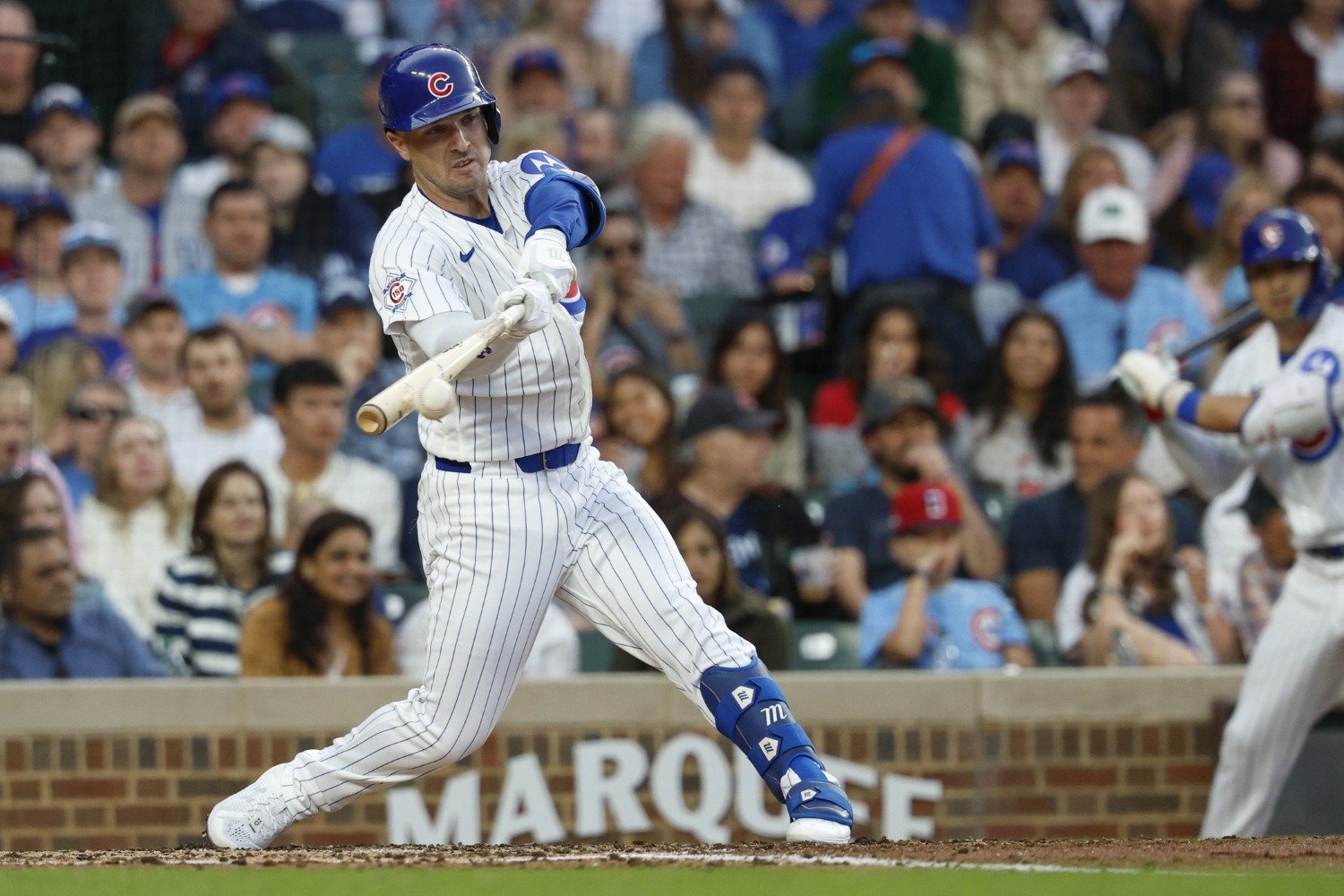 Whether it was at the point of his signing with the Chicago Cubs or the games that have been played since, no shortage of internet ink has been spilled about the skill set and performance of Alex Bregman. A hitter with only moderate power, the plate discipline component recognized as a pillar of his offensive game was expected to be a boon for his own performance and for the collective. His patience at bat has been as expected, but it's come without some of the benefits that one might typically expect. Arguably, his vaunted approach has become a detriment, instead of a source of value, to the team. In general, patience is an undeniably positive trait to possess as a hitter. However, therein lies a tipping point. There is a threshold where patience erodes production, because a player either won't or can't actually hit the ball consistently well enough to generate hits or power. It's a spiral in which Bregman currently finds himself mired. On the surface, Bregman's reluctance to chase is doing its job. He's in the 88th percentile in chase rate, the 83rd in whiff rate, and the 73rd in strikeout rate. The strikeout number itself stands at 17.1%, which trails only Nico Hoerner among Cubs regulars. His 9.9% walk rate is above average, but reads as very similar to the 10.3% mark he posted with Boston last year. At this point, it should be noted that Bregman's bag isn't parlaying discipline into walks. His career walk rate sits at 11.7% against a 13.6% career strikeout rate. So it's not necessarily a concern that his strikeout rate is up a touch while the walk rate is lower than his peak years in Houston. He was never trying to take pitches just to draw walks. Instead, the much larger concern lies in what that discipline is designed to do, but is no longer doing. Bregman's aim in being so selective is to generate hard, aerial contact. Since he broke into the league in 2016, his 86.4% contact rate ranks 36th among nearly 600 qualifying players. His 5.5% swinging strike rate ranks 20th among that same group. While he was never a masher—his 38.4 Hard-Hit% sits 291st—there's been a real and substantial loss of thump when he makes contact, which forces us to ask: is his approach starting to work against him? Is it part of his power outage? In terms of the actual plate discipline numbers, Bregman's 40.6% swing rate isn't that unusual. It's identical to the number he posted with the Red Sox in 2025, and almost perfectly in line with his 40.2% career mark. What's unusual, though, is his swing rate inside of the strike zone. Bregman is swinging in the zone 57.4% of the time, which would be tied with 2019 for the lowest in his career. As a result, he's sitting at a 22.3% called strike rate—currently the highest mark of his career, and about three percentage points above his career average. For the visual learners, here's what that looks like. This is Bregman's swing rate from 2016 to 2025: With any zone visual such as this, you expect there to be heavy red over the heart of the zone and then progressively fade the farther it gets. If we could see the percentages, we'd see the middle-middle portions read at or around 70 percent and the other more favorable parts of the zone in the 60s. That stands in heavy contrast to the chart we see in 2026: That up-and-in spot is a concerning element of its own. But over the heart of the zone, there's much less action overall. Percentages here are topping out in the mid-60s in the heart before quickly fading into the 50s—not that that should read as a surprise, when the cumulative rate has come down. In Bregman's case, it's not even that he needs to be more adventurous in expanding the zone to create more opportunities. He's simply missing those that already exist in the most obvious part of the zone in which he could be creating impact. That's further reflected in Statcast's zone-designated run value. Run value is divided into four areas of the zone: heart, shadow, chase, and waste. In chase and waste, Bregman is working with a positive run value. Even in the shadow of the zone, he's at a -5 run value that is actually his best mark since 2019. In the heart of the zone, however, he's working with a -15. That's the worst value of his career in that area (and not particularly close to any of its predecessors). Further, Bregman's swing percentage on pitches designated "meatballs" is at 63.3%, also representing a career low. A hitter who is too patient looks like one whose swing trends look good on the surface—as in, this guy restrains himself from hacking wildly—but with a waning contact rate. Bregman's 83.1 Contact% is his lowest since 2016 (as is his 88.7% contact rate on pitches inside the zone). Someone who's too patient is unable to parlay that contact into anything impactful. Bregman's hard-hit rate is down to its lowest mark in four years, while his .101 isolated power is more than 100 points lower than his career average. We also (gulp) have to acknowledge that it's possible Bregman is swinging less because he knows his swing is worse. The Cubs made a big bet on his loss of bat speed after a quad strain last year being temporary. They might have already lost that bet. Here's a chart showing his rolling swing speed over 100-plate appearance windows since the start of Statcast bat-tracking. The red line is the point at which he hurt his leg and missed almost two months last year: Uh-oh. Again, this isn't a player who is set in his ways and unwilling to take risks. Bregman would probably have made a larger adjustment to his approach by now, if he felt that he could. He needs to start swinging more, especially at pitches in the heart of the strike zone—but maybe he can't, at least the way he's always been able to. That would be terrible news for the Cubs.
 -
Image courtesy of © Charles LeClaire-Imagn Images One could forgive Alex Bregman for getting off to a slow start in the first month of the 2026 season. That's kind of what his career norms said he should do. Unfortunately for Bregman and the Chicago Cubs, the trends that are typical of Bregman's career on a month-to-month basis haven't been so consistent in May. A slow start is characteristic of Bregman in certain respects. While many of the approach trends that are so foundational to his game are always present, the outcomes take a little bit longer to show up. That's not unique to Bregman, mind you. Plenty of players throughout the game's history have been notorious for slow starts. Sammy Sosa shook the habit once he emerged as a superstar, but in each of his first five full Aprils as a Cub, he had an OPS of .702 or lower. The following is Bregman's month-to-month distribution for his career, from 2017 to 2025: March/April: .261/.363/.414, 15.1 K%, 12.6 BB%, .153 ISO, 119 wRC+ May: .258/.345/.476, 13.9 K%, 10.9 BB%, .218 ISO, 125 wRC+ June: .268/.364/.476, 13.7 K%, 12.5 BB%, .209 ISO, 133 wRC+ July: .260/.352/.484, 13.0 K%, 11.5 BB%, .224 ISO, 130 wRC+ August: .323/.407/.556, 13.1 K%, 11.3 BB%, .233 ISO, 165 wRC+ September: .255/.352/.466, 12.2 K%, 12.0 BB%, .210 ISO, 124 wRC+ Bregman's a steady ballplayer. The line and each of the strikeout and walk rates remain consistent over the course of the year, based on his career averages. The most notable aspect of his month-to-month trends, though, lies in the power. Historically, his pop has heated up with the weather, peaking by the time the calendar reaches August. He doesn't hit even for doubles power very well in April. After that, he becomes a consistently dangerous slugger. That makes the funk in which Bregman is still mired worrisome. By this point in the calendar—regardless of what the line or the strikeout-to-walk ratio may look like—Bregman has typically seen a massive jump in both his hard contact rate and his isolated power. The 2020 season notwithstanding, there have been just two seasons wherein Bregman remained similar between the two months in his Hard-Hit%, and only one season where it actually dropped from April to May (2023). Otherwise, he's been good for, at minimum, a four-percentage point bump in hard-hit rate from the first month to the second. It's usually more like double that. Hard-hit rate is obviously important, because you can't hit for power without hitting the ball hard. A 65-point ISO jump between April and May reflects the way more hard contact has almost always led to more impact from one month to the next. That's not what the Cubs are getting at the front end of this five-year deal, though. Here is Bregman's distribution through the first two months of 2026: March/April: .258/.350/.371, 14.7 K%, 11.9 BB%, .113 ISO, 109 wRC+ May: .238/.319/.310, 20.2 K%, 8.5 BB%, .071 ISO, 83 wRC+ The concern isn't solely that Bregman is struggling in May. Virtually every hitter on the Cubs has spent the last three weeks reeling. In Bregman's case, though, he's bucking career trends, and his age is evidence against him in the trial accusing him of being permanently diminished. Should he finish out the month in the same fashion, he'd be in line for his worst May ever by strikeout rate, ISO, and wRC+. It'd be the second-worst batting average and third-worst on-base percentage in any May of his career. To top it off, his hard-hit rate dropped from 45.2% last month to 40.0% in May. The impact that usually begins to present itself in the second month of the season isn't here. Ordinarily, we wouldn't let numbers like these worry us too much, this soon. A combination of factors have made it feel much worse, though, from the fact that Bregman is just beginning a long-term deal at the doorstep of his mid-30s to the fact that everyone else is also sputtering (and thus, that the team is losing). Bregman enduring this kind of month is not supposed to happen, especially when the team needs him most. View full article
-
We're No Longer Witnessing a Normal Slow Start for Alex Bregman
RandallPnkFloyd posted an article in Cubs
 One could forgive Alex Bregman for getting off to a slow start in the first month of the 2026 season. That's kind of what his career norms said he should do. Unfortunately for Bregman and the Chicago Cubs, the trends that are typical of Bregman's career on a month-to-month basis haven't been so consistent in May. A slow start is characteristic of Bregman in certain respects. While many of the approach trends that are so foundational to his game are always present, the outcomes take a little bit longer to show up. That's not unique to Bregman, mind you. Plenty of players throughout the game's history have been notorious for slow starts. Sammy Sosa shook the habit once he emerged as a superstar, but in each of his first five full Aprils as a Cub, he had an OPS of .702 or lower. The following is Bregman's month-to-month distribution for his career, from 2017 to 2025: March/April: .261/.363/.414, 15.1 K%, 12.6 BB%, .153 ISO, 119 wRC+ May: .258/.345/.476, 13.9 K%, 10.9 BB%, .218 ISO, 125 wRC+ June: .268/.364/.476, 13.7 K%, 12.5 BB%, .209 ISO, 133 wRC+ July: .260/.352/.484, 13.0 K%, 11.5 BB%, .224 ISO, 130 wRC+ August: .323/.407/.556, 13.1 K%, 11.3 BB%, .233 ISO, 165 wRC+ September: .255/.352/.466, 12.2 K%, 12.0 BB%, .210 ISO, 124 wRC+ Bregman's a steady ballplayer. The line and each of the strikeout and walk rates remain consistent over the course of the year, based on his career averages. The most notable aspect of his month-to-month trends, though, lies in the power. Historically, his pop has heated up with the weather, peaking by the time the calendar reaches August. He doesn't hit even for doubles power very well in April. After that, he becomes a consistently dangerous slugger. That makes the funk in which Bregman is still mired worrisome. By this point in the calendar—regardless of what the line or the strikeout-to-walk ratio may look like—Bregman has typically seen a massive jump in both his hard contact rate and his isolated power. The 2020 season notwithstanding, there have been just two seasons wherein Bregman remained similar between the two months in his Hard-Hit%, and only one season where it actually dropped from April to May (2023). Otherwise, he's been good for, at minimum, a four-percentage point bump in hard-hit rate from the first month to the second. It's usually more like double that. Hard-hit rate is obviously important, because you can't hit for power without hitting the ball hard. A 65-point ISO jump between April and May reflects the way more hard contact has almost always led to more impact from one month to the next. That's not what the Cubs are getting at the front end of this five-year deal, though. Here is Bregman's distribution through the first two months of 2026: March/April: .258/.350/.371, 14.7 K%, 11.9 BB%, .113 ISO, 109 wRC+ May: .238/.319/.310, 20.2 K%, 8.5 BB%, .071 ISO, 83 wRC+ The concern isn't solely that Bregman is struggling in May. Virtually every hitter on the Cubs has spent the last three weeks reeling. In Bregman's case, though, he's bucking career trends, and his age is evidence against him in the trial accusing him of being permanently diminished. Should he finish out the month in the same fashion, he'd be in line for his worst May ever by strikeout rate, ISO, and wRC+. It'd be the second-worst batting average and third-worst on-base percentage in any May of his career. To top it off, his hard-hit rate dropped from 45.2% last month to 40.0% in May. The impact that usually begins to present itself in the second month of the season isn't here. Ordinarily, we wouldn't let numbers like these worry us too much, this soon. A combination of factors have made it feel much worse, though, from the fact that Bregman is just beginning a long-term deal at the doorstep of his mid-30s to the fact that everyone else is also sputtering (and thus, that the team is losing). Bregman enduring this kind of month is not supposed to happen, especially when the team needs him most.
 -
Image courtesy of © David Banks-Imagn Images The Chicago Cubs are not a particularly good baseball team at present. Their offense has been a specific source of struggle, with the team being shut out twice and failing to score more than two runs another four times over their last 10 games. As the collective struggles mightily, though, Michael Busch is beginning to emerge from a first-month swoon. March & April weren't particularly kind to the first baseman. Busch's 2025 represented a breakout; he reined in his approach, cut down on the strikeouts, and slugged 34 home runs on his way to establishing himself among the more valuable players the position had to offer. His first month of 2026, however, failed to demonstrate the same growth. He slogged his way to a .193/.295/.281 line with a 71 wRC+. His isolated power checked in at a mere .088. Even if we were to attribute some of that to a woeful .241 batting average on balls in play, there was enough chase (28.6 percent) and enough of a struggle to generate hard contact (a 32.9 percent rate that was 15 points below 2025) for valid concern. Even as his counterparts throughout the lineup have fallen off at the plate here in May, though, Busch has gotten himself back on track. It's not merely that the production is there, either. It's loud production backed by some really impressive underlying elements. Through his first 80-ish plate appearances of the month, Busch's line reads .317/.468/.567 with a 190 wRC+. He has an even split between his strikeout and walk rate, with a 21.5 percent number in each. Only five qualifying hitters have posted a better wRC+ and only three have walked at a higher clip than he has. The .405 BABIP helps to indicate a leveling out of his fortunes, but there are so many positive things happening beyond the luck component. Between the two months, Busch has managed to nearly double his rate of hard contact: He's managed to increase the Hard-Hit% against each of the three pitch types, but it's especially been true against breaking pitches and fastballs; his hard-hit rate has leapt from 40 to 75 percent against the former and from 32.8 percent to 62.2 against the latter. While that's happening, his groundball rate has plummeted. Busch is putting balls on the ground just 31.8 percent of the time in May against 48.2 percent in March & April. That's resulted in a six percent uptick in line drives and a 13 percent jump in fly balls. That means that the all-important PullAIR% has risen steadily, with Busch now at 17.3 percent for the year. It appears that this really comes down to settling back into his approach. Throughout his two years on the North Side, we've watched Busch graduate from more of a free swinger prone to swings and misses to a much more calculated presence at the plate. Between the first two months of the year, he's cut his chase rate by about eight percent (20.9 percent thus far in May). It's not that the contact rate has changed; that's actually remained relatively constant regardless of where the calendar falls. It's that he's been able to do more with the contact he's making. Nothing that Michael Busch is doing at the plate should be a surprise. We knew from his initial acquisition from the Los Angeles Dodgers that there was impact in the bat, it was just a matter of if the approach would allow it to be realized. We've seen the development of it over the last two years, and while it disappeared for a bit in the season's opening month, he's managed to settle right back into where he should be. Hopefully, the rest of the Cubs' lineup will follow his lead in short order. View full article
-
 The Chicago Cubs are not a particularly good baseball team at present. Their offense has been a specific source of struggle, with the team being shut out twice and failing to score more than two runs another four times over their last 10 games. As the collective struggles mightily, though, Michael Busch is beginning to emerge from a first-month swoon. March & April weren't particularly kind to the first baseman. Busch's 2025 represented a breakout; he reined in his approach, cut down on the strikeouts, and slugged 34 home runs on his way to establishing himself among the more valuable players the position had to offer. His first month of 2026, however, failed to demonstrate the same growth. He slogged his way to a .193/.295/.281 line with a 71 wRC+. His isolated power checked in at a mere .088. Even if we were to attribute some of that to a woeful .241 batting average on balls in play, there was enough chase (28.6 percent) and enough of a struggle to generate hard contact (a 32.9 percent rate that was 15 points below 2025) for valid concern. Even as his counterparts throughout the lineup have fallen off at the plate here in May, though, Busch has gotten himself back on track. It's not merely that the production is there, either. It's loud production backed by some really impressive underlying elements. Through his first 80-ish plate appearances of the month, Busch's line reads .317/.468/.567 with a 190 wRC+. He has an even split between his strikeout and walk rate, with a 21.5 percent number in each. Only five qualifying hitters have posted a better wRC+ and only three have walked at a higher clip than he has. The .405 BABIP helps to indicate a leveling out of his fortunes, but there are so many positive things happening beyond the luck component. Between the two months, Busch has managed to nearly double his rate of hard contact: He's managed to increase the Hard-Hit% against each of the three pitch types, but it's especially been true against breaking pitches and fastballs; his hard-hit rate has leapt from 40 to 75 percent against the former and from 32.8 percent to 62.2 against the latter. While that's happening, his groundball rate has plummeted. Busch is putting balls on the ground just 31.8 percent of the time in May against 48.2 percent in March & April. That's resulted in a six percent uptick in line drives and a 13 percent jump in fly balls. That means that the all-important PullAIR% has risen steadily, with Busch now at 17.3 percent for the year. It appears that this really comes down to settling back into his approach. Throughout his two years on the North Side, we've watched Busch graduate from more of a free swinger prone to swings and misses to a much more calculated presence at the plate. Between the first two months of the year, he's cut his chase rate by about eight percent (20.9 percent thus far in May). It's not that the contact rate has changed; that's actually remained relatively constant regardless of where the calendar falls. It's that he's been able to do more with the contact he's making. Nothing that Michael Busch is doing at the plate should be a surprise. We knew from his initial acquisition from the Los Angeles Dodgers that there was impact in the bat, it was just a matter of if the approach would allow it to be realized. We've seen the development of it over the last two years, and while it disappeared for a bit in the season's opening month, he's managed to settle right back into where he should be. Hopefully, the rest of the Cubs' lineup will follow his lead in short order.
 -
Image courtesy of © David Banks-Imagn Images Throughout his career, whether with the Chicago Cubs or in Atlanta, the key to Dansby Swanson's success at the plate has become increasingly evident. Regardless of whatever month-to-month variance he may be experiencing, he's a player who needs to lean on the fastball in order to drive his production. His time on the North Side has illustrated both sides of what that can look like. Last season, in particular, Swanson demonstrated the benefits of being fastball-focused. His .173 isolated power was his highest since 2021, with a hard-hit rate of 47.7%—the highest rate of his career up to that point, and a well-above-average mark. He hit 55.2% of his balls in play against fastballs hard and slugged .579 against them. That came in a season where he chased 27.1% of fastballs outside the zone, indicating that he was hunting them even at the expense of plate discipline (a trend he'd mostly managed to temper over the three previous seasons). That aggressiveness helped Swanson in the power production department, but nowhere else. He ended the 2025 season swinging more than ever (50.2%) and making contact at a rate lower than either of his two previous seasons with the Cubs (73.1%). Fastball hunting wasn't the sole reason for the higher-power, lower-contact results, but it was certainly part of the equation. Alarmingly, we're starting to see some of those trends manifest again. It's not that Swanson was off to the hottest of starts in March and April, but there was some improvement there. He slashed .214/.344/.439 in the opening month, with a 122 wRC+. That latter figure was driven by a strong power output (.244 ISO) and an underlying 47.9% hard-hit rate. There was some improvement on the discipline front from last season, with a 39.8% overall swing rate and 21.5% chase rate, the latter of which included just 22.9% against fastballs. That helped him generate a walk rate over 16% through the end of April. We were comparing him to some of the game's most notorious three-true-outcomes dudes. When the calendar flipped, though, Swanson began to run into some trouble. In fact, he's derailed. He's currently sitting at .158/.213/.246 for the month of May, with a wRC+ of just 30. His strikeout rate has fallen to a shade over 16%, but his walk rate has fallen by nearly 10 percentage points, too, to 6.5%. His ISO has cratered, at just .088. Some of that is bad luck; Swanson has a batting average on balls in play of just .174 this month. To an extent, though, you can work your way out of that via a quality approach. Whatever approach was working for Swanson in the first month, however, has gone the way of the rest of his output. Here is Swanson's overall swing rate between the two stretches of play: The overall swing rate has climbed, and not by a little. More worrisome, though, is the chase rate: The chase rate itself moving up 10 percentage points speaks to exactly the type of issues we've seen from Swanson during his periods of poor performance. Given what we know about Swanson and fastballs, that makes the following perhaps the most notable in all of this: It's one thing for Swanson to become more aggressive in trying to create offense. We've also seen the perils of attacking fastballs without any regard for the strike zone. His chase rate against fastballs has jumped by more than 20 percentage points, while his hard-hit rate against them has fallen by nearly that same number. Toss in the fact that his groundball rate, wrought by his increasing disregard for the zone in favor of the pitch type, has ballooned by 11 percentage points, and it's no wonder we're watching a player without much to offer at the plate right now. That it's a familiar issue doesn't make it a less frustrating one. The Cubs offense, as a collective, has largely sputtered of late without consistent power from Swanson on which to fall back. History tells us he'll work his way out of it by the time June runs around, but more recent history also makes us somewhat wary of the approach on fastballs that appears to be, for the second consecutive season, slipping from his control. View full article
-
 Throughout his career, whether with the Chicago Cubs or in Atlanta, the key to Dansby Swanson's success at the plate has become increasingly evident. Regardless of whatever month-to-month variance he may be experiencing, he's a player who needs to lean on the fastball in order to drive his production. His time on the North Side has illustrated both sides of what that can look like. Last season, in particular, Swanson demonstrated the benefits of being fastball-focused. His .173 isolated power was his highest since 2021, with a hard-hit rate of 47.7%—the highest rate of his career up to that point, and a well-above-average mark. He hit 55.2% of his balls in play against fastballs hard and slugged .579 against them. That came in a season where he chased 27.1% of fastballs outside the zone, indicating that he was hunting them even at the expense of plate discipline (a trend he'd mostly managed to temper over the three previous seasons). That aggressiveness helped Swanson in the power production department, but nowhere else. He ended the 2025 season swinging more than ever (50.2%) and making contact at a rate lower than either of his two previous seasons with the Cubs (73.1%). Fastball hunting wasn't the sole reason for the higher-power, lower-contact results, but it was certainly part of the equation. Alarmingly, we're starting to see some of those trends manifest again. It's not that Swanson was off to the hottest of starts in March and April, but there was some improvement there. He slashed .214/.344/.439 in the opening month, with a 122 wRC+. That latter figure was driven by a strong power output (.244 ISO) and an underlying 47.9% hard-hit rate. There was some improvement on the discipline front from last season, with a 39.8% overall swing rate and 21.5% chase rate, the latter of which included just 22.9% against fastballs. That helped him generate a walk rate over 16% through the end of April. We were comparing him to some of the game's most notorious three-true-outcomes dudes. When the calendar flipped, though, Swanson began to run into some trouble. In fact, he's derailed. He's currently sitting at .158/.213/.246 for the month of May, with a wRC+ of just 30. His strikeout rate has fallen to a shade over 16%, but his walk rate has fallen by nearly 10 percentage points, too, to 6.5%. His ISO has cratered, at just .088. Some of that is bad luck; Swanson has a batting average on balls in play of just .174 this month. To an extent, though, you can work your way out of that via a quality approach. Whatever approach was working for Swanson in the first month, however, has gone the way of the rest of his output. Here is Swanson's overall swing rate between the two stretches of play: The overall swing rate has climbed, and not by a little. More worrisome, though, is the chase rate: The chase rate itself moving up 10 percentage points speaks to exactly the type of issues we've seen from Swanson during his periods of poor performance. Given what we know about Swanson and fastballs, that makes the following perhaps the most notable in all of this: It's one thing for Swanson to become more aggressive in trying to create offense. We've also seen the perils of attacking fastballs without any regard for the strike zone. His chase rate against fastballs has jumped by more than 20 percentage points, while his hard-hit rate against them has fallen by nearly that same number. Toss in the fact that his groundball rate, wrought by his increasing disregard for the zone in favor of the pitch type, has ballooned by 11 percentage points, and it's no wonder we're watching a player without much to offer at the plate right now. That it's a familiar issue doesn't make it a less frustrating one. The Cubs offense, as a collective, has largely sputtered of late without consistent power from Swanson on which to fall back. History tells us he'll work his way out of it by the time June runs around, but more recent history also makes us somewhat wary of the approach on fastballs that appears to be, for the second consecutive season, slipping from his control.
 -
Image courtesy of © Kamil Krzaczynski-Imagn Images Ian Happ is off to a strange start in 2026. There's more power than we've come to expect, and even more strikeouts. In fact, there's something about this iteration of Happ that looks similar to one we might have seen in 2017 or 2018. Whether or not that's a good thing for the Chicago Cubs, however, is certainly up for debate. When Happ was a rookie in 2017, he struck out more than 30 percent of the time, with a walk rate that just barely scratched above 9%. He followed that up with an even higher strikeout figure (36.1%) in 2018. The difference was that he was able to drive up the walk rate to what, up until this season, had served as a career-high (15.2%). There was also one other notable element that fluctuated between the two seasons: the power. In his rookie year, Happ hit 24 home runs. He's since exceeded that number twice, with 25-homer campaigns in 2021 and 2024. But permeating throughout all of those strikeouts, all of those walks, and all of those home runs in 2017 was regular impact contact. He posted a .261 isolated power that he's never come close to replicating over a full season. The next season, his ISO fell to .176. He was able to reach .209 in 2021, but has otherwise sat between a .169 and .199 ISO in the years following that rookie outburst. More recent years have seen Happ settle into a base where his patience is the pillar. He's exceeded the 20-homer threshold a handful of times, but that ISO has never climbed back to the second-year heights he reached. Instead, he's relied on his discipline. From 2021 to 2025, Happ's 45.3% swing rate ranked 102nd out of 360 qualifying position players. His 27.0% chase rate sat 67th. Each of those elements contributed to a walk rate that came in 23rd out of that whole group (12.1%). He was a remarkably consistent, if unspectacular, player over that stretch. Happ's line in those five seasons read .247/.343/.433, for a 117 wRC+. His strikeout rate came in at 24.4%, alongside that notable walk rate. His ISO read .187. It's an output that seems wholly appropriate for a player who has been steady more than he's been a star. However, something different is happening in 2026. His early 2026 line reads .228/.368/.455. In general, that wouldn't seem to represent a stark departure for what we've come to expect from him. However, a number of other areas on the stat sheet have spiked. His walk rate has climbed to over 17%, with a .228 ISO. The former would be the best rate of his career; the latter checks in as the best outside of that 2018 season. His wRC+, at 134, would also sit atop his career outputs. So we have a player who has lingered on the edge of being a "three-true-outcomes" guy diving even further into those waters. It's not obvious how Happ's doing it. Sometimes, you see a player trying to tap into more power by selling out for it. That might mean an increased swing rate or a harder swing. Happ is doing neither. His 40.9% swing rate is actually the lowest of his career, by a decent margin. His bat speed hasn't changed in any discernible fashion from either side, coming in slightly slower as a left-handed swinger and slightly faster as a righty. Neither has changed in a way that would speak to such a drastic jump in power. What Happ is doing is taking more chances. His overall swing rate has dropped by about three percentage points from last year, but the chase rate has also risen by about that much. He's making less contact overall, by a significant margin, but he's also making more impactful contact. Happ's barrel rate (17.5% of his balls in play) is not only in the 95th percentile, but sits well above any previous rate he's posted. There isn't any major mechanical shift happening here. It's in Happ making active choices to seek damage. That type of philosophical shift does have to show up in your body at some point. Rather than being in the swing itself, though, it appears to be in his setup, from the right side. From the left side, he's always had power. His career ISO against right-handed pitchers is .217. It's a bit exaggerated this year, but only a bit. The big difference has come as a righty, where he made over his game and became much more of a contact-oriented, ground-ball guy in 2023 and 2024, but started to find his power again in 2025. This year, he already has three homers from the right side, and his ISO is .212, against a career mark of .154. To get to that pop, he's opened his stance over the last two seasons. Here, from left to right, are pitches Happ saw against lefties in 2024, 2025, and last month. Why does this matter? After all, as hitting coaches love to remark, great hitters all get to fairly similar points by the time they make contact. Here's why: All swings have a certain natural directionality and timing. Barring a full-fledged swing overhaul, hitters will generally find their best contact in the same range and (therefore) with their bat in the same positions and on the same trajectories. One way to tweak that is the stance. We don't yet have Statcast visualizations of Happ's swing for 2026, because switch-hitting keeps his sample smaller than for batters who only hit from one side. But here, side-by-side, are the moments when his barrel first enters the back of the hitting zone by crossing the back tip of home plate, for 2024 and 2025. In 2024, his stance was 8° closed from the right side. Last season, it was neutral (0°). Look at the difference that made in where his bat is in its (otherwise little-changed) path when he gets to that same early juncture in the swing. Notice, too, that his front hip is a bit more open in the image on the right, without his hands being materially farther in front of his body or his front shoulder leaking out. He slightly reoriented a swing with which he'd begun to find success (but only on the ground), and unlocked something more. This year, a further tweak in the same direction has exaggerated that—with some costs, as the strategy approaches an extreme, but also with big benefits. Happ's attack angle (the upward angle of the barrel at the instant of contact) was 5° in 2024; it's now 10°. His attack direction (the horizontal angle of the barrel at that same moment) was 3° toward his pull side two years ago; it's now 7°. Happ has a good command of the strike zone. One could make the argument that he's spent the last handful of years being too patient. This year, he's deploying that patience toward attempting to create power for himself, especially from the right side. It hasn't come at the expense of his ability to draw a walk, just in his ability to make contact as consistently. Are the Cubs better for it, though? There's an argument to be made that they are. Under Craig Counsell, the Cubs have been a team that operates with efficiency at the plate. They're approach-oriented, with slower swings that generate quality contact via the barrel more than aggressive ones that maximize power potential. The issue with that ideology is that it doesn't always beget consistent offense. The walks are always there, but the actual output occasionally suffers as players enter periods of bad timing, bad luck, or a temporary deviation from their typical approach. Happ, in his current form, appears to be a benefit for the Cubs, in that he's still generating the on-base presence via the walk but is also creating more in a way that we don't always see from him—or anyone in the lineup. If the Cubs were a bad team in the OBP department, perhaps one could argue that Happ needs to retreat back into his typical modus operandi. Given their collective ability to do that, though, there's a real case that Happ taking more chances is something that can benefit the Cubs. View full article
-
 Ian Happ is off to a strange start in 2026. There's more power than we've come to expect, and even more strikeouts. In fact, there's something about this iteration of Happ that looks similar to one we might have seen in 2017 or 2018. Whether or not that's a good thing for the Chicago Cubs, however, is certainly up for debate. When Happ was a rookie in 2017, he struck out more than 30 percent of the time, with a walk rate that just barely scratched above 9%. He followed that up with an even higher strikeout figure (36.1%) in 2018. The difference was that he was able to drive up the walk rate to what, up until this season, had served as a career-high (15.2%). There was also one other notable element that fluctuated between the two seasons: the power. In his rookie year, Happ hit 24 home runs. He's since exceeded that number twice, with 25-homer campaigns in 2021 and 2024. But permeating throughout all of those strikeouts, all of those walks, and all of those home runs in 2017 was regular impact contact. He posted a .261 isolated power that he's never come close to replicating over a full season. The next season, his ISO fell to .176. He was able to reach .209 in 2021, but has otherwise sat between a .169 and .199 ISO in the years following that rookie outburst. More recent years have seen Happ settle into a base where his patience is the pillar. He's exceeded the 20-homer threshold a handful of times, but that ISO has never climbed back to the second-year heights he reached. Instead, he's relied on his discipline. From 2021 to 2025, Happ's 45.3% swing rate ranked 102nd out of 360 qualifying position players. His 27.0% chase rate sat 67th. Each of those elements contributed to a walk rate that came in 23rd out of that whole group (12.1%). He was a remarkably consistent, if unspectacular, player over that stretch. Happ's line in those five seasons read .247/.343/.433, for a 117 wRC+. His strikeout rate came in at 24.4%, alongside that notable walk rate. His ISO read .187. It's an output that seems wholly appropriate for a player who has been steady more than he's been a star. However, something different is happening in 2026. His early 2026 line reads .228/.368/.455. In general, that wouldn't seem to represent a stark departure for what we've come to expect from him. However, a number of other areas on the stat sheet have spiked. His walk rate has climbed to over 17%, with a .228 ISO. The former would be the best rate of his career; the latter checks in as the best outside of that 2018 season. His wRC+, at 134, would also sit atop his career outputs. So we have a player who has lingered on the edge of being a "three-true-outcomes" guy diving even further into those waters. It's not obvious how Happ's doing it. Sometimes, you see a player trying to tap into more power by selling out for it. That might mean an increased swing rate or a harder swing. Happ is doing neither. His 40.9% swing rate is actually the lowest of his career, by a decent margin. His bat speed hasn't changed in any discernible fashion from either side, coming in slightly slower as a left-handed swinger and slightly faster as a righty. Neither has changed in a way that would speak to such a drastic jump in power. What Happ is doing is taking more chances. His overall swing rate has dropped by about three percentage points from last year, but the chase rate has also risen by about that much. He's making less contact overall, by a significant margin, but he's also making more impactful contact. Happ's barrel rate (17.5% of his balls in play) is not only in the 95th percentile, but sits well above any previous rate he's posted. There isn't any major mechanical shift happening here. It's in Happ making active choices to seek damage. That type of philosophical shift does have to show up in your body at some point. Rather than being in the swing itself, though, it appears to be in his setup, from the right side. From the left side, he's always had power. His career ISO against right-handed pitchers is .217. It's a bit exaggerated this year, but only a bit. The big difference has come as a righty, where he made over his game and became much more of a contact-oriented, ground-ball guy in 2023 and 2024, but started to find his power again in 2025. This year, he already has three homers from the right side, and his ISO is .212, against a career mark of .154. To get to that pop, he's opened his stance over the last two seasons. Here, from left to right, are pitches Happ saw against lefties in 2024, 2025, and last month. Why does this matter? After all, as hitting coaches love to remark, great hitters all get to fairly similar points by the time they make contact. Here's why: All swings have a certain natural directionality and timing. Barring a full-fledged swing overhaul, hitters will generally find their best contact in the same range and (therefore) with their bat in the same positions and on the same trajectories. One way to tweak that is the stance. We don't yet have Statcast visualizations of Happ's swing for 2026, because switch-hitting keeps his sample smaller than for batters who only hit from one side. But here, side-by-side, are the moments when his barrel first enters the back of the hitting zone by crossing the back tip of home plate, for 2024 and 2025. In 2024, his stance was 8° closed from the right side. Last season, it was neutral (0°). Look at the difference that made in where his bat is in its (otherwise little-changed) path when he gets to that same early juncture in the swing. Notice, too, that his front hip is a bit more open in the image on the right, without his hands being materially farther in front of his body or his front shoulder leaking out. He slightly reoriented a swing with which he'd begun to find success (but only on the ground), and unlocked something more. This year, a further tweak in the same direction has exaggerated that—with some costs, as the strategy approaches an extreme, but also with big benefits. Happ's attack angle (the upward angle of the barrel at the instant of contact) was 5° in 2024; it's now 10°. His attack direction (the horizontal angle of the barrel at that same moment) was 3° toward his pull side two years ago; it's now 7°. Happ has a good command of the strike zone. One could make the argument that he's spent the last handful of years being too patient. This year, he's deploying that patience toward attempting to create power for himself, especially from the right side. It hasn't come at the expense of his ability to draw a walk, just in his ability to make contact as consistently. Are the Cubs better for it, though? There's an argument to be made that they are. Under Craig Counsell, the Cubs have been a team that operates with efficiency at the plate. They're approach-oriented, with slower swings that generate quality contact via the barrel more than aggressive ones that maximize power potential. The issue with that ideology is that it doesn't always beget consistent offense. The walks are always there, but the actual output occasionally suffers as players enter periods of bad timing, bad luck, or a temporary deviation from their typical approach. Happ, in his current form, appears to be a benefit for the Cubs, in that he's still generating the on-base presence via the walk but is also creating more in a way that we don't always see from him—or anyone in the lineup. If the Cubs were a bad team in the OBP department, perhaps one could argue that Happ needs to retreat back into his typical modus operandi. Given their collective ability to do that, though, there's a real case that Happ taking more chances is something that can benefit the Cubs.
 -
Image courtesy of © Jerome Miron-Imagn Images It's difficult to overstate the value that Michael Conforto has brought to the Chicago Cubs early in 2026. A minor-league signing coming off a brutal season with the Los Angeles Dodgers, the original perception of Conforto's role was, at best, as temporary depth while Seiya Suzuki worked his way back to full health. Instead, he's gained an increased role in recent weeks on the heels of a torrid stretch of play. As of the series in Atlanta, Conforto is carrying a slash of .340/.448/.617 with a gaudy 198 wRC+. He's striking out more than the Cubs would probably like (25.9 percent), but he's also walking more than 17 percent of the time. Add it all up, and he has been worth 0.6 fWAR for the Cubs in barely 60 plate appearances. It's all a far cry from where he sat last year with the Dodgers when his line read .199/.305/.333 with a wRC+ of just 83 (-0.6 fWAR) across more than 480 PA. What's particularly important in the case of Conforto is that this isn't a player merely flashing despite questionable peripherals. Sure, he's due for some regression on the merit of his .452 batting average on balls in play by itself, but he's also driving the baseball. His 54.5 percent hard-hit rate exceeds his career average by about 13 percent while his 15.2 Barrel% is nearly five full percent better than his career mark. We know good things happen when hitters pull the ball in the air, and Conforto is deploying those contact metrics to the tune of a 30.3 PullAIR%. In short, it's not blind luck driving the start. He's been legitimately good. In general, this performance seems to be driven by his approach. Conforto's swing rate is down, with a 40.2 percent number that would be the lowest of his career if it holds up over the full season. What's more is that his chase rate has fallen to just 20.5 percent (also the lowest of his career). Perhaps most importantly, as the chase rate has plummeted, the in-zone swing rate has remained steady. He's working with a 64.2 percent swing rate on pitches inside the zone that represents just a two percent decrease from last season. It's not solely about the eye, though. There are also mechanical tweaks at play. Conforto's attack angle is up to 13 degrees in 2026 after falling to 10 degrees last season. It's a steeper swing and one that reads around league average (10 degrees), but when you combine the improved approach with a swing generating fly ball contact, you're able to find the type of early results that Conforto is producing. Of course, it's important to note the managerial component within all of this as well. While a recent scuffling from the Cubs' offense at large has forced Craig Counsell to insert Conforto into the lineup with greater regularity, he's also shielding him entirely from left-handed pitching. Conforto isn't as drastically bad against pitchers of the same handedness as some lefty hitters may be, but he did go for a wRC+ of just 76 against them last year. As such, Counsell has sent Conforto to the plate against a left-handed pitcher just a single time this season. That's certainly something not to be overlooked in matters of his early run. As impressive as Michael Conforto has been, the regression monster is something that's going to continue to loom, especially in the case of a player that hasn't experienced sustained offensive success since, realistically, 2019. In short, that regression is going to come at some point. The batted ball fortune alone is indicative of that inevitability. However, the trends which Conforto has demonstrated to date do offer some encouragement that he can continue to be a regular contributor to the offensive output. When you put a player in a position to succeed, as Counsell has, while said player demonstrates a command of the strike zone and uses that command toward making meaningful contact with the baseball, it's going to yield positive results. Given those two factors, it isn't a surprise that Conforto has good; it's merely a pleasant turn of events that he's been such an uplifting force in the lineup. View full article
-
Michael Conforto's Hot Start Is A Tale of Staving Off Regression
RandallPnkFloyd posted an article in Cubs
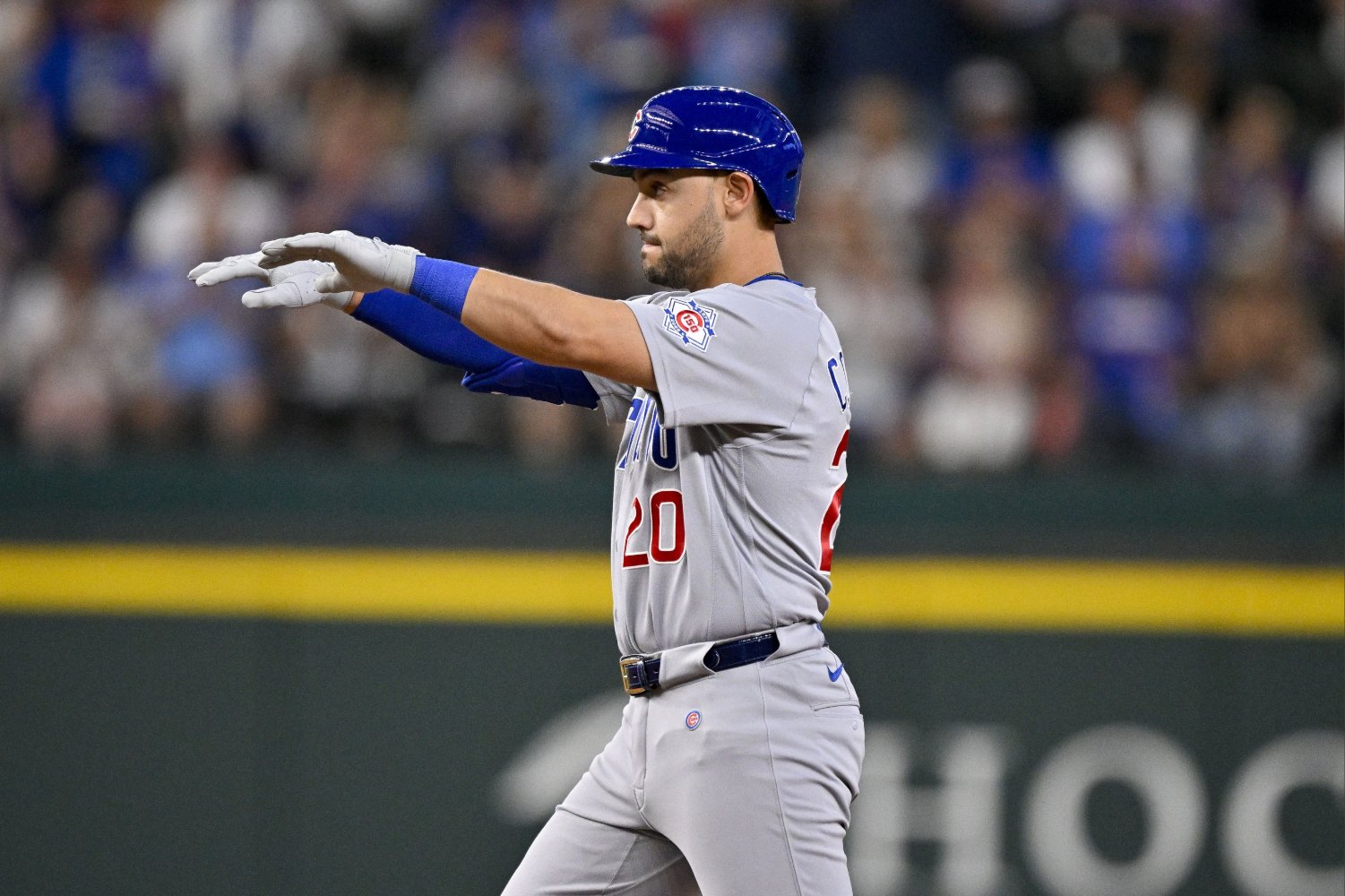 It's difficult to overstate the value that Michael Conforto has brought to the Chicago Cubs early in 2026. A minor-league signing coming off a brutal season with the Los Angeles Dodgers, the original perception of Conforto's role was, at best, as temporary depth while Seiya Suzuki worked his way back to full health. Instead, he's gained an increased role in recent weeks on the heels of a torrid stretch of play. As of the series in Atlanta, Conforto is carrying a slash of .340/.448/.617 with a gaudy 198 wRC+. He's striking out more than the Cubs would probably like (25.9 percent), but he's also walking more than 17 percent of the time. Add it all up, and he has been worth 0.6 fWAR for the Cubs in barely 60 plate appearances. It's all a far cry from where he sat last year with the Dodgers when his line read .199/.305/.333 with a wRC+ of just 83 (-0.6 fWAR) across more than 480 PA. What's particularly important in the case of Conforto is that this isn't a player merely flashing despite questionable peripherals. Sure, he's due for some regression on the merit of his .452 batting average on balls in play by itself, but he's also driving the baseball. His 54.5 percent hard-hit rate exceeds his career average by about 13 percent while his 15.2 Barrel% is nearly five full percent better than his career mark. We know good things happen when hitters pull the ball in the air, and Conforto is deploying those contact metrics to the tune of a 30.3 PullAIR%. In short, it's not blind luck driving the start. He's been legitimately good. In general, this performance seems to be driven by his approach. Conforto's swing rate is down, with a 40.2 percent number that would be the lowest of his career if it holds up over the full season. What's more is that his chase rate has fallen to just 20.5 percent (also the lowest of his career). Perhaps most importantly, as the chase rate has plummeted, the in-zone swing rate has remained steady. He's working with a 64.2 percent swing rate on pitches inside the zone that represents just a two percent decrease from last season. It's not solely about the eye, though. There are also mechanical tweaks at play. Conforto's attack angle is up to 13 degrees in 2026 after falling to 10 degrees last season. It's a steeper swing and one that reads around league average (10 degrees), but when you combine the improved approach with a swing generating fly ball contact, you're able to find the type of early results that Conforto is producing. Of course, it's important to note the managerial component within all of this as well. While a recent scuffling from the Cubs' offense at large has forced Craig Counsell to insert Conforto into the lineup with greater regularity, he's also shielding him entirely from left-handed pitching. Conforto isn't as drastically bad against pitchers of the same handedness as some lefty hitters may be, but he did go for a wRC+ of just 76 against them last year. As such, Counsell has sent Conforto to the plate against a left-handed pitcher just a single time this season. That's certainly something not to be overlooked in matters of his early run. As impressive as Michael Conforto has been, the regression monster is something that's going to continue to loom, especially in the case of a player that hasn't experienced sustained offensive success since, realistically, 2019. In short, that regression is going to come at some point. The batted ball fortune alone is indicative of that inevitability. However, the trends which Conforto has demonstrated to date do offer some encouragement that he can continue to be a regular contributor to the offensive output. When you put a player in a position to succeed, as Counsell has, while said player demonstrates a command of the strike zone and uses that command toward making meaningful contact with the baseball, it's going to yield positive results. Given those two factors, it isn't a surprise that Conforto has good; it's merely a pleasant turn of events that he's been such an uplifting force in the lineup.