


Cubs Video
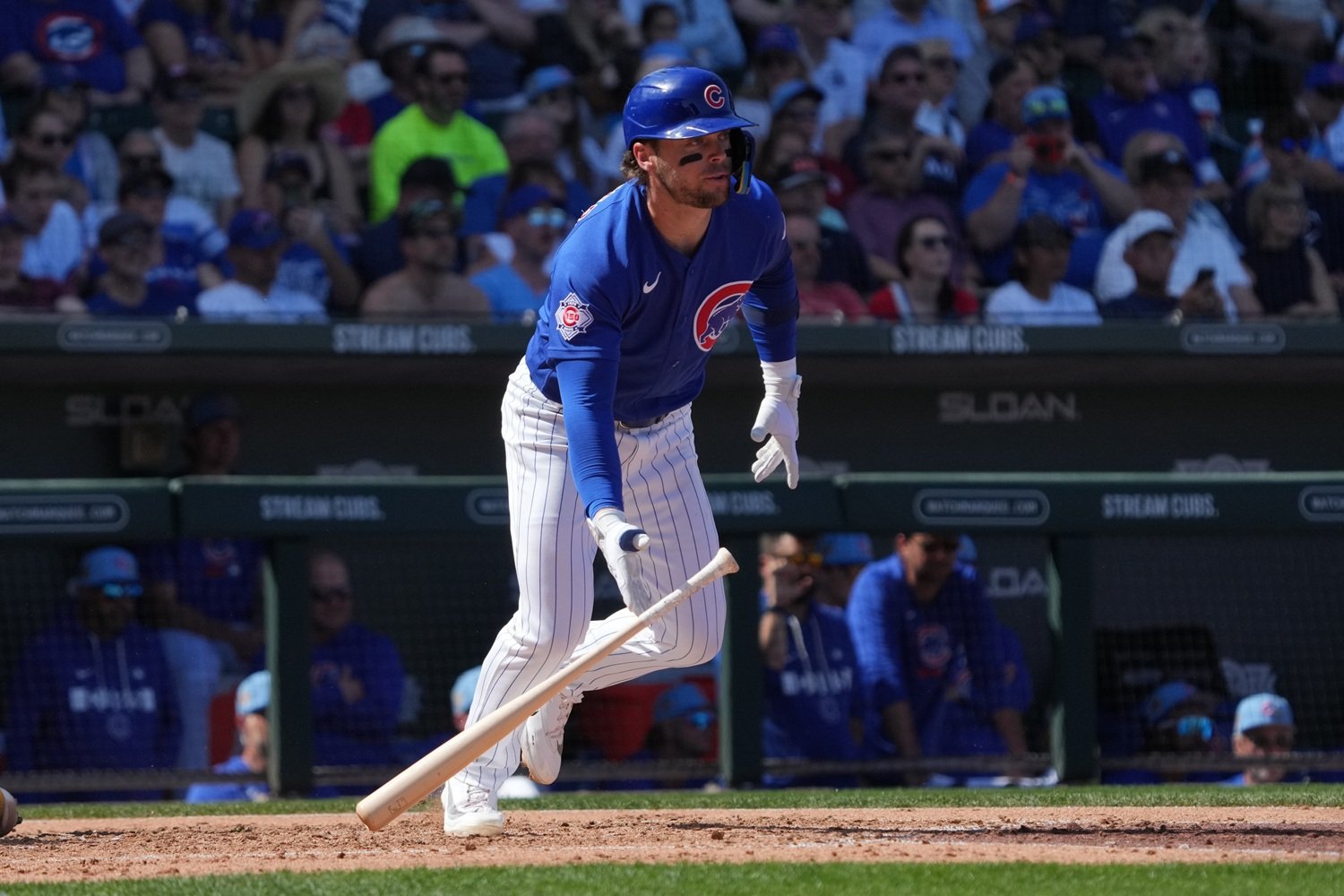
The 2025 iteration of second baseman Nico Hoerner was the best version the Cubs have yet seen. Sure, he'd hit more than .297 in a season. He'd reached base at a clip better than the .345 mark he posted. He's also stolen more bases in a season than the 29 bags he swiped, and he's hit for better power than indicated by a .097 isolated power (ISO). Yet, in terms of his total value, both his wRC+ (109) and his fWAR (4.8) were above any figure he'd posted in his three previous seasons of full-time action.
Much of the value lies in Hoerner's glove. His 15 Outs Above Average ranked 12th among qualifying players regardless of position, ninth among infielders, and at the top of the list of players who log regular time at the keystone. While much of his value may be wrapped up in that facet of his game, however, last season saw him consolidate his skills at the plate, too.
Hoerner's 2025 season was his best in the contact game. His 48.5% swing rate was his highest since 2022, as was a 31.9% chase rate. But the aggression didn't mitigate his ability to make contact. He touched 89.8% of the pitches at which he swung, continuing a four-year progression of improvement there and sitting fourth on the leaderboard among qualifying batters. He whiffed on just 4.9% of all pitches he saw, both a career best and a number which landed in the 99th percentile of hitters.
Of course, very little of that was hard contact. Hoerner logged Statcast Barrels on just 2.3% of his batted balls—the league average is 7.2%—and hit the ball 95 MPH or harder just 30.3% of the time (league average: 37.0%). Both rates put him among the bottom 10% of batters who saw substantial time. When one encounters high swing rates alongside such a dearth of power, the player who comes to mind is Luis Arráez, whose value has been mitigated by his approach and his shortcomings. Hoerner, though, has a bit more to his offensive profile than that.
The version of Hoerner we saw in the second half of 2025 was a bit different than the one in the first. His hard hit rate was 32.1% in July, and progressively increased over the final three months of the year. His ISO was essentially flat from the first half to the second, but it ticked up a tiny bit (.094 to .100), while his line-drive rate jumped by seven percentage points. He swung at a higher rate against fastballs over that span, which is encouraging, given most players' penchant for generating more line drives and some extra power against that pitch type. As the year went along, he found a consistent feel for pulling the ball neatly and undefendably, on a line. To update the key stat from the linked article in the last sentence, he had 41 pulled batted balls at launch angles between 5° and 13° last season, compared to:
- 17 in 2022
- 23 in 2023
- 21 in 2024
He had more hits (30) on that kind of batted ball last year than he'd had batted balls matching those criteria in any previous season, regardless of outcome.
Earlier this offseason, I broke down where in the zone Hoerner needs to focus in order to produce more consistent power in 2026. Part of that is simply attacking more on the inner half of the plate. Between the adjustments that led to a slight uptick in impact and the knowledge that there is an area of the plate where Hoerner can tap into a bit more, there's reason to think he could clear the fence a bit more often this year. His hard-hit rate (35%), average exit velocity (89.3 MPH) and 90th-percentile exit velocity (102.9 MPH) are all higher this spring than in 2025, which is good news.
But is that what fans should be expecting: more power, from a player whose game isn't primarily about that?
Realistically, the expectation should be for Hoerner to repeat much of what he did in 2025. With his defense and baserunning, continuing to make contact at an elite rate, control the strike zone and hit for average with solid line drives is plenty. Hoerner's process has improved to the point where he can be a great player even without finding double-digit home-run power.
That's the key takeaway. Whatever their superficial similarities, Hoerner is not Arráez. Not only does he sport a more impressive profile on the bases and in the field, he has a broader array of offensive skills, beyond batting average. A repeat of 2025 with an ISO that creeps back to multiple points above .100 would represent a blend of each of his career trends to date and the final frontier of his development.
The most impressive thing is that none of that feels unrealistic.





Recommended Comments
There are no comments to display.
Create an account or sign in to comment
You need to be a member in order to leave a comment
Create an account
Sign up for a new account in our community. It's easy!
Register a new accountSign in
Already have an account? Sign in here.
Sign In Now