Matthew Trueblood
-
Posts
2,477 -
Joined
-
Last visited
-
Days Won
2
Content Type
Profiles
Joomla Posts 1
Chicago Cubs Videos
Chicago Cubs Free Agent & Trade Rumors, Notes, & Tidbits
2026 Chicago Cubs Top Prospects Ranking
News
2023 Chicago Cubs Draft Picks
Guides & Resources
2024 Chicago Cubs Draft Picks
The Chicago Cubs Players Project
2025 Chicago Cubs Draft Pick Tracker
2026 Chicago Cubs Draft Tracker: Picks & Bonuses
Blogs
Events
Forums
Store
Gallery
Everything posted by Matthew Trueblood
-
Image courtesy of © Matt Marton-Imagn Images As far as hitting coach John Mallee's concerned, Nico Hoerner was never even slumping, really. He just got unlucky for a while. "Look, some years, you hit .300, and other years, you hit .250 or .260, just because of whether it’s finding gloves," Mallee said Sunday. He watched Hoerner square the ball up relentlessly from late April through the end of June but find lots and lots of gloves. From April 24 through July 1, in fact, Hoerner batted an anemic .213/.288/.272, with a .228 BABIP. In that time, he hit 14 doubles, but no home runs, and despite walking more times (24) than he's struck out (17) in 267 plate appearances, he was hurting the Cubs lineup, rather than fueling it. Yet, Mallee was unworried, and Hoerner never got the reset sitdown manager Craig Counsell gave to (in turns) Moisés Ballesteros, Ian Happ, Alex Bregman, Seiya Suzuki and Dansby Swanson. Why not? What prevented panic, about a player who had just signed a lucrative nine-figure deal and was so deeply mired in the muck for so long? "I’ve never been around a more winning player, more dedicated to the work and demanding of himself, other than maybe Mike Trout," Mallee said of Hoerner, unashamed to gush a bit about a favorite pupil. His faith in Hoerner never wavered, because he never saw a breakdown in Hoerner's trademark tenacity. Over the last three weeks, Hoerner has begun to reward the confidence of both his manager and the coaching staff—though only begun to do so. He had two hits Friday and four Saturday, but still entered Sunday's series finale against Minnesota hitting .268/.279/.317 in his last 11 contests. He's not red-hot again, or anything, but something has changed. "You can see him getting more aggressive," Mallee said. "You could see it, the frustration of it, it did affect him a little bit. Now, he’s relaxed, and when he’s getting that pitch, he’s on time, he’s on it." A more aggressive Hoerner will be more prone to strikeouts and less likely to get on via the walk, but swinging more is a sign that he's feeling better about his swing. There's some reason for that, too. Let's talk about the newest creation of the FanGraphs Lab: the squared-up explorer tool. These are the distributions of Hoerner's batted balls in each of the three segments into which we've broken down his season—the scalding start; the long downturn; and the recent rebound—based on launch angle and Squared Up percentage. Each batted ball is plotted based on the percentage of the theoretically possible exit velocity (given the speeds of both the swing and the incoming pitch) realized, and on its launch angle. Rather than show the chaos of each individual point, though, the frequency of batted balls falling into each relevant bucket are represented by those bubbles you see, and the relationship between the two variables being studied is expressed by smoothed curves. Early this season, when he was not only hitting for average at a superb clip but slugged a surprising four homers in the first four weeks, Hoerner hit a good number of balls in the 20-40° launch angle band, nearly all of which were squared up fairly well. That period is the set of bubbles and the curve in blue. Then came the slump, in yellow. Note how he not only lifted true fly balls less often, but met the ones he did hit much less cleanly. He was technically squaring the ball up more consistently, and the balls on which he was doing so tended to be in the 0-20° launch angle band where a lot of hits should be. They weren't showing up, though. "There are two ways to be unlucky, too," Mallee theorizes. "One is, you’re squaring up balls, but they’re just not going where you expect or you want them to. And the other way, sometimes, you hit it and there’s a guy standing there, waiting. And Nico had a little bit of both." In other words, by his coach's reckoning, Hoerner was getting profoundly unlucky, because none of his schtoinkers were landing—the kind of good luck to which a great contact hitter should occasionally be entitles—and all of his line drives were dying a hair short or not quite splitting the gap. We can visualize that, too, in a slightly different way. Here's the heat map showing where Hoerner hit the ball most often during his great start to the season. This looks relatively unimpressive, compared to a similar chart for a star slugger like Pete Crow-Armstrong, but this is what it looks like when Hoerner is going well. He hits a lot of hard ground balls and low line drives to left field; he hits a good number of line drives to right field. He doesn't hit the ball to center field very much. Here's the slumping Hoerner's spray heat map. People talk about hitting the ball "to the big part of the field," like the sheer vastness of center field is a guarantor of hits falling in. Not so, as Hoerner learned the hard way. He tried not to change anything, but acknowledged that it was hard—and that he needed to remain open tto change, lest he "get stubborn" and miss his chances to escape the slump. "I think the challenge is, no matter what the results, I want to help the team, and so sticking to my routine was important," Hoerner said Sunday morning, before collecting two more hits as the Cubs routed the Twins. "Trusting the coaches and trusting myself. It can be frustrating, but that’s our game; there’s a lot of randomness in this game. My approach stayed pretty similar. You want to make enough changes to get out of it, but you don’t want to change too much and lose what makes you good." Finally, recently, that diligent work and that intensity have paid off. Here's Hoerner's heat map for the last three weeks, showing that even if his process stayed mostly the same, he began to find ways to direct the ball that eluded him for a long, long time. Ironically, one of his hits Sunday—initially ruled a bases-clearing triple, though it should and could be changed to a single and a two-base error by Twins center fielder Luke Keaschall, who was playing too deep and then got handcuffed by the ball as he tried to play it on the bounce—came on a line drive to dead center. Call it corroboration of Mallee's theory that Hoerner was getting unlucky and was due for a bout of better fortune, even if there was also some deeper level of analysis to be done and some minute adjustment that needed to be made. Broadly, at least, the manager agrees with both coach and player. "Nico is one of those hitters where sometimes it’s really hard to evaluate, because the ball is just always in play," Counsell said. "You can say Nico’s struggling, but like, in Cincinnati, Nico swung the bat good, just like he did [Saturday], but no results. The ball doesn’t go over the fence that much, and he doesn’t strike out. So the fielder has an opportunity on every play to catch his ball. [Saturday] they didn’t; in Cincinnati, they did. But it’s kind of the same him. "That’s baseball. That’s part of it. But I think what happened [Saturday] was, line drives to the opposite field. That’s always a sign for everybody that he’s [right]." Counsell is right about that, though it's only half the story. Hoerner also needs the line drive to the pull field to be his best self, and he did have one of those Saturday, too. He chalked up another in the fourth inning Sunday, lacing a ball to left field for a clean single. Over the two-plus months in which he was hitting .213, it must have seemed like fielders had opportunities to make a play on everything, but when Hoerner gets going, he hits balls that are as undefendable as if they'd landed five rows deep in the bleachers—just for singles and doubles, rather than homers. Going back to the first visual in which we saw Hoerner's squared-up profile evolve throughout the season, yoyu can see that he's doing that more often right now. He's hitting a lot of balls extremely squarely, and nearly all of them are in the launch-angle range where they have a good chance to be a single and at least some chance to for extra bases. As any good hitter or hitting coach will tell you, the key to producing those perfectly struck balls lies in getting the right pitch. Doing that means not expanding one's zone overmuch, though it also means covering the zone thoroughly—and closing holes in your swing. Hoerner had two hits on high, upper-90s fastballs on Saturday, much to Mallee's delight. "Yeah, got to 98! It was great," Mallee enthused. "Any time you can take something off the scouting report, force them to change that, it always helps. And then when they have to throw that low ball, he can crush those." Hoerner doesn't like to spend much time studying what opposing pitchers are throwing him, but if he can force them to change tack while staying locked in on what he wants to do, that's a win. "It absolutely helps. I haven’t been in the game that long, but it’s always evolving, they’re always trying to find new ways to get you out," Hoerner said. "So anything you can do to disrupt that is great, but I don’t want to go up there overthinking what a given pitcher is trying to do against me. It’s more staying in my strengths and focusing on what I’m looking for." For a long time, that's not how his at-bats were actually unfolding. Now, though, Hoerner seems to be back in his groove. The hitting coach, the manager and the player all downplayed the extent to which his lackluster production was ever a source of concern. It should have been one, at least—but it probably needn't be now. The slump is over, and a new streak is very much underway. View full article
-
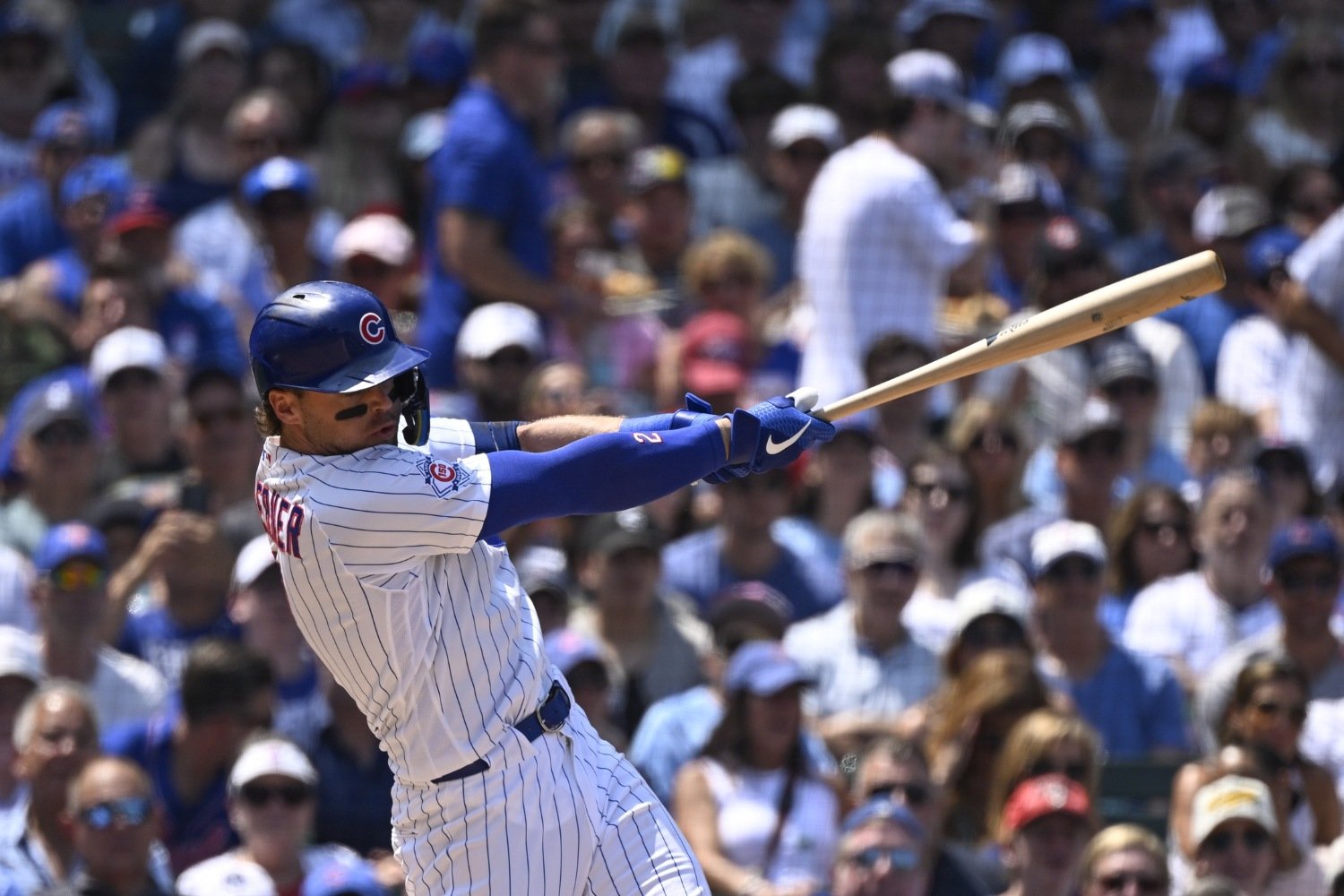 As far as hitting coach John Mallee's concerned, Nico Hoerner was never even slumping, really. He just got unlucky for a while. "Look, some years, you hit .300, and other years, you hit .250 or .260, just because of whether it’s finding gloves," Mallee said Sunday. He watched Hoerner square the ball up relentlessly from late April through the end of June but find lots and lots of gloves. From April 24 through July 1, in fact, Hoerner batted an anemic .213/.288/.272, with a .228 BABIP. In that time, he hit 14 doubles, but no home runs, and despite walking more times (24) than he's struck out (17) in 267 plate appearances, he was hurting the Cubs lineup, rather than fueling it. Yet, Mallee was unworried, and Hoerner never got the reset sitdown manager Craig Counsell gave to (in turns) Moisés Ballesteros, Ian Happ, Alex Bregman, Seiya Suzuki and Dansby Swanson. Why not? What prevented panic, about a player who had just signed a lucrative nine-figure deal and was so deeply mired in the muck for so long? "I’ve never been around a more winning player, more dedicated to the work and demanding of himself, other than maybe Mike Trout," Mallee said of Hoerner, unashamed to gush a bit about a favorite pupil. His faith in Hoerner never wavered, because he never saw a breakdown in Hoerner's trademark tenacity. Over the last three weeks, Hoerner has begun to reward the confidence of both his manager and the coaching staff—though only begun to do so. He had two hits Friday and four Saturday, but still entered Sunday's series finale against Minnesota hitting .268/.279/.317 in his last 11 contests. He's not red-hot again, or anything, but something has changed. "You can see him getting more aggressive," Mallee said. "You could see it, the frustration of it, it did affect him a little bit. Now, he’s relaxed, and when he’s getting that pitch, he’s on time, he’s on it." A more aggressive Hoerner will be more prone to strikeouts and less likely to get on via the walk, but swinging more is a sign that he's feeling better about his swing. There's some reason for that, too. Let's talk about the newest creation of the FanGraphs Lab: the squared-up explorer tool. These are the distributions of Hoerner's batted balls in each of the three segments into which we've broken down his season—the scalding start; the long downturn; and the recent rebound—based on launch angle and Squared Up percentage. Each batted ball is plotted based on the percentage of the theoretically possible exit velocity (given the speeds of both the swing and the incoming pitch) realized, and on its launch angle. Rather than show the chaos of each individual point, though, the frequency of batted balls falling into each relevant bucket are represented by those bubbles you see, and the relationship between the two variables being studied is expressed by smoothed curves. Early this season, when he was not only hitting for average at a superb clip but slugged a surprising four homers in the first four weeks, Hoerner hit a good number of balls in the 20-40° launch angle band, nearly all of which were squared up fairly well. That period is the set of bubbles and the curve in blue. Then came the slump, in yellow. Note how he not only lifted true fly balls less often, but met the ones he did hit much less cleanly. He was technically squaring the ball up more consistently, and the balls on which he was doing so tended to be in the 0-20° launch angle band where a lot of hits should be. They weren't showing up, though. "There are two ways to be unlucky, too," Mallee theorizes. "One is, you’re squaring up balls, but they’re just not going where you expect or you want them to. And the other way, sometimes, you hit it and there’s a guy standing there, waiting. And Nico had a little bit of both." In other words, by his coach's reckoning, Hoerner was getting profoundly unlucky, because none of his schtoinkers were landing—the kind of good luck to which a great contact hitter should occasionally be entitles—and all of his line drives were dying a hair short or not quite splitting the gap. We can visualize that, too, in a slightly different way. Here's the heat map showing where Hoerner hit the ball most often during his great start to the season. This looks relatively unimpressive, compared to a similar chart for a star slugger like Pete Crow-Armstrong, but this is what it looks like when Hoerner is going well. He hits a lot of hard ground balls and low line drives to left field; he hits a good number of line drives to right field. He doesn't hit the ball to center field very much. Here's the slumping Hoerner's spray heat map. People talk about hitting the ball "to the big part of the field," like the sheer vastness of center field is a guarantor of hits falling in. Not so, as Hoerner learned the hard way. He tried not to change anything, but acknowledged that it was hard—and that he needed to remain open tto change, lest he "get stubborn" and miss his chances to escape the slump. "I think the challenge is, no matter what the results, I want to help the team, and so sticking to my routine was important," Hoerner said Sunday morning, before collecting two more hits as the Cubs routed the Twins. "Trusting the coaches and trusting myself. It can be frustrating, but that’s our game; there’s a lot of randomness in this game. My approach stayed pretty similar. You want to make enough changes to get out of it, but you don’t want to change too much and lose what makes you good." Finally, recently, that diligent work and that intensity have paid off. Here's Hoerner's heat map for the last three weeks, showing that even if his process stayed mostly the same, he began to find ways to direct the ball that eluded him for a long, long time. Ironically, one of his hits Sunday—initially ruled a bases-clearing triple, though it should and could be changed to a single and a two-base error by Twins center fielder Luke Keaschall, who was playing too deep and then got handcuffed by the ball as he tried to play it on the bounce—came on a line drive to dead center. Call it corroboration of Mallee's theory that Hoerner was getting unlucky and was due for a bout of better fortune, even if there was also some deeper level of analysis to be done and some minute adjustment that needed to be made. Broadly, at least, the manager agrees with both coach and player. "Nico is one of those hitters where sometimes it’s really hard to evaluate, because the ball is just always in play," Counsell said. "You can say Nico’s struggling, but like, in Cincinnati, Nico swung the bat good, just like he did [Saturday], but no results. The ball doesn’t go over the fence that much, and he doesn’t strike out. So the fielder has an opportunity on every play to catch his ball. [Saturday] they didn’t; in Cincinnati, they did. But it’s kind of the same him. "That’s baseball. That’s part of it. But I think what happened [Saturday] was, line drives to the opposite field. That’s always a sign for everybody that he’s [right]." Counsell is right about that, though it's only half the story. Hoerner also needs the line drive to the pull field to be his best self, and he did have one of those Saturday, too. He chalked up another in the fourth inning Sunday, lacing a ball to left field for a clean single. Over the two-plus months in which he was hitting .213, it must have seemed like fielders had opportunities to make a play on everything, but when Hoerner gets going, he hits balls that are as undefendable as if they'd landed five rows deep in the bleachers—just for singles and doubles, rather than homers. Going back to the first visual in which we saw Hoerner's squared-up profile evolve throughout the season, yoyu can see that he's doing that more often right now. He's hitting a lot of balls extremely squarely, and nearly all of them are in the launch-angle range where they have a good chance to be a single and at least some chance to for extra bases. As any good hitter or hitting coach will tell you, the key to producing those perfectly struck balls lies in getting the right pitch. Doing that means not expanding one's zone overmuch, though it also means covering the zone thoroughly—and closing holes in your swing. Hoerner had two hits on high, upper-90s fastballs on Saturday, much to Mallee's delight. "Yeah, got to 98! It was great," Mallee enthused. "Any time you can take something off the scouting report, force them to change that, it always helps. And then when they have to throw that low ball, he can crush those." Hoerner doesn't like to spend much time studying what opposing pitchers are throwing him, but if he can force them to change tack while staying locked in on what he wants to do, that's a win. "It absolutely helps. I haven’t been in the game that long, but it’s always evolving, they’re always trying to find new ways to get you out," Hoerner said. "So anything you can do to disrupt that is great, but I don’t want to go up there overthinking what a given pitcher is trying to do against me. It’s more staying in my strengths and focusing on what I’m looking for." For a long time, that's not how his at-bats were actually unfolding. Now, though, Hoerner seems to be back in his groove. The hitting coach, the manager and the player all downplayed the extent to which his lackluster production was ever a source of concern. It should have been one, at least—but it probably needn't be now. The slump is over, and a new streak is very much underway.
 -
Image courtesy of © Matt Marton-Imagn Images History doesn't repeat itself, but sometimes, it rhymes. When it does, start listening, because that might be when something momentous is about to happen. You needn't be superstitious or a sucker to have heard the rhymes Saturday, as the Cubs dedicated the new commemorative archway on Gallagher Way in celebration of the 2016 World Series championship team and welcomed several members back onto the field, along with the coveted Commissioner's Trophy. Before they could do so, though—between the ceremony that opened the new arch and the one on the field pregame—there were brief showers, very much like an inside joke between Cubs fans and the baseball gods. The team's principals all believe that the short rain delay between the 9th and 10th innings of Game 7 led to the Cubs' triumph, because of the speech Jason Heyward gave in a crowded weight room while the tarp laid over the battlefield outside. To bring all the emotion and memory that had gathered in the green outside the gates back onto the field, 10 years later, why not have another passing downpour? It was Anthony Rizzo, of course, who came out of the doors in right-center field last and carried the trophy through the outfield to the roar of the crowd, as he did on Opening Night in 2017. Rizzo then took up a place in the right-field bleachers, mirroring the stop in left field he made on the day last summer when he officially retired as a Cub. Then, history offered a double dose of resonance. In the bottom of the first inning, Michael Busch—the first Cubs first baseman to play even 100 games at that position since Rizzo was traded in 2021, already past 400 of them—hit his 12th homer of the season, directly to Rizzo. It was not only a serendipitous juxtaposition of past and present, but an echo of the moment on Rizzo's retirement celebration day when Moisés Ballesteros hit a home run directly to him in left field. Infamously, Rizzo dropped the Ballesteros ball, but he caught this one. From there, the game unfolded in a way that was eerily familiar to Cubs fans old enough to remember that 2016 team well. They grinded out at-bats and capitalized on their opponent's mistakes. They played great defense. Matthew Boyd was on his game, with six uneventful innings in which the only run came on a solo homer. He didn't earn even one whiff on 17 Twins swings against his fastball, but he got 21 total called strikes and only walked one batter, striking out four. Busch further evoked Rizzo by tracking a foul pop-up all the way to the edge of the playing field, and sprawling across the same tarp on which Rizzo made multiple highlight-reel catches to snare his own. The Cubs won in workmanlike fashion: not dominant, but never in doubt. Alone, that doesn't mean much. The team entered play Saturday six games behind the Brewers in the NL Central race, and they still face big questions about their pitching depth. They don't have the same youth or the same capacity to smother and overmatch the other team. The 2016 team, not being actually magical, could not and did not imbue this new iteration with its seeming invincibility. However, the day also delivered reminders of how this team's road map to glory is similar to that one's. Nico Hoerner, mired for months in a slump that slid him down the lineup and often left the team a bit short on tough at-bats, came up with four hits in his first four at-bats. He took two high fastballs from Taj Bradley the other way for singles, as the Twins attacked what they surely believed was a persistent weakness. Hoerner had a .219 weighted on-base average (wOBA) on heaters around the top rail of the strike zone this year, before handling those two offerings so adroitly. In his third trip, when Bradley attempted to adjust accordingly, Hoerner turned on a cutter and lined a single to left-center, before going back to shooting it the other way in the seventh against reliever Mike Paredes. If Hoerner gets back to hitting .300 and running a high OBP for the balance of the season, the lineup will regain the last bit of dynamism it had lost when the team plunged into such a tailspinb in May and June. Meanwhile, beyond Busch, the club played stellar defense. Hoerner made a great stab on a one-hop rocket toward right field by Twins shortstop Ryan Kreidler. Later, on another blistered one-hopper bgy Twins left fielder Trevor Larnach, Hoerner recovered after an initial bobble to take away another hit. Ian Happ made a diving catch coming in on a ball in left field. Alex Bregman started a solid around-the-horn double play to escape a budding jam. Even when Pete Crow-Armstrong couldn't make a diving play in the gap in the top of the ninth, the result was two outs, after a quick recovery and good throw by Crow-Armstrong and with the assistance of dreadful Twins baserunning. The championship-winning team dominated by giving the opponent no oxygen on balls in play; this one has to do the same thing. For one day, at least, they did plenty of it. Jed Hoyer is not Theo Epstein, and perhaps Carter Hawkins isn't even Jed Hoyer. They haven't built as robust a winning team as their predecessors did, and the arrival of that championship team on the scene for a day of mingling between the present and the past doesn't fix everything. It merely underscores the chance that still exists, for the 2026 Cubs (or some close succeeding version) to do what that team did. The blueprint is the same. They have great leadership, even if their big offseason signee and nominal leader is having a tougher year than anyone hoped. They have the rudiments of an elite run-precention team, even if they lack a true closer. They have a deep lineup that is learning to wear opponents down, even if it doesn't slug at quite the levels of some of the other top offenses. Joe Maddon was in attendance Saturday. The title-winning year was his third at the helm of the Cubs; this is the third season of Craig Counsell's tenure. Like Maddon, Counsell left a small-market team to take over a team who could burnish his resume in the one way in which it still needed burnishing: by adding a World Series to it. Whether Epstein and Hoyer should have felt quite as much urgency to complete their task as they did that summer 10 years ago is open to debate. They emptied the tank and the farm system to get to the mountaintop. That team was clearly worth at least some of that. This team isn't clearly anything, but you can make the case that they're worth the same gamble. They have, if nothing else, an excellent chance to play on past Game 162. Saturday brought several reminders of how special it will be if they make a deep run into the postseason. It also highlighted the importance of making some additions to the roster before it attempts to do so, View full article
-
On Cubs' Day of Revelry, History and the Present Began to Rhyme
Matthew Trueblood posted an article in Cubs
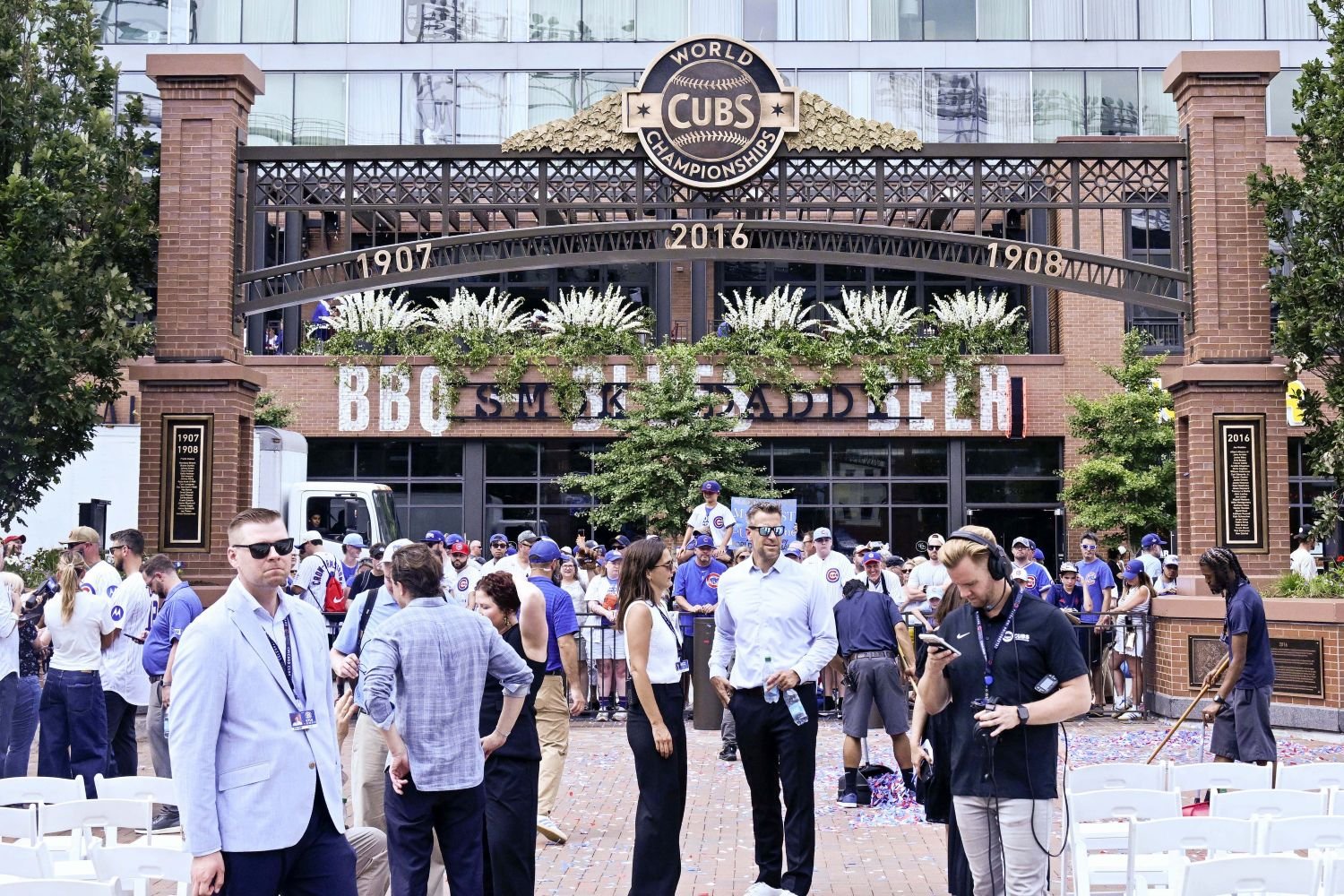 History doesn't repeat itself, but sometimes, it rhymes. When it does, start listening, because that might be when something momentous is about to happen. You needn't be superstitious or a sucker to have heard the rhymes Saturday, as the Cubs dedicated the new commemorative archway on Gallagher Way in celebration of the 2016 World Series championship team and welcomed several members back onto the field, along with the coveted Commissioner's Trophy. Before they could do so, though—between the ceremony that opened the new arch and the one on the field pregame—there were brief showers, very much like an inside joke between Cubs fans and the baseball gods. The team's principals all believe that the short rain delay between the 9th and 10th innings of Game 7 led to the Cubs' triumph, because of the speech Jason Heyward gave in a crowded weight room while the tarp laid over the battlefield outside. To bring all the emotion and memory that had gathered in the green outside the gates back onto the field, 10 years later, why not have another passing downpour? It was Anthony Rizzo, of course, who came out of the doors in right-center field last and carried the trophy through the outfield to the roar of the crowd, as he did on Opening Night in 2017. Rizzo then took up a place in the right-field bleachers, mirroring the stop in left field he made on the day last summer when he officially retired as a Cub. Then, history offered a double dose of resonance. In the bottom of the first inning, Michael Busch—the first Cubs first baseman to play even 100 games at that position since Rizzo was traded in 2021, already past 400 of them—hit his 12th homer of the season, directly to Rizzo. It was not only a serendipitous juxtaposition of past and present, but an echo of the moment on Rizzo's retirement celebration day when Moisés Ballesteros hit a home run directly to him in left field. Infamously, Rizzo dropped the Ballesteros ball, but he caught this one. From there, the game unfolded in a way that was eerily familiar to Cubs fans old enough to remember that 2016 team well. They grinded out at-bats and capitalized on their opponent's mistakes. They played great defense. Matthew Boyd was on his game, with six uneventful innings in which the only run came on a solo homer. He didn't earn even one whiff on 17 Twins swings against his fastball, but he got 21 total called strikes and only walked one batter, striking out four. Busch further evoked Rizzo by tracking a foul pop-up all the way to the edge of the playing field, and sprawling across the same tarp on which Rizzo made multiple highlight-reel catches to snare his own. The Cubs won in workmanlike fashion: not dominant, but never in doubt. Alone, that doesn't mean much. The team entered play Saturday six games behind the Brewers in the NL Central race, and they still face big questions about their pitching depth. They don't have the same youth or the same capacity to smother and overmatch the other team. The 2016 team, not being actually magical, could not and did not imbue this new iteration with its seeming invincibility. However, the day also delivered reminders of how this team's road map to glory is similar to that one's. Nico Hoerner, mired for months in a slump that slid him down the lineup and often left the team a bit short on tough at-bats, came up with four hits in his first four at-bats. He took two high fastballs from Taj Bradley the other way for singles, as the Twins attacked what they surely believed was a persistent weakness. Hoerner had a .219 weighted on-base average (wOBA) on heaters around the top rail of the strike zone this year, before handling those two offerings so adroitly. In his third trip, when Bradley attempted to adjust accordingly, Hoerner turned on a cutter and lined a single to left-center, before going back to shooting it the other way in the seventh against reliever Mike Paredes. If Hoerner gets back to hitting .300 and running a high OBP for the balance of the season, the lineup will regain the last bit of dynamism it had lost when the team plunged into such a tailspinb in May and June. Meanwhile, beyond Busch, the club played stellar defense. Hoerner made a great stab on a one-hop rocket toward right field by Twins shortstop Ryan Kreidler. Later, on another blistered one-hopper bgy Twins left fielder Trevor Larnach, Hoerner recovered after an initial bobble to take away another hit. Ian Happ made a diving catch coming in on a ball in left field. Alex Bregman started a solid around-the-horn double play to escape a budding jam. Even when Pete Crow-Armstrong couldn't make a diving play in the gap in the top of the ninth, the result was two outs, after a quick recovery and good throw by Crow-Armstrong and with the assistance of dreadful Twins baserunning. The championship-winning team dominated by giving the opponent no oxygen on balls in play; this one has to do the same thing. For one day, at least, they did plenty of it. Jed Hoyer is not Theo Epstein, and perhaps Carter Hawkins isn't even Jed Hoyer. They haven't built as robust a winning team as their predecessors did, and the arrival of that championship team on the scene for a day of mingling between the present and the past doesn't fix everything. It merely underscores the chance that still exists, for the 2026 Cubs (or some close succeeding version) to do what that team did. The blueprint is the same. They have great leadership, even if their big offseason signee and nominal leader is having a tougher year than anyone hoped. They have the rudiments of an elite run-precention team, even if they lack a true closer. They have a deep lineup that is learning to wear opponents down, even if it doesn't slug at quite the levels of some of the other top offenses. Joe Maddon was in attendance Saturday. The title-winning year was his third at the helm of the Cubs; this is the third season of Craig Counsell's tenure. Like Maddon, Counsell left a small-market team to take over a team who could burnish his resume in the one way in which it still needed burnishing: by adding a World Series to it. Whether Epstein and Hoyer should have felt quite as much urgency to complete their task as they did that summer 10 years ago is open to debate. They emptied the tank and the farm system to get to the mountaintop. That team was clearly worth at least some of that. This team isn't clearly anything, but you can make the case that they're worth the same gamble. They have, if nothing else, an excellent chance to play on past Game 162. Saturday brought several reminders of how special it will be if they make a deep run into the postseason. It also highlighted the importance of making some additions to the roster before it attempts to do so,
 -
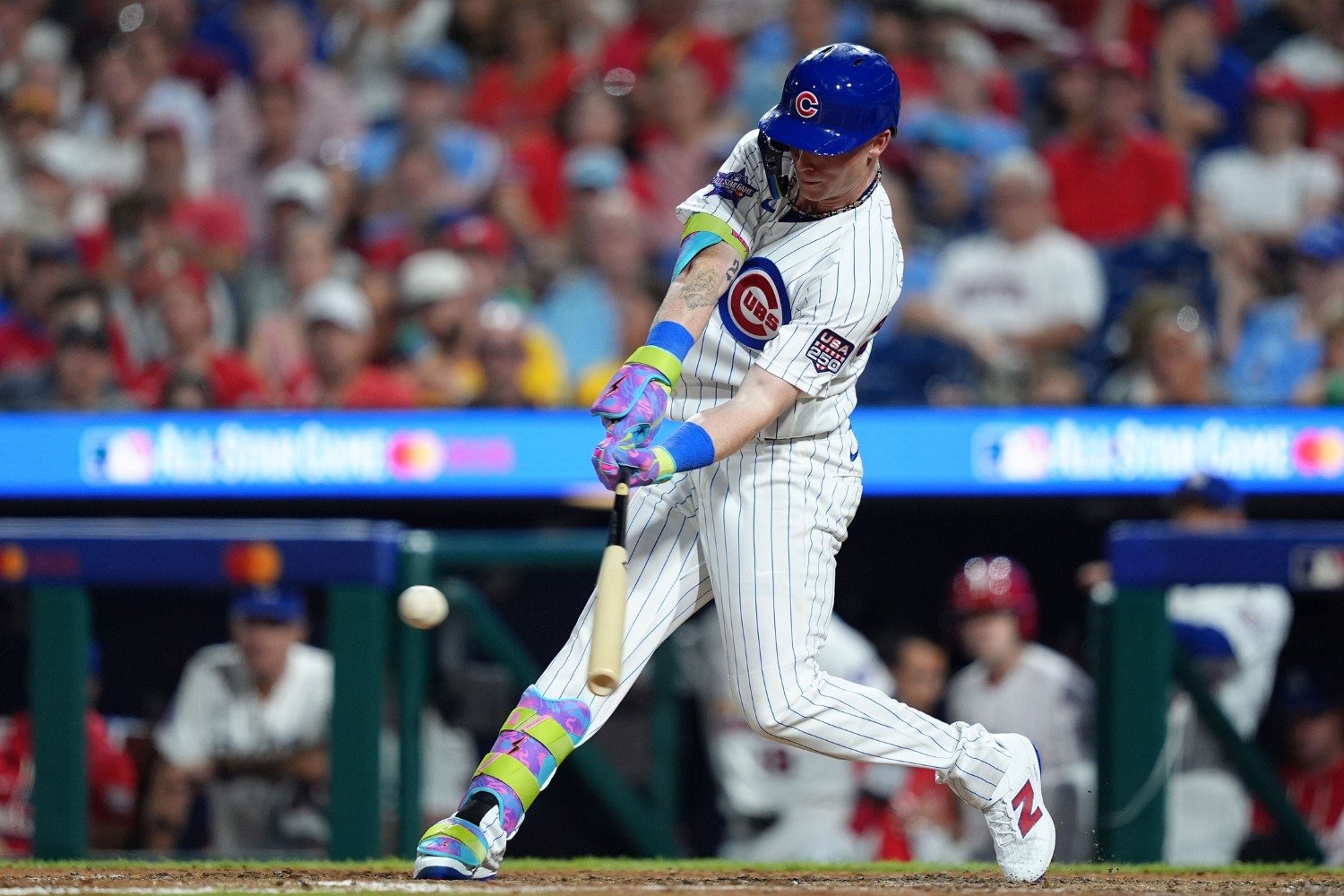 It's great to be recognized by your peers, as Pete Crow-Armstrong was when the Cubs center fielder was selected for the National League All-Star team by player vote. It's great to play on a field with the very best of your peers, as Crow-Armstrong did when he replaced starter Andy Pages mid-game Tuesday night. There's just one problem: Arguably, Crow-Armstrong has no peers right now. At the All-Star break, Crow-Armstrong is on pace to meet each of the following criteria this season, according to Baseball Reference: 40 or more batting runs above average 5 or more baserunning runs above average 15 or more fielding runs above average That magnitude of well-rounded excellence is extremely rare. How much so? Here are all the player-seasons that meet those three criteria, in baseball history: Willie Mays, 1958 Henry Aaron, 1961 Mays, 1964 Rickey Henderson, 1980 Henderson, 1990 Craig Biggio, 1997 Álex Rodríguez, 2000 Mike Trout, 2012 Mookie Betts, 2018 There have, of course, been several other seasons in which a player was more valuable overall, and simply had their value more concentrated in their bat and/or glove. The list above, though, is a pretty neat collection of the best players in the history of the game, in terms of showing all five tools and the remarkable ability to put all of them to work at once. But wait! The company gets even more exclusive. Since May 22, Crow-Armstrong has been on such a torrid pace at the plate that, if he keeps up at anywhere near that clip, he could get to 50 batting runs. If he does, he'll be in a group barely half that size. Only Mays (both years), Henderson (1990 only), Rodríguez, Trout and Betts have gotten to 50 batting runs in a season in which they were also so good in the field and on the bases. Neither metrically (you aren't obligated to believe that the values assigned by Baseball Reference are correct, especially when it comes to fielding) nor philosophically does this exclude considering other players as the game's most well-rounded ever. Johnny Bench had extraordinary value as an elite hitter and superb defensive catcher, and he ran well, too—for a catcher. It's not wholly fair to punish such a player for not being an elite baserunner, and after all, baserunning is much less important than hitting or fielding, even if it's disproportionately fun to watch and can feel game-breaking when done at the level we've seen from Crow-Armstrong. Cal Ripken Jr. wasn't consistently elite with the bat, but for a long time, he was an excellent defensive shortstop, and he had two years (1984 and 1991) when he easily cleared the non-baserunning thresholds here. Roberto Clemente was incredibly well-rounded; Mickey Mantle and Joe DiMaggio have to come up in this conversation. Shohei Ohtani is, of course, a unique case. Still, you can argue cogently that Crow-Armstrong is in a race to join a list of the half-dozen most well-rounded superstars in baseball history. Comps to Mays, Henderson, Rodríguez, Trout or even Betts would have felt ludicrously optimistic even a few months ago, but the talent Crow-Armstrong is putting on display has gone from powerful but conventional to nuclear. He's turned a corner at the plate, and as a result, his all-around excellence has reached a new level. In the unofficial second half of the season, one of the best stories around the Cubs will be whether their best player can complete his MVP case and claim a place among the best players ever—if only, so far, for one season.
 -
Image courtesy of © Kyle Ross-Imagn Images It's great to be recognized by your peers, as Pete Crow-Armstrong was when the Cubs center fielder was selected for the National League All-Star team by player vote. It's great to play on a field with the very best of your peers, as Crow-Armstrong did when he replaced starter Andy Pages mid-game Tuesday night. There's just one problem: Arguably, Crow-Armstrong has no peers right now. At the All-Star break, Crow-Armstrong is on pace to meet each of the following criteria this season, according to Baseball Reference: 40 or more batting runs above average 5 or more baserunning runs above average 15 or more fielding runs above average That magnitude of well-rounded excellence is extremely rare. How much so? Here are all the player-seasons that meet those three criteria, in baseball history: Willie Mays, 1958 Henry Aaron, 1961 Mays, 1964 Rickey Henderson, 1980 Henderson, 1990 Craig Biggio, 1997 Álex Rodríguez, 2000 Mike Trout, 2012 Mookie Betts, 2018 There have, of course, been several other seasons in which a player was more valuable overall, and simply had their value more concentrated in their bat and/or glove. The list above, though, is a pretty neat collection of the best players in the history of the game, in terms of showing all five tools and the remarkable ability to put all of them to work at once. But wait! The company gets even more exclusive. Since May 22, Crow-Armstrong has been on such a torrid pace at the plate that, if he keeps up at anywhere near that clip, he could get to 50 batting runs. If he does, he'll be in a group barely half that size. Only Mays (both years), Henderson (1990 only), Rodríguez, Trout and Betts have gotten to 50 batting runs in a season in which they were also so good in the field and on the bases. Neither metrically (you aren't obligated to believe that the values assigned by Baseball Reference are correct, especially when it comes to fielding) nor philosophically does this exclude considering other players as the game's most well-rounded ever. Johnny Bench had extraordinary value as an elite hitter and superb defensive catcher, and he ran well, too—for a catcher. It's not wholly fair to punish such a player for not being an elite baserunner, and after all, baserunning is much less important than hitting or fielding, even if it's disproportionately fun to watch and can feel game-breaking when done at the level we've seen from Crow-Armstrong. Cal Ripken Jr. wasn't consistently elite with the bat, but for a long time, he was an excellent defensive shortstop, and he had two years (1984 and 1991) when he easily cleared the non-baserunning thresholds here. Roberto Clemente was incredibly well-rounded; Mickey Mantle and Joe DiMaggio have to come up in this conversation. Shohei Ohtani is, of course, a unique case. Still, you can argue cogently that Crow-Armstrong is in a race to join a list of the half-dozen most well-rounded superstars in baseball history. Comps to Mays, Henderson, Rodríguez, Trout or even Betts would have felt ludicrously optimistic even a few months ago, but the talent Crow-Armstrong is putting on display has gone from powerful but conventional to nuclear. He's turned a corner at the plate, and as a result, his all-around excellence has reached a new level. In the unofficial second half of the season, one of the best stories around the Cubs will be whether their best player can complete his MVP case and claim a place among the best players ever—if only, so far, for one season. View full article
-
Shota Imanaga Has Switched into Playoff Mode for Playoff-Hopeful Cubs
Matthew Trueblood posted an article in Cubs
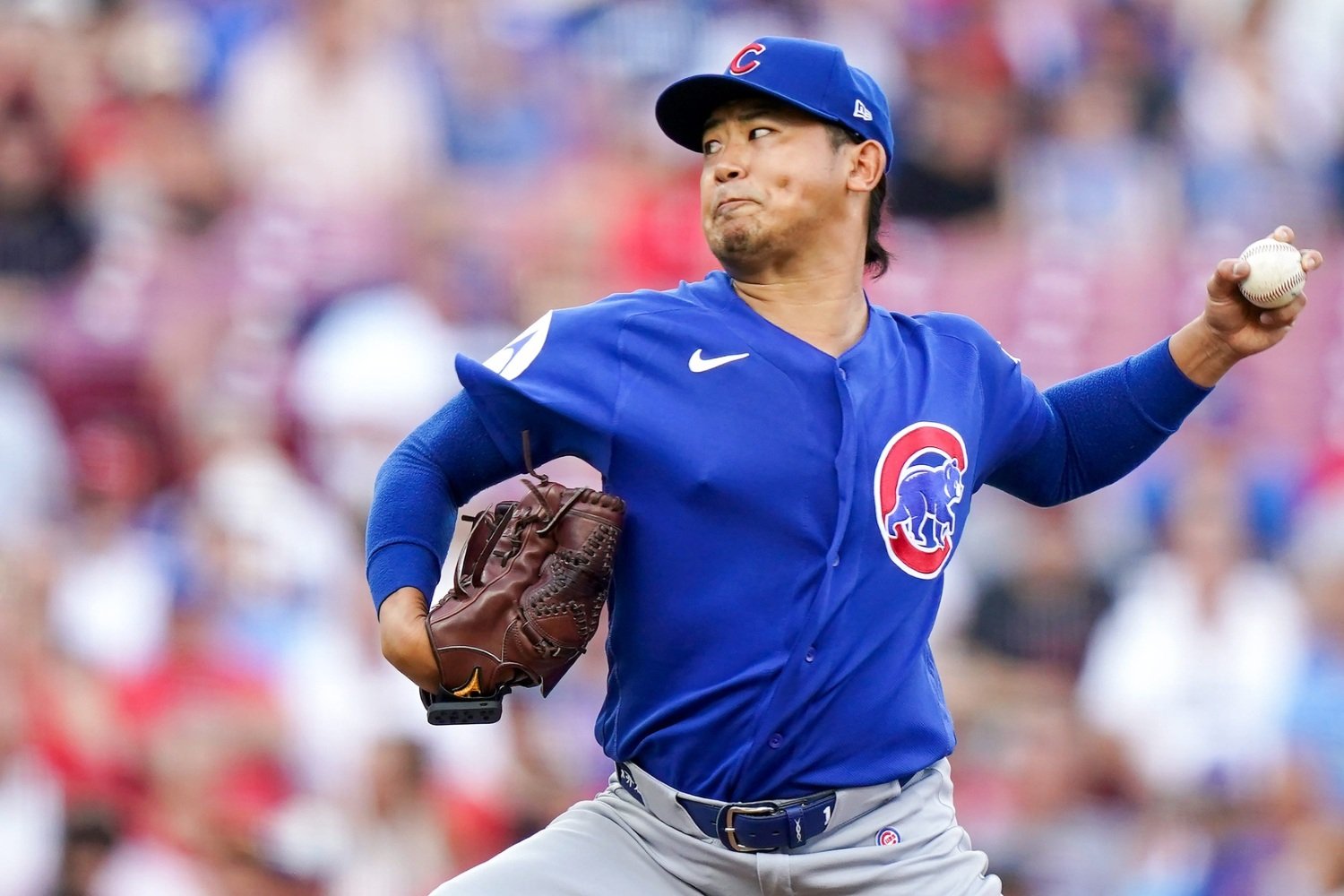 It's too early to start making hotel reservations for October, but it's not too early to start saving up for the massive prices of playoff tickets. The Chicago Cubs have surged again recently, and while it hasn't been enough to make them any serious threat to the Milwaukee Brewers for the NL Central crown, they're now firmly back into playoff position and will be buyers at the trade deadline. FanGraphs estimates that the team has a 76.8% chance to reach the postseason, more than double the odds it gave them at their nadir a little over a month ago. That might even undersell them, because at this point, it's clear that the Cubs will supplement their pitching staff in some way at the deadline, whereas some of the teams still taking up some of the projected playoff probability in models like FanGraphs's (the Marlins, the Nationals, the Padres, the Diamondbacks, the Cardinals, the Pirates) are much less likely to do so. Sensing the importance of not only recovering in the standings but continuing to push forward, the Cubs have gone into a mode not unlike a team in its stretch drive or in the playoffs themselves, lately. Craig Counsell is spending less time rotating in and trusting young players. He's using a shorter hook on his starters. And, in fact, one of those starters has also changed his approach, adapting to Counsell's plan to win each day and to the new role he might fill as the roster changes in coming weeks. Shota Imanaga will not—he can not—be a playoff ace for the Cubs. It's just not part of his spectrum of reasonable projected outcomes, at this point. The team rightfully trusts Matthew Boyd more at this point, and they'll hope to have at least one of Jameson Taillon, Edward Cabrera or Ben Brown (in order, here, from most to least likely) healthy and pitching like a playoff starter by the time they get to the end of the season. They're also going to be in the market for a starter of at least that caliber via trade this month, though it's never easy to acquire such a player. If the Cubs get their way, Imanaga won't be slated to pitch much in a Wild Card Series. However, if the team is to make any meaningful run in the playoffs, they'll need Imanaga to be his best self. That 'best self' just needs to look a bit different than it does during the grind of the regular season. To that end, we've seen Imanaga make a major adjustment over his last three starts, which could signal both the team's desire to prepare him for the role he'll play in September and October and his own understanding of how his skill set interacts with the world he's pitching in right now. Ordinarily, Imanaga is a fastball-forward guy. That's what made him so lamentably hittable down the stretch last season, when his fastball velocity sagged into the upper 80s and lowest end of the 90s most of the time. He works off his fastball for two reasons: When it's right, the pitch can induce pop-ups, whiffs and other positive outcomes for Imanaga and the Cubs. Well-located at the top of the strike zone, the pitch comes in unusually flat, and hitters struggle to adjust enough to get the barrel through the center of the ball. Even if they center the ball perfectly on the barrel, they're often a bit underneath it. Throwing the fastball enough to force batters to look for it sets up his two more devastating options, the splitter and the sweeper. Imanaga thrives on getting batters to chase outside the zone, and they'll do that more readily when they're looking for a fastball and (therefore) expecting a strike. The heater itself not only isn't an out pitch, though, but tends to get hit hard. Yes, he gets routine fly balls and pop-ups with it, but he also gives up more than his share of home runs on it. That's in the nature of being a guy who works up in the zone with a slower-than-average fastball. It's an important piece of the puzzle for him, but the stats will always be ugly on at-bats that end with fastballs. The challenge is to throw that pitch as little as possible, without diminishing the effectiveness of secondary pitches that rely on the fastball to make them play up. That's become even more important this season, but also more complicated. The advent of the ABS system has brought about a smaller zone, and most of the lost dimension of the zone has come off the top edge. As a result, more of the fastballs Imanaga throws are technically above the zone, so batters are less incentivized to swing against it—but also less pressured to hunt the fastball, and perhaps less naturally vulnerable to the other offerings. Three starts ago, therefore, Imanaga made a change. Beginning then and growing even more stark in his two July starts, he's thrown the fastball less than ever before, since he came to the United States in 2024. That's come, as you'd expect, with greater reliance on the splitter and sweeper. The metrics on those pitches are much better than on his fastball, but there's a catch: without the fastball to set them up, he has to work harder to get outs with them. The most efficient version of Imanaga is the guy who throws that fastball 45% of the time, rather than about a third of the time. But that efficiency isn't always what the team needs. In his two starts this month, Imanaga has only recorded 29 total outs. He went 4 2/3 innings against the Cardinals on July 4, and 5 frames against the Reds on Friday night. However, he's only given up three runs in the two outings, combined. He's using more pitches per batter faced, and he's walking more batters than the version of himself who dominated the league for parts of 2024. However, he's still missing enough bats, as evidenced by his 13 strikeouts in the two outings. Counsell is also being more proactive with him, pulling him not at the first sign of trouble, but before that trouble can become a budding disaster. This is how teams use their third or fourth starter in the postseason: by asking them to be less efficient but more clinical. That Imanaga is already morphing into that version of himself is good news for Chicago. It puts a bit of extra pressure on the bullpen, but it also gives the team a better chance of being in position to win when Imanaga leaves the game. It's time to make those kinds of changes and get serious about the formula they want to use to win games when the stakes rise sharply. Fewer runs allowed per out recorded becomes the sole criterion of utility by mid-September, and Imanaga and the Cubs are turning his starts into rehearsals for that intensity and urgency even in July.
 -
Image courtesy of © Frank Bowen IV/The Enquirer / USA TODAY NETWORK via Imagn Images It's too early to start making hotel reservations for October, but it's not too early to start saving up for the massive prices of playoff tickets. The Chicago Cubs have surged again recently, and while it hasn't been enough to make them any serious threat to the Milwaukee Brewers for the NL Central crown, they're now firmly back into playoff position and will be buyers at the trade deadline. FanGraphs estimates that the team has a 76.8% chance to reach the postseason, more than double the odds it gave them at their nadir a little over a month ago. That might even undersell them, because at this point, it's clear that the Cubs will supplement their pitching staff in some way at the deadline, whereas some of the teams still taking up some of the projected playoff probability in models like FanGraphs's (the Marlins, the Nationals, the Padres, the Diamondbacks, the Cardinals, the Pirates) are much less likely to do so. Sensing the importance of not only recovering in the standings but continuing to push forward, the Cubs have gone into a mode not unlike a team in its stretch drive or in the playoffs themselves, lately. Craig Counsell is spending less time rotating in and trusting young players. He's using a shorter hook on his starters. And, in fact, one of those starters has also changed his approach, adapting to Counsell's plan to win each day and to the new role he might fill as the roster changes in coming weeks. Shota Imanaga will not—he can not—be a playoff ace for the Cubs. It's just not part of his spectrum of reasonable projected outcomes, at this point. The team rightfully trusts Matthew Boyd more at this point, and they'll hope to have at least one of Jameson Taillon, Edward Cabrera or Ben Brown (in order, here, from most to least likely) healthy and pitching like a playoff starter by the time they get to the end of the season. They're also going to be in the market for a starter of at least that caliber via trade this month, though it's never easy to acquire such a player. If the Cubs get their way, Imanaga won't be slated to pitch much in a Wild Card Series. However, if the team is to make any meaningful run in the playoffs, they'll need Imanaga to be his best self. That 'best self' just needs to look a bit different than it does during the grind of the regular season. To that end, we've seen Imanaga make a major adjustment over his last three starts, which could signal both the team's desire to prepare him for the role he'll play in September and October and his own understanding of how his skill set interacts with the world he's pitching in right now. Ordinarily, Imanaga is a fastball-forward guy. That's what made him so lamentably hittable down the stretch last season, when his fastball velocity sagged into the upper 80s and lowest end of the 90s most of the time. He works off his fastball for two reasons: When it's right, the pitch can induce pop-ups, whiffs and other positive outcomes for Imanaga and the Cubs. Well-located at the top of the strike zone, the pitch comes in unusually flat, and hitters struggle to adjust enough to get the barrel through the center of the ball. Even if they center the ball perfectly on the barrel, they're often a bit underneath it. Throwing the fastball enough to force batters to look for it sets up his two more devastating options, the splitter and the sweeper. Imanaga thrives on getting batters to chase outside the zone, and they'll do that more readily when they're looking for a fastball and (therefore) expecting a strike. The heater itself not only isn't an out pitch, though, but tends to get hit hard. Yes, he gets routine fly balls and pop-ups with it, but he also gives up more than his share of home runs on it. That's in the nature of being a guy who works up in the zone with a slower-than-average fastball. It's an important piece of the puzzle for him, but the stats will always be ugly on at-bats that end with fastballs. The challenge is to throw that pitch as little as possible, without diminishing the effectiveness of secondary pitches that rely on the fastball to make them play up. That's become even more important this season, but also more complicated. The advent of the ABS system has brought about a smaller zone, and most of the lost dimension of the zone has come off the top edge. As a result, more of the fastballs Imanaga throws are technically above the zone, so batters are less incentivized to swing against it—but also less pressured to hunt the fastball, and perhaps less naturally vulnerable to the other offerings. Three starts ago, therefore, Imanaga made a change. Beginning then and growing even more stark in his two July starts, he's thrown the fastball less than ever before, since he came to the United States in 2024. That's come, as you'd expect, with greater reliance on the splitter and sweeper. The metrics on those pitches are much better than on his fastball, but there's a catch: without the fastball to set them up, he has to work harder to get outs with them. The most efficient version of Imanaga is the guy who throws that fastball 45% of the time, rather than about a third of the time. But that efficiency isn't always what the team needs. In his two starts this month, Imanaga has only recorded 29 total outs. He went 4 2/3 innings against the Cardinals on July 4, and 5 frames against the Reds on Friday night. However, he's only given up three runs in the two outings, combined. He's using more pitches per batter faced, and he's walking more batters than the version of himself who dominated the league for parts of 2024. However, he's still missing enough bats, as evidenced by his 13 strikeouts in the two outings. Counsell is also being more proactive with him, pulling him not at the first sign of trouble, but before that trouble can become a budding disaster. This is how teams use their third or fourth starter in the postseason: by asking them to be less efficient but more clinical. That Imanaga is already morphing into that version of himself is good news for Chicago. It puts a bit of extra pressure on the bullpen, but it also gives the team a better chance of being in position to win when Imanaga leaves the game. It's time to make those kinds of changes and get serious about the formula they want to use to win games when the stakes rise sharply. Fewer runs allowed per out recorded becomes the sole criterion of utility by mid-September, and Imanaga and the Cubs are turning his starts into rehearsals for that intensity and urgency even in July. View full article
-
Image courtesy of © Albert Cesare/The Enquirer / USA TODAY NETWORK via Imagn Images What Pete Crow-Armstrong is doing this season—and, in particular, what he's been doing since about the fourth week of May—is stunning, but you know that. He's putting together one of the best individual seasons in Cubs history, pending a second half in which he must prove he can sustain this level of intensity and brilliance. But you know that, too. What you might not know is, he's already soared up the Cubs' all-time leaderboard when it comes to blending power and speed—not over a year or two, but over a whole career. Though he's only 24 years old, Crow-Armstrong already has 62 homers and 88 steals for his career, including 21 and 24 this season. He passed Billy Williams and Corey Patterson in steals in a Cubs uniform in the final week before the All-Star break. He also passed Jose Cardenal on the team's career home run leaderboard. That leaves just five players who have played since the start of the Live Ball Era who have both hit more homers and stolen more bases than Crow-Armstrong during their time with Chicago. Here they are, with their Cubs totals in both categories, so you can see just how good a chance he has to go down as the most prolific progenitor of excitement in Cubs history. Kiki Cuyler: 79 homers, 161 steals This one almost doesn't count, because steals were counted very differently before about World War II and some steals totals from that period are quite inflated. We'll keep Cuyler around, though, because Crow-Armstrong is benefiting in his own way from the era in which he plays. None of these guys compiled their steals against pitchers who had to get the ball off before a clock hit :00, after all, and those hurlers could throw over to first as many times as they wished. Cuyler is a Hall of Famer, though he only played about half his illustrious career with the Cubs. That stint did include being on two pennant-winning clubs, though, and he hit well in his two World Series with the team. Homers weren't the driver of the offensive explosion in the NL in the late 1920s and early 1930s, but Cuyler showed good power for his time. He also hit for average, controlled the zone and led the NL in steals three times in a row when he first joined the Cubs via a trade with Pittsburgh in late 1927. He played more right than center, and wasn't quite the all-around dominator Crow-Armstrong has been in spurts over the last two years, but he was one of the 10 or 15 best players in the league for a few years. Crow-Armstrong could pass him in career homers by early next season, if he stays healthy. Leon Durham: 138 homers, 98 steals Those who remember Durham only dimly, having been too young to experience his arrival and ascent, might be surprised that he stole so many times. Truthfully, he shouldn't have. Durham was much more athletic than most first basemen and always did take a base when teams paid too little attention, but over half his steals as a Cub came in his first two seasons with the club, when he was still an outfielder. He grabbed 25 bags in 1981 and 28 in 1982, which sounds nice—but he was caught a combined 25 times in those two years. If the old days inflated by steals by counting plays we would not now dub steals and we now see inflation based on the rules, the 1980s saw inflation in steal totals simply because no one told inefficient basestealers to stop making needless outs. Crow-Armstrong will probably pass Durham in steals before this year is over. Shawon Dunston: 107 homers, 175 steals A two-time All-Star shortstop for the North Siders, Dunston got to these numbers partially via skill—he was certainly a better baserunner than Durham, usually succeeding enough that even a modern manager would give him the green light—and partially via an accumulation of playing time. He never hit more than 17 home runs in a season. As torrid a pace as Crow-Armstrong is on, you can't race past a guy who spent parts of 12 seasons with the team as easily as you can sail past the likes of Cuyler and Durham. Even if he stays healthy and keeps raking, he might not pass Dunston in homers until 2028. Sammy Sosa: 545 homers, 181 steals I urged a comp between the skill sets and career arcs of Crow-Armstrong and the young, dynamic version of Sosa for a long time. In some sense, Sosa remains the power-speed standard of Cubs history; he had two 30/30 seasons and two more 20/20 ones. If not for the 1994 strike and a season-ending injury in 1996, he could well have three 30/30 campaigns and a 50/20 one, which Crow-Armstrong might never match. Still, Sosa was never quite as well-rounded as Crow-Armstrong is at this moment. Whether you credit a change in the ball, PED use, hitting coach Jeff Pentland or the double expansions of 1993 and 1998 watering down the league's pitching talent for it all, Sosa's emergence as a full-fledged superstar slugger in 1998 coincided with him reaching his late 20s and losing his basestealing nous. He started walking more (though still not as much as Crow-Armstrong has over the last month and a half), but ran less, in addition to playing worsening defense. There's a lot of wood to chop here. By all indications, Crow-Armstrong has plenty of time left to run the bases well, and he's getting on base so much that his steal rate hasn't dropped even as his slugging has surged. Still, he probably needs the rest of this year and four more to catch Sosa in the steals department. As delightful as it is to watch him execute his gameplan and launch homers, it seems virtually unthinkable that he'll hit 500-plus homers for the team. Plan on seeing him best Sosa on the bases, and not until 2030. Ryne Sandberg: 282 homers, 344 steals Nobody stays healthy and good long enough to steal 344 bases anymore. The active leader is Starling Marte (did you know he was still active? He's a Royal!), at 362, but he's spent 15 years compiling those numbers. Only three more guys (Trea Turner, Jose Altuve and José Ramírez) have more than 250. Crow-Armstrong has a fast start at a young age working for him, but don't count on him eclipsing Sandberg, and even if he does get to that total, it might be in his mid-30s, on some other team. No, the better chance for him to get to the top of this mountain lies in continuing to hit for massive power. He'd need to stick around for his whole long-term contract and be a fearsome slugger the whole time, but that one is possible. Either way, it'll be fun to watch him launch his assault on this bit of Cubs history. Sandberg is the most balanced and beloved power-speed guy in Cubs history. Crow-Armstrong might get past everyone else rather easily, but he has to stay at a superstar level for a long time to catch Ryno. View full article
-
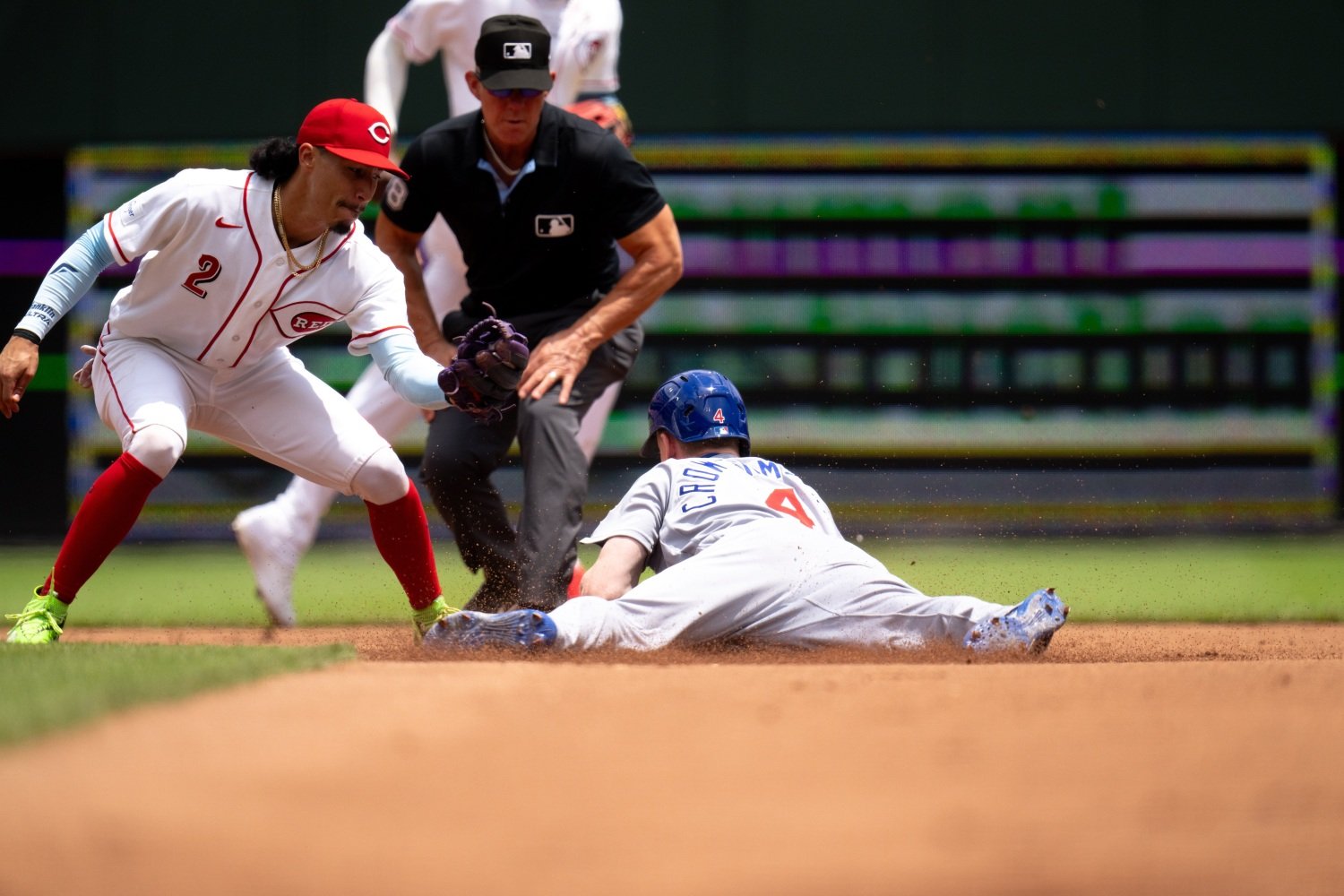 What Pete Crow-Armstrong is doing this season—and, in particular, what he's been doing since about the fourth week of May—is stunning, but you know that. He's putting together one of the best individual seasons in Cubs history, pending a second half in which he must prove he can sustain this level of intensity and brilliance. But you know that, too. What you might not know is, he's already soared up the Cubs' all-time leaderboard when it comes to blending power and speed—not over a year or two, but over a whole career. Though he's only 24 years old, Crow-Armstrong already has 62 homers and 88 steals for his career, including 21 and 24 this season. He passed Billy Williams and Corey Patterson in steals in a Cubs uniform in the final week before the All-Star break. He also passed Jose Cardenal on the team's career home run leaderboard. That leaves just five players who have played since the start of the Live Ball Era who have both hit more homers and stolen more bases than Crow-Armstrong during their time with Chicago. Here they are, with their Cubs totals in both categories, so you can see just how good a chance he has to go down as the most prolific progenitor of excitement in Cubs history. Kiki Cuyler: 79 homers, 161 steals This one almost doesn't count, because steals were counted very differently before about World War II and some steals totals from that period are quite inflated. We'll keep Cuyler around, though, because Crow-Armstrong is benefiting in his own way from the era in which he plays. None of these guys compiled their steals against pitchers who had to get the ball off before a clock hit :00, after all, and those hurlers could throw over to first as many times as they wished. Cuyler is a Hall of Famer, though he only played about half his illustrious career with the Cubs. That stint did include being on two pennant-winning clubs, though, and he hit well in his two World Series with the team. Homers weren't the driver of the offensive explosion in the NL in the late 1920s and early 1930s, but Cuyler showed good power for his time. He also hit for average, controlled the zone and led the NL in steals three times in a row when he first joined the Cubs via a trade with Pittsburgh in late 1927. He played more right than center, and wasn't quite the all-around dominator Crow-Armstrong has been in spurts over the last two years, but he was one of the 10 or 15 best players in the league for a few years. Crow-Armstrong could pass him in career homers by early next season, if he stays healthy. Leon Durham: 138 homers, 98 steals Those who remember Durham only dimly, having been too young to experience his arrival and ascent, might be surprised that he stole so many times. Truthfully, he shouldn't have. Durham was much more athletic than most first basemen and always did take a base when teams paid too little attention, but over half his steals as a Cub came in his first two seasons with the club, when he was still an outfielder. He grabbed 25 bags in 1981 and 28 in 1982, which sounds nice—but he was caught a combined 25 times in those two years. If the old days inflated by steals by counting plays we would not now dub steals and we now see inflation based on the rules, the 1980s saw inflation in steal totals simply because no one told inefficient basestealers to stop making needless outs. Crow-Armstrong will probably pass Durham in steals before this year is over. Shawon Dunston: 107 homers, 175 steals A two-time All-Star shortstop for the North Siders, Dunston got to these numbers partially via skill—he was certainly a better baserunner than Durham, usually succeeding enough that even a modern manager would give him the green light—and partially via an accumulation of playing time. He never hit more than 17 home runs in a season. As torrid a pace as Crow-Armstrong is on, you can't race past a guy who spent parts of 12 seasons with the team as easily as you can sail past the likes of Cuyler and Durham. Even if he stays healthy and keeps raking, he might not pass Dunston in homers until 2028. Sammy Sosa: 545 homers, 181 steals I urged a comp between the skill sets and career arcs of Crow-Armstrong and the young, dynamic version of Sosa for a long time. In some sense, Sosa remains the power-speed standard of Cubs history; he had two 30/30 seasons and two more 20/20 ones. If not for the 1994 strike and a season-ending injury in 1996, he could well have three 30/30 campaigns and a 50/20 one, which Crow-Armstrong might never match. Still, Sosa was never quite as well-rounded as Crow-Armstrong is at this moment. Whether you credit a change in the ball, PED use, hitting coach Jeff Pentland or the double expansions of 1993 and 1998 watering down the league's pitching talent for it all, Sosa's emergence as a full-fledged superstar slugger in 1998 coincided with him reaching his late 20s and losing his basestealing nous. He started walking more (though still not as much as Crow-Armstrong has over the last month and a half), but ran less, in addition to playing worsening defense. There's a lot of wood to chop here. By all indications, Crow-Armstrong has plenty of time left to run the bases well, and he's getting on base so much that his steal rate hasn't dropped even as his slugging has surged. Still, he probably needs the rest of this year and four more to catch Sosa in the steals department. As delightful as it is to watch him execute his gameplan and launch homers, it seems virtually unthinkable that he'll hit 500-plus homers for the team. Plan on seeing him best Sosa on the bases, and not until 2030. Ryne Sandberg: 282 homers, 344 steals Nobody stays healthy and good long enough to steal 344 bases anymore. The active leader is Starling Marte (did you know he was still active? He's a Royal!), at 362, but he's spent 15 years compiling those numbers. Only three more guys (Trea Turner, Jose Altuve and José Ramírez) have more than 250. Crow-Armstrong has a fast start at a young age working for him, but don't count on him eclipsing Sandberg, and even if he does get to that total, it might be in his mid-30s, on some other team. No, the better chance for him to get to the top of this mountain lies in continuing to hit for massive power. He'd need to stick around for his whole long-term contract and be a fearsome slugger the whole time, but that one is possible. Either way, it'll be fun to watch him launch his assault on this bit of Cubs history. Sandberg is the most balanced and beloved power-speed guy in Cubs history. Crow-Armstrong might get past everyone else rather easily, but he has to stay at a superstar level for a long time to catch Ryno.
 -
Well, thanks! Any piece where I feel like I can synthesize my own thoughts on a subject is a win for me. If I get it right, they're also fun reads, because we're all learning together.
-
Not happening. In my opinion, also SHOULDN'T happen, but definitely ISN'T happening. Obviously your proposal is way more than he would cost, in one sense, though what it would really be (Rojas? Hartshorn?) would hurt. Skubal is an expensive and risky guy headed right to free agency. They're not going after him. And while I wish your last sentence were true, it isn't. They really don't have the farm depth or the recent player dev track record to be emptying the shelves for that kind of player.
-
Image courtesy of © Jamie Sabau-Imagn Images It wasn't enough to give the Cubs breathing room and win the game Thursday afternoon, but Pete Crow-Armstrong sparked a go-ahead rally in the top of the eighth inning. On a 1-0 pitch, he cracked a double to put himself instantly into scoring position—although in this particular case, "cracked" feels a bit cheeky. This was not, as the kids would say, an especially ethical double. It wasn't even a clean single, by a certain reckoning. When people talk about hitters getting lucky, this is often (rightly or wrongly) what they mean. Here's the thing, though: that wasn't luck. Firstly, give Crow-Armstrong credit. His speed made this a double; it's a single for most hitters. But secondly (and more importantly, for our purposes), this kind of hit is a new and durable part of the evolving offensive skill set Crow-Armstrong has showed off during his searing-hot stretch since May 22. When you start working to get your pitch, the balls you put in play start to cluster more in certain areas of the zone. We know how much better Crow-Armstrong has gotten at that lately, as he's drawn nearly as many walks (28) in the last 43 games as he drew in all of 2025 (29). Here's a heat map showing where the pitches on which he's put the ball in play have been this year, though, split into before and after the off day I've repeatedly cited as the starting point of his breakout. That's step one in making ferocious contact. Step two, of course, is swinging fast enough to deliver the barrel to the ball with massive force; Crow-Armstrong has also gotten much better at that. He made a big jump in bat speed from last season to this spring, but has also swung faster as this season has progressed. Step three in being a dangerous slugger is to find a swing path that allows one to consistently work uphill through the ball and pull it, rather than hitting too many grounders or using the big part of the park too much. Ironically, this is the thing Crow-Armstrong showed a knack for the soonest. All players develop uniquely, but one of the fascinating quirks about Crow-Armstrong is that he's gone through the three steps of blossoming into a great power hitter in the opposite of the most common and logically clear order. Now, though, let's talk about the bonus value a great power hitter can find, if and when they master the three steps above. You have your swing figured out; it's on plane and on time. It's also extremely violent, so even a mishit ball goes somewhere. You've tightened your zone, so that your mishits are just slight errors in the execution of a swing so fierce, rather than wild variants on an inconsistent stroke that sacrifice a lot of bat speed just to touch the ball. Your best moments are still when you click on the ball, the way Crow-Armstrong did for two home runs Wednesday night. But when you don't quite do so, you also get a residual benefit: a bunch of flared singles (and, if you're speedy, doubles). This season, Crow-Armstrong has 11 hits on batted balls with an exit velocity between 63 and 78 miles per hour and a launch angle between 25° and 40°. No other player in the league has more than eight such hits on the year. That's only part of the story, though. Of those 11 hits for Crow-Armstrong, 10 have come since the beginning of June. It's only once he started organizing his zone so well that he tapped this vein of balls that aren't well-hit, but are going to fall in just about every time. They look like this: WnhxQWxfWGw0TUFRPT1fVXdnREFWd0RWUVVBQ1ZCUVVBQUhVbFZTQUZoVEFRY0FWMTBIQ0FzTUExRURDQXRW.mp4 And like this: ek13eVpfV0ZRVkV3dEdEUT09X0FRUUFYVklNVkZZQVhGdFhVQUFIVUFRSEFGa0JWUUFBQkFZR0FWRlJBUW9HQ1FJRA==.mp4 And like this: UHY2eXhfV0ZRVkV3dEdEUT09X0JsTUhCMUVNQXdVQVhnRlRBd0FIQ1FKVEFGa0VBbEVBQWxRSENRQlJCd1ZkVXdSVA==.mp4 His average swing speed on the 11 hits we're talking about (you can find more hits that fit this genre more loosely by changing the constraints, of course, but these 11 capture the skill he's found perfectly) is 75.8 MPH. That ensures that these balls get up in the air and over the infielders. They're also in hittable locations, because Crow-Armstrong has become so much more selective in his aggressiveness; that's why he's hitting lofted wedges instead of pure popups, lazy flies or impotent choppers. And because outfielders must both start in deep positioning to respect his near-elite power and initially read these swings as full and aggressive, they have almost no chance of reading the ball well enough to cover the ground required to make the catch in the time it actually spends in the air. He's htting them off the end of the bat, and off the label. He's getting slightly under them. But these are swings on which Crow-Armstrong is only missing by a little, and because his is such a dangerous swing and such a newly mature approach, the result is a series of balls finding parts of the field that the defense can't fill. Hitting for power is great. Crow-Armstrong brought that element last year, and turned into a star because of it. Now, however, he's much more than a power hitter. With an approach that puts him on base via the walk consistently and this ability to hit for average by finding singles even when he doesn't square the ball up, he's essentially unstoppable. Since May 22, he leads qualified batters in batting average, OBP and slugging—yes, in OPS, but also in each individual segment of the slash line. That's because he's become so complete that he now gets to profit from slugger's singles, as well as racking up extra-base hits and taking his base when pitchers show well-founded fear of him. When you bake in the fact that he's also a plus on the bases and in the field, it gets very, very easy to build an MVP case for him, even in a world he must share with Shohei Ohtani. View full article
-
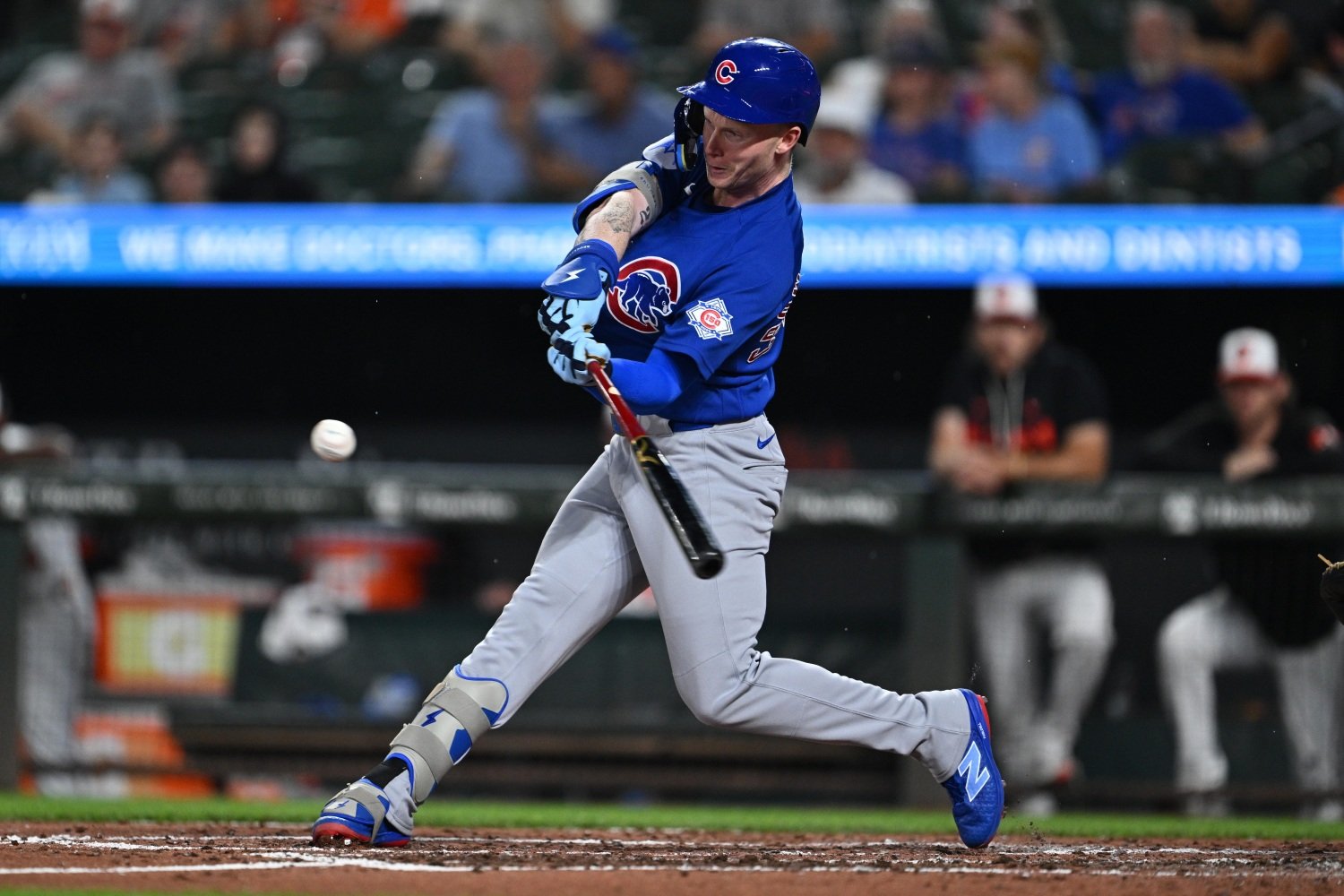 It wasn't enough to give the Cubs breathing room and win the game Thursday afternoon, but Pete Crow-Armstrong sparked a go-ahead rally in the top of the eighth inning. On a 1-0 pitch, he cracked a double to put himself instantly into scoring position—although in this particular case, "cracked" feels a bit cheeky. This was not, as the kids would say, an especially ethical double. It wasn't even a clean single, by a certain reckoning. When people talk about hitters getting lucky, this is often (rightly or wrongly) what they mean. Here's the thing, though: that wasn't luck. Firstly, give Crow-Armstrong credit. His speed made this a double; it's a single for most hitters. But secondly (and more importantly, for our purposes), this kind of hit is a new and durable part of the evolving offensive skill set Crow-Armstrong has showed off during his searing-hot stretch since May 22. When you start working to get your pitch, the balls you put in play start to cluster more in certain areas of the zone. We know how much better Crow-Armstrong has gotten at that lately, as he's drawn nearly as many walks (28) in the last 43 games as he drew in all of 2025 (29). Here's a heat map showing where the pitches on which he's put the ball in play have been this year, though, split into before and after the off day I've repeatedly cited as the starting point of his breakout. That's step one in making ferocious contact. Step two, of course, is swinging fast enough to deliver the barrel to the ball with massive force; Crow-Armstrong has also gotten much better at that. He made a big jump in bat speed from last season to this spring, but has also swung faster as this season has progressed. Step three in being a dangerous slugger is to find a swing path that allows one to consistently work uphill through the ball and pull it, rather than hitting too many grounders or using the big part of the park too much. Ironically, this is the thing Crow-Armstrong showed a knack for the soonest. All players develop uniquely, but one of the fascinating quirks about Crow-Armstrong is that he's gone through the three steps of blossoming into a great power hitter in the opposite of the most common and logically clear order. Now, though, let's talk about the bonus value a great power hitter can find, if and when they master the three steps above. You have your swing figured out; it's on plane and on time. It's also extremely violent, so even a mishit ball goes somewhere. You've tightened your zone, so that your mishits are just slight errors in the execution of a swing so fierce, rather than wild variants on an inconsistent stroke that sacrifice a lot of bat speed just to touch the ball. Your best moments are still when you click on the ball, the way Crow-Armstrong did for two home runs Wednesday night. But when you don't quite do so, you also get a residual benefit: a bunch of flared singles (and, if you're speedy, doubles). This season, Crow-Armstrong has 11 hits on batted balls with an exit velocity between 63 and 78 miles per hour and a launch angle between 25° and 40°. No other player in the league has more than eight such hits on the year. That's only part of the story, though. Of those 11 hits for Crow-Armstrong, 10 have come since the beginning of June. It's only once he started organizing his zone so well that he tapped this vein of balls that aren't well-hit, but are going to fall in just about every time. They look like this: WnhxQWxfWGw0TUFRPT1fVXdnREFWd0RWUVVBQ1ZCUVVBQUhVbFZTQUZoVEFRY0FWMTBIQ0FzTUExRURDQXRW.mp4 And like this: ek13eVpfV0ZRVkV3dEdEUT09X0FRUUFYVklNVkZZQVhGdFhVQUFIVUFRSEFGa0JWUUFBQkFZR0FWRlJBUW9HQ1FJRA==.mp4 And like this: UHY2eXhfV0ZRVkV3dEdEUT09X0JsTUhCMUVNQXdVQVhnRlRBd0FIQ1FKVEFGa0VBbEVBQWxRSENRQlJCd1ZkVXdSVA==.mp4 His average swing speed on the 11 hits we're talking about (you can find more hits that fit this genre more loosely by changing the constraints, of course, but these 11 capture the skill he's found perfectly) is 75.8 MPH. That ensures that these balls get up in the air and over the infielders. They're also in hittable locations, because Crow-Armstrong has become so much more selective in his aggressiveness; that's why he's hitting lofted wedges instead of pure popups, lazy flies or impotent choppers. And because outfielders must both start in deep positioning to respect his near-elite power and initially read these swings as full and aggressive, they have almost no chance of reading the ball well enough to cover the ground required to make the catch in the time it actually spends in the air. He's htting them off the end of the bat, and off the label. He's getting slightly under them. But these are swings on which Crow-Armstrong is only missing by a little, and because his is such a dangerous swing and such a newly mature approach, the result is a series of balls finding parts of the field that the defense can't fill. Hitting for power is great. Crow-Armstrong brought that element last year, and turned into a star because of it. Now, however, he's much more than a power hitter. With an approach that puts him on base via the walk consistently and this ability to hit for average by finding singles even when he doesn't square the ball up, he's essentially unstoppable. Since May 22, he leads qualified batters in batting average, OBP and slugging—yes, in OPS, but also in each individual segment of the slash line. That's because he's become so complete that he now gets to profit from slugger's singles, as well as racking up extra-base hits and taking his base when pitchers show well-founded fear of him. When you bake in the fact that he's also a plus on the bases and in the field, it gets very, very easy to build an MVP case for him, even in a world he must share with Shohei Ohtani.
 -
 As so many Cubs seasons do, the 2026 campaign seems to have hit a nadir during a trip to Colorado. The road-tripping North Siders dropped the first two games of a three-game stay at Coors Field in early June, the second of which brought them down to .500, at 34-34. They'd been in a long downward spiral even before getting to Denver, and losing two of three to the worst team in the National League seemed to make things clear. This team was going nowhere. And then, as they'd already done once this year, they got blazing-hot. It hasn't quite matched the 20-3 stretch they enjoyed in April and early May, but since losing that second game to the Rockies, Chicago is 18-6. They've won or split seven of their last eight series, including their series win in Baltimore to start this week. They're back in the catbird seat in the NL Wild Card race, even if catching the Brewers in the NL Central remains a pipe dream. They're buyers. They were almost always going to be buyers, given what they have invested in this season, but this hot streak was enough to seal the deal. Plainly, though, they're not a juggarnaut. Even this run of three wins every four games has felt rough-edged and dangerous. They've gotten thinner in the pitching department even while racking up victories. They also don't have a great, deep farm system from which to make trades, the way (for instance) the Brewers and Dodgers do. The question of whether to improve is now settled, but a tougher one now rises: How should they improve? What are their options, and how can they best choose between them? There's a case to be made for bolstering the team's shaky bullpen, above all else. The relief corps has been decimated by injuries, and by the need to use several players whom they'd hoped to deploy mostly in relief (Colin Rea, Ben Brown, Javier Assad) as starters, instead. It helps that relievers are usually the cheapest thing to acquire each July. However, this team has issues too profound to permit them to focus solely on this year—and their pitching issues run much deeper than a thinness in the pen. For today, let's consider three options they could pursue instead, each of whom are controllable starting pitchers, rather than rentals or one-inning relievers. I'll introduce each using the capsule on our DiamondCentric Top Trade Candidates list, and then get into why each is an interesting fit for Chicago. Ok, the Edward Cabrera thing hasn't worked out as hoped. But the worst thing Jed Hoyer and company could do would be to learn the wrong lesson from that misstep. They haven't done a great job with Cabrera, and now, he's hurt, but it's not an arm injury that has him on the shelf, and there were glimpses of greatness early on from him. Rather than shy away from acquiring another guy with stuff ahead of command, they should try again. Soriano is a name they bandied about with the Angels last summer, and he'd be a perfect fit for the team's stellar infield defense. He's also a bat-missing flamethrower with two more years of team control beyond 2026. He would cost a pretty penny in prospect capital (think Jefferson Rojas), but he has a chance to start Game 1 in a playoff series for you this year, or next, or the one after. That upside is not to be dismissed lightly. Detmers ranks higher on our trade candidates list, because he's been pitching better than Soriano lately. As a lefty with more finesse and less power, he's also a bit more Cubs-y than Soriano is. If the price is the same, I would rather have Soriano, but in reality, the price on Soriano might be substantially higher. In that case, staying in their lane might make more sense for the Cubs, who would get a controllable starter with frontline upside, either way. The layers of complexity on this one might be too much to overcome, but again, here's a player with ample team control, upside and an obvious fit with the Cubs, in terms of pitching philosophy and the need for a plus defense. Intradivisional trades only get harder to make when the centerpiece will be in their new prospective home for multiple seasons, and harder still when one side is having a massively disappointing season that forces them to rethink what they hoped would be their emerging core. The Pirates might not make an amenable trade partner right now, but Mlodzinski could help the Cubs immediately in the bullpen or be stretched out gradually to start for them late in the season. This is the kind of target Hoyer should aim for over the balance of the month. The Cubs shouldn't be all-in on 2026; they're not good enough for that. They have clear and urgent needs, though, and they need to avoid the colossal failure that would be missing the playoffs. Adding a pitcher who can patch the holes that will be left by the departures of Shota Imanaga, Jameson Taillon and Matthew Boyd (and more, perhaps) this winter while also boosting the team's chances down the stretch is the best possible course. It's just not going to be easy.
 -
Image courtesy of © Jim Cowsert-Imagn Images As so many Cubs seasons do, the 2026 campaign seems to have hit a nadir during a trip to Colorado. The road-tripping North Siders dropped the first two games of a three-game stay at Coors Field in early June, the second of which brought them down to .500, at 34-34. They'd been in a long downward spiral even before getting to Denver, and losing two of three to the worst team in the National League seemed to make things clear. This team was going nowhere. And then, as they'd already done once this year, they got blazing-hot. It hasn't quite matched the 20-3 stretch they enjoyed in April and early May, but since losing that second game to the Rockies, Chicago is 18-6. They've won or split seven of their last eight series, including their series win in Baltimore to start this week. They're back in the catbird seat in the NL Wild Card race, even if catching the Brewers in the NL Central remains a pipe dream. They're buyers. They were almost always going to be buyers, given what they have invested in this season, but this hot streak was enough to seal the deal. Plainly, though, they're not a juggarnaut. Even this run of three wins every four games has felt rough-edged and dangerous. They've gotten thinner in the pitching department even while racking up victories. They also don't have a great, deep farm system from which to make trades, the way (for instance) the Brewers and Dodgers do. The question of whether to improve is now settled, but a tougher one now rises: How should they improve? What are their options, and how can they best choose between them? There's a case to be made for bolstering the team's shaky bullpen, above all else. The relief corps has been decimated by injuries, and by the need to use several players whom they'd hoped to deploy mostly in relief (Colin Rea, Ben Brown, Javier Assad) as starters, instead. It helps that relievers are usually the cheapest thing to acquire each July. However, this team has issues too profound to permit them to focus solely on this year—and their pitching issues run much deeper than a thinness in the pen. For today, let's consider three options they could pursue instead, each of whom are controllable starting pitchers, rather than rentals or one-inning relievers. I'll introduce each using the capsule on our DiamondCentric Top Trade Candidates list, and then get into why each is an interesting fit for Chicago. Ok, the Edward Cabrera thing hasn't worked out as hoped. But the worst thing Jed Hoyer and company could do would be to learn the wrong lesson from that misstep. They haven't done a great job with Cabrera, and now, he's hurt, but it's not an arm injury that has him on the shelf, and there were glimpses of greatness early on from him. Rather than shy away from acquiring another guy with stuff ahead of command, they should try again. Soriano is a name they bandied about with the Angels last summer, and he'd be a perfect fit for the team's stellar infield defense. He's also a bat-missing flamethrower with two more years of team control beyond 2026. He would cost a pretty penny in prospect capital (think Jefferson Rojas), but he has a chance to start Game 1 in a playoff series for you this year, or next, or the one after. That upside is not to be dismissed lightly. Detmers ranks higher on our trade candidates list, because he's been pitching better than Soriano lately. As a lefty with more finesse and less power, he's also a bit more Cubs-y than Soriano is. If the price is the same, I would rather have Soriano, but in reality, the price on Soriano might be substantially higher. In that case, staying in their lane might make more sense for the Cubs, who would get a controllable starter with frontline upside, either way. The layers of complexity on this one might be too much to overcome, but again, here's a player with ample team control, upside and an obvious fit with the Cubs, in terms of pitching philosophy and the need for a plus defense. Intradivisional trades only get harder to make when the centerpiece will be in their new prospective home for multiple seasons, and harder still when one side is having a massively disappointing season that forces them to rethink what they hoped would be their emerging core. The Pirates might not make an amenable trade partner right now, but Mlodzinski could help the Cubs immediately in the bullpen or be stretched out gradually to start for them late in the season. This is the kind of target Hoyer should aim for over the balance of the month. The Cubs shouldn't be all-in on 2026; they're not good enough for that. They have clear and urgent needs, though, and they need to avoid the colossal failure that would be missing the playoffs. Adding a pitcher who can patch the holes that will be left by the departures of Shota Imanaga, Jameson Taillon and Matthew Boyd (and more, perhaps) this winter while also boosting the team's chances down the stretch is the best possible course. It's just not going to be easy. View full article
-
I'm not currently of a mind or mood to defend the OP, but I don't think he even meant to cast that deal in a positive light. I don't think ANYONE believes that was a good deal in any regard. But thank you for linking to the correct lore; that moment in Chicago sports history really has faded a bit and I think it's worth remembering.
-
Good question! (And thanks!) Notable Cubs in Swing Disruption+: Boyd 123 Maton 117 Webb 116 Brown 104 (I'd have to check, but I suspect this is way up compared to last year) Cabrera 96 Rea 92 Assad 78 (yikes; I still haven't found any analytical support at all for how much I like and believe in him. He might really just be doing devil magic to avoid getting shelled every time)
-
I think you're three weeks late on that thinking, man. I agree that they're never going to catch the Brewers, but the combination of where they now stand in the Wild Card race and what they have invested in this season means there's just no chance they're trading away anyone they can't replace or improve upon on the fly. Selling is out the window for this team; they would only ever have considered it in an unmitigated crisis, of which they came to the brink but which they've now avoided.
-
By Hook or Crook or Attrition, Matthew Boyd is the Cubs' Ace Again
Matthew Trueblood posted an article in Cubs
 The Cubs hoped Matthew Boyd would be their third starter most of the time this year. They entered the campaign with Cade Horton penciled in as the ace, and hopes were high for the electric arm of Edward Cabrera. Ideally, Justin Steele would have returned around this time, slotting back into his old place near the front of the rotation. Ben Brown emerged as a top-tier starter this spring. As good as Boyd was in 2025, the plan was to have him surrounded by hurlers of similar or higher caliber. Plainly, that's not how things have turned out. Horton had Tommy John surgery. Steele had a setback (or two), and is unlikely to pitch in the majors this season. Cabrera sproinged two leg muscles on one stretch at the first-base bag and could be out until September. Brown suffered a recurrence of a previous neck issue, and he, too, might return only near the end of the season. At this point, Boyd is the unquestioned leader of this group, and barring a major acquisition before August 3, he'll be that guy for a while. That makes his outing Tuesday night in Baltimore especially important. Boyd fanned seven and allowed just five baserunners in six shutout innings, as the Cubs won 5-2 to keep pace in the NL playoff race. It was, by far, the best outing of Boyd's oft-interrupted, uneven season. It was also a reminder that he's capable of turning in starts like this on a regular basis. On Monday at Baseball Prospectus, I introduced a metric that uses Statcast's new swing timing and miss distance data to rate pitchers on their ability to disrupt swings. The stat is called Swing Disruption+ (I'm not good at branding), and it contains three components. Off Barrel+: How well a pitcher stays off the center of hitters' barrels, limiting damage on contact Upset Timing+: How well the hurler induces hitters to swing either too early or too late. Changed Eye Levels+: How well the pitcher uses vertical movement and deception to get above or below bats, maximizing swing-and-miss. These correlate, of course, to Statcast's data itself, which breaks down swings into being centered, off the end of the bat or up the handle; being on time, early or late; and being lined up, over or under the ball. By weighing each of the components appropriately and making a few adjustments that reflect the asymmetrical value of inducing errors in the two potential directions in each dimension, I turned them into Swing Disruption+, which correlates as well with overall performance as you could hope, given that it only measures the skill of manipulating swings and leaves out the question of the strike zone. Of the 368 pitchers who had 200 or more swings against them entering Sunday's games, Boyd ranked 10th in Swing DIsruption+, at 123, where 100 is average and higher is better. He's elite at upsetting timing (148), and above-average at both moving off the center of the barrel (116) and getting above or below bats (109). He doesn't do it in the most conventional way, but Boyd is elite at messing with swings. After multiple stints on the injured list, Boyd is finally finding a rhythm this year. If he can maintain it and stay healthy the rest of the way, yes, he can be a frontline starter for a playoff team. He showed how dominant he can be Tuesday night, and we have better insight than ever into what he does to flummox opposing batters. The Cubs need more help, but Boyd is good enough to be the ace of this team, under the circumstances.
 -
Image courtesy of © Jamie Sabau-Imagn Images The Cubs hoped Matthew Boyd would be their third starter most of the time this year. They entered the campaign with Cade Horton penciled in as the ace, and hopes were high for the electric arm of Edward Cabrera. Ideally, Justin Steele would have returned around this time, slotting back into his old place near the front of the rotation. Ben Brown emerged as a top-tier starter this spring. As good as Boyd was in 2025, the plan was to have him surrounded by hurlers of similar or higher caliber. Plainly, that's not how things have turned out. Horton had Tommy John surgery. Steele had a setback (or two), and is unlikely to pitch in the majors this season. Cabrera sproinged two leg muscles on one stretch at the first-base bag and could be out until September. Brown suffered a recurrence of a previous neck issue, and he, too, might return only near the end of the season. At this point, Boyd is the unquestioned leader of this group, and barring a major acquisition before August 3, he'll be that guy for a while. That makes his outing Tuesday night in Baltimore especially important. Boyd fanned seven and allowed just five baserunners in six shutout innings, as the Cubs won 5-2 to keep pace in the NL playoff race. It was, by far, the best outing of Boyd's oft-interrupted, uneven season. It was also a reminder that he's capable of turning in starts like this on a regular basis. On Monday at Baseball Prospectus, I introduced a metric that uses Statcast's new swing timing and miss distance data to rate pitchers on their ability to disrupt swings. The stat is called Swing Disruption+ (I'm not good at branding), and it contains three components. Off Barrel+: How well a pitcher stays off the center of hitters' barrels, limiting damage on contact Upset Timing+: How well the hurler induces hitters to swing either too early or too late. Changed Eye Levels+: How well the pitcher uses vertical movement and deception to get above or below bats, maximizing swing-and-miss. These correlate, of course, to Statcast's data itself, which breaks down swings into being centered, off the end of the bat or up the handle; being on time, early or late; and being lined up, over or under the ball. By weighing each of the components appropriately and making a few adjustments that reflect the asymmetrical value of inducing errors in the two potential directions in each dimension, I turned them into Swing Disruption+, which correlates as well with overall performance as you could hope, given that it only measures the skill of manipulating swings and leaves out the question of the strike zone. Of the 368 pitchers who had 200 or more swings against them entering Sunday's games, Boyd ranked 10th in Swing DIsruption+, at 123, where 100 is average and higher is better. He's elite at upsetting timing (148), and above-average at both moving off the center of the barrel (116) and getting above or below bats (109). He doesn't do it in the most conventional way, but Boyd is elite at messing with swings. After multiple stints on the injured list, Boyd is finally finding a rhythm this year. If he can maintain it and stay healthy the rest of the way, yes, he can be a frontline starter for a playoff team. He showed how dominant he can be Tuesday night, and we have better insight than ever into what he does to flummox opposing batters. The Cubs need more help, but Boyd is good enough to be the ace of this team, under the circumstances. View full article
-
Image courtesy of © Robert Edwards-Imagn Images According to Statcast, there have been 212 ground balls hit either to third base or into left field with Alex Bregman on the field this season. On those grounders, on a rate basis, Bregman has been better at getting outs (and, in various ways, preventing extra bases) than all but five other third baseman who have had meaningful playing time. The only person who's been as busy at the hot corner and as efficient as Bregman, this year, is Matt Chapman. Bregman's 9 Defensive Runs Saved (DRS) are already a career high. That's probably somewhat surprising, even if you've watched a lot of Cubs games this season. Bregman is suffering from a reverse-halo effect this year, because he's not hitting the way the team hoped he would when they made a major five-year investment in him over the winter. He also doesn't make many plays that catch your eye—just as the walks he draws and the singles he hits don't catch your eye, at bat. But in fact, Bregman has been a steady and positive player for the Cubs, thanks to his .340 on-base percentage and (especially) his elite partnership with Dansby Swanson on the left side of the infield. Let's take a look at a couple of plays that elucidate Bregman's brilliance with the glove. We can start with one that bends toward the obvious. TUFYcldfWGw0TUFRPT1fRGdOV0JsTlZWd3NBQ1ZOVVVBQUhBZzRIQUFBTUJnY0FWMTFVQmdkVUIxVUdWQWRl.mp4 When you think of a good play by a third baseman, that's the kind of play that comes to mind. The ball was sharply hit and took Bregman toward the line, forcing him to slide to field it cleanly. It also required a long throw across the diamond. If there were 10 plays like this on his highlight reel, you wouldn't be taken aback to learn that he's been the third-best third baseman in the league this year. There aren't, though. Instead, most of the plays Bregman has made look a lot like this. d2V3cVFfWGw0TUFRPT1fVkFrRUJWSU1VZ0lBWGxRQlZRQUhVZ0VGQUFBQkFGWUFDd2RUQ0FVRFZWSUVBQXRl.mp4 That ball, too, was hit sharply, but the play was pretty routine, and it looked like it. In fact, Bregman even did something he's done a ton this year, which used to drive Cubs fans nuts when it was being done by both Nick Madrigal and Matt Shaw: take several steps after fielding the ball to gain ground toward his target before throwing. There are plenty of plays this year on which Bregman has fielded the ball, run five full (though short and quick) steps, then thrown across the diamond after a crow hop. Paradoxically, he's in the habit of giving ground on balls other third baseman would try to field on the charge (or at least with their left shoulder forward, getting their body moving toward the target), but he still finds time on those plays to use a few steps to build momentum before firing. MnI0R3hfWGw0TUFRPT1fQWdkUUFGVUhCUVFBRFZjR0F3QUhDRlZXQUFOUlZsa0FBVklFQWdCV1VGSlhVZ1VI.mp4 I think, though, that a subtle genius underlies Bregman's unorthodox playmaking at third base. The more you watch him, the more he feels just like Swanson, if Swanson were a third baseman instead. For one thing, Bregman is very good at trusting his balance. He stays down on the ball extremely well, but not in a way that leaves him crouched too low to move fluidly out of his fielding position. As the ball gets near him, you'll often see him slightly straighten his legs, but his chest (and, therefore, his glove) stays down. He only has two fielding errors this year, and two throwing errors. Since April 23, he only has one error, period. He's sensationally sure-handed, at a position where bad hops are more common than for any other infielder. As is true of Swanson, Bregman has a below-average arm, in terms of raw throwing power. Like Swanson, though, Bregman has above-average arm utility, because he's accurate and always seems to know how much time he has to make a throw. His internal clock is excellent, and his confidence as a playmaker allows him to succeed on what we might call broken plays, in football parlance. TUFYQVFfWGw0TUFRPT1fQkZWU1VWY0ZBQU1BQUFRS0F3QUhBd0JVQUZrSFVBSUFDMU1IQVFNQlVndFhWZ29E.mp4 This play looks like a could-be routine grounder made dangerous by Bregman himself, but in fact, it was one of those times when everything seems to work against you—but Bregman got an out anyway. With Willy Adames at bat, the Cubs infield was heavily shaded toward the left side. That made getting to the ball relatively easy for Bregman, but once he got there, he had a problem. Michael Busch had been pulled far off the line, and he wasn't getting to the base fast enough to set up in the usual way. Because the ball was hit slowly and on a lazy couple of bounces, Bregman didn't have much time to spare. If he had a stronger arm, he could have held it an extra half-beat, allowed Busch to get set in the standard way, and fired a seed across the diamond, but because he doesn't have that juice, he needed to throw on the run. Doing that while also trying to hit a target that's more air than flesh—throwing to a spot and trusting Busch to make the play, even though he wasn't yet awaiting the ball—is deceptively difficult. That's a play on which many players make an errant throw. Bregman, however, put it right on the bag. Busch, his feet not quite right and not touching the base, had to slap an emergency tag on Adames as the Giants shortstop went by, but he managed it. That's a disaster averted, but also a could-be hit nullified, thanks to Bregman's superb rhythm when he gets to the ball. Bregman has also been excellent at starting the double play; only Chapman has been involved in more from third base this year. Sometimes, that's accomplished simply by means of a quick glove-to-hand exchange and fast release on a throw, to spark the old-fashioned around-the-horn twin killing. But Bregman also does well (unsurprisngly) when running to touch his own base before making the long throw across to Busch—and not infrequently, he starts double plays like a shortstop, because that's where he's playing. ek13QTBfWGw0TUFRPT1fVUZWUkJsY0dBQWNBRFZFRkF3QUhBRlZSQUZsUlZWSUFVVllGQ1ZJTlZWQUFCd1VB.mp4 Swanson came to the Cubs the same year that the league outlawed the infield shift. In the years since, the team has mostly lagged the league in the frequency with which they deploy even the still-legal shading against left-handed batters, whereby the third baseman is pulled far off the line to play something more like shortstop, while the shortstop plays near the bag and the second baseman guards the hole between themselves and the first baseman. Here are the percentages of plate appearances by lefty batters on which they've shaded (and their rank in the league in that category) for each year of Swanson's tenure: 2023: 31.4 (25th) 2024: 37.8 (24th) 2025: 53.4 (14th) 2026: 66.9 (3rd) Whether to shade your infield against a lefty is as much a question of philosophy and personnel as of expected batted-ball location. It's a question of whom you trust most, and whom you trust more in specific circumstances. For the most part, since bringing in Swanson, the Cubs have trusted him with the ball more than the third baseman, even if there was a decent chance he would be making a given play going to his right. They've wanted him to cover as much space as possible even against lefty batters. No more. Bregman is getting a lot of time at a position that's closer to shortstop than to third base, when lefties are up against Cubs pitchers. He's always done this, but it wasn't a guarantee that he would continue to do so once he took up residence next to Swanson. He has. That's the other way in which he's been immensely valuable in the field. While the occasional slapped grounder might now get through an open left side of the infield, the Cubs are better for having Bregman and Swanson working in tandem. The lighter workload in the field should also help Swanson manage the grind of the season better. Cubs fans will feel frustrated unless and until Bregman clicks at the plate and rediscovers his power. His current slugging average (.345) more than .100 off even his recent averages, and he's a .471 career slugger. The team needs him to produce closer to that level, or their offense will continue to feel power-starved at times. Even in the meantime, though, Bregman has been an above-average player, thanks both to the way he keeps the line moving on offense and to the sneaky excellence of his work in the field. View full article
-
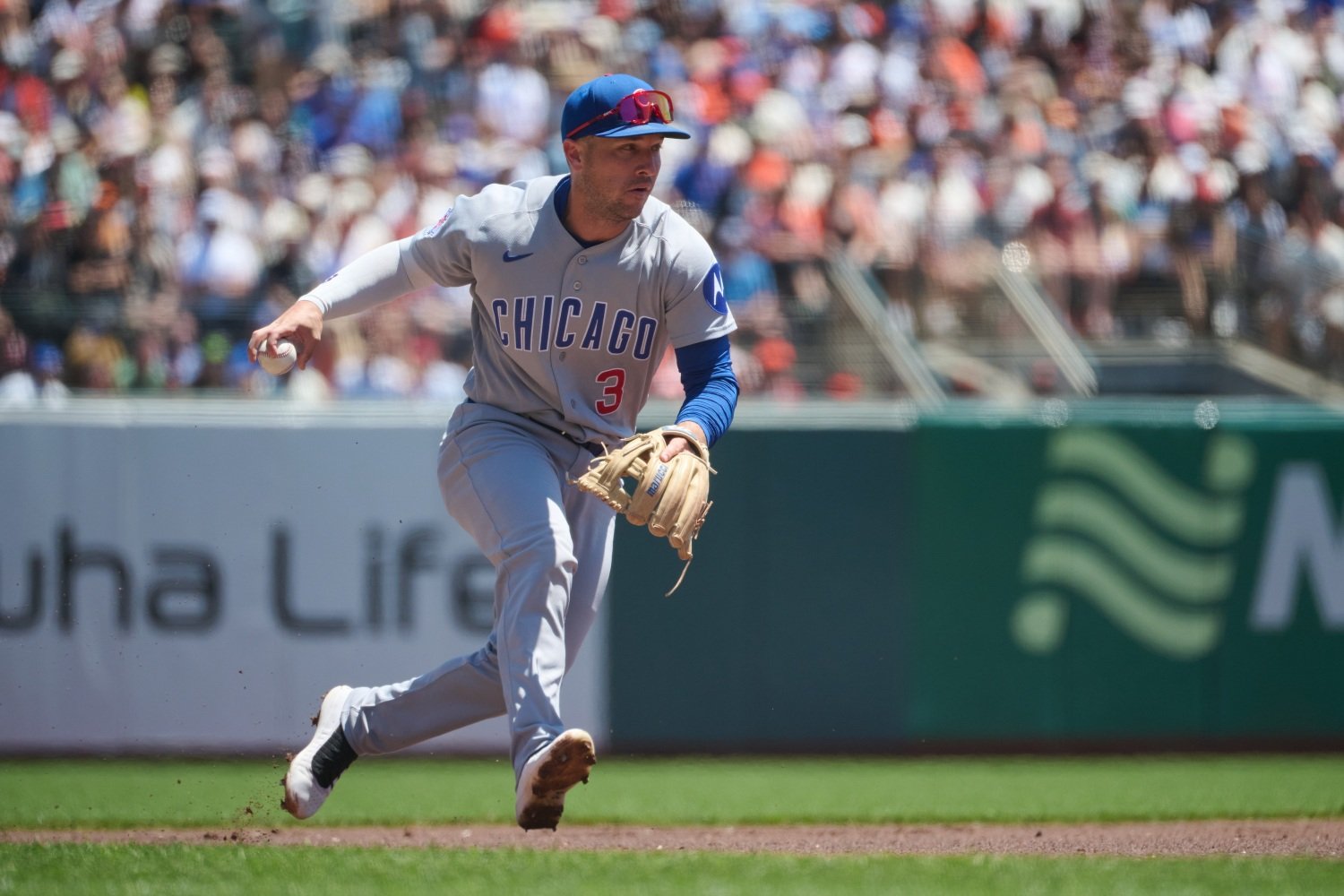 According to Statcast, there have been 212 ground balls hit either to third base or into left field with Alex Bregman on the field this season. On those grounders, on a rate basis, Bregman has been better at getting outs (and, in various ways, preventing extra bases) than all but five other third baseman who have had meaningful playing time. The only person who's been as busy at the hot corner and as efficient as Bregman, this year, is Matt Chapman. Bregman's 9 Defensive Runs Saved (DRS) are already a career high. That's probably somewhat surprising, even if you've watched a lot of Cubs games this season. Bregman is suffering from a reverse-halo effect this year, because he's not hitting the way the team hoped he would when they made a major five-year investment in him over the winter. He also doesn't make many plays that catch your eye—just as the walks he draws and the singles he hits don't catch your eye, at bat. But in fact, Bregman has been a steady and positive player for the Cubs, thanks to his .340 on-base percentage and (especially) his elite partnership with Dansby Swanson on the left side of the infield. Let's take a look at a couple of plays that elucidate Bregman's brilliance with the glove. We can start with one that bends toward the obvious. TUFYcldfWGw0TUFRPT1fRGdOV0JsTlZWd3NBQ1ZOVVVBQUhBZzRIQUFBTUJnY0FWMTFVQmdkVUIxVUdWQWRl.mp4 When you think of a good play by a third baseman, that's the kind of play that comes to mind. The ball was sharply hit and took Bregman toward the line, forcing him to slide to field it cleanly. It also required a long throw across the diamond. If there were 10 plays like this on his highlight reel, you wouldn't be taken aback to learn that he's been the third-best third baseman in the league this year. There aren't, though. Instead, most of the plays Bregman has made look a lot like this. d2V3cVFfWGw0TUFRPT1fVkFrRUJWSU1VZ0lBWGxRQlZRQUhVZ0VGQUFBQkFGWUFDd2RUQ0FVRFZWSUVBQXRl.mp4 That ball, too, was hit sharply, but the play was pretty routine, and it looked like it. In fact, Bregman even did something he's done a ton this year, which used to drive Cubs fans nuts when it was being done by both Nick Madrigal and Matt Shaw: take several steps after fielding the ball to gain ground toward his target before throwing. There are plenty of plays this year on which Bregman has fielded the ball, run five full (though short and quick) steps, then thrown across the diamond after a crow hop. Paradoxically, he's in the habit of giving ground on balls other third baseman would try to field on the charge (or at least with their left shoulder forward, getting their body moving toward the target), but he still finds time on those plays to use a few steps to build momentum before firing. MnI0R3hfWGw0TUFRPT1fQWdkUUFGVUhCUVFBRFZjR0F3QUhDRlZXQUFOUlZsa0FBVklFQWdCV1VGSlhVZ1VI.mp4 I think, though, that a subtle genius underlies Bregman's unorthodox playmaking at third base. The more you watch him, the more he feels just like Swanson, if Swanson were a third baseman instead. For one thing, Bregman is very good at trusting his balance. He stays down on the ball extremely well, but not in a way that leaves him crouched too low to move fluidly out of his fielding position. As the ball gets near him, you'll often see him slightly straighten his legs, but his chest (and, therefore, his glove) stays down. He only has two fielding errors this year, and two throwing errors. Since April 23, he only has one error, period. He's sensationally sure-handed, at a position where bad hops are more common than for any other infielder. As is true of Swanson, Bregman has a below-average arm, in terms of raw throwing power. Like Swanson, though, Bregman has above-average arm utility, because he's accurate and always seems to know how much time he has to make a throw. His internal clock is excellent, and his confidence as a playmaker allows him to succeed on what we might call broken plays, in football parlance. TUFYQVFfWGw0TUFRPT1fQkZWU1VWY0ZBQU1BQUFRS0F3QUhBd0JVQUZrSFVBSUFDMU1IQVFNQlVndFhWZ29E.mp4 This play looks like a could-be routine grounder made dangerous by Bregman himself, but in fact, it was one of those times when everything seems to work against you—but Bregman got an out anyway. With Willy Adames at bat, the Cubs infield was heavily shaded toward the left side. That made getting to the ball relatively easy for Bregman, but once he got there, he had a problem. Michael Busch had been pulled far off the line, and he wasn't getting to the base fast enough to set up in the usual way. Because the ball was hit slowly and on a lazy couple of bounces, Bregman didn't have much time to spare. If he had a stronger arm, he could have held it an extra half-beat, allowed Busch to get set in the standard way, and fired a seed across the diamond, but because he doesn't have that juice, he needed to throw on the run. Doing that while also trying to hit a target that's more air than flesh—throwing to a spot and trusting Busch to make the play, even though he wasn't yet awaiting the ball—is deceptively difficult. That's a play on which many players make an errant throw. Bregman, however, put it right on the bag. Busch, his feet not quite right and not touching the base, had to slap an emergency tag on Adames as the Giants shortstop went by, but he managed it. That's a disaster averted, but also a could-be hit nullified, thanks to Bregman's superb rhythm when he gets to the ball. Bregman has also been excellent at starting the double play; only Chapman has been involved in more from third base this year. Sometimes, that's accomplished simply by means of a quick glove-to-hand exchange and fast release on a throw, to spark the old-fashioned around-the-horn twin killing. But Bregman also does well (unsurprisngly) when running to touch his own base before making the long throw across to Busch—and not infrequently, he starts double plays like a shortstop, because that's where he's playing. ek13QTBfWGw0TUFRPT1fVUZWUkJsY0dBQWNBRFZFRkF3QUhBRlZSQUZsUlZWSUFVVllGQ1ZJTlZWQUFCd1VB.mp4 Swanson came to the Cubs the same year that the league outlawed the infield shift. In the years since, the team has mostly lagged the league in the frequency with which they deploy even the still-legal shading against left-handed batters, whereby the third baseman is pulled far off the line to play something more like shortstop, while the shortstop plays near the bag and the second baseman guards the hole between themselves and the first baseman. Here are the percentages of plate appearances by lefty batters on which they've shaded (and their rank in the league in that category) for each year of Swanson's tenure: 2023: 31.4 (25th) 2024: 37.8 (24th) 2025: 53.4 (14th) 2026: 66.9 (3rd) Whether to shade your infield against a lefty is as much a question of philosophy and personnel as of expected batted-ball location. It's a question of whom you trust most, and whom you trust more in specific circumstances. For the most part, since bringing in Swanson, the Cubs have trusted him with the ball more than the third baseman, even if there was a decent chance he would be making a given play going to his right. They've wanted him to cover as much space as possible even against lefty batters. No more. Bregman is getting a lot of time at a position that's closer to shortstop than to third base, when lefties are up against Cubs pitchers. He's always done this, but it wasn't a guarantee that he would continue to do so once he took up residence next to Swanson. He has. That's the other way in which he's been immensely valuable in the field. While the occasional slapped grounder might now get through an open left side of the infield, the Cubs are better for having Bregman and Swanson working in tandem. The lighter workload in the field should also help Swanson manage the grind of the season better. Cubs fans will feel frustrated unless and until Bregman clicks at the plate and rediscovers his power. His current slugging average (.345) more than .100 off even his recent averages, and he's a .471 career slugger. The team needs him to produce closer to that level, or their offense will continue to feel power-starved at times. Even in the meantime, though, Bregman has been an above-average player, thanks both to the way he keeps the line moving on offense and to the sneaky excellence of his work in the field.
 -
Image courtesy of © David Banks-Imagn Images Sometime this week, Jake Woodford will toe the rubber and absorb some innings on behalf of the Cubs bullpen. When he does (barring something unforeseen happening first, like a trade for another form of reinforcement or an emergency call-up), Woodford will become the 33rd pitcher Chicago has used this season. That's the same number they used all year in 2019, the last time the ball flew like this. It's only two fewer than they used in all of 2018, a year marked by a draining fight for the NL Central crown and a litany of injuries. They'll push beyond the 35 pitchers the 2018 team used, too. They're likely to at least flirt with setting a new team record. They used 43 pitchers to get through 2022, after needing 40 to limp through 2021. Those seasons were the products of unusual circumstances, in that the team was trying to protect many pitchers' arms from overuse in the wake of the pandemic; had to navigate a shortened spring training after the lockout heading into 2022; and unloaded several pitchers in each summer to pace up their rebuilding project. None of that stuff is happening right now, though, and this flat-out was not supposed to happen. It's halfway normal, these days, to turn to a few dozen pitchers over the course of a season. That the Cubs are already running up on a bad year's worth of them, however, is a telling indictment of their preparation, scouting, risk assessment and development. This team will end up using several more pitchers over the balance of this season, be it because they trade for a bunch of help or because they're compelled to admit defeat and trade away some of their impending free agents. In effect, that's an announcement that they're no further along in the project of amassing enough pitching depth to field a sustainable winner than they were four or five years ago. It's hard to always have good answers for the difficult tests of depth that happen during a modern major-league season. As you can see, even a quarter-century ago, it was customary to use about half as many arms as the Cubs will use in 2026. Injuries and a rising baseline for offensive talent have rapidly increased the number of guys big-league teams need. Still, even with the Cubs at 50-40 entering Tuesday's games, it's fair to say that they've failed some critical tests that other teams have passed. With some of the formerly slumping hitters starting to recover, the quality of Chicago's everyday lineup has been on full display of late. That makes the juxtaposition of those players with this pitching staff even more jarring than it would be otherwise. Pete Crow-Armstrong is more than capable of being a one-man show at times, but he's not alone in delivering lately. Dansby Swanson, like Crow-Armstrong, is a two-way threat, contributing to both run production and run prevention. Seiya Suzuki and Michael Busch are climbing out of the holes in which they stuck themselves at the plate, and each has made huge strides defensively. The lineup is deep and balanced, even if it's also been mystifyingly inconsistent this year. We've already talked a lot about how committed this team is to a core that will be around for quite a while. We should also take this moment to reflect on just how strangely that's shaped, though. Ideally, the team will get back the likes of Justin Steele, Cade Horton and Ben Brown at full strength next season. In reality, that's too optimistic. Besides, there's a whole second half to play, in which none of those three are likely to play a role at all. Beyond them, the pitching staff is as lacking for long-term commitments as the lineup behind the hurlers is awash in that same certitude. The Cubs lineup is what it will be for the next several years; the Cubs' pitching staff isn't even what it will be for the next fortnight. They've bumped along admirably over the last few weeks, but this is the pitching staff of a rebuilding team, not a serious contender. That's very weird, because the lineup is very much that of a serious contender, and these days, most teams have both or neither. The Cubs' deficiencies in depth and talent on the pitching side are so glaring that it's virtually impossible to imagine them overcoming them. On the other hand, if any team can survive what the 2018 team couldn't, it's probably this one—the best lineup the team has fielded since that fateful year. Somehow, Jed Hoyer needs to be extremely active over the next four weeks. He has limited ways to achieve that, but unless he threads the needle better than he ever has before, this Jekyll-and-Hyde team will live the ghastly end of that story: self-inflicted destruction, wasting the good because of an inability to fend off the bad. View full article
-
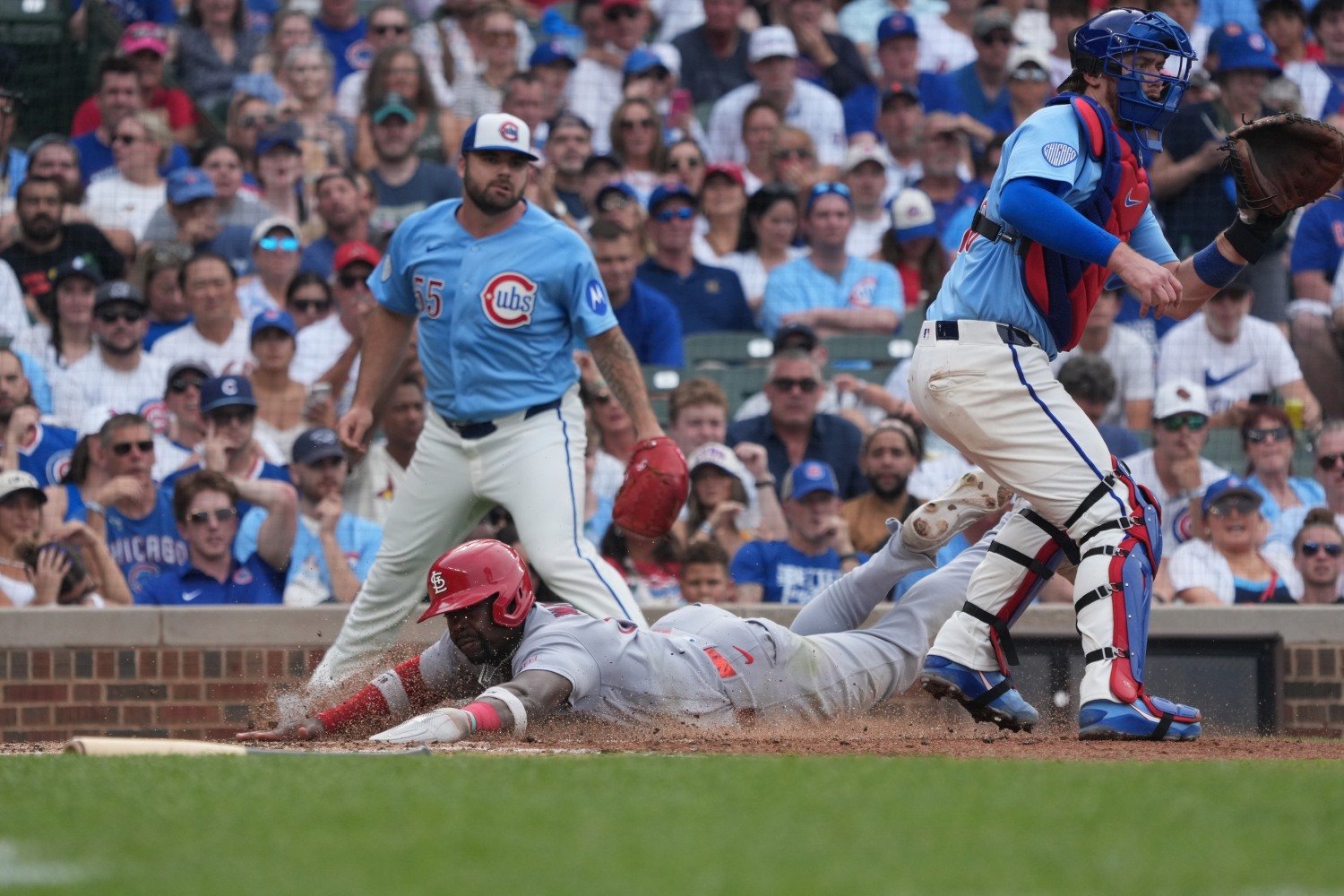 Sometime this week, Jake Woodford will toe the rubber and absorb some innings on behalf of the Cubs bullpen. When he does (barring something unforeseen happening first, like a trade for another form of reinforcement or an emergency call-up), Woodford will become the 33rd pitcher Chicago has used this season. That's the same number they used all year in 2019, the last time the ball flew like this. It's only two fewer than they used in all of 2018, a year marked by a draining fight for the NL Central crown and a litany of injuries. They'll push beyond the 35 pitchers the 2018 team used, too. They're likely to at least flirt with setting a new team record. They used 43 pitchers to get through 2022, after needing 40 to limp through 2021. Those seasons were the products of unusual circumstances, in that the team was trying to protect many pitchers' arms from overuse in the wake of the pandemic; had to navigate a shortened spring training after the lockout heading into 2022; and unloaded several pitchers in each summer to pace up their rebuilding project. None of that stuff is happening right now, though, and this flat-out was not supposed to happen. It's halfway normal, these days, to turn to a few dozen pitchers over the course of a season. That the Cubs are already running up on a bad year's worth of them, however, is a telling indictment of their preparation, scouting, risk assessment and development. This team will end up using several more pitchers over the balance of this season, be it because they trade for a bunch of help or because they're compelled to admit defeat and trade away some of their impending free agents. In effect, that's an announcement that they're no further along in the project of amassing enough pitching depth to field a sustainable winner than they were four or five years ago. It's hard to always have good answers for the difficult tests of depth that happen during a modern major-league season. As you can see, even a quarter-century ago, it was customary to use about half as many arms as the Cubs will use in 2026. Injuries and a rising baseline for offensive talent have rapidly increased the number of guys big-league teams need. Still, even with the Cubs at 50-40 entering Tuesday's games, it's fair to say that they've failed some critical tests that other teams have passed. With some of the formerly slumping hitters starting to recover, the quality of Chicago's everyday lineup has been on full display of late. That makes the juxtaposition of those players with this pitching staff even more jarring than it would be otherwise. Pete Crow-Armstrong is more than capable of being a one-man show at times, but he's not alone in delivering lately. Dansby Swanson, like Crow-Armstrong, is a two-way threat, contributing to both run production and run prevention. Seiya Suzuki and Michael Busch are climbing out of the holes in which they stuck themselves at the plate, and each has made huge strides defensively. The lineup is deep and balanced, even if it's also been mystifyingly inconsistent this year. We've already talked a lot about how committed this team is to a core that will be around for quite a while. We should also take this moment to reflect on just how strangely that's shaped, though. Ideally, the team will get back the likes of Justin Steele, Cade Horton and Ben Brown at full strength next season. In reality, that's too optimistic. Besides, there's a whole second half to play, in which none of those three are likely to play a role at all. Beyond them, the pitching staff is as lacking for long-term commitments as the lineup behind the hurlers is awash in that same certitude. The Cubs lineup is what it will be for the next several years; the Cubs' pitching staff isn't even what it will be for the next fortnight. They've bumped along admirably over the last few weeks, but this is the pitching staff of a rebuilding team, not a serious contender. That's very weird, because the lineup is very much that of a serious contender, and these days, most teams have both or neither. The Cubs' deficiencies in depth and talent on the pitching side are so glaring that it's virtually impossible to imagine them overcoming them. On the other hand, if any team can survive what the 2018 team couldn't, it's probably this one—the best lineup the team has fielded since that fateful year. Somehow, Jed Hoyer needs to be extremely active over the next four weeks. He has limited ways to achieve that, but unless he threads the needle better than he ever has before, this Jekyll-and-Hyde team will live the ghastly end of that story: self-inflicted destruction, wasting the good because of an inability to fend off the bad.