Jason Ross
-
Posts
8,153 -
Joined
-
Last visited
-
Days Won
74
Content Type
Profiles
Joomla Posts 1
Chicago Cubs Videos
Chicago Cubs Free Agent & Trade Rumors, Notes, & Tidbits
2026 Chicago Cubs Top Prospects Ranking
News
2023 Chicago Cubs Draft Picks
Guides & Resources
2024 Chicago Cubs Draft Picks
The Chicago Cubs Players Project
2025 Chicago Cubs Draft Pick Tracker
2026 Chicago Cubs Draft Tracker: Picks & Bonuses
Blogs
Events
Forums
Store
Gallery
Everything posted by Jason Ross
-
Image courtesy of © Patrick Gorski-Imagn Images Last night, the Cubs lost 2-0. It was a bit of a frustrating game: he weather was frigid, the bats were as cold as the temperatures, and the team was seemingly just an inch or two short on a few spectacular defensive plays that could have kept the score knotted up. Despite all of that, there was one standout; Ben Brown. If we're just looking at the final stat line for Brown, it's pretty excellent. He went 3 1/3 innings, struck out five, walked one, and surrendered a solitary hit. On the surface, that's a good outing, but I think it hides a lot of the really good things that came out of it. In fact, what we may be seeing are the sprouts of a new, improved Ben Brown who could stick in the rotation. One of the things the right-handed pitcher worked on in the spring was ensuring that his fastball sat in the upper third of the zone more frequently than in the past. Our very own @Matthew Trueblood explored Brown and this location earlier this offseason when looking at his spring training data, and last night seemed to be a continuation of that. Below is a map of all of Brown's offerings last night. The red dots indicate fastballs. The vast majority of these pitches are located in the upper third, which is exactly where you'd like to see them. Better yet, there's a distinct lack of uncompetitive pitches; command and control were on display for the fireballer Tuesday. The result of getting his fastball in the upper third is that it creates space on the bottom half for his sinker (in on the hands of righties) and for his curveball to create chases and whiffs. The sinker is especially important, as it forces the hitter to cover the whole zone. Brown doesn't really want to throw fastballs in the lower half. With swing planes the way they are today and the movement he gets from his arm slot, those can be sent a long way. Nor does he want to throw low-and-in-curves. Without the sinker, the area we see filled above with the yellow/orange dots would be effectively empty, and it's an especially useful place to go against right-handed hitters. We can see how all three pitches play off each other in a nice sequence against Jo Adell in the 8th inning. Adell has some swing-and-miss tendencies, but also some big power. His xSLG last year was in the 97th percentile. Even on cold nights, he's capable of muscling out a pitch. The more options you have, the less likely Adell is to find the bleachers and extend the two-run lead to something less surmountable. To start Adell off, Brown painted a sinker on the lower, inside corner for a strike. This is a great pitch to begin an at-bat. Either Adell swings at it, which almost assuredly results in a ground ball, or you get ahead 0-1—as Brown did, tilting the balance of the at-bat in the pitcher's favor. This is how Brown is filling up a new portion of the zone against those like-handed-hitters. Next, the hard-throwing-righty went with an uncompetitive changeup, and then fastball-fastball. Both of his heaters resulted in swings. The first earned a whiff (below), and the second was right at the very top of the zone. That caused Adell to have to cover the entirety of the plate: low and in, middle-high, and the very top of the zone. That first-pitch sinker wasn't in Brown's repertoire last year, meaning he'd either have been on his third fastball by the 1-2 foul, or maybe he'd have started Adell with a curveball that he doesn't really throw for strikes. Either way, the new pitch gave Brown options, and options are always good. Now sitting in a very favorable count, Brown could finally throw the curve. Ideally, he'd have gotten him a little more on the outer portion of the lower half, but small quibbles aside, it was a good pitch. It was also the fourth type of pitch Brown had thrown in the sequence. It created a harder decision point for the hitter, and Brown got the pitch on the black. Adell grounded out harmlessly to Alex Bregman. That sinker adds just an extra point of reference for a hitter, and it's going to make Brown incredibly difficult to deal with against right-handed hitters. While these are all great offerings, what encouraged me most was a pitch that Brown threw in the next at-bat, this time by Angels left-handed-hitting outfielder Josh Lowe. So far in his young career, the Cubs' reliever has struggled against southpaws, surrendering a .342 wOBA (up from his .295 against RHH). It makes sense, too, because he doesn't have a pitch that's designed to attack lefties. His sinker can't be the solution here, either. Sinkers are much better against the same-handed hitter, and while he may show it every so often, it's not the pitch that's going to solve this problem. Within this at-bat, however, Brown flashed a pitch I want to see more of; a hard-thrown changeup that registered 90 mph on a very cold night. This wasn't a perfect pitch, mind you. It's certainly too high in the zone. Ideally, you'd like to see it thrown more like the one below, from Cade Horton. But it's a start. The velocity is reminiscent of Edward Cabrera's changeup, which sat well into the 90s on Monday night. As you can see, there's some solid arm-side movement on it; the pitch broke 13 inches to the right. What I liked the most about it is that he did have the confidence to throw it, and I want more of it. I want him to bury it more, sure, but I want to see him feel confident in that offering to throw it more than once or twice in a three-inning appearance. If Brown can bury that changeup a bit more, he's going to get weak ground balls against off-handed hitters, just like Cade Horton did with Daylen Lile above. "Baseballs have a tendency not to fly over the fence when they hit the ground," a friend of mine said last night when discussing the game, and it's such a good and simple line that I have to steal it here. Couple a changeup that Brown can more consistently get to the outside corner against hitters like Lowe with the new sinker to a righty like Adell? You're cooking with gas, now. Strangely enough, the pitcher I envision the best version of Brown to be is probably very similar to the best version of José Soriano, the pitcher the Cubs had the pleasure to face last night. Soriano mixes his high-octane fastballs with a knuckle-curve (that he throws 85 mph+) and a splitter he uses to keep lefties at bay. Soriano used his splitter nine times against off-handed hitters last night, and ideally, Brown could use his changeup in a similar manner. Even as-is, the guy we saw take the mound last night is a weapon. Don't let me sound like I'm trying to diminish what he accomplished. The new sinker is helping against hitters like Adell, and will make Brown better than when we last saw him in 2025. Instead, what I see is the path forward. If he doesn't ever find the changeup, Brown is a good pitcher, but there's the potential for a very good pitcher if he can just find that pitch a little. And I can't help but dream on it. What did you make of Ben Brown's appearance last night? Did anything stand out to you? Let us know in the comments below! View full article
-
Ben Brown's Strong Appearance Tuesday Might Have Been Just the Beginning
Jason Ross posted an article in Cubs
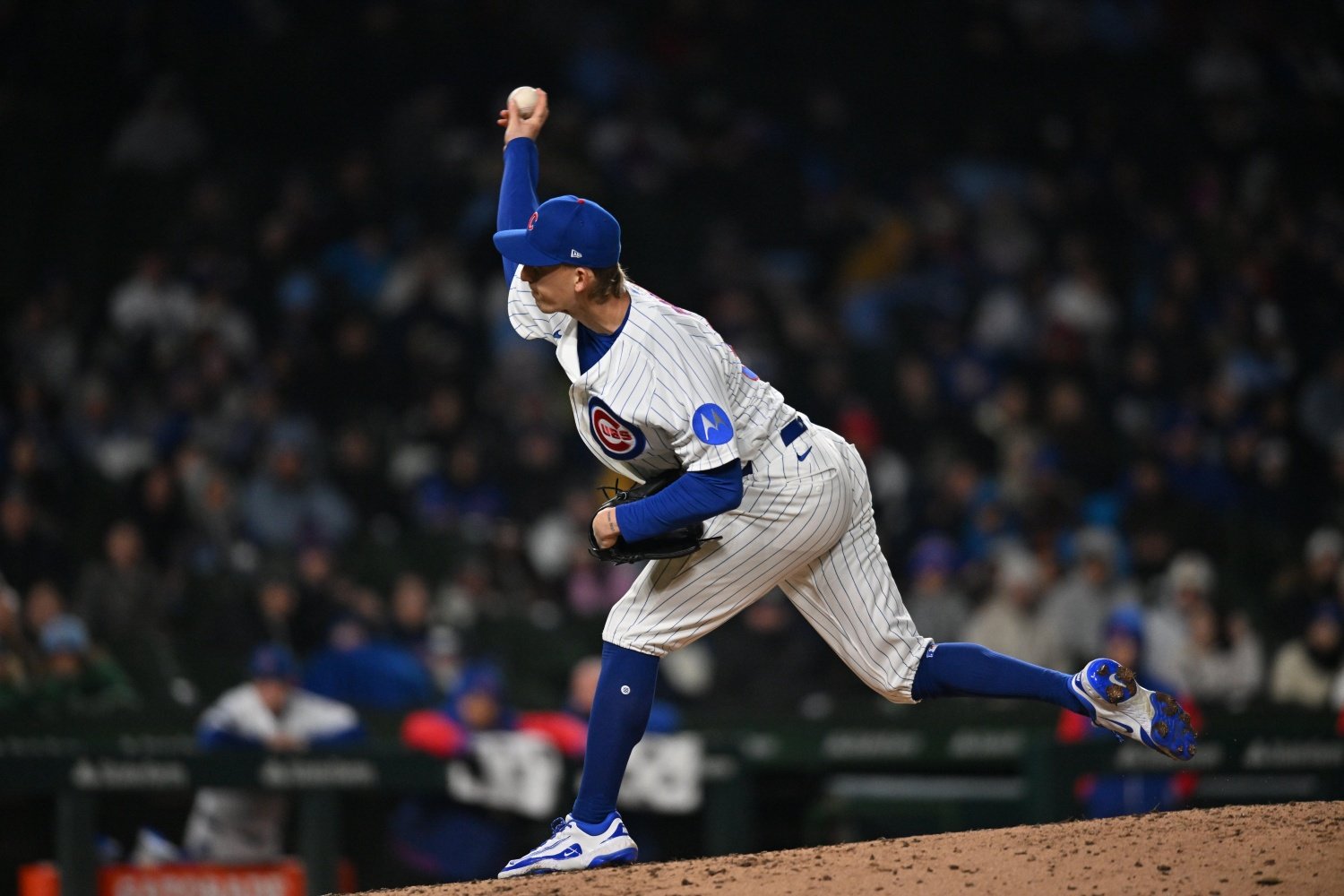 Last night, the Cubs lost 2-0. It was a bit of a frustrating game: he weather was frigid, the bats were as cold as the temperatures, and the team was seemingly just an inch or two short on a few spectacular defensive plays that could have kept the score knotted up. Despite all of that, there was one standout; Ben Brown. If we're just looking at the final stat line for Brown, it's pretty excellent. He went 3 1/3 innings, struck out five, walked one, and surrendered a solitary hit. On the surface, that's a good outing, but I think it hides a lot of the really good things that came out of it. In fact, what we may be seeing are the sprouts of a new, improved Ben Brown who could stick in the rotation. One of the things the right-handed pitcher worked on in the spring was ensuring that his fastball sat in the upper third of the zone more frequently than in the past. Our very own @Matthew Trueblood explored Brown and this location earlier this offseason when looking at his spring training data, and last night seemed to be a continuation of that. Below is a map of all of Brown's offerings last night. The red dots indicate fastballs. The vast majority of these pitches are located in the upper third, which is exactly where you'd like to see them. Better yet, there's a distinct lack of uncompetitive pitches; command and control were on display for the fireballer Tuesday. The result of getting his fastball in the upper third is that it creates space on the bottom half for his sinker (in on the hands of righties) and for his curveball to create chases and whiffs. The sinker is especially important, as it forces the hitter to cover the whole zone. Brown doesn't really want to throw fastballs in the lower half. With swing planes the way they are today and the movement he gets from his arm slot, those can be sent a long way. Nor does he want to throw low-and-in-curves. Without the sinker, the area we see filled above with the yellow/orange dots would be effectively empty, and it's an especially useful place to go against right-handed hitters. We can see how all three pitches play off each other in a nice sequence against Jo Adell in the 8th inning. Adell has some swing-and-miss tendencies, but also some big power. His xSLG last year was in the 97th percentile. Even on cold nights, he's capable of muscling out a pitch. The more options you have, the less likely Adell is to find the bleachers and extend the two-run lead to something less surmountable. To start Adell off, Brown painted a sinker on the lower, inside corner for a strike. This is a great pitch to begin an at-bat. Either Adell swings at it, which almost assuredly results in a ground ball, or you get ahead 0-1—as Brown did, tilting the balance of the at-bat in the pitcher's favor. This is how Brown is filling up a new portion of the zone against those like-handed-hitters. Next, the hard-throwing-righty went with an uncompetitive changeup, and then fastball-fastball. Both of his heaters resulted in swings. The first earned a whiff (below), and the second was right at the very top of the zone. That caused Adell to have to cover the entirety of the plate: low and in, middle-high, and the very top of the zone. That first-pitch sinker wasn't in Brown's repertoire last year, meaning he'd either have been on his third fastball by the 1-2 foul, or maybe he'd have started Adell with a curveball that he doesn't really throw for strikes. Either way, the new pitch gave Brown options, and options are always good. Now sitting in a very favorable count, Brown could finally throw the curve. Ideally, he'd have gotten him a little more on the outer portion of the lower half, but small quibbles aside, it was a good pitch. It was also the fourth type of pitch Brown had thrown in the sequence. It created a harder decision point for the hitter, and Brown got the pitch on the black. Adell grounded out harmlessly to Alex Bregman. That sinker adds just an extra point of reference for a hitter, and it's going to make Brown incredibly difficult to deal with against right-handed hitters. While these are all great offerings, what encouraged me most was a pitch that Brown threw in the next at-bat, this time by Angels left-handed-hitting outfielder Josh Lowe. So far in his young career, the Cubs' reliever has struggled against southpaws, surrendering a .342 wOBA (up from his .295 against RHH). It makes sense, too, because he doesn't have a pitch that's designed to attack lefties. His sinker can't be the solution here, either. Sinkers are much better against the same-handed hitter, and while he may show it every so often, it's not the pitch that's going to solve this problem. Within this at-bat, however, Brown flashed a pitch I want to see more of; a hard-thrown changeup that registered 90 mph on a very cold night. This wasn't a perfect pitch, mind you. It's certainly too high in the zone. Ideally, you'd like to see it thrown more like the one below, from Cade Horton. But it's a start. The velocity is reminiscent of Edward Cabrera's changeup, which sat well into the 90s on Monday night. As you can see, there's some solid arm-side movement on it; the pitch broke 13 inches to the right. What I liked the most about it is that he did have the confidence to throw it, and I want more of it. I want him to bury it more, sure, but I want to see him feel confident in that offering to throw it more than once or twice in a three-inning appearance. If Brown can bury that changeup a bit more, he's going to get weak ground balls against off-handed hitters, just like Cade Horton did with Daylen Lile above. "Baseballs have a tendency not to fly over the fence when they hit the ground," a friend of mine said last night when discussing the game, and it's such a good and simple line that I have to steal it here. Couple a changeup that Brown can more consistently get to the outside corner against hitters like Lowe with the new sinker to a righty like Adell? You're cooking with gas, now. Strangely enough, the pitcher I envision the best version of Brown to be is probably very similar to the best version of José Soriano, the pitcher the Cubs had the pleasure to face last night. Soriano mixes his high-octane fastballs with a knuckle-curve (that he throws 85 mph+) and a splitter he uses to keep lefties at bay. Soriano used his splitter nine times against off-handed hitters last night, and ideally, Brown could use his changeup in a similar manner. Even as-is, the guy we saw take the mound last night is a weapon. Don't let me sound like I'm trying to diminish what he accomplished. The new sinker is helping against hitters like Adell, and will make Brown better than when we last saw him in 2025. Instead, what I see is the path forward. If he doesn't ever find the changeup, Brown is a good pitcher, but there's the potential for a very good pitcher if he can just find that pitch a little. And I can't help but dream on it. What did you make of Ben Brown's appearance last night? Did anything stand out to you? Let us know in the comments below!
-
Minor League Discussion & Boxes, 4-1-26
Jason Ross replied to CaliforniaRaisin's topic in Cubs Minor League Talk
And somewhere, a Tom got his wings at this very same moment. -
Visualization charts from Savant: Top is last year, bottom is this year. He's hitting a lot more of that clock this year and even his changeup is getting extra glove side shape when he throws it. There's just so many more looks he's giving. It's just a better version of Ben. I went on a dive of him earlier for the site that'll be on the front page at some point, but I really liked what I saw last night.

-
Om the flip side, he saves far more runs on the excellent catches than he does give up on the one or two over-extensions he makes. We know that because he was 5th best defender in baseball with a +25 OAA last year. And by holding up on plays like last night, he'll also begin holding up on plays that he makes. There's a risk involved in his game but the net outcome is that no one should be telling PCA at this stage of his career to do anything but go all out for all of the plays he thinks he can get to. It's very easy to say "lay up and force the single" when we know the outcome. But he's made that play before and was very close to it last night. If he caught it, you'd be singing a different tune. Hindsight is 20/20.
-
Jose Ramirez, Bryce Harper, and Bo Bichette all have wRC+ of 0 or under so I wouldn't worry about it. We see this with rookies. It takes time. Ballesteros is likely going to get going at some point, but it's probably going to be much like every other rookie we have seen come up recently and it will be a roller coaster ride of ups and downs.
-
Before the terrible conditions tonight the Cubs had scored 21 runs in four games. They were averaging 5 runs a game (plus some). Yeah, bummer they ran into a Jose Soriano and his 98mph sinker on a night like tonight, but they have hit the ball extremely well up to that point.
-
Taillon so far averaging 91.4 mph on the fastball. It's better than the 90's, and it's cold, so not entirely red flag, but not green, either.
-
This is the Cubs account. The other is from Marquee. But considering the Cubs own Marquee, same umbrella.
-
Yeah Cubs social media is having a tough start to the year. This and blue on blue font on others...they're replacement level right now.
-
My point is very different: Jameson Taillon at 91mph is almost assuredly approaching replacement level. His fastball last year sat at an xwOBA of .363. We see about a .10 increase in xwOBA against for every mph drop - you can see that in the statcast data I provided. we should expect it sitting around .370 against (he's a year removed from a .380 xwOBA on the fastball at 92+mph without the changeup). Shota Imanaga at 91mph suffers similarly, Hitters chase secondaries, like Taillon's kick change, far less when the fastball become worse. They don't just hunt fastballs, they sit on them. And his hard hit% and numbers against that pitch are really bad. His hard hit% was low last year because he was able to get hitters to go after that changeup. That probably doesn't happen nearly as much with a diminished fastball. Much like Shota saw the same issues in hitters ignoring his splitter. Coming back to his fastball, without that changeup the year prior he was pretty bad with the fastball. When hitters begin to lean off the changeup more and sit fastball, we can probably expect similarly terrible results, plus some, on the fastball. We can talk about his control issues in ST, and as Bertz said, maybe he was dealing with a lower body injury. But if 91mph fastball is the new norm, Taillon almost assuredly doesn't belong on a roster looking to win a division. Especially one with as many depth options as the Cubs have. And one with Justin Steele on the way. If Taillon sits at 92+mph or so, he's probably alright enough like he was last year as a inning eater who you can count on as a #5 regardless of aspirations. But there's little margin here for him to dip and keep that.
-
It's a range of: 90-92, 91-93 and 92-94. I added an extra 1mph on each side to each to capture things like fractional mph, so the low end is dipping a little too low and capturing things like "90.2mph" fastballs but as we lower he range there's simply not many pitches in that range to begin with (you can see the % of pitches). As well, it's not necessarily to show exact data, but the trend: while 91mph doesn't sound so bad compared to 92mph, for someone like Taillon, it's probably close to a deathknell on this team. He already is someone who's fastball is more hittable than the league average and his strikeout rate is well below league average. He has little margin to lose to begin with. Any margin, even if it sounds minimal, is bad. I hope to see him sitting around 92mph for all the reasons Bertz mentioned above. I'd give him a handful of starts to prove it even if it isn't tonight. But he isn't someone I'd keep banging the drum for on the last year of his deal if say, we're staring down 91mph fastballs at the end of April, too.
-
Each MPH is a pretty decent jump in wOBA against and xwOBA. Roughly speaking between 91, 92, and 93mph, the numbers get significantly more in favor of a hitter the lower you go. Below you'll see statcast data from 2025 (I ran the range from 1mph+/- to account for fractional mph). But the point remains: each mph bleed is significant. The first is 90-92, then so on and so forth. Taillon, last year, had an xwOBA over the xwOBA a 90-92mph fastball had last year, meaning it's a bit more hittable already. If Taillon is sitting even at 91mph, I'd say it's a pretty concerning number for someone who has well below league average K% already.
-
Feel free to join us live tonight. We're going to try something a little different; live podcast and then into almost a "pre-game" talk. If the Cubs play on a Tuesday, we'll try to do a game like this weekly if people like it.
-
He'll probably get some runway. He deserves some runway. I know everyone likes to overreact to every little thing, but Taillon has been a contributor and you can't make a snap change in three starts. That said, the Cubs have lots of ability to replace him, so they shouldn't have to give him too much runway, either. But if he's not a useful starter than I'm not sure what the play is. He isn't likely much of a reliever if his fastball is sitting 91mph or so; even if he's getting a 2 mph bump. They can't send him to Iowa (and no he isn't going to play phantom injury, let's skip it). I hope he's back to around 92-93mph tonight and all of this can be punted down the road a bit.
-
Early trends: Cubs have increased 4 seam, sinker is barely being used, more slider, less curve, more change.
-
So...do we still want a do-over on the Cabrera/Caissie trade now that he's got 5 innings under his belt?
-
Did some Ryan Johnson research. Here is his path to the MLB: 1. Homeschool in HS. Pitched in a religious home school league. 2. Dallas Baptist college 3. Straight to MLB. 4. 12 appearances in A+ 5. Back to MLB
-
Just saying. https://northsidebaseball.com/news-rumors/chicago-cubs/how-ian-happs-small-changes-can-make-a-world-of-differences-r2695/
-
Walking PCA should be a "straight to Double A" action for this pitcher. The Angles are so weird.
-
Just saying that maybe someone who throws this few strikes and had a 7.00 ERA in his first 14 innings...like maybe let him pitch in the minors a few times.
-
No one has ever made hitting 95mph on the gun look nerdier than this guy.
-
AZ Phil has some whopper takes, but this one makes things make a bit of sense if it's correct.
-
Image courtesy of © Patrick Gorski-Imagn Images Ian Happ has been a much-maligned player over the course of his tenure with the Cubs. I've personally written about him a few times, including once this offseason, and once last fall. Happ doesn't deserve a lot of the animosity thrown his way; he's a really good baseball player. Even on Opening Day, a quick browsing of reddit had me finding posts complaining about him hitting in the 3-hole. The Cubs lost two of three over the weekend to the Washington Nationals. Between the disappointing results and the Pete Crow-Armstrong and Nico Hoerner extensions, Happ's big weekend kind of flew under the radar. The Cubs' left fielder hit two home runs, had three hits overall, and was one of the standouts offensively. In fact, he's probably owed a home run, as a flyout that he smashed in Thursday's Opening Day contest would have flown an estimated 113 feet farther had the wind not intervened. That was the largest weather-related difference tracked in the Statcast Era. Underlying his first weekend were some encouraging signs for the 31-year old, who will turn 32 later this summer. The age matters here. As we've gotten more and more data publicly available to us through Statcast and Baseball Savant, one thing has become clear: 32 is roughly the age when we begin to see a league wide trend of bat speed decline. This decline is then more pronounced after. Bat speed is an indicator of power and exit velocity, so dropping bat speed isn't particularly good. Despite standing right on that dreaded doorstep, Happ has seen a noticeable increase in bat speed so far in 2026, averaging 74.6 mph on his swings, up from 71.4mph last year. Not only is it up, but his current numbers would mark a career-best bat speed. Obviously, it's very early, but this is an encouraging sign. Diving deeper, there appear to be some small changes in how Happ has set up at the plate, particularly from the right side. While he's a little deeper in the box both left-handed and right-handed, the difference is more pronounced from his right-handed stance. Another change with his swing against left-handed pitching? He's a bit more open. The first image is of his 2025 data, while the second is from his 2026 so far. Any tweaks against lefties would be welcome for a hitter who hasn't been particularly great against them for the last few years. From 2023 through 2025 he's got a 102 wRC+ against southpaws. Compare this to his 125 wRC+ against righties, and you can begin to see the difference. A 102 isn't horrible, but it also isn't anywhere near as good as Happ has been against righties. Change is required, and it seems as though there may be a change that the outfielder has worked on. To see this change in practice, look below at that fly ball that he should have hit for a home run, wind not withstanding. Cionel Perez, a left-handed reliever with the Nationals, gets a 96-mph fastball in on the hands of Happ in the upper third of the zone. Happ is able to clear his front side and get his barrel to it. He can't control the wind, but because he's just a little more open, and a little off the plate, he's found the ability to get to this pitch and hit it with authority. Most days that lands on the street, not in a glove. Why does this matter? Traditionally, Happ doesn't do much damage on that pitch. Up-and-in fastballs are anything but his strength. Last season, he had essentially no success in this area of the strike zone against lefties. Below is this pitch from Thursday, superimposed onto a contour chart from 2025 of all Happ's batted balls with an exit velocity of 90+ MPH against lefties. Plainly, this is imperfect; the game feed Savant provides is not height-adjusted to the hitter, as the 2025 data is (you can see how much smaller the strike zone is in the image against Perez). Because of this, I suspect that this pitch is truly higher than it looks here, but even as displayed, it's outside Happ's "power zone" against lefties from last year. When we add in that likely adjustment, it's pretty apparent that this is something he didn't do last year. I can't say for certain that Happ was able to get to this pitch because he's a little farther back, a little farther off the plate, and a little more open, but all of these things would allow him to better get to that pitch and clear his front side. Add in the increase in bat speed, and the small tweaks would appear to give Happ a bit of a better platform to hit the ball with authority against whatever-sided arm he's facing. Happ has always been impressively consistent year-to-year. While he may fluctuate and go hot-and-cold within it, you always know what you're getting with him by the end; it's one of his best qualities. If Happ's indeed swinging a bit harder and his subtle adjustments are going to help him against lefties, than perhaps he won't be as predictable in 2026—not in a bad way, but in a good one. There's a long season to go, but this may very well be the best version of the switch-hitter the Cubs have ever seen. What do you think of these subtle changes? Do you think Happ can begin to produce better against LHP? View full article
-
- 1
-

-
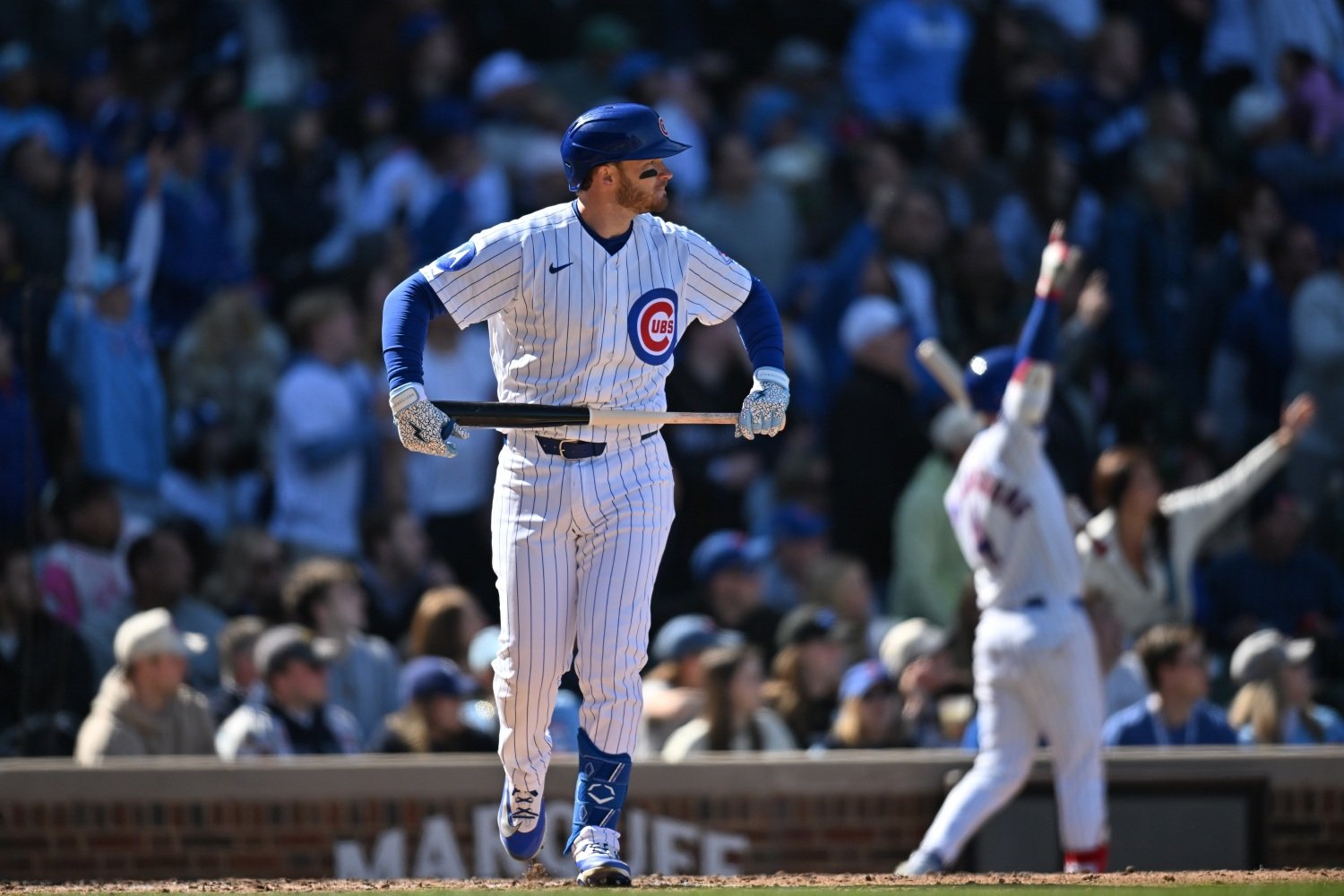 Ian Happ has been a much-maligned player over the course of his tenure with the Cubs. I've personally written about him a few times, including once this offseason, and once last fall. Happ doesn't deserve a lot of the animosity thrown his way; he's a really good baseball player. Even on Opening Day, a quick browsing of reddit had me finding posts complaining about him hitting in the 3-hole. The Cubs lost two of three over the weekend to the Washington Nationals. Between the disappointing results and the Pete Crow-Armstrong and Nico Hoerner extensions, Happ's big weekend kind of flew under the radar. The Cubs' left fielder hit two home runs, had three hits overall, and was one of the standouts offensively. In fact, he's probably owed a home run, as a flyout that he smashed in Thursday's Opening Day contest would have flown an estimated 113 feet farther had the wind not intervened. That was the largest weather-related difference tracked in the Statcast Era. Underlying his first weekend were some encouraging signs for the 31-year old, who will turn 32 later this summer. The age matters here. As we've gotten more and more data publicly available to us through Statcast and Baseball Savant, one thing has become clear: 32 is roughly the age when we begin to see a league wide trend of bat speed decline. This decline is then more pronounced after. Bat speed is an indicator of power and exit velocity, so dropping bat speed isn't particularly good. Despite standing right on that dreaded doorstep, Happ has seen a noticeable increase in bat speed so far in 2026, averaging 74.6 mph on his swings, up from 71.4mph last year. Not only is it up, but his current numbers would mark a career-best bat speed. Obviously, it's very early, but this is an encouraging sign. Diving deeper, there appear to be some small changes in how Happ has set up at the plate, particularly from the right side. While he's a little deeper in the box both left-handed and right-handed, the difference is more pronounced from his right-handed stance. Another change with his swing against left-handed pitching? He's a bit more open. The first image is of his 2025 data, while the second is from his 2026 so far. Any tweaks against lefties would be welcome for a hitter who hasn't been particularly great against them for the last few years. From 2023 through 2025 he's got a 102 wRC+ against southpaws. Compare this to his 125 wRC+ against righties, and you can begin to see the difference. A 102 isn't horrible, but it also isn't anywhere near as good as Happ has been against righties. Change is required, and it seems as though there may be a change that the outfielder has worked on. To see this change in practice, look below at that fly ball that he should have hit for a home run, wind not withstanding. Cionel Perez, a left-handed reliever with the Nationals, gets a 96-mph fastball in on the hands of Happ in the upper third of the zone. Happ is able to clear his front side and get his barrel to it. He can't control the wind, but because he's just a little more open, and a little off the plate, he's found the ability to get to this pitch and hit it with authority. Most days that lands on the street, not in a glove. Why does this matter? Traditionally, Happ doesn't do much damage on that pitch. Up-and-in fastballs are anything but his strength. Last season, he had essentially no success in this area of the strike zone against lefties. Below is this pitch from Thursday, superimposed onto a contour chart from 2025 of all Happ's batted balls with an exit velocity of 90+ MPH against lefties. Plainly, this is imperfect; the game feed Savant provides is not height-adjusted to the hitter, as the 2025 data is (you can see how much smaller the strike zone is in the image against Perez). Because of this, I suspect that this pitch is truly higher than it looks here, but even as displayed, it's outside Happ's "power zone" against lefties from last year. When we add in that likely adjustment, it's pretty apparent that this is something he didn't do last year. I can't say for certain that Happ was able to get to this pitch because he's a little farther back, a little farther off the plate, and a little more open, but all of these things would allow him to better get to that pitch and clear his front side. Add in the increase in bat speed, and the small tweaks would appear to give Happ a bit of a better platform to hit the ball with authority against whatever-sided arm he's facing. Happ has always been impressively consistent year-to-year. While he may fluctuate and go hot-and-cold within it, you always know what you're getting with him by the end; it's one of his best qualities. If Happ's indeed swinging a bit harder and his subtle adjustments are going to help him against lefties, than perhaps he won't be as predictable in 2026—not in a bad way, but in a good one. There's a long season to go, but this may very well be the best version of the switch-hitter the Cubs have ever seen. What do you think of these subtle changes? Do you think Happ can begin to produce better against LHP?