


Cubs Video
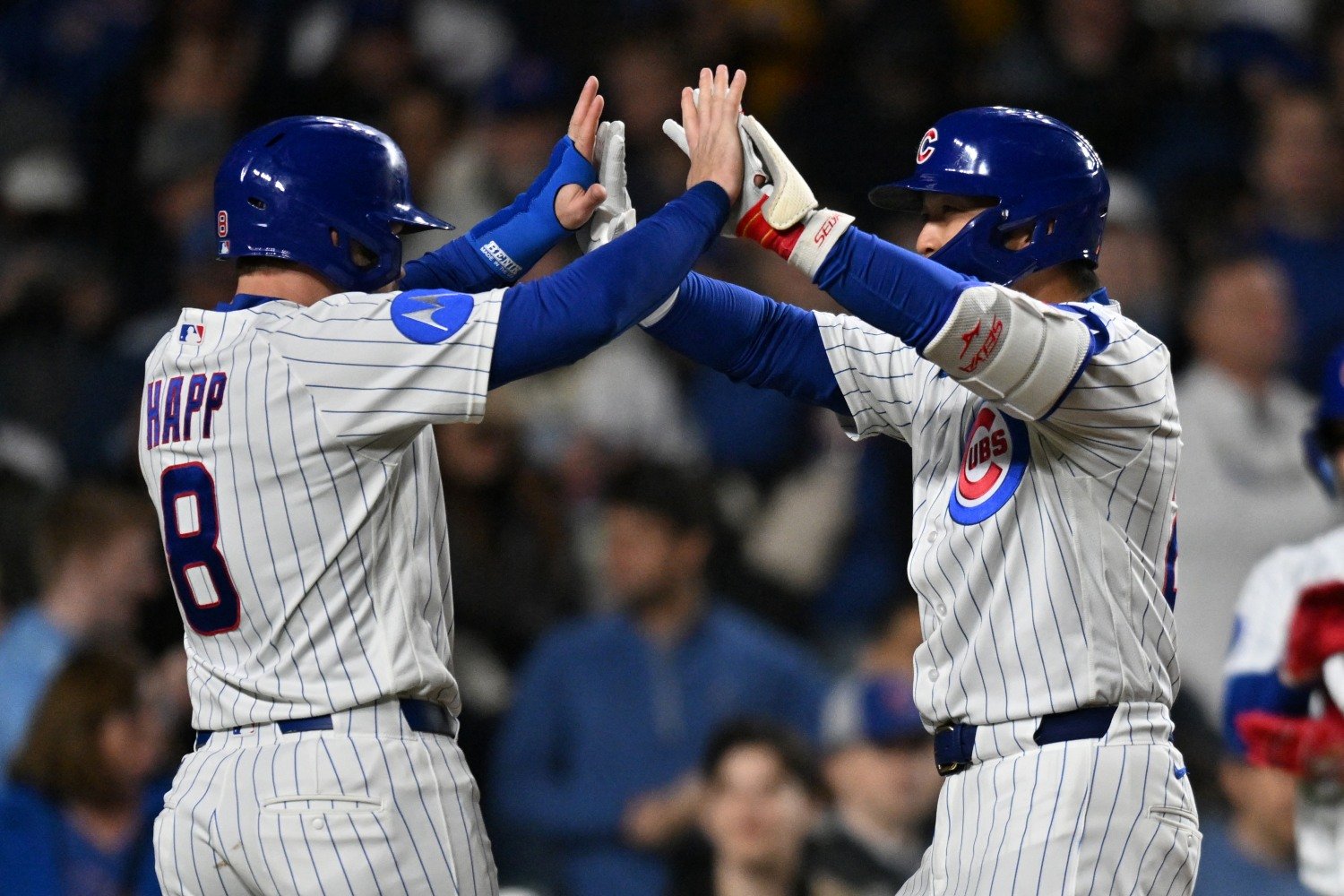
It might not seem so at first, but the Cubs have a pretty straightforward decision on Ian Happ. After parts of 10 seasons with the club, Happ is due to hit free agency at the end of the World Series. Technically, that'll be the first time he's ever had the right to choose his employer for the following season. When Happ and the Cubs were last on the verge of this decision, in early 2023, Happ signed a three-year contract worth $61 million. That meant that he never became a free agent, and that the Cubs never extended him a qualifying offer. Thus, once the Series is over and he officially becomes a free agent, the team can still do so. They have to do it.
At first blush, that seems overly simplistic, and maybe even downright wrong. Happ had a rough 2026. He batted .218/.323/.412, and after June 1, those numbers were .210/.311/.375. He's 32 years old. That player is not worth $23.1 million, which is what the qualifying offer will pay players who accept it next year. As we all know, though, there's a lot more to the player and the situation than that. Happ is a good defensive outfielder, even if he increasingly gets that value from his arm and has fringe-average range. He still hit well against right-handed pitchers (.241/.358/.458 for the season, .231/.338/.420 after June 1). He's a beloved part of the clubhouse fabric and the community, and the team and the player went through the difficult but necessary process of his role being reduced already this season. If he comes back in 2027, there won't be the same feeling of obligation to bat him near the top of the order or play him every day as there was in 2026.
Only if the team is ready to spend big this winter (and beyond) can they afford to pay $23 million for a glorified platoon bat, even if he comes with added value as a leader and a fan ambassador. As we've already discussed this week, though, the Cubs need to be ready to spend big, anyway. They can and should take the risk that comes with extending the qualifying offer, because here's the other thing: Happ might turn down the offer, anyway. This year's free-agent class is barren; Happ is one of the better outfielders who'll be available on it. He's not in any position to get another three-year deal on the high side of $20 million per year, but if he were unencumbered by the QO, he could certainly find a three-year deal for more like $45 million, or a two-year pact around $38 million. Even if the Cubs hang the QO on him and dampen his market, he might prefer to look for a multi-year landing spot where the rest of his career can unfold. If he does, the team can collect a draft pick when he signs elsewhere—though, since they were luxury-tax payers this year, that pick will be relatively late, after the fourth round.
That extra pick is, of course, not a great reward for taking the gamble on paying a player $23 million and only offering him 450-500 plate appearances—not on its own, anyway. Again, there's non-performance value attached to Happ, but there's another consideration that makes the risk worth it for the Cubs this fall, too. They have two more candidates for the same offer, and when you extend multiple QOs that are declined, the benefits of each are incrementally greater than those of one by itself.
Seiya Suzuki is the no-brainer of the class, for Chicago. They would love to have him back for $23 million next year. That won't happen; he'll decline the offer without a second thought. After the best season of his American tenure, Suzuki is in line for at least a three-year deal, with at least a $20-million AAV, even accounting for the drag on his market once the Cubs give him a QO. The team should consider re-signing him, but for now, imagine a scenario in which they're outbid. In that case, Suzuki would net them one of those top-150 picks, which means a slightly larger bonus pool for their draft class.
Then there's Matthew Boyd. As with Happ, this might be an unappealing idea at first, but pitching is enormously expensive, and the Cubs have to replace a whole lot of outgoing pitchers this winter. The two-year deal between the two parties that expires next month includes a mutual option worth $15 million, which is really a $13-million decision, because he'll be paid a $2-million buyout if it's declined. The Cubs will enthusiastically exercise their side of that option, but Boyd will decline his. At that point, the Cubs have the right to extend him a QO; he's never gotten one before.
Boyd will turn 36 over the winter. He's somewhat likely to accept a QO, if the team offers him one. Still, it's an easy call to do it. He pitched better this year than Shota Imanaga did in 2025, after which the Cubs gave Imanaga a QO. He'd be an expensive fourth starter, and that's very much what the team needs to strive to make him on the 2027 club, but it'll be exceptionally difficult to find a starter as good as Boyd on the market for less money, especially on a one-year deal. A short-term deal should be particularly attractive to the Cubs, too, because next year, they won't get a full season from Cade Horton, and new top pitching prospect Cade Townsend won't ascend to the majors. By 2028, if this is going to go where the team desperately wants it all to go, it'll be because Horton and Townsend are in place atop the rotation. It would be nice to lock in a veteran starter for next season without committing significant dollars to that guy beyond 2027; Boyd offers a perfect opportunity.
The Cubs are guaranteed to see one player turn down a QO this fall, in Suzuki, and they're very likely to receive a draft pick (along with about $450,000 to spend) when he signs elsewhere. They're unlikely to sign anyone with a QO attached to them; their top free-agent targets should be hurlers (like Tarik Skubal and Freddy Peralta) who were traded during the season and are thus ineligible to receive one. This is an opportunity for a team with a weak farm system and a desperate need to reload it to snatch up to $1.3 million in extra spending power by handing out three QOs and having each declined. Even if Happ and Boyd each take their deals, the team will have some options. That would only represent a total of about $10 million more spent on those two players than they spent in 2026, and while it's arguable that neither is worthy of a raise, most of the ways they might replace either come with both even higher cost increases and as much or more risk.
Again, all of this hinges on the team being ready to spend north of $300 million in 2027, and to keep their payroll at that level for the foreseeable future. It's fair to doubt that the Ricketts family will authorize that. If they don't, though, the whole conversation about next year's Cubs is moot; the team is not positioned to win without huge spending. They might as well both demonstrate their understanding of that fact and take steps to ameliorate it for future seasons, by giving Happ, Boyd and Suzuki all the chance to come back on expensive but reasonable one-year deals—or leave the team some residual value as they head out the door.





Recommended Comments
Create an account or sign in to comment
You need to be a member in order to leave a comment
Create an account
Sign up for a new account in our community. It's easy!
Register a new accountSign in
Already have an account? Sign in here.
Sign In Now