Brandon Glick
-
Posts
1,153 -
Joined
-
Last visited
Content Type
Profiles
Joomla Posts 1
Chicago Cubs Videos
Chicago Cubs Free Agent & Trade Rumors, Notes, & Tidbits
2026 Chicago Cubs Top Prospects Ranking
News
2023 Chicago Cubs Draft Picks
Guides & Resources
2024 Chicago Cubs Draft Picks
The Chicago Cubs Players Project
2025 Chicago Cubs Draft Pick Tracker
2026 Chicago Cubs Draft Tracker: Picks & Bonuses
Blogs
Events
Forums
Store
Gallery
Everything posted by Brandon Glick
-
Post Winter Meetings Free Agency thread
Brandon Glick replied to Crusader's topic in Chicago Cubs Talk
It's well known in the space how good the Pitching Lab™ is. The Cubs may not always have success with their own in-house pitchers, but this is a well adjudicated point on why so many fringe guys value organizations like the Cubs (and Dodgers and Yankees) that have top-of-the-line development tracks. -
As the Los Angeles Dodgers continue to gobble up the attention of the national media by bullying the rest of the league with their wealth, it’s time to examine what the future of parity in baseball could look like. Image courtesy of © Greg Lovett / USA TODAY NETWORK This isn’t a space meant for belaboring what the Dodgers have been up to in recent offseasons. They may be the new “Evil Empire”, but they’ve merely taken that distinction from the New York Yankees, rather than inventing it. In a sport where the most valuable franchise is worth north of $7.5 billion and the least valuable one is struggling to scrape past a $1 billion evaluation, money will simply never be equal. Even under the most rigorous proposals, the Dodgers will always have a larger payroll than those of the Athletics or Miami Marlins. That gap can never be fully mended. However, what is currently a chasm could become more manageable with a few bridges, perhaps to the point where it feels less abyssal. The owners, collectively, have tried implementing rules throughout the years to curb the spending of the truest free-wheeling teams, but even the “Steve Cohen Tax”—the fourth threshold above the Competitive Balance Tax line that severely punishes teams for spending a certain amount on their roster in any given year—hasn’t been enough to stop franchises like the Dodgers and New York Mets from assembling baseball’s equivalents of the Avengers and Justice League. Naturally, that begs the question: is there any hope of seeing a little more fairness in the economics of the game? The Omnipresent but Never-Going-to-Happen Salary Cap Let’s get this out of the way immediately: the Major League Baseball Players Association will never, under any circumstance, go for a salary cap. The concessions the owners would have to make to get the MLBPA to willingly agree to artificially limit the salaries of its players even more rigidly than is already happening would be both unprecedented and doomed in negotiations. It's been the union's bogeyman for decades. They refuse to even entertain it over the negotiating table. This article is one in a four-piece collaboration across three DiamondCentric sites. For more on the current system's mechanics and viability, check out Matthew Lenz's piece today at Twins Daily. Meanwhile, at Brewer Fanatic, Jake McKibbin offers the case for more comprehensive revenue sharing. Later this week, we'll share a roundtable between Lenz, Brandon Glick and McKibbin, about what they learned from this process and what they think ought to be done moving forward. Luckily, I don’t have a seat at that table, so I’m free to bring it up all I want. All three of the other “Big 4” professional North American sports leagues have a salary cap, and the NFL and NHL have “hard caps”, meaning each team cannot have a payroll over a predetermined amount in a given season. The NBA’s salary cap is a bit more complex, but, effectively, it’s a soft cap that can be bypassed with certain types of contracts, though it comes equipped with a luxury tax that offers increasingly harsh penalties at each threshold, much like baseball. CBS’s Matt Snyder did a strong breakdown of the parity in other sports that have a salary cap relative to baseball, and while the findings are now a few years out of date, the results are still relevant. Repeat champions are rarer in baseball than in any other sport, and baseball has more “newcomers” in the playoffs every season than any of the other “Big 4” sports. The NFL has had two dynasties (New England Patriots and Kansas City Chiefs) since the turn of the century. The NBA is fresh off the Golden State Warriors dynasty, which coincided with the singular dominance of LeBron James in the Eastern Conference for a decade. Since 2010, the NHL has seen the Chicago Blackhawks win three championships in a six-year span, as well as back-to-back Stanley Cup titles for both the Pittsburgh Penguins and Tampa Bay Lightning. As for baseball? The league hasn’t seen a repeat champion in 24 years, dating back to the late-90s Yankees dynasty that won three straight from 1998-2000. Something else worth keeping in mind with a salary cap is how it affects players in practice. Part of what makes baseball so great is the player movement—the “hot stove”, as it’s come to be called. Free agency obviously exists in the other sports, but none of them have trade deadlines as active nor free agencies as long-running as baseball's. In football, for every Kirk Cousins (who has switched teams twice in free agency), there's a Patrick Mahomes, Josh Allen, and a Lamar Jackson, who stick with their franchises on long-term deals. And lest you think that’s simply due to the importance of the quarterback position, note that there have been nearly as many multi-year extensions handed out as there have been multi-year free-agent signings. In a salary cap world, keeping in-house talent is a necessity, rather than a luxury. Of course, to offset the number of players who leave in free agency in baseball (often from small-market teams to those in bigger markets), the league has its own systems in place, like the qualifying offer. However, it’s the existence of “prospects” that make the whole system work. The Tampa Bay Rays have made a living out of trading star players nearing free agency, in exchange for gaggles of young players who have yet to establish themselves at the highest level. Unlike the NFL and NBA, draft picks don’t play in the big leagues right away. They often spend years percolating in the minors, developing their skills and honing their attributes. Draft picks are the currency of buyers and sellers in those other sports. In baseball, it’s prospects who determine the “brightness” of a team’s future. In the same way that the salary cap creates boundaries and parameters for teams to abide by in order to create parity, baseball has its own systems in place that balance out the lack of one. The Mythical (and Slightly More Likely) Salary Floor, to Go With the Cap If baseball were to ever implement a salary cap (against all odds), it would certainly be on the condition that the league also adopted a high and firm salary floor. We’ve actually already seen something somewhat akin to a salary floor in baseball this offseason, as the Oakland Las Vegas Sacramento (?) Athletics have started spending more money than at any point in recent memory, despite being on the precipice of moving to a minor-league ballpark for at least three seasons. While you might hope the reason for that is that notoriously cheap businessman owner John Fisher has finally chosen to invest in his team, it’s actually because the MLBPA has threatened the team with grievances about their low-spending habits. As MLB Trade Rumors’s Nick Deeds explains: “That risk of a grievance is due to the fact that the A’s will collect 100% of their revenue-sharing dollars in 2025 for the first time under the current collective bargaining agreement. While the team received just 25% of their allotment in 2022, that figure increased to 50% in 2023 and 75% in 2024 before finally reaching 100% in 2025. The issue for the A’s stems from the fact that the CBA requires revenue sharing recipients to spend more than 150% of their revenue sharing money on MLB payroll.” That situation poignantly articulates why some prefer MLB introduce a salary floor, rather than a salary cap. The argument effectively boils down to: owners who are willing to spend hundreds of millions of dollars shouldn’t be punished; instead, the league should be reprimanding the ones who cheap out and refuse to spend on talent. In practice, of course, getting a floor without a cap is as unthinkable as getting a cap without a floor. While the NFL has a salary cap, it also has a salary floor, so teams cannot hold onto money perpetually. Teams must spend at least 89% of the cap over a four-year period, while the NFL as a whole must spend at least 95% of the cap. If a team fails to reach the 89% threshold, it will be forced to pay the difference to players who were on its roster during those four years. The NBA has a similar model, where teams must spend 90% of the salary cap in every season. Here’s the thing, though: just like how the MLBPA wouldn’t touch a salary cap with a 20-foot pole, owners would feel the same about a salary floor. These policies have to be in place simultaneously to work—there’s a reason why nearly every NBA team goes over the salary cap on an annual basis, and why no NFL team in recent memory has come close to falling beneath the 89% threshold. The guardrails are put in place to ensure no team can simply outbid others for a player. If everyone has to spend something close to a certain amount, then every player will be paid “fairly” by every team (in the sense of relative positional salaries; running backs continue to be screwed by the system). There isn’t a Shohei Ohtani or Juan Soto contract in football or basketball because there simply can’t be, especially thanks to the NBA’s “max contract” system. Would a salary floor be good for the players? In a vacuum, almost certainly. Pragmatically speaking, the inevitable introduction of a salary cap alongside it would keep superstars from exploiting the free market, though it would help lesser role players squeeze a few more dollars out of their careers. The Verdict Salary caps and salary floors work for the leagues they work for. I understand that isn’t game-breaking, industry-changing analysis, but it’s true. Baseball continues to chug along despite not having one, and despite the benefits other leagues have seen from them, the structure of MLB doesn’t require their presence to keep parity at reasonable levels. The Dodgers may feel like an inevitability, but a 162-game season is a long, arduous grind, and October is half-contained chaos. Likewise, if money was truly the only thing that mattered in baseball, small-market compatriots like the Tampa Bay Rays, Milwaukee Brewers, or Baltimore Orioles would hardly be the perennial postseason party-crashers they are today. Thanks to tools like revenue sharing, the 40-man roster and option year limits, the qualifying offer, and other forward-thinking features of the sport, teams with less money to spend are merely at a disadvantage, rather than locked in an outright Sisyphean climb to fashion themselves as serious contenders. There’s something to be said for wanting to eliminate that disadvantage altogether, though. Whether or not baseball will ever find the right means to do so is tough to guess. View full article
-
The Future of Baseball (Probably) Doesn’t Include a Salary Cap and Floor
Brandon Glick posted an article in Cubs
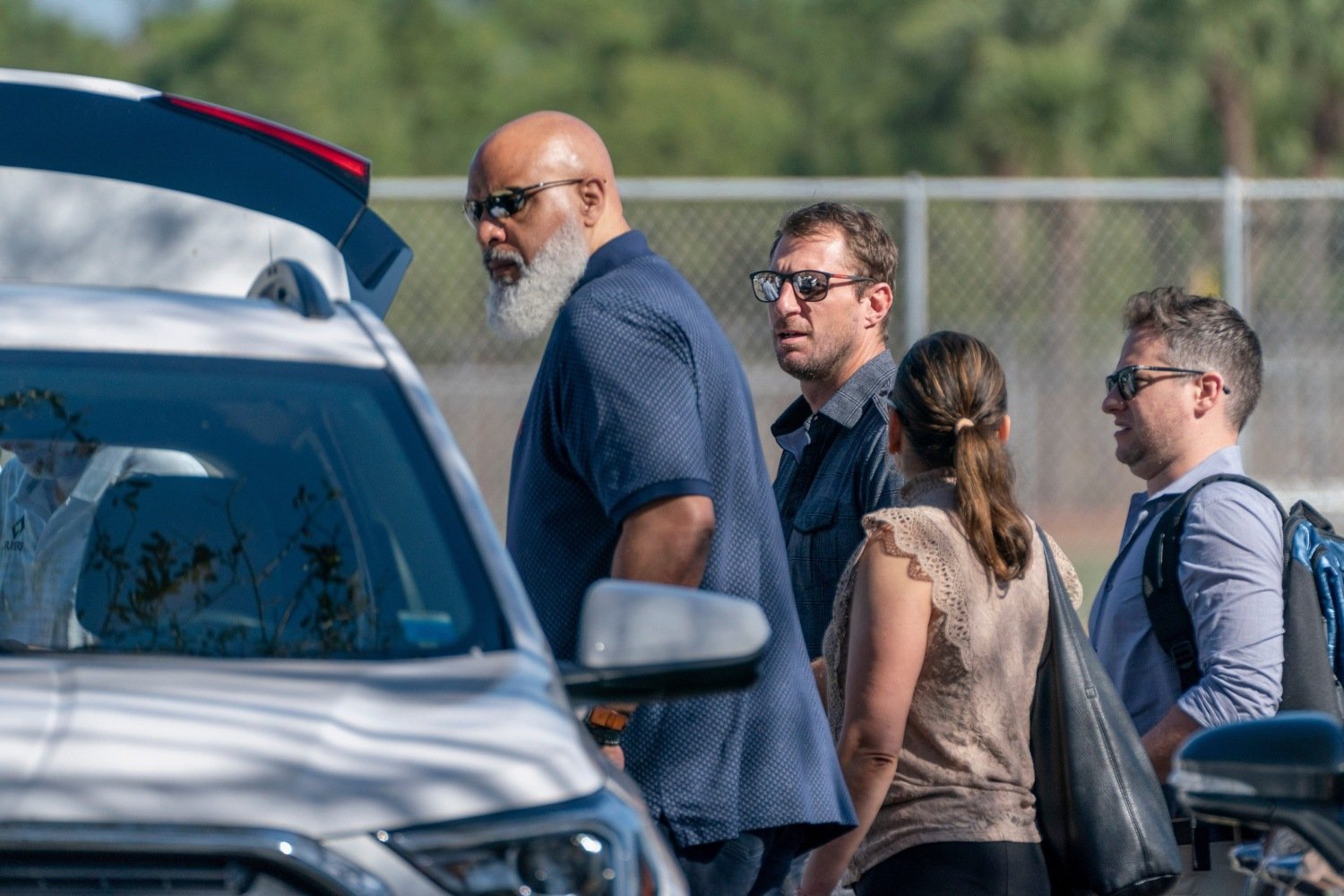 This isn’t a space meant for belaboring what the Dodgers have been up to in recent offseasons. They may be the new “Evil Empire”, but they’ve merely taken that distinction from the New York Yankees, rather than inventing it. In a sport where the most valuable franchise is worth north of $7.5 billion and the least valuable one is struggling to scrape past a $1 billion evaluation, money will simply never be equal. Even under the most rigorous proposals, the Dodgers will always have a larger payroll than those of the Athletics or Miami Marlins. That gap can never be fully mended. However, what is currently a chasm could become more manageable with a few bridges, perhaps to the point where it feels less abyssal. The owners, collectively, have tried implementing rules throughout the years to curb the spending of the truest free-wheeling teams, but even the “Steve Cohen Tax”—the fourth threshold above the Competitive Balance Tax line that severely punishes teams for spending a certain amount on their roster in any given year—hasn’t been enough to stop franchises like the Dodgers and New York Mets from assembling baseball’s equivalents of the Avengers and Justice League. Naturally, that begs the question: is there any hope of seeing a little more fairness in the economics of the game? The Omnipresent but Never-Going-to-Happen Salary Cap Let’s get this out of the way immediately: the Major League Baseball Players Association will never, under any circumstance, go for a salary cap. The concessions the owners would have to make to get the MLBPA to willingly agree to artificially limit the salaries of its players even more rigidly than is already happening would be both unprecedented and doomed in negotiations. It's been the union's bogeyman for decades. They refuse to even entertain it over the negotiating table. This article is one in a four-piece collaboration across three DiamondCentric sites. For more on the current system's mechanics and viability, check out Matthew Lenz's piece today at Twins Daily. Meanwhile, at Brewer Fanatic, Jake McKibbin offers the case for more comprehensive revenue sharing. Later this week, we'll share a roundtable between Lenz, Brandon Glick and McKibbin, about what they learned from this process and what they think ought to be done moving forward. Luckily, I don’t have a seat at that table, so I’m free to bring it up all I want. All three of the other “Big 4” professional North American sports leagues have a salary cap, and the NFL and NHL have “hard caps”, meaning each team cannot have a payroll over a predetermined amount in a given season. The NBA’s salary cap is a bit more complex, but, effectively, it’s a soft cap that can be bypassed with certain types of contracts, though it comes equipped with a luxury tax that offers increasingly harsh penalties at each threshold, much like baseball. CBS’s Matt Snyder did a strong breakdown of the parity in other sports that have a salary cap relative to baseball, and while the findings are now a few years out of date, the results are still relevant. Repeat champions are rarer in baseball than in any other sport, and baseball has more “newcomers” in the playoffs every season than any of the other “Big 4” sports. The NFL has had two dynasties (New England Patriots and Kansas City Chiefs) since the turn of the century. The NBA is fresh off the Golden State Warriors dynasty, which coincided with the singular dominance of LeBron James in the Eastern Conference for a decade. Since 2010, the NHL has seen the Chicago Blackhawks win three championships in a six-year span, as well as back-to-back Stanley Cup titles for both the Pittsburgh Penguins and Tampa Bay Lightning. As for baseball? The league hasn’t seen a repeat champion in 24 years, dating back to the late-90s Yankees dynasty that won three straight from 1998-2000. Something else worth keeping in mind with a salary cap is how it affects players in practice. Part of what makes baseball so great is the player movement—the “hot stove”, as it’s come to be called. Free agency obviously exists in the other sports, but none of them have trade deadlines as active nor free agencies as long-running as baseball's. In football, for every Kirk Cousins (who has switched teams twice in free agency), there's a Patrick Mahomes, Josh Allen, and a Lamar Jackson, who stick with their franchises on long-term deals. And lest you think that’s simply due to the importance of the quarterback position, note that there have been nearly as many multi-year extensions handed out as there have been multi-year free-agent signings. In a salary cap world, keeping in-house talent is a necessity, rather than a luxury. Of course, to offset the number of players who leave in free agency in baseball (often from small-market teams to those in bigger markets), the league has its own systems in place, like the qualifying offer. However, it’s the existence of “prospects” that make the whole system work. The Tampa Bay Rays have made a living out of trading star players nearing free agency, in exchange for gaggles of young players who have yet to establish themselves at the highest level. Unlike the NFL and NBA, draft picks don’t play in the big leagues right away. They often spend years percolating in the minors, developing their skills and honing their attributes. Draft picks are the currency of buyers and sellers in those other sports. In baseball, it’s prospects who determine the “brightness” of a team’s future. In the same way that the salary cap creates boundaries and parameters for teams to abide by in order to create parity, baseball has its own systems in place that balance out the lack of one. The Mythical (and Slightly More Likely) Salary Floor, to Go With the Cap If baseball were to ever implement a salary cap (against all odds), it would certainly be on the condition that the league also adopted a high and firm salary floor. We’ve actually already seen something somewhat akin to a salary floor in baseball this offseason, as the Oakland Las Vegas Sacramento (?) Athletics have started spending more money than at any point in recent memory, despite being on the precipice of moving to a minor-league ballpark for at least three seasons. While you might hope the reason for that is that notoriously cheap businessman owner John Fisher has finally chosen to invest in his team, it’s actually because the MLBPA has threatened the team with grievances about their low-spending habits. As MLB Trade Rumors’s Nick Deeds explains: “That risk of a grievance is due to the fact that the A’s will collect 100% of their revenue-sharing dollars in 2025 for the first time under the current collective bargaining agreement. While the team received just 25% of their allotment in 2022, that figure increased to 50% in 2023 and 75% in 2024 before finally reaching 100% in 2025. The issue for the A’s stems from the fact that the CBA requires revenue sharing recipients to spend more than 150% of their revenue sharing money on MLB payroll.” That situation poignantly articulates why some prefer MLB introduce a salary floor, rather than a salary cap. The argument effectively boils down to: owners who are willing to spend hundreds of millions of dollars shouldn’t be punished; instead, the league should be reprimanding the ones who cheap out and refuse to spend on talent. In practice, of course, getting a floor without a cap is as unthinkable as getting a cap without a floor. While the NFL has a salary cap, it also has a salary floor, so teams cannot hold onto money perpetually. Teams must spend at least 89% of the cap over a four-year period, while the NFL as a whole must spend at least 95% of the cap. If a team fails to reach the 89% threshold, it will be forced to pay the difference to players who were on its roster during those four years. The NBA has a similar model, where teams must spend 90% of the salary cap in every season. Here’s the thing, though: just like how the MLBPA wouldn’t touch a salary cap with a 20-foot pole, owners would feel the same about a salary floor. These policies have to be in place simultaneously to work—there’s a reason why nearly every NBA team goes over the salary cap on an annual basis, and why no NFL team in recent memory has come close to falling beneath the 89% threshold. The guardrails are put in place to ensure no team can simply outbid others for a player. If everyone has to spend something close to a certain amount, then every player will be paid “fairly” by every team (in the sense of relative positional salaries; running backs continue to be screwed by the system). There isn’t a Shohei Ohtani or Juan Soto contract in football or basketball because there simply can’t be, especially thanks to the NBA’s “max contract” system. Would a salary floor be good for the players? In a vacuum, almost certainly. Pragmatically speaking, the inevitable introduction of a salary cap alongside it would keep superstars from exploiting the free market, though it would help lesser role players squeeze a few more dollars out of their careers. The Verdict Salary caps and salary floors work for the leagues they work for. I understand that isn’t game-breaking, industry-changing analysis, but it’s true. Baseball continues to chug along despite not having one, and despite the benefits other leagues have seen from them, the structure of MLB doesn’t require their presence to keep parity at reasonable levels. The Dodgers may feel like an inevitability, but a 162-game season is a long, arduous grind, and October is half-contained chaos. Likewise, if money was truly the only thing that mattered in baseball, small-market compatriots like the Tampa Bay Rays, Milwaukee Brewers, or Baltimore Orioles would hardly be the perennial postseason party-crashers they are today. Thanks to tools like revenue sharing, the 40-man roster and option year limits, the qualifying offer, and other forward-thinking features of the sport, teams with less money to spend are merely at a disadvantage, rather than locked in an outright Sisyphean climb to fashion themselves as serious contenders. There’s something to be said for wanting to eliminate that disadvantage altogether, though. Whether or not baseball will ever find the right means to do so is tough to guess.
 -
Jerry Hairston Jr. played in parts of 16 MLB seasons, including two with the Chicago Cubs. However, he's most known for being the return in a trade involving a franchise legend. Hairston was a dynamic college player at Southern Illinois University, eventually getting named to their Hall of Fame in 2009. Two years after they selected the infielder in the 42nd round, the Baltimore Orioles took Hairston in the 11th round of the 1997 MLB Draft. He made his MLB debut the following year in 1998, and would go on to play parts of seven seasons in Baltimore, though he only got two chances at full-time work in 2001 and 2002. He totaled 7.1 bWAR and a .705 OPS in his time with the Orioles, though his tenure was defined by injuries and flash rather than availability and substance. Prior to the 2005 MLB season, Hairston was traded to the Cubs (along with Orioles prospects Mike Fontenot and David Crouthers) in exchange for 36-year-old Sammy Sosa. The legendary outfielder was already on the decline at that point, fresh off his infamous back injury that was caused by violent sneezes. Hairston, on the other hand, was in the midst of his prime, though he posted mediocre numbers in his 152 games of action with the Cubs. He slashed .251/.322/.346 (72 OPS+), hitting just four home runs and stealing 11 bases in 20 attempts. In truth, that's about all that Hairston accomplished in his time with the team. He didn't have many memorable hits, nor did he receive much fanfare in his ~15 months with the team. My memory of him with the Cubs was purely that original report that he was the centerpiece in the deal for Sosa (along with Fontenot, who spent five middling seasons in Chicago). Notably, his brother, Scott Hairston, played for the Cubs in 2013 and their father, Jerry Hairston Sr., played 14 seasons in Chicago for the White Sox. Likewise, his grandfather Sam Hairston played one season for the White Sox in 1951 after starring in the Negro Leagues, and his uncle John Hairston received four at-bats for the Cubs in 1969. Talk about a baseball family. On May 31, 2006, Hairston was traded to the Texas Rangers for first baseman and outfielder Phil Nevin. Neither player contributed much to their new teams, with Nevin giving the Cubs 0.1 WAR in 197 at-bats. Hairston would go on to become a journeyman after that season, playing for the Cincinnati Reds, New York Yankees, San Diego Padres, Washington Nationals, Milwaukee Brewers, and Los Angeles Dodgers between 2008-13. He retired after the 2013 season to join the Dodgers' broadcasting crew, a role he still serves in today. Notably, he was cited in multiple PED reports, though he voraciously denied those claims and never received punishment or suspension from the league for his supposed involvement in the steroid scandals. View full player
-
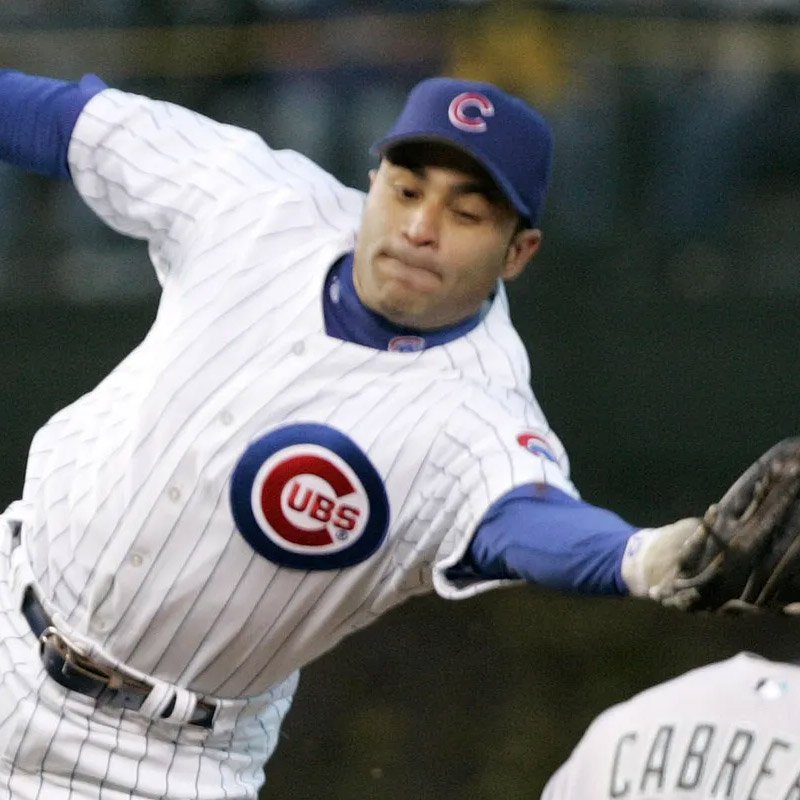 Jerry Hairston Jr. played in parts of 16 MLB seasons, including two with the Chicago Cubs. However, he's most known for being the return in a trade involving a franchise legend. Hairston was a dynamic college player at Southern Illinois University, eventually getting named to their Hall of Fame in 2009. Two years after they selected the infielder in the 42nd round, the Baltimore Orioles took Hairston in the 11th round of the 1997 MLB Draft. He made his MLB debut the following year in 1998, and would go on to play parts of seven seasons in Baltimore, though he only got two chances at full-time work in 2001 and 2002. He totaled 7.1 bWAR and a .705 OPS in his time with the Orioles, though his tenure was defined by injuries and flash rather than availability and substance. Prior to the 2005 MLB season, Hairston was traded to the Cubs (along with Orioles prospects Mike Fontenot and David Crouthers) in exchange for 36-year-old Sammy Sosa. The legendary outfielder was already on the decline at that point, fresh off his infamous back injury that was caused by violent sneezes. Hairston, on the other hand, was in the midst of his prime, though he posted mediocre numbers in his 152 games of action with the Cubs. He slashed .251/.322/.346 (72 OPS+), hitting just four home runs and stealing 11 bases in 20 attempts. In truth, that's about all that Hairston accomplished in his time with the team. He didn't have many memorable hits, nor did he receive much fanfare in his ~15 months with the team. My memory of him with the Cubs was purely that original report that he was the centerpiece in the deal for Sosa (along with Fontenot, who spent five middling seasons in Chicago). Notably, his brother, Scott Hairston, played for the Cubs in 2013 and their father, Jerry Hairston Sr., played 14 seasons in Chicago for the White Sox. Likewise, his grandfather Sam Hairston played one season for the White Sox in 1951 after starring in the Negro Leagues, and his uncle John Hairston received four at-bats for the Cubs in 1969. Talk about a baseball family. On May 31, 2006, Hairston was traded to the Texas Rangers for first baseman and outfielder Phil Nevin. Neither player contributed much to their new teams, with Nevin giving the Cubs 0.1 WAR in 197 at-bats. Hairston would go on to become a journeyman after that season, playing for the Cincinnati Reds, New York Yankees, San Diego Padres, Washington Nationals, Milwaukee Brewers, and Los Angeles Dodgers between 2008-13. He retired after the 2013 season to join the Dodgers' broadcasting crew, a role he still serves in today. Notably, he was cited in multiple PED reports, though he voraciously denied those claims and never received punishment or suspension from the league for his supposed involvement in the steroid scandals.
 -
James Patrick Edmonds, known by Jim Edmonds among baseball fans (and certainly Chicago Cubs and St. Louis Cardinals fans), played parts of 17 seasons at the major league level. He played 1,105 games for the Cardinals and 85 games for the Cubs. Let's cut to the chase here; Edmonds spent a lot more time tormenting Cubs fans than he ever did aiding them. He played in nearly a season's worth of games against the North Siders, primarily during his time in St. Louis, accruing a .270/.392/.538 slash line with 32 home runs, 75 RBIs, and 90 runs in 452 at-bats. That might not quite be MVP-caliber production, but it's pretty darn close. Any time a player has a career .930 OPS against a single team, it's safe to say they owned them. Originally drafted in the seventh round of the 1988 MLB Draft by the Angels, Edmonds starred on the West Coast for seven seasons, winning the first two of his eight Gold Gloves in center field in 1997 and 1998. After an injury-plagued campaign in 1999, the Angels chose to trade Edmonds to the Cardinals in exchange for second baseman Adam Kennedy and pitcher Kent Bottenfield. He became an institution in St. Louis over the next eight years, winning six Gold Gloves while accruing 37.9 WAR and a .285/.393/.555 slash line. Of course, he was also among the key figures in the team's championship run in 2006, the Cardinals' first World Series title in 24 years. Because I don't like the Cardinals — and I imagine most of you feel the same — I won't belabor more of his success in St. Louis. He was a dominant player who spent his prime with the Cubs' biggest rival, and he probably deserved a lot more Hall of Fame recognition than he got when he went one-and-done on the 2016 ballot with just 2.5% of the vote. I did not enjoy watching the guy destroy the Cubs for the better part of a decade, but it's a disgrace he didn't at least make it to a second year in the voting process. He was one of the best center fielders in baseball for 15 years. I digress. Following the 2007 season, Edmonds was traded to the San Diego Padres for future World Series MVP David Freese, somehow further helping the Cardinals even after his departure. He made it just 90 at-bats into his Padres tenure before being released, at which point the Cubs, in need of a left-handed bat, signed Edmonds to a one-year contract of which they were only responsible for the league minimum. He certainly wasn't a fan favorite, but Edmonds did produce a 1.1 WAR, .937 OPS half-season in Chicago, even starting in all three of their postseason games in the NLDS where they were swept by the Dodgers. He was, for all intents and purposes, the starting center fielder on the best team that Cubs had decades, and he even endeared himself to fans when he hit two home runs in the same inning against the Chicago White Sox in June. After the 2008 season, Edmonds sat out the next campaign because he didn't receive any contract offers to his liking. He returned in 2010 to post a productive half-season with the Milwaukee Brewers before getting traded to the Cincinnati Reds, meaning Edmonds played for two-thirds of the NL Central within a four-year stretch (at that time, the Houston Astros were still in the NL Central, and Edmonds never played for them nor the Pittsburgh Pirates). Edmonds re-signed with the Cardinals in 2011, though he was forced to retire prior the start of the regular season due to a lingering Achilles issue. He now serves in a studio and color commentator role for Cardinals games. View full player
-
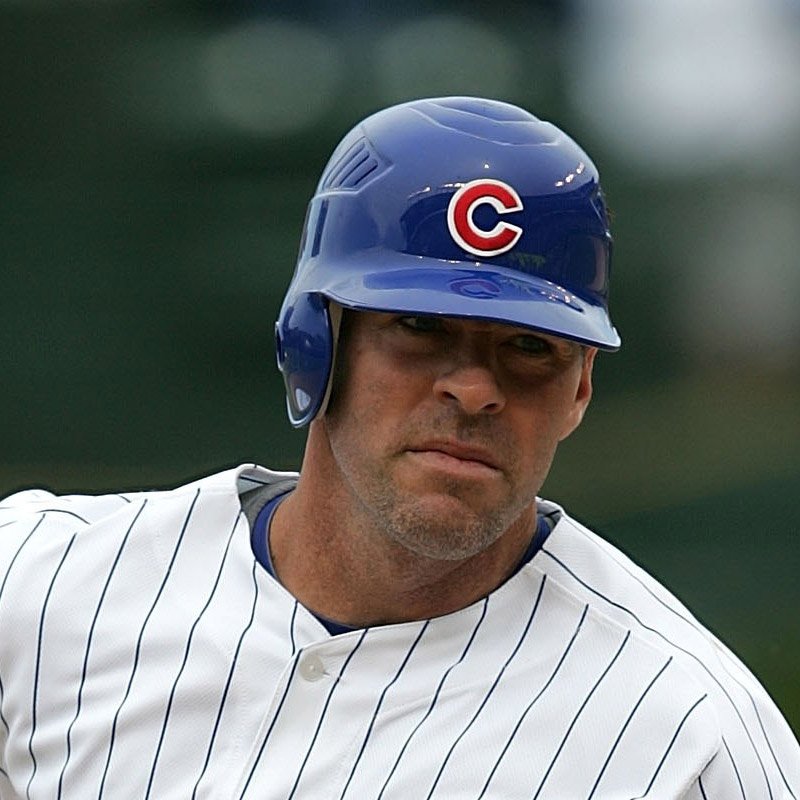 James Patrick Edmonds, known by Jim Edmonds among baseball fans (and certainly Chicago Cubs and St. Louis Cardinals fans), played parts of 17 seasons at the major league level. He played 1,105 games for the Cardinals and 85 games for the Cubs. Let's cut to the chase here; Edmonds spent a lot more time tormenting Cubs fans than he ever did aiding them. He played in nearly a season's worth of games against the North Siders, primarily during his time in St. Louis, accruing a .270/.392/.538 slash line with 32 home runs, 75 RBIs, and 90 runs in 452 at-bats. That might not quite be MVP-caliber production, but it's pretty darn close. Any time a player has a career .930 OPS against a single team, it's safe to say they owned them. Originally drafted in the seventh round of the 1988 MLB Draft by the Angels, Edmonds starred on the West Coast for seven seasons, winning the first two of his eight Gold Gloves in center field in 1997 and 1998. After an injury-plagued campaign in 1999, the Angels chose to trade Edmonds to the Cardinals in exchange for second baseman Adam Kennedy and pitcher Kent Bottenfield. He became an institution in St. Louis over the next eight years, winning six Gold Gloves while accruing 37.9 WAR and a .285/.393/.555 slash line. Of course, he was also among the key figures in the team's championship run in 2006, the Cardinals' first World Series title in 24 years. Because I don't like the Cardinals — and I imagine most of you feel the same — I won't belabor more of his success in St. Louis. He was a dominant player who spent his prime with the Cubs' biggest rival, and he probably deserved a lot more Hall of Fame recognition than he got when he went one-and-done on the 2016 ballot with just 2.5% of the vote. I did not enjoy watching the guy destroy the Cubs for the better part of a decade, but it's a disgrace he didn't at least make it to a second year in the voting process. He was one of the best center fielders in baseball for 15 years. I digress. Following the 2007 season, Edmonds was traded to the San Diego Padres for future World Series MVP David Freese, somehow further helping the Cardinals even after his departure. He made it just 90 at-bats into his Padres tenure before being released, at which point the Cubs, in need of a left-handed bat, signed Edmonds to a one-year contract of which they were only responsible for the league minimum. He certainly wasn't a fan favorite, but Edmonds did produce a 1.1 WAR, .937 OPS half-season in Chicago, even starting in all three of their postseason games in the NLDS where they were swept by the Dodgers. He was, for all intents and purposes, the starting center fielder on the best team that Cubs had decades, and he even endeared himself to fans when he hit two home runs in the same inning against the Chicago White Sox in June. After the 2008 season, Edmonds sat out the next campaign because he didn't receive any contract offers to his liking. He returned in 2010 to post a productive half-season with the Milwaukee Brewers before getting traded to the Cincinnati Reds, meaning Edmonds played for two-thirds of the NL Central within a four-year stretch (at that time, the Houston Astros were still in the NL Central, and Edmonds never played for them nor the Pittsburgh Pirates). Edmonds re-signed with the Cardinals in 2011, though he was forced to retire prior the start of the regular season due to a lingering Achilles issue. He now serves in a studio and color commentator role for Cardinals games.
 -
Three players made the Hall of Fame this year, including Ichiro, who fell one vote shy of a unanimous induction. How does this class stack up? View full video
-
Three players made the Hall of Fame this year, including Ichiro, who fell one vote shy of a unanimous induction. How does this class stack up?
-
Cole Hamels had a brilliant career which was mostly spent with the Phillies, but his brief tenure with the Cubs is worth remembering. Cole Hamels is rightfully best remembered for his brilliance with the Philadelphia Phillies, where he played parts of ten MLB seasons and accrued 42.0 bWAR. Philadelphia selected him 17th overall in the 2002 MLB Draft, and he would eventually make his big league debut in 2006. He racked up three All-Star appearances and four top-eight finishes in Cy Young voting, and he was notably the NLCS and World Series MVP when the Phillies won it all in 2008. Hamels was also one-fourth of the Phillies' vaunted "doomsday rotation," featuring Hall of Famer Roy Halladay, Cy Young winner Cliff Lee, and three-time All-Star Roy Oswalt. "The Four Aces," as they liked to be called, didn't quite make the splash they hoped to, losing to the Cardinals in Game 5 of the NLDS in 2011. Still, the team won a franchise-best 102 games, with the rotation leading the league in wins (76), strikeouts (935), walks (221), and quality starts (108), while Hamels, Halladay, and Lee all finished top-five in Cy Young voting. Hamels stuck around the longest of that quartet, making it all the way to the 2015 season with the franchise that drafted him. In what would prove to be his final start with the Phillies, the 6'4" lefty no-hit the Cubs at Wrigley Field. It was the first no-hitter against the Cubs since Sandy Koufax ' s perfect game in 1965 and the first at Wrigley since the Cubs' Milt Pappas threw a no-no in 1972. Luckily for Chicago, the next time Hamels would pitch at Wrigley would be in their uniform. After being traded to the Texas Rangers at the 2015 trade deadline and appearing in parts of four seasons for them, the southpaw was shipped to the Cubs in July 2018 in exchange for Eddie Butler, Rollie Lacy, and Alexander Ovalles. Chicago's manager at the time, Joe Maddon, was rather familiar with Hamels, who bested his Tampa Bay Rays in the 2008 World Series. "He'd be pretty good," Maddon said after the Cubs acquired him. "I've not liked him for a long time. He's pitched some really big games against teams I've been involved with and done well. He's a great competitor. He's got good stuff, but he competes and knows what he's doing out there. I'd have to rank him as a pretty competent Major League left-handed pitcher." The Cubs' rotation at the time was a mess, as Yu Darvish had spent the whole season struggling with injuries, Tyler Chatwood literally could not find the strike zone, and Jose Quintana and Kyle Hendricks were struggling with newfound inconsistencies. Only Jon Lester (a 2018 All-Star) had performed up to expectations, and Hamels was brought in to stabilize the group during a postseason push. Luckily, Hamels found the fountain of youth upon arriving in Wrigleyville, as he spearheaded the team's charge to a wild card spot. In 76 1/3 innings (12 starts), Hamels logged 2.36 ERA (3.42 FIP), 74 strikeouts, and a deceptively thin 4-3 record. He was worth 2.3 bWAR in those final two months of the season, easily pacing the Cubs in August and September of 2018 (Javier Baéz, who finished second in MVP voting that season, was the only close second). Unfortunately, the team lost to the Colorado Rockies in the single elimination Wild Card Game, though Hamels did his best to keep things close, throwing two scoreless innings in relief. Over the subsequent offseason, there was quite a bit of drama surrounding Hamels' $20 million club option, though the Cubs chose to quell those rumors and elected to keep him at that price tag for the 2019 season. He wasn't quite the revelation he was when the Cubs first picked him up, but he was still solid for Chicago that campaign, posting a 7–7 record with a 3.81 ERA in 147.2 innings over 27 starts. The team, of course, missed the postseason that year for the first time since 2015, marking the end of Hamels' tenure on the North Side. After a failed one-year stint with the Atlanta Braves that never got off the ground due to arm and shoulder issues, he made a few comeback attempts with the Los Angeles Dodgers and San Diego Padres after that, but he could never make it back to the big leagues. He officially retired on August 4, 2023, and the Phillies held a ceremony for him on June 21, 2024, celebrating his career (though they did not retire his #35 jersey). Notably, Hamels is one of upwards of 18 potential first-year candidates for the 2026 Hall of Fame ballot. Among them, only Ryan Braun and Hamels accrued 40+ WAR, and none of the other sixteen had a "peak" that will deserve enough consideration to stick around on the ballot for long. Of course, Braun himself may struggle to gather much support, as his connection to the PED scandal that swept through baseball in the 2010s will certainly put a damper on what was otherwise a fine career. It's very possible that the big southpaw is the only freshman from next year's class who sticks around on the ballot for more than one year, even if it will likely take him at least a few years to get enough support to make the Hall (if he does at all). View full player
-
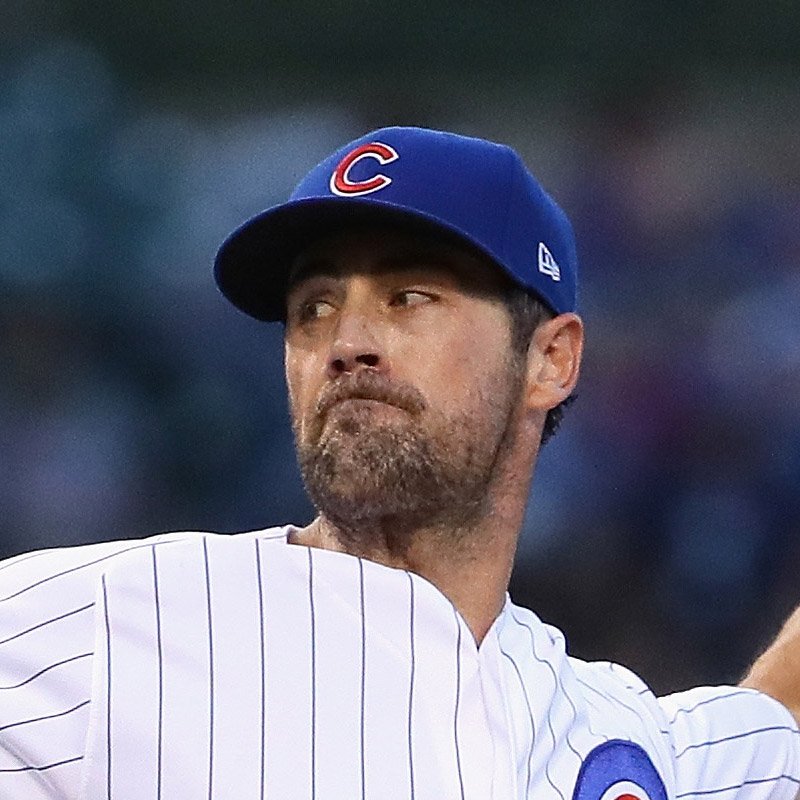 Cole Hamels had a brilliant career which was mostly spent with the Phillies, but his brief tenure with the Cubs is worth remembering. Cole Hamels is rightfully best remembered for his brilliance with the Philadelphia Phillies, where he played parts of ten MLB seasons and accrued 42.0 bWAR. Philadelphia selected him 17th overall in the 2002 MLB Draft, and he would eventually make his big league debut in 2006. He racked up three All-Star appearances and four top-eight finishes in Cy Young voting, and he was notably the NLCS and World Series MVP when the Phillies won it all in 2008. Hamels was also one-fourth of the Phillies' vaunted "doomsday rotation," featuring Hall of Famer Roy Halladay, Cy Young winner Cliff Lee, and three-time All-Star Roy Oswalt. "The Four Aces," as they liked to be called, didn't quite make the splash they hoped to, losing to the Cardinals in Game 5 of the NLDS in 2011. Still, the team won a franchise-best 102 games, with the rotation leading the league in wins (76), strikeouts (935), walks (221), and quality starts (108), while Hamels, Halladay, and Lee all finished top-five in Cy Young voting. Hamels stuck around the longest of that quartet, making it all the way to the 2015 season with the franchise that drafted him. In what would prove to be his final start with the Phillies, the 6'4" lefty no-hit the Cubs at Wrigley Field. It was the first no-hitter against the Cubs since Sandy Koufax ' s perfect game in 1965 and the first at Wrigley since the Cubs' Milt Pappas threw a no-no in 1972. Luckily for Chicago, the next time Hamels would pitch at Wrigley would be in their uniform. After being traded to the Texas Rangers at the 2015 trade deadline and appearing in parts of four seasons for them, the southpaw was shipped to the Cubs in July 2018 in exchange for Eddie Butler, Rollie Lacy, and Alexander Ovalles. Chicago's manager at the time, Joe Maddon, was rather familiar with Hamels, who bested his Tampa Bay Rays in the 2008 World Series. "He'd be pretty good," Maddon said after the Cubs acquired him. "I've not liked him for a long time. He's pitched some really big games against teams I've been involved with and done well. He's a great competitor. He's got good stuff, but he competes and knows what he's doing out there. I'd have to rank him as a pretty competent Major League left-handed pitcher." The Cubs' rotation at the time was a mess, as Yu Darvish had spent the whole season struggling with injuries, Tyler Chatwood literally could not find the strike zone, and Jose Quintana and Kyle Hendricks were struggling with newfound inconsistencies. Only Jon Lester (a 2018 All-Star) had performed up to expectations, and Hamels was brought in to stabilize the group during a postseason push. Luckily, Hamels found the fountain of youth upon arriving in Wrigleyville, as he spearheaded the team's charge to a wild card spot. In 76 1/3 innings (12 starts), Hamels logged 2.36 ERA (3.42 FIP), 74 strikeouts, and a deceptively thin 4-3 record. He was worth 2.3 bWAR in those final two months of the season, easily pacing the Cubs in August and September of 2018 (Javier Baéz, who finished second in MVP voting that season, was the only close second). Unfortunately, the team lost to the Colorado Rockies in the single elimination Wild Card Game, though Hamels did his best to keep things close, throwing two scoreless innings in relief. Over the subsequent offseason, there was quite a bit of drama surrounding Hamels' $20 million club option, though the Cubs chose to quell those rumors and elected to keep him at that price tag for the 2019 season. He wasn't quite the revelation he was when the Cubs first picked him up, but he was still solid for Chicago that campaign, posting a 7–7 record with a 3.81 ERA in 147.2 innings over 27 starts. The team, of course, missed the postseason that year for the first time since 2015, marking the end of Hamels' tenure on the North Side. After a failed one-year stint with the Atlanta Braves that never got off the ground due to arm and shoulder issues, he made a few comeback attempts with the Los Angeles Dodgers and San Diego Padres after that, but he could never make it back to the big leagues. He officially retired on August 4, 2023, and the Phillies held a ceremony for him on June 21, 2024, celebrating his career (though they did not retire his #35 jersey). Notably, Hamels is one of upwards of 18 potential first-year candidates for the 2026 Hall of Fame ballot. Among them, only Ryan Braun and Hamels accrued 40+ WAR, and none of the other sixteen had a "peak" that will deserve enough consideration to stick around on the ballot for long. Of course, Braun himself may struggle to gather much support, as his connection to the PED scandal that swept through baseball in the 2010s will certainly put a damper on what was otherwise a fine career. It's very possible that the big southpaw is the only freshman from next year's class who sticks around on the ballot for more than one year, even if it will likely take him at least a few years to get enough support to make the Hall (if he does at all).
 -
The Astros reliever has been mentioned as a fit for the Cubs all offseason, but contrasting reports suggest a trade may or may not be on the table. Meanwhile, Ethan continues to take shots at the Mets. View full video
-
The Astros reliever has been mentioned as a fit for the Cubs all offseason, but contrasting reports suggest a trade may or may not be on the table. Meanwhile, Ethan continues to take shots at the Mets.
-
As January comes to an end, it's time to take a look at what's new on the Chicago Cubs Players Project here on North Side Baseball! Image courtesy of © Eric Hartline-Imagn Images What is the Players Project? It's a community-driven, wiki-style project focusing on Cubs players of all stripes. It's open to all North Side Baseball users, and we've had contributions from current players, past players, and players who never even made the major leagues but played in the Cubs’ farm system. Create your favorite player today! Welcome back, everyone! We've seen some really fun players added to our in-house Cubs database this month, so I wanted to highlight some of the most fascinating entries. As a reminder, any user here on the site can hop in right away and add their favorite player to the system. Perhaps your next entry will be featured in a future round-up! Frank "The Tank" Schwindel was often the only source of Cubs joy following the trade deadline fire sale in 2021. In August of that season, Frank Schwindel slashed .344/.394/.635 (171 wRC+) with six home runs, winning NL Rookie of the Month honors (as a 29-year-old). Then, in September, he slashed .344/.388/.600 (162 wRC+) with seven home runs and won Rookie of the Month honors again! While he certainly wasn't the long-term Anthony Rizzo replacement — that title now belongs to Michael Busch — his contagious smile, camaraderie with fans, and bewildering success made Schwindel one of the most memorable Cubs of the post-2016 era, even if his 15 minutes of fame went as fast as they came. Rich "Goose" Gossage is one of the best relief pitchers of all time and one of the closers who pioneered the modern understanding of that position in the bullpen, but his one nondescript season with the Cubs was noteworthy only because of the fact that it was one of his few non-noteworthy seasons. 36 years old at the time of his arrival in Chicago, Gossage's best days were well behind him, and he tallied just 13 saves against nine blown saves while in a Cubs uniform. Fun fact: Gossage posted a positive WAR with seven of the teams he played for, and a negative WAR for just one. You don't need to think very hard to figure out which unlucky team was the latter. Whether you're a longtime Cubs fan or you only just started following the team this winter, we can all collectively bond over the fact that none of us should remember that Taylor Teagarden played for the franchise. His time with the team was relatively unremarkable, as he slashed a hilarious .200/.200/.200 in 15 at-bats with the Cubs in 2015, which was good a -0.2 WAR and 11 OPS+ (2 wRC+). However, at a game yours truly was in attendance for, Teagarden — who was pinch-hitting for the pitcher's spot after a double-switch swapped out Chris Denorfia earlier in the game — hit a game-winning single off of prime Aroldis Chapman on July 22, 2015. Chapman was on a run of 13 consecutive scoreless outings at that point, and beyond that, no Cubs team had scored a run off Chapman in more than two years, since May 3, 2013 (and they lost that game anyway despite scoring three runs off Chapman). That had been a run of 15 consecutive scoreless outings for Chapman against the Cubs, until Teagarden's hit. Of course, other entries, like those for Ted Lilly and Ian Stewart, continue filling up our database. The Chicago Cubs Players Project is open to all North Side Baseball users. If you're a Cubs history buff or just want to dive into the background of your favorite player, come on board! Please stop by the Players Project by hitting the button below! View full article
-
 What is the Players Project? It's a community-driven, wiki-style project focusing on Cubs players of all stripes. It's open to all North Side Baseball users, and we've had contributions from current players, past players, and players who never even made the major leagues but played in the Cubs’ farm system. Create your favorite player today! Welcome back, everyone! We've seen some really fun players added to our in-house Cubs database this month, so I wanted to highlight some of the most fascinating entries. As a reminder, any user here on the site can hop in right away and add their favorite player to the system. Perhaps your next entry will be featured in a future round-up! Frank "The Tank" Schwindel was often the only source of Cubs joy following the trade deadline fire sale in 2021. In August of that season, Frank Schwindel slashed .344/.394/.635 (171 wRC+) with six home runs, winning NL Rookie of the Month honors (as a 29-year-old). Then, in September, he slashed .344/.388/.600 (162 wRC+) with seven home runs and won Rookie of the Month honors again! While he certainly wasn't the long-term Anthony Rizzo replacement — that title now belongs to Michael Busch — his contagious smile, camaraderie with fans, and bewildering success made Schwindel one of the most memorable Cubs of the post-2016 era, even if his 15 minutes of fame went as fast as they came. Rich "Goose" Gossage is one of the best relief pitchers of all time and one of the closers who pioneered the modern understanding of that position in the bullpen, but his one nondescript season with the Cubs was noteworthy only because of the fact that it was one of his few non-noteworthy seasons. 36 years old at the time of his arrival in Chicago, Gossage's best days were well behind him, and he tallied just 13 saves against nine blown saves while in a Cubs uniform. Fun fact: Gossage posted a positive WAR with seven of the teams he played for, and a negative WAR for just one. You don't need to think very hard to figure out which unlucky team was the latter. Whether you're a longtime Cubs fan or you only just started following the team this winter, we can all collectively bond over the fact that none of us should remember that Taylor Teagarden played for the franchise. His time with the team was relatively unremarkable, as he slashed a hilarious .200/.200/.200 in 15 at-bats with the Cubs in 2015, which was good a -0.2 WAR and 11 OPS+ (2 wRC+). However, at a game yours truly was in attendance for, Teagarden — who was pinch-hitting for the pitcher's spot after a double-switch swapped out Chris Denorfia earlier in the game — hit a game-winning single off of prime Aroldis Chapman on July 22, 2015. Chapman was on a run of 13 consecutive scoreless outings at that point, and beyond that, no Cubs team had scored a run off Chapman in more than two years, since May 3, 2013 (and they lost that game anyway despite scoring three runs off Chapman). That had been a run of 15 consecutive scoreless outings for Chapman against the Cubs, until Teagarden's hit. Of course, other entries, like those for Ted Lilly and Ian Stewart, continue filling up our database. The Chicago Cubs Players Project is open to all North Side Baseball users. If you're a Cubs history buff or just want to dive into the background of your favorite player, come on board! Please stop by the Players Project by hitting the button below!
 -
Cole Hamels had a brilliant career which was mostly spent with the Phillies, but his brief tenure with the Cubs is worth remembering. Cole Hamels is rightfully best remembered for his brilliance with the Philadelphia Phillies, where he played parts of ten MLB seasons and accrued 42.0 bWAR. Philadelphia selected him 17th overall in the 2002 MLB Draft, and he would eventually make his big league debut in 2006. He racked up three All-Star appearances and four top-eight finishes in Cy Young voting, and he was notably the NLCS and World Series MVP when the Phillies won it all in 2008. Hamels was also one-fourth of the Phillies' vaunted "doomsday rotation," featuring Hall of Famer Roy Halladay, Cy Young winner Cliff Lee, and three-time All-Star Roy Oswalt. "The Four Aces," as they liked to be called, didn't quite make the splash they hoped to, losing to the Cardinals in Game 5 of the NLDS in 2011. Still, the team won a franchise-best 102 games, with the rotation leading the league in wins (76), strikeouts (935), walks (221), and quality starts (108), while Hamels, Halladay, and Lee all finished top-five in Cy Young voting. Hamels stuck around the longest of that quartet, making it all the way to the 2015 season with the franchise that drafted him. In what would prove to be his final start with the Phillies, the 6'4" lefty no-hit the Cubs at Wrigley Field. It was the first no-hitter against the Cubs since Sandy Koufax's perfect game in 1965 and the first at Wrigley since the Cubs' Milt Pappas threw a no-no in 1972. Luckily for Chicago, the next time Hamels would pitch at Wrigley would be in their uniform. After being traded to the Texas Rangers at the 2015 trade deadline and appearing in parts of four seasons for them, the southpaw was shipped to the Cubs in July 2018 in exchange for Eddie Butler, Rollie Lacy, and Alexander Ovalles. Chicago's manager at the time, Joe Maddon, was rather familiar with Hamels, who bested his Tampa Bay Rays in the 2008 World Series. "He'd be pretty good," Maddon said after the Cubs acquired him. "I've not liked him for a long time. He's pitched some really big games against teams I've been involved with and done well. He's a great competitor. He's got good stuff, but he competes and knows what he's doing out there. I'd have to rank him as a pretty competent Major League left-handed pitcher." The Cubs' rotation at the time was a mess, as Yu Darvish had spent the whole season struggling with injuries, Tyler Chatwood literally could not find the strike zone, and Jose Quintana and Kyle Hendricks were struggling with newfound inconsistencies. Only Jon Lester (a 2018 All-Star) had performed up to expectations, and Hamels was brought in to stabilize the group during a postseason push. Luckily, Hamels found the fountain of youth upon arriving in Wrigleyville, as he spearheaded the team's charge to a wild card spot. In 76 1/3 innings (12 starts), Hamels logged 2.36 ERA (3.42 FIP), 74 strikeouts, and a deceptively thin 4-3 record. He was worth 2.3 bWAR in those final two months of the season, easily pacing the Cubs in August and September of 2018 (Javier Baéz, who finished second in MVP voting that season, was the only close second). Unfortunately, the team lost to the Colorado Rockies in the single elimination Wild Card Game, though Hamels did his best to keep things close, throwing two scoreless innings in relief. Over the subsequent offseason, there was quite a bit of drama surrounding Hamels' $20 million club option, though the Cubs chose to quell those rumors and elected to keep him at that price tag for the 2019 season. He wasn't quite the revelation he was when the Cubs first picked him up, but he was still solid for Chicago that campaign, posting a 7–7 record with a 3.81 ERA in 147.2 innings over 27 starts. The team, of course, missed the postseason that year for the first time since 2015, marking the end of Hamels' tenure on the North Side. After a failed one-year stint with the Atlanta Braves that never got off the ground due to arm and shoulder issues, he made a few comeback attempts with the Los Angeles Dodgers and San Diego Padres after that, but he could never make it back to the big leagues. He officially retired on August 4, 2023, and the Phillies held a ceremony for him on June 21, 2024, celebrating his career (though they did not retire his #35 jersey). Notably, Hamels is one of upwards of 18 potential first-year candidates for the 2026 Hall of Fame ballot. Among them, only Ryan Braun and Hamels accrued 40+ WAR, and none of the other sixteen had a "peak" that will deserve enough consideration to stick around on the ballot for long. Of course, Braun himself may struggle to gather much support, as his connection to the PED scandal that swept through baseball in the 2010s will certainly put a damper on what was otherwise a fine career. It's very possible that the big southpaw is the only freshman from next year's class who sticks around on the ballot for more than one year, even if it will likely take him at least a few years to get enough support to make the Hall (if he does at all). View full article
-
Remember Some Cubs: Cole Hamels, A Potential 2026 Hall of Fame Inductee
Brandon Glick posted an article in Cubs
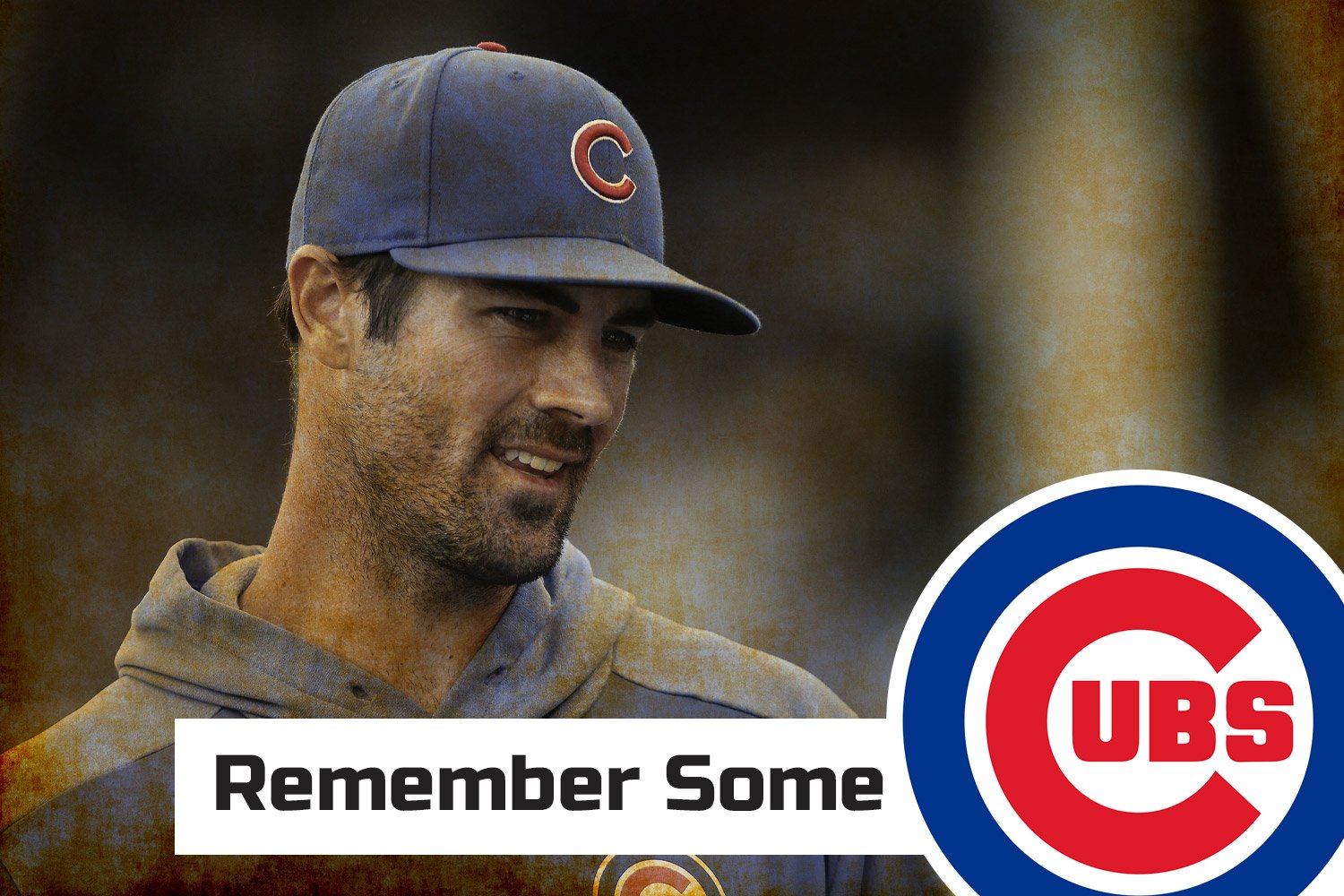 Cole Hamels is rightfully best remembered for his brilliance with the Philadelphia Phillies, where he played parts of ten MLB seasons and accrued 42.0 bWAR. Philadelphia selected him 17th overall in the 2002 MLB Draft, and he would eventually make his big league debut in 2006. He racked up three All-Star appearances and four top-eight finishes in Cy Young voting, and he was notably the NLCS and World Series MVP when the Phillies won it all in 2008. Hamels was also one-fourth of the Phillies' vaunted "doomsday rotation," featuring Hall of Famer Roy Halladay, Cy Young winner Cliff Lee, and three-time All-Star Roy Oswalt. "The Four Aces," as they liked to be called, didn't quite make the splash they hoped to, losing to the Cardinals in Game 5 of the NLDS in 2011. Still, the team won a franchise-best 102 games, with the rotation leading the league in wins (76), strikeouts (935), walks (221), and quality starts (108), while Hamels, Halladay, and Lee all finished top-five in Cy Young voting. Hamels stuck around the longest of that quartet, making it all the way to the 2015 season with the franchise that drafted him. In what would prove to be his final start with the Phillies, the 6'4" lefty no-hit the Cubs at Wrigley Field. It was the first no-hitter against the Cubs since Sandy Koufax's perfect game in 1965 and the first at Wrigley since the Cubs' Milt Pappas threw a no-no in 1972. Luckily for Chicago, the next time Hamels would pitch at Wrigley would be in their uniform. After being traded to the Texas Rangers at the 2015 trade deadline and appearing in parts of four seasons for them, the southpaw was shipped to the Cubs in July 2018 in exchange for Eddie Butler, Rollie Lacy, and Alexander Ovalles. Chicago's manager at the time, Joe Maddon, was rather familiar with Hamels, who bested his Tampa Bay Rays in the 2008 World Series. "He'd be pretty good," Maddon said after the Cubs acquired him. "I've not liked him for a long time. He's pitched some really big games against teams I've been involved with and done well. He's a great competitor. He's got good stuff, but he competes and knows what he's doing out there. I'd have to rank him as a pretty competent Major League left-handed pitcher." The Cubs' rotation at the time was a mess, as Yu Darvish had spent the whole season struggling with injuries, Tyler Chatwood literally could not find the strike zone, and Jose Quintana and Kyle Hendricks were struggling with newfound inconsistencies. Only Jon Lester (a 2018 All-Star) had performed up to expectations, and Hamels was brought in to stabilize the group during a postseason push. Luckily, Hamels found the fountain of youth upon arriving in Wrigleyville, as he spearheaded the team's charge to a wild card spot. In 76 1/3 innings (12 starts), Hamels logged 2.36 ERA (3.42 FIP), 74 strikeouts, and a deceptively thin 4-3 record. He was worth 2.3 bWAR in those final two months of the season, easily pacing the Cubs in August and September of 2018 (Javier Baéz, who finished second in MVP voting that season, was the only close second). Unfortunately, the team lost to the Colorado Rockies in the single elimination Wild Card Game, though Hamels did his best to keep things close, throwing two scoreless innings in relief. Over the subsequent offseason, there was quite a bit of drama surrounding Hamels' $20 million club option, though the Cubs chose to quell those rumors and elected to keep him at that price tag for the 2019 season. He wasn't quite the revelation he was when the Cubs first picked him up, but he was still solid for Chicago that campaign, posting a 7–7 record with a 3.81 ERA in 147.2 innings over 27 starts. The team, of course, missed the postseason that year for the first time since 2015, marking the end of Hamels' tenure on the North Side. After a failed one-year stint with the Atlanta Braves that never got off the ground due to arm and shoulder issues, he made a few comeback attempts with the Los Angeles Dodgers and San Diego Padres after that, but he could never make it back to the big leagues. He officially retired on August 4, 2023, and the Phillies held a ceremony for him on June 21, 2024, celebrating his career (though they did not retire his #35 jersey). Notably, Hamels is one of upwards of 18 potential first-year candidates for the 2026 Hall of Fame ballot. Among them, only Ryan Braun and Hamels accrued 40+ WAR, and none of the other sixteen had a "peak" that will deserve enough consideration to stick around on the ballot for long. Of course, Braun himself may struggle to gather much support, as his connection to the PED scandal that swept through baseball in the 2010s will certainly put a damper on what was otherwise a fine career. It's very possible that the big southpaw is the only freshman from next year's class who sticks around on the ballot for more than one year, even if it will likely take him at least a few years to get enough support to make the Hall (if he does at all).
 -
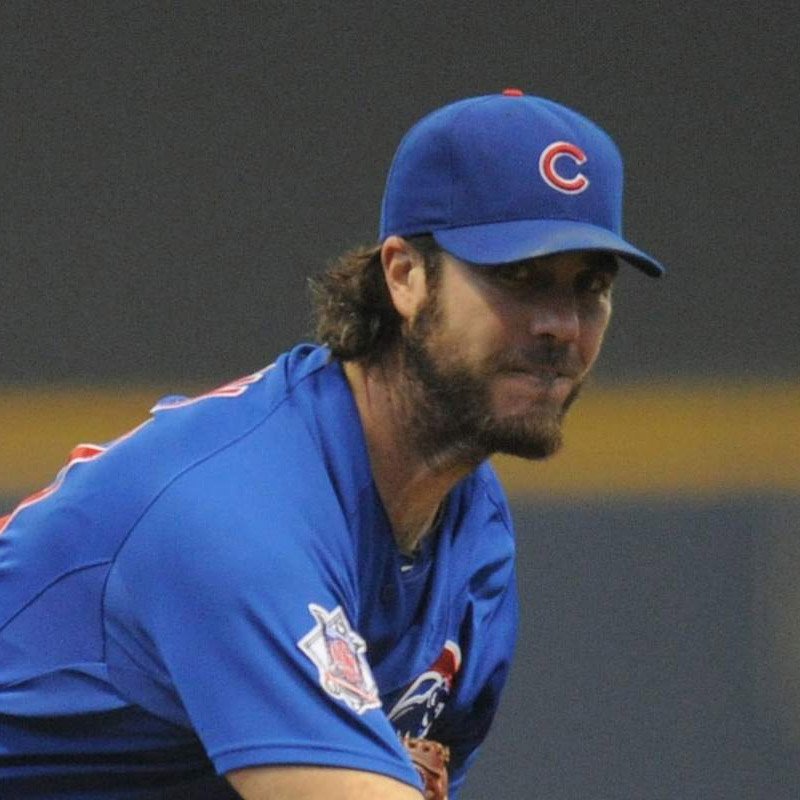 Daniel John Haren, known simply as Dan Haren to baseball fans, played 13 seasons in Major League baseball, with his final 11 games coming with the Chicago Cubs. After being selected 72nd overall in the 2001 MLB Draft, Haren quickly worked his way through the minor league ranks, making his MLB debut with the St. Louis Cardinals in 2003. His time there was brief (just 28 appearances and 19 starts across parts of two seasons), though he did throw 4 2/3 scoreless innings against the Boston Red Sox in the 2004 World Series. After the 2004 season, the Cardinals traded Haren in a package that included right-handed reliever Kiko Calero and top hitting prospect Daric Barton to the Oakland Athletics for Mark Mulder. Haren blossomed with the A's, beginning a streak of seven consecutive seasons with 200-plus innings pitched. Haren's durability was his calling card, as he completed 169-plus innings in every season from 2005 until his retirement in 2015. Despite his longevity and dominance, Haren continued to bounce around the league, pitching for the Arizona Diamondbacks (where he finished fifth in NL Cy Young voting in 2009), Los Angeles Angels (where he finished seventh in AL Cy Young voting in 2011), Washington Nationals, Los Angeles Dodgers, and Miami Marlins before making his way to the Cubs. Notably, in 2013 with the Nationals, Haren became the 13th pitcher in MLB history to beat all 30 teams. Finally, at the 2015 trade deadline, Haren (who was known to be unhappy pitching on the East Coast) was traded to the Cubs in exchange for minor leaguers Elliot Soto and Ivan Pineyro. 34 at the time, Haren immediately made it known that the Cubs would be the final stop of his career. Though he scuffled early upon his move to Chicago, Haren allowed just eight earned runs in 32 2/3 innings over his final six starts. All said, he tallied 187 1/3 innings of 3.60 ERA pitching on the year, making for a productive final campaign. His Cubs career ended unceremoniously when the team elected to keep him off its postseason roster, choosing Jason Hammel as the No. 4 starter in the playoff rotation instead. "That was it for me," Haren said after what would be his final game (a 3-1 win over the Milwaukee Brewers). "If I have to pitch in the postseason. I'll be ready for sure." Haren was notorious for a methodical pitching approach, often relying on placement and control over velocity and raw stuff. He was also a beloved teammate and fan favorite, routinely laughing at himself and his diminished velocity (his Twitter handle is literally "ithrow88") and "old man" status. Haren retired following that brief stint with the Cubs, finishing his career with the seventh best strikeout-to-walk ratio in major league history. In the years since, Haren has joined the Diamondbacks organization as a pitching strategist. He was credited with helping the pitching staff dominate on its way to a World Series appearance in 2023.
 -
Daniel John Haren, known simply as Dan Haren to baseball fans, played 13 seasons in Major League baseball, with his final 11 games coming with the Chicago Cubs. After being selected 72nd overall in the 2001 MLB Draft, Haren quickly worked his way through the minor league ranks, making his MLB debut with the St. Louis Cardinals in 2003. His time there was brief (just 28 appearances and 19 starts across parts of two seasons), though he did throw 4 2/3 scoreless innings against the Boston Red Sox in the 2004 World Series. After the 2004 season, the Cardinals traded Haren in a package that included right-handed reliever Kiko Calero and top hitting prospect Daric Barton to the Oakland Athletics for Mark Mulder. Haren blossomed with the A's, beginning a streak of seven consecutive seasons with 200-plus innings pitched. Haren's durability was his calling card, as he completed 169-plus innings in every season from 2005 until his retirement in 2015. Despite his longevity and dominance, Haren continued to bounce around the league, pitching for the Arizona Diamondbacks (where he finished fifth in NL Cy Young voting in 2009), Los Angeles Angels (where he finished seventh in AL Cy Young voting in 2011), Washington Nationals, Los Angeles Dodgers, and Miami Marlins before making his way to the Cubs. Notably, in 2013 with the Nationals, Haren became the 13th pitcher in MLB history to beat all 30 teams. Finally, at the 2015 trade deadline, Haren (who was known to be unhappy pitching on the East Coast) was traded to the Cubs in exchange for minor leaguers Elliot Soto and Ivan Pineyro. 34 at the time, Haren immediately made it known that the Cubs would be the final stop of his career. Though he scuffled early upon his move to Chicago, Haren allowed just eight earned runs in 32 2/3 innings over his final six starts. All said, he tallied 187 1/3 innings of 3.60 ERA pitching on the year, making for a productive final campaign. His Cubs career ended unceremoniously when the team elected to keep him off its postseason roster, choosing Jason Hammel as the No. 4 starter in the playoff rotation instead. "That was it for me," Haren said after what would be his final game (a 3-1 win over the Milwaukee Brewers). "If I have to pitch in the postseason. I'll be ready for sure." Haren was notorious for a methodical pitching approach, often relying on placement and control over velocity and raw stuff. He was also a beloved teammate and fan favorite, routinely laughing at himself and his diminished velocity (his Twitter handle is literally "ithrow88") and "old man" status. Haren retired following that brief stint with the Cubs, finishing his career with the seventh best strikeout-to-walk ratio in major league history. In the years since, Haren has joined the Diamondbacks organization as a pitching strategist. He was credited with helping the pitching staff dominate on its way to a World Series appearance in 2023. View full player
-
The Cubs will face a gauntlet of contenders in the regular season's first month, including the Dodgers in Tokyo in March. How will they fare against the league's elite? View full video
-
The Cubs will face a gauntlet of contenders in the regular season's first month, including the Dodgers in Tokyo in March. How will they fare against the league's elite?
-
The Cubs have been floated in rumors surrounding the star third baseman. Do they make sense as a fit for him?
-
The Cubs have been floated in rumors surrounding the star third baseman. Do they make sense as a fit for him? View full video
-
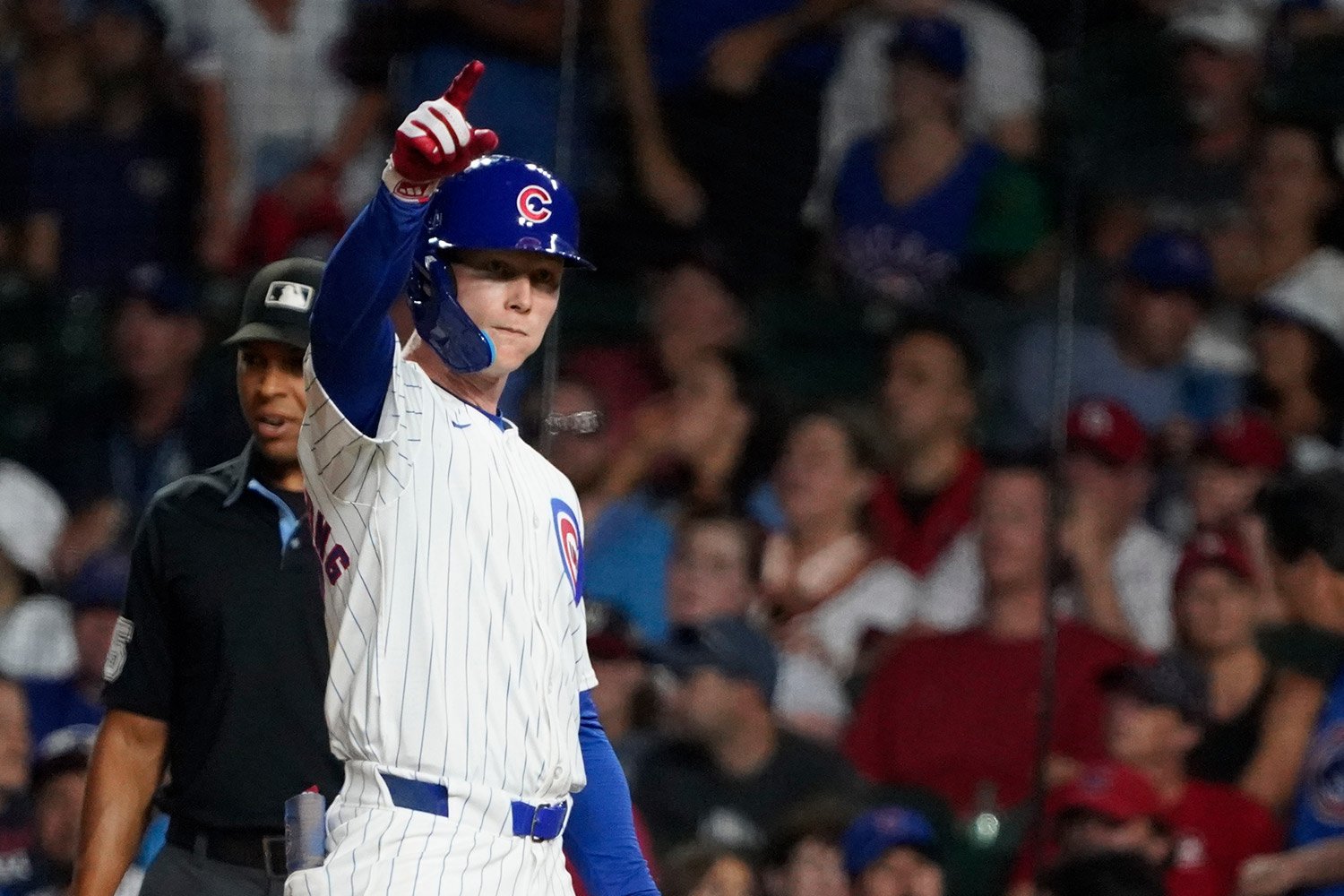 Our intro post provides a full explanation of the parameters used to develop this list. Still, the short version is this: We're answering the question: Which current players in the organization are most indispensable to fulfilling the vision of building a champion? To rank Cubs players and prospects, I will account for age, contract, controllability, upside, and more. I’ll remind everyone that while the 2025 season matters for a Cubs team that should win their division, this ranking is about the future as much as it is about the present. Players with advancing age or waning team control won’t get as much love here as they would in a narrower time frame. Here’s how the list has shaken out so far in Part 1 (16-20), Part 2 (11-15), and Part 3 (6-10): 20. Luke Little, RP 19. Jordan Wicks, SP 18. Miguel Amaya, C 17. James Triantos, 2B/3B 16. Kyle Tucker, RF 15. Ian Happ, LF 14. Nico Hoerner, 2B 13. Seiya Suzuki, RF/DH 12. Kevin Alcantara, OF 11. Ben Brown, SP 10. Dansby Swanson, SS 9. Jefferson Rojas, SS 8. Michael Busch, 1B 7. Owen Caissie, OF 6. Shota Imanaga, SP Let’s wrap this exercise up without further ado with the top five player assets in the Cubs organization heading into the 2025 season. 5. Justin Steele, Starting Pitcher Opening Day Age: 29 Controlled Through: 2027 Contract Status: Arbitration By far the most established big leaguer in this top five, Steele would have a legitimate case for No. 1 if he weren’t already on his second year of arbitration (though, as a Super Two player, the Cubs do get him for a fourth arbitration year in 2027). Another issue is that Steele, already 29 years old, is in the thick of his prime right now. Even if he sticks around on an extension, the returns will start diminishing at some point in the next half-decade. Those are minor concerns in the face of what has truly become a great pitcher. Over the past three seasons, Steele has started 78 games for the Cubs, logging 427.0 innings while working a 3.10 ERA (3.14 FIP). His strikeout rate has remained remarkably consistent, hovering around the 24.5% mark throughout his career, and his ability to limit free passes continues to improve. His ground ball rate (43.0%) did dip to a career-low figure in 2024, though part of that can be chalked up to his nagging injuries. If healthy, Steele should continue to front this rotation for the next three years, if not longer. 4. Matt Shaw, Third Baseman Opening Day Age: 23 Controlled Through: 2031 (At Least) Contract Status: Minor Leagues I’m a little uncomfortable putting Shaw this high, since I don’t know that he’ll be that much better than the league-average third baseman, offensive or defensively, but having a guy who can play both sides of the ball at a consistently high level is eminently valuable, even if he doesn’t evolve into the MVP-caliber player Kris Bryant was in his prime. Shaw is ostensibly the team’s starting third baseman after dumping Isaac Paredes in the Kyle Tucker trade, barring a stunning move for Alex Bregman. Shaw has done nothing but hit since being taken in the first round of the 2023 MLB Draft, slashing .303/.384/.522 in 693 plate appearances across all levels of the minor leagues. His bat isn’t just advanced — it’s special. He posted a 146 wRC+ as a 22-year-old in Double-A and Triple-A in 2024, hitting 21 home runs in just 443 at-bats, and the gap between his strikeout and walk rate was just over six percentage points. He’s provided no reason to believe that he won’t be a star in the big leagues. Even if he never develops into anything more than an average defensive third baseman — his best defensive home is probably second base, but for now he’s blocked by Nico Hoerner — his bat should be good enough to make him playable anywhere on the diamond. If his power fully develops, he could be the North Star of the heart of the lineup for the next decade. 3. Cade Horton, Starting Pitcher Opening Day Age: 23 Controlled Through: 2031 (At Least) Contract Status: Minor Leagues Even after a slightly disappointing 2024 season, Horton is still the most important starting pitcher in the organization, if only because he’s the only one with the potential to turn into the ace-caliber pitcher who can match up with the Corbin Burnes and Paul Skenes of the world. Since being drafted seventh overall in the 2022 MLB Draft, Horton has flown through the minor league ranks, reaching Triple-A in just his second full professional season. He was promoted from Double-A Tennessee to Triple-A Iowa on April 30 last season, after he posted a 1.10 ERA in four starts with the Smokies, with 18 strikeouts in 16 1/3 innings. Unfortunately, Horton struggled in his month-long stint with the Iowa Cubs, producing a 7.50 ERA in just 18 innings, giving up a worrying amount of home runs and walks in that small sample. A lat injury sent him to the IL in early June, and that’s where he would remain for the remainder of the season. Health will be key moving forward as Horton has never even sniffed 100 innings pitched in a season, in college or the professional ranks. It may take him a bit longer to reach the majors than originally anticipated, but if the Cubs are going to compete with the National League’s best, they’ll need Horton to live up to his potential. 2. Moises Ballesteros, Catcher Opening Day Age: 21 Controlled Through: 2031 (At Least) Contract Status: Minor Leagues This ranking isn’t necessarily contingent on Ballesteros sticking at catcher — I don’t think he will, long-term — but it would certainly help his case to remain in this top five moving forward. Regardless, Ballesteros can hit. I mean really hit. My personal comparison for him is Kyle Schwarber (with maybe a little less prodigious power) as a patient hitter who derives a lot of his pop from a thick lower half. He made it to Triple-A as a 20-year-old last season, and though he didn’t dominate the level like he had all previous stops, he still slashed .281/.340/.454 (106 wRC+) with 10 home runs in 68 games in Iowa. His strikeout numbers did increase, but that’s bound to happen to a young hitter as he faces the improved pitching of the upper levels of the minors. That Ballesteros has been this prolific at the plate despite focusing on being a catcher — a position notorious for its slow-developing offensive traits — should have everyone salivating at the potential in his left-handed bat. He should be a lock as the team’s designated hitter of the future, with any defensive contributions behind the plate serving as a bonus. 1. Pete Crow-Armstrong, Center Fielder Opening Day Age: 23 Controlled Through: 2030 Contract Status: Pre-Arb Was it ever going to be anyone else? Crow-Armstrong is already one of the best defensive center fielders in the game, and he has a legitimate chance to be known as one of the greatest ever with the glove at that position if he sticks around for long enough. His speed (27 steals in 30 attempts) is another carrying tool, and those two qualities alone should ensure that he’s worth more than 3 WAR per season. Of course, putting a player who just posted a wRC+ of 87 in his first full taste of big league action atop this list might seem a little optimistic, but we know how good PCA was once he adjusted to different levels in the minor leagues. He hit 20 home runs in 500 plate appearances in 2023, and he slammed 15 more in 2024 (10 in the majors). He certainly doesn’t need to be a 25+ homer threat to be a perennial All-Star, but that’s the way things are trending. Don’t forget, he’s still just 23 years old — there’s plenty of time for him to develop into more than just a serviceable hitter. It’s rare that a player possesses both a very high floor and an astronomical ceiling. PCA is one of those rare players. If anyone is going to single-handedly push the Cubs towards a championship in the next decade, this is the guy. With this final installment, these rankings are now complete. In looking it over, do you feel anyone's been unfairly omitted? Any quibbles with the order of the rankings? Any overall thoughts as you assess the organization's current talent landscape? Feel free to sound off in the comments, and thanks for reading!
 -
We continue with our list ranking the 20 most important players to the Cubs’ present and future. Finally, we’ll conclude with the five best assets in the entire organization. Image courtesy of © David Banks-Imagn Images Our intro post provides a full explanation of the parameters used to develop this list. Still, the short version is this: We're answering the question: Which current players in the organization are most indispensable to fulfilling the vision of building a champion? To rank Cubs players and prospects, I will account for age, contract, controllability, upside, and more. I’ll remind everyone that while the 2025 season matters for a Cubs team that should win their division, this ranking is about the future as much as it is about the present. Players with advancing age or waning team control won’t get as much love here as they would in a narrower time frame. Here’s how the list has shaken out so far in Part 1 (16-20), Part 2 (11-15), and Part 3 (6-10): 20. Luke Little, RP 19. Jordan Wicks, SP 18. Miguel Amaya, C 17. James Triantos, 2B/3B 16. Kyle Tucker, RF 15. Ian Happ, LF 14. Nico Hoerner, 2B 13. Seiya Suzuki, RF/DH 12. Kevin Alcantara, OF 11. Ben Brown, SP 10. Dansby Swanson, SS 9. Jefferson Rojas, SS 8. Michael Busch, 1B 7. Owen Caissie, OF 6. Shota Imanaga, SP Let’s wrap this exercise up without further ado with the top five player assets in the Cubs organization heading into the 2025 season. 5. Justin Steele, Starting Pitcher Opening Day Age: 29 Controlled Through: 2027 Contract Status: Arbitration By far the most established big leaguer in this top five, Steele would have a legitimate case for No. 1 if he weren’t already on his second year of arbitration (though, as a Super Two player, the Cubs do get him for a fourth arbitration year in 2027). Another issue is that Steele, already 29 years old, is in the thick of his prime right now. Even if he sticks around on an extension, the returns will start diminishing at some point in the next half-decade. Those are minor concerns in the face of what has truly become a great pitcher. Over the past three seasons, Steele has started 78 games for the Cubs, logging 427.0 innings while working a 3.10 ERA (3.14 FIP). His strikeout rate has remained remarkably consistent, hovering around the 24.5% mark throughout his career, and his ability to limit free passes continues to improve. His ground ball rate (43.0%) did dip to a career-low figure in 2024, though part of that can be chalked up to his nagging injuries. If healthy, Steele should continue to front this rotation for the next three years, if not longer. 4. Matt Shaw, Third Baseman Opening Day Age: 23 Controlled Through: 2031 (At Least) Contract Status: Minor Leagues I’m a little uncomfortable putting Shaw this high, since I don’t know that he’ll be that much better than the league-average third baseman, offensive or defensively, but having a guy who can play both sides of the ball at a consistently high level is eminently valuable, even if he doesn’t evolve into the MVP-caliber player Kris Bryant was in his prime. Shaw is ostensibly the team’s starting third baseman after dumping Isaac Paredes in the Kyle Tucker trade, barring a stunning move for Alex Bregman. Shaw has done nothing but hit since being taken in the first round of the 2023 MLB Draft, slashing .303/.384/.522 in 693 plate appearances across all levels of the minor leagues. His bat isn’t just advanced — it’s special. He posted a 146 wRC+ as a 22-year-old in Double-A and Triple-A in 2024, hitting 21 home runs in just 443 at-bats, and the gap between his strikeout and walk rate was just over six percentage points. He’s provided no reason to believe that he won’t be a star in the big leagues. Even if he never develops into anything more than an average defensive third baseman — his best defensive home is probably second base, but for now he’s blocked by Nico Hoerner — his bat should be good enough to make him playable anywhere on the diamond. If his power fully develops, he could be the North Star of the heart of the lineup for the next decade. 3. Cade Horton, Starting Pitcher Opening Day Age: 23 Controlled Through: 2031 (At Least) Contract Status: Minor Leagues Even after a slightly disappointing 2024 season, Horton is still the most important starting pitcher in the organization, if only because he’s the only one with the potential to turn into the ace-caliber pitcher who can match up with the Corbin Burnes and Paul Skenes of the world. Since being drafted seventh overall in the 2022 MLB Draft, Horton has flown through the minor league ranks, reaching Triple-A in just his second full professional season. He was promoted from Double-A Tennessee to Triple-A Iowa on April 30 last season, after he posted a 1.10 ERA in four starts with the Smokies, with 18 strikeouts in 16 1/3 innings. Unfortunately, Horton struggled in his month-long stint with the Iowa Cubs, producing a 7.50 ERA in just 18 innings, giving up a worrying amount of home runs and walks in that small sample. A lat injury sent him to the IL in early June, and that’s where he would remain for the remainder of the season. Health will be key moving forward as Horton has never even sniffed 100 innings pitched in a season, in college or the professional ranks. It may take him a bit longer to reach the majors than originally anticipated, but if the Cubs are going to compete with the National League’s best, they’ll need Horton to live up to his potential. 2. Moises Ballesteros, Catcher Opening Day Age: 21 Controlled Through: 2031 (At Least) Contract Status: Minor Leagues This ranking isn’t necessarily contingent on Ballesteros sticking at catcher — I don’t think he will, long-term — but it would certainly help his case to remain in this top five moving forward. Regardless, Ballesteros can hit. I mean really hit. My personal comparison for him is Kyle Schwarber (with maybe a little less prodigious power) as a patient hitter who derives a lot of his pop from a thick lower half. He made it to Triple-A as a 20-year-old last season, and though he didn’t dominate the level like he had all previous stops, he still slashed .281/.340/.454 (106 wRC+) with 10 home runs in 68 games in Iowa. His strikeout numbers did increase, but that’s bound to happen to a young hitter as he faces the improved pitching of the upper levels of the minors. That Ballesteros has been this prolific at the plate despite focusing on being a catcher — a position notorious for its slow-developing offensive traits — should have everyone salivating at the potential in his left-handed bat. He should be a lock as the team’s designated hitter of the future, with any defensive contributions behind the plate serving as a bonus. 1. Pete Crow-Armstrong, Center Fielder Opening Day Age: 23 Controlled Through: 2030 Contract Status: Pre-Arb Was it ever going to be anyone else? Crow-Armstrong is already one of the best defensive center fielders in the game, and he has a legitimate chance to be known as one of the greatest ever with the glove at that position if he sticks around for long enough. His speed (27 steals in 30 attempts) is another carrying tool, and those two qualities alone should ensure that he’s worth more than 3 WAR per season. Of course, putting a player who just posted a wRC+ of 87 in his first full taste of big league action atop this list might seem a little optimistic, but we know how good PCA was once he adjusted to different levels in the minor leagues. He hit 20 home runs in 500 plate appearances in 2023, and he slammed 15 more in 2024 (10 in the majors). He certainly doesn’t need to be a 25+ homer threat to be a perennial All-Star, but that’s the way things are trending. Don’t forget, he’s still just 23 years old — there’s plenty of time for him to develop into more than just a serviceable hitter. It’s rare that a player possesses both a very high floor and an astronomical ceiling. PCA is one of those rare players. If anyone is going to single-handedly push the Cubs towards a championship in the next decade, this is the guy. With this final installment, these rankings are now complete. In looking it over, do you feel anyone's been unfairly omitted? Any quibbles with the order of the rankings? Any overall thoughts as you assess the organization's current talent landscape? Feel free to sound off in the comments, and thanks for reading! View full article