.jpg.900f6d1bc80a5a156f3ba09ea0e4b3d7.jpg)

Jason Ross
-
Posts
8,010 -
Joined
-
Last visited
-
Days Won
73
Content Type
Profiles
Joomla Posts 1
Chicago Cubs Videos
Chicago Cubs Free Agent & Trade Rumors, Notes, & Tidbits
2026 Chicago Cubs Top Prospects Ranking
News
2023 Chicago Cubs Draft Picks
Guides & Resources
2024 Chicago Cubs Draft Picks
The Chicago Cubs Players Project
2025 Chicago Cubs Draft Pick Tracker
2026 Chicago Cubs Draft Tracker: Picks & Bonuses
Blogs
Events
Forums
Store
Gallery
Everything posted by Jason Ross
-
I mean, have you paid any attention to Shelby Miller over the last two years? If not, probably best just to say you really aren't familiar with new-look Shelby than to say something like "I have more confidence in Aaron Civale" a pitcher who's been awful outside of Chicago for 33 IP over two years. Which, is less than the amount of successful MLB innings that Shelby Miller has put up over the last two years. And to be clear: I think Aaron Civale has done a good job with the Cubs over those 33 IP over two years. I have no problem with him in the bullpen now, and if the Cubs wanted to not bring back Rea and instead give that spot to Civale in 2027, I'd be just fine with it. The Cubs have clearly identified that he needs to lean on the splitter and the cutter while other orgs have not. But he's been DFA'd from two orgs for a reason, as well. So let's also maybe pump the brakes on being more confident with Civale over Miller. Miller has better stuff. He was better in 2025 than anything I believe Civale is capable of doing and his stuff since returning this year mirrors his 2025 stuff.
-
What does that have to do with anything? Shelby Miller is on an MLB-contract that extends into next season. He's currently on the 60-day IL. The second they call him up, whether it's tomorrow or a week from tomorrow for September callups, he goes immediately on the 40-man. He has to force someone off of the 40 to get there if it's full and they aren't going to DFA him later. They will also have to take Justin Steele and Ben Brown off the IL-60 to add them in the next few weeks. It just doesn't matter what day they call him up. Someone, probably a few people, are about to be forced off the roster. The most likely person to get forced off the 40-man will likely be the reliever he replaces. Maybe they want to keep Thielbar around as long as possible, so they just hold off on a week, DFA someone like Jayden Murray and call up Miller, but I'd guess the order of operations will be something like: 1. DFA Thielbar, call-up Miller (whenever it happens) 2. Assad as September 1st addition in the bullpen 3. Rea, Civale and Thornton, two of which will go when Steele and Brown return.
-
Because Shelby Miller looks like he's a very good reliever right now. Something clicked for the dude last year, at age-34 (I know). His velocity jumped significantly, his secondaries got much, much better and he struck out 29% of hitters. His ERA was under 3.00, his xERA was 3.50 and he had elite chase and whiff rates. The velo in Iowa is right back where it was last year despite the injury and the short recovery time. The goal for the 2026 Cubs is to win the last baseball game they play. To do that, they need to roster the best 26-players in the organization. A healthy Shelby Miller is likely one of those best-26. I realize the name "Shelby Miller" isn't an exciting one based on who he was but I don't believe today he is that guy any more. Which, let me tell you, if you had told me a decade ago I'd be excited about a Shelby Miller return, I'd have been floored. The same for five years ago. But I think we have to place aside what we used to know about him.
-
Honestly? No idea. Haven't seen either in a proper MiLB stint yet. Team is mum. But even on one-inning basis...they have the ability to be exciting and to extend out the pen.
-
Image courtesy of Mark J. Rebilas-Imagn Images If not for Josiah Hartshorn becoming the first Cubs teenage farmhand to knock 20 round trippers in a season since Corey Patterson, Owen Ayers would be an easy pick for the organization's Minor League Hitter of the Year. Despite Hartshorn's heroics, you can make a strong argument that Ayers deserves the accolades, considering the rocket ship the former 19th-round pick has been on and how good he's been at every level. As the season winds down, the switch-hitting catcher has done so well that he may earn an even more sought-after prize: a major-league call-up when rosters' expand to 28 players on September 1. Being called up would be a dream come true for any young player; it has to be. It's the culmination of years of hard work. It's reward for all of the training, practice, blood, sweat and tears. If that isn't enough, it comes with a nifty raise to MLB's league-minimum salary, which is just under $800,000 a year. Ayers signed for $50,000 in 2024, so even a four-week stay on the roster this fall would roughly double his career earnings. The Cubs can't make decisions based on their desire to help dreams come true, though. The call has to be grounded in logistical considerations, as the team tries to make the most of its roster. The Case for Cubs to Call Up Owen Ayers Ayers is a player the Chicago Cubs really like. We can see this just based on how they have handled him over the last 365 days. First, they sent him to the Arizona Fall League, an early signal that this wasn't your run-of-the-mill late-round pick. They also acted decisively each time the catcher showed he was too good for a level this season, promoting him from High-A South Bend to Double-A Knoxville after just 11 games, and again from Knoxville to Triple-A Iowa after just 65 more. At the trade deadline, they reportedly made him a sticking point in trade negotiations, opting instead to trade other top prospects Jefferson Rojas and Moisés Ballesteros. It's fair to guess that the team has him in their plans at the MLB level come the 2027 season; they wouldn't have made him such an important factor at the deadline if they didn't. While it's impossible to know exactly what the plan is, it's fair to assume that it includes the 25-year-old getting a very real chance to make the Cubs out of spring training. If that's the case, it wouldn't be surprising to see the Cubs give him a 30-day trial period in September. He wouldn't be asked to do a lot as the third catcher, but it would give him a leg up on the upcoming year. While he may not be catching guys in game a lot, it's likely that he would get work on the side to build rapport with the team's pitching staff before turning the keys to the kingdom over to him. The team has made clear that they like to give young players a taste of the big-league life. In other recent Septembers, they've called up Pete Crow-Armstrong, Ballesteros, Owen Caissie, and Kevin Alcántara to acclimate them to the roster, while limiting their playing time with an eye toward the future. From a roster-construction perspective, it would make sense, too. Currently, the team has no viable first-base backup option. Pedro Ramírez filled in there a few days ago, but is now needed at second base. The injury that stopped Tyler Austin's season before it began really derailed the Cubs' hopes to have a backup or platoon option for Michael Busch. Ayers has history playing first dating back to his time in college, allowing him to fill a need the team has right now. Having a third catcher can also give you more choices, like using Carson Kelly as the DH against certain lefties. It can allow you to pinch-run for Kelly or Miguel Amaya, knowing you have some flexibility left after that move. The Case Against Cubs Calling Up Owen Ayers Not all pertinent factors point toward this move, though. First, you don't have to add him in September. Ayers, despite his age, is not eligible to be selected in the Rule 5 draft this offseason. The Cubs could keep him off the 40-man roster all offseason, allowing them to protect other players, instead. Spots on the 40-man are always valuable during the winter, and that will only be more true in what's sure to be a freneic and disrupted offseason this year. Relatedly, with the CBA set to expire this December and a lockout looming, another aspect of the call-up needs to be considered. Players who have not been added to the 40-man roster can play minor-league baseball next spring and start spring training on time, even if the MLBPA is locked out. This could mean anything from a couple extra weeks of work at the team facility to a month of extra games the big-leaguers won't get to participate in, but either way, calling Ayers up next month would expose him to the vagaries of the labor battle. Leaving him in Iowa (where he can also play every day, or nearly so) would shield him from that. Should the Cubs Call Up Owen Ayers? While there is no definitive answer, I think calling up Ayers makes sense. Catcher is a position like no other; building trust through reps can never start too soon. Having an eye toward 2027, in that regard, is a good thing. While it's possible that Kelly will remain with the Cubs in 2027 (and beyond), he's a free agent this winter. The team has to make a succession plan, and then adapt that plan if he unexpectedly sticks around on a new deal. Using the 40-man spot is a real factor, but the team has plenty of flotsam on that list right now that they can turn into jetsam. They might lose a player like BJ Murray in the Rule 5 Draft as a result of using a 40-man spot on Ayers sooner than is needed, but that's not likely to be a big loss. Another sticking point: it might not even matter. In 2021, just five years ago, we saw a similar issue at hand; the prior CBA expired in December and the league just flat-out cancelled the Rule 5 draft. It may not actually matter if the Cubs expose someone like Murray in the draft; if there's no draft, he's not going anywhere, anyway. The labor questions are too big and unwieldy to govern a decision like this. Instead, it should come down to whether the team thinks that's the best use of their extra roster spot for a position player, and to whether they think being with the parent club is the best thing for Ayers's development. Ultimately, I think the balance tips in favor of the Cubs' calling up Ayers, as long as he's the planned "next up" to fill Kelly's spot in 2027. He'd get invaluable time with the pitchers he'll be working with; provide the Cubs options off the bench; and get a chance to gel with the clubhouse. This likely offsets any concern about the Rule 5 draft and 40-man considerations. And if the Cubs end up calling up someone like James Triantos instead? It's not the end of the world, and would be fine. It does keep the roster picture uncluttered. It may give Ayers some reps during a lockout. And it's not like the Cubs' fates are going to be shifted that greatly by the 14th hitter on the roster, whoever it is. With just a week to go before these decisions need to be made, we'll see which side the team actually sits on shortly. But if the team does give Ayers a chance in September, it will be a fun little peek into the future of the team at the catching position. View full article
-
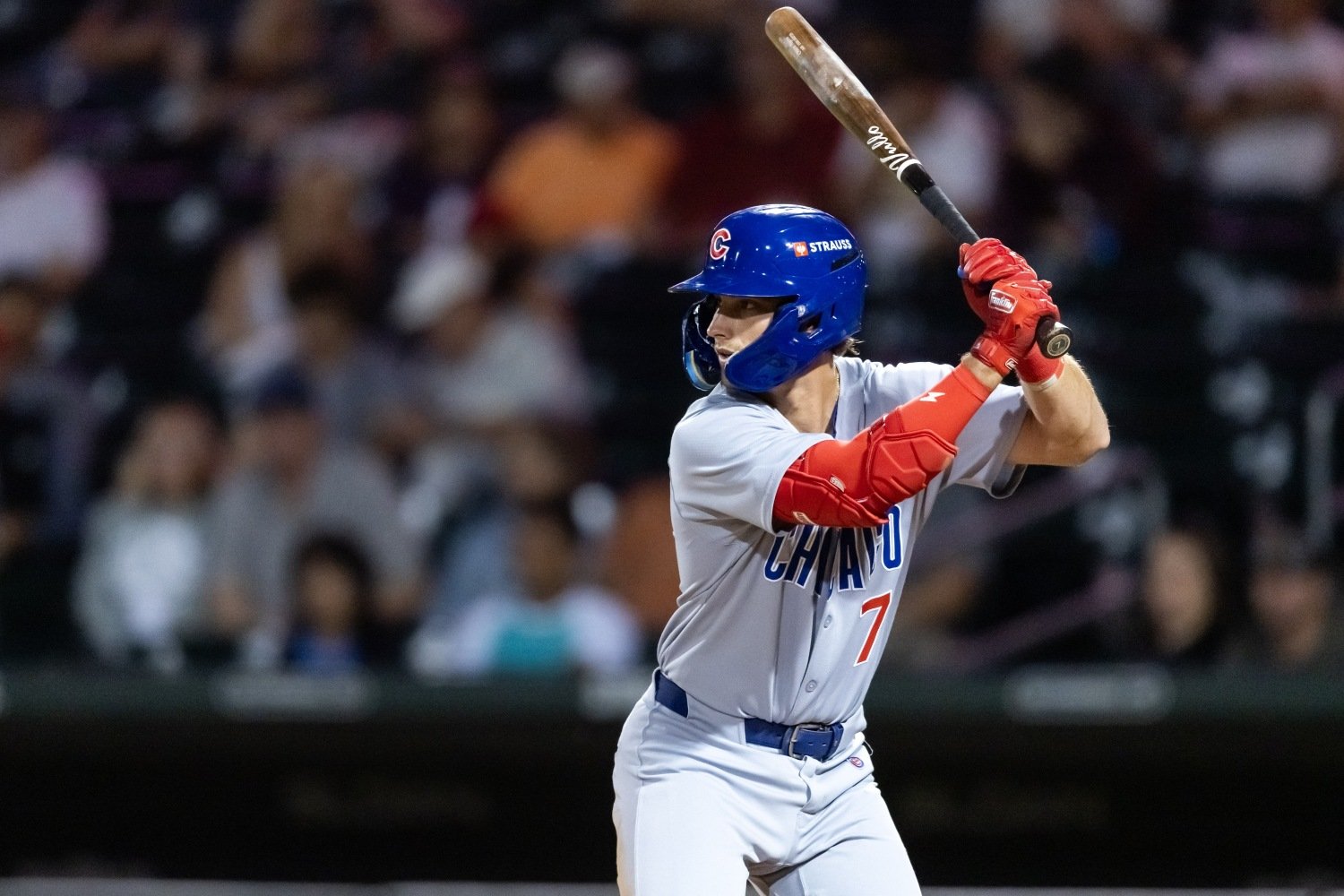 If not for Josiah Hartshorn becoming the first Cubs teenage farmhand to knock 20 round trippers in a season since Corey Patterson, Owen Ayers would be an easy pick for the organization's Minor League Hitter of the Year. Despite Hartshorn's heroics, you can make a strong argument that Ayers deserves the accolades, considering the rocket ship the former 19th-round pick has been on and how good he's been at every level. As the season winds down, the switch-hitting catcher has done so well that he may earn an even more sought-after prize: a major-league call-up when rosters' expand to 28 players on September 1. Being called up would be a dream come true for any young player; it has to be. It's the culmination of years of hard work. It's reward for all of the training, practice, blood, sweat and tears. If that isn't enough, it comes with a nifty raise to MLB's league-minimum salary, which is just under $800,000 a year. Ayers signed for $50,000 in 2024, so even a four-week stay on the roster this fall would roughly double his career earnings. The Cubs can't make decisions based on their desire to help dreams come true, though. The call has to be grounded in logistical considerations, as the team tries to make the most of its roster. The Case for Cubs to Call Up Owen Ayers Ayers is a player the Chicago Cubs really like. We can see this just based on how they have handled him over the last 365 days. First, they sent him to the Arizona Fall League, an early signal that this wasn't your run-of-the-mill late-round pick. They also acted decisively each time the catcher showed he was too good for a level this season, promoting him from High-A South Bend to Double-A Knoxville after just 11 games, and again from Knoxville to Triple-A Iowa after just 65 more. At the trade deadline, they reportedly made him a sticking point in trade negotiations, opting instead to trade other top prospects Jefferson Rojas and Moisés Ballesteros. It's fair to guess that the team has him in their plans at the MLB level come the 2027 season; they wouldn't have made him such an important factor at the deadline if they didn't. While it's impossible to know exactly what the plan is, it's fair to assume that it includes the 25-year-old getting a very real chance to make the Cubs out of spring training. If that's the case, it wouldn't be surprising to see the Cubs give him a 30-day trial period in September. He wouldn't be asked to do a lot as the third catcher, but it would give him a leg up on the upcoming year. While he may not be catching guys in game a lot, it's likely that he would get work on the side to build rapport with the team's pitching staff before turning the keys to the kingdom over to him. The team has made clear that they like to give young players a taste of the big-league life. In other recent Septembers, they've called up Pete Crow-Armstrong, Ballesteros, Owen Caissie, and Kevin Alcántara to acclimate them to the roster, while limiting their playing time with an eye toward the future. From a roster-construction perspective, it would make sense, too. Currently, the team has no viable first-base backup option. Pedro Ramírez filled in there a few days ago, but is now needed at second base. The injury that stopped Tyler Austin's season before it began really derailed the Cubs' hopes to have a backup or platoon option for Michael Busch. Ayers has history playing first dating back to his time in college, allowing him to fill a need the team has right now. Having a third catcher can also give you more choices, like using Carson Kelly as the DH against certain lefties. It can allow you to pinch-run for Kelly or Miguel Amaya, knowing you have some flexibility left after that move. The Case Against Cubs Calling Up Owen Ayers Not all pertinent factors point toward this move, though. First, you don't have to add him in September. Ayers, despite his age, is not eligible to be selected in the Rule 5 draft this offseason. The Cubs could keep him off the 40-man roster all offseason, allowing them to protect other players, instead. Spots on the 40-man are always valuable during the winter, and that will only be more true in what's sure to be a freneic and disrupted offseason this year. Relatedly, with the CBA set to expire this December and a lockout looming, another aspect of the call-up needs to be considered. Players who have not been added to the 40-man roster can play minor-league baseball next spring and start spring training on time, even if the MLBPA is locked out. This could mean anything from a couple extra weeks of work at the team facility to a month of extra games the big-leaguers won't get to participate in, but either way, calling Ayers up next month would expose him to the vagaries of the labor battle. Leaving him in Iowa (where he can also play every day, or nearly so) would shield him from that. Should the Cubs Call Up Owen Ayers? While there is no definitive answer, I think calling up Ayers makes sense. Catcher is a position like no other; building trust through reps can never start too soon. Having an eye toward 2027, in that regard, is a good thing. While it's possible that Kelly will remain with the Cubs in 2027 (and beyond), he's a free agent this winter. The team has to make a succession plan, and then adapt that plan if he unexpectedly sticks around on a new deal. Using the 40-man spot is a real factor, but the team has plenty of flotsam on that list right now that they can turn into jetsam. They might lose a player like BJ Murray in the Rule 5 Draft as a result of using a 40-man spot on Ayers sooner than is needed, but that's not likely to be a big loss. Another sticking point: it might not even matter. In 2021, just five years ago, we saw a similar issue at hand; the prior CBA expired in December and the league just flat-out cancelled the Rule 5 draft. It may not actually matter if the Cubs expose someone like Murray in the draft; if there's no draft, he's not going anywhere, anyway. The labor questions are too big and unwieldy to govern a decision like this. Instead, it should come down to whether the team thinks that's the best use of their extra roster spot for a position player, and to whether they think being with the parent club is the best thing for Ayers's development. Ultimately, I think the balance tips in favor of the Cubs' calling up Ayers, as long as he's the planned "next up" to fill Kelly's spot in 2027. He'd get invaluable time with the pitchers he'll be working with; provide the Cubs options off the bench; and get a chance to gel with the clubhouse. This likely offsets any concern about the Rule 5 draft and 40-man considerations. And if the Cubs end up calling up someone like James Triantos instead? It's not the end of the world, and would be fine. It does keep the roster picture uncluttered. It may give Ayers some reps during a lockout. And it's not like the Cubs' fates are going to be shifted that greatly by the 14th hitter on the roster, whoever it is. With just a week to go before these decisions need to be made, we'll see which side the team actually sits on shortly. But if the team does give Ayers a chance in September, it will be a fun little peek into the future of the team at the catching position.
 -
Zero. His velo hasn't been right, he isn't on the 40 and the Cubs have plenty of other relievers who are ready to come up.
-
Yes. He's pitching very well right now and he has not been getting, what seems, especially lucky. 20 IP and a 1.80 ERA, 2.78 xERA, 2.83 FIP, 3.92 xFIP. There is a split between the ERA and xData and we shouldn't expect a sub 2.00 ERA. But he is pitching like someone who belongs on an MLB roster. Under the hood he's seen his K% jump, his walk rate drop, his barrel rate drop, his hard hit drop...so that checks out, too. We're also seeing a change in pitch usage. Far more cutter and split finger. And go figure, both are pitches used to attack off-handed hitters. Guess who sucked with the A's against lefties? *hint, his name rhymes with Shmaron Shimale* His numbers against RHP weren't elite, but they were fine and they're pretty close to what he's doing now on the whole: vs RHP: 22.2 K%, 4.4 BB%, 4.06 xFIP With Cubs (overall): 22 K%, 6.1 BB%, 3.94 xFIP It's his lefties splits that were terrible. The simple fix was always "IDK have you tried throwing the pitches that get lefties out? No? Try that and get back to me." and it's working. Frankly, it's a pretty easy fix. Fun fact, he did it last year when he was good with the Cub, too, so I have no idea why the A's decided to scrap that plan and go back to the old version. Here is his 2025 pitch usage for comparison: We'll see how long it keeps up, if it can keep up. At some point someone's going to figure out he's throwing differently again and how they adjust to it has yet to be seen, really. But yeah, you can use him with confidence that won't implode like he was in Sacramento as of now.

-
So, like, is Bregman still the worst contract ever...or...?
-
Article on Fangraphs today. Jay Jaffe, NSBB reader, confirmed. He may even be one of us.
-
A very worthwhile watch for anyone who wants a good primer/idea about the possible lockout and salary cap. It's short, easy to digest and quite informative.
-
Their bullpen just hasn't been in a place this year to do that. There have been times, significant times, where Tyler Ferguson was your second or third best RHP out of the pen. And while I do think he did an admirable job especially against RHH, but I also don't think he ever gained enough trust to really be that kind of guy. Nor had the others gained trust that you could use Ferguson as the opener and feel good about the back end. I do things will change up if the Cubs bullpen gets most of these guys coming back to actually...ya know...get back. Knock on wood.
-
Cubs 2026: Is the offensive floor becoming a real problem?
Jason Ross replied to spaincubsfan's topic in Chicago Cubs Talk
We gotta stop doing this every time the game doesn't go perfectly. Good teams, good offenses, have bad games. They have multiple bad games in a row. They lose series to bad teams. This happens to them all. Every. Single. One. Of. Them. Beyond that, baseball is a game where you have a near infinite amount of data points that you can manipulate to your whim. If you want a doom-boner, you don't have to look far; just slice up the game into a single, very pedantic data point and you'll find something. Let's not over-engineer a simple problem. The Cubs have been one of the best teams against the best pitchers in baseball offensively. They've been one of the best team offensively against the worst pitchers. They've scored the second most runs on the season. They literally lead the league in wRC+. They're a good offense. -
Image courtesy of David Banks-Imagn Images The end of the 2025 season—and specifically the playoffs—was an ugly stretch for Chicago Cubs starting pitcher Shota Imanaga. The affable lefty was pounded in his last two starts of the season and then rocked in the playoffs by the arch-rival Milwaukee Brewers. Imanaga started the season as the team's co-ace; he ended it by being passed over for a do-or-die start in Game 5 of the NLDS. The culprit in this demise was Imagana's propensity to give up the long ball at the wrong time. Sadly, that's cropped up again this year, as he's given up 29 homers already. Figuring out how to work around these is key as the team begins to look beyond the regular season (while continuing to pursue the Brewers in the NL Central). Sometimes, however, we have a bad habit of focusing on just the home runs. Imanaga's most recent start against the crosstown White Sox is a great example of this. The home run Randal Grichuk hit in the top of the fourth was the talk of social media; it defined his start for many people. Grichuk has made life hell for lefties for more than a decade, sporting a career 121 wRC+ against southpaws. Despite being 35 years old now, he's shown no signs of slowing down, posting a 161 wRC+ on the year against them. A left-handed pitcher with home run issues giving up a bomb to a guy who crushes lefties is not a wild outcome. What you may have missed, however, is that Imanaga had a great start minus that outcome. Not only did he strike out 10 hitters, but he induced 20 whiffs on 40 swings. The fastball velocity sat at 91.5 MPH—an important metric for Imanaga, who struggles significantly when the velocity dips below 91. The splitter was especially good, as it notched an 80% whiff rate when the Sox swung at it that night. That came against the offense with the 7th-best wRC+ against lefties this season. With Imanaga, there will be some home runs given up, but he has shown time and time again that despite that, he can dominate. Outside the 29 homers, Imanaga has had another fine season. He has a 3.77 ERA in 143 innings. With all of the injuries, he's been a rock in the rotation, taking the ball every turn and delivering as many quality starts (11) as the next two Cubs on the leaderboard (Matthew Boyd, 6; Colin Rea, 5). The underlying data assure us that the results aren't fluky; his xERA is 3.81 and his xFIP is 3.85. He's a fine mid-rotation starter. That said, the Cubs shouldn't enter the postseason having forgotten what happened last year, either. That Grichuk home run felt inevitable because it was an obviously bad matchup for Imanaga. But the worst part about that home run was the walk that preceded it. The Cubs lefty can survive a solo shot or two, but he cannot survive three-run blasts. Walks aren't generally an issue for him, but they will happen from time to time, and that's when things get a little scary. Walk the guy before a lefty-masher, and what seemed like a clean inning could turn into two runs. As you enter the playoffs, you're far more likely to face lineups that will force Imanaga into those exact uncomfortable situations. That will (rightfully) make most Cubs fans uneasy, The margin for error is razor-thin in the playoffs, and Imanaga lives on a razor's edge already. To mitigate the risk he presents, the Cubs should shield him from the third time through the batting order. The first time batters see him in a game, Imanaga has a 3.33 xFIP and a 29.3% strikeout rate. The second time he sees hitters, he has a 3.55 xFIP and a 25.3 K%. Once he gets to a third time, his xFIP jumps to 5.67 and his K-rate drops to a measly 12.6%. As a pitcher who really relies on two pitches as his primary options (fastball/splitter), it makes sense that he struggles the third time through. As often as the Cubs can avoid this, they should. With their roughed-up rotation leading to an exhausted bullpen, they haven't always been able to shield him from this during the regular season. Instead, they've often asked him to get through that one extra inning, maybe a little too often. The good news for the Cubs is that the rules of the game (figuratively) change in the playoffs. Teams don't use their starters or bullpens the same way they do over the first 162. The Dodgers won a World Series two years ago with two starters, using their bullpen the rest of the time; you can hide deficiencies in interesting ways. Luckily, the North Siders might just be set up perfectly to use Imanaga with these changes. Enter: the Cubs' changing bullpen. Between today and the end of the season, the Cubs' bullpen is likely to see lots of reinforcements. Ben Brown, Edward Cabrera, Daniel Palencia, Justin Steele, Hoby Milner and Shelby Miller might all return, building depth and variety for the pen. There are pitchers who may give you some length (two or three innings) and others who give you funky looks. There are pitchers who can attack very specific weaknesses, and others who will blow hitters away with pure stuff. That should allow the Cubs to utilize Imanaga more optimally. You can help Imanaga avoid bad matchups and the third-time through the order penalty by using those options. The Brewers might stack lefty-mashers Andrew Vaughn, Jackson Chourio and William Contreras at the top of their order to face Imanaga as many times as they can. Instead of letting the southpaw take the first inning, they could allow (say) Brown to take the first four or five outs of the game, then turn it over to Imanaga. Because of the sheer amount of trustworthy arms that may return and how teams handle playoff pitching staffs (being far more aggressive with early pulls), Imanaga also wouldn't be asked to go 18+ outs or be forced to see a lineup a third time. It's much more likely he would be asked to get something closer to 12 outs. He could give up a few baserunners and still never see a hitter a third time. Plus, by shortening his usage, you can ameliorate the issue with his fastball velocity. In shorter stints, it's more likely that he can max out the effort on the pitch. He may even be able to get it to the 92-93 MPH area that former Driveline pitching instructor Chris Langin suggested as the threshold Imanaga needs to reach to be at his best. Fans should hope the Cubs need to use four starting pitchers in the playoffs. As a team probably headed for the Wild Card round (FanGraphs gives the Cubs just an 11.1% chance to both win the division and secure a bye), the Cubs would only need a fourth starter in the second round. If the season ended today, recently-acquired starters Kevin Gausman and Clay Holmes would start two of the three games in a Wild Card round, leaving a decision to be made by Craig Counsell on whom the third pitcher would be. That debate would come down to Boyd and Imanaga. The team will need both if they move on, but finding a way to get the best out of Imanaga is key. Thankfully, the Cubs are getting healthy (at least, pitching-wise) at the right time, which should allow them to optimize usage of both hurlers. Unlike in 2025, this team looks ready to cover its October innings. In the interim. the Cubs will hope for more starts like Imanaga's against the White Sox. He will be a little more exposed going forward. Even with the rosters expanding, they'll ask him to get through five or six innings in most starts. They'll hope they see more solo bombs than ones with runners on. He'll have to face a few hitters (like Grichuk) who are just bad matchups. And he'll probably be just fine, as he's been most of the season. But when the playoffs happen, they'll be able to try different things. Piggybacking might be an option. Openers might be an option. In a way, Imanaga is the Cubs' glass cannon. The traditional glass-cannon arm is someone who's wonderful when healthy, but who rarely are. Imanaga isn't a big injury risk, but he tends to "break" in the ways described here: giving up home runs, diminished velocity and seeing the order a third time. He can be a hitter's nightmare when everything is working, but he has some serious flaws. Maybe the right term for him is Plexiglass Cannon, instead. He's not as breakable as many hurlers in the traditional sense, but pressure and repeated exposure can still crack him. Deploying Imanaga may take a deft hand, a strong bullpen and knowing when to pull him, but if you get it right, this Plexiglass cannon can be a real weapon. View full article
-
How Cubs Can Best Protect Shota Imanaga, Their Plexiglass Cannon
Jason Ross posted an article in Cubs
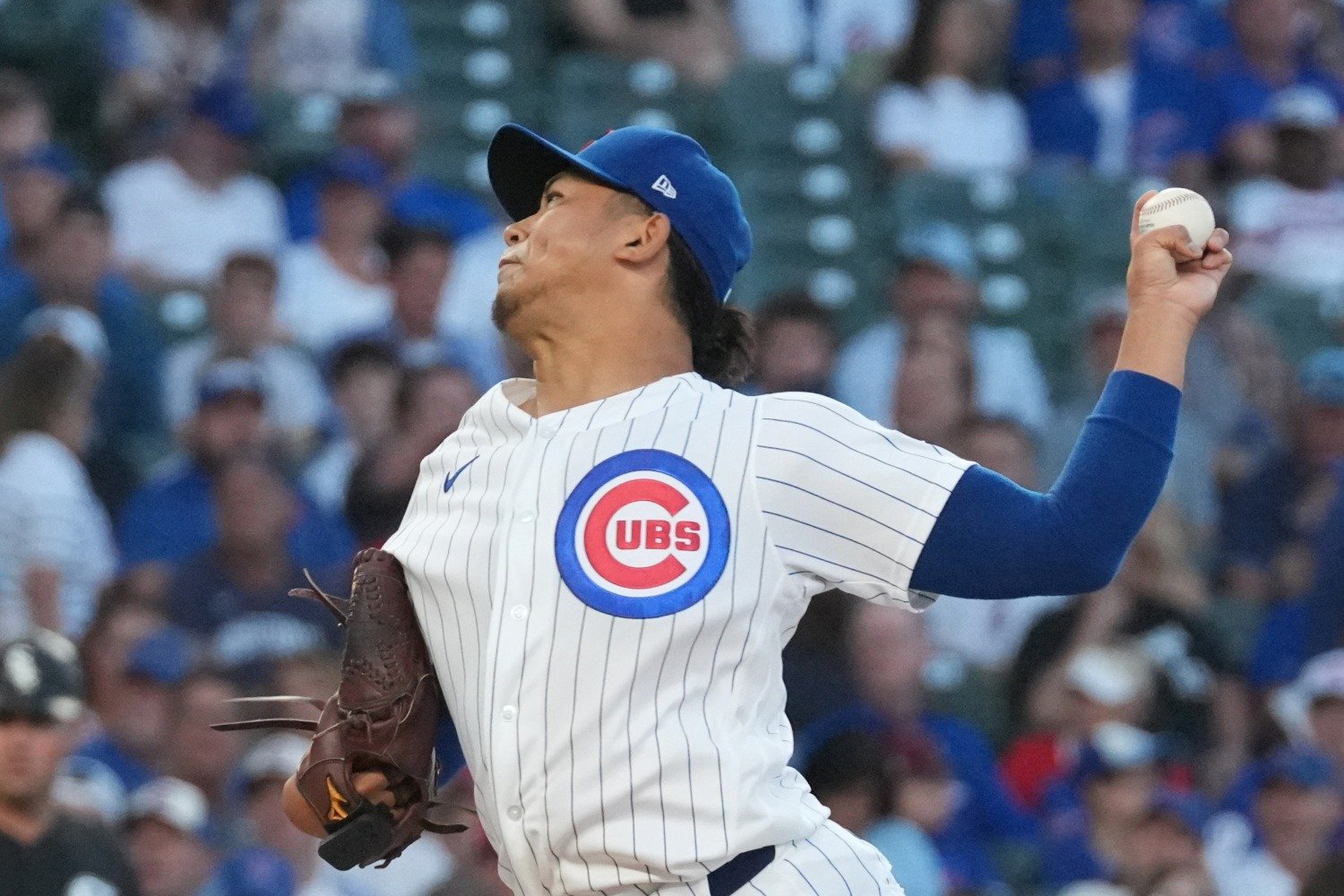 The end of the 2025 season—and specifically the playoffs—was an ugly stretch for Chicago Cubs starting pitcher Shota Imanaga. The affable lefty was pounded in his last two starts of the season and then rocked in the playoffs by the arch-rival Milwaukee Brewers. Imanaga started the season as the team's co-ace; he ended it by being passed over for a do-or-die start in Game 5 of the NLDS. The culprit in this demise was Imagana's propensity to give up the long ball at the wrong time. Sadly, that's cropped up again this year, as he's given up 29 homers already. Figuring out how to work around these is key as the team begins to look beyond the regular season (while continuing to pursue the Brewers in the NL Central). Sometimes, however, we have a bad habit of focusing on just the home runs. Imanaga's most recent start against the crosstown White Sox is a great example of this. The home run Randal Grichuk hit in the top of the fourth was the talk of social media; it defined his start for many people. Grichuk has made life hell for lefties for more than a decade, sporting a career 121 wRC+ against southpaws. Despite being 35 years old now, he's shown no signs of slowing down, posting a 161 wRC+ on the year against them. A left-handed pitcher with home run issues giving up a bomb to a guy who crushes lefties is not a wild outcome. What you may have missed, however, is that Imanaga had a great start minus that outcome. Not only did he strike out 10 hitters, but he induced 20 whiffs on 40 swings. The fastball velocity sat at 91.5 MPH—an important metric for Imanaga, who struggles significantly when the velocity dips below 91. The splitter was especially good, as it notched an 80% whiff rate when the Sox swung at it that night. That came against the offense with the 7th-best wRC+ against lefties this season. With Imanaga, there will be some home runs given up, but he has shown time and time again that despite that, he can dominate. Outside the 29 homers, Imanaga has had another fine season. He has a 3.77 ERA in 143 innings. With all of the injuries, he's been a rock in the rotation, taking the ball every turn and delivering as many quality starts (11) as the next two Cubs on the leaderboard (Matthew Boyd, 6; Colin Rea, 5). The underlying data assure us that the results aren't fluky; his xERA is 3.81 and his xFIP is 3.85. He's a fine mid-rotation starter. That said, the Cubs shouldn't enter the postseason having forgotten what happened last year, either. That Grichuk home run felt inevitable because it was an obviously bad matchup for Imanaga. But the worst part about that home run was the walk that preceded it. The Cubs lefty can survive a solo shot or two, but he cannot survive three-run blasts. Walks aren't generally an issue for him, but they will happen from time to time, and that's when things get a little scary. Walk the guy before a lefty-masher, and what seemed like a clean inning could turn into two runs. As you enter the playoffs, you're far more likely to face lineups that will force Imanaga into those exact uncomfortable situations. That will (rightfully) make most Cubs fans uneasy, The margin for error is razor-thin in the playoffs, and Imanaga lives on a razor's edge already. To mitigate the risk he presents, the Cubs should shield him from the third time through the batting order. The first time batters see him in a game, Imanaga has a 3.33 xFIP and a 29.3% strikeout rate. The second time he sees hitters, he has a 3.55 xFIP and a 25.3 K%. Once he gets to a third time, his xFIP jumps to 5.67 and his K-rate drops to a measly 12.6%. As a pitcher who really relies on two pitches as his primary options (fastball/splitter), it makes sense that he struggles the third time through. As often as the Cubs can avoid this, they should. With their roughed-up rotation leading to an exhausted bullpen, they haven't always been able to shield him from this during the regular season. Instead, they've often asked him to get through that one extra inning, maybe a little too often. The good news for the Cubs is that the rules of the game (figuratively) change in the playoffs. Teams don't use their starters or bullpens the same way they do over the first 162. The Dodgers won a World Series two years ago with two starters, using their bullpen the rest of the time; you can hide deficiencies in interesting ways. Luckily, the North Siders might just be set up perfectly to use Imanaga with these changes. Enter: the Cubs' changing bullpen. Between today and the end of the season, the Cubs' bullpen is likely to see lots of reinforcements. Ben Brown, Edward Cabrera, Daniel Palencia, Justin Steele, Hoby Milner and Shelby Miller might all return, building depth and variety for the pen. There are pitchers who may give you some length (two or three innings) and others who give you funky looks. There are pitchers who can attack very specific weaknesses, and others who will blow hitters away with pure stuff. That should allow the Cubs to utilize Imanaga more optimally. You can help Imanaga avoid bad matchups and the third-time through the order penalty by using those options. The Brewers might stack lefty-mashers Andrew Vaughn, Jackson Chourio and William Contreras at the top of their order to face Imanaga as many times as they can. Instead of letting the southpaw take the first inning, they could allow (say) Brown to take the first four or five outs of the game, then turn it over to Imanaga. Because of the sheer amount of trustworthy arms that may return and how teams handle playoff pitching staffs (being far more aggressive with early pulls), Imanaga also wouldn't be asked to go 18+ outs or be forced to see a lineup a third time. It's much more likely he would be asked to get something closer to 12 outs. He could give up a few baserunners and still never see a hitter a third time. Plus, by shortening his usage, you can ameliorate the issue with his fastball velocity. In shorter stints, it's more likely that he can max out the effort on the pitch. He may even be able to get it to the 92-93 MPH area that former Driveline pitching instructor Chris Langin suggested as the threshold Imanaga needs to reach to be at his best. Fans should hope the Cubs need to use four starting pitchers in the playoffs. As a team probably headed for the Wild Card round (FanGraphs gives the Cubs just an 11.1% chance to both win the division and secure a bye), the Cubs would only need a fourth starter in the second round. If the season ended today, recently-acquired starters Kevin Gausman and Clay Holmes would start two of the three games in a Wild Card round, leaving a decision to be made by Craig Counsell on whom the third pitcher would be. That debate would come down to Boyd and Imanaga. The team will need both if they move on, but finding a way to get the best out of Imanaga is key. Thankfully, the Cubs are getting healthy (at least, pitching-wise) at the right time, which should allow them to optimize usage of both hurlers. Unlike in 2025, this team looks ready to cover its October innings. In the interim. the Cubs will hope for more starts like Imanaga's against the White Sox. He will be a little more exposed going forward. Even with the rosters expanding, they'll ask him to get through five or six innings in most starts. They'll hope they see more solo bombs than ones with runners on. He'll have to face a few hitters (like Grichuk) who are just bad matchups. And he'll probably be just fine, as he's been most of the season. But when the playoffs happen, they'll be able to try different things. Piggybacking might be an option. Openers might be an option. In a way, Imanaga is the Cubs' glass cannon. The traditional glass-cannon arm is someone who's wonderful when healthy, but who rarely are. Imanaga isn't a big injury risk, but he tends to "break" in the ways described here: giving up home runs, diminished velocity and seeing the order a third time. He can be a hitter's nightmare when everything is working, but he has some serious flaws. Maybe the right term for him is Plexiglass Cannon, instead. He's not as breakable as many hurlers in the traditional sense, but pressure and repeated exposure can still crack him. Deploying Imanaga may take a deft hand, a strong bullpen and knowing when to pull him, but if you get it right, this Plexiglass cannon can be a real weapon.
 -
Think it'll be a piggy-back. Peterson "will be involved" according to Counsell.
-
Damnit. I knew it was seven. I have no idea why I decided in that post suddenly it was nine. I think "September 9th" was on my brain and went too quickly. Either that or I simply cannot count. My math teacher's throughout the years would definitely point to this fact as the issue.
-
ZiPs has Assad being worth 0.1 fWAR the rest of the year in 22 innings. They have Rea worth 0.2 fWAR in 30 IP. Let's assume those IP are correct. Even if you think the difference between the two is a gulf, there is just two P in baseball between 20 and 30 IP who has put up a full win; Samy Natera Jr and Josh Hader. So unless you're assuming that Javier Assad is going to turn into Josh Hader, you're looking around probably the best case scenario being like fractional wins; the difference between .2 fWAR and .4 or .5 fWAR. And that...feels rich even at that. The point I'm making is the difference is incredibly minimal. We can anecdotally point to a game here or there or whatever, but anecdotes are just that; anecdotes. Data tells us that it's not a major difference. The Cubs are 4.5 games back and while fractional things might matter, they don't matter so much that you begin DFA'ing players when you can option players. The division is not going to be decided whether or not the Cubs option Assad for 11 days. The most likely scenario is that the division is decided between August 31st and September 9th when the Cubs and the Brewers play seven times. And in six of those games, they have expanded rosters so Assad would be here anyways.
-
Me too. Especially because he's been much better against RHP this year. You can use him as a super charged guy to get RHP out. Like Ferguson but...better.
-
I think we're well overrating Javier Assad if we think the Cubs are significantly better on the field with Assad in the bullpen or in Iowa. I like Assad, but let's be real about how long relief works; you use them in games where you're already losing. Now, that isn't to say there isn't value there; if you follow the podcast you'll hear me talk about the "designated loser" pretty often, the concept of keeping the game close when you're behind to allow your offense to catch up. We saw it last night! But I'm not sure Assad is a massive, game changing upgrade on Rea, and there's a reason that when you're behind it's still unlikely to come back to win. Anecdotally it helps, but let's not over value this too much, either. The point is that the Cubs can have their cake (depth) and eat it too (Assad will be used). If the Cubs had DFA'd Aaron Civale a few days ago to keep Assad, then who's coming up for Cabrera? We can't ignore this aspect. I want to make it clear: I like Javier Assad. The Cubs have needed Assad this year. But I also think the Cubs need Colin Rea right now. And they need depth. We saw what May looked like when we were scraping at the very bottom of the barrel. Cabrera is on the IL with a blister. Last night Guasman had a weird cramp which, let's be real, we all probably held our breath a little on. Clay Holmes spent time on the 60-day this year. Matthew Boyd has plenty of injury history. As much as we want to just forget May and say "it won't happen again", it's pitching and it can happen again. The division is almost assuredly not going to be decided by whether or not Assad is in Iowa versus Chicago if everyone is healthy. But it may be decided by the Cubs' deciding that depth doesn't matter all of a sudden. We finally have depth - let's not throw it away because we're impatient.
-
Minor League Discussion & Boxes, 8-18-26
Jason Ross replied to CaliforniaRaisin's topic in Cubs Minor League Talk
Florintino sits around 90mph and can run to the low 90's. The run is good, but the velo isn't. I used the sub-90 thing to kind of remind us about Hendricks, not about Florintino as much. I just think we need to stop relying on a comp of a player that just isn't a modern comp any more. What Hendricks did was awesome. But he's an extreme outlier. -
Minor League Discussion & Boxes, 8-18-26
Jason Ross replied to CaliforniaRaisin's topic in Cubs Minor League Talk
Things have happened, yes, but I think the context about why they happened is important. First, Hendricks had an amazing changeup and was a command artist. He also played 10-15 years ago; right before the velocity wars started. Today, Bailey Ober and Martin Perez are the only two SP who average under 90 mph (with 100 IP). There were 23 in 2016, a decade ago. He also got a massive amount of groundballs; he got 57% groundouts at Double-A and his best years had him overing around 47-50% at MLB! Florintno is a decent groundball guy around 44% on the full season but hasn't shown that level yet. I think we just need to put Kyle Hendricks in a box. We all know what he did but the likelihood Florintino, or frankly, any SP is going to be such a massive outlier in today's game is just so damn unlikely. And that isn't to bash Florintino or say he can't succeed. The shape of his fastball gives me some hope that you can mold him into something. I just think we need to retire the "Well Kyle Hendricks did it!" argument I see so often when we talk about someone who doesn't have the velo. There's so much more that went into Hendrick's game. Ultimately, I think using it both makes us overlook some flaws in prospects while diminishing what made Hendricks so damn good that I think it's unfair to all involved. -
I still think there's a guy there for Cabrera. I do think 2026 has been a rough year for him; whatever they're working on him with hasn't taken. But the Cubs have already said he's coming back in a relief position, so not sure Assad will be cleaning up much there.
-
Welcome to NSBB. It's a numbers game. You might not like that, but it is. He has options, others don't. Post deadline, the Cubs have next to no options to acquire more pitching. So to keep that depth for when players get hurt, they have to be creative. Assad is a fine long-man out of the bullpen. Maybe even a good one. But he also is the best option the Cubs may have if a rash of injuries hit the rotation and keeping him stretched out, while also preserving their depth required. It's a bummer for him, but we can probably take a step back and realize the club isn't run by idiots and that there is a rational and logical reason behind it.
-
For Kevin Gausman,


.png.fd97a7f53dffe510a124eff14c11f6fe.png)