Jason Ross
-
Posts
8,154 -
Joined
-
Last visited
-
Days Won
74
Content Type
Profiles
Joomla Posts 1
Chicago Cubs Videos
Chicago Cubs Free Agent & Trade Rumors, Notes, & Tidbits
2026 Chicago Cubs Top Prospects Ranking
News
2023 Chicago Cubs Draft Picks
Guides & Resources
2024 Chicago Cubs Draft Picks
The Chicago Cubs Players Project
2025 Chicago Cubs Draft Pick Tracker
2026 Chicago Cubs Draft Tracker: Picks & Bonuses
Blogs
Events
Forums
Store
Gallery
Everything posted by Jason Ross
-
Well, I'll say this: he wasn't very good until his senior year. So while I appreciate he started for three years, two of them he simply wasn't an MLB draft prospect. And I want to say this as well: I appreciate he made changes to his game to stand out his senior year. But my issue is taken less with who he played for, how often he started, and the changes, but his projection as a prospect and the juice in the squeeze. If you see more juice in the squeeze, I can't disagree at this stage; we're like one month into his professional career and there's little I think anyone can point to, to change anyone's pre-draft opinion on Rivera. Personally, I see someone who doesn't really project at the quick-twitch positions and likely doesn't have the bat at the corners. Like I said...if you see differently, fair! But there's little today that's going to change how I see him. Much like I think today, there'd be little reason to change someone elses' opinion (none of this is really designed to!). But it's why I have him as a weeper in this exercise...I had to find someone, and Rivera fits that bill more than others for me, And if we want to discuss slot and the like, the Cubs went over slot with their fourth pick, Will Sanders and their 7th pick Yahil Melendez. No shade on them either, they're fine picks in their own right, but there were options available to the Cubs that wasn't Josh Rivera and how they divided their slot. Overall, I really liked the 2023 draft, I think the Cubs found a lot of value and upside. Rivera just wasn't a "me" guy in the third. I'll be rooting for Rivera to succeed...any time I don't like someone and I'm wrong about that...well we all win.
-
I have Cade Horton as my number 1. This is not something I take lightly, and has nothing to do with this spring...I was considering the move in July. I have him there because I think he's a better bet to hit the 90-95% outcome than PCA is, as I think Cade Horton has made more improvement on his weaknesses over the last year (pitch mix) than PCA has (approach). But it's more like...1a and 1b, than 1 and 2, if that makes sense. Both are top-30 MLB prospects and the line between them is razor thin. If you're Team PCA over Team Horton, I'd have little reason to think you're wrong, too.
-
So I guess I'll clarify my Josh Rivera stance: he's just not the kind of prospect I want with the slot/position that the Cubs had. While utility players have value. I prefer not taking utility player-upside because if they fall short, then the next rung down on the ladder is organizational depth. With assuming that most prospects won't hit their upside...it's why I have some concern. I don't love his profile, and think both body size and bat are questionable; I'm not sure he'll hit well enough to be a viable 3b, not sure he's twitchy enough to be a 2b... No shade at anyone who likes Rivera, either. I know he's got his supporters out there. Todd Johnson spoke glowingly of him on draft day. I certainly hope to be wrong, but profile wise, he's not who I gravitate too. This is more opinion/cup-of-tea thing, and so I listed him as my "weeper" in the sense that I just don't think he's going to be a guy who's going to find his way onto top-20 lists at the end of the season, despite making the NSBB fan-ranked one.
-
If we are going to use "good faith" then lets stick to the statistic set I used, which is K%, not K/9 and the sentence I took issue with, which dealt only with the idea that his "k-rate" was below average "at every stint" past Double-A. The reason why is because K/9 is significantly worse at showing what we're talking about. You don't have to take my word for it: you can do some reading on it! And I'll provide a second,. as well! But if you're wanting a quicker anecdote, I'll provide a short one below: Pitcher A: 5 IP, 5 K, 1 BB, 2H Pitcher B: 5 IP, 6K, 4 BB, 3H We're going to assume, for anecdote's sake, neither pitcher has any errors occur in the game, nor any double plays. In the above scenario, Pitcher B has 6 strikeouts compared to Pitcher A over the same amount of innings. Using K/9, this means that Pitcher B would look like the better strikeout pitcher, because over 9 innings, he'd strikeout more hitters as his K/9 would be 10.8 compared to the 9 pitcher A provided. But here's the thing: pitcher B isn't a better strikeout pitcher, because K/9 gives preferential to pitchers who walk a lot of hitters and give up more hits because they face more batters. Pitcher B faced four more hitters, so the two pitchers actually have virtually the same K%: around 27%. K% is a far better indicator of how often a pitcher strikes a batter out. Point is: Jordan Wicks K./9 might not be league average, but it's not the right statistic to be using. His K% is 22.2% in Triple-A where as the league average of Triple-A was 22.4%. It's .2% below which is less than a single hitter faced. Jordan Wicks barely threw in Triple-A, racking up just 33 innings. It's not worth it to consider this "below" average considering the sample size and the difference between average and "below". So he was,. virtually, a league average K% pitcher. As well, he generated more whiffs than league average. If we want to accurately describe Jordan Wicks' time in Triple-A when it comes to swings and misses, and strikeouts, this is a far more accurate statement than your original which was "he was below average in every stint above Double-A". So, yes, you're wrong. I've already written about this in an article here on NSBB, I'd recommend checking it out if you haven't. Of course his K/9 over his last 80 IP looks bad: his MLB numbers were really low! But he's on record explaining why that may be. Funnily enough, I came to the same conclusion in that article before he said anything; he was being especially cautious. The point is we can't just combine Triple-A and MLB data, and we can't ignore context. He was perfectly fine in his 33 innings at Triple-A. I've cherry picked...literally nothing. I used a better statistic at one of his two levels to show, your statement was not factual. In the overall concept of what you think Jordan WIcks is, I don't disagree. But that wasn't what I took issue with ever. I do think he's got some work to do at the MLB level in terms of generating swings and misses, but as stated, context suggests he changed himself to limit damage as a rookie. Where I disagreed was your characterization of his time in Triple-A. I still fully do. To this assumption; you are incorrect. The article I linked you was written in 2016 and Fangraphs has written about this concept many times over the last decade plus as well. K% is the better number. K/9 has been more readily available, but has added flaws by giving benefit to high walk pitchers, especially. Look around the industry at the best at covering the sport, such as Dan Szymborski, Lance Browdowski, Jeff Seidler, Craig Goldstein...they're going to default to K% for this reason. We should all be using K% when we can because it is a far better measurement.
-
Oh horsefeathers. In my head that was "Naz-ee". At no point did my brain read Nazi. horsefeathers.
-
I think this line that I've bolded is incorrect and skewed. First, let's be real, "every stint" is two months, one month in Iowa and another in Chicago, neither are substantial sample sizes and both have caveats attached. Secondly, we should look deeper into what we're consider "K-Rate". His K/.9 doesn't look great, but K/9 and K% are different numbers and I'd prefer to deal with the latter. In Iowa, Wicks K% was 22.2% and the K% for the league was 22.4%, which is for all-intents-and-purposes, average (not below). Lastly, his whiff% in Triple-A was above average, so he generated plenty of whiffs. He's on record about his MLB performance that he was pitching intentionally to contact, which makes sense of a rookie in a pennant race. That doesn't excuse the rate as a "concern" but also gives context to the sharp decline. I don't expect him to be a K% machine, but a more confident Wicks will generate more whiffs than he was, more than likely. Overall, while I understand the concerns on Wicks (his swinging strike rate at the MLB is something that needs improving), that line is just something I cannot agree with and think it's wrong.
-
Cool concept! I'll play along: Hitters: Sleeper: Chris Paciolla. Reports were that the Cubs loved this guy out of HS and they've done a good job identifying bats. Call it a deeper cut, but I've got a good feeling here. I know he didn't crush the CPX...it's more "gut" than anything. Keeper: Pedro Ramirez. Posted a 119 wRC+ in Myrtle Beach as a 19 year old. Not very big, but has an advanced plate approach already. Really underrated bat here, and I could see him continuing to hit at the next levels. He's not a superstar, but there's an MLB bat here and he's not on many top-30s. By the end of the season, I think he's a top-20 prospect in the organization. Weeper: Josh Rivera: I wasn't a huge fan of this pick at the time. I really wasn't a major fan of his profile as a third. I hope he proves me wrong, but I just don't think there's a ton to be excited about overall. Pitchers: Sleeper: Porter Hodge. The stuff here, and the arm slot, is so, so, so funky. With even a bit of control (which the Cubs coaxed out of Palencia and Little) there's a leverage righty killer here. He's on the 40-man and he could see innings in Chicago. Honorable mention to Naz Mule who should return and be a pitcher only. He's got a lot of Tink Hence in him...but probably a year early. Keeper: Jaxson Wiggins: reports were really impressive in the fall , he's a Ty Nichols guy, and the stuff is huge. I think he's going to be really nice. Weeper: Michael Arias the SP. I just don't think he's got enough time to get there. There's a route to being a RHP out of the bullpen, but I just don't think he's going to make it as a SP. There's not an obvious "weeper" for me, so this is the best I've got.
-
Two years ago I'd say that neither Swanson nor Hoerrner had the arm strength to make that work, but the Cubs have gotten plus defensive work out of Hoerner at SS and Madrigal at 3b (and Swanson has had plus defensive work at SS) with weak-rated-arm-strength...and my mind has switched because clearly I was wrong. I think the Cubs will likely make the best infield work, however that looks. I'd guess Hoerner to 3b and Shaw to 2b would be most likely (as I think Swanson is just too good at SS right now, and Shaw won't be capable of playing SS) if that were the route they wanted to go...but I have a feeling they'll do whatever gets their three best infielders in the lineup as much as possible.
-
Probably at a level so well that it's impossible. He's over 30, so anything he does in Triple-A (or Spring Training) will be rightly met with tons of skepticism. He's been in Triple-A too long, and he's too old, for him to really do anything that matters there numbers wise. He's also not on the 40-man roster, and the Cubs have plenty of players on the 40-man who can handle the position: Hoerner, Madrigal, Morel, Mastroburni will be on the OD roster. Even Michael Busch could be an option there. There would likely have to be a massive rash of injury, and the Cubs would have to be comfortable enough to lose someone off the 40-man just to bring him up, which I can't see happening with how little they have vested in him moving forward. Bote's best bet is likely that he is traded to another organization who gets nailed with injuries. I don't know if a team would take that plunge without the Cubs eating a few million as is, but I think that's his best path to an MLB roster in 2024.
-
If shortstop is the most settled position the Chicago Cubs have entering the 2024 season, it's likely that second base follows closely behind. Nico Hoerner will hold things down most of the time, but what does the rest of the position look like--and what might the Cubs do in the event of an injury? Image courtesy of © Rick Scuteri-USA TODAY Sports If shortstop is the most settled position the Chicago Cubs have entering the 2024 season, it's likely that second base follows closely behind. Nico Hoerner will hold things down most of the time, but what does the rest of the position look like--and what might the Cubs do in the event of an injury? Strength and stability up the middle are the Cubs' greatest points of pride entering 2024. For at least another few years, they want Dansby Swanson and Nico Hoerner working the double-play pivot, and they expect big value from each. The Starter: Nico Hoerner 2023 Stats: 7.1% BB%, 12.1% K%, .283/.346/.383, 102 wRC+, 4.7 fWAR 2024 Projections: ZiPS: 6.6 BB%, 12.0% K%, .276/.335/.393, 99 wRC+, 4.0 fWAR Scouting Report: On the surface, Hoerner can feel almost ho-hum at times. He’s a great defender, he makes a ton of contact, but he doesn't do it all that loudly, on the stat page. For example, I know he had a great 2023 season, and yet I forgot he finished just shy of the 5-win mark, according to WAR. That put Hoerner just outside of the top-20 most valuable position players in baseball. The good news for the Cubs is that there is very little in Hoerner’s profile that suggests this won’t continue for the 2024 campaign. ZiPS thinks that Hoerner should continue on his 4+ win path, and I have to agree. While Hoerner isn’t going to wow us with his power, he should make a lot of contact and play great defense. He's a terror on the bases, too, which only drives his value higher. There's even hope for more sustained, well-rounded offense from him in 2024, as our own Matthew Trueblood wrote about in January. If there is any real concern over Hoerner, it's that he’s had some injury issues in the past, spending time on the IL in every season prior to 2023. With that being the only concern, the Cubs should rest easy for the time in which Hoerner is going to be in the lineup. Other Options: Nico is the unquestioned starting option at second base for the Cubs. Coming off back-to-back 4+ fWAR seasons, the slick-fielding Horner will start most of the games at the position. Despite that, the Cubs have built up a pretty impressive group of players behind Hoerner who could fill in for a rest day, or a dreaded trip to the IL. For most off days, the Cubs could turn to one of three players projected to make the Opening Day roster; Christopher Morel, Nick Madrigal and Miles Mastrobuoni. All three of these players are likely in line for starts at third, but will also be available to shift to second. Each offers a slightly different skill set, so who gets the start could rely on what the team needs; Morel provides power, Madrigal brings bat-to-ball skills, and Mastrobuoni has a good plate approach. All three, as well, could fill in for a short-term IL stint. While not an option at the start of the 2024 campaign, Matt Shaw could also factor into the position. Shaw has been focusing on learning and honing his abilities at third, but much like the other three players mentioned, he may be more of a natural option at second, if needed. It would take a few things for the Cubs to end up needing Shaw at the keystone (a long-term injury to Hoerner in the second half of the season, coupled with a strong first half of the season for Shaw in Iowa, for starters), but it’s on the table. The Big Question: What do the Cubs do if Nico needs an extended IL stint? Despite playing in 150 games last season, Hoerner has had a penchant for ending up on the IL throughout his professional career. He’s had broken bones, as well as soft-tissue injuries, so it’s likely that Hoerner will land on the IL at some point during the season. It’s never easy to replace a player who’s put up back-to-back four-win seasons, but the Cubs would be in a unique position to replace him with quantity or quality, depending on the length of the absence. The Cubs are in great shape at second base. They have a young, energetic, balanced star at the position, and a number of alternatives on whom to call if that star goes down. In a spring filled with uncertainty, this is one area of comfortable clarity. View full article
-
 Strength and stability up the middle are the Cubs' greatest points of pride entering 2024. For at least another few years, they want Dansby Swanson and Nico Hoerner working the double-play pivot, and they expect big value from each. The Starter: Nico Hoerner 2023 Stats: 7.1% BB%, 12.1% K%, .283/.346/.383, 102 wRC+, 4.7 fWAR 2024 Projections: ZiPS: 6.6 BB%, 12.0% K%, .276/.335/.393, 99 wRC+, 4.0 fWAR Scouting Report: On the surface, Hoerner can feel almost ho-hum at times. He’s a great defender, he makes a ton of contact, but he doesn't do it all that loudly, on the stat page. For example, I know he had a great 2023 season, and yet I forgot he finished just shy of the 5-win mark, according to WAR. That put Hoerner just outside of the top-20 most valuable position players in baseball. The good news for the Cubs is that there is very little in Hoerner’s profile that suggests this won’t continue for the 2024 campaign. ZiPS thinks that Hoerner should continue on his 4+ win path, and I have to agree. While Hoerner isn’t going to wow us with his power, he should make a lot of contact and play great defense. He's a terror on the bases, too, which only drives his value higher. There's even hope for more sustained, well-rounded offense from him in 2024, as our own Matthew Trueblood wrote about in January. If there is any real concern over Hoerner, it's that he’s had some injury issues in the past, spending time on the IL in every season prior to 2023. With that being the only concern, the Cubs should rest easy for the time in which Hoerner is going to be in the lineup. Other Options: Nico is the unquestioned starting option at second base for the Cubs. Coming off back-to-back 4+ fWAR seasons, the slick-fielding Horner will start most of the games at the position. Despite that, the Cubs have built up a pretty impressive group of players behind Hoerner who could fill in for a rest day, or a dreaded trip to the IL. For most off days, the Cubs could turn to one of three players projected to make the Opening Day roster; Christopher Morel, Nick Madrigal and Miles Mastrobuoni. All three of these players are likely in line for starts at third, but will also be available to shift to second. Each offers a slightly different skill set, so who gets the start could rely on what the team needs; Morel provides power, Madrigal brings bat-to-ball skills, and Mastrobuoni has a good plate approach. All three, as well, could fill in for a short-term IL stint. While not an option at the start of the 2024 campaign, Matt Shaw could also factor into the position. Shaw has been focusing on learning and honing his abilities at third, but much like the other three players mentioned, he may be more of a natural option at second, if needed. It would take a few things for the Cubs to end up needing Shaw at the keystone (a long-term injury to Hoerner in the second half of the season, coupled with a strong first half of the season for Shaw in Iowa, for starters), but it’s on the table. The Big Question: What do the Cubs do if Nico needs an extended IL stint? Despite playing in 150 games last season, Hoerner has had a penchant for ending up on the IL throughout his professional career. He’s had broken bones, as well as soft-tissue injuries, so it’s likely that Hoerner will land on the IL at some point during the season. It’s never easy to replace a player who’s put up back-to-back four-win seasons, but the Cubs would be in a unique position to replace him with quantity or quality, depending on the length of the absence. The Cubs are in great shape at second base. They have a young, energetic, balanced star at the position, and a number of alternatives on whom to call if that star goes down. In a spring filled with uncertainty, this is one area of comfortable clarity.
-
For what it's worth, Lance Brodzowski had him topping at 94 and sitting 92-93 consistently. Which, to be fair, should be exactly what we expect. But frankly, I'm not sure I care. His arm slot today was *insane* as was the movement. And that means more to me than 1mph here or there.
-
It's not overwhelming, but it's a nice return for the White Sox, all things considered. A quick comparison to the Cubs system is something like: Drew Thorpe is probably an improved version of Jordan Wicks, Jairo Iriate is a Ben Brown type of big stuff, but struggles to throw a ton of strikes (might be a mid-rotation guy, might be a monster out of the pen), and Zavala is a high end lottery ticket bat. Also, Steven Wilson is there, I guess. Overall, probably a fair trade. Cease had some red flags from last year, but has been really good in the past. White Sox got a safer SP in Thorpe, a bigger wild card in Iriate, and a lottery ticket in Zavala. And maybe they flip Wilson at the deadline for something.
-
I know Sharma said they wouldn't sign Snell... But Snell just went and followed Bellinger, Wisdom, Fowler, and Benny the Bull, it appears, very recently. We see this thing from time to time so who knows. Just an interesting tidbit.
-
I really want to root for him. I think he's gotten a bit of an unfair wrap since draft day. Not only was the 2020 draft nearly impossible with all of the added hurdles in an already difficult draft, he's had so much bad luck that is none of his fault. Howard seems like a good kind of a dude and hope he finally stays healthy and figures it out.
-
Major League Baseball's Spring Breakout will provide fans a chance to get a glimpse of their team's best and brightest prospects. For the Cubs, the inaugural event couldn't be coming at a better time. What will the lineup look like? And for whom should you watch? Predicting the Cubs' Breakout Lineup: Pete Crow-Armstrong, CF James Triantos, 2b Matt Shaw, 3b Owen Caissie, RF Haydn McGeary, DH BJ Murray, 1b Moises Ballesteros, C Jefferson Rojas, SS Kevin Alcantara, LF Starting Pitcher: Cade Horton While the game is ultimately a mere exhibition, creating an "all-star" lineup of Cubs prospects was a fun project. A few of these players feel like locks in the above slots, as Pete Crow-Armstrong, Owen Caissie, Jefferson Rojas and Matt Shaw are all in camp as non-roster-invitees, and are among the best in the entire system. I did consider starting Shaw at second, but with how much he's been working at third base, figured the team would want to keep him working there. I could see a situation wherein Murray gets the nod at third and Shaw at second, or even shortstop, but think the Cubs will give Triantos a start and this was the best way to make that happen. When and where possible, as well, I also tried to defer to players expected to start at higher levels of the system. On the mound, Horton is the logical start. He's the best prospect in the system (and arguably the best, period), and deserves the honor to lead the Breakout team onto the field. Horton won't pitch long, however, and I expect the Cubs to give as many players as possible a chance to play in the game. That goes for the offensive players, too, so even though prospects like Pablo Aliendo and Christian Franklin may not start, they should all get appearances. What to watch for: This section could really just be all about the top prospects, but instead, I'm going to try to focus on some of the second- and third-tier players. I'm really interested to see Porter Hodge, whom I wrote about earlier this offseason, on the mound. His breaking stuff is some of the best in the system, and hopefully he shows some improved control. In the same vein, former third-round pick Drew Gray, who could be in line for a real breakout season, should get into the game. The lefty has mid-rotation stuff, but still is working through control and command issues after his professional career essentially started with Tommy John surgery. We're getting to a point where it's "sink or swim" time for Kohl Franklin; who absolutely looks the part but just hasn't found enough strikes. With a strong spring and start to his 2024, perhaps Franklin can finally cash in on the promise he flashes. Moving away from the mound, someone like Pablo Aliendo, who like Gray has "2024 Breakout" written all over him, will be fun to see in the game. Likely catching the second half, watch for Aliendo's impressive raw power to show itself. Speaking of power, I'm thrilled to see a late-round selection like Haydn McGeary get into this game. From a personal standpoint, McGeary had committed to my alma mater (Kentucky) out of Colorado Mesa University. His story of being a D-2 prospect-cum-draft success story has been really fun to watch--almost as fun as when McGeary sends baseballs into orbit. Lastly, Christian Franklin has apparently been putting in a lot of work and time in the weight room. There's always been fourth-outfielder upside in his game, and he has the makeup to stick in that kind of role even if it's all he can be, but this could be the year he really busts onto the scene. He might not have the upside of Crow-Armstrong, but could be a sneaky useful option for the Cubs in 2025 and beyond, off the bench. With the Cubs Breakout Team set to take the field in around a week's time, who are you excited to see take the field? Did I forget to talk about someone? And what do you think the lineup will be? Let us know in the comment section below! View full article
-
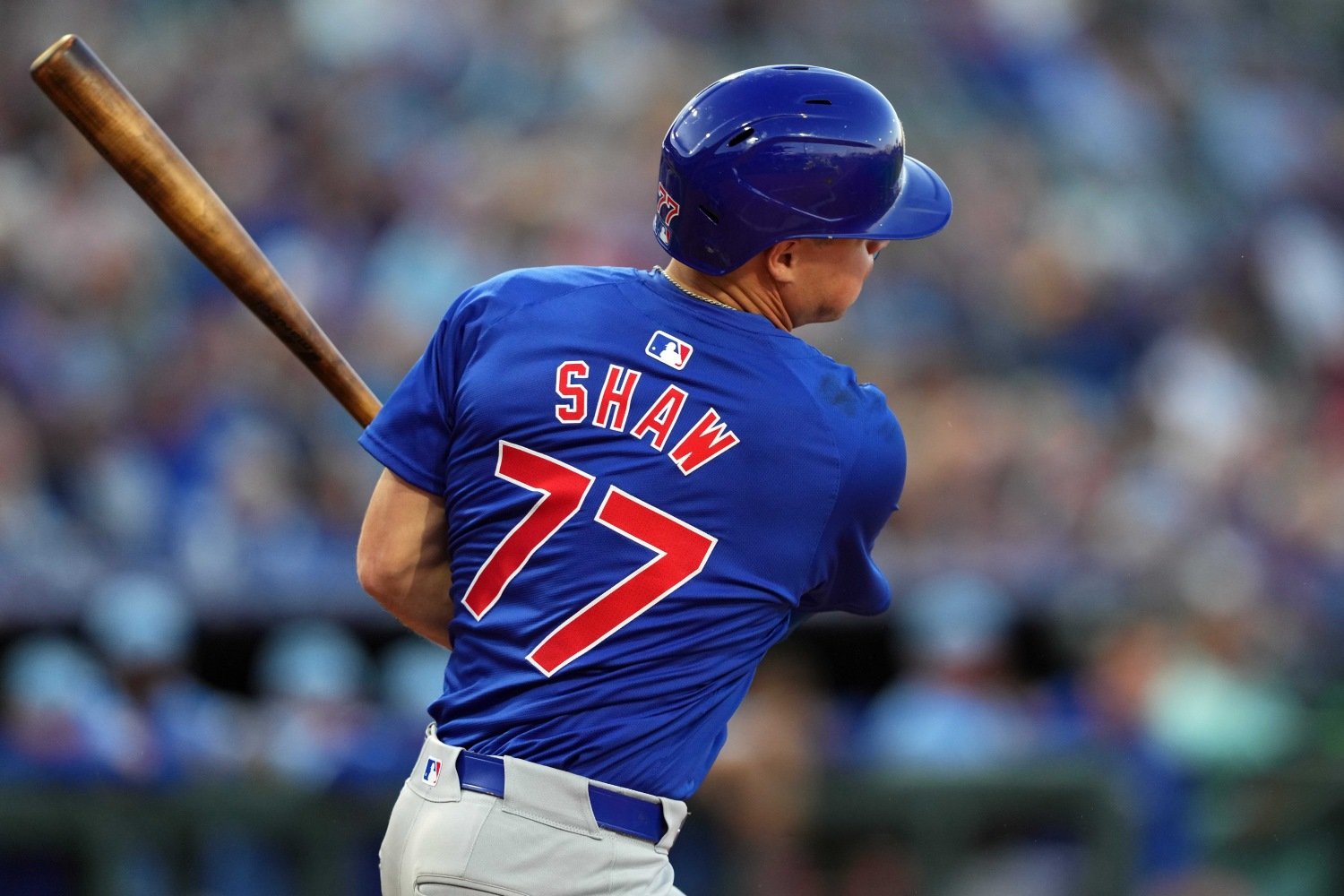 On Fri., Mar. 15, the Chicago Cubs' Breakout Team will take on the future stars from their crosstown rivals, the Chicago White Sox. The game will be broadcast through ESPN+ and the Marquee Broadcast Network, next Friday at 4 PM Central. This will be a great chance for everyone to get to see the best prospects from each team. First, let's talk quickly about who might stand out for the South Siders. Chicago White Sox Preview: Entering the Breakout games, the White Sox farm system has not received many plaudits, generally being ranked among the bottom five in baseball. Recently, Keith Law of The Athletic ranked them as low as 28th. Despite their low rankings as a system, the White Sox Breakout roster does have a few interesting players expected to play, headlined by 2021 first-round selection and current top prospect, shortstop Colson Montomery. Sox 2023 first-rounder Jacob Gonzalez and switch-hitting catcher Edgar Quero (the jewel of last summer's Lucas Giolito-and-Reynaldo López trade) will also highlight the roster. Chicago Cubs Preview: The Cubs' system, unlike that of the Sox, has been on the rise in recent years, being ranked as high as number one by FanGraphs's Eric Logenhagen. The Cubs have drafted and traded well in recent years, and their Breakout roster will showcase many of their top prospects, featuring 11 of NSBB's top-20 prospects from this spring. Included on the roster are the top four prospects in the system: Pete Crow-Armstrong, Cade Horton, Owen Caissie and Matt Shaw. The game will be a fun way to view the Cubs' prospects all in one game. Predicting the Cubs' Breakout Lineup: Pete Crow-Armstrong, CF James Triantos, 2b Matt Shaw, 3b Owen Caissie, RF Haydn McGeary, DH BJ Murray, 1b Moises Ballesteros, C Jefferson Rojas, SS Kevin Alcantara, LF Starting Pitcher: Cade Horton While the game is ultimately a mere exhibition, creating an "all-star" lineup of Cubs prospects was a fun project. A few of these players feel like locks in the above slots, as Pete Crow-Armstrong, Owen Caissie, Jefferson Rojas and Matt Shaw are all in camp as non-roster-invitees, and are among the best in the entire system. I did consider starting Shaw at second, but with how much he's been working at third base, figured the team would want to keep him working there. I could see a situation wherein Murray gets the nod at third and Shaw at second, or even shortstop, but think the Cubs will give Triantos a start and this was the best way to make that happen. When and where possible, as well, I also tried to defer to players expected to start at higher levels of the system. On the mound, Horton is the logical start. He's the best prospect in the system (and arguably the best, period), and deserves the honor to lead the Breakout team onto the field. Horton won't pitch long, however, and I expect the Cubs to give as many players as possible a chance to play in the game. That goes for the offensive players, too, so even though prospects like Pablo Aliendo and Christian Franklin may not start, they should all get appearances. What to watch for: This section could really just be all about the top prospects, but instead, I'm going to try to focus on some of the second- and third-tier players. I'm really interested to see Porter Hodge, whom I wrote about earlier this offseason, on the mound. His breaking stuff is some of the best in the system, and hopefully he shows some improved control. In the same vein, former third-round pick Drew Gray, who could be in line for a real breakout season, should get into the game. The lefty has mid-rotation stuff, but still is working through control and command issues after his professional career essentially started with Tommy John surgery. We're getting to a point where it's "sink or swim" time for Kohl Franklin; who absolutely looks the part but just hasn't found enough strikes. With a strong spring and start to his 2024, perhaps Franklin can finally cash in on the promise he flashes. Moving away from the mound, someone like Pablo Aliendo, who like Gray has "2024 Breakout" written all over him, will be fun to see in the game. Likely catching the second half, watch for Aliendo's impressive raw power to show itself. Speaking of power, I'm thrilled to see a late-round selection like Haydn McGeary get into this game. From a personal standpoint, McGeary had committed to my alma mater (Kentucky) out of Colorado Mesa University. His story of being a D-2 prospect-cum-draft success story has been really fun to watch--almost as fun as when McGeary sends baseballs into orbit. Lastly, Christian Franklin has apparently been putting in a lot of work and time in the weight room. There's always been fourth-outfielder upside in his game, and he has the makeup to stick in that kind of role even if it's all he can be, but this could be the year he really busts onto the scene. He might not have the upside of Crow-Armstrong, but could be a sneaky useful option for the Cubs in 2025 and beyond, off the bench. With the Cubs Breakout Team set to take the field in around a week's time, who are you excited to see take the field? Did I forget to talk about someone? And what do you think the lineup will be? Let us know in the comment section below!
-
The Cubs have multiple pitchers who can hit 95+mph on the gun in Triple-A this year and they're not an outlier. The reality is that MLB velocity can be found pretty regularly across the leagues now a days from Low-A through the MLB. A lot of the deciding factor is how well they control it. Regardless of what his issue is, Triple-A stuff wise will almost assuredly challenge him enough for where he's at. He made contact 67% of the time in Triple-A last year. It isn't like it wasn't an issue there, too.
-
2023-24 Offseason Prospect Lists
Jason Ross replied to CaliforniaRaisin's topic in Cubs Minor League Talk
Prospect L:ive 100 dropped today PCA - 16 Horton - 17 Shaw - 29 (outside of Langford, Skenes and Crew he's the 4th highest in last draft) Alcantara - 59 Busch - 65 Caissie - 68 -
Is it time to trade Bellinger?
Jason Ross replied to Javy Is Still A Cub's topic in Chicago Cubs Talk
Honestly? I doubt much. When we're talking about hitting, and specifically power, the arms are really along for the ride. You're going to get the power from things like your hip explosion, your weight transfer, your angle of attack (or launch angle), wrist rotation... It's got to be a weird experience learning to hit and throw that way. I'm righty-righty and I look like a new-born dear learning to walk if you have me throw left handed or hit left handed. But especially when I swing left handed, where I notice my issues are things like weight transfer on the lower half. My arms don't struggle to swing the bat so much as I mentally can't keep my weight on my lower half straight (for example, when I swing, I drive my right leg into the ground for my load and then explode out of that. When I swing left handed, I notice I'm still loading into my right leg...which is now my front foot). -
Is it time to trade Bellinger?
Jason Ross replied to Javy Is Still A Cub's topic in Chicago Cubs Talk
I think Busch is a rookie, thus, there are no guarantees but I'd consider him among the safer types of prospects. He shows improved processes and bat to ball skills in Triple-A that should inspire confidence. He doesn't have brutal splits, and while he's clearly better at some pitches over others, his general plate approach of being picky about what he swings at should mitigate that. First base is a hard position to succeed at because so much is wrapped up in the bat, and I know he didn't light the world on first his first 100 PA's, but generally speaking, I'm actually fairly confident he won't up and flop. He may never be an all-star, but that's another discussion, IMO. -
Same. I've been really encouraged by how often he's pulled the ball. One of the biggest things I think I'd like to see him polish on is his hit box. He's a very patient hitter, and sometimes to a fault. When he was younger, he'd really wait out pitches. To the point where his hit box was very deep on the plate, making pulling the ball very hard. He was losing some power (he's strong enough to where he can hit opposite field home runs, but I think he was losing power because of it, too). It's also dangerous as stuff ramps up, you just can't wait that long without upping your swing and miss. He's been getting better about being a bit more aggressive, and getting the bat head out on the ball at the front of the plate; where his power will really take off. I try never to read much into ST numbers, but I think processes matter (god, I'm a broken record) here to me. Seeing him pull the few doubles has been really nice, regardless of who it's against, IMO.
-
In terms of swings and misses, yeah. Happ really struggled up top. Look at how his swing and miss profile kind of mirrors PCA! Process wise I think they're different; Happ wasn't prone to chasing so much and was more patient. He'd chase at the top of the zone, but that was kind of it. And his swing decisions were more controlled in counts when he had the advantage. He's even more patient today, but some of those seeds were there early. I think this is in part because swing profile is similar. That launch angle approach: He was controlled in 2017 in that he was generally swinging at the heart. He was bad at those up pitches. Here's him today: He's gotten much better about learning what not to swing at. So PCA is a different breed, He's probably never going to be Happ and I really don't want that for him. Part of Pete Crow-Armstrong, at least, IMO, is the pure electricity he brings, and a bit of that is his aggressive nature (at the plate, in the field and on the bases). One thing I think he can learn from Happ is just to control that a wee bit. Kind of how Happ learned that maybe he just doesn't need to swing at high fastballs and it wasn't for him, I'd like PCA to do that some. I really believe with natural progression, repetitions and some targeted behaviors that's all well within reach for him. Pete Crow-Armstrong has already shown ability to adapt and grow; he changed his entire swing profile upon being traded here.

-
So, just to be 100% clear: I've said that I "truly believe this can be ironed out" and stated I believe we can find polishes on everyone. Your response makes me feel like you're maybe missing that, or suggesting that I'm overly worried here and want to be sure that it's clear I'm not. This isn't some panic post on PCA; this all started in a discussion to Stratos that I don't think the root of PCA's issue is the swing mechanics but more of a process concern (one that people have had for years on Pete Crow-Armstrong). I'm not trying to suggest any prospect death knell here. The process and the plate approach do need cleaning. Without any statcast data from Castellanos, Robert or Burger (all three were in Triple-A pre-2023), it would appear on the surface that based on chase/swing% that they may be similar to PCA,. but I also think there' are processes that can be hidden past that. What I can say is that looking at all three at the MLB level, they don't have the wild swing and chase rates where they're ahead in the count (or even 0-0) like PCA has shown at Triple-A. All three are more controlled than PCA today (though Burger does chase more than the other two on those types of counts). That's just one area, and these are more developed hitters, both in age, level, and experience than PCA (it's not meant as a single-issue voter here). I just wish I could see their swing decisions on specific pitches, counts and the likes at Triple-A to really compare them with Crow-Armstrong; I don't mean to sound dismissive if that's how you're taking it (please don't!), just that I really would love to compare those things and with out it, it's hard to really say if they had similar things going on deep under the hood. To sum it all up with a TLDR: I don't want anyone to think I hate Pete Crow-Armstrong. Just a deep dive finds a few concerns with his swing choices. All of these are things you can't be fully shocked to see from a 21 year old making his debut at Triple-A. All are solvable issues and rarely does a 21 year old not have a polish. This is where I'd really like to see PCA slow down a bit and mature as a hitter.
-
On its own, it's not a death sentence. Hitters can work around approach issues. With that said, PCA turned in a 67% contact rate last year when he got to Triple-A and as present, his swing decisions do appear to be a hindrance. Id say its just a new level, but his plate approach had been a question for a while, and im not sure its just being at a new level for him. He's a young kid, and at 22 years old, having polishes is normal (I could find a polish for every prospect in the system. Multiple. So it's not meant pick on him). I don't need to see him become Juan Soto, but improvement in that area seems necessary. It's something I truly believe can be ironed out, and with his glove and speed, value will be there anyways, but I'd like to see him be more selective and mature his approach. As stated, I think it's the difference of him Dalton Varsho-ing his way to 2 wins and him being a borderline all star type.