Jason Ross
-
Posts
8,154 -
Joined
-
Last visited
-
Days Won
74
Content Type
Profiles
Joomla Posts 1
Chicago Cubs Videos
Chicago Cubs Free Agent & Trade Rumors, Notes, & Tidbits
2026 Chicago Cubs Top Prospects Ranking
News
2023 Chicago Cubs Draft Picks
Guides & Resources
2024 Chicago Cubs Draft Picks
The Chicago Cubs Players Project
2025 Chicago Cubs Draft Pick Tracker
2026 Chicago Cubs Draft Tracker: Picks & Bonuses
Blogs
Events
Forums
Store
Gallery
Everything posted by Jason Ross
-
Brewers (TBD) vs Cubs (TBD): 10/9/25, 8:08pm
Jason Ross replied to Brock Beauchamp's topic in Fred Hornkohl Game Thread Forum
Shaw has a 110 wRC+ vs RHP since he fixed his mechanics. We should not be using full season data for him. He's hit RHP better, he is a significantly better fielder (one of the best in DRS at the position) and offers base running valuing. This isn't the night for Castro, recency bias is about the only thing going for Castro right now. I know Shaw hasn't looked great, but it's 6 games. He was hitting quite well the last week of the season. Starting Shaw is probably the best choice despite the recency bias. -
Brewers (TBD) vs Cubs (TBD): 10/9/25, 8:08pm
Jason Ross replied to Brock Beauchamp's topic in Fred Hornkohl Game Thread Forum
He's been bad. But he probably should remain in the lineup. Tonight looks like a close game. I like Willi Castro in certain circumstances, but tonight is a night the Cubs will probably need to create their own variance to win. His glove is the best skill either of the two have, his base running might be the second. Castro, even if we think he might be a better option offensively, considering how good Peralta is, probably isn't enough to offset the other two. -
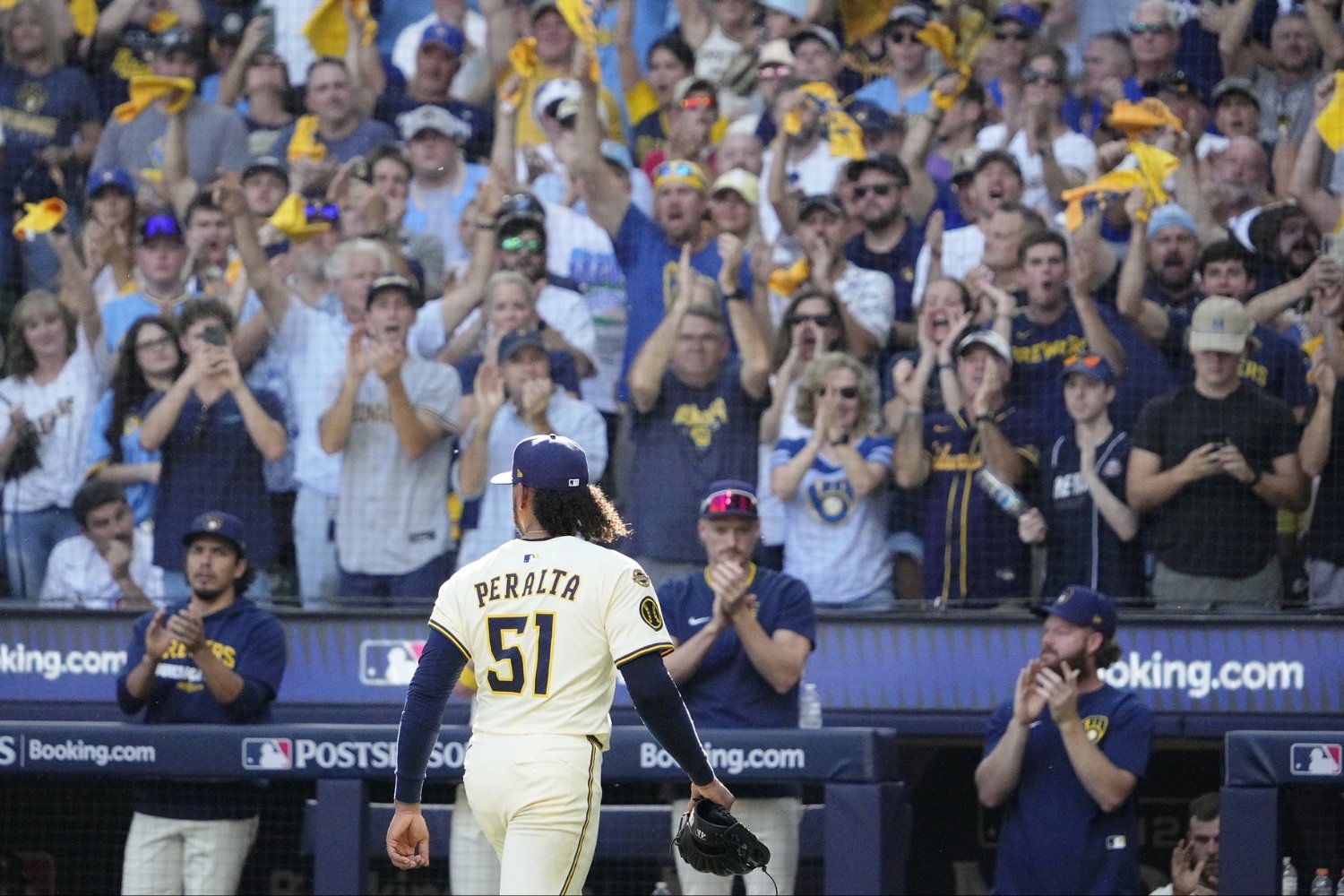 Freddy Peralta's long shadow lingers over the remaining two games of the NLDS. Confirmed to start Game 4 in Wrigley, he will need to be vanquished by the Chicago Cubs to advance to the National League Championship Series (or, at least, get to Game 5 in this series). He is the unquestioned best pitcher the Brewers can toss the Cubs' way, sporting a sparkling 2.70 ERA on the season. It may feel like Cubs' offense will be unable to get to "Fastball Freddy", but recent history can give us a glimpse into how the Cubs' can solve the Brewers' staff ace. Let's rewind time just a bit. It's July 30; the Cubs are visiting Milwaukee as the month closes out. July has not been a fun month—the Brewers have quickly caught the Cubs and the teams are battling for NL Central supremacy. On the mound is our antagonist, Freddy Peralta, entering the game with a 2.81 ERA, meaning runs will seemingly be difficult to find. A whole 85 pitches later, and in just a four-inning outing, the Brewer's best pitcher finished the day having given up five earned runs and striking out just three. It's within this game plan that we can see a path to success for the Cubs tonight. Strangely enough, the game on July 30 started much like Game 1 of the of the NLDS did: a leadoff Michael Busch home run. On the second pitch of the game, the Cubs' left-handed first baseman pounded a middle-middle fastball 380 feet, leaping off of the bat at nearly 110mph. The two have a bit of strange history against each other, as including Busch's leadoff home run in the playoffs, Peralta has been tagged by the Cubs' slugger for three home runs in 25 trips to the plate... and those three moonshots represent Busch's only hits in those opportunities. Baseball is a cruel mistress. In that July 30 game, left-handed hitters would find a lot of success, as both Kyle Tucker and Pete Crow-Armstrong would reach in the first, but the home run would be their only early tally after Seiya Suzuki, Carson Kelly and Nico Hoerner were unable to help tack on more. Issues against the Cubs' lefties would crop back up in the top of the third. Despite getting Busch to fly out, Tucker would single, and after a Seiya Suzuki walk in which Peralta would come nowhere near the strike zone, Crow-Armstrong would stroll to the plate. It's interesting to see how the Brewers' approached the center fielder in this instance, as we know that the youngster is prone to high-fastballs and low breaking balls. Peralta didn't really have the best feel for his stuff this day, as he spiked a curveball, but went mostly fastball-changeup to Crow-Armstrong His mistake was on a two-strike count, leaving his changeup over the plate enough for it to be smashed for a double, which gave the Cubs their second run on the day. The biggest at-bat of the game, however, was to another left-handed hitter, this time Moises Ballesteros. The Cubs' rookie was in a very difficult situation: on the road, bases loaded. two outs and facing an elite starting pitcher. At this point, Ballesteros hadn't really settled in at the MLB level yet. Fastball Freddy would once again have a similar approach: fastball-changeup, throwing three of the latter in this at-bat. Once again, in a two-strike count, the Brewers' starter would let his changeup get too much of the plate (though, to be fair, this wasn't a bad pitch, and Ballesteros deserves credit for getting it) and Big Mo deposited the pitch into left field, clearing the bases and giving the Cubs five runs on the day. We can see the pitch distribution from Freddy Peralta on the day was generally to keep the ball down and away; both the changeups to Pete Crow-Armstrong and Moises Ballesteros were here. And the Cubs, to their credit, went and got these pitches. It wasn't that they're terrible or horribly located, but they are hittable. Peralta learned from this outing when we saw him last in Game 1. Our own Matt Trueblood wrote an article on Brewer Fanatic about how Peralta changed his approach throughout Game 1 and is worth a read, but his overall profile has changed as well. Yes, Busch caught another middle-middle fastball, but Peralta changed how he approached Cubs hitters in the contest. First off, the changeup was not spotted on that outside third; instead, he used it around the knees over the middle of the plate. This played well off his fastball, which he used less up-and-in and instead more out and over the plate. This makes sense—the observed movement of these pitches are opposite of each other. In contrast, in that July start, the fastball and the changeup were observably different, because the fastball (red dots in the chart below) was coming up and in and the changeup (green dots) was fading away, creating an easier distinction. Peralta simply used his stuff better in October. I would expect a similar plan of attack from Peralta in Game 4, even at Wrigley. It's going to make life more difficult on the Cubs. We can see this represented in how Peralta attacked lefties prior to August 1, and how he's attacked them since. Before, everything was away, but now, everything is north-and-south. This has lowered his xFIP against LHH considerably, from a 4.70 xFIP down to a 3.58 xFIP. It is unlikely, then, that the same strategy the Cubs hitters deployed in July will work again. They'll need to adapt. So, what's the plan here? Have a keen eye, lefties. You have an idea of what the plan is going to be against you now: fastballs up and changeups down, though it's not his only plan (his plan of attack changed as the game went on). His profile is going to be difficult to solve, as his pitches play well off of each other. They're his two best pitches per Statcast Run Value, and he's learned to really use them to full effect. He throws them a lot, over 70% of the time. There is one weakness Peralta still displays against left-handed hitters: he walks them. Even with the change, he walks lefties 12% of the time (compared to his season walk rate of 9%). So, be patient, and don't chase; the Cubs gave him too much help last time. As Matt outlined, the Cubs did sit on this changeup early in the game, so they were prepared. I would look for it again if he starts showing this pattern. If the wind is blowing in at Wrigley, it's going to make life tougher. Running into a leadoff home run will be much, much harder, for example. But it also creates an opportunity for misses—if Peralta misses his changeup and he reverts to finding a separation in those pitches, lefties can get to him. Make him throw you strikes, and pay attention. It's likely going to be be an environment where very few runs are scored, which has been the case in this series outside of the first inning. Fans tend to get frustrated when offenses struggle, but pitchers deserve love and credit when they succeed. Nothing is going to be easy off of one of the most undervalued pitchers in baseball. But, he has a pattern, and the Cubs will hopefully use it to their advantage. If the Cubs win, it's likely because they figured out the pattern, and if they fail to score, it's probably because Peralta's fastball-changeup combo is dancing like a perfect pair. How are you feeling about the Cubs' chances against Peralta? Do you think they can survive for a chance at a sudden death Game 5?
-
Image courtesy of © Michael McLoone-Imagn Images Freddy Peralta's long shadow lingers over the remaining two games of the NLDS. Confirmed to start Game 4 in Wrigley, he will need to be vanquished by the Chicago Cubs to advance to the National League Championship Series (or, at least, get to Game 5 in this series). He is the unquestioned best pitcher the Brewers can toss the Cubs' way, sporting a sparkling 2.70 ERA on the season. It may feel like Cubs' offense will be unable to get to "Fastball Freddy", but recent history can give us a glimpse into how the Cubs' can solve the Brewers' staff ace. Let's rewind time just a bit. It's July 30; the Cubs are visiting Milwaukee as the month closes out. July has not been a fun month—the Brewers have quickly caught the Cubs and the teams are battling for NL Central supremacy. On the mound is our antagonist, Freddy Peralta, entering the game with a 2.81 ERA, meaning runs will seemingly be difficult to find. A whole 85 pitches later, and in just a four-inning outing, the Brewer's best pitcher finished the day having given up five earned runs and striking out just three. It's within this game plan that we can see a path to success for the Cubs tonight. Strangely enough, the game on July 30 started much like Game 1 of the of the NLDS did: a leadoff Michael Busch home run. On the second pitch of the game, the Cubs' left-handed first baseman pounded a middle-middle fastball 380 feet, leaping off of the bat at nearly 110mph. The two have a bit of strange history against each other, as including Busch's leadoff home run in the playoffs, Peralta has been tagged by the Cubs' slugger for three home runs in 25 trips to the plate... and those three moonshots represent Busch's only hits in those opportunities. Baseball is a cruel mistress. In that July 30 game, left-handed hitters would find a lot of success, as both Kyle Tucker and Pete Crow-Armstrong would reach in the first, but the home run would be their only early tally after Seiya Suzuki, Carson Kelly and Nico Hoerner were unable to help tack on more. Issues against the Cubs' lefties would crop back up in the top of the third. Despite getting Busch to fly out, Tucker would single, and after a Seiya Suzuki walk in which Peralta would come nowhere near the strike zone, Crow-Armstrong would stroll to the plate. It's interesting to see how the Brewers' approached the center fielder in this instance, as we know that the youngster is prone to high-fastballs and low breaking balls. Peralta didn't really have the best feel for his stuff this day, as he spiked a curveball, but went mostly fastball-changeup to Crow-Armstrong His mistake was on a two-strike count, leaving his changeup over the plate enough for it to be smashed for a double, which gave the Cubs their second run on the day. The biggest at-bat of the game, however, was to another left-handed hitter, this time Moises Ballesteros. The Cubs' rookie was in a very difficult situation: on the road, bases loaded. two outs and facing an elite starting pitcher. At this point, Ballesteros hadn't really settled in at the MLB level yet. Fastball Freddy would once again have a similar approach: fastball-changeup, throwing three of the latter in this at-bat. Once again, in a two-strike count, the Brewers' starter would let his changeup get too much of the plate (though, to be fair, this wasn't a bad pitch, and Ballesteros deserves credit for getting it) and Big Mo deposited the pitch into left field, clearing the bases and giving the Cubs five runs on the day. We can see the pitch distribution from Freddy Peralta on the day was generally to keep the ball down and away; both the changeups to Pete Crow-Armstrong and Moises Ballesteros were here. And the Cubs, to their credit, went and got these pitches. It wasn't that they're terrible or horribly located, but they are hittable. Peralta learned from this outing when we saw him last in Game 1. Our own Matt Trueblood wrote an article on Brewer Fanatic about how Peralta changed his approach throughout Game 1 and is worth a read, but his overall profile has changed as well. Yes, Busch caught another middle-middle fastball, but Peralta changed how he approached Cubs hitters in the contest. First off, the changeup was not spotted on that outside third; instead, he used it around the knees over the middle of the plate. This played well off his fastball, which he used less up-and-in and instead more out and over the plate. This makes sense—the observed movement of these pitches are opposite of each other. In contrast, in that July start, the fastball and the changeup were observably different, because the fastball (red dots in the chart below) was coming up and in and the changeup (green dots) was fading away, creating an easier distinction. Peralta simply used his stuff better in October. I would expect a similar plan of attack from Peralta in Game 4, even at Wrigley. It's going to make life more difficult on the Cubs. We can see this represented in how Peralta attacked lefties prior to August 1, and how he's attacked them since. Before, everything was away, but now, everything is north-and-south. This has lowered his xFIP against LHH considerably, from a 4.70 xFIP down to a 3.58 xFIP. It is unlikely, then, that the same strategy the Cubs hitters deployed in July will work again. They'll need to adapt. So, what's the plan here? Have a keen eye, lefties. You have an idea of what the plan is going to be against you now: fastballs up and changeups down, though it's not his only plan (his plan of attack changed as the game went on). His profile is going to be difficult to solve, as his pitches play well off of each other. They're his two best pitches per Statcast Run Value, and he's learned to really use them to full effect. He throws them a lot, over 70% of the time. There is one weakness Peralta still displays against left-handed hitters: he walks them. Even with the change, he walks lefties 12% of the time (compared to his season walk rate of 9%). So, be patient, and don't chase; the Cubs gave him too much help last time. As Matt outlined, the Cubs did sit on this changeup early in the game, so they were prepared. I would look for it again if he starts showing this pattern. If the wind is blowing in at Wrigley, it's going to make life tougher. Running into a leadoff home run will be much, much harder, for example. But it also creates an opportunity for misses—if Peralta misses his changeup and he reverts to finding a separation in those pitches, lefties can get to him. Make him throw you strikes, and pay attention. It's likely going to be be an environment where very few runs are scored, which has been the case in this series outside of the first inning. Fans tend to get frustrated when offenses struggle, but pitchers deserve love and credit when they succeed. Nothing is going to be easy off of one of the most undervalued pitchers in baseball. But, he has a pattern, and the Cubs will hopefully use it to their advantage. If the Cubs win, it's likely because they figured out the pattern, and if they fail to score, it's probably because Peralta's fastball-changeup combo is dancing like a perfect pair. How are you feeling about the Cubs' chances against Peralta? Do you think they can survive for a chance at a sudden death Game 5? View full article
-
Brewers (TBD) vs Cubs (TBD): 10/9/25, 8:08pm
Jason Ross replied to Brock Beauchamp's topic in Fred Hornkohl Game Thread Forum
To be fair to the Cubs just a little bit (not disagreeing with your assumption at all, I wish they would have poured it on last night too), the Brewers faced Aaron Civale, Colin Rea, and Ben Brown most of games 1-2 and didn't do jack against them either. They were way up in some of those innings and the Cubs never made much of a move to get back into it, so you could argue that they weren't geared up or whatever, but it does ring true. I think I'm just trying to remain optimistic and find some light. Regardless,. the Cubs are likely going to have to hit against good pitching tonight. It's incredibly unlikely they knock out Freddy early, or really, get up big at any point. Whether they're ahead or behind, we can almost guarantee Uribe, Megill, and a few others will get some looks. So they'll have to find it in them offensively tonight. -
Brewers (TBD) vs Cubs (TBD): 10/9/25, 8:08pm
Jason Ross replied to Brock Beauchamp's topic in Fred Hornkohl Game Thread Forum
I don't want to completely ruin the article I just did on it, but Peralta underwent a pretty significant transformation in how he handled pitching to LHH in between those two weeks. Busch hit a HR, PCA an RBI double and Moises Ballesteros a bases loaded double in that game. He got much smarter on how he went about it. Cubs seemed to handle the changes a bit better game 1 (I know it doesn't super feel like they did but they did) and forced him off it a bit. They also chased too much. But I think the LHH can find some success still. -
Brewers (TBD) vs Cubs (TBD): 10/9/25, 8:08pm
Jason Ross replied to Brock Beauchamp's topic in Fred Hornkohl Game Thread Forum
There's a pathway forward on Peralta. Just finished a deep dive on him. Cubs knocked him around in July but he switched how he pitches, specifically to LHH. He's much better against them now. But I also think there's a pattern the Cubs can exploit and they were close to using it to their advantage game one. He's really good but not impossibly good. -
Brewers (TBD) vs Cubs (TBD): 10/9/25, 8:08pm
Jason Ross replied to Brock Beauchamp's topic in Fred Hornkohl Game Thread Forum
Peralta for the Brewers. -
I've been livid about this all morning. I understand that it's for Phillies fans, but some of us Cub fans also live in EST and are old and like to sleep, damnit.
-
My biggest hope with Mathis is that a lot of the mediocre results in Myrtle Beach were due more to his health than his ability. The batted ball data in college was so damn good that him not cruising through Myrtle felt weird. Then he missed most of the year. Him crushing in the AFL would make me feel better about that data being more noise and injury related.
-
Absolutely not. They cannot win this series without him. I think he goes tomorrow. Maybe you gambit and roll an opener but I think it's Boyd in G4. You need 4 innings from him.
-
We're about to go live! Let's celebrate a W. That one was intense as hell. Playoff baseball is simultaneously not fun and anxiety ridden and very, very, very fun.
-
NAILS
-
Brad Keller on to preserve the season in the NLDS, the exact way we drew it up in March.
-
An umpires job is to call the pitch not the catch. He could have framed it better. But the first thing is for an umpire to do his job properly.
-
Not a terrible choice to not throw a strike to Contreras there and to get Frelick. One to go now.
-
Brutal. That is just a terrible call.
-
Chourio is banged up. He isn't running well. It may not come into play here but keep an eye on it.
-
Chourio destroys LHP and is below average against RHP.
-
Tough play. Good effort. Here we go.
-
Do you need a hug or something? Or to play a game of catch?
-
Do the announcers know that Chad Patrick is 27? Like, he isn't old, but the are talking about how young he is like he was 23. What are we doing here?
-
Positive: Tucker clearly feels good enough to think about taking a bag! Negative: TOOTBLAN
-
Good news about getting bombed the last two games is that the Cubs' best relievers are well rested. They should have no issue being used tonight and tomorrow if they can hold on. Frankly, if they don't hold on, that's another set of issues anyways, so I'm not sure that even really matters.
-
Bunting remains dumb.