.jpg.900f6d1bc80a5a156f3ba09ea0e4b3d7.jpg)

Jason Ross
-
Posts
8,154 -
Joined
-
Last visited
-
Days Won
74
Content Type
Profiles
Joomla Posts 1
Chicago Cubs Videos
Chicago Cubs Free Agent & Trade Rumors, Notes, & Tidbits
2026 Chicago Cubs Top Prospects Ranking
News
2023 Chicago Cubs Draft Picks
Guides & Resources
2024 Chicago Cubs Draft Picks
The Chicago Cubs Players Project
2025 Chicago Cubs Draft Pick Tracker
2026 Chicago Cubs Draft Tracker: Picks & Bonuses
Blogs
Events
Forums
Store
Gallery
Everything posted by Jason Ross
-
Yeah, I think at the very least, the club wont enter 2026 with the full cadre of "will-they-wont-they" SP depth they have currently (Brown, Assad, Wicks). Assad feels like someone another team would like; especially if the Cubs pick up Rea's option. I thought they might trade him last offseason, as well. As an MLB team you could do a lot worse than Javier Assad as your 5th best SP.
-
Image courtesy of © Melissa Tamez-Imagn Images SP, Javier Assad Age on Opening Day: 28 2023 Salary: League Minimum 2024 Salary: League Minimum 2025 Salary: League Minimum 2026 Salary Projection: $1,900,000 Background: Javier Assad was signed out of Mexico as an international free agent back in 2015. Not considered one of the premier players in his class, Assad has worked hard on himself and his craft to become an MLB player and has carved out a role as a swingman with the Chicago Cubs over the last few years. His best numbers seem to come when deployed as a member of the rotation, and over his last 291 innings he has compiled a 3.47 ERA and has been worth 2.3 fWAR. 2025 Season: Javier Assad missed most of the 2025 season with the dreaded oblique strain. The right-hander suffered the injury before Opening Day and then suffered a setback during his rehab time in Iowa. It looked like he may not make it back all season at one point, but he was able to get healthy and help the Cubs down the stretch, with a 3.65 ERA over seven starts. That ERA, however, may have masked some of his results. Assad's strikeout rate has never been his strong suit, hovering around the 20% mark over his career, but in 2025, his K% dropped to 15%. This can also been seen in the disparity between his ERA and his xFIP, as despite the sparkling run prevention, his xFIP did sit at 4.69. Cubs' Depth at SP: MLB: Shota Imanaga (pending contract decisions), Cade Horton, Matthew Boyd, Jameson Taillon, Colin Rea (pending contract decisions), Justin Steele (pending arbitration) On the 40-man: Ben Brown, Jordan Wicks Triple-A Depth: Jaxon Wiggins, Brandon Birdsell, Will Sanders, Conor Noland Summary: Javier Assad isn't a star, but has proven himself a useful contributor of a MLB organization. His stuff is not overpowering, but through enough groundballs and a kitchen-sink approach, he's shown he's capable of outpacing his advanced metrics. The Cubs will always need pitching depth, and whether or not they enter the 2026 season with plans of Assad in the rotation or the bullpen, he has proven worthy of being a member of either. Why the Chicago Cubs should offer Javier Assad a contract: Pitching depth is valuable, and Javier Assad has the ability to provide depth either in the rotation or the bullpen. It's unquestionable that the Cubs will need to dip into their depth in 2026; last year the Cubs saw Justin Steele, Shota Imanaga, Cade Horton, and Jameson Taillon hit the IL on the season. Whatever the Cubs' rotation looks like heading into 2026, it's a virtual guarantee that they will need to find people to fill vacancies created by injuries, and Assad would certainly do that. His contract should be around the $2 million range in his first year of arbitration, which would be financially viable as either a starting pitcher or a reliever. Why the Chicago Cubs should not offer Javier Assad a contract: Assad isn't a dominating pitcher, and his drop-off in strikeouts is a bit concerning. The velocity didn't fall, so you hope that a bit of rust is the cause, but he would struggle to find success if he can only strike out 15% of hitters in 2026. One of the biggest things to monitor is how much longer he's able to walk the tightrope of ERA and xFIP splits. He has some aspects of being an "xFIP-beater"—he has a varied arsenal and has groundball tendencies—but he's not elite at the latter, and he doesn't induce a lot of chase. It's fair to wonder if he's going to be able to continue to significantly outperform his expected data. Prediction: The Cubs tender a contract and settle on a one-year deal in the $2 million area before the arbitration deadline. The Cubs will need pitching depth, and while I think they will enter the 2026 offseason focusing on adding pitching as a priority, even if the crafty right-hander isn't in their rotation Opening Day, barring health, he's going to make starts. While I think we would be remiss if we didn't mention his waning strikeout rates and the ERA/xFIP differences, it's all theoretical for now, and it isn't like other pitchers haven't out-pitched their xFIP for years. And at the price tag he's going to command, it's unlikely that, even if the worst-case materializes, Assad is going to sink this club. What do you think? Unlike with Justin Steele, I do think there's a narrow argument you can make to non-tender Assad if you're that concerned with his xFIP. I don't necessarily agree with it, but I think you could make it. Do you think the Cubs will tender Assad? Should they tender Assad? Let me know what you think! View full article
-
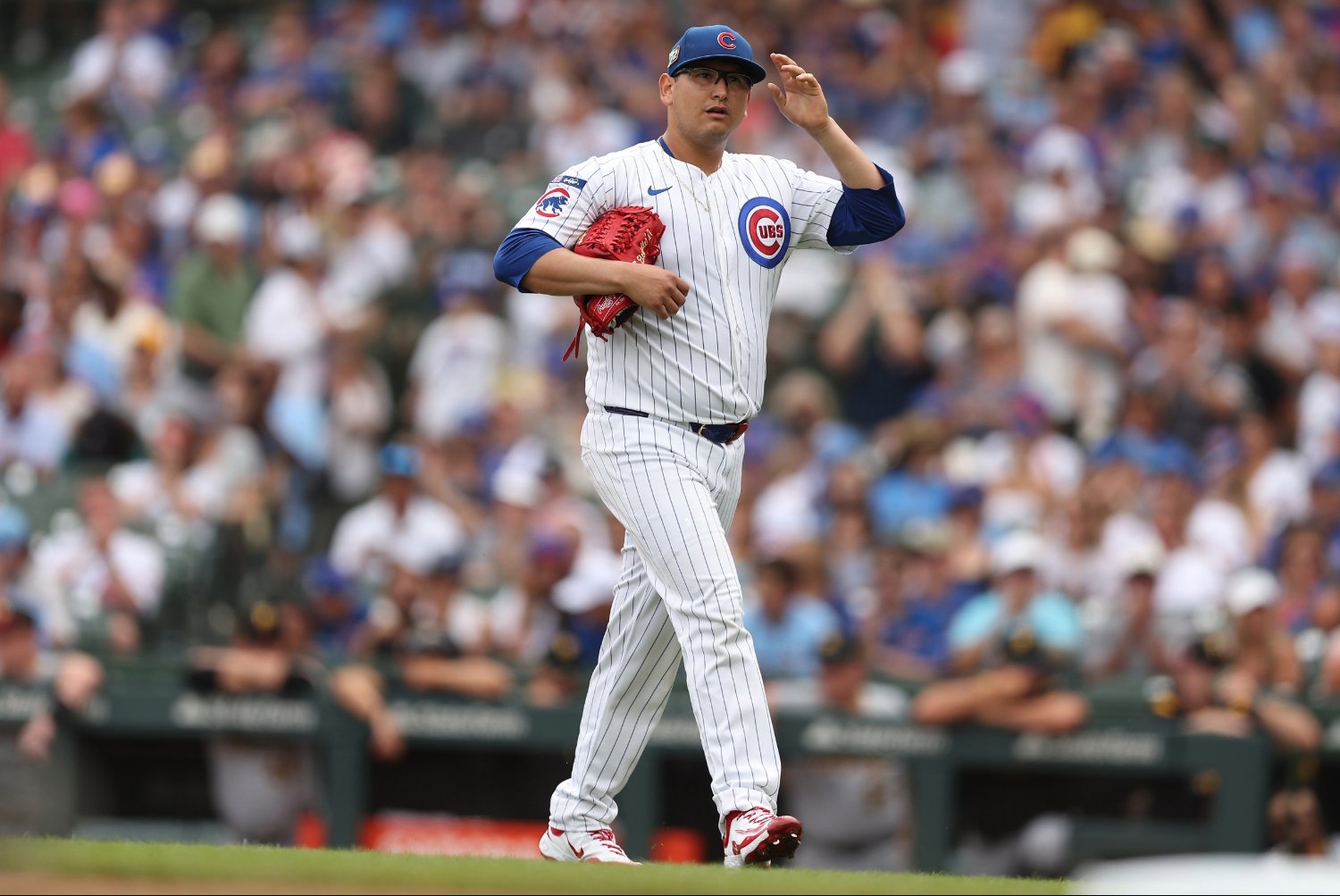 SP, Javier Assad Age on Opening Day: 28 2023 Salary: League Minimum 2024 Salary: League Minimum 2025 Salary: League Minimum 2026 Salary Projection: $1,900,000 Background: Javier Assad was signed out of Mexico as an international free agent back in 2015. Not considered one of the premier players in his class, Assad has worked hard on himself and his craft to become an MLB player and has carved out a role as a swingman with the Chicago Cubs over the last few years. His best numbers seem to come when deployed as a member of the rotation, and over his last 291 innings he has compiled a 3.47 ERA and has been worth 2.3 fWAR. 2025 Season: Javier Assad missed most of the 2025 season with the dreaded oblique strain. The right-hander suffered the injury before Opening Day and then suffered a setback during his rehab time in Iowa. It looked like he may not make it back all season at one point, but he was able to get healthy and help the Cubs down the stretch, with a 3.65 ERA over seven starts. That ERA, however, may have masked some of his results. Assad's strikeout rate has never been his strong suit, hovering around the 20% mark over his career, but in 2025, his K% dropped to 15%. This can also been seen in the disparity between his ERA and his xFIP, as despite the sparkling run prevention, his xFIP did sit at 4.69. Cubs' Depth at SP: MLB: Shota Imanaga (pending contract decisions), Cade Horton, Matthew Boyd, Jameson Taillon, Colin Rea (pending contract decisions), Justin Steele (pending arbitration) On the 40-man: Ben Brown, Jordan Wicks Triple-A Depth: Jaxon Wiggins, Brandon Birdsell, Will Sanders, Conor Noland Summary: Javier Assad isn't a star, but has proven himself a useful contributor of a MLB organization. His stuff is not overpowering, but through enough groundballs and a kitchen-sink approach, he's shown he's capable of outpacing his advanced metrics. The Cubs will always need pitching depth, and whether or not they enter the 2026 season with plans of Assad in the rotation or the bullpen, he has proven worthy of being a member of either. Why the Chicago Cubs should offer Javier Assad a contract: Pitching depth is valuable, and Javier Assad has the ability to provide depth either in the rotation or the bullpen. It's unquestionable that the Cubs will need to dip into their depth in 2026; last year the Cubs saw Justin Steele, Shota Imanaga, Cade Horton, and Jameson Taillon hit the IL on the season. Whatever the Cubs' rotation looks like heading into 2026, it's a virtual guarantee that they will need to find people to fill vacancies created by injuries, and Assad would certainly do that. His contract should be around the $2 million range in his first year of arbitration, which would be financially viable as either a starting pitcher or a reliever. Why the Chicago Cubs should not offer Javier Assad a contract: Assad isn't a dominating pitcher, and his drop-off in strikeouts is a bit concerning. The velocity didn't fall, so you hope that a bit of rust is the cause, but he would struggle to find success if he can only strike out 15% of hitters in 2026. One of the biggest things to monitor is how much longer he's able to walk the tightrope of ERA and xFIP splits. He has some aspects of being an "xFIP-beater"—he has a varied arsenal and has groundball tendencies—but he's not elite at the latter, and he doesn't induce a lot of chase. It's fair to wonder if he's going to be able to continue to significantly outperform his expected data. Prediction: The Cubs tender a contract and settle on a one-year deal in the $2 million area before the arbitration deadline. The Cubs will need pitching depth, and while I think they will enter the 2026 offseason focusing on adding pitching as a priority, even if the crafty right-hander isn't in their rotation Opening Day, barring health, he's going to make starts. While I think we would be remiss if we didn't mention his waning strikeout rates and the ERA/xFIP differences, it's all theoretical for now, and it isn't like other pitchers haven't out-pitched their xFIP for years. And at the price tag he's going to command, it's unlikely that, even if the worst-case materializes, Assad is going to sink this club. What do you think? Unlike with Justin Steele, I do think there's a narrow argument you can make to non-tender Assad if you're that concerned with his xFIP. I don't necessarily agree with it, but I think you could make it. Do you think the Cubs will tender Assad? Should they tender Assad? Let me know what you think!
 -
Totally agree. I'm all aboard making sure Steele is back. I do think the expectations should be a little lowered as he comes back; he might not be the ace right away. That said at a price point he's at? Man I can't think of the first reason I wouldn't bring him back.
-
No one is forcing me, you're right, but it isn't just about fans, it's about players and the like as well. Sometimes these games happen before getaway day - they don't move the time back to accommodate because they can't with travel schedules. And in the playoffs, you have more flexibility with a pitching staff. First, you don't ever play more than 3 games in a row without an offday and you have multiple off days usually leading into a playoff series. While teams are running 12/13 total in their pitching staff, only three are really being tasked with going 3-4+ innings. So even if someone gets rocked, you really weren't expecting him to go 6. When you go 18, though, it's a lot easier to find innings; the Cubs carried Colin Rea, Michael Soroka, and Aaron Civale who could all go 4+. In a regular season game, two of these guys either aren't on the staff or are tabbed as the starters tomorrow or the next day. They also routinely play 6+ games in a row, or these long stretches where they may have a single off day over the course of 15-17 days. You might like it, that's fine. But I think the game is better to not play needless marathons midseason. I don't miss silly 16 inning midyear games at all. And I think they're mostly nostalgia, more than anything. Last night was really cool! But I think they're best left for the playoffs.
-
Yeah, that where I've come down on it. It feels inherently odd that we are gifting teams runners, but I think between that and a game ending at 12:30pm on a Tuesday night in a stretch of 16 games in 15 days? I'll take the former. I'd totally hate this horsefeathers in the playoffs though. Last night was a great moment.
-
Image courtesy of © Ed Szczepanski-Imagn Images SP Justin Steele Age on Opening Day 2026: 30 Service Time: 4.1 years 2023 salary: League Minimum 2024 salary: $4,000,000 2025 salary: $6,500,000 2026 projected salary: $6,550,000 Background: Justin Steele was drafted by the Chicago Cubs out of high school way back in 2014. A minor league career that was filled with promise and injuries, the left-handed pitcher wouldn't establish himself as a core part of the Cubs until 2021. By 2022, he became an integral part of the rotation and one of the best left-handed pitchers in baseball. Only 14 starting pitchers in the league accrued more fWAR than Steele between 2022 and 2024, with Blake Snell, Tarik Skubal and Framber Valdez as the only southpaws to pick up more. 2025 Season: The Cubs entered 2025 with high hopes of winning the division and making noise in the playoffs, and Justin Steele was supposed to be the anchor of the rotation. Sadly for the Cubs and for their starting pitcher, things did not go according to plan, as Steele missed, effectively, the entire season with an elbow issue. The positive for both sides is that while it was a partial tear of the UCL, a full Tommy John surgery was not needed and Steele could be back by Opening Day 2026 if things progress well. While there is still a full offseason to go, the lefty has recently just posted video of him getting back into a throwing routine, which can only be a good thing. Cubs Depth at SP: MLB: Shota Imanaga (pending contract decisions), Cade Horton, Matthew Boyd, Jameson Taillon, Colin Rea (pending contract decisions) On the 40-man: Javier Assad, Ben Brown, Jordan Wicks Triple-A Depth: Jaxon Wiggins, Brandon Birdsell, Will Sanders, Conor Noland Summary: Justin Steele, when healthy, is one of the best left-handed starting pitching options in the league. However, injuries are certainly something he has dealt with over his career. With a TJ surgery already under his belt, a muscle injury in 2024, and now a partial UCL tear, there is some concern in that area moving forward. The Cubs have two key starting pitchers with options—Colin Rea, which is a straight up "yes" or "no" team option, and a confusing set of decisions to be made regarding Shota Imanaga. Regardless of any of those choices, the Cubs will hope that they get the old Justin Steele back in 2026. Why the Cubs should offer Justin Steele a contract: Left-handed pitchers who have been as good as Steele don't just grow on trees. Yes, the injury was a bummer, but we are at a point in time where elbow injuries are not as devastating as they once were, with many pitchers coming back and reverting to their pre-injury forms in a matter of months. Steele didn't even need a full reconstruction of his elbow, making his timeline even quicker. It's unlikely that the Cubs will be able to find a pitcher with higher upside than Steele and his $6.5 million estimated price tag, and at age 30, he isn't at an age where an imminent collapse is likely on the horizon. Why the Cubs shouldn't offer Justin Steele a contract: I can't really find much of a reason as to why they wouldn't. With others, such as Reese McGuire or Eli Morgan, I feel like I could make some sort of devil's advocate argument, but short of his arm just falling off, the price of admission here is pretty tolerable. Steele's medicals would have to be a pure disaster for the Cubs to deem $6.5 million too rich to bring back the lefty. Prediction: The Cubs tender Justin Steele and the two sides settle before arbitration on a contract. This is a no-brainer from both sides. Justin Steele just missed a full season and has something to prove, while the Cubs could potentially lose Shota Imanaga and Colin Rea, and Jameson Taillon has only one year left on his contract. Steele remains controllable past 2026 and has been incredibly effective on the North Side. I'm not sure exactly what to expect from the hurler, but my guess is that even if he doesn't immediately find his groove, he'll get back to being mostly the guy we've known. These types of procedures have gotten better and better, and it's very common to see players come back. Matthew Boyd is a great example of this; he had a full TJ surgery just a few years ago, came back during the tail end of the 2024 season with Cleveland, and then made the All-Star team with the Cubs. What do you think will happen? Obviously, I think the Cubs will bring back Steele, but maybe there's an argument to be made not to? Let me know if you see this in a different light! View full article
-
Chicago Cubs Arbitration Decisions & Projections: Justin Steele
Jason Ross posted an article in Cubs
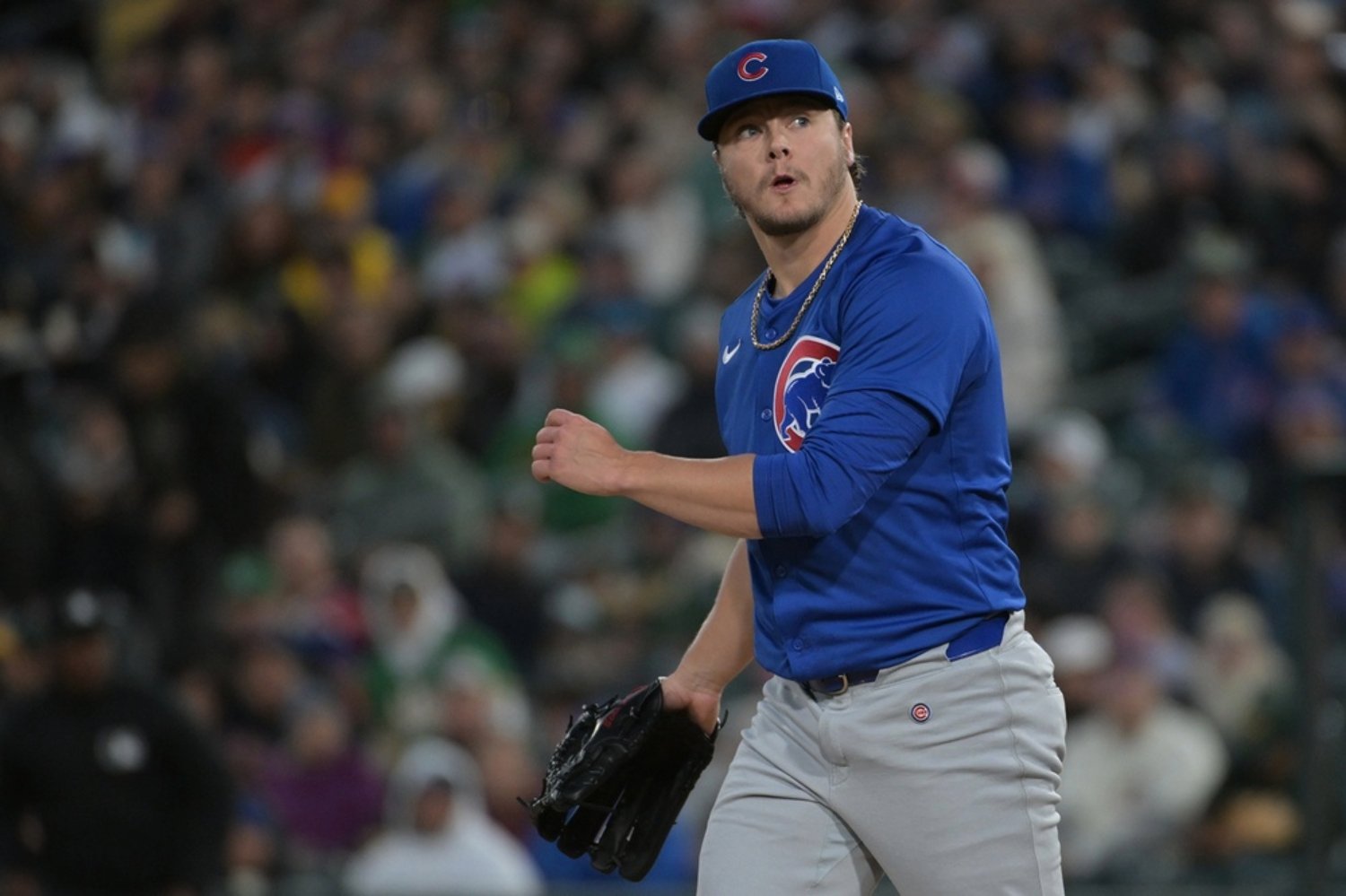 SP Justin Steele Age on Opening Day 2026: 30 Service Time: 4.1 years 2023 salary: League Minimum 2024 salary: $4,000,000 2025 salary: $6,500,000 2026 projected salary: $6,550,000 Background: Justin Steele was drafted by the Chicago Cubs out of high school way back in 2014. A minor league career that was filled with promise and injuries, the left-handed pitcher wouldn't establish himself as a core part of the Cubs until 2021. By 2022, he became an integral part of the rotation and one of the best left-handed pitchers in baseball. Only 14 starting pitchers in the league accrued more fWAR than Steele between 2022 and 2024, with Blake Snell, Tarik Skubal and Framber Valdez as the only southpaws to pick up more. 2025 Season: The Cubs entered 2025 with high hopes of winning the division and making noise in the playoffs, and Justin Steele was supposed to be the anchor of the rotation. Sadly for the Cubs and for their starting pitcher, things did not go according to plan, as Steele missed, effectively, the entire season with an elbow issue. The positive for both sides is that while it was a partial tear of the UCL, a full Tommy John surgery was not needed and Steele could be back by Opening Day 2026 if things progress well. While there is still a full offseason to go, the lefty has recently just posted video of him getting back into a throwing routine, which can only be a good thing. Cubs Depth at SP: MLB: Shota Imanaga (pending contract decisions), Cade Horton, Matthew Boyd, Jameson Taillon, Colin Rea (pending contract decisions) On the 40-man: Javier Assad, Ben Brown, Jordan Wicks Triple-A Depth: Jaxon Wiggins, Brandon Birdsell, Will Sanders, Conor Noland Summary: Justin Steele, when healthy, is one of the best left-handed starting pitching options in the league. However, injuries are certainly something he has dealt with over his career. With a TJ surgery already under his belt, a muscle injury in 2024, and now a partial UCL tear, there is some concern in that area moving forward. The Cubs have two key starting pitchers with options—Colin Rea, which is a straight up "yes" or "no" team option, and a confusing set of decisions to be made regarding Shota Imanaga. Regardless of any of those choices, the Cubs will hope that they get the old Justin Steele back in 2026. Why the Cubs should offer Justin Steele a contract: Left-handed pitchers who have been as good as Steele don't just grow on trees. Yes, the injury was a bummer, but we are at a point in time where elbow injuries are not as devastating as they once were, with many pitchers coming back and reverting to their pre-injury forms in a matter of months. Steele didn't even need a full reconstruction of his elbow, making his timeline even quicker. It's unlikely that the Cubs will be able to find a pitcher with higher upside than Steele and his $6.5 million estimated price tag, and at age 30, he isn't at an age where an imminent collapse is likely on the horizon. Why the Cubs shouldn't offer Justin Steele a contract: I can't really find much of a reason as to why they wouldn't. With others, such as Reese McGuire or Eli Morgan, I feel like I could make some sort of devil's advocate argument, but short of his arm just falling off, the price of admission here is pretty tolerable. Steele's medicals would have to be a pure disaster for the Cubs to deem $6.5 million too rich to bring back the lefty. Prediction: The Cubs tender Justin Steele and the two sides settle before arbitration on a contract. This is a no-brainer from both sides. Justin Steele just missed a full season and has something to prove, while the Cubs could potentially lose Shota Imanaga and Colin Rea, and Jameson Taillon has only one year left on his contract. Steele remains controllable past 2026 and has been incredibly effective on the North Side. I'm not sure exactly what to expect from the hurler, but my guess is that even if he doesn't immediately find his groove, he'll get back to being mostly the guy we've known. These types of procedures have gotten better and better, and it's very common to see players come back. Matthew Boyd is a great example of this; he had a full TJ surgery just a few years ago, came back during the tail end of the 2024 season with Cleveland, and then made the All-Star team with the Cubs. What do you think will happen? Obviously, I think the Cubs will bring back Steele, but maybe there's an argument to be made not to? Let me know if you see this in a different light!
 -
I'd argue the opposite. The Manfred rule has largely eliminated 18 inning games in the regular season. In the playoffs I think last night was epic, and awesome, and everything playoff baseball should be. But there are more off days built in and the stress on pitching staffs isn't as great. I can't speak for everyone, but the last thing I need is a Cubs/Angels game that goes 18 innings in mid-May. They weren't fun. They were long and you were just hoping for them to be over with. I'd hate to see the Manfred rule in the playoffs, but I appreciate it helping end games before it becomes a slog in the regular season.
-
I mean, Andrew Kittredge was literally the second best RP in baseball beyond the deadline based on xFIP. If you're not seeing it in the results, you're not really looking, then. It's blatantly obvious. If you want to point to playoff production, then you're falling for recency and small sample bias. If we're doing that, then Fernando Tatis Jr, Steven Kwan, Christian Yelich, Cody Bellinger, Manny Machado and Bryce Harper all suck too. The problem is we objectively know they don't suck and like 15 PA's doesn't define a player. Just like whatever it is you think you saw in the playoffs from Kittredge isn't some glaring signal either. Again, I'm not trying to say Andrew Kittredge is the second best RP as we head into 2026. But he is likely one of the better right handed options in baseball, is among a very small group of very good RP's in baseball, and any legitimate contending team in 2026 would be happy to have him pitching in high leverage situations.
-
Correct, but players have good halves and bad halves all the time. That's normal. Pete Crow-Armstrong is a swing heavy player. But here's the thing; his swing decisions got better as the year went on in 2025. The overall data didn't get better - he had a mechanical flaw that caused him to get too out front of the ball. but he started making better swing decisions. Cam Smith...didn't. His swing got worse and his swing decisions remained relatively flat. That's the difference. We didn't see any progress from Smith. That's a big indicator. If it was simply that he was younger than Matt Shaw we would have seen growth with experience, but we saw Shaw fix a mechanical flaw and show a much better second half and we saw Cam Smith do none of that. We'll see what it means beyond now, but I don't think this is as simple as "Well Smith was a year behind him developmentally". I've had an issue with Cam Smith's bat path dating back to draft day. That bat path got worse in 2025.
-
Realistically, this feels like a "best case scenario" report. There's some positives about his defense, some hope about the bat, but enough holes that make you realize it's not a report that shies away from the polishes.
-
Fully agree here! I'm entirely in the "just pick up Kittredge" boat. He makes about what the Cubs paid on 1 year deals with Neris and Pressly, and while I don't want to completely trash those two, there were at least some signs with both that could have made you squint as to future issues (obviously we know the outcomes). Kittredge just got better. They need basically an entire back end of the BP right now sans Palencia, and I think Kittredge is a slam dunk.
-
Only Mason Miller was a better reliever per xFIP in baseball post deadline. His slider hits very real markers for being elite; he throws it over 90mph pretty often (an important decider) and has a +shape on it. He is in the 100th percentile in chase rate while also being in the 90th percentile for K and walk rate - this means he's throwing an elite velo slider as unhittable pitches, and yet getting extreme amounts of swing. He gets great whiff, but even when hitters do make contact, it's a nothing burger usually. The slider had an xwOBA of .207 on the year - 16th in the league. It as 9th in run value. The Cubs also did some tweaks on location of that pitch to suggest that he made a legit jump in the 2nd half. If you don't believe he's the second best reliever in baseball moving forward - me either! That said, I think he's a legitimate back end reliever for 2026 for a contending team.
- 9 replies
-
- 1
-

-
- colin rea
- andrew kittredge
- (and 2 more)
-
I think boiling it down to "he's a year behind" is kind of hand waving it away. If he was simply a year behind, we'd still expect an upward trend. It was opposite; he fell off a cliff as the year went with little development. He wasn't making better swing decisions, wasn't making more contact, wasn't making harder contact, his swing path flattened out more... Point is, I don't think it's as simple as "Well, he's a year younger!" I really don't think I see anything his data that suggests he was getting better against MLB pitching. I don't wish ill on Cam, honestly, whether he does well or not, I'll be fine. But I really don't see much in there that makes me think it's as simple as his age or experience. I think he need a bunch of work; his swing is an issue.
-
Image courtesy of © Patrick Gorski-Imagn Images Eli Morgan - Relief Pitcher Age on Opening Day 2026: 30 Service Time: 3.1 years 2023 salary: League Minimum 2024 salary: League Minimum 2025 salary: League Minimum 2026 projected salary: $1,100,000 Background: Eli Morgan was acquired from the Cleveland Guardians last offseason. The Cubs had seen their bullpen fail in September 2024, succumbing to injuries and ineffectiveness. Morgan was coming off a sub-2.00 ERA, fueled by good contact suppression. Never much of a strikeout artist, with a fastball averaging under 92 mph, Morgan was still a useful part of a contender's bullpen. 2025 Season: The 2025 season was not one to remember for Morgan. He would log just a fraction over seven innings for the Cubs, as he suffered a right elbow impingement in April. Despite attempting a comeback during the season, he was ultimately shut down in August. It's hard to judge Morgan's truncated campaign. His numbers were awful across the board, posting an ERA over 12.00; a strikeout rate of 11.4%; and an xFIP of 6.00. However, considering it was just seven frames and he was clearly injured, it's difficult to see how much was regression and how much his injury contributed Cubs' Depth at reliever: Likely on the MLB roster: Daniel Palencia, Porter Hodge, Andrew Kittredge (1-year option) On the 40-man roster: Jack Neeley, Jordan Wicks, Luke Little, Javier Assad, Gavin Hollowell, Ethan Roberts Triple-A options: Jaxon Wiggins, Tom Cosgrove, Riley Martin Summary: The Cubs acquired Morgan to help fix an ailing bullpen. Sadly for both the Cubs and Morgan, he did not help accomplish that. The reliever was always likely to see some regression, as his xFIP sat well above 4.00 even in his ostensibly excellent 2024, but due to his contact suppression, he's got the profile of a FIP-beater. This wasn't the season either side had hoped for, but the injury does give Morgan a bit of an excuse. Why the Cubs should offer Eli Morgan a contract: Morgan was really good in 2024. Not only did he have a stellar 1.93 ERA on the season, but the crafty hurler had an expected ERA of 2.57. He accomplished this with elite marks in preventing hard contact and keeping the ball in the park. Morgan doesn't need overpowering stuff to be useful. When you add in how good the Cubs' defense should remain going forward, he still seems like a potentially strong option. Why the Cubs should not offer Eli Morgan a contract: The margins for someone like Morgan are precariously thin, as he does not suppress contact through overwhelming stuff. With a below-average heater, the only pitch Morgan throws that grades out above average on shape models is his changeup. He does not offer strong whiff numbers, despite inducing a lot of chase. Elbows are fragile, and it's hard to tell exactly what to expect from Morgan after suffering an elbow problem this year. Projection: The Cubs are likely to tender Morgan a deal, but settle before they go to arbitration at a number below what MLB Trade Rumors projects. Morgan, coming off of a lost year, likely doesn't want to hit the market, and the Cubs are losing much of their bullpen heading into 2026. Depth is always important, when it comes to the pen. Because of this, I think the two can agree on a deal south of the $1,100,000 projection. Even if it's that number or higher, though, this won't be a troublesome line item on the budget. If Morgan does return, expect his grasp on a relief role to be tenuous. The Cubs wasted little time cutting relievers last year, as they reimagined their bullpen unit throughout the season. Veterans Ryan Pressly, Julian Merryweather and Chris Flexen were all designated for assignment by the end of July, after starting the season as key arms. Morgan would be a low-leverage guy, though he could work his way up the pecking order if he can look like his 2024 self. What do you think will happen with Eli Morgan? I think I already let the cat out of the bag there. The Cubs have better info than we do on Morgan's elbow and his stuff during rehab work after the injury, but unless the prognosis is worse than you'd guess, they're likely to bring him back. Would you tender Morgan a contract? What should the Cubs do? Let us know in the comments and spark a conversation. View full article
-
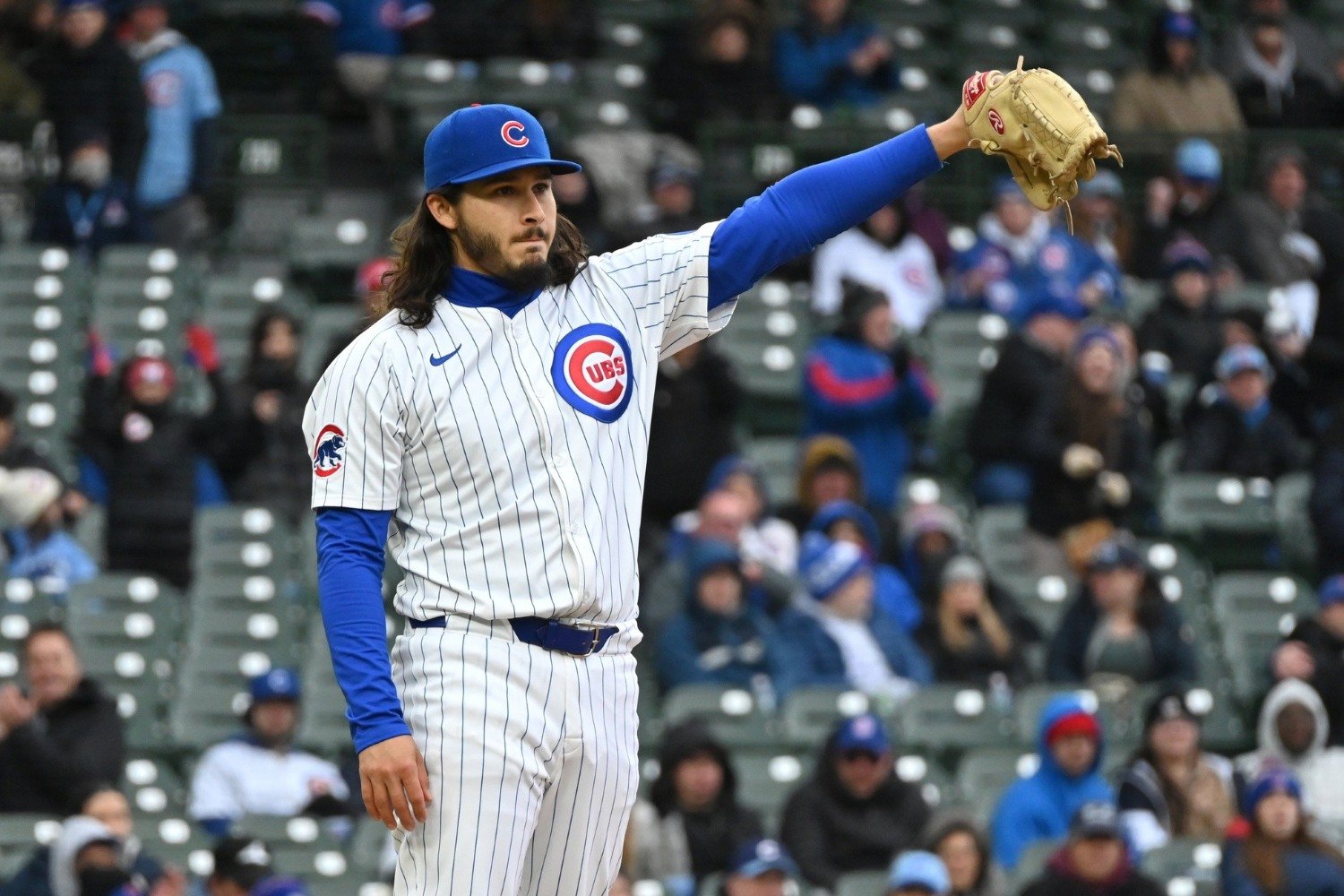 Eli Morgan - Relief Pitcher Age on Opening Day 2026: 30 Service Time: 3.1 years 2023 salary: League Minimum 2024 salary: League Minimum 2025 salary: League Minimum 2026 projected salary: $1,100,000 Background: Eli Morgan was acquired from the Cleveland Guardians last offseason. The Cubs had seen their bullpen fail in September 2024, succumbing to injuries and ineffectiveness. Morgan was coming off a sub-2.00 ERA, fueled by good contact suppression. Never much of a strikeout artist, with a fastball averaging under 92 mph, Morgan was still a useful part of a contender's bullpen. 2025 Season: The 2025 season was not one to remember for Morgan. He would log just a fraction over seven innings for the Cubs, as he suffered a right elbow impingement in April. Despite attempting a comeback during the season, he was ultimately shut down in August. It's hard to judge Morgan's truncated campaign. His numbers were awful across the board, posting an ERA over 12.00; a strikeout rate of 11.4%; and an xFIP of 6.00. However, considering it was just seven frames and he was clearly injured, it's difficult to see how much was regression and how much his injury contributed Cubs' Depth at reliever: Likely on the MLB roster: Daniel Palencia, Porter Hodge, Andrew Kittredge (1-year option) On the 40-man roster: Jack Neeley, Jordan Wicks, Luke Little, Javier Assad, Gavin Hollowell, Ethan Roberts Triple-A options: Jaxon Wiggins, Tom Cosgrove, Riley Martin Summary: The Cubs acquired Morgan to help fix an ailing bullpen. Sadly for both the Cubs and Morgan, he did not help accomplish that. The reliever was always likely to see some regression, as his xFIP sat well above 4.00 even in his ostensibly excellent 2024, but due to his contact suppression, he's got the profile of a FIP-beater. This wasn't the season either side had hoped for, but the injury does give Morgan a bit of an excuse. Why the Cubs should offer Eli Morgan a contract: Morgan was really good in 2024. Not only did he have a stellar 1.93 ERA on the season, but the crafty hurler had an expected ERA of 2.57. He accomplished this with elite marks in preventing hard contact and keeping the ball in the park. Morgan doesn't need overpowering stuff to be useful. When you add in how good the Cubs' defense should remain going forward, he still seems like a potentially strong option. Why the Cubs should not offer Eli Morgan a contract: The margins for someone like Morgan are precariously thin, as he does not suppress contact through overwhelming stuff. With a below-average heater, the only pitch Morgan throws that grades out above average on shape models is his changeup. He does not offer strong whiff numbers, despite inducing a lot of chase. Elbows are fragile, and it's hard to tell exactly what to expect from Morgan after suffering an elbow problem this year. Projection: The Cubs are likely to tender Morgan a deal, but settle before they go to arbitration at a number below what MLB Trade Rumors projects. Morgan, coming off of a lost year, likely doesn't want to hit the market, and the Cubs are losing much of their bullpen heading into 2026. Depth is always important, when it comes to the pen. Because of this, I think the two can agree on a deal south of the $1,100,000 projection. Even if it's that number or higher, though, this won't be a troublesome line item on the budget. If Morgan does return, expect his grasp on a relief role to be tenuous. The Cubs wasted little time cutting relievers last year, as they reimagined their bullpen unit throughout the season. Veterans Ryan Pressly, Julian Merryweather and Chris Flexen were all designated for assignment by the end of July, after starting the season as key arms. Morgan would be a low-leverage guy, though he could work his way up the pecking order if he can look like his 2024 self. What do you think will happen with Eli Morgan? I think I already let the cat out of the bag there. The Cubs have better info than we do on Morgan's elbow and his stuff during rehab work after the injury, but unless the prognosis is worse than you'd guess, they're likely to bring him back. Would you tender Morgan a contract? What should the Cubs do? Let us know in the comments and spark a conversation.
 -
"Unknown Finalist" is also a possibility per the article. They could still hire the guy in the mascot getup. Don't count them as sane yet.
-
Yeah, I think there are some narrow pathways in which the Cubs would tender him, but I think in the end, he'll probably end up somewhere else. With that said, I feel a little like we haven't seen the last of McGuire in a Cub uniform? He seems like the exact kind of player who a team signs to be their backup, he struggles, gets the DFA and then ends up back with the Cubs in Iowa come June. Or a guy who the Cubs trade a low-level prospect for when Amaya gets knocked out again. Credit to Reese for even making this debatable.
-
Cubs 2025 Season Review/Offseason Preview Thread
Jason Ross replied to Brandon Glick's topic in Chicago Cubs Talk
He even checks the boxes of things the Cubs tend to target. He's a pronator, not a supinator, he has a low-arm angle slot (look at how the Cubs lowered the arm angles of many of their SP's last year), and he's got real funk - he throws a reverse slider. The Cubs are not afraid of pitches that stuff+ models don't like (they went heavy on mediocre and bad 4 seam shapes last year) and they always love a little funk. I really think Imai hits a lot of the internal boxes. And what it would allow them to do is to spend their 2nd round compensation elsewhere if they wanted to. Tucker is going to net the team a 2nd round pick and they have been more willing to spend on comp players when they already were getting a pick back. So I think if you want a big offseason, Imai might be the pathway. -
Image courtesy of © Isaiah J. Downing-Imagn Images C : Reese McGuire Age on Opening Day 2026: 31 Service Time: 5.1 years 2023 Salary: 1,225,000 2024 Salary: $1,500,000 2025 Salary: $2,000,000 2026 Salary (Projection): $1,900,000 Background: Reese McGuire signed a minor league contract with the Chicago Cubs in January 2025. The veteran catcher was expected to split catching duties in Iowa with top prospect Moises Ballesteros while waiting in the wings in case of injury befalling either Carson Kelly or Miguel Amaya. McGuire had bounced around between the Toronto Blue Jays and the Boston Red Sox in previous seasons as a backup. Despite carrying a disappointing career wRC+, his 87 wRC+ against RHP suggested that in a limited role, he could be a useful member of an MLB organization. 2025 Season: When Amaya hit the IL this summer, the Cubs turned to the left-handed hitting catcher to fill in. Hitting not one, but two home runs in his first game with the Cubs, McGuire planted himself on the MLB roster throughout the rest of the season, finishing with a somewhat respectable (for a catcher) 86 wRC+ while allowing his strong defensive ability to carry him to being worth 0.8 fWAR in 140 plate appearances. It looked like the Cubs might have needed to move on from Reese around the trade deadline, but a second injury to Amaya once again showed his importance to the organization as he finished out the year as Kelly's understudy. Cubs Depth at Catcher: Carson Kelly: 115 wRC+, 2.6 fWAR (111 games) - 40 man roster Miguel Amaya: 124 wRC+, .9 fWAR (28 games) - 40 man roster Moises Ballesteros: 120 wRC+, .3 fWAR (20 games) - 40 man roster* *denotes an optionable player Summary: McGuire was probably as good as could have been hoped for. The catcher hit nine home runs in 140 plate appearances, which was triple his previous career high, while providing plus defense at arguably the most important defensive position on the diamond. It's likely that the Cubs got a bit lucky, as well, considering that McGuire's .290 wOBA crushed his expected wOBA of .266. Regardless, he was exactly what a backup catcher should be: available and capable. Why the Cubs should offer him a contract: Good catching is in short supply around the league. Even with hitters like Cal Raleigh, who went bananas in the 2025 season, MLB catchers posted a 94 wRC+; it's not easy to hit and be behind the dish on a daily basis. Beyond just how poor league catching is, catchers get banged up pretty often. Amaya lost half of the season and he isn't unique in losing games to injury; we can expect that the Cubs will need an emergency third catcher at least once in 2026. While the North Siders do have a top prospect in Moises Ballesteros who, in theory, can catch, the reality is that his defense is still a work in progress and I'm not sure he can be trusted to pick up catching duties at the MLB level just yet. Why the Cubs should not offer him a contract: With the way MLB rosters are organized today—i.e., they carry 13 pitchers—teams only get to carry four reserve hitters. What this means is that versatility is of the utmost importance. It's why players like Vidal Brujan continue to get looks. With Carson Kelly under contract for 2026, and Miguel Amaya set to be healthy, the Cubs will already have one of their four bench positions spoken for by a catcher-only type. The Cubs are unlikely to devote half of their entire bench to catchers. Projection: The Cubs non-tender Reese McGuire. I don't think this is necessarily because McGuire is not a capable MLB backup, but a circumstance of their current roster; Carson Kelly was too good in 2025, Miguel Amaya is too young and promising to give up on, and McGuire is not versatile enough. If the veteran catcher had an option left, I think the Cubs would be glad to carry him in Iowa, but he's probably been too good to have to settle for another minor league deal. When you add it all up, even though McGuire acquitted himself well in 2025, he will likely have to find a different organization to call home in 2026. What do you think about offering arbitration to Reese McGuire? Reese McGuire's arbitration case is a unique one. If the Cubs didn't have two capable catchers, he'd be a fine backup, especially at his projected price tag. At the same time, he's not so good you have to keep him around. There are interesting arguments to be made on both sides. View full article
-
Chicago Cubs Arbitration Decisions & Projections: Reese McGuire
Jason Ross posted an article in Cubs
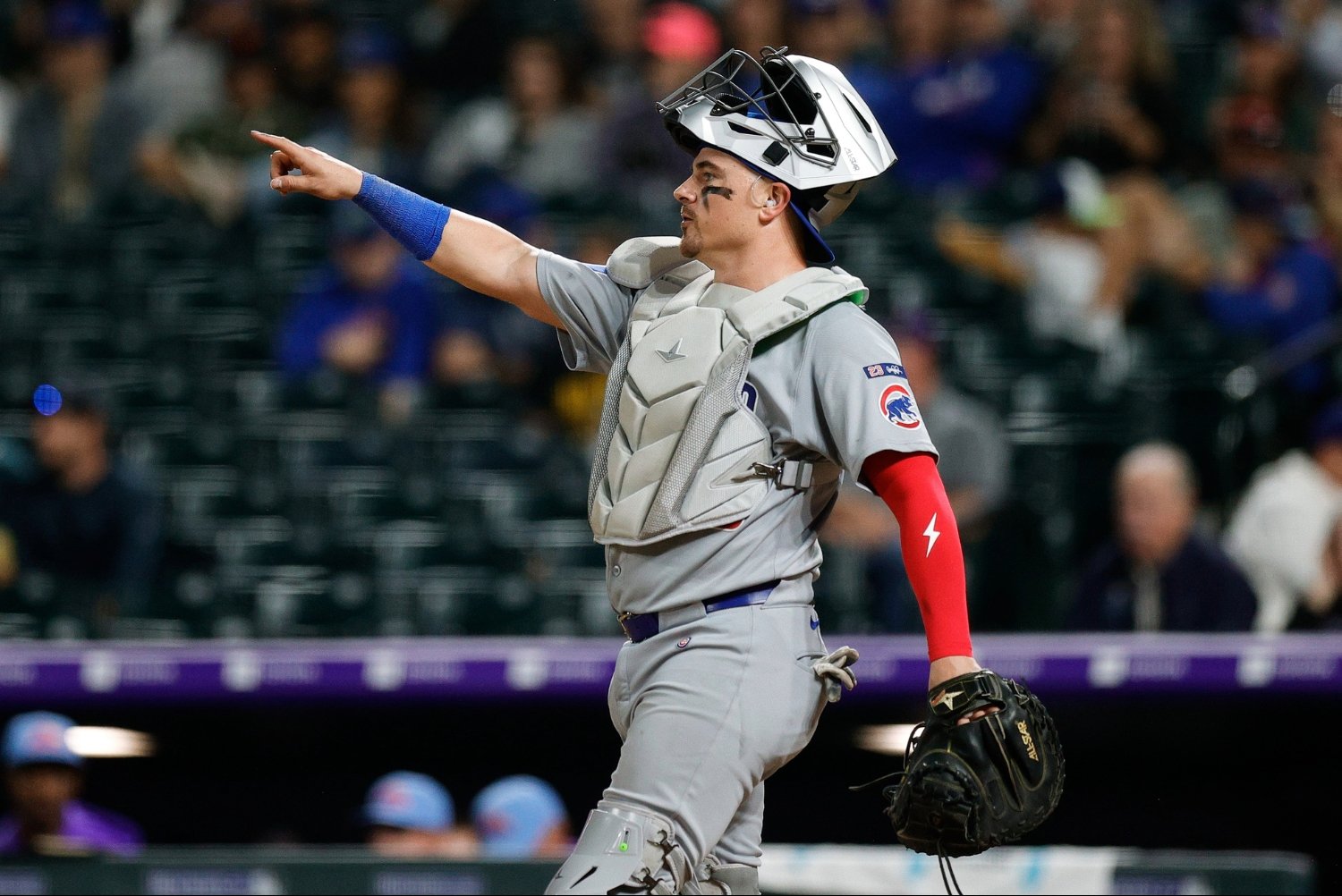 C : Reese McGuire Age on Opening Day 2026: 31 Service Time: 5.1 years 2023 Salary: 1,225,000 2024 Salary: $1,500,000 2025 Salary: $2,000,000 2026 Salary (Projection): $1,900,000 Background: Reese McGuire signed a minor league contract with the Chicago Cubs in January 2025. The veteran catcher was expected to split catching duties in Iowa with top prospect Moises Ballesteros while waiting in the wings in case of injury befalling either Carson Kelly or Miguel Amaya. McGuire had bounced around between the Toronto Blue Jays and the Boston Red Sox in previous seasons as a backup. Despite carrying a disappointing career wRC+, his 87 wRC+ against RHP suggested that in a limited role, he could be a useful member of an MLB organization. 2025 Season: When Amaya hit the IL this summer, the Cubs turned to the left-handed hitting catcher to fill in. Hitting not one, but two home runs in his first game with the Cubs, McGuire planted himself on the MLB roster throughout the rest of the season, finishing with a somewhat respectable (for a catcher) 86 wRC+ while allowing his strong defensive ability to carry him to being worth 0.8 fWAR in 140 plate appearances. It looked like the Cubs might have needed to move on from Reese around the trade deadline, but a second injury to Amaya once again showed his importance to the organization as he finished out the year as Kelly's understudy. Cubs Depth at Catcher: Carson Kelly: 115 wRC+, 2.6 fWAR (111 games) - 40 man roster Miguel Amaya: 124 wRC+, .9 fWAR (28 games) - 40 man roster Moises Ballesteros: 120 wRC+, .3 fWAR (20 games) - 40 man roster* *denotes an optionable player Summary: McGuire was probably as good as could have been hoped for. The catcher hit nine home runs in 140 plate appearances, which was triple his previous career high, while providing plus defense at arguably the most important defensive position on the diamond. It's likely that the Cubs got a bit lucky, as well, considering that McGuire's .290 wOBA crushed his expected wOBA of .266. Regardless, he was exactly what a backup catcher should be: available and capable. Why the Cubs should offer him a contract: Good catching is in short supply around the league. Even with hitters like Cal Raleigh, who went bananas in the 2025 season, MLB catchers posted a 94 wRC+; it's not easy to hit and be behind the dish on a daily basis. Beyond just how poor league catching is, catchers get banged up pretty often. Amaya lost half of the season and he isn't unique in losing games to injury; we can expect that the Cubs will need an emergency third catcher at least once in 2026. While the North Siders do have a top prospect in Moises Ballesteros who, in theory, can catch, the reality is that his defense is still a work in progress and I'm not sure he can be trusted to pick up catching duties at the MLB level just yet. Why the Cubs should not offer him a contract: With the way MLB rosters are organized today—i.e., they carry 13 pitchers—teams only get to carry four reserve hitters. What this means is that versatility is of the utmost importance. It's why players like Vidal Brujan continue to get looks. With Carson Kelly under contract for 2026, and Miguel Amaya set to be healthy, the Cubs will already have one of their four bench positions spoken for by a catcher-only type. The Cubs are unlikely to devote half of their entire bench to catchers. Projection: The Cubs non-tender Reese McGuire. I don't think this is necessarily because McGuire is not a capable MLB backup, but a circumstance of their current roster; Carson Kelly was too good in 2025, Miguel Amaya is too young and promising to give up on, and McGuire is not versatile enough. If the veteran catcher had an option left, I think the Cubs would be glad to carry him in Iowa, but he's probably been too good to have to settle for another minor league deal. When you add it all up, even though McGuire acquitted himself well in 2025, he will likely have to find a different organization to call home in 2026. What do you think about offering arbitration to Reese McGuire? Reese McGuire's arbitration case is a unique one. If the Cubs didn't have two capable catchers, he'd be a fine backup, especially at his projected price tag. At the same time, he's not so good you have to keep him around. There are interesting arguments to be made on both sides.
 -
Cubs 2025 Season Review/Offseason Preview Thread
Jason Ross replied to Brandon Glick's topic in Chicago Cubs Talk
Lance's guess was in the 7/$140m range. Which feels high for a pitcher and the Cubs, but with how arms are aging, and his age, I think that feels like a contract they could conceivably stretch to and it not be insane for the team. No compensation attached as well. -
Cubs 2025 Season Review/Offseason Preview Thread
Jason Ross replied to Brandon Glick's topic in Chicago Cubs Talk
With the NPB guys coming over, Lance Brozdowski did a rundown on a lot of the high profile guys coming over. After looking at the Imai profile, I think the Cubs are going to like him a lot. He's got a lot of the things the Cubs enjoy. I'm not 100% sure they will go with him, but I think he'd be a guy the front office likes. If you told me he was at the top of their wishlist, I wouldn't be shocked. -
I wouldn't rather see Owen Caissie. I like Caissie as a prospect, but the likelihood he's in the ballpark of Kyle Tucker's 140 wRC+ is unlikely for a rookie season. He struggled with velocity at times in Triple-A and he's not going to add much defensively. We can safely assume most, if not every single rookie will struggle and his contact rates, even if they got better, will be a hurdle. I do think he can be a good MLB player, but I think most of the people who say they'd rather see Owen Caissie in RF now will not feel that way come June 1st (I've seen how Cub fans have reacted to Pete Crow-Armstrong, Miguel Amaya, Matt Shaw and even the first stint of Ballesteros this year and it's never pretty). There very well may be a cross over point, where Caissie will be just as good of a hitter, but that's probably a 95% or better outcome. I also don't think that's going to come nearly as soon as many seem to think. And this is coming from someone who has always been on the high end of Caissie.