


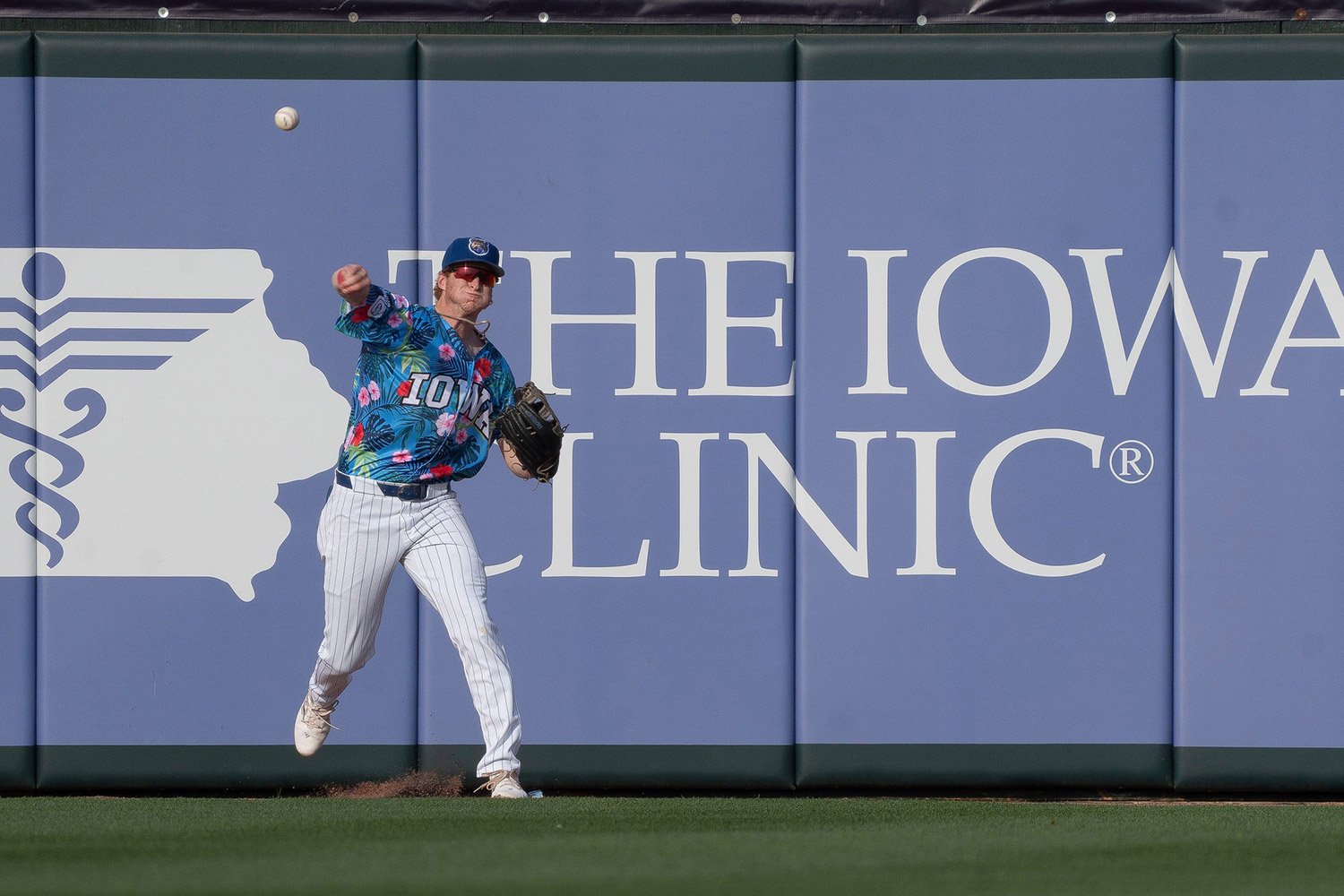
Cubs Video
Owen Caissie feels like he's been in the Cubs' system forever, to the point where it's easy to forget that he's not even 23 yet. To put it another way, Owen Caissie is younger than Pete Crow-Armstrong (who was in the same draft class as Owen) and Matt Shaw, despite being acquired before either of them. With that, I do believe prospect fatigue can creep in, a real-life version of the Toy Story meme where we want to focus on the new and forget the old. Don't feel like I'm coming at you, I've spent more time paying attention to Ivan Brethowr this year than Owen Caissie, and I've been the self-anointed captain of the Caissie Fan Club dating back to the 2020 draft!

Beyond just prospect fatigue, however, it's easy for progress to hide in plain sight. Jumping over to Caissie's FanGraphs page will show you his 2025 season line. On the year, the left-hander has a pretty darn good 131 wRC+, a .273/.377/.518 batting line, a 13.2 walk rate, and a pretty uninspiring 31.2 strikeout rate. Reading that line lets you know some important things: Caissie has hit the ball really well, but has struck out more than you'd like (and more than he's done in recent times).
However, I think diving deeper into what our protagonist is doing will help us see that some impressive progress has been happening under the hood, and that, coupled with prospect fatigue, suggests he's been better than those numbers indicate. To do so, we'll have to go all the way back to 2024, when Caissie was first promoted to Iowa. Through the MiLB All-Star break, Caissie showed improved contact, striking out 27.8% of the time, while also posting a solid 113 wRC+. He wasn't hitting the ball out of the ballpark, but it was progress.
After the ASB, something changed in Caissie. The wRC+ remained virtually identical, as after the pause, he had a 117 wRC+, but the change was hidden; Caissie started hitting the ball in the air more and with authority. We can see this reflected in his isolated slugging, which jumped nearly .80 points, from .164 to .240; a massive shift. We can see this just in the raw numbers as well, as he hit eight home runs through his first 331 plate appearances and then 11 over his last 218. There was an associated launch angle shift that helped this out. Not everything was perfect, as this shift also saw Caissie's K% and contact rate go backward. He was sacrificing some contact for home runs. But the progress was happening.
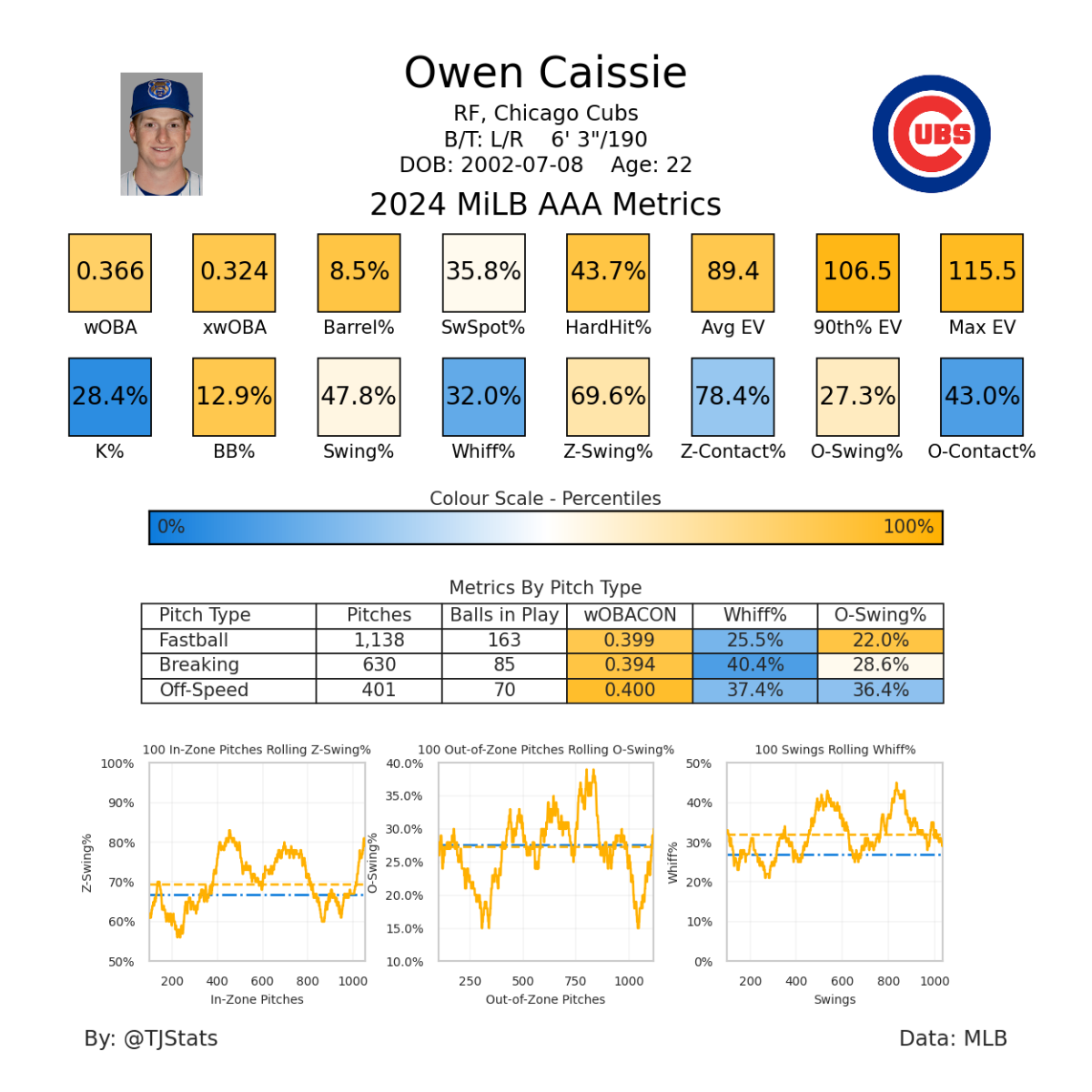
Entering this year, and being blocked at the highest level, Caissie was again placed in Iowa. As I've already pointed out, Caissie is having a better season in terms of wRC+, jumping from good-not-great to being a top-10 wRC+ hitter in all of Triple-A, but the K% appears to be improving as the year has moved along. According to Bryan Smith, Caissie has dropped his whiff rate for three consecutive months, and his K% in June is currently sitting at 28.4%. This is right around where Caissie was in the first half of last season, which suggests he's getting more comfortable with his approach and swing change and seeing the ball better.
As the year has gone on, there's been a significant increase in zone-swing, in not chasing pitching out of the zone and a downward trend in strikeouts on the whole have gone with it. By looking just at the 2025 K%, you'd come away thinking he's not making progress, but these trends have been occurring all year. By swinging more often in the zone, he can avoid getting into bad counts. There's been a further evolution in his approach over his last 100 plate appearances or so.
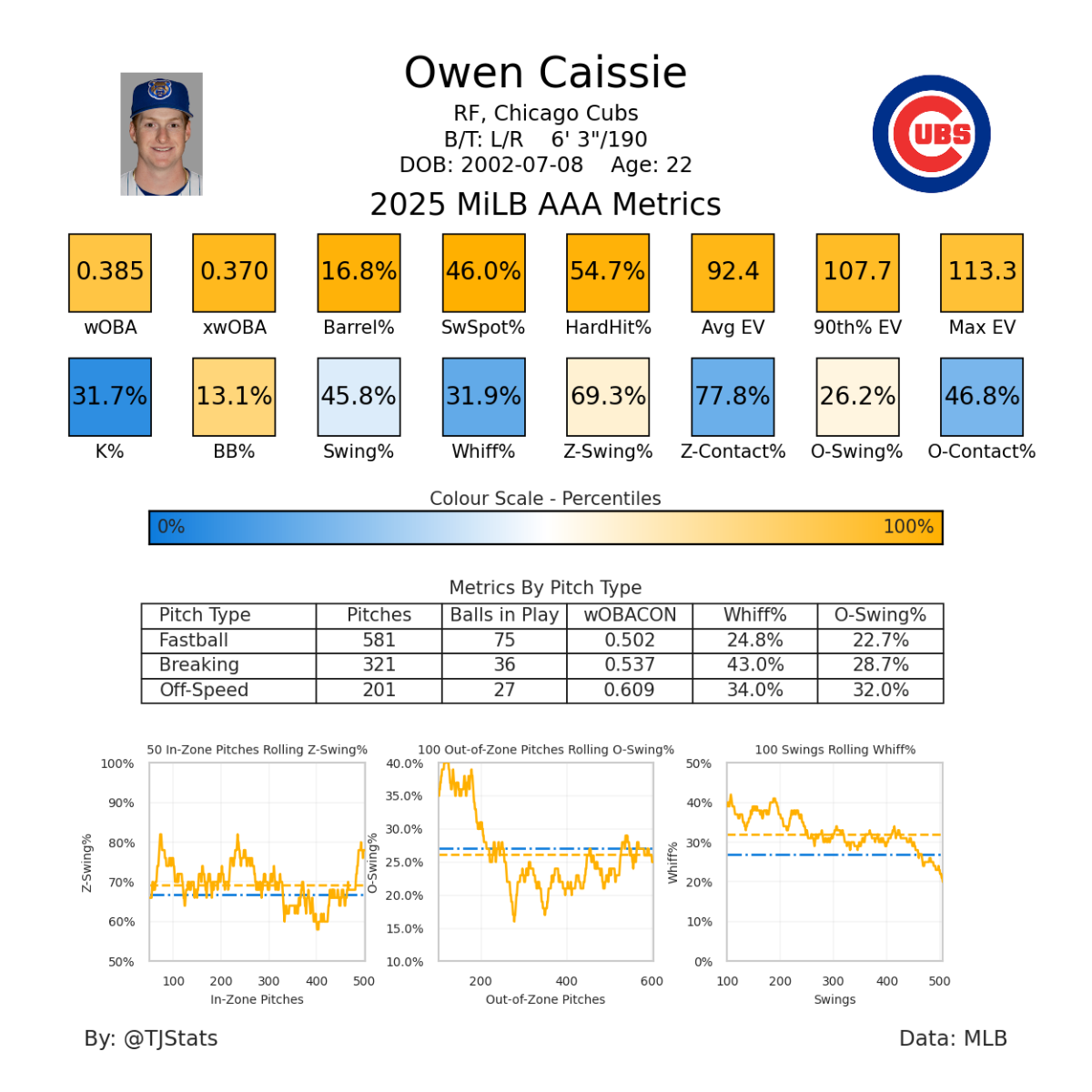
If you're going to hold out hope that the Cubs' prospect is going to magically drop to a sub-25% strikeout rate, then I have bad news for you; it's not going to happen. He's likely to always run inflated K rates; it's a feature not a bug. But with the improvements in his launch angle, his willingness to hit more home runs, with the excellent exit velocity, he's more than capable of trading some strikeouts for home runs. The approach change of swinging more often in the zone while whiffing less will help to keep these down. He's a patient hitter, and has probably been too patient. Jumping on strikes early in the count (and specifically, fastballs) will help eliminate these issues.
There's a common saying in prospect-land and that "development is not linear" and I think the last one and a half months of Caissie's time in Iowa can help show that. It looked like he had taken a step forward with his contact rates at the beginning of last year only to look like he had taken two steps backwards. But within those steps we can see the progression of his power, his swing, and his approach. His contact rate over his last 100 PA's mirrors that of his first-100, just now with much more power and damage. We're seeing the best version of the outfielder right now, someone who's capable of keeping the strikeouts in check just enough to where he is a menace at the plate.
If you're concerned that all of this is just him being a repeater at the level, I think that's a fair critique but one that I'm not entirely sure is the answer here. With a swing change and an approach change, as well as being just 22-years-of-age (as of this writing, his birthday is just in a few days) I believe that this is likely something else; that Caissie has been specifically working on fixing his swing and his approach. To assuage those fears a bit more, Michael Busch was already 24 in his first go at Triple-A with the Dodgers when he posted a middling 111 wRC+ only to come back a year later at the no-as-ripe-age of 25, hitting to the tune of a 155 wRC+ in his second go. While anecdotal, his career has been just fine, and it's pretty clear that progress was made over those two years and it wasn't just repeating. I think we're seeing something more akin to what Michael Busch was able to do over his time than just saying "well, he's just a repeater". Nuance is key.
What happens with Owen Caissie and the Cubs will be interesting moving forward. There's an argument to be made that if the Cubs are unwilling to spend on Kyle Tucker that their best internal option in right-field next year may be the former 2020 second-round selection which creates an interesting conundrum for the team as the deadline approaches. If they're willing to pony up for Tucker, it means that Caissie may not realistically have a spot with the organization if they view him behind potential DH Moises Ballesteros in the prospect pecking order. As well, it's likely that teams will also be privy to the approach improvement and that the will coming asking for him as a primary return in any trade. How the Cubs approach that this will be important and could help signal how they internally feel about his long term projections.
The overall point, however, is that while it's easy to look at the data and think that he's had a down-season or hasn't lived up to the hype, that I think there's things occurring below the surface that point to the outfielder rounding into the player we hoped for. And whether or not this aides the Cubs directly on the field (either in 2025 or 2026) or through trade, that real progress is happening. Don't let a shiny new toy or a full-season line cloud the change; Owen Caissie is turning into a much better player right before our eyes.
What do you think of Owen Caissie? Do you think he's tradebait? Are you encouraged with the approach improvements? Let us know in the comment section below
Which team do you dislike the most in the NL Central?

Interested in learning more about the Chicago Cubs' top prospects? Check out our comprehensive top prospects list that includes up-to-date stats, articles and videos about every prospect, scouting reports, and more!
View Cubs Top Prospects



Recommended Comments
Create an account or sign in to comment
You need to be a member in order to leave a comment
Create an account
Sign up for a new account in our community. It's easy!
Register a new accountSign in
Already have an account? Sign in here.
Sign In Now