


Cubs Video
The cruel thing about expectations is that you have to earn them, and then you have to live up to them—and then, once you live up and even exceed them, they just rise, and it's even harder to meet them from then on. Athletes make brilliant plays and put up great statistics, and maybe they time it just right and that makes them rich and famous and beloved, but even if it does, it also makes them an object of scrutiny. And it means dealing with lots of ever-rising expectations.
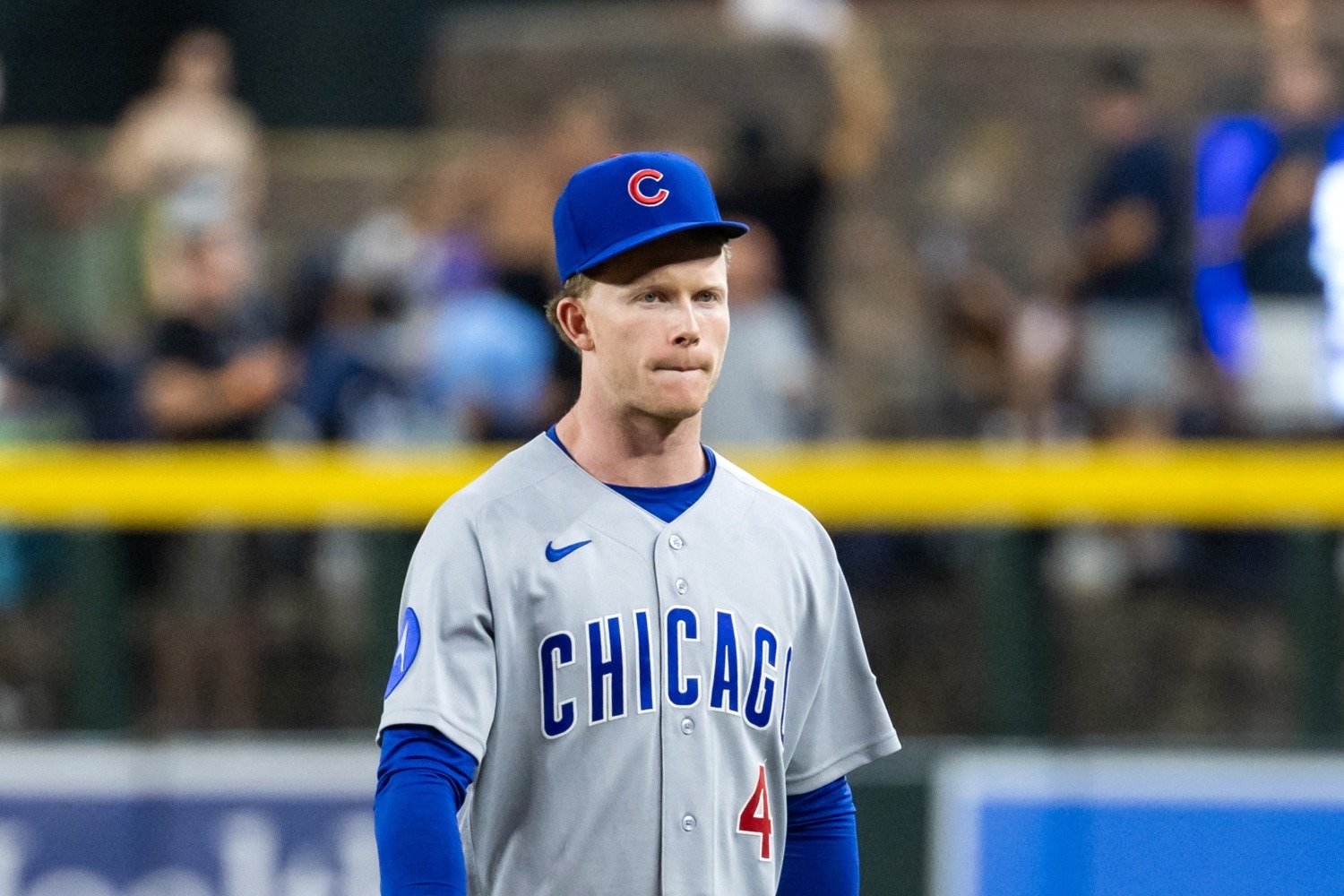
Pete Crow-Armstrong is having a season for the ages. He should win the National League MVP Award, unless something unforeseen happens between now and the end of the campaign. He's matured extraordinarily quickly at the plate, and the cut-to-the-bone intensity of the way he's competed all season is irresistible. He's an elite slugger who also runs the bases like it's his last day on Earth. He's carried a thoroughly average team to a comfortable playoff position as the calendar flips to September. And, of course, he's the best center fielder in the game, defensively.
Right?
Look: he's certainly not bad. Crow-Armstrong is, in fact, above-average out there, even this month, according to Statcast. He's been worth 2 runs in center in August, if you believe Fielding Run Value, and since that's the only publicly available defensive metric that allows us to split it out by month, you kind of have to believe it, right? Crow-Armstrong is a plus center fielder; that's not in question.
However, he was worth 7 runs in March and April, and 7 more in May. He had a bit of a sag in June (I felt that one, too, but thought it best to see if the blip was just that), but he saved 6 runs in July, too. In those months—the first third of the season, essentially, and then July, especially after the All-Star break—he was clearly the best defender in the game. He ran down everything. His body control was exquisite. His arm, which got some of its potency from the genius of his footwork, was a weapon. There just didn't seem to be any undefended grass for the opponents to find in center field; that's an empowering feeling for a pitching staff.
It's not quite true lately. This is normal; I'm not excoriating or castigating Crow-Armstrong. The grind takes its toll on everyone; you can't opt out of getting tired by seeming to be the human incarnation of Red Bull. Then, too, there's the fact that Crow-Armstrong has plainly worked hard to keep good weight on his frame this season, so he can maintain the exceptional bat speed that has made him such a fearsome slugger. You pay a price for that, too, when you previously moved like Hermes in cleats and cut through the wind like a blade. He's a sturdier guy than he was even a year ago, which means he's a tiny bit slower and less lithe—and maybe, when it's been almost three weeks since the team's last day off and your legs are heavy, more than a tiny bit.
Hopefully, though, you've also noticed this, because it's not just some artifact of the numbers. Here's a single hit by Kyle Tucker when the Dodgers were in town at the start of this month that didn't have to fall in.
Any center fielder will tell you that the hardest ball to read is the line drive coming right at you. In a tied game and with no outs in the inning, Crow-Armstrong might have been thinking at least half-consciously about not taking undue risks. He also excels mostly when going to his left or his right; he's never been the most daring center fielder in the league when coming in straight in on the dive. However, he's made catches on balls just like this before—including earlier this year, against the Dodgers, in Los Angeles. Playing this one safe is the kind of tiny, subtle sign that a player is either conserving some energy or not quite as razor-sharp as is required to be an elite defender in this increasingly fast game.
This one is a more straightforward example of Crow-Armstrong not making a play he would normally make.
See the way he leans forward, and the stomping deceleration as he approaches this ball while it falls? That's not the mark of a below-average fielder. It's extremely normal. This is how just about everyone plays this ball. The thing is, go back in time a few months, and it's not how Crow-Armstrong plays it. His unique brilliance laid in the fact that on balls just like that one, he would glide through the ball without slowing down at all. He showed a once-in-a-generation feel for running through the catch point, or even sliding or diving through it with as little lost speed as physics would allow. The guy who almost makes this very important play, but doesn't quite get there? He's not letting the team down, or anything, but he's not saving the day, the way Crow-Armstrong usually does.
This happened the very next day.
This was even more catchable. Situationally, though, it demanded a bit more caution, and Crow-Armstrong was more cautious, all right. He didn't even rush onto the short hop, as he did the day before. He made a calculated decision to pull up and wait on this ball. That wasn't necessarily the wrong choice; it kept the runner who began the play on first base from reaching third. He made the safe play. In May, though, that ball is caught.
It might be that Crow-Armstrong is actually slower lately, either in responding to the ball off the bat or in that fateful final step or two in pursuit of the ball. It might be that he's choosing to play the percentages, to avoid some of the ugly errors that befell him even while he was making such incredible plays earlier this year. I think the most likely explanation is different, though. I think Crow-Armstrong is preserving himself a bit. I would guess that's subconscious, because he seems utterly incapable of throttling back on purpose; he just burns too hot. But this is common—almost universal. When young players who have traditionally been high-motor defensive stars blossom into elite offensive producers, they usually become more conservative, less valuable defenders. This is true in other sports, too, but it's especially true in baseball.
Teams not only don't mind this, but often encourage it. The better you hit, the more conversations about your defense start to center on reducing mileage on your legs or avoiding that fateful rollover wrist sprain. Playing great defense requires putting your body at risk, especially at high-value defensive positions. Teams like when their star sluggers do a tiny bit less of all that. Baseball—life itself, I guess, but especially baseball—is about tradeoffs. Many of those tradeoffs are unavoidable, even if we wish they weren't or can't quite articulate why they are. To spare some energy; to avoid those nagging injuries; and to find extra time for BP, a player often gives up a bit of pregame defensive work or pulls up on a fly ball they almost could have caught. It's normal. It's fine. It might even be crucial.
It's sad, though, to me. The exhilaration of the completeness of Crow-Armstrong is a bit deflated by this turn. No matter how clear-eyed you are about those tradeoffs we mentioned and about the reasonable limits of all-around superstardom, be honest: a little piece of you wants Crow-Armstrong to keep being the best defender you've ever seen and to go steal 50 bases, in addition to hitting the way he's been hitting since late May. That, it turns out, might not be possible.
Willie Mays used to play so much and so hard and put so much of himself into all facets of his breathtakingly gorgeous game that he would end up in the hospital for a day or two, a time or two a year, due to exhaustion. No one wants to see Crow-Armstrong push himself quite to that extreme, and the fury of his competitiveness makes that feel like a real risk sometimes. It's ok that he's currently taking just enough weight off the gas pedal to keep the car under control. We'll all just have to hope that he can put the pedal back down when the games matter most, and that the part of his game that initially made him stand out hasn't been permanently diminished by his transformation into an equally excellent hitter.





Recommended Comments
Create an account or sign in to comment
You need to be a member in order to leave a comment
Create an account
Sign up for a new account in our community. It's easy!
Register a new accountSign in
Already have an account? Sign in here.
Sign In Now