


Cubs Video
When he first came up, Cody Bellinger could both hit for power and make contact at a fairly high rate. From 2017 through 2020, he posted a 21.5% strikeout rate (lower than the league average for that span) and a .274 isolated power number, well above the league average. That's a rare and special combination, and it made Bellinger a rare and special hitter. During this period, he won the 2017 NL Rookie of the Year Award; MVPs of both the 2018 NLCS and the 2019 National League; and a World Series ring, which he helped make possible by hitting .243/.378/.595 combined in the NLDS and NLCS in 2020.
We all know what happened next. Bellinger had such an atrocious 2021 and 2022 that the Dodgers cut him loose after the latter campaign. During that span, his ISO crashed down to .162, and his strikeout rate spiked to 27.1 percent. These numbers obviously don't tell the whole story, even if they gesture toward the series of injuries that hampered Bellinger over those years, but they give us the spine of something.
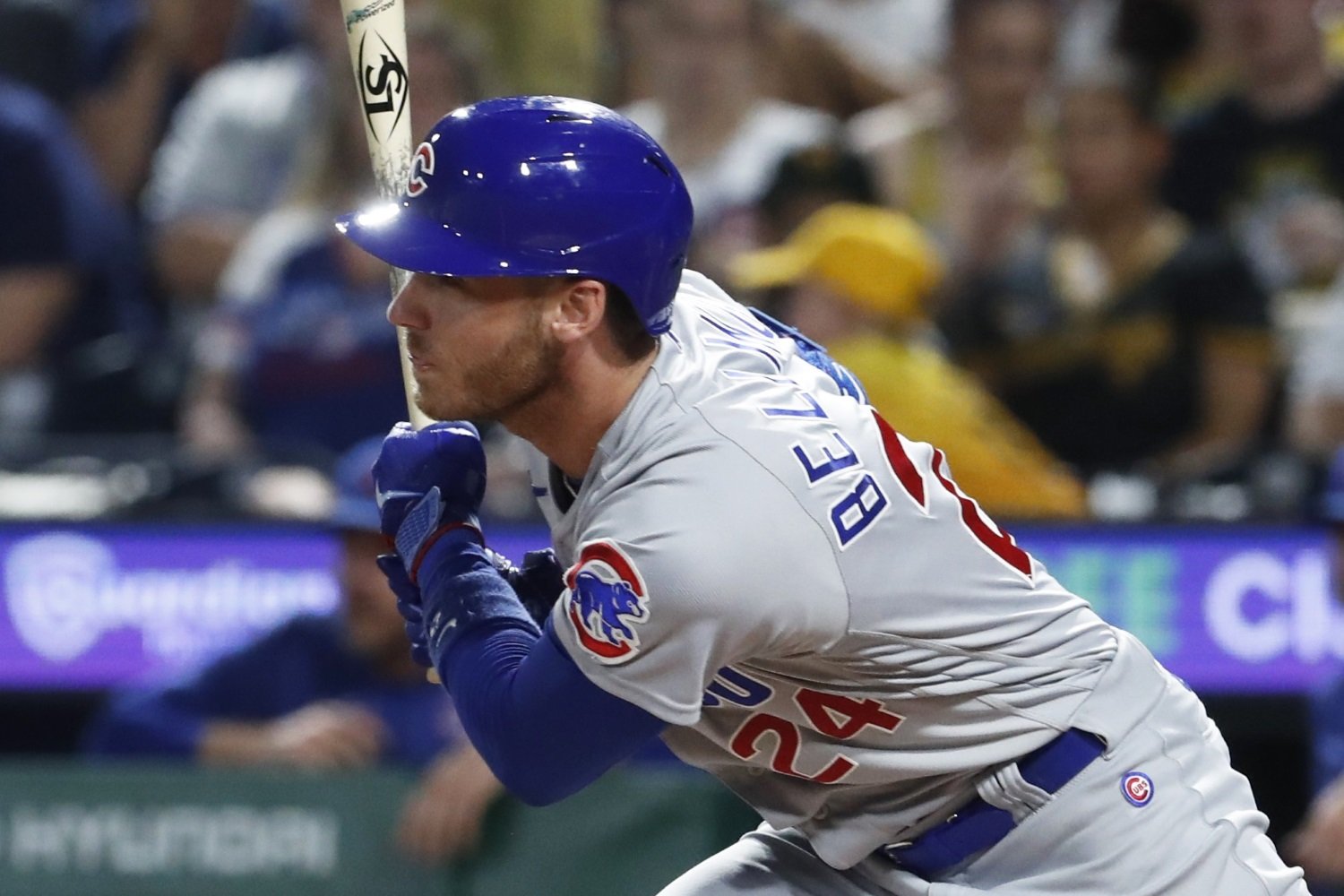
In 2023, with the Cubs, Bellinger batted .307/.356/.525, and while neither his batted-ball data nor his ISO was quite as impressive as at his early-20s peak. his strikeout rate was better than ever. He fanned only 87 times in 556 plate appearances, which comes out to 15.7 percent. In his career before 2023, he'd had an average strikeout rate of 23.2 percent, so in 556 trips to the plate, you'd expect him to punch out 129 times. Compared to his career norms, he trimmed 42 strikeouts from his expected figure. (If you'd like to factor in the fact that he walked less often, too, and thus actually put 64 more balls in play than expected, you're at your leisure. We're only focused on how many fewer strikeouts he generated than was expected, be it by walking, hitting, or desperately tossing the bat backward to create catcher interference.)
That 42 number matters, because back in early 2022, Bill James did a very quick-and-dirty study for his website, BillJamesOnline. Until late last year, James ran that site for many years (with fluctuating levels of help and collaboration) and churned out a largely unsung second act's worth of good sabermetrica, after getting very famous for his first act's worth of (mostly offline) material. Anyway, at the prompting of a reader, James sat down and studied how hitters (like Matt Olson, who had effected a huge drop in strikeout rate in 2021, relative to his first few seasons in the big leagues) follow up after they drastically reduce strikeouts from an established career level.
James found 126 hitters who had a season in which they struck out at least 35 fewer times than would have been expected, based on their career strikeout rates. That's one of the lovely James hallmarks, using a raw number of expected strikeouts conserved, rather than leaning on rates. It hearkens to his early days of exploring this realm, when rates were essentially unavailable and (given the state of home computer technology at the time) unforgivably laborious to calculate en masse. James worked in very simple mathematical terms, often because he had no choice, and he got so used to it that even in 2022, he was still speaking a simpler and more direct numerical language than the one we've embraced online these days, even though he understood and used those more Excel-friendly tools as needed. It didn't just elucidate his study; it also strengthened it. Hitters with greater volume in a given season had a greater chance to cut away the requisite number of expected strikeouts than those with less playing time.
Of those 126 hitters, James found, 116 had a lower strikeout rate after that season than they had had in their careers prior to the punchout plunge. The study took the actual season of that huge change out of the equation, in other words, and still found a lasting effect on the player's strikeout avoidance skills. James admitted a certain measure of awe in that rate of "success," or staying power, north of 90 percent. I share it. That's a stunning finding.
So, going forward, we should expect Bellinger to hold onto a substantial portion of his newfound contact skills. He might not--in fact, he probably will not--run a 15.7-percent rate going forward, but he's likely to come in south of his 23.2-percent norm. He's a guy who makes contact at an above-average rate, now. That's real, and it should stick around for him, even over the life of a long-term free-agent deal.
Maybe we can also draw some intrigue from the pattern Olson followed, after James performed that study. Prior to 2021, Olson had fanned in 26.1 percent of his plate appearances in the big leagues, and he was a tremendous slugger, with a .254 ISO. In that 2021 campaign, he brought the strikeout rate down to 16.8 percent, but in the two seasons played since then (and since the study that offseason), he's bounced back toward his previous norm: 23.8 percent. That's still a non-negligible improvement upon his previous rate, though, and here's the thing: Olson's ISO in those two seasons with Atlanta has soared to .279.
I doubt that Bellinger will get all the power that made him the league's MVP half a decade ago back. I doubt he'll remain one of the dozen best contact hitters in the game. Given James's quick study and its extremely convincing results, though, it's reasonable to believe that Bellinger will still be a good contact hitter for several more years.
This is far short of being the kind of thing that justifies paying a player $200 million, but it should slightly bolster your belief in Bellinger. It's a good time to share it, too, because James recently shared on Twitter that he had a stroke. He's a complicated figure, as firebrands all eventually become, but after shuttering his site last year and with his 75th birthday happening this year, we're running out of chances to celebrate James's foundational importance to the sport and its close observation.
How much store do you set by Bellinger's improved contact rate last year? Do these data make you any more confident about the staying power of his array of recent adjustments? Check out the study here for more information.





Recommended Comments
Create an account or sign in to comment
You need to be a member in order to leave a comment
Create an account
Sign up for a new account in our community. It's easy!
Register a new accountSign in
Already have an account? Sign in here.
Sign In Now