


Cubs Video
The modern baseball analytosphere demands that we have a good damn explanation for why any player who was bad in Year X should be any good in Year X+1. We have all kinds of numbers, all kinds of angles, all kinds of ways to see and to say whether or not a player was good in a given season, and if they weren't, then we expect there to be a concrete, performance-centric, highly data-fied reason why we should believe they'll turn things around. If there isn't one, any argument in support of that player will be met with skepticism—if not outright disdain.
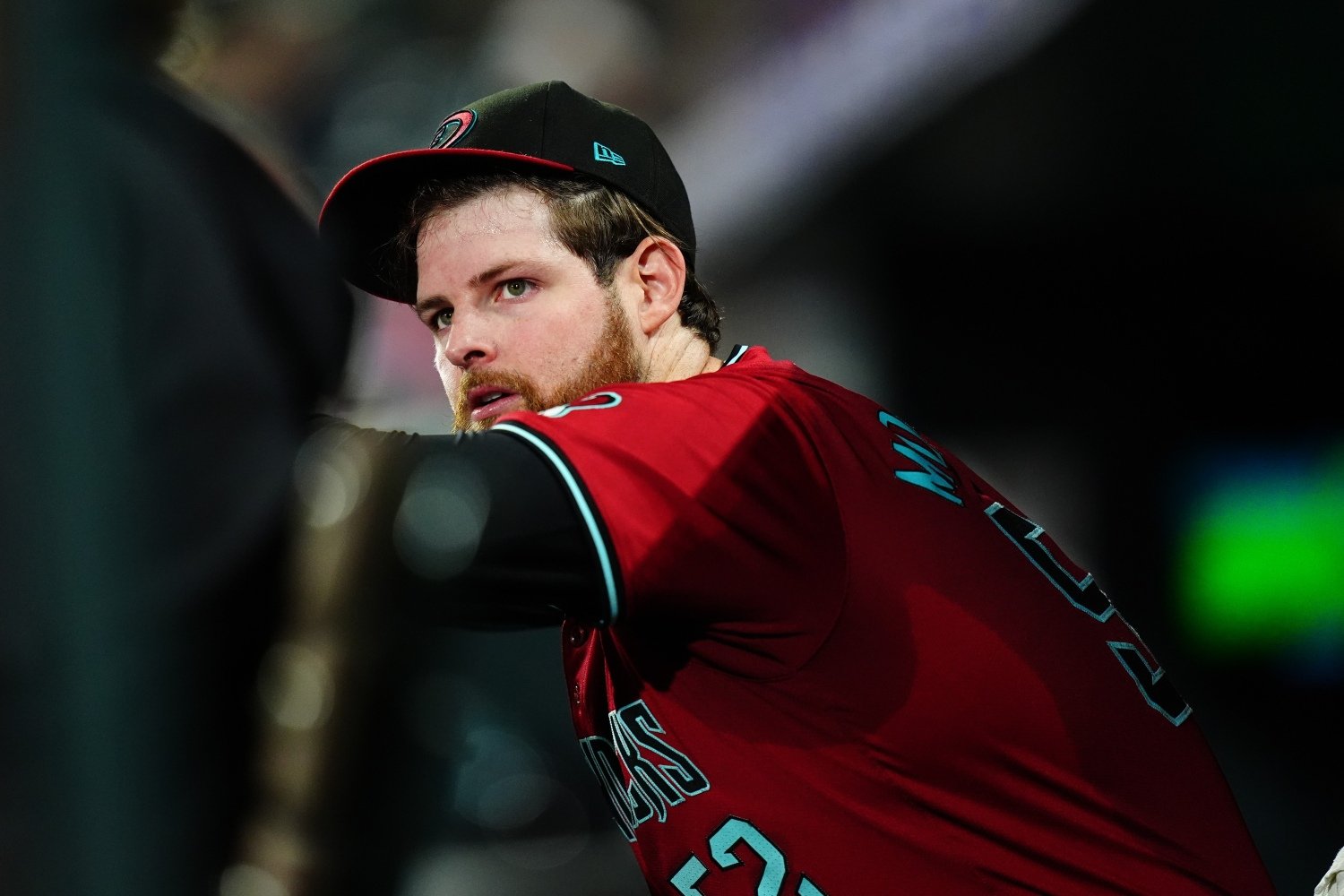
Well, admittedly, I don't have an ideal analytics-based argument for the possibility that Jordan Montgomery will turn things around after his woeful 2024. There are some such arguments, and I'll briefly deliver them, but I want to start by putting my best case forward, and I don't think the best case for a Montgomery rebound is rooted in the numbers. I also don't think the truth of his terrible campaign with Arizona last year lives in them.
Scott Boras laid an egg when it came to Montgomery's free agency. He was a highly sought-after free agent last winter, but Boras priced his client out of the range of interested teams, until freezer burn overtook him so badly that he ended up signing a highly dissatisfactory deal on Opening Day. The season was a disaster, and it included several discouraging trends. Montgomery lost about 1.5 miles per hour on both of his fastballs, on average—some of which can be put down to his overlong free agency interfering with any organic ramp-up for the regular season.
.jpeg.b425ae4e1094af53d22b7ad483bcaf92.jpeg)
The Diamondbacks also asked Montgomery to make some changes that were ill-suited to his unique skill set and approach, including swapping his cutter for a slider; leaning more on his four-seamer and less on his sinker; and locating differently. As a result, Montgomery lost the strike zone somewhat, especially because he doesn't throw strikes with his four-seamer as reliably as with the sinker. Using the former more and the latter less was an error, in his case, and while it could theoretically have worked and then-pitching coach Brent Strom has a track record of success with that pitch as the backbone of pitchers' arsenals, there was neither the time nor the trust between player and organization that usually comes when someone signs as a high-profile free agent. They didn't get a spring training together, and Montgomery was never happy enough in his place there to be especially open to whatever good suggestions the team did make.
.jpeg.221adb626571eb6ab126d62e52840a23.jpeg)
Montgomery was genuinely bad in 2024, and there's no one reason to believe he'll be better in 2025, other than the simple, human, psychological one: as long as he's traded sometime this month and can get acclimated to the idea of a new team, then enjoy a normal spring training, he should enter the season as a much, much more prepared, mentally healthy pitcher. Last winter, I thought he was a marvelous fit for the Cubs, and I still think he will be. I think he'll bounce back resoundingly from the frustration and disappointment of 2024. I wouldn't be surprised if he gets that tick on the fastball back and goes right back to being the southpaw workhorse, playoff hero, and mid-rotation fixture he was when he hit the market last year.
Plenty of teams would have given him a six-figure deal, if his agent hadn't demanded such a gaudy one until the last possible moment (and beyond). Now, though, Montgomery is available on a one-year deal, which the Diamondbacks would have to subsidize in order to move him. That could mean eating some of the money he's owed, or it could mean sending along a prospect to clear as much cash as possible. Either way, the Cubs would benefit by acquiring him not only because I think he'll bounce back, but because they would have such leverage in a negotiation with Diamondbacks head honcho Mike Hazen.
Do the Cubs desperately need Montgomery? No. But he's the type of player who, because of the circumstances of this offseason, should cost far less to acquire than he's really worth, and he'd give the rotation the upside it's lacking right now—along with a healthy dose of stability. Landing him would also free up one or two of the Cubs' young pitchers to be dealt for a high-end trade asset, should that opportunity arise.
Many teams and pundits are feeling smug about Montgomery after last season, because they feel vindicated for not having believed in him. I think that's exactly the wrong conclusion. Montgomery wasn't stranded on the market because he was secretly bad, in some way that didn't show up while he was racking up 360 innings pitched over the previous two years and dominating in the playoffs as the Rangers made a run to the World Series. He was bad in 2024 because he'd been so disruptively stranded on the market. As such, he's a good buy-low opportunity at this moment, and if the Cubs have grand plans for 2025, they should prepare themselves to pounce.





Recommended Comments
Create an account or sign in to comment
You need to be a member in order to leave a comment
Create an account
Sign up for a new account in our community. It's easy!
Register a new accountSign in
Already have an account? Sign in here.
Sign In Now