


Cubs Video
Entering their series with the Milwaukee Brewers, the Chicago Cubs woke up once again atop the National League Central at 29-18. On the surface, they look exactly like what every contender hopes to be in May: an explosive offense, a division lead, and enough margin for error to survive imperfect stretches.
But underneath the record lives a far more uncomfortable reality. This pitching staff has just produced the most home run–vulnerable start any Cubs team has had this century. The historical numbers are no longer ignorable. And on Sunday, on the South Side, the problem exploded in plain sight again.
The Cubs let another chaotic Crosstown Classic slip away, stranded 13 runners, finished just 2-for-15 with runners in scoring position, and ultimately watched Edgar Quero end the game with a two-run walk-off homer in the 10th inning to seal a 9-8 White Sox victory.
The last time a White Sox hitter delivered an extra-inning walk-off homer against the Cubs was Carlos Lee’s grand slam off Courtney Duncan in the bottom of the 10th on June 8, 2001, at Comiskey Park II. This time, the image felt impossible to ignore: another lead gone, another decisive swing, another baseball disappearing beyond the wall.
Through their first 47 games, no Cubs team this century had allowed more home runs than this 2026 group.
|
Season |
HR |
Final Record |
|
2026 |
64 |
??? |
|
2017 |
58 |
92-70 |
|
2006 |
58 |
66-96 |
|
2025 |
57 |
92-70 |
|
2022 |
57 |
74-88 |
|
2020 |
57 |
34-26 |
|
2021 |
56 |
71-91 |
And that is the truly unsettling part.
Chicago is not simply enduring a bad week. It is building the kind of statistical profile that usually belongs to unstable, inconsistent, or fundamentally vulnerable teams. And yet the Cubs keep winning, even while allowing 49.7% of their runs via the home run. That contradiction has become the defining tension of their season.
The Cubs Are Surviving Devastating Contact
The staff ERA does not look catastrophic. Even some surface-level bullpen metrics remain competitive. But the issue is not how many runs they allow.
The issue is how they allow them.
Because this staff keeps failing in exactly the situations where good pitching staffs are supposed to impose control. Chicago leads MLB in:
- 27 HR allowed after getting ahead 0-1.
- 18 HR allowed the second time through the order by starting pitchers.
- 10 HR allowed on changeups.
- 7 HR allowed on curveballs.
That combination tells a brutal story. An 0-1 count should belong to the pitcher. It should open the door to expanding the zone, generating defensive swings, and ending plate appearances quickly. Instead, Chicago is allowing more damage than any team in baseball after getting ahead in the count.
Perhaps the most revealing data point of the season is this:
|
Situation |
HR Allowed |
MLB Ranking |
|
2nd PA in G, as SP |
18 |
Worst in MLB |
|
After 0-1 |
27 |
Worst in MLB |
|
Innings 7-9 |
21 |
Bottom 5 in MLB |
That explains why so many Cubs games feel fragile even when they hold leads.
Lineups are adjusting quickly to Chicago’s pitching staff. The damage begins once hitters recognize patterns, sequencing, and velocity shapes. And when the Cubs fail, the damage almost always arrives explosively. Not singles nor long rallies, but rather swings that instantly change games.
A look at the heat map reveals some of the staff’s worst command mistakes.

Forty-four percent of the home runs allowed have come against pitches left in the heart of the zone throughout the vertical plane. Only 19% of those command mistakes occurred while the hitter was behind in the count.
Jameson Taillon Has Become the Symbol of the Problem
No pitcher better reflects this vulnerability than Jameson Taillon.
Home Runs Allowed by Taillon in 2026
- Four-Seam Fastball: 5
- Cutter: 4
- Changeup: 4
- Sinker: 2
- Sweeper: 1
And that is exactly what makes this alarming. There is no single pitch collapsing under pressure. The entire arsenal is getting punished. Taillon has allowed 16 home runs in nine starts, which is 25% of the 64 home runs surrendered by the Cubs as a team.
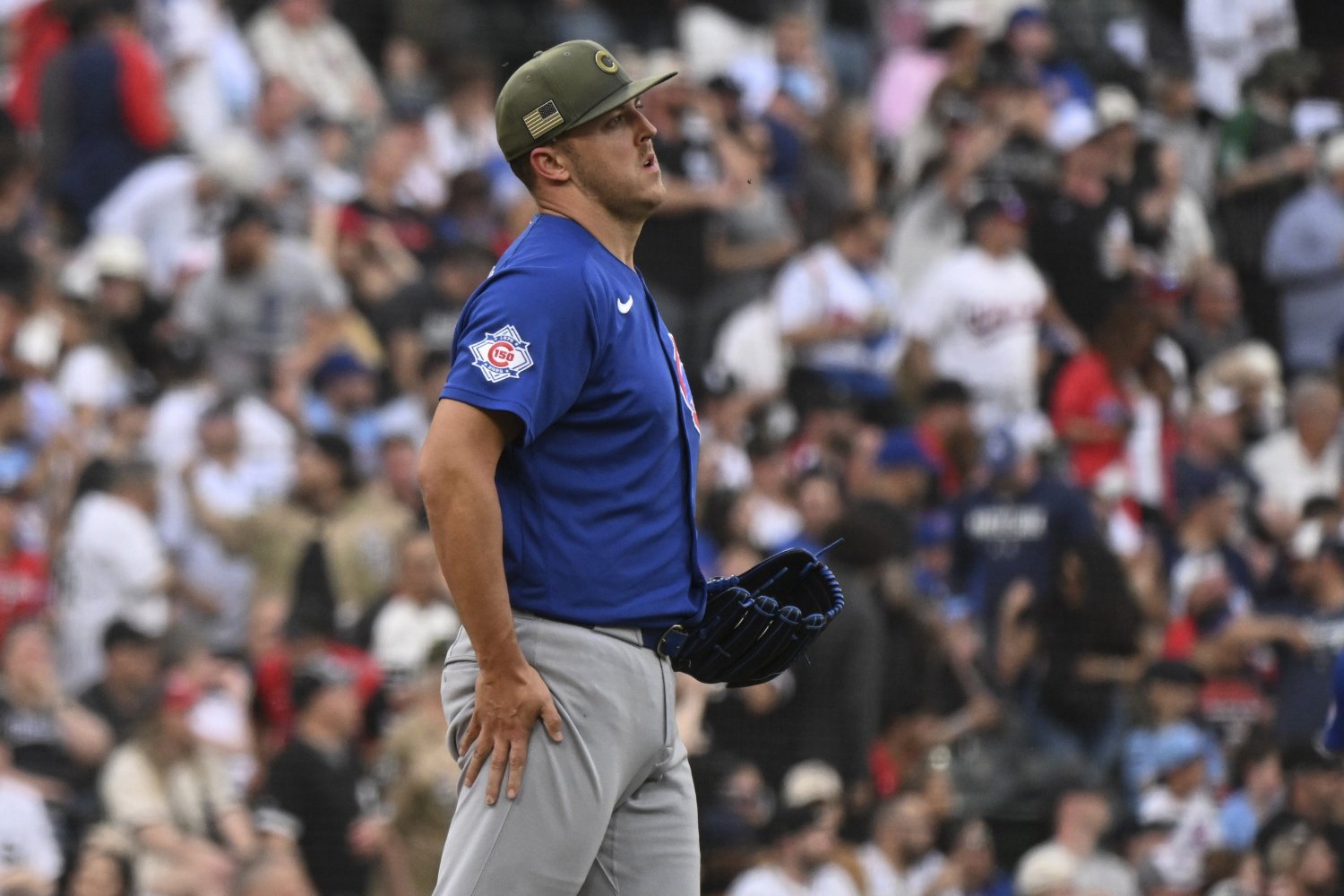
His recent outing against the White Sox became a near-perfect representation of what is happening to Chicago’s entire pitching staff: five home runs allowed in just five innings, with damage arriving against multiple pitch types. Taillon joined a list no Cubs pitcher wants to join: pitchers who have allowed at least five home runs in a game.
|
Player |
HR |
Date |
Age |
Team |
|
Opp |
Result |
IP |
H |
R |
ER |
BF |
|
5 |
29-263 |
@ |
L, 1-8 |
5 |
6 |
5 |
5 |
23 |
||||
|
5 |
26-360 |
|
L, 5-8 |
2.1 |
5 |
5 |
5 |
13 |
||||
|
5 |
26-295 |
@ |
W, 6-5 |
5.2 |
10 |
5 |
5 |
29 |
||||
|
5 |
30-072 |
@ |
L, 4-10 |
4.1 |
8 |
8 |
8 |
22 |
||||
|
5 |
25-172 |
|
L, 6-9 |
5 |
7 |
8 |
8 |
24 |
||||
|
5 |
33-303 |
@ |
L, 2-10 |
4 |
9 |
10 |
10 |
23 |
||||
|
6 |
28-259 |
@ |
L, 0-8 |
5 |
7 |
6 |
6 |
22 |
||||
|
5 |
34-179 |
@ |
L, 3-8 |
5 |
8 |
8 |
8 |
24 |
This was not one isolated mistake in location. It was structural demolition.
The Cubs Are Losing Stability
And here comes the most important question of all: How does this team keep winning?
The answer is probably the offense. The Cubs have been explosive enough to absorb mistakes that normally sink contenders. But the home run problem injects constant volatility into the team’s identity. No lead feels entirely safe. No inning feels completely under control.
Because this staff lives dangerously close to long-ball damage. Chicago’s starters are tied for the most home runs allowed in MLB with 39. The bullpen ranks fifth-worst with 25.
October rarely forgives this kind of profile. Yes, it is still May. Less than 50 games have been played. It would be excessive to declare this a final verdict on the Cubs.
Explosive offensive teams can survive for months while hiding cracks on the mound. Chicago is doing exactly that right now. Their lineup produces enough damage to erase mistakes, rescue uncomfortable nights, and keep the club atop the division even while the pitching staff continues allowing dangerous contact.
But trends matter, especially the ones that repeat this consistently. The vulnerability runs through nearly the entire staff structure: starters getting punished the second time through the order, relievers allowing decisive late-game swings, and far too many favorable counts ending in catastrophic damage.
That is what makes this otherwise impressive start feel uncomfortable. Chicago still looks like a first-place team., but it is also beginning to look like a team playing on an extremely thin margin every single night.




.thumb.JPG.19c99ddd60a76edf810c77d321439828.JPG)


Recommended Comments
Create an account or sign in to comment
You need to be a member in order to leave a comment
Create an account
Sign up for a new account in our community. It's easy!
Register a new accountSign in
Already have an account? Sign in here.
Sign In Now