


Cubs Video
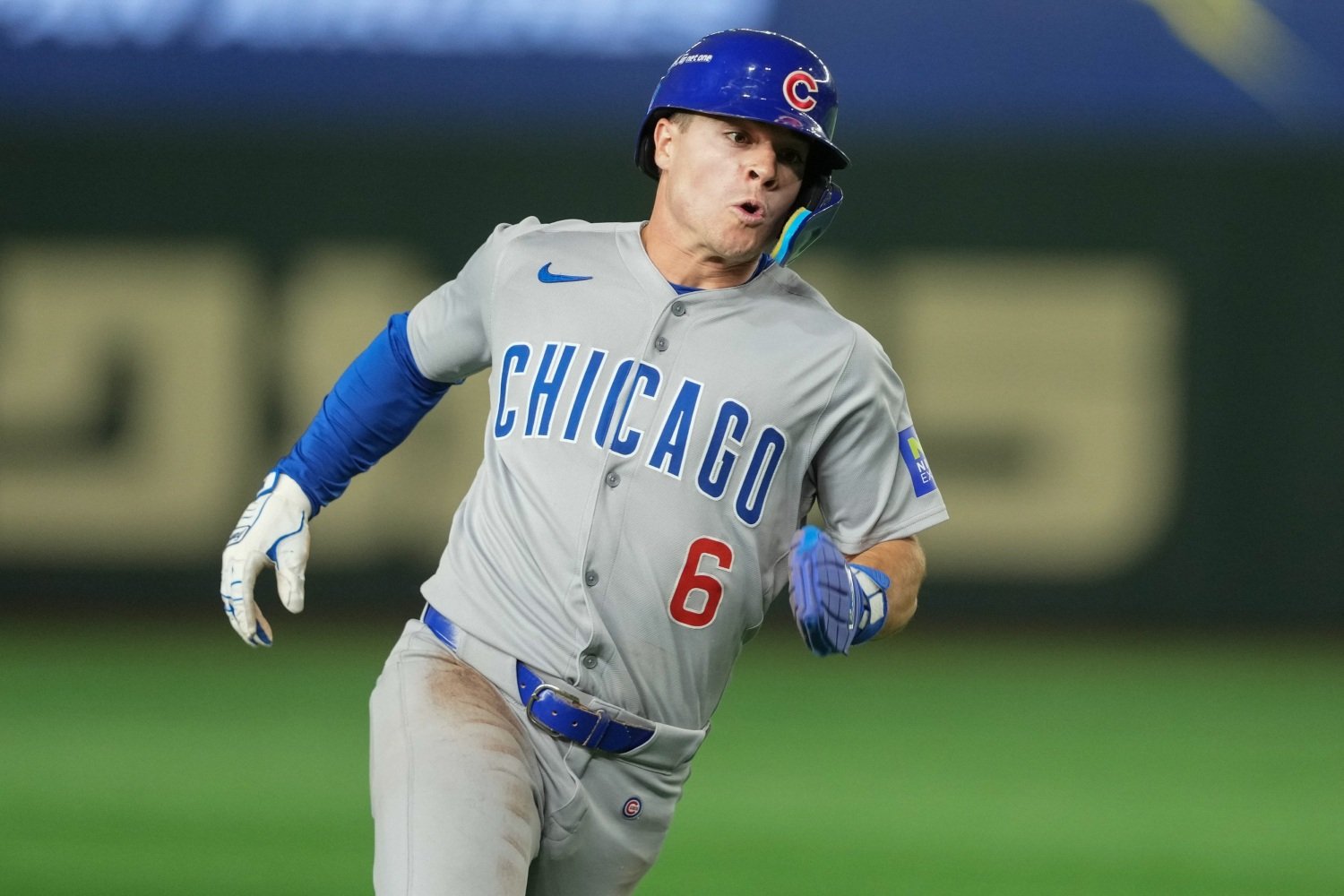
Although the Cubs aren't actively looking to trade Nico Hoerner or Matt Shaw after signing Alex Bregman, president of baseball operations Jed Hoyer admitted at Bregman's introductory press conference that interest in both Shaw and Hoerner has increased in the last few days—or, at least, that teams have felt emboldened to call about the two. Hoerner has garnered plenty of trade interest in the past, and Shaw was a key part of the demand from the Nationals when the Cubs took an interest in MacKenzie Gore.
Chicago doesn't need to move Hoerner's salary; they have permission from ownership to stay above the first competitive-balance tax threshold this season. Nor are they obliged to trade Shaw, who can serve as a roving utility man or be optioned back to Triple-A Iowa. Undeniably, though, the chances of one of the two ending up elsewhere rose when Bregman signed, and although Hoerner makes a better headline-grabber, it's Shaw whom the Cubs would be happier to move, given the right return.
What is the right return? Given that Shaw still has six years of team control remaining—he didn't get to a full year of service time for 2025, after he had to be demoted to the minors early in the season—it shouldn't be cheap. Chicago expects a pitcher who can contribute to their aspirations to make another run deep into the postseason in 2026, according to sources in two front offices who have had discussions with the team this week, and they'd also ask for a lower-level prospect to reinvigorate their farm system.
Here are the six teams who most obviously match up with Chicago on a potential Shaw trade, and a brief rundown of the pitchers who could check that first, biggest box in a deal.
Boston Red Sox
After trades for Sonny Gray and Johan Oviedo and the signing of Ranger Suárez, the Red Sox are flush with pitching depth. If the season started tomorrow, they'd have a rotation of Garrett Crochet, Gray, Suárez, Oviedo, and Brayan Bello, which leaves top prospects Payton Tolle and Connolly Early out in the cold. Kutter Crawford missed all of 2025 after knee and wrist surgery, but should be a full go come spring training, and they signed Patrick Sandoval for the privilege of waiting out his rehab so they can put him into the mix this spring after modified Tommy John surgery in 2024.
Bello is a good young pitcher, but not a frontline guy, and the team-friendly extension to which the team signed him has so much meat left on the bone (four years, $50.5 million, with an option for 2030 that would earn him another $20 million) that the Cubs might be wary of taking it on. Crawford is an interesting arm with three years of club control left, but in order to accept him as the pitching help in a Shaw deal, Hoyer would have to get a pretty good second piece, which is unlikely. Tolle or Early would be a great return for Shaw, allowing the Sox to fill the hole left in their infield by their failure to re-sign Bregman while netting the Cubs a high-upside left-handed hurler. That would be a fun challenge trade—but Boston covets the depth and flexibility both lefties provide.
Kansas City Royals
We talked about the Royals as a landing spot on Thursday, with specific mention of Kris Bubic, a plug-and-play southpaw starter. However, Bubic has just one year of team control left and a shaky track record when it comes to durability. The Cubs would push hard to land one of Noah Cameron, Luinder Avila, Ryan Bergert or Stephen Kolek (each of whom come with at least five years of team control and can be optioned to the minors) instead. Bergert and Kolek, whom Kansas City got from the Padres in July's Freddy Fermin trade, are the names to watch most closely.
Minnesota Twins
Another AL Central team loaded with compelling arms, the Twins have two famous aces (Pablo López and Joe Ryan) who make plenty of sense as targets for the Cubs. However, neither is available right now. That could change in the summer, but if the Cubs prefer to strike while the iron is hot and get long-term control of a starter in return for Shaw, Zebby Matthews, David Festa, Mick Abel, Taj Bradley and Connor Prielipp all make sense. Shaw would slide right in as the presumptive second baseman in Minnesota, with superior hitter but defensive clod Luke Keaschall moving to the outfield. Of the five pitchers named there, all but Bradley (4) have at least five years of club control left, and all can be optioned to the minors. Prielipp is probably a reliever, but would instantly become the highest-upside southpaw in the Cubs pen.
San Francisco Giants
This fit is not as tidy. The Giants badly want Hoerner or Shaw, but don't have much the Cubs want in return, save for things San Francisco can ill afford to trade. They do have a passel of back-end starters with long-term team and cost control, including Landen Roupp, Carson Whisenhunt, Hayden Birdsong and Keaton Winn. To part with Shaw, though, the Cubs would want someone with more upside or a stronger track record than any of those four possess. Unless Giants president of baseball operations Buster Posey is willing to do something unexpected (and a bit foolish), a deal between these two sides is unlikely.
Tampa Bay Rays
After trading Brandon Lowe earlier this winter and acquiring Gavin Lux (ostensibly to play second base) Thursday, the Rays have a very thin, very ugly depth chart around the horn. Shaw would solve some problems for them, and he fits their mold in some key respects, offensively. He'd be a huge defensive upgrade for a group that could feature the plodding Junior Caminero at third base, the better-in-left field Lux at second and the oversized Carson Williams at shortstop on many days.
To get Shaw, though, the Rays would have to send the Cubs one of Shane McClanahan, Edwin Uceta or Griffin Jax. McClanahan is an ace-caliber lefty starter at his best, but has been sidelined by injuries for a year and a half. Uceta has four years of team control left and blossomed as the Rays' relief ace last year, while Jax came over in a trade with Minnesota at the deadline and has two years of team control remaining. Jax is also a candidate to move to the starting rotation, though perhaps not until 2027. This could be the highest-impact set of pitcher targets for the Cubs, though they come with shorter terms of team control than some of the hurlers the team would target in deals with other clubs interested in Shaw.
Washington Nationals
The Cubs were reluctant to include Shaw in a trade for Gore last winter, or at the deadline in July. However, his value to them has dropped since then, and Gore's value has diminished enough that the Nationals can no longer credibly demand both Shaw and Cade Horton for him. A deal for Gore centered on Shaw would vault the Cubs well into the lead in projected NL Central standings for 2026, though it would require them to backfill their infield and could mean throwing in a player in addition to Shaw.
The name of the game, if the team does trade their 2023 first-round pick, is to augment the 2026 roster without sacrificing long-term value. Moving Shaw would raise the stakes of the team's attempts to keep Hoerner around beyond the end of his current contract after this season, so it would need to save them some money at the end of the decade by adding controllable, cost-effective pitching to their roster. They might not be able to thread that needle—but plenty of teams would love to work with them in the endeavor.





Recommended Comments
Create an account or sign in to comment
You need to be a member in order to leave a comment
Create an account
Sign up for a new account in our community. It's easy!
Register a new accountSign in
Already have an account? Sign in here.
Sign In Now