Jeff Ward
-
Posts
30 -
Joined
-
Last visited
Jeff Ward's Achievements





-
Arrrgghhhh! I do mean what I said. Snell's walks should've eliminated him from contention, as should Webb's losing record. Strider should've won it, Steele should've come in second or third along with Gallen. Did I liberally apply satire and hyperbole to those contentions? Yes! Because I enjoy those lost arts, but neither is a smokescreen for my opinion which I will eagerly and unequivocally stand behind. I was also having a little fun with how seriously some of those Facebook vintage baseball group best-of-all-time conversations descend directly into the kind of quagmire that Mark Twain described. (Never wrestle with the pig in the manure because you both get covered with it and the pig likes it.) As for Mr. Smith's OBP, I did have a little dyslexia there as it was .327, which still completely sucks for a purported Hall of Famer.
-
No! I'm citing a pitcher's wins and the fact that I'm old enough to remember when the MVP and Cy Young Awards went to players who advanced their entire team above and beyond any stat consideration, though stats matter, too. And WAR? Don't get me started on that useless stat. NO ONE with a .262 lifetime batting average and a meager .237 OPB deserves to be in the Hall of Fame. In fact, Ozzie's inclusion there rendered the entire proposition worthless. That's why WAR really stands for Weak Ass Ridiculousness. And as far as not taking me seriously, that's the joy of a bit of satire!
-
I want you to get up now. I want all of you to get up out of your chairs. I want you all to get up right now, go to the window, open it, and stick your head out and yell, "Justin Steele should have won the Cy Young Award!" Image courtesy of © John Hefti-USA TODAY Sports With Spencer Strider in the mix, I didn’t think the Man of Steele would finish first, but I would’ve bet good money that he’d do better than a distant fifth in the Cy Young Award voting. And to come in behind Blake Snell and the lowly Logan Webb? I realize the Hall of Fame and postseason awards have become nothing more than popularity contests. Still, that shift doesn’t absolve sportswriters from maintaining at least a tenuous grip on some sort of recognizable reality. So, let’s examine the four National Leaguers who came in ahead of our beloved Justin Steele. 1. Blake “I Never Met a Man I Didn’t Wanna Walk” Snell This man led both leagues in free passes, with an absurd 99, which should’ve automatically disqualified him from pitching in the major leagues. Given his 180 innings pitched, that comes out to five flippin’ walks per nine innings, an abomination mitigated by the Padres' sixth-place team defense. By contrast, Steele walked a miniscule 36 batters in a comparable 173 innings pitched. Snell’s 14-9 record is hardly the stuff of pitching legend, either. The entire point of a Cy Young or MVP award is (purportedly) to honor the player who helped the entire team succeed the most, and Steele’s 16-5 mark was far more critical to the Cubs than Snell’s was to the Padres, who were never in contention. This is, by far, the worst Cy Young choice since Steve Bedrosian beat out the Cubs’ Rick Reuschel in 1987. 2. Logan Webb All I can say is, I want to take whatever drug the sportswriters who put this bleep in second place are taking, because it’s gotta be a good one. The man had a dismal 11-13 record, for god’s sake! The only pitcher to win the award with a losing record was the Dodgers' Eric Gagne in 2003, but he also converted 55 out of 55 save opportunities, a record that will likely never be broken. Steele’s 3.06 ERA was better than Webb’s 3.25, and their low walk totals were comparable, as were their hits per nine innings. Webb’s 0.8 home runs per nine were close, but Steele’s 0.7 led the National League. But that’s all rendered moot when you consider that Justin’s 16-5 record, which put the Cubs on the brink of the postseason, should’ve put him in front of the inexplicably second-place Webb. And the Giants were never truly in the race, to the point where it cost manager Gabe Kapler his job. 3. Zac Gallen Don’t get me wrong; Zac Gallen is the kind of pitcher I’d love to see play for the Cubs someday. But while he certainly deserves to be in the running, his winning percentage was worse than Steele’s, as was his ERA. This one is very close, and my propensity for hyperbole aside, only four votes separated the two, but two full spots ahead of our hero? I don’t think so! 4. Spencer Strider How this man didn’t win the NL Cy Young is beyond me. Spencer’s gotta be thinking, “Whose stride do I have to Spence to win this thing?” All he did was amass a 20-5 record, lead the majors in strikeouts (281) by a long shot, walk just 58 batters in 186 2/3 innings, lead the NL with a 2.85 FIP, post MLB's second-best pitcher WAR (5.5), singlehandedly mitigate the possibility of a lengthy Braves slump, and lead the team to the best record in baseball. At the same time, the rest of the Atlanta staff could barely pull their weight. Without Strider’s 20 wins, the Braves would’ve been a Wild Card team--you know, as long as they forfeited those game and only those. The fact that he didn’t get as much as one first-place vote diminishes the award, to the point where it’s becoming meaningless. More like Cy Old, it says here. This is how the NL Cy Young voting should’ve played out: Spencer Strider Justin Steele Zac Gallen David Bednar Clay Kershaw Ah well. What can you say about a group of nitwits who put light-hitting Ozzie Smith in the Hall of Fame? View full article
-
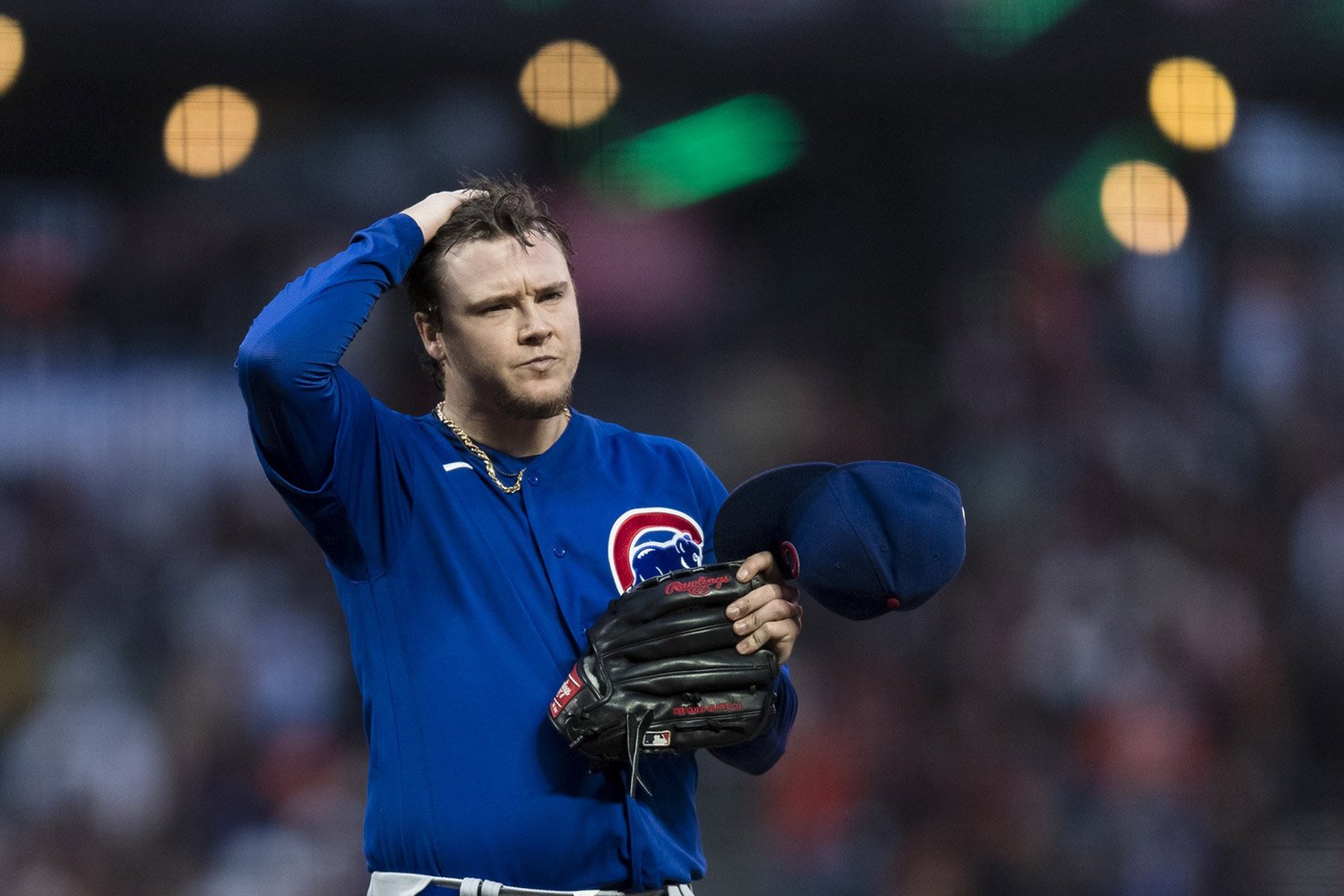 With Spencer Strider in the mix, I didn’t think the Man of Steele would finish first, but I would’ve bet good money that he’d do better than a distant fifth in the Cy Young Award voting. And to come in behind Blake Snell and the lowly Logan Webb? I realize the Hall of Fame and postseason awards have become nothing more than popularity contests. Still, that shift doesn’t absolve sportswriters from maintaining at least a tenuous grip on some sort of recognizable reality. So, let’s examine the four National Leaguers who came in ahead of our beloved Justin Steele. 1. Blake “I Never Met a Man I Didn’t Wanna Walk” Snell This man led both leagues in free passes, with an absurd 99, which should’ve automatically disqualified him from pitching in the major leagues. Given his 180 innings pitched, that comes out to five flippin’ walks per nine innings, an abomination mitigated by the Padres' sixth-place team defense. By contrast, Steele walked a miniscule 36 batters in a comparable 173 innings pitched. Snell’s 14-9 record is hardly the stuff of pitching legend, either. The entire point of a Cy Young or MVP award is (purportedly) to honor the player who helped the entire team succeed the most, and Steele’s 16-5 mark was far more critical to the Cubs than Snell’s was to the Padres, who were never in contention. This is, by far, the worst Cy Young choice since Steve Bedrosian beat out the Cubs’ Rick Reuschel in 1987. 2. Logan Webb All I can say is, I want to take whatever drug the sportswriters who put this bleep in second place are taking, because it’s gotta be a good one. The man had a dismal 11-13 record, for god’s sake! The only pitcher to win the award with a losing record was the Dodgers' Eric Gagne in 2003, but he also converted 55 out of 55 save opportunities, a record that will likely never be broken. Steele’s 3.06 ERA was better than Webb’s 3.25, and their low walk totals were comparable, as were their hits per nine innings. Webb’s 0.8 home runs per nine were close, but Steele’s 0.7 led the National League. But that’s all rendered moot when you consider that Justin’s 16-5 record, which put the Cubs on the brink of the postseason, should’ve put him in front of the inexplicably second-place Webb. And the Giants were never truly in the race, to the point where it cost manager Gabe Kapler his job. 3. Zac Gallen Don’t get me wrong; Zac Gallen is the kind of pitcher I’d love to see play for the Cubs someday. But while he certainly deserves to be in the running, his winning percentage was worse than Steele’s, as was his ERA. This one is very close, and my propensity for hyperbole aside, only four votes separated the two, but two full spots ahead of our hero? I don’t think so! 4. Spencer Strider How this man didn’t win the NL Cy Young is beyond me. Spencer’s gotta be thinking, “Whose stride do I have to Spence to win this thing?” All he did was amass a 20-5 record, lead the majors in strikeouts (281) by a long shot, walk just 58 batters in 186 2/3 innings, lead the NL with a 2.85 FIP, post MLB's second-best pitcher WAR (5.5), singlehandedly mitigate the possibility of a lengthy Braves slump, and lead the team to the best record in baseball. At the same time, the rest of the Atlanta staff could barely pull their weight. Without Strider’s 20 wins, the Braves would’ve been a Wild Card team--you know, as long as they forfeited those game and only those. The fact that he didn’t get as much as one first-place vote diminishes the award, to the point where it’s becoming meaningless. More like Cy Old, it says here. This is how the NL Cy Young voting should’ve played out: Spencer Strider Justin Steele Zac Gallen David Bednar Clay Kershaw Ah well. What can you say about a group of nitwits who put light-hitting Ozzie Smith in the Hall of Fame?
 -
Candid, I appreciate the compliment and I couldn't agree with you more. Jeff
-
Though it would be fun, I won’t launch into a Bill Maher-esque screed excoriating the most recent iterations of our national stupidities. It’s just that, now that I’ve finally recovered from my severe clinical Cubs-missed-the-playoffs-by-that-much depression, it seemed to be the right time to review MLB’s significant 2023 rule changes (and some older alterations, too). Image courtesy of © Peter van den Berg-USA TODAY Sports Before the suspense takes its toll, let me assure you that they’re a vast improvement. So, let’s get right to the review. The Pitch Clock This is the best of the bunch by a long shot. Though other factors were involved, this simple fix helped reduce the average MLB game time by almost 30 minutes. C’mon! Who wants to watch the pitcher wander around the mound, grab the rosin bag, spit, grab his crotch, and wander around the mound a bit more just for good measure? Justin Verlander is a great pitcher, but before this season, he launched the stitched spheroid at an absurdly slothful two pitches per minute. His success may have been partially due to boring the batter into submission. Despite all of their pre-season bitching, pitchers adjusted so quickly that clock violations became virtually non-existent by September. They adapted so well that Major League Baseball could probably reduce the timespan from 20 to 15 seconds (with men on base). The Stolen Base is Back, Baby! 2022 stolen base leader Jon Berti was the only MLB player who broke the 40 steals mark with a paltry 41 thefts. But in 2023, we saw an almost two-fold increase among the league leaders, including folks like: 74 – Ronald Acuña, Jr 67 – Esteury Ruiz 54 – Corbin Carroll Three other big-leaguers surpassed the 40-theft mark, including Nico Hoerner’s sixth-best 43 steals. The difference, of course, is pitchers are only allowed two mound disengagements per batter, which includes pickoff attempts. You could argue this is nothing more than an artificial form of stolen base inflation, and I agree. But while the 100 stolen base mark seems like ancient history, stealing third or home still ranks among baseball's most exciting baseball plays. The larger bases may have also affected these higher totals, but I’m not sure they contributed all that much. A Shiftless Infield I like this one too, but I’m consistently confounded by the rare Homo Sapiens with major league talent who can’t seem to follow Hall of Famer Wee Willie Keeler’s simple advice to “Hit ‘em where they ain’t.” Legendary Cleveland Guardians manager Lou Boudreau first used the shift against Ted Williams in 1946. Still, the Splendid Splinter quickly ended those shenanigans by bunting to an unoccupied third base. I understand chicks dig the long ball, but if Kyle Schwarber could’ve somehow summoned up the intestinal fortitude to execute a third baseline bunt, defenses would’ve had to reconsider shifting seriously. That caveat issued; there’s something to be said for the game of baseball looking like the game of baseball. Those Tour de France operators prohibit recumbent bikes because a bike should reasonably resemble what participants rode in the race’s early days. In the end, this change had no noticeable effect on the total MLB batting average, but it was a relief to watch a game that looked much more like when I played it as a youth. The Three-Batter Minimum Works This is a 2021 rule change, but it’s become such a seamless proposition that I can barely remember the Cardinal days of Tony LaRussa making three pitching changes within three batters. Starting with Met’s manager Davey Johnson’s 1983 dugout computer printouts, the prospect of managing a baseball team has become increasingly complicated. We have splits, WAR, platooning, sabermetrics, exit velocity, launch angle, Moneyball, and all strange and wondrous statistics. It’s almost as if the game gets lost in the translation. Given its slower pace and the myriad of possibilities in any given at-bat, baseball is one of the few sports that lends itself to that over-analysis. I understand the purist’s contentions, but no one wants to endure the average pitcher hitting and a revolving door bullpen that destroys the continuity of a beautiful game. Here’s to simplicity! Zombie Runners Suck This is also an older rule implemented in response to the pandemic in 2020, but Commissioner Rob Manfred made it permanent this season. I don’t know about you, but putting an extra inning runner on second base without making them hit a double goes against everything the game stands for. I understand Americans have a constitutional aversion to observing a multi-hour game with no clear outcome, but if the goal is to preserve pitchers and avoid endless eight-hour night games, then why not adopt the Korean Baseball League’s 12-inning tie rule? Not only would that solve the problem, but it would eliminate those ghastly zombie runners. Soccer has draws, hockey still has a few, and though they’ve been relegated to a rarity, the occasional NFL game can still end in a tie. So, why not baseball? But On-field Interviews Don’t (Suck)! My social media experience would indicate I’m in the vast minority here. Still, I LOVE those on-field in-game chats with players and managers because they remind me of the camaraderie I enjoyed during my semi-pro days. It gives the viewer the glorious impression that they’re an insider, if only for that brief moment. Not to mention that when Ian Happ’s earpiece fell out during one of those conversations, it was flippin’ hilarious to watch him try to find the contrivance between pitches. They never did retrieve it, by the way. The naysayers claim it adds nothing to the game and it only serves to distract the player, but we’re talking about baseball, where standing around is still the predominant “activity.” Baseball continues to improve! View full article
-
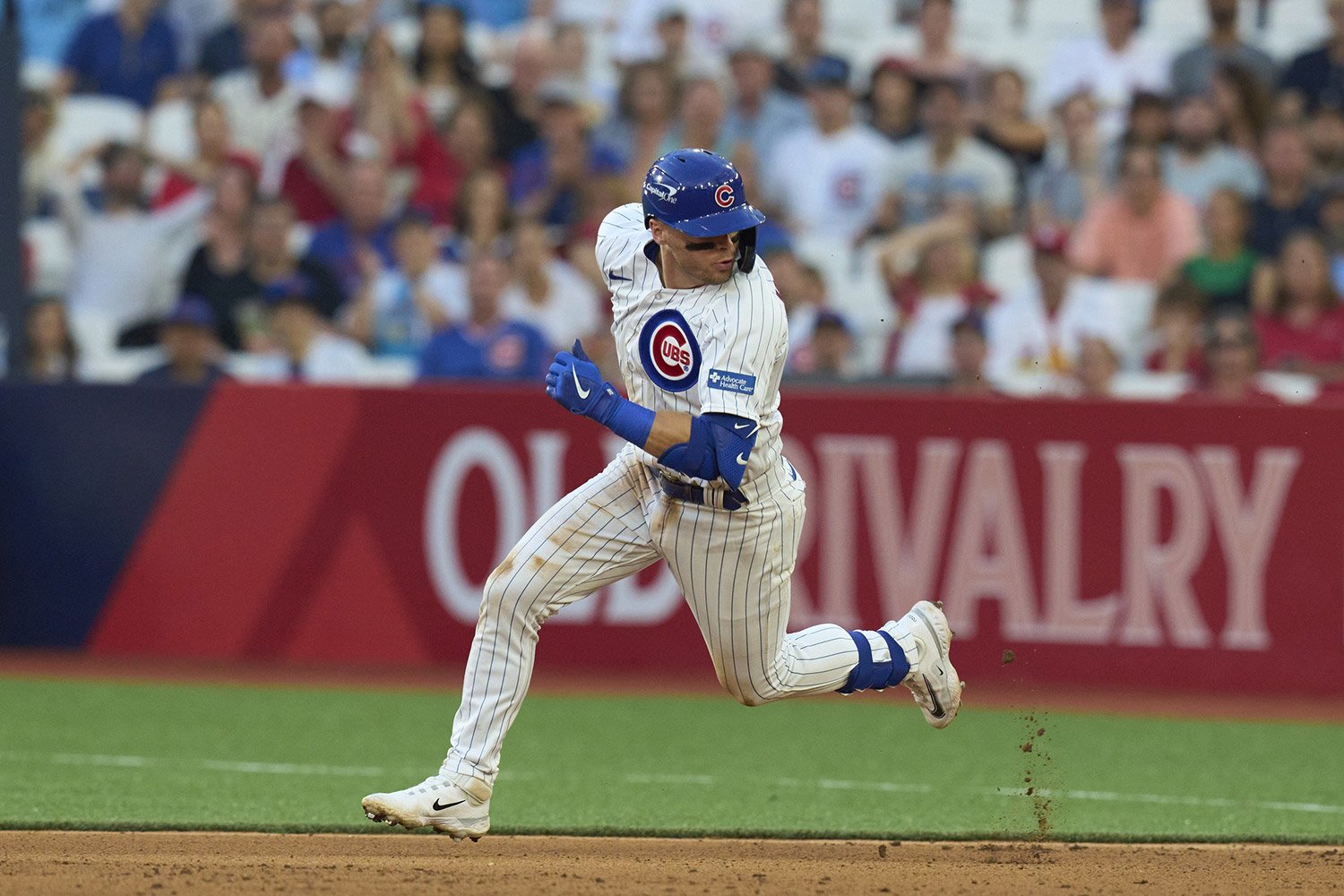 Before the suspense takes its toll, let me assure you that they’re a vast improvement. So, let’s get right to the review. The Pitch Clock This is the best of the bunch by a long shot. Though other factors were involved, this simple fix helped reduce the average MLB game time by almost 30 minutes. C’mon! Who wants to watch the pitcher wander around the mound, grab the rosin bag, spit, grab his crotch, and wander around the mound a bit more just for good measure? Justin Verlander is a great pitcher, but before this season, he launched the stitched spheroid at an absurdly slothful two pitches per minute. His success may have been partially due to boring the batter into submission. Despite all of their pre-season bitching, pitchers adjusted so quickly that clock violations became virtually non-existent by September. They adapted so well that Major League Baseball could probably reduce the timespan from 20 to 15 seconds (with men on base). The Stolen Base is Back, Baby! 2022 stolen base leader Jon Berti was the only MLB player who broke the 40 steals mark with a paltry 41 thefts. But in 2023, we saw an almost two-fold increase among the league leaders, including folks like: 74 – Ronald Acuña, Jr 67 – Esteury Ruiz 54 – Corbin Carroll Three other big-leaguers surpassed the 40-theft mark, including Nico Hoerner’s sixth-best 43 steals. The difference, of course, is pitchers are only allowed two mound disengagements per batter, which includes pickoff attempts. You could argue this is nothing more than an artificial form of stolen base inflation, and I agree. But while the 100 stolen base mark seems like ancient history, stealing third or home still ranks among baseball's most exciting baseball plays. The larger bases may have also affected these higher totals, but I’m not sure they contributed all that much. A Shiftless Infield I like this one too, but I’m consistently confounded by the rare Homo Sapiens with major league talent who can’t seem to follow Hall of Famer Wee Willie Keeler’s simple advice to “Hit ‘em where they ain’t.” Legendary Cleveland Guardians manager Lou Boudreau first used the shift against Ted Williams in 1946. Still, the Splendid Splinter quickly ended those shenanigans by bunting to an unoccupied third base. I understand chicks dig the long ball, but if Kyle Schwarber could’ve somehow summoned up the intestinal fortitude to execute a third baseline bunt, defenses would’ve had to reconsider shifting seriously. That caveat issued; there’s something to be said for the game of baseball looking like the game of baseball. Those Tour de France operators prohibit recumbent bikes because a bike should reasonably resemble what participants rode in the race’s early days. In the end, this change had no noticeable effect on the total MLB batting average, but it was a relief to watch a game that looked much more like when I played it as a youth. The Three-Batter Minimum Works This is a 2021 rule change, but it’s become such a seamless proposition that I can barely remember the Cardinal days of Tony LaRussa making three pitching changes within three batters. Starting with Met’s manager Davey Johnson’s 1983 dugout computer printouts, the prospect of managing a baseball team has become increasingly complicated. We have splits, WAR, platooning, sabermetrics, exit velocity, launch angle, Moneyball, and all strange and wondrous statistics. It’s almost as if the game gets lost in the translation. Given its slower pace and the myriad of possibilities in any given at-bat, baseball is one of the few sports that lends itself to that over-analysis. I understand the purist’s contentions, but no one wants to endure the average pitcher hitting and a revolving door bullpen that destroys the continuity of a beautiful game. Here’s to simplicity! Zombie Runners Suck This is also an older rule implemented in response to the pandemic in 2020, but Commissioner Rob Manfred made it permanent this season. I don’t know about you, but putting an extra inning runner on second base without making them hit a double goes against everything the game stands for. I understand Americans have a constitutional aversion to observing a multi-hour game with no clear outcome, but if the goal is to preserve pitchers and avoid endless eight-hour night games, then why not adopt the Korean Baseball League’s 12-inning tie rule? Not only would that solve the problem, but it would eliminate those ghastly zombie runners. Soccer has draws, hockey still has a few, and though they’ve been relegated to a rarity, the occasional NFL game can still end in a tie. So, why not baseball? But On-field Interviews Don’t (Suck)! My social media experience would indicate I’m in the vast minority here. Still, I LOVE those on-field in-game chats with players and managers because they remind me of the camaraderie I enjoyed during my semi-pro days. It gives the viewer the glorious impression that they’re an insider, if only for that brief moment. Not to mention that when Ian Happ’s earpiece fell out during one of those conversations, it was flippin’ hilarious to watch him try to find the contrivance between pitches. They never did retrieve it, by the way. The naysayers claim it adds nothing to the game and it only serves to distract the player, but we’re talking about baseball, where standing around is still the predominant “activity.” Baseball continues to improve!
 -
Article: Wow! Managerial Shenanigans!
Jeff Ward replied to Jeff Ward's topic in North Side Baseball Front Page News
Oh Esteemed Readers, Yes! My fingers were faster than my brain, and since he was infinitely more famous, those digits typed "Edgar" instead of "Rick." Being a former good Catholic, I will subject myself to the appropriate form of penance. As far as multiple columns on this managerial subject, it's not like the writers get together and coordinate outfits every morning. We simply write. Simply consider our coverage of the Cubs new skipper to be "thorough." Jeff -
“The Bears hire a coach/GM combo that isn’t an outright embarrassment, the Palestinians and Israelis agree on a two-state solution, Chicago Mayor Brandon Johnson gets tough on crime, the French start bathing regularly, and the Cubs fire manager David Ross in favor of the rival Brewers Craig Counsell making him the highest paid manager in baseball.” Image courtesy of © Mark Hoffman / USA TODAY NETWORK “What are things that will never happen in my lifetime, Alex.” To say the latter is not the news I expected to wake up to this fine November morning would be the most massive of understatements. The Cubs have a penchant for this kind of thing, having replaced Rick Renteria with Joe Maddon when he and the Rays unexpectedly parted company in 2014. That transition worked out pretty well in 2016, though Maddon single-handedly dashed the Cubs' dynastic dreams by starting to believe he knew more than the game. But Craig Counsell? Maybe I’m being a bit too finicky, but his .368 postseason winning percentage and all of one playoff victory since 2019 don’t inspire confidence. If you recall, I chided Rossy for his likely inability to “get the Cubs over the hump” back in August, and I’m not sure Counsell’s much of an improvement in that regard. However, unlike David Ross, he’s an exceptional regular season skipper, as his new $8 million a year contract would indicate. I wholeheartedly agree with Matt Trueblood’s theory that the Cubs had every intention of sticking with Ross in 2024 until Counsell became a surprisingly available target of opportunity. But I also believe that Ross’s firing was inevitable and likely to come much sooner than later. More specifically, I think his fate was sealed when the Cubs were just 2.5 games behind the Brewers and three games ahead in the second wildcard spot race on September 4th and 5th. That’s when ESPN put the Cubs’ chances of making the playoffs at a lofty 76 percent, and we all know the end of that story. That capacity to snatch a gut-wrenching defeat from the jaws of victory doesn’t bode well for a long managerial career. But as badly as the Cubs tanked in that final month, the baseball season is a full 162 games, with each one having a compounding effect on those yet to come, particularly as those possibilities diminish with those lengthening Wrigley field shadows. Remember, the excruciating late-season losses to the D’backs may have made it seem like the Cubs finished 30 games out, but when the early October dust cleared, they were one scant game out of the final wildcard spot. So, I can’t help but think if Ross, who claimed to be the enforcer as a player, could’ve lit a similar fire under those younger Cubs when they slid into their May through early June stupor, falling ten games under .500 in the process. Counsell’s reputation for prolonging winning streaks and nipping the losing variety in the bud would’ve come in handy at that early point. Two more May victories could’ve made a world of difference. Considering how well Ross handled the mercurial Jon Lester as his personal catcher, I was consistently flummoxed by his terrible bullpen decisions. Drew Smyly had some early season success, including an almost perfect game against the powerful Dodgers, but then his curveball started sputtering; Ross was far too slow to relegate him to the bullpen. When he finally did, somehow believing Smyly would snap out of it if provided enough opportunities, Ross persisted in inserting him into high-leverage, late-inning situations despite his rather robust 6.52 second-half ERA. Take away those five Smiley second-half losses; the playoff outcome could’ve been quite different. Ross’s overreliance on the questionable Michael Fulmer, who had his moments but generally wasn’t himself this season, likely put him on the IL in late August when the Cubs needed his arm. I’m convinced bringing Fullmer back from the IL too early in September was a major factor in his recent Tommy John surgery, which means he won’t play in 2024. You’d think a former catcher would’ve caught onto Adbert Alzolay’s Zambrano-like propensity to “overthrow” the ball, but Ross failed to intervene, and Alzolay went on the IL at the worst possible time. I could cite a few more examples, but I’m sure you get the idea by now. That consistent bullpen blundering led to an abysmal 21-25 record in one-run and extra-inning games. Blowing five ninth-inning leads didn’t help playoff matters much, either. With a few notable exceptions (the Diamondbacks), their ability to win the close ones sets playoff teams apart from the also-ran rabble. Though the players share culpability, accumulating that many heartbreaking losses falls squarely at the manager’s feet. Conversely, the Brewers went 29-19 in close games, which goes a long way toward explaining their nine-game division championship. Though the Cubs didn’t do terribly in the blown lead department, finishing 14th place with 36, Counsell and Milwaukee did a bit better, coming in seventh best with 30. And six more wins often mean the difference between watching the playoffs and participating. I still can’t believe the Cubs had the cojones to pull this one off, but I’m hopeful it might help convince Marcus Stroman and Cody Bellinger to re-sign and entice other free agents to choose the North Side. Is Craig Counsell a step up from David Ross? You bet! Can Craig bring a third ring to our still-pennant-starved blue boys of summer? I’m not so sure about that. But if there’s one thing to be said for Cubs fans, hope springs eternal, and there will be plenty of cause for optimism come spring. As a brief aside in the Ross regard, Willson Contreras needs to shut the bleep up. Did the Cubs bungle their attempts to trade/resign him? Yes! But that’s the very nature of the baseball beast. So, Contreras left the Cubs with about as much class as a Kardashian in heat, claiming he was more than ready for the superior “Cardinal way” only to “lead” that team to a fifth-worst MLB finish alongside the hapless Nationals. The Cardinals also ranked a distant 26th in the team ERA standings, yielding an abysmal 4.79 runs per game. But what puts Contreras in the ungrateful lout category is his “About time” tweet in response to Ross’s firing, despite his former manager going as far as “fully supporting” his asinine post-homer bat-flipping regimen. Perhaps with Counsell managing the Cubs, they’ll start plunking him again. I can hardly wait! View full article
-
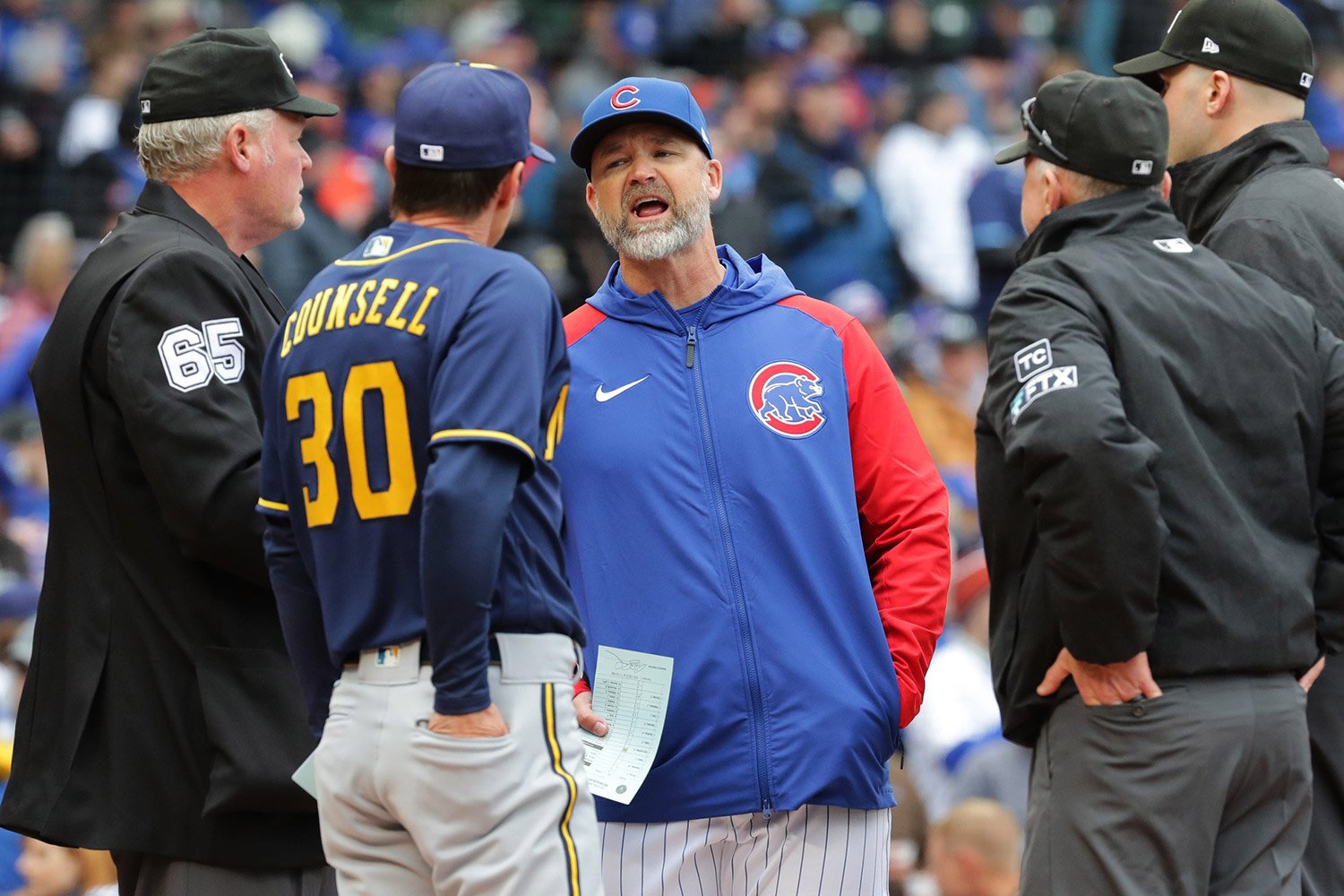 “What are things that will never happen in my lifetime, Alex.” To say the latter is not the news I expected to wake up to this fine November morning would be the most massive of understatements. The Cubs have a penchant for this kind of thing, having replaced Rick Renteria with Joe Maddon when he and the Rays unexpectedly parted company in 2014. That transition worked out pretty well in 2016, though Maddon single-handedly dashed the Cubs' dynastic dreams by starting to believe he knew more than the game. But Craig Counsell? Maybe I’m being a bit too finicky, but his .368 postseason winning percentage and all of one playoff victory since 2019 don’t inspire confidence. If you recall, I chided Rossy for his likely inability to “get the Cubs over the hump” back in August, and I’m not sure Counsell’s much of an improvement in that regard. However, unlike David Ross, he’s an exceptional regular season skipper, as his new $8 million a year contract would indicate. I wholeheartedly agree with Matt Trueblood’s theory that the Cubs had every intention of sticking with Ross in 2024 until Counsell became a surprisingly available target of opportunity. But I also believe that Ross’s firing was inevitable and likely to come much sooner than later. More specifically, I think his fate was sealed when the Cubs were just 2.5 games behind the Brewers and three games ahead in the second wildcard spot race on September 4th and 5th. That’s when ESPN put the Cubs’ chances of making the playoffs at a lofty 76 percent, and we all know the end of that story. That capacity to snatch a gut-wrenching defeat from the jaws of victory doesn’t bode well for a long managerial career. But as badly as the Cubs tanked in that final month, the baseball season is a full 162 games, with each one having a compounding effect on those yet to come, particularly as those possibilities diminish with those lengthening Wrigley field shadows. Remember, the excruciating late-season losses to the D’backs may have made it seem like the Cubs finished 30 games out, but when the early October dust cleared, they were one scant game out of the final wildcard spot. So, I can’t help but think if Ross, who claimed to be the enforcer as a player, could’ve lit a similar fire under those younger Cubs when they slid into their May through early June stupor, falling ten games under .500 in the process. Counsell’s reputation for prolonging winning streaks and nipping the losing variety in the bud would’ve come in handy at that early point. Two more May victories could’ve made a world of difference. Considering how well Ross handled the mercurial Jon Lester as his personal catcher, I was consistently flummoxed by his terrible bullpen decisions. Drew Smyly had some early season success, including an almost perfect game against the powerful Dodgers, but then his curveball started sputtering; Ross was far too slow to relegate him to the bullpen. When he finally did, somehow believing Smyly would snap out of it if provided enough opportunities, Ross persisted in inserting him into high-leverage, late-inning situations despite his rather robust 6.52 second-half ERA. Take away those five Smiley second-half losses; the playoff outcome could’ve been quite different. Ross’s overreliance on the questionable Michael Fulmer, who had his moments but generally wasn’t himself this season, likely put him on the IL in late August when the Cubs needed his arm. I’m convinced bringing Fullmer back from the IL too early in September was a major factor in his recent Tommy John surgery, which means he won’t play in 2024. You’d think a former catcher would’ve caught onto Adbert Alzolay’s Zambrano-like propensity to “overthrow” the ball, but Ross failed to intervene, and Alzolay went on the IL at the worst possible time. I could cite a few more examples, but I’m sure you get the idea by now. That consistent bullpen blundering led to an abysmal 21-25 record in one-run and extra-inning games. Blowing five ninth-inning leads didn’t help playoff matters much, either. With a few notable exceptions (the Diamondbacks), their ability to win the close ones sets playoff teams apart from the also-ran rabble. Though the players share culpability, accumulating that many heartbreaking losses falls squarely at the manager’s feet. Conversely, the Brewers went 29-19 in close games, which goes a long way toward explaining their nine-game division championship. Though the Cubs didn’t do terribly in the blown lead department, finishing 14th place with 36, Counsell and Milwaukee did a bit better, coming in seventh best with 30. And six more wins often mean the difference between watching the playoffs and participating. I still can’t believe the Cubs had the cojones to pull this one off, but I’m hopeful it might help convince Marcus Stroman and Cody Bellinger to re-sign and entice other free agents to choose the North Side. Is Craig Counsell a step up from David Ross? You bet! Can Craig bring a third ring to our still-pennant-starved blue boys of summer? I’m not so sure about that. But if there’s one thing to be said for Cubs fans, hope springs eternal, and there will be plenty of cause for optimism come spring. As a brief aside in the Ross regard, Willson Contreras needs to shut the bleep up. Did the Cubs bungle their attempts to trade/resign him? Yes! But that’s the very nature of the baseball beast. So, Contreras left the Cubs with about as much class as a Kardashian in heat, claiming he was more than ready for the superior “Cardinal way” only to “lead” that team to a fifth-worst MLB finish alongside the hapless Nationals. The Cardinals also ranked a distant 26th in the team ERA standings, yielding an abysmal 4.79 runs per game. But what puts Contreras in the ungrateful lout category is his “About time” tweet in response to Ross’s firing, despite his former manager going as far as “fully supporting” his asinine post-homer bat-flipping regimen. Perhaps with Counsell managing the Cubs, they’ll start plunking him again. I can hardly wait!
 -
Well put, Matt!
-
 Whoever said, “slow and steady wins the race,” must’ve watched a lot of baseball. What drove me crazy about Don Zimmer’s 1989 Cubs was their whipsaw streakiness. They’d win six games, lose the next four, win the next seven, and lose their next five. When that kind of regression to the mean progression gets ingrained in players’ brains, it becomes a self-fulfilling prophecy. And sure enough, the Cubs fell to the Giants four games to one in that sad first playoff round. The Brewers are having the same kind of year, which doesn’t bode well for their postseason, where the smallest losing streak means waiting until next year. With some notable exceptions, the Cubs aren’t running away with every game like the Braves, which is another good sign. Teams that run the regular season table never have to face adversity when “adversity” is the playoff’s middle name. The 2001 record-tying 116-win Seattle Mariners are a perfect example. They beat the Guardians three games to two, but the Yankees got in their heads and trounced them in the championship round. More recent examples are last year’s Celtics and Bruins, both of whom enjoyed the kind of scintillating seasons that had oddsmakers tabbing them as a lock to win it all. But after decimating non-playoff foes with alarming precision, the Bruins couldn’t make it past the first playoff round, and the Celtics bowed out in the second. Meanwhile, the Cubs keep chugging along, winning series after series, which goes a long way toward mitigating the worst of the regression to the mean possibilities. And tough, scrappy teams that have figured out how to win close games tend to go a long way in October. Can David Ross get the Cubs over the playoff hump? There’s always a hitch in any playoff giddyap, isn’t there? Talk to any serious MLB fan, and at some point in the conversation, they’ll regale you with a tale of a great manager who consistently produced winning records but never took their team to the playoffs or didn’t get very far when they did. There’s Gene Mauch, Bill Rigney, Clint Hurdle, Art Howe, Ron Gardenhire, and Felipe Alou, to name just a few. I don’t want to jinx anyone or anything, but I’m starting to wonder if David Ross will soon be joining that infamous pantheon. Here’s why. There will never be another Billy Martin. But having read Rossie’s superb autobiography, Teammate: My Journey in Baseball and a World Series for the Ages, I thought we were getting a saner version of the Yankees managerial legend when Theo hired him. I fervently believed Ross would kick the requisite player ass required to jolt the Cubs out of their perpetual post-2016 rebuilding phase. He certainly performed that drill sergeant task with aplomb as a player, but after terrible 2022 and 2023 starts, I wasn’t so sure he was the right man for the job. I’m still not. As indicated by last year’s strong finish and this season’s second-half resurgence, manager Ross certainly has some redeeming qualities. The patience to let his team gel and to allow good players to work their way out of serious slumps are two of them. But patience is the kind of thing that suits minor league managers and rebuilding MLB skippers, not those destined for the playoffs. To be more specific, what worries me about Ross is his willingness to stick with liabilities like Drew Smyly at a late point in the season when they can’t afford to give away games. Despite Drew’s 7+ August ERA at the time, Ross let him start against the Tigers on the 22nd to the tune of eight earned runs in 3.2 innings. To his credit, he relegated Smyly to the bullpen shortly after that, where he’s had mixed results. I realize the Cubs are losing starters left and right but if the question is “Which starter can keep the Cubs in a game,” the answer certainly isn’t “Drew Smiley.” I’m all for giving players like Seiya Suzuki and Nick Madrigal a chance to right the ship. Still, I wouldn’t be so magnanimous with aging veterans, particularly those of the pitcher variety. I suppose, in the inimitable words of that proverbial Chinese farmer, “We’ll see.” Who took Javier Assad in the best-pitcher-to-replace Marcus Stroman poll? I seem to recall a nascent NSBB sportswriter claiming Hayden Wesneski was the best option to fill that vacuum, only to be swiftly corrected by my adoring public, who correctly noted that Hay doesn’t have much luck against lefties. In my defense, I don’t remember anyone predicting that Javier Assad would replace Stroman and come up with four consecutive quality starts, going six or more innings in three of them. One of my favorite baseball phenomena is when a previously marginal player gets thrust into an important role and suddenly lives up to it. So, here’s to Javier Assad for keeping the Cubs in it when Stroman’s loss could’ve sent the team into a tailspin. Kerry who? I might be courting the jinx possibility here, and the Cubs' newest rookie certainly rookie didn’t strike out 20 Pirates. Still, Jordan Wick’s August 26 five-inning, nine-K, two-hit, 1-walk debut against the Bucs was certainly great cause for optimism. I’m looking forward to his next start. Adbert… You can’t take to the mound in the bottom of the eighth only to hit a batter with the bases loaded, allowing your first-place opponent to tie the game. And you can’t do this because you can’t count on Cody Bellinger hitting a ground ball that caroms off the pitcher’s ankle, letting the go-ahead run score. No one can argue with Mr. Alzolay’s record since he won the closer role, but even though he has much better control, watching him close out games reminds me of Mitch “Wild Thing” Williams's pitch for those 1989 Cubs mentioned above. You never knew whether the next pitch would be a wicked strike or sail into the Wrigley Field mezzanine.
 -
The North Siders have won 12 of 13 series since the All-Star break, and five of those overall victories came in the longer four-game variety (if you count the four games against the White Sox as one series). The icing on the German chocolate cake is they just took two of three from the Brewers after losing the opener, which shows more than a bit of team character. Image courtesy of © Matt Marton-USA TODAY Sports Whoever said, “slow and steady wins the race,” must’ve watched a lot of baseball. What drove me crazy about Don Zimmer’s 1989 Cubs was their whipsaw streakiness. They’d win six games, lose the next four, win the next seven, and lose their next five. When that kind of regression to the mean progression gets ingrained in players’ brains, it becomes a self-fulfilling prophecy. And sure enough, the Cubs fell to the Giants four games to one in that sad first playoff round. The Brewers are having the same kind of year, which doesn’t bode well for their postseason, where the smallest losing streak means waiting until next year. With some notable exceptions, the Cubs aren’t running away with every game like the Braves, which is another good sign. Teams that run the regular season table never have to face adversity when “adversity” is the playoff’s middle name. The 2001 record-tying 116-win Seattle Mariners are a perfect example. They beat the Guardians three games to two, but the Yankees got in their heads and trounced them in the championship round. More recent examples are last year’s Celtics and Bruins, both of whom enjoyed the kind of scintillating seasons that had oddsmakers tabbing them as a lock to win it all. But after decimating non-playoff foes with alarming precision, the Bruins couldn’t make it past the first playoff round, and the Celtics bowed out in the second. Meanwhile, the Cubs keep chugging along, winning series after series, which goes a long way toward mitigating the worst of the regression to the mean possibilities. And tough, scrappy teams that have figured out how to win close games tend to go a long way in October. Can David Ross get the Cubs over the playoff hump? There’s always a hitch in any playoff giddyap, isn’t there? Talk to any serious MLB fan, and at some point in the conversation, they’ll regale you with a tale of a great manager who consistently produced winning records but never took their team to the playoffs or didn’t get very far when they did. There’s Gene Mauch, Bill Rigney, Clint Hurdle, Art Howe, Ron Gardenhire, and Felipe Alou, to name just a few. I don’t want to jinx anyone or anything, but I’m starting to wonder if David Ross will soon be joining that infamous pantheon. Here’s why. There will never be another Billy Martin. But having read Rossie’s superb autobiography, Teammate: My Journey in Baseball and a World Series for the Ages, I thought we were getting a saner version of the Yankees managerial legend when Theo hired him. I fervently believed Ross would kick the requisite player ass required to jolt the Cubs out of their perpetual post-2016 rebuilding phase. He certainly performed that drill sergeant task with aplomb as a player, but after terrible 2022 and 2023 starts, I wasn’t so sure he was the right man for the job. I’m still not. As indicated by last year’s strong finish and this season’s second-half resurgence, manager Ross certainly has some redeeming qualities. The patience to let his team gel and to allow good players to work their way out of serious slumps are two of them. But patience is the kind of thing that suits minor league managers and rebuilding MLB skippers, not those destined for the playoffs. To be more specific, what worries me about Ross is his willingness to stick with liabilities like Drew Smyly at a late point in the season when they can’t afford to give away games. Despite Drew’s 7+ August ERA at the time, Ross let him start against the Tigers on the 22nd to the tune of eight earned runs in 3.2 innings. To his credit, he relegated Smyly to the bullpen shortly after that, where he’s had mixed results. I realize the Cubs are losing starters left and right but if the question is “Which starter can keep the Cubs in a game,” the answer certainly isn’t “Drew Smiley.” I’m all for giving players like Seiya Suzuki and Nick Madrigal a chance to right the ship. Still, I wouldn’t be so magnanimous with aging veterans, particularly those of the pitcher variety. I suppose, in the inimitable words of that proverbial Chinese farmer, “We’ll see.” Who took Javier Assad in the best-pitcher-to-replace Marcus Stroman poll? I seem to recall a nascent NSBB sportswriter claiming Hayden Wesneski was the best option to fill that vacuum, only to be swiftly corrected by my adoring public, who correctly noted that Hay doesn’t have much luck against lefties. In my defense, I don’t remember anyone predicting that Javier Assad would replace Stroman and come up with four consecutive quality starts, going six or more innings in three of them. One of my favorite baseball phenomena is when a previously marginal player gets thrust into an important role and suddenly lives up to it. So, here’s to Javier Assad for keeping the Cubs in it when Stroman’s loss could’ve sent the team into a tailspin. Kerry who? I might be courting the jinx possibility here, and the Cubs' newest rookie certainly rookie didn’t strike out 20 Pirates. Still, Jordan Wick’s August 26 five-inning, nine-K, two-hit, 1-walk debut against the Bucs was certainly great cause for optimism. I’m looking forward to his next start. Adbert… You can’t take to the mound in the bottom of the eighth only to hit a batter with the bases loaded, allowing your first-place opponent to tie the game. And you can’t do this because you can’t count on Cody Bellinger hitting a ground ball that caroms off the pitcher’s ankle, letting the go-ahead run score. No one can argue with Mr. Alzolay’s record since he won the closer role, but even though he has much better control, watching him close out games reminds me of Mitch “Wild Thing” Williams's pitch for those 1989 Cubs mentioned above. You never knew whether the next pitch would be a wicked strike or sail into the Wrigley Field mezzanine. View full article
-
Article: Remembrances of Cubs Games Past
Jeff Ward replied to Jeff Ward's topic in North Side Baseball Front Page News
Oh c'mon! No one has a favorite youthful baseball memory? -
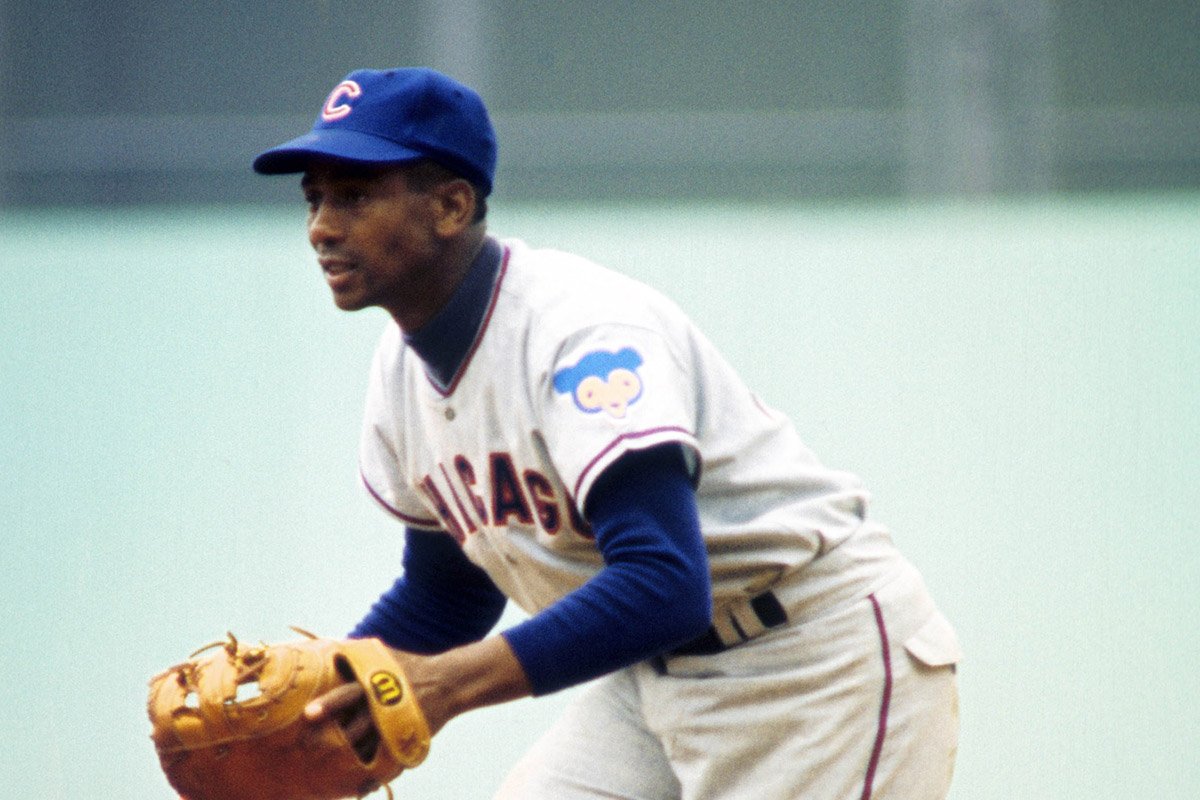 Have no fear, dear reader! I’m not about to ramble on for 900 long pages like Mr. Poust did in his similarly titled signature tome. But having finally caught up with all those spinning plates, what could be better than sitting here at the keyboard conjuring up memories of the myriad of Cubs games I’ve attended from 1969 to the 2016 playoffs? Why am I suddenly so nostalgic, you ask? Because the Cubbies are playing the Royals in a rare Friday afternoon game (8/18), and I’ll be turning the magical age of 65 in two short weeks. Both eventualities tend to incite a review of the things you’ve loved throughout the years. (It also leaves you plenty of time to buy me an expensive present.) So, why not temporarily shuffle off this Geneva coil and head down to Wrigley Field to bask in the mid-August sun? Because, unless the Cubs make the playoffs, between the redlight cameras, speed cameras, a collapsing mass transit system, and the kind of violence that’d make Quentin Tarantino jealous, I’m good watching the game in hi-def right here in my western edge of civilization home office where an Old Style doesn’t cost 12 bucks a pop. Oh, that’s right. They don’t sell Old Style anymore. Sigh. Don’t even get me started on what a “Bat of Beer” costs. Then they have the nerve to complain about overly drunk fans. What all that means is, if you’re willing to indulge this almost-officially-a-senior-citizen journalist in some fond remembrances, I promise I won’t disappoint you. My mother would be arrested in 2023 I’d wake up early on a weekend morning with a hankering to head down to the Friendly Confines. God bless my not-so-sainted mother for allowing my 11-year-old self and 9-year-old brother to head out to the Evanston Main Street L stop (they didn’t stop at South Boulevard on weekends) to transfer at Howard Street en route to the glorious A or train (on game days) Addison stop. Then we’d purchase two grandstand tickets to mitigate any rain possibility, I’d buy a program and pencil, and we’d wait in eager anticipation for the man in black to shout, “Play ball!” We could always get tickets, too, because, as Jack Brickhouse proudly announced, “The Cubs always save some gameday tickets so people could show up to watch the game.” The truth was the Loveable Losers didn’t sell out very often after the ’69 season. Of course, the vast irony is that any 2023 Evanston parent who allowed their pre-teen children to head into the Second City without adult supervision, on the CTA no less, would be hauled in front of a judge to be charged with felony child endangerment. And we repeated that halcyon L trip to Wrigley Field cycle dozens of times throughout the ‘70s. “Let’s play two!” If my brother and I managed to plan in advance, we’d target the doubleheaders that were de rigueur back in the ‘60s and ‘70s. Talk about getting a two-game bang for your $1.75 ticket buck! I can’t remember the specific date, but the July doubleheader I vividly recall was one against the San Diego Padres, where the first game went into extra innings. The second one was interrupted by three scattered thunderstorm rain delays. That meant we were at the ballpark field from 11:30 a.m. to 7:00 p.m., which meant I had to drop a dime in a stadium payphone to let my mother know what was happening. I might’ve set the Guinness Book world record for most 25-cent Borden Frosty Malts consumed in one day at 12. I thought I’d died and gone to baseball heaven – and my recollection is the Cubs won both ends of the DH too. All I can say is Mr. Cub was dead on about the glory that was regularly scheduled doubleheaders. Considering the strain they put on a pitching staff, I understand why they’ve fallen out of favor, but that doesn’t mean I don’t miss ‘em. Pitchers who can hit home runs Don’t get me wrong; I’ve been the biggest proponent of the designated hitter rule since it became the American League way back in 1973. Not only did it extend the careers of some of my favorite players – Willie Horton, Frank Thomas, Harold Baines, Jim Thome, Eddie Murray, Dave Kingman, and Carl Yastrzemski, but what self-respecting baseball fan really wants to see Jake Arrieta swing at three straight pitches two feet outside the strike zone. So, even though it’s not nearly enough of a reason for me to embark upon an anti-DH crusade, that doesn’t mean I don’t miss the likes of Bob Gibson, Carlos Zambrano, Milt Pappas, and Ferguson Jenkins, all of whom could go yard with surprising regularity. In addition to winning the Cy Young Award that year, Fergie homered six times in 1971, and my brother and I were there for his two-homer 5 to 3 Cubs victory against the Expos on September 1st. And his second homer to dead center was as long a blast as I’ve ever seen in person. It also looked as if the Hall of Famer barely swung the bat. Sadly, they didn’t even consider the possibility of an Ohtani-esque two-way player back in that era. Still, I firmly believe that, given the opportunity, Gibson, who hit .303 with a .347 OBP in 1970, would’ve excelled in that role. Baseball in the sunshine And that brings us to what I miss most, weekday afternoon baseball under the sun as the game was meant to be played. Trust me; I understand those lights were economically inevitable because, as the great Lee Elia so infamously noted: The [expletive deleteds] don’t even work. That’s why they’re out at the [expletive deleted] game. They ought to go out and get a [expletive deleted] job and find out what it’s like to go out and earn a [expletive deleted] living. Eighty-five percent of the [expletive deleted] world is working. The other fifteen percent come out here. Not to mention MLB commissioner Peter Ueberroth threatened to move any playoff home games out of Wrigley Field without lights, and a North Side All-Star game was completely out of the question. Over the years, a slew of former Cubs players claimed that having to endure that persistent afternoon heat wore them down, but that had to be one of the lamest sports excuses I’ve ever heard. Yes, the incessant travel and a 162-game schedule could be grueling, but every team has to contend with those issues. As far as the heat and sun go, in what other sport can you be as obese as Bartolo Colon, Prince Fielder, C. C. Sabathia, Rod Beck, John Kruk, and David Wells and still succeed? The truly grueling athletic endeavors include marathons, soccer games where the clock never stops, football, and the Tour de France. Again, I understand why night games are far more fiscally feasible; the problem is I’m old, which means being in bed by 8:30, which means, if it wasn’t for TIVO, I might not see that many Cubs games. I hope you’ve enjoyed reading my pre-65th birthday nostalgic Cubs journey as much as I enjoyed writing it. But now it’s your turn! So, to my sexagenarian compatriots (and everyone else), what do you miss most about the MLB baseball of your misspent youth?