Brandon Glick
-
Posts
1,153 -
Joined
-
Last visited
Content Type
Profiles
Joomla Posts 1
Chicago Cubs Videos
Chicago Cubs Free Agent & Trade Rumors, Notes, & Tidbits
2026 Chicago Cubs Top Prospects Ranking
News
2023 Chicago Cubs Draft Picks
Guides & Resources
2024 Chicago Cubs Draft Picks
The Chicago Cubs Players Project
2025 Chicago Cubs Draft Pick Tracker
2026 Chicago Cubs Draft Tracker: Picks & Bonuses
Blogs
Events
Forums
Store
Gallery
Everything posted by Brandon Glick
-
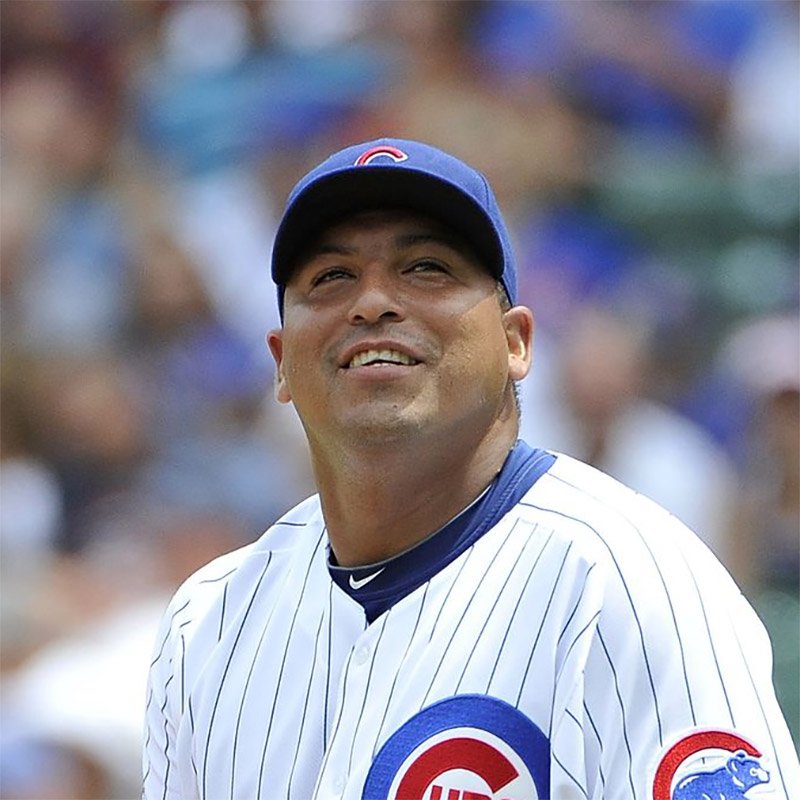 The Cubs signed Carlos Zambrano out of Puerto Cabello, Venezuela, on July 12, 1997. By his third year in pro ball, he was a reliever at Triple-A Iowa, leading to his highest prospect ranking of 68 by Baseball America. Zambrano debuted in August of 2001 and would become a fixture in the Cubs’ rotation for the next decade. The pitcher affectionately referred to as “Big Z,” threw 209+ innings in five consecutive seasons from 2003-2007, combining workhorse stamina with occasionally elite results. He led the league in walks allowed in 2006 and 2007 (not to mention when he led the league in hit-by-pitch with 20 in 2004). Still, he was also uniquely gifted at keeping the ball in the ballpark, only allowing more than one home run per nine innings once in his Cubs tenure (his final season with the team). Zambrano earned All-Star selections in 2004, 2006, and 2008, which was a reflection of his pitching prowess. However, Zambrano was also known as a legitimate threat at the plate, with three seasons of a .300+ batting average. He also had three years of leading all pitchers in home runs hit, each of which coincided with his three Silver Slugger awards. The Cubs re-signed Zambrano to a five-year, $91.5 million extension in August of 2007, still the most lucrative in-house extension the Cubs have ever handed out. Though Zambrano’s best days were behind him at this point, he was still the ace of a team that won the NL Central in 2008 with 97 wins and was the number one seed in the National League that season. “El Toro” was a consistently good pitcher through some important years in Cubs history, but Cubs fans loved him for his temperament and emotions on the mound. He had several famous outbursts pointed at umpires, opponents, and teammates alike, as his passion for baseball was plain to see. From home runs to postseason starts, Zambrano had several memorable highlights with the Cubs. However, his no-hitter on September 14, 2008, against the Houston Astros permeates fans’ memories to this day. The circumstances surrounding that game were wild enough - Hurricane Ike had forced the Cubs and Astros to play at Miller Park (making it the only no-hitter in MLB history to be pitched at a neutral site) - though the historical context was just as incredible. It was the first no-hitter for the Cubs since Milt Pappas’ near-perfect game in 1972 against the Padres, ending the second-longest drought between no-hitters in franchise history. Zambrano’s Cubs tenure officially ended when the Cubs traded him to the Miami Marlins on January 5, 2012, in exchange for Chris Volstad. However, his foot was already out the door after being placed on the “disqualified players list” in August of the previous season following one of his patented emotional outbursts. That season with the Marlins was his final year in the majors, though he attempted failed comebacks in 2013 (with the Phillies) and 2018 (in independent ball). One of the few successfully developed pitching prospects the franchise has had in recent decades, Big Z never quite reached the stratospheric heights some believed he was capable of. However, his big personality at the plate and on the mound endeared him to a generation of Cubs fans, hence his popularity today.
 -
The Cubs signed Carlos Zambrano out of Puerto Cabello, Venezuela, on July 12, 1997. By his third year in pro ball, he was a reliever at Triple-A Iowa, leading to his highest prospect ranking of 68 by Baseball America. Zambrano debuted in August of 2001 and would become a fixture in the Cubs’ rotation for the next decade. The pitcher affectionately referred to as “Big Z,” threw 209+ innings in five consecutive seasons from 2003-2007, combining workhorse stamina with occasionally elite results. He led the league in walks allowed in 2006 and 2007 (not to mention when he led the league in hit-by-pitch with 20 in 2004). Still, he was also uniquely gifted at keeping the ball in the ballpark, only allowing more than one home run per nine innings once in his Cubs tenure (his final season with the team). Zambrano earned All-Star selections in 2004, 2006, and 2008, which was a reflection of his pitching prowess. However, Zambrano was also known as a legitimate threat at the plate, with three seasons of a .300+ batting average. He also had three years of leading all pitchers in home runs hit, each of which coincided with his three Silver Slugger awards. The Cubs re-signed Zambrano to a five-year, $91.5 million extension in August of 2007, still the most lucrative in-house extension the Cubs have ever handed out. Though Zambrano’s best days were behind him at this point, he was still the ace of a team that won the NL Central in 2008 with 97 wins and was the number one seed in the National League that season. “El Toro” was a consistently good pitcher through some important years in Cubs history, but Cubs fans loved him for his temperament and emotions on the mound. He had several famous outbursts pointed at umpires, opponents, and teammates alike, as his passion for baseball was plain to see. From home runs to postseason starts, Zambrano had several memorable highlights with the Cubs. However, his no-hitter on September 14, 2008, against the Houston Astros permeates fans’ memories to this day. The circumstances surrounding that game were wild enough - Hurricane Ike had forced the Cubs and Astros to play at Miller Park (making it the only no-hitter in MLB history to be pitched at a neutral site) - though the historical context was just as incredible. It was the first no-hitter for the Cubs since Milt Pappas’ near-perfect game in 1972 against the Padres, ending the second-longest drought between no-hitters in franchise history. Zambrano’s Cubs tenure officially ended when the Cubs traded him to the Miami Marlins on January 5, 2012, in exchange for Chris Volstad. However, his foot was already out the door after being placed on the “disqualified players list” in August of the previous season following one of his patented emotional outbursts. That season with the Marlins was his final year in the majors, though he attempted failed comebacks in 2013 (with the Phillies) and 2018 (in independent ball). One of the few successfully developed pitching prospects the franchise has had in recent decades, Big Z never quite reached the stratospheric heights some believed he was capable of. However, his big personality at the plate and on the mound endeared him to a generation of Cubs fans, hence his popularity today. View full player
-
The outfielder will likely be moved to DH with the news of Cody Bellinger’s return, making him a prime trade candidate if the Cubs want to seek upgrades in the lineup. Image courtesy of © Katie Stratman-Imagn Images Seiya Suzuki hasn’t been a disappointment since signing a five-year, $85 million deal with the Cubs in March 2022, with an OPS that has climbed every year he’s been in the majors and topped out at .848 in 2024. Outside of a strikeout rate that climbed to 27.4% this past season, Suzuki has improved nearly every part of his game since first debuting stateside. Case in point: his bWAR in 2024 was a career-high 3.5. That said, Suzuki hasn’t evolved into a true middle-of-the-order threat. He hit 21 home runs this past season over 132 games, which marked a new high point for him. Assuming he does move to designated hitter with Cody Bellinger taking over in right field, it will put much more stress on his bat to live up to his billing. Add in his $17 million AAV over the next two years, and you’ve got a player with obvious value but may not be a perfect fit for this iteration of the Cubs. The Case For Trading Seiya Suzuki The Cubs have one glaring, obvious need in the lineup at non-catcher spots: power. In 2024, they finished tied for 20th (with the Kansas City Royals) in home runs, with 170 as a team. That was only seven behind the division-leading Milwaukee Brewers but a whopping 60+ behind the two World Series participants (the Dodgers finished third with 233 home runs, while the Yankees finished first with 237). Ian Happ led the Cubs with 25 home runs, tied for the 24th-lowest team-leading total in the majors. Suzuki and Michael Busch were tied for second on the team. No one else on the Cubs hit even 20 home runs last year, with Bellinger and Christopher Morel, who was traded at the deadline, coming in at third with 18. Suzuki is an ideal fit to bat second or fifth as a high-average run producer on a team with established power threats in the middle of the lineup. On the Cubs, he’s being asked to do too much. With just two years and $34 million remaining on his original deal, the Japanese outfielder could be an ideal fit on several contenders' rosters without breaking the bank. In return, the Cubs could free up some valuable payroll space and the DH spot in the lineup, all while receiving major league-ready talent in return, either in the form of controllable arms or potentially at catcher. Assuming the team can’t trade Bellinger for anything worthwhile, and assuming they don’t want to trade Ian Happ, Suzuki feels like the odd man out in the Cubs’ outfield rotation. Of course, trading away a surefire, above-average bat like Suzuki’s isn’t the best business practice for a team needing more offense. Likewise, the team may feel more incentive to keep him if it wants to remain a shining beacon for Japanese players, including the recently-posted Roki Sasaki. Nevertheless, comparable trades from the past show the Cubs can extract some value to help the team in 2025 if they deal Suzuki. Back in 2021, at the trade deadline, the Texas Rangers dealt All-Star outfielder Joey Gallo to the New York Yankees for four prospects: shortstop Josh Smith (Yankees No. 14 prospect on MLB.com), 2B Ezequiel Duran (No. 15), second baseman/outfielder Trevor Hauver (No. 23), and right-handed pitcher Glen Otto (No. 28). Gallo was having the best season of his career at the time of the deal, with 25 home runs and Gold Glove-caliber defense in the season’s first half, though he never had the consistency that Suzuki does (as evidenced by his complete collapse in NY after the trade). Gallo had 1.5 seasons of control via arbitration at the time of the deal. Earlier that year, the Red Sox swapped sterling young outfielder Andrew Benintendi for two prospects (OF Franchy Cordero and right-hander Josh Winckowski) and three players to be named later. Benintendi was just 26 years old at the time of the deal and peaking in talent, eventually winning a Gold Glove and earning an All-Star appearance in Kansas City. Benintendi had two years of team control left at the time of the deal. Perhaps the deal that resonates the most around these parts is the Christian Yelich swap back in 2018, where the Brewers netted the star outfielder in exchange for baseball's then-No. 13 prospect Lewis Brinson, infielder Isan Díaz, outfielder Monte Harrison and right-hander Jordan Yamamoto. Yelich had four years left on the original seven-year, $49.5 million contract he signed with the Marlins. He was 26 at the time of the trade. Thus, the Cubs can expect some solid prospect depth in return for Suzuki, but he’s older and more expensive than any of the three players aforementioned. A top-100 prospect and perhaps a couple of low-level fliers seem like a reasonable asking price. Potential Trade Partners The Boston Red Sox desperately need an outfielder to pair with breakout star Jarren Duran, especially if they trade Masataka Yoshida or Wilyer Abreu for badly needed pitching help. They have a loaded farm system, though most of their top prospects are position players, which could dissuade the Cubs from engaging. Perhaps controllable catcher Connor Wong (.758 OPS in 2024) could make for a solid fit next to Miguel Amaya. The Chicago White Sox badly need offensive help after finishing dead last in runs scored by almost 100 last season. Suzuki is older and more expensive than the kinds of players they should be targeting in a rebuild, though he’d make a fine short-term replacement for Luis Robert Jr. if Chicago’s other team cashes in on their best trade chip not named Garrett Crochet. The Kansas City Royals finally broke through in 2024 after years of rebuilding, though mainly on the back of elite starting pitching. MJ Melendez was probably their best outfielder this past season, and he finished with an OPS of .673. For the price of catcher Freddy Fermin and a high-upside, well-regarded pitching prospect, Suzuki would look mighty fine penciled in behind superstar Bobby Witt Jr. every day. The New York Yankees might need a replacement for Juan Soto soon, which, admittedly, Suzuki is not. However, he’s a much better fielder than Soto and would find a comfortable home hitting beside Aaron Judge and Anthony Volpe in the Bronx Bombers’ lineup. The Cubs and Yankees have done a lot of business in recent years, so Chicago surely has a few prospects that it likes from the Yanks’ system. Other teams have serious outfield needs, and the Cubs may find a solution to their catching woes elsewhere. However, Suzuki would draw the interest of many organizations around the league, regardless of their stage of contention. Conclusion The Cubs shouldn’t want to trade Suzuki. He’s an above-average hitter capable of playing average defense in the corners of the outfield. For $34 million over the next two seasons, that’s a valuable player to have around on a team that claims it wants to contend again. However, with Bellinger, Pete Crow-Armstrong, and Happ all locked in for 2025, Suzuki has no defensive home on the Cubs. Even if he takes over daily designated hitter duties, his bat may not have the power the Cubs are seeking in the middle of the lineup. Plus, with prospects like Owen Caissie and Kevin Alcantara banging on the door of the majors, the outfield rotation is about to become much more crowded in short order. Suppose they can fill a need with a controllable player or diversify their prospect portfolio in the upper levels of the minor leagues by trading Suzuki. In that case, that’s a trigger Jed Hoyer will have to pull. View full article
-
 Seiya Suzuki hasn’t been a disappointment since signing a five-year, $85 million deal with the Cubs in March 2022, with an OPS that has climbed every year he’s been in the majors and topped out at .848 in 2024. Outside of a strikeout rate that climbed to 27.4% this past season, Suzuki has improved nearly every part of his game since first debuting stateside. Case in point: his bWAR in 2024 was a career-high 3.5. That said, Suzuki hasn’t evolved into a true middle-of-the-order threat. He hit 21 home runs this past season over 132 games, which marked a new high point for him. Assuming he does move to designated hitter with Cody Bellinger taking over in right field, it will put much more stress on his bat to live up to his billing. Add in his $17 million AAV over the next two years, and you’ve got a player with obvious value but may not be a perfect fit for this iteration of the Cubs. The Case For Trading Seiya Suzuki The Cubs have one glaring, obvious need in the lineup at non-catcher spots: power. In 2024, they finished tied for 20th (with the Kansas City Royals) in home runs, with 170 as a team. That was only seven behind the division-leading Milwaukee Brewers but a whopping 60+ behind the two World Series participants (the Dodgers finished third with 233 home runs, while the Yankees finished first with 237). Ian Happ led the Cubs with 25 home runs, tied for the 24th-lowest team-leading total in the majors. Suzuki and Michael Busch were tied for second on the team. No one else on the Cubs hit even 20 home runs last year, with Bellinger and Christopher Morel, who was traded at the deadline, coming in at third with 18. Suzuki is an ideal fit to bat second or fifth as a high-average run producer on a team with established power threats in the middle of the lineup. On the Cubs, he’s being asked to do too much. With just two years and $34 million remaining on his original deal, the Japanese outfielder could be an ideal fit on several contenders' rosters without breaking the bank. In return, the Cubs could free up some valuable payroll space and the DH spot in the lineup, all while receiving major league-ready talent in return, either in the form of controllable arms or potentially at catcher. Assuming the team can’t trade Bellinger for anything worthwhile, and assuming they don’t want to trade Ian Happ, Suzuki feels like the odd man out in the Cubs’ outfield rotation. Of course, trading away a surefire, above-average bat like Suzuki’s isn’t the best business practice for a team needing more offense. Likewise, the team may feel more incentive to keep him if it wants to remain a shining beacon for Japanese players, including the recently-posted Roki Sasaki. Nevertheless, comparable trades from the past show the Cubs can extract some value to help the team in 2025 if they deal Suzuki. Back in 2021, at the trade deadline, the Texas Rangers dealt All-Star outfielder Joey Gallo to the New York Yankees for four prospects: shortstop Josh Smith (Yankees No. 14 prospect on MLB.com), 2B Ezequiel Duran (No. 15), second baseman/outfielder Trevor Hauver (No. 23), and right-handed pitcher Glen Otto (No. 28). Gallo was having the best season of his career at the time of the deal, with 25 home runs and Gold Glove-caliber defense in the season’s first half, though he never had the consistency that Suzuki does (as evidenced by his complete collapse in NY after the trade). Gallo had 1.5 seasons of control via arbitration at the time of the deal. Earlier that year, the Red Sox swapped sterling young outfielder Andrew Benintendi for two prospects (OF Franchy Cordero and right-hander Josh Winckowski) and three players to be named later. Benintendi was just 26 years old at the time of the deal and peaking in talent, eventually winning a Gold Glove and earning an All-Star appearance in Kansas City. Benintendi had two years of team control left at the time of the deal. Perhaps the deal that resonates the most around these parts is the Christian Yelich swap back in 2018, where the Brewers netted the star outfielder in exchange for baseball's then-No. 13 prospect Lewis Brinson, infielder Isan Díaz, outfielder Monte Harrison and right-hander Jordan Yamamoto. Yelich had four years left on the original seven-year, $49.5 million contract he signed with the Marlins. He was 26 at the time of the trade. Thus, the Cubs can expect some solid prospect depth in return for Suzuki, but he’s older and more expensive than any of the three players aforementioned. A top-100 prospect and perhaps a couple of low-level fliers seem like a reasonable asking price. Potential Trade Partners The Boston Red Sox desperately need an outfielder to pair with breakout star Jarren Duran, especially if they trade Masataka Yoshida or Wilyer Abreu for badly needed pitching help. They have a loaded farm system, though most of their top prospects are position players, which could dissuade the Cubs from engaging. Perhaps controllable catcher Connor Wong (.758 OPS in 2024) could make for a solid fit next to Miguel Amaya. The Chicago White Sox badly need offensive help after finishing dead last in runs scored by almost 100 last season. Suzuki is older and more expensive than the kinds of players they should be targeting in a rebuild, though he’d make a fine short-term replacement for Luis Robert Jr. if Chicago’s other team cashes in on their best trade chip not named Garrett Crochet. The Kansas City Royals finally broke through in 2024 after years of rebuilding, though mainly on the back of elite starting pitching. MJ Melendez was probably their best outfielder this past season, and he finished with an OPS of .673. For the price of catcher Freddy Fermin and a high-upside, well-regarded pitching prospect, Suzuki would look mighty fine penciled in behind superstar Bobby Witt Jr. every day. The New York Yankees might need a replacement for Juan Soto soon, which, admittedly, Suzuki is not. However, he’s a much better fielder than Soto and would find a comfortable home hitting beside Aaron Judge and Anthony Volpe in the Bronx Bombers’ lineup. The Cubs and Yankees have done a lot of business in recent years, so Chicago surely has a few prospects that it likes from the Yanks’ system. Other teams have serious outfield needs, and the Cubs may find a solution to their catching woes elsewhere. However, Suzuki would draw the interest of many organizations around the league, regardless of their stage of contention. Conclusion The Cubs shouldn’t want to trade Suzuki. He’s an above-average hitter capable of playing average defense in the corners of the outfield. For $34 million over the next two seasons, that’s a valuable player to have around on a team that claims it wants to contend again. However, with Bellinger, Pete Crow-Armstrong, and Happ all locked in for 2025, Suzuki has no defensive home on the Cubs. Even if he takes over daily designated hitter duties, his bat may not have the power the Cubs are seeking in the middle of the lineup. Plus, with prospects like Owen Caissie and Kevin Alcantara banging on the door of the majors, the outfield rotation is about to become much more crowded in short order. Suppose they can fill a need with a controllable player or diversify their prospect portfolio in the upper levels of the minor leagues by trading Suzuki. In that case, that’s a trigger Jed Hoyer will have to pull.
 -
Technically speaking, some lists, like this one from Fangraphs, dispute Starlin Castro’s ranking as the best prospect in the Cubs system at the time, though most prospect gurus agreed the teenage shortstop was the best they had (side note: take a look at the rest of that list. It’s depressing… and an important reminder that even a system’s best prospects might not work out). Castro had a ton of helium following two seasons in the minor leagues where he did nothing but hit, and on May 7th, 2010, Castro was called up directly from Double-A Tennessee to make his Major League debut. Speaking of his debut: holy crap, what a debut it was! The first player born in the 1990s to play in an MLB game [feel old yet?], Castro drove in a record six runs against the Cincinnati Reds, homering in his first at-bat off of Homer Bailey. Castro would go on to have a fine rookie season, finishing with a .300/.347/.408 slash line and a fifth-place finish in the Rookie of the Year voting. The debut was impressive from a mere 20-year-old, especially considering the struggles of the rest of the lineup in a down year for the Cubs. He kept it going from there, too, leading the National League in hits with 207 and earning the first of four All-Star appearances in his career (three with the Cubs, one with the Yankees). Castro was something of an ironman, a stat-sheet stuffer in his time with the Cubs, leading the National League in at-bats in three consecutive seasons (2011, 2012, 2013), playing all 162 games in both 2012 and 2019 (with Miami), and also posting double-digit stolen bases in each of his first three seasons in the majors (though he led the NL in caught stealing attempts in 2012). He was a ubiquitous presence on the Cubs during Theo Epstein’s rebuild, finally seeing his commitment to the team yield some success as he manned second base on the way to the 2015 NLCS. During his tenure on the team, the fanbase was split on Castro. Though he was an annual .300 batting average threat, his lack of plate discipline and fielding troubles (20-plus errors in each of his first four seasons) sometimes made his impact feel empty. He was also questioned for his focus during games, though in hindsight, those platitudes were more reactionary than grounded in empirical fact. For every down moment, there were several highlights that Castro would produce. Castro’s Cubs career ended once Epstein’s rebuild began to bear fruit, as he was traded away on December 8th, 2015, to the Yankees for Adam Warren and Brendan Ryan. Of course, fans knew at the time the move was really to free up some cash and a roster spot for Ben Zobrist, a favorite of manager Joe Maddon’s and long an apple of the front office’s eye. From there, Castro would finish his career with the Yankees, Marlins, and Nationals, leaving Major League Baseball after some personal troubles and serious allegations were levied against him. Though it was an unceremonious and troubled curtain call to a once-promising career, Castro delivered on the hype he had as a prospect. He ranks in the top 50 all-time with 1615 hits before turning 30, 991 of which were accrued with the Cubs. Starlin Castro may have been the face of the Cubs during some of the franchise’s most prolific losing seasons, but he was always there. Odds are, if you went to a ballgame at Wrigley between 2010 and 2015, Castro was starting in the middle infield for the Cubs. Though he wasn’t a part of the team that did win it all in 2016, his chapter in Cubs history will be remembered fondly. View full player
-
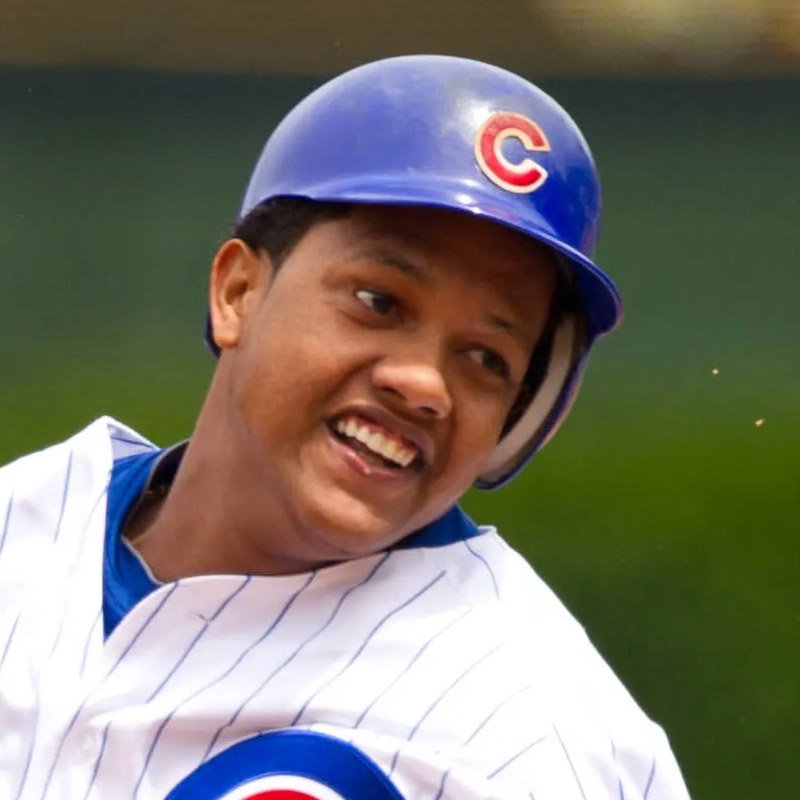 Technically speaking, some lists, like this one from Fangraphs, dispute Starlin Castro’s ranking as the best prospect in the Cubs system at the time, though most prospect gurus agreed the teenage shortstop was the best they had (side note: take a look at the rest of that list. It’s depressing… and an important reminder that even a system’s best prospects might not work out). Castro had a ton of helium following two seasons in the minor leagues where he did nothing but hit, and on May 7th, 2010, Castro was called up directly from Double-A Tennessee to make his Major League debut. Speaking of his debut: holy crap, what a debut it was! The first player born in the 1990s to play in an MLB game [feel old yet?], Castro drove in a record six runs against the Cincinnati Reds, homering in his first at-bat off of Homer Bailey. Castro would go on to have a fine rookie season, finishing with a .300/.347/.408 slash line and a fifth-place finish in the Rookie of the Year voting. The debut was impressive from a mere 20-year-old, especially considering the struggles of the rest of the lineup in a down year for the Cubs. He kept it going from there, too, leading the National League in hits with 207 and earning the first of four All-Star appearances in his career (three with the Cubs, one with the Yankees). Castro was something of an ironman, a stat-sheet stuffer in his time with the Cubs, leading the National League in at-bats in three consecutive seasons (2011, 2012, 2013), playing all 162 games in both 2012 and 2019 (with Miami), and also posting double-digit stolen bases in each of his first three seasons in the majors (though he led the NL in caught stealing attempts in 2012). He was a ubiquitous presence on the Cubs during Theo Epstein’s rebuild, finally seeing his commitment to the team yield some success as he manned second base on the way to the 2015 NLCS. During his tenure on the team, the fanbase was split on Castro. Though he was an annual .300 batting average threat, his lack of plate discipline and fielding troubles (20-plus errors in each of his first four seasons) sometimes made his impact feel empty. He was also questioned for his focus during games, though in hindsight, those platitudes were more reactionary than grounded in empirical fact. For every down moment, there were several highlights that Castro would produce. Castro’s Cubs career ended once Epstein’s rebuild began to bear fruit, as he was traded away on December 8th, 2015, to the Yankees for Adam Warren and Brendan Ryan. Of course, fans knew at the time the move was really to free up some cash and a roster spot for Ben Zobrist, a favorite of manager Joe Maddon’s and long an apple of the front office’s eye. From there, Castro would finish his career with the Yankees, Marlins, and Nationals, leaving Major League Baseball after some personal troubles and serious allegations were levied against him. Though it was an unceremonious and troubled curtain call to a once-promising career, Castro delivered on the hype he had as a prospect. He ranks in the top 50 all-time with 1615 hits before turning 30, 991 of which were accrued with the Cubs. Starlin Castro may have been the face of the Cubs during some of the franchise’s most prolific losing seasons, but he was always there. Odds are, if you went to a ballgame at Wrigley between 2010 and 2015, Castro was starting in the middle infield for the Cubs. Though he wasn’t a part of the team that did win it all in 2016, his chapter in Cubs history will be remembered fondly.
 -
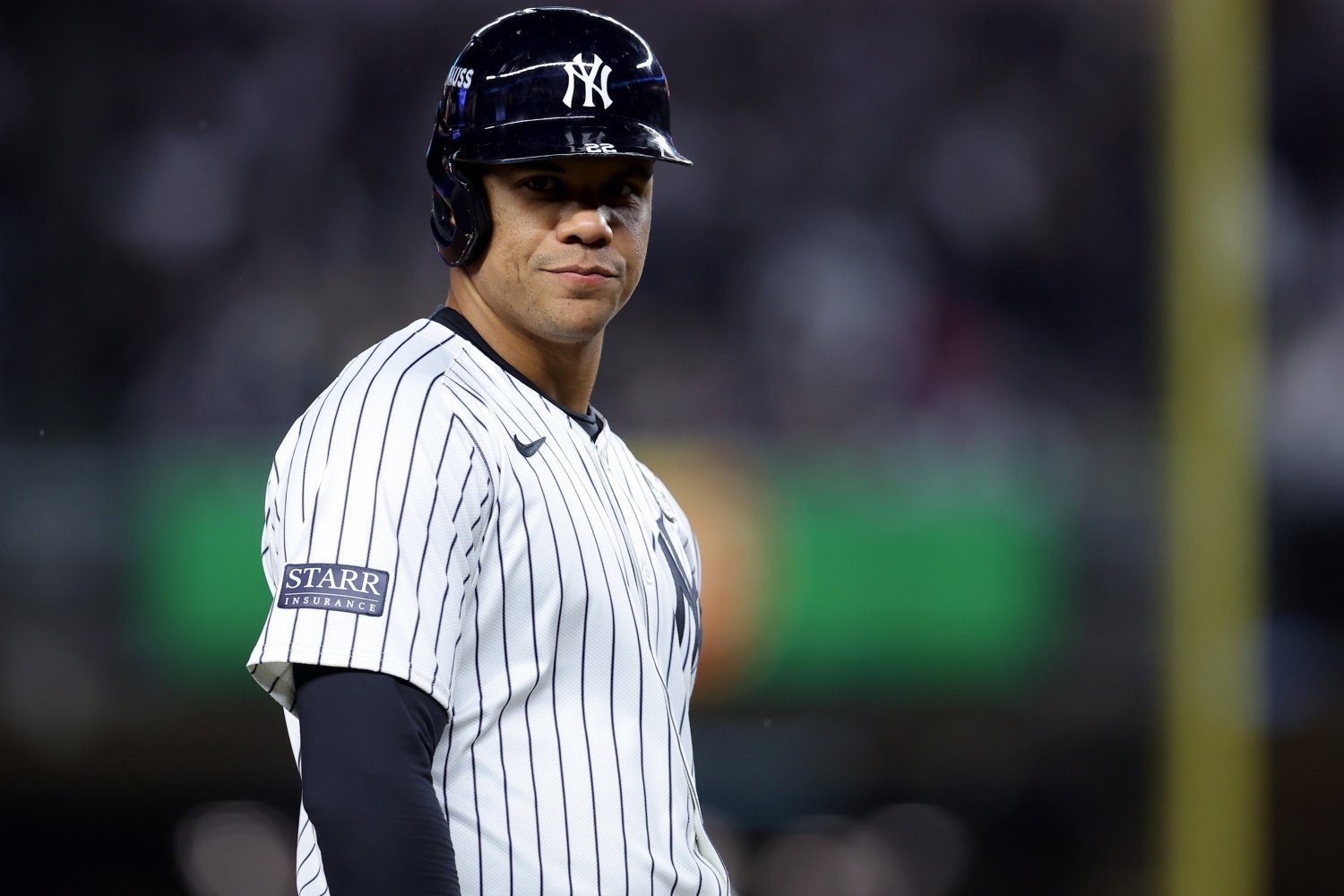 One year after the most famous free agency saga of all time, Juan Soto is heading into the land of unclaimed superstars expecting to incite a bidding war of his own. Now, Soto isn't exactly the player that Shohei Ohtani is. He's an all-time great hitter who marries power with patience in a way the sport hasn't really seen since the prime days of Barry Bonds, but he lacks the extra dimensions of major defensive or baserunning value. Ohtani is a two-way threat who dwarfs anything baseball has ever seen, having garnered two MVPs and a top-five finish in Cy Young voting, all before hitting free agency. It became clear that Ohtani would break the $500 million threshold early on in his free agency endeavor, with reports suggesting he could even break the $600 million barrier. His status as the game's most important free agent ever grew so loud that there were fans speculating over the name of his dog. And who can forget when it was falsely reported that he was on a flight to Toronto, supposedly to discuss a contract with the Blue Jays? As good a player as Soto is, he isn't going to cause the stir that Ohtani did. His career OPS of .953 is comically high, but he can't do that while also firing off 150 innings of 3.00 ERA ball. Soto is the perfect hitter; the ideal version of the modern offensive player. Ohtani is a singularity that defies what we know about baseball. All that being said, Soto is still going to get a monster contract in free agency this winter. Recent reports suggest he could push for as much as $600 million, which is the sort of figure Ohtani was supposedly dabbling in before securing a (heavily-deferred) $700 million payday. It isn't outrageous to think that a 26-year-old who's been 60% better than the average hitter for his career (160 OPS+) could push for that kind of money, especially when considering the teams who'll be bidding for his services over the next decade or more. His edge on Ohtani is that youth; he's three years younger than Ohtani was when he attained free agency. The New York Yankees and Los Angeles Dodgers, fresh off doing battle in the World Series, will be serious players for Soto. As the incumbent, the Yankees should be looked at as the favorites, especially since Soto knows signing with them means a decade or more of hitting in front of Aaron Judge and taking aim at the short right-field porch in Yankee Stadium. The Dodgers, meanwhile, will be involved with every superstar free agent that hits the market in perpetuity. They spent more than $1 billion on Ohtani and Yoshinobu Yamamoto alone last offseason, and their pockets run as deep as anyone’s. The third team presumed to be in the race is the New York Mets. Perhaps the only team with more money to spend than the 2024 World Series participants, the Mets have been a spending juggernaut under current owner Steve Cohen. They made a surprising run to the NLCS this year, and they now have the chance to pair Soto with Francisco Lindor for the next decade. Rest assured that if Soto doesn’t pick the Mets, it won’t be because they were outbid for his services. So, where does that leave the Cubs in this equation? They’re the fourth-most valuable franchise in the sport, worth at least $1.2 billion more than the Mets. Their 2023 revenue of $506 million ranked behind only the Dodgers and Yankees. And the Ricketts family, helmed by Joe and Tom, has a net worth of $4 billion. By all accounts, they have the resources to enter the bidding war for Soto. Unfortunately, any Cubs fan knows the reality of the situation: the team probably isn’t going to be a serious competitor for the best non-Ohtani free agent in years, and possibly ever. The largest contracts in the franchise’s history are Jason Heyward’s eight-year, $184 million deal (which he signed in free agency when he was 26) and Dansby Swanson’s seven-year, $177 million pact. No player on the team has ever had an AAV higher than Jon Lester’s $25.8 million (for a long-term deal) or Cody Bellinger’s $26.7 million (for a short-term deal). That means the Cubs haven’t gone to a place that small-market teams like the Brewers and Diamondbacks have: a $200-million contract. Soto, of course, is going to blow that figure out of the water. He’ll probably triple it, and he’ll be worth it if he stays healthy. Seiya Suzuki and Bellinger are good players, and staples on the current iteration of the Cubs, but trading one or both to free up right field and payroll space for Soto would be a no-brainer. Alas, expecting the Cubs to dip their toes in free agent water that deep is a fool’s errand. So, as the fireworks unfold and rumors fly, don’t expect the Cubs to elicit more than a perfunctory mention from the national pundits as a suitor for Soto. Agent Scott Boras will keep tossing their name out in the discussion as a means to drive up the bidding, but don’t get your hopes up. The best hitter in baseball is now a free agent, and the Chicago Cubs are going to willingly remove themselves from consideration.
 -
Primed for a contract in excess of half a billion dollars, the outfielder is about to strike it rich. Will the big-market Chicago Cubs even bother playing in the deep end of the free agency pool? Image courtesy of © Brad Penner-Imagn Images One year after the most famous free agency saga of all time, Juan Soto is heading into the land of unclaimed superstars expecting to incite a bidding war of his own. Now, Soto isn't exactly the player that Shohei Ohtani is. He's an all-time great hitter who marries power with patience in a way the sport hasn't really seen since the prime days of Barry Bonds, but he lacks the extra dimensions of major defensive or baserunning value. Ohtani is a two-way threat who dwarfs anything baseball has ever seen, having garnered two MVPs and a top-five finish in Cy Young voting, all before hitting free agency. It became clear that Ohtani would break the $500 million threshold early on in his free agency endeavor, with reports suggesting he could even break the $600 million barrier. His status as the game's most important free agent ever grew so loud that there were fans speculating over the name of his dog. And who can forget when it was falsely reported that he was on a flight to Toronto, supposedly to discuss a contract with the Blue Jays? As good a player as Soto is, he isn't going to cause the stir that Ohtani did. His career OPS of .953 is comically high, but he can't do that while also firing off 150 innings of 3.00 ERA ball. Soto is the perfect hitter; the ideal version of the modern offensive player. Ohtani is a singularity that defies what we know about baseball. All that being said, Soto is still going to get a monster contract in free agency this winter. Recent reports suggest he could push for as much as $600 million, which is the sort of figure Ohtani was supposedly dabbling in before securing a (heavily-deferred) $700 million payday. It isn't outrageous to think that a 26-year-old who's been 60% better than the average hitter for his career (160 OPS+) could push for that kind of money, especially when considering the teams who'll be bidding for his services over the next decade or more. His edge on Ohtani is that youth; he's three years younger than Ohtani was when he attained free agency. The New York Yankees and Los Angeles Dodgers, fresh off doing battle in the World Series, will be serious players for Soto. As the incumbent, the Yankees should be looked at as the favorites, especially since Soto knows signing with them means a decade or more of hitting in front of Aaron Judge and taking aim at the short right-field porch in Yankee Stadium. The Dodgers, meanwhile, will be involved with every superstar free agent that hits the market in perpetuity. They spent more than $1 billion on Ohtani and Yoshinobu Yamamoto alone last offseason, and their pockets run as deep as anyone’s. The third team presumed to be in the race is the New York Mets. Perhaps the only team with more money to spend than the 2024 World Series participants, the Mets have been a spending juggernaut under current owner Steve Cohen. They made a surprising run to the NLCS this year, and they now have the chance to pair Soto with Francisco Lindor for the next decade. Rest assured that if Soto doesn’t pick the Mets, it won’t be because they were outbid for his services. So, where does that leave the Cubs in this equation? They’re the fourth-most valuable franchise in the sport, worth at least $1.2 billion more than the Mets. Their 2023 revenue of $506 million ranked behind only the Dodgers and Yankees. And the Ricketts family, helmed by Joe and Tom, has a net worth of $4 billion. By all accounts, they have the resources to enter the bidding war for Soto. Unfortunately, any Cubs fan knows the reality of the situation: the team probably isn’t going to be a serious competitor for the best non-Ohtani free agent in years, and possibly ever. The largest contracts in the franchise’s history are Jason Heyward’s eight-year, $184 million deal (which he signed in free agency when he was 26) and Dansby Swanson’s seven-year, $177 million pact. No player on the team has ever had an AAV higher than Jon Lester’s $25.8 million (for a long-term deal) or Cody Bellinger’s $26.7 million (for a short-term deal). That means the Cubs haven’t gone to a place that small-market teams like the Brewers and Diamondbacks have: a $200-million contract. Soto, of course, is going to blow that figure out of the water. He’ll probably triple it, and he’ll be worth it if he stays healthy. Seiya Suzuki and Bellinger are good players, and staples on the current iteration of the Cubs, but trading one or both to free up right field and payroll space for Soto would be a no-brainer. Alas, expecting the Cubs to dip their toes in free agent water that deep is a fool’s errand. So, as the fireworks unfold and rumors fly, don’t expect the Cubs to elicit more than a perfunctory mention from the national pundits as a suitor for Soto. Agent Scott Boras will keep tossing their name out in the discussion as a means to drive up the bidding, but don’t get your hopes up. The best hitter in baseball is now a free agent, and the Chicago Cubs are going to willingly remove themselves from consideration. View full article
-
Can Chicago Cubs Pluck An MLB-Ready Catcher From Pittsburgh's System?
Brandon Glick posted an article in Cubs
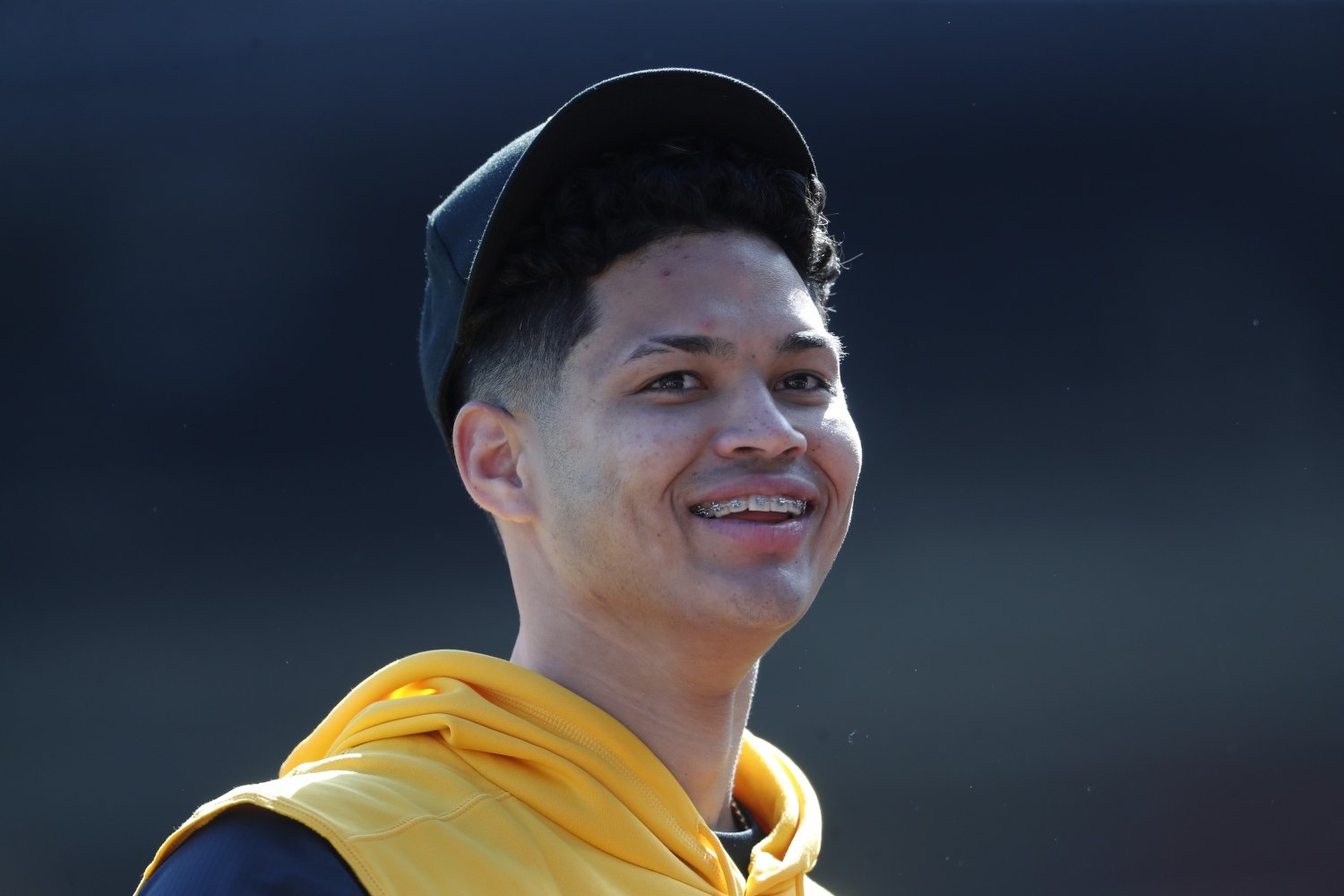 The Pittsburgh Pirates look like they’ll be cautious buyers this offseason, with a young core that features center fielder Oneil Cruz, left fielder Bryan Reynolds, and a trio of aces in Paul Skenes, Jared Jones, and Mitch Keller. However, Bob Nutting is a notoriously cheap owner, and the Pirates won’t be dipping their toes into the deep end of free agency any time soon. As such, they’ll need to scour the trade market in order to build around their in-house talent. The Cubs, meanwhile, should absolutely be buyers this offseason, with plenty of money coming off the books. There is an obvious need for an ace atop the staff, as well as some middle-of-the-order boppers. Elsewhere on the roster, though, is a pressing need for a catcher. The team tried to trade for Logan O’Hoppe last season, but they weren’t able to get the deal across the finish line. Thus, we arrive at an obvious fit between trade partners. The Pirates have breakout starter Joey Bart (formerly the Giants’ top prospect), Henry Davis (the No. 1 overall pick in 2021), and Endy Rodríguez (acquired in the Joe Musgrove deal) all on their major-league roster. Most teams tend not to carry three catchers, and with Andrew McCutchen entrenched at DH for as long as he wants to keep playing, the Pirates could easily try to move one of their three backstops. (They have tried Davis in right field, but he’s a well-below-average outfielder and doesn't hit enough to make it worth displacing recent trade acquisition Bryan De La Cruz to slot him there for the long term.) Starting with Bart, whom the Cubs targeted when they traded Kris Bryant to San Francisco in 2021, the 27-year-old catcher hit .265/.337/.462, for an OPS+ of 120, posting career highs in every notable offensive category. He remains a middling defender, and he didn’t do great work with the Pirates’ otherwise excellent pitching staff, which could turn the Cubs away as they focus on having a “game manager” behind the plate. Still, there are few catchers with Bart’s upside at bat—even if putting a lot of stock into an 80-game breakout is risky. Davis has long been a brilliant hitter in the minor leagues, slashing .302/.424/.550 since the beginning of 2023 in the highest levels of the minors. However, he’s been worth -2.0 WAR in 99 games in his major-league career, with a career OPS+ of 62. His defensive work has been solid thus far, though a 30.2% strikeout rate is going to scare off a lot of interested suitors. Rodríguez debuted in 2023 with a below-average bat (.612 OPS, 66 OPS+), and proceeded to miss all of the 2024 season after undergoing UCL surgery. However, he’s a great defensive catcher who has received universal praise for his work calling games, and he’s hit 295/.383/.506 in his minor-league career. He probably fits the mold the Cubs are looking for the best, though pairing him with Miguel Amaya (.644 OPS in 2024, career 85 OPS+) could turn the catching spot into a black hole in the lineup if neither adjusts to major league-caliber pitching. Of course, to make this swap happen, the Pirates would actually have to: A) want to trade one of their three highly-touted receivers, and B) be willing to trade them within the division. The catching market will likely be as chilly as usual this offseason, with Kyle Higashioka and Carson Kelly serving as the top options in free agency. Still, the Pirates could only sell high on Bart, and they may not want to trade one of their few above-average hitters. The Cubs could offer a number of higher-level prospects with big bats, who (nonetheless) haven’t broken out at the big-league level yet, including outfielders Alexander Canario and Cole Roederer; infielders Matt Mervis and BJ Murray; or a couple of post-hype prospects, like Ed Howard and Brennen Davis. Depending on their valuation of Davis or Rodríguez, they could make a play for a long-term partner with Amaya behind the dish. What do you think the Cubs should do? Should they try to pry one of the Pirates’ catchers out of Pittsburgh? And what should they be willing to give up to do so?
 -
The Pirates have three catchers on their roster, each of whom comes with warts and upside. Should the Cubs pursue an intradivisional trade? Image courtesy of © Charles LeClaire-Imagn Images The Pittsburgh Pirates look like they’ll be cautious buyers this offseason, with a young core that features center fielder Oneil Cruz, left fielder Bryan Reynolds, and a trio of aces in Paul Skenes, Jared Jones, and Mitch Keller. However, Bob Nutting is a notoriously cheap owner, and the Pirates won’t be dipping their toes into the deep end of free agency any time soon. As such, they’ll need to scour the trade market in order to build around their in-house talent. The Cubs, meanwhile, should absolutely be buyers this offseason, with plenty of money coming off the books. There is an obvious need for an ace atop the staff, as well as some middle-of-the-order boppers. Elsewhere on the roster, though, is a pressing need for a catcher. The team tried to trade for Logan O’Hoppe last season, but they weren’t able to get the deal across the finish line. Thus, we arrive at an obvious fit between trade partners. The Pirates have breakout starter Joey Bart (formerly the Giants’ top prospect), Henry Davis (the No. 1 overall pick in 2021), and Endy Rodríguez (acquired in the Joe Musgrove deal) all on their major-league roster. Most teams tend not to carry three catchers, and with Andrew McCutchen entrenched at DH for as long as he wants to keep playing, the Pirates could easily try to move one of their three backstops. (They have tried Davis in right field, but he’s a well-below-average outfielder and doesn't hit enough to make it worth displacing recent trade acquisition Bryan De La Cruz to slot him there for the long term.) Starting with Bart, whom the Cubs targeted when they traded Kris Bryant to San Francisco in 2021, the 27-year-old catcher hit .265/.337/.462, for an OPS+ of 120, posting career highs in every notable offensive category. He remains a middling defender, and he didn’t do great work with the Pirates’ otherwise excellent pitching staff, which could turn the Cubs away as they focus on having a “game manager” behind the plate. Still, there are few catchers with Bart’s upside at bat—even if putting a lot of stock into an 80-game breakout is risky. Davis has long been a brilliant hitter in the minor leagues, slashing .302/.424/.550 since the beginning of 2023 in the highest levels of the minors. However, he’s been worth -2.0 WAR in 99 games in his major-league career, with a career OPS+ of 62. His defensive work has been solid thus far, though a 30.2% strikeout rate is going to scare off a lot of interested suitors. Rodríguez debuted in 2023 with a below-average bat (.612 OPS, 66 OPS+), and proceeded to miss all of the 2024 season after undergoing UCL surgery. However, he’s a great defensive catcher who has received universal praise for his work calling games, and he’s hit 295/.383/.506 in his minor-league career. He probably fits the mold the Cubs are looking for the best, though pairing him with Miguel Amaya (.644 OPS in 2024, career 85 OPS+) could turn the catching spot into a black hole in the lineup if neither adjusts to major league-caliber pitching. Of course, to make this swap happen, the Pirates would actually have to: A) want to trade one of their three highly-touted receivers, and B) be willing to trade them within the division. The catching market will likely be as chilly as usual this offseason, with Kyle Higashioka and Carson Kelly serving as the top options in free agency. Still, the Pirates could only sell high on Bart, and they may not want to trade one of their few above-average hitters. The Cubs could offer a number of higher-level prospects with big bats, who (nonetheless) haven’t broken out at the big-league level yet, including outfielders Alexander Canario and Cole Roederer; infielders Matt Mervis and BJ Murray; or a couple of post-hype prospects, like Ed Howard and Brennen Davis. Depending on their valuation of Davis or Rodríguez, they could make a play for a long-term partner with Amaya behind the dish. What do you think the Cubs should do? Should they try to pry one of the Pirates’ catchers out of Pittsburgh? And what should they be willing to give up to do so? View full article
-
After much debate about whether the outfielder and first baseman would return to Chicago in 2025, Cody Bellinger has made his decision. Image courtesy of © Katie Stratman-Imagn Images This time last year, Cody Bellinger was coming off his best season in years, as he won the 2023 National League Comeback Player of the Year award for his work anchoring the Cubs lineup. His 139 OPS+ was his best since the 2019 campaign when he won NL MVP (167 OPS+), and it was clear that Chicago needed to retain his lefty bat in the middle of the order if they hoped to escape their rebuild. What happened next was nothing short of a disaster, as Bellinger (as well as agent Scott Boras's other top clientele) got phased out of the higher-end of the bidding pool in free agency, with he, Matt Chapman, Blake Snell, and Jordan Montgomery all having to settle for less-than-expected deals late into the winter. Bellinger's deal was particularly unique, as the three-year, $80 million contract was broken down into three separate years of different pay, with the outfielder/first baseman holding player options between each season of the deal. With the 2024 season concluded, Bellinger's first chance to trigger an opt-out has come and gone. He has elected to remain with the Cubs for at least next season, putting the Cubs on the hook for his $27.5 million salary. Bellinger was far less productive in 2024 than he was during his maiden season on the North Side, as his OPS tumbled over 100 points (.881 to .751), and his WAR was slashed in half, from 4.4 to 2.2. While still an eminently valuable player, it was clear that Bellinger either wasn't fully healthy like he was in 2023 (once again raising questions about his long-term durability after the cataclysmic end to his tenure in Los Angeles) or caught lightning in a bottle during his first season with the Cubs. There were plenty of people hoping that Bellinger would return in 2025, though his price tag may prove prohibitive as the Cubs try to add to their roster this winter. The obvious and immediate implication for this is that Bellinger will now become the everyday right fielder, as Pete Crow-Armstrong is locked into the starting gig in center field. That will push Seiya Suzuki to designated hitter more often than not, though Bellinger could always spell Michael Busch at first base. Busch has some experience playing second and third base, though he won't provide additional defensive value over Nico Hoerner or Isaac Paredes at either spot. The Cubs' luxury tax commitments for 2025 currently sit around $190 million, according to FanGraphs, though that includes projections for arbitration cases that have yet to be finalized. That situates them roughly $50 million behind the first threshold for next year's luxury tax, which is enough to make additions to the roster, but almost certainly takes them out of the running for Juan Soto (in case anyone was letting themselves do too much daydreaming). Feasibly, they could free up some money by dealing a guy like Jameson Taillon, but this team needs to add talent this winter before it considers subtracting any. Bellinger could be a candidate for a trade himself, though it's hard to imagine what sort of market would develop for him. He's a versatile glove who's a net positive in four different spots (first base, plus all three outfield spots), though his maximum value would come to a team that is in desperate need of a center fielder, which the Cubs are not. His 2025 salary will scare off more than a few suitors, as would his $25 million player option for 2026. Unless the Cubs could find a team that thinks Bellinger is closer to his 2023 self rather than the player he was this past season, it doesn't seem productive to deal a productive lefty bat like him. It's worth noting that a fractured rib and persistent hand issues contributed to his downturn in production this year, though he suffered a gnarly knee injury in May 2023 and returned within a month to continue producing at an All-Star level. Nevertheless, the fact that Bellinger hasn't been able to make it through a full season without missing time due to injury since 2020 is concerning. With Drew Smyly's mutual option declined as well, the Cubs can turn their attention in full to free agency and the trade market, where they will be seeking a catcher, another option in the rotation, and some bullpen help, at a minimum. View full article
-
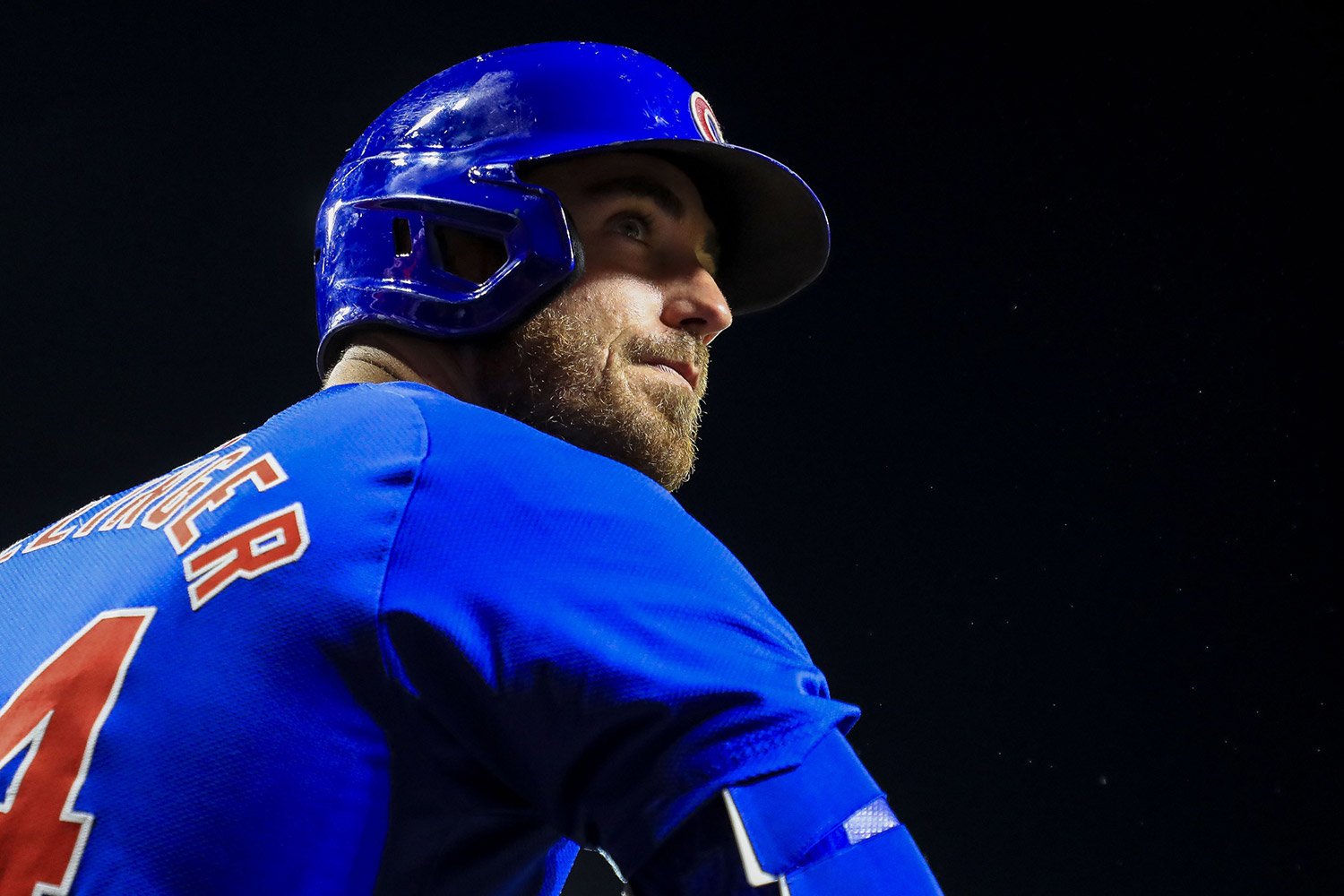 This time last year, Cody Bellinger was coming off his best season in years, as he won the 2023 National League Comeback Player of the Year award for his work anchoring the Cubs lineup. His 139 OPS+ was his best since the 2019 campaign when he won NL MVP (167 OPS+), and it was clear that Chicago needed to retain his lefty bat in the middle of the order if they hoped to escape their rebuild. What happened next was nothing short of a disaster, as Bellinger (as well as agent Scott Boras's other top clientele) got phased out of the higher-end of the bidding pool in free agency, with he, Matt Chapman, Blake Snell, and Jordan Montgomery all having to settle for less-than-expected deals late into the winter. Bellinger's deal was particularly unique, as the three-year, $80 million contract was broken down into three separate years of different pay, with the outfielder/first baseman holding player options between each season of the deal. With the 2024 season concluded, Bellinger's first chance to trigger an opt-out has come and gone. He has elected to remain with the Cubs for at least next season, putting the Cubs on the hook for his $27.5 million salary. Bellinger was far less productive in 2024 than he was during his maiden season on the North Side, as his OPS tumbled over 100 points (.881 to .751), and his WAR was slashed in half, from 4.4 to 2.2. While still an eminently valuable player, it was clear that Bellinger either wasn't fully healthy like he was in 2023 (once again raising questions about his long-term durability after the cataclysmic end to his tenure in Los Angeles) or caught lightning in a bottle during his first season with the Cubs. There were plenty of people hoping that Bellinger would return in 2025, though his price tag may prove prohibitive as the Cubs try to add to their roster this winter. The obvious and immediate implication for this is that Bellinger will now become the everyday right fielder, as Pete Crow-Armstrong is locked into the starting gig in center field. That will push Seiya Suzuki to designated hitter more often than not, though Bellinger could always spell Michael Busch at first base. Busch has some experience playing second and third base, though he won't provide additional defensive value over Nico Hoerner or Isaac Paredes at either spot. The Cubs' luxury tax commitments for 2025 currently sit around $190 million, according to FanGraphs, though that includes projections for arbitration cases that have yet to be finalized. That situates them roughly $50 million behind the first threshold for next year's luxury tax, which is enough to make additions to the roster, but almost certainly takes them out of the running for Juan Soto (in case anyone was letting themselves do too much daydreaming). Feasibly, they could free up some money by dealing a guy like Jameson Taillon, but this team needs to add talent this winter before it considers subtracting any. Bellinger could be a candidate for a trade himself, though it's hard to imagine what sort of market would develop for him. He's a versatile glove who's a net positive in four different spots (first base, plus all three outfield spots), though his maximum value would come to a team that is in desperate need of a center fielder, which the Cubs are not. His 2025 salary will scare off more than a few suitors, as would his $25 million player option for 2026. Unless the Cubs could find a team that thinks Bellinger is closer to his 2023 self rather than the player he was this past season, it doesn't seem productive to deal a productive lefty bat like him. It's worth noting that a fractured rib and persistent hand issues contributed to his downturn in production this year, though he suffered a gnarly knee injury in May 2023 and returned within a month to continue producing at an All-Star level. Nevertheless, the fact that Bellinger hasn't been able to make it through a full season without missing time due to injury since 2020 is concerning. With Drew Smyly's mutual option declined as well, the Cubs can turn their attention in full to free agency and the trade market, where they will be seeking a catcher, another option in the rotation, and some bullpen help, at a minimum.
 -
Yea, it looks like the TV and broadcasting issues are hitting them really hard. Mozeliak has not been shy about the team's direction. I imagine it'll be a full-on firesale, starting with Gray. Not sure what they could get for Arenado and his contract
-
Thanks for catching. The Cardinals official website doesn't do a great job of adjudicating that stuff. But it's no surprise that they're behind the times...
-
Following a season in which everyone in the division besides the Brewers disappointed, how are the Cubs’ rivals going to approach this winter? Image courtesy of © Sam Greene/The Enquirer / USA TODAY NETWORK via Imagn Images The Cubs find themselves in an interesting position this offseason. They should be obvious buyers, after finishing 83-79 for a second consecutive season. Meanwhile, the other four teams in their division are facing payroll questions, broadcasting/television concerns, and/or stagnating cores. The Brewers won the NL Central handily in 2024, though they failed to advance past the Wild Card round of the playoffs thanks to Devin Williams hanging a changeup to oft-rumored Cubs target Pete Alonso. Like one year ago, the Cubs enter the winter with a chance to become the unquestioned favorites in the National League’s least daunting division. Whether or not they will seize the moment remains to be seen, though. In the meantime, let’s take a look at each of their four division rivals and see who will be buying and who will be selling over the next few months. Milwaukee Brewers 2024 Finish: 93-69 (1st Place) The Brewers are in a bit of an odd state after suffering their heartbreaker against the Mets. For the better part of the last half-decade, they’ve clearly been the class of the division, even after they traded away 2021 NL Cy Young Corbin Burnes and lost his co-ace, Brandon Woodruff, to injury. However, they continue to operate with a svelte budget, and they face a number of pressing free agency cases—especially that of star shortstop Willy Adames. Jackson Chourio is a bona fide superstar, and will be a pain for the Cubs for years to come, while Freddy Peralta, William Contreras, Sal Frelick, Garrett Mitchell, and others form a solid core to build around. However, the perennially underfunded Brew Crew will probably have to trade one (or both) of Rhys Hoskins and Devin Williams, both of whom are expensive and entering the final year of their respective contracts. Christian Yelich’s contract remains a major pain point, because his $23.8 million AAV has started to outstrip his production as he ages and deals with injuries. At this point, he’s probably going to be relegated to designated hitter as well—and will hamstring what the Brewers can do in free agency. As such, if they’re going to add, they’ll have to do it on the trade market, while plucking from a middle-of-the-road farm system. This is a well-coached, intelligently-run organization, even with Craig Counsell plying his trade in Chicago nowadays. The Brewers will sell off some costly veterans while bringing in a number of young, high-upside players. They won’t compete with the Cubs for the prized free agents in this winter’s class, but they’ll be an active player on the hot stove nonetheless. Verdict: Ambiguous (both buyer & seller) St. Louis Cardinals 2024 Finish: 83-79 (T-2 Place) The Cardinals are one of the teams most impacted by the Diamond Sports bankruptcy, with a lot of uncertainty surrounding their television revenue streams. MLB Insider John Denton expects that the team will slash their payroll by upwards of $60 million this offseason. Nolan Arenado, Sonny Gray, and Ryan Helsley are all expected to be dealt ,as the team moves toward employing cheaper, younger talent. They won’t be able to get a lot in deals for those players on their own (save perhaps Helsley), but the Cardinals are entering a legitimate rebuilding period for the first time since Yadier Molina and Albert Pujols first arrived. This has been a really good team for a long time, but the bill always comes due, and the Cardinals’ pattern of having one of the oldest rosters in baseball wasn’t going to work forever. Paul Goldschmidt, Lance Lynn, Kyle Gibson, and Andrew Kittredge are all pending free agents, and will certainly walk away. The Cardinals are the most obvious seller in the division, and probably the favorite at this point in time to finish last in the NL Central next season. Verdict: Seller Cincinnati Reds 2024 Finish: 77-85 (4th Place) The Reds only have two pending free agents: Justin Wilson and Buck Farmer. Jakob Junis has a mutual option. Brent Suter and Luke Maile have team options. And Nick Martinez and Emilio Pagán have player options. That’s it. The Reds are going to be bringing back the vast majority of a core that played nearly-.500 ball in the second half of the season. They just hired Terry Francona as manager, and have a tantalizing young core of players led by Elly De La Cruz and Hunter Greene. They only have about $70 million in luxury tax commitments on their roster for 2025 (though that number will go up with arbitration cases), putting them about $90 million behind the league average. Cincinnati almost never plunges into the deep end of free agency, but they have the money and foundational pieces to justify it this year. They’re going to make additions on the trade market as well—another starter, and a power bat at first base or the corner outfield will be high on their priority list—and should pose a serious and immediate threat to the Cubs and Brewers for divisional supremacy. They should be a favorite for a reunion with Sonny Gray, in particular, if the Cardinals indeed hold a fire sale. Verdict: Buyer Pittsburgh Pirates 2024 Finish: 76-86 (5th Place) For what it’s worth, the Pirates’ 76 wins would have been good enough to finish outside the cellar in any other division in 2024. Whether that speaks to the mediocrity of the NL Central or the state of certain franchises around baseball is up for interpretation. Regardless, the Pirates have an obvious strength to build around: starting pitching—their three-headed monster of Paul Skenes, Jared Jones, and Mitch Keller, in particular. General manager Ben Cherrington already hinted at this being a trade-heavy offseason for the team, as it seeks to build around a core of players that also includes outfielders Bryan Reynolds and Oneil Cruz, and catcher Joey Bart. The team lacks impact hitters at the top of their farm system, so if they want to add more offense after the team finished bottom-three in the NL in runs scored for the fifth year in a row, they’ll have to do it on the trade market. Of course, we all know by now that Pirates owner Bob Nutting is too cheap to pursue meaningful additions in free agency. Perhaps the presence of Skenes, and his immense popularity on social media, will push Nutting to spend some money to make the team more relevant, but that’s a pipe dream at best for Pirates fans. Expect Pittsburgh to be very active on the trade market as a buyer, though they’ll be bargain bin shopping no matter what route they choose to pursue. Verdict: Buyer View full article
-
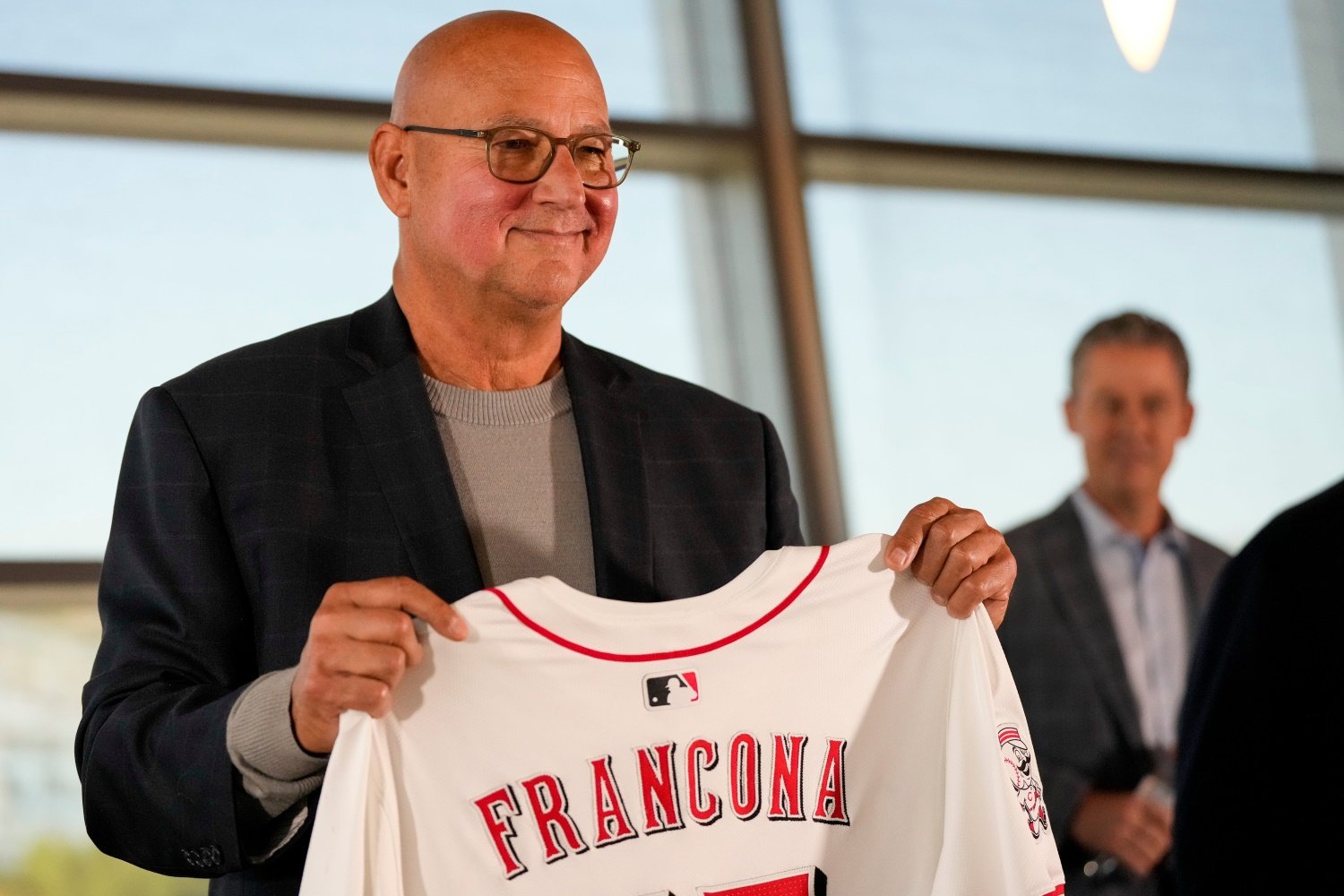 The Cubs find themselves in an interesting position this offseason. They should be obvious buyers, after finishing 83-79 for a second consecutive season. Meanwhile, the other four teams in their division are facing payroll questions, broadcasting/television concerns, and/or stagnating cores. The Brewers won the NL Central handily in 2024, though they failed to advance past the Wild Card round of the playoffs thanks to Devin Williams hanging a changeup to oft-rumored Cubs target Pete Alonso. Like one year ago, the Cubs enter the winter with a chance to become the unquestioned favorites in the National League’s least daunting division. Whether or not they will seize the moment remains to be seen, though. In the meantime, let’s take a look at each of their four division rivals and see who will be buying and who will be selling over the next few months. Milwaukee Brewers 2024 Finish: 93-69 (1st Place) The Brewers are in a bit of an odd state after suffering their heartbreaker against the Mets. For the better part of the last half-decade, they’ve clearly been the class of the division, even after they traded away 2021 NL Cy Young Corbin Burnes and lost his co-ace, Brandon Woodruff, to injury. However, they continue to operate with a svelte budget, and they face a number of pressing free agency cases—especially that of star shortstop Willy Adames. Jackson Chourio is a bona fide superstar, and will be a pain for the Cubs for years to come, while Freddy Peralta, William Contreras, Sal Frelick, Garrett Mitchell, and others form a solid core to build around. However, the perennially underfunded Brew Crew will probably have to trade one (or both) of Rhys Hoskins and Devin Williams, both of whom are expensive and entering the final year of their respective contracts. Christian Yelich’s contract remains a major pain point, because his $23.8 million AAV has started to outstrip his production as he ages and deals with injuries. At this point, he’s probably going to be relegated to designated hitter as well—and will hamstring what the Brewers can do in free agency. As such, if they’re going to add, they’ll have to do it on the trade market, while plucking from a middle-of-the-road farm system. This is a well-coached, intelligently-run organization, even with Craig Counsell plying his trade in Chicago nowadays. The Brewers will sell off some costly veterans while bringing in a number of young, high-upside players. They won’t compete with the Cubs for the prized free agents in this winter’s class, but they’ll be an active player on the hot stove nonetheless. Verdict: Ambiguous (both buyer & seller) St. Louis Cardinals 2024 Finish: 83-79 (T-2 Place) The Cardinals are one of the teams most impacted by the Diamond Sports bankruptcy, with a lot of uncertainty surrounding their television revenue streams. MLB Insider John Denton expects that the team will slash their payroll by upwards of $60 million this offseason. Nolan Arenado, Sonny Gray, and Ryan Helsley are all expected to be dealt ,as the team moves toward employing cheaper, younger talent. They won’t be able to get a lot in deals for those players on their own (save perhaps Helsley), but the Cardinals are entering a legitimate rebuilding period for the first time since Yadier Molina and Albert Pujols first arrived. This has been a really good team for a long time, but the bill always comes due, and the Cardinals’ pattern of having one of the oldest rosters in baseball wasn’t going to work forever. Paul Goldschmidt, Lance Lynn, Kyle Gibson, and Andrew Kittredge are all pending free agents, and will certainly walk away. The Cardinals are the most obvious seller in the division, and probably the favorite at this point in time to finish last in the NL Central next season. Verdict: Seller Cincinnati Reds 2024 Finish: 77-85 (4th Place) The Reds only have two pending free agents: Justin Wilson and Buck Farmer. Jakob Junis has a mutual option. Brent Suter and Luke Maile have team options. And Nick Martinez and Emilio Pagán have player options. That’s it. The Reds are going to be bringing back the vast majority of a core that played nearly-.500 ball in the second half of the season. They just hired Terry Francona as manager, and have a tantalizing young core of players led by Elly De La Cruz and Hunter Greene. They only have about $70 million in luxury tax commitments on their roster for 2025 (though that number will go up with arbitration cases), putting them about $90 million behind the league average. Cincinnati almost never plunges into the deep end of free agency, but they have the money and foundational pieces to justify it this year. They’re going to make additions on the trade market as well—another starter, and a power bat at first base or the corner outfield will be high on their priority list—and should pose a serious and immediate threat to the Cubs and Brewers for divisional supremacy. They should be a favorite for a reunion with Sonny Gray, in particular, if the Cardinals indeed hold a fire sale. Verdict: Buyer Pittsburgh Pirates 2024 Finish: 76-86 (5th Place) For what it’s worth, the Pirates’ 76 wins would have been good enough to finish outside the cellar in any other division in 2024. Whether that speaks to the mediocrity of the NL Central or the state of certain franchises around baseball is up for interpretation. Regardless, the Pirates have an obvious strength to build around: starting pitching—their three-headed monster of Paul Skenes, Jared Jones, and Mitch Keller, in particular. General manager Ben Cherrington already hinted at this being a trade-heavy offseason for the team, as it seeks to build around a core of players that also includes outfielders Bryan Reynolds and Oneil Cruz, and catcher Joey Bart. The team lacks impact hitters at the top of their farm system, so if they want to add more offense after the team finished bottom-three in the NL in runs scored for the fifth year in a row, they’ll have to do it on the trade market. Of course, we all know by now that Pirates owner Bob Nutting is too cheap to pursue meaningful additions in free agency. Perhaps the presence of Skenes, and his immense popularity on social media, will push Nutting to spend some money to make the team more relevant, but that’s a pipe dream at best for Pirates fans. Expect Pittsburgh to be very active on the trade market as a buyer, though they’ll be bargain bin shopping no matter what route they choose to pursue. Verdict: Buyer
 -
Who were the best pitchers in the Cubs' farm system during the 2024 minor-league season? The Chicago Cubs missed the playoffs in 2024, though their pitching staff (especially the rotation) held their own as the team repeated their 83-79 performance from 2023. Luckily, the team comes equipped with a strong farm system that is set to further augment that strength. During the 2024 minor-league season, the Cubs had a number of breakout performances up and down the ranks of their system. North Side Baseball’s minor-league writers voted for the awards and for an All-Star team of Cubs prospects. This isn’t a top prospect ranking or list, but a recognition of which players in the Cubs’ system had the best seasons. Each writer chose five starting pitchers, a right-handed reliever, a left-handed reliever, and two more relievers. Before we get to the All-Star pitchers, here are our 2024 North Side Baseball Award winners (and links to the articles to see who else received votes). Short-Season Hitter of the Year:Anderson Suriel Short-Season Pitcher of the Year: Jostin Florentino Minor League Hitter of the Year: Matt Shaw Minor League Starting Pitcher of the Year: Brandon Birdsell Minor League Relief Pitcher of the Year: Nico Zeglin Cubs Minor League All-Star Hitters Read through our choices for each position, and then discuss and cast your votes as well! Let's begin. Starting Pitchers (5) RHP Brandon Birdsell (24) - Tennessee Smokies, Iowa Cubs Acquired: Cubs 5th-round draft pick in 2022 out of Texas Tech University 2024 MiLB Stats: 8-9, 3.91 ERA, 1.28 WHIP, 2.1 BB/9, 8.9 K/9 If you had asked anyone before the 2024 season who they thought would be named the Cubs’ minor-league pitcher of the year, the answer would have been Cade Horton. Instead, it proved to be the ace of the Iowa Cubs’ staff. Birdsell’s excellent control comes with two plus pitches in his fastball and slider, and he continues to tinker with a curveball and changeup. Though he gave up a few more home runs this year compared to his debut in 2023, he boosted his strikeout rate significantly while dropping his walk rate as he climbed to Triple-A. The Cubs have a lot of options for their fifth starter role (not to mention an entire offseason to acquire an outside free agent), but Birdsell is going to get his chance to prove himself to Chicagoans next year. ETA: Mid-2025 RHP Connor Noland (25) - Tennessee Smokies, Iowa Cubs Acquired: Cubs 9th-round draft pick in 2022 out of the U of Arkansas 2024 Stats: 12-5, 3.49 ERA, 1.25 WHIP, 2.4 BB/9, 7.8 K/9 Another member of Iowa’s rotation by the end of the season, Noland struggled in his first taste of Triple-A in 2024, pitching to a 5.29 ERA in just shy of 50 innings. However, he was utterly dominant with the Tennessee Smokies, going 7-3 with a 2.50 ERA in 16 starts. He’s significantly more raw than Birdsell, and comes equipped with far less exciting stuff, but Noland possesses the evasive “pitchability” skill that continues to push him forward. Expect him to spend a full year at Iowa building up his arsenal before getting a chance to pitch in front of the raucous crowds at Wrigley. ETA: Early 2026 RHP Kenten Egbert (23) - Myrtle Beach Pelicans Acquired: Undrafted free agent signed on Jul. 21, 2023, out of Miami (OH) 2024 Stats: 7-2, 3.04 ERA, 1.07 WHIP, 2.9 BB/9, 9.6 K/9 For a guy who doesn’t walk a whole lot of batters and strikes out quite a few of them, Egbert has remained conspicuously under the radar over the last year. He’s got a fastball that tops out in the mid-90s and earned a full-time job in the Pelicans’ rotation this year, though players can hit him when they’re not fooled by his lackluster secondary offerings. Still, he keeps the ball in the park (0.74 HR/9 in 2024) and profiles as an interesting candidate to rise a number of levels next season if everything clicks. ETA: Late 2026 RHP Juan Bello (20) - Myrtle Beach Pelicans Acquired: International signing from Colombia on Feb. 21, 2022. 2024 Stats: 4-5, 3.21 ERA, 1.13 WHIP, 2.8 BB/9, 9.1 K/9 Juan Bello is a young pitcher, but he’s got an advanced feel for how to mess with hitters. In his minor-league career thus far, he possesses a 130-to-39 strikeout-to-walk ratio; has surrendered just eight home runs in 125 ⅓ innings; and allows a batting average of .223. Like Egbert, he still needs to refine his offerings, and at 20 years of age, the Cubs can afford to be more patient with Bello. However, his name should remain on your radar for the foreseeable future, and an assignment to High-A South Bend should be on the table out of the gates in 2025. ETA: 2027 RHP Sam Armstrong (24) - South Bend Cubs, Tennessee Smokies Acquired: Cubs 13th-round draft pick in 2023, out of Old Dominion University. 2024 Stats: 5-7, 2.87 ERA, 1.10 WHIP, 2.8 BB/9, 7.8 K/9 After a choppy debut in 2023 when he allowed eight runs in 13 2/3 innings at Myrtle Beach, the Cubs chose to aggressively push Armstrong with a difficult assignment in High-A to open this season. All he did was respond with 3.00 ERA in 66 innings there, eventually earning a promotion to Tennessee, where he was even better. His strikeout numbers tumbled in Double-A, though he did continue to limit walks in his 50 innings (2.70 ERA) with the Smokies. Armstrong’s greatest strength is his ability to keep opposing hitters guessing, often producing weak contact that generates easy outs. Having recently turned 24, Armstrong profiles as a true starting pitcher prospect with a chance to toe the rubber at the Friendly Confines before 2026 is over. ETA: Mid-2026 Bullpen (4) Right-Handed Relief Pitcher: Frankie Scalzo (24) - Tennessee Smokies, Iowa Cubs Acquired: Cubs 14th-round draft pick in 2021 out of Grand Canyon University 2024 Stats: 3-5, nine saves, 2.14 ERA, 1.23 WHIP, 3.6 BB/9, 7.9 K/9 The No. 2 finisher in North Side Baseball’s Minor League Relief Pitcher of the Year voting, Scalzo continues to dominate hitters out of the bullpen. After not allowing a single run in 26 innings to open the season with the Smokies, he got a promotion to Triple-A Iowa that also came with him being stripped of his “closer” title. He spent a few days on the Development List in August, and as he settles into being a high-leverage arm at the highest level of the minors, Scalzo will continue to make headway toward a debut that will likely come in the next calendar year. ETA: Mid-2025 Left-Handed Relief Pitcher: Blake Weiman (28) - Tennessee Smokies, Iowa Cubs Acquired: signed as minor-league free agent (2/2/24) 2024 Stats: 5-0, seven saves, 2.68 ERA, 0.97 WHIP, 1.4 BB/9, 9.8 K/9 Weiman spent the majority of his season at Double-A, taking over as the closer for Scalzo once the latter was promoted to Iowa. Weiman is a lefty with the ability to get hitters from both sides of the plate out, and his 0.97 WHIP reflects a pitcher who continues to evolve in terms of control and pitching instinct. He’s going to be 29 in November, though, making his status tenuous at best. If he’s going to get a crack at sticking in the Cubs’ bullpen, it’ll probably have to happen in the next year or two. ETA: Late 2025 Relief Pitcher: Nico Zeglin (24) - Myrtle Beach Pelicans, South Bend Cubs Acquired: Undrafted free agent signed Apr. 25, 2024 out of Long Beach State. 2024 Stats: 7-0, three saves, 0.95 ERA, 0.82 WHIP, 2.2 BB/9, 12.3 K/9 A name that wasn’t even on the most tuned-in radars going into this season, Zeglin has suddenly become one of the most enticing relief prospects in the Cubs’ system. He went multiple innings in every appearance this season, including four starts at the end of the year, and he has the potential to convert to starting if the organization chooses to pursue that route. All of his stats from 2024 jump off the page, though his most impressive numbers include a 5.63 K/BB ratio, 0.27 HR/9, .165 batting average against, and his 0.82 WHIP. It’s hard to predict where the undrafted free agent could go from here, but if his dominance continues, a 2026 debut in Chicago shouldn’t be out of the question. ETA: Mid-2026 Relief Pitcher: Carlo Reyes (26) - South Bend Cubs, Tennessee Smokies Acquired: minor-league free agent signing on May 5, 2024, from the Dodgers organization 2024 Stats: 3-2, two saves, 1.36 ERA, 1.06 WHIP, 2.3 BB/9, 12.7 K/9 As a mid-season minor league signing, expectations were practically nonexistent for Reyes, who pitched to an ugly 7.06 ERA in 21 2/3 innings with the Dodgers’ Double-A affiliate in 2023. All Reyes did once the Cubs signed him was throw 13 1/3 shutout innings in South Bend to earn a promotion to the Smokies, where he struck out 37 batters in 26 1/3 frames. He’s an older prospect, as well, though the Cubs clearly discovered something with his fastball-curveball-changeup combo. He should begin next season in Double-A, with a mid-season promotion to Iowa on the table. ETA: Late 2026 So there you have it, the nine-man pitching staff of the 2024 North Side Baseball Cubs Minor-League All Stars. View full article
-
North Side Baseball's 2024 Minor-League All-Star Team, Part Two: Pitchers
Brandon Glick posted an article in Cubs
 The Chicago Cubs missed the playoffs in 2024, though their pitching staff (especially the rotation) held their own as the team repeated their 83-79 performance from 2023. Luckily, the team comes equipped with a strong farm system that is set to further augment that strength. During the 2024 minor-league season, the Cubs had a number of breakout performances up and down the ranks of their system. North Side Baseball’s minor-league writers voted for the awards and for an All-Star team of Cubs prospects. This isn’t a top prospect ranking or list, but a recognition of which players in the Cubs’ system had the best seasons. Each writer chose five starting pitchers, a right-handed reliever, a left-handed reliever, and two more relievers. Before we get to the All-Star pitchers, here are our 2024 North Side Baseball Award winners (and links to the articles to see who else received votes). Short-Season Hitter of the Year:Anderson Suriel Short-Season Pitcher of the Year: Jostin Florentino Minor League Hitter of the Year: Matt Shaw Minor League Starting Pitcher of the Year: Brandon Birdsell Minor League Relief Pitcher of the Year: Nico Zeglin Cubs Minor League All-Star Hitters Read through our choices for each position, and then discuss and cast your votes as well! Let's begin. Starting Pitchers (5) RHP Brandon Birdsell (24) - Tennessee Smokies, Iowa Cubs Acquired: Cubs 5th-round draft pick in 2022 out of Texas Tech University 2024 MiLB Stats: 8-9, 3.91 ERA, 1.28 WHIP, 2.1 BB/9, 8.9 K/9 If you had asked anyone before the 2024 season who they thought would be named the Cubs’ minor-league pitcher of the year, the answer would have been Cade Horton. Instead, it proved to be the ace of the Iowa Cubs’ staff. Birdsell’s excellent control comes with two plus pitches in his fastball and slider, and he continues to tinker with a curveball and changeup. Though he gave up a few more home runs this year compared to his debut in 2023, he boosted his strikeout rate significantly while dropping his walk rate as he climbed to Triple-A. The Cubs have a lot of options for their fifth starter role (not to mention an entire offseason to acquire an outside free agent), but Birdsell is going to get his chance to prove himself to Chicagoans next year. ETA: Mid-2025 RHP Connor Noland (25) - Tennessee Smokies, Iowa Cubs Acquired: Cubs 9th-round draft pick in 2022 out of the U of Arkansas 2024 Stats: 12-5, 3.49 ERA, 1.25 WHIP, 2.4 BB/9, 7.8 K/9 Another member of Iowa’s rotation by the end of the season, Noland struggled in his first taste of Triple-A in 2024, pitching to a 5.29 ERA in just shy of 50 innings. However, he was utterly dominant with the Tennessee Smokies, going 7-3 with a 2.50 ERA in 16 starts. He’s significantly more raw than Birdsell, and comes equipped with far less exciting stuff, but Noland possesses the evasive “pitchability” skill that continues to push him forward. Expect him to spend a full year at Iowa building up his arsenal before getting a chance to pitch in front of the raucous crowds at Wrigley. ETA: Early 2026 RHP Kenten Egbert (23) - Myrtle Beach Pelicans Acquired: Undrafted free agent signed on Jul. 21, 2023, out of Miami (OH) 2024 Stats: 7-2, 3.04 ERA, 1.07 WHIP, 2.9 BB/9, 9.6 K/9 For a guy who doesn’t walk a whole lot of batters and strikes out quite a few of them, Egbert has remained conspicuously under the radar over the last year. He’s got a fastball that tops out in the mid-90s and earned a full-time job in the Pelicans’ rotation this year, though players can hit him when they’re not fooled by his lackluster secondary offerings. Still, he keeps the ball in the park (0.74 HR/9 in 2024) and profiles as an interesting candidate to rise a number of levels next season if everything clicks. ETA: Late 2026 RHP Juan Bello (20) - Myrtle Beach Pelicans Acquired: International signing from Colombia on Feb. 21, 2022. 2024 Stats: 4-5, 3.21 ERA, 1.13 WHIP, 2.8 BB/9, 9.1 K/9 Juan Bello is a young pitcher, but he’s got an advanced feel for how to mess with hitters. In his minor-league career thus far, he possesses a 130-to-39 strikeout-to-walk ratio; has surrendered just eight home runs in 125 ⅓ innings; and allows a batting average of .223. Like Egbert, he still needs to refine his offerings, and at 20 years of age, the Cubs can afford to be more patient with Bello. However, his name should remain on your radar for the foreseeable future, and an assignment to High-A South Bend should be on the table out of the gates in 2025. ETA: 2027 RHP Sam Armstrong (24) - South Bend Cubs, Tennessee Smokies Acquired: Cubs 13th-round draft pick in 2023, out of Old Dominion University. 2024 Stats: 5-7, 2.87 ERA, 1.10 WHIP, 2.8 BB/9, 7.8 K/9 After a choppy debut in 2023 when he allowed eight runs in 13 2/3 innings at Myrtle Beach, the Cubs chose to aggressively push Armstrong with a difficult assignment in High-A to open this season. All he did was respond with 3.00 ERA in 66 innings there, eventually earning a promotion to Tennessee, where he was even better. His strikeout numbers tumbled in Double-A, though he did continue to limit walks in his 50 innings (2.70 ERA) with the Smokies. Armstrong’s greatest strength is his ability to keep opposing hitters guessing, often producing weak contact that generates easy outs. Having recently turned 24, Armstrong profiles as a true starting pitcher prospect with a chance to toe the rubber at the Friendly Confines before 2026 is over. ETA: Mid-2026 Bullpen (4) Right-Handed Relief Pitcher: Frankie Scalzo (24) - Tennessee Smokies, Iowa Cubs Acquired: Cubs 14th-round draft pick in 2021 out of Grand Canyon University 2024 Stats: 3-5, nine saves, 2.14 ERA, 1.23 WHIP, 3.6 BB/9, 7.9 K/9 The No. 2 finisher in North Side Baseball’s Minor League Relief Pitcher of the Year voting, Scalzo continues to dominate hitters out of the bullpen. After not allowing a single run in 26 innings to open the season with the Smokies, he got a promotion to Triple-A Iowa that also came with him being stripped of his “closer” title. He spent a few days on the Development List in August, and as he settles into being a high-leverage arm at the highest level of the minors, Scalzo will continue to make headway toward a debut that will likely come in the next calendar year. ETA: Mid-2025 Left-Handed Relief Pitcher: Blake Weiman (28) - Tennessee Smokies, Iowa Cubs Acquired: signed as minor-league free agent (2/2/24) 2024 Stats: 5-0, seven saves, 2.68 ERA, 0.97 WHIP, 1.4 BB/9, 9.8 K/9 Weiman spent the majority of his season at Double-A, taking over as the closer for Scalzo once the latter was promoted to Iowa. Weiman is a lefty with the ability to get hitters from both sides of the plate out, and his 0.97 WHIP reflects a pitcher who continues to evolve in terms of control and pitching instinct. He’s going to be 29 in November, though, making his status tenuous at best. If he’s going to get a crack at sticking in the Cubs’ bullpen, it’ll probably have to happen in the next year or two. ETA: Late 2025 Relief Pitcher: Nico Zeglin (24) - Myrtle Beach Pelicans, South Bend Cubs Acquired: Undrafted free agent signed Apr. 25, 2024 out of Long Beach State. 2024 Stats: 7-0, three saves, 0.95 ERA, 0.82 WHIP, 2.2 BB/9, 12.3 K/9 A name that wasn’t even on the most tuned-in radars going into this season, Zeglin has suddenly become one of the most enticing relief prospects in the Cubs’ system. He went multiple innings in every appearance this season, including four starts at the end of the year, and he has the potential to convert to starting if the organization chooses to pursue that route. All of his stats from 2024 jump off the page, though his most impressive numbers include a 5.63 K/BB ratio, 0.27 HR/9, .165 batting average against, and his 0.82 WHIP. It’s hard to predict where the undrafted free agent could go from here, but if his dominance continues, a 2026 debut in Chicago shouldn’t be out of the question. ETA: Mid-2026 Relief Pitcher: Carlo Reyes (26) - South Bend Cubs, Tennessee Smokies Acquired: minor-league free agent signing on May 5, 2024, from the Dodgers organization 2024 Stats: 3-2, two saves, 1.36 ERA, 1.06 WHIP, 2.3 BB/9, 12.7 K/9 As a mid-season minor league signing, expectations were practically nonexistent for Reyes, who pitched to an ugly 7.06 ERA in 21 2/3 innings with the Dodgers’ Double-A affiliate in 2023. All Reyes did once the Cubs signed him was throw 13 1/3 shutout innings in South Bend to earn a promotion to the Smokies, where he struck out 37 batters in 26 1/3 frames. He’s an older prospect, as well, though the Cubs clearly discovered something with his fastball-curveball-changeup combo. He should begin next season in Double-A, with a mid-season promotion to Iowa on the table. ETA: Late 2026 So there you have it, the nine-man pitching staff of the 2024 North Side Baseball Cubs Minor-League All Stars.
 -
Who were the hitters that stood out the most in the Cubs' organization during the 2024 MiLB season? The Chicago Cubs’ year didn’t end how fans were hoping, with another barely-.500 season in the books. There remain some pressing questions the front office will have to answer this offseason, namely: is this current core good enough to not just make the postseason, but actually win when the lights shine the brightest? Luckily, the team does come equipped with a strong farm system, highlighted by a number of Top 100 prospects. During the 2024 minor-league season, the Cubs had a number of breakout performances up-and-down the ranks of their system. North Side Baseball’s minor-league writers voted for the awards and for an all-star team of Cubs prospects. This isn’t a Top Prospect ranking or list, but a recognition of which players in the Cubs’ system had the best seasons. Each writer chose a catcher, first baseman, second baseman, third baseman, shortstop, three outfielders, a DH and a Utility player. Tomorrow, we’ll finalize the All Star team with the pitchers. Readers will have a chance to vote for their top prospects soon. Before we get to the All Stars, here are our 2024 North Side Baseball Award winners (and links to the articles to see who else received votes). Short-Season Hitter of the Year: Anderson Suriel Short-Season Pitcher of the Year: Jostin Florentino Minor League Hitter of the Year: Matt Shaw Minor League Starting Pitcher of the Year: Brandon Birdsell Minor League Relief Pitcher of the Year: Nico Zeglin Read through our choices for each position, and then discuss and cast your votes as well! Let’s get started. LINEUP Catcher: Moises Ballesteros (20) - Tennessee Smokies, Iowa Cubs Acquired: International signing out of Venezuela on January 15, 2021 2024 Stats: .289/.354/.471 (.826)) with 24 doubles, one triple, 19 home runs, and 78 RBI. Firmly inside the Cubs’ top-five on most major prospect lists—as well as ubiquitous appearances on every Top 100 ranking—Ballesteros has become one of the best hitters in all of minor league baseball. Of course, the fact that he’s a catcher (for now), only adds to his value as a major threat at the plate. He’s slashing .391/.431/.717 in the Arizona Fall League as of Monday, October 28, further adding to the hype surrounding the 20-year-old. After playing 68 games with Triple-A Iowa to close out the 2024 season, a mid-season debut in 2025 doesn’t feel too far-fetched. He could reasonably be expected to handle emergency catcher duties upon his call up, though expect manager Craig Counsell to insert him into the lineup on a regular basis as the team’s DH. ETA: Late 2025 First Base: Jonathon Long (22) - South Bend Cubs, Tennessee Smokies Acquired: Cubs 9th round pick in 2023 out of Long Beach State. 2024 Stats: .283/.391/.461 (.851) with 21 doubles, 17 home runs and 70 RBI. The ninth-round pick from 2023 has quickly become one of the best pure hitters in the Cubs system, posting his best stats (.983 OPS) in a 46-game cup of coffee with Double-A Tennessee. As a right-handed hitting first baseman, Long will have to keep hitting to find a place with the Cubs with Michael Busch entrenched at the cold corner. The Cubs did try him out at third base and the outfield this season, though his below-average speed will keep him from being a defensive asset anywhere on the diamond. Still, his feel in the batter’s box is advanced, and he should continue pushing his way up the system, with an eye on a mid-2026 debut. ETA: Mid-2026 Second Base: James Triantos (21) - Tennessee Smokies, Iowa Cubs. Acquired: Cubs 2nd round pick in 2021 out of high school in Virginia. 2024 Stats: .300/.346/.427 (.773) with 23 doubles, six triples, seven home runs and 52 RBI. Triantos was a second-round pick as an 18-year-old in 2021, and now he’s knocking on the door of the major leagues at 21 (he turns 22 in January). He could be a replacement for Nico Hoerner at second base if the front office elects to trade their all-star second baseman, though Triantos has the arm to make a living in one of the outfield corners if he’s pushed there out of necessity. He won the Arizona Fall League Offensive Player of the Year last autumn (417/.495/.679 slash line), and his bat-to-ball skills are the best in the farm system, bar none. He should be able to hit for a high average the moment he steps into the big leagues, which could come as soon as Opening Day 2025 if he breaks out in spring training. ETA: Early 2025 Third Base: Matt Shaw (22) - Tennessee Smokies, Iowa Cubs Acquired: Cubs 1st round pick in 2023 out of the U of Maryland. 2024 Stats: .284/.379/.488 (.867) with 19 doubles, four triples, 21 home runs and 71 RBI. Arguably the top prospect in the system right now, the MLB Futures Game participant put on an offensive show with the Smokies and Iowa Cubs this season, further cementing his status as one of the best bats in all of the MiLB. Shaw has shifted to third base since being drafted as a middle infielder, though Isaac Paredes could feasibly block him at the hot corner if he ever reverts back to his Tampa Bay form. Regardless, Shaw’s bat is good enough to push for playing time with or without a permanent defensive home, and his presence (along with Triantos) could make Hoerner expendable. Anticipate a much-hyped debut for the 2023 first-round pick sometime next season. ETA: Early 2025 Shortstop: Cristian Hernandez (20) - Myrtle Beach Pelicans, South Bend Cubs Acquired: International signing out of the Dominican Republic on January 15, 2021. 2024 Stats: .261/.374/.381 (.755) with 27 doubles, five triples, five homers and 59 RBI. It feels like Hernandez has been in the Cubs’ system forever, though he’s still only 20 years old (21 in December). The smooth-fielding shortstop finally reached South Bend this year, though his bat continued to struggle against older pitchers at the High-A level. His bat speed is still unbelievable, and his performance in Myrtle Beach earlier in 2024 (.788 OPS) does offer some hope that he’ll be able to figure things out at the plate with more reps. His speed (44 stolen bases this year) remains one of his trademark traits. ETA: 2027 Outfielder: Owen Caissie (22) - Iowa Cubs Acquired: Acquired from Padres with four other players for Yu Darvish and Victor Caratini on December 29, 2020 2024 Stats: .278/.375/.473 (.848) with 29 doubles, three triples, 19 home runs and 75 RBI. For this writer’s money, this is the best prospect in the Cubs’ farm system. Caissie is a powerful, knowledgeable hitter that draws a healthy amount of walks to offset a somewhat alarming strikeout rate. His exit velocity numbers are some of the best in the minors, and the power will translate against major-league pitching. He has steadily progressed through the Cubs’ organization, spending the entirety of the 2024 campaign in Iowa. He’s a true corner outfielder with a strong arm and average range, which could pose an issue with Ian Happ and Seiya Suzuki entrenched in the outfield as of right now. Still, Caissie’s potential is far too promising to ignore, and if he can show a bit better swing selection in Iowa, he should be hitting bombs at Wrigley before long. ETA: Mid-2025 Outfielder: Jacob Wetzel (24) - Myrtle Beach Pelicans, South Bend Cubs Acquired: Undrafted free agent signed on June 26, 2020, from Frederick CC (MD) 2024 MILB Stats: .253/.372/.456 (.829) with 17 doubles, 12 triples, eight homers and 43 RBI. The Pretzel Man (I am coining that nickname) was technically an undrafted free agent from the shortened, five-round 2020 draft, though he was a priority signing for the Cubs once the festivities concluded. He hasn’t been able to get past High-A yet, and his prospect clock is ticking, though his bat still holds a lot of untapped potential. Perhaps most positively, the outfielder worked a 77-55 strikeout-to-walk rate in Myrtle Beach this year, which will hopefully portend a quick ascent through the upper levels of the minors. ETA: 2027 Outfielder - Andy Garriola (24) - Myrtle Beach Pelicans, South Bend Cubs Acquired: Cubs 17th round draft pick in 2022 out of Old Dominion University. 2024 Stats: .246/.319/.484 (.803) with 29 doubles, one triple, 18 home runs and 72 RBI. Another older outfield prospect that has yet to make it to Tennessee, Garriola has a major flaw in his game: strikeouts. He struck out 134 times (against just 41 walks) this year, which will only get worse as he climbs the proverbial ladder in the team’s organization. Still, he produced 48 extra-base hits in 2024, and his career slugging percentage in the minors stands at a robust .428. There’s a long road between Garriola and the major leagues, though few players possess his pop and ability to do damage on mistake pitches. ETA: 2028 Designated Hitter: Alexander Canario (24) - Iowa Cubs Acquired: Acquired from Giants with Caleb Kilian for Kris Bryant (7/30/21). 2024 Stats: .243/.336/.514 (.850) with 13 doubles, 18 home runs and 47 RBI. It feels like Canario continues to be on the precipice of breaking out, and he’s already garnered 42 at-bats with the MLB team across 2023 and 2024 to legitimate success (136 OPS+). However, it seems that the Cubs don’t feel that Canario is ready for a full-time role in the MLB, and as such he continued to tee off on Triple-A pitching while waiting for his chance. Besides Caissie, no one in the organization has the raw power that Canario does—his 18 homers came in just 64 minor-league games this season. With a strong performance in winter ball, Canario should be considered a favorite for a bench job heading into spring training. ETA: ASAP Utility Player: Felix Stevens (25) - South Bend Cubs, Tennessee Smokies Acquired: International free agent signing from Cuba on March 15, 2019 2024 Stats: .237/.354/.445 (.799) with 18 doubles, two triples, 20 home runs and 62 RBI. Stevens hit 20 home runs across two levels (High-A & Double-A) this season, marking his second consecutive year with 20+ homers. He benefits from an unusually high BABIP (.348 this year, .346 in his MiLB career), though that speaks to his ability to square the ball up when he does make contact. Unfortunately, that power does come with a giant hole in his swing, as his 47 home runs over the last two seasons are combined with a whopping 315 strikeouts in just 234 games. Until and unless the first baseman/corner outfielder can get his swing-and-miss habit under control, he’ll remain on the periphery of prospect discussions. ETA: Late 2026 There you have it, the North Side Baseball Cubs Minor League All Stars for 2024. It's a pretty solid group of top prospects, guys who put their name more-firmly into potential plans. Would your All-Star offense look any different? View full article
-
2024 North Side Baseball's Minor League All-Star Team (Part One: Hitters)
Brandon Glick posted an article in Cubs
 The Chicago Cubs’ year didn’t end how fans were hoping, with another barely-.500 season in the books. There remain some pressing questions the front office will have to answer this offseason, namely: is this current core good enough to not just make the postseason, but actually win when the lights shine the brightest? Luckily, the team does come equipped with a strong farm system, highlighted by a number of Top 100 prospects. During the 2024 minor-league season, the Cubs had a number of breakout performances up-and-down the ranks of their system. North Side Baseball’s minor-league writers voted for the awards and for an all-star team of Cubs prospects. This isn’t a Top Prospect ranking or list, but a recognition of which players in the Cubs’ system had the best seasons. Each writer chose a catcher, first baseman, second baseman, third baseman, shortstop, three outfielders, a DH and a Utility player. Tomorrow, we’ll finalize the All Star team with the pitchers. Readers will have a chance to vote for their top prospects soon. Before we get to the All Stars, here are our 2024 North Side Baseball Award winners (and links to the articles to see who else received votes). Short-Season Hitter of the Year: Anderson Suriel Short-Season Pitcher of the Year: Jostin Florentino Minor League Hitter of the Year: Matt Shaw Minor League Starting Pitcher of the Year: Brandon Birdsell Minor League Relief Pitcher of the Year: Nico Zeglin Read through our choices for each position, and then discuss and cast your votes as well! Let’s get started. LINEUP Catcher: Moises Ballesteros (20) - Tennessee Smokies, Iowa Cubs Acquired: International signing out of Venezuela on January 15, 2021 2024 Stats: .289/.354/.471 (.826)) with 24 doubles, one triple, 19 home runs, and 78 RBI. Firmly inside the Cubs’ top-five on most major prospect lists—as well as ubiquitous appearances on every Top 100 ranking—Ballesteros has become one of the best hitters in all of minor league baseball. Of course, the fact that he’s a catcher (for now), only adds to his value as a major threat at the plate. He’s slashing .391/.431/.717 in the Arizona Fall League as of Monday, October 28, further adding to the hype surrounding the 20-year-old. After playing 68 games with Triple-A Iowa to close out the 2024 season, a mid-season debut in 2025 doesn’t feel too far-fetched. He could reasonably be expected to handle emergency catcher duties upon his call up, though expect manager Craig Counsell to insert him into the lineup on a regular basis as the team’s DH. ETA: Late 2025 First Base: Jonathon Long (22) - South Bend Cubs, Tennessee Smokies Acquired: Cubs 9th round pick in 2023 out of Long Beach State. 2024 Stats: .283/.391/.461 (.851) with 21 doubles, 17 home runs and 70 RBI. The ninth-round pick from 2023 has quickly become one of the best pure hitters in the Cubs system, posting his best stats (.983 OPS) in a 46-game cup of coffee with Double-A Tennessee. As a right-handed hitting first baseman, Long will have to keep hitting to find a place with the Cubs with Michael Busch entrenched at the cold corner. The Cubs did try him out at third base and the outfield this season, though his below-average speed will keep him from being a defensive asset anywhere on the diamond. Still, his feel in the batter’s box is advanced, and he should continue pushing his way up the system, with an eye on a mid-2026 debut. ETA: Mid-2026 Second Base: James Triantos (21) - Tennessee Smokies, Iowa Cubs. Acquired: Cubs 2nd round pick in 2021 out of high school in Virginia. 2024 Stats: .300/.346/.427 (.773) with 23 doubles, six triples, seven home runs and 52 RBI. Triantos was a second-round pick as an 18-year-old in 2021, and now he’s knocking on the door of the major leagues at 21 (he turns 22 in January). He could be a replacement for Nico Hoerner at second base if the front office elects to trade their all-star second baseman, though Triantos has the arm to make a living in one of the outfield corners if he’s pushed there out of necessity. He won the Arizona Fall League Offensive Player of the Year last autumn (417/.495/.679 slash line), and his bat-to-ball skills are the best in the farm system, bar none. He should be able to hit for a high average the moment he steps into the big leagues, which could come as soon as Opening Day 2025 if he breaks out in spring training. ETA: Early 2025 Third Base: Matt Shaw (22) - Tennessee Smokies, Iowa Cubs Acquired: Cubs 1st round pick in 2023 out of the U of Maryland. 2024 Stats: .284/.379/.488 (.867) with 19 doubles, four triples, 21 home runs and 71 RBI. Arguably the top prospect in the system right now, the MLB Futures Game participant put on an offensive show with the Smokies and Iowa Cubs this season, further cementing his status as one of the best bats in all of the MiLB. Shaw has shifted to third base since being drafted as a middle infielder, though Isaac Paredes could feasibly block him at the hot corner if he ever reverts back to his Tampa Bay form. Regardless, Shaw’s bat is good enough to push for playing time with or without a permanent defensive home, and his presence (along with Triantos) could make Hoerner expendable. Anticipate a much-hyped debut for the 2023 first-round pick sometime next season. ETA: Early 2025 Shortstop: Cristian Hernandez (20) - Myrtle Beach Pelicans, South Bend Cubs Acquired: International signing out of the Dominican Republic on January 15, 2021. 2024 Stats: .261/.374/.381 (.755) with 27 doubles, five triples, five homers and 59 RBI. It feels like Hernandez has been in the Cubs’ system forever, though he’s still only 20 years old (21 in December). The smooth-fielding shortstop finally reached South Bend this year, though his bat continued to struggle against older pitchers at the High-A level. His bat speed is still unbelievable, and his performance in Myrtle Beach earlier in 2024 (.788 OPS) does offer some hope that he’ll be able to figure things out at the plate with more reps. His speed (44 stolen bases this year) remains one of his trademark traits. ETA: 2027 Outfielder: Owen Caissie (22) - Iowa Cubs Acquired: Acquired from Padres with four other players for Yu Darvish and Victor Caratini on December 29, 2020 2024 Stats: .278/.375/.473 (.848) with 29 doubles, three triples, 19 home runs and 75 RBI. For this writer’s money, this is the best prospect in the Cubs’ farm system. Caissie is a powerful, knowledgeable hitter that draws a healthy amount of walks to offset a somewhat alarming strikeout rate. His exit velocity numbers are some of the best in the minors, and the power will translate against major-league pitching. He has steadily progressed through the Cubs’ organization, spending the entirety of the 2024 campaign in Iowa. He’s a true corner outfielder with a strong arm and average range, which could pose an issue with Ian Happ and Seiya Suzuki entrenched in the outfield as of right now. Still, Caissie’s potential is far too promising to ignore, and if he can show a bit better swing selection in Iowa, he should be hitting bombs at Wrigley before long. ETA: Mid-2025 Outfielder: Jacob Wetzel (24) - Myrtle Beach Pelicans, South Bend Cubs Acquired: Undrafted free agent signed on June 26, 2020, from Frederick CC (MD) 2024 MILB Stats: .253/.372/.456 (.829) with 17 doubles, 12 triples, eight homers and 43 RBI. The Pretzel Man (I am coining that nickname) was technically an undrafted free agent from the shortened, five-round 2020 draft, though he was a priority signing for the Cubs once the festivities concluded. He hasn’t been able to get past High-A yet, and his prospect clock is ticking, though his bat still holds a lot of untapped potential. Perhaps most positively, the outfielder worked a 77-55 strikeout-to-walk rate in Myrtle Beach this year, which will hopefully portend a quick ascent through the upper levels of the minors. ETA: 2027 Outfielder - Andy Garriola (24) - Myrtle Beach Pelicans, South Bend Cubs Acquired: Cubs 17th round draft pick in 2022 out of Old Dominion University. 2024 Stats: .246/.319/.484 (.803) with 29 doubles, one triple, 18 home runs and 72 RBI. Another older outfield prospect that has yet to make it to Tennessee, Garriola has a major flaw in his game: strikeouts. He struck out 134 times (against just 41 walks) this year, which will only get worse as he climbs the proverbial ladder in the team’s organization. Still, he produced 48 extra-base hits in 2024, and his career slugging percentage in the minors stands at a robust .428. There’s a long road between Garriola and the major leagues, though few players possess his pop and ability to do damage on mistake pitches. ETA: 2028 Designated Hitter: Alexander Canario (24) - Iowa Cubs Acquired: Acquired from Giants with Caleb Kilian for Kris Bryant (7/30/21). 2024 Stats: .243/.336/.514 (.850) with 13 doubles, 18 home runs and 47 RBI. It feels like Canario continues to be on the precipice of breaking out, and he’s already garnered 42 at-bats with the MLB team across 2023 and 2024 to legitimate success (136 OPS+). However, it seems that the Cubs don’t feel that Canario is ready for a full-time role in the MLB, and as such he continued to tee off on Triple-A pitching while waiting for his chance. Besides Caissie, no one in the organization has the raw power that Canario does—his 18 homers came in just 64 minor-league games this season. With a strong performance in winter ball, Canario should be considered a favorite for a bench job heading into spring training. ETA: ASAP Utility Player: Felix Stevens (25) - South Bend Cubs, Tennessee Smokies Acquired: International free agent signing from Cuba on March 15, 2019 2024 Stats: .237/.354/.445 (.799) with 18 doubles, two triples, 20 home runs and 62 RBI. Stevens hit 20 home runs across two levels (High-A & Double-A) this season, marking his second consecutive year with 20+ homers. He benefits from an unusually high BABIP (.348 this year, .346 in his MiLB career), though that speaks to his ability to square the ball up when he does make contact. Unfortunately, that power does come with a giant hole in his swing, as his 47 home runs over the last two seasons are combined with a whopping 315 strikeouts in just 234 games. Until and unless the first baseman/corner outfielder can get his swing-and-miss habit under control, he’ll remain on the periphery of prospect discussions. ETA: Late 2026 There you have it, the North Side Baseball Cubs Minor League All Stars for 2024. It's a pretty solid group of top prospects, guys who put their name more-firmly into potential plans. Would your All-Star offense look any different?
 -
 First thing’s first: this isn’t a guide about how to own the Chicago Cubs. That’s going to require a lot of connections and networking, limitless knowledge about the inner workings of an international brand, a positive-ish reputation in the larger Chicago area… oh, and roughly 4.3 billion dollars. I’m just a writer without any good advice to give on that front, and unless you’re one of the 50 richest people in America, you won’t have the resources to pull off an acquisition of that size. Instead, this reflects the different ownership groups that have controlled the Cubs over their long and winding history. If you ever wanted to know who owned the Chicago Cubs at any point in time, this is the primer for you. Click any link below to jump to a history of that ownership group/individual. Complete List of Chicago Cubs Owners 2010-Present: Joe & Thomas (Tom) Ricketts 1981-2009: The Tribune Company 1922-1980: The Wrigley Family 1916-1921: Charles Weeghman, J. Ogden Armour, Albert Lasker, William Wrigley Jr., More 1915-1915: Charles Taft 1906-1914: Charles Murphy 1903-1905: James Hart 1882-1902: Albert Spalding 1876-1881: William A. Hulbert 2010-Present: Joe & Thomas (Tom) Ricketts Date of Sale: January 22, 2009 Amount Paid: $845,000,000 Regular Season Record: 1,162-1,166 (As of end of 2024 season) Unlike their distant past, there’s no ambiguity in the answer to the question of “Who is the current owner of the Chicago Cubs?”. It’s Tom Ricketts, the son of Joe Ricketts, the patriarch of the Ricketts family. Joe Ricketts made his fortune by founding First Omaha Securities, a brokerage firm that eventually became TD Ameritrade. He also founded and owns High Plains Bison (the official Bison vender of Wrigley Field), The American Film Company, and the now-defunct DNAinfo.com. He’s been a part of some controversies over his 15-year stint as Cubs owner, including an anti-union bust of multiple websites he once owned and a racist, anti-muslim email scandal. His son, Tom, is the chairman of the Cubs, while Joe remains as a hands-off financier. It’s somewhat fitting that the team is almost exactly .500 under Ricketts’ stewardship. They’ve gone through oscillating periods of rebuilding and championship contention since 2010, with four seasons under 72 total wins and four over 90. Of course, the team’s crowning moment during the Ricketts era was in 2016, when they won 100 games for the first time since 1935. Oh, and they also won their first pennant since 1945. And then, they did the impossible, breaking the greatest drought in sports history during the best game in baseball history. It’s been an up-and-down roller coaster with the Ricketts family at the controls, with unparalleled highs and some really disturbing lows. It’s hard to ignore some strong recency bias when evaluating this group - the most recent “Letter to the Fans” left a lot to be desired - but that World Series victory bought them a lot of goodwill and a legacy as the owners that finally broke the curse. 1981-2009: The Tribune Company Date of Sale: June 15, 1981 Amount Paid: $20,500,000 Regular Season Record: 2,217-2,347 The Tribune Company (also known as the Chicago Tribune) was founded in 1847 as one of the first print publishing companies in the country. Much of their fortune was amassed once the company moved into broadcasting in 1924, starting with WDAP, which was eventually rebranded to WGN. In 1981, they purchased the Chicago Cubs for $20.5 million dollars from the Wrigley family, and functionally served as their ownership group and broadcaster from 1981 on. Eventually, the company filed for Chapter 11 bankruptcy thanks to a debt that was larger than $13 billion, making it the largest bankruptcy in the history of American media. The Tribune Company would be forced to sell off their assets, including the Cubs, Wrigley Field, and a 25% ownership stake in Comcast SportsNet Chicago, which were taken over by the Ricketts upon the completion of their purchase of the baseball franchise. The Cubs struggled badly during this period for the most part, save for a few seasons in which they got agonizingly close to the World Series. The North Siders won 96 games and the NL East in 1984, though they blew a 2-0 lead against the Padres in the NLCS (back when the series was best out of five) thanks to Leon Durham’s famous error in Game 5. The Cubs also won the NL East in 1989 but were dismissed in the NLCS by way of a gentleman’s sweep against the Giants. They would only make it back to that stage once more under the leadership of the Tribune Company, losing to the Marlins in 2003 in a series that is far too painful to recount in any great detail. Outside of those three failed attempts at winning the pennant, the team only made the postseason on three other occasions in the 28 years under the Tribune Company (1998, 2007, 2008), getting swept in the NLDS each time. 1922-1980: The Wrigley Family Date of Sale: 1921 Amount Paid: N/A Regular Season Record: 4,549-4,667 When did the Wrigley family’s tenure as the owners of the Chicago Cubs actually start? This is a piece of history that remains hotly debated to this day, as chewing gum magnate William Wrigley Jr. bought shares of the franchise as early as 1916 from Charles Taft, the owner of the franchise in 1915. However, he was part of a very large syndicate of Chicagoans that were actually brought together by Charles Weeghman. It was only in 1919 when Wrigley bought out Weeghman’s stake, and later in 1921 when he did the same with other parties with controlling interest such as J. Ogden Armour and Albert Lasker, and became the sole majority owner of the franchise. As such, we’ll consider that their run began the season following that buy out, which lasted all the way until the Tribune Company made their purchase in the summer of 1981. The Wrigley Family was the longest standing owner of the Cubs, operating the franchise for nearly 60 years during the middle of the 20th century. William Wrigley Jr. ran the franchise for a decade, from 1922-1932, amassing a total record 932-758 and making two World Series appearances (1929, 1932). In 1926, the team’s ballpark was renamed from “Cubs Park” to the now-iconic “Wrigley Field”. Once Wrigley Jr. died of a heart attack in 1932, his son Philip K. Wrigley took over the team from 1933-1977, posting a record of 3,394-3,646 as the controlling owner. The team made three World Series in that time, all during the first third of his tenure (1935, 1938, 1945). They wouldn’t make the playoffs again until the Tribune Company took over and guided the Cubs to that heartbreaking loss in the 1984 NLCS. During Philip’s term, the team employed some of its most iconic franchise legends, including Billy Williams, Ernie Banks, Fergie Jenkins, and Ron Santo. Finally, Philip’s son William Wrigley III took over the franchise once Philip died in 1977. He owned the team for just three years, from 1978-1980, accumulating a 223-263 record. Eventually, William Wrigley III would sell the team to the Tribune Company in order to settle his estate and massive tax bills following his mother’s death. 1916-1921: Charles Weeghman, J. Ogden Armour, Albert Lasker, William Wrigley Jr., More Date of Sale: January 20, 1916 Amount Paid: $503,500 Regular Season Record: 439-444 This was a tumultuous period of Cubs ownership, as the franchise never had a defined party running the operations. Weeghman was the spearhead of the group, earning his fortune and fame from “Onearm-lunch” operators and restaurant chains that specialized in quick service. He failed to acquire the St. Louis Cardinals in 1911, and would eventually help found the Federal League as owner of the Chicago Whales. Once that league went defunct, he created the group that owned the Cubs briefly before the Wrigleys took over, and moved the major league team into the stadium he built for the Whales - Weeghman park - that would eventually become Wrigley Field. The team struggled during this time, finishing 18 or more games out of the National League pennant in every season but 1918, when they lost to the Boston Red Sox in the World Series. Weeghman lost control of the Cubs in 1919, and the whole group of owners that he had brought together left the team in 1921 once William Wrigley Jr. took over. He died in 1938 while serving as an assistant manager at a Fort Lee, New Jersey restaurant. 1915-1915: Charles Taft Date of Sale: 1915 Amount Paid: N/A Regular Season Record: 73-81 Charles Taft was the controlling owner of the Cubs for only one season before selling to the Weeghman group, though he was the financier of Charles’ Murphy’s purchase of the team in 1905, as well Horace Fogel’s purchase of the Philadelphia Phillies in 1909. Taft attended Columbia Law School and became a partner of the Sage, Haacke & Taft law firm. He would also have a strong career in politics, getting elected to the Ohio State Legislature in 1869 and a member of Congress from 1895-1897. His claim to fame remains his time as a newspaper mogul, which included owning the Cincinnati Enquirer and serving as editor for the Cincinnati Post. The 1915 season was nondescript for the Cubs, as Charles H. Thomas (Charles Murphy’s secretary) was asked to run the club. The team finished below .500 and 17.5 games out of first place in the National League. Following this season, Charles Weeghman and company would purchase the franchise from Taft. 1906-1914: Charles Murphy Date of Sale: October, 1905 Amount Paid: $125,000 Regular Season Record: 879-497 Finally, we have arrived at the period when the Cubs were baseball’s foremost dynasty. Hard as that may be to believe, the team had a whopping .653 winning percentage under Murphy, won the 1907 and 1908 World Series, and made two others (1906, 1910). The team never had a losing record during this time, finishing with more than 100 wins four times and three more seasons in which they finished with 90+ wins. Murphy was a sportswriter for much of his life, working for the Cincinnati Enquirer and Cincinnati Time-Star for decades before joining the New York (baseball) Giants’ front office in 1905. Charles Taft financed his bid to buy the Cubs, though Murphy did make money from his eventual sale of the team to Taft in 1915, financing the construction of the Murphy Theater in 1918 in Wilmington, Ohio. 1903-1905: James Hart Date of Sale: 1903 Amount Paid: N/A Regular Season Record: 267-177 Admittedly, this is when details start to become a little scarce. James Hart managed the Louisville Cardinals of the American Association, the minor-league Milwaukee Brewers, and Boston Beaneaters of the National League in the late 19th century. He would also go on to manage multiple teams at the same time in the National League of Baseball of Great Britain as part of an effort by Albert Spalding to grow the game internationally. Once Hart succeeded Spalding as Team President of the Chicago Colts in 1891, he served as a minority owner until taking over in 1903. He was the one who renamed the team to the “Chicago Cubs” (from the “Chicago Orphans”, which was a name that stuck around for only a few years at the turn of the century), and guided them to a number of solid season, including back-to-back 90+ win campaigns in 1904 and 1905. During his tenure, the team never made the playoffs (at the time, the World Series was the only postseason round). 1882-1902: Albert Spalding Date of Sale: April 10, 1882 Amount Paid: N/A Regular Season Record: 1,464-1,234 Spalding is, of course, one of the most recognizable players from the founding era of baseball, as he served as a player, manager, and executive in the 19th century. Spalding was the first pitcher to reach 200 career wins, though he retired from playing in 1878 at the age of 27. He remained as the Team President and part-owner of the then-Chicago White Stockings. William Hulbert was one of the team’s founders and enlisted Spalding as the team President in 1876 once the team was created. He would eventually take over complete ownership of the team ahead of the 1882 season following Hulbert’s death. Baseball success is much harder to judge looking back at the “dead ball era” nowadays, as the team routinely finished 20+ games above .500 but has no hardware to show for it. They did lose the 1886 World Series to the St. Louis Browns (now the Cardinals), though they tied with them in 1885 (3-3-1). Spalding was an important figure in Chicago sports history and remains a legendary figure in the annals of baseball (he created the National League along with Hulbert), though his tenure as principal owner of the Cubs is hard to gauge. 1876-1881: William A. Hulbert Date of Sale: N/A Amount Paid: N/A Regular Season Record: 221-127 Hulbert is perhaps best known for his decision to ban four members of the Louisville Grays for life following their decision to throw the pennant and lose games in exchange for money. However, he was also one of the founders of the National League, along with Spalding, and was one of the founders of the Chicago White Stockings and their first official owner. Notably, the team was founded in 1870, though Hulbert wouldn’t take over as owner until 1876, following the Great Chicago Fire. The team performed exceptionally well during its formative years, posting a record of nearly 100 games over .500. They won the National League in 1876, 1880, 1881, and 1882, though there was no official championship series to determine the league’s winner during that window.
 -
Will Chicago be willing to splurge on the 2021 National League Cy Young Winner--and former Cubs killer? Image courtesy of © Tommy Gilligan-Imagn Images Though Corbin Burnes was traded to the Baltimoe Orioles back in late January, the ace righthander is well known around these parts as one of the figureheads of the most recent iterations of the always-solid Milwaukee Brewers. He responded well in his new digs, accumulating 3.4 WAR and a 2.92 ERA in 194 1/3 innings, earning the start for the American League in the All-Star Game (his fourth consecutive appearance at the Midsummer Classic). The Orioles failed to advance past the Wild Card round of the playoffs, prematurely ending Burnes’s tenure in Maryland, assuming the notoriously frugal O’s don’t loosen their purse strings for a payday that will certainly reach well into nine figures. Burnes is probably the best pitcher who is expected to hit the free agent market this winter, though other former Cy Young winners--namely, Shane Bieber and Blake Snell--and other pitchers who’ve had strong performances in recent years (Max Fried, Jack Flaherty, Nathan Eovaldi) round out a stronger-than-usual crop of starters. If a team is in the market for an ace, or a bounce-back candidate with a strong track record, or even just a plain old “high-risk, high-reward” play, this year’s crop of free-agent hurlers is a good place to go window-shopping. The Cubs very clearly fit that category of teams that need another starter, as rookie import Shota Imanaga--the team’s MVP for the 2024 season--was the only pitcher who remained reliable and healthy for the entirety of the 2024 campaign. Justin Steele still clearly has ace potential and should be a fixture on the North Side for years to come, but he failed to crack 135 innings pitched this year while dealing with elbow and hamstring injuries that bookended his season. Javier Assad proved himself worthy of a long-term spot in the rotation, but he blew past his career high in innings with 147 this year, and he declined in September as that workload piled up. Jameson Taillon still has two years on his contract and certainly had a strong second season with the team, but some of his success has to be chalked up to the pitcher-friendly way that Wrigley Field played all season. Beyond those four, the team has a lot of enviable depth: Ben Brown, Jordan Wicks, Brandon Birdsell, Cade Horton, and Hayden Wesneski are the most prominent options. It’s easy to figure that at least one of those guys will take the job for the fifth spot in the rotation and run with it, and it’ll be a fun competition to watch. However, the team is very clearly lacking the Batman to Steele and Imanaga’s Nightwing and Robin, which is where someone like Burnes slots in. It’s worth noting that for all his recent success, Burnes isn’t the same pitcher who won the Cy Young award in 2021. His durability since then has been beyond impressive (three straight seasons of 190+ innings), but his strikeout rate (35.6% in 2021, 23.1% in 2024), walk rate (5.2% to 6.1%), home run rate (1.1% to 2.8%), and average exit velocity allowed (84.9 MPH to 87.1 MPH) have all taken a turn for the worse. To be sure, his numbers from this season are all still excellent, but he’s more touchable now than when he could make a serious claim as the “best pitcher in the world”. For reference, his 3.55 FIP this season was more than double the league-leading mark he posted in 2021 (1.63). Those caveats shouldn’t scare off the Cubs, though. Burnes is still an ace who is capable of taking over games, as evidenced by his dominant eight-inning performance in Game 1 of the Wild Card Series earlier this month. If anything, the Cubs may be able to use Burnes’s declining metrics as a way to get a discount on a pitcher who still averaged more than 95 miles per hour on his cutter this season. The size of the soon-to-be 30-year-old’s contract will scare off some suitors, though it shouldn’t break the bank like Juan Soto’s will. The Cubs currently have roughly $152.5 million in luxury tax salaries accounted for heading into the 2025 season, which gives them about $88.5 million in space from the projected first threshold of $241 million. Given that the team surpassed the first competitive balance tax threshold in 2024, it wouldn’t be too unreasonable to expect them to do it again in a make-or-break year for baseball operations chief Jed Hoyer. If the Rickettses give the front office the true green light, the team may have more than $100 million to spend this offseason. It’s worth noting that Burnes has a pre-existing relationship with manager Craig Counsell, who was the dugout leader in Milwaukee when Burnes brought home the Holy Grail of pitching hardware. It would be surprising if Counsell didn’t actively advocate for the front office to aggressively pursue his former ace. While the Cubs have needs elsewhere on the roster--finding a middle-of-the-order bat is a more pressing issue--passing up the opportunity to bring in a surefire No. 1 starter would be a level of foolishness to which even this team seems immune. What do you think? Does Corbin Burnes make sense as a priority target this winter for the Cubs? Or should they focus their efforts elsewhere on the free-agent market? View full article
-
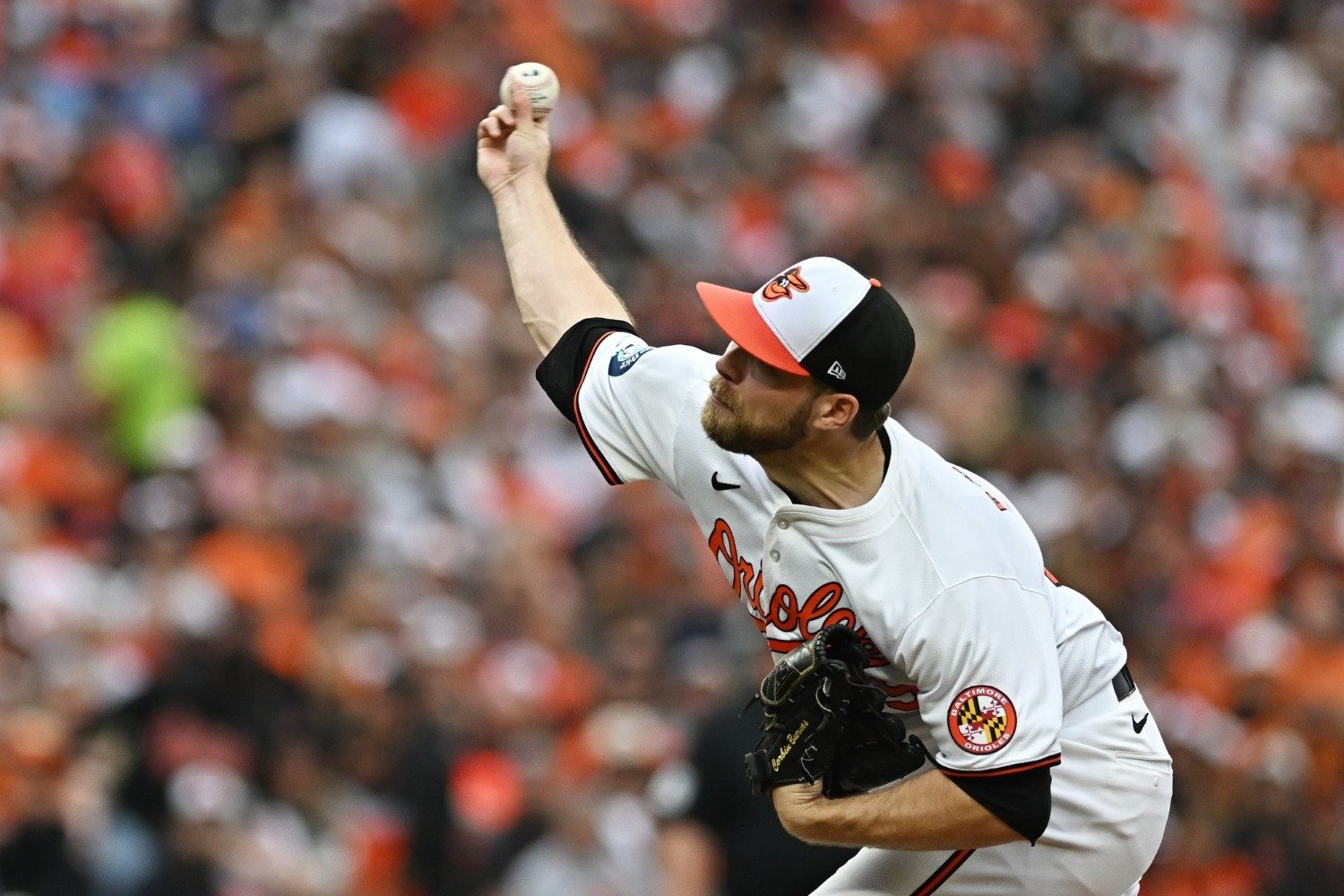 Though Corbin Burnes was traded to the Baltimoe Orioles back in late January, the ace righthander is well known around these parts as one of the figureheads of the most recent iterations of the always-solid Milwaukee Brewers. He responded well in his new digs, accumulating 3.4 WAR and a 2.92 ERA in 194 1/3 innings, earning the start for the American League in the All-Star Game (his fourth consecutive appearance at the Midsummer Classic). The Orioles failed to advance past the Wild Card round of the playoffs, prematurely ending Burnes’s tenure in Maryland, assuming the notoriously frugal O’s don’t loosen their purse strings for a payday that will certainly reach well into nine figures. Burnes is probably the best pitcher who is expected to hit the free agent market this winter, though other former Cy Young winners--namely, Shane Bieber and Blake Snell--and other pitchers who’ve had strong performances in recent years (Max Fried, Jack Flaherty, Nathan Eovaldi) round out a stronger-than-usual crop of starters. If a team is in the market for an ace, or a bounce-back candidate with a strong track record, or even just a plain old “high-risk, high-reward” play, this year’s crop of free-agent hurlers is a good place to go window-shopping. The Cubs very clearly fit that category of teams that need another starter, as rookie import Shota Imanaga--the team’s MVP for the 2024 season--was the only pitcher who remained reliable and healthy for the entirety of the 2024 campaign. Justin Steele still clearly has ace potential and should be a fixture on the North Side for years to come, but he failed to crack 135 innings pitched this year while dealing with elbow and hamstring injuries that bookended his season. Javier Assad proved himself worthy of a long-term spot in the rotation, but he blew past his career high in innings with 147 this year, and he declined in September as that workload piled up. Jameson Taillon still has two years on his contract and certainly had a strong second season with the team, but some of his success has to be chalked up to the pitcher-friendly way that Wrigley Field played all season. Beyond those four, the team has a lot of enviable depth: Ben Brown, Jordan Wicks, Brandon Birdsell, Cade Horton, and Hayden Wesneski are the most prominent options. It’s easy to figure that at least one of those guys will take the job for the fifth spot in the rotation and run with it, and it’ll be a fun competition to watch. However, the team is very clearly lacking the Batman to Steele and Imanaga’s Nightwing and Robin, which is where someone like Burnes slots in. It’s worth noting that for all his recent success, Burnes isn’t the same pitcher who won the Cy Young award in 2021. His durability since then has been beyond impressive (three straight seasons of 190+ innings), but his strikeout rate (35.6% in 2021, 23.1% in 2024), walk rate (5.2% to 6.1%), home run rate (1.1% to 2.8%), and average exit velocity allowed (84.9 MPH to 87.1 MPH) have all taken a turn for the worse. To be sure, his numbers from this season are all still excellent, but he’s more touchable now than when he could make a serious claim as the “best pitcher in the world”. For reference, his 3.55 FIP this season was more than double the league-leading mark he posted in 2021 (1.63). Those caveats shouldn’t scare off the Cubs, though. Burnes is still an ace who is capable of taking over games, as evidenced by his dominant eight-inning performance in Game 1 of the Wild Card Series earlier this month. If anything, the Cubs may be able to use Burnes’s declining metrics as a way to get a discount on a pitcher who still averaged more than 95 miles per hour on his cutter this season. The size of the soon-to-be 30-year-old’s contract will scare off some suitors, though it shouldn’t break the bank like Juan Soto’s will. The Cubs currently have roughly $152.5 million in luxury tax salaries accounted for heading into the 2025 season, which gives them about $88.5 million in space from the projected first threshold of $241 million. Given that the team surpassed the first competitive balance tax threshold in 2024, it wouldn’t be too unreasonable to expect them to do it again in a make-or-break year for baseball operations chief Jed Hoyer. If the Rickettses give the front office the true green light, the team may have more than $100 million to spend this offseason. It’s worth noting that Burnes has a pre-existing relationship with manager Craig Counsell, who was the dugout leader in Milwaukee when Burnes brought home the Holy Grail of pitching hardware. It would be surprising if Counsell didn’t actively advocate for the front office to aggressively pursue his former ace. While the Cubs have needs elsewhere on the roster--finding a middle-of-the-order bat is a more pressing issue--passing up the opportunity to bring in a surefire No. 1 starter would be a level of foolishness to which even this team seems immune. What do you think? Does Corbin Burnes make sense as a priority target this winter for the Cubs? Or should they focus their efforts elsewhere on the free-agent market?
 -
The Cubs will reportedly raise the prices on all season ticket holders by 3-10% this offseason. Is that fair, or just another example of the Ricketts putting their wallet before the fans?
-
The Cubs will reportedly raise the prices on all season ticket holders by 3-10% this offseason. Is that fair, or just another example of the Ricketts putting their wallet before the fans? View full video