Jason Ross
-
Posts
8,154 -
Joined
-
Last visited
-
Days Won
74
Content Type
Profiles
Joomla Posts 1
Chicago Cubs Videos
Chicago Cubs Free Agent & Trade Rumors, Notes, & Tidbits
2026 Chicago Cubs Top Prospects Ranking
News
2023 Chicago Cubs Draft Picks
Guides & Resources
2024 Chicago Cubs Draft Picks
The Chicago Cubs Players Project
2025 Chicago Cubs Draft Pick Tracker
2026 Chicago Cubs Draft Tracker: Picks & Bonuses
Blogs
Events
Forums
Store
Gallery
Everything posted by Jason Ross
-
The one thing I keep reminding myself is that if you wanted the Cubs to sign Tatusya Imai, this is probably the exact set-up you'd expect to see that happen: Cubs don't sign Cease Cubs do little of note at WM Reports that leave the Cubs out on King Cubs don't go top-end BP Little rumors on the Imai front in general on meetings, etc. That could also mean the Cubs are just doing what they've done at times, and will get outbid and left in a weird spot, so I don't want to go overboard or say it's happening, only that, I think if the Cubs were going to do that, this is exactly what you'd expect.
-
I think that probably is a good read on where the bullpen goes, yeah. It fits with how Hoyer/Hawkins talk about the bullpen and with Palencia, Maton, Thielbar, Milner, Stanek (or a Stanek-stand-in) and likely Rea you're looking at six somewhat stable and reliable arms. Gives the Cubs a little flexibility in terms of MiLB guys (Snider?) and young players to fill it out. The hope is that by going with those 3 for $15m instead of like Devin Williams, the Cubs may be signaling more of a willingness to spend on a big-FA player (one Devin Williams would either mean more BP spending or much more spaghetti-throwing). It's not my favorite bullpen plan ever,. but I guess it's not a disaster if the Cubs still grab Imai and a pretty good bat somewhere.
-
Hard to be mad about that. He clearly jelled well with the Cubs' and should be on a relatively easy one-year deal.
-
The Cubs could realistically end up with Alex Bregman, Tatsuya Imai or Ranger Suarez and have been loosely connected to Munataki Murakami, which is about half of those. I don't think the Cubs will be players in the Kyle Tucker, Bo Bichette (though, I guess if they're in on-Bregman it wouldn't be like, impossible?) or Cody Bellinger. And Framber Valdez wouldn't be the biggest shock if they were in on Cease and are in on Imai. So I'd say: Very realistically in on - 3 Kind of connected to, even though it feels a little weird - 1 Could maybe squint and see it - 2 Definitely no chance in hell - 2 But those "maybe squints" are pretty unlikely, too.
-
I continue to hope this is their plan A. No secret I've been a big Imai guy from the beginning, much of the research on how he'll translate seems to push me more into this territory. The Cubs have seemingly done well with NPB players when there hasn't been a lot of attention on the courting phase (Imanaga and Suzuki come to mind here) so I'm hoping with how kind of quiet it's been (who he's meeting, how close is he to signing, etc) that it bodes well.
-
Jesse Rogers and other ESPN discussed the shifting landscape of the offensive market in an article here. I think it's probably important from a Cub-centric-perspective for a few reasons: Their rumored price on Alex Bregman is not going down (this is Kiley McDaniel's prediction) The pitching market has not out-performed like the offensive-market has right now. Pete Alonso and Kyle Schwarber got more than what most people had them tabbed at, where as Dylan Cease artificially looks like he over-performed his AAV but with deferred money, it's mostly an accounting game. Most of the P market has followed relative expectation We know the Cubs don't like playing a game where they have their value on players pushed higher. That said, how it affects the trade market (the Cubs have position players to move) could also be affected. I'd really like the first actual shoe in the Cubs' offseason to drop; whether it's the hitter or the pitcher because I remain curious as to what the plan is (and no I don't think the plan is to basically punt the offseason or something - they're clearly cooking up some sort of plan whether it's the plan we want or not has to be seen).
-
I'm not trying to flex on you, I really just want to know why we don't consider what the Cubs did with veteran players last year, like Colin Rea, Brad Keller, Drew Pomeranz, and even mid-season trade players like Andrew Kittredge as the same as what they do with Cade Horton, and Daniel Palencia. I think they're birds of the same feather - getting the most out of a pitcher is getting the most out of them whether they've pitched MLB baseball for seven years or they're 22-years-old. It requires an organizational understanding of pitch movements, seam-shift wake...so many factors. I just think we have to move beyond the 2018-view of the Cubs and pitching where they used to be and where they are today. The failings (thus far) of Jordan Wicks and Ben Brown to grab ahold of a permanent MLB spot doesn't really lie in an organization that fails in drafting, scouting or development. It lies in lots of factors, but I don't think there's much proof right now that the Cubs organization is at fault for it.
-
Can you please explain to me what you believe the difference between what the Cubs did with Colin Rea (which was lower his arm slot drastically and change his pitch mix) to what the Cubs would do with, say, a young pitcher like Cade Horton is? You seem to want to create lines of distinction here, but other than "one person is older" I don't actually find that a useful line of distinction. Development is development in my book. There was also development on the farm this year from Jaxon Wiggins and Ryan Gallagher. It's true, the Cubs traded Ryan Gallagher, but that doesn't negate the development. If you would like to point out the lack of pitching in the Cubs minor league system, I don't think this is a developmental issue, but one exacerbated by trades (Jackson Ferris, Ryan Gallagher), promotions (Cade Horton) and an importance put on the draft on offensive players far more than anything. The Cubs will see a greater influence by Tyler Zomrbo, now earmarked as head of pitching development organizationally moving forward as well. Ultimately, your comment feels like an incredibly poor "gotch'a" comment that doesn't jibe with the reality of the Cubs' organization. It's a comment rooted in what feels like 2018, not the currently Cubs' pitching infrastructure of 2025 heading into 2026. And to be clear this is not me cheering on the front office but pointing out the realities of what the Cubs do well. I've got gripes with how the budget is set by ownership, how Hoyer has a lack of a killer instinct to go get a guy, and others, but that doesn't mean it bleeds over to how the Cubs are currently handling pitching, which they are doing a good job with.
-
This is a silly comment. If it's the Cubs "scouting,. drafting and development" explain Cade Horton - a player I know fans were pissy about at the time? A player they scouted back in the Covid-year out of HS, a player they drafted a few years later, and a player they have done significant work on in development. If it's the Cubs development scouting, explain Brad Keller, Drew Pomeranz, Caleb Thielbar, Daniel Palenica, and Colin Rea last year? Let's not be ridiculous. Jordan Wicks has dealt with injuries two years running and that's neither on the scouting, development or drafting departments. As well, while I think Ben Brown isn't as good as his xFIP suggests, I also don't think he's as bad as his ERA suggests. There are still plenty of MLB outcomes of both a healthy Jordan WIcks and Ben Brown moving forward. I cannot predict if it will happen, but even if it doesn't, it wasn't because of the Cubs "scouting, drafting and development" it'll almost assuredly be more because "most prospects fail at some point".
-
Man, I can't look away from Phillip Rivers starting a game.
-
The report that this is coming from names those three teams but it doesn't suggest they're the only teams. But that all three are competing. I think there's room for other teams to be involved based on the wording.
-
I doubt much has really changed on the Michael King market. Cease bested his FanGraphs crowd sourced AAV by $1m, Edwin Diaz hit it right on the spot, Devin Williams beat his by $1m. Merrill Kelly is the only really big increase on AAV ($4m). on the pitching side (hitters have outpaced their AAV more). I'd still expect him in the $20-22m AAV range (with $24m at the top).
-
Yeah, heard that one when he was on, Waddy and Silva the other day (I think?). I'm fine with the Cubs ending up with Michael King, as well. He hits a lot of markers with Cubs pitching recently; including the lack of truly a long term deal. In today's money he kind of sits around what Jameson Taillon signed a few years.
-
Interesting to see the Cubs not as involved there (based on the report) as you'd assume....
-
The flip side of that is that Dylan Cease was supposed to set the high-end of the market and with his deferrals, the real-world-AAV is under $27m. So I think everything in the middle is pretty much what we expected; the Cubs will probably have to pay $20m-$24m, but I don't think anyone thought King, Imai or anyone they'd be in on at that level is really very different. It could push them to the trade market, though, if we're that worried.
-
Yeah the draft should be really fun. Especially drafting late in the 1st. That feels prime "take an upside arm" area. I'm really excited as to which arms someone like Zombro likes in the draft. Kantrovitz has been a good drafter, but adding Zombro with someone like Ty Nichols feels like it could be a cheat code.
-
A few thoughts about everything: 1. It's about time that Washington does something about their pitching infrastructure. Sorry it's not Zombro (I'd rather he be here) but they need to overhaul that nonsense. 2. Glad the Cubs have recognized Tyler Zombro as an important part of the pitching infrastructure. 3. Curious to see how this affects the draft - the Cubs haven't gone super pitching heavy recently. With the dearth of arms in the system, I suspect we'll see heavy arms and heavy Zombro influence 4. Interested to see how the Cubs develop arms. There's been a bit of a throughline of low-arm slot, high cut-ride guys in the MLB side of things since last year (obviously not every arm but a throughline of most). Might be kind of a cool "breakout" year for an arm or two with characteristics that Zombro likes?
-
I'd have done that every day and twice on Sunday. That said, some recent data in Imai has be thinking, depending on how you evaluate Imai, that Imai may be as good if not a bit better. It requires a strong eval on him, but think it's possible.
-
I think the AAV isn't the issue. They pay AAV, they get nervous on years. Now, the Cubs were reportedly in on Cease until $200m. That means at least 6 years for a 30 year old arm. Imai is 27. I could see them going 7 here if they really like him.
-
Yeah that feels about where I'm at. If his forearm was the cause of the issue, you delete the slurve thing, hope the velo is back and he's a solid mid-pen addition. Velo is down and he walks in Mesa
-
Image courtesy of © Steven Bisig-Imagn Images The MLB Winter Meetings have come and gone with a general whimper for the Chicago Cubs, their only major-league transaction of the week being their recent signing of veteran left-handed reliever Hoby Milner on Thursday. They did, however, complete a minor-league deal signing Collin Snider, formerly of the Seattle Mariners. It's easy to have some cynicism when it comes to contracts like Sniders', especially due to the timing; the Orioles are signing Pete Alonso and the Cubs are throwing pasta at the wall on Collin Snider — the headline writes itself for the most part. But beyond the initial reaction of "who cares?", I think there is a genuinely interesting pitcher in Collin Snider, and one who could find his way into the Cubs' bullpen plans in 2026. First, it's probably important to point out that Snider isn't a particularly new name to those in the Cubs organization. While it's true the reliever has never been a Cub, he's worked with Tread Athletics and Tyler Zombro in the past (we'll come back to this later). So, while it's true that he's yet to wear the royal pinstripes, there's an air of familiarity for what he does well and how to work with him already. ZW5QeUFfV0ZRVkV3dEdEUT09X0FRaFJBVmRRQXdRQVdsQUxWZ0FBQ1FBQUFGa0NWMWtBQndaUVVnWUhWd0FIQmdBRg==.mp4 Beyond just some familiar vibes, Snider has had major-league success in the past, specifically in 2024. Over 40 innings, the right-handed reliever was able to post a 1.94 ERA, 3.41 FIP, 3.52 xFIP and a sparkling 27.8 K%. He was unable to keep up the good times in 2025, though, struggling in just 25 innings with the M's, being unceremoniously designated for assignment mid-summer. Attempting to diagnose what went wrong is key to figuring out how to get him back to his best. The most obvious thing that went off the rails was Snider's fastball. One of the things he did so well in 2024 was couple a low-release point with solid velocity to surprise hitters by attacking them up in the zone. Only 26 pitchers in baseball had a lower release point on their fastball in 2024, which makes his usage of the fastball at the top of the zone a bit of an awkward look for hitters — it has a "rising" action (look at how Luis Robert Jr. swings right through his fastball in the video above). Last year, the velocity on the fastball waned, dropping two full mph, and his shape dropped as well; an issue for someone who throws this pitch one-third of the time. Based on FanGraphs' Stuff+ model, it fell from a pretty excellent 111 Stuff+ to a below-average 97 Stuff+. Getting this pitch back to peak velocity and shape is a key to unlocking the 2024 version of the pitcher. Snider also dabbled with splitting his sweeper into two distinct pitches last year; his traditional one with more horizontal movement, and another with more vertical movement, classified as a slurve. This was a pitch designed to play nicely with his cutter-fastball combination and create a little extra depth in his arsenal. While solid in theory, this pitch was kind of a mess all season — MLB hitters crushed the thing, to a tune of a .351 xwOBA and a slugging percentage well north of .500. After he was DFA'd, he entirely lost feel for the thing, so while his velocity may have been up half a MPH while in Tacoma, this pitch became a real problem for him: It became too close to his actual sweeper much of the time, making it hard to differentiate, while also getting too far away from his cutter and fastball to create a difficult decision point for the hitter. It really might behoove everyone to entirely scrap this thing and go back to the 2024 pitch mix. One of the issues that we can point to when it comes to velocity and shape is that the pitcher spent nearly two months on the shelf for a lower-arm issue. Snider is a supinator and a pretty extreme one at that; he engages his lower arm to create the motion and the shapes of his pitches. This causes stress in that area, meaning that it's both not surprising that he suffered an injury here, but also gives us a place to point as to what went wrong last season. A healthy forearm may fix much of what was ailing the righty all on it's own, meaning less outside intervention required. The vision for Snider is likely something akin to what Tyson Miller was for the Cubs in 2024 (who they also acquired from Seattle). Miller was a slider-fastball pitcher with a low arm slot who the team used, especially, against RHH. When both relievers are going well, they uses a high fastball to play off their slider/sweeper to great effect. To get there, the fastball velocity will have to get back to where it was, and Snider's likely going to scrap the slurve (it's just a bad pitch). These pitches interact with each other very well and create difficult decision points for hitters, but if one of them isn't working, then the others will falter on their own merits. Snider would play really well with Hoby Milner, who's devastating against LHH. While they both may fit in more as "specialists". they can thrive in those defined roles. Bigger picture, I think Collin Snider helps us understand the types of pitchers the Cubs are targeting. While we can't say every pitcher is going to have the exact same profile, there are a lot of things that we can glean from this. Namely, that low arm slot Snider uses to great effect (when healthy). Thus far, the Cubs have signed three pitchers for their 2026 bullpen: Phil Maton, Hoby Milner, and Collin Snider, all three of whom have extremely low arm slots. They use them differently; Maton kills you horizontally, Snider attacks you at the top of the zone and then changes your eye level with a sweeper, and Milner is just funky as hell. I don't think it's an accident that they all have this type of arm slot. Further driving the point home: The Cubs signed Matthew Boyd last year and lowered the arm slot of Colin Rea to great effect, Let's not make a mountain out of a molehill, though. Collin Snider is a dart throw and will likely be one of many the Cubs attempt this offseason as they look to rebuild their bullpen. Given their track record, we should probably give them some runway, but it's very possible that even after reuniting with Tread Athletics and Tyle Zombro, Snider just cannot get back to what he was in 2024. The hope here is that as he gets beyond the forearm issue that clearly hurt his feel last season, he can get back to making his unique profile work. With as many 40-man spots as the Cubs have, there's a real path for the right-hander to make the Cubs out of spring training if he can show he's gotten himself right. While I doubt he's as good as Brad Keller, who they really struck gold with last season, there's probably a good reason to believe that despite the MiLB nature of his deal, the Cubs can at least strike silver with Snider. What do you think of Collin Snider? Do you think the Cubs can extract as much value from him as they did with Tyson Miller? Let us know in the comment section below! View full article
-
Collin Snider Could Be Cubs' Best Under-the-Radar Offseason Signing
Jason Ross posted an article in Cubs
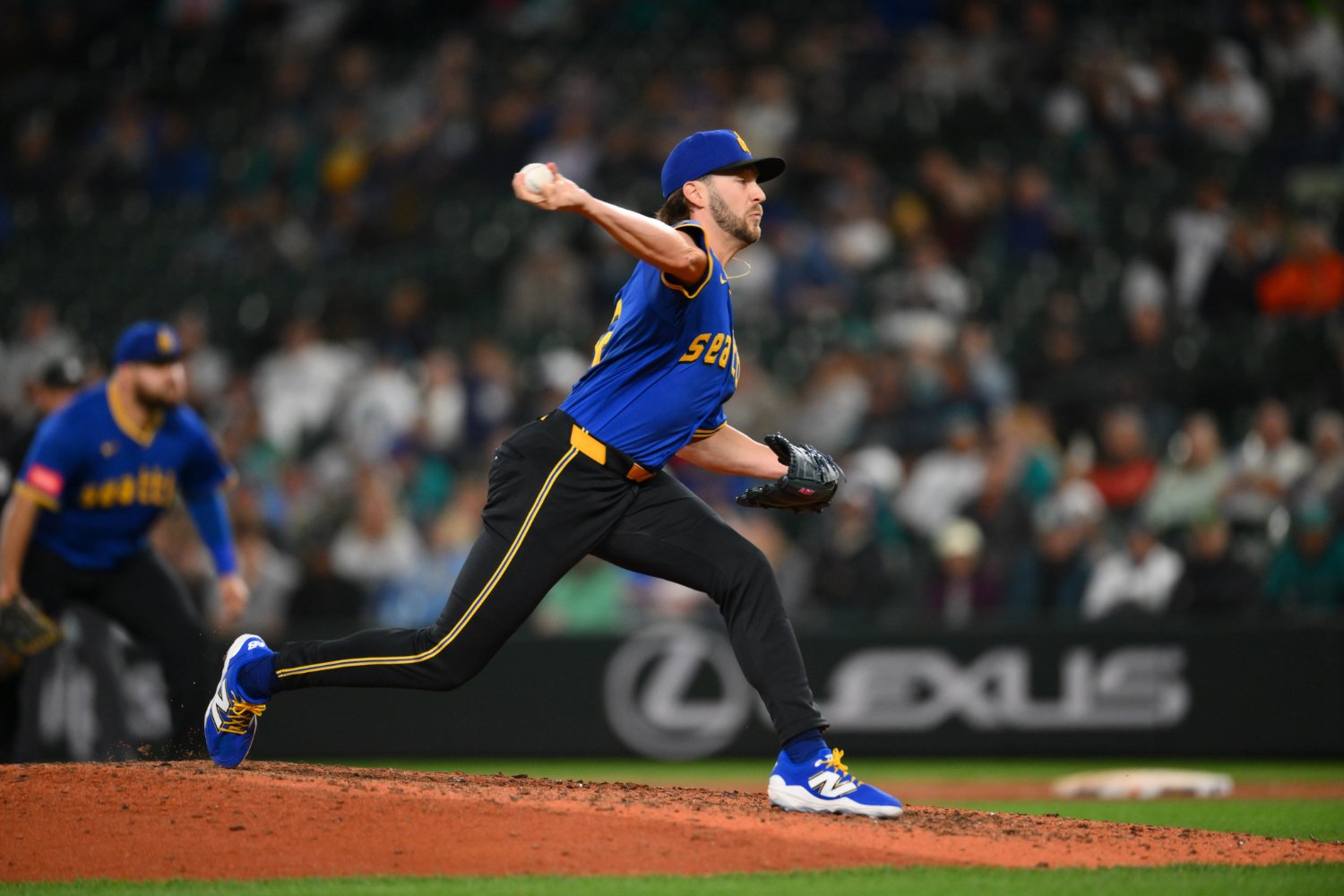 The MLB Winter Meetings have come and gone with a general whimper for the Chicago Cubs, their only major-league transaction of the week being their recent signing of veteran left-handed reliever Hoby Milner on Thursday. They did, however, complete a minor-league deal signing Collin Snider, formerly of the Seattle Mariners. It's easy to have some cynicism when it comes to contracts like Sniders', especially due to the timing; the Orioles are signing Pete Alonso and the Cubs are throwing pasta at the wall on Collin Snider — the headline writes itself for the most part. But beyond the initial reaction of "who cares?", I think there is a genuinely interesting pitcher in Collin Snider, and one who could find his way into the Cubs' bullpen plans in 2026. First, it's probably important to point out that Snider isn't a particularly new name to those in the Cubs organization. While it's true the reliever has never been a Cub, he's worked with Tread Athletics and Tyler Zombro in the past (we'll come back to this later). So, while it's true that he's yet to wear the royal pinstripes, there's an air of familiarity for what he does well and how to work with him already. ZW5QeUFfV0ZRVkV3dEdEUT09X0FRaFJBVmRRQXdRQVdsQUxWZ0FBQ1FBQUFGa0NWMWtBQndaUVVnWUhWd0FIQmdBRg==.mp4 Beyond just some familiar vibes, Snider has had major-league success in the past, specifically in 2024. Over 40 innings, the right-handed reliever was able to post a 1.94 ERA, 3.41 FIP, 3.52 xFIP and a sparkling 27.8 K%. He was unable to keep up the good times in 2025, though, struggling in just 25 innings with the M's, being unceremoniously designated for assignment mid-summer. Attempting to diagnose what went wrong is key to figuring out how to get him back to his best. The most obvious thing that went off the rails was Snider's fastball. One of the things he did so well in 2024 was couple a low-release point with solid velocity to surprise hitters by attacking them up in the zone. Only 26 pitchers in baseball had a lower release point on their fastball in 2024, which makes his usage of the fastball at the top of the zone a bit of an awkward look for hitters — it has a "rising" action (look at how Luis Robert Jr. swings right through his fastball in the video above). Last year, the velocity on the fastball waned, dropping two full mph, and his shape dropped as well; an issue for someone who throws this pitch one-third of the time. Based on FanGraphs' Stuff+ model, it fell from a pretty excellent 111 Stuff+ to a below-average 97 Stuff+. Getting this pitch back to peak velocity and shape is a key to unlocking the 2024 version of the pitcher. Snider also dabbled with splitting his sweeper into two distinct pitches last year; his traditional one with more horizontal movement, and another with more vertical movement, classified as a slurve. This was a pitch designed to play nicely with his cutter-fastball combination and create a little extra depth in his arsenal. While solid in theory, this pitch was kind of a mess all season — MLB hitters crushed the thing, to a tune of a .351 xwOBA and a slugging percentage well north of .500. After he was DFA'd, he entirely lost feel for the thing, so while his velocity may have been up half a MPH while in Tacoma, this pitch became a real problem for him: It became too close to his actual sweeper much of the time, making it hard to differentiate, while also getting too far away from his cutter and fastball to create a difficult decision point for the hitter. It really might behoove everyone to entirely scrap this thing and go back to the 2024 pitch mix. One of the issues that we can point to when it comes to velocity and shape is that the pitcher spent nearly two months on the shelf for a lower-arm issue. Snider is a supinator and a pretty extreme one at that; he engages his lower arm to create the motion and the shapes of his pitches. This causes stress in that area, meaning that it's both not surprising that he suffered an injury here, but also gives us a place to point as to what went wrong last season. A healthy forearm may fix much of what was ailing the righty all on it's own, meaning less outside intervention required. The vision for Snider is likely something akin to what Tyson Miller was for the Cubs in 2024 (who they also acquired from Seattle). Miller was a slider-fastball pitcher with a low arm slot who the team used, especially, against RHH. When both relievers are going well, they uses a high fastball to play off their slider/sweeper to great effect. To get there, the fastball velocity will have to get back to where it was, and Snider's likely going to scrap the slurve (it's just a bad pitch). These pitches interact with each other very well and create difficult decision points for hitters, but if one of them isn't working, then the others will falter on their own merits. Snider would play really well with Hoby Milner, who's devastating against LHH. While they both may fit in more as "specialists". they can thrive in those defined roles. Bigger picture, I think Collin Snider helps us understand the types of pitchers the Cubs are targeting. While we can't say every pitcher is going to have the exact same profile, there are a lot of things that we can glean from this. Namely, that low arm slot Snider uses to great effect (when healthy). Thus far, the Cubs have signed three pitchers for their 2026 bullpen: Phil Maton, Hoby Milner, and Collin Snider, all three of whom have extremely low arm slots. They use them differently; Maton kills you horizontally, Snider attacks you at the top of the zone and then changes your eye level with a sweeper, and Milner is just funky as hell. I don't think it's an accident that they all have this type of arm slot. Further driving the point home: The Cubs signed Matthew Boyd last year and lowered the arm slot of Colin Rea to great effect, Let's not make a mountain out of a molehill, though. Collin Snider is a dart throw and will likely be one of many the Cubs attempt this offseason as they look to rebuild their bullpen. Given their track record, we should probably give them some runway, but it's very possible that even after reuniting with Tread Athletics and Tyle Zombro, Snider just cannot get back to what he was in 2024. The hope here is that as he gets beyond the forearm issue that clearly hurt his feel last season, he can get back to making his unique profile work. With as many 40-man spots as the Cubs have, there's a real path for the right-hander to make the Cubs out of spring training if he can show he's gotten himself right. While I doubt he's as good as Brad Keller, who they really struck gold with last season, there's probably a good reason to believe that despite the MiLB nature of his deal, the Cubs can at least strike silver with Snider. What do you think of Collin Snider? Do you think the Cubs can extract as much value from him as they did with Tyson Miller? Let us know in the comment section below!
-
I generally agree with this. That said, it does seem like the vanity of it has some pull in these situations. I don't really care that the Cubs don't use them, and think people upset at them are generally barking up the wrong tree, but I do wish the Cubs were maybe a little more willing to give into the vanity of it all, too.
-
I'd imagine that's probably the sticking point with the Cubs. There's so much red tape, back-books and hidden financials with the way MLB teams handle these things, that I suspect the reason the Cubs don't do deferred money is in how they handle these things internally. All we can really see is how the team has to handle their AAV for LT. Everything else is really hidden and I think teams, as much as humanly possible cook-the-books in a way to shift how they account for these things. For an owner who is as worried about "now profits" I think the Cubs find a way to account for these things in the most favorable of ways and I think deferred money would mess with that structure in some fashion.
-
Those are two different ideas. Deferring money lowers your total cost. A $1 today is worth more than a $1 next year because of inflation. Deferring money doesn't do anything except lower the real-world-value of the money. I fully believe the reason the Cubs don't defer money is not due to "long term contract" fear; the Cubs have signed Swanson to a 7-year contract, they offered Ohtani a market value 10+ deal. The sticking point was the deferrals on Ohtani for the Cubs - that would lower the total value of the contract. Look here; it's likely that the Cubs contract was for more actual, present day money than the Dodgers. Yet, they wouldn't defer money - so your argument holds zero water. I believe the reason the Cubs don't like deferred money is an accounting thing with Tom and the Cubs financials. I believe the reason the Cubs generally don't sign contracts that go 7+ years is because Jed Hoyer prefers to keep those contracts for specific types of players and would rather keep a nimble roster format, capable of rolling over. We can see the Cubs aren't completely scared of long deals though; they offered 7 to Swanson, 10 to Ohtani, and were reportedly in on Cease until it hit $200m (that'd have to have been some sort of a 6-or-7 year long offer in and of itself). We also have not seen the Cubs defer money on short term deals like the Dodgers have, for example, on Edwin Diaz or Teoscar Hernandez. If they were simply afraid of extending contracts or whatever, we'd have seen this at this point. Yet...not deferrals on short deals. So ultimately we have seen the Cubs offer long term deals. We have seen them refuse to use the deferral structure. In fact, while we have at least seen one 7 year contract, we have seen zero truly deferred contracts. The closest we get is the "mutual option - buy out" which pushes a $1m or so to the next year.