.jpg.900f6d1bc80a5a156f3ba09ea0e4b3d7.jpg)

Jason Ross
-
Posts
8,153 -
Joined
-
Last visited
-
Days Won
74
Content Type
Profiles
Joomla Posts 1
Chicago Cubs Videos
Chicago Cubs Free Agent & Trade Rumors, Notes, & Tidbits
2026 Chicago Cubs Top Prospects Ranking
News
2023 Chicago Cubs Draft Picks
Guides & Resources
2024 Chicago Cubs Draft Picks
The Chicago Cubs Players Project
2025 Chicago Cubs Draft Pick Tracker
2026 Chicago Cubs Draft Tracker: Picks & Bonuses
Blogs
Events
Forums
Store
Gallery
Everything posted by Jason Ross
-
Twasnt. South Carolina. I don't know what the name is however. It's...warm at least. A fish did bite me though. That was rude.
-
I wasn't treading water in the middle of a lake for three hours. I was drinking white claws (I'm old and watch my calories, don't @ me) and floating on a pool noodle. That said, it probably is a miracle I made it. I'm old.
-
Me, checking ESPN after being in a lake for 3 hours.
-
Wicks down. Pomeranz selected.
-
I'm equally fine moving any of the three. I would hesitate to move any three for a rental, however. Not because I'm opposed to a rental, but because I also believe these three represent the best chance to get the controllable player and I wouldn't want to ruin that.
-
I don't agree that Ramirez is the first to go. I very much believe one of Shaw, Ramirez and Rojas will go, but that the Cubs are very open to the idea of moving any of the three.
-
Is modem pitcher training/philosophy still worth the costs?
Jason Ross replied to Stratos's topic in Chicago Cubs Talk
It would force pitchers to go longer and the way to do that would be to decrease stress and how hard you threw. -
I don't want to blow up this person's spot so I'll leave it as what it is. I just don't believe the ask was Caissie and Wiggins at the end. It was likely more than what they paid in the winter but the end cost was not that high in July. Free agency isn't a bad idea, however please remember; FA have agency and just because the Cubs go into that market doesn't mean they walk away with the guy. But they need a lot of things. They cannot fill two SP and 2 OF spots entirely from FA. I will say right now; I think it's a mistake to think the Cubs should fill RF and LF with Shaw and Ramirez. So I think $25m plus could go to a Happ or Suzuki re-up. They also need a BP and a bench, so add in $20m-$25m there. You're quickly down to $50m. And I think the Cubs will entirely be staying below the threshold. They're going to make a trade between now and next year. It's going to be for someone. And I think if you have a lot of hitting prospects the easy answer is "trade for a pitcher". If you can pay a slight premium today to ensure you have it done, and you get the value in 2026 and beyond? I'm all for it. It's the best choice. Just do it. You take out any concern about a FA bidding war. I don't think the Cubs are going to get into one for a pitcher.
-
It works out better for 2026, yes. But the downside is it doesn't fix 2027 or beyond. They still need to either make that commitment or a trade. I'm very much of the position that the Cubs have the prospect capital to just take care of the trade now, so do it if it's possible. Also the reported Caissie/Wiggins ask I don't believe. I have a reason for that beyond just guessing (I'm not an insider but I know a guy who knows a guy type thing). I think that is over reported and not entirely true. I do think the price was more than just Owen Caissie but believe the secondary pieces were not Wiggins. The Cubs, also, can afford that kind of deal. That's a top-50 and a fringe top-100 (that's where Wiggins sat). That's a Rojas+ Kepley (ish) package. I'm okay with that.
-
Yeah, Peralta would work. I think he's been better than he seems, his xERA is 3.77z though his velo is down too. If you think it's a mechanical tweak or something he could be very good. He wouldn't be my top-choice, as I think controllable is a key need, but if they just go rental? Could do a lot worse.
-
I think he would have to believe the Cubs would be a very good chance at a 1/2 seed. He's spoken on that in the past, at how being in that #1 or #2 seed changes the math. So I'd assume they'd have to be very close to Milwaukee and with the belief that Skubal would push them over the top.
-
Is modem pitcher training/philosophy still worth the costs?
Jason Ross replied to Stratos's topic in Chicago Cubs Talk
I think it's very likely, yes. Not *every* pitcher goes down with TJS, but the reality is the more people who throw the way these guys do, the more risk and potential damage they're doing. Some people are genetic freaks who won the lottery of throwing 99mph and can withstand that. Others not so much. Will they regret it? My guess is no, as long as they get paid. To put it another way; NFL players consistently put their brains in danger, I suspect MLB pitchers will value their arms less than their brains, all things considered. -
Is modem pitcher training/philosophy still worth the costs?
Jason Ross replied to Stratos's topic in Chicago Cubs Talk
They will not. Instead, expect teams to invest more lottery tickets into pitching. Especially with pitchers on pre-FA deals. "Churn and burn". They will gladly take a few years of elite performance for throwing them on an IL to replace them with the "next batch" of dudes who throw 98+mph. From a humanity standpoint, it's kind of gross. But sadly, that's sports. Humans are treated as commodities and players will take the risk for generational wealth. -
NSBB Podcast Question suggestions of the week:
Jason Ross replied to Jason Ross's topic in Chicago Cubs Talk
I love this one! -
Edinson Volzquez turns 43 tomorrow. He doesn't seem to be doing anything.
-
So here me out...maybe we just shuffle through birthday boys?
-
Minor League Discussion & Boxes, 7-2-26
Jason Ross replied to CaliforniaRaisin's topic in Cubs Minor League Talk
He's among the youngest players at his level in baseball and the first speed bump of his 3 month span is at the end of June. He was a very top prospect in the recruiting cycle. He should be a Freshman at a SEC school and is instead playing professionally. I think we can hold off on any talk of him being a flash in the pan. -
Image courtesy of © Saul Young/News Sentinel / USA TODAY NETWORK via Imagn Images The Chicago Cubs have had an up-and-down season, winning 10, losing 10, hitting a billion home runs and going ice-cold. As the big-leaguers have ebbed and flowed, on the minor-league side of things, the team has been fairly consistent in terms of who's hitting and staying hot. June was yet another good month for much of the system, but which hitter tops the charts? Ranking the Cubs' Best Minor-League Hitters of June: Honorable mention: Josiah Hartshorn, OF, South Bend Cubs Josiah Hartshorn has had a rocket ship strapped to his back all season. He's made quick work of Myrtle Beach and remains an outside chance of landing in Double-A Knoxville by the end of the year despite being 1.5 years shy of being able to order a beer at a ballgame. The 19-year old has been a revelation and an amazing draft pick so far. He even landed inside of the top 30 on Baseball America's most recent top-100 list. In June, the outfielder posted a 127 wRC+, hit seven home runs and even had his first miniature slump mixed in. The music keeps going on, however, as the kid just keeps blasting baseballs. Third Place: Kane Kepley, OF, South Bend Cubs Kepley, the Cubs' second-round pick last year has been another steal, it seems. While it would be great to see a little power, the speedy outfielder has been a nightmare to keep off the bases, and June was no different. Kepley posted a 154 wRC+ during the month and walked nearly two times more than he struck out, walking 24 times to just 14 punchouts. He even powered two balls out for bombs. Kepley has gotten some top-100 love this year and just will not slow down—not that anyone would want him to (other than opposing pitchers). Second Place: Jefferson Rojas, 3b, Knoxville Smokies In a way, I feel gutted for Rojas, because most months, this is a standout performance. The 21-year-old infielder was smoking in June, belting seven home runs, rocking a .352 batting average, and posting a 161 wRC+. Rojas kept his K-rate around the 10% mark, walked almost 7% of the time, and looked like an absolute menace. It's crazy that our North Side Baseball top prospect keeps getting upstaged by someone each time, but that's a good thing, not a bad one. I'm not sure where Rojas will be come August 4, or what his pathway to the majors is, but it doesn't matter when you hit like he did in June. Winner: Owen Ayers, C, Knoxville Smokies What an insane, bananas, bonkers month Ayers just had. The numbers speak for themselves. In June, he hit .452, had a 252 wRC+, almost walked as much as he struck out, hit 20 extra-base knocks, and did all of this playing the most demanding and brutal position in baseball, and maybe in any sport. Yeah, yeah, he's 25, but who cares at this point? He even made Baseball America's top 10 risers list. Ayers has absolutely dominated Knoxville at a level that is hard to believe and isn't based on age. The former Thundering Herd (Herdsman? Herder? It's not a nickname that lends itself well to the swtich from collective to individual, is it?) has put himself in a position to be an asset to the Chicago Cubs organization. For a 19th-round selection, it's a pretty unreal outcome. View full article
-
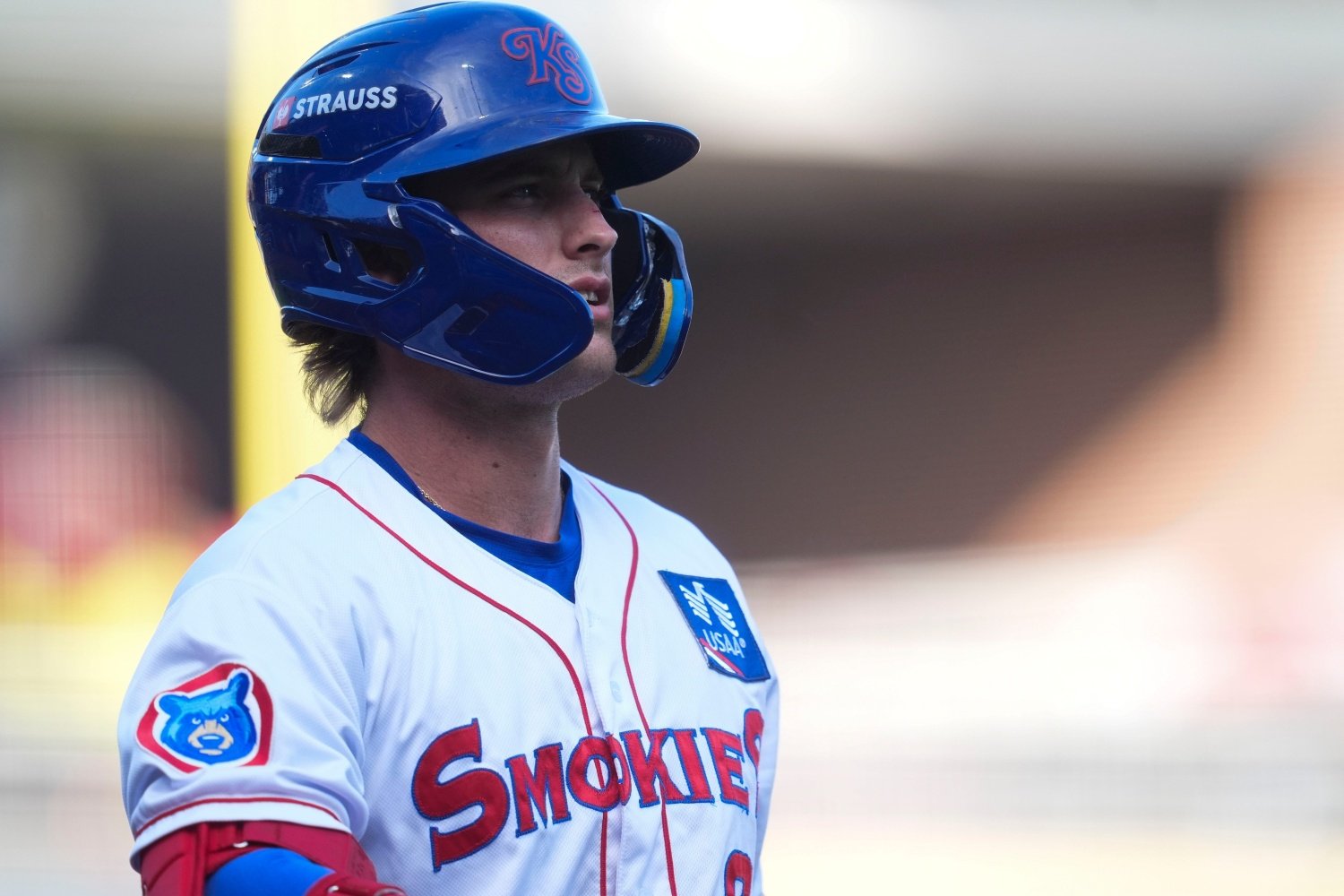 The Chicago Cubs have had an up-and-down season, winning 10, losing 10, hitting a billion home runs and going ice-cold. As the big-leaguers have ebbed and flowed, on the minor-league side of things, the team has been fairly consistent in terms of who's hitting and staying hot. June was yet another good month for much of the system, but which hitter tops the charts? Ranking the Cubs' Best Minor-League Hitters of June: Honorable mention: Josiah Hartshorn, OF, South Bend Cubs Josiah Hartshorn has had a rocket ship strapped to his back all season. He's made quick work of Myrtle Beach and remains an outside chance of landing in Double-A Knoxville by the end of the year despite being 1.5 years shy of being able to order a beer at a ballgame. The 19-year old has been a revelation and an amazing draft pick so far. He even landed inside of the top 30 on Baseball America's most recent top-100 list. In June, the outfielder posted a 127 wRC+, hit seven home runs and even had his first miniature slump mixed in. The music keeps going on, however, as the kid just keeps blasting baseballs. Third Place: Kane Kepley, OF, South Bend Cubs Kepley, the Cubs' second-round pick last year has been another steal, it seems. While it would be great to see a little power, the speedy outfielder has been a nightmare to keep off the bases, and June was no different. Kepley posted a 154 wRC+ during the month and walked nearly two times more than he struck out, walking 24 times to just 14 punchouts. He even powered two balls out for bombs. Kepley has gotten some top-100 love this year and just will not slow down—not that anyone would want him to (other than opposing pitchers). Second Place: Jefferson Rojas, 3b, Knoxville Smokies In a way, I feel gutted for Rojas, because most months, this is a standout performance. The 21-year-old infielder was smoking in June, belting seven home runs, rocking a .352 batting average, and posting a 161 wRC+. Rojas kept his K-rate around the 10% mark, walked almost 7% of the time, and looked like an absolute menace. It's crazy that our North Side Baseball top prospect keeps getting upstaged by someone each time, but that's a good thing, not a bad one. I'm not sure where Rojas will be come August 4, or what his pathway to the majors is, but it doesn't matter when you hit like he did in June. Winner: Owen Ayers, C, Knoxville Smokies What an insane, bananas, bonkers month Ayers just had. The numbers speak for themselves. In June, he hit .452, had a 252 wRC+, almost walked as much as he struck out, hit 20 extra-base knocks, and did all of this playing the most demanding and brutal position in baseball, and maybe in any sport. Yeah, yeah, he's 25, but who cares at this point? He even made Baseball America's top 10 risers list. Ayers has absolutely dominated Knoxville at a level that is hard to believe and isn't based on age. The former Thundering Herd (Herdsman? Herder? It's not a nickname that lends itself well to the swtich from collective to individual, is it?) has put himself in a position to be an asset to the Chicago Cubs organization. For a 19th-round selection, it's a pretty unreal outcome.
 -
It was reported he will be unlikely to pitch as a starter. But he's still working his way back. Multi-inning leverage reliever feels possible.
-
Pete Outdoing His Best Devin Hester Impression
Jason Ross replied to We Got The Whole 9's topic in Chicago Cubs Talk
Salvador Perez was worth .5 fWAR last year and hit 30 bombs. Still happens today. -
I was just thinking about this today. Here's where I've settled: 1. I reasonably expect one of Cabrera, Brown or Taillon to establish themselves as a reliable rotation piece the rest of the year. Which one? Not sure, as I think there's arguments against any of the three getting back (injuries, talent, etc). I have different levels of excitement of all three. 2. I expect one of Steele, Palencia, or Wiggins will establish themselves by the end of the year as a strong BP guy you really trust with a good shot it's two and a realistic, though less chance, it's all three. For Palencia it's just that I'm always cautious on arm ouchies, but I think he's the most likely. Wiggins could possibly end up in the rotation discussion but I'm trying to be very cautious. I'm left with a possible situation of this: - Playoff wise, I'd trust Boyd and Shota to start, with outside chances of Peterson though preferably, not. Cabrera or Brown would add a third, but Taillon is a no go. I think the team certainly has to add a playoff starter, even if just to guard another injury. - Bullpen wise, Justin Webb, Ryan Rollison and Caleb Thielbar (I remain encouraged by the under the hood stuff, think he's stull a useful arm) remain in my my trust circle. Tyler Ferguson has given me some hope he could stick around, but it's still under 7 innings so I'll hold off putting his name in permanent marker. You expect one more of those guys to add to this list. If you get more? Great! But that leaves me four or five guys. You can slot your favorite non-playoff SP in here for length. But the team needs at least one back-end guy and probably one middle-relief guy. Maybe Maton comes back, too, and looks like last-year Maton, but it might not happen this year. Shelby Miller is a fun lottery ticket, too. My hope is that the Cubs solve this with three arms. One Edwin Cabrera-type trade, one Andrew Kittredge-type trade and then pick up your favorite expiring middle reliever who does some damage. Obviously health is a big question mark, and more guys will possibly go down, But I think this is where I'm at. I'm not going to turn my nose up at another David Peterson simply because we've seen depth issues all year, but I'm not very interested in another one of these. I think the Cubs with Rea, Assad, Peterson, and the possibilities of Taillon, Sanders and Wiggins have depth SP as of now. They need someone you write down with confidence in a playoff rotation.
-
No. It has nothing to do with tone. It's purpose. Your purpose by posting "the Cubs have given up 4.3 per game over their 13-game span" was not to do anything other than point out doom-and-gloom. Contextually, it's league average! You didn't look to see what the rest of the league had done in that span, you hadn't looked up league average ERA. You found one piece of data that sounded bad and ran with it. When it turned out it wasn't doomy, you jumped to other things to doom-and-gloom about, things that weren't even connected to the original premise (Dansby Swanson, for example, or Cade Horton). No one disagrees that the pitching staff is not good. But we don't need to manipulate the data, or post contextless-data to find new ways to doom-and-gloom over it. Especially after the Cubs have won 11-of-13 and beat the brakes off a Wild Card competitor 24-hours ago. I'm just saying, we can be happy for a few minutes and we can enjoy the ride because when the first post that comes to mind is "The Cubs have given up 4.3 runs per game" without context as your only comment, it looks more like you're searching for something to wallow about instead.
-
It isn't to say you can't post concerns. We all have them. You're free to do that. But this doesn't come off as a concern because with context, your initial comment wasn't that concerning. was it? The issue is that you're clearly just clinging to anything to you can to feel miserable. Your first thing: "The Cubs are giving up 4.3 runs per game". When I added that since June 17th they have a league average ERA, you pivoted. This wasn't doom-worthy. So you found new things to worry about because that one wasn't doom-worthy on it's own. You then went to fWAR and moved the goal posts of your original post (yes, we all know the pitching staff isn't great). You went to Dansby Swanson (yes, we all know he's not going to hit a home run in every at bat)...what exactly does he have to do with pitchers' fWAR? He's a gold glove SS, he's helping prevent those runs from your first post, anyways. You mentioned Cade Horton, who's been out since the second week of April and isn't coming back. This is doom-bonering. You're just searching for the next thing to be upset about. We don't need to do that. Every team can doom-boner because no team is perfect. It's one thing to post a concern, it's another to seek out doom-and-gloom, and that's what this is coming off as you pivot from pitching staff woes, to specific hitters, to injuries. We can poke holes in whatever we want when we go looking. I'm just trying to say: take a foot off the doom-gas peddle for once, man. We don't need to find every little statistic as to why things are bad. We can just enjoy things for 24 hours.
-
You're moving the goal posts. Your initial post wasn't about fWAR. It was about runs per game. And by runs per game they're literally average over the time span that you're trying to spin as dire. And yes, Swanson will cool off. Remember when people where saying that PCA will cool off and how the offense might not survive? Here's the cool thing all offenses: not everyone is hitting their career line at once. Usually, some guys are hot some aren't. This isn't some big concept. Yes Swanson is super hot. Good reminder, two of his home runs effectively came in garbage time yesterday; they didn't even matter. Suzuki got them going early. If we believe this is a good offense we can just leave it there. We don't need to poke every hole in things. No one is saying "the pitching doesn't suck" but maybe we can just enjoy things for a hot minute and not try to find every negative thing to find *something* to doom-boner about. No one here is convinced the pitching staff, today, is good. We all have that hanging over our heads. The point isn't to say the pitching staff isn't good. But you're clearly (as you have done here by moving the goal posts of your original point then zooming straight to Dansby cooling off) trying to find anything to worry about. We can just enjoy things for five minutes.