Jason Ross
-
Posts
8,154 -
Joined
-
Last visited
-
Days Won
74
Content Type
Profiles
Joomla Posts 1
Chicago Cubs Videos
Chicago Cubs Free Agent & Trade Rumors, Notes, & Tidbits
2026 Chicago Cubs Top Prospects Ranking
News
2023 Chicago Cubs Draft Picks
Guides & Resources
2024 Chicago Cubs Draft Picks
The Chicago Cubs Players Project
2025 Chicago Cubs Draft Pick Tracker
2026 Chicago Cubs Draft Tracker: Picks & Bonuses
Blogs
Events
Forums
Store
Gallery
Everything posted by Jason Ross
-
Recent rumors (which were coming from the ever so iffy Hector Gomes) suggest Neris was seeking $50m total on his deal. That feels entirely out of touch, and considering the source, probably is.
-
Man, the Cubs and Cody Bellinger feel like a mid-2000's sitcom where they both clearly will end up together, but have to date some oddball Otter Trainer they met on a walk or the Cupcake Bakery pastry chef who catered their best friend's funeral before they're allowed to get married.
-
I would say that's not "picking nits" but contextualizing. The reality is that even before the trade, Soler had been a massive negative in the OF. While fans were just getting ahold of things like DRS and more advanced metrics, we have to assume teams were leading the way here more and likely had identified Jorge Soler as being more of a DH than a non-DH, which would have limited his trade value to begin with. I agree with your bigger picture argument that the Chicago Cubs have not consistently acted within the context they should have: as a big market team less afraid to spend money. I don't, however, agree, that the Soler/Davis deal made little sense for the Cubs. I think they probably cashed in on his value fine. The reality is Jorge Soler wasn't really going to find a home here and sometimes you have to spend spare parts young players for more pressing needs. Could the Cubs have maybe just signed a leverage reliever? Maybe. They could have signed Chapman, though it seems like he really wanted to go back to the Yankees regardless. They could have signed 32 year old Mark Melancon who had, realistically, one good season under that four year contract as he battled injuries. It could have gone a few ways. It's always iffy getting locked into longer term multi-year deals with relievers; they're volatile as hell. I'm not sure I really fault the team for taking a spare part and turning it into a meaningful need.
-
Adding to that: Soler was a clear, defined, DH by 2019, posting a -9 DRS in just 400 some odd innings. In 2019, the Cubs did not have the benefit of a DH position, so even in the scenario Soler had an OF position to play, he'd likely have given back huge swaths of value being a fish out of water. As well, a competing Cubs team was highly unlikely to turn over a position to someone fully in 2019 who had posted a -.3 fWAR as they entered 2019 the last two seasons, either. Soler has had a few nice seasons mish-mashed in a pretty up and down career as a DH. But it probably would have never really had a chance to have gotten off the ground had he been in Chicago for most of it. The Cubs were almost assuredly going to have to trade him at some point, and they probably cashed in on his peak value to the team by dealing him for Davis.
-
What to expect from Jordan Wicks in 2024
Jason Ross replied to Jason Ross's topic in North Side Baseball Front Page News
Good catch on the quote! I hadn't even seen that, so it makes sense. It also validates my assumptions in looking at the pitch heat-maps. It really does look like he was looking to hit that outer corner (and off of it) just a bit too much between the two levels. I think if you shifted that a few inches to the spot it was in Triple-A, while the whiff rates may never be "great" that he'll climb the leaderboard a bit from "worst in the league" to "not great". And if he can continue to limit exit velocity and launch angle, should be a pretty good, stable arm for an MLB rotation. -
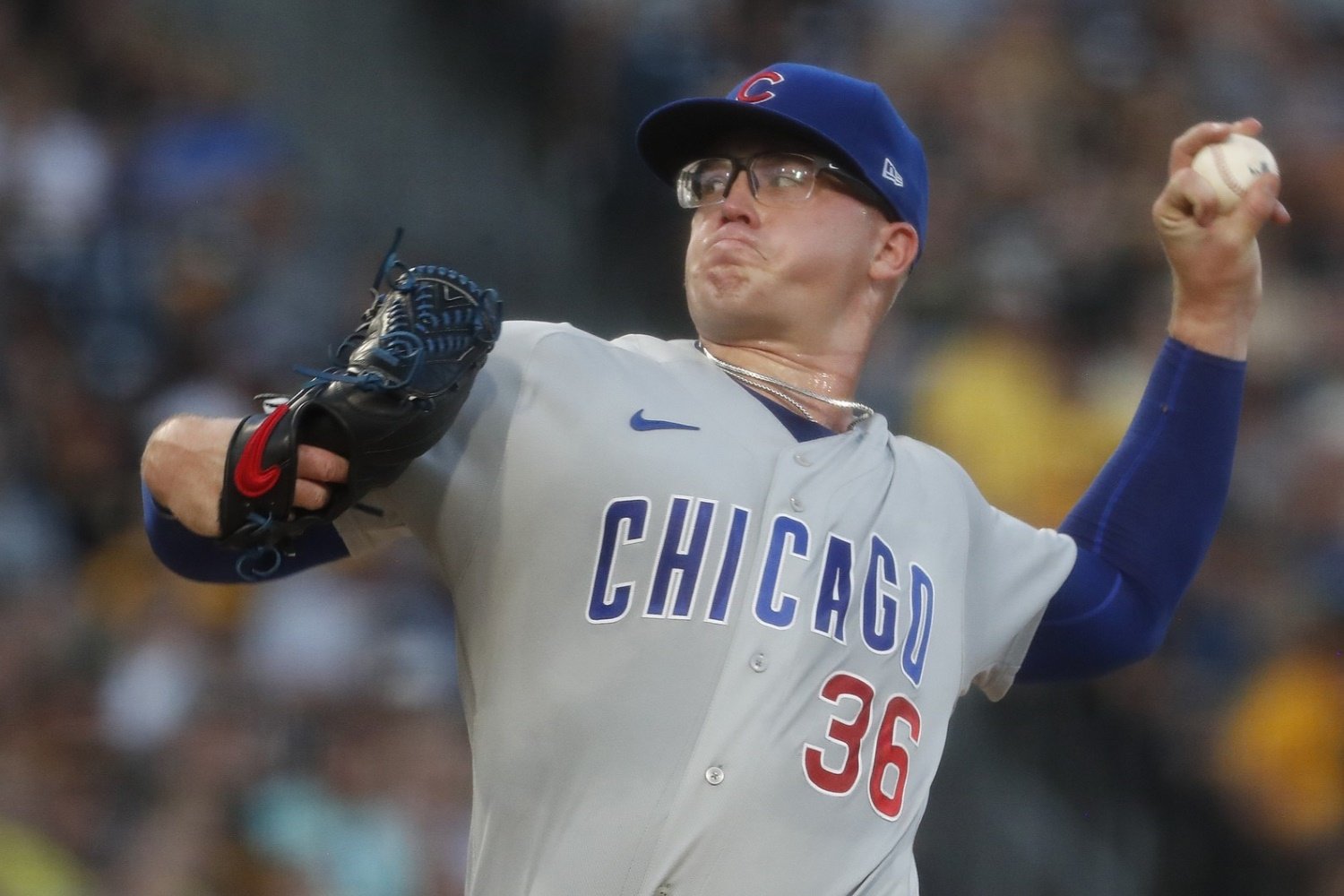 As was recently brought up by a handful of our users here on North Side Baseball, Jordan Wicks is kind of a polarizing prospect. Recently named one of MLB Pipeline's top 10 left-handed pitching prospects headed into 2024, he nonetheless makes it hard to tell how excited you should be, and our own posters had quite the lively debate in our MiLB forum about it. On one hand, he's a fascinating study of the game, and a pitcher who clearly comes by the "bulldog" and "cerebral" monikers honestly. On the other, his lack of fastball velocity and lack of incredible stuff has some worried as to what the upside is on the former Kansas State University Wildcat. Let's start off with the concerns: the 11% whiff rate Wicks had during his first 34 innings at the MLB level. Compared to the league average, which sits just south of 18%, this is troubling. If he kept that rate up over the course of 162 IP, he'd have finished dead last in baseball, with pitchers like Jordan Lyles and Patrick Corbin--not elite company, those two. Added to that, Wicks had only a single pitch grade out well on Stuff+: his changeup. These have caused concerns, and rightfully so, it's very hard to be successful when you're getting this little swing-and-miss. But I also think there's hope, and that while these concerns are valid, there's a light at the end of the tunnel. The first thing to know is that the Whiff% issue that Wicks had the MLB level is not something he had at Triple-A Iowa, in similar sample sizes. Yes, Triple A is a lower level of competition than MLB, but despite having a strikeout rate that wasn't impressive on the surface, his actual Whiff% was well above the Triple-A standard. Whereas Triple-A average Whiff% sits very close to the MLB average (just below 18%), Wicks had a Whiff% well over 23% at that level, with his changeup doing most of the damage. Why the disparity in whiff rates then? I think we can look at his pitch location and get to the bottom of that pretty quickly. On the left, you'll see his pitch-frequency heat map from Triple A. On the right, see the same from his time in the majors. Notice how Wicks shied away from the middle of the plate and really looked to get the ball off the plate. It's hard to say exactly why the change was made, but would it be shocking to see Wicks, a rookie called-up during a postseason chase, be a little extra risk-averse? Making sure that he wasn't the cause of a demise? I certainly think that makes sense, regardless of how anecdotal it is. The change had profound effects on his whiff rates. Below, you'll see his whiff rates in Triple A (left) compared to MLB (right). By being just a little extra careful, he wasn't able to generate the same swings and misses in the zone, because the pitches were just being thrown outside of the zone just a little more. This is also highlighted in his strike rate in MLB dropping nearly 14% from his strike rate at Triple A. You just aren't going to get the swing and the misses you were used to getting if you're not going to throw your pitches in the zone as often. The positives are that, even in small samples, Wicks was still getting swings and misses with the changeup. He threw his changeup roughly 30 percent of the time, and got a swing and a miss on 42.9 percent of swings on it. That's good enough for the highest Whiff% of any pitcher over that 162 IP marker. Do I think Wicks will lead the league in Whiff% on his changeup? No, that's a very hard thing to do, but it goes to show Wicks can get whiffs even if he's throwing a little less in the zone. Where Wicks really struggled was in getting his other pitches to generate those swings and misses, and I wonder how much of it was due to just not having the confidence yet to come into the zone (going back to my previous point of being risk-averse). Once more, look at where Wicks threw his fastball in Triple A (left), compared to MLB (right). It looks like someone who was really trying to avoid the middle of the plate. His Whiff% on his fastball dipped, from 23% to 11%, with the jump in levels, and I think the pitch location probably has something to do with that. There's one other interesting rabbit hole that came up when looking at Jordan Wicks, however, that gives me a lot of hope for the future: and that's just what he was able to do despite the lack of whiffs: he limited hard contact. During his stint at the MLB level, the former Wildcat saw his average exit velocity sit around 86.5 mph. Using the same sample size of pitchers as previously, this would put Wicks second in the league, behind Corbin Burnes. He also limited launch angle; with an average LA of just 6 degrees. That would have been less than half the league average, and good for fifth in baseball. Two of the other pitchers who finished in the top-5 of limiting launch angle were Logan Webb and Kyle Bradish, both of whom also joined the likes of Wicks, Corbin and Lyles in the bottom 5 of Whiff%. What that tells me is that he can get away with being in the zone more than he was. More pitches in the zone likely mean more whiffs, and when guys swing, he's going to be able to continue to limit that damage if the control remains. So what does this all mean for Wicks's future? I think it means that while the Whiff% is clearly something to monitor, we can see that other quality arms (such as Webb and Bradish) were capable of surviving low Whiff% seasons, partially by eliminating balls in the air--something Wicks does quite well. That's not saying Wicks is Bradish or Webb reincarnate, either; only that worrying a ton about his 34 innings of low whiff% seems premature. Context matters. We can see that Wicks was above-average in similar time spent in Triple A, and we can also see that he shied away from throwing his pitches in the zone. I do think there's probably some work that needs to be done with his pitch mix; I think he's dying for a pitch that separates itself from the fastball/cutter/changeup--a curveball with sharper vertical movement, or a slider that has more horizontal movement... something to fill in some gaps. But I also think he's just someone who needs to grow into being an MLB pitcher a bit more, find the confidence to come into the zone a little more, especially, because when he does, guys just don't square him up. I think if he can do that, make those adjustments, that something in between Bradish (3.8 fWAR, 3.53 xFIP) and Kyle Freeland (1.2 fWAR 5.13 xFIP) is where I'd expect him to be in 2024. It should be important to remember, too: pitchers who keep the ball on the ground often, and limit hard contact, have innate abilities to "beat" their FIP, or in other words, increase run prevention past what things like fielding-independent-pitching would suggest they'd be capable of. Couple that with a very strong infield defense and I'm pretty hopeful for the future on Wicks, all things considered. What do you think about Jordan Wicks moving into next season? Do you think he needs to come into the zone just a bit more? Or are you still concerned with the whiff rates moving forward?
-
Jordan Wicks got promoted for the Cubs' stretch run last year, and helped keep the Cubs afloat until he gassed out. While some really good things can come through from his total season line, concerns over the lack of swings and misses have caused some to sour a bit. What should you expect from the tough lefty in 2024? Image courtesy of © Charles LeClaire-USA TODAY Sports Jordan Wicks got promoted for the Cubs' stretch run last year, and helped keep the Cubs afloat until he gassed out. While some really good things can come through from his total season line, concerns over the lack of swings and misses have caused some to sour a bit. What should you expect from the tough lefty in 2024? As was recently brought up by a handful of our users here on North Side Baseball, Jordan Wicks is kind of a polarizing prospect. Recently named one of MLB Pipeline's top 10 left-handed pitching prospects headed into 2024, he nonetheless makes it hard to tell how excited you should be, and our own posters had quite the lively debate in our MiLB forum about it. On one hand, he's a fascinating study of the game, and a pitcher who clearly comes by the "bulldog" and "cerebral" monikers honestly. On the other, his lack of fastball velocity and lack of incredible stuff has some worried as to what the upside is on the former Kansas State University Wildcat. Let's start off with the concerns: the 11% whiff rate Wicks had during his first 34 innings at the MLB level. Compared to the league average, which sits just south of 18%, this is troubling. If he kept that rate up over the course of 162 IP, he'd have finished dead last in baseball, with pitchers like Jordan Lyles and Patrick Corbin--not elite company, those two. Added to that, Wicks had only a single pitch grade out well on Stuff+: his changeup. These have caused concerns, and rightfully so, it's very hard to be successful when you're getting this little swing-and-miss. But I also think there's hope, and that while these concerns are valid, there's a light at the end of the tunnel. The first thing to know is that the Whiff% issue that Wicks had the MLB level is not something he had at Triple-A Iowa, in similar sample sizes. Yes, Triple A is a lower level of competition than MLB, but despite having a strikeout rate that wasn't impressive on the surface, his actual Whiff% was well above the Triple-A standard. Whereas Triple-A average Whiff% sits very close to the MLB average (just below 18%), Wicks had a Whiff% well over 23% at that level, with his changeup doing most of the damage. Why the disparity in whiff rates then? I think we can look at his pitch location and get to the bottom of that pretty quickly. On the left, you'll see his pitch-frequency heat map from Triple A. On the right, see the same from his time in the majors. Notice how Wicks shied away from the middle of the plate and really looked to get the ball off the plate. It's hard to say exactly why the change was made, but would it be shocking to see Wicks, a rookie called-up during a postseason chase, be a little extra risk-averse? Making sure that he wasn't the cause of a demise? I certainly think that makes sense, regardless of how anecdotal it is. The change had profound effects on his whiff rates. Below, you'll see his whiff rates in Triple A (left) compared to MLB (right). By being just a little extra careful, he wasn't able to generate the same swings and misses in the zone, because the pitches were just being thrown outside of the zone just a little more. This is also highlighted in his strike rate in MLB dropping nearly 14% from his strike rate at Triple A. You just aren't going to get the swing and the misses you were used to getting if you're not going to throw your pitches in the zone as often. The positives are that, even in small samples, Wicks was still getting swings and misses with the changeup. He threw his changeup roughly 30 percent of the time, and got a swing and a miss on 42.9 percent of swings on it. That's good enough for the highest Whiff% of any pitcher over that 162 IP marker. Do I think Wicks will lead the league in Whiff% on his changeup? No, that's a very hard thing to do, but it goes to show Wicks can get whiffs even if he's throwing a little less in the zone. Where Wicks really struggled was in getting his other pitches to generate those swings and misses, and I wonder how much of it was due to just not having the confidence yet to come into the zone (going back to my previous point of being risk-averse). Once more, look at where Wicks threw his fastball in Triple A (left), compared to MLB (right). It looks like someone who was really trying to avoid the middle of the plate. His Whiff% on his fastball dipped, from 23% to 11%, with the jump in levels, and I think the pitch location probably has something to do with that. There's one other interesting rabbit hole that came up when looking at Jordan Wicks, however, that gives me a lot of hope for the future: and that's just what he was able to do despite the lack of whiffs: he limited hard contact. During his stint at the MLB level, the former Wildcat saw his average exit velocity sit around 86.5 mph. Using the same sample size of pitchers as previously, this would put Wicks second in the league, behind Corbin Burnes. He also limited launch angle; with an average LA of just 6 degrees. That would have been less than half the league average, and good for fifth in baseball. Two of the other pitchers who finished in the top-5 of limiting launch angle were Logan Webb and Kyle Bradish, both of whom also joined the likes of Wicks, Corbin and Lyles in the bottom 5 of Whiff%. What that tells me is that he can get away with being in the zone more than he was. More pitches in the zone likely mean more whiffs, and when guys swing, he's going to be able to continue to limit that damage if the control remains. So what does this all mean for Wicks's future? I think it means that while the Whiff% is clearly something to monitor, we can see that other quality arms (such as Webb and Bradish) were capable of surviving low Whiff% seasons, partially by eliminating balls in the air--something Wicks does quite well. That's not saying Wicks is Bradish or Webb reincarnate, either; only that worrying a ton about his 34 innings of low whiff% seems premature. Context matters. We can see that Wicks was above-average in similar time spent in Triple A, and we can also see that he shied away from throwing his pitches in the zone. I do think there's probably some work that needs to be done with his pitch mix; I think he's dying for a pitch that separates itself from the fastball/cutter/changeup--a curveball with sharper vertical movement, or a slider that has more horizontal movement... something to fill in some gaps. But I also think he's just someone who needs to grow into being an MLB pitcher a bit more, find the confidence to come into the zone a little more, especially, because when he does, guys just don't square him up. I think if he can do that, make those adjustments, that something in between Bradish (3.8 fWAR, 3.53 xFIP) and Kyle Freeland (1.2 fWAR 5.13 xFIP) is where I'd expect him to be in 2024. It should be important to remember, too: pitchers who keep the ball on the ground often, and limit hard contact, have innate abilities to "beat" their FIP, or in other words, increase run prevention past what things like fielding-independent-pitching would suggest they'd be capable of. Couple that with a very strong infield defense and I'm pretty hopeful for the future on Wicks, all things considered. What do you think about Jordan Wicks moving into next season? Do you think he needs to come into the zone just a bit more? Or are you still concerned with the whiff rates moving forward? View full article
-
Sincerely hope the Cubs are "other teams".
-
I don't see how the Cubs and the Astros could even match up. The Astros won't sign Hader and then turn Bregman into rookies unlikely to help in 2024...pretty counterintuitive. Not sure the Astros would be jazzed at Morel being the headline, either. The Astros signing Hader is probably a sign there is no chance in hell MLB talent is walking out the door.
-
Astros are making a push for Hader. Per Rosenthal. Feels like one of those "this is going to finish quickly things". Should maybe open the reliever market up. Important for the Cubs.
-
2023-24 Offseason Prospect Lists
Jason Ross replied to CaliforniaRaisin's topic in Cubs Minor League Talk
Oh you guys! I love you. You just gave me another article to write! I was going to leave it be as a post here but then I realized just how far the rabbit hole goes. Sneak peak: I'm actually more bullish now on Wicks. There's actually some cool process stuff to where I think he can work on his whiff%, and let me tell you this: there's some indication of really being a strong contact-limiter that people haven't really brought up yet. End result, I land in the middle of the two camps. I don't see a star. I am more and more confident there's a strong #4 in there. -
There really wasn't a rubber stamp guarantee. Hoyer talked about how they still wanted to add offense. That the Cubs wanted to get better at hitting right handed hitters. There's been speculation he meant two starting level hitters, but I'm not going to take him at his word that what he meant was "two MLB starting players". It could be a lot of things. I think we'll add Bellinger, but I'm not entirely convinced there will be a second addition to the "most of the time" lineup.
-
Unless there is a good fit, then I can't see how the Cubs will add what might be a sixth "maybe" to the set. You've got Madrigal, Wisdom, Mastrobuoni, Morel and Busch who could all maybe do it. They'd probably have to lose one, maybe two. At some point there's just too many maybes for you to even have the ability to find an answer. We went into the offseason thinking the Cubs would add two hitters of consequence. They've added Busch. I'm not sure they'll add two still. They could but I think it's likely Bellinger + something small offensively, unless there's a bigger trade coming that sends something else out (Morel?).
-
They're like...two sides of the same coin. Chapman has good batted ball data but questionable approach changes have created a pretty mediocre hitter (sub 90 wRC+ for five months last year, 110 wRC+ hitter since 2020). His approach is very similar to many the Cubs have: they strike out and hit the ball in the air (Dansby Swanson) and are marginally better than league average. Bellinger has a solid approach and dinks and dunks a lot. His speed, however, can make up for some of that, stretching a few singles into doubles. With that said, the batted ball data suggests he's not 35% better than league average, but like...more 10-20% better. Who would I take? I'll take Bellinger, probably. He's a bit younger, I think his approach of "get the ball in play and I'll hit 25 home runs too" is probably a little more needed on the Cubs. His base running and versatility are helpers. So in a vacuum I'll say...Bellinger is probably the slightly better hitter but I think they probably both end up closer to one another than farther, if that makes sense. Contractually...not sure who would be the better buy.
-
Hoyer seemed to suggest the Cubs could add two bats, but it's hard to tell what kind of a bat that would be. It could be a situation in which the Cubs send a few spares out (Mervis/Canario/Wesneski/Asad group) and the Cubs need to replace depth. It could be a starter, he did suggest 1b could happen (which, what does that do to Morel?). There's a single third baseman on the market I think is a definitive upgrade over those crew and then a group of "I really don't knows". Like, JD Davis is still almost assuredly a DH in my book regardless of the single data point of OAA that suggests he got better (ala Patrick Wisdom's freshman year). He could be available if Chapman ends up in SF, but I think he's basically just Patrick Wisdom. Is he better? Are the Cubs going to jettison Mastro and Wisdom to add him and trade what it'd take? End result, the Cubs have a ton of "maybes" at third. I just don't think it'll be the position a second hitter comes in for.
-
I think we will have to accept something isn't solved. I don't think Turner is a 3b any longer (and his batted ball is a bit concerning; he feels like he's a potential Mancini to me). The Cubs have options at 3b. There are worse things. Is it my favorite? Nope. Do I think it's doable based on sheer numbers? Yeah. Probably. The Cubs have 3 internal "night now" options and 2 internal prospect options who are maybes and so many tradable pieces that it feels like by September one of those will solve the problem.
-
I think 3b could go sideways, but the Cubs have enough "options" early that they can likely salvage...something through June. By July 1st, there's Murray and Shaw who could provide ready, or a trade could provide support. It's not my *favorite* plan but I think it'll likely workout out well enough given the fluidity the Cubs can realistically have between internal options, prospects and trade potential.
-
I'm not sure there's going to be much of an ability to bring in a safety net. You have to figure, a free agent worth his weight is going to want to go somewhere he's going to play and build value on a one year deal. Your Hoskins, Belts, Turners etc aren't going to settle to be the backup. Can't just DH the fallback with Morel being such a questionmark defensively. So you're probably looking at...a Patrick Wisdom type as your fallback. Which, I'd guess internally, that's the fallback, Wisdom. Then Mervis, who I've soured on but he's not a dead prospect yet. There's some hope there yet. But I also think the Cubs are pretty confident in Busch. Don't think you make the trade you make if you're not confident. I guess I just don't think the Cubs are probably going to be in much of a position to upgrade the fallback over the internal options as is.
-
I think the answer with how the Cubs will handle Shaw is probably more in the middle. I don't think the Cubs are going to outright block Shaw much. They are clearly high on him, promoting him to Double-A in his draft year. Shaw is clearly working hard at the third base position. I don't think they'd stop from adding someone at 3b on a short term deal or if it's a really, really good player. Jose Ramirez (it's not happening) for sure. Matt Chapman hits that weird area of I can't tell if they'd bring him in on a four+ year contract. The team did mention not blocking prospects and while I think they were talking more about Pete Crow-Armstrong, I think Shaw isn't far from that conversation. I think the Cubs know he's a much better prospect than Chase Strumpf is/was, too. EDIT: Holy batman did I say "I think" a lot lol.
-
2023-24 Offseason Prospect Lists
Jason Ross replied to CaliforniaRaisin's topic in Cubs Minor League Talk
They don't. But the Cubs can control them much easier in Iowa where, let's be honest, wins and losses don't really matter. I'd say we're looking at somewhere around 120 max IP for Cade Horton in 2024. In Iowa you can go on the "developmental list" for an indeterminant amount of days. In the MLB there's no such thing. Can't have someone on the roster just...not pitching. And you can't bounce them between Iowa and Chicago easily with how players have to wait. And you can't have him throw 3 innings at the MLB level for a start and tax the BP. So I expect him to throw 3 or so IP for his first few starts. I wouldn't be shocked to see him "start late". Or sit a week or two on the Dev list to keep the innings in check. I think Steele is awesome, have some pretty high hopes for Imanaga and think Taillon might bounce back some...but I think there's a real good chance by September Horton is a top-3 starting option (and maybe even top-2 if he's as good as advertised)...and you want him throwing when the games really matter if you can. -
Ahh you're right. Totally my fault on the draft...I thought there was a cutoff, and that's what I get for assuming it wasn't a full season. Whoops.
-
What Did Jed Hoyer Mean By That?
Jason Ross replied to Josh Illes's topic in North Side Baseball Front Page News
The ratios are similar. The players are not. Mervis had 66% contact rate over his last three months of Triple-A last season. Michael Busch had an 80% contact rate. Mervis's contact rate is directly tied to whatever "mechanical change" he made and even before, when he was making roughly 75% contact, he was only doing damage on pitches middle-middle. Busch still topped that by 5%, while making far better contact across the plate. What correlates to MLB higher than any other data point? Contact%. Mervis was bottom 10 in Triple-A with the mid 60's. Busch was nearly the tops. They're not that similar. Full season lines hide processes. The process by which Busch goes about things is much better than the process by which Mervis does. It is likely why one player is a top-75 prospect by multiple agencies and was worth Jackson Ferris and the other...well isn't.- 20 replies
-
- 2
-

-
- cody bellinger
- shota imanaga
- (and 1 more)
-
2023-24 Offseason Prospect Lists
Jason Ross replied to CaliforniaRaisin's topic in Cubs Minor League Talk
I honestly feel Cade Horton is about ready today to start in the MLB. The fastball/slider combination is great, he quickly learned how to add a solid changeup that has real solid spin rates into the arsenal. We see Justin Steele essentially operate as a two-pitch pitcher in the MLB currently and Spencer Strider (who I think Horton most compares to) came up as a two-pitch guy, and learned the changeup on the job. Horton is basically ready today. Maybe a month in Iowa to prove it. And just so you don't think I'm crazy, Bryan Smith basically said the same thing a few months ago. That doesn't mean much to what the Cubs will do, just my personal read on where Horton is. When it comes to the Cubs, they're never afraid to promote someone with a month or two in Iowa. Last year Wicks had 33 innings in Iowa before he came up, and then proceeded to pitch more innings at the MLB level over the Triple-A level. Canario had about one month of success in Iowa before he saw Chicago, and the Cubs gave Pete Crow-Armstrong a jump after a little over a month. Neither of the hitters were put straight into the starting lineup, but they weren't babied in Triple-A. I think the only thing that will stop Horton from getting his final bump to the MLB will be limiting his innings for the season. I expect he'll make, maybe, 13-15+ starts at the MLB level, however. And because I think the stuff is truly that good, I think he can be electric in those starts to where he can be in that top-3 vote getter conversation, yes. -
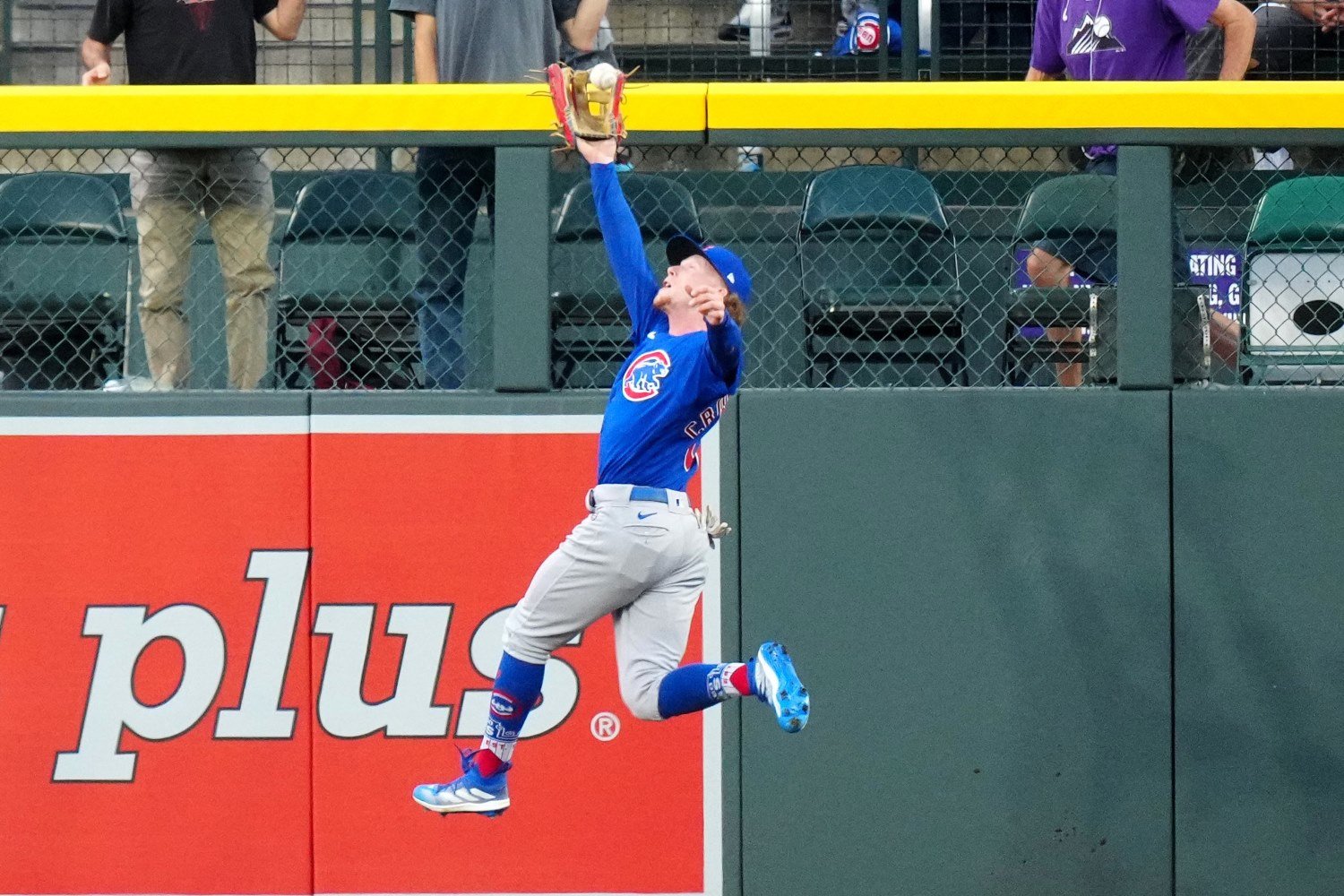 Over the last five years, the Chicago Cubs have methodically built up their developmental system. Hiring former relief pitcher Craig Breslow (once dubbed "the smartest person in baseball") to develop their pitching, Dan Kantrovitz from Oakland to run their drafts, and a multitude of hitting directors, the Cubs have rebuilt their internal infrastructure from the ground up from the Theo Epstein and Jason McLeod days. The reality of prospects and development is that it takes years to begin to see the fruits of the labor. After a few years of waiting, the Cubs are now on the precipice of seeing their system begin to pay off. While the ultimate goal is to turn prospect development into MLB success, we can get an idea of how the rest of the industry sees the system by diving into the Baseball Prospectus Top 101 that was released Tuesday. Below are the nine Cub prospects on the BP list, as well as their rankings: Pete Crow-Armstrong, CF - 20th Matt Shaw, 2b/SS/3b - 21st Cade Horton, RHP - 27th Owen Caissie, RF/1b/DH - 65th Michael Busch, 1b/2b/3b - 71st Kevin Alcantara, CF - 80th Moises Ballesteros, C - 84th James Triantos, 2b/3b/OF - 91st Jordan Wicks, LHP - 94th This is an incredibly interesting list, and it shows just how diversified the Cubs have been in adding talent. They drafted Shaw, Horton, Triantos (second round) and Wicks; signed Ballesteros as an international free agent; and traded for Crow-Armstrong, Caissie, Alcántara and Busch. A complaint levied, whether fair or not, on Jason McLeod and the former developmental team was that it was pretty easy to develop high first-round selections such as Kris Bryant, Kyle Schwarber and Ian Happ. This time, the Cubs are finding prospects in a multitude of different ways. Even more promising: although the Cubs traded for three of those players, those three have done the bulk of their development within the Cubs' system. Credit needs to be given to the Cubs' player-development team, because it's clear their system is working, in addition to that of the scouting department. Having this many prospects on the top 101 is also good for the Cubs from a 2024 Rookie of the Year perspective. With Crow-Armstrong, Horton and Busch all likely to get significant run with the Cubs during the season, the team now has three prospects who can be in that conversation. If any of them (or even, possibly, Shaw or Wicks, though those are less likely for a few reasons) were to finish in the top-3 of voting, the Cubs would be awarded an extra draft pick in the 2025 draft. The BP list does not help determine which prospects are eligible for that incentive, and any player who does qualify has to accrue a full year of service time in order for the Cubs to receive it, but this is still telling. There's a bit of weirdness in having authors and staff members at places like Baseball America being partially responsible for draft-pick compensation, but the more the industry has strong perceptions of the Cubs' system, the more likely the Cubs are to get a few extra draft picks these next few years. The most surprising addition: Moises Ballesteros, #84 This isn't me saying he's not deserving--just that I'm surprised to see him ranked right up there next to the likes of Alcántara (80th), as well as a few other notable prospects such as Max Meyer (86th) and Termarr Johnson (90th). I wrote about Ballesteros earlier this offseason, ranking him the eighth-best prospect in the Cubs system. I was pretty bullish on him then, and I remain so; his bat is really good and really advanced. With that said, a ranking in the top-85 suggests some belief that the big-bodied catcher can actually stick at the position. DH-only types won't really make a list that high. When I asked Jarrett Seidler of Baseball Prospectus (and one of their staff who helped with the list) about his future at the catching position, he had this response: Overall, I think that's a positive development for Big Mo'. Even if he's a "maybe," it means there's a realistic chance that he can stick at, arguably, the most premium position on the diamond. Ballesteros the catcher is really one of the most enticing prospect outcomes in the entire system. Most disappointing omission: Jefferson Rojas, NR It's really hard to find someone I'm overly surprised to see not make the top 101, but if there is one, it's probably Jefferson Rojas. You can make an argument that an 18-year-old shortstop at Myrtle Beach who put up a 115 wRC+ while showing advanced plate approach is someone who deserves to make a list. BP placed the Braves' shortstop Ignacio Alvarez in the #99 slot, and I think you can argue what Rojas did at Low A was more impressive (or on par with) what Alvarez did at High A. Alvarez, at 20 years old, is nearly two full years older than Rojas; hit the same number of home runs in 200-plus more plate appearances; and had a wRC+ of 123 with a similarly solid strikeout-to-walk ratio. None of this is suggesting BP made a bad choice, just that you can make an argument for Rojas over him there in those last few slots. In the end, it's not really worth complaining about; these things are so subjective that it'd be pretty impossible to truly say one deserves the slot over the other. Most of this is probably just because I really like Rojas, too. The next steps for the system: Maybe the best news of all: the Cubs had nine prospects on the top-101, but it could have been more. Jarret Seidler tweeted this out: Obviously, the Cubs traded Ferris away, but this just goes to show that the Cubs could have realistically had up to eleven players (that's an impressive 10% of the entire thing!) on the top 101. It's one of the reasons why the Cubs likely felt comfortable moving Ferris and 2023 11th-round selection Zyhir Hope just a week ago. It's also why I think the Chicago Cubs are still in a position to make trades from their prospect depth now, or at the deadline. Not only are the Cubs showing a meaningful ability to develop prospects across the board, they're starting to build another group of exciting prospects just under the surface. It wouldn't be surprising to see the aforementioned Brown and Rojas jump into the midseason lists. Nor would it be surprising to see a few names a bit farther down join top 100 lists later. The Cubs have a handful of enticing, high-upside prospects, and it's likely a few break out. Whether that's Derniche Valez, Drew Gray, Jaxon Wiggins, or someone still unexpected, the Cubs are well on the way to changing the narrative on their farm system in a lasting way. Which of BP's rankings jump out to you? Who has you most excited in the system? Let's talk about the future.
-
Just five years ago, the Chicago Cubs' farm system was not highly regarded throughout the scouting community, with just Nico Hoerner registering on the Baseball Prospectus Top 101 list in 2019. This week, the Cubs lead the way, with nine prospects on the list. How have the Cubs come this far in just half of a decade? And what do we think about the list? Image courtesy of © Ron Chenoy-USA TODAY Sports Just five years ago, the Chicago Cubs' farm system was not highly regarded throughout the scouting community, with just Nico Hoerner registering on the Baseball Prospectus Top 101 list in 2019. This week, the Cubs lead the way, with nine prospects on the list. How have the Cubs come this far in just half of a decade? And what do we think about the list? Over the last five years, the Chicago Cubs have methodically built up their developmental system. Hiring former relief pitcher Craig Breslow (once dubbed "the smartest person in baseball") to develop their pitching, Dan Kantrovitz from Oakland to run their drafts, and a multitude of hitting directors, the Cubs have rebuilt their internal infrastructure from the ground up from the Theo Epstein and Jason McLeod days. The reality of prospects and development is that it takes years to begin to see the fruits of the labor. After a few years of waiting, the Cubs are now on the precipice of seeing their system begin to pay off. While the ultimate goal is to turn prospect development into MLB success, we can get an idea of how the rest of the industry sees the system by diving into the Baseball Prospectus Top 101 that was released Tuesday. Below are the nine Cub prospects on the BP list, as well as their rankings: Pete Crow-Armstrong, CF - 20th Matt Shaw, 2b/SS/3b - 21st Cade Horton, RHP - 27th Owen Caissie, RF/1b/DH - 65th Michael Busch, 1b/2b/3b - 71st Kevin Alcantara, CF - 80th Moises Ballesteros, C - 84th James Triantos, 2b/3b/OF - 91st Jordan Wicks, LHP - 94th This is an incredibly interesting list, and it shows just how diversified the Cubs have been in adding talent. They drafted Shaw, Horton, Triantos (second round) and Wicks; signed Ballesteros as an international free agent; and traded for Crow-Armstrong, Caissie, Alcántara and Busch. A complaint levied, whether fair or not, on Jason McLeod and the former developmental team was that it was pretty easy to develop high first-round selections such as Kris Bryant, Kyle Schwarber and Ian Happ. This time, the Cubs are finding prospects in a multitude of different ways. Even more promising: although the Cubs traded for three of those players, those three have done the bulk of their development within the Cubs' system. Credit needs to be given to the Cubs' player-development team, because it's clear their system is working, in addition to that of the scouting department. Having this many prospects on the top 101 is also good for the Cubs from a 2024 Rookie of the Year perspective. With Crow-Armstrong, Horton and Busch all likely to get significant run with the Cubs during the season, the team now has three prospects who can be in that conversation. If any of them (or even, possibly, Shaw or Wicks, though those are less likely for a few reasons) were to finish in the top-3 of voting, the Cubs would be awarded an extra draft pick in the 2025 draft. The BP list does not help determine which prospects are eligible for that incentive, and any player who does qualify has to accrue a full year of service time in order for the Cubs to receive it, but this is still telling. There's a bit of weirdness in having authors and staff members at places like Baseball America being partially responsible for draft-pick compensation, but the more the industry has strong perceptions of the Cubs' system, the more likely the Cubs are to get a few extra draft picks these next few years. The most surprising addition: Moises Ballesteros, #84 This isn't me saying he's not deserving--just that I'm surprised to see him ranked right up there next to the likes of Alcántara (80th), as well as a few other notable prospects such as Max Meyer (86th) and Termarr Johnson (90th). I wrote about Ballesteros earlier this offseason, ranking him the eighth-best prospect in the Cubs system. I was pretty bullish on him then, and I remain so; his bat is really good and really advanced. With that said, a ranking in the top-85 suggests some belief that the big-bodied catcher can actually stick at the position. DH-only types won't really make a list that high. When I asked Jarrett Seidler of Baseball Prospectus (and one of their staff who helped with the list) about his future at the catching position, he had this response: Overall, I think that's a positive development for Big Mo'. Even if he's a "maybe," it means there's a realistic chance that he can stick at, arguably, the most premium position on the diamond. Ballesteros the catcher is really one of the most enticing prospect outcomes in the entire system. Most disappointing omission: Jefferson Rojas, NR It's really hard to find someone I'm overly surprised to see not make the top 101, but if there is one, it's probably Jefferson Rojas. You can make an argument that an 18-year-old shortstop at Myrtle Beach who put up a 115 wRC+ while showing advanced plate approach is someone who deserves to make a list. BP placed the Braves' shortstop Ignacio Alvarez in the #99 slot, and I think you can argue what Rojas did at Low A was more impressive (or on par with) what Alvarez did at High A. Alvarez, at 20 years old, is nearly two full years older than Rojas; hit the same number of home runs in 200-plus more plate appearances; and had a wRC+ of 123 with a similarly solid strikeout-to-walk ratio. None of this is suggesting BP made a bad choice, just that you can make an argument for Rojas over him there in those last few slots. In the end, it's not really worth complaining about; these things are so subjective that it'd be pretty impossible to truly say one deserves the slot over the other. Most of this is probably just because I really like Rojas, too. The next steps for the system: Maybe the best news of all: the Cubs had nine prospects on the top-101, but it could have been more. Jarret Seidler tweeted this out: Obviously, the Cubs traded Ferris away, but this just goes to show that the Cubs could have realistically had up to eleven players (that's an impressive 10% of the entire thing!) on the top 101. It's one of the reasons why the Cubs likely felt comfortable moving Ferris and 2023 11th-round selection Zyhir Hope just a week ago. It's also why I think the Chicago Cubs are still in a position to make trades from their prospect depth now, or at the deadline. Not only are the Cubs showing a meaningful ability to develop prospects across the board, they're starting to build another group of exciting prospects just under the surface. It wouldn't be surprising to see the aforementioned Brown and Rojas jump into the midseason lists. Nor would it be surprising to see a few names a bit farther down join top 100 lists later. The Cubs have a handful of enticing, high-upside prospects, and it's likely a few break out. Whether that's Derniche Valez, Drew Gray, Jaxon Wiggins, or someone still unexpected, the Cubs are well on the way to changing the narrative on their farm system in a lasting way. Which of BP's rankings jump out to you? Who has you most excited in the system? Let's talk about the future. View full article