.jpg.900f6d1bc80a5a156f3ba09ea0e4b3d7.jpg)

Jason Ross
-
Posts
8,154 -
Joined
-
Last visited
-
Days Won
74
Content Type
Profiles
Joomla Posts 1
Chicago Cubs Videos
Chicago Cubs Free Agent & Trade Rumors, Notes, & Tidbits
2026 Chicago Cubs Top Prospects Ranking
News
2023 Chicago Cubs Draft Picks
Guides & Resources
2024 Chicago Cubs Draft Picks
The Chicago Cubs Players Project
2025 Chicago Cubs Draft Pick Tracker
2026 Chicago Cubs Draft Tracker: Picks & Bonuses
Blogs
Events
Forums
Store
Gallery
Everything posted by Jason Ross
-
2025 MLB Draft Thread
Jason Ross replied to Outshined_One's topic in MLB Draft, International Signings, Amateur Baseball
Probably where I am at. The more I dig into Kayson Cunningham, I'd be pretty excited if he could find his way to 17. Most of the mocks feel like he's going to go before us, but he's got a really fun profile. At this point I'm kind of sitting at a group of like: Kyson Witherspoon, Gage Wood, Kayson Cunningham, Steel Hall, Wehwa Aloy, Daniel Pierce as my group of "dudes". Less excited about Bremmer than some others, but he'd probably be cool too. Would rather pass on Summerhill, Houston and Kilen, though if push comes to shove you an probably get me into the pick. -
Minor League Discussion & Boxes, 7-10-25
Jason Ross replied to CaliforniaRaisin's topic in Cubs Minor League Talk
Lumpuy has always jumped off the screen for me even when the numbers were bad. There's some electricity in him. I had him on my initial top-20 of the year but convinced myself to drop him on the most recent one. -
Mike Soroka was named in a Athletic piece by Mooney and Sharma and I really like that name. The ERA looks bad, but the Savant page tells a different story; he's lowered his arm angle, increased his walk rate (positively), added a MPH and some glove side run on the fastball. xFIP and xERA really like him. Added a cutter. His LOB% is comically low pitching in front of the worse defense in baseball. Couple him with Cabrera. Expiring contract, should be cheap to acquire.
-
I'll leave this here, because it doesn't feel like it warrants a different thread. But today in the Athletic, Mooney and Sharma mentioned bats and how the Cubs will look for help at the deadline (there was plenty of pitching nuggets, but that doesn't belong here). They mentioned a few names, Willi Castro and Rob Refsnyder as two specifically. They mentioned that it would be more about versatility, and it didn't seem like they were looking to pigeon hole themselves into "starting 3b" (much the chagrin of some folks, I'm sure) or "RHP who mashes LHP" (though both names above fit that category). Does seem like they'll prioritize the bench more than upset the applecart on the starting lineup as much.
-
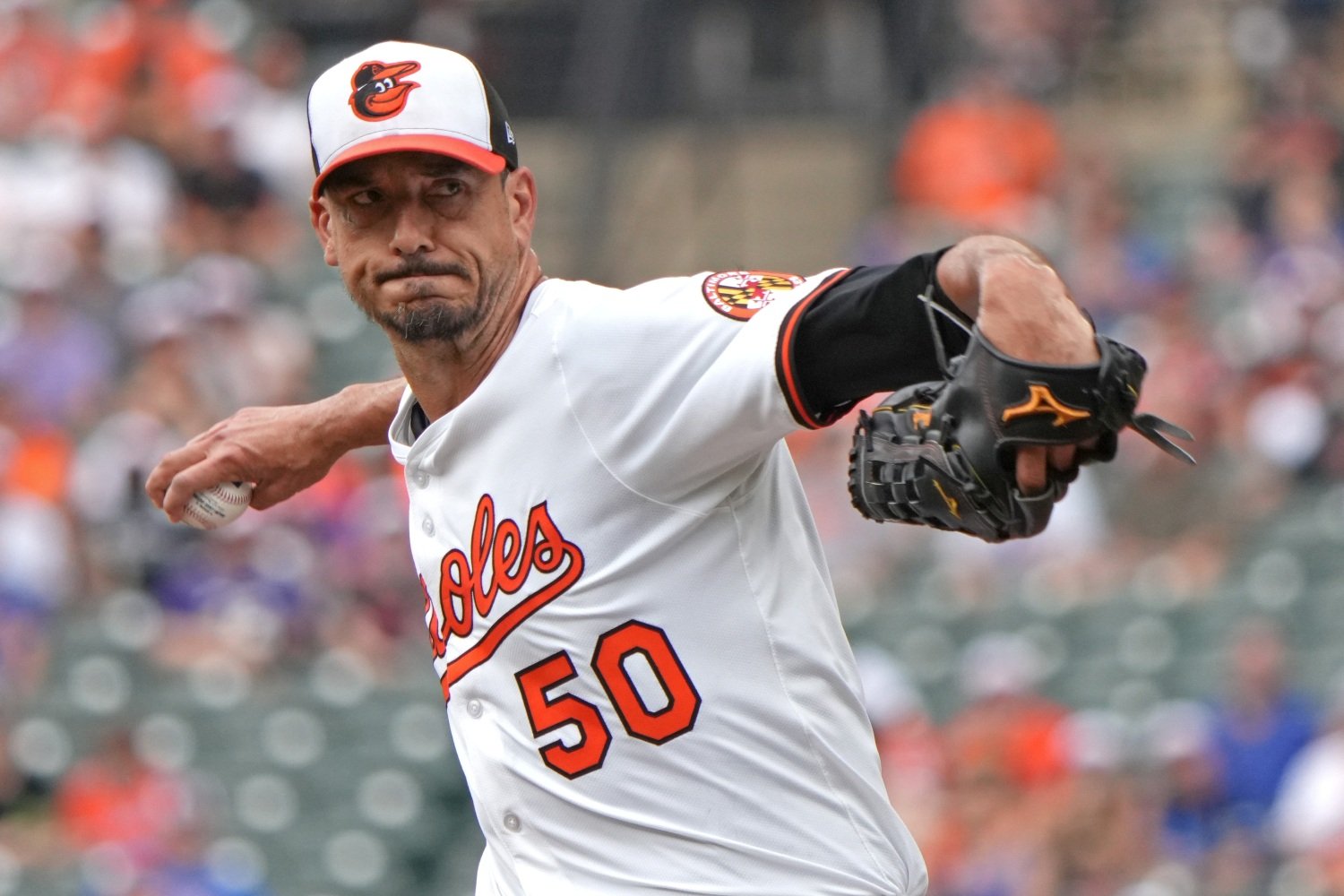 It's no secret that the Cubs need starting pitching depth between today and the trade deadline. I also think it's no secret that they will acquire starting pitching. Jim Bowden of the Athletic claims that the Cubs are "all-in", and the hope of many Cub fans (myself included) is that the team acquires some top-end starting pitching talent—perhaps the Marlins' Edward Cabrera, for example. However, with a recent injury to Jameson Taillon and Cade Horton's impending innings limit, the Cubs could probably stand to acquire two pitchers. Enter: Orioles starting pitcher, Charlie Morton. Let's get to the elephant in the room: his 5.47 ERA is ugly. But I'm going to ask you to bear with me for a few moments and set the ERA to the side, because I think Morton has some gas left in the tank. While it can be bad form to stake an argument to numbers defined by arbitrary end points, Morton has essentially had two seasons within 2025—one terrible, and one excellent. Over Morton's first 36 2/3 innings, the right-handed pitcher had a disgusting ERA that sat over 8.00, struck out under 20% of hitters, and walked a whopping 12.8% of those he faced. This is very much un-Morton-like; he's had just one season where he walked even 10% of hitters since his revolution in Houston back in 2016. It was looking pretty ugly for the pitcher early in 2025. Morton's numbers made him look washed. It would be fair, at this stage of the 41-year-old's career, to think that this is Father Time coming for yet another player, but there was some hope left. Morton's fastball velocity hadn't fallen off a cliff entirely, with his average heater sitting at 93.9 mph (last year, he was at 94.3) while showing pretty similar Stuff+ to his career lines. Maybe something could get fixed, and he could find some footing. Something seemed to click on May 17, however, because since then, he's been significantly better. Since then, in a sample size over 40 innings pitched (and six starts), he has posted a 2.88 ERA. While this kind of drastic improvement could suggest Morton has just been the recipient of positive luck or variance, I don't think the rest of his data supports that conclusion. Looking beyond his ERA improvement, we can see that his xFIP is 3.19 in that span, and goes along with a .349 opponent BABIP. As well, his strikeout rate has shot up to over 28% and his walk rate has dropped below 7%. Even better, Morton's average fastball velocity has jumped over 0.5 mph, as his average velocity now sits at 94.5 mph. He's not merely the beneficiary of good sequencing, stranding lots of runners, or great defensive support—signs we'd expect if a pitcher was just getting lucky. Maybe Morton's still fighting off Father Time, after all. To determine further whether or not Morton has rebounded, diagnosing the fix can help us decide whether we believe it or not. I think the issue for Morton was that he was getting himself in bad counts, thus making him fairly easy to hit. Looking back at Morton's Stuff+ chart, it's obvious based on pitch shape that his best pitch is his curveball. It shouldn't surprise us, then, that it's also his best whiff-inducing pitch, as well as his best put-away pitch. Comparatively, Morton's fastball is quite hittable, as hitters have a .534 SLG against this pitch on the year, compared to a .385 on the curve. Therefore, it's easy to conclude: more curveballs are good for Mr. Morton. The problem? Morton wasn't throwing enough strikes early in the count, and thus, HE was leaning heavily on the fastball. Look, here, then, at how Morton's in-zone% seems to work hand-in-hand with two things: more curveballs and fewer fastballs. The goal for Morton is clear: get ahead in the count. Between Opening Day and his appearance against Minnesota on May 14, Charlie threw a strike on just 55.3% of hitters he faced. This is around 4-5% lower than Morton is used to getting, putting him behind in the count and forcing him to rely more on the fastball. He had one start, specifically against the Cincinnati Reds, where he seemed to bottom out, getting behind two out of every three hitters, giving up seven runs, and walking four, compared to just two strikeouts. That day, he didn't even last three full innings. He came back the next game and got blasted by the Tigers, once again struggling to find strikes. Things have looked up since then, however. Since re-joining the Baltimore rotation, Morton's first-strike% has jumped from just 55% to over 64%. Below is a chart highlighting Morton's swing-and-miss% by game. Take special notice of how Morton's whiffage was oscillating widely at the start of the year, as Morton's first-pitch-strike% struggled. Beginning May 17, however, things began to stabilize for the righty, as his swing-and-miss has been significantly better. To put the visualization into raw data, before May 17, Morton's swing-and-miss% was 9.3%. Since then, it's jumped to 16.5%. So what caused the swing-and-miss to jump? Pitch usage! Remember, Morton is more likely to use the fastball when behind, and through the first portion of the season (when his first-pitch-strike% was low) his fastball usage was over 34% and his curve usage was also 34%. This was a large departure from last year, when his curve usage was over 40% and his fastball usage was under 30%. But starting May 17, which coincides with an increase in first-pitch strikes, Morton's fastball usage has dipped to 27.2% (last year, it was 28.6%) and his curve soared to 42.5% (last year, he threw the curve 42.4% of the time). Go figure: when Morton has the ability to get to his best pitch more often, the results seem to follow. Before we decide that Morton is 100% fixed, I will point out that Morton hasn't been entirely challenged over this recent 40-inning sample. He has only faced one top-10 offense in that span, according to wRC+, the Tampa Bay Rays—though it's fair to point out that the pitcher went six strong, striking out seven, walking none, surrendering only two hits and one run on that occasion. He's also had the benefit of seeing the Rangers, Angels and White Sox over that span, so if you'd like to remain a bit skeptical that prime Charlie Morton isn't entirely back, that's probably okay. The great news for the Cubs is that Morton shouldn't cost much. At age 41, teams are likely to remain skeptical. The Orioles are starting their selling already, trading reliever Bryan Baker to Tampa on Thursday. They don't have the leverage of pretending they're contenders. This shouldn't be the only trade the Cubs make, even for the rotation. (Please, Chicago, I implore you to go save Edward Cabrera from the depths of Miami.) Still, I think Morton is a wonderful secondary addition. Shota Imanaga's been worse than his top-line numbers suggest. Matthew Boyd has been amazing, but the concern of him slowing down has to remain in the back of your head, Horton is going to be limited at some point. Taillon's return date will be at least a fortnight past the trade deadline, so go get a second starter. If the Cubs want to be all-in, I'm not sure there's a better secondary pitching target than Morton. What do you think of Charlie Morton? Do you buy his recent 6 starts as indicative of the rest of his 2025 season? Do you like someone else? Let us know in the comment section below!
 -
Image courtesy of © Mitch Stringer-Imagn Images It's no secret that the Cubs need starting pitching depth between today and the trade deadline. I also think it's no secret that they will acquire starting pitching. Jim Bowden of the Athletic claims that the Cubs are "all-in", and the hope of many Cub fans (myself included) is that the team acquires some top-end starting pitching talent—perhaps the Marlins' Edward Cabrera, for example. However, with a recent injury to Jameson Taillon and Cade Horton's impending innings limit, the Cubs could probably stand to acquire two pitchers. Enter: Orioles starting pitcher, Charlie Morton. Let's get to the elephant in the room: his 5.47 ERA is ugly. But I'm going to ask you to bear with me for a few moments and set the ERA to the side, because I think Morton has some gas left in the tank. While it can be bad form to stake an argument to numbers defined by arbitrary end points, Morton has essentially had two seasons within 2025—one terrible, and one excellent. Over Morton's first 36 2/3 innings, the right-handed pitcher had a disgusting ERA that sat over 8.00, struck out under 20% of hitters, and walked a whopping 12.8% of those he faced. This is very much un-Morton-like; he's had just one season where he walked even 10% of hitters since his revolution in Houston back in 2016. It was looking pretty ugly for the pitcher early in 2025. Morton's numbers made him look washed. It would be fair, at this stage of the 41-year-old's career, to think that this is Father Time coming for yet another player, but there was some hope left. Morton's fastball velocity hadn't fallen off a cliff entirely, with his average heater sitting at 93.9 mph (last year, he was at 94.3) while showing pretty similar Stuff+ to his career lines. Maybe something could get fixed, and he could find some footing. Something seemed to click on May 17, however, because since then, he's been significantly better. Since then, in a sample size over 40 innings pitched (and six starts), he has posted a 2.88 ERA. While this kind of drastic improvement could suggest Morton has just been the recipient of positive luck or variance, I don't think the rest of his data supports that conclusion. Looking beyond his ERA improvement, we can see that his xFIP is 3.19 in that span, and goes along with a .349 opponent BABIP. As well, his strikeout rate has shot up to over 28% and his walk rate has dropped below 7%. Even better, Morton's average fastball velocity has jumped over 0.5 mph, as his average velocity now sits at 94.5 mph. He's not merely the beneficiary of good sequencing, stranding lots of runners, or great defensive support—signs we'd expect if a pitcher was just getting lucky. Maybe Morton's still fighting off Father Time, after all. To determine further whether or not Morton has rebounded, diagnosing the fix can help us decide whether we believe it or not. I think the issue for Morton was that he was getting himself in bad counts, thus making him fairly easy to hit. Looking back at Morton's Stuff+ chart, it's obvious based on pitch shape that his best pitch is his curveball. It shouldn't surprise us, then, that it's also his best whiff-inducing pitch, as well as his best put-away pitch. Comparatively, Morton's fastball is quite hittable, as hitters have a .534 SLG against this pitch on the year, compared to a .385 on the curve. Therefore, it's easy to conclude: more curveballs are good for Mr. Morton. The problem? Morton wasn't throwing enough strikes early in the count, and thus, HE was leaning heavily on the fastball. Look, here, then, at how Morton's in-zone% seems to work hand-in-hand with two things: more curveballs and fewer fastballs. The goal for Morton is clear: get ahead in the count. Between Opening Day and his appearance against Minnesota on May 14, Charlie threw a strike on just 55.3% of hitters he faced. This is around 4-5% lower than Morton is used to getting, putting him behind in the count and forcing him to rely more on the fastball. He had one start, specifically against the Cincinnati Reds, where he seemed to bottom out, getting behind two out of every three hitters, giving up seven runs, and walking four, compared to just two strikeouts. That day, he didn't even last three full innings. He came back the next game and got blasted by the Tigers, once again struggling to find strikes. Things have looked up since then, however. Since re-joining the Baltimore rotation, Morton's first-strike% has jumped from just 55% to over 64%. Below is a chart highlighting Morton's swing-and-miss% by game. Take special notice of how Morton's whiffage was oscillating widely at the start of the year, as Morton's first-pitch-strike% struggled. Beginning May 17, however, things began to stabilize for the righty, as his swing-and-miss has been significantly better. To put the visualization into raw data, before May 17, Morton's swing-and-miss% was 9.3%. Since then, it's jumped to 16.5%. So what caused the swing-and-miss to jump? Pitch usage! Remember, Morton is more likely to use the fastball when behind, and through the first portion of the season (when his first-pitch-strike% was low) his fastball usage was over 34% and his curve usage was also 34%. This was a large departure from last year, when his curve usage was over 40% and his fastball usage was under 30%. But starting May 17, which coincides with an increase in first-pitch strikes, Morton's fastball usage has dipped to 27.2% (last year, it was 28.6%) and his curve soared to 42.5% (last year, he threw the curve 42.4% of the time). Go figure: when Morton has the ability to get to his best pitch more often, the results seem to follow. Before we decide that Morton is 100% fixed, I will point out that Morton hasn't been entirely challenged over this recent 40-inning sample. He has only faced one top-10 offense in that span, according to wRC+, the Tampa Bay Rays—though it's fair to point out that the pitcher went six strong, striking out seven, walking none, surrendering only two hits and one run on that occasion. He's also had the benefit of seeing the Rangers, Angels and White Sox over that span, so if you'd like to remain a bit skeptical that prime Charlie Morton isn't entirely back, that's probably okay. The great news for the Cubs is that Morton shouldn't cost much. At age 41, teams are likely to remain skeptical. The Orioles are starting their selling already, trading reliever Bryan Baker to Tampa on Thursday. They don't have the leverage of pretending they're contenders. This shouldn't be the only trade the Cubs make, even for the rotation. (Please, Chicago, I implore you to go save Edward Cabrera from the depths of Miami.) Still, I think Morton is a wonderful secondary addition. Shota Imanaga's been worse than his top-line numbers suggest. Matthew Boyd has been amazing, but the concern of him slowing down has to remain in the back of your head, Horton is going to be limited at some point. Taillon's return date will be at least a fortnight past the trade deadline, so go get a second starter. If the Cubs want to be all-in, I'm not sure there's a better secondary pitching target than Morton. What do you think of Charlie Morton? Do you buy his recent 6 starts as indicative of the rest of his 2025 season? Do you like someone else? Let us know in the comment section below! View full article
-
2025 MLB Draft Thread
Jason Ross replied to Outshined_One's topic in MLB Draft, International Signings, Amateur Baseball
Summerhill is classic Cub. Up the middle, Cape performer, good in zone contact, maybe a little aggressive here or there on swing choices, strong on the bases... -
Minor League Discussion & Boxes, 7-10-25
Jason Ross replied to CaliforniaRaisin's topic in Cubs Minor League Talk
Owen Caissie is on some kind of heater. Wow. -
You have to have age verification to be apart of the Double-Dong Party.
-
Matt Shaw has made 42 starts between May 19th and today. So...four more.
-
I teach middle school. Repeating the same thing over-and-over again is what I do 80% of the time from August-through-May. 15% of the time I ask "what are you doing, why would you do that?" 5% of the time I drink (always after work, mind you). Frankly, baseball season and writing on NSBB is basically the same thing.
-
It's always something. I remember the great debates of 2017-2020 where the Cubs offense was "not consistent" or something. That one lasted three damn years. Thankfully, BABIP luck will likely change before then for these two.
-
It's times like this when I miss having to work the other 10 months of the year I have too much time on my hands currently.
-
I would like to introduce you to Luis Arreaz. Now, I want to be very clear here in that I am in no way comparing Matt Shaw to Luis Arraez in any way other than an anecdote, but he perpetually is among the 1% of EV and hard hit. Thing is this; many people misuse EV and hard hit% in that they use it like it was a silver bullet. Hitters like Matt Shaw (and Arraez) - high swing, high contact have lower EV's. When a hitter swings and misses, they don't create an EV, it's a miss. When a hitter strikes out, they don't make an EV. Hitters who make a lot of contact trade K's for weak-ass contact, thus, lowering EV. This also creates more opportunities. If I hit the ball in play, even weakly, I have many times .120-.200 xBA or something. Yeah, most of the time I'm getting out, but a decent amount of the time? I'm getting on. K's are always outs so they don't factor into BABIP. K's, as well, have an xBA of .000. So lowering my EV to trade K's for contact can work. (Now, you can also trade K's for power, so let's be clear, this isn't always good!) Beyond that, Shaw's sprint speed should add to his BABIP significantly. Shaw should run a pretty high BABIP regardless. This isn't to say that EV can't improve! And Matt Shaw is. I've shown this chart a few times, but here it is again: Don't you think it's weird that Shaw is making, consistently, better contact and yet his BABIP isn't following suit? Look at his first half...notice how they went together? So we have three things to understand: 1. Matt Shaw's EV's will likely remain lower due to his makeup. 2. Matt Shaw hits a lot of balls in play and thus his BABIP should help him more than others because he will generate more chances 3. Even despite this, we should be seeing significantly better BABIP based on the progress under the hood for Shaw

-
So, you realize that Matt Shaw's data is significantly better than what Pete Crow-Armstrong's was at this same time last year, do you not? How'd that work out? Do you think sending Matt Shaw back to Iowa will "build his confidence?" A place he has been 40% better than league average? Will he just come back up to the Cubs and because he hits a home run off of the corpse of Matt Fulmer, he'll be ready to hit 98mph? The "confidence" argument always confuses me a bit. If I was struggling at work, and my boss took my responsibilities away and gave me obviously easier tasks that I had already shown mastery of, I wouldn't feel any better, and I wouldn't feel any more confident. Why we think baseball players are any different is beyond me. I also wouldn't mind a 3b, but not a starting type. The Cubs need a Castro, an Urias; padding. They have the 3rd best offense by almost any metric, they dont need a starting 3b
-
Matt Shaw xwOBA entering game: .307 League 3b wOBA: .306 zOPS: .723 OPS (as of 7/1): .617 Matt Shaw BABIP: .247 zBABIP (as of 7/1): .341 You know all of those conversations we just had about Ian Happ? Yeah, same here. Anything with a z in front is what ZiPS projects he should be at. So by almost every system we have, expected data, ZiPS data, a look at recent BABIP vs hard hit, it's pretty clear he's a recipient of massive bad luck. Sending him down isn't the answer.
-
I just spent the last hour deep diving on Charlie Morton for a front-page article, so when I came and saw "Rays acquire RHP from Orioles" I about threw an absolute horsefeathers fit.
-
Probably a long shot, especially since Alcantara was announced as injury. Rojas sounds like he pissed off a manager and Wiggins has sat for two weeks. Teams would likely rather be at his starts if the Cubs were that close to moving him, not looking over May tape. Wiggins was gassed his last start. It was super hot, and he walked four, something he really hasnt done. During that game he matched, in just three months the, his total innings for the entire 2024 year. Year prior was coming back from TJS, so no innings. Just think its coincidence. Any trade is likely a post-ASB thing right now. Teams are scouting prospects for the draft Sunday night.
-
Cubs (Horton) vs Twins (Festa): 7/9/25, 6:40pm
Jason Ross replied to Brandon Glick's topic in Fred Hornkohl Game Thread Forum
I didn't say anything about the balls to RF. Yes, they were hits. I was just pointing out his whiffs and that his line is likely worse than he threw. -
Cubs (Horton) vs Twins (Festa): 7/9/25, 6:40pm
Jason Ross replied to Brandon Glick's topic in Fred Hornkohl Game Thread Forum
Notice I didn't say "perfect". Yes, there are some flaws still. Regardless, he pitched better than the line susggests. -
Cubs (Horton) vs Twins (Festa): 7/9/25, 6:40pm
Jason Ross replied to Brandon Glick's topic in Fred Hornkohl Game Thread Forum
Yep. He pitched pretty well tonight. 19 whiffs is his career high. He pitched better than the line left him. -
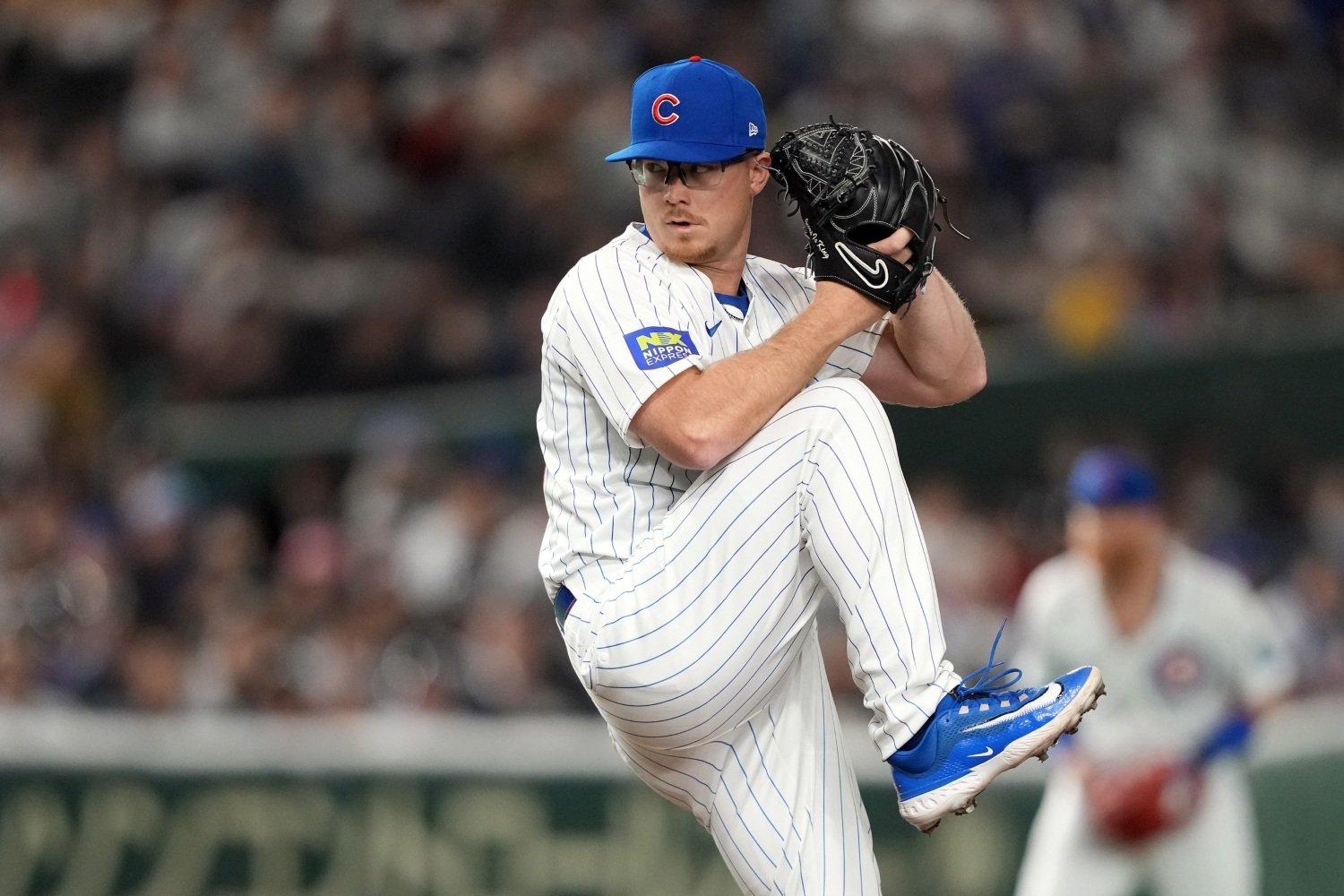 The discourse around Jordan Wicks's return has been fairly negative, in most of the circles I tend to run in. Whether that's my time here on NSBB, on reddit, or on social media, the Wicks return has been met with little fanfare. While I haven't seen the word "bust" associated with him, the general feeling I get is that many people are already chalking him up as one. Perhaps it's because his debut was made nearly two years ago, and he's been somewhat ineffective (coupled with a litany of nagging injuries which kept him out of the mainstream eye), but it's good to remember that in parts of three seasons at the highest level, Wicks hasn't even eclipsed 90 innings yet. Down in Iowa, his overall numbers don't paint a fantastic picture, either. His 4.06 ERA isn't special, and he's had a few clunkers, giving up seven runs in under three innings on April 26, and then (with just one start in between) he gave up another four, not lasting through five innings, on May 13. Add in some nagging injuries for Wicks and the Cubs' excellent season, and I wouldn't blame you if you missed that since that second poor showing, Wicks had been excellent—posting a 1.65 ERA, flashing improved fastball velocities, and striking out nearly one of every three hitters he faced. On Sunday Night Baseball, against the St. Louis Cardinals, Wicks got a chance to show a bit of what he's been working on to the national audience, and it was pretty darn impressive. The first thing that caught my eye (and maybe yours, as well) was that the fastball velocity was way up, as he sat 94 mph on average (which is a far shout from the 91-92 mph pitcher we saw two years ago). He touched 96 on a strikeout. I will give some caution that this is probably a combination of knowing that his pitch count would be limited out of the bullpen, plus national audience juice, and that I wouldn't expect that velo moving forward. But the fastball caught my attention. More than the velocity, the thing that really caught my eye was placement of the fastball; Jordan Wicks is a different guy. Yes, the video above shows a pitch that the ESPN K-Zone suggests is a ball (Statcast had a different idea, suggesting it clipped the zone), but it highlights a few things. First, it's his highest-velo pitch of the day at 96.1 mph, but also, we can see how he is using the fastball now, throwing it up in the zone. When Wicks first came up, his game was a pretty simple one: fastball (usually a sinker) down, changeup down, get groundballs. We can see that just from looking at his first game, way back in August 2023 against the Pirates. Pay attention to where the red dots (fastball), orange dots (sinker) and green dots (changeup) are. The latter two are located almost exclusively in the low-and-away corner of the zone, while the fastball sat middle and in on the hands. Compare how he attacked hitters in 2023 to how he attacked the Cardinals Sunday night. You'll see a few sinkers down and away, but all of a sudden, the fastball is up (red is once again the fastball, green the changeup). He largely stays away from boring in on the hands of hitters the way he used to, and now focuses far more on the top third of the zone. It changes the eyeline of the hitters. No longer can you key in on an entire third of the plate. Now, you must defend up against the fastball and down against a change, sweeper, or slider. The more you can make a hitter consider, the better chance you have to catch them off-guard. His fastball shape, as well, was different. He's getting a pretty decent amount of glove-side cut. In other words, his four-seam fastball is acting more like a cut fastball. That's an interesting highly Cubs-coded development. How he continues to use his slightly different shape will be something to follow. Not only is the fastball different, but the lefty is flashing a different pitch arsenal. It's not a complete revolution—at his core, Wicks is still a fastball-changeup guy—but he's showing a slider/sweeper more than he has in the past. Five of his 41 pitches were in the sweeper/slider category, which can help add a chase/whiff pitch to his arsenal. Shota Imanaga uses a sweeper to add a little something extra to his fastball/splitter combination, using it just enough to make you know he has it, and Wicks adding in a horizontal mover is just enough to keep your eyes from zoning in on north-south. Since Wicks (unlike Imanaga) also has glove-side action on the fastball, he can use his slider a bit the way Justin Steele uses his, as well: to keep hitters reading any sidespin or glove-side movement from knowing which pitch they're seeing. Following other Cubs pitchers (such as Colin Rea), he's not using the sinker very much anymore, either, and I'm okay with that. Sinkers have terrible splits against opposite-handed hitters (though they can be used to attack same-sided hitters). For Wicks, this creates a pretty glaring issue. Wicks is left-handed, and most hitters he'll see as a starter or long reliever will be right-handed. The league has figured out that left-handed hitters just don't hit left-handed pitchers very well, so Wicks can expect a heavy dosage of righty muscle when he pitches. The result? Only two sinkers Sunday night, which is the correct game plan. The Cubs' lefthander had already begun to decrease his sinker usage in 2024, but seeing him dump the pitch against righties in his return to the bigs was encouraging. I'm going to stop short of telling you to go out and buy a Jordan Wicks Authentic replica jersey, and remind you that Sunday night was a 41-pitch outing that didn't last four full innings. His velocity was likely a bit higher than we should expect moving forward, and he did only generate four whiffs, so it wasn't as if he was entirely domineering. We'll need to see more of this before Wicks becomes a staple in Chicago for the remained of the 2025 season. But I will say that I am excited about the continued development. Throwing 94-96 mph out of the bullpen makes me more interested in Wicks as a member of the pen, if they choose to go that route. His fastball placement with that velocity, even more so. He's also done enough at Iowa that getting him a few looks as a starter is something I'd advocate for. He's been pretty great in Iowa, and he's clearly a different version of himself than we've seen in the past. I doubt that he's going to change the entire rotation dynamic, but no one is asking him to. If Wicks can simply be another Rea, that would be great. I know it's been a bit since we have seen Wicks have sustained success in the majors, but he's a former first-round pick; has flirted with being a top-100 prospect; and has had successful short stints already. Add in some cool changes in how he's attacking hitters, and I think the Cubs might have something here. What did you think of Jordan Wicks' first appearance of the season Sunday night? Did you notice the fastball velocity or placement? Would you rather see him in the rotation or in the bullpen? Let us know in the comments below!
 -
Image courtesy of © Darren Yamashita-Imagn Images The discourse around Jordan Wicks's return has been fairly negative, in most of the circles I tend to run in. Whether that's my time here on NSBB, on reddit, or on social media, the Wicks return has been met with little fanfare. While I haven't seen the word "bust" associated with him, the general feeling I get is that many people are already chalking him up as one. Perhaps it's because his debut was made nearly two years ago, and he's been somewhat ineffective (coupled with a litany of nagging injuries which kept him out of the mainstream eye), but it's good to remember that in parts of three seasons at the highest level, Wicks hasn't even eclipsed 90 innings yet. Down in Iowa, his overall numbers don't paint a fantastic picture, either. His 4.06 ERA isn't special, and he's had a few clunkers, giving up seven runs in under three innings on April 26, and then (with just one start in between) he gave up another four, not lasting through five innings, on May 13. Add in some nagging injuries for Wicks and the Cubs' excellent season, and I wouldn't blame you if you missed that since that second poor showing, Wicks had been excellent—posting a 1.65 ERA, flashing improved fastball velocities, and striking out nearly one of every three hitters he faced. On Sunday Night Baseball, against the St. Louis Cardinals, Wicks got a chance to show a bit of what he's been working on to the national audience, and it was pretty darn impressive. The first thing that caught my eye (and maybe yours, as well) was that the fastball velocity was way up, as he sat 94 mph on average (which is a far shout from the 91-92 mph pitcher we saw two years ago). He touched 96 on a strikeout. I will give some caution that this is probably a combination of knowing that his pitch count would be limited out of the bullpen, plus national audience juice, and that I wouldn't expect that velo moving forward. But the fastball caught my attention. More than the velocity, the thing that really caught my eye was placement of the fastball; Jordan Wicks is a different guy. Yes, the video above shows a pitch that the ESPN K-Zone suggests is a ball (Statcast had a different idea, suggesting it clipped the zone), but it highlights a few things. First, it's his highest-velo pitch of the day at 96.1 mph, but also, we can see how he is using the fastball now, throwing it up in the zone. When Wicks first came up, his game was a pretty simple one: fastball (usually a sinker) down, changeup down, get groundballs. We can see that just from looking at his first game, way back in August 2023 against the Pirates. Pay attention to where the red dots (fastball), orange dots (sinker) and green dots (changeup) are. The latter two are located almost exclusively in the low-and-away corner of the zone, while the fastball sat middle and in on the hands. Compare how he attacked hitters in 2023 to how he attacked the Cardinals Sunday night. You'll see a few sinkers down and away, but all of a sudden, the fastball is up (red is once again the fastball, green the changeup). He largely stays away from boring in on the hands of hitters the way he used to, and now focuses far more on the top third of the zone. It changes the eyeline of the hitters. No longer can you key in on an entire third of the plate. Now, you must defend up against the fastball and down against a change, sweeper, or slider. The more you can make a hitter consider, the better chance you have to catch them off-guard. His fastball shape, as well, was different. He's getting a pretty decent amount of glove-side cut. In other words, his four-seam fastball is acting more like a cut fastball. That's an interesting highly Cubs-coded development. How he continues to use his slightly different shape will be something to follow. Not only is the fastball different, but the lefty is flashing a different pitch arsenal. It's not a complete revolution—at his core, Wicks is still a fastball-changeup guy—but he's showing a slider/sweeper more than he has in the past. Five of his 41 pitches were in the sweeper/slider category, which can help add a chase/whiff pitch to his arsenal. Shota Imanaga uses a sweeper to add a little something extra to his fastball/splitter combination, using it just enough to make you know he has it, and Wicks adding in a horizontal mover is just enough to keep your eyes from zoning in on north-south. Since Wicks (unlike Imanaga) also has glove-side action on the fastball, he can use his slider a bit the way Justin Steele uses his, as well: to keep hitters reading any sidespin or glove-side movement from knowing which pitch they're seeing. Following other Cubs pitchers (such as Colin Rea), he's not using the sinker very much anymore, either, and I'm okay with that. Sinkers have terrible splits against opposite-handed hitters (though they can be used to attack same-sided hitters). For Wicks, this creates a pretty glaring issue. Wicks is left-handed, and most hitters he'll see as a starter or long reliever will be right-handed. The league has figured out that left-handed hitters just don't hit left-handed pitchers very well, so Wicks can expect a heavy dosage of righty muscle when he pitches. The result? Only two sinkers Sunday night, which is the correct game plan. The Cubs' lefthander had already begun to decrease his sinker usage in 2024, but seeing him dump the pitch against righties in his return to the bigs was encouraging. I'm going to stop short of telling you to go out and buy a Jordan Wicks Authentic replica jersey, and remind you that Sunday night was a 41-pitch outing that didn't last four full innings. His velocity was likely a bit higher than we should expect moving forward, and he did only generate four whiffs, so it wasn't as if he was entirely domineering. We'll need to see more of this before Wicks becomes a staple in Chicago for the remained of the 2025 season. But I will say that I am excited about the continued development. Throwing 94-96 mph out of the bullpen makes me more interested in Wicks as a member of the pen, if they choose to go that route. His fastball placement with that velocity, even more so. He's also done enough at Iowa that getting him a few looks as a starter is something I'd advocate for. He's been pretty great in Iowa, and he's clearly a different version of himself than we've seen in the past. I doubt that he's going to change the entire rotation dynamic, but no one is asking him to. If Wicks can simply be another Rea, that would be great. I know it's been a bit since we have seen Wicks have sustained success in the majors, but he's a former first-round pick; has flirted with being a top-100 prospect; and has had successful short stints already. Add in some cool changes in how he's attacking hitters, and I think the Cubs might have something here. What did you think of Jordan Wicks' first appearance of the season Sunday night? Did you notice the fastball velocity or placement? Would you rather see him in the rotation or in the bullpen? Let us know in the comments below! View full article
-
Minor League Discussion & Boxes, 7-8-25
Jason Ross replied to CaliforniaRaisin's topic in Cubs Minor League Talk
25% is probably unlikely over any season statline. But over his last 134 PA's, his K% has dropped to 25.8%, which is a non-significant sample size. Over his last 222 his K% is 28.2%, which, for Caissie's batted ball, is likely more than good enough. Caissie hits the ball so well that he should maintain an above average BABIP despite the size; quality batted ball increases BABIP ability and he's been a BABIP monster basically everywhere, even when he struck out mid 30's. I think those are great player comps though, for upper end Caissie. Realistically, an Owen Caissie who strikes out 28% of the time is likely a middle of the order bat no issue. The things that will keep him away from that is an inflated K% against MLB pitching over the 30% to the 35% mark. I will caution that I think his first 200-400 PA's could be rather ugly, he's had a tendency to struggle for a few months at most every level before "getting it". But if you're buying the whiff decrease (which is backed up behind both in zone an o-zone whiff) than I think there's a good enough reason to believe in him getting around that rate. I still would consider moving him at the deadline, he's not untouchable good. But I wouldn't trade him for a rental, and I would treat him like a top-40 or more prospect in a trade. -
Poor fastball placement. Here are a few charts. The first two are 2024. Left is total fastball placement, right is fastball swing and miss location. Now, compare to 2025: He's leaving more fastballs down. This is bad in general, but worse for someone like Imanaga, who's fastball has significant ride. It floats up into the zone, right into the bat path. When you throw 90 and it trickles into the zone like that, you get HR's. He's still getting good whiff in-zone on the pitch, but he needs to elevate more frequently. What makes his fastball special is that the ride allows him to get over bats at the top-end of the zone. But he's missing it pretty consistently. His arm-angle is a bit lower this year than last year. Whether that's on purpose (the Cubs love lower arm slots) or just mechanical flaw, is hard to know. But it could also be playing into the slightly lower fastball placement, too.