.jpg.900f6d1bc80a5a156f3ba09ea0e4b3d7.jpg)

Jason Ross
-
Posts
8,154 -
Joined
-
Last visited
-
Days Won
74
Content Type
Profiles
Joomla Posts 1
Chicago Cubs Videos
Chicago Cubs Free Agent & Trade Rumors, Notes, & Tidbits
2026 Chicago Cubs Top Prospects Ranking
News
2023 Chicago Cubs Draft Picks
Guides & Resources
2024 Chicago Cubs Draft Picks
The Chicago Cubs Players Project
2025 Chicago Cubs Draft Pick Tracker
2026 Chicago Cubs Draft Tracker: Picks & Bonuses
Blogs
Events
Forums
Store
Gallery
Everything posted by Jason Ross
-
Cubs-Brewers Game One Thread, By The Numbers
Jason Ross replied to Brock Beauchamp's topic in Fred Hornkohl Game Thread Forum
You think that Michael Soroka's most recent 8 innings are more indicative than his prior 83? In the nicest possible way; that's not how data works, and is the literal definition of sample size error. Max Fried gave up 7 runs in 3 innings last night. Is that more indicative of who he is moving forward, or do we think his 2025 season is a better representation of that? Soroka had a strained shoulder and his velocity is back to what it was; he didn't have his arm amputated. There is no reason on the planet to think his last eight innings outclass 10x the sample. -
Cubs-Brewers Game One Thread, By The Numbers
Jason Ross replied to Brock Beauchamp's topic in Fred Hornkohl Game Thread Forum
Well, yeah. But so are the Cubs. They are both top-3 in almost every one of the base running stats you can imagine, and when they're not, they're in the top-5. It doesn't really change the point; the Brewers are not a juggernaut offensive roster. The comparison was of recent offensive output and how around here, you'd kind of come to the conclusion the Cubs wilted into the playoffs (especially offensively). While the Cubs had the 9th most runs in September, the Brewers had the 23rd. For all of the worry about how the Cubs offense has performed leading up to the playoffs, the Brewers have been worse. Yet, on here, you'd assume the Brewers had one of the best offenses in baseball. They're a fine offensive team who struggled more than the Cubs in recency biast. dRC+ (which factors in opposition quality) likes them less than wRC+ as well. The point is this; the Brewers aren't a team you really need to worry about crushing you offensively. They're not a bad offensive team either, but the Cubs shouldn't need to score five to beat this team very often, either. -
I highly suspect Castro will start for Shaw at 3b. They did the same thing the last time Priester went (also Imanaga started for the Cubs). Priester is much worse against lefties than righties, and Shaw's glove will be negated with a flyball pitcher on the mound.
-
Image courtesy of © Kamil Krzaczynski-Imagn Images Game 1 of the NLDS was the kind of contest that could easily eat your soul from the inside, if you let it. The Cubs started the game with a momentum-shifting home run on the second pitch, only to watch the contest quickly devolve into a 9-1 beat down behind (ostensibly) the Cubs' most reliable starting option. It was deflating, to say the least. To avoid dropping down two games to none, the Chicago Cubs will need to bounce back in Monday night's Game 2. While the Brewers have announced southpaw reliever Aaron Ashby as their starter, he will not get the bulk of the innings Monday night. The job of "bulk innings" will instead (very likely) go to sinker merchant Quinn Priester, and the Cubs' hope will be that they can solve him better than they could Freddy Peralta. Thankfully, they have had recent success against Priester, and many of the reasons the Brew Crew are going with an opener stem from that reason. For starters, the Cubs have seen Priester three times already on the season and have gotten to the right-handed pitcher pretty well. Priester has a 6.28 ERA against the Cubs in three starts, walking as many (11) as he's struck out, and sporting a .393 wOBA against the Cubs lineup. While Priester has been a very good arm in Milwaukee this year, the Cubs seem to see the ball well out of his hand—and are uniquely set up to be a problem for him. How are they doing it? First, the Cubs offer a pretty lefty-heavy lineup. Michael Busch, (switch-hitting) Ian Happ, Kyle Tucker, and Pete Crow-Armstrong all hit from the left side against righties, and Priester struggles against lefties. We can see this in both his wOBA against southpaws jumping nearly .030, as well as increased walk totals (nearly double the walk rate, compared to right-handed batters) and an increase in xFIP by almost a full point. This makes sense; Priester is a sinker-slider arm, using those two pitches almost 68% of the time. More importantly, he doesn't show a distinct characteristic to go away from those pitches against left-handed-hitters, as his usage of the sinker barely dips (42% to 41%) and while his slider usage drops some, it's still a pitch he'll toss out almost 20% of the time. This is almost assuredly why Milwaukee is going the opener route. Busch, the Cubs' left-handed leadoff hitter who homered to start the game, will be neutralized if he's allowed to face Ashby (81 wRC+ against LHP, 151 wRC+ against RHP). While Nico Hoerner and either Seiya Suzuki or Happ will likely bat up in the top three, starting Ashby will help Priester miss some of the left-handed hitters. It's likely the reliever-as-starter will remain in the game through the Cubs' cleanup hitter, Tucker, and while Tucker is essentially split-neutral, it will help shield Priester from his power, as well. It's not just that the Cubs have left-handed hitters aplenty, either. The arsenal Priester uses gives the Cubs an advantage. The Cubs rank fourth in the league offensively against sinkers, per FanGraphs. Better yet? The Cubs are third against sliders. So, how can the Cubs continue to exploit Priester's weaknesses? It starts with how you pencil in the lineup card, and one change I'd recommend for Craig Counsell is to start utility player Willi Castro in place of Matt Shaw. Castro, a switch-hitter, would create a matchup issue with the pitch mix that Priester presents. While Castro hasn't faired very well on sinkers on the year, with a -2 run value on the pitch according to Baseball Savant (.188 batting average and a .396 slugging on the pitch), his xWOBA is .358 on the pitch, suggesting he's had a fair share of bad luck. He should be capable of teeing off on a few misplaced breaking balls, and he has a strong plate approach in general, so this would be a good time to get use out of your trade deadline acquisition during the playoffs. The one drawback of taking Shaw out of the lineup and replacing him with Castro, is of course, defense. However, the Cubs are slated to use Shota Imanaga for the bulk of their innings. Imanaga is one of the most extreme fly-ball pitchers in the league, which would negate the value a defensive infielder would bring to the table. You can always bring Shaw's glove in later in the game, when you need to. The Cubs clearly think this a viable plan, as we can go back to August 21, the last time the Cubs faced the Brewers' right-handed pitcher, to see how they stacked the lineup. The only primary right-handed hitters in the order that day were Nico Hoerner at second base, Dansby Swanson at shortstop, and Seiya Suzuki at designated hitter (all of whom you should expect to see this time around, as well). Castro started at third (Imanaga started on the mound, it should be noted), and Reese McGuire drew in at catcher to fill the lineup with six left-handed hitters. The result was that the sinkerballer was knocked out in the middle of the fifth after walking five. I don't expect McGuire to play Monday—Carson Kelly is too important—but I do think the Castro-for-Shaw swap is a real likelihood. Another thing the Cubs should look to do: get the base runners moving. William Contreras is not a particularly fast pop-time catcher, ranking 48th in the league in pop time and 43rd in exchange. Stolen bases aren't entirely off of catchers, either, and we can look into how the Brewers' likely bulk-inning eater does there, and it's fairly mediocre. He's currently neutral in pitcher stealing runs (the Cubs' Matthew Boyd leads the category with +9), and ranks just 46th in limiting runners' lead distance. Runners are two-of-four against these two as a pair and are 7-11 on the year against the pitcher himself. Below is an example of Oneil Cruz (admittedly, a very good baserunner) taking second on the pair early this season with relative ease. Priester just isn't very quick to the plate with his motion. A high, 94-mph pitch is the best chance you'd draw up to get Cruz, and it wasn't even close. SzRsT0JfV0ZRVkV3dEdEUT09X0FBaFJVVnhSQndNQVhsdFFWQUFIQ0ZCVkFBTU1BRllBQlFaWEFRTlJBQWNEQXdJSA==.mp4 Priester gets 56% ground balls and doesn't really limit hard hits, ranking in the 59th percentile of that statistic. This means that anyone at first base is a prime target for a decently hard-hit ground ball at an infielder, resulting in a double play. So how do you stay out of it? Go take second, before you can lose it. That might also move the infielders, as they break to cover the bag, and open new holes through which to shoot a single. This isn't an impervious plan, as the two are clearly somewhat decent together (runners have a 50% clip of getting hosed), but pick your poison. You either let your speed talk on the bases or you let the Brewers' defensive crew up the middle eat you alive. I'll take my chances on the bases. The Cubs should be able to take advantage of the Brewers here. Obviously, we shouldn't expect early-season baserunning from Tucker with his current calf issue, but Crow-Armstrong, Suzuki, Hoerner and either of Shaw or Castro are more than capable of swiping a bag or two. The Cubs are the third-best baserunning team in baseball, have the fourth-most bases swiped, are third in stolen base value and have only been caught 35 times despite their aggressive style. Take what isn't a strength of the Brewers on this day and tilt it to your advantage, by using what you are good at. The last bit of advice for Cubs hitters: leave the low-and-away pitch there. When painting the outside corner to left-handed hitters, Priester will groundball you to death. That area is his stomping ground, and the one place he can truly beat lefties. It's a subtle difference, but get him to find the plate by just a few more inches, and all of a sudden you land in the area where lefties find the most success. Priester isn't going to dominate you with pure stuff. His opponent chase rate is in the 29th percentile, his whiff rate is in the 44th, and none of his pitches jump out as Stuff+ monsters, with his best-shaped pitch being his slider (103; 100 is average). You can allow yourself to get a little deeper into a count to avoid that roll-over ground ball, if need be. Now, you should expect he will pound the zone, as his first-pitch strike rate is 65% and he's in the zone 52% of the time in general, but if you have to watch strike one because it's in the "ground ball danger zone," there isn't a massive fear he's going to dominate you after that and rack up a bunch of strikeouts. So, that's my game plan for Game 2. Get the lefties in the lineup; be judicious but aggressive in taking an extra bag; and at the plate, bring your sights up and don't help the Brewers pitcher out by grounding the ball into the dirt. There's nothing foolproof in baseball; even the best-laid plans fail. The Cubs can stack with left-handed hitters, and the Brewers may not use Priester as much as thought. The Cubs can make a lot of hard contact that find gloves. They could get killed on the bases. Things rarely go exactly how you'd like them. But, I think there's a blueprint to attack the Brewers' (likely) main pitcher on Monday night, and that's going to help give them a strong foundation to find a win in Milwaukee. The Cubs have had success against him before, and have employed these very same tactics. This is a very winnable game—don't let the stench of Game 1 come with you. This series is far from over; steal a win in Milwaukee and you shift the momentum before heading back down to Chicago. What do you think of the Cubs' chances on Monday night? Do you think the Cubs can get to the Brewers' pitcher? Let us know in the comments below! View full article
-
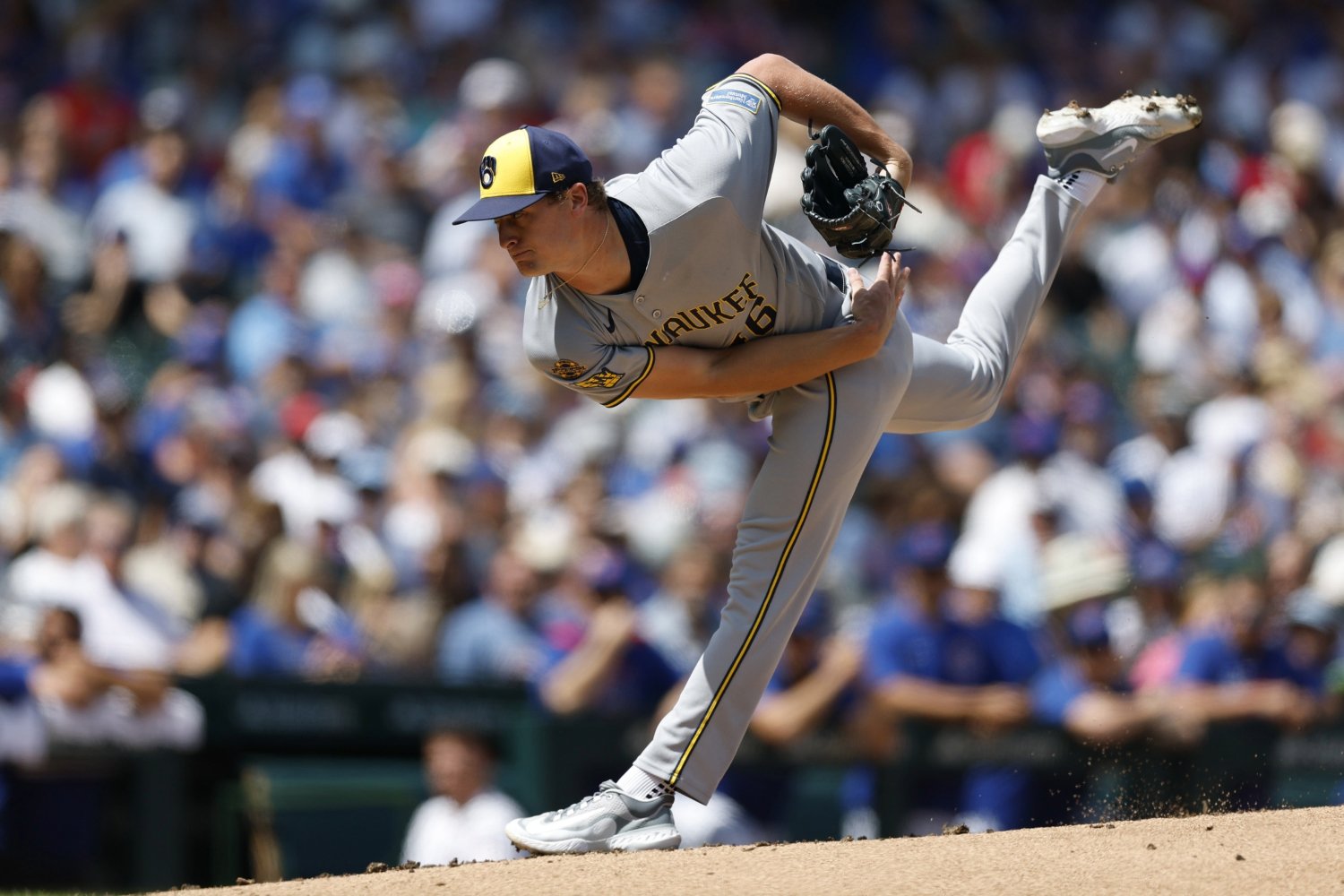 Game 1 of the NLDS was the kind of contest that could easily eat your soul from the inside, if you let it. The Cubs started the game with a momentum-shifting home run on the second pitch, only to watch the contest quickly devolve into a 9-1 beat down behind (ostensibly) the Cubs' most reliable starting option. It was deflating, to say the least. To avoid dropping down two games to none, the Chicago Cubs will need to bounce back in Monday night's Game 2. While the Brewers have announced southpaw reliever Aaron Ashby as their starter, he will not get the bulk of the innings Monday night. The job of "bulk innings" will instead (very likely) go to sinker merchant Quinn Priester, and the Cubs' hope will be that they can solve him better than they could Freddy Peralta. Thankfully, they have had recent success against Priester, and many of the reasons the Brew Crew are going with an opener stem from that reason. For starters, the Cubs have seen Priester three times already on the season and have gotten to the right-handed pitcher pretty well. Priester has a 6.28 ERA against the Cubs in three starts, walking as many (11) as he's struck out, and sporting a .393 wOBA against the Cubs lineup. While Priester has been a very good arm in Milwaukee this year, the Cubs seem to see the ball well out of his hand—and are uniquely set up to be a problem for him. How are they doing it? First, the Cubs offer a pretty lefty-heavy lineup. Michael Busch, (switch-hitting) Ian Happ, Kyle Tucker, and Pete Crow-Armstrong all hit from the left side against righties, and Priester struggles against lefties. We can see this in both his wOBA against southpaws jumping nearly .030, as well as increased walk totals (nearly double the walk rate, compared to right-handed batters) and an increase in xFIP by almost a full point. This makes sense; Priester is a sinker-slider arm, using those two pitches almost 68% of the time. More importantly, he doesn't show a distinct characteristic to go away from those pitches against left-handed-hitters, as his usage of the sinker barely dips (42% to 41%) and while his slider usage drops some, it's still a pitch he'll toss out almost 20% of the time. This is almost assuredly why Milwaukee is going the opener route. Busch, the Cubs' left-handed leadoff hitter who homered to start the game, will be neutralized if he's allowed to face Ashby (81 wRC+ against LHP, 151 wRC+ against RHP). While Nico Hoerner and either Seiya Suzuki or Happ will likely bat up in the top three, starting Ashby will help Priester miss some of the left-handed hitters. It's likely the reliever-as-starter will remain in the game through the Cubs' cleanup hitter, Tucker, and while Tucker is essentially split-neutral, it will help shield Priester from his power, as well. It's not just that the Cubs have left-handed hitters aplenty, either. The arsenal Priester uses gives the Cubs an advantage. The Cubs rank fourth in the league offensively against sinkers, per FanGraphs. Better yet? The Cubs are third against sliders. So, how can the Cubs continue to exploit Priester's weaknesses? It starts with how you pencil in the lineup card, and one change I'd recommend for Craig Counsell is to start utility player Willi Castro in place of Matt Shaw. Castro, a switch-hitter, would create a matchup issue with the pitch mix that Priester presents. While Castro hasn't faired very well on sinkers on the year, with a -2 run value on the pitch according to Baseball Savant (.188 batting average and a .396 slugging on the pitch), his xWOBA is .358 on the pitch, suggesting he's had a fair share of bad luck. He should be capable of teeing off on a few misplaced breaking balls, and he has a strong plate approach in general, so this would be a good time to get use out of your trade deadline acquisition during the playoffs. The one drawback of taking Shaw out of the lineup and replacing him with Castro, is of course, defense. However, the Cubs are slated to use Shota Imanaga for the bulk of their innings. Imanaga is one of the most extreme fly-ball pitchers in the league, which would negate the value a defensive infielder would bring to the table. You can always bring Shaw's glove in later in the game, when you need to. The Cubs clearly think this a viable plan, as we can go back to August 21, the last time the Cubs faced the Brewers' right-handed pitcher, to see how they stacked the lineup. The only primary right-handed hitters in the order that day were Nico Hoerner at second base, Dansby Swanson at shortstop, and Seiya Suzuki at designated hitter (all of whom you should expect to see this time around, as well). Castro started at third (Imanaga started on the mound, it should be noted), and Reese McGuire drew in at catcher to fill the lineup with six left-handed hitters. The result was that the sinkerballer was knocked out in the middle of the fifth after walking five. I don't expect McGuire to play Monday—Carson Kelly is too important—but I do think the Castro-for-Shaw swap is a real likelihood. Another thing the Cubs should look to do: get the base runners moving. William Contreras is not a particularly fast pop-time catcher, ranking 48th in the league in pop time and 43rd in exchange. Stolen bases aren't entirely off of catchers, either, and we can look into how the Brewers' likely bulk-inning eater does there, and it's fairly mediocre. He's currently neutral in pitcher stealing runs (the Cubs' Matthew Boyd leads the category with +9), and ranks just 46th in limiting runners' lead distance. Runners are two-of-four against these two as a pair and are 7-11 on the year against the pitcher himself. Below is an example of Oneil Cruz (admittedly, a very good baserunner) taking second on the pair early this season with relative ease. Priester just isn't very quick to the plate with his motion. A high, 94-mph pitch is the best chance you'd draw up to get Cruz, and it wasn't even close. SzRsT0JfV0ZRVkV3dEdEUT09X0FBaFJVVnhSQndNQVhsdFFWQUFIQ0ZCVkFBTU1BRllBQlFaWEFRTlJBQWNEQXdJSA==.mp4 Priester gets 56% ground balls and doesn't really limit hard hits, ranking in the 59th percentile of that statistic. This means that anyone at first base is a prime target for a decently hard-hit ground ball at an infielder, resulting in a double play. So how do you stay out of it? Go take second, before you can lose it. That might also move the infielders, as they break to cover the bag, and open new holes through which to shoot a single. This isn't an impervious plan, as the two are clearly somewhat decent together (runners have a 50% clip of getting hosed), but pick your poison. You either let your speed talk on the bases or you let the Brewers' defensive crew up the middle eat you alive. I'll take my chances on the bases. The Cubs should be able to take advantage of the Brewers here. Obviously, we shouldn't expect early-season baserunning from Tucker with his current calf issue, but Crow-Armstrong, Suzuki, Hoerner and either of Shaw or Castro are more than capable of swiping a bag or two. The Cubs are the third-best baserunning team in baseball, have the fourth-most bases swiped, are third in stolen base value and have only been caught 35 times despite their aggressive style. Take what isn't a strength of the Brewers on this day and tilt it to your advantage, by using what you are good at. The last bit of advice for Cubs hitters: leave the low-and-away pitch there. When painting the outside corner to left-handed hitters, Priester will groundball you to death. That area is his stomping ground, and the one place he can truly beat lefties. It's a subtle difference, but get him to find the plate by just a few more inches, and all of a sudden you land in the area where lefties find the most success. Priester isn't going to dominate you with pure stuff. His opponent chase rate is in the 29th percentile, his whiff rate is in the 44th, and none of his pitches jump out as Stuff+ monsters, with his best-shaped pitch being his slider (103; 100 is average). You can allow yourself to get a little deeper into a count to avoid that roll-over ground ball, if need be. Now, you should expect he will pound the zone, as his first-pitch strike rate is 65% and he's in the zone 52% of the time in general, but if you have to watch strike one because it's in the "ground ball danger zone," there isn't a massive fear he's going to dominate you after that and rack up a bunch of strikeouts. So, that's my game plan for Game 2. Get the lefties in the lineup; be judicious but aggressive in taking an extra bag; and at the plate, bring your sights up and don't help the Brewers pitcher out by grounding the ball into the dirt. There's nothing foolproof in baseball; even the best-laid plans fail. The Cubs can stack with left-handed hitters, and the Brewers may not use Priester as much as thought. The Cubs can make a lot of hard contact that find gloves. They could get killed on the bases. Things rarely go exactly how you'd like them. But, I think there's a blueprint to attack the Brewers' (likely) main pitcher on Monday night, and that's going to help give them a strong foundation to find a win in Milwaukee. The Cubs have had success against him before, and have employed these very same tactics. This is a very winnable game—don't let the stench of Game 1 come with you. This series is far from over; steal a win in Milwaukee and you shift the momentum before heading back down to Chicago. What do you think of the Cubs' chances on Monday night? Do you think the Cubs can get to the Brewers' pitcher? Let us know in the comments below!
 -
Cubs-Brewers Game One Thread, By The Numbers
Jason Ross replied to Brock Beauchamp's topic in Fred Hornkohl Game Thread Forum
I wasn't being sensitive, I was pointing out the irony in acting like you know about a pitcher but not even bothering to Google his name. It makes you look silly. I am not a spell check, we all make errors. Your post made it very clear you don't care to know his name, that's my issue. I mistype constantly. But I do know who everyone is. Also, I am 38 years old, not "today's youth" my friend. Trust me, both my knees and the growing amount of gray on my hair and beard wishes I was. But you do you. You seem more concerned with just being miserable consistently than looking up information about the people you're complaining about. No reason to continue this beyond of you have nothing else baseball related to speak on. Would you like to provide information in the form of statistics and data to suggest Assad is better? As stated, the Cubs don't appear to think so, so I would be interested in why you think that. I am of the opinion myself Soroka is a better option than Assad, especially out of the bullpen. -
Cubs-Brewers Game One Thread, By The Numbers
Jason Ross replied to Brock Beauchamp's topic in Fred Hornkohl Game Thread Forum
He had a shoulder strain this year. His velocity is already back. Let's not go crazy with what he had. This post makes it seem like he had TJS. I do think his routine and mechanics are a little off. I think he rushed back a little and didn't get as much rehab time in the minors as would have been ideal and we are seeing that rust shake off in real time. I also think he is a good pitcher and long term is fine. Both things can be true. -
Cubs-Brewers Game One Thread, By The Numbers
Jason Ross replied to Brock Beauchamp's topic in Fred Hornkohl Game Thread Forum
There are usually normal markers we have of players capable of doing these things. Left-on-base generally has no markers and is mostly considered a luck based concept. With anything, there are players who are able to skirt the danger zone more than others, and some who's luck lasts longer. I think as we project Assad in the future, we can either assume that the luck will run out sooner rather than later, or find some data in how he does the outlier thing he does. I can't find any real data for the latter, meaning the former feels like the safest option moving forward. I don't think he's so bad he doesn't have a space in MLB - I think he's a capable #5 if needed and likely more of a swingman. A Colin Rea type career sounds...realistic! But playoff starter? No thanks. -
Cubs-Brewers Game One Thread, By The Numbers
Jason Ross replied to Brock Beauchamp's topic in Fred Hornkohl Game Thread Forum
Don't you think it's a little bit strange that you don't even know his name and you're complaining about him? I say that because it feels odd to throw a fit about Michael Soroka but if you can't get the name right, it means you're probably not so familiar with his body of work. For example, when transitioned to the BP last year, Soroka posted killer K% and numbers. He was a stud reliever. In Washington, he was a great pitcher! His ERA was high, but the Washington Nationals finished dead last defensively - his ERA was inflated because the Nats couldn't field well. They're atrocious. Since coming to Chicago, it hasn't worked great. But I think that's more or less due to his injury and being thrown off. But yeah, I think Soroka is a better option. The Cubs do too. -
Cubs-Brewers Game One Thread, By The Numbers
Jason Ross replied to Brock Beauchamp's topic in Fred Hornkohl Game Thread Forum
I try to find some hope in the doom and gloom. Most of the time. Appreciate the kind words! -
Cubs-Brewers Game One Thread, By The Numbers
Jason Ross replied to Brock Beauchamp's topic in Fred Hornkohl Game Thread Forum
I think Javier Assad is not a very good pitcher. I can usually find a reason for a pitcher beating his xFIP, and I'm not very sure I can find one for Assad. His K% is dropping, the GB% isn't high enough to be one, his xERA routinely sits in the mid 4's. Most of his profile reads of a guy who is teetering on the edge of a pretty quick downfall as an MLB starter. I don't think he's a very good pitcher. I don't think the Cubs believe in him; they thought, at best, he's the 13th best pitcher right now, and it's safe to assume had Horton been healthy, he'd be deemed the 14th best pitcher right now. When you look at all of that, it'd be fairly perplexing for the Cubs to start him in a playoff game against the #`1 seed in the NL. -
Cubs-Brewers Game One Thread, By The Numbers
Jason Ross replied to Brock Beauchamp's topic in Fred Hornkohl Game Thread Forum
He's probably in line for around 12-15 outs. Ashby is going to take the first four through Tucker, and then it's Priester, probably through the 4th or 5th. I don't necessarily think they have to score 4. Shota is a good pitcher, and the Cubs BP is good. The Brewers didn't score a single run after the 2nd against Civale (who got 1 whiff in 55 pitches) and Ben Brown. They had a great first two innings but they're not a juggernaut. For all of the worry on the Cubs lineup over the second half of the year. the Cubs had a 113 wRC+ in September to the Brewers 101. I'm not so sure the Cubs have to outhit the Brewers this much. Don't get me wrong, four would be great! But I do think we're over valuing the Brewers offensive capabilities. Especially if Chourio is out. -
Cubs-Brewers Game One Thread, By The Numbers
Jason Ross replied to Brock Beauchamp's topic in Fred Hornkohl Game Thread Forum
Yep. Real bad against LHH, he doesn't use his mix well. Sinkers and sliders have issues against opposite handed hitters and he doesn't really change his mix. Cubs are lefty heavy (thus the opener) and crush sinkers and sliders. It's a good matchup for the Cubs tonight. -
Cubs-Brewers Game One Thread, By The Numbers
Jason Ross replied to Brock Beauchamp's topic in Fred Hornkohl Game Thread Forum
I've got an article coming out today about Quinn Priester and how the Cubs matchup against him. He is 99% sure they're bulk innings guy. TLDR: It's a good outlook. -
Cubs-Brewers Game One Thread, By The Numbers
Jason Ross replied to Brock Beauchamp's topic in Fred Hornkohl Game Thread Forum
I think the Shota hate is a little ridiculous at this stage and I think a lot of it deals with his last start before the playoffs. So let's have a little fun with arbitrary endpoints: Shota Imanaga from July 30th - September 19th: 3.69 ERA, 3.79 xFIP, 25.8 K%, 3.5% BB% That's really good! That's over 61 innings and 10 starts. When you add in his very bad, no good day on the 25th, his numbers get much worse. His ERA jumps almost a full point to 4.49! But it was really one bad day. Fun fact, he faced Milwaukee twice in that span. He had the following numbers: 12 IP, 13 K, 2 BB, 5 ER That's...just fine. On the year he's running a 3.57 ERA and a .249 wOBA against the Brewers. The amount of hand wringing over Shota starting game 2 is real silly. He's on regular rest. He's the best option. No one on the Cubs is so good they need to dedicate more than four innings to them. Any day is going be in large part a bullpen day. Shota, Rea, Taillon, it doesn't matter...it won't change that math. -
Cubs-Brewers Game One Thread, By The Numbers
Jason Ross replied to Brock Beauchamp's topic in Fred Hornkohl Game Thread Forum
Colin Rea has horrible splits against LHP - over .100 points of wOBA. The Brewers have plenty of LHH. Colin Rea is probably a bad choice. The Brewers can roll out a lineup including Isaac Collins (130 wRC+), Yelich (138 wRC+), Turang (127 wRC+), Frelick (119 wRC+). These hitters have done well against Rea on the year, as he's given up six runs in nine innings, and has walked as many as he's struck out. You could roll out an opener, but if you're rolling out an opener for Colin Rea, who sucks against LHP, then what's the benefit of Rea over Shota? I don't believe Colin Rea is a better pitcher than Shota Imanaga. So I don't think you gain anything. Shota is a better pitcher. He's on full rest. Just give me the better pitcher, even if he's flawed. Pull him sometime in the fourth if you need to; it's playoff baseball, the bullpen horses haven't been used since Thursday and have tomorrow off. You'd have the same plan with Rea. Rea is just as flawed if not a bit more, and I don't think you want to look back on Game 2 and say "Man, I really wish I'd have rather just pitched the better guy". -
Cubs-Brewers Game One Thread, By The Numbers
Jason Ross replied to Brock Beauchamp's topic in Fred Hornkohl Game Thread Forum
Taillon would be on short rest like Matthew Boyd. Isn't that why everyone is so convinced Boyd shouldn't have gone Saturday? Javier Assad has a 15% K%. This would literally be the lowest of any qualified starter if he had enough innings. While his ERA does tend to outpace his xFIP, we cannot really expect a pitcher who had a 15% K% to do that well. He also displays little velocity. Against a team who struggles more with the fastball, I'm not sure that's an ace plan. He's just not a playoff starter. The Cubs didn't even deem him one of their 12 best pitchers. Colin Rea has been solid lately. He's also been bad against Milwaukee on the year. He's a pitcher most people didn't want signed, I don't hate the idea of Rea pitching innings but there feels like a lot of recency bias here, He has extreme R/L splits - a 4.57 xFIP against LHH. The Brewers can throw out Yelich, Collins, Frelick, Turang.... I get that Shota hasn't been as dominant as he had been last year. But he's still probably the best option the Cubs have right now. He's on regular rest, the Cubs bullpen can be used, essentially, without impunity behind him; it's well rested and Shota can be pulled the moment they want to give him some rest. I once again don't think there is some clear-cut better option. You can make equally poor arguments for every option. For every HR Shota gives up, Assad doesn't strike someone out, Colini Rea is just Colin Rea and Jamo is on 3 days rest. -
Cubs-Brewers Game One Thread, By The Numbers
Jason Ross replied to Brock Beauchamp's topic in Fred Hornkohl Game Thread Forum
I struggle to see how anyone could have strong opinions about this pre-game. I know people did, but again, it feels like people more or less setting up a scapegoat versus looking at the logic of the situation faced by the Cubs and Counsell. Door number 1 was your best starting pitcher available, both on talent and numbers who is on short rest and who hadn't had success this year against Milwaukee. Door number 2 was your fifth best SP, someone you didn't have in your original rotation to start the year, who pitched more recently than Door 1 and had bad numbers against Milwaukee in his own right. Door number 3 was a pitcher with a 15% K%, a 4.69 xFIP, hadn't pitched in a while and was deemed so good he wasn't rostered on either playoff roster. They're all bad choices. There's nothing to think here was a clear away good one. It's like passionately arguing you'd rather get a stomach virus over food poisoning because maybe you'll throw up less this way. There is nothing good about either one. Similarly, there is no obviously or statistical reason to feel strongly about anyone of the Cubs options headed into Game 1. You're gambling on bad choices. If Colin Rea on 2-days rest (not a full start) is one of your options? That says everything in an of itself. It feels silly to have any strong feelings any direction here. Then. Or now. It's very possible that alternative universe Colin Rea who gave up 5+ runs in 20% of his starts got bombed out today too. I'm not saying that people can't have opinions, but this one is just a toss-up between three bad choices. It's nothing, where I sit, to have a *strong*opinion on, before the game, after the game or whatever. -
Cubs-Brewers Game One Thread, By The Numbers
Jason Ross replied to Brock Beauchamp's topic in Fred Hornkohl Game Thread Forum
He looked good in a truncated, 5 out sample size against a worse offensive team, in a 3-0 game. He was able to use better stuff and in a far lower stakes environment. He recorded just one strikeout, however and was shielded from the left handed hitters for the most part. The pulled him right before he faced the parade of lefties at the bottom of the lineup. He is Colin Rea. A player this forum wanted nothing to do with 7 months ago. The reaction to Boyd getting a short rest start over him is almost entirely tied to hindsight than it is truly logic. Rea had pitched more recently than Boyd, has not been a pitcher who has owned Milwaukee on the year and just isn't a great pitcher on paper. He's Colin Rea. So Boyd was on short rest, all of the true remains true of the other option. This idea he was a clearly better option feels very much looking for the scapegoat of the game and pinning it on Counsel. I fully believe had Rea gotten blown up the same discourse would be over why Assad was a better option. -
Cubs-Brewers Game One Thread, By The Numbers
Jason Ross replied to Brock Beauchamp's topic in Fred Hornkohl Game Thread Forum
Colin Rea has given up 5 or more runs 6 times this year. He has made 32 appearances but 27 were proper starts; hard to give up 5 in a relief outing very often. Roughly one of every 5 starts had him giving up 5 runs. Him getting rocked against a team he hasn't faired well against is super in the cards. In the playoffs teams have incredibly quick hooks. Maybe he doesn't give up 5, but Rea getting bombed enough against Milwaukee and being pulled early is much more likely than people are wanting to accept. And the outcome of that is almost assuredly the same Soroka to Civale bridge and a game 1 comfortable win for Milwaukee in that scenario. Hindsight let us know Boyd definitely did. We have no idea what happened to Rea in the same situation. But Counsell doesn't have hindsight as a luxury. The reality is there were no good options. -
Cubs-Brewers Game One Thread, By The Numbers
Jason Ross replied to Brock Beauchamp's topic in Fred Hornkohl Game Thread Forum
An important thing to take into account is that we don't know what the Cubs plan with Boyd was. There is a lot of discourse over "guys who start on three days rest" but it's a good reminder that Boyd wasn't overly used three days prior. If the Cubs were only looking for a few innings (let's call it 3) from Boyd, we have plenty of data on "guys who were used 3 days ago in a few innings role" and it's far less bleak. Sure he was the "starter" but it may not have been a "go get me 5" thing via the plan. Regardless the Brewers torched up Soroka, have hit Rea really well this year and Javier Assad is just not a playoff starter. It was a lot of bad choices with no clearly identifiable better one. It's easy to believe Colin Rea would have gone 3 or 4 and been just fine, but it's probably almost as likely he got torched and everyone is whining they didn't start Assad, or the inverse of Assad getting lit up and bemoaning not starting Rea. When teams lose, people always want to boil down a pair of feet to lie their frustrations at. The easy answer here is Counsell, but I don't think it's so easy. It's only easy because we can't peer through the looking glass to see the alternate universe in which Colin Rea started and see how it went. -
Cubs-Brewers Game One Thread, By The Numbers
Jason Ross replied to Brock Beauchamp's topic in Fred Hornkohl Game Thread Forum
When you're at the point of being so mad that an athlete can hit the ball 415 feet and you're still mad at them, it's rarely the athlete doing something wrong in that moment. -
Cubs-Brewers Game One Thread, By The Numbers
Jason Ross replied to Brock Beauchamp's topic in Fred Hornkohl Game Thread Forum
Just four or five more runs and they'll really be cooking with gasoline. -
Cubs-Brewers Game One Thread, By The Numbers
Jason Ross replied to Brock Beauchamp's topic in Fred Hornkohl Game Thread Forum
When PCA throws his helmet when they're losing, people claim he's too emotional. Ian Happ hits a home run and feels good (regardless of the score) of hitting the baseball very far and he's a bad guy for being happy. For a sport where people want to ensure real life umpires stay for the "human element" some people want the entire thing to be played by a bunch of robots. -
Cubs-Brewers Game One Thread, By The Numbers
Jason Ross replied to Brock Beauchamp's topic in Fred Hornkohl Game Thread Forum
Catchers get hurt often. Kelly or Amaya will go down next year. Between now and then, he will likely continue to work on his catching. He's one of only three catchers 22-and-under to play innings behind the plate in 2025. He's very, very young for his position. Him getting some innings and practice yet before he's an MLB catcher is the right choice.