.jpg.900f6d1bc80a5a156f3ba09ea0e4b3d7.jpg)

Jason Ross
-
Posts
8,154 -
Joined
-
Last visited
-
Days Won
74
Content Type
Profiles
Joomla Posts 1
Chicago Cubs Videos
Chicago Cubs Free Agent & Trade Rumors, Notes, & Tidbits
2026 Chicago Cubs Top Prospects Ranking
News
2023 Chicago Cubs Draft Picks
Guides & Resources
2024 Chicago Cubs Draft Picks
The Chicago Cubs Players Project
2025 Chicago Cubs Draft Pick Tracker
2026 Chicago Cubs Draft Tracker: Picks & Bonuses
Blogs
Events
Forums
Store
Gallery
Everything posted by Jason Ross
-
Cubs 2025 Season Review/Offseason Preview Thread
Jason Ross replied to Brandon Glick's topic in Chicago Cubs Talk
The game logs don't mention an injury, they're just game logs. They show only his MLB time. Matt Shaw was the start 3b and then has gaps too. Could I have taken a second step, look at his MiLB section of his game logs to confirm an assumptions? Yep! Did I move too fast? Yep! Have I admitted this already? Yep! Did I make things up? No. I also didn't make a direct comparison. I think you'll find with a quick search of my history of posts I hate the concept of them and while I think there are players who can remind you of others, comps are not something I subscribe to as often as possible. Bringing up Kirk, therefore, is an anecdote that body size isn't an immediate disqualifier for catcher not that I think Ballesteros is Alejandro Kirk. It is to show that players who have a similar body type are actively finding success at the position. What Ballesteros is and will be is not tied to Kirk's timeline. But he is also very young for his position, and he could take two+ more years to develop defensively and still be well within a normal catching developmental timeline. I doubt he will win a gold glove or be considered excellent. If the Cubs even got him to 70+ game starter at C while splitting time at DH, they would be sitting on what is likely a strong offensive weapon at a weak offensive position. -
I liked the trade at the time. Still think it's perfectly fine. It allowed the Cubs to develop Matt Shaw (130 wRC+ post ASB, + defender). They got a 140 wRC+ hitter. They lost Parades who is a good player but his data is skewed in Houston, which has one of the shortest porches in LF vs the Cubs which have the longest. For a pull hitter with poor natural power, he would have been a good player in Chicago but is much more suited to him as a player. The same can be said about Bellinger. Cam Smith might be good eventually but unlike Matt Shaw did not show progress in 2025. He has a 41 wRC+ in the second half of the year. There was bad batted ball luck in there but even with good batted ball luck he was terrible. There was no obvious signs of getting better. The Cubs didn't fleece anyone. But I do believe the trade was both fair value then and despite not winning a WS, remains fine. I know people want to factor in a lack of extension, but I don't think that's a fair thing to do. Sign and extends just don't happen in the MLB like in other sports and had Tucker has more control his price would have been much higher. The reason he was able to be had for what he was had for was because of the control, so it's baked in. Overall, I understand it sucks he was here for what appears to be one year. But I also still think the trade was of fair value and that the Cubs aren't necessarily hurt in any way by it.
-
Cubs 2025 Season Review/Offseason Preview Thread
Jason Ross replied to Brandon Glick's topic in Chicago Cubs Talk
I'm not entirely certain the Cubs could know yet. The reality is very, very, very few catchers make their debut at the age Moises Ballesteros is. The last two college catchers to go 1-1 in the draft were Adley Rustchman and Henry Davis. You can make arguments that Davis wasn't the top player in his draft, but Rustchman was widely considered the best player and one of the best all around college catchers in a while. He made his MLB debut at age 24, three years older than Ballesteros. I don't mean to boil this down to a series of anecdotes, but the reality is that at Ballesteros age, he's incredibly young for a catcher and most at his position have years of defensive development to go before they're deemed MLB ready. I do believe the Cubs believe they can get him there, but he could take two more years defensively and he would still be probably right in line for normal catching development. Which goes to speak how well he has hit more than anything. -
Cubs 2025 Season Review/Offseason Preview Thread
Jason Ross replied to Brandon Glick's topic in Chicago Cubs Talk
Currently Ballesteros is listed at 5"8 197lbs and Kirk at 5"8 245lbs. Big Mo is clearly out of date and no one believes he's still under 200. IFA numbers especially are rarely updated until they make an OD roster. It'll be interesting to see them when they're updated for sure. They're the same height, it seems, but weight wise I would guess Mo isn't like, crazy off of 245 or anything. -
Cubs 2025 Season Review/Offseason Preview Thread
Jason Ross replied to Brandon Glick's topic in Chicago Cubs Talk
I suspect it's either: Tucker + fringe upgrades and one year stuff and something around an upgrade in the rotation + better fringe upgrades. Based on the recent reporting from Sharma, it does not look like the Cubs are intrigued with Tucker as a long term option. If you want to be overly optimistic, the Cubs have an easy reset into 2027 with a lot of money coming off and have just hosted five playoff games. I think there's an argument to be made that they'd be willing to go beyond the LT this season by a bit and stay in the first bracket. I'm not saying that's what I would expect them to do, only that they're set up to be in a situation to do it. Ultimately, my expectation is that they will spend similarly to this year. Which still leaves a decent amount of action to happen. Lately, I think it's important to remember that I think last offseason entering it, a similar feeling of "small changes, maybe a SP upgrade" felt like it was the strong path forward and they went an traded multiple starting players from their lineup, added Boyd and Rea, brought in Tucker and tried to get Bregman and Scott at the end. The Cubs tend to be creative in their own pursuits and any offseason likely has two or three curveballs in it. -
Cubs 2025 Season Review/Offseason Preview Thread
Jason Ross replied to Brandon Glick's topic in Chicago Cubs Talk
Nothing was "made up". You are correct, I missed in the data set that he was hurt during the one season and that was wrong of me. Sadly, as much as I wish I was perfect, I am just as flawed of a human as the rest of us. I have also admitted I missed that, so I've already owned up to my miss there. Please, however, it's not fair to me to characterize it as I just "made" things up. -
Cubs 2025 Season Review/Offseason Preview Thread
Jason Ross replied to Brandon Glick's topic in Chicago Cubs Talk
Kyle Tucker is an easy $300m+ player in my book. The injuries he's had recently are not ones I find a lot of concern in. The calf issue at the end of the year is likely the first one I'd raise an eyebrow out, but is not a consistent issue. Beyond that, he fouled a baseball off his shin; that's not going to be a reoccurring fear for me. I do think the potential for a CBA with a cap could impact this down the road, but whether or not there is a cap or not, I'm going to try to look at it from a "today" standpoint. We know that teams are paying between $8 and $9m (or more) per win, and there is some nuance, as a player accumulates wins, he becomes more valuable as well. For our exercise, let's use the $9m number, with the understanding there's a good chance that's a little low. At $300m, you're asking for roughly 33 wins out of Kyle Tucker over the length of a contract. At 10 years, that's ~3 wins a season. Tucker has been worth 4.9 and 4.2 wins in every season of material, and his lowest output was last year at 4.2 because of the shin thing. Assuming he's good for what he's doing I think a possible aging curve for him looks like this: 5, 4.5, 4, 3.5, 3, 2, 2.5, 2, 1.5, 1 over a 10 year deal. That's 27 wins, so it does come in a little shallow if he decays at a .5 fWAR pace year over year. 11 players aged 29 or over finished with 4.5+ wins this year. Five of those players were 32 and up, so almost half of the sample size. Tucker keeping a 4.5 win pace into aged 32 would get you to 29.5 alone if the rest of the decay was identical, but if it was again a .5 decay after 32, you're probably well into the black on wins/salary. When we factor in things such as inflation, there's probably an even better argument to be made here. If you want to say that you don't think he's a half a billion dollar player, I think you're probably exactly where I am. But I also think it's important to remember that Kyle Schwarber put up a 152 wRC+ season out of the DH spot which was good for 4.9 fWAR, and since 2021, has averaged a 143 wRC+, which is a stones throw away from that. There's probably a strong argument to be made that he could both be a valuable DH and that with that in tow, we could consider his value to extend out even more than this process accomplished. EDIT: To add one other thing - the team who signs Kyle Tucker to a deal worth $300m (and to be clear, I think he will get above $300m) will be doing so with the assumption that he is probably not going to provide surplus value. Teams who are in this market have an understanding that their advantage is money and they don't need to operate at a pure value proposition. So even if he's more expensive on paper than you plan it out on, that's probably assumed from the get go. If you want to have players give surplus value always, you'll likely never sign the best free agent to begin with. -
Cubs 2025 Season Review/Offseason Preview Thread
Jason Ross replied to Brandon Glick's topic in Chicago Cubs Talk
Doubling down on the Kirk comp is not "awful", it remains relevant here as it did elsewhere when we did this last time. It's a much more meaningful data point than "look at this picture" where we ogle his size. Frankly, I bowed out of that prior because it's a waste of time to go around and around on it. I have no interest in continuing it a month later in this thread. I think your position is a poor one, but you're entitled to your position regardless. Beyond that, I'm uninterested in it again as nothing as changed in terms of information. It would simply be rehashing the same thing. -
Cubs 2025 Season Review/Offseason Preview Thread
Jason Ross replied to Brandon Glick's topic in Chicago Cubs Talk
- Sharma, the Athletic Link to source This is obviously written from a point of conjecture, but Sharma and Mooney hold enough clout and knowledge of situations that this is probably an important quote on the state of the Cubs and Kyle Tucker, too. -
Cubs 2025 Season Review/Offseason Preview Thread
Jason Ross replied to Brandon Glick's topic in Chicago Cubs Talk
Is it a concern? Probably, yeah, any time someone is unique and different there probably deserves some concern into how that will translate. His footwork behind the plate is weak thus far and he isn't ready to be an MLB catcher today. But I will say this; Alejandro Kirk has shown that his body type isn't an immediate excluding factor. He's also very young, only two other catchers under-21 caught an inning all season at the MLB level (most seasons feature very few catchers ages 23 and below to play). So while I think there are concerns to have, they are just pretty normal concerns we should have with all prospects. I think the body shape thing is an easy crutch for some people but think that the overall answer is far more nuanced than "he looks weird", too. -
Cubs 2025 Season Review/Offseason Preview Thread
Jason Ross replied to Brandon Glick's topic in Chicago Cubs Talk
Meh, I've never been very big on Cam Smith, myself, so it's kind of whatever that they traded him over others, at least to how I view the prospects. I know others liked him more than me, but for that aspect, just a shoulder shrug. Considering he played a full season in the MLB, whether it was Smith, or Caissie dealt last year, we'd probably just shuffling names around this offseason regardless for the kicking-the-can thing. Cam Smith probably would have done enough in Iowa, similarly to Jonathon Long's pathway, where you'd still be at a similar place with him and we'd be saying similar stuff. Shaw played well enough post-ASB that replacing him with another rookie would keep the complicated "Where do these guys play?" discussion the same as well. -
Cubs 2025 Season Review/Offseason Preview Thread
Jason Ross replied to Brandon Glick's topic in Chicago Cubs Talk
Stale is very much a thing, though usually is called "prospect fatigue". Essentially, there is a crossover point with prospects and perceived value. For example, Owen Caissie has well over 1,000 PA's and there is a point when all he can do is lower his value. Even if he does well, you can kind of jump to "well, yeah, he's been there forever" as a reason why. I will say, I think Ballesteros can go to Iowa and be okay in this aspect. 21-year-old-catchers aren't really a thing in the MLB and with his shape/size and questions defensively he still has places to progress. But overall, I do think the Cubs have essentially kicked the can as far down the road as they can. Caissie, Long, Ballesteros, and Alcantara have a ton of overlap in potential MLB positioning and the Cubs probably need to pick two or three of them to keep and one or two of them to trade before real fatigue set in. -
Image courtesy of © Michael McLoone-Imagn Images "How much have you ever lost on a coin toss?" is a line delivered masterfully by Javier Bardem's titular character, Anton Chigurh, in the movie "No Country for Old Men". It's sneered in the direction of an unsuspecting, aging, gas station clerk, as Anton flips a coin and asks the man to call it: heads or tails. The insinuation is that the clerk is playing for his life. Call it correctly and he lives, call it incorrectly and he dies. It is a haunting moment. This same backdrop can be applied to the MLB playoffs. No one is holding MLB teams at gunpoint, but the concept of a coin toss seems apt when it comes to teams' chances of surviving and moving beyond each round of the playoffs. Since playoff expansion to 12 teams, entering 2025, six of 12 higher seeds in the NLDS had moved on; exactly a 50/50 split. Entering last night in Milwaukee, FanGraphs gave the Brewers a 52% chance to win and move on to the NLCS. Call it correctly and you'll be rewarded with flying to Los Angeles to meet the Dodgers. Call it incorrectly, and you get to start your offseason a little bit earlier. The Cubs' moment to stare down baseball mortality came in the top of the sixth inning. The Cubs, down 2-1 on the scoreboard are not dead; truly one swing of the bat can swing momentum back in their favor, but their lifelines are quickly running short. They did'no; have many chances to climb out of this hole remaining. Using the win probability chart provided by Baseball Savant to quantify just how the game is slipping away from them, the game odds have shifted towards the Brewers, sitting at 67% likelihood to win. As the inning began, Brewers manager Pat Murphy selected left handed Aaron Ashby out of the bullpen. That made his third time facing the Cubs in the truncated series; the Cubs are quite familiar with him at this stage. Both teams needed to require some shaky decisions to get them through Johnny Wholestaff games like this, and the Brewers decided that would be their time to gamble. They quickly jumped on Ashby, as first baseman Michael Busch singled up the middle—despite sporting a sub-90 wRC+ against lefty pitchers this year. Nico Hoerner was then plunked by a non-competitive waste pitch, as the left-handed hurler lost all semblance of control. The winds of probability had shifted, from 67% in favor of Milwaukee to just 52%; it was a coin toss once again. The Cubs' had given themselves a platform to win the baseball game. All they had to do is call it in the air. Realistically, Chicago couldn't be in a better position. The tying run was on second, and the middle of the order would get a shot at a familiar pitcher with waning control. Ashby had to pitch to Kyle Tucker, due to MLB's three-hitter-minimum rule. Tucker had walked twice against Ashby in the series already, and the lefty had never retired the Cubs' star outfielder. Tucker is essentially split neutral; Ashby wouldn't be saved simply due to his splits. He was going to have to make some real pitches to get out of this. Pitch one to Tucker was yet another uncompetitive ball, a sinker out of the zone that no one would consider offering on. A second pitch was a decent, inside sinker that Tucker fouled off. Three and four were once again, poor balls off the plate, putting Tucker in the driver's seat. Then Ashby made a mistake: he piped a 98-mph fastball right down Broad Street. Tucker, on the year, wasn't great on 98+ mph heaters in the middle of the plate, sporting just a .300 xwOBA on the pitch, but that was going to be his best chance for his signature Cubs moment. With a mighty swing of the bat, Tucker could deposit this get-me-over-heater into right field, putting the Cubs up on the scoreboard and deflating the raucous crowd in attendance. Instead, he swung through it for strike two. Tucker's hero moment would turn into a "Casey-At-The-Bat" moment one pitch later; he struck out. Ashby's night was done after this, but the Brewer's weren't out of the woods yet. With Seiya Suzuki strolling to the plate, the Brewers swapped Ashby for rookie Chad Patrick. Patrick was a member of the starting rotation for much of the year, but has been used out of the pen in the playoffs. He generally throws three pitches; a cutter, a sinker, and a fastball, which generally grade out well using FanGraphs's Stuff+ model, especially considering the boost they receive out of the pen. Suzuki, however, does well against these types of pitches, his lowest xwOBA on any of those types of pitches on the 2025 season was a .380 on cutters, so something had to give; you had a good pitcher going against a hitter who excels against his offerings. Patrick did himself no favors, starting the Cubs' right fielder with back-to-back misses and putting himself in a 2-0 count. Hitters who get up 2-0 in the count have a .410 wOBA and Suzuki, himself, has a massive .450 wOBA in this count. His OBP when ahead 2-0 in the count sits at .482; we're back to a coin toss. If Suzuki could get on, even via a walk, the Cubs wouldn't even need a hit to score the tying run. A well-placed fly ball would get the job done. The rookie righty battled back, however, leveling the count at 2-2 by getting Suzuki to expand the zone and chase a 97-mph fastball well above where the hitter would like to swing. Unlike Tucker with two strikes, though, Suzuki didn't swing and miss when he was offered a hittable pitch, as the fourth cutter thrown in this specific plate appearance was one that the hitter saw well, and he crushed it: 101.6 mph off the bat, the ball screaming toward left field. Suzuki couldn't have chosen a better fielder to hit the ball to. Chourio is a good fielder, and a great runner, but on Saturday night, there was a reason he was playing in left instead of his customary center field; he was sporting a bum leg. Making him run into the gap was going to push him to his limits. Alas: unlucky. From one outfielder to another, the ball was caught nearing the warning track, harmlessly finding its way to Chourio's glove, bum leg and all. "How much have you ever lost on coin toss?" All was not lost, however. Game 4 hero Ian Happ still had a chance to tie the game. Happ, unfairly maligned in Cubs social media circles, looked great Thursday against Brewers ace Freddy Peralta. Not only did he smash a home run directly into the teeth of the wind to give the Cubs the early lead, but had the winds been kind to him, he likely would have ended up with multiple home runs; he hit three separate fly balls over 101 mph off the bat. Saturday night, there was no wind to take a hit away from the Cubs' left fielder in a climate-controlled Uecker Field, Happ was free of weather complications. One more strong swing in the sixth would at least bring home Busch, and if the left-handed-hitting Happ could hook a ball down the right-field line, the speedy Hoerner may have been able to score. The last two plays had lowered the Cubs' chances of winning to under 35%, but one swing still could have changed everything. Happ has absolutely crushed sinkers on the season. His +11 run value on the pitch is among the league leaders, and his xwOBA on the pitch is .496. You probably don't want to throw a sinker to Ian Happ. On a 1-0 count, Patrick did just that, and one down the heart of the plate. Happ watched it sail by. I'm sure he'd like that pitch back; just 15 hitters in the league have a better xwOBA on sinkers thrown in the heart of the plate. This was placed on a tee for him, and he just stood there. Now at 1-1, and perhaps out of frustration from watching the previous pitch, Happ chased the sinker, this time well out of the zone to get up 1-2 in the count. There was no hope for the Cubs hitter to do anything on that pitch, the moment he chose to swing. The Cubs were down to their last strike in the inning, their last gasp at getting Busch home to tie the game up. After spiking his rarely-used new slurve, Patrick threw another. It was at the bottom of the zone, but hittable, and Happ was just in front of it—another foul ball. He remained alive in the at-bat, if barely. The count remained 2-2. The Brewers had already hit two home runs on the day. William Contreras's and Andrew Vaughn's bombs came on full counts with two outs, so anything is possible. Perhaps the Cubs could turn the tables on Milwaukee with two strikes this time. It's moments like these in which teams separate themselves. Unlike in "No Country for Old Men", this is not just a coin flip; the participants have agency. They make swing decisions, and they impact the game on their own. On this pitch, Happ chose not to swing. He put his fate into the hands of the home-plate umpire, who (correctly) rang him up on a perfectly placed cutter on the outside edge of the plate. It's a pitch that sometimes is called a ball. It wouldn't be that crazy if it went his way, but Happ never moved the bat and it didn't go his way. Strike three. 50-50 situations are littered across baseball, and the sixth inning was a perfect microcosm of them. The Cubs had brought the game back to, virtually, a coin flip. They had a ball hit with an exact expected batting average of .500. They had a pitch called strike three, right on the black. These are things that could go either direction. In another universe, Suzuki's line drive to left field is just five or six feet more into the gap, tying the game. Or maybe the home plate umpire misses Happ's call, and gives him a shot at 3-2, with the runners going on the pitch. Maybe Tucker or Happ punishes pitches over the heart of the plate, instead of them getting to the catcher's glove. Should have. Would have. Could have. So, Chicago, how much have you lost on a coin toss? For the Cubs in Game 5, they certainly lost the game. They lost a chance to become the 11th team to come back from a 2-0 deficit in a three-game set. They may have lost Kyle Tucker to free agency, though that has yet to be settled. The Cubs had a chance to make their own version of history in the sixth inning, but couldn't make things happen on their own. Nor did the ball bounce in their direction. These moments were the difference between the Brewers and the Cubs in 2025. When it was time for the 50-50 situations, it always felt like the Milwaukee Brewers had a little extra magic, while the Chicago Cubs had a little extra bad luck. That's not taking away anything Milwaukee did. They won 97 games this year, but the difference, sometimes, between winning and losing can come down to those little coin flips, and the teams who advance are generally those whom fortune favors. Maybe next year the Cubs will call "tails" instead of "heads" when Anton Chigurh comes a-knockin'. View full article
-
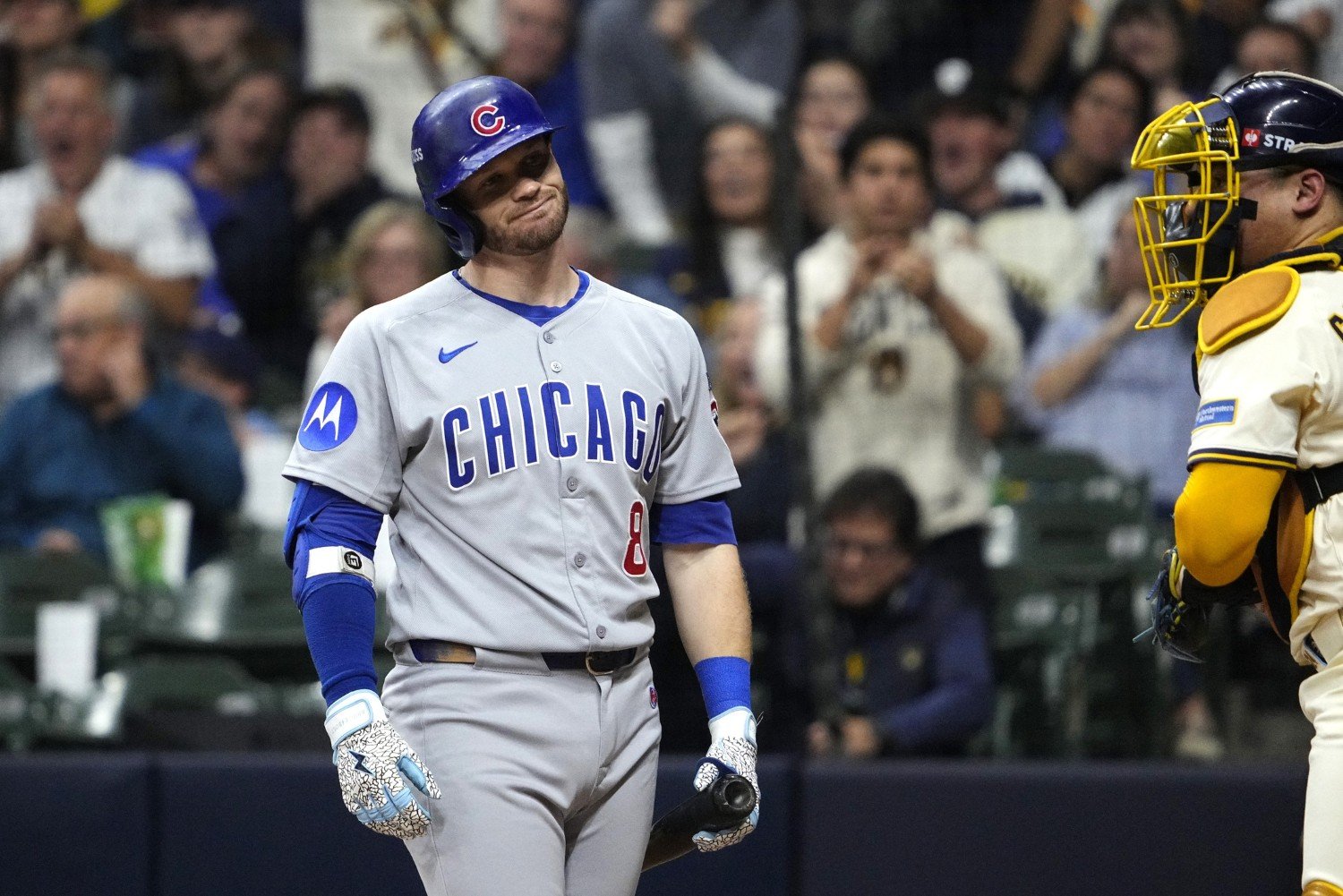 "How much have you ever lost on a coin toss?" is a line delivered masterfully by Javier Bardem's titular character, Anton Chigurh, in the movie "No Country for Old Men". It's sneered in the direction of an unsuspecting, aging, gas station clerk, as Anton flips a coin and asks the man to call it: heads or tails. The insinuation is that the clerk is playing for his life. Call it correctly and he lives, call it incorrectly and he dies. It is a haunting moment. This same backdrop can be applied to the MLB playoffs. No one is holding MLB teams at gunpoint, but the concept of a coin toss seems apt when it comes to teams' chances of surviving and moving beyond each round of the playoffs. Since playoff expansion to 12 teams, entering 2025, six of 12 higher seeds in the NLDS had moved on; exactly a 50/50 split. Entering last night in Milwaukee, FanGraphs gave the Brewers a 52% chance to win and move on to the NLCS. Call it correctly and you'll be rewarded with flying to Los Angeles to meet the Dodgers. Call it incorrectly, and you get to start your offseason a little bit earlier. The Cubs' moment to stare down baseball mortality came in the top of the sixth inning. The Cubs, down 2-1 on the scoreboard are not dead; truly one swing of the bat can swing momentum back in their favor, but their lifelines are quickly running short. They did'no; have many chances to climb out of this hole remaining. Using the win probability chart provided by Baseball Savant to quantify just how the game is slipping away from them, the game odds have shifted towards the Brewers, sitting at 67% likelihood to win. As the inning began, Brewers manager Pat Murphy selected left handed Aaron Ashby out of the bullpen. That made his third time facing the Cubs in the truncated series; the Cubs are quite familiar with him at this stage. Both teams needed to require some shaky decisions to get them through Johnny Wholestaff games like this, and the Brewers decided that would be their time to gamble. They quickly jumped on Ashby, as first baseman Michael Busch singled up the middle—despite sporting a sub-90 wRC+ against lefty pitchers this year. Nico Hoerner was then plunked by a non-competitive waste pitch, as the left-handed hurler lost all semblance of control. The winds of probability had shifted, from 67% in favor of Milwaukee to just 52%; it was a coin toss once again. The Cubs' had given themselves a platform to win the baseball game. All they had to do is call it in the air. Realistically, Chicago couldn't be in a better position. The tying run was on second, and the middle of the order would get a shot at a familiar pitcher with waning control. Ashby had to pitch to Kyle Tucker, due to MLB's three-hitter-minimum rule. Tucker had walked twice against Ashby in the series already, and the lefty had never retired the Cubs' star outfielder. Tucker is essentially split neutral; Ashby wouldn't be saved simply due to his splits. He was going to have to make some real pitches to get out of this. Pitch one to Tucker was yet another uncompetitive ball, a sinker out of the zone that no one would consider offering on. A second pitch was a decent, inside sinker that Tucker fouled off. Three and four were once again, poor balls off the plate, putting Tucker in the driver's seat. Then Ashby made a mistake: he piped a 98-mph fastball right down Broad Street. Tucker, on the year, wasn't great on 98+ mph heaters in the middle of the plate, sporting just a .300 xwOBA on the pitch, but that was going to be his best chance for his signature Cubs moment. With a mighty swing of the bat, Tucker could deposit this get-me-over-heater into right field, putting the Cubs up on the scoreboard and deflating the raucous crowd in attendance. Instead, he swung through it for strike two. Tucker's hero moment would turn into a "Casey-At-The-Bat" moment one pitch later; he struck out. Ashby's night was done after this, but the Brewer's weren't out of the woods yet. With Seiya Suzuki strolling to the plate, the Brewers swapped Ashby for rookie Chad Patrick. Patrick was a member of the starting rotation for much of the year, but has been used out of the pen in the playoffs. He generally throws three pitches; a cutter, a sinker, and a fastball, which generally grade out well using FanGraphs's Stuff+ model, especially considering the boost they receive out of the pen. Suzuki, however, does well against these types of pitches, his lowest xwOBA on any of those types of pitches on the 2025 season was a .380 on cutters, so something had to give; you had a good pitcher going against a hitter who excels against his offerings. Patrick did himself no favors, starting the Cubs' right fielder with back-to-back misses and putting himself in a 2-0 count. Hitters who get up 2-0 in the count have a .410 wOBA and Suzuki, himself, has a massive .450 wOBA in this count. His OBP when ahead 2-0 in the count sits at .482; we're back to a coin toss. If Suzuki could get on, even via a walk, the Cubs wouldn't even need a hit to score the tying run. A well-placed fly ball would get the job done. The rookie righty battled back, however, leveling the count at 2-2 by getting Suzuki to expand the zone and chase a 97-mph fastball well above where the hitter would like to swing. Unlike Tucker with two strikes, though, Suzuki didn't swing and miss when he was offered a hittable pitch, as the fourth cutter thrown in this specific plate appearance was one that the hitter saw well, and he crushed it: 101.6 mph off the bat, the ball screaming toward left field. Suzuki couldn't have chosen a better fielder to hit the ball to. Chourio is a good fielder, and a great runner, but on Saturday night, there was a reason he was playing in left instead of his customary center field; he was sporting a bum leg. Making him run into the gap was going to push him to his limits. Alas: unlucky. From one outfielder to another, the ball was caught nearing the warning track, harmlessly finding its way to Chourio's glove, bum leg and all. "How much have you ever lost on coin toss?" All was not lost, however. Game 4 hero Ian Happ still had a chance to tie the game. Happ, unfairly maligned in Cubs social media circles, looked great Thursday against Brewers ace Freddy Peralta. Not only did he smash a home run directly into the teeth of the wind to give the Cubs the early lead, but had the winds been kind to him, he likely would have ended up with multiple home runs; he hit three separate fly balls over 101 mph off the bat. Saturday night, there was no wind to take a hit away from the Cubs' left fielder in a climate-controlled Uecker Field, Happ was free of weather complications. One more strong swing in the sixth would at least bring home Busch, and if the left-handed-hitting Happ could hook a ball down the right-field line, the speedy Hoerner may have been able to score. The last two plays had lowered the Cubs' chances of winning to under 35%, but one swing still could have changed everything. Happ has absolutely crushed sinkers on the season. His +11 run value on the pitch is among the league leaders, and his xwOBA on the pitch is .496. You probably don't want to throw a sinker to Ian Happ. On a 1-0 count, Patrick did just that, and one down the heart of the plate. Happ watched it sail by. I'm sure he'd like that pitch back; just 15 hitters in the league have a better xwOBA on sinkers thrown in the heart of the plate. This was placed on a tee for him, and he just stood there. Now at 1-1, and perhaps out of frustration from watching the previous pitch, Happ chased the sinker, this time well out of the zone to get up 1-2 in the count. There was no hope for the Cubs hitter to do anything on that pitch, the moment he chose to swing. The Cubs were down to their last strike in the inning, their last gasp at getting Busch home to tie the game up. After spiking his rarely-used new slurve, Patrick threw another. It was at the bottom of the zone, but hittable, and Happ was just in front of it—another foul ball. He remained alive in the at-bat, if barely. The count remained 2-2. The Brewers had already hit two home runs on the day. William Contreras's and Andrew Vaughn's bombs came on full counts with two outs, so anything is possible. Perhaps the Cubs could turn the tables on Milwaukee with two strikes this time. It's moments like these in which teams separate themselves. Unlike in "No Country for Old Men", this is not just a coin flip; the participants have agency. They make swing decisions, and they impact the game on their own. On this pitch, Happ chose not to swing. He put his fate into the hands of the home-plate umpire, who (correctly) rang him up on a perfectly placed cutter on the outside edge of the plate. It's a pitch that sometimes is called a ball. It wouldn't be that crazy if it went his way, but Happ never moved the bat and it didn't go his way. Strike three. 50-50 situations are littered across baseball, and the sixth inning was a perfect microcosm of them. The Cubs had brought the game back to, virtually, a coin flip. They had a ball hit with an exact expected batting average of .500. They had a pitch called strike three, right on the black. These are things that could go either direction. In another universe, Suzuki's line drive to left field is just five or six feet more into the gap, tying the game. Or maybe the home plate umpire misses Happ's call, and gives him a shot at 3-2, with the runners going on the pitch. Maybe Tucker or Happ punishes pitches over the heart of the plate, instead of them getting to the catcher's glove. Should have. Would have. Could have. So, Chicago, how much have you lost on a coin toss? For the Cubs in Game 5, they certainly lost the game. They lost a chance to become the 11th team to come back from a 2-0 deficit in a three-game set. They may have lost Kyle Tucker to free agency, though that has yet to be settled. The Cubs had a chance to make their own version of history in the sixth inning, but couldn't make things happen on their own. Nor did the ball bounce in their direction. These moments were the difference between the Brewers and the Cubs in 2025. When it was time for the 50-50 situations, it always felt like the Milwaukee Brewers had a little extra magic, while the Chicago Cubs had a little extra bad luck. That's not taking away anything Milwaukee did. They won 97 games this year, but the difference, sometimes, between winning and losing can come down to those little coin flips, and the teams who advance are generally those whom fortune favors. Maybe next year the Cubs will call "tails" instead of "heads" when Anton Chigurh comes a-knockin'.
 -
I don't think I will be. My expectations are not Kyle Tucker, but the team will almost assuredly bring in someone of the Dylan Cease, Michael King category of FA. That doesn't mean it has to be one of them, but someone in this category of FA. And that feels pretty in line with how the Cubs have acted in recent years.
-
They have around 40-50m to spend just to get back to the poor 2025 spending numbers. I don't think the Cubs are going to drastically change who they are ran by or how they spend money. But they probably aren't cutting spending from last year either when they were already well under the LT. So even if they just spend what they did last year, and if not Tucker, they will have to spend it on something.
-
The Cubs just hosted five playoff games and picked up some really massive profits. Ricketts is a vain human who cares vastly about his public perception. I don't expect the Cubs will blow past the LT but there will be real money to spend this off-season. I think if they lose Tucker there will be a fairly large player brought in somewhere.
-
On the SP front, I suspect a few things will happen if the Cubs do not keep Kyle Tucker. First, I think Jameson Taillon is quite moveable. He had a strong finish to the season and with one year remaining, if you want, you can move him. Second, the Cubs can't guarantee Steele will be back for Opening Day. While that would be great, it could be more early-to-mid-May so depth will be key. They would probably keep a Colin Rea swing-man type around (Michael Soroka?). There is a strong roster cliff coming in 2026 and as much as people think they're not going to sign anyone beyond 2027, the Cubs cannot have 12 free agents at the end of next year, either. They will have to convert some of their 2026 roster cliff into something else. Happ has a NTC. Suzuki has a NTC. You probably want to sit down with Hoerner and extend him. Taillon is the most movable of all of them.
-
Not every young player acts this way, you are correct. To act like Pete Crow Armstrong is somehow special in this aspect is also missing the boat. He is a very emotional player, but there are other young emotional players. Pete is just 23. These types of behaviors are especially prevent in the college ranks. Players who are very close in age to PCA. Bryce Harper got a lot of the same flak when he was young too for his behavior on the field. That's not to compare their baseball talent, but what Pete is doing isn't unheard of. I would like him to calm down a bit myself. I don't think it helps him out. I also don't find it special or unique.
-
Jacob Misiorowski celebrated a 1 unassisted like he won the world series in Game 2. This is how young, emotional player react.
-
We can see this as well in a few places. The Cubs had the third worst BABIP after June 1st. Their observed OPS was 11th (.733) and their deserved OPS was 4th (.746). I think we have to just accept to a good degree, much of what happened offensively to the Cubs was just the opposite of what happened in Milwaukee; coin flips went in their favor and against the Cubs. Baseball is a weird sport like that.
-
Bad variance, bad sequencing and competition does. People never like that as an answer (despite how valid of an answer it is), but when we look at BP's dRC+, which is based on expected rate metrics and takes into account competition faced, even after June 1st, the Cubs were 4th in baseball.
-
Proof the Brewers are stealing signs, again
Jason Ross replied to Chuck Norris Fears Javy B's topic in Chicago Cubs Talk
I believe squally is talking about Contreras who took issue with Tucker when he walked. Tucker kind of threw his bat and Conteras had words for him. -
It's our last live of the year. Come join us. At the very least, let's be together in this moment.
-
Listen, I'm not very optimistic right now. But we will be here for the end of the game, regardless of it. Worst case you can laugh at my depressive state.