


Cubs Video
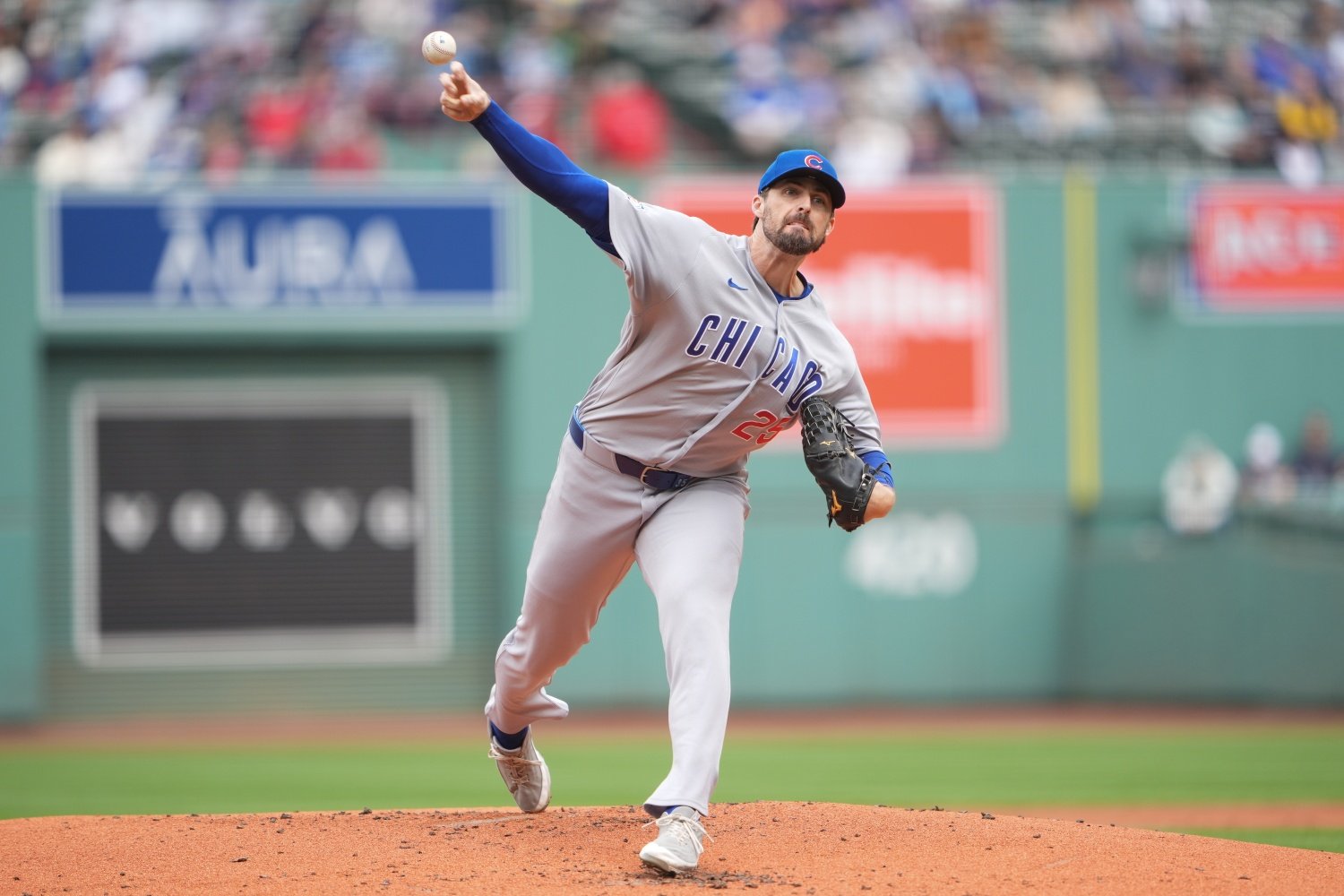
Clay Holmes has had some bright moments since coming to the Cubs. In a four-start stretch in August, he allowed just one run in 25 innings pitched, racking up outs with ruthless efficiency by keeping it in the park and in front of the team's excellent defense. He didn't strike out many, even in that hot streak, but he also didn't walk many, and he seemed almost home run-proof. No Cubs starter has been better over a similar stretch this year.
That memory is pleasant, but it's distant, now. In four starts this month, Holmes has faced the same number of batters (93) that he faced in those previous four, but he's walked 15, instead of 7. He's given up two home runs and struck out just 15. His 8.24 ERA looks bad, but the reality of the situation is worse. He's also allowed two unearned runs, meaning that opponents are scoring more than a run for every three outs Holmes gets. He's utterly lost, at the worst possible time.
Plainly, walks are a huge part of the problem. Walking one of every six batters you see is a recipe for disaster. But that's not all that's wrong, at this point. Holmes also isn't missing bats. He's not suddenly giving up tons of hard contact, but between the walks and a few more singles, he's always dealing with traffic. That makes whatever barrels he does run into more damaging.
All of this could be happening as a product of dumb luck, really. It's not, though. Holmes has been a different pitcher since joining the Cubs than he was with the Mets, before getting hurt in May and being sidelined until just after the deadline. He's a different guy than he was in 2025, the first year of his transition from reliever to starter. The changes might be the Cubs' doing, or they might be Holmes's own ideas, or they might be him adjusting to and working around lingering issues from the broken leg that shelved him. Whatever the reasons, though, the effects of those changes have been catastrophic.
First, there's the arm angle thing. Holmes's sinker is a remarkably heavy pitch, but the thing that's always made it especially deceptive is his high arm slot. Most sinkerballers throw from a lower arm angle than guys who rely on four-seam fastballs. Among hurlers who have thrown at least 250 sinkers in either of the last two seasons, the median arm angle on that pitch is just under 34°. Holmes's 43° angle last season put him in the 81st percentile for sinker arm angle, and that sample includes plenty of guys whose "sinkers" are really run-over-sink two-seamers.
This year, though, his arm angle on sinkers is 38.5°. That's only in the 63rd percentile in the aforementioned sample. He's not throwing from an angle as unusual as the one he used to use for the pitch, so it's not stumping hitters as badly as it used to. And that change happened not over the offseason, but between when he last pitched for New York and when he took the bump for Chicago.

The lower angle is a problem for the sinker, itself, but there are other problems afoot. Consider the changes in his pitch movement profile, too. Here's what that looked like in 2025:

Here's the 2026 version of that same visual:

What's changed? The biggest thing is this: Holmes's arsenal no longer has the same vertical disparities and differentials as it had a year ago. He's added a curveball that has considerable depth, but he doesn't have a true cutter anymore—the pitch still thus labeled is really his slider, with the same speed and depth as the one he threw last year—and he's all but abandoned the four-seamer.
If the curve worked off the rest of the arsenal in the traditional way, that might not be as big a problem as it's actually been. Instead, Holmes only throws that pitch one way, really. He tries to land it on the outside edge to lefties, backdooring them. That's a neat trick, and he's shown better command of that pitch to that spot than most pitchers can achieve. But it's a standalone offering in that niche. It's not interacting with the rest of his stuff much at all, let alone setting up a vertical stretching of the zone that engenders whiffs.
Thus, nothing's working. His four-seamer's getting hit. His cutter's getting hit. And his sinker isn't doing as well as it would need to be, to offset those issues.

Not all of Holmes's walks are happening because he's truly wild. In fact, he's having some good battles with hitters lately. Two of the three walks he issued in his last start of the regular season, against the Red Sox, were eight-pitch plate appearances. Those become walks, instead, because Holmes can't get past hitters' lumber. They foul things off until he misses, and then they punish that miss if it's in the zone and they accept a walk if it's not.
The Cubs talked to Holmes about changes they hoped to implement for him, before putting him on the mound in their uniform for the first time. Whether his performance over the last two months is purely a result of their influence or something done of his own volition, the results have been mixed. Lately, in fact, they've been lousy.
This version of Holmes isn't good enough to merit a start in the Wild Card Series. Arguably, he shouldn't even be in the rotation if the team makes it to longer series beyond that one. He should be confined to shorter bursts and used in select matchups. Ideally, of course, the Cubs would be able to put the ball in his hand with the season on the line. That's why they gave up top prospect Jefferson Rojas to acquire him. Unfortunately, wishing doesn't make it so. Holmes is not himself right now. Some of that might be the Cubs' fault, or it might just be bum luck—a case of a bad outcome despite a good process. Either way, though, the team needs to reckon with reality. If they don't, Holmes might get shelled again, at a moment when that failure costs the club its chance to advance.





Recommended Comments
Create an account or sign in to comment
You need to be a member in order to leave a comment
Create an account
Sign up for a new account in our community. It's easy!
Register a new accountSign in
Already have an account? Sign in here.
Sign In Now