


Cubs Video
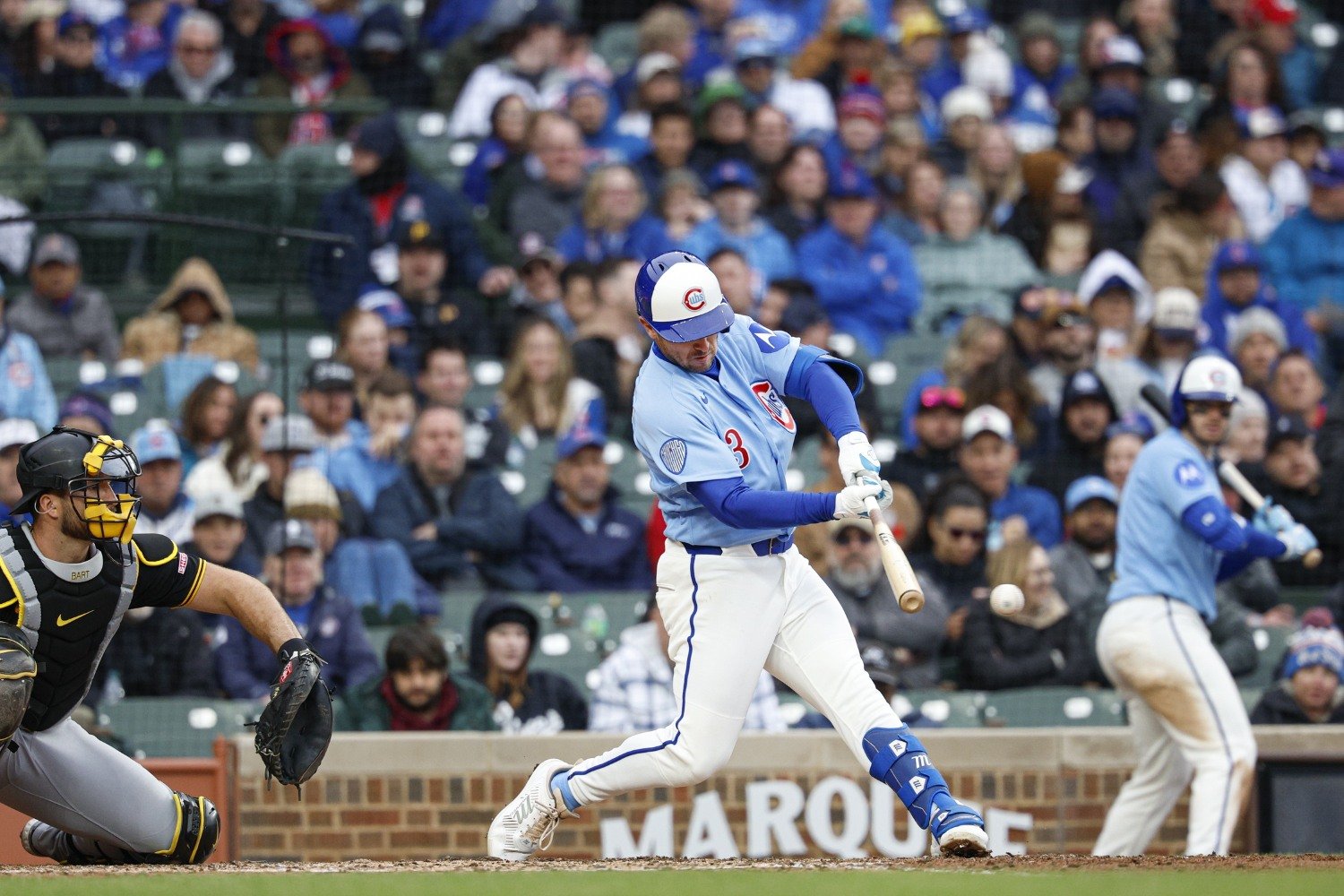
Last season, no team in baseball topped the Chicago Cubs when it came to lifting the ball to the pull field. The North Siders pulled and elevated 21.8% of their batted balls. It's their signature skill, because they don't like to emphasize raw bat speed and the line-to-line lethality that comes with it. Always focused on controlling the strike zone and accepting their walks, the Cubs preach a swing designed to lift and pull, so that batters can live with a bit less bat speed than their counterparts elsewhere in the league and (hopefully) focus more on building a successful approach. (It doesn't hurt that a lineup full of such players is likely to be at least a little bit cheaper than one filled with similarly talented but toolsier sluggers.)
That plan comes with drawbacks, though. The team right behind the Cubs in terms of pulling the ball in the air most often in 2025 was the Cleveland Guardians—hardly the best company one could hope to keep. It's good to pull the ball in the air, but the more you zero in on doing so, the greater the tradeoffs you make along the way. A team with an average rate in that respect might do much more damage than the average club when they do so, or much less, and that will determine whether they're good at that aspect of offense or not. The Cubs are playing a numbers game, filling the sky with pulled hits and relying on plenty of them falling or carrying out of the park. That probabilistic approach makes sense, but one more focused on payoffs might be equally productive.
In small segments of a season, the variance of a concerted effort to hit pulled fly balls becomes more obvious. The Cubs trail only the Diamondbacks and the Twins in the share of their batted balls that are pulled in the air this year, but they're much less productive than they were in 2025—or, perhaps more saliently, they're equally as frustrating and unproductive as they were in their worst stretches last year. It's not that they're not able to execute their offensive gameplan; it's that that execution isn't paying off.
The Cubs rank sixth in MLB in the percentage of plate appearances ending with a pulled batted ball with an exit velocity of at least 90 miles per hour and a launch angle between 0° and 50°. We're eliminating softly hit balls and pop-ups here, and still, the Cubs are sixth in baseball at producing them. Now, here are the Run Value figures for those batted balls for each of the top 10 teams in that frequency. In other words, this is the number of runs above average (for all plate appearances) produced by well-struck, pulled batted balls for the teams who hit the most such balls.
- Dodgers - 44
- Diamondbacks - 28
- Padres - 31
- Guardians - 34
- Angels - 35
- Cubs - 21
- Royals - 26
- Rangers - 29
- Rockies - 33
- Yankees - 33
Chicago stands out like a sore thumb. The Cubs just aren't getting results when they hit these balls, on which the expected level of returned value is quite high. To visualize it a different way, here are all 30 teams plotted by the percentage of plate appearances ending in this type of batted ball, and per-100 run value thereupon.

The Dodgers are the best in the league at hitting those high-value balls, and they get above-average bang for their buck, too. That's no surprise. The Cubs have been doing a slightly watery Dodgers impression, offensively, for at least three years now. The Astros lead the league in rate of return, without regard to how often they produce pulled air balls; we can partially chalk that up to their short-porched home park. The Reds, clearly, need to rethink their offense. They don't hit nearly enough of these balls, and they don't get as much value per pulled air ball as they should, given that it should only be their very best contact that looks like that.
The Cubs, though, are arguably the anti-sweet spot. They're spending a large share of their plate appearances in pursuit of the rich rewards of pulling it sharply, but they're not getting juice from the extra squeezing. Their weighted on-base average on these batted balls (.682) is the lowest in baseball.
Again, you still want to pull the ball with authority, as much as you can. A .682 wOBA means ending a plate appearance with the same expectation of contribution to scoring as if you took a pitch outside the strike zone. Trying to do this as much as they do comes with costs, though, and the costs the Cubs are paying are outweighing the returns they're enjoying—because those returns have been, in the peculiar relative sense we're talking about here—are paltry. No team in baseball is getting less from pulling the ball hard and on a line.
Is this just bad luck? Is it the pitcher-friendliness of Wrigley Field, especially in the cold weather of March and April? Or is this team too focused on producing a particular kind of batted ball, at the expense of producing lots of hits and runs? The answer is: all of the above. The ball is relatively dead again this year, as it was in 2025. It's not a great time to be an offense dependent on hitting fly balls to the pull field. Nor is the modern Wrigley a good place to be doing so. It's still, in an important and overriding way, a good strategy, but the Cubs are executing it under conditions—and perhaps with personnel—ill-suited to let them get the most out of it.
There's a lot of season left, and this devotion to the objective of producing high-expected value batted balls should be good for the team over the balance of it. For now, though, it's part of why they've been frustrating, and why they're losing games. Approaches unusually focused on pulled air balls lead to more easy outs than others, when things are going wrong. That can narrow your path to victory. For three years in a row, Cubs teams trying to get back over the hump have been easily outpaced by Brewers teams with less offensive talent. Those teams had more ways to spark rallies and score runs than this team has. It forces Cubs fans to be patient, but the team can't afford to just wait for things to change. They need to think about how to be more flexible and resilient, even as they anticipate the positive kind of regression.






Recommended Comments
Create an account or sign in to comment
You need to be a member in order to leave a comment
Create an account
Sign up for a new account in our community. It's easy!
Register a new accountSign in
Already have an account? Sign in here.
Sign In Now