


Cubs Video
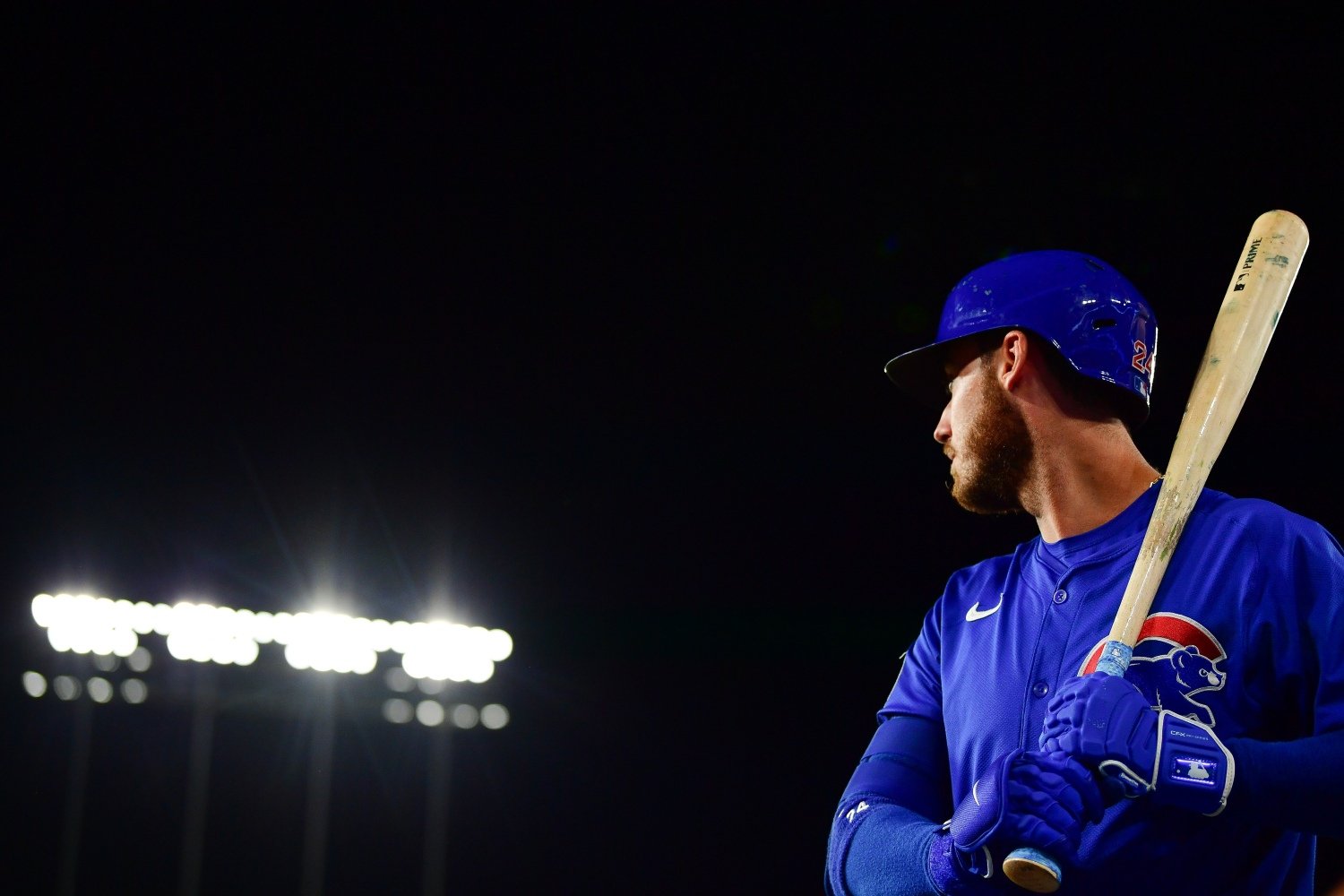
Cody Bellinger is not about to be dumped in a financial maneuver. Put that loathsome thought far from your mind, and if that means disbelieving in that Lilliputian legend of the notes column Ken Rosenthal, then so be it. The Athletic's senior baseball writer is very good at his job, judicious with his reporting, and well-meaning enough, but he's not always right. In fact, in small particulars of rumors just firm enough to plug into pieces around this time of year, he's very often very wrong. It's an occupational hazard. This time, while he's hit on a legitimate possible transaction in a constellation of them coming up this offseason, he's wandered off the path when it comes to what such a deal would look like. Don't follow him, but don't worry about him, either. He'll find his way back and be ahead of you again before you know it.
The Cubs are, in theory, open to trading Cody Bellinger. That has been true since he opted in; it was even true back in July. However, now as then, they feel no special necessity to move Bellinger, and they won't be doing so just to clear money—or even, as Rosenthal said in a podcast clip that has gotten a little too much air under it Thursday afternoon, "to move money around". The Cubs don't need to offload anyone's salary in order to do any of the things they're realistically willing to do this winter, anyway. If they were to plunge seriously into a pursuit of Juan Soto, it could be a different story, but they (misguidedly, we all agree, but that doesn't make it less true) long ago turned away from that possibility. Bellinger is arguably in the way of their effort to improve the lineup and the overall positional composition of the roster, but he's not financially in the way. He will be traded only if the front office finds a deal they judge to be expedient for baseball reasons, and probably only when or if they feel reasonably good about a second move that would make you pretty happy, like the signing of a big bat who more neatly fits their needs as a counterweight to the outgoing salary attached to Bellinger.
Rosenthal is right about the most important part of his report, which is that Bellinger's trade value is likely to be complicated and fairly limited. Almost every team who has set out to trade a player with an opt-out left in their deal has found that it significantly eats into that player's value, which shouldn't surprise anyone. Opt-outs are hugely player-friendly clauses; teams love to hold optionality, and hate when a player can hold it against them. That said, Hoyer and Tom Ricketts do not themselves hate the deal to which Bellinger is signed. Not only is it the one they fought a months-long staring contest with Scott Boras to win less than a year ago, but the season he just had is exactly the kind of season that makes them glad they got this kind of deal done, rather than a longer-term one with less flexibility for the player. They have Bellinger for one or two more years at a fairly high annual salary, because they didn't want to have to have him for four more years right now, locked in at double the remaining guarantees on his deal.
I do have to do some quick cleanup on Rosenthal's attempts to articulate the terms of Bellinger's contract, though, because the deal is a bit complicated and Rosenthal has fallen into line with many who have misunderstood and misstated its structure. Because each opt-out in the deal involved a buyout, people keep losing track of how much money is actually owed to Bellinger and when. In the clip from the web show Foul Territory that was posted on social media and seems to have people worried, Rosenthal alludes to Bellinger still having "$60 million over two; that's what he's guaranteed". That's not what he's guaranteed.
Bellinger got $27.5 million of the $80 million total value of his deal in 2024. In fact, though, that first year guaranteed him $30 million. He could have taken a $2.5-million buyout for 2025 if he had opted out. Instead, he'll now make $27.5 million this year, after which he can either take a $5-million buyout (making his effective salary for the coming season $32.5 million, though his competitive-balance tax threshold number would be $30 million in that case) or stick around for a final year at $25 million. It's a $20-million decision. In other words, the money left to be paid to Bellinger if he opts in again next fall is $52.5 million, not $60 million. That's important. So, too, is the fact that if he does opt in again, his AAV for CBT purposes will continue to be $26.67 million, as it technically is now.
With that cleared up, we can ask more straightforwardly: What is Bellinger, at either one year and $32.5 million (with a significant chunk of that payment pushed out to the end of next year, though) or two years and $52.5 million, worth in a trade? Because there are still teams who view him as a vaguely viable center fielder, and because he still hit pretty well during his healthy stretches of 2024, the answer to that question is: Eh. Something decent.
There are two scenarios I can see where the Cubs do deal Bellinger. One would involve it happening quite soon, as both the Cubs and a trade partner firm up so-far fluid plans for the offseason and try to get their resources properly aligned. The name that makes the most sense is Ranger Suárez, who had a tough second half for the Phillies (5.65 ERA after the All-Star break); is not urgently needed in one of the game's best starting rotations; and is due a hefty sum (likely around $9 million) via arbitration in his final year of team control. Suárez barely fits into the Phillies rotation, but would be a solid No. 4 in the Cubs', with upside from there. He had location issues and lost the ability to miss bats with his sinker in that lousy second half, but the raw stuff was basically undiminished. He has a profile that would suit all the Cubs' pitching predilections.
In all likelihood, the Cubs would have to chip in something else to achieve a swap of those two, but it would be a minimal something else—maybe as minimal as $2 million or something, rather than a player. The Phillies need help in the outfield, and Bellinger is a pretty good fit. That kind of trade would advance the Cubs' offseason objectives, because it would check one big box by giving them both upside and stability (if only in the short term) in their starting rotation. It would make them at least $15 million less expensive, too, but the object wouldn't be those savings. They would turn around, then, and spend that money and more on a player like Anthony Santander, Willy Adames, or Pete Alonso, depending on how each of their markets develop.
If that sounds a little convoluted, compared to holding onto Bellinger and signing a starter akin to Suárez instead, your instincts aren't failing you. Getting Suárez (and this is just one example, but it's a salient one) would have the advantage of cost control, at the expense of a chance to get a player for a longer term. I regard this type of deal as basically unlikely, specifically because the Cubs would have to find a Goldilocks zone where they felt they were getting better by the exchange of Bellinger for some other hitter plus whatever Bellinger brought back in trade, after accounting for transaction costs. It's a possibility, though.
The other scenario in which the team might trade Bellinger is more remote, and would come much later in the winter, but would be a bit more easily understandable. The team might simply wait out the market of any of the top sluggers on the market—the aforementioned Santander, Adames, or Alonso; Alex Bregman; Teoscar Hernández; or Christian Walker—and then jump in, if they liked the way one of those players' prices was falling. Trading Bellinger would then be a little more about getting money out of the way, and about getting Bellinger himself out of the picture, so they would simply try to get a prospect they liked (even if it be someone with warts, like already being on the 40-man roster and running out of options, or an injury that would make them more of a long-term play). That scenario would be predicated on the team having not dealt away undue amounts of their stock of young hitters; viewing the player they could scoop up in the free-agent freefall as a clear upgrade for their specific needs; and being comfortable with, again, the transaction costs involved in making an upgrade with built-in friction.
It's somewhere on the wrong side of a coin flip that Bellinger is dealt this winter. If he is, it certainly will not be as part of a cost-cutting endeavor or a lateral step in the pursuit of serious contention. My stern advice about this rumor is, don't worry about it. Take it only as a sign that, in a winter I've said many times contains a wealth of possible paths to improvement for the resource-rich Cubs, this is one path they're considering, just in case it turns out to be the right one. Sometimes, a well-founded report gets a few degrees off course and leads to more worrying and confusion than it should have.





Recommended Comments
Create an account or sign in to comment
You need to be a member in order to leave a comment
Create an account
Sign up for a new account in our community. It's easy!
Register a new accountSign in
Already have an account? Sign in here.
Sign In Now