


Cubs Video
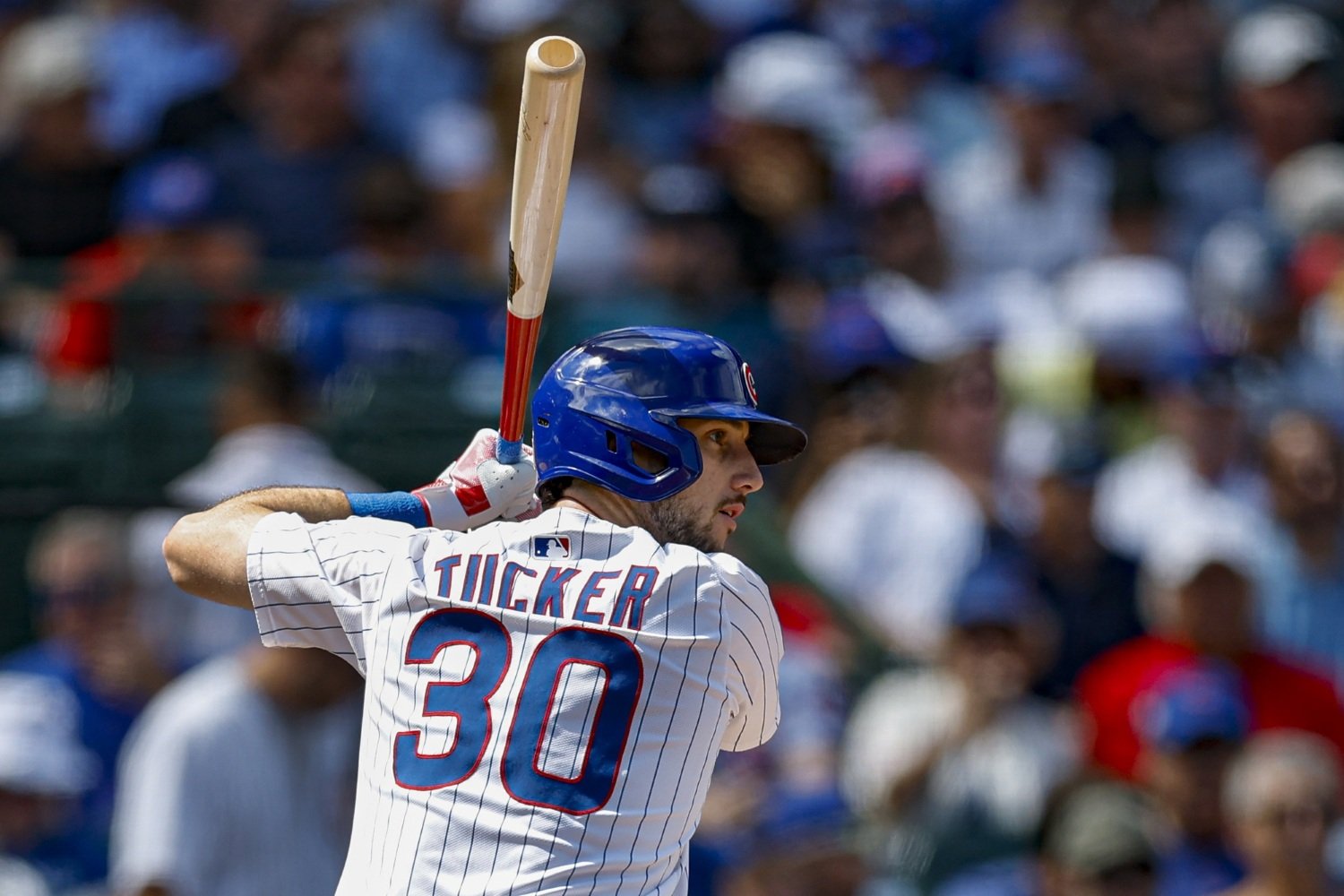
As has been thoroughly discussed, covered, and screamed about on talk radio, Kyle Tucker did indeed have a fracture on his hand in June. Everyone knows that he's been scuffling. Consensus has not been achieved, however, on whom to be angry at during this saga. Jed Hoyer? Tucker himself? The training staff?
There's a combination of that group to be considered, and a little bit of nuance needed—as there is in most things. Tucker chose to play, and the Cubs chose to let him. Both sides knew about the injury.
The training staff is not to blame here. It seems as if the fracture was diagnosed, and the stakeholders were all notified. They really had little to do with the decision to continue to run Tucker out there.
Tucker took an enormous risk here, one that (if you believe this injury is the root cause of his problems) could cost him hundreds of millions of dollars if he doesn't get his season back on track. It's not hard to see why he would want to continue playing. First of all, missing time with another injury after missing half of last season would give teams pause about his durability during a long-term contract. Second. he slashed .311/.404/.578 in June, after he was diagnosed with the fracture. With his best month of the season in progress, he obviously wanted to continue playing.
To fully heal, a hairline fracture requires a splint and 6-8 weeks of rest, according to the American Academy of Orthopaedic Surgeons. This timeline would have had Tucker shelved for the guts of June and July, and even then, there would have been residual stiffness and/or swelling. A hairline fracture is essentially a stress fracture, and the violence of a swing would irritate the area even after the bone healed.
Of course, in hindsight, Tucker probably should have sat for at least two or three weeks. (Again, we can't know for sure how big a role the injury has played in his slump, but it seems implausible that it wasn't a major factor.) But who would have filled in? This is another piece of the puzzle.
Depth has been an issue all year, with the team's bench producing shockingly little. The Cubs really could have used an all-purpose substitute—one who can hit lefties, play all across the outfield, and have generally solid production. When your prized right fielder needs time off, it would behoove a team to have a solid, productive option to plug in.
Obviously, the team could (and perhaps should) have found a way to bring up Kevin Alcántara or Owen Caissie much sooner, to fill in for Tucker. They also could have retained Cody Bellinger this winter, which would have interfered with some of their other late-winter spending but given them a stopgap solution behind Tucker (this injury), Pete Crow-Armstrong (overuse and a lack of plate discipline) and Ian Happ (a difficult season, overall).
But Mike Tauchman was the true whiff here. The left-handed bat signed a $1.95-million deal with the crosstown White Sox, and has been exactly what the Cubs needed. He's played all three outfield spots and is sporting a solid .787 OPS and 123 WRC+, 23% above league average. The Cubs decided they didn't want to spend something closer to $3 million in arbitration, and were left with Vidal Bruján as their sole backup in the outfield.
This is a Jed Hoyer issue. When Bellinger was dealt, the money was supposed to be repurposed. It simply wasn't. Quality depth was not added to augment the lineup, and days off have not been available. This recent offensive downturn comes on the heels of a 26 games-in-27 days stretch, and the team embarks on a West Coast trip after playing five games in four days with the Brewers.
Hoyer had more money to spend than he succeeded in spending, failing to land (among others) Alex Bregman. Having thus faltered, he also didn't promote Alcántara or Caissie to give Craig Counsell more viable ways to rest Tucker. A stretch like this was always the danger.
So, whom should we be mad at? Well, probably nobody, if you want to preserve your mental health. But if you have ire that must go somewhere, it should be directed at the front office. Their failure to spend their allocated money to keep solid players left them with little option but to go along with Tucker's wishes to continue playing.
As previously stated, it's a complicated issue. With Tauchman in the fold, the Cubs could have insisted that Tucker shut it down at the first sign that the injury was hurting his performance. But too soon, and the Cubs risked missing his best stretch of the season, and (in Tucker's perspective) costing him multiple millions. It's possible this was an unavoidable problem, but that won't satisfy anyone—and it shouldn't, either.
Tell me in the comments. Who should we cast our blame upon?
Which team do you dislike the most in the NL Central?

Follow North Side Baseball For Chicago Cubs News & Analysis



-
 1
1

.thumb.JPG.19c99ddd60a76edf810c77d321439828.JPG)


Recommended Comments
Create an account or sign in to comment
You need to be a member in order to leave a comment
Create an account
Sign up for a new account in our community. It's easy!
Register a new accountSign in
Already have an account? Sign in here.
Sign In Now