


Cubs Video
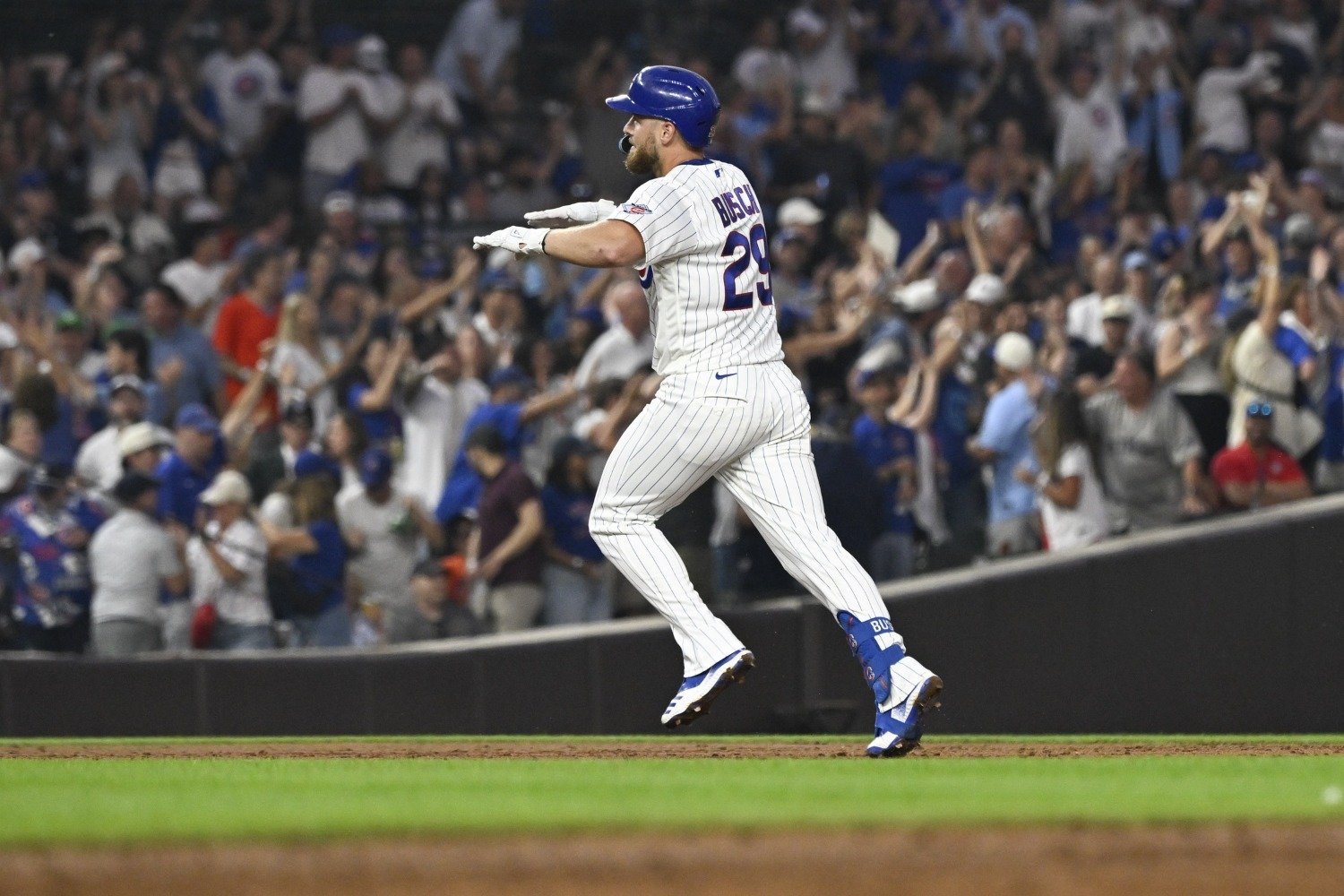
Michael Busch has quietly become a clearly first-division—and maybe a fringe All-Star—first baseman. Since the Cubs acquired him from the Dodgers ahead of the 2024 season, he's become a fixture, culminating in a breakout 2025 campaign that looked like the arrival of a true middle-of-the-order star. But after taking that massive leap forward, his production has come back down a bit in 2026. The big question now is whether Busch can rediscover the version of himself that broke out in 2025, or if that season will ultimately go down as the offensive outlier of his career.
That question, of course, centers on his power. Busch's 34 home runs ranked sixth among all National League hitters last year, and his .866 OPS led all Cubs. Everything seemed to click. He's never had the bat speed you'd expect from an elite slugger, but by hitting the ball in the air a lot (and particularly pulling it in the air a lot), he still produced like one.
This year, he's neither pulling nor lifting as often, with predictable results. After homering for the second time since the All-Star break Monday night, he's currently slashing .245/.370/.409. That’s still a perfectly respectable line, especially considering the value that comes with getting on base as often as Busch does. But when they're compared to what he accomplished a season ago, it's hard not to view this year as a step backward.
The biggest difference—the source being a further downtick in bat speed, and related to the inability to get around and beneath the ball—is the quality of his contact. He's not hitting the baseball nearly as hard. Last season, Busch posted a 92.2 MPH average exit velocity. This year, that number has fallen to 88.3 MPH. His hard-hit rate has fallen substantially. He's generating far less consistently loud contact than he did during his breakout season, and it's reflected in the power numbers. Right now (probably not because of a conscious adjustment, but because he hasn't had the same easy bat speed or feel for the barrel), he's more of an all-fields line-drive hitter.
Even though his power production has dipped, the foundation that made Busch successful in the first place remains very much intact. He's still one of the more selective hitters in baseball, and if anything, those skills have actually improved. His walk rate has climbed to 14.7% after sitting at 9.5% last season, and despite his batting average being 16 points lower than it was in 2025, his on-base percentage is actually 27 points higher. His contact rates have improved as well.
Pitchers aren't going to make this easy on him. Less than half of the pitches Busch is seeing this season are actually landing inside the strike zone, meaning fewer opportunities to generate premium contact. After watching him launch 34 home runs last season, the league isn't nearly as willing to give him pitches he can drive. That's life for good hitters.
One reading of this season in sequence would be that Busch has undergone a prolonged adjustment to being pitched very differently. He had to learn not to get himself out when the hittable fastball never comes, and while he was doing so, he gave up a bit of his aggressiveness and lost the pull-side launch that makes him so dangerous at his best. Lately, there are signs that he's rediscovered the timing and the connection of bat to ball to drive it in the air to right field, and if he does that as often as he did last year, he might get right back to hitting for huge power. We need a little more extended success before we can be confident that that's where things are trending, though.





Recommended Comments
Create an account or sign in to comment
You need to be a member in order to leave a comment
Create an account
Sign up for a new account in our community. It's easy!
Register a new accountSign in
Already have an account? Sign in here.
Sign In Now