


Sam Caulder
-
Posts
105 -
Joined
-
Last visited
Content Type
Profiles
Joomla Posts 1
Chicago Cubs Videos
Chicago Cubs Free Agent & Trade Rumors, Notes, & Tidbits
2026 Chicago Cubs Top Prospects Ranking
News
2023 Chicago Cubs Draft Picks
Guides & Resources
2024 Chicago Cubs Draft Picks
The Chicago Cubs Players Project
2025 Chicago Cubs Draft Pick Tracker
2026 Chicago Cubs Draft Tracker: Picks & Bonuses
Blogs
Events
Forums
Store
Gallery
Everything posted by Sam Caulder
-
Image courtesy of © Patrick Gorski-Imagn Images One of the most intriguing things about this year’s trade deadline is the wide variety of shapes potential deals could take. Not every move is going to be a straightforward contender adding a rental player for a playoff push. Some teams could look to make bigger-picture moves, trading talented young players who don’t necessarily fit their long-term plans in exchange for help at a more pressing position. Chicago Cubs utility man Matt Shaw is the quintessential example of that type of player. On the surface, trading Shaw seems like a ridiculous idea. He won’t even be arbitration-eligible until 2029 and could still be viewed as a key part of the Cubs’ future. However, the North Siders also have crowded infield and outfield situations and a desperate need to improve their pitching staff without weakening an already-thin farm system. Because of that, Shaw could become available in the right deal. The keyword there, though, is "right." Chicago wouldn’t be looking to move Shaw for a short-term upgrade or a rental player. If they were to make a move, it would need to bring back a controllable starting pitcher who could help anchor the rotation for years to come. For a team willing to make that type of offer, Shaw could quickly become one of the more attractive trade targets on the market. After a difficult rookie season, Shaw has taken some noticeable steps forward in 2026. He’s currently slashing .246/.322/.415, with his OPS sitting nearly 50 points higher than where it was last season. While those numbers may not jump off the page, the underlying improvements have been encouraging. Shaw’s strikeout rate has dropped, he’s making more consistent contact, and he has done a much better job of avoiding pitches outside of the strike zone. Overall, he has looked much more comfortable at the plate compared to a year ago. That improvement has been especially important considering everything else the 24-year-old has had to deal with this season. After spending most of his career in the infield, Shaw has been forced to adjust to a new position in right field. That transition, as well as two separate stints on the injured list, have made for some adversity, but the results have been much better than many expected. He currently grades out as an above-average right fielder in both range and arm value, and his athleticism has been a major reason why the transition has gone smoothly. Shaw’s 91st percentile sprint speed allows him to cover plenty of ground in the outfield, and it also makes him a legitimate threat once he reaches base. His ability to take an extra base adds another element to his overall game. Meanwhile, their pitching staff has been absolutely decimated by injuries. The Cubs currently have 12 pitchers on the injured list, enough to nearly build an entire rotation and bullpen out of unavailable arms. Adding pitching help has to be one of their biggest priorities. However, because Shaw is still under team control for several years, this wouldn’t be a move made simply to patch a short-term problem. The return would need to address a long-term weakness. That’s why a team like the Cleveland Guardians immediately stands out as a potential trade partner. Cleveland currently sits at 51-46 and remains firmly in the playoff picture, but their outfield production has been a concern. Their current right fielder, Kahlil Watson, has posted an OPS of just .562 this season. Watson is still young and has plenty of time to develop, but adding someone like Shaw would immediately give the Guardians more offensive flexibility and likely better short-term production. Additionally, Cleveland’s lineup features only one true right-handed hitter in its everyday group. Adding Shaw would give them another right-handed option and allow them to play matchups more effectively. The question, of course, is what the Cubs would want in return. A player like Tanner Bibee could be the type of arm Chicago targets. Bibee recently signed a five-year, $48 million extension with Cleveland that runs through 2030, and the structure of that deal could make him appealing to the Cubs. The contract is back-loaded, meaning Chicago would not be paying him more than $7.4 million annually until 2029. That gives them a quality starting pitcher without taking on a massive financial commitment immediately. Bibee, who is 27 years old, owns a career 3.90 ERA and profiles as a dependable middle-of-the-rotation starter, exactly the type of pitcher the Cubs need. Would Cleveland actually move him? That’s a different question. The Guardians are known for their ability to develop pitchers, and losing Bibee wouldn’t completely cripple their plans. They have consistently found ways to build a strong pitching staff, which could likely make them more willing to consider a deal involving a controllable starter. If a trade like this happened, it’s possible one side (more than likely the Cubs) would need to add a prospect or cash considerations to balance things out. But the framework of a Shaw-for-Bibee deal is at least interesting. The Cubs may ultimately decide that keeping Shaw is the better move given their long list of impending free agents. And yet, in the here and now, their need for pitching help could mean trading Matt Shaw is not nearly as unrealistic as it may sound. If the Cubs can turn an outfielder they don’t necessarily need into a controllable starting pitcher they desperately do, it’s a move worth considering. View full article
-
If Cubs Are Willing to Trade Matt Shaw, What Framework Will They Look For?
Sam Caulder posted an article in Cubs
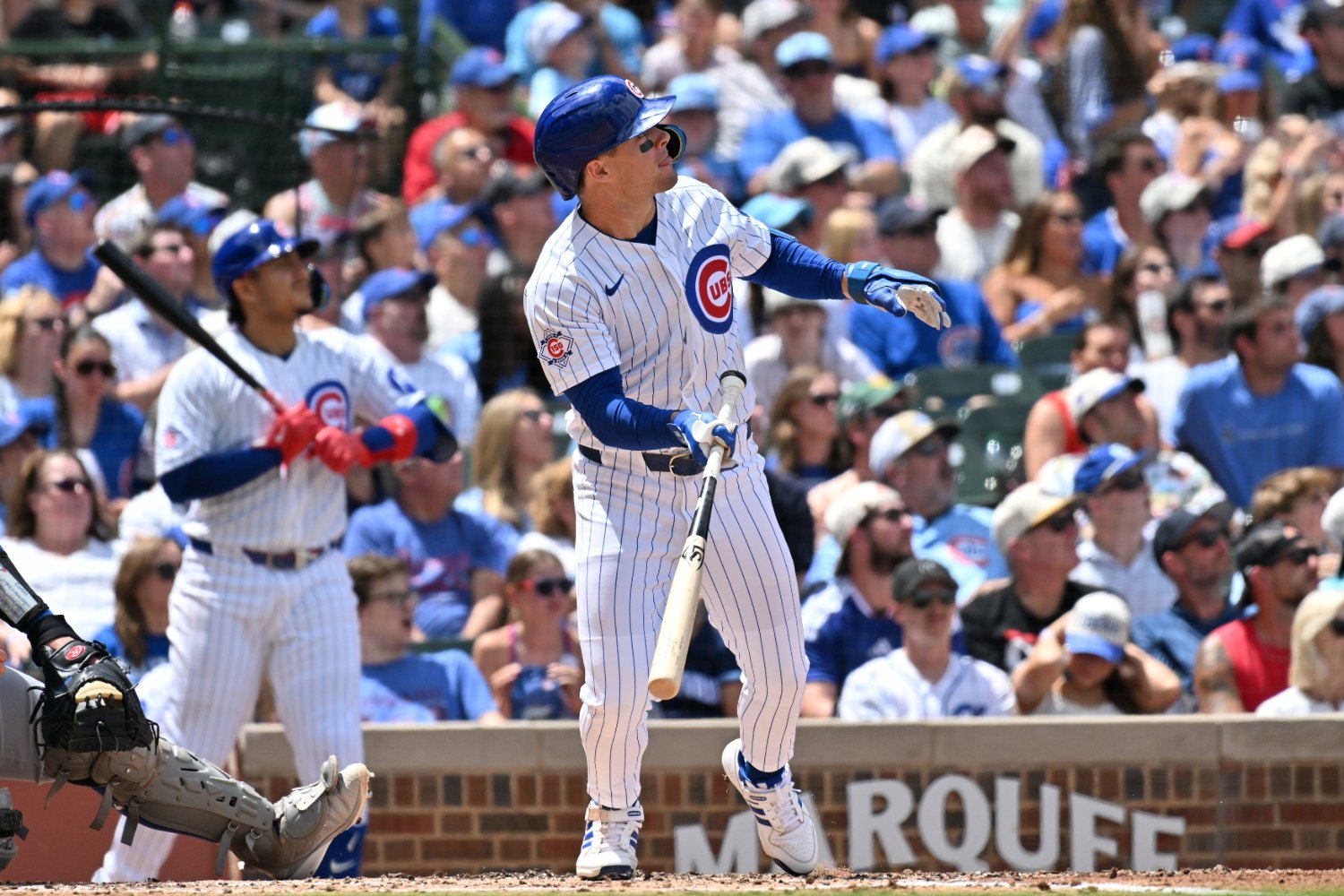 One of the most intriguing things about this year’s trade deadline is the wide variety of shapes potential deals could take. Not every move is going to be a straightforward contender adding a rental player for a playoff push. Some teams could look to make bigger-picture moves, trading talented young players who don’t necessarily fit their long-term plans in exchange for help at a more pressing position. Chicago Cubs utility man Matt Shaw is the quintessential example of that type of player. On the surface, trading Shaw seems like a ridiculous idea. He won’t even be arbitration-eligible until 2029 and could still be viewed as a key part of the Cubs’ future. However, the North Siders also have crowded infield and outfield situations and a desperate need to improve their pitching staff without weakening an already-thin farm system. Because of that, Shaw could become available in the right deal. The keyword there, though, is "right." Chicago wouldn’t be looking to move Shaw for a short-term upgrade or a rental player. If they were to make a move, it would need to bring back a controllable starting pitcher who could help anchor the rotation for years to come. For a team willing to make that type of offer, Shaw could quickly become one of the more attractive trade targets on the market. After a difficult rookie season, Shaw has taken some noticeable steps forward in 2026. He’s currently slashing .246/.322/.415, with his OPS sitting nearly 50 points higher than where it was last season. While those numbers may not jump off the page, the underlying improvements have been encouraging. Shaw’s strikeout rate has dropped, he’s making more consistent contact, and he has done a much better job of avoiding pitches outside of the strike zone. Overall, he has looked much more comfortable at the plate compared to a year ago. That improvement has been especially important considering everything else the 24-year-old has had to deal with this season. After spending most of his career in the infield, Shaw has been forced to adjust to a new position in right field. That transition, as well as two separate stints on the injured list, have made for some adversity, but the results have been much better than many expected. He currently grades out as an above-average right fielder in both range and arm value, and his athleticism has been a major reason why the transition has gone smoothly. Shaw’s 91st percentile sprint speed allows him to cover plenty of ground in the outfield, and it also makes him a legitimate threat once he reaches base. His ability to take an extra base adds another element to his overall game. Meanwhile, their pitching staff has been absolutely decimated by injuries. The Cubs currently have 12 pitchers on the injured list, enough to nearly build an entire rotation and bullpen out of unavailable arms. Adding pitching help has to be one of their biggest priorities. However, because Shaw is still under team control for several years, this wouldn’t be a move made simply to patch a short-term problem. The return would need to address a long-term weakness. That’s why a team like the Cleveland Guardians immediately stands out as a potential trade partner. Cleveland currently sits at 51-46 and remains firmly in the playoff picture, but their outfield production has been a concern. Their current right fielder, Kahlil Watson, has posted an OPS of just .562 this season. Watson is still young and has plenty of time to develop, but adding someone like Shaw would immediately give the Guardians more offensive flexibility and likely better short-term production. Additionally, Cleveland’s lineup features only one true right-handed hitter in its everyday group. Adding Shaw would give them another right-handed option and allow them to play matchups more effectively. The question, of course, is what the Cubs would want in return. A player like Tanner Bibee could be the type of arm Chicago targets. Bibee recently signed a five-year, $48 million extension with Cleveland that runs through 2030, and the structure of that deal could make him appealing to the Cubs. The contract is back-loaded, meaning Chicago would not be paying him more than $7.4 million annually until 2029. That gives them a quality starting pitcher without taking on a massive financial commitment immediately. Bibee, who is 27 years old, owns a career 3.90 ERA and profiles as a dependable middle-of-the-rotation starter, exactly the type of pitcher the Cubs need. Would Cleveland actually move him? That’s a different question. The Guardians are known for their ability to develop pitchers, and losing Bibee wouldn’t completely cripple their plans. They have consistently found ways to build a strong pitching staff, which could likely make them more willing to consider a deal involving a controllable starter. If a trade like this happened, it’s possible one side (more than likely the Cubs) would need to add a prospect or cash considerations to balance things out. But the framework of a Shaw-for-Bibee deal is at least interesting. The Cubs may ultimately decide that keeping Shaw is the better move given their long list of impending free agents. And yet, in the here and now, their need for pitching help could mean trading Matt Shaw is not nearly as unrealistic as it may sound. If the Cubs can turn an outfielder they don’t necessarily need into a controllable starting pitcher they desperately do, it’s a move worth considering.
 -
Agree on all of that, you don't want Vodnik (or Winn) tasked with shutting games down. Ideally, the bullpen is close to full health come October, but that likely won't happen. Thanks for reading
-
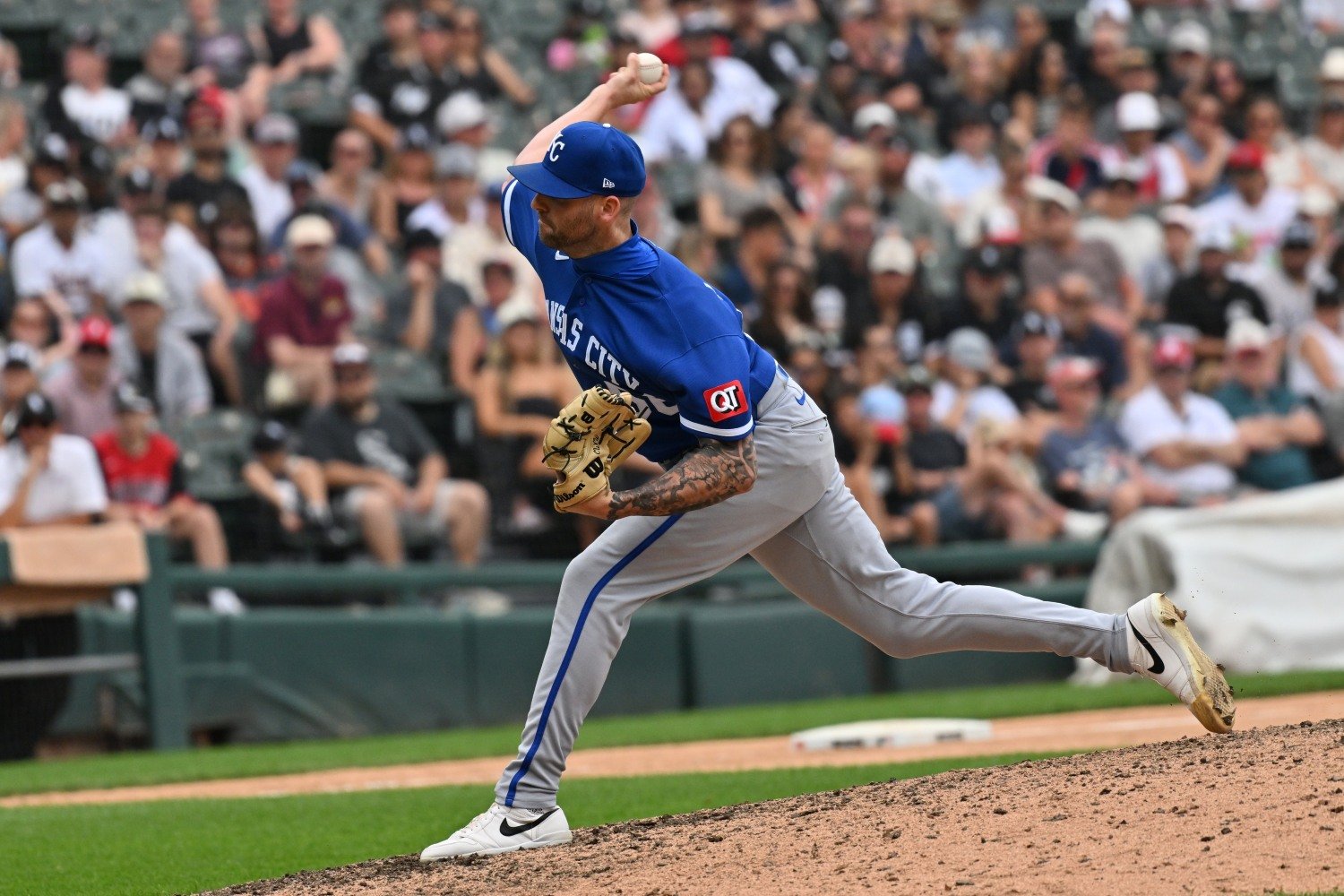 The Chicago Cubs currently own the fourth-best record in the National League, and despite sitting five games behind the Milwaukee Brewers in the NL Central, they're firmly entrenched in the playoff picture. To maintain that position, though, they'll need to address their pitching staff before the August 3 MLB trade deadline. The Cubs' 4.33 team ERA ranks 21st, and while injuries to the starting rotation have played a major role in that, the bullpen has also been absolutely decimated. Within the last few weeks, Chicago has lost Hoby Milner, Daniel Palencia and Ethan Roberts to the injured list. Those three join Hunter Harvey, Porter Hodge, Shelby Miller and Riley Martin, giving the Cubs an injury list that looks a lot like their bullpen plan coming into the season. Pitching wins games in October, and more specifically, late-game pitching can be the difference between advancing and going home. With that in mind, here are three relief pitchers the Cubs could target to reinforce their bullpen for a postseason run. Alex Lange The Royals have been arguably the most disappointing team in baseball this season, sitting at just 38-59, and Lange himself hasn't exactly put together a dominant campaign. His 5.92 ERA isn't going to grab anyone's attention, and the command issues have certainly been real. Still, I think his numbers deserve a little more context. Despite the inflated ERA, Lange owns a much more encouraging 3.97 FIP, suggesting he's pitched better than the surface-level results indicate. There have certainly been some bad breaks mixed in with the command issues. More importantly, this is someone with legitimate late-inning experience. Lange recorded 26 saves with the Detroit Tigers back in 2023, his last fully healthy season, and he's already picked up eight saves with Kansas City this year. That kind of experience has value, especially for a team that could be playing plenty of close games down the stretch. There's also a lot to like from a stuff standpoint. His slider, sinker and changeup all come with strong movement profiles, giving him multiple weapons capable of missing barrels when he's around the strike zone. The 12% walk rate is definitely something to keep an eye on. That's probably what keeps him from immediately stepping into the ninth inning if he were traded. Instead, he'd likely fit best in a sixth- or seventh-inning role while giving manager Craig Counsell another experienced high-leverage option to lean on. Add in the fact that Lange still has two more years of team control after this season, and he becomes an intriguing buy-low candidate. It wouldn't be the flashiest acquisition at the deadline, but Lange is someone who makes a lot of sense for the Cubs. A former top draft pick by the Cubs, he'd be coming full-circle, professionally. Victor Vodnik In a lot of ways, Vodnik profiles similarly to Lange. The surface-level numbers don't immediately stand out, and like Lange, he's walked more hitters than you'd like. But there's also a lot happening beneath the surface that's very encouraging for the Rockies’ right-hander. For starters, Vodnik has done an excellent job of limiting hard contact. Both his hard-hit rate and barrel rate rank in at least the 62nd percentile among all major-league pitchers, and he's generating ground balls on more than half of the balls put in play against him. That's a very strong combination for any reliever. If hitters aren't squaring you up consistently and they're pounding the ball into the ground, you're usually setting yourself up for long-term success. He's also been throwing much better recently. Over his last seven appearances, Vodnik has surrendered just one run while showing much better command than he did earlier in the season. For someone who routinely touches 99 MPH with his fastball, there's plenty of upside still waiting to be unlocked. And, of course, it's fair to wonder what his numbers might look like if he wasn't pitching half of his games at Coors Field. A move away from baseball's most hitter-friendly environment could make an immediate impact on his production. Like Lange, Vodnik also comes with multiple years of team control, making him more than just a rental for 2026. Victor Vodnik is another reliever who could quietly make a real difference in Chicago's bullpen down the stretch. Keaton Winn Of the three pitchers mentioned here, Winn would require the biggest return in a trade. He's been the best performer of the group this season. Across 32 innings with the Giants, Winn owns an impressive 3.09 ERA, while posting 26 strikeouts against 10 walks. Unlike Lange and Vodnik, command isn't much of a concern here. He's also under team control for quite a while, with another year of pre-arbitration eligibility remaining before he even reaches arbitration. That kind of long-term control significantly boosts his value. Beyond the results, the underlying metrics are outstanding. Winn has been one of baseball's best pitchers at generating soft contact. His average exit velocity and hard-hit rate both rank in the 95th percentile or better among all major-league pitchers, while his barrel rate sits in the 88th percentile. That's exactly the type of profile contenders love adding to the back end of a bullpen. He throws strikes, he throws hard, and he keeps the ball on the ground. Those are three traits that generally translate well in high-leverage situations—especially in October, when every baserunner matters. Winn would give the Cubs another legitimate late-inning weapon capable of helping them make a deep postseason run. Whether the Cubs decide to target a proven veteran like Alex Lange, take a chance on the upside of Victor Vodnik, or pay a little more for someone like Keaton Winn, it's hard to imagine them making a serious run in October without adding bullpen help. Chicago has positioned themselves to be a legitimate playoff team in 2026, but if the front office wants to maximize this opportunity, reinforcing the bullpen has to be one of the organization's top priorities over the next few weeks. Those are three relief pitchers I think the Cubs could look to acquire before the trade deadline. Let me know down in the comments which relievers you'd like to see the Cubs go after!
- 3 comments
-
- 1
-

-
- alex lange
- keaton winn
- (and 1 more)
-
Image courtesy of © Patrick Gorski-Imagn Images The Chicago Cubs currently own the fourth-best record in the National League, and despite sitting five games behind the Milwaukee Brewers in the NL Central, they're firmly entrenched in the playoff picture. To maintain that position, though, they'll need to address their pitching staff before the August 3 MLB trade deadline. The Cubs' 4.33 team ERA ranks 21st, and while injuries to the starting rotation have played a major role in that, the bullpen has also been absolutely decimated. Within the last few weeks, Chicago has lost Hoby Milner, Daniel Palencia and Ethan Roberts to the injured list. Those three join Hunter Harvey, Porter Hodge, Shelby Miller and Riley Martin, giving the Cubs an injury list that looks a lot like their bullpen plan coming into the season. Pitching wins games in October, and more specifically, late-game pitching can be the difference between advancing and going home. With that in mind, here are three relief pitchers the Cubs could target to reinforce their bullpen for a postseason run. Alex Lange The Royals have been arguably the most disappointing team in baseball this season, sitting at just 38-59, and Lange himself hasn't exactly put together a dominant campaign. His 5.92 ERA isn't going to grab anyone's attention, and the command issues have certainly been real. Still, I think his numbers deserve a little more context. Despite the inflated ERA, Lange owns a much more encouraging 3.97 FIP, suggesting he's pitched better than the surface-level results indicate. There have certainly been some bad breaks mixed in with the command issues. More importantly, this is someone with legitimate late-inning experience. Lange recorded 26 saves with the Detroit Tigers back in 2023, his last fully healthy season, and he's already picked up eight saves with Kansas City this year. That kind of experience has value, especially for a team that could be playing plenty of close games down the stretch. There's also a lot to like from a stuff standpoint. His slider, sinker and changeup all come with strong movement profiles, giving him multiple weapons capable of missing barrels when he's around the strike zone. The 12% walk rate is definitely something to keep an eye on. That's probably what keeps him from immediately stepping into the ninth inning if he were traded. Instead, he'd likely fit best in a sixth- or seventh-inning role while giving manager Craig Counsell another experienced high-leverage option to lean on. Add in the fact that Lange still has two more years of team control after this season, and he becomes an intriguing buy-low candidate. It wouldn't be the flashiest acquisition at the deadline, but Lange is someone who makes a lot of sense for the Cubs. A former top draft pick by the Cubs, he'd be coming full-circle, professionally. Victor Vodnik In a lot of ways, Vodnik profiles similarly to Lange. The surface-level numbers don't immediately stand out, and like Lange, he's walked more hitters than you'd like. But there's also a lot happening beneath the surface that's very encouraging for the Rockies’ right-hander. For starters, Vodnik has done an excellent job of limiting hard contact. Both his hard-hit rate and barrel rate rank in at least the 62nd percentile among all major-league pitchers, and he's generating ground balls on more than half of the balls put in play against him. That's a very strong combination for any reliever. If hitters aren't squaring you up consistently and they're pounding the ball into the ground, you're usually setting yourself up for long-term success. He's also been throwing much better recently. Over his last seven appearances, Vodnik has surrendered just one run while showing much better command than he did earlier in the season. For someone who routinely touches 99 MPH with his fastball, there's plenty of upside still waiting to be unlocked. And, of course, it's fair to wonder what his numbers might look like if he wasn't pitching half of his games at Coors Field. A move away from baseball's most hitter-friendly environment could make an immediate impact on his production. Like Lange, Vodnik also comes with multiple years of team control, making him more than just a rental for 2026. Victor Vodnik is another reliever who could quietly make a real difference in Chicago's bullpen down the stretch. Keaton Winn Of the three pitchers mentioned here, Winn would require the biggest return in a trade. He's been the best performer of the group this season. Across 32 innings with the Giants, Winn owns an impressive 3.09 ERA, while posting 26 strikeouts against 10 walks. Unlike Lange and Vodnik, command isn't much of a concern here. He's also under team control for quite a while, with another year of pre-arbitration eligibility remaining before he even reaches arbitration. That kind of long-term control significantly boosts his value. Beyond the results, the underlying metrics are outstanding. Winn has been one of baseball's best pitchers at generating soft contact. His average exit velocity and hard-hit rate both rank in the 95th percentile or better among all major-league pitchers, while his barrel rate sits in the 88th percentile. That's exactly the type of profile contenders love adding to the back end of a bullpen. He throws strikes, he throws hard, and he keeps the ball on the ground. Those are three traits that generally translate well in high-leverage situations—especially in October, when every baserunner matters. Winn would give the Cubs another legitimate late-inning weapon capable of helping them make a deep postseason run. Whether the Cubs decide to target a proven veteran like Alex Lange, take a chance on the upside of Victor Vodnik, or pay a little more for someone like Keaton Winn, it's hard to imagine them making a serious run in October without adding bullpen help. Chicago has positioned themselves to be a legitimate playoff team in 2026, but if the front office wants to maximize this opportunity, reinforcing the bullpen has to be one of the organization's top priorities over the next few weeks. Those are three relief pitchers I think the Cubs could look to acquire before the trade deadline. Let me know down in the comments which relievers you'd like to see the Cubs go after! View full article
