


Paul Niemiec
-
Posts
127 -
Joined
-
Last visited
Content Type
Profiles
Joomla Posts 1
Chicago Cubs Videos
Chicago Cubs Free Agent & Trade Rumors, Notes, & Tidbits
2026 Chicago Cubs Top Prospects Ranking
News
2023 Chicago Cubs Draft Picks
Guides & Resources
2024 Chicago Cubs Draft Picks
The Chicago Cubs Players Project
2025 Chicago Cubs Draft Pick Tracker
2026 Chicago Cubs Draft Tracker: Picks & Bonuses
Blogs
Events
Forums
Store
Gallery
Everything posted by Paul Niemiec
-
Image courtesy of © Kamil Krzaczynski-Imagn Images The Chicago Cubs have quite the shopping list this offseason if they want to remain contenders in 2026. They’re set to lose key contributors in the rotation (Shota Imanaga), bullpen (Brad Keller, Drew Pomeranz, and Andrew Kittredge), and the middle of the lineup (Kyle Tucker). The looming CBA negotiations will affect their approach to roster construction, and certainly, their payroll going beyond 2026. One area that was a cause for concern prior to the 2025 season was third base. The dominos started to fall at the 2024 trade deadline when the Cubs shipped third baseman Christopher Morel to the Rays for Isaac Paredes. After a subpar two months in Chicago, Parades was included in the package that also sent third base prospect Cam Smith to Houston for Kyle Tucker. This left a hole at third base that ended up being filled by 2023 first-round pick Matt Shaw. Although the team lazily pursued Alex Bregman, Shaw seemed to be Plan A without any solid fallback. Even at the time, handing the job to a rookie seemed risky for a team intent on competing. Shaw had a few hot streaks, but he looked largely overmatched in his first season. His .690 OPS is encouraging enough for his long-term outlook, but the Cubs cannot afford another year of growing pains for the 23=year-old. If Owen Caissie is the Cubs’ plan to fill Tucker’s spot in the outfield, they need a dependable bat to fill in somewhere else. If they choose to add another third base option, here are the most intriguing free agent options available:. Alex Bregman Last season, the Cubs were listed as one of the three finalists for Bregman alongside the Red Sox and the Tigers. Bregman opted to go with the short-term, high-AAV contract with Boston that included a few opt-outs. He spent some time on the IL in 2025, but outside of that, he was a key contributor on a playoff-bound Red Sox team. Bregman made his third All-Star team, and ended the year with 3.5 WAR and an .821 OPS across 114 games. The Boras client will be seeking long-term security this winter, and for the soon-to-be 32-year-old, the magic number seems to be six years and about $150 million. Even at 32, Bregman is the type of player that should age well. He has excellent knowledge of the strike zone, and has a lengthy track record of putting the ball in play with high exit velocities. Defensively, he won his first Gold Glove in 2024 and has put up above-average defensive numbers throughout his career. Why he makes sense for the Cubs: In a lineup that has a bit of swing and miss, Bregman is the type of hitter the Cubs desperately need. He likely won’t be leading the team in home runs, but he should be able to challenge Nico Hoerner for the team lead in batting average. Outside of his personal success, Bregman knows how to be part of a winning ballclub. The Astros have been a mainstay in the playoffs since Bregman’s first full-time season in 2017, and Boston made their first playoff appearance since 2021 after they signed him as a free agent. Depending on how you feel about Matt Shaw, this might be good news or bad news, but Bregman would likely make Shaw expendable. The Cubs can sign Bregman, and use Shaw as part of a package to get a high-end starter off the trade market. In an offseason where there are few impact free-agent starters after Dylan Cease and Framber Valdez, this might be a path worth exploring. Why he doesn’t make sense for the Cubs: Like I just mentioned, replacing former first-round pick and top prospect Matt Shaw after a subpar rookie year might be an overreaction. Bregman and Shaw had similar prospect profiles, so an optimistic Cubs fan or frugal ownership might believe that Shaw can replicate Bregman's production eventually. The CBA negotiations are also a knock against signing him. If the 2027 season is affected in any way, likely by a reduction in games, whoever signs Bregman could be paying him for a lost season. That would be a huge blow for a player in his age-33 season. Most of Bregman’s production will likely come in the front half of his contract, and with the uncertainty beyond 2026, it adds an extra layer of risk. Kazuma Okamoto It's official. The Yomiuri Giants of the NPB are posting their star corner infielder. Since becoming a mainstay in the Giants' lineup in 2018, Okamoto has shown a plus ability to hit for both power and average. From 2018-2023, he hit over 30 home runs each season (41 in 2023). His career batting average in the NPB is .277 with an OPS of .882. He has shown an ability to draw more walks and limit strikeouts as his career progressed overseas. His projected contract, according to Bleacher Report, is four years at $64 million. He has a chance to be an impact bat without breaking the bank. Why he makes sense for the Cubs: Since Hee-Seop Choi in 2002, the Cubs have always been a popular destination for Asian imports. Whether it be from the NPB or KBO, the Cubs do a decent job at turning these players into solid major leaguers. Okamoto’s ability to hit for average as well as power makes him a fit in a lineup that currently lacks in both of those departments. Some see him transitioning to the MLB as a first baseman rather than a third baseman, but even if first is his best defensive position, there will be playing time with the way the roster currently sits. He can rotate between DH, third base, and first base when Michael Busch needs a break. Why he doesn’t make sense for the Cubs: With so many question marks in the Cubs lineup, it would make more sense to target someone who has produced at a high level in the MLB before. When it comes to position players, the Asian market has a far less spectacular track record in the MLB than the pitchers do. FanGraphs' Eric Longenhagen notes that Okamoto struggles with fastballs above 93 mph. With the average MLB fastball sitting just over 94 mph, this is a glaring area of concern. We have seen some of these imports make the necessary adjustments to square up a MLB fastball, but it seems like there are more failures than success stories. Over the last decade, we have seen numerous flops coming over from Asia with a similar profile to Okamoto: Jung Ho Kang (PIT), Yoshi Tsutsugo (TB), and Hyun Soo Kim (PHI), to name a few. Okamoto would be quite the gamble, and the Cubs should probably stop gambling and sign a proven big leaguer. Munetaka Murakami The 25-year-old NPB slugger has been on the minds of MLB organizations and fans alike for a few years now. His 80-grade power from the left side draws comparisons to fellow countryman Shohei Ohtani and Cub-that-got-away Kyle Schwarber. Although the two-time NPB MVP has a triple crown to his name and 246 home runs, his strikeout concerns are on the same level as Adam Dunn and Joey Gallo. In his two MVP seasons, Murakami had a 21% strikeout percentage. Since then, it has increased to over 28%, a troubling trend since NPB players don’t usually tend to strikeout less after coming stateside. Why he makes sense for the Cubs: When it comes to a dependable left-handed power bat, the Cubs only have Michael Busch. Maybe Pete Crow-Armstrong reverts back to the player he was in the first half of 2025, but it's possible we won’t see those offensive numbers from him again. There are also few left-handed power bats on the market. Tucker, Schwarber, and Cody Bellinger likely won’t be pursued too aggressively by Chicago. First basemen Ryan O’Hearn and Josh Naylor don’t have a place on the current roster either. Nonetheless, Murakami has more raw power than all of those guys outside of Schwarber. One might think it doesn’t make sense for the Cubs to pay Murakami when Schwarber is on the market, but Schwarber has made it clear he would love to stay in Philadelphia, and is seven years older than Murakami. The Japanese phenom would be part of the long-term future, as his projected contract is eight years and $180 million. Would Jed Hoyer want to give one of the largest contracts in franchise history to a guy who has never played in the MLB before? I think we know the answer, which should temper fans' expectations. Why he doesn’t make sense for the Cubs: There are questions surrounding Murakami’s defense at third base, which is good news for Matt Shaw. If the Cubs do pursue him, he will likely get a bulk of his at bats at the DH position. He can also be the second-string first baseman after Busch. If the bat plays like many think it will, the Cubs have the flexibility to get him into the lineup. This is still a massive gamble, much more than Okamoto due to the length and value of the contract. When a player doesn’t have a real defensive home, the expectations for the bat are very high. If the Cubs had a rich lineup of established sluggers, they could afford to take a risk on a player like this, but they don’t have that kind of long-term stability. There will be immediate pressure on Murakami to lead the offense immediately. To put it into perspective, he could sit comfortably in the six-hole if he signs with Dodgers, but if he goes to Chicago, he will likely be hitting in the two or three spot on Opening Day. Eugenio Suarez After seeing the package Arizona received from Seattle at the trade deadline, it’s hard to believe that Hoyer even gave Mike Hazen and the Diamondbacks a call about Suarez. This should be considered another example of blatant malpractice, but the Cubs have another chance to acquire the slugging third baseman fresh off a 49 home run season. Although he hit only .189 in the regular season after the trade, he still bashed 13 home runs, and an additional three in the playoffs including an absurdly clutch grand slam. Why he makes sense for the Cubs: Suarez might be the cheapest way to get elite, bankable power on the free-agent market. Bleacher Report has his projected contract around three years and worth $63 million. Other plus power hitters like Schwarber, Pete Alonso, Cody Bellinger, and Tucker are all projected to earn at least double the money that Suarez is looking at. Suarez is turning 35 next July, and has seen his defensive ability decline over the past few seasons. However, if Suarez plays half his games at DH, Shaw will still get enough playing time to hopefully prove to fans that he is the long-term answer at third. Why he doesn’t make sense for the Cubs: Ample due diligence is required to hand out a multi-year deal to a player in his mid-30s. He strikes out a lot, and that is an understatement. In 2019, 2022, and 2023, he led the league in strikeouts. which could be a problem for a Cubs team that already struggles with giving up free outs. Since the end of the Joe Maddon days with the previous core, we have seen the Cubs' offense consistently live and die by the home run. It may make sense to target more of a table setter, but when you remove Tucker’s power from the lineup, it needs to be replaced somehow. Paul DeJong I truly hate to say it, but this seems like the most believable option here, considering the way the front office operates. DeJong only played in 57 games with the Nationals in 2025 due to injury, but he launched 24 home runs in 2024, mostly with the White Sox. At this point in his career, the 32-year-old is not an everyday player, but his pop and ability to play all four infield positions will make him an attractive bench piece. In 2025, his one-year deal with Washington was worth $1 million, and he did not exactly raise his stock, so a similar deal should be in play this season. Why he makes sense for the Cubs: DeJong will allow the Cubs to roll Shaw out there for the bulk of the season. He will assume a utility infielder role as well as the go-to right-handed pinch hitter job off the bench. Should Shaw struggle again, DeJong is a better fallback option offensively than the light-hitting backup options we saw in 2025. Why he doesn’t make sense for the Cubs: If the Cubs go out and sign an impact bat as well as DeJong, this would be a great fit, especially if Chicago can get him on a minor-league contract. If Plan A is Owen Caissie in right field, with DeJong and Shaw splitting time at third base, that will be quite the uninspiring attempt at filling the Tucker-sized hole in the lineup. DeJong would only be a poor addition for the Cubs if he is the only addition. Yoan Moncada Similar to DeJong, Moncada is best used as a part-time player. The 2025 campaign was his first season away from Chicago, and he posted a solid .783 OPS in 84 games. He hasn’t been too much of an offensive contributor outside of his 2019 season where he hit .315 with 25 home runs, but he has still shown an ability to hit at a decent clip a few times since then. Outside of his rookie season and 2022, his OPS has been above .700 every year. It's also never a bad thing to add another switch hitter to the lineup. Why he makes sense for the Cubs: Although he doesn’t have the power and defensive versatility as DeJong; he’s still a former generational prospect who is used to playing in Chicago. Maybe the Wrigley Field vibes help the 30-year-old turn back the clock and become a bit more like the player the White Sox thought they had. Why he doesn’t make sense for the Cubs: Moncada doesn’t move the needle much. He is another Plan B option behind Matt Shaw. If there is a bigger move made in conjunction, like signing a top free agent outfielder or DH, Moncada would be a fine depth signing. Counting on him for anything more would be a non-competitive move. View full article
-
Do the St. Louis Cardinals Possess the Answer to the Cubs' Rotation Problem?
Paul Niemiec posted an article in Cubs
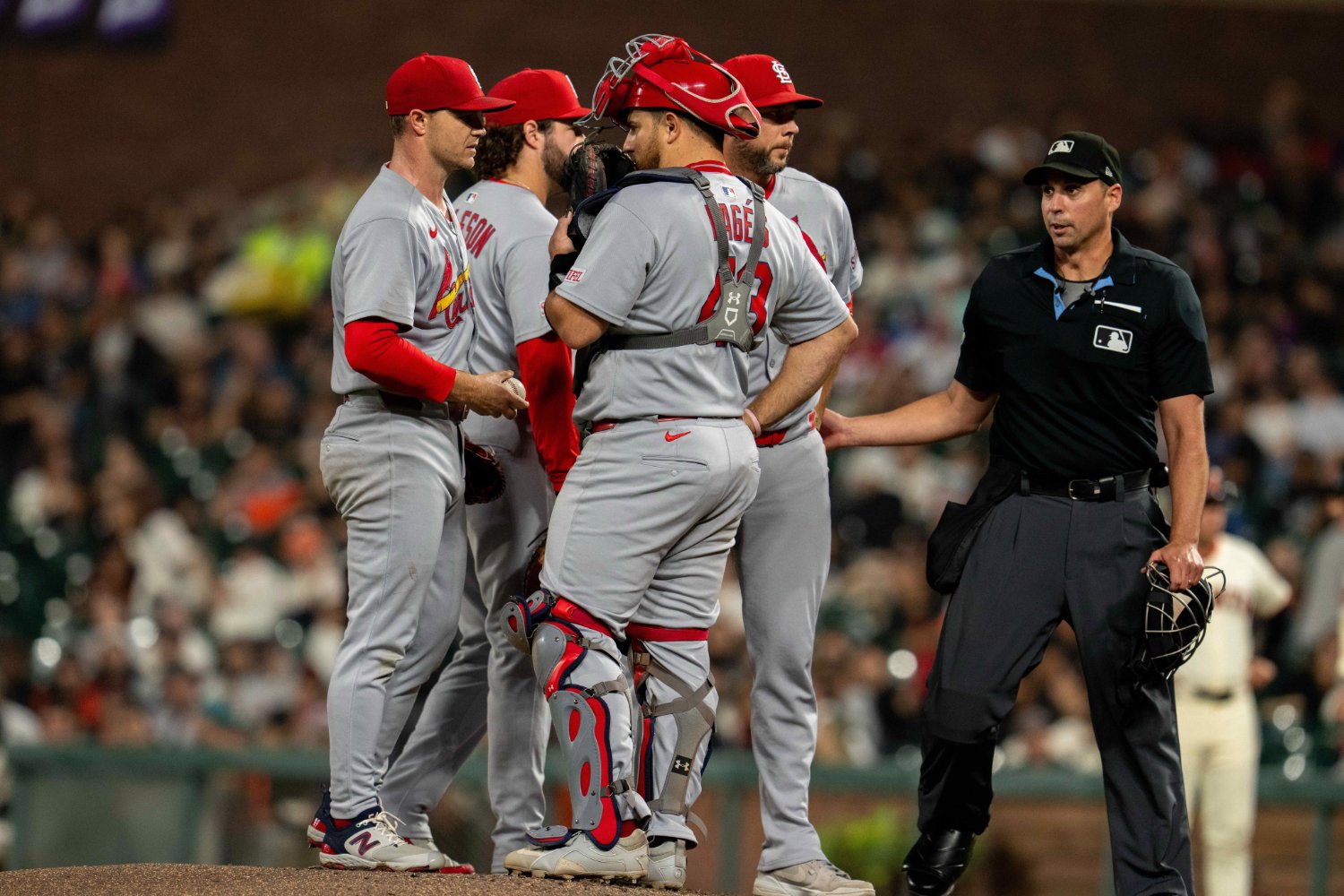 It's bound to be a weird offseason with a potential lockout looming for 2027. Teams may try to load up on one-year deals, while only negotiating longer term with some of the marquee names. Teams on the edge of contention may opt to sell some of their impending free agents to create some payroll flexibility for whatever happens once the new CBA is implemented. Although this ominous shade of grey will be hanging over the 2026 season, there is still going to be a World Series champion next year, so we will see over the next few months how aggressive the Chicago Cubs want to be. It's true that the Cubs are entering the offseason in a peculiar spot. Yes, they won their first postseason series since 2017, but it's naïve to believe a similar performance will occur next season without some major changes. In the postseason, we saw the offense continue to struggle mightily. The pitching was their strength, but there was a ton of reliance on veteran arms, especially in the bullpen. Pete Crow-Armstrong was an MVP candidate in the first half, but had a strikeout percentage over 25% during his second half power outage. Outside of a few hot streaks, Matt Shaw has not looked ready for the big leagues. Frequent clean-up hitter Carson Kelly was a journeyman, part-time backstop before breaking out at 31 years old. Then, there's Kyle Tucker. Say what you want about his Cubs tenure as a whole, but the team would not have gotten to where they did without his bat in the first half. Losing him would be a blow. The pitching brings more reason for optimism with Cade Horton looking like one of the best young pitchers in the game paired with the eventual return of Justin Steele. The bargain-bin bullpen approach worked for them in 2025, but that should not make us forget that the same approach had serious flaws (and growing pains) when they attempted to contend in 2023 and 2024. Much like Carson Kelly, we can’t exactly bank on similar production from Matthew Boyd next year, and the club might decide to do something funky with Shota Imanaga’s funky contract, so there is real uncertainty in the rotation as well. It's time to propose a trade target for this offseason that will surely help add some stability to the rotation for next season. We saw the rotation fail to get addressed at the 2025 trade deadline, which is a mistake that cannot be repeated. The Cubs need at least one starter, preferably with postseason experience, that can be counted on to make 25+ starts in the regular season. There are some frontline starters hitting the market, like Dylan Cease and Framber Valdez, and the Cubs should be talking to both of them. However, the team has more recently been willing to add significant pieces to the roster by trade rather than free agency. This brings us to a name that's been in trade talks since the 2025 deadline: Sonny Gray. The Cubs and Cardinals do not make trades with each other. The last time the Cubs and Cardinals made a trade was in 2007, when the Cubs acquired first baseman John Nelson, who never played a game in Chicago. But times are changing in St. Louis. Longtime president of baseball operations John Mozeliak has stepped down. He has been replaced by Chaim Bloom, who gets credit for creating the “Rays Way”, which is essentially squeezing the most out of the players on the roster without dishing out large contracts to free agents. After finishing fourth in the NL Central this past season, Bloom will likely want to enter somewhat of a rebuilding phase. The roster lacks the star power equivalent to the Cubs, Brewers, and Reds. A fire sale would replenish their 19th-ranked farm system, and trading veterans like Gray, Willson Contreras, Lars Nootbar, Nolan Arenado and Miles Mikolas would immediately put them on a path toward future success. Gray is entering the final guaranteed year of a three-year, $75 million deal, with a $30 million club option for 2027. He will make $35 million in 2026, which does seem a bit high for a starter turning 36 next week who had an ERA over 4.00 this past season. However, his 3.39 FIP and 201 strikeouts in 180 2/3 innings shows that Gray is not yet running out of gas. He was one of only eight National League starters to reach the 200 strikeout milestone, his second time reaching that number in the last three years. His walk rate (5%) was in the 93rd percentile of qualified pitchers in 2025, which would mesh well with the Cubs, as the team had the lowest walk rate in baseball. Also, he is only two years removed from finishing runner up to Gerrit Cole for the AL Cy Young Award, back when he was on the Twins. He won’t be asked to be a Cy Young-caliber pitcher with the Cubs, but he does have the experience to be a solid No. 2 or No. 3 in a contender's rotation. A trade for Gray would make it easier to handle the tough decision to let Imanaga walk, as he can slide right into his spot in the rotation. He can start behind Horton, and ahead of Jameson Taillon, if Steele is not ready by Opening Day. In a playoff series, if everyone is healthy, the Cubs could have five quality starters lined up in Steele, Horton, Gray, Boyd, and Taillon. With a rotation like that, there is not a significant need to chase the high price tags of Cease and Valdez. As for their end of the trade, St. Louis will prioritize cutting payroll as much as bringing in top prospects. Armed with payroll flexibility, especially if Imanaga is gone, the Cubs have a few different avenues they can take in order to entice the Cardinals. The Cardinals would likely be willing to eat a solid portion of that $35 million in order to gain a real prospect, but the Cubs can afford to take on most, if not all, of the contract to avoid having to part with an upper-echelon player for what will certainly be a one-year rental. Again, history isn't on anyone's side here. The Cardinals will find plenty of suitors for Gray, and that list will only grow as their willingness to eat million of dollars does. The Cubs also have alternatives, including retaining Imanaga and hoping that they can fix his home run problems over the offseason. So, while it is going to remain a longshot for the Cubs to get a deal done with their most historic rival, it's worth exploring if the team wants to remain contenders next season while keeping their financial flexibility intact beyond the lockout.
 -
Image courtesy of © Neville E. Guard-Imagn Images It's bound to be a weird offseason with a potential lockout looming for 2027. Teams may try to load up on one-year deals, while only negotiating longer term with some of the marquee names. Teams on the edge of contention may opt to sell some of their impending free agents to create some payroll flexibility for whatever happens once the new CBA is implemented. Although this ominous shade of grey will be hanging over the 2026 season, there is still going to be a World Series champion next year, so we will see over the next few months how aggressive the Chicago Cubs want to be. It's true that the Cubs are entering the offseason in a peculiar spot. Yes, they won their first postseason series since 2017, but it's naïve to believe a similar performance will occur next season without some major changes. In the postseason, we saw the offense continue to struggle mightily. The pitching was their strength, but there was a ton of reliance on veteran arms, especially in the bullpen. Pete Crow-Armstrong was an MVP candidate in the first half, but had a strikeout percentage over 25% during his second half power outage. Outside of a few hot streaks, Matt Shaw has not looked ready for the big leagues. Frequent clean-up hitter Carson Kelly was a journeyman, part-time backstop before breaking out at 31 years old. Then, there's Kyle Tucker. Say what you want about his Cubs tenure as a whole, but the team would not have gotten to where they did without his bat in the first half. Losing him would be a blow. The pitching brings more reason for optimism with Cade Horton looking like one of the best young pitchers in the game paired with the eventual return of Justin Steele. The bargain-bin bullpen approach worked for them in 2025, but that should not make us forget that the same approach had serious flaws (and growing pains) when they attempted to contend in 2023 and 2024. Much like Carson Kelly, we can’t exactly bank on similar production from Matthew Boyd next year, and the club might decide to do something funky with Shota Imanaga’s funky contract, so there is real uncertainty in the rotation as well. It's time to propose a trade target for this offseason that will surely help add some stability to the rotation for next season. We saw the rotation fail to get addressed at the 2025 trade deadline, which is a mistake that cannot be repeated. The Cubs need at least one starter, preferably with postseason experience, that can be counted on to make 25+ starts in the regular season. There are some frontline starters hitting the market, like Dylan Cease and Framber Valdez, and the Cubs should be talking to both of them. However, the team has more recently been willing to add significant pieces to the roster by trade rather than free agency. This brings us to a name that's been in trade talks since the 2025 deadline: Sonny Gray. The Cubs and Cardinals do not make trades with each other. The last time the Cubs and Cardinals made a trade was in 2007, when the Cubs acquired first baseman John Nelson, who never played a game in Chicago. But times are changing in St. Louis. Longtime president of baseball operations John Mozeliak has stepped down. He has been replaced by Chaim Bloom, who gets credit for creating the “Rays Way”, which is essentially squeezing the most out of the players on the roster without dishing out large contracts to free agents. After finishing fourth in the NL Central this past season, Bloom will likely want to enter somewhat of a rebuilding phase. The roster lacks the star power equivalent to the Cubs, Brewers, and Reds. A fire sale would replenish their 19th-ranked farm system, and trading veterans like Gray, Willson Contreras, Lars Nootbar, Nolan Arenado and Miles Mikolas would immediately put them on a path toward future success. Gray is entering the final guaranteed year of a three-year, $75 million deal, with a $30 million club option for 2027. He will make $35 million in 2026, which does seem a bit high for a starter turning 36 next week who had an ERA over 4.00 this past season. However, his 3.39 FIP and 201 strikeouts in 180 2/3 innings shows that Gray is not yet running out of gas. He was one of only eight National League starters to reach the 200 strikeout milestone, his second time reaching that number in the last three years. His walk rate (5%) was in the 93rd percentile of qualified pitchers in 2025, which would mesh well with the Cubs, as the team had the lowest walk rate in baseball. Also, he is only two years removed from finishing runner up to Gerrit Cole for the AL Cy Young Award, back when he was on the Twins. He won’t be asked to be a Cy Young-caliber pitcher with the Cubs, but he does have the experience to be a solid No. 2 or No. 3 in a contender's rotation. A trade for Gray would make it easier to handle the tough decision to let Imanaga walk, as he can slide right into his spot in the rotation. He can start behind Horton, and ahead of Jameson Taillon, if Steele is not ready by Opening Day. In a playoff series, if everyone is healthy, the Cubs could have five quality starters lined up in Steele, Horton, Gray, Boyd, and Taillon. With a rotation like that, there is not a significant need to chase the high price tags of Cease and Valdez. As for their end of the trade, St. Louis will prioritize cutting payroll as much as bringing in top prospects. Armed with payroll flexibility, especially if Imanaga is gone, the Cubs have a few different avenues they can take in order to entice the Cardinals. The Cardinals would likely be willing to eat a solid portion of that $35 million in order to gain a real prospect, but the Cubs can afford to take on most, if not all, of the contract to avoid having to part with an upper-echelon player for what will certainly be a one-year rental. Again, history isn't on anyone's side here. The Cardinals will find plenty of suitors for Gray, and that list will only grow as their willingness to eat million of dollars does. The Cubs also have alternatives, including retaining Imanaga and hoping that they can fix his home run problems over the offseason. So, while it is going to remain a longshot for the Cubs to get a deal done with their most historic rival, it's worth exploring if the team wants to remain contenders next season while keeping their financial flexibility intact beyond the lockout. View full article
-
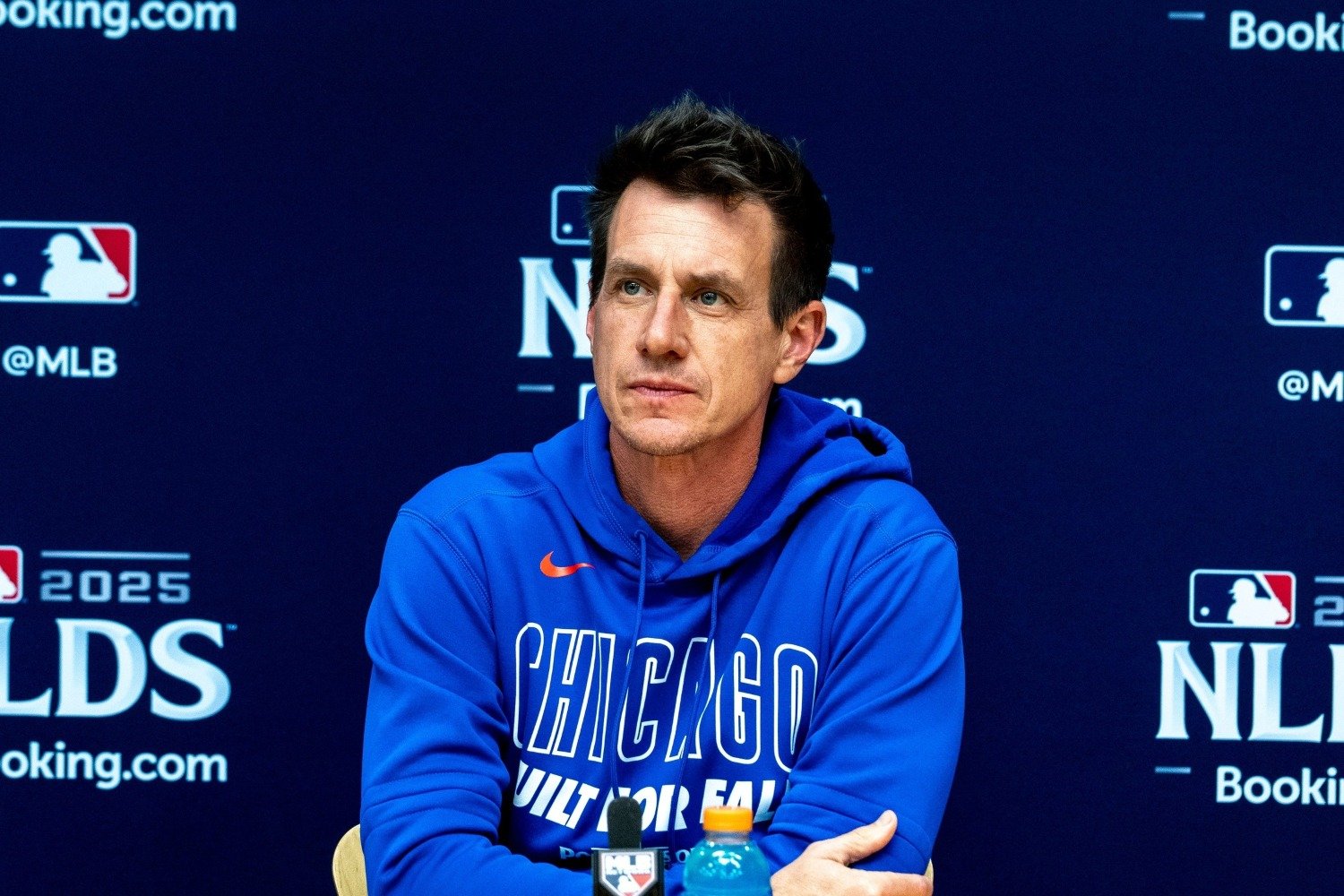 Over the last week, Cubs fans got to enjoy the humbling of the Brewers, capped by Shohei Ohtani playing the greatest single game of baseball ever. However, that is a small consolation prize. Milwaukee sent the Cubs packing, after the North Siders were unable to carry the energy of Games 3 and 4 of the NLDS back to Milwaukee last Saturday. While Colin Rea pitched well in the 3-1 loss, the offense could not get it going, only notching four hits—which, alas, was par for the course this postseason. We can sit here and point fingers at the hitters, who averaged under 3.0 runs per game across eight playoff games, and say they didn’t provide their overworked pitching staff enough support. The offense we’ve seen this postseason should have been a shock to nobody, though, as the thumping first-half offense seems like a faint memory at this point. The pitching staff impressed, but it felt like a group that was running out of gas. What could have been, if Cade Horton was healthy, is a hypothetical that is best left undiscussed. The Brewers were the younger, better team, and Game 5 proved it. The 2025 Cubs players should be celebrated. This was a team that lost its ace in April, and finished with the ninth-best team ERA in baseball. Journeyman starter Mathew Boyd playing the best baseball of his career; Carson Kelly propping up the backstop with his younger would-be time-sharer shelved by injury; and the career resurgence of oft-injured reliever Drew Pomeranz were just a few of the feel-good stories that came from this pitching staff. On the offensive side, we saw Pete Crow-Armstrong look like an MVP candidate for half the season, Seiya Suzuki hit a new career high in home runs, and Michael Busch emerged as a star. Craig Counsell did what he was supposed to do: get the most out of the players on the roster that was given to him by Jed Hoyer and Carter Hawkins. Instead of asking questions about why the players came up short, we can ask if general management did enough to put the Cubs in the best position possible for the 2025 playoffs. Maybe this series was lost way before October. Maybe it was lost at the end of July, when the deadline came and went with no moves that signaled this team intended to do more than tread water. Willi Castro, who was the default “big” acquisition, hit .170 and accumulated -0.5 WAR in 34 games. The veteran pitching staff needed reinforcements, especially with Boyd throwing the most innings since his 2019 season, and a need to not overuse Horton. What they got was reliever Andrew Kittredge, who was statistically the best acquisition; Taylor Rogers, who was traded twice; and a mere handful of innings of Michael Soroka. There was an apparent strong pursuit for MacKenzie Gore, which hit an insurmountable roadblock when Washington asked for Matt Shaw and Horton as part of the return package. They were also connected to Edward Cabrera of the Marlins, but could not get a deal done. Neither of those players ended up being traded, and for the purpose of this exercise, I am only going to focus on players who were traded. Here is a rundown of some players who would have been perfect fits for the 2025 Cubs, but ended up going somewhere else. Good. but Not Great, Reliever Tier The Cubs bullpen was a strength for most of the season, but they relied heavily on veteran arms and guys without strong track records of success. We saw Kittredge, Daniel Palencia, Pomeranz, and Brad Keller pitch nearly every game in the playoffs. Another experienced reliever would have gone a long way in terms of bullpen depth for October, and the following players are prime examples of missed opportunity: Camilo Doval (SF to NYY) Griffin Jax (MIN to TB) Phil Maton (STL to TEX) Danny Coulombe (MIN to TEX) Jake Bird (COL to NYY) Kyle Finnegan (WSH to DET) Andrew Chafin (WSH to LAA) Seranthony Dominguez (BAL to TOR) Gregory Soto (BAL to NYM) (We do have to acknowledge, of course, that a lof of these guys struggled mightily or got hurt in their new homes; maybe they wouldn't have helped either. But one more arm would have been good for this team, even if they were out of the mix by the time the postseason rolled around.) Starters Who Would Have Gotten the Ball in the Playoffs The Cubs ran Boyd out there to start three of the eight playoff games. Kittredge was used as an opener for another, and Shota Imanaga had an 8.10 ERA across his two playoff appearances. More than the bullpen, the starting rotation was criminally neglected at the trade deadline. The pursuit of Gore is not an excuse to not make a move for one of the following starters: Zach Littell (TB to CIN) Shane Bieber (CLE to TOR) Adrian Houser (CWS to TB) The caveat with this crew is that they would have been crowded out of the rotation at various points in August and September. It's hard to imagine the team that refused to trust Javier Assad gleefully handing the ball to Houser instead. Still, once Horton went down, it became clear that more reinforcement could have helped. Jhoan Duran: Traded from Twins to Phillies Duran and David Bednar were the crown jewels of available relievers at the deadline. He has been one of the better relievers in baseball for the last few years, but took his game to an elite level in 2025. He finished the season with a 2.06 ERA and 32 saves, thanks to the addition of a sweeper that made him a frankly unfair at-bat. The 9th inning has been a revolving door for the Cubs since Héctor Rondón locked it down for two and a half years, over a decade ago. The Ryan Pressly trade in the offseason did not work out, as he was grandly slammed onto the waiver wire at the end of July. The job went to Palencia after Pressly, but after he suffered an injury in September, it fell to Keller. The Phillies did give up two highly-regarded prospects, in Mick Abel and Eduardo Tait, to get him, but when you can get one of the best controllable relievers in the game and have a dire need for a shutdown closer, that's the cost of doing business. Plus, how sick would this entrance be in Wrigley? Merrill Kelly: Traded from Diamondbacks to Rangers The Rangers are an example of a team who did not make the playoffs, but who had a stronger deadline than the Cubs. Although Chicago was briefly in on Kelly, who had a 3.22 ERA at the time of the trade, he ended up somewhere else. Down the stretch, when Boyd was running out of gas and Rea and Imanaga were dealing with their own levels of volatility, Kelly would have stabilized the rotation nicely. Considering the package Arizona received, the Cubs may not have had the pitching in the system to match the offer from Texas (he was acquired for a trio of pitching prospects), but the Cubs have a better farm system overall. The inability to get a deal done can make one skeptical on how serious the Cubs’ pursuit of Kelly ever was. Eugenio Suárez: Traded from Diamondbacks to Mariners Shaw had a stronger hold on the third base job in 2025 than he ever should have had. Outside of a few hot streaks, Shaw was largely a disappointment offensively. In the postseason, he tallied two weak hits in 23 plate appearances, and was held hitless in seven of the 8 games. The problem is, the Cubs didn’t have any other good options. It is worth questioning whether Counsell should have benched Shaw for Willi Castro, or even Justin Turner, at some point during the series with Milwaukee. Shaw has been a strong defender, but third base has been the only position in 2025 where the Cubs needed a significant offensive upgrade. Rental Eugenio Suárez was acquired for a package centered around Mariners No. 9 prospect, first baseman Tyler Locklear, who has a .532 OPS across 47 big-league games. The Cubs might have been able to get him for a package centered around Jonathan Long and James Triantos, who do not have a clear path to playing time on the North Side. Although Suárez struggled early in his return to Seattle, he still hit 13 home runs, and finished the year with a career-high 49 home runs. He hit 2 key home runs (including this grand slam) in Game 5 of the ALCS versus the Blue Jays, and it makes one wonder what kind of spark he could have provided to a struggling Cubs offense.
 -
Image courtesy of © Jovanny Hernandez / Milwaukee Journal Sentinel / USA TODAY NETWORK via Imagn Images Over the last week, Cubs fans got to enjoy the humbling of the Brewers, capped by Shohei Ohtani playing the greatest single game of baseball ever. However, that is a small consolation prize. Milwaukee sent the Cubs packing, after the North Siders were unable to carry the energy of Games 3 and 4 of the NLDS back to Milwaukee last Saturday. While Colin Rea pitched well in the 3-1 loss, the offense could not get it going, only notching four hits—which, alas, was par for the course this postseason. We can sit here and point fingers at the hitters, who averaged under 3.0 runs per game across eight playoff games, and say they didn’t provide their overworked pitching staff enough support. The offense we’ve seen this postseason should have been a shock to nobody, though, as the thumping first-half offense seems like a faint memory at this point. The pitching staff impressed, but it felt like a group that was running out of gas. What could have been, if Cade Horton was healthy, is a hypothetical that is best left undiscussed. The Brewers were the younger, better team, and Game 5 proved it. The 2025 Cubs players should be celebrated. This was a team that lost its ace in April, and finished with the ninth-best team ERA in baseball. Journeyman starter Mathew Boyd playing the best baseball of his career; Carson Kelly propping up the backstop with his younger would-be time-sharer shelved by injury; and the career resurgence of oft-injured reliever Drew Pomeranz were just a few of the feel-good stories that came from this pitching staff. On the offensive side, we saw Pete Crow-Armstrong look like an MVP candidate for half the season, Seiya Suzuki hit a new career high in home runs, and Michael Busch emerged as a star. Craig Counsell did what he was supposed to do: get the most out of the players on the roster that was given to him by Jed Hoyer and Carter Hawkins. Instead of asking questions about why the players came up short, we can ask if general management did enough to put the Cubs in the best position possible for the 2025 playoffs. Maybe this series was lost way before October. Maybe it was lost at the end of July, when the deadline came and went with no moves that signaled this team intended to do more than tread water. Willi Castro, who was the default “big” acquisition, hit .170 and accumulated -0.5 WAR in 34 games. The veteran pitching staff needed reinforcements, especially with Boyd throwing the most innings since his 2019 season, and a need to not overuse Horton. What they got was reliever Andrew Kittredge, who was statistically the best acquisition; Taylor Rogers, who was traded twice; and a mere handful of innings of Michael Soroka. There was an apparent strong pursuit for MacKenzie Gore, which hit an insurmountable roadblock when Washington asked for Matt Shaw and Horton as part of the return package. They were also connected to Edward Cabrera of the Marlins, but could not get a deal done. Neither of those players ended up being traded, and for the purpose of this exercise, I am only going to focus on players who were traded. Here is a rundown of some players who would have been perfect fits for the 2025 Cubs, but ended up going somewhere else. Good. but Not Great, Reliever Tier The Cubs bullpen was a strength for most of the season, but they relied heavily on veteran arms and guys without strong track records of success. We saw Kittredge, Daniel Palencia, Pomeranz, and Brad Keller pitch nearly every game in the playoffs. Another experienced reliever would have gone a long way in terms of bullpen depth for October, and the following players are prime examples of missed opportunity: Camilo Doval (SF to NYY) Griffin Jax (MIN to TB) Phil Maton (STL to TEX) Danny Coulombe (MIN to TEX) Jake Bird (COL to NYY) Kyle Finnegan (WSH to DET) Andrew Chafin (WSH to LAA) Seranthony Dominguez (BAL to TOR) Gregory Soto (BAL to NYM) (We do have to acknowledge, of course, that a lof of these guys struggled mightily or got hurt in their new homes; maybe they wouldn't have helped either. But one more arm would have been good for this team, even if they were out of the mix by the time the postseason rolled around.) Starters Who Would Have Gotten the Ball in the Playoffs The Cubs ran Boyd out there to start three of the eight playoff games. Kittredge was used as an opener for another, and Shota Imanaga had an 8.10 ERA across his two playoff appearances. More than the bullpen, the starting rotation was criminally neglected at the trade deadline. The pursuit of Gore is not an excuse to not make a move for one of the following starters: Zach Littell (TB to CIN) Shane Bieber (CLE to TOR) Adrian Houser (CWS to TB) The caveat with this crew is that they would have been crowded out of the rotation at various points in August and September. It's hard to imagine the team that refused to trust Javier Assad gleefully handing the ball to Houser instead. Still, once Horton went down, it became clear that more reinforcement could have helped. Jhoan Duran: Traded from Twins to Phillies Duran and David Bednar were the crown jewels of available relievers at the deadline. He has been one of the better relievers in baseball for the last few years, but took his game to an elite level in 2025. He finished the season with a 2.06 ERA and 32 saves, thanks to the addition of a sweeper that made him a frankly unfair at-bat. The 9th inning has been a revolving door for the Cubs since Héctor Rondón locked it down for two and a half years, over a decade ago. The Ryan Pressly trade in the offseason did not work out, as he was grandly slammed onto the waiver wire at the end of July. The job went to Palencia after Pressly, but after he suffered an injury in September, it fell to Keller. The Phillies did give up two highly-regarded prospects, in Mick Abel and Eduardo Tait, to get him, but when you can get one of the best controllable relievers in the game and have a dire need for a shutdown closer, that's the cost of doing business. Plus, how sick would this entrance be in Wrigley? Merrill Kelly: Traded from Diamondbacks to Rangers The Rangers are an example of a team who did not make the playoffs, but who had a stronger deadline than the Cubs. Although Chicago was briefly in on Kelly, who had a 3.22 ERA at the time of the trade, he ended up somewhere else. Down the stretch, when Boyd was running out of gas and Rea and Imanaga were dealing with their own levels of volatility, Kelly would have stabilized the rotation nicely. Considering the package Arizona received, the Cubs may not have had the pitching in the system to match the offer from Texas (he was acquired for a trio of pitching prospects), but the Cubs have a better farm system overall. The inability to get a deal done can make one skeptical on how serious the Cubs’ pursuit of Kelly ever was. Eugenio Suárez: Traded from Diamondbacks to Mariners Shaw had a stronger hold on the third base job in 2025 than he ever should have had. Outside of a few hot streaks, Shaw was largely a disappointment offensively. In the postseason, he tallied two weak hits in 23 plate appearances, and was held hitless in seven of the 8 games. The problem is, the Cubs didn’t have any other good options. It is worth questioning whether Counsell should have benched Shaw for Willi Castro, or even Justin Turner, at some point during the series with Milwaukee. Shaw has been a strong defender, but third base has been the only position in 2025 where the Cubs needed a significant offensive upgrade. Rental Eugenio Suárez was acquired for a package centered around Mariners No. 9 prospect, first baseman Tyler Locklear, who has a .532 OPS across 47 big-league games. The Cubs might have been able to get him for a package centered around Jonathan Long and James Triantos, who do not have a clear path to playing time on the North Side. Although Suárez struggled early in his return to Seattle, he still hit 13 home runs, and finished the year with a career-high 49 home runs. He hit 2 key home runs (including this grand slam) in Game 5 of the ALCS versus the Blue Jays, and it makes one wonder what kind of spark he could have provided to a struggling Cubs offense. View full article
-
Chicago Cubs Minor League Starting Pitcher of the Year (2025)
Paul Niemiec posted an article in Minor Leagues
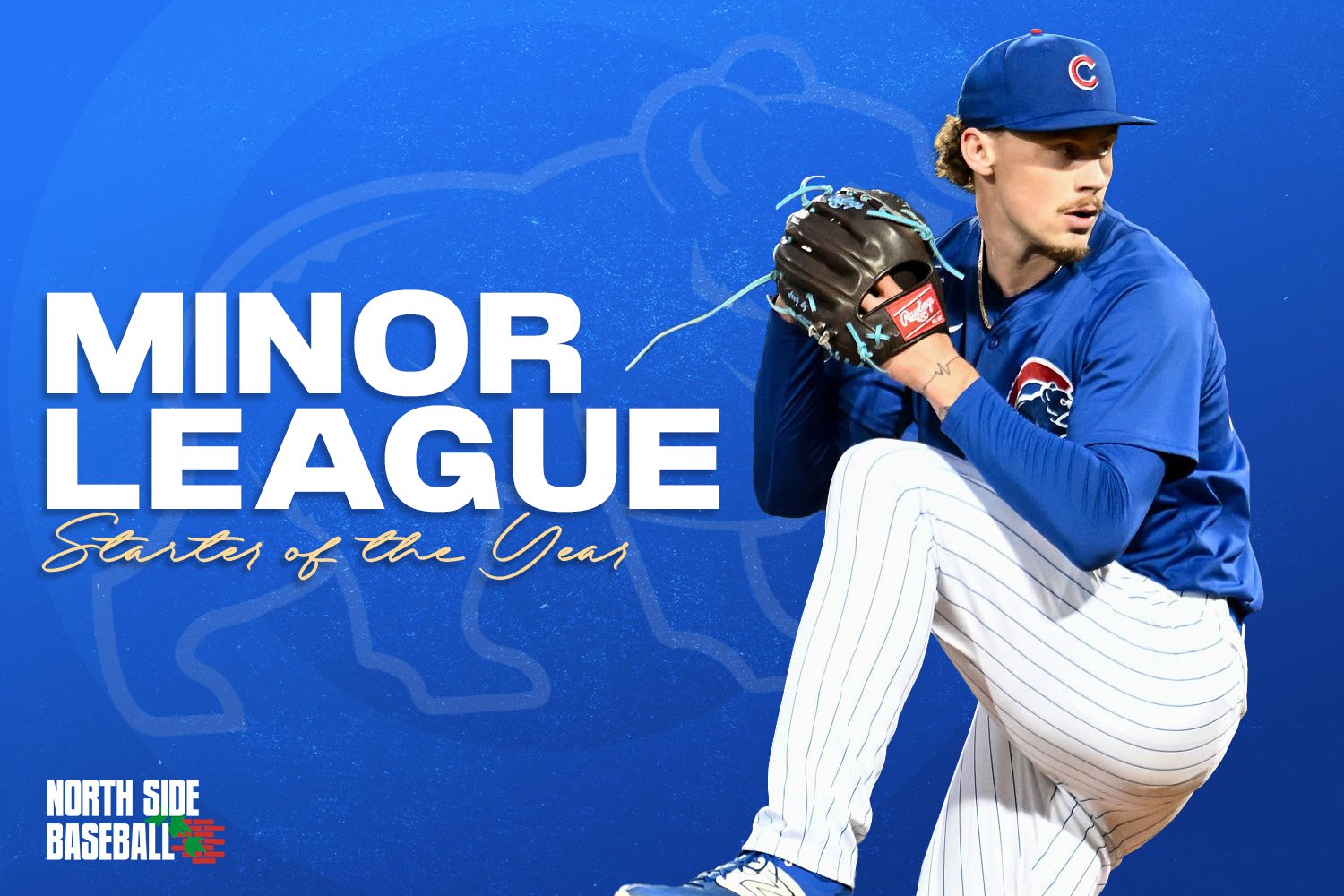 Like their minor league affiliates, the Chicago Cubs' 2025 season didn't end as hoped, with the team bowing out of the postseason after their valiant comeback effort in the NLDS fell short. Nevertheless, their players deserve to be recognized, and it's about time that North Side Baseball awards the best minor league starter from the Cubs' organization this year. Cade Horton graduated to the majors this season and turned into one of the most dependable starters in baseball during the second half. Had he spent more time in the minor leagues, he could have given our winner a real run for his money. Instead, the only one answer for this award is the guy most people are hoping will turn into the next Horton: Jaxon Wiggins. Wiggins was drafted in the second round of the 2023 draft from the University of Arkansas and currently sits as the Cubs’ No. 4 prospect and the number 73 prospect in all of baseball, per MLB.com. The 23-year-old’s pitch arsenal includes a running fastball that sits in the high-90s, a lethal slider that can be tough to control at times, and a changeup that has improved steadily throughout his minor league career. He was at the center of many trade rumors around the deadline when the Cubs were looking for controllable starting pitching, but it's tough to blame the front office for holding onto him given the season he had. Wiggins began the 2025 season pitching for High-A South Bend. He only needed six appearances (five starts) to impress enough to earn a promotion to Double-A. In his 26 1/3 innings in High-A, he posted a 1.71 ERA with 31 strikeouts. He then made 10 starts with the Smokies he had an equally-impressive 1.93 ERA with 52 strikeouts over 42 innings. His FIP at South Bend was 3.14, suggesting his 1.71 ERA was helped out by a bit of good luck; on the contrary, his 2.23 FIP in Knoxville really highlights his dominance and is a big reason why he is one of the best pitching prospects we’ve seen since Cade Horton, and before that, Justin Steele, and before THAT, Mark Prior and Kerry Wood. Late in the 2025 season, Wiggins was promoted to Triple-A and produced middling results, but overall, he pitched to a 2.19 ERA with 97 strikeouts across 78 innings of minor league ball. He did walk 36 batters, but given that he struck nearly one-third of the batters he faced, the walks can be overlooked. He had the same number of walks in 2024 in almost 20 fewer innings, so improvements are being made in the control department. Wiggins should continue to climb the prospect rankings before his expected call-up sometime in 2026. The Cubs were limiting his innings this season, a continuation of a trend with all of their top pitching prospects. If Horton’s 2025 campaign is the blueprint for when we can anticipate the MLB debut of Wiggins, the Cubs should have a rotation of Justin Steele, Shota Imanaga, Cade Horton, Matthew Boyd, Jameson Taillon, and Wiggins for most of 2026. That group could compete with the 2016 team as one of the most lethal rotations in the history of the club.
 -
Image courtesy of Thieres Rabelo Like their minor league affiliates, the Chicago Cubs' 2025 season didn't end as hoped, with the team bowing out of the postseason after their valiant comeback effort in the NLDS fell short. Nevertheless, their players deserve to be recognized, and it's about time that North Side Baseball awards the best minor league starter from the Cubs' organization this year. Cade Horton graduated to the majors this season and turned into one of the most dependable starters in baseball during the second half. Had he spent more time in the minor leagues, he could have given our winner a real run for his money. Instead, the only one answer for this award is the guy most people are hoping will turn into the next Horton: Jaxon Wiggins. Wiggins was drafted in the second round of the 2023 draft from the University of Arkansas and currently sits as the Cubs’ No. 4 prospect and the number 73 prospect in all of baseball, per MLB.com. The 23-year-old’s pitch arsenal includes a running fastball that sits in the high-90s, a lethal slider that can be tough to control at times, and a changeup that has improved steadily throughout his minor league career. He was at the center of many trade rumors around the deadline when the Cubs were looking for controllable starting pitching, but it's tough to blame the front office for holding onto him given the season he had. Wiggins began the 2025 season pitching for High-A South Bend. He only needed six appearances (five starts) to impress enough to earn a promotion to Double-A. In his 26 1/3 innings in High-A, he posted a 1.71 ERA with 31 strikeouts. He then made 10 starts with the Smokies he had an equally-impressive 1.93 ERA with 52 strikeouts over 42 innings. His FIP at South Bend was 3.14, suggesting his 1.71 ERA was helped out by a bit of good luck; on the contrary, his 2.23 FIP in Knoxville really highlights his dominance and is a big reason why he is one of the best pitching prospects we’ve seen since Cade Horton, and before that, Justin Steele, and before THAT, Mark Prior and Kerry Wood. Late in the 2025 season, Wiggins was promoted to Triple-A and produced middling results, but overall, he pitched to a 2.19 ERA with 97 strikeouts across 78 innings of minor league ball. He did walk 36 batters, but given that he struck nearly one-third of the batters he faced, the walks can be overlooked. He had the same number of walks in 2024 in almost 20 fewer innings, so improvements are being made in the control department. Wiggins should continue to climb the prospect rankings before his expected call-up sometime in 2026. The Cubs were limiting his innings this season, a continuation of a trend with all of their top pitching prospects. If Horton’s 2025 campaign is the blueprint for when we can anticipate the MLB debut of Wiggins, the Cubs should have a rotation of Justin Steele, Shota Imanaga, Cade Horton, Matthew Boyd, Jameson Taillon, and Wiggins for most of 2026. That group could compete with the 2016 team as one of the most lethal rotations in the history of the club. View full article
-
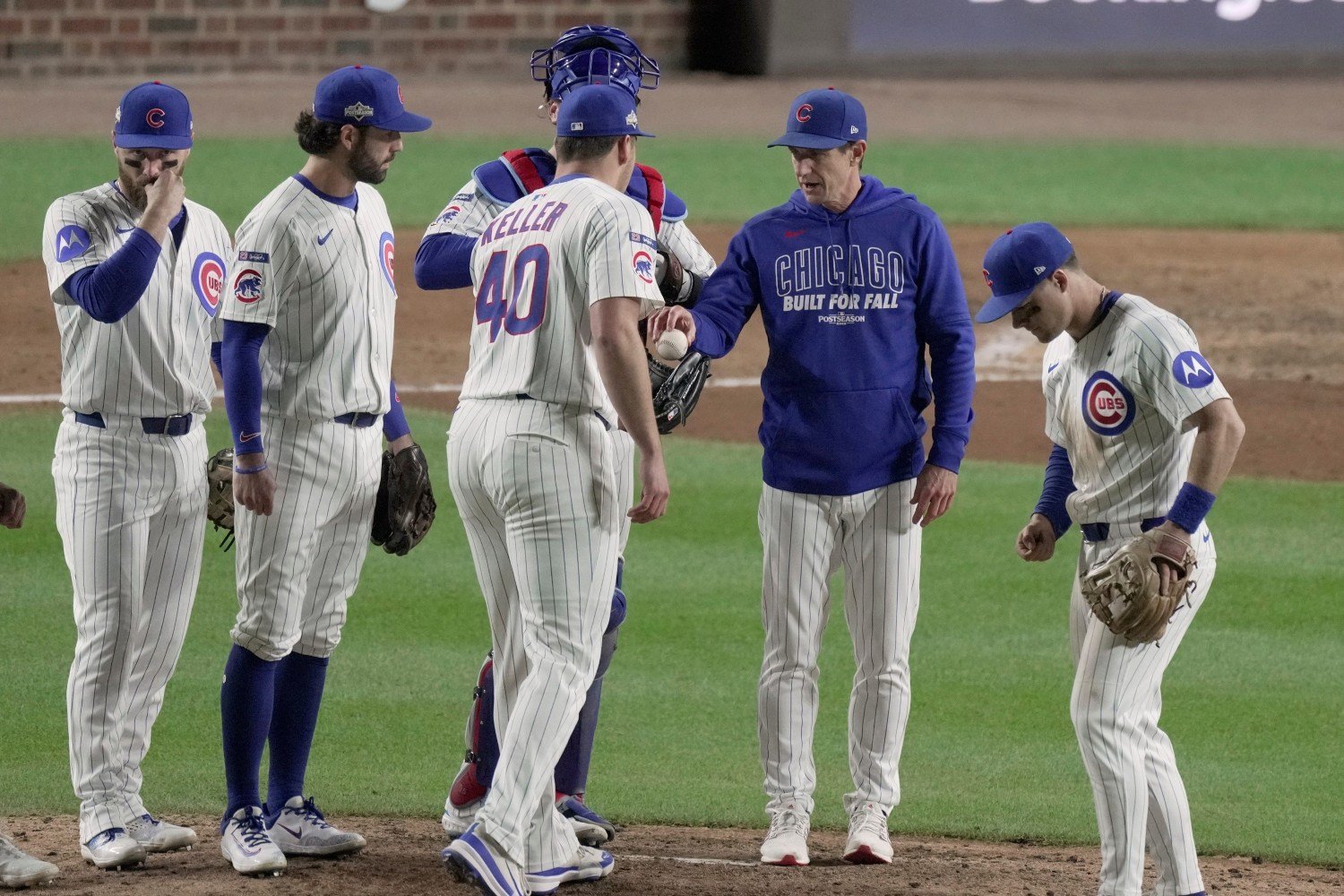 The Cubs are still alive. After scoring in the first inning for the third time in a row, the team actually held on to their lead for the first time. To the surprise of absolutely nobody; that four-run early outburst was the extent of the Cubs’ scoring for the game. Luckily, Jameson Taillon dialed things in for the next 2 innings and change, retiring 8 in a row, before allowing another run in the 4th. Drew Pomeranz took over for Taillon in the fifth. Pomeranz and Daniel Palencia each threw a scoreless inning, before Andrew Kittredge gave up a run in the top of the 7th. Even with a few tense moments for Caleb Thielbar and Brad Keller, the Cubs were able to keep the tying run off the board and hold on to the 4-3 lead. They've relied heavily on their bullpen during the playoffs so far, and Game 4 will be an all-hands-on-deck approach as they try to fend off elimination and send the series back to Milwaukee. Matthew Boyd will start for the second time this series, and the third time this postseason. Infamously, in Game 1, he couldn’t even make it out of the first inning. He was charged with six runs, although four were unearned due to Nico Hoerner’s blunder at second base and two scored after he departed. Milwaukee had no problem squaring up the funky veteran lefty. With his recent usage and ineffectiveness, it feels likely that Boyd is going to be used as a glorified opener Thursday, passing the ball to Colin Rea—who has been surprisingly absent from the pitching plans this series after dominating in September. Rea’s only action in this series has been his 3 1/3 innings of mop-up duty in Monday’s blowout. The idea with starting Boyd can be tied to the lefty hitters that Milwaukee tends to stack at the top of their lineup: Christian Yelich, Brice Turang, and Sal Frelick. In Game 1, Turang hit second, Yelich in the cleanup spot and Frelick was pushed down to sixth. If Boyd can get through the first and second innings without imploding again, Rea might come in and give them three or four innings of shut down ball. This will put the Cubs in a situation where they will not need to use a parade of middle relievers starting in inning No. 4 or 5, as they have been doing all postseason. Rea did not allow a run in his multi-inning stint on Monday, and though he did not record a strikeout, it's not necessarily a bad idea to pitch to contact on a cool night in Chicago, where the ball won’t be carrying as easily. Aaron Civale and Ben Brown are also capable of going a few innings, and pitched well in their appearances on Saturday when the game was already out of reach. Neither has pitched since, surely making them available for a few innings if needed. Fans may cringe hearing that Brown is an option, considering his volatility this season and his ERA close to 6.00. Civale hasn’t been with the Cubs long, and was generally bad this season with the Brewers and White Sox. He does have a 2.08 ERA and a WHIP of 0.54 in 13 innings since joining the Cubs, which makes him the hot hand over Brown—though the Cubs don't make decisions that way, and Brown's superior stuff might make him the preferred choice between the two. This is not meant to be a slight toward Brown, because Cubs fans would likely prefer him taking the mound before Michael Soroka, who should be kept in the equipment closet for this game without access to anything resembling a baseball. (Again, though, if the Cubs trust the stuff, he'll go in there; his lousy showing in Game 1 was an unfair representation of what he's capable of.) Pomeranz, Kittredge, Palencia, Keller and Thielbar will all be available, but ideally, not all of them will be needed, with Rea or Civale taking over for a multi-inning relief appearance after a short Boyd appearance. Thielbar or Pomeranz will inevitably enter when Yelich comes up late in the game, or when Jake Bauers comes in off the bench. Keller should close again, but this pen has been used a lot the past week, which is why Counsell may decide to go with an arm who did not pitch yesterday instead of trusting Kittredge, who has looked low on gas. Palencia's electric fastball should keep him in the plans today, but do not be surprised to see him enter mid-inning to limit his fatigue or to see Counsell use him against the bottom of the Milwaukee order. Even after losing the first two games in Milwaukee, Wrigley Field was buzzing last night with fans who haven’t lost hope. The vibes should be the same Thursday night, and it apparently starts with Boyd. If he can get through two scoreless innings with the offense getting off to an early lead off Peralta, there is a good chance we can see this go to a Game 5.
 -
Image courtesy of © Mark Hoffman/Milwaukee Journal Sentinel / USA TODAY NETWORK via Imagn Images The Cubs are still alive. After scoring in the first inning for the third time in a row, the team actually held on to their lead for the first time. To the surprise of absolutely nobody; that four-run early outburst was the extent of the Cubs’ scoring for the game. Luckily, Jameson Taillon dialed things in for the next 2 innings and change, retiring 8 in a row, before allowing another run in the 4th. Drew Pomeranz took over for Taillon in the fifth. Pomeranz and Daniel Palencia each threw a scoreless inning, before Andrew Kittredge gave up a run in the top of the 7th. Even with a few tense moments for Caleb Thielbar and Brad Keller, the Cubs were able to keep the tying run off the board and hold on to the 4-3 lead. They've relied heavily on their bullpen during the playoffs so far, and Game 4 will be an all-hands-on-deck approach as they try to fend off elimination and send the series back to Milwaukee. Matthew Boyd will start for the second time this series, and the third time this postseason. Infamously, in Game 1, he couldn’t even make it out of the first inning. He was charged with six runs, although four were unearned due to Nico Hoerner’s blunder at second base and two scored after he departed. Milwaukee had no problem squaring up the funky veteran lefty. With his recent usage and ineffectiveness, it feels likely that Boyd is going to be used as a glorified opener Thursday, passing the ball to Colin Rea—who has been surprisingly absent from the pitching plans this series after dominating in September. Rea’s only action in this series has been his 3 1/3 innings of mop-up duty in Monday’s blowout. The idea with starting Boyd can be tied to the lefty hitters that Milwaukee tends to stack at the top of their lineup: Christian Yelich, Brice Turang, and Sal Frelick. In Game 1, Turang hit second, Yelich in the cleanup spot and Frelick was pushed down to sixth. If Boyd can get through the first and second innings without imploding again, Rea might come in and give them three or four innings of shut down ball. This will put the Cubs in a situation where they will not need to use a parade of middle relievers starting in inning No. 4 or 5, as they have been doing all postseason. Rea did not allow a run in his multi-inning stint on Monday, and though he did not record a strikeout, it's not necessarily a bad idea to pitch to contact on a cool night in Chicago, where the ball won’t be carrying as easily. Aaron Civale and Ben Brown are also capable of going a few innings, and pitched well in their appearances on Saturday when the game was already out of reach. Neither has pitched since, surely making them available for a few innings if needed. Fans may cringe hearing that Brown is an option, considering his volatility this season and his ERA close to 6.00. Civale hasn’t been with the Cubs long, and was generally bad this season with the Brewers and White Sox. He does have a 2.08 ERA and a WHIP of 0.54 in 13 innings since joining the Cubs, which makes him the hot hand over Brown—though the Cubs don't make decisions that way, and Brown's superior stuff might make him the preferred choice between the two. This is not meant to be a slight toward Brown, because Cubs fans would likely prefer him taking the mound before Michael Soroka, who should be kept in the equipment closet for this game without access to anything resembling a baseball. (Again, though, if the Cubs trust the stuff, he'll go in there; his lousy showing in Game 1 was an unfair representation of what he's capable of.) Pomeranz, Kittredge, Palencia, Keller and Thielbar will all be available, but ideally, not all of them will be needed, with Rea or Civale taking over for a multi-inning relief appearance after a short Boyd appearance. Thielbar or Pomeranz will inevitably enter when Yelich comes up late in the game, or when Jake Bauers comes in off the bench. Keller should close again, but this pen has been used a lot the past week, which is why Counsell may decide to go with an arm who did not pitch yesterday instead of trusting Kittredge, who has looked low on gas. Palencia's electric fastball should keep him in the plans today, but do not be surprised to see him enter mid-inning to limit his fatigue or to see Counsell use him against the bottom of the Milwaukee order. Even after losing the first two games in Milwaukee, Wrigley Field was buzzing last night with fans who haven’t lost hope. The vibes should be the same Thursday night, and it apparently starts with Boyd. If he can get through two scoreless innings with the offense getting off to an early lead off Peralta, there is a good chance we can see this go to a Game 5. View full article
-
Image courtesy of © Kamil Krzaczynski-Imagn Images It's happening. The Cubs are advancing in the postseason for the first time since 2017. The pitching staff took care of business against a Padres team with some elite hitting talent (though their actual production never lived up to the hype). Craig Counsell’s unique usage of his pitching staff won them the series -- they only allowed five runs over the three games -- though it's put the rotation in something of a bind ahead of the NLDS. As the team heads to Milwaukee on Saturday to square off with ace Freddy Peralta, the first question that needs to be answered is who will toe the rubber to start Game 1? We know Cade Horton likely won’t be available for at least the beginning of the series, if at all, and Shota Imanaga and Jameson Taillon are still resting after their Wild Card Round starts. That leaves three options, assuming Counsell doesn't try to get cute with more openers against his former team. Option 1: Colin Rea Rea pitched 1 2/3 relief innings on Wednesday for his only action of the Padres series. The 35-year-old is coming off the best statistical season of his career, posting a 3.95 ERA across 32 games (27 starts). In September, Rea has been one of the most dependable starters on the roster, so it makes sense to continue to ride the hot hand. His 1.45 FIP in four starts ranked lowest amongst Cubs starters, and his 1.0 fangraphs WAR puts him in a tie for third amongst all starters in baseball over that time period. To put things in perspective, the only two starters ahead of him were Kevin Gausman and Logan Webb, and he was tied with the likes of the best pitcher in baseball, Paul Skenes, super prospect Bubba Chandler, as well as Cy Young contender Yoshinobu Yamamoto and Orioles’ ace Kyle Bradish. Rea has made two starts versus Milwaukee in 2025; one solid (3 ER over 5.2 IP) and one clunker (9 hits, 4 ER over 4 IP). It could be the hot September that earns Rea the Game 1 start, although it is worth noting that he has given up 14 home runs this season to lefties. The Brewers have Christian Yelich, Brice Turang, and Sal Frelick entrenched in their lineup regardless of the pitcher, but they can also add Jake Bauers and switch hitters Blake Perkins and Isaac Collins to their lineup as well, potentially making this a rough matchup for Rea. Option 2: Matthew Boyd Boyd threw 58 pitches on Tuesday to open the series. It was a questionable hook when Counsell pulled him early in the game, when he was throwing well. We’ve seen starters throw on three days rest in the postseason before, but those starters are usually ace level workhorses, not a mid-30s starter coming off the best season of his career. Although the 2025 All-Star may be Jed Hoyer’s best bargain bin pickup this season, since July 28, Boyd has an ERA over 5.00 across 11 starts. In six of those starts, he has given up at least four runs, something he had only done once prior in 2025. He has thrown the second-most innings of his career this season (179.2), and has not previously topped 100 innings this decade (185 IP in 2019). We’ve seen Boyd thrive all year, including in the Wild Card Round, but a lot of signs are pointing to him running out of gas. It would be smart to get him a few extra rest days instead of letting him go on short rest. Also, across 10 1/3 innings versus Milwaukee this season, Boyd has given up 10 runs. Yikes. Option 3: Javier Assad This is the Wild Card option, assuming Michael Soroka and Aaron Civale don't enter last-minute consideration. Assad has been one of the Cubs’ most reliable starters since he arrived in the majors in 2022. Although he dealt with injuries for most of this season, he still pitched to a respectable 3.65 ERA in eight games (seven starts) and registered the lowest WHIP of his career at 1.21. Assad did not face the Brewers in 2025, but in 2024, he did not allow a run in his two starts against them. Starting Assad would likely lead to another quick hook after 18 batters (twice through the lineup), regardless of how well he is pitching. We have seen Counsell lean heavily on the bullpen so far, so an Assad start would fit the current blueprint. It is worth noting that Assad did not give up a run in his last start of 2025, when he threw 5 1/3 shutout innings versus the Cardinals on Sunday. He can also be used in a multi-inning relief role, say, if Boyd starts Game 1 and can only give the team a few innings. Who do you think will take the ball in Game 1 for the Cubs? Let us know in the comments! View full article
-
 It's happening. The Cubs are advancing in the postseason for the first time since 2017. The pitching staff took care of business against a Padres team with some elite hitting talent (though their actual production never lived up to the hype). Craig Counsell’s unique usage of his pitching staff won them the series -- they only allowed five runs over the three games -- though it's put the rotation in something of a bind ahead of the NLDS. As the team heads to Milwaukee on Saturday to square off with ace Freddy Peralta, the first question that needs to be answered is who will toe the rubber to start Game 1? We know Cade Horton likely won’t be available for at least the beginning of the series, if at all, and Shota Imanaga and Jameson Taillon are still resting after their Wild Card Round starts. That leaves three options, assuming Counsell doesn't try to get cute with more openers against his former team. Option 1: Colin Rea Rea pitched 1 2/3 relief innings on Wednesday for his only action of the Padres series. The 35-year-old is coming off the best statistical season of his career, posting a 3.95 ERA across 32 games (27 starts). In September, Rea has been one of the most dependable starters on the roster, so it makes sense to continue to ride the hot hand. His 1.45 FIP in four starts ranked lowest amongst Cubs starters, and his 1.0 fangraphs WAR puts him in a tie for third amongst all starters in baseball over that time period. To put things in perspective, the only two starters ahead of him were Kevin Gausman and Logan Webb, and he was tied with the likes of the best pitcher in baseball, Paul Skenes, super prospect Bubba Chandler, as well as Cy Young contender Yoshinobu Yamamoto and Orioles’ ace Kyle Bradish. Rea has made two starts versus Milwaukee in 2025; one solid (3 ER over 5.2 IP) and one clunker (9 hits, 4 ER over 4 IP). It could be the hot September that earns Rea the Game 1 start, although it is worth noting that he has given up 14 home runs this season to lefties. The Brewers have Christian Yelich, Brice Turang, and Sal Frelick entrenched in their lineup regardless of the pitcher, but they can also add Jake Bauers and switch hitters Blake Perkins and Isaac Collins to their lineup as well, potentially making this a rough matchup for Rea. Option 2: Matthew Boyd Boyd threw 58 pitches on Tuesday to open the series. It was a questionable hook when Counsell pulled him early in the game, when he was throwing well. We’ve seen starters throw on three days rest in the postseason before, but those starters are usually ace level workhorses, not a mid-30s starter coming off the best season of his career. Although the 2025 All-Star may be Jed Hoyer’s best bargain bin pickup this season, since July 28, Boyd has an ERA over 5.00 across 11 starts. In six of those starts, he has given up at least four runs, something he had only done once prior in 2025. He has thrown the second-most innings of his career this season (179.2), and has not previously topped 100 innings this decade (185 IP in 2019). We’ve seen Boyd thrive all year, including in the Wild Card Round, but a lot of signs are pointing to him running out of gas. It would be smart to get him a few extra rest days instead of letting him go on short rest. Also, across 10 1/3 innings versus Milwaukee this season, Boyd has given up 10 runs. Yikes. Option 3: Javier Assad This is the Wild Card option, assuming Michael Soroka and Aaron Civale don't enter last-minute consideration. Assad has been one of the Cubs’ most reliable starters since he arrived in the majors in 2022. Although he dealt with injuries for most of this season, he still pitched to a respectable 3.65 ERA in eight games (seven starts) and registered the lowest WHIP of his career at 1.21. Assad did not face the Brewers in 2025, but in 2024, he did not allow a run in his two starts against them. Starting Assad would likely lead to another quick hook after 18 batters (twice through the lineup), regardless of how well he is pitching. We have seen Counsell lean heavily on the bullpen so far, so an Assad start would fit the current blueprint. It is worth noting that Assad did not give up a run in his last start of 2025, when he threw 5 1/3 shutout innings versus the Cardinals on Sunday. He can also be used in a multi-inning relief role, say, if Boyd starts Game 1 and can only give the team a few innings. Who do you think will take the ball in Game 1 for the Cubs? Let us know in the comments!
 -
Image courtesy of © David Banks-Imagn Images Nothing says postseason baseball like an 80° day in Chicago on the eve of October. Whether or not the temperature reflects normal fall weather, though, the Cubs and the Padres met in the postseason for the first time since 1984. Cubs (de facto) ace Matthew Boyd took on a starter whom they should have pursued in the offseason: Nick Pivetta. Pivetta is coming off of the best year of his career, wherein he posted a 13-5 record with a 2.87 ERA and 5.3 WAR. Pivetta was dominant to begin the game, striking out 6 in his first 4 innings, while only allowing 1 hit. The 5th inning ended up being the decisive blow to the Friars, with Seiya Suzuki staying red-hot by belting a solo shot to left. Immediately after that, Carson Kelly launched another solo home run. The Cubs remained up by a run until the bottom of the 8th, when a Nico Hoerner sacrifice fly added an insurance run, and the bullpen remained sharp. Brad Keller shut the door in the 9th, to give the Cubs their first postseason win since 2017. That's the view from 10,000 feet, but let's break it down from an in-the-ballpark perspective. For instance: fans were on edge before the game started. Cubs alumnus and 2015 Cy Young Award winner Jake Arrieta was tasked with throwing out the first pitch, which sailed wide right, over the head of Jordan Wicks. Superstitious Cubs fans were hoping this wasn't an omen, but worrying that it was. Boyd attacked the zone early and put up a 1-2-3 first inning versus the top of the Padres’ lineup, which featured Fernando Tatis Jr, Luis Arraez, and Manny Machado. In the bottom of the inning, Michael Busch got fans on their feet with a long fly ball that died at the warning track. Hoerner got the Cubs in the hit column with a single, but Ian Happ and Kyle Tucker both went down on strikes to end the inning. San Diego got onto the board in the second. Sophomore star Jackson Merrill led off the inning with a double, on a flare into wide-open space in right field. Shortstop Xander Bogaerts then hit another double, scoring Merrill. Pete Crow-Armstrong's throw to second skipped free on the infield, too, allowing Bogaerts to scamper to third. The game could have cracked open right then and there. Instead, against the very next batter, a diving Dansby Swanson saved a hit and a run. Boyd was able to retire the side with only one run scoring. Pivetta, however, added two more strikeouts in the bottom of the second, punching out Carson Kelly and Crow-Armstrong. In the third, Boyd retired the side in order, getting Freddy Fermin and Tatis to ground out before striking out Arraez. The latter drew a huge roar from the crowd, still trying to maintain their raucous energy, fueled by an understanding that Arraez is the toughest hitter in the league to punch out. Pivetta matched Boyd in the bottom of the inning with a 1-2-3 of his own, striking out Matt Shaw. Boyd stranded another runner in scoring position in the top of inning number 4. He started the inning by walking Machado, whom Merrill bunted over to second. Bogaerts reached with an infield single, which moved Machado to third and threatened to give San Diego some insurance again. Boyd got Ryan O'Hearn to pop out to Swanson, who made a running catch a la Davante Adams to save another run. Boyd got out of the inning unscathed after retiring Gavin Sheets on a flyout to center. Pivetta, once again, retired the side in order in the bottom of the inning, adding yet another strikeout. Boyd started the top of the fifth with a strikeout of Jake Cronenworth. Ninth hitter and catcher Freddy Fermin singled to center field, though, and surprisingly, Craig Counsell went to the bullpen. Boyd had only given up four hits and thrown 58 pitches. Daniel Palencia retired both Tatis and Arraez in order, despite allowing some hard contact. In the bottom of the inning, Suzuki and Kelly put the Cubs on the board and in front with their back-to-back home runs—although, after the blows fell, Pivetta struck out Crow-Armstrong, Swanson, and Shaw in order, ending his day with a flourish. Palencia stayed in the game for the 6th, where he struck out Machado with a dirty slider and then Merrill on a 101-mph fastball. He retired Bogaerts next to retire the side. The Cubs got it going again in the bottom of the inning against lefty Adrian Morejon. Busch and Hoerner started the inning off with singles, but as quickly as the rally started, Happ ended it with a 5-4-3 double play. Tucker wasn’t able to do anything with 2 outs and nobody on. In the seventh, Pomeranz relieved Palencia and retired the side with little issue. Although O’Hearn and Sheets hit hard line drives, the Padres went down in order. After Eddie Vedder performed the seventh-inning stretch, the Padres' surprise trade acquisition Mason Miller relieved Morejon and did what everyone expected him to do: strike out the side in order, on some truly unhittable stuff. Andrew Kittredge entered in the top of the eighth, and breezed through Fermin, Tatis and Arraez. Ex-Cub Jeremiah Estrada relieved Miller in the bottom of the inning, and the Cubs were able to tack on an insurance run. Swanson led off with a single, and Shaw’s swinging bunt moved Swanson to second. After Padres manager Mike Shildt pulled an Oli Marmol by walking Michael Busch, karma hit: a passed ball allowed the runners to advance. Hoerner drove in Swanson with a sacrifice fly before lefty Wandy Peralta entered to strike out Happ. New closer(?) Brad Keller came in to shut the door in the 9th. He immediately retired Machado on a ground ball to short and Merrill on a flyout to center. The only drama came at the beginning of Bogaerts's at-bat. Keller considered stepping off to adjust his PitchCom device's volume, then realized it was too late in the pitch clock to make that request. By the time he regained the rubber, Bogaerts had looked toward the home-plate umpire and asked for time, but again, it was too late for that, according to the rules. Initially, Bogaerts was assessed a strike, but after a conference between the umpires, he was charged the timeout instead. It was a good little compromise; Keller created the problem and the eventual call avoided punishing Bogaerts for it. Besides, it did not matter, as Bogaerts struck out looking. The Cubs go for the mini-sweep this afternoon. Kittredge will serve as the opener, against Padres righty and former mound prince of Chicago, Dylan Cease. View full article
-
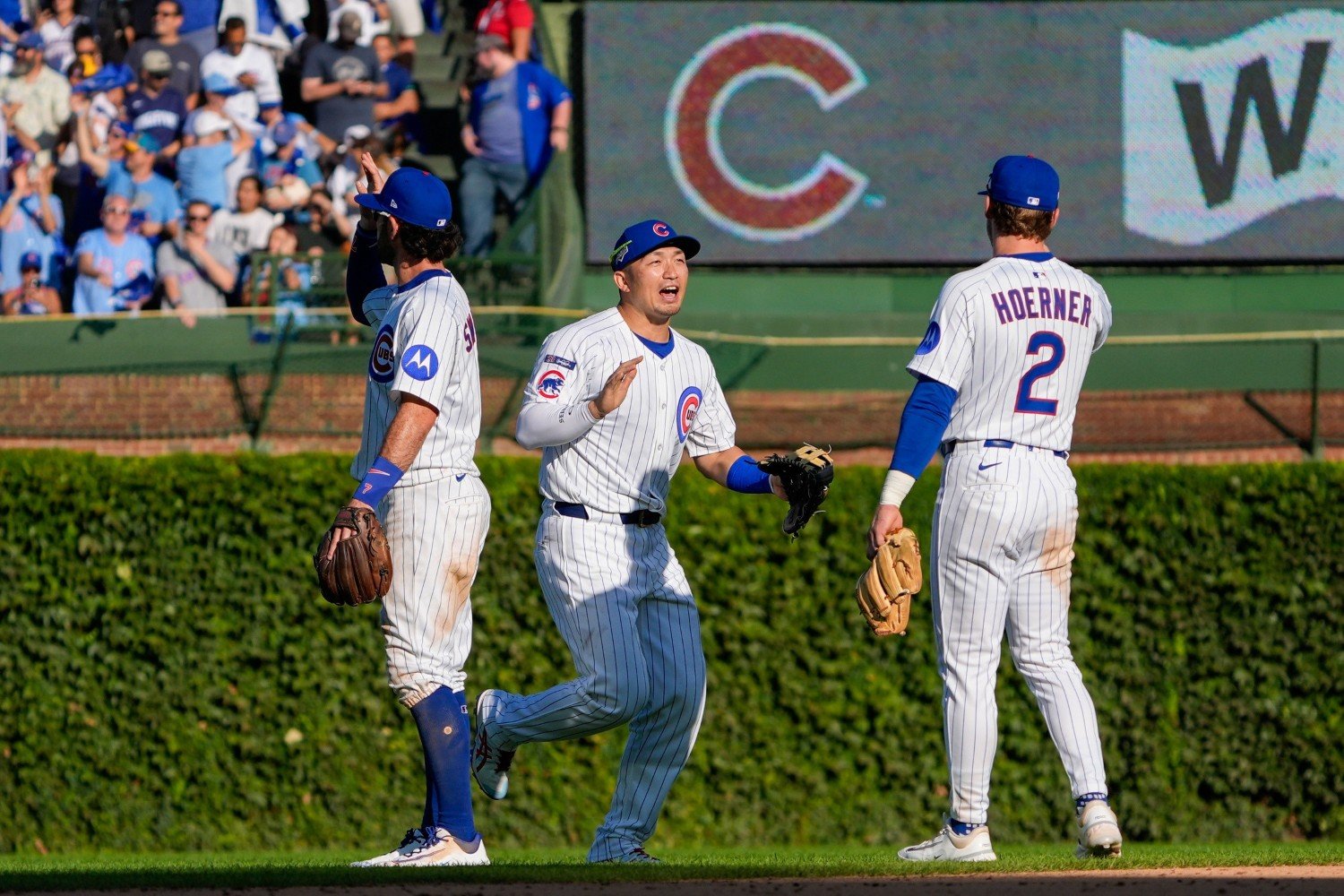 Nothing says postseason baseball like an 80° day in Chicago on the eve of October. Whether or not the temperature reflects normal fall weather, though, the Cubs and the Padres met in the postseason for the first time since 1984. Cubs (de facto) ace Matthew Boyd took on a starter whom they should have pursued in the offseason: Nick Pivetta. Pivetta is coming off of the best year of his career, wherein he posted a 13-5 record with a 2.87 ERA and 5.3 WAR. Pivetta was dominant to begin the game, striking out 6 in his first 4 innings, while only allowing 1 hit. The 5th inning ended up being the decisive blow to the Friars, with Seiya Suzuki staying red-hot by belting a solo shot to left. Immediately after that, Carson Kelly launched another solo home run. The Cubs remained up by a run until the bottom of the 8th, when a Nico Hoerner sacrifice fly added an insurance run, and the bullpen remained sharp. Brad Keller shut the door in the 9th, to give the Cubs their first postseason win since 2017. That's the view from 10,000 feet, but let's break it down from an in-the-ballpark perspective. For instance: fans were on edge before the game started. Cubs alumnus and 2015 Cy Young Award winner Jake Arrieta was tasked with throwing out the first pitch, which sailed wide right, over the head of Jordan Wicks. Superstitious Cubs fans were hoping this wasn't an omen, but worrying that it was. Boyd attacked the zone early and put up a 1-2-3 first inning versus the top of the Padres’ lineup, which featured Fernando Tatis Jr, Luis Arraez, and Manny Machado. In the bottom of the inning, Michael Busch got fans on their feet with a long fly ball that died at the warning track. Hoerner got the Cubs in the hit column with a single, but Ian Happ and Kyle Tucker both went down on strikes to end the inning. San Diego got onto the board in the second. Sophomore star Jackson Merrill led off the inning with a double, on a flare into wide-open space in right field. Shortstop Xander Bogaerts then hit another double, scoring Merrill. Pete Crow-Armstrong's throw to second skipped free on the infield, too, allowing Bogaerts to scamper to third. The game could have cracked open right then and there. Instead, against the very next batter, a diving Dansby Swanson saved a hit and a run. Boyd was able to retire the side with only one run scoring. Pivetta, however, added two more strikeouts in the bottom of the second, punching out Carson Kelly and Crow-Armstrong. In the third, Boyd retired the side in order, getting Freddy Fermin and Tatis to ground out before striking out Arraez. The latter drew a huge roar from the crowd, still trying to maintain their raucous energy, fueled by an understanding that Arraez is the toughest hitter in the league to punch out. Pivetta matched Boyd in the bottom of the inning with a 1-2-3 of his own, striking out Matt Shaw. Boyd stranded another runner in scoring position in the top of inning number 4. He started the inning by walking Machado, whom Merrill bunted over to second. Bogaerts reached with an infield single, which moved Machado to third and threatened to give San Diego some insurance again. Boyd got Ryan O'Hearn to pop out to Swanson, who made a running catch a la Davante Adams to save another run. Boyd got out of the inning unscathed after retiring Gavin Sheets on a flyout to center. Pivetta, once again, retired the side in order in the bottom of the inning, adding yet another strikeout. Boyd started the top of the fifth with a strikeout of Jake Cronenworth. Ninth hitter and catcher Freddy Fermin singled to center field, though, and surprisingly, Craig Counsell went to the bullpen. Boyd had only given up four hits and thrown 58 pitches. Daniel Palencia retired both Tatis and Arraez in order, despite allowing some hard contact. In the bottom of the inning, Suzuki and Kelly put the Cubs on the board and in front with their back-to-back home runs—although, after the blows fell, Pivetta struck out Crow-Armstrong, Swanson, and Shaw in order, ending his day with a flourish. Palencia stayed in the game for the 6th, where he struck out Machado with a dirty slider and then Merrill on a 101-mph fastball. He retired Bogaerts next to retire the side. The Cubs got it going again in the bottom of the inning against lefty Adrian Morejon. Busch and Hoerner started the inning off with singles, but as quickly as the rally started, Happ ended it with a 5-4-3 double play. Tucker wasn’t able to do anything with 2 outs and nobody on. In the seventh, Pomeranz relieved Palencia and retired the side with little issue. Although O’Hearn and Sheets hit hard line drives, the Padres went down in order. After Eddie Vedder performed the seventh-inning stretch, the Padres' surprise trade acquisition Mason Miller relieved Morejon and did what everyone expected him to do: strike out the side in order, on some truly unhittable stuff. Andrew Kittredge entered in the top of the eighth, and breezed through Fermin, Tatis and Arraez. Ex-Cub Jeremiah Estrada relieved Miller in the bottom of the inning, and the Cubs were able to tack on an insurance run. Swanson led off with a single, and Shaw’s swinging bunt moved Swanson to second. After Padres manager Mike Shildt pulled an Oli Marmol by walking Michael Busch, karma hit: a passed ball allowed the runners to advance. Hoerner drove in Swanson with a sacrifice fly before lefty Wandy Peralta entered to strike out Happ. New closer(?) Brad Keller came in to shut the door in the 9th. He immediately retired Machado on a ground ball to short and Merrill on a flyout to center. The only drama came at the beginning of Bogaerts's at-bat. Keller considered stepping off to adjust his PitchCom device's volume, then realized it was too late in the pitch clock to make that request. By the time he regained the rubber, Bogaerts had looked toward the home-plate umpire and asked for time, but again, it was too late for that, according to the rules. Initially, Bogaerts was assessed a strike, but after a conference between the umpires, he was charged the timeout instead. It was a good little compromise; Keller created the problem and the eventual call avoided punishing Bogaerts for it. Besides, it did not matter, as Bogaerts struck out looking. The Cubs go for the mini-sweep this afternoon. Kittredge will serve as the opener, against Padres righty and former mound prince of Chicago, Dylan Cease.
-
- 1
-

-
- seiya suzuki
- matthew boyd
- (and 5 more)
-
Image courtesy of © Katie Stratman-Imagn Images How does an athlete establish a connection with a fan base? Usually, its performance. The best players put up the best stats to help their team win more games. We’ve also seen players show a devout admiration toward their city and fans. You’ll see players sign a big contract then start doing endorsements with local brands or hanging out at bars in the city. However, sometimes, it's not sustained success on the field that wins over the fans. It can be a memorable moment or two, a unique look, or a hot streak born out of irrelevancy, that can earn a player a spot in the team’s lore. Linsanity has become a bit of a short-hand way of understanding this phenomenon, but the idea isn't too complex; some players simply find a way to nestle themselves into "cult favorite" status by just injecting the fanbase with joy. With the team set for the playoffs this year, let's take a breather and stroll down memory lane. In this piece, we'll look back at is Cubs player in recent memory at each position that you will not hear about on MLB Network, but you’ll hear about in “remember when” conversations in the bleachers and at any bar down Clark St. Note: This is not about studs who spend a short time on the North Side, so there won’t be mentions of Aroldis Chapman or Jim Edmonds, for example. Catcher: David Ross Okay, we are off to a debatable start. Ross is hardly an unknown across the MLB universe. Ross is a 15-year MLB veteran and played for six different teams from 2002 to 2016. We all know he was also the successor to Joe Maddon as the club's manager. During his playing days on the Cubs in 2015 and 2016, though, he was the ultimate character. Whether it be his iconic gray beard, his role as personal catcher for Jon Lester, or his fatherly antics with Anthony Rizzo and Kris Bryant, Grandpa Rossy is the catcher that will be talked about when celebrating the 2016 World Series Champion Cubs decades from now. For what its worth, he did put up a .784 OPS at 39 years old in 2016. Even if he did not become the oldest player to hit a home run in the seventh game of a World Series, he would still be the obvious choice for this list. Honorable Mentions: Carson Kelly, Michael Barrett First Base: Frank Schwindel The second half of 2021 was a bleak affair on the North Side. The infamous July collapse lead to the trades of Rizzo, Bryant, Javier Baez, and Craig Kimbrel, which left the Cubs with a hodgepodge of nothingness of their own (a big thanks to Dennis Eckersley for that line) for the remainder of the season. Enter Frank “The Tank” Schwindel. The former 18th-round pick out of St. Johns University crapped out in Kansas City, Detroit, and Oakland before winding up on the Cubs via a waiver claim in July of 2021. Schwindel was promoted on July 30 after the Rizzo trade and gave fans something shiny to look at for the next few months. He hit .344 with six homers and 18 RBIs while posting a 1.030 OPS in August, which was good enough to earn him Rookie of the Month honors. On September 5 of that season, he hit a go-ahead grand slam to seal the win for the Cubs against the Pirates. That grand slam was the third go ahead grand slam of the game, the only time this has happened in MLB history. Ultimately, that was the apex of his time in Chicago. After bouncing around between Wrigley and Iowa for most of 2022, he was released that September and has not appeared in a major league game since. HM: Matt Stairs, Hee-Seop Choi, Bryan LaHair Second Base: Donnie Murphy 2013 was a largely forgettable year for the Cubs outside of it being Rizzo’s first full year in the big leagues. Luis Valbuena was the starting second baseman, which is a great example of how unremarkable the Cubs teams of this era were. Although, for a couple weeks in August, we got to meet Donnie Baseball. Valbuena got hurt, and the Cubs called upon a guy with 640 big league plate appearances across parts of seven seasons. From August 4 through the 22nd, Murphy hit .328 with eight home runs. He had two separate two homer games during this stretch as well, including one that put the Cubs ahead of the Phillies in the ninth. Here is Murphy spoiling a complete game for Stephen Strasburg. For the remainder of the season, his batting average fell close to the Mendoza line and he never appeared for the Cubs again after 2013. He caught on with the Rangers the next season where he hit in the .190s, and then that was it for Donnie Baseball. HM: Mike Fontenot, Todd Walker Shortstop: Rickey Gutierrez The crosstown series doesn’t hit like it used to. I remember going to these games as a kid and getting a real sense that these fans hated each other. Now, it's like the Disney Channel version of that. The players treat it like any other series, and the fans just go through the motions. Gutierrez makes this spot because of his role in that rivalry. On July 12th, 2001, the White Sox were visiting Wrigley, and the game is tied 1-1 entering the bottom of the eighth. Sox Pitcher Bob Howry intentionally loads the bases to face Gutierrez, who needed only one pitch to do his thing. Gutierrez hit a grand slam to left field, which ended up winning the game for the Cubs. It is worth mentioning that Gutierrez had the two best seasons of his career with the Cubs in 2000 and 2001, where he posted 3.1 WAR (his total career WAR over 12 seasons was -1.4). HM: Ryan Theriot, Munenori Kawasaki Third Base: David Bote This would have been a great spot for Patrick Wisdom, but he stuck around for another three painful seasons after his hot month and change in 2021. On the other hand, David Bote probably, maybe, deserved more of a runway with the Cubs than he got. He appeared in six seasons with the team, from 2018 to 2022, and again briefly last season. Although he was given an extension, he only had two seasons with over 300 plate appearances. Bote was an 18th0round pick, and never had a real prospect pedigree. He became the type of player that you root for as a feel good story. On August 12, 2018, weeks after his debut, he walked off the Nationals with a grand slam. Twelve days later, he hit another walk-off home run to down the Reds. Sadly, that stretch has been the highlight of Bote’s career. He signed a minor league deal with the Dodgers for 2025 but has not played in a game for the MLB team yet. HM: Jake Fox, Tommy LaStella Left Field: Matt Murton Murton was originally drafted by Boston in the first round of the 2003 draft. He came to the Cubs in 2004 as part of the four-team blockbuster that brought Nomar Garciaparra to Chicago. His first two seasons were excellent. Murton hit .321 with a .908 OPS over 160 plate appearances as a rookie in 2005, then he followed that up with a .297 average and an .809 OPS while playing full time in left field the next season. He flipped to right field after the arrival of Cliff Floyd and Alfonso Soriano pushed him out of left. He fell off quickly in 2007 and was off the team by 2008 when he was involved in the Rich Harden trade. Murton was iconic to fans due to his red hair and beard. Owen Caissie might have already supplanted him as the most iconic red-headed Cub this century, but Murton deserves a mention here. HM: Cliff Floyd, Chris Coghlan Center Field: Tony Campana All-Star Marlon Byrd is probably the best player to choose for this spot, but Tony Campana and his main highlight as a Cub, the inside-the-park home run, is enough for him to beat out a player who actually made an All-Star team as a Cub. Campana played two seasons for the Cubs from 2011-2012. He was never an everyday player, but he managed 1.9 WAR and 54 stolen bases in 184 games. Standing at 5’8, his high socks and baggy uniform created this iconic, scrappy look that Cubs fans will remember as a fun character from an otherwise boring era. Also, although it's not a Cubs highlight, in a minor league game with the Reno Aces, Campana stole his way around the bases. HM: Marlon Byrd, Billy Hamilton, Juan Pierre Right Field: Kosuke Fukudome Fukudome became a fan favorite before he even played a game at Wrigley. The NPB superstar was coming off an MVP season just two years before he signed a four-year contract that made him set to become the first-ever Japanese-born Cubs player. In his Major League Baseball debut, he went 3-3 with a walk, a double, and a three-run homer. He hit .327 in the month of April, and an also-impressive .293 in May. He was hitting .275 with seven home runs when he was named a starter in the 2008 All-Star Game. This speaks volumes to how much he was adored by fans at the time; we’ve seen in 2016 and this year how Cubs fans will show out and vote for their players. On a playoff-bound team that was loaded with veteran talent, Fukudome stole the show for the first half of 2008. He was never the same player after that All-Star game though, as he struggled to hit .200 for the rest of 2008 and followed that up with two and a half years of mediocre play before being traded to Cleveland. HM: Nick Castellanos, Xavier Nady (who played more at first base, but for the sake of this exercise we will call a right fielder) Starting Pitcher: Dan Haren The Cubs acquired Haren during their Wild Card push in 2015, and were the eighth and final team of his 13-year career. The move symbolized the window opening for the Theo Epstein version of the Cubs. Haren would join eventual Cy Young winner Jake Arrieta, Jon Lester, Jason Hammel, and Kyle Hendricks to form one of the best Cubs rotations of all time. Haren was more sturdy than spectacular as a Cub, posting a 4.01 ERA with 44 strikeouts over 11 starts. This was still a three-time All-Star with a reputation for being a great clubhouse presence. His Twitter activity under the handle “ithrow88” became retweet fuel for fans as well. Often poking fun at his own ability, Haren gave that “regular guy” energy that fans are so fond of. It's worth noting that Haren retired after his age-34 season, which many may think is quite young, but he probably wanted to get out before he had to change his Twitter handle to “ithrow82”. HM: Jon Lieber, Javier Assad, Jeff Samardzija, Shota Imanaga Relief Pitcher: Andrew Chafin Andrew “Failed Starter” Chafin was the key bullpen addition at the trade deadline for the 2020 Cubs, the last time the team won the NL Central. He threw only three innings in 2020 but re-signed with the Cubs for 2021, when he had the best season of his career. He posted a 2.06 ERA in 39 1/3 innings before being traded to Oakland. Outside of being a productive reliever, it was the look and personality that made Chafin an icon in Chicago for a year. The aforementioned “failed starter” shirt was hilarious but also accurate, as Chafin was a longtime starter before transitioning to the pen. He had another shirt that said “baseball player” in similar font that he wore when he posted this adaptation of the famous quote from 1988 cult classic They Live. That look—the handlebar mustache combined with the curly hair—made him look straight out of a time machine. HM: Travis Wood, Kyle Farnsworth, Pedro Strop Who were your favorite undersung Cubs heroes? Any players we forget to mention here? Let us know in the comments! View full article
-
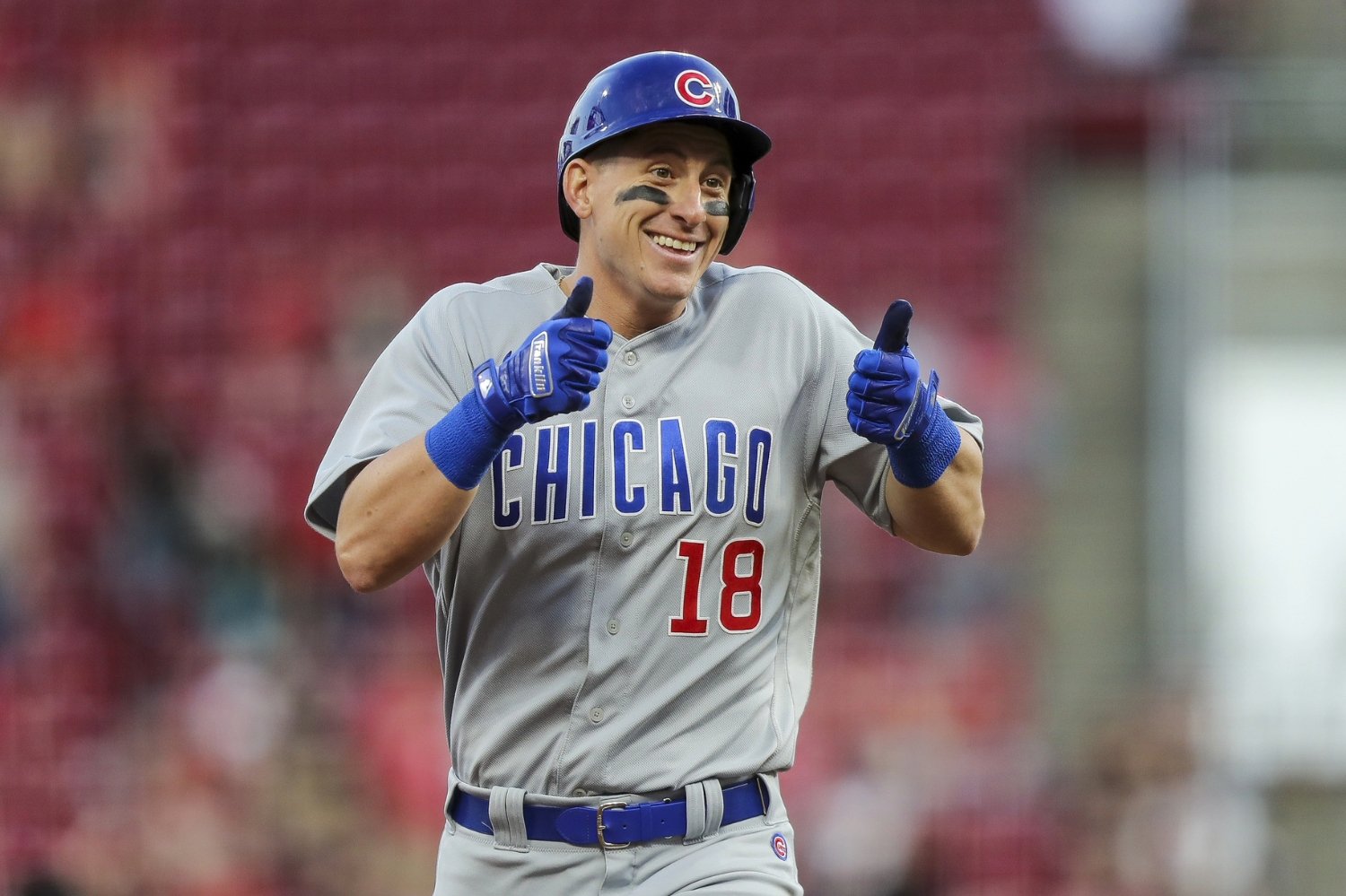 How does an athlete establish a connection with a fan base? Usually, its performance. The best players put up the best stats to help their team win more games. We’ve also seen players show a devout admiration toward their city and fans. You’ll see players sign a big contract then start doing endorsements with local brands or hanging out at bars in the city. However, sometimes, it's not sustained success on the field that wins over the fans. It can be a memorable moment or two, a unique look, or a hot streak born out of irrelevancy, that can earn a player a spot in the team’s lore. Linsanity has become a bit of a short-hand way of understanding this phenomenon, but the idea isn't too complex; some players simply find a way to nestle themselves into "cult favorite" status by just injecting the fanbase with joy. With the team set for the playoffs this year, let's take a breather and stroll down memory lane. In this piece, we'll look back at is Cubs player in recent memory at each position that you will not hear about on MLB Network, but you’ll hear about in “remember when” conversations in the bleachers and at any bar down Clark St. Note: This is not about studs who spend a short time on the North Side, so there won’t be mentions of Aroldis Chapman or Jim Edmonds, for example. Catcher: David Ross Okay, we are off to a debatable start. Ross is hardly an unknown across the MLB universe. Ross is a 15-year MLB veteran and played for six different teams from 2002 to 2016. We all know he was also the successor to Joe Maddon as the club's manager. During his playing days on the Cubs in 2015 and 2016, though, he was the ultimate character. Whether it be his iconic gray beard, his role as personal catcher for Jon Lester, or his fatherly antics with Anthony Rizzo and Kris Bryant, Grandpa Rossy is the catcher that will be talked about when celebrating the 2016 World Series Champion Cubs decades from now. For what its worth, he did put up a .784 OPS at 39 years old in 2016. Even if he did not become the oldest player to hit a home run in the seventh game of a World Series, he would still be the obvious choice for this list. Honorable Mentions: Carson Kelly, Michael Barrett First Base: Frank Schwindel The second half of 2021 was a bleak affair on the North Side. The infamous July collapse lead to the trades of Rizzo, Bryant, Javier Baez, and Craig Kimbrel, which left the Cubs with a hodgepodge of nothingness of their own (a big thanks to Dennis Eckersley for that line) for the remainder of the season. Enter Frank “The Tank” Schwindel. The former 18th-round pick out of St. Johns University crapped out in Kansas City, Detroit, and Oakland before winding up on the Cubs via a waiver claim in July of 2021. Schwindel was promoted on July 30 after the Rizzo trade and gave fans something shiny to look at for the next few months. He hit .344 with six homers and 18 RBIs while posting a 1.030 OPS in August, which was good enough to earn him Rookie of the Month honors. On September 5 of that season, he hit a go-ahead grand slam to seal the win for the Cubs against the Pirates. That grand slam was the third go ahead grand slam of the game, the only time this has happened in MLB history. Ultimately, that was the apex of his time in Chicago. After bouncing around between Wrigley and Iowa for most of 2022, he was released that September and has not appeared in a major league game since. HM: Matt Stairs, Hee-Seop Choi, Bryan LaHair Second Base: Donnie Murphy 2013 was a largely forgettable year for the Cubs outside of it being Rizzo’s first full year in the big leagues. Luis Valbuena was the starting second baseman, which is a great example of how unremarkable the Cubs teams of this era were. Although, for a couple weeks in August, we got to meet Donnie Baseball. Valbuena got hurt, and the Cubs called upon a guy with 640 big league plate appearances across parts of seven seasons. From August 4 through the 22nd, Murphy hit .328 with eight home runs. He had two separate two homer games during this stretch as well, including one that put the Cubs ahead of the Phillies in the ninth. Here is Murphy spoiling a complete game for Stephen Strasburg. For the remainder of the season, his batting average fell close to the Mendoza line and he never appeared for the Cubs again after 2013. He caught on with the Rangers the next season where he hit in the .190s, and then that was it for Donnie Baseball. HM: Mike Fontenot, Todd Walker Shortstop: Rickey Gutierrez The crosstown series doesn’t hit like it used to. I remember going to these games as a kid and getting a real sense that these fans hated each other. Now, it's like the Disney Channel version of that. The players treat it like any other series, and the fans just go through the motions. Gutierrez makes this spot because of his role in that rivalry. On July 12th, 2001, the White Sox were visiting Wrigley, and the game is tied 1-1 entering the bottom of the eighth. Sox Pitcher Bob Howry intentionally loads the bases to face Gutierrez, who needed only one pitch to do his thing. Gutierrez hit a grand slam to left field, which ended up winning the game for the Cubs. It is worth mentioning that Gutierrez had the two best seasons of his career with the Cubs in 2000 and 2001, where he posted 3.1 WAR (his total career WAR over 12 seasons was -1.4). HM: Ryan Theriot, Munenori Kawasaki Third Base: David Bote This would have been a great spot for Patrick Wisdom, but he stuck around for another three painful seasons after his hot month and change in 2021. On the other hand, David Bote probably, maybe, deserved more of a runway with the Cubs than he got. He appeared in six seasons with the team, from 2018 to 2022, and again briefly last season. Although he was given an extension, he only had two seasons with over 300 plate appearances. Bote was an 18th0round pick, and never had a real prospect pedigree. He became the type of player that you root for as a feel good story. On August 12, 2018, weeks after his debut, he walked off the Nationals with a grand slam. Twelve days later, he hit another walk-off home run to down the Reds. Sadly, that stretch has been the highlight of Bote’s career. He signed a minor league deal with the Dodgers for 2025 but has not played in a game for the MLB team yet. HM: Jake Fox, Tommy LaStella Left Field: Matt Murton Murton was originally drafted by Boston in the first round of the 2003 draft. He came to the Cubs in 2004 as part of the four-team blockbuster that brought Nomar Garciaparra to Chicago. His first two seasons were excellent. Murton hit .321 with a .908 OPS over 160 plate appearances as a rookie in 2005, then he followed that up with a .297 average and an .809 OPS while playing full time in left field the next season. He flipped to right field after the arrival of Cliff Floyd and Alfonso Soriano pushed him out of left. He fell off quickly in 2007 and was off the team by 2008 when he was involved in the Rich Harden trade. Murton was iconic to fans due to his red hair and beard. Owen Caissie might have already supplanted him as the most iconic red-headed Cub this century, but Murton deserves a mention here. HM: Cliff Floyd, Chris Coghlan Center Field: Tony Campana All-Star Marlon Byrd is probably the best player to choose for this spot, but Tony Campana and his main highlight as a Cub, the inside-the-park home run, is enough for him to beat out a player who actually made an All-Star team as a Cub. Campana played two seasons for the Cubs from 2011-2012. He was never an everyday player, but he managed 1.9 WAR and 54 stolen bases in 184 games. Standing at 5’8, his high socks and baggy uniform created this iconic, scrappy look that Cubs fans will remember as a fun character from an otherwise boring era. Also, although it's not a Cubs highlight, in a minor league game with the Reno Aces, Campana stole his way around the bases. HM: Marlon Byrd, Billy Hamilton, Juan Pierre Right Field: Kosuke Fukudome Fukudome became a fan favorite before he even played a game at Wrigley. The NPB superstar was coming off an MVP season just two years before he signed a four-year contract that made him set to become the first-ever Japanese-born Cubs player. In his Major League Baseball debut, he went 3-3 with a walk, a double, and a three-run homer. He hit .327 in the month of April, and an also-impressive .293 in May. He was hitting .275 with seven home runs when he was named a starter in the 2008 All-Star Game. This speaks volumes to how much he was adored by fans at the time; we’ve seen in 2016 and this year how Cubs fans will show out and vote for their players. On a playoff-bound team that was loaded with veteran talent, Fukudome stole the show for the first half of 2008. He was never the same player after that All-Star game though, as he struggled to hit .200 for the rest of 2008 and followed that up with two and a half years of mediocre play before being traded to Cleveland. HM: Nick Castellanos, Xavier Nady (who played more at first base, but for the sake of this exercise we will call a right fielder) Starting Pitcher: Dan Haren The Cubs acquired Haren during their Wild Card push in 2015, and were the eighth and final team of his 13-year career. The move symbolized the window opening for the Theo Epstein version of the Cubs. Haren would join eventual Cy Young winner Jake Arrieta, Jon Lester, Jason Hammel, and Kyle Hendricks to form one of the best Cubs rotations of all time. Haren was more sturdy than spectacular as a Cub, posting a 4.01 ERA with 44 strikeouts over 11 starts. This was still a three-time All-Star with a reputation for being a great clubhouse presence. His Twitter activity under the handle “ithrow88” became retweet fuel for fans as well. Often poking fun at his own ability, Haren gave that “regular guy” energy that fans are so fond of. It's worth noting that Haren retired after his age-34 season, which many may think is quite young, but he probably wanted to get out before he had to change his Twitter handle to “ithrow82”. HM: Jon Lieber, Javier Assad, Jeff Samardzija, Shota Imanaga Relief Pitcher: Andrew Chafin Andrew “Failed Starter” Chafin was the key bullpen addition at the trade deadline for the 2020 Cubs, the last time the team won the NL Central. He threw only three innings in 2020 but re-signed with the Cubs for 2021, when he had the best season of his career. He posted a 2.06 ERA in 39 1/3 innings before being traded to Oakland. Outside of being a productive reliever, it was the look and personality that made Chafin an icon in Chicago for a year. The aforementioned “failed starter” shirt was hilarious but also accurate, as Chafin was a longtime starter before transitioning to the pen. He had another shirt that said “baseball player” in similar font that he wore when he posted this adaptation of the famous quote from 1988 cult classic They Live. That look—the handlebar mustache combined with the curly hair—made him look straight out of a time machine. HM: Travis Wood, Kyle Farnsworth, Pedro Strop Who were your favorite undersung Cubs heroes? Any players we forget to mention here? Let us know in the comments!
 -
Image courtesy of © Allan Henry-Imagn Images The Cubs made a flurry of roster moves ahead of the August 31 deadline to get players into the organization in order for them to be eligible to play in the postseason, with the expansion of the active roster on September 1 looming over everything. Most notably, multiple reports said they were finalizing a deal with long-time Cleveland Guardians first baseman Carlos Santana, after he was released earlier in the week. They also claimed pitcher Aaron Civale from the White Sox, whereupon he will slide into their bullpen mix. Civale is now on his third team of 2025. Reliever Porter Hodge was recalled Sunday (but will probably be optioned Monday), while Jordan Wicks was sent down and Tom Cosgrove designated for assignment. The most interesting move, however, might be the purely internal one. Outfielder Kevin Alcántara is being called up for his first taste of big-league action in 2025, and top prospect Owen Caissie is being sent down. Making sense of all these moves will take some time; but here is a quick look on the Alcántara call-up, specifically: On August 24, I wrote about potential September call-ups and highlighted Alcántara as an option. The team’s fifth-ranked prospect has an .818 OPS this year at Triple-A Iowa, with 17 homers and 10 steals. With Caissie being optioned, this replaces a left-handed bat with a right-handed one, and adds more speed and defense. Unlike Caissie, Alcántara can handle center field if Pete Crow-Armstrong needs a break. (Ok, Crow-Armstrong definitely needs a break; he's batting .211/.261/.366 since the All-Star break. The 'if' is more about whether Craig Counsell will actually give him one.) Willi Castro does his best to cosplay as an outfielder, but he should really be kept in the infield. Hopefully, Alcántara will be getting those outfield reps over Castro. Caissie made his debut on August 14, and got 25 plate appearances before being optioned. If that is a blueprint for what we can expect from Alcántara, it is fair to wonder if this is bad for his development. Getting regular at-bats with Iowa is arguably better for the long-term outlook, but his speed and defense are valuable for a team that will need to play hard through Game 162 to avoid falling out of the top Wild Card spot. Alcántara has earned this look, too. He's batting .283/.364/.500 since the start of June, and an incredible .319/.398/.604 against lefties this season. It's hard to make the case that Crow-Armstrong should start ahead of him against southpaws the rest of the way, but at the very least, Alcántara earned a shot at occasional pinch-hitting duties. In theory, Ian Happ would be the one to relinquish some playing time to Alcántara, but he has an .861 OPS in his last 30 games. Counsell would have to get creative (or at least awfully diplomatic) to give Alcántara much playing time, and that's not even taking into account the 39-year-old switch-hitter who might be joining the fold. Alcántara is an exciting young player who has earned an extended look, but this certainly won’t be that. This might, indeed, be more about Caissie and Alcántara's service time than about either's playing time. Because Caissie (who came up to stop the gap after Miguel Amaya was hurt) debuted before August 16, if he'd stayed on the roster the balance of the year, he'd have lost Rookie of the Year eligibility for 2026. Likewise, if Alcántara (who got five days of service last year) had come up any more than a week ago, he'd have ended up crossing the 45-day barrier and losing that eligibility. Instead, both players will now go into next year as rookies. Whether they're members of the Cubs at that point or whether they've been traded elsewhere, their team will have the chance to collect a draft pick via the prospect promotion incentive (PPI) system if either takes home a Rookie of the Year Award in 2026. All they have to do is put either player on their Opening Day roster next spring. This little switcheroo signals that the Cubs place at least some value on that option. It would arguably have made more sense to call up Alcántara three weeks ago, and it only arguably makes sense to pull this switch now. It's defensible on other grounds, but this gives the team two chances to try to claim a PPI pick (or to trade them this winter with that possibility attached as a bonus for suitors) for the price of one roster spot. View full article
-
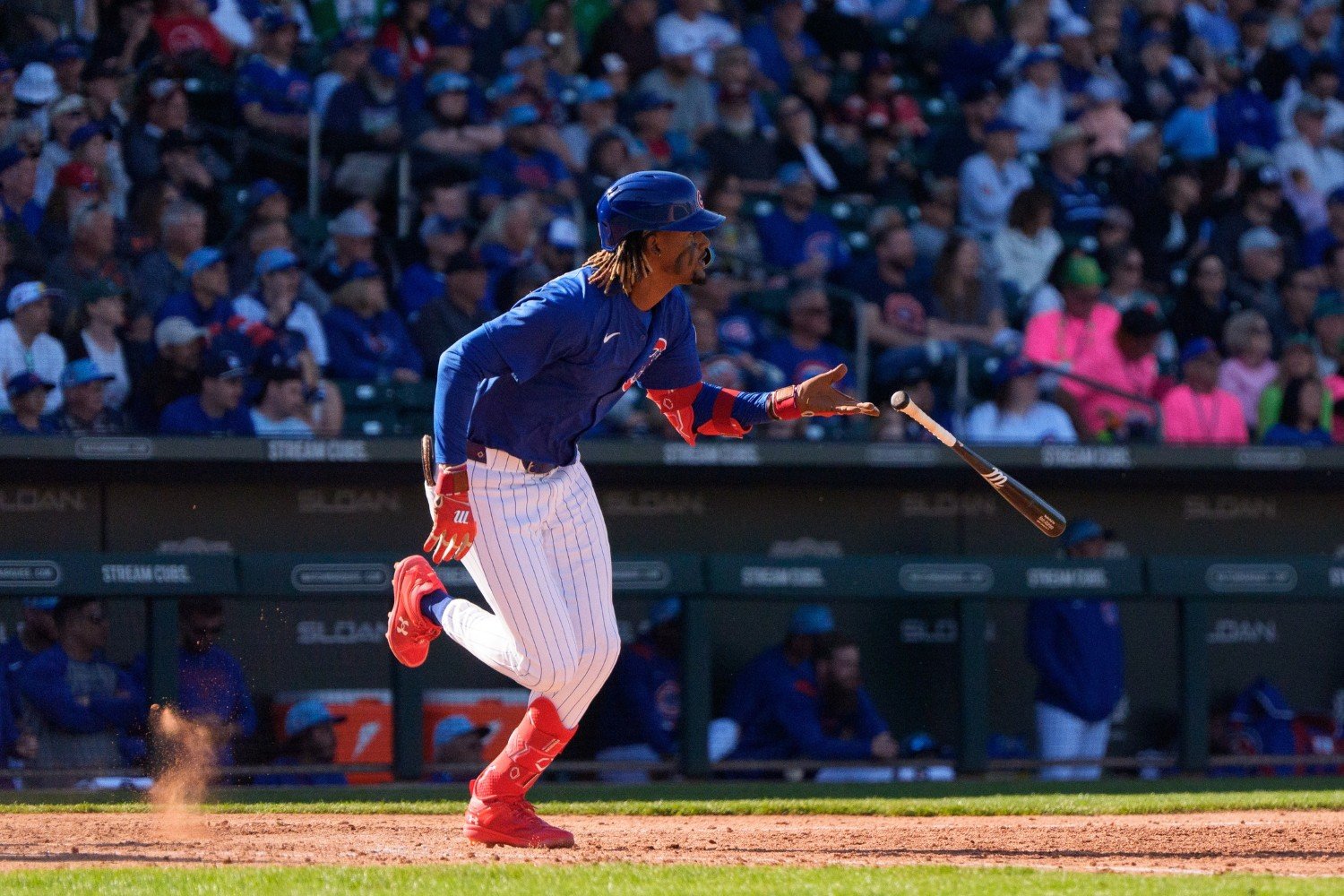 The Cubs made a flurry of roster moves ahead of the August 31 deadline to get players into the organization in order for them to be eligible to play in the postseason, with the expansion of the active roster on September 1 looming over everything. Most notably, multiple reports said they were finalizing a deal with long-time Cleveland Guardians first baseman Carlos Santana, after he was released earlier in the week. They also claimed pitcher Aaron Civale from the White Sox, whereupon he will slide into their bullpen mix. Civale is now on his third team of 2025. Reliever Porter Hodge was recalled Sunday (but will probably be optioned Monday), while Jordan Wicks was sent down and Tom Cosgrove designated for assignment. The most interesting move, however, might be the purely internal one. Outfielder Kevin Alcántara is being called up for his first taste of big-league action in 2025, and top prospect Owen Caissie is being sent down. Making sense of all these moves will take some time; but here is a quick look on the Alcántara call-up, specifically: On August 24, I wrote about potential September call-ups and highlighted Alcántara as an option. The team’s fifth-ranked prospect has an .818 OPS this year at Triple-A Iowa, with 17 homers and 10 steals. With Caissie being optioned, this replaces a left-handed bat with a right-handed one, and adds more speed and defense. Unlike Caissie, Alcántara can handle center field if Pete Crow-Armstrong needs a break. (Ok, Crow-Armstrong definitely needs a break; he's batting .211/.261/.366 since the All-Star break. The 'if' is more about whether Craig Counsell will actually give him one.) Willi Castro does his best to cosplay as an outfielder, but he should really be kept in the infield. Hopefully, Alcántara will be getting those outfield reps over Castro. Caissie made his debut on August 14, and got 25 plate appearances before being optioned. If that is a blueprint for what we can expect from Alcántara, it is fair to wonder if this is bad for his development. Getting regular at-bats with Iowa is arguably better for the long-term outlook, but his speed and defense are valuable for a team that will need to play hard through Game 162 to avoid falling out of the top Wild Card spot. Alcántara has earned this look, too. He's batting .283/.364/.500 since the start of June, and an incredible .319/.398/.604 against lefties this season. It's hard to make the case that Crow-Armstrong should start ahead of him against southpaws the rest of the way, but at the very least, Alcántara earned a shot at occasional pinch-hitting duties. In theory, Ian Happ would be the one to relinquish some playing time to Alcántara, but he has an .861 OPS in his last 30 games. Counsell would have to get creative (or at least awfully diplomatic) to give Alcántara much playing time, and that's not even taking into account the 39-year-old switch-hitter who might be joining the fold. Alcántara is an exciting young player who has earned an extended look, but this certainly won’t be that. This might, indeed, be more about Caissie and Alcántara's service time than about either's playing time. Because Caissie (who came up to stop the gap after Miguel Amaya was hurt) debuted before August 16, if he'd stayed on the roster the balance of the year, he'd have lost Rookie of the Year eligibility for 2026. Likewise, if Alcántara (who got five days of service last year) had come up any more than a week ago, he'd have ended up crossing the 45-day barrier and losing that eligibility. Instead, both players will now go into next year as rookies. Whether they're members of the Cubs at that point or whether they've been traded elsewhere, their team will have the chance to collect a draft pick via the prospect promotion incentive (PPI) system if either takes home a Rookie of the Year Award in 2026. All they have to do is put either player on their Opening Day roster next spring. This little switcheroo signals that the Cubs place at least some value on that option. It would arguably have made more sense to call up Alcántara three weeks ago, and it only arguably makes sense to pull this switch now. It's defensible on other grounds, but this gives the team two chances to try to claim a PPI pick (or to trade them this winter with that possibility attached as a bonus for suitors) for the price of one roster spot.
 -
Image courtesy of © Lily Smith/The Register / USA TODAY NETWORK via Imagn Images Well, well, well. How the turn tables... The Cubs are six games back of Milwaukee, even after taking 3 of 5 earlier this week. Until this encouraging weekend stint against a hapless Anaheim team, the offense looked a lot like the frustrating second phase of the last core. The bullpen looks old and tired. The rotation is overworked. Winning the division is out of the question at this point. They currently hold the top Wild Card spot, but the margin for error is shrinking as the regular season is well into the last quarter. At this point, the front office's cautious trade deadline approach seems like it was a precursor for the disappointment to come. With rosters set to expand on September 1, the Cubs will need some reinforcements to come up and not only give the regular starters some rest, but perform and (hopefully) bring some life back to the team on a daily basis. Here is a look at four players who could come up and provide a spark—although, of course, not all at once, since the rules now limit teams to 28 players during September, rather than the 40 they used to be able to call up. Kevin Alcántara Still considered the Cubs’ #5 prospect, Alcántara had a cup of coffee with the big-league club in 2024 but is yet to appear in the majors this season. “The Jaguar” currently has a .261/.348/.469 batting line and 16 home runs this season at Triple-A Iowa. A loaded outfield is part of the reason Alcántara has not been able to crack the 26-man roster, but he's also struggled with plate discipline. Over 402 plate appearances, Alcantara has struck out 120 times against 47 walks, which probably won’t get better upon promotion. Still, he is a quality outfielder with plenty of speed and pop. He would give the Cubs another righty bat off the bench. Encouragingly, after a very rough start this spring, he's batting .267/.356/.517 since May 15. Alcántara is also on the 40 man roster already, so there wouldn’t need to be a corresponding DFA to go along with promoting him. Jonathon Long There are a couple of issues with the idea of promoting Long. First, he is not on the 40-man roster, so there would need to be a player cut in order to call him up. The second is that he bats left-handed, and the Cubs are currently giving top prospect Owen Caissie the fourth outfielder/lefty bench bat role. It is hard to ignore what Long has done at Triple A this season, though. He's batting .311/.412/.504, with 19 home runs in under 500 plate appearances. If Caissie is already up, and I am pitching the idea of Alcántara being recalled, Long has to be considered. Long is primarily a first baseman, but has utility appeal, as he has also played third base and left field this season. Jaxon Wiggins The Cubs' fourth-best prospect and top pitching prospect, Wiggins began the season in High-A South Bend and has since been promoted to Double-A Knoxville. Across the two levels, Wiggins has a 2.02 ERA with 79 strikeouts across 62 1/3 innings. He has started all but one of his games in 2025, but his potential value to the big-league club for this season would be as a reliever. Wiggins has a fastball that sits in the high 90s, but can also touch triple digits. In a scenario where he is only going one inning at a time, that fastball should hit triple digits more often. This would be a welcome sign for the Cubs, because the current bullpen could use another power arm. Wiggins is not on the 40-man roster, and while management might not want to add him this early, there is a long list of very good starters who first came up in a late-season bullpen role. The big problem with this possibility is that Wiggins has made just one, abbreviated appearance in the minors since June 20. Either the team is hiding him as part of a plan to spring him on the league in October, or the shoulder trouble that cropped up in June was more serious than the team has let on. Riley Martin If you haven’t heard of Riley Martin, the pride of Quincy University, you must live under a rock. That was a joke; I'm sure you don’t know who Riley Martin is, unless you are also a writer here at North Side Baseball. The 27-year-old was a sixth-round pick from the 2021 MLB Draft, Martin was never listed on MLB Pipeline's ranking of the Cubs’ top 30 prospects. His 4.42 career ERA in the minors (prior to 2025) is on par for a late-round draft pick, but his 2025 has been a different story. In 57 innings, Martin has a 2.68 ERA with 72 strikeouts. This is by far the best we have seen Martin look as a professional, and he has definitely earned a shot in the majors. So what if his FIP is a whole run higher than his ERA and his fastball sits in the low 90s? When it comes to relievers, there are always gems hidden in the late rounds of the draft. Sometimes, they toil in the minors for years until they figure it out. Current Cubs reliever Ryan Brasier did not pitch regularly in the majors until he was 30. Bottom line: Martin is a wild card, having the best season of his career. If he hasn't earned it now, he might never, so I personally hope he finds his way to Wrigley in September. Unlike in the glory days of Craigtember (when Craig Counsell's Brewers made liberal use of their sudden glut of roster spots in the final month and got famous for kicking out other teams in the sprint to the finish), the small increase in roster size now allowed doesn't let us dream much on a whole different team for the final month of the season. As Counsell has demonstrated by so rarely using Caissie (or even trade acquisition Willi Castro), though, this is a team that believes in their frontline talent to carry them to October. Each of these four players is compelling, because they could play their own interesting roles in an eventual playoff scenario—but that would require some incumbent to get hurt, so for now, they're merely nice-to-have depth. Cubs fans can hope mostly to get these glimpses of the future if there are some blowouts next month, or if the team sews up good playoff position relatively early and can coast through the final week. View full article
-
4 Chicago Cubs Minor Leaguers Who Deserve a Look in September
Paul Niemiec posted an article in Cubs
 Well, well, well. How the turn tables... The Cubs are six games back of Milwaukee, even after taking 3 of 5 earlier this week. Until this encouraging weekend stint against a hapless Anaheim team, the offense looked a lot like the frustrating second phase of the last core. The bullpen looks old and tired. The rotation is overworked. Winning the division is out of the question at this point. They currently hold the top Wild Card spot, but the margin for error is shrinking as the regular season is well into the last quarter. At this point, the front office's cautious trade deadline approach seems like it was a precursor for the disappointment to come. With rosters set to expand on September 1, the Cubs will need some reinforcements to come up and not only give the regular starters some rest, but perform and (hopefully) bring some life back to the team on a daily basis. Here is a look at four players who could come up and provide a spark—although, of course, not all at once, since the rules now limit teams to 28 players during September, rather than the 40 they used to be able to call up. Kevin Alcántara Still considered the Cubs’ #5 prospect, Alcántara had a cup of coffee with the big-league club in 2024 but is yet to appear in the majors this season. “The Jaguar” currently has a .261/.348/.469 batting line and 16 home runs this season at Triple-A Iowa. A loaded outfield is part of the reason Alcántara has not been able to crack the 26-man roster, but he's also struggled with plate discipline. Over 402 plate appearances, Alcantara has struck out 120 times against 47 walks, which probably won’t get better upon promotion. Still, he is a quality outfielder with plenty of speed and pop. He would give the Cubs another righty bat off the bench. Encouragingly, after a very rough start this spring, he's batting .267/.356/.517 since May 15. Alcántara is also on the 40 man roster already, so there wouldn’t need to be a corresponding DFA to go along with promoting him. Jonathon Long There are a couple of issues with the idea of promoting Long. First, he is not on the 40-man roster, so there would need to be a player cut in order to call him up. The second is that he bats left-handed, and the Cubs are currently giving top prospect Owen Caissie the fourth outfielder/lefty bench bat role. It is hard to ignore what Long has done at Triple A this season, though. He's batting .311/.412/.504, with 19 home runs in under 500 plate appearances. If Caissie is already up, and I am pitching the idea of Alcántara being recalled, Long has to be considered. Long is primarily a first baseman, but has utility appeal, as he has also played third base and left field this season. Jaxon Wiggins The Cubs' fourth-best prospect and top pitching prospect, Wiggins began the season in High-A South Bend and has since been promoted to Double-A Knoxville. Across the two levels, Wiggins has a 2.02 ERA with 79 strikeouts across 62 1/3 innings. He has started all but one of his games in 2025, but his potential value to the big-league club for this season would be as a reliever. Wiggins has a fastball that sits in the high 90s, but can also touch triple digits. In a scenario where he is only going one inning at a time, that fastball should hit triple digits more often. This would be a welcome sign for the Cubs, because the current bullpen could use another power arm. Wiggins is not on the 40-man roster, and while management might not want to add him this early, there is a long list of very good starters who first came up in a late-season bullpen role. The big problem with this possibility is that Wiggins has made just one, abbreviated appearance in the minors since June 20. Either the team is hiding him as part of a plan to spring him on the league in October, or the shoulder trouble that cropped up in June was more serious than the team has let on. Riley Martin If you haven’t heard of Riley Martin, the pride of Quincy University, you must live under a rock. That was a joke; I'm sure you don’t know who Riley Martin is, unless you are also a writer here at North Side Baseball. The 27-year-old was a sixth-round pick from the 2021 MLB Draft, Martin was never listed on MLB Pipeline's ranking of the Cubs’ top 30 prospects. His 4.42 career ERA in the minors (prior to 2025) is on par for a late-round draft pick, but his 2025 has been a different story. In 57 innings, Martin has a 2.68 ERA with 72 strikeouts. This is by far the best we have seen Martin look as a professional, and he has definitely earned a shot in the majors. So what if his FIP is a whole run higher than his ERA and his fastball sits in the low 90s? When it comes to relievers, there are always gems hidden in the late rounds of the draft. Sometimes, they toil in the minors for years until they figure it out. Current Cubs reliever Ryan Brasier did not pitch regularly in the majors until he was 30. Bottom line: Martin is a wild card, having the best season of his career. If he hasn't earned it now, he might never, so I personally hope he finds his way to Wrigley in September. Unlike in the glory days of Craigtember (when Craig Counsell's Brewers made liberal use of their sudden glut of roster spots in the final month and got famous for kicking out other teams in the sprint to the finish), the small increase in roster size now allowed doesn't let us dream much on a whole different team for the final month of the season. As Counsell has demonstrated by so rarely using Caissie (or even trade acquisition Willi Castro), though, this is a team that believes in their frontline talent to carry them to October. Each of these four players is compelling, because they could play their own interesting roles in an eventual playoff scenario—but that would require some incumbent to get hurt, so for now, they're merely nice-to-have depth. Cubs fans can hope mostly to get these glimpses of the future if there are some blowouts next month, or if the team sews up good playoff position relatively early and can coast through the final week.
 -
Image courtesy of © Kamil Krzaczynski-Imagn Images The Red Sox are clearly confident in this wave of prospects. Back in April, they handed an eight-year extension to rookie infielder Kristian Campbell. They, did it again this week when they gave Roman Anthony, the No. 1 prospect in baseball, his own massive extension. It’s another eight-year pact worth $130 million that can reach up to $230 million with incentives. It also comes with a club option for 2034. While the Campbell extension may have been a tad premature, the Anthony contract looks like an immediate win. Through 194 plate appearances, Anthony is hitting .276/.392/.417 with a 126 OPS+. Alex Cora has him hitting cleanup for a Red Sox team that has vaulted itself right in the middle of the playoff picture. Now, it's worth wondering how soon we will see an extension for Marcelo Mayer, which would lock up their “Big Three” for almost the next decade. It is fun to speculate how much of this hinged on finding a taker for Devers, but the point is, young stars are willing to sign an extension if the money is right and they’re put in a competitive environment. Now, what does this deal mean for the Cubs and their star center fielder? For starters, it means the Cubs and Pete Crow-Armstrong were on different wavelengths when they reportedly offered him an extension in the range of five years and $75 million This was reported back in April, before Crow-Armstrong really became "PCA". At the time, he was a stellar defensive outfielder with questions about what his offensive ceiling would be. He ended up betting on himself and now that extension worth $75 million looks laughable. With the Anthony contract, we see the framework for what it would take to get a deal done, and that would be the Cubs doubling their offer and then some. Of course, Crow-Armstrong also brings the elite defense and baserunning to the table, whereas Anthony is very good (but not outright elite) in those areas. For the sake of this exercise, let's assume the Cubs would need to offer their young All-Star $150 million guaranteed just to get negotiations started; remember, Crow-Armstrong is a few years closer to free agency right now than Anthony was when he inked his deal This should seem like a no-brainer, but it's a lot more complicated when talking about a team who just extended Jed Hoyer. We know he likes to operate this team with budget constraints, so it seems like there may be hesitancy in offering a nine-figure deal to anyone, even Crow-Armstrong. The Cubs have him under team control through 2030, so it's reasonable to think that an extension could wait, at least until the Kyle Tucker situation is figured out. The Anthony contract is structured to where he is not making over $10 million in salary until 2029, so backloading a Crow-Armstrong contract would give the Cubs the best chance to build the team they have now into a juggernaut. Maybe this would allow them to approach Tucker with a shorter-term, higher-AAV deal. There are clearly ways for the calendar to turn to 2026 with both outfielders locked up by the Cubs, but it just depends on how comfortable ownership is with handing out not one, but two deals that would approach or blow by the previous record set by Jason Heyward. It might be more realistic to expect one or the other, but fans can dream. The Cubs have a chance to show Crow-Armstrong that they want him to be the face of the franchise for the next decade. Ownership has a chance to show him that he is as beloved by them as he is the fans. Sure, you can point to Javier Baez or Kris Bryant as reasons not to jump the shark with handing out mega-deals, even to in-house stars. But, being risk-averse does not win championships. It's a gamble, but we have seen so many young stars signing extensions outside of Anthony and Campbell—Cal Raleigh, Jackson Merrill, Bobby Witt Jr, Julio Rodriguez, Anthony Volpe and Corbin Carroll,to name a few—that have worked out marvelously for their teams. Well, Crow-Armstrong is right up there with the best of them. He deserves to have his name added to that list. View full article
-
 The Red Sox are clearly confident in this wave of prospects. Back in April, they handed an eight-year extension to rookie infielder Kristian Campbell. They, did it again this week when they gave Roman Anthony, the No. 1 prospect in baseball, his own massive extension. It’s another eight-year pact worth $130 million that can reach up to $230 million with incentives. It also comes with a club option for 2034. While the Campbell extension may have been a tad premature, the Anthony contract looks like an immediate win. Through 194 plate appearances, Anthony is hitting .276/.392/.417 with a 126 OPS+. Alex Cora has him hitting cleanup for a Red Sox team that has vaulted itself right in the middle of the playoff picture. Now, it's worth wondering how soon we will see an extension for Marcelo Mayer, which would lock up their “Big Three” for almost the next decade. It is fun to speculate how much of this hinged on finding a taker for Devers, but the point is, young stars are willing to sign an extension if the money is right and they’re put in a competitive environment. Now, what does this deal mean for the Cubs and their star center fielder? For starters, it means the Cubs and Pete Crow-Armstrong were on different wavelengths when they reportedly offered him an extension in the range of five years and $75 million This was reported back in April, before Crow-Armstrong really became "PCA". At the time, he was a stellar defensive outfielder with questions about what his offensive ceiling would be. He ended up betting on himself and now that extension worth $75 million looks laughable. With the Anthony contract, we see the framework for what it would take to get a deal done, and that would be the Cubs doubling their offer and then some. Of course, Crow-Armstrong also brings the elite defense and baserunning to the table, whereas Anthony is very good (but not outright elite) in those areas. For the sake of this exercise, let's assume the Cubs would need to offer their young All-Star $150 million guaranteed just to get negotiations started; remember, Crow-Armstrong is a few years closer to free agency right now than Anthony was when he inked his deal This should seem like a no-brainer, but it's a lot more complicated when talking about a team who just extended Jed Hoyer. We know he likes to operate this team with budget constraints, so it seems like there may be hesitancy in offering a nine-figure deal to anyone, even Crow-Armstrong. The Cubs have him under team control through 2030, so it's reasonable to think that an extension could wait, at least until the Kyle Tucker situation is figured out. The Anthony contract is structured to where he is not making over $10 million in salary until 2029, so backloading a Crow-Armstrong contract would give the Cubs the best chance to build the team they have now into a juggernaut. Maybe this would allow them to approach Tucker with a shorter-term, higher-AAV deal. There are clearly ways for the calendar to turn to 2026 with both outfielders locked up by the Cubs, but it just depends on how comfortable ownership is with handing out not one, but two deals that would approach or blow by the previous record set by Jason Heyward. It might be more realistic to expect one or the other, but fans can dream. The Cubs have a chance to show Crow-Armstrong that they want him to be the face of the franchise for the next decade. Ownership has a chance to show him that he is as beloved by them as he is the fans. Sure, you can point to Javier Baez or Kris Bryant as reasons not to jump the shark with handing out mega-deals, even to in-house stars. But, being risk-averse does not win championships. It's a gamble, but we have seen so many young stars signing extensions outside of Anthony and Campbell—Cal Raleigh, Jackson Merrill, Bobby Witt Jr, Julio Rodriguez, Anthony Volpe and Corbin Carroll,to name a few—that have worked out marvelously for their teams. Well, Crow-Armstrong is right up there with the best of them. He deserves to have his name added to that list.
 -
 The Cubs’ first two post-deadline series have concluded, with the North Siders taking two of three from a stripped-down Baltimore team before unceremoniously losing the series to the Reds. Really, though, they were a Caleb Thielbar curveball shy of a sweep in that first series. At least they added some big names at the trade deadline to position themselves to reclaim the division from Milwaukee. If you can't tell, that last sentence was laced with sarcasm. That high-end starting pitcher? Welcome Mike Soroka and his 4.87 ERA and now-injured shoulder. The bullpen has been surprisingly strong this season, but they needed some arms to take some pressure off some of the older players. Welcome 35-year-old Andrew Kittredge, and 34-year-old Taylor Rogers, who are at least younger than Ryan Brasier, Drew Pomeranz and Thielbar. Utility switch hitter Willi Castro and his .748 OPS is a great fit for this team, but that being the “big move” by default seems very anticlimactic. We've seen each of them play in a Cubs uniform now, so let's discuss how their first impressions are going and what can be expected moving forward. Taylor Rogers Rodgers came over to the Cubs from Pittsburgh, just a day after being acquired by Pittsburgh in the confusing trade that sent third baseman Ke’Bryan Hayes to Cincinnati. Rogers is a journeyman, soft-tossing lefty who is having a mirage of a season. His 2.29 ERA would represent the lowest mark of his career, but his 1.39 WHIP is the second-highest. The most damning stat prior to the trade was his 4.14 FIP, the highest mark of his career, which could mean impending regression and high stress innings. That's a lot of bad, but here's the good news: Rogers has been good as Cub. He pitched one inning over the weekend in Saturday’s 4-3 loss. He came in after the damage was done in the top of the ninth, opening the frame with a strikeout of Dylan Carlson. He followed it up with two consecutive ground outs for a 1-2-3 inning. He then made back-to-back appearances against the Reds, allowing just one hit while striking out two in 1 1/3 innings in the series. Moving forward, Rogers should fit nicely with the lefty group of Thielbar and Pomeranz, although a lefty who can throw gas might have been a better complement. Andrew Kittredge Kittredge was the first new face to appear in a game. He came in to face the team that just traded him a day earlier. On Friday, the bullpen looked great as a whole, and Kittredge was a part of it. Entering the game in the seventh, he retired star catcher Adley Rutschman on a line out before striking out the next two hitters. He was good again against Baltimore on August 3, prior to getting lit up by the Reds (four runs in 1/3 of an inning) on August 5. At least he made up for it by pitching an immaculate inning in the series finale. Considering the high price of relievers at the deadline, Kittredge is a great addition. The 2021 All-Star is having another solid season, posting a 3.24 ERA prior to that debacle against the Reds. The Cubs gave up an interesting 17-year-old in Wilfri De La Cruz, but it was hardly an overpay. With the emergence of Daniel Palencia, Kittredge should pair well with Brad Keller as they handle set-up duties. It is important to note that Ryan Pressly was DFA’d as well, so you will likely see Kittredge fill his role. Willi Castro Castro had the best weekend of any the new faces. The super utility player started on both Saturday at second base and Sunday at third base. He should step right in as the primary Swiss Army knife. Vidal Brujan was removed from the roster, and Jon Berti should be in the lineup less now. Castro had two hits, including a triple, on Saturday and another knock on Sunday. He managed just one hit in 12 at-bats in the Red series, though he continued to show his versatility by playing in both center and right field. Castro offers a bit more pop in the utility role, as evident by his 28 extra-base hits on the year. He also can run a bit, he has nine steals on the year but had 33 back in 2023. Castro likely won’t be counted on to do that much in terms of offensive production, but if he can continue to hit all across the order while playing nearly every position on the diamond, he'll be well worth the price of admission. Michael Soroka Soroka is the last mention here because he did not pitch over the weekend... and then promptly got hurt in his first appearance as a Cub. It's a devastating injury for a Cubs team that needed some rotation help at the deadline. Prior to the deal, only 3 of his 16 starts went into the sixth inning. If the Cubs were planning on using Soroka in relief, maybe his pitches could play up and he can miss bats like he did early in his career with the Braves. Right now, if Soroka is able to return and be 75% of what Colin Rea is, that would be a win. In other words, this is a very tough trade to stomach, especially in the wake of the shoulder strain that has him on the 15-day IL. For a team in a direct race with the Brewers’ deep and impressive pitching staff, this is a big red flag.
 -
Image courtesy of © David Banks-Imagn Images The Cubs’ first two post-deadline series have concluded, with the North Siders taking two of three from a stripped-down Baltimore team before unceremoniously losing the series to the Reds. Really, though, they were a Caleb Thielbar curveball shy of a sweep in that first series. At least they added some big names at the trade deadline to position themselves to reclaim the division from Milwaukee. If you can't tell, that last sentence was laced with sarcasm. That high-end starting pitcher? Welcome Mike Soroka and his 4.87 ERA and now-injured shoulder. The bullpen has been surprisingly strong this season, but they needed some arms to take some pressure off some of the older players. Welcome 35-year-old Andrew Kittredge, and 34-year-old Taylor Rogers, who are at least younger than Ryan Brasier, Drew Pomeranz and Thielbar. Utility switch hitter Willi Castro and his .748 OPS is a great fit for this team, but that being the “big move” by default seems very anticlimactic. We've seen each of them play in a Cubs uniform now, so let's discuss how their first impressions are going and what can be expected moving forward. Taylor Rogers Rodgers came over to the Cubs from Pittsburgh, just a day after being acquired by Pittsburgh in the confusing trade that sent third baseman Ke’Bryan Hayes to Cincinnati. Rogers is a journeyman, soft-tossing lefty who is having a mirage of a season. His 2.29 ERA would represent the lowest mark of his career, but his 1.39 WHIP is the second-highest. The most damning stat prior to the trade was his 4.14 FIP, the highest mark of his career, which could mean impending regression and high stress innings. That's a lot of bad, but here's the good news: Rogers has been good as Cub. He pitched one inning over the weekend in Saturday’s 4-3 loss. He came in after the damage was done in the top of the ninth, opening the frame with a strikeout of Dylan Carlson. He followed it up with two consecutive ground outs for a 1-2-3 inning. He then made back-to-back appearances against the Reds, allowing just one hit while striking out two in 1 1/3 innings in the series. Moving forward, Rogers should fit nicely with the lefty group of Thielbar and Pomeranz, although a lefty who can throw gas might have been a better complement. Andrew Kittredge Kittredge was the first new face to appear in a game. He came in to face the team that just traded him a day earlier. On Friday, the bullpen looked great as a whole, and Kittredge was a part of it. Entering the game in the seventh, he retired star catcher Adley Rutschman on a line out before striking out the next two hitters. He was good again against Baltimore on August 3, prior to getting lit up by the Reds (four runs in 1/3 of an inning) on August 5. At least he made up for it by pitching an immaculate inning in the series finale. Considering the high price of relievers at the deadline, Kittredge is a great addition. The 2021 All-Star is having another solid season, posting a 3.24 ERA prior to that debacle against the Reds. The Cubs gave up an interesting 17-year-old in Wilfri De La Cruz, but it was hardly an overpay. With the emergence of Daniel Palencia, Kittredge should pair well with Brad Keller as they handle set-up duties. It is important to note that Ryan Pressly was DFA’d as well, so you will likely see Kittredge fill his role. Willi Castro Castro had the best weekend of any the new faces. The super utility player started on both Saturday at second base and Sunday at third base. He should step right in as the primary Swiss Army knife. Vidal Brujan was removed from the roster, and Jon Berti should be in the lineup less now. Castro had two hits, including a triple, on Saturday and another knock on Sunday. He managed just one hit in 12 at-bats in the Red series, though he continued to show his versatility by playing in both center and right field. Castro offers a bit more pop in the utility role, as evident by his 28 extra-base hits on the year. He also can run a bit, he has nine steals on the year but had 33 back in 2023. Castro likely won’t be counted on to do that much in terms of offensive production, but if he can continue to hit all across the order while playing nearly every position on the diamond, he'll be well worth the price of admission. Michael Soroka Soroka is the last mention here because he did not pitch over the weekend... and then promptly got hurt in his first appearance as a Cub. It's a devastating injury for a Cubs team that needed some rotation help at the deadline. Prior to the deal, only 3 of his 16 starts went into the sixth inning. If the Cubs were planning on using Soroka in relief, maybe his pitches could play up and he can miss bats like he did early in his career with the Braves. Right now, if Soroka is able to return and be 75% of what Colin Rea is, that would be a win. In other words, this is a very tough trade to stomach, especially in the wake of the shoulder strain that has him on the 15-day IL. For a team in a direct race with the Brewers’ deep and impressive pitching staff, this is a big red flag. View full article
-
Is the Cubs' Next Relief Ace One of These Twins Trade Candidates?
Paul Niemiec posted an article in Cubs
 The Minnesota Twins are, technically, still in the playoff hunt. While the division is out of reach, they sit 5 games behind the Red Sox for the final Wild Card spot. At 50-55, it is increasingly likely that they do decide to sell, but how much they want to sell is up in the air. A lot of the ambiguity is coming from the potential sale of the team. The Pohlad family has been in a lengthy pursuit to find a buyer for the team that they have owned for the last 40-plus years. When a franchise is going through an ownership change or a dispute among controlling members, there is usually a pause in any large trades or free agent deals. A very recent example of this is the offseason the Padres had, where they mostly made fringe deals amid an ownership dispute. With an impending ownership change, the direction of the team is cloudy. They can go the retooling route, and only move impending free agents like Ty France, Harrison Bader, Willi Castro, Danny Coulombe and Chris Paddack. All of those players are having average to slightly above-average seasons, but none will fetch any top prospects in a deal. The existing top prospects in a deep Minnesota farm system—infielder Luke Keaschall, who looked like a budding star when he made his debut this spring before breaking his forearm; and outfielders Walker Jenkins and Emmanuel Rodriguez—are expected to reach the majors later this season or early next season. If these prospects produce as hoped, they could help a roster in 2026 that still has Carlos Correa, Byron Buxton and pitchers Pablo López, Joe Ryan, Griffin Jax and Jhoan Duran. That roster could have no issue rebounding next season and competing with the Tigers for the head of the division. The problem, for the Twins, is that they have aging superstars, compared to the Tigers and Royals, who have budding stars in their mid-20s. This is a great opportunity for the team to better their long-term outlook. Reports are that they are “listening” on All-Star-caliber controllable pitchers Ryan, Jax and Duran, but they are not in an “everything must go” mindset. If they do decide to trade at least one of Jax or Duran, they should be asking for a significant haul. Jax will cost less than Duran, so it depends how much the Cubs want to give up. They are going to have to outbid another team who needs relievers even more than they do, though: the Dodgers. The Twins and Dodgers have completed a handful of trades over the past half-decade, so these two know how to work together. You don’t have to dig deep to find writers hypothesizing about a potential trade for this year’s deadline, too. Imagine that the Cubs and Dodgers are in competition for Duran or Jax. If that be the case, it's likely to come down to which (if either) is willing to include their top-tier, big league-ready catching prospect. Right now, the Twins’ top catching prospect is either Khadim Diaw (No. 17 on the top prospects list at our sister site, Twins Daily) or Ricardo Olivar (No. 20). Ryan Jeffers has been a fine offensive catcher with a little bit of pop, but he's regressed defensively this year. He's also due to hit free agency after 2026. This is not to say Ballesteros is a future Gold Glove catcher, but the Twins would love to get ahold of a good backstop like Ballesteros or the Dodgers' Dalton Rushing. Ballesteros could make for an attractive centerpiece in a deal for Jax, with another lower-ranked prospect or two thrown in. Duran is going to be tougher. Many of the mock trades for Duran have included a top-three organizational prospect, another top-10 prospect, and one sitting just outside the top 10. Does a trade of Ballesteros, Pedro Ramirez, and Christian Hernandez get the wheels spinning? Javier Assad is set to make a rehab start this week. Is he someone the Twins would value? If they move Joe Ryan, Assad (or Ben Brown) could be a great fit there. Ballesteros and a guy like Jonathon Long could make an interesting package, with a lower-tier arm mixed in. Chicago prefers Duran, but Jax might be the one on whom the price is right. With roughly 77 hours left to the trade deadline, all things remain possible.
 -
Image courtesy of © Matt Krohn-Imagn Images The Minnesota Twins are, technically, still in the playoff hunt. While the division is out of reach, they sit 5 games behind the Red Sox for the final Wild Card spot. At 50-55, it is increasingly likely that they do decide to sell, but how much they want to sell is up in the air. A lot of the ambiguity is coming from the potential sale of the team. The Pohlad family has been in a lengthy pursuit to find a buyer for the team that they have owned for the last 40-plus years. When a franchise is going through an ownership change or a dispute among controlling members, there is usually a pause in any large trades or free agent deals. A very recent example of this is the offseason the Padres had, where they mostly made fringe deals amid an ownership dispute. With an impending ownership change, the direction of the team is cloudy. They can go the retooling route, and only move impending free agents like Ty France, Harrison Bader, Willi Castro, Danny Coulombe and Chris Paddack. All of those players are having average to slightly above-average seasons, but none will fetch any top prospects in a deal. The existing top prospects in a deep Minnesota farm system—infielder Luke Keaschall, who looked like a budding star when he made his debut this spring before breaking his forearm; and outfielders Walker Jenkins and Emmanuel Rodriguez—are expected to reach the majors later this season or early next season. If these prospects produce as hoped, they could help a roster in 2026 that still has Carlos Correa, Byron Buxton and pitchers Pablo López, Joe Ryan, Griffin Jax and Jhoan Duran. That roster could have no issue rebounding next season and competing with the Tigers for the head of the division. The problem, for the Twins, is that they have aging superstars, compared to the Tigers and Royals, who have budding stars in their mid-20s. This is a great opportunity for the team to better their long-term outlook. Reports are that they are “listening” on All-Star-caliber controllable pitchers Ryan, Jax and Duran, but they are not in an “everything must go” mindset. If they do decide to trade at least one of Jax or Duran, they should be asking for a significant haul. Jax will cost less than Duran, so it depends how much the Cubs want to give up. They are going to have to outbid another team who needs relievers even more than they do, though: the Dodgers. The Twins and Dodgers have completed a handful of trades over the past half-decade, so these two know how to work together. You don’t have to dig deep to find writers hypothesizing about a potential trade for this year’s deadline, too. Imagine that the Cubs and Dodgers are in competition for Duran or Jax. If that be the case, it's likely to come down to which (if either) is willing to include their top-tier, big league-ready catching prospect. Right now, the Twins’ top catching prospect is either Khadim Diaw (No. 17 on the top prospects list at our sister site, Twins Daily) or Ricardo Olivar (No. 20). Ryan Jeffers has been a fine offensive catcher with a little bit of pop, but he's regressed defensively this year. He's also due to hit free agency after 2026. This is not to say Ballesteros is a future Gold Glove catcher, but the Twins would love to get ahold of a good backstop like Ballesteros or the Dodgers' Dalton Rushing. Ballesteros could make for an attractive centerpiece in a deal for Jax, with another lower-ranked prospect or two thrown in. Duran is going to be tougher. Many of the mock trades for Duran have included a top-three organizational prospect, another top-10 prospect, and one sitting just outside the top 10. Does a trade of Ballesteros, Pedro Ramirez, and Christian Hernandez get the wheels spinning? Javier Assad is set to make a rehab start this week. Is he someone the Twins would value? If they move Joe Ryan, Assad (or Ben Brown) could be a great fit there. Ballesteros and a guy like Jonathon Long could make an interesting package, with a lower-tier arm mixed in. Chicago prefers Duran, but Jax might be the one on whom the price is right. With roughly 77 hours left to the trade deadline, all things remain possible. View full article
