


Paul Niemiec
-
Posts
123 -
Joined
-
Last visited
Content Type
Profiles
Joomla Posts 1
Chicago Cubs Videos
Chicago Cubs Free Agent & Trade Rumors, Notes, & Tidbits
2026 Chicago Cubs Top Prospects Ranking
News
2023 Chicago Cubs Draft Picks
Guides & Resources
2024 Chicago Cubs Draft Picks
The Chicago Cubs Players Project
2025 Chicago Cubs Draft Pick Tracker
2026 Chicago Cubs Draft Tracker: Picks & Bonuses
Blogs
Events
Forums
Store
Gallery
Everything posted by Paul Niemiec
-
Image courtesy of © David Banks-Imagn Images It is the first weekend of September, and the Chicago Cubs are sputtering. After splitting a home series that was a must-win affair against the Milwaukee Brewers, any hopes of regaining a division lead have vanished completely. They have also dropped behind the Phillies in the Wild Card standings, and while they still hold a four-and-a-half game lead over the Diamondbacks for the second spot, the margin for error is shrinking. Although it isn’t time to press the panic button, the Cubs are in danger of dropping their fourth consecutive series. The bats have done their job, but the pitching staff as a whole has a 4.44 xERA since since the start of August, which ranks 26th overall. The front office has built a pitching staff for 2026 that has contained more questions than answers, and while the trade deadline additions have added some clarity to the playoff starting rotation, there is still enough ambiguity to keep fans skeptical about how far this club can go. The question we will be diving into here is one that was asked in the postseason last year, and again in the offseason: What is Craig Counsell supposed to do with Shota Imanaga? After Sunday’s home loss to the Reds, where Imanaga gave up three long balls for the second time in his last four starts, Counsell was quoted as saying, "If you look at the season he’s having, he’s having a pretty decent season," and when asked about if his role in the postseason was in jeopardy, he doubled down and added "I wouldn’t say that at all, no. We need Shota. We need Shota to be good for us. So we gotta work at helping him be better." It sounds like Counsell still has confidence, but it's not too early to think about other options. The Shota Imanaga Problem Imanaga’s third go-round with the Cubs has been healthier than last season’s effort, when he suffered a strained hamstring in May, costing him a month. He still made 25 starts, but he clearly was not the All-Star caliber pitcher who earned Rookie of the Year votes and down-ballot Cy Young love in 2024. He made two postseason starts, and while he pitched okay versus the Padres in the Wild Card Round, he infamously could not make it out of the third inning in his start against the Brewers in the NLDS, allowing four earned runs and a pair of homers. As aforementioned, the home runs have been the glaring hole in his game for 2026. His 33 home runs allowed currently lead the major leagues (tied with Jeffrey Springs of the Athletics). He has allowed more than one homer in eight of his 27 starts, and 19 of those 33 allowed happened at Wrigley Field. Imanaga has a chase (35%) and whiff (29.2%) rate well above league average, and a walk percentage bordering on elite at 5.7%, which should normally inspire confidence. However, after looking at the potential playoff opponents he might face, he could be doomed in any scenario that involves him starting a game. As it stands today, the Cubs would be in Philadelphia for the Wild Card Round. Forget about the lefty-on-lefty matchup; Kyle Schwarber and Bryce Harper would have no problem connecting on Shota’s low-90s fastball that tends to sit in the top of the strike zone. Should the Cubs’ slide continue to where they fall to the third Wild Card spot, they would likely match up with the Dodgers or Braves, which would be as bleak as it could get. The silver lining here is that, barring injury, he would not need to start a playoff game in the three-game wild card series with Clay Holmes, Matthew Boyd, and Jevin Gausman ahead of him, but should the Cubs advance, here are the potential pivots from an Imanaga start. Plan A: Piggyback Game The Mariners tinkered with this idea throughout the early parts of the season, using two different starters for about three innings a piece. Instead of starting Imanaga with a short leash, the plan from the beginning would be to let him work through the lineup once or twice before pulling him in the middle innings. In his first time through the batting order, opponents are hitting .211 with a .654 OPS, which is more than serviceable. The Cubs’ high-powered offense could jump out to an early lead in this timeframe before handing the ball to another starter. Who that would be is a tough question, though. The healthy options on the roster are currently Colin Rea and Javier Assad. Rea has pitched well of late with a 3.06 ERA in his last seven games and switching the handedness of the pitcher would make the opposing manager have to make a few key decisions earlier than expected. Assad is once again putting together a solid, underrated season while bouncing between Chicago and Iowa. He has a 3.46 ERA in 22 games while starting ten of them. Before being optioned again, he threw three innings of two-hit, shutout ball versus the White Sox after entering in the fifth inning. Anything that Rea can do, Assad should be able to do a bit better. The most interesting option would be Edward Cabrera, who is currently rehabbing a blister. He is expected to land in the bullpen upon his return, but it is unclear whether he can be depended on for longer outings. Plan B: David Peterson Peterson has pitched well over the second half of the season, and his 0.6 fWAR is tied for the team lead among starters. In eight starts, which is tied with Imanaga for second on the team, he has a ho-hum 4.21 xERA but with an xFIP of 3.55. He has only one less strikeout than Imanaga since the All-Star break, and outside of Clay Holmes, he has been their best at keeping the ball in the yard. Opposing hitters have a .307 BABIP against Peterson, which is probably higher than it should be considering how good the Cubs' defense is. For what it's worth, didn’t allow a run over 5.1 innings of work against the Phillies in the 2024 NLDS. It is clear that neither of these options would be better than Imanaga at the top of his game, and realistically, he will most likely be starting game four of a five-game playoff series. If any pitcher on this staff can string together a run of four straight quality starts, this is the guy. He started the year pitching like an All-Star, and could do that again as the weather starts to cool down and the hot summer air stops affecting fly balls as much. As long as he is healthy, he will have a shot at redemption in the postseason. View full article
-
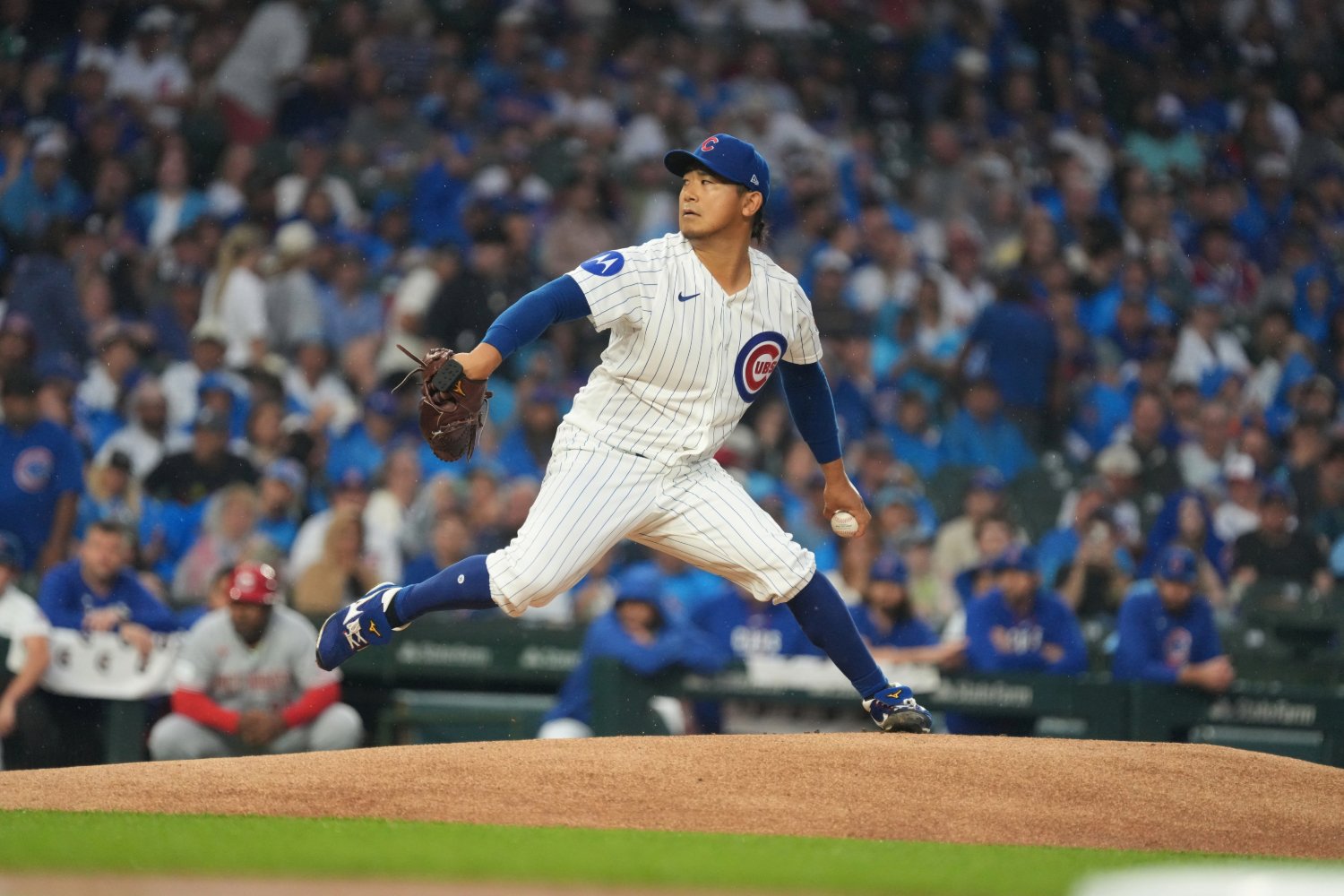 It is the first weekend of September, and the Chicago Cubs are sputtering. After splitting a home series that was a must-win affair against the Milwaukee Brewers, any hopes of regaining a division lead have vanished completely. They have also dropped behind the Phillies in the Wild Card standings, and while they still hold a four-and-a-half game lead over the Diamondbacks for the second spot, the margin for error is shrinking. Although it isn’t time to press the panic button, the Cubs are in danger of dropping their fourth consecutive series. The bats have done their job, but the pitching staff as a whole has a 4.44 xERA since since the start of August, which ranks 26th overall. The front office has built a pitching staff for 2026 that has contained more questions than answers, and while the trade deadline additions have added some clarity to the playoff starting rotation, there is still enough ambiguity to keep fans skeptical about how far this club can go. The question we will be diving into here is one that was asked in the postseason last year, and again in the offseason: What is Craig Counsell supposed to do with Shota Imanaga? After Sunday’s home loss to the Reds, where Imanaga gave up three long balls for the second time in his last four starts, Counsell was quoted as saying, "If you look at the season he’s having, he’s having a pretty decent season," and when asked about if his role in the postseason was in jeopardy, he doubled down and added "I wouldn’t say that at all, no. We need Shota. We need Shota to be good for us. So we gotta work at helping him be better." It sounds like Counsell still has confidence, but it's not too early to think about other options. The Shota Imanaga Problem Imanaga’s third go-round with the Cubs has been healthier than last season’s effort, when he suffered a strained hamstring in May, costing him a month. He still made 25 starts, but he clearly was not the All-Star caliber pitcher who earned Rookie of the Year votes and down-ballot Cy Young love in 2024. He made two postseason starts, and while he pitched okay versus the Padres in the Wild Card Round, he infamously could not make it out of the third inning in his start against the Brewers in the NLDS, allowing four earned runs and a pair of homers. As aforementioned, the home runs have been the glaring hole in his game for 2026. His 33 home runs allowed currently lead the major leagues (tied with Jeffrey Springs of the Athletics). He has allowed more than one homer in eight of his 27 starts, and 19 of those 33 allowed happened at Wrigley Field. Imanaga has a chase (35%) and whiff (29.2%) rate well above league average, and a walk percentage bordering on elite at 5.7%, which should normally inspire confidence. However, after looking at the potential playoff opponents he might face, he could be doomed in any scenario that involves him starting a game. As it stands today, the Cubs would be in Philadelphia for the Wild Card Round. Forget about the lefty-on-lefty matchup; Kyle Schwarber and Bryce Harper would have no problem connecting on Shota’s low-90s fastball that tends to sit in the top of the strike zone. Should the Cubs’ slide continue to where they fall to the third Wild Card spot, they would likely match up with the Dodgers or Braves, which would be as bleak as it could get. The silver lining here is that, barring injury, he would not need to start a playoff game in the three-game wild card series with Clay Holmes, Matthew Boyd, and Jevin Gausman ahead of him, but should the Cubs advance, here are the potential pivots from an Imanaga start. Plan A: Piggyback Game The Mariners tinkered with this idea throughout the early parts of the season, using two different starters for about three innings a piece. Instead of starting Imanaga with a short leash, the plan from the beginning would be to let him work through the lineup once or twice before pulling him in the middle innings. In his first time through the batting order, opponents are hitting .211 with a .654 OPS, which is more than serviceable. The Cubs’ high-powered offense could jump out to an early lead in this timeframe before handing the ball to another starter. Who that would be is a tough question, though. The healthy options on the roster are currently Colin Rea and Javier Assad. Rea has pitched well of late with a 3.06 ERA in his last seven games and switching the handedness of the pitcher would make the opposing manager have to make a few key decisions earlier than expected. Assad is once again putting together a solid, underrated season while bouncing between Chicago and Iowa. He has a 3.46 ERA in 22 games while starting ten of them. Before being optioned again, he threw three innings of two-hit, shutout ball versus the White Sox after entering in the fifth inning. Anything that Rea can do, Assad should be able to do a bit better. The most interesting option would be Edward Cabrera, who is currently rehabbing a blister. He is expected to land in the bullpen upon his return, but it is unclear whether he can be depended on for longer outings. Plan B: David Peterson Peterson has pitched well over the second half of the season, and his 0.6 fWAR is tied for the team lead among starters. In eight starts, which is tied with Imanaga for second on the team, he has a ho-hum 4.21 xERA but with an xFIP of 3.55. He has only one less strikeout than Imanaga since the All-Star break, and outside of Clay Holmes, he has been their best at keeping the ball in the yard. Opposing hitters have a .307 BABIP against Peterson, which is probably higher than it should be considering how good the Cubs' defense is. For what it's worth, didn’t allow a run over 5.1 innings of work against the Phillies in the 2024 NLDS. It is clear that neither of these options would be better than Imanaga at the top of his game, and realistically, he will most likely be starting game four of a five-game playoff series. If any pitcher on this staff can string together a run of four straight quality starts, this is the guy. He started the year pitching like an All-Star, and could do that again as the weather starts to cool down and the hot summer air stops affecting fly balls as much. As long as he is healthy, he will have a shot at redemption in the postseason.
 -
Image courtesy of Mark J. Rebilas-Imagn Images The Cubs come home Friday to face two division rivals, the Reds and Brewers, which will wrap up August and begin the final month of the 2026 regular season. The Cubs have had a tight grip on the top NL Wild Card spot for the entirety of the second half, and will have no problem cruising to a playoff berth for the second consecutive season. Holding onto that first Wild Card spot is the key, though, and that part won't be easy—the Phillies have pulled within four games of Chicago. The injured list will remain a key storyline for September, as it has been for the entirety of the season. Last week, Dansby Swanson went down with an oblique injury that will cost him at least a month and could end his season. The good news is that Matt Shaw is playing in rehab games and should be back very soon. On the pitching side, more injury returns loom, though Ben Brown's became less likely this week after the stress reaction in his neck flared up again. This is a survive-and-advance situation, with an eye toward being as healthy and ready to thrive as possible come October. Remaining Cubs Schedule at a Glance Games Remaining: 28 Home / Road: 16/12 Games vs .500 teams: 19 Remaining Strength of Schedule: 2nd-toughest in MLB What to Watch Postseason Pitching Staff As mentioned earlier, the pitching staff is going to look a lot different over the next couple of weeks. Before the trade deadline, the potential playoff rotation looked quite bleak, but with the additions of Kevin Gausman and Clay Holmes, the Cubs can form a competent group of four starters for the postseason. The locks will be Gausman, Holmes, and Matthew Boyd. After that, there are a few options. Shota Imanaga is having a strong season, but we all remember how the postseason went for him last year. He may have the chance to start, but with Edward Cabrera or David Peterson ready to go early on in case he struggles. Cabrera, who should be returning from his blister-related IL stint soon, could earn a postseason start in a five-game series if he can string together two or three quality starts in September. (The "if" in that sentence, though, is doing chest presses with a Corvette.) The most interesting option here is Brown, who looked like an All-Star before going down with a neck injury that has sidelined him since June. His 1.4 fWAR as a starter leads the Cubs, but there's zero chance he returns in that role. Even a return to the bullpen is much less likely now; we'll have to see what the next medical update on him is. As for the bullpen, we can rule out Hunter Harvey or Phil Maton coming back. Though the team is better off without Maton, Harvey would have been a wild card of sorts, as he has only thrown four innings this season but has generally been effective throughout his career. The three names to watch are Hoby Milner, Shelby Miller, and Justin Steele. Milner and Miller have each begun their rehab assignments, with Steele set to begin his over the next week or so. Milner could push Caleb Thielbar off the roster, if he looks good enough and is at full strength by the end of his rehab clock. Both Miller and Steele would be making their first appearances of the 2026 season, but would be eligible for the postseason since they are already in the organization. Any contributions from these two would be gravy, but if they are healthy and effective, the Cubs may have just found another two high-leverage bullpen arms. Can the Cubs Still Win the NL Central? In a word: no. While the Cubs travel home from Arizona Thursday, the Brewers will play one more game against the Mets, which will decide whether the Cubs are 6 or 7 games behind Milwaukee heading into the weekend. Chicago got closer to the Crew for a while last month, but never really threatened to take over, and their recent sag has them closer to falling out of the postseason altogether than to catching Pat Murphy's club. By September 10, the Cubs and Brewers will have played another seven times, which at least keeps the door open a crack for the challengers. They'd need to win at least five of the seven to pull back within striking distance, though, and that's the same number they'd need to win to gain the tiebreaker advantage. That feels unlikely, and even if it comes to fruition, there will be more hurdles to clear. Strength of Schedule and the Phillies’ Resurgence As mentioned earlier, the Phillies are gaining significant ground on the Cubs for the top Wild Card spot. Chicago is only two games ahead, and one more game ahead of the Padres. These two teams don't play each other again, and the Phillies have a slightly easier (but still tough) remaining schedule. The Cubs’ most difficult foes are the aforementioned Brewers, plus three at home versus Atlanta and three on the road against Boston. The Phillies are lucky in that they still have nine combined games against the Angels, Mets, and Nationals, but they still have 16 against divisional leaders in Milwaukee, Atlanta, Houston and Tampa Bay. The key for the Cubs is to take advantage of the Reds and Marlins, whom they play another six times each. They will also have an advantage when Pittsburgh comes to town in a few weeks. The Cubs are a stronger team, by fundamentals. The Phillies have had some surprise contributions from their unsung heroes like Edmundo Sosa and Bryan De la Cruz, but Trea Turner, J.T. Realmuto, and Alec Bohm have not been at the top of their games. Although the Cubs have a tough schedule, their offense (plus the reinforcements to the pitching staff and more games at home than on the road) should still make the top Wild Card spot theirs to lose. It's just not going to be as easy as the team might have hoped it would be, as recently as a few weeks ago. View full article
-
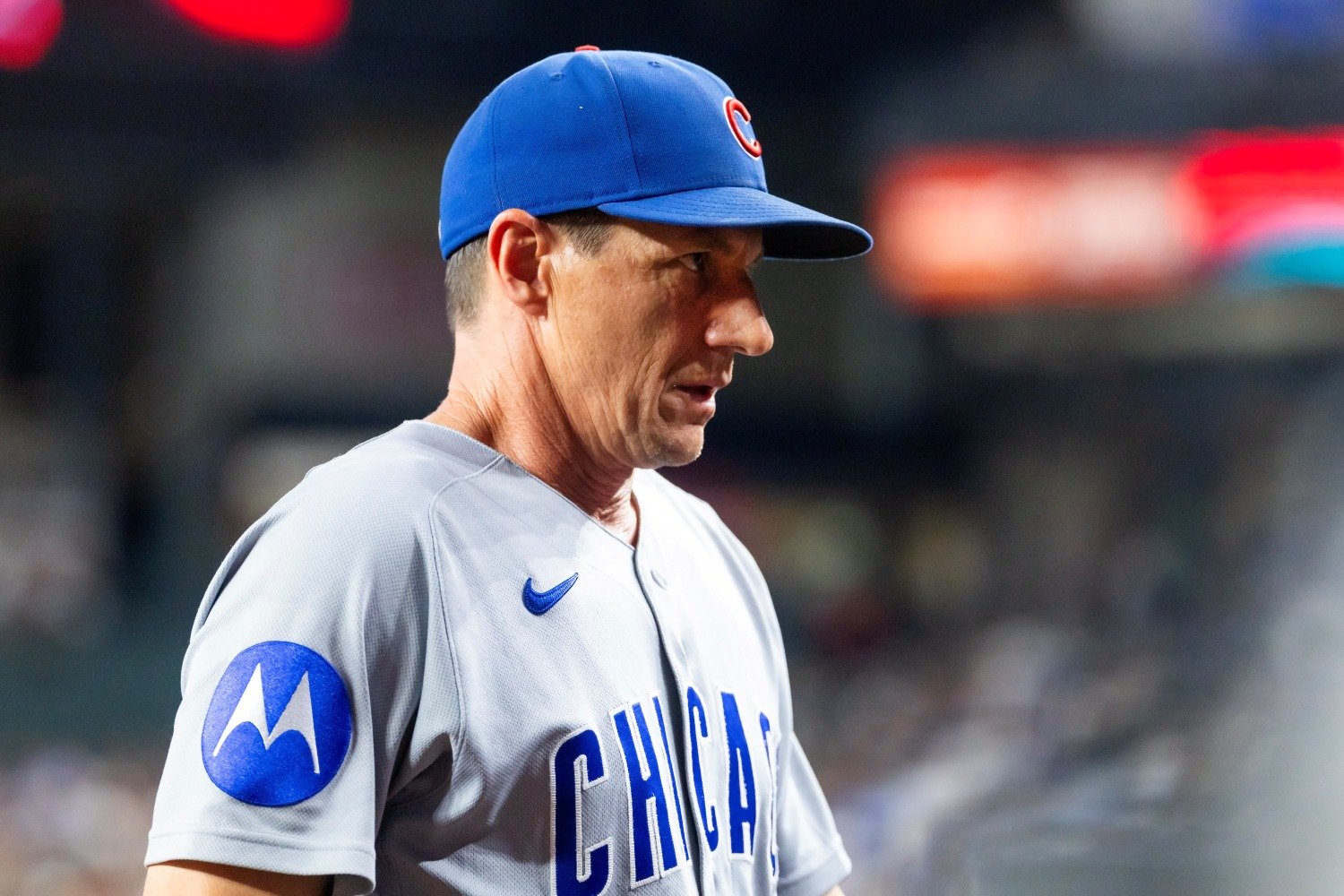 The Cubs come home Friday to face two division rivals, the Reds and Brewers, which will wrap up August and begin the final month of the 2026 regular season. The Cubs have had a tight grip on the top NL Wild Card spot for the entirety of the second half, and will have no problem cruising to a playoff berth for the second consecutive season. Holding onto that first Wild Card spot is the key, though, and that part won't be easy—the Phillies have pulled within four games of Chicago. The injured list will remain a key storyline for September, as it has been for the entirety of the season. Last week, Dansby Swanson went down with an oblique injury that will cost him at least a month and could end his season. The good news is that Matt Shaw is playing in rehab games and should be back very soon. On the pitching side, more injury returns loom, though Ben Brown's became less likely this week after the stress reaction in his neck flared up again. This is a survive-and-advance situation, with an eye toward being as healthy and ready to thrive as possible come October. Remaining Cubs Schedule at a Glance Games Remaining: 28 Home / Road: 16/12 Games vs .500 teams: 19 Remaining Strength of Schedule: 2nd-toughest in MLB What to Watch Postseason Pitching Staff As mentioned earlier, the pitching staff is going to look a lot different over the next couple of weeks. Before the trade deadline, the potential playoff rotation looked quite bleak, but with the additions of Kevin Gausman and Clay Holmes, the Cubs can form a competent group of four starters for the postseason. The locks will be Gausman, Holmes, and Matthew Boyd. After that, there are a few options. Shota Imanaga is having a strong season, but we all remember how the postseason went for him last year. He may have the chance to start, but with Edward Cabrera or David Peterson ready to go early on in case he struggles. Cabrera, who should be returning from his blister-related IL stint soon, could earn a postseason start in a five-game series if he can string together two or three quality starts in September. (The "if" in that sentence, though, is doing chest presses with a Corvette.) The most interesting option here is Brown, who looked like an All-Star before going down with a neck injury that has sidelined him since June. His 1.4 fWAR as a starter leads the Cubs, but there's zero chance he returns in that role. Even a return to the bullpen is much less likely now; we'll have to see what the next medical update on him is. As for the bullpen, we can rule out Hunter Harvey or Phil Maton coming back. Though the team is better off without Maton, Harvey would have been a wild card of sorts, as he has only thrown four innings this season but has generally been effective throughout his career. The three names to watch are Hoby Milner, Shelby Miller, and Justin Steele. Milner and Miller have each begun their rehab assignments, with Steele set to begin his over the next week or so. Milner could push Caleb Thielbar off the roster, if he looks good enough and is at full strength by the end of his rehab clock. Both Miller and Steele would be making their first appearances of the 2026 season, but would be eligible for the postseason since they are already in the organization. Any contributions from these two would be gravy, but if they are healthy and effective, the Cubs may have just found another two high-leverage bullpen arms. Can the Cubs Still Win the NL Central? In a word: no. While the Cubs travel home from Arizona Thursday, the Brewers will play one more game against the Mets, which will decide whether the Cubs are 6 or 7 games behind Milwaukee heading into the weekend. Chicago got closer to the Crew for a while last month, but never really threatened to take over, and their recent sag has them closer to falling out of the postseason altogether than to catching Pat Murphy's club. By September 10, the Cubs and Brewers will have played another seven times, which at least keeps the door open a crack for the challengers. They'd need to win at least five of the seven to pull back within striking distance, though, and that's the same number they'd need to win to gain the tiebreaker advantage. That feels unlikely, and even if it comes to fruition, there will be more hurdles to clear. Strength of Schedule and the Phillies’ Resurgence As mentioned earlier, the Phillies are gaining significant ground on the Cubs for the top Wild Card spot. Chicago is only two games ahead, and one more game ahead of the Padres. These two teams don't play each other again, and the Phillies have a slightly easier (but still tough) remaining schedule. The Cubs’ most difficult foes are the aforementioned Brewers, plus three at home versus Atlanta and three on the road against Boston. The Phillies are lucky in that they still have nine combined games against the Angels, Mets, and Nationals, but they still have 16 against divisional leaders in Milwaukee, Atlanta, Houston and Tampa Bay. The key for the Cubs is to take advantage of the Reds and Marlins, whom they play another six times each. They will also have an advantage when Pittsburgh comes to town in a few weeks. The Cubs are a stronger team, by fundamentals. The Phillies have had some surprise contributions from their unsung heroes like Edmundo Sosa and Bryan De la Cruz, but Trea Turner, J.T. Realmuto, and Alec Bohm have not been at the top of their games. Although the Cubs have a tough schedule, their offense (plus the reinforcements to the pitching staff and more games at home than on the road) should still make the top Wild Card spot theirs to lose. It's just not going to be as easy as the team might have hoped it would be, as recently as a few weeks ago.
 -
Image courtesy of Chris Sweda/Chicago Tribune The 2026 MLB trade deadline is now in the rearview mirror. This deadline will be memorialized by the Dodgers acquisition of two-time reigning AL Cy Young Award winner Tarik Skubal and what this means for the future of baseball. There was plenty of action around the rest of the league though, especially amongst the NL Central, where the three buyers, the Brewers, Cubs and Pirates, combined for 12 trades. To nobody’s surprise, the Cubs made four additions to their pitching staff, the clear weakness of the team. They made the most significant upgrades to their rotation, adding Kevin Gausman from the Blue Jays and Clay Holmes from the Mets. They also added Ryan Zeferjahn, one of the best relief arms on the market, from the Angels. They plucked the change-of-scenery, bounce-back candidate Braxton Garrett from the Marlins as well, although his role is a bit more ambiguous. The front office’s mission was to add two starters and a reliever, and they did just that. The starting rotation could evolve into another strength of this team over the next two months, but it remains to be seen how much one reliever addition will benefit the bullpen, whose 4.65 xERA ranks 26th in baseball. Speaking of bullpen additions, their divisional competitors made some significant upgrades as well. The Brewers, who were already fourth in team bullpen xERA at the time of the deadline, acquired the Rockies’ best relief arm in former starter Antonio Senzatela, as well as southpaw groundball specialist JoJo Romero from the Cardinals. The Pirates, who also have a bullpen xERA in the bottom third of the league, but still better than the Cubs, completely overhauled their pen. They added one of the best relievers on the market in Luke Weaver from the Mets. They also brought in two former closers in Kirby Yates from the Angels and Camilo Doval from the Yankees. If that wasn’t enough, they added one of the Marlins’ more dependable arms in Lake Bachar. Here is the outlook for each of these teams’ bullpens post-deadline, as we look at how these new arms will fit in with the incumbents. Ranking NL Central's Best Bullpens After Trade Deadline Brewers The Brewers already had a trifecta of relievers already with an xERA under 3.00. Closer Trevor Megill and flamethrower Abner Uribe have allowed three home runs all season, and all three have come from Uribe. Yes, Megill, despite a rocky start to the season, has not allowed a home run. Shane Drohan, a rookie lefty acquired in the Caleb Durbin trade, has enjoyed a breakout season with a 2.39 xERA while limiting walks and hard contact. He has bounced between the rotation and the bullpen this season. He has been used exclusively as a starter of late, but the return of Kyle Harrison may send him back to the 'pen. Fellow southpaw Aaron Ashby is still one of the most consistent left-handed relievers in the game, and has an elite K/9 at just above 12. Their “lower leverage” arms in Grant Anderson, DL Hall, and Chad Patrick would be amongst their best if they were on almost any other team across the league. That speaks to the depth of this unit, and it just got deeper with the additions of Senzatela and Romero. The unit with the third highest fWAR in baseball is likely to continue to dominate late in games. For what it's worth, their starters have the lowest xERA in baseball. This is why they are in contention for the best record in the league for the second straight season, and have the third highest odds to win the World Series. Pirates Likewise, it is a great time to be a fan of Pennsylvania sports. The city of Philadelphia now has LeBron James, and Pittsburgh acquired Luke Weaver and friends. After adding four new relievers, the Pirates are looking to make their first legitimate push for the postseason in a decade. Even though they are below .500 Paul Skenes has not been Paul Skenes this season, with an ERA in the high-threes and a fastball sitting in the mid-90s, but the Buccos are going for it anyway while adding three controllable arms (four if you count Brandon Eisert, who was traded for before the draft, but in the minors currently) and Kirby Yates. The bullpen already had a knack for missing bats, with Yohan Ramirez, Gregory Soto, Mason Montgomery and Evan Sisk all having a K/9 over 10. In fact, the 'pen as a whole is fifth in baseball in that stat, but they are also fifth in BB/9. Weaver (who may slot into the closer role) and Bachar should provide quality innings while issuing less walks than guys like Ramirez, who has been their most-used reliever to this point. Another name to highlight here is Carmen Mlodzinski, who was bumped from the rotation after the return of Jared Jones. He has impressed to the tune of a sparkling 2.15 ERA as a reliever, but his xERA over 4.00 helps explain why GM Ben Cherington felt pressure to add more right-handers. Overall, this is probably the most improved bullpen in baseball. We will see how far it takes them, but baseball is definitely better when the Pirates are trying. Cubs Finally, we have the Cubs, who added one definitive reliever in Ryan Zeferjahn, and one possible reliever in Braxton Garrett. We should have clarity soon on how Craig Counsell chooses to deploy Garrett, but if he can become the next broken starter turned relief ace, it would be a huge win for Hoyer and Carter Hawkins. The Cubs have searched all season to find a high-leverage right-handed reliever to fill the void left by Brad Keller. Ben Brown looked to be the answer, but due to the myriads of injuries, he was needed in the rotation, where hopefully he will continue to shine after returning from his own neck injury. Zeferjahn fills this role and more. With a 33% strikeout rate, and a walk rate just under 14%, he should become that anchor in the back end that the Cubs were hoping Daniel Palencia would be. Speaking of Palencia, who has been hampered by injuries all season, he can step into a more complementary role. Jacob Webb has been a solid low-cost addition, and newly acquired Tyler Ferguson has a 3.52 xERA in 15 games. Although he has been nothing short of awful, the return of Phil Maton will at least provide a bit more depth, and Hunter Harvey might return before all is said and done. As a whole, the right-handed part of the bullpen is something to feel good about. The main critique of the Cubs’ deadline approach is the failure to land a lefty reliever. We saw Brooks Raley, A.J. Minter, the aforementioned JoJo Romero, Caleb Ferguson, Erik Miller, and Brent Suter all find new homes. The fact that the Cubs will be relying on Ryan Rolison, Hoby Milner, and Caleb Thielbar as their go-to lefties for the rest of the season should rightfully make fans nervous. None of these guys are bad, but a contending team with a properly built bullpen would consider these guys a fine second- or third-tier lefty. So, is there hope that Braxton Garrett becomes a high-leverage option? Or are they counting on a bullpen role for Justin Steele? The Cubs made a great move for Zeferjahn, regardless of how you feel about Moises Ballesteros, but the bullpen makeover seems like an assignment that wasn’t quite completed, leaving them looking up at their division counterparts. View full article
-
How Cubs' Bullpen Stacks Up To Other NL Central Contenders Post-Deadline
Paul Niemiec posted an article in Cubs
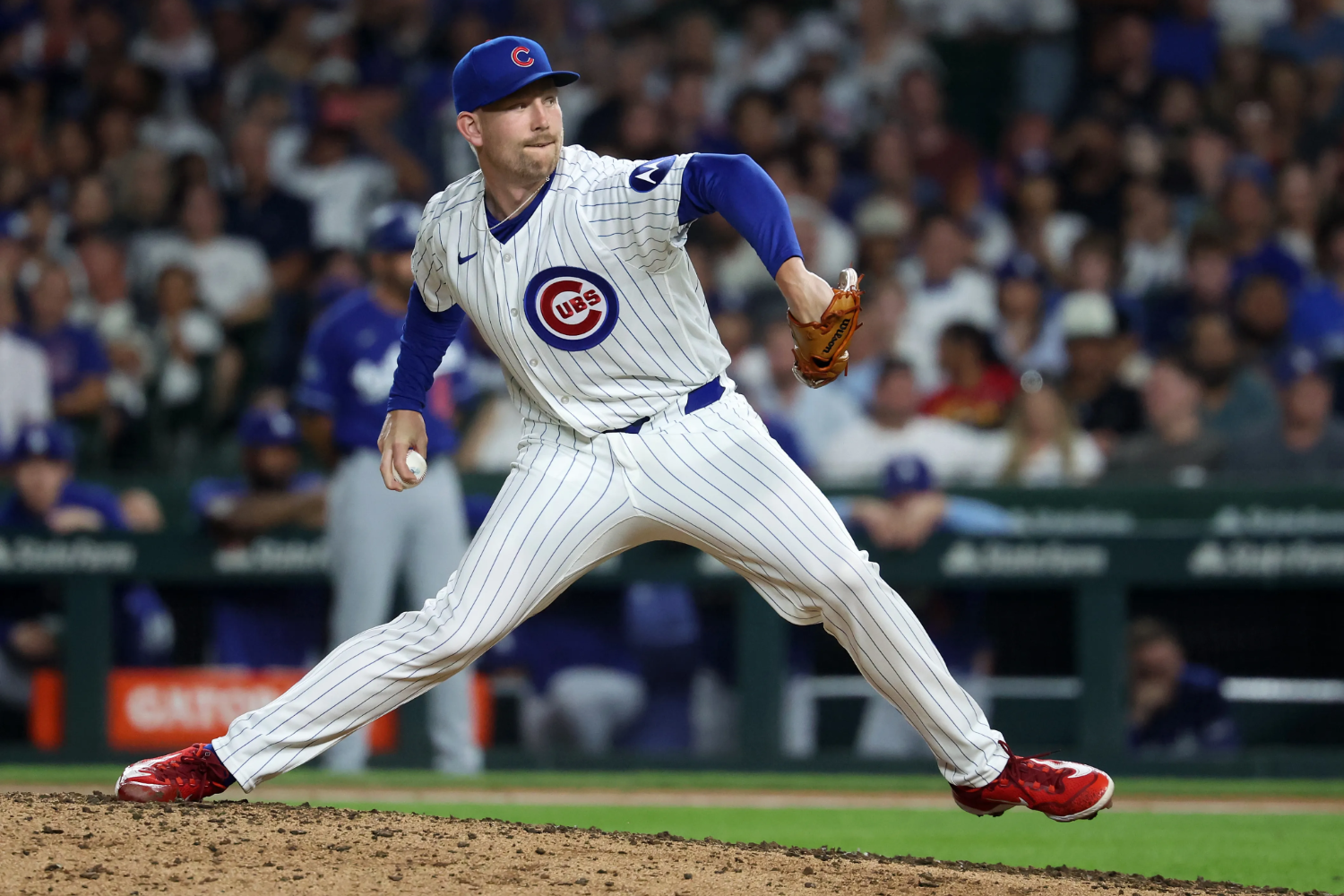 The 2026 MLB trade deadline is now in the rearview mirror. This deadline will be memorialized by the Dodgers acquisition of two-time reigning AL Cy Young Award winner Tarik Skubal and what this means for the future of baseball. There was plenty of action around the rest of the league though, especially amongst the NL Central, where the three buyers, the Brewers, Cubs and Pirates, combined for 12 trades. To nobody’s surprise, the Cubs made four additions to their pitching staff, the clear weakness of the team. They made the most significant upgrades to their rotation, adding Kevin Gausman from the Blue Jays and Clay Holmes from the Mets. They also added Ryan Zeferjahn, one of the best relief arms on the market, from the Angels. They plucked the change-of-scenery, bounce-back candidate Braxton Garrett from the Marlins as well, although his role is a bit more ambiguous. The front office’s mission was to add two starters and a reliever, and they did just that. The starting rotation could evolve into another strength of this team over the next two months, but it remains to be seen how much one reliever addition will benefit the bullpen, whose 4.65 xERA ranks 26th in baseball. Speaking of bullpen additions, their divisional competitors made some significant upgrades as well. The Brewers, who were already fourth in team bullpen xERA at the time of the deadline, acquired the Rockies’ best relief arm in former starter Antonio Senzatela, as well as southpaw groundball specialist JoJo Romero from the Cardinals. The Pirates, who also have a bullpen xERA in the bottom third of the league, but still better than the Cubs, completely overhauled their pen. They added one of the best relievers on the market in Luke Weaver from the Mets. They also brought in two former closers in Kirby Yates from the Angels and Camilo Doval from the Yankees. If that wasn’t enough, they added one of the Marlins’ more dependable arms in Lake Bachar. Here is the outlook for each of these teams’ bullpens post-deadline, as we look at how these new arms will fit in with the incumbents. Ranking NL Central's Best Bullpens After Trade Deadline Brewers The Brewers already had a trifecta of relievers already with an xERA under 3.00. Closer Trevor Megill and flamethrower Abner Uribe have allowed three home runs all season, and all three have come from Uribe. Yes, Megill, despite a rocky start to the season, has not allowed a home run. Shane Drohan, a rookie lefty acquired in the Caleb Durbin trade, has enjoyed a breakout season with a 2.39 xERA while limiting walks and hard contact. He has bounced between the rotation and the bullpen this season. He has been used exclusively as a starter of late, but the return of Kyle Harrison may send him back to the 'pen. Fellow southpaw Aaron Ashby is still one of the most consistent left-handed relievers in the game, and has an elite K/9 at just above 12. Their “lower leverage” arms in Grant Anderson, DL Hall, and Chad Patrick would be amongst their best if they were on almost any other team across the league. That speaks to the depth of this unit, and it just got deeper with the additions of Senzatela and Romero. The unit with the third highest fWAR in baseball is likely to continue to dominate late in games. For what it's worth, their starters have the lowest xERA in baseball. This is why they are in contention for the best record in the league for the second straight season, and have the third highest odds to win the World Series. Pirates Likewise, it is a great time to be a fan of Pennsylvania sports. The city of Philadelphia now has LeBron James, and Pittsburgh acquired Luke Weaver and friends. After adding four new relievers, the Pirates are looking to make their first legitimate push for the postseason in a decade. Even though they are below .500 Paul Skenes has not been Paul Skenes this season, with an ERA in the high-threes and a fastball sitting in the mid-90s, but the Buccos are going for it anyway while adding three controllable arms (four if you count Brandon Eisert, who was traded for before the draft, but in the minors currently) and Kirby Yates. The bullpen already had a knack for missing bats, with Yohan Ramirez, Gregory Soto, Mason Montgomery and Evan Sisk all having a K/9 over 10. In fact, the 'pen as a whole is fifth in baseball in that stat, but they are also fifth in BB/9. Weaver (who may slot into the closer role) and Bachar should provide quality innings while issuing less walks than guys like Ramirez, who has been their most-used reliever to this point. Another name to highlight here is Carmen Mlodzinski, who was bumped from the rotation after the return of Jared Jones. He has impressed to the tune of a sparkling 2.15 ERA as a reliever, but his xERA over 4.00 helps explain why GM Ben Cherington felt pressure to add more right-handers. Overall, this is probably the most improved bullpen in baseball. We will see how far it takes them, but baseball is definitely better when the Pirates are trying. Cubs Finally, we have the Cubs, who added one definitive reliever in Ryan Zeferjahn, and one possible reliever in Braxton Garrett. We should have clarity soon on how Craig Counsell chooses to deploy Garrett, but if he can become the next broken starter turned relief ace, it would be a huge win for Hoyer and Carter Hawkins. The Cubs have searched all season to find a high-leverage right-handed reliever to fill the void left by Brad Keller. Ben Brown looked to be the answer, but due to the myriads of injuries, he was needed in the rotation, where hopefully he will continue to shine after returning from his own neck injury. Zeferjahn fills this role and more. With a 33% strikeout rate, and a walk rate just under 14%, he should become that anchor in the back end that the Cubs were hoping Daniel Palencia would be. Speaking of Palencia, who has been hampered by injuries all season, he can step into a more complementary role. Jacob Webb has been a solid low-cost addition, and newly acquired Tyler Ferguson has a 3.52 xERA in 15 games. Although he has been nothing short of awful, the return of Phil Maton will at least provide a bit more depth, and Hunter Harvey might return before all is said and done. As a whole, the right-handed part of the bullpen is something to feel good about. The main critique of the Cubs’ deadline approach is the failure to land a lefty reliever. We saw Brooks Raley, A.J. Minter, the aforementioned JoJo Romero, Caleb Ferguson, Erik Miller, and Brent Suter all find new homes. The fact that the Cubs will be relying on Ryan Rolison, Hoby Milner, and Caleb Thielbar as their go-to lefties for the rest of the season should rightfully make fans nervous. None of these guys are bad, but a contending team with a properly built bullpen would consider these guys a fine second- or third-tier lefty. So, is there hope that Braxton Garrett becomes a high-leverage option? Or are they counting on a bullpen role for Justin Steele? The Cubs made a great move for Zeferjahn, regardless of how you feel about Moises Ballesteros, but the bullpen makeover seems like an assignment that wasn’t quite completed, leaving them looking up at their division counterparts.
 -
Image courtesy of Kamil Krzaczynski-Imagn Images With four days to go before the 2026 MLB trade deadline, the Chicago Cubs are playing well. Starting pitching is still the key area of concern for this club, and after they cut ties with Jameson Taillon, Jed Hoyer should be out looking to pick up not only a front-line starter, but also some additional depth toward the back of the rotation. The more dire the pitching needs, the less it looks like the offense will be addressed at all. The Cubs still have one of the best lineups in baseball, sitting third in runs scored, wRC+, and fourth in OPS. Pete Crow-Armstrong is a full-strength superstar, which the Cubs have lacked since the World Series core dissolved. We could (though probably won't) see a second straight season where three hitters top 30 homers, with Crow-Armstrong, Seiya Suzuki, and Ian Happ the most likely to do it. With the right pitching moves, this is a team that can compete with anyone in the postseason, due to their elite offense. However, there is a glaring hole in the lineup: Happ, against left handed pitching. Happ has 123 plate appearances against southpaws this season, and is slashing .161/.236/.304. That's the sixth-lowest batting average in baseball against lefties, and that includes left-handed hitters. His .540 OPS is the 10th-lowest, and he only has eight extra-base hits while striking out 42 times. Happ has always been stronger against righties (swinging from the left side) over the course of his career, rather than from the right side against lefties, as evidenced by his .819 OPS against righties compared to a .692 against left-handers. This trend is somewhat common amongst switch-hitters, and a .692 OPS is still almost average. As Matt Trueblood wrote in late 2023, he got more patient for a while, limiting the exposure of a weaker swing from the right side. The next year, he got more aggressive again and found some power. But Happ has been a near-automatic out in 2026 against lefties, making a platoon something to think about. The caveat here is that the four-time Gold Glove winner is still playing strong defense, and with the pitching as suspect as it is, defense isn’t an area the Cubs should be subtracting from. His 6 Defensive Runs Saved (DRS) puts him fifth in baseball, and second in the NL in that department among left fielders. If the Cubs were to find a platoon partner, they would also need to be strong defensively, which makes the trade pool more shallow. That's wildly unlikely, anyway. Happ is an impending free agent who's also the most tenured Cub and a revered presence in the clubhouse. They're unlikely to bench him even part of the time. If they decide it's important enough to explore, though, here are the options they might pursue. Lane Thomas, Kansas City Royals The Royals are firmly in seller mode and will look to move anything that won’t be part of their future. The former Cardinal is on a cheap one-year deal and should not take more than a flier-type prospect to acquire. Although Thomas has played only center and right field this season, he’s been worth 3 DRS in right and has a top-tier arm. He has a .799 OPS against lefties and would fit well in the bottom half of the Cubs lineup. Austin Martin, Minnesota Twins The fifth overall pick in the 2020 MLB Draft has only about two years of MLB service time, but with Byron Buxton not going anywhere and top prospects Walker Jenkins and Emmanuel Rodriguez on the cusp of the majors, the Twins might not see room for Martin in their future. He’s played mostly right this season and has been strong defensively there, posting 5 DRS, but has logged over 200 innings in left, as well. He offers average arm strength and is a plus fielder in both corners. The right-handed hitter has a .788 OPS against opposite-handed pitchers and could have a role on the Cubs’ lineup (in the right matchups) for years to come. Although he is controllable, he shouldn't be costly. Jacob Young, Washington Nationals Young was worth 13 DRS in center field last season, but this year, that number is down to 1. The arm hasn’t always played great in center, which would hypothetically improve upon shifting over to left. From a pure speed standpoint, an outfield featuring Crow-Armstrong and Young would be the baseball equivalent to when the Miami Dolphins lined up both Tyreek Hill and Jaylen Waddle as their wide receivers. Young was never a feared hitter, but he does have a .758 OPS against left-handed pitching and has already topped his career high in home runs this season, with nine. The Cubs might have to part with a pitching prospect to entice the Nationals, but if Dylan Crews continues to improve from a rough start to his career, Young could be seen as expendable. None of these options will get the casual fan hyped, but these are all players who could fill in as a quality fourth outfielder, regardless of the Happ situation. They can handle left field adequately, while providing a spark in the bottom of the lineup. It’s important to remember that the Cubs, barring an extension, have their starting left and right fielders set to hit free agency after this season, so players like Martin and Young would serve a purpose beyond 2026. The team is prioritizing controllable arms in their quest to improve the pitching staff. Could they also look to the future while upgrading the present on the position-player side? View full article
-
Could Cubs Acquire a Platoon Partner for Ian Happ at MLB Trade Deadline?
Paul Niemiec posted an article in Cubs
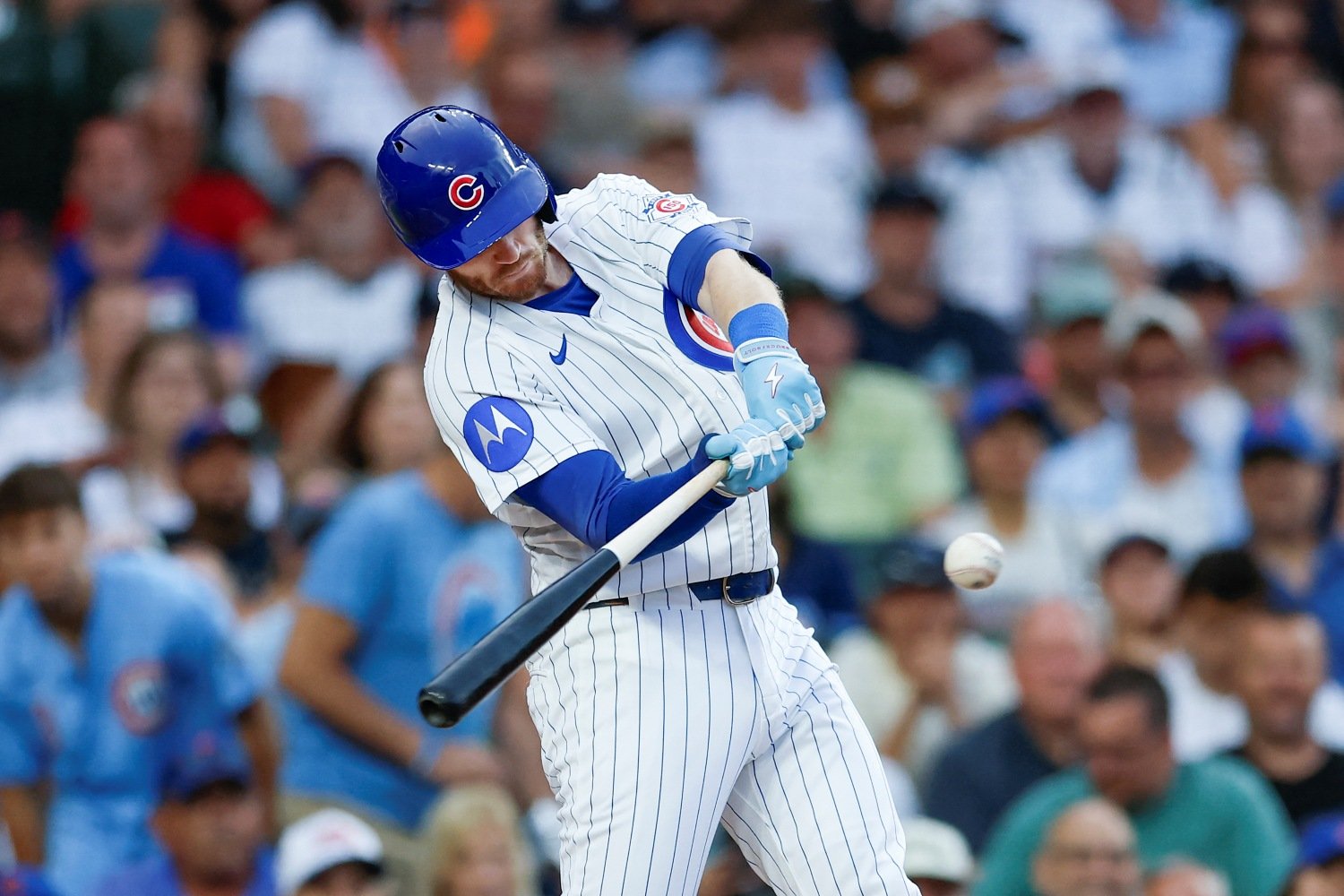 With four days to go before the 2026 MLB trade deadline, the Chicago Cubs are playing well. Starting pitching is still the key area of concern for this club, and after they cut ties with Jameson Taillon, Jed Hoyer should be out looking to pick up not only a front-line starter, but also some additional depth toward the back of the rotation. The more dire the pitching needs, the less it looks like the offense will be addressed at all. The Cubs still have one of the best lineups in baseball, sitting third in runs scored, wRC+, and fourth in OPS. Pete Crow-Armstrong is a full-strength superstar, which the Cubs have lacked since the World Series core dissolved. We could (though probably won't) see a second straight season where three hitters top 30 homers, with Crow-Armstrong, Seiya Suzuki, and Ian Happ the most likely to do it. With the right pitching moves, this is a team that can compete with anyone in the postseason, due to their elite offense. However, there is a glaring hole in the lineup: Happ, against left handed pitching. Happ has 123 plate appearances against southpaws this season, and is slashing .161/.236/.304. That's the sixth-lowest batting average in baseball against lefties, and that includes left-handed hitters. His .540 OPS is the 10th-lowest, and he only has eight extra-base hits while striking out 42 times. Happ has always been stronger against righties (swinging from the left side) over the course of his career, rather than from the right side against lefties, as evidenced by his .819 OPS against righties compared to a .692 against left-handers. This trend is somewhat common amongst switch-hitters, and a .692 OPS is still almost average. As Matt Trueblood wrote in late 2023, he got more patient for a while, limiting the exposure of a weaker swing from the right side. The next year, he got more aggressive again and found some power. But Happ has been a near-automatic out in 2026 against lefties, making a platoon something to think about. The caveat here is that the four-time Gold Glove winner is still playing strong defense, and with the pitching as suspect as it is, defense isn’t an area the Cubs should be subtracting from. His 6 Defensive Runs Saved (DRS) puts him fifth in baseball, and second in the NL in that department among left fielders. If the Cubs were to find a platoon partner, they would also need to be strong defensively, which makes the trade pool more shallow. That's wildly unlikely, anyway. Happ is an impending free agent who's also the most tenured Cub and a revered presence in the clubhouse. They're unlikely to bench him even part of the time. If they decide it's important enough to explore, though, here are the options they might pursue. Lane Thomas, Kansas City Royals The Royals are firmly in seller mode and will look to move anything that won’t be part of their future. The former Cardinal is on a cheap one-year deal and should not take more than a flier-type prospect to acquire. Although Thomas has played only center and right field this season, he’s been worth 3 DRS in right and has a top-tier arm. He has a .799 OPS against lefties and would fit well in the bottom half of the Cubs lineup. Austin Martin, Minnesota Twins The fifth overall pick in the 2020 MLB Draft has only about two years of MLB service time, but with Byron Buxton not going anywhere and top prospects Walker Jenkins and Emmanuel Rodriguez on the cusp of the majors, the Twins might not see room for Martin in their future. He’s played mostly right this season and has been strong defensively there, posting 5 DRS, but has logged over 200 innings in left, as well. He offers average arm strength and is a plus fielder in both corners. The right-handed hitter has a .788 OPS against opposite-handed pitchers and could have a role on the Cubs’ lineup (in the right matchups) for years to come. Although he is controllable, he shouldn't be costly. Jacob Young, Washington Nationals Young was worth 13 DRS in center field last season, but this year, that number is down to 1. The arm hasn’t always played great in center, which would hypothetically improve upon shifting over to left. From a pure speed standpoint, an outfield featuring Crow-Armstrong and Young would be the baseball equivalent to when the Miami Dolphins lined up both Tyreek Hill and Jaylen Waddle as their wide receivers. Young was never a feared hitter, but he does have a .758 OPS against left-handed pitching and has already topped his career high in home runs this season, with nine. The Cubs might have to part with a pitching prospect to entice the Nationals, but if Dylan Crews continues to improve from a rough start to his career, Young could be seen as expendable. None of these options will get the casual fan hyped, but these are all players who could fill in as a quality fourth outfielder, regardless of the Happ situation. They can handle left field adequately, while providing a spark in the bottom of the lineup. It’s important to remember that the Cubs, barring an extension, have their starting left and right fielders set to hit free agency after this season, so players like Martin and Young would serve a purpose beyond 2026. The team is prioritizing controllable arms in their quest to improve the pitching staff. Could they also look to the future while upgrading the present on the position-player side?
 -
Image courtesy of USA TODAY Network via Reuters Connect We're a week out from the August 3 MLB trade deadline. Rumors are churning and some minor trades have been made, but the main story here is the number of teams whose status as buyers or sellers could change between now and next Monday. One team whose status has been cemented since May, however, is the Los Angeles Angels, who are stumbling toward a 100+ loss season, which will be the most in franchise history. As one of the few bona fide sellers, the Angels have a chance to reset their trajectory under John Mozeliak and significantly upgrade a farm system that was always one of baseball’s worst under former GM Perry Minasian. Jon Heyman of The New York Post reported earlier in the week that the Angels are willing to discuss trade opportunities for Jose Soriano and Reid Detmers. Soriano and Detmers both have two more years of arbitration eligibility left, making them two of the higher-end starters on the market due to the team control and lower cost. Soriano was one of the brightest spots on a competitive Angels team through the first month of the season, wherein he won AL Pitcher of the Month honors. In his first seven starts, he went 5-1 with a 0.84 ERA, with 49 strikeouts. He only allowed three home runs in 42 2/3 innings pitched. If you remove his last start of April (in which he allowed three earned runs against the White Sox), he had a 0.24 ERA, allowing only 1 earned run through his first six starts of the season. Since then, Soriano has not been more than a back-end starter. In his last 15 starts, he has a 4.93 ERA, but a slightly more encouraging 4.60 FIP. With the Cubs’ stellar defense behind him, these numbers should improve. He has been a terrific ground-ball guy (52.1% of his batted balls), and he's done well at keeping the ball in the yard, allowing less than one homer per nine frames. He has a career ERA of 3.77 and has been the Angels’ most consistent starter since 2024. While he’s not a No. 1 kind of guy, he will greatly impact a Cubs rotation that cannot afford to keep trotting out Jameson Taillon and Colin Rea. Detmers is the even more exciting name. He's made his return to the rotation this season after spending all of 2025 in the bullpen and has been the Angels’ best pitcher, unless you're on the Walbert Ureña train. The health issues seem to be behind him, as he's made 21 starts with an xERA of 3.32 and a 1.10 WHIP. His .214 opponents batting average is eighth-lowest among qualified American League starters, and his 136 strikeouts are the eighth-most in baseball. He currently has the lowest walk rate of his career and has eclipsed 3.0 fWAR, a number that he has not hit yet over a full season. As far as controllable starters go, Detmers is the top guy on the market. The Angels certainly don’t have to trade him, but this is probably their best opportunity to bring in a major haul. Even with team control through 2028, that very well might not be enough time for the Angels to return to contention, considering the state of their roster. This is certainly why Detmers and Soriano, as well as Zach Neto and Jo Adell, are on the market. What could the Cubs do to acquire one of these arms? On Friday, Ken Rosenthal and Will Sammon of The Athletic reported that the Angels are hoping to add a young catcher. It looked like the Angels had one of the best all-around young catchers in the game with former top prospect Logan O’Hoppe, but since his breakout in 2024 where he hit 20 home runs and played solid defense, he has produced a total of -1.6 fWAR. Even within that 2024 season, after (ironically) the Cubs' pursuit of him at the trade deadline went nowhere, he fell apart. To make matters worse, his -16 DRS in 2026 is the worst mark in baseball. What you’re probably thinking is that Moisés Ballesteros is the young catcher the Cubs can trade, but another one has emerged this season: prospect Owen Ayers. Drafted in the 19th round of the 2024 draft out of Marshall University, Ayers has done nothing but rake this season. He began the year in High-A, mashed to the tune of a 1.008 OPS in 65 games with Double-A Knoxville, and is now with Triple-A Iowa, where he has collected 11 hits in eight games. A 25-year-old would normally be considered an older prospect, but catchers tend to need more time to develop defensively, and he didn’t even become a full-time catcher until his final season in college. His emergence this season gives the Cubs options in regard to their future catching situation and could take pressure off Ballesteros to emerge as the backstop of tomorrow. Ayers could conceivably be one piece in a trade for Soriano, which would net the Cubs a controllable starting pitcher who'd also bolster their chances this fall. He would give the Angels a catching solution for the near future, as their top catching prospects Garrett Wright and Juan Flores are not even 21 years old yet. Ayers (along with, say, Jefferson Rojas) for Soriano moves the needle, but not enough to consider it their “big” starting pitching move. Detmers is a guy who can go in Game 1 in a playoff series, but he is going to be much harder to acquire. For example, Jeff Joiner of Sports Illustrated proposed a trade with the White Sox where they would acquire Detmers for lefty starter Hagen Smith and shortstop Billy Carlson, two of their top three prospects per mlb.com. If the Cubs wanted to mimic a package like this, top pitching prospect Jaxon Wiggins would have to be involved, as well as Ayers and another high-end prospect. The Cubs will refuse any request for Josiah Hartshorn, but they might have to give up either Ethan Conrad or Kane Kepley to round out a package for Detmers. It’s hard not to prospect hug, but the Cubs’ window is open now, and they currently have one of the weaker starting pitching units in baseball. It would be malpractice to not bring in a high-level arm, and for what it's worth, a 2027 rotation including Detmers and Edward Cabrera as well as (hopefully; gulp) Justin Steele, Cade Horton and Ben Brown sounds pretty good, too. Ayers could be a very useful little linchpin in a trade. It might even be the Cubs' only hope for the kind of upgrade they need to make this week. View full article
-
 We're a week out from the August 3 MLB trade deadline. Rumors are churning and some minor trades have been made, but the main story here is the number of teams whose status as buyers or sellers could change between now and next Monday. One team whose status has been cemented since May, however, is the Los Angeles Angels, who are stumbling toward a 100+ loss season, which will be the most in franchise history. As one of the few bona fide sellers, the Angels have a chance to reset their trajectory under John Mozeliak and significantly upgrade a farm system that was always one of baseball’s worst under former GM Perry Minasian. Jon Heyman of The New York Post reported earlier in the week that the Angels are willing to discuss trade opportunities for Jose Soriano and Reid Detmers. Soriano and Detmers both have two more years of arbitration eligibility left, making them two of the higher-end starters on the market due to the team control and lower cost. Soriano was one of the brightest spots on a competitive Angels team through the first month of the season, wherein he won AL Pitcher of the Month honors. In his first seven starts, he went 5-1 with a 0.84 ERA, with 49 strikeouts. He only allowed three home runs in 42 2/3 innings pitched. If you remove his last start of April (in which he allowed three earned runs against the White Sox), he had a 0.24 ERA, allowing only 1 earned run through his first six starts of the season. Since then, Soriano has not been more than a back-end starter. In his last 15 starts, he has a 4.93 ERA, but a slightly more encouraging 4.60 FIP. With the Cubs’ stellar defense behind him, these numbers should improve. He has been a terrific ground-ball guy (52.1% of his batted balls), and he's done well at keeping the ball in the yard, allowing less than one homer per nine frames. He has a career ERA of 3.77 and has been the Angels’ most consistent starter since 2024. While he’s not a No. 1 kind of guy, he will greatly impact a Cubs rotation that cannot afford to keep trotting out Jameson Taillon and Colin Rea. Detmers is the even more exciting name. He's made his return to the rotation this season after spending all of 2025 in the bullpen and has been the Angels’ best pitcher, unless you're on the Walbert Ureña train. The health issues seem to be behind him, as he's made 21 starts with an xERA of 3.32 and a 1.10 WHIP. His .214 opponents batting average is eighth-lowest among qualified American League starters, and his 136 strikeouts are the eighth-most in baseball. He currently has the lowest walk rate of his career and has eclipsed 3.0 fWAR, a number that he has not hit yet over a full season. As far as controllable starters go, Detmers is the top guy on the market. The Angels certainly don’t have to trade him, but this is probably their best opportunity to bring in a major haul. Even with team control through 2028, that very well might not be enough time for the Angels to return to contention, considering the state of their roster. This is certainly why Detmers and Soriano, as well as Zach Neto and Jo Adell, are on the market. What could the Cubs do to acquire one of these arms? On Friday, Ken Rosenthal and Will Sammon of The Athletic reported that the Angels are hoping to add a young catcher. It looked like the Angels had one of the best all-around young catchers in the game with former top prospect Logan O’Hoppe, but since his breakout in 2024 where he hit 20 home runs and played solid defense, he has produced a total of -1.6 fWAR. Even within that 2024 season, after (ironically) the Cubs' pursuit of him at the trade deadline went nowhere, he fell apart. To make matters worse, his -16 DRS in 2026 is the worst mark in baseball. What you’re probably thinking is that Moisés Ballesteros is the young catcher the Cubs can trade, but another one has emerged this season: prospect Owen Ayers. Drafted in the 19th round of the 2024 draft out of Marshall University, Ayers has done nothing but rake this season. He began the year in High-A, mashed to the tune of a 1.008 OPS in 65 games with Double-A Knoxville, and is now with Triple-A Iowa, where he has collected 11 hits in eight games. A 25-year-old would normally be considered an older prospect, but catchers tend to need more time to develop defensively, and he didn’t even become a full-time catcher until his final season in college. His emergence this season gives the Cubs options in regard to their future catching situation and could take pressure off Ballesteros to emerge as the backstop of tomorrow. Ayers could conceivably be one piece in a trade for Soriano, which would net the Cubs a controllable starting pitcher who'd also bolster their chances this fall. He would give the Angels a catching solution for the near future, as their top catching prospects Garrett Wright and Juan Flores are not even 21 years old yet. Ayers (along with, say, Jefferson Rojas) for Soriano moves the needle, but not enough to consider it their “big” starting pitching move. Detmers is a guy who can go in Game 1 in a playoff series, but he is going to be much harder to acquire. For example, Jeff Joiner of Sports Illustrated proposed a trade with the White Sox where they would acquire Detmers for lefty starter Hagen Smith and shortstop Billy Carlson, two of their top three prospects per mlb.com. If the Cubs wanted to mimic a package like this, top pitching prospect Jaxon Wiggins would have to be involved, as well as Ayers and another high-end prospect. The Cubs will refuse any request for Josiah Hartshorn, but they might have to give up either Ethan Conrad or Kane Kepley to round out a package for Detmers. It’s hard not to prospect hug, but the Cubs’ window is open now, and they currently have one of the weaker starting pitching units in baseball. It would be malpractice to not bring in a high-level arm, and for what it's worth, a 2027 rotation including Detmers and Edward Cabrera as well as (hopefully; gulp) Justin Steele, Cade Horton and Ben Brown sounds pretty good, too. Ayers could be a very useful little linchpin in a trade. It might even be the Cubs' only hope for the kind of upgrade they need to make this week.
 -
Could Cubs Turn To Adley Rutschman To Upgrade Catching?
Paul Niemiec replied to Steve Drumwright's topic in Chicago Cubs Talk
I like this idea a lot. For the right price, why not. It makes moises even more tradable. Don’t need to bring back Carson Kelly for a third year. Amaya is usually a lock to miss some time. If it doesn’t work than Owen ayers should be ready soon. -
Image courtesy of © Charles LeClaire-Imagn Images The official second half of the season is underway, and the Chicago Cubs have come out ready to play. They took two of three at home from the surprisingly competitive Minnesota Twins. After their panic-inducing June, the team has played more like the one we saw early this season, firmly cementing their status as buyers. With the trade deadline less than two weeks away, let's rank the areas they can improve upon, starting with the least necessary and working up to the trades they need to make if they want to make noise in October. 5. Backup Outfielder The Cubs have a need for better bench depth, with Matt Shaw on the injured list for a second time this year. Top prospect Pedro Ramirez and resurgent veteran Michael Conforto have performed well off the bench, and the return of Shaw will further deepen this group. If the Cubs want to pick up a luxury piece on the cheap, they can go after a backup outfielder who can slot in above Kevin Alcántara and/or Justin Dean. Both have difference-making speed, but a hitter with a more consistent track record of success could go a long way. We don't want to see another situation like the Terrance Gore 13th-inning at-bat in the 2018 play-in game. It should be pretty easy to get Lane Thomas from the Royals, or Tyrone Taylor from the Mets. They could even reunite with Willi Castro, who can move all over the diamond. 4. Platoon Partner for Ian Happ For the most part, the Cubs lineup we have seen all season will be what we see the rest of the way and in the postseason. They have established regulars at every position, and they can all rake when they’re hot. As previously mentioned, a backup outfielder makes sense as their lineup is set, but if they want to take a bigger offensive swing, here is where they can. Ian Happ has struggled against lefties all season. Although he isn’t striking out from the right side at an alarming rate, he's hitting .160, with an OPS of .551. Benching a veteran leader on the verge of free agency is always complicated, even if it's only in roughly one-fourth of games, but it might necessary. Orioles outfielder Taylor Ward is a rental and would make a ton of sense here. The Cubs could also call up their division rival the Reds and see what they would want for Spencer Steer, who can play a few positions and comes with team control. 3. Left-Handed Reliever It should come to no surprise that the final three spots on this list will be about the pitching staff. There's really no wrong way they can address the pitching staff. We've already seen them bring back old friends Drew Pomeranz and Aaron Civale, as well as trading for David Peterson, but it's not going to stop there—and not just because Pomeranz is already gone again. As they continue to add pitching everywhere, they should target a high leverage lefty. Caleb Thielbar has not been nearly as effective as he was last season, but is still pitching higher-leverage innings, and who knows when Riley Martin will return? Hoby Milner and Ryan Rolison have been serviceable, but they each carry xERAs over a run higher than their actual ERA. A playoff series can go off the rails fast if they have to rely on these guys to get big outs. Please don’t tell me the plan A is for Justin Steele to come back and be a lockdown reliever. About two and a half weeks ago, the easy answer here would have been Aroldis Chapman, but the Red Sox have flipped their season around as they are currently on a 14-game winning streak. (Besides, as Cubs fans know all too well, there's never actually anything 'easy' about acquiring Chapman.) All-Star Foster Griffin could fill a rotation spot now but slide into the bullpen come October. If the Astros sell, they should have no issue finding suitors for Steven Okert, and the Mets should look to sell both Brooks Raley and A.J. Minter. 2. Closer The highlight of Daniel Palencia’s 2026 is looking more and more like it was closing out the WBC for Team Venezuela, because the plan for him to close for the Cubs has not worked. He is also back on the injured list. Actually, the Cubs having a closer at all has not come to fruition yet. The team has a total of 20 saves, with Jacob Webb leading the charge with five. This is not going to work in the playoffs. They need a guy who has recent experience closing games. The good thing for the Cubs is that many of the elite teams do have the ninth inning covered already, so there might not be 10 teams making a mad dash for a closer not named Mason Miller. The Cubs can certainly go for Miller, but he is arguably the hottest trade chip in baseball as the Padres fall further into seller territory. If they go for Miller, it could very well make it difficult for them to accomplish what you will read about next. Depending on how much further they fall out of it, could the Blue Jays look to move the cost-effective and controllable Louis Varland for a haul? The other options inspire less confidence, but still more than anyone the Cubs currently employ. This tier could include Luke Weaver of the Mets. 1. Front-End Starter This was the answer here from the end of April onward. The story of the Cubs’ season has been the injuries to their starting rotation, and how they have been able to overcome them to remain in playoff position. Edward Cabrera has a chance to return, but Cabrera has been a bag of mixed results all season, and Taillon just got back, but probably should be the last guy to look at for playoff innings with an xERA of 5.49. With Horton going down after two starts, Justin Steele’s multiple setbacks, and emerging ace Ben Brown’s season in jeopardy, Shota Imanaga and his 1.4 fWAR lead the Cubs’ starters. Matthew Boyd has been okay, but the only thing he has proven is that the durability of his 2025 was an outlier. Outside of them, the most promising option currently active looks to be Javier Assad and his fWAR of 0.0, or David Peterson, who has looked good, terrible, and fine in his three starts as a Cub. Really, if they had the resources, they should go after two front-line guys, but with the state of the entire pitching staff, they need to allocate resources to acquire good relievers, too. (They also don't have the prospects to acquire more than one high-priority target this summer.) Depending on how the next two weeks go for the Tigers, Tarik Skubal is an obvious choice here, but between his time on the shelf this season and the sentimental value he is worth in Detroit, the juice might not be worth the prospect squeeze for the Cubs. The Angels have recently hinted that they will listen on controllable starters Reid Detmers and José Soriano, and despite hanging on the fringes of the playoff picture, the Twins could be better off moving Joe Ryan. The Padres might want to move Michael King, but he has a complicated contract situation with which to deal. The best fit might be Freddy Peralta, who is a true rental and (barring injury) a lock to be moved—but he's also been bad and just got roughed up by a Brewers team the Cubs know they need to be able to beat. Another true rental is Kevin Gausman, who would be a good secondary piece next to a true number one. Failing that, he'd be a fine cog in whatever elaborate out machine Craig Counsell tries to build this fall. The Cubs can't do all of this, or even close to it. They need to accomplish at least two trades that check boxes from this list, though. If they do, they still have a chance to make the kind of impressive October run fans have craved for a long time, but not tasted since 2017. View full article
-
 The official second half of the season is underway, and the Chicago Cubs have come out ready to play. They took two of three at home from the surprisingly competitive Minnesota Twins. After their panic-inducing June, the team has played more like the one we saw early this season, firmly cementing their status as buyers. With the trade deadline less than two weeks away, let's rank the areas they can improve upon, starting with the least necessary and working up to the trades they need to make if they want to make noise in October. 5. Backup Outfielder The Cubs have a need for better bench depth, with Matt Shaw on the injured list for a second time this year. Top prospect Pedro Ramirez and resurgent veteran Michael Conforto have performed well off the bench, and the return of Shaw will further deepen this group. If the Cubs want to pick up a luxury piece on the cheap, they can go after a backup outfielder who can slot in above Kevin Alcántara and/or Justin Dean. Both have difference-making speed, but a hitter with a more consistent track record of success could go a long way. We don't want to see another situation like the Terrance Gore 13th-inning at-bat in the 2018 play-in game. It should be pretty easy to get Lane Thomas from the Royals, or Tyrone Taylor from the Mets. They could even reunite with Willi Castro, who can move all over the diamond. 4. Platoon Partner for Ian Happ For the most part, the Cubs lineup we have seen all season will be what we see the rest of the way and in the postseason. They have established regulars at every position, and they can all rake when they’re hot. As previously mentioned, a backup outfielder makes sense as their lineup is set, but if they want to take a bigger offensive swing, here is where they can. Ian Happ has struggled against lefties all season. Although he isn’t striking out from the right side at an alarming rate, he's hitting .160, with an OPS of .551. Benching a veteran leader on the verge of free agency is always complicated, even if it's only in roughly one-fourth of games, but it might necessary. Orioles outfielder Taylor Ward is a rental and would make a ton of sense here. The Cubs could also call up their division rival the Reds and see what they would want for Spencer Steer, who can play a few positions and comes with team control. 3. Left-Handed Reliever It should come to no surprise that the final three spots on this list will be about the pitching staff. There's really no wrong way they can address the pitching staff. We've already seen them bring back old friends Drew Pomeranz and Aaron Civale, as well as trading for David Peterson, but it's not going to stop there—and not just because Pomeranz is already gone again. As they continue to add pitching everywhere, they should target a high leverage lefty. Caleb Thielbar has not been nearly as effective as he was last season, but is still pitching higher-leverage innings, and who knows when Riley Martin will return? Hoby Milner and Ryan Rolison have been serviceable, but they each carry xERAs over a run higher than their actual ERA. A playoff series can go off the rails fast if they have to rely on these guys to get big outs. Please don’t tell me the plan A is for Justin Steele to come back and be a lockdown reliever. About two and a half weeks ago, the easy answer here would have been Aroldis Chapman, but the Red Sox have flipped their season around as they are currently on a 14-game winning streak. (Besides, as Cubs fans know all too well, there's never actually anything 'easy' about acquiring Chapman.) All-Star Foster Griffin could fill a rotation spot now but slide into the bullpen come October. If the Astros sell, they should have no issue finding suitors for Steven Okert, and the Mets should look to sell both Brooks Raley and A.J. Minter. 2. Closer The highlight of Daniel Palencia’s 2026 is looking more and more like it was closing out the WBC for Team Venezuela, because the plan for him to close for the Cubs has not worked. He is also back on the injured list. Actually, the Cubs having a closer at all has not come to fruition yet. The team has a total of 20 saves, with Jacob Webb leading the charge with five. This is not going to work in the playoffs. They need a guy who has recent experience closing games. The good thing for the Cubs is that many of the elite teams do have the ninth inning covered already, so there might not be 10 teams making a mad dash for a closer not named Mason Miller. The Cubs can certainly go for Miller, but he is arguably the hottest trade chip in baseball as the Padres fall further into seller territory. If they go for Miller, it could very well make it difficult for them to accomplish what you will read about next. Depending on how much further they fall out of it, could the Blue Jays look to move the cost-effective and controllable Louis Varland for a haul? The other options inspire less confidence, but still more than anyone the Cubs currently employ. This tier could include Luke Weaver of the Mets. 1. Front-End Starter This was the answer here from the end of April onward. The story of the Cubs’ season has been the injuries to their starting rotation, and how they have been able to overcome them to remain in playoff position. Edward Cabrera has a chance to return, but Cabrera has been a bag of mixed results all season, and Taillon just got back, but probably should be the last guy to look at for playoff innings with an xERA of 5.49. With Horton going down after two starts, Justin Steele’s multiple setbacks, and emerging ace Ben Brown’s season in jeopardy, Shota Imanaga and his 1.4 fWAR lead the Cubs’ starters. Matthew Boyd has been okay, but the only thing he has proven is that the durability of his 2025 was an outlier. Outside of them, the most promising option currently active looks to be Javier Assad and his fWAR of 0.0, or David Peterson, who has looked good, terrible, and fine in his three starts as a Cub. Really, if they had the resources, they should go after two front-line guys, but with the state of the entire pitching staff, they need to allocate resources to acquire good relievers, too. (They also don't have the prospects to acquire more than one high-priority target this summer.) Depending on how the next two weeks go for the Tigers, Tarik Skubal is an obvious choice here, but between his time on the shelf this season and the sentimental value he is worth in Detroit, the juice might not be worth the prospect squeeze for the Cubs. The Angels have recently hinted that they will listen on controllable starters Reid Detmers and José Soriano, and despite hanging on the fringes of the playoff picture, the Twins could be better off moving Joe Ryan. The Padres might want to move Michael King, but he has a complicated contract situation with which to deal. The best fit might be Freddy Peralta, who is a true rental and (barring injury) a lock to be moved—but he's also been bad and just got roughed up by a Brewers team the Cubs know they need to be able to beat. Another true rental is Kevin Gausman, who would be a good secondary piece next to a true number one. Failing that, he'd be a fine cog in whatever elaborate out machine Craig Counsell tries to build this fall. The Cubs can't do all of this, or even close to it. They need to accomplish at least two trades that check boxes from this list, though. If they do, they still have a chance to make the kind of impressive October run fans have craved for a long time, but not tasted since 2017.
 -
Image courtesy of © Stephen Brashear-Imagn Images Can you believe the 2026 All-Star break is upon us already? Well, it is, and the Chicago Cubs are back to their winning ways. Despite the June gloom, the bats have come back alive and have been able to cover for their suspect pitching staff. The team as a whole should benefit from a much-needed break, while they prepare for what should be a gauntlet of a second half. For the second time since 2021, the Cubs have only one All-Star, in Pete Crow-Armstrong. If Ben Brown hadn't suffered a neck injury a few weeks ago, they might have two, but Cubs fans are certainly more dialed-in for the second half than for the Midsummer Classic. This marks Crow-Armstrong’s second All-Star nod, as he was selected last season along with Kyle Tucker and Matthew Boyd. While this is surely the second selection of many more to come for the young star center fielder, what we're going to celebrate with this list is the All-Stars that we don’t always remember. These are the players who made one All-Star Game in their careers and were lucky enough to do it wearing Cubbie blue. Since the Cubs are in their 151st season as a franchise, I did have to make the cutoff somewhere. If you're a historian and would like to expand on this, please drop a comment, but for this list, I'm going through the free agency era, which started in 1977. 1977: Jerry Morales Morales spent seven of his 15 big-league seasons with the Cubs across two different stints, from 1974-1977 and from 1981-1983. He amassed a total of -2.0 bWAR for his career, totaling 95 home runs and an OPS of .695. Although his lengthy career was not colored with accolades, he did join multi-time All-Stars Rick Reuschel, Bruce Sutter, and Manny Trillo at Yankee Stadium. He was hit by a pitch in his only plate appearance, becoming one of only 28 players to be plunked at the All-Star Game. 1981: Bill Buckner It's hard to believe the 22-year major-league veteran was named to only one All-Star Game, and a shamw that he did it during the year of baseball's midseason strike, which limited him to 106 total games and 1.2 bWAR. He was coming off a season where his .324 batting average led the NL, so he was clearly a popular name. He did lead the NL in doubles that season, with 35; maybe he'd have gotten to 50 in a full campaign. Although he was a reserve, with Pete Rose starting at first base, Buckner was the Cubs’ only representative for 1981. 1988: Vance Law The 1988 Cubs were a peculiar case. The team finished 77-85, fourth place in the division, but had six representatives during that year’s All-Star Game at Riverfront Stadium. Andre Dawson and Ryne Sandberg were named starters, with Law, Rafael Palmiero and Shawon Dunston on the bench. This was also the first All-Star appearance for Greg Maddux. As for Law, 1988 marked his return to Chicago, but on the North Side this time. After a three-year stint north of the border in Montreal, Law slashed .293/.358/.412 while driving in 78 runs. Along with the RBIs, his .770 OPS and .293 batting average marked the highest of his career, which he did at 31 years old. 1989: Mitch Williams Like Buckner, Williams is remembered mostly for being on the wrong side of baseball history, as he served up Joe Carter’s walk-off home run to lose the 1993 World Series. That overshadows a career where he racked up 30+ saves three different times—the first being 1989 with the Cubs, when he made his only All-Star team. Drawing comparisons to Rick “Wild Thing” Vaughn, Williams’s mid- to high-90s fastball helped the Cubs win the NL East crown that season, as he notched 36 saves with a 2.76 ERA. 1996: Steve Trachsel Trachsel was the Cubs’ only representative in 1996, which is a surprise, as Sammy Sosa hit another 40 bombs and drove in 100 and won NL Player of the Month in July. Instead of Sosa, the nod went to Trachsel, who had one of his best seasons, posting 3.7 bWAR. He pitched three complete games, including two shutouts, in over 200 innings. Though this was his only All-Star appearance, Trachsel started 30+ games in eight of nine seasons from 1995 to 2004, making him an underrated symbol of durability on the mound. 2000: Joe Girardi Girardi was a part-time player for most of his career, eclipsing 400 plate appearances only five times in his 15 campaigns. His 1.6-bWAR season for the Cubs at age 35 is a clear outlier for his career, where he hit .278 in 106 games. He was named to the All-Star team as a replacement for Mike Piazza but was deserving of the honor, as he was one of the Cubs’ better hitters on a team that lost 97 games. 2001: Jon Lieber Another workhorse of the early 2000s, Lieber led the majors in starts (35) and innings pitched (251) the season before, but was named an All-Star for the first time in 2001 after a first half wherein he pitched a Maddux (long before we called it that) and recorded six straight wins from mid-June through his first start after the break. He did win 20 games that season, and accumulated 3.9 bWAR, which were both career highs. Lieber gave up home runs to both Derek Jeter and Magglio Ordonez in his one inning of action during the game, but the NL was already losing, and the loss went to another one-time All-Star, Chan Ho Park. 2003: Mark Prior The second overall pick in the 2001 draft and co-ace of the Cubs (next to Kerry Wood) made his only All-Star appearance in 2003—a season wherein he led the N.L. in bWAR with 7.4 and posted the lowest FIP in the league, at 2.47. His first-half highlight was striking out 16 Brewers in a late June start. Sadly, the story of Prior is known all too well among Cubs fans. Just after the break, he collided with Marcus Giles while running the bases, injuring his shoulder. He endured heavy usage by manager Dusty Baker, then dealt with more arm trouble in 2004 and a line drive that broke his elbow in 2005. This would be the only time he was healthy enough to earn an honor very much in line with his talent. Prior did not appear in the game, but Wood did, striking out two. Prior remains one of the prime examples of “what could have been”; he didn't pitch in the majors again after 2006. 2008: Geovany Soto, Kosuke Fukudome, Carlos Marmol The 2008 Cubs are tied with the 2023 Braves for the most All-Stars from one team in a single season, with eight. Soto, Fukudome, and Marmol joined multi-time All-Stars Ryan Dempster, Carlos Zambrano, Aramis Ramírez, Wood, and Alfonso Soriano as representatives for the eventual NL Central champs. Fukudome, the Cubs’ first Japanese-born player, got the start in right field after a scorching April wherein he hit .327 and an only slightly less impressive May. He began to struggle as the season changed from spring to summer, but he was a fan favorite and one of the brightest rookies in the league. He finished the season with a .738 OPS and 0.6 bWAR, which was his lowest bWAR of his three and a half seasons on the North Side. He went 0-2 with a strikeout before being replaced by Pirates outfielder Nate McLouth. Geovany Soto, the eventual NL Rookie of the Year, got the start behind the plate, also going 0-2 with a strikeout. Although he was rookie-eligible, this was actually Soto’s fourth season seeing big-league action. The rookie got the start over Russell Martin and Brian McCann, who have 11 All-Star selections between them. To this day, Soto is the only rookie catcher to start for the NL team at the Midsummer Classic. His 23 homers in 2008 are tied for sixth-most among rookie catchers all-time, and he's one of only 14 catchers to hit over 20 as a rookie. Carlos Marmol entered 2008 competing with Wood for the closer role, with manager Lou Piniella choosing Wood, who was named as an All-Star himself. Due to a blister, Wood had to be replaced, opening the door for Marmol to claim a spot on the roster. Marmol threw a scoreless 13th inning, striking out two, back when the All-Star game had World Series implications. Although he had two 30 plus save seasons with the Cubs, he was only named an all-star in 2008, where he had a 2.68 ERA in 87 1/3 innings. 2010: Marlon Byrd The 15-year veteran, who suited up for 10 different squads, was only named an All-Star once and was the Cubs' only representative for the 2010 season. The then-32-year-old had the second-highest bWAR of his career with 3.7, although his .775 OPS and 12 home runs were not near his career peaks. Byrd entered the game as a pinch-hitter and drew a walk from crosstown rival Matt Thornton, and ended up scoring the final run of the game on a Brian McCann double. He later threw out David Ortiz, advancing to second on a single. Byrd was a key piece in helping the NL stop the AL’s 13-year winning streak. 2012: Bryan LaHair LaHair is one of the more random All-Stars we have seen in the game. His MLB career consisted of only three seasons, wherein he accumulated 599 plate appearances. He was up-and-down between the minors and big-league squad for the Mariners in 2008, before popping up again for 20 games with the Cubs in 2011. With top prospect Anthony Rizzo not ready for the start of the 2012 season, LaHair got a crack as the starter. He was named an All-Star after hitting .284 with 13 homers through the first three months of the season. That was the highlight of his career by far, as he hit only one more home run after the break and was released after the season. He signed with the Fukuoka SoftBank Hawks of NPB and played one season with them, before two unsuccessful attempts at an MLB comeback with Cleveland and Boston. 2013: Travis Wood Before his heroics in the batter's box in Game 2 of the 2016 NLDS, Wood was one of the few bright spots during a very dark era for the Cubs. The former top prospect of the Reds came to Chicago prior to the 2012 season in the Sean Marshall trade and was a mixed bag of results that year. His second season with Chicago was a much different story, as he became the first Cub since Mordecai Brown to start a season with nine straight quality starts. He accumulated 4.5 of his 5.1 career bWAR during his lone All-Star season in 2013, when he threw 200 innings with an ERA of 3.11. He did not end up pitching in the game, but was the only Cubs representative for a team who nearly lost 100 games. 2016: Dexter Fowler, Addison Russell The Cubs nearly tied their own record of eight All-Stars in 2016, but fell one short, although they occupied the entire starting infield. Russell and Fowler were the two one-time All-Stars, joining Rizzo, Ben Zobrist, Kris Bryant, Jon Lester and Jake Arrieta. Fan favorite and World Series hero Dexter Fowler had the best season of his career in 2016, serving as the catalyst for one of the most potent offenses in baseball. His .840 OPS was the third-highest mark of his 14-year career, and his 4.0 bWAR nearly doubled his next-highest total. Although he did not make an appearance for his lone All-Star selection, his legacy for the Cubs remains historic, as he was the first Black player to start a World Series game for the team. Addison Russell hit 21 homers and drove in 95 in his lone All-Star season, which came in his sophomore season at age 22. He certainly benefitted from the popularity of the 2016 Cubs, as Corey Seager probably should have started, from a sheer numbers standpoint. He was hitting .242 with 11 home runs at the time of his selection. Russell went 0-2 in the game before being replaced by Seager. He shares the same honor as Fowler as being the first Black Cub to start a World Series game, but if one of these guys has the character that should accompany that honor, it's Fowler. 2022: Ian Happ Were the 2022 Cubs one of the saddest Cubs teams of all-time? They finished third in the division, but gone were the heroes of 2016, and in were the likes of Rafael Ortega, Patrick Wisdom and Alfonso Rivas. At least we had Ian Happ, Willson Contreras, and Nico Hoerner to remind us of the good ol’ days. (Not to mention the signing of Seiya Suzuki to serve as a precursor to today’s team.) But wait, Happ has only been an All-Star once? It sounds weird because of what he has meant to this franchise over the last decade, but yes, 2022 has been his only selection. His .271 average remains his career high, along with his 42 doubles and 4.3 bWAR, His Gold Glove in 2022 was his first in a string of four straight awards. His impending free agency is going to get interesting, especially with Hoerner, Crow-Armstrong, Dansby Swanson, and Alex Bregman locked up, but regardless of where he ends up, he has the ability to make another All-Star team. 2023: Justin Steele If he was healthy, there's a good chance Steele would not be on this list, as he has shown he can be one of the best southpaws in the game when he actually pitches. In the first half of 2023, Steele was 9-2 with a 2.56 ERA, making 11 quality starts. He finished fifth in the NL Cy Young race and could conceivably have finished higher, if the Cubs did not fall short in a late-season playoff push. Next season is his final year of arbitration, so his future with the Cubs is quite unclear, but at 30 years old, he has time on his side to become an All-Star again, even if it isn’t with the Cubs. 2024: Shota Imanaga In an offseason wherein Shohei Ohtani and Yoshinobu Yamamoto stole all the headlines, Shota Imanaga’s deal with the Cubs flew under the radar. He started turning heads as soon as the season began, throwing six shutout innings against the Rockies in the 2024 home opener, as well as leading the NL with a 0.84 ERA through his first nine starts. He pitched one relief inning in the All-Star Game, where he did not allow a hit while striking out Adley Rutschman. As well as being named an All-Star as a rookie, he finished fourth in Rookie of the Year voting and fifth in the Cy Young Award race. Cubs fans know how dominant he can be when he is on, so another All-Star season is not inconceivable, but the impending free agent might not be in the team’s plans moving forward. 2025: Matthew Boyd When the Cubs signed Boyd to a two-year contract prior to last season, it surprised many. The lefty had not thrown more than 79 innings since 2019 and looked like more of a lottery ticket than anything. Well, we know how that turned out. Boyd had the best season of his career at 34 years old last season, serving as the team’s ace after Steele went on the shelf. He made 19 starts in the first half, going 10-3 with a 2.34 ERA, which trailed only Paul Skenes among NL starters who eclipsed 100 innings. His 2026 has been up and down, as he has had some rough outings mixed in with time on the IL. The ever-thinning Cubs pitching staff needs to rely on Boyd for the rest of this season, but his 2025 All-Star season is a pleasant outlier. View full article
-
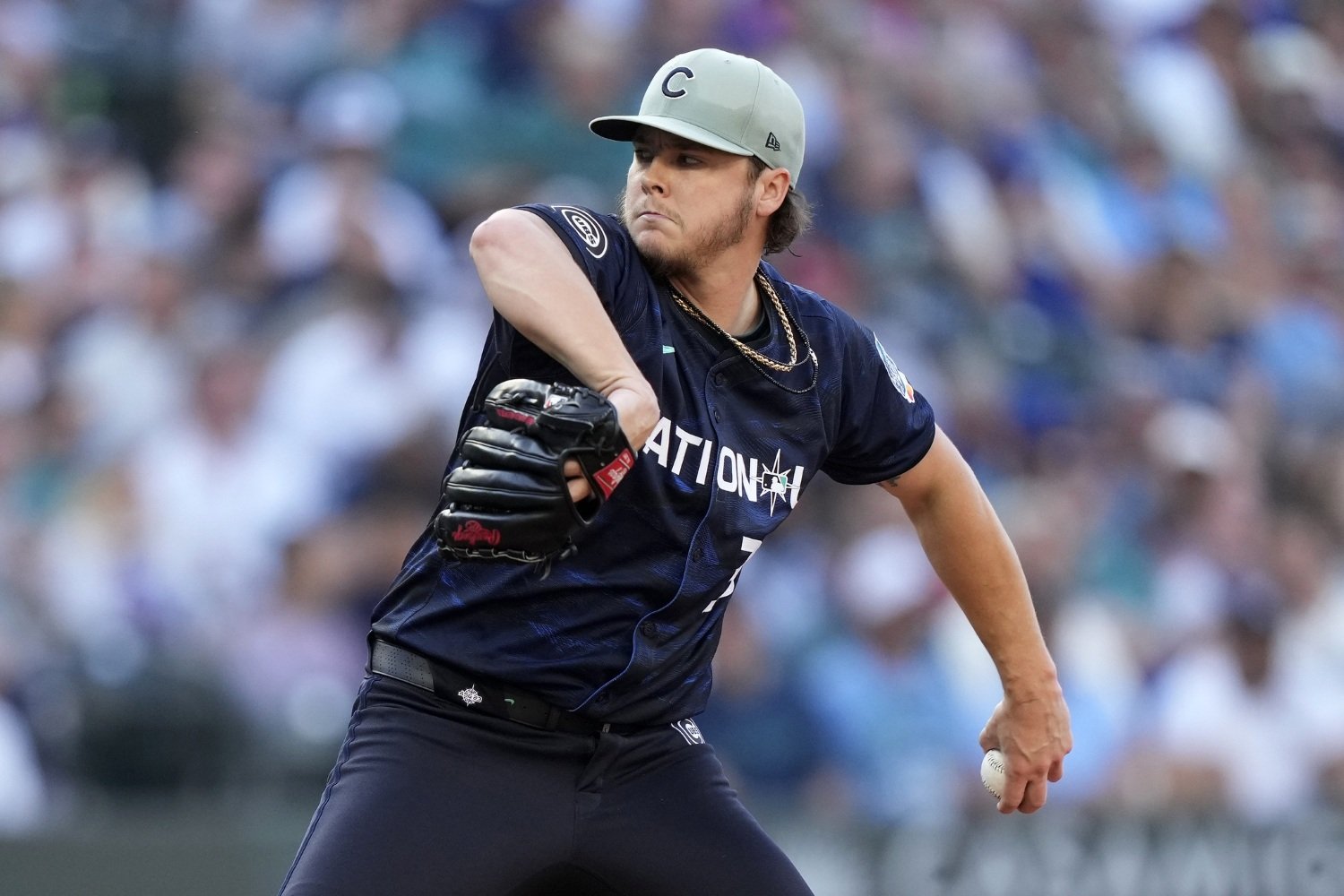 Can you believe the 2026 All-Star break is upon us already? Well, it is, and the Chicago Cubs are back to their winning ways. Despite the June gloom, the bats have come back alive and have been able to cover for their suspect pitching staff. The team as a whole should benefit from a much-needed break, while they prepare for what should be a gauntlet of a second half. For the second time since 2021, the Cubs have only one All-Star, in Pete Crow-Armstrong. If Ben Brown hadn't suffered a neck injury a few weeks ago, they might have two, but Cubs fans are certainly more dialed-in for the second half than for the Midsummer Classic. This marks Crow-Armstrong’s second All-Star nod, as he was selected last season along with Kyle Tucker and Matthew Boyd. While this is surely the second selection of many more to come for the young star center fielder, what we're going to celebrate with this list is the All-Stars that we don’t always remember. These are the players who made one All-Star Game in their careers and were lucky enough to do it wearing Cubbie blue. Since the Cubs are in their 151st season as a franchise, I did have to make the cutoff somewhere. If you're a historian and would like to expand on this, please drop a comment, but for this list, I'm going through the free agency era, which started in 1977. 1977: Jerry Morales Morales spent seven of his 15 big-league seasons with the Cubs across two different stints, from 1974-1977 and from 1981-1983. He amassed a total of -2.0 bWAR for his career, totaling 95 home runs and an OPS of .695. Although his lengthy career was not colored with accolades, he did join multi-time All-Stars Rick Reuschel, Bruce Sutter, and Manny Trillo at Yankee Stadium. He was hit by a pitch in his only plate appearance, becoming one of only 28 players to be plunked at the All-Star Game. 1981: Bill Buckner It's hard to believe the 22-year major-league veteran was named to only one All-Star Game, and a shamw that he did it during the year of baseball's midseason strike, which limited him to 106 total games and 1.2 bWAR. He was coming off a season where his .324 batting average led the NL, so he was clearly a popular name. He did lead the NL in doubles that season, with 35; maybe he'd have gotten to 50 in a full campaign. Although he was a reserve, with Pete Rose starting at first base, Buckner was the Cubs’ only representative for 1981. 1988: Vance Law The 1988 Cubs were a peculiar case. The team finished 77-85, fourth place in the division, but had six representatives during that year’s All-Star Game at Riverfront Stadium. Andre Dawson and Ryne Sandberg were named starters, with Law, Rafael Palmiero and Shawon Dunston on the bench. This was also the first All-Star appearance for Greg Maddux. As for Law, 1988 marked his return to Chicago, but on the North Side this time. After a three-year stint north of the border in Montreal, Law slashed .293/.358/.412 while driving in 78 runs. Along with the RBIs, his .770 OPS and .293 batting average marked the highest of his career, which he did at 31 years old. 1989: Mitch Williams Like Buckner, Williams is remembered mostly for being on the wrong side of baseball history, as he served up Joe Carter’s walk-off home run to lose the 1993 World Series. That overshadows a career where he racked up 30+ saves three different times—the first being 1989 with the Cubs, when he made his only All-Star team. Drawing comparisons to Rick “Wild Thing” Vaughn, Williams’s mid- to high-90s fastball helped the Cubs win the NL East crown that season, as he notched 36 saves with a 2.76 ERA. 1996: Steve Trachsel Trachsel was the Cubs’ only representative in 1996, which is a surprise, as Sammy Sosa hit another 40 bombs and drove in 100 and won NL Player of the Month in July. Instead of Sosa, the nod went to Trachsel, who had one of his best seasons, posting 3.7 bWAR. He pitched three complete games, including two shutouts, in over 200 innings. Though this was his only All-Star appearance, Trachsel started 30+ games in eight of nine seasons from 1995 to 2004, making him an underrated symbol of durability on the mound. 2000: Joe Girardi Girardi was a part-time player for most of his career, eclipsing 400 plate appearances only five times in his 15 campaigns. His 1.6-bWAR season for the Cubs at age 35 is a clear outlier for his career, where he hit .278 in 106 games. He was named to the All-Star team as a replacement for Mike Piazza but was deserving of the honor, as he was one of the Cubs’ better hitters on a team that lost 97 games. 2001: Jon Lieber Another workhorse of the early 2000s, Lieber led the majors in starts (35) and innings pitched (251) the season before, but was named an All-Star for the first time in 2001 after a first half wherein he pitched a Maddux (long before we called it that) and recorded six straight wins from mid-June through his first start after the break. He did win 20 games that season, and accumulated 3.9 bWAR, which were both career highs. Lieber gave up home runs to both Derek Jeter and Magglio Ordonez in his one inning of action during the game, but the NL was already losing, and the loss went to another one-time All-Star, Chan Ho Park. 2003: Mark Prior The second overall pick in the 2001 draft and co-ace of the Cubs (next to Kerry Wood) made his only All-Star appearance in 2003—a season wherein he led the N.L. in bWAR with 7.4 and posted the lowest FIP in the league, at 2.47. His first-half highlight was striking out 16 Brewers in a late June start. Sadly, the story of Prior is known all too well among Cubs fans. Just after the break, he collided with Marcus Giles while running the bases, injuring his shoulder. He endured heavy usage by manager Dusty Baker, then dealt with more arm trouble in 2004 and a line drive that broke his elbow in 2005. This would be the only time he was healthy enough to earn an honor very much in line with his talent. Prior did not appear in the game, but Wood did, striking out two. Prior remains one of the prime examples of “what could have been”; he didn't pitch in the majors again after 2006. 2008: Geovany Soto, Kosuke Fukudome, Carlos Marmol The 2008 Cubs are tied with the 2023 Braves for the most All-Stars from one team in a single season, with eight. Soto, Fukudome, and Marmol joined multi-time All-Stars Ryan Dempster, Carlos Zambrano, Aramis Ramírez, Wood, and Alfonso Soriano as representatives for the eventual NL Central champs. Fukudome, the Cubs’ first Japanese-born player, got the start in right field after a scorching April wherein he hit .327 and an only slightly less impressive May. He began to struggle as the season changed from spring to summer, but he was a fan favorite and one of the brightest rookies in the league. He finished the season with a .738 OPS and 0.6 bWAR, which was his lowest bWAR of his three and a half seasons on the North Side. He went 0-2 with a strikeout before being replaced by Pirates outfielder Nate McLouth. Geovany Soto, the eventual NL Rookie of the Year, got the start behind the plate, also going 0-2 with a strikeout. Although he was rookie-eligible, this was actually Soto’s fourth season seeing big-league action. The rookie got the start over Russell Martin and Brian McCann, who have 11 All-Star selections between them. To this day, Soto is the only rookie catcher to start for the NL team at the Midsummer Classic. His 23 homers in 2008 are tied for sixth-most among rookie catchers all-time, and he's one of only 14 catchers to hit over 20 as a rookie. Carlos Marmol entered 2008 competing with Wood for the closer role, with manager Lou Piniella choosing Wood, who was named as an All-Star himself. Due to a blister, Wood had to be replaced, opening the door for Marmol to claim a spot on the roster. Marmol threw a scoreless 13th inning, striking out two, back when the All-Star game had World Series implications. Although he had two 30 plus save seasons with the Cubs, he was only named an all-star in 2008, where he had a 2.68 ERA in 87 1/3 innings. 2010: Marlon Byrd The 15-year veteran, who suited up for 10 different squads, was only named an All-Star once and was the Cubs' only representative for the 2010 season. The then-32-year-old had the second-highest bWAR of his career with 3.7, although his .775 OPS and 12 home runs were not near his career peaks. Byrd entered the game as a pinch-hitter and drew a walk from crosstown rival Matt Thornton, and ended up scoring the final run of the game on a Brian McCann double. He later threw out David Ortiz, advancing to second on a single. Byrd was a key piece in helping the NL stop the AL’s 13-year winning streak. 2012: Bryan LaHair LaHair is one of the more random All-Stars we have seen in the game. His MLB career consisted of only three seasons, wherein he accumulated 599 plate appearances. He was up-and-down between the minors and big-league squad for the Mariners in 2008, before popping up again for 20 games with the Cubs in 2011. With top prospect Anthony Rizzo not ready for the start of the 2012 season, LaHair got a crack as the starter. He was named an All-Star after hitting .284 with 13 homers through the first three months of the season. That was the highlight of his career by far, as he hit only one more home run after the break and was released after the season. He signed with the Fukuoka SoftBank Hawks of NPB and played one season with them, before two unsuccessful attempts at an MLB comeback with Cleveland and Boston. 2013: Travis Wood Before his heroics in the batter's box in Game 2 of the 2016 NLDS, Wood was one of the few bright spots during a very dark era for the Cubs. The former top prospect of the Reds came to Chicago prior to the 2012 season in the Sean Marshall trade and was a mixed bag of results that year. His second season with Chicago was a much different story, as he became the first Cub since Mordecai Brown to start a season with nine straight quality starts. He accumulated 4.5 of his 5.1 career bWAR during his lone All-Star season in 2013, when he threw 200 innings with an ERA of 3.11. He did not end up pitching in the game, but was the only Cubs representative for a team who nearly lost 100 games. 2016: Dexter Fowler, Addison Russell The Cubs nearly tied their own record of eight All-Stars in 2016, but fell one short, although they occupied the entire starting infield. Russell and Fowler were the two one-time All-Stars, joining Rizzo, Ben Zobrist, Kris Bryant, Jon Lester and Jake Arrieta. Fan favorite and World Series hero Dexter Fowler had the best season of his career in 2016, serving as the catalyst for one of the most potent offenses in baseball. His .840 OPS was the third-highest mark of his 14-year career, and his 4.0 bWAR nearly doubled his next-highest total. Although he did not make an appearance for his lone All-Star selection, his legacy for the Cubs remains historic, as he was the first Black player to start a World Series game for the team. Addison Russell hit 21 homers and drove in 95 in his lone All-Star season, which came in his sophomore season at age 22. He certainly benefitted from the popularity of the 2016 Cubs, as Corey Seager probably should have started, from a sheer numbers standpoint. He was hitting .242 with 11 home runs at the time of his selection. Russell went 0-2 in the game before being replaced by Seager. He shares the same honor as Fowler as being the first Black Cub to start a World Series game, but if one of these guys has the character that should accompany that honor, it's Fowler. 2022: Ian Happ Were the 2022 Cubs one of the saddest Cubs teams of all-time? They finished third in the division, but gone were the heroes of 2016, and in were the likes of Rafael Ortega, Patrick Wisdom and Alfonso Rivas. At least we had Ian Happ, Willson Contreras, and Nico Hoerner to remind us of the good ol’ days. (Not to mention the signing of Seiya Suzuki to serve as a precursor to today’s team.) But wait, Happ has only been an All-Star once? It sounds weird because of what he has meant to this franchise over the last decade, but yes, 2022 has been his only selection. His .271 average remains his career high, along with his 42 doubles and 4.3 bWAR, His Gold Glove in 2022 was his first in a string of four straight awards. His impending free agency is going to get interesting, especially with Hoerner, Crow-Armstrong, Dansby Swanson, and Alex Bregman locked up, but regardless of where he ends up, he has the ability to make another All-Star team. 2023: Justin Steele If he was healthy, there's a good chance Steele would not be on this list, as he has shown he can be one of the best southpaws in the game when he actually pitches. In the first half of 2023, Steele was 9-2 with a 2.56 ERA, making 11 quality starts. He finished fifth in the NL Cy Young race and could conceivably have finished higher, if the Cubs did not fall short in a late-season playoff push. Next season is his final year of arbitration, so his future with the Cubs is quite unclear, but at 30 years old, he has time on his side to become an All-Star again, even if it isn’t with the Cubs. 2024: Shota Imanaga In an offseason wherein Shohei Ohtani and Yoshinobu Yamamoto stole all the headlines, Shota Imanaga’s deal with the Cubs flew under the radar. He started turning heads as soon as the season began, throwing six shutout innings against the Rockies in the 2024 home opener, as well as leading the NL with a 0.84 ERA through his first nine starts. He pitched one relief inning in the All-Star Game, where he did not allow a hit while striking out Adley Rutschman. As well as being named an All-Star as a rookie, he finished fourth in Rookie of the Year voting and fifth in the Cy Young Award race. Cubs fans know how dominant he can be when he is on, so another All-Star season is not inconceivable, but the impending free agent might not be in the team’s plans moving forward. 2025: Matthew Boyd When the Cubs signed Boyd to a two-year contract prior to last season, it surprised many. The lefty had not thrown more than 79 innings since 2019 and looked like more of a lottery ticket than anything. Well, we know how that turned out. Boyd had the best season of his career at 34 years old last season, serving as the team’s ace after Steele went on the shelf. He made 19 starts in the first half, going 10-3 with a 2.34 ERA, which trailed only Paul Skenes among NL starters who eclipsed 100 innings. His 2026 has been up and down, as he has had some rough outings mixed in with time on the IL. The ever-thinning Cubs pitching staff needs to rely on Boyd for the rest of this season, but his 2025 All-Star season is a pleasant outlier.
 -
Image courtesy of © Rick Osentoski-Imagn Images Last week, the Chicago Cubs made an early (but necessary) trade to address their pitching depth, acquiring left-handed starter David Peterson from the Mets. Peterson, the longest-tenured Met before he was dealt, is not having the year he would have hoped. He had been shuffled between the rotation and bullpen, making eight starts in 16 appearances, “good” for a 6.09 ERA, but with a more encouraging FIP of 3.85. At this point, the Cubs can’t be too picky about who they use to start games, with both Edward Cabrera and Ben Brown hitting the IL for the foreseeable future. They do seem to have had reasons to like Peterson, but he was an emergency addition. With the return of Matthew Boyd, the rotation should include Boyd, Shota Imanaga, Peterson, Colin Rea, and Javier Assad until Jameson Taillon returns. Peterson should fare better with the Cubs’ defense, as he has been a heavy groundball pitcher throughout his career. In his first start, he inspired confidence against the Brewers on the road, pitching 5 2/3 innings while allowing only two earned runs. The Cubs sent 2024 second-round pick Cole Mathis, a third baseman from the College of Charleston, back to the Mets in a one-for-one trade. He was a very low-grade prospect, even in a Cubs system not exactly overflowing with talent; they bought low on Peterson to bolster their rotation depth. That's probably the type of deal we can expect to see the Cubs make again before the trade deadline on August 3. Depending on where they sit in a month, we may see them make a legitimate swing at a big name, while dangling prospects like Jefferson Rojas, Pedro Ramírez, Ethan Conrad, and others who sit amongst their top prospects. For now, though, the strategy of moving lesser prospects for pitching depth is necessary for them to stay afloat. Whether you agree or not, the window is open now for this team to be competitive, so unless there is another crumbling over the next month (and maybe even if there is), they will be buyers. Whom might they move, in that scenario? Ramírez and Rojas are two of their top guys, so barring a blockbuster trade, they will stick around, even if it takes creativity to get them into the lineup in the near future. Eighth-ranked prospect Jonathon Long, No. 9 James Triantos, No. 14 14 Angel Cepeda and No. 17 Ty Southisene are all guys you could see get moved in a trade similar to the Peterson-for-Mathis swap. Frankly, with the team in go-for-it mode, none of their prospects should be considered “untouchable”, but these mid-range guys with no clear path to the show should be an afterthought if it means putting the Cubs in a better position for 2026. In the spirit of the Peterson trade, let's come up with a potential trade target for each of the players mentioned above. The criteria will be starters who are struggling, but also on teams playing poor defense. Each of these players should be able to turn a corner with the Cubs. Certainly, Jed Hoyer won’t be able to pull off a one-for-one trade for all of these guys, and they could be packaged for a bigger name instead, but it's fun to speculate with over a month before the trade deadline. Michael Lorenzen, Colorado Rockies Does anyone else feel like Lorenzen should have played on the Cubs by now? Knowing how the front office operates, he seems like a perennial free agent target for this team. The Rockies aren’t a bottom-tier defensive team, placing 17th in the league in team DRS, but Coors Field is not doing Lorenzen any favors. He has an unsightly 6.83 ERA, and his FIP is 4.70, but, shrug: Coors. He is on an expiring contract, and could easily be cut or moved to the bullpen once the incumbents get healthier. The 23-year-old Triantos is having a solid season in Triple-A Iowa, and would probably get called up to the bigs this year with the Rockies. Michael Wacha, Kansas City Royals Wacha is in the midst of another strong season for the last-place Royals, one of three teams in baseball to have eclipsed the 50-loss mark on the season. Wacha leads the team in innings pitched with 108 2/3, and has the lowest ERA of any starter on their staff, at 3.31. He is also pitching with a defense behind him that ranks 20th in DRS. On the Cubs, this is a guy who could not only improve their depth but actually provide meaningful innings in the postseason. Since he is owed $14 million next season, the Royals might jump at the chance to move him. They don't have a ton of offensive promise in their pipeline, and may be inclined to take a shot on a package headlined by Long, with Southisene as a throw-in. Jack Flaherty, Detroit Tigers Flaherty exercised a player option to remain with the Tigers for 2026, and his career has been a rollercoaster since being traded from the Cardinals in 2023. He missed some time this season with abductor inflammation, and has a middling 4.35 xERA on the season, but this is another example of an un-sexy addition that could do at least marginally better in front of the Cubs’ defense. The Cubs also have the financial means to eat a significant portion of the $20 million he's being paid this season, and should be able to acquire him for a package around a lottery ticket like Cepeda, while throwing in a lower-level pitcher like Dominick Reid. Flaherty did the best pitching of his career while in the NL Central, so perhaps a return to the division will help him recover some of what made him the ace of the Cardinals’ staff years ago. View full article
- 2 replies
-
- 1
-

-
- david peterson
- michael wacha
- (and 2 more)
-
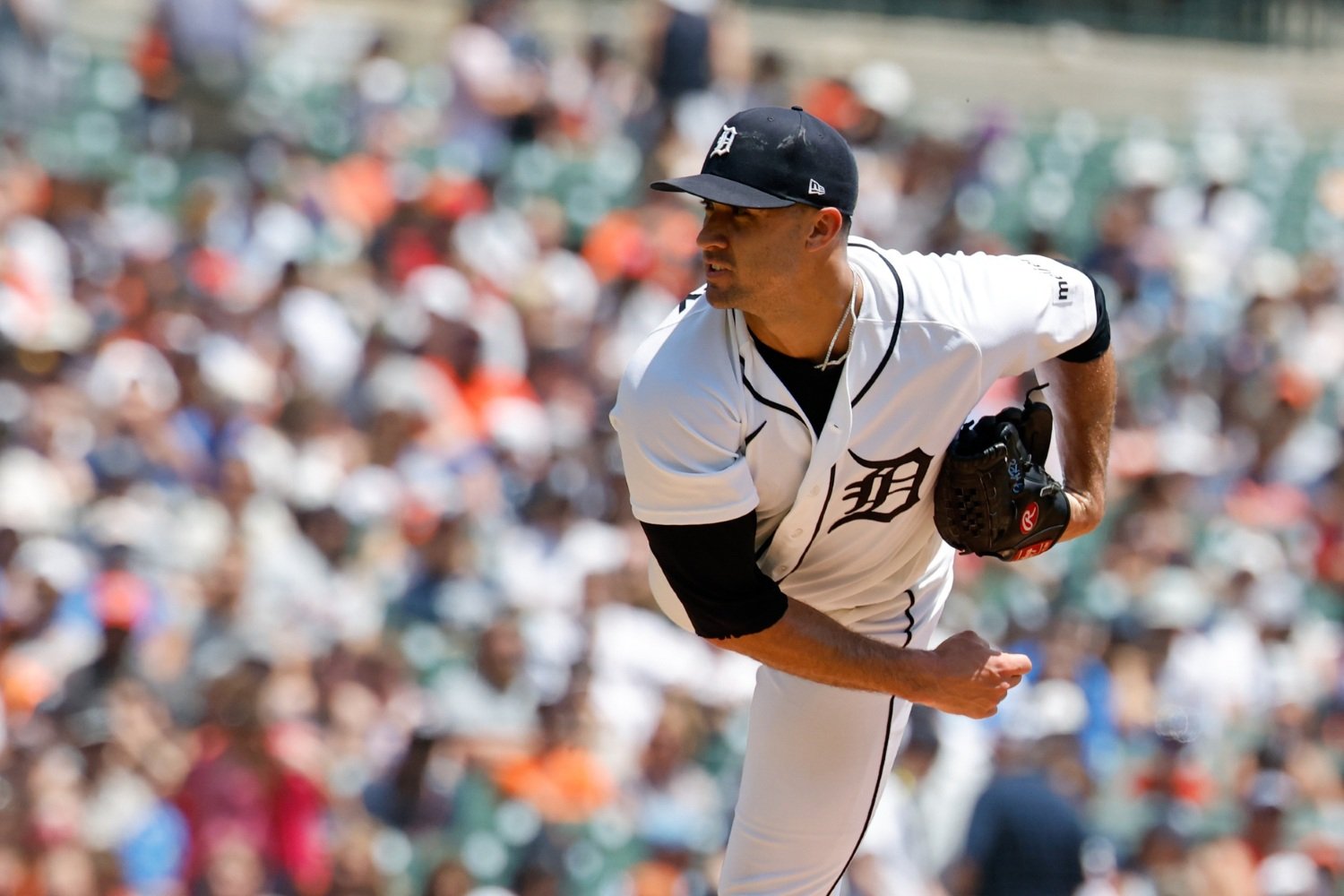 Last week, the Chicago Cubs made an early (but necessary) trade to address their pitching depth, acquiring left-handed starter David Peterson from the Mets. Peterson, the longest-tenured Met before he was dealt, is not having the year he would have hoped. He had been shuffled between the rotation and bullpen, making eight starts in 16 appearances, “good” for a 6.09 ERA, but with a more encouraging FIP of 3.85. At this point, the Cubs can’t be too picky about who they use to start games, with both Edward Cabrera and Ben Brown hitting the IL for the foreseeable future. They do seem to have had reasons to like Peterson, but he was an emergency addition. With the return of Matthew Boyd, the rotation should include Boyd, Shota Imanaga, Peterson, Colin Rea, and Javier Assad until Jameson Taillon returns. Peterson should fare better with the Cubs’ defense, as he has been a heavy groundball pitcher throughout his career. In his first start, he inspired confidence against the Brewers on the road, pitching 5 2/3 innings while allowing only two earned runs. The Cubs sent 2024 second-round pick Cole Mathis, a third baseman from the College of Charleston, back to the Mets in a one-for-one trade. He was a very low-grade prospect, even in a Cubs system not exactly overflowing with talent; they bought low on Peterson to bolster their rotation depth. That's probably the type of deal we can expect to see the Cubs make again before the trade deadline on August 3. Depending on where they sit in a month, we may see them make a legitimate swing at a big name, while dangling prospects like Jefferson Rojas, Pedro Ramírez, Ethan Conrad, and others who sit amongst their top prospects. For now, though, the strategy of moving lesser prospects for pitching depth is necessary for them to stay afloat. Whether you agree or not, the window is open now for this team to be competitive, so unless there is another crumbling over the next month (and maybe even if there is), they will be buyers. Whom might they move, in that scenario? Ramírez and Rojas are two of their top guys, so barring a blockbuster trade, they will stick around, even if it takes creativity to get them into the lineup in the near future. Eighth-ranked prospect Jonathon Long, No. 9 James Triantos, No. 14 14 Angel Cepeda and No. 17 Ty Southisene are all guys you could see get moved in a trade similar to the Peterson-for-Mathis swap. Frankly, with the team in go-for-it mode, none of their prospects should be considered “untouchable”, but these mid-range guys with no clear path to the show should be an afterthought if it means putting the Cubs in a better position for 2026. In the spirit of the Peterson trade, let's come up with a potential trade target for each of the players mentioned above. The criteria will be starters who are struggling, but also on teams playing poor defense. Each of these players should be able to turn a corner with the Cubs. Certainly, Jed Hoyer won’t be able to pull off a one-for-one trade for all of these guys, and they could be packaged for a bigger name instead, but it's fun to speculate with over a month before the trade deadline. Michael Lorenzen, Colorado Rockies Does anyone else feel like Lorenzen should have played on the Cubs by now? Knowing how the front office operates, he seems like a perennial free agent target for this team. The Rockies aren’t a bottom-tier defensive team, placing 17th in the league in team DRS, but Coors Field is not doing Lorenzen any favors. He has an unsightly 6.83 ERA, and his FIP is 4.70, but, shrug: Coors. He is on an expiring contract, and could easily be cut or moved to the bullpen once the incumbents get healthier. The 23-year-old Triantos is having a solid season in Triple-A Iowa, and would probably get called up to the bigs this year with the Rockies. Michael Wacha, Kansas City Royals Wacha is in the midst of another strong season for the last-place Royals, one of three teams in baseball to have eclipsed the 50-loss mark on the season. Wacha leads the team in innings pitched with 108 2/3, and has the lowest ERA of any starter on their staff, at 3.31. He is also pitching with a defense behind him that ranks 20th in DRS. On the Cubs, this is a guy who could not only improve their depth but actually provide meaningful innings in the postseason. Since he is owed $14 million next season, the Royals might jump at the chance to move him. They don't have a ton of offensive promise in their pipeline, and may be inclined to take a shot on a package headlined by Long, with Southisene as a throw-in. Jack Flaherty, Detroit Tigers Flaherty exercised a player option to remain with the Tigers for 2026, and his career has been a rollercoaster since being traded from the Cardinals in 2023. He missed some time this season with abductor inflammation, and has a middling 4.35 xERA on the season, but this is another example of an un-sexy addition that could do at least marginally better in front of the Cubs’ defense. The Cubs also have the financial means to eat a significant portion of the $20 million he's being paid this season, and should be able to acquire him for a package around a lottery ticket like Cepeda, while throwing in a lower-level pitcher like Dominick Reid. Flaherty did the best pitching of his career while in the NL Central, so perhaps a return to the division will help him recover some of what made him the ace of the Cardinals’ staff years ago.
 -
this guy is going to be a monster, i cant believe he fell in the draft.
-
Image courtesy of © Kamil Krzaczynski-Imagn Images Mother Nature and the Chicago Cubs seem to think otherwise, but we are in the midst of summer. The Fourth of July is around the corner and the Cubs currently sit at 41-37, 7.5 games out of first in the NL Central. They're tied with the Padres for the final Wild Card spot, narrowly behind the Cardinals and Phillies for the top two berths and barely ahead of the Nationals and Marlins. The early season juggernaut has been crippled by pitching injuries and extended slumps from their offensive stars not named Pete Crow-Armstrong. The good news is that Matthew Boyd is nearly ready to go again, and that Crow-Armstrong leads baseball (non-Ohtani division) in wins above replacement. The bad news is that Edward Cabrera went down with a bad hamstring strain on Tuesday night in Queens, and could be lost for quite a while. More bad news is that the Cubs’ next three matchups after this tussle with the Mets are against Milwaukee, San Diego and St. Louis. The time to gain some ground was earlier this month, but they could barely tread water, going 6-6 against Colorado and San Francisco. Technically, facing these three teams is an opportunity to make up for lost time. Non-technically, the team is only now sloshing back into form, and the pitching staff feels way too thin to get them through such a crucial stretch right on the heels of playing four games in three days in New York. The Cubs offense looked great over the weekend at home against the Blue Jays. We hope this is a turning point and they can start mashing themselves into frequent wins again, but their struggles of late have gotten the rumor mill turning. One player often mentioned is right fielder and designated hitter Seiya Suzuki, who's in the last year of his contract and is slashing .269/.348/.445, with 10 homers and 1.7 fWAR. If the Cubs do decide to trade him in either a move to re-tool for next season, or a creative trade to acquire pitching for this season, he would be one of the top right-handed bats on the market. The Cubs, hopefully, will be in a position where they can demand a decent return, but he won't fetch any top-tier prospects. Here are five teams who would make solid trade partners if the Cubs do decide to explore a deal. Padres Another early season powerhouse who has fallen back to earth after a terrific April, the Padres have not been getting the results they're paying for from their star players. Xander Bogaerts has a .659 OPS, Jackson Merrill’s is .631, Fernando Tatis Jr. only has two home runs, and Manny Machado has 14 bombs but is hitting only .185. Tatis has been filling in at second base for the injured Jake Cronenworth, leaving two revolving doors in the outfield next to Merrill, because Ramón Laureano is on the 60-day IL. The Padres are currently playing Jase Bowen and Samad Taylor nearly every day. [Editor's note: I had to check, too, but no, he's not making up Jase Bowen. That's a real person.] While Taylor has hit well, Lord (not Brad) knows how sustainable that is. Although Suzuki has gone through his own struggles this season, his arrival would immediately take some pressure off their underperforming stars and provide some much-needed right-handed pop. As for a return, the Cubs should not be asking for teenagers or low-level lottery ticket guys. Anything they get for Suzuki should help them in the very near term. The problem is that the Padres’ top prospect list is littered with players in the low minors. An interesting name is right-handed reliever Garrett Hawkins, who has a mid-90s fastball with significant movement. He's still working on developing a consistent secondary pitch. He will issue walks but profiles as a big-league reliever, should he continue to make adjustments. The Padres might also be willing to part with a reliever on their big-league roster in order to help out the offense. The 22-year-old Bradgley Rodriguez is a high-upside, controllable piece, although that might make him the toughest to acquire. Adrian Morejon or Ron Marinaccio are both having good, but not great, seasons and could be a target for the Cubs, as well. Trading Suzuki for nothing but relief help would hit like a jab to the ribs, but since the Cubs have failed to develop their own pipeline of talented arms, they're going to have to overpay for some, one way or another. Phillies As is true with the Padres, the Cubs may be hesitant to move Suzuki to a team they hope to be directly competing with in the Wild Card race, but what if the team that sits dead last in outfielder fWAR makes them an offer they can’t refuse? The Phillies acquired reserve outfielder Derek Hill from the White Sox last week, which shows their desperation to find any workable solution. Adolis Garcóa is now on the 60-day IL, which leaves them with rookie Justin Crawford, who has been disappointing. Luckily, Brandon Marsh is having the best season of his career with 10 homers and an .833 OPS, but their lefty-heavy lineup needs some support from the right side. Could the Cubs ask for an outfielder in return? Gabriel Rincones Jr. is currently on the Phillies’ major-league roster, but is 1-19 and would benefit from more time in the minors. The Cubs have enough outfield depth options to afford to send Rincones back to the minors even after a Suzuki trade; Matt Shaw would take over in right. If the 25-year-old is able to tap into his raw power consistently, he could become a 30+ home run threat. That's not that likely, given how slowly he's developed, but he could be one piece in a deal. The closer for the Double-A Reading Phillies, Alex McFarlane, has a 2.08 ERA across 26 innings and has a fastball-slider combo that can play in the big leagues this season. Young righty Moisés Chace is another interesting option. He is recovering from Tommy John surgery, but he has a full arsenal of effective pitches. His mid-90s fastball, combined with a sweeper, changeup, and cutter, give Chace a reliever floor with potential starter upside. He could break into the big leagues next season. Yankees A decade after the Cubs and Yankees pulled off the biggest blockbuster of 2016, could they be in a position to do it again this season? Well, not exactly. A Suzuki trade would not be considered a blockbuster, but the Yankees are in need of outfield help with Aaron Judge down for a significant portion of the summer. With Giancarlo Stanton and Trent Grisham joining Judge on the IL, Cody Bellinger is sharing outfield duties with Jasson Dominguez and sub-.700 OPS, light-hitting utility player Max Schuemann, and extremely flawed, (technically) extremely talented quasi-prospect Spencer Jones. The Yankees are another team whose lineup leans very left-handed, especially while missing Judge and Stanton. The 38-year-old Paul Goldschmidt is playing like an All-Star again, but only in a very limited role. He is nearly the entirety of the team’s right-handed production. The Yankees’ farm system is littered with pitching, even if Elmer Rodriguez and Carlos Lagrange are off the table. Their 2024 first rounder, Ben Hess, could be an intriguing name for the Cubs to target. The burly 6-foot-5 righthander has drawn comparisons to Lance Lynn, but control issues have kept him from reaching his full potential. He has issued 16 walks in 21 2/3 innings in Double-A this season. With Gerrit Cole, Carlos Rodón, and Max Fried under large contracts, Cam Schlittler emerging as one of the top arms in the game, and guys like Will Warren and Ryan Weathers in the fold, the Yankees may not see a path to the majors for Hess. One last name to think of here is 2024 AL Rookie of the Year Luis Gil. Since winning the award, he has dealt with ineffectiveness and injuries, making him a great change of scenery candidate. Guardians Now that their lineup is missing all three of José Ramírez, Chase DeLauter, and Angel Martínez, it's safe to say they have the worst lineup in baseball. Even when they were healthy, their offense really wasn't anything for opposing pitchers to worry about. They are 23rd in wRC+, 25th in home runs, and 26th in runs scored. Rookie Travis Bazzana is doing all he can, as he is now the default best hitter on the team, but the punch is basically nonexistent. Steven Kwan is in the worst slump of his career, which began last season, and the right-handed power bat is the ghost of Rhys Hoskins. With all due respect to David Fry, Petey Halpin and Stuart Fairchild, they need another competent hitter in the outfield if they want to gain any significant ground on the White Sox and the suddenly surging Tigers. Traditionally, the Guardians’ pitching is what carries them through the season until their inevitable October demise, but if they are serious about making noise in the playoffs, they need a right-handed bat. With the bullpen being a big strength of this team, anchored by closer Cade Smith, they may be willing to part with a reliever on the major-league roster as well as a mid-range prospect. Veteran righties Colin Holderman and Shawn Armstrong are having strong seasons, as is lefty Erik Sabrowski. It would be fair for the Cubs to ask for one of these guys in return, but if they want to add another outfielder, they can target 21-year-old Jaison Chourio, the younger brother of Jackson. He had a down year in 2025 which caused him to drop off the back end of top-100 prospect lists, but he has a .942 OPS with Double-A Arkansas this season and should be worthy of a major-league look sometime in 2027. This is the kind of player the Guardians usually hate to move, but with the number of suitors for Suzuki, the Cubs can afford to force Cleveland to pay up. Blue Jays The Blue Jays have a nice little outfield of Nathan Lukes, Jesús Sánchez, and Daulton Varsho, but the nearly 37-year-old George Springer is probably best left as a platoon player, rather than the primary DH for a team trying to defend the AL title—even if he is second on the team in home runs, with eight. The Yankees and Rays are both legit contenders, so the Blue Jays can’t afford to sit around and hope Vladimir Guerrero Jr. starts to hit with power again. They have also been without a healthy Addison Barger for most of the season, so rookie Yohendrick Piñango (old friend alert!) had been a major piece of their roster before he was optioned this week. He was hitting .283 with a .764 OPS, good enough to be a table setter, but would hardly scare a pitching staff in the postseason. The Blue Jays wouldn’t be in this conversation if Anthony Santander, who signed a five-year deal before last season, was dependable. There are reports that he is working his way back, but he was awful in the 54 games he played last season, slashing .175/.271/.294. The point is, it would make the most sense for Toronto to be aggressive as anyone in a Suzuki pursuit. The Blue Jays have a strong farm system that is loaded with high-upside arms like Johnny King, Ricky Tiedemann, and Gage Stanifer, but with an aging rotation at the big-league level, they might not feel inclined to trade from that bunch. However, they have a 25-year-old righty named Jake Bloss who touches the high 90s on his fastball and boasts a curveball/slider combo that could work great in a bullpen role. He is currently recovering from elbow surgery, but is expected to be back this season. Depending on the handedness the Cubs are looking for, lefty Mason Fluharty and righty Spencer Miles have FIPs under 3.40 and come with years of team control, so either one of them could be a fair ask, along with Bloss. If they’re looking for a throw-in player with some upside and positional versatility, Charles McAdoo was also just sent down. He can play first, third, and the corner outfield spots and can turn into a nice right-handed bench bat or even a starting option in right. View full article
-
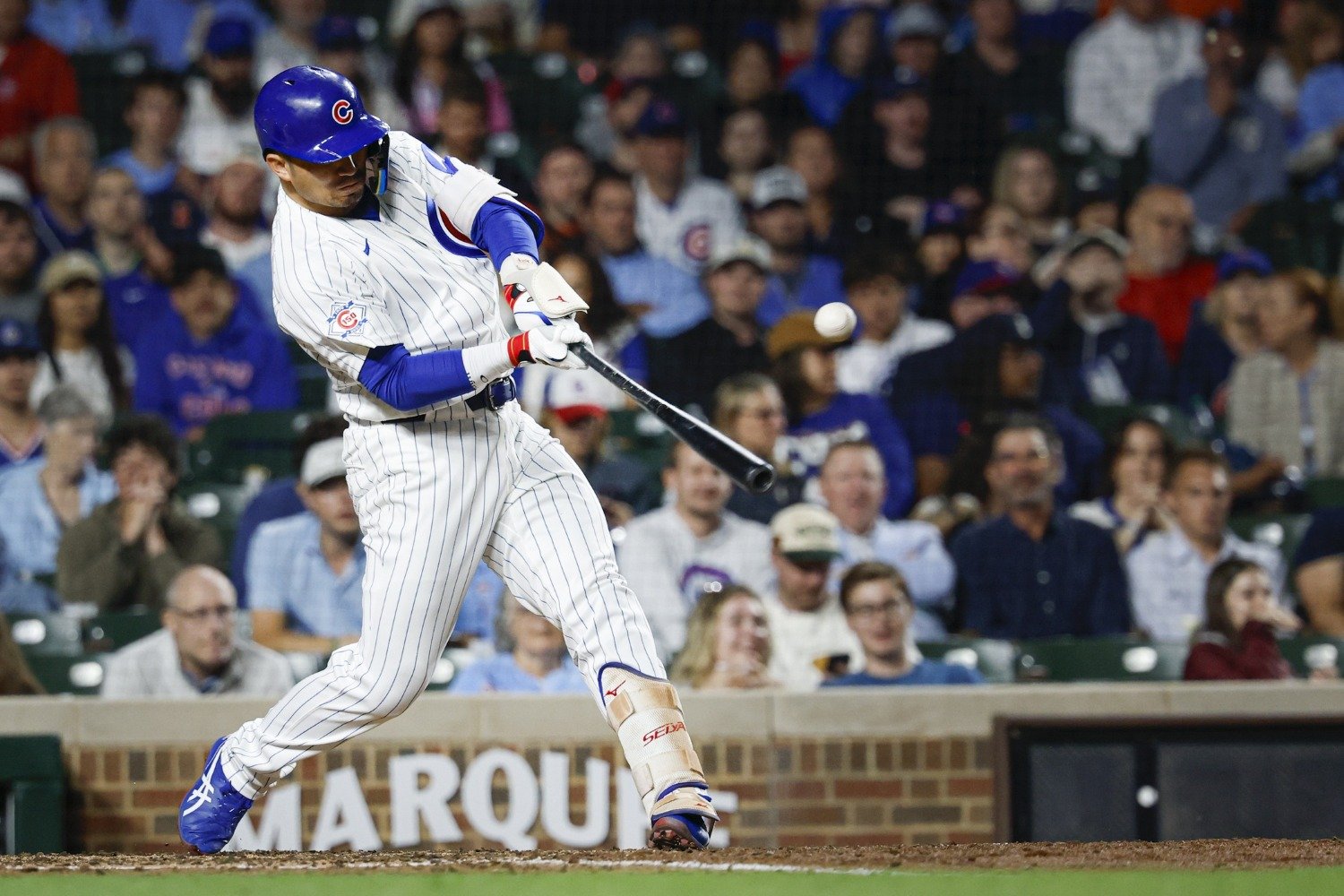 Mother Nature and the Chicago Cubs seem to think otherwise, but we are in the midst of summer. The Fourth of July is around the corner and the Cubs currently sit at 41-37, 7.5 games out of first in the NL Central. They're tied with the Padres for the final Wild Card spot, narrowly behind the Cardinals and Phillies for the top two berths and barely ahead of the Nationals and Marlins. The early season juggernaut has been crippled by pitching injuries and extended slumps from their offensive stars not named Pete Crow-Armstrong. The good news is that Matthew Boyd is nearly ready to go again, and that Crow-Armstrong leads baseball (non-Ohtani division) in wins above replacement. The bad news is that Edward Cabrera went down with a bad hamstring strain on Tuesday night in Queens, and could be lost for quite a while. More bad news is that the Cubs’ next three matchups after this tussle with the Mets are against Milwaukee, San Diego and St. Louis. The time to gain some ground was earlier this month, but they could barely tread water, going 6-6 against Colorado and San Francisco. Technically, facing these three teams is an opportunity to make up for lost time. Non-technically, the team is only now sloshing back into form, and the pitching staff feels way too thin to get them through such a crucial stretch right on the heels of playing four games in three days in New York. The Cubs offense looked great over the weekend at home against the Blue Jays. We hope this is a turning point and they can start mashing themselves into frequent wins again, but their struggles of late have gotten the rumor mill turning. One player often mentioned is right fielder and designated hitter Seiya Suzuki, who's in the last year of his contract and is slashing .269/.348/.445, with 10 homers and 1.7 fWAR. If the Cubs do decide to trade him in either a move to re-tool for next season, or a creative trade to acquire pitching for this season, he would be one of the top right-handed bats on the market. The Cubs, hopefully, will be in a position where they can demand a decent return, but he won't fetch any top-tier prospects. Here are five teams who would make solid trade partners if the Cubs do decide to explore a deal. Padres Another early season powerhouse who has fallen back to earth after a terrific April, the Padres have not been getting the results they're paying for from their star players. Xander Bogaerts has a .659 OPS, Jackson Merrill’s is .631, Fernando Tatis Jr. only has two home runs, and Manny Machado has 14 bombs but is hitting only .185. Tatis has been filling in at second base for the injured Jake Cronenworth, leaving two revolving doors in the outfield next to Merrill, because Ramón Laureano is on the 60-day IL. The Padres are currently playing Jase Bowen and Samad Taylor nearly every day. [Editor's note: I had to check, too, but no, he's not making up Jase Bowen. That's a real person.] While Taylor has hit well, Lord (not Brad) knows how sustainable that is. Although Suzuki has gone through his own struggles this season, his arrival would immediately take some pressure off their underperforming stars and provide some much-needed right-handed pop. As for a return, the Cubs should not be asking for teenagers or low-level lottery ticket guys. Anything they get for Suzuki should help them in the very near term. The problem is that the Padres’ top prospect list is littered with players in the low minors. An interesting name is right-handed reliever Garrett Hawkins, who has a mid-90s fastball with significant movement. He's still working on developing a consistent secondary pitch. He will issue walks but profiles as a big-league reliever, should he continue to make adjustments. The Padres might also be willing to part with a reliever on their big-league roster in order to help out the offense. The 22-year-old Bradgley Rodriguez is a high-upside, controllable piece, although that might make him the toughest to acquire. Adrian Morejon or Ron Marinaccio are both having good, but not great, seasons and could be a target for the Cubs, as well. Trading Suzuki for nothing but relief help would hit like a jab to the ribs, but since the Cubs have failed to develop their own pipeline of talented arms, they're going to have to overpay for some, one way or another. Phillies As is true with the Padres, the Cubs may be hesitant to move Suzuki to a team they hope to be directly competing with in the Wild Card race, but what if the team that sits dead last in outfielder fWAR makes them an offer they can’t refuse? The Phillies acquired reserve outfielder Derek Hill from the White Sox last week, which shows their desperation to find any workable solution. Adolis Garcóa is now on the 60-day IL, which leaves them with rookie Justin Crawford, who has been disappointing. Luckily, Brandon Marsh is having the best season of his career with 10 homers and an .833 OPS, but their lefty-heavy lineup needs some support from the right side. Could the Cubs ask for an outfielder in return? Gabriel Rincones Jr. is currently on the Phillies’ major-league roster, but is 1-19 and would benefit from more time in the minors. The Cubs have enough outfield depth options to afford to send Rincones back to the minors even after a Suzuki trade; Matt Shaw would take over in right. If the 25-year-old is able to tap into his raw power consistently, he could become a 30+ home run threat. That's not that likely, given how slowly he's developed, but he could be one piece in a deal. The closer for the Double-A Reading Phillies, Alex McFarlane, has a 2.08 ERA across 26 innings and has a fastball-slider combo that can play in the big leagues this season. Young righty Moisés Chace is another interesting option. He is recovering from Tommy John surgery, but he has a full arsenal of effective pitches. His mid-90s fastball, combined with a sweeper, changeup, and cutter, give Chace a reliever floor with potential starter upside. He could break into the big leagues next season. Yankees A decade after the Cubs and Yankees pulled off the biggest blockbuster of 2016, could they be in a position to do it again this season? Well, not exactly. A Suzuki trade would not be considered a blockbuster, but the Yankees are in need of outfield help with Aaron Judge down for a significant portion of the summer. With Giancarlo Stanton and Trent Grisham joining Judge on the IL, Cody Bellinger is sharing outfield duties with Jasson Dominguez and sub-.700 OPS, light-hitting utility player Max Schuemann, and extremely flawed, (technically) extremely talented quasi-prospect Spencer Jones. The Yankees are another team whose lineup leans very left-handed, especially while missing Judge and Stanton. The 38-year-old Paul Goldschmidt is playing like an All-Star again, but only in a very limited role. He is nearly the entirety of the team’s right-handed production. The Yankees’ farm system is littered with pitching, even if Elmer Rodriguez and Carlos Lagrange are off the table. Their 2024 first rounder, Ben Hess, could be an intriguing name for the Cubs to target. The burly 6-foot-5 righthander has drawn comparisons to Lance Lynn, but control issues have kept him from reaching his full potential. He has issued 16 walks in 21 2/3 innings in Double-A this season. With Gerrit Cole, Carlos Rodón, and Max Fried under large contracts, Cam Schlittler emerging as one of the top arms in the game, and guys like Will Warren and Ryan Weathers in the fold, the Yankees may not see a path to the majors for Hess. One last name to think of here is 2024 AL Rookie of the Year Luis Gil. Since winning the award, he has dealt with ineffectiveness and injuries, making him a great change of scenery candidate. Guardians Now that their lineup is missing all three of José Ramírez, Chase DeLauter, and Angel Martínez, it's safe to say they have the worst lineup in baseball. Even when they were healthy, their offense really wasn't anything for opposing pitchers to worry about. They are 23rd in wRC+, 25th in home runs, and 26th in runs scored. Rookie Travis Bazzana is doing all he can, as he is now the default best hitter on the team, but the punch is basically nonexistent. Steven Kwan is in the worst slump of his career, which began last season, and the right-handed power bat is the ghost of Rhys Hoskins. With all due respect to David Fry, Petey Halpin and Stuart Fairchild, they need another competent hitter in the outfield if they want to gain any significant ground on the White Sox and the suddenly surging Tigers. Traditionally, the Guardians’ pitching is what carries them through the season until their inevitable October demise, but if they are serious about making noise in the playoffs, they need a right-handed bat. With the bullpen being a big strength of this team, anchored by closer Cade Smith, they may be willing to part with a reliever on the major-league roster as well as a mid-range prospect. Veteran righties Colin Holderman and Shawn Armstrong are having strong seasons, as is lefty Erik Sabrowski. It would be fair for the Cubs to ask for one of these guys in return, but if they want to add another outfielder, they can target 21-year-old Jaison Chourio, the younger brother of Jackson. He had a down year in 2025 which caused him to drop off the back end of top-100 prospect lists, but he has a .942 OPS with Double-A Arkansas this season and should be worthy of a major-league look sometime in 2027. This is the kind of player the Guardians usually hate to move, but with the number of suitors for Suzuki, the Cubs can afford to force Cleveland to pay up. Blue Jays The Blue Jays have a nice little outfield of Nathan Lukes, Jesús Sánchez, and Daulton Varsho, but the nearly 37-year-old George Springer is probably best left as a platoon player, rather than the primary DH for a team trying to defend the AL title—even if he is second on the team in home runs, with eight. The Yankees and Rays are both legit contenders, so the Blue Jays can’t afford to sit around and hope Vladimir Guerrero Jr. starts to hit with power again. They have also been without a healthy Addison Barger for most of the season, so rookie Yohendrick Piñango (old friend alert!) had been a major piece of their roster before he was optioned this week. He was hitting .283 with a .764 OPS, good enough to be a table setter, but would hardly scare a pitching staff in the postseason. The Blue Jays wouldn’t be in this conversation if Anthony Santander, who signed a five-year deal before last season, was dependable. There are reports that he is working his way back, but he was awful in the 54 games he played last season, slashing .175/.271/.294. The point is, it would make the most sense for Toronto to be aggressive as anyone in a Suzuki pursuit. The Blue Jays have a strong farm system that is loaded with high-upside arms like Johnny King, Ricky Tiedemann, and Gage Stanifer, but with an aging rotation at the big-league level, they might not feel inclined to trade from that bunch. However, they have a 25-year-old righty named Jake Bloss who touches the high 90s on his fastball and boasts a curveball/slider combo that could work great in a bullpen role. He is currently recovering from elbow surgery, but is expected to be back this season. Depending on the handedness the Cubs are looking for, lefty Mason Fluharty and righty Spencer Miles have FIPs under 3.40 and come with years of team control, so either one of them could be a fair ask, along with Bloss. If they’re looking for a throw-in player with some upside and positional versatility, Charles McAdoo was also just sent down. He can play first, third, and the corner outfield spots and can turn into a nice right-handed bench bat or even a starting option in right.
 -
I've always said this guy is a reliever, and he could be a really good one.
-
Image courtesy of © Patrick Gorski-Imagn Images The Chicago Cubs’ bullpen construction this season was no different than what we have traditionally seen from the Jed Hoyer-Carter Hawkins group since they took over the job from Theo Epstein. Once again, they opted to sign a bunch of cheaper options in the hopes that they'd be able to coax more from players with MLB experience. It worked last year, but injuries and underperformance have reminded us fans how frustrating it is to go through the season without a shut down reliever. Well, I am not writing here to tell you all about a stud reliever the Cubs can go get for pennies, but there was a flier-worthy arm designated for assignment by the Los Angeles Angels this week, and that was old friend Drew Pomeranz. The Cubs signed the then-36-year-old, who hadn’t pitched in the majors since 2021, to a minor-league contract last season and it somehow turned out to be one of the best moves they made. In 49 2/3 innings, Pomeranz pitched to a 2.17 ERA and a 1.06 WHIP while striking out 57 batters (although his xERA of 3.48 showed he was lucky at times). Him and the other ageless lefty, Caleb Thielbar, were inexplicably one of the best left-handed relief duos in the game. In 2020, when he was converted to a full-time reliever with the Padres, Pomeranz stopped using his tertiary pitches completely like the changeup, cutter, and sinker. He has since used his four-seam roughly 75% of the time, mixing it with a knuckle curve, to become a pure two-pitch pitcher. Since simplifying the pitch mix and moving to the 'pen, his average xERA in the three seasons he’d pitched (2020, 2021, 2025) before heading to L.A. was 2.82. Another two interesting related points for Pomeranz’s 2025 were his BB/9 and his first pitch strike percentage; he threw a first pitch strike nearly 66% of the time, which coincides with his 2.7 BB/9, the lowest of his career outside of his 18-inning debut season. His renaissance in Chicago allowed him to find a major-league deal with the Halos this past offseason, but his tenure with he Angels was nothing like what we saw with the Cubs a year ago. In 23 1/3 innings, Pomeranz posted a 5.01 ERA, a 1.59 WHIP, and only 16 strikeouts. His walk percentage is way up, with his BB/9 at 4.6/9, which is the second-highest mark of his career. His strikeout percentage is way down, due to chase and whiff rates that has been nearly sliced in half from a season ago. The whiffs on his knuckle curve have shown a dramatic drop-off, with the percentage falling from 19.8 to 13.6. One of the key contributors to his success with the Cubs was been his ground-ball rate which was just under 40%, which was in-line with his career norms. However, that number plummeted to 26.9% so far in 2026. For a lefty throwing in the low-90s, that's a major issue. He has already given up as many home runs (5) as he did last season, in less than half the innings. On the other hand, his barrel percentage is in the same realm as it was last season, and he is still limiting hard contact to much of the same degree, outside of the homers. Maybe a reunion with Tommy Hottovy and the Cubs’ coaching could bring back more of what we saw last season. With the way the Cubs have played over the last month and a half, there should be no option off the table. Riley Martin should be back soon, but adding Pomeranz back to the mix on a minor-league contract to see if he can find his groove, would not hurt. If he is able to make the necessary tweaks, he should bounce back to some level of success. Having cleared waivers and now been released, he's about as low-risk of a flier as you'll find at this point in the season. View full article
-
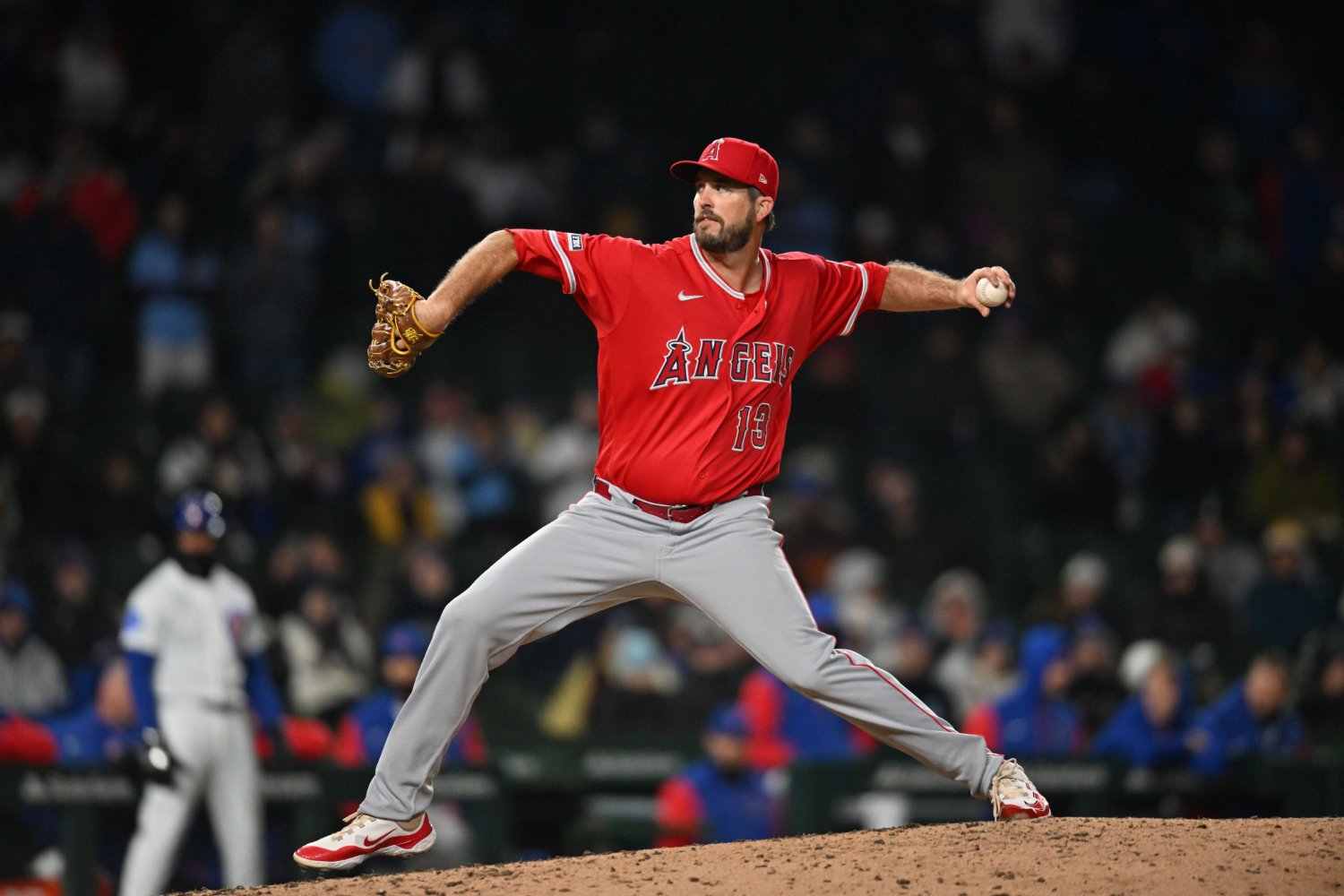 The Chicago Cubs’ bullpen construction this season was no different than what we have traditionally seen from the Jed Hoyer-Carter Hawkins group since they took over the job from Theo Epstein. Once again, they opted to sign a bunch of cheaper options in the hopes that they'd be able to coax more from players with MLB experience. It worked last year, but injuries and underperformance have reminded us fans how frustrating it is to go through the season without a shut down reliever. Well, I am not writing here to tell you all about a stud reliever the Cubs can go get for pennies, but there was a flier-worthy arm designated for assignment by the Los Angeles Angels this week, and that was old friend Drew Pomeranz. The Cubs signed the then-36-year-old, who hadn’t pitched in the majors since 2021, to a minor-league contract last season and it somehow turned out to be one of the best moves they made. In 49 2/3 innings, Pomeranz pitched to a 2.17 ERA and a 1.06 WHIP while striking out 57 batters (although his xERA of 3.48 showed he was lucky at times). Him and the other ageless lefty, Caleb Thielbar, were inexplicably one of the best left-handed relief duos in the game. In 2020, when he was converted to a full-time reliever with the Padres, Pomeranz stopped using his tertiary pitches completely like the changeup, cutter, and sinker. He has since used his four-seam roughly 75% of the time, mixing it with a knuckle curve, to become a pure two-pitch pitcher. Since simplifying the pitch mix and moving to the 'pen, his average xERA in the three seasons he’d pitched (2020, 2021, 2025) before heading to L.A. was 2.82. Another two interesting related points for Pomeranz’s 2025 were his BB/9 and his first pitch strike percentage; he threw a first pitch strike nearly 66% of the time, which coincides with his 2.7 BB/9, the lowest of his career outside of his 18-inning debut season. His renaissance in Chicago allowed him to find a major-league deal with the Halos this past offseason, but his tenure with he Angels was nothing like what we saw with the Cubs a year ago. In 23 1/3 innings, Pomeranz posted a 5.01 ERA, a 1.59 WHIP, and only 16 strikeouts. His walk percentage is way up, with his BB/9 at 4.6/9, which is the second-highest mark of his career. His strikeout percentage is way down, due to chase and whiff rates that has been nearly sliced in half from a season ago. The whiffs on his knuckle curve have shown a dramatic drop-off, with the percentage falling from 19.8 to 13.6. One of the key contributors to his success with the Cubs was been his ground-ball rate which was just under 40%, which was in-line with his career norms. However, that number plummeted to 26.9% so far in 2026. For a lefty throwing in the low-90s, that's a major issue. He has already given up as many home runs (5) as he did last season, in less than half the innings. On the other hand, his barrel percentage is in the same realm as it was last season, and he is still limiting hard contact to much of the same degree, outside of the homers. Maybe a reunion with Tommy Hottovy and the Cubs’ coaching could bring back more of what we saw last season. With the way the Cubs have played over the last month and a half, there should be no option off the table. Riley Martin should be back soon, but adding Pomeranz back to the mix on a minor-league contract to see if he can find his groove, would not hurt. If he is able to make the necessary tweaks, he should bounce back to some level of success. Having cleared waivers and now been released, he's about as low-risk of a flier as you'll find at this point in the season.
 -
Image courtesy of © David Banks-Imagn Images It may seem like wishful thinking for the Chicago Cubs to be buyers at this point, but a lot can change between now and the trade deadline on August 3. Pete Crow-Armstrong's bat is starting to heat up since he’s been moved to the leadoff spot. Ian Happ is barreling toward his first 30 home run campaign of his career. Edward Cabrera and Matthew Boyd are (or nearly are) back. Though they have had their struggles this year, they were some of the team’s better projected options coming into the season. Plus, this is a team that made the playoffs a season ago with many of the same key players intact. They’re still over .500, and until they fall well below that mark, you can bet that the front office will not punt on the season. Though the Brewers have once again proved to be the class of the NL Central, the rest of the division is imperfect and could conceivably be steamrolled by this Cubs team... albeit when everything is clicking. The Cubs need to target pitching, some more pitching, and probably an extra pitcher or two just to be safe. Even with the return of Cabrera and Boyd, and the emergence of Ben Brown, they will likely need two dependable starting pitchers. Every contender shops for relievers at the deadline, but the Cubs need about half a bullpen’s worth of them. Southpaws Hoby Milner and Ryan Rolison have been serviceable, but they, combined with the 39-year-old Caleb Thielbar (who has spent time on the IL already), cannot be the top lefty options in the postseason. Daniel Palencia looks great when he pitches, but he has dealt with injuries this year and it looks like Counsell is hesitant to use him too much. Ethan Roberts and Jacob Webb have pitched well from an ERA standpoint, but they aren’t high-leverage guys. The “big” free-agent addition, Phil Maton, has an ERA over seven. If the Cubs intend to make a deep run in the postseason, they probably need another two or even three relievers, with at least one being a bankable high leverage option. On the offensive side, they need to improve internally because there isn’t anywhere to play a new bat unless they want to get really creative. You may see a utility player or a bench bat join the squad, but the Cubs won’t be in on any of the big-name bats on the market. Here are some of the names being mentioned in rumors you won’t see on the list below: Gleyber Torres, Mike Trout, Luis Arraez, C.J. Abrams, Jarren Duran, Byron Buxton, Ryan Jeffers, or any of the Astros’ bats. Chicago Cubs Top Trade Deadline Targets Without further ado, let's get into the players the front office is most likely to (or should be planning to) target this trade season. The Grand Prize: Tarik Skubal Skubal’s return from his loose bodies procedure is seemingly going to happen sooner rather than later, but the Tigers have been one of baseball’s worst teams and are sitting in the cellar of the AL Central. Even the two-time reigning AL Cy Young winner is not going to help this team unless he starts every other game. Skubal is also an impending free agent, and he will certainly test the market to attempt to earn the largest contract for a free-agent pitcher in MLB history. Other teams can easily strong-arm the Tigers into moving him, since they aren’t contending and don’t seem to have much of a shot at re-signing him. It would be in the best interest of the team to move him, but they won’t get anything close to the return they could have gotten if he was moved before the season. If we see the Cubs revert to their April ways on offense, there are no excuses as to why they shouldn’t be right in the middle of the Skubal conversations. The Tigers might ask for Shaw or Ballesteros as the headliner, but that’s just the price of doing business. Again, Skubal is only a feasible target if the Cubs start hitting like one of the best in baseball again and have a clear path to the playoffs. The Big Fish: Starters & Relievers Freddy Peralta While it’s not out of the realm of possibilities for the Mets to gain ground in the wild-card race, they are currently at the bottom of the division and a whopping 15 games behind the Braves. Should Peralta, who is another impending free agent, become available, he would be the number two option on the market after Skubal. The 30-year-old has been more good than great this season with a 3.80 xERA, accumulating 1.0 fWAR over 13 starts. The Cubs should be able to acquire Peralta without moving anyone off their major-league roster, but Jefferson Rojas, or last year’s first-round pick Ethan Conrad, could be on the table. Reid Detmers The Angels have been one of the worst teams in baseball, but they never want to embrace a full rebuild. Their M.O. for the past decade and a half has been to get Mike Trout to the playoffs, but that goal seems as far away as it’s ever been. Detmers is currently in his second year of arbitration while making a modest $2.6 million (and, as a Super Two player, he has two more years of team control remaining). He is now back in the rotation after spending all of last season in the bullpen. His xERA is 2.92 and he’s accumulated 2.2 fWAR. He ranks fifth in the AL in strikeouts with 88 across 74 innings. If the Cubs continue to meddle in mediocrity this season, Detmers is a great addition for the future. If they bounce back, he is a great addition for right now. The Angels should be listening on Detmers, but his contract status gives them a ton of leverage in negotiations. Joe Ryan The Cubs have been a logical landing spot for Ryan for some time now, but Minnesota did not want to waive the white flag yet. After a hot start to 2026, the Twins have faded as anticipated, and should be open for business. Byron Buxton and Ryan are their biggest trade chips, and should both be in high demand this summer. Ryan is having an excellent year where he has firmly taken over the best pitcher in the Twin Cities title with Pablo Lopez out for the year; he has a 3.06 xERA and 84 strikeouts. Eight of his 14 starts have been quality starts, and he has already reached 2.1 fWAR. Ryan would be the right-handed starter the Cubs desperately need, but if the Twins view Ballesteros as a catcher long term, that might be their non-negotiable ask, because their current starting catcher Ryan Jeffers could also be out the door. Antonio Senzatela Senzatela was one of the more consistent Rockies starters since he broke into the league in 2017, but dealt with injuries after signing a five-year extension, completely breaking down last season with a 6.97 xERA in 30 games (23 starts). He’s made the transition to the bullpen this year and is finding success with a 3.05 xERA over 36.1 innings. The right-hander is posting the highest K/9 of his career at 7.43, and will certainly be one of the most available relievers this July. He comes with a club option for next season too, which is an added bonus. Senzatela isn’t going to single-handedly fix the Cubs' bullpen, but would be a perfect secondary move if they take a bigger swing on one of these next names. Aroldis Chapman This would be a real fun move. Ten years after the Cubs acquired Chapman from the Yankees, he once again fits their needs almost perfectly. With the American League in shambles as a whole, it is far from certain that Boston is going to sell, but if they do, Chapman would be their most in-demand trade chip. The 38-year-old is showing no signs of slowing down, and has cemented himself back in the best reliever in baseball conversation. He has a 0.46 ERA in 19.2 innings while striking out 26. Should he reach 40 innings pitched, a mutual option worth $13 million would kick in for 2027. Who knows if a reunion is on the table all these years later, but it would make for a fun storyline to follow. Josh Hader Houston may decide to sell at the deadline, which, like Boston, is far from a certainty; it would be marking their first deadline as sellers since the 2016 season. The hot names on the market are SS Jeremy Pena, 1B Christian Walker, and 3B Isaac Parades (with some light mentioning of MVP candidate Yordan Alvarez). The reason why Hader hasn’t been mentioned as much as those other guys is because he just started the season earlier this month. Left bicep tendinitis caused him to miss April and May, and upon returning, he has thrown two scoreless frames so far. Hader is currently in the third year of a five year, $95 million contract that represents the largest present-day value for a reliever ever. The Cubs will have some money coming off the books after this season with Jameson Taillon, Shota Imanaga, Seiya Suzuki and Ian Happ all entering free agency. It's likely they try to bring back either or both of Suzuki and Happ, but the pitchers should be gone. Using some of that money to reunite Hader with his first big-league skipper would be a move for both the present and future. Sandy Alcantara In my opinion, the Cubs should stay far away from Alcantara negotiations unless the Marlins would give him away for a few ballpark hot dogs, but he has been one of the more talked about trade candidates of the last few seasons, so I wouldn’t be doing my job if he didn’t get a mention. The 2022 NL Cy Young winner is on the last season of a five-year extension, but there is a club option for next season worth $21 million. Alcantara has made 14 starts this season and has allowed two or less earned runs in eight of them. He also has four starts where he has given up six or more runs. His xERA on the season is 4.05 and he has been worth 1.3 fWAR, but the Marlins have been reluctant to trade him to this point, and it might not make sense for the Cubs to meet a high asking price for a guy who blows up this frequently. The Role Players: Lesser Pitchers Robbie Ray Buster POBO-sey and the Giants seem to be punting on this season already after they fell flat on their face early on. Starting catcher Patrick Bailey was already moved to Cleveland in a rare May trade. They’ve also announced a willingness to move SS Willy Adames, 3B Matt Chapman and OF Jung-Hoo Lee. Don't doubt that they would be happy to move the 34-year-old Ray as well, as he is in his last year of the five-year deal he signed with the Mariners after the 2021 season. The 2021 AL Cy Young winner is not having a great campaign, but at least he is healthy and making his starts. The 4.12 ERA and 1.40 WHIP is not going to scare teams in the playoffs, but this move would make sense for a team like the Cubs, who have been losing starting pitchers to the IL all season. Michael Wacha The Royals and Tigers were supposed to be right up there with the Guardians in the fight for the AL Central. Baseball is a weird sport, so naturally the White Sox are in second place behind the Guardians, while the Royals and Tigers are hanging out in the cellar. The 34-year-old is having another productive season with a 4.19 xERA and 1.2 fWAR. This is another arm that isn’t going to propel the Cubs to the playoffs, but he should provide quality innings at the back of the rotation. If they add a Joe Ryan, Freddy Peralta, or even a Tarik Skubal, Wacha would be a great secondary move. Pete Fairbanks The Cubs might be wary of taking on another struggling arm, especially with the performance of Phil Maton, who was supposed to be one of their dependable, late-inning options. Fairbanks has a 7.41 ERA, but a 3.59 xERA. He has the highest BB/9 of his career so far, and has the second-highest homer rate trailing only his rookie season. He is on a one-year deal and it shouldn’t take much for the Marlins to move him. This addition would not solve the bullpen crisis, but it would give them another major-league arm to play with. A Mets Reliever or Two If the Mets sell, they could accumulate a real asset or two for some of their relievers. Lefties David Peterson, Brooks Raley, and A.J. Minter should all be available. Righties Huascar Brazoban and Luke Weaver could also find themselves on the trade block. To maximize value, David Stearns likely won’t bundle these pitchers together or package one with Peralta, but there is plenty of value here for the Mets to cash in on. Gus Varland Tier: Gus Varland The Cubs can bring Varland home to Chicago and give him a pretty easy red-line commute to Wrigley Field. After missing the entire 2025 season, Varland is quietly putting together a solid season in the Nationals' pen. His 25 appearances lead the team, and his 3.27 FIP show he is a bit better of a pitcher than his 5.14 xERA indicates. Though the Nationals are flirting with a .500 record, they will certainly be selling off some pieces. After joining the Nats as a waiver claim, he has given them enough value to become an under-the-radar trade chip. Plus, some less knowledgeable fans may think they acquired his brother. View full article
-
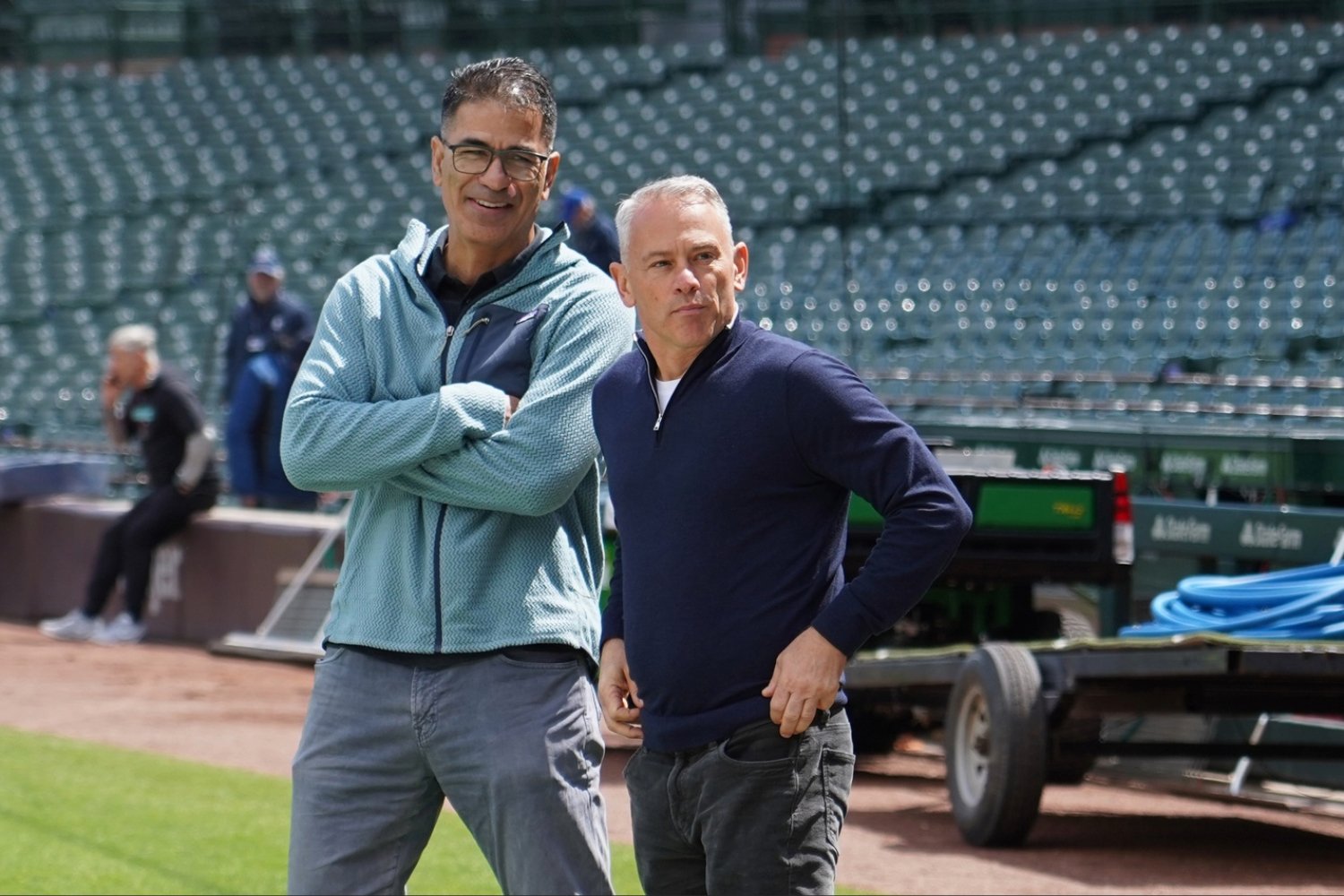 It may seem like wishful thinking for the Chicago Cubs to be buyers at this point, but a lot can change between now and the trade deadline on August 3. Pete Crow-Armstrong's bat is starting to heat up since he’s been moved to the leadoff spot. Ian Happ is barreling toward his first 30 home run campaign of his career. Edward Cabrera and Matthew Boyd are (or nearly are) back. Though they have had their struggles this year, they were some of the team’s better projected options coming into the season. Plus, this is a team that made the playoffs a season ago with many of the same key players intact. They’re still over .500, and until they fall well below that mark, you can bet that the front office will not punt on the season. Though the Brewers have once again proved to be the class of the NL Central, the rest of the division is imperfect and could conceivably be steamrolled by this Cubs team... albeit when everything is clicking. The Cubs need to target pitching, some more pitching, and probably an extra pitcher or two just to be safe. Even with the return of Cabrera and Boyd, and the emergence of Ben Brown, they will likely need two dependable starting pitchers. Every contender shops for relievers at the deadline, but the Cubs need about half a bullpen’s worth of them. Southpaws Hoby Milner and Ryan Rolison have been serviceable, but they, combined with the 39-year-old Caleb Thielbar (who has spent time on the IL already), cannot be the top lefty options in the postseason. Daniel Palencia looks great when he pitches, but he has dealt with injuries this year and it looks like Counsell is hesitant to use him too much. Ethan Roberts and Jacob Webb have pitched well from an ERA standpoint, but they aren’t high-leverage guys. The “big” free-agent addition, Phil Maton, has an ERA over seven. If the Cubs intend to make a deep run in the postseason, they probably need another two or even three relievers, with at least one being a bankable high leverage option. On the offensive side, they need to improve internally because there isn’t anywhere to play a new bat unless they want to get really creative. You may see a utility player or a bench bat join the squad, but the Cubs won’t be in on any of the big-name bats on the market. Here are some of the names being mentioned in rumors you won’t see on the list below: Gleyber Torres, Mike Trout, Luis Arraez, C.J. Abrams, Jarren Duran, Byron Buxton, Ryan Jeffers, or any of the Astros’ bats. Chicago Cubs Top Trade Deadline Targets Without further ado, let's get into the players the front office is most likely to (or should be planning to) target this trade season. The Grand Prize: Tarik Skubal Skubal’s return from his loose bodies procedure is seemingly going to happen sooner rather than later, but the Tigers have been one of baseball’s worst teams and are sitting in the cellar of the AL Central. Even the two-time reigning AL Cy Young winner is not going to help this team unless he starts every other game. Skubal is also an impending free agent, and he will certainly test the market to attempt to earn the largest contract for a free-agent pitcher in MLB history. Other teams can easily strong-arm the Tigers into moving him, since they aren’t contending and don’t seem to have much of a shot at re-signing him. It would be in the best interest of the team to move him, but they won’t get anything close to the return they could have gotten if he was moved before the season. If we see the Cubs revert to their April ways on offense, there are no excuses as to why they shouldn’t be right in the middle of the Skubal conversations. The Tigers might ask for Shaw or Ballesteros as the headliner, but that’s just the price of doing business. Again, Skubal is only a feasible target if the Cubs start hitting like one of the best in baseball again and have a clear path to the playoffs. The Big Fish: Starters & Relievers Freddy Peralta While it’s not out of the realm of possibilities for the Mets to gain ground in the wild-card race, they are currently at the bottom of the division and a whopping 15 games behind the Braves. Should Peralta, who is another impending free agent, become available, he would be the number two option on the market after Skubal. The 30-year-old has been more good than great this season with a 3.80 xERA, accumulating 1.0 fWAR over 13 starts. The Cubs should be able to acquire Peralta without moving anyone off their major-league roster, but Jefferson Rojas, or last year’s first-round pick Ethan Conrad, could be on the table. Reid Detmers The Angels have been one of the worst teams in baseball, but they never want to embrace a full rebuild. Their M.O. for the past decade and a half has been to get Mike Trout to the playoffs, but that goal seems as far away as it’s ever been. Detmers is currently in his second year of arbitration while making a modest $2.6 million (and, as a Super Two player, he has two more years of team control remaining). He is now back in the rotation after spending all of last season in the bullpen. His xERA is 2.92 and he’s accumulated 2.2 fWAR. He ranks fifth in the AL in strikeouts with 88 across 74 innings. If the Cubs continue to meddle in mediocrity this season, Detmers is a great addition for the future. If they bounce back, he is a great addition for right now. The Angels should be listening on Detmers, but his contract status gives them a ton of leverage in negotiations. Joe Ryan The Cubs have been a logical landing spot for Ryan for some time now, but Minnesota did not want to waive the white flag yet. After a hot start to 2026, the Twins have faded as anticipated, and should be open for business. Byron Buxton and Ryan are their biggest trade chips, and should both be in high demand this summer. Ryan is having an excellent year where he has firmly taken over the best pitcher in the Twin Cities title with Pablo Lopez out for the year; he has a 3.06 xERA and 84 strikeouts. Eight of his 14 starts have been quality starts, and he has already reached 2.1 fWAR. Ryan would be the right-handed starter the Cubs desperately need, but if the Twins view Ballesteros as a catcher long term, that might be their non-negotiable ask, because their current starting catcher Ryan Jeffers could also be out the door. Antonio Senzatela Senzatela was one of the more consistent Rockies starters since he broke into the league in 2017, but dealt with injuries after signing a five-year extension, completely breaking down last season with a 6.97 xERA in 30 games (23 starts). He’s made the transition to the bullpen this year and is finding success with a 3.05 xERA over 36.1 innings. The right-hander is posting the highest K/9 of his career at 7.43, and will certainly be one of the most available relievers this July. He comes with a club option for next season too, which is an added bonus. Senzatela isn’t going to single-handedly fix the Cubs' bullpen, but would be a perfect secondary move if they take a bigger swing on one of these next names. Aroldis Chapman This would be a real fun move. Ten years after the Cubs acquired Chapman from the Yankees, he once again fits their needs almost perfectly. With the American League in shambles as a whole, it is far from certain that Boston is going to sell, but if they do, Chapman would be their most in-demand trade chip. The 38-year-old is showing no signs of slowing down, and has cemented himself back in the best reliever in baseball conversation. He has a 0.46 ERA in 19.2 innings while striking out 26. Should he reach 40 innings pitched, a mutual option worth $13 million would kick in for 2027. Who knows if a reunion is on the table all these years later, but it would make for a fun storyline to follow. Josh Hader Houston may decide to sell at the deadline, which, like Boston, is far from a certainty; it would be marking their first deadline as sellers since the 2016 season. The hot names on the market are SS Jeremy Pena, 1B Christian Walker, and 3B Isaac Parades (with some light mentioning of MVP candidate Yordan Alvarez). The reason why Hader hasn’t been mentioned as much as those other guys is because he just started the season earlier this month. Left bicep tendinitis caused him to miss April and May, and upon returning, he has thrown two scoreless frames so far. Hader is currently in the third year of a five year, $95 million contract that represents the largest present-day value for a reliever ever. The Cubs will have some money coming off the books after this season with Jameson Taillon, Shota Imanaga, Seiya Suzuki and Ian Happ all entering free agency. It's likely they try to bring back either or both of Suzuki and Happ, but the pitchers should be gone. Using some of that money to reunite Hader with his first big-league skipper would be a move for both the present and future. Sandy Alcantara In my opinion, the Cubs should stay far away from Alcantara negotiations unless the Marlins would give him away for a few ballpark hot dogs, but he has been one of the more talked about trade candidates of the last few seasons, so I wouldn’t be doing my job if he didn’t get a mention. The 2022 NL Cy Young winner is on the last season of a five-year extension, but there is a club option for next season worth $21 million. Alcantara has made 14 starts this season and has allowed two or less earned runs in eight of them. He also has four starts where he has given up six or more runs. His xERA on the season is 4.05 and he has been worth 1.3 fWAR, but the Marlins have been reluctant to trade him to this point, and it might not make sense for the Cubs to meet a high asking price for a guy who blows up this frequently. The Role Players: Lesser Pitchers Robbie Ray Buster POBO-sey and the Giants seem to be punting on this season already after they fell flat on their face early on. Starting catcher Patrick Bailey was already moved to Cleveland in a rare May trade. They’ve also announced a willingness to move SS Willy Adames, 3B Matt Chapman and OF Jung-Hoo Lee. Don't doubt that they would be happy to move the 34-year-old Ray as well, as he is in his last year of the five-year deal he signed with the Mariners after the 2021 season. The 2021 AL Cy Young winner is not having a great campaign, but at least he is healthy and making his starts. The 4.12 ERA and 1.40 WHIP is not going to scare teams in the playoffs, but this move would make sense for a team like the Cubs, who have been losing starting pitchers to the IL all season. Michael Wacha The Royals and Tigers were supposed to be right up there with the Guardians in the fight for the AL Central. Baseball is a weird sport, so naturally the White Sox are in second place behind the Guardians, while the Royals and Tigers are hanging out in the cellar. The 34-year-old is having another productive season with a 4.19 xERA and 1.2 fWAR. This is another arm that isn’t going to propel the Cubs to the playoffs, but he should provide quality innings at the back of the rotation. If they add a Joe Ryan, Freddy Peralta, or even a Tarik Skubal, Wacha would be a great secondary move. Pete Fairbanks The Cubs might be wary of taking on another struggling arm, especially with the performance of Phil Maton, who was supposed to be one of their dependable, late-inning options. Fairbanks has a 7.41 ERA, but a 3.59 xERA. He has the highest BB/9 of his career so far, and has the second-highest homer rate trailing only his rookie season. He is on a one-year deal and it shouldn’t take much for the Marlins to move him. This addition would not solve the bullpen crisis, but it would give them another major-league arm to play with. A Mets Reliever or Two If the Mets sell, they could accumulate a real asset or two for some of their relievers. Lefties David Peterson, Brooks Raley, and A.J. Minter should all be available. Righties Huascar Brazoban and Luke Weaver could also find themselves on the trade block. To maximize value, David Stearns likely won’t bundle these pitchers together or package one with Peralta, but there is plenty of value here for the Mets to cash in on. Gus Varland Tier: Gus Varland The Cubs can bring Varland home to Chicago and give him a pretty easy red-line commute to Wrigley Field. After missing the entire 2025 season, Varland is quietly putting together a solid season in the Nationals' pen. His 25 appearances lead the team, and his 3.27 FIP show he is a bit better of a pitcher than his 5.14 xERA indicates. Though the Nationals are flirting with a .500 record, they will certainly be selling off some pieces. After joining the Nats as a waiver claim, he has given them enough value to become an under-the-radar trade chip. Plus, some less knowledgeable fans may think they acquired his brother.
