Paul Niemiec
-
Posts
127 -
Joined
-
Last visited
Content Type
Profiles
Joomla Posts 1
Chicago Cubs Videos
Chicago Cubs Free Agent & Trade Rumors, Notes, & Tidbits
2026 Chicago Cubs Top Prospects Ranking
News
2023 Chicago Cubs Draft Picks
Guides & Resources
2024 Chicago Cubs Draft Picks
The Chicago Cubs Players Project
2025 Chicago Cubs Draft Pick Tracker
2026 Chicago Cubs Draft Tracker: Picks & Bonuses
Blogs
Events
Forums
Store
Gallery
Everything posted by Paul Niemiec
-
Image courtesy of © Patrick Gorski-Imagn Images The Chicago Cubs’ bullpen construction this season was no different than what we have traditionally seen from the Jed Hoyer-Carter Hawkins group since they took over the job from Theo Epstein. Once again, they opted to sign a bunch of cheaper options in the hopes that they'd be able to coax more from players with MLB experience. It worked last year, but injuries and underperformance have reminded us fans how frustrating it is to go through the season without a shut down reliever. Well, I am not writing here to tell you all about a stud reliever the Cubs can go get for pennies, but there was a flier-worthy arm designated for assignment by the Los Angeles Angels this week, and that was old friend Drew Pomeranz. The Cubs signed the then-36-year-old, who hadn’t pitched in the majors since 2021, to a minor-league contract last season and it somehow turned out to be one of the best moves they made. In 49 2/3 innings, Pomeranz pitched to a 2.17 ERA and a 1.06 WHIP while striking out 57 batters (although his xERA of 3.48 showed he was lucky at times). Him and the other ageless lefty, Caleb Thielbar, were inexplicably one of the best left-handed relief duos in the game. In 2020, when he was converted to a full-time reliever with the Padres, Pomeranz stopped using his tertiary pitches completely like the changeup, cutter, and sinker. He has since used his four-seam roughly 75% of the time, mixing it with a knuckle curve, to become a pure two-pitch pitcher. Since simplifying the pitch mix and moving to the 'pen, his average xERA in the three seasons he’d pitched (2020, 2021, 2025) before heading to L.A. was 2.82. Another two interesting related points for Pomeranz’s 2025 were his BB/9 and his first pitch strike percentage; he threw a first pitch strike nearly 66% of the time, which coincides with his 2.7 BB/9, the lowest of his career outside of his 18-inning debut season. His renaissance in Chicago allowed him to find a major-league deal with the Halos this past offseason, but his tenure with he Angels was nothing like what we saw with the Cubs a year ago. In 23 1/3 innings, Pomeranz posted a 5.01 ERA, a 1.59 WHIP, and only 16 strikeouts. His walk percentage is way up, with his BB/9 at 4.6/9, which is the second-highest mark of his career. His strikeout percentage is way down, due to chase and whiff rates that has been nearly sliced in half from a season ago. The whiffs on his knuckle curve have shown a dramatic drop-off, with the percentage falling from 19.8 to 13.6. One of the key contributors to his success with the Cubs was been his ground-ball rate which was just under 40%, which was in-line with his career norms. However, that number plummeted to 26.9% so far in 2026. For a lefty throwing in the low-90s, that's a major issue. He has already given up as many home runs (5) as he did last season, in less than half the innings. On the other hand, his barrel percentage is in the same realm as it was last season, and he is still limiting hard contact to much of the same degree, outside of the homers. Maybe a reunion with Tommy Hottovy and the Cubs’ coaching could bring back more of what we saw last season. With the way the Cubs have played over the last month and a half, there should be no option off the table. Riley Martin should be back soon, but adding Pomeranz back to the mix on a minor-league contract to see if he can find his groove, would not hurt. If he is able to make the necessary tweaks, he should bounce back to some level of success. Having cleared waivers and now been released, he's about as low-risk of a flier as you'll find at this point in the season. View full article
-
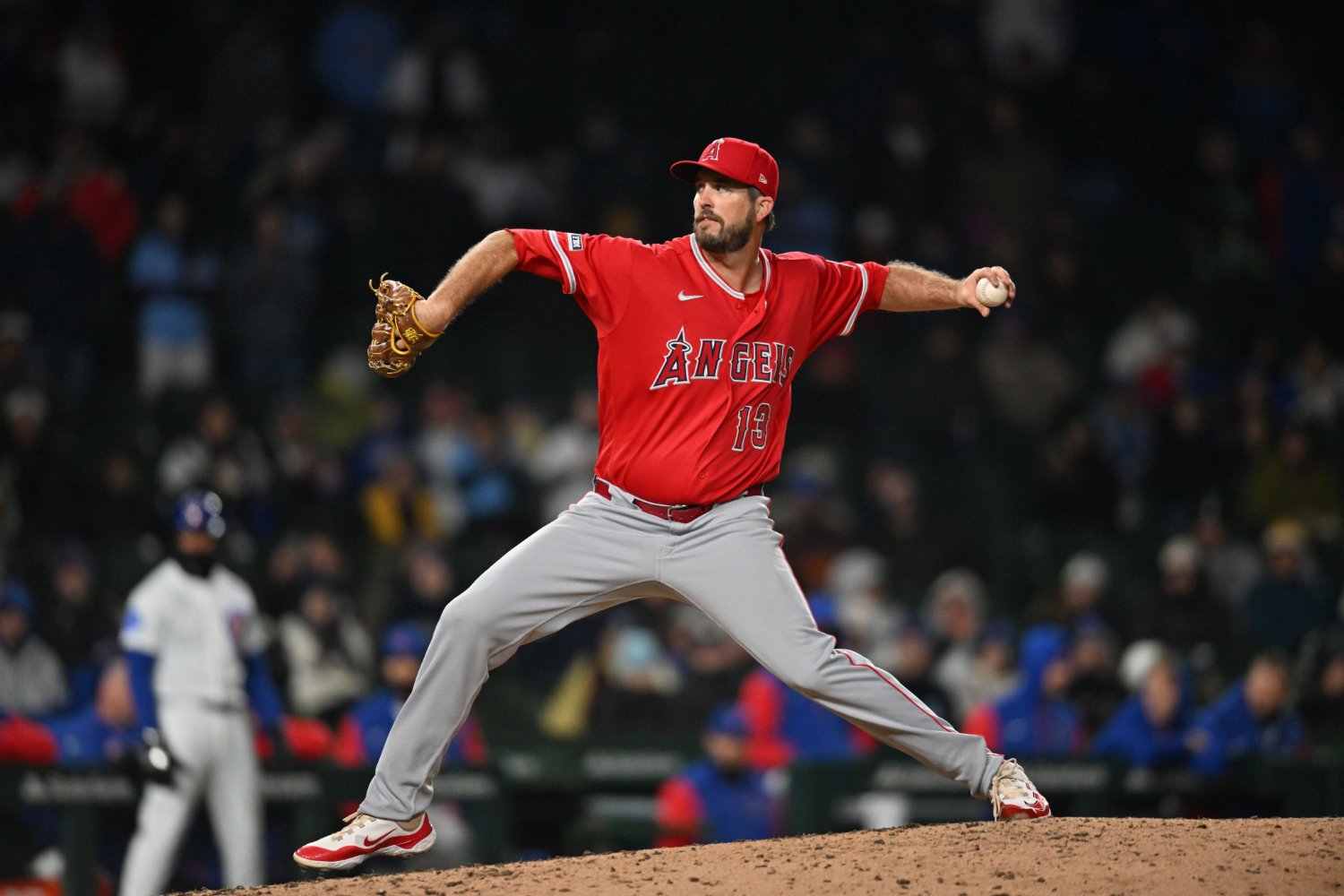 The Chicago Cubs’ bullpen construction this season was no different than what we have traditionally seen from the Jed Hoyer-Carter Hawkins group since they took over the job from Theo Epstein. Once again, they opted to sign a bunch of cheaper options in the hopes that they'd be able to coax more from players with MLB experience. It worked last year, but injuries and underperformance have reminded us fans how frustrating it is to go through the season without a shut down reliever. Well, I am not writing here to tell you all about a stud reliever the Cubs can go get for pennies, but there was a flier-worthy arm designated for assignment by the Los Angeles Angels this week, and that was old friend Drew Pomeranz. The Cubs signed the then-36-year-old, who hadn’t pitched in the majors since 2021, to a minor-league contract last season and it somehow turned out to be one of the best moves they made. In 49 2/3 innings, Pomeranz pitched to a 2.17 ERA and a 1.06 WHIP while striking out 57 batters (although his xERA of 3.48 showed he was lucky at times). Him and the other ageless lefty, Caleb Thielbar, were inexplicably one of the best left-handed relief duos in the game. In 2020, when he was converted to a full-time reliever with the Padres, Pomeranz stopped using his tertiary pitches completely like the changeup, cutter, and sinker. He has since used his four-seam roughly 75% of the time, mixing it with a knuckle curve, to become a pure two-pitch pitcher. Since simplifying the pitch mix and moving to the 'pen, his average xERA in the three seasons he’d pitched (2020, 2021, 2025) before heading to L.A. was 2.82. Another two interesting related points for Pomeranz’s 2025 were his BB/9 and his first pitch strike percentage; he threw a first pitch strike nearly 66% of the time, which coincides with his 2.7 BB/9, the lowest of his career outside of his 18-inning debut season. His renaissance in Chicago allowed him to find a major-league deal with the Halos this past offseason, but his tenure with he Angels was nothing like what we saw with the Cubs a year ago. In 23 1/3 innings, Pomeranz posted a 5.01 ERA, a 1.59 WHIP, and only 16 strikeouts. His walk percentage is way up, with his BB/9 at 4.6/9, which is the second-highest mark of his career. His strikeout percentage is way down, due to chase and whiff rates that has been nearly sliced in half from a season ago. The whiffs on his knuckle curve have shown a dramatic drop-off, with the percentage falling from 19.8 to 13.6. One of the key contributors to his success with the Cubs was been his ground-ball rate which was just under 40%, which was in-line with his career norms. However, that number plummeted to 26.9% so far in 2026. For a lefty throwing in the low-90s, that's a major issue. He has already given up as many home runs (5) as he did last season, in less than half the innings. On the other hand, his barrel percentage is in the same realm as it was last season, and he is still limiting hard contact to much of the same degree, outside of the homers. Maybe a reunion with Tommy Hottovy and the Cubs’ coaching could bring back more of what we saw last season. With the way the Cubs have played over the last month and a half, there should be no option off the table. Riley Martin should be back soon, but adding Pomeranz back to the mix on a minor-league contract to see if he can find his groove, would not hurt. If he is able to make the necessary tweaks, he should bounce back to some level of success. Having cleared waivers and now been released, he's about as low-risk of a flier as you'll find at this point in the season.
 -
Image courtesy of © David Banks-Imagn Images It may seem like wishful thinking for the Chicago Cubs to be buyers at this point, but a lot can change between now and the trade deadline on August 3. Pete Crow-Armstrong's bat is starting to heat up since he’s been moved to the leadoff spot. Ian Happ is barreling toward his first 30 home run campaign of his career. Edward Cabrera and Matthew Boyd are (or nearly are) back. Though they have had their struggles this year, they were some of the team’s better projected options coming into the season. Plus, this is a team that made the playoffs a season ago with many of the same key players intact. They’re still over .500, and until they fall well below that mark, you can bet that the front office will not punt on the season. Though the Brewers have once again proved to be the class of the NL Central, the rest of the division is imperfect and could conceivably be steamrolled by this Cubs team... albeit when everything is clicking. The Cubs need to target pitching, some more pitching, and probably an extra pitcher or two just to be safe. Even with the return of Cabrera and Boyd, and the emergence of Ben Brown, they will likely need two dependable starting pitchers. Every contender shops for relievers at the deadline, but the Cubs need about half a bullpen’s worth of them. Southpaws Hoby Milner and Ryan Rolison have been serviceable, but they, combined with the 39-year-old Caleb Thielbar (who has spent time on the IL already), cannot be the top lefty options in the postseason. Daniel Palencia looks great when he pitches, but he has dealt with injuries this year and it looks like Counsell is hesitant to use him too much. Ethan Roberts and Jacob Webb have pitched well from an ERA standpoint, but they aren’t high-leverage guys. The “big” free-agent addition, Phil Maton, has an ERA over seven. If the Cubs intend to make a deep run in the postseason, they probably need another two or even three relievers, with at least one being a bankable high leverage option. On the offensive side, they need to improve internally because there isn’t anywhere to play a new bat unless they want to get really creative. You may see a utility player or a bench bat join the squad, but the Cubs won’t be in on any of the big-name bats on the market. Here are some of the names being mentioned in rumors you won’t see on the list below: Gleyber Torres, Mike Trout, Luis Arraez, C.J. Abrams, Jarren Duran, Byron Buxton, Ryan Jeffers, or any of the Astros’ bats. Chicago Cubs Top Trade Deadline Targets Without further ado, let's get into the players the front office is most likely to (or should be planning to) target this trade season. The Grand Prize: Tarik Skubal Skubal’s return from his loose bodies procedure is seemingly going to happen sooner rather than later, but the Tigers have been one of baseball’s worst teams and are sitting in the cellar of the AL Central. Even the two-time reigning AL Cy Young winner is not going to help this team unless he starts every other game. Skubal is also an impending free agent, and he will certainly test the market to attempt to earn the largest contract for a free-agent pitcher in MLB history. Other teams can easily strong-arm the Tigers into moving him, since they aren’t contending and don’t seem to have much of a shot at re-signing him. It would be in the best interest of the team to move him, but they won’t get anything close to the return they could have gotten if he was moved before the season. If we see the Cubs revert to their April ways on offense, there are no excuses as to why they shouldn’t be right in the middle of the Skubal conversations. The Tigers might ask for Shaw or Ballesteros as the headliner, but that’s just the price of doing business. Again, Skubal is only a feasible target if the Cubs start hitting like one of the best in baseball again and have a clear path to the playoffs. The Big Fish: Starters & Relievers Freddy Peralta While it’s not out of the realm of possibilities for the Mets to gain ground in the wild-card race, they are currently at the bottom of the division and a whopping 15 games behind the Braves. Should Peralta, who is another impending free agent, become available, he would be the number two option on the market after Skubal. The 30-year-old has been more good than great this season with a 3.80 xERA, accumulating 1.0 fWAR over 13 starts. The Cubs should be able to acquire Peralta without moving anyone off their major-league roster, but Jefferson Rojas, or last year’s first-round pick Ethan Conrad, could be on the table. Reid Detmers The Angels have been one of the worst teams in baseball, but they never want to embrace a full rebuild. Their M.O. for the past decade and a half has been to get Mike Trout to the playoffs, but that goal seems as far away as it’s ever been. Detmers is currently in his second year of arbitration while making a modest $2.6 million (and, as a Super Two player, he has two more years of team control remaining). He is now back in the rotation after spending all of last season in the bullpen. His xERA is 2.92 and he’s accumulated 2.2 fWAR. He ranks fifth in the AL in strikeouts with 88 across 74 innings. If the Cubs continue to meddle in mediocrity this season, Detmers is a great addition for the future. If they bounce back, he is a great addition for right now. The Angels should be listening on Detmers, but his contract status gives them a ton of leverage in negotiations. Joe Ryan The Cubs have been a logical landing spot for Ryan for some time now, but Minnesota did not want to waive the white flag yet. After a hot start to 2026, the Twins have faded as anticipated, and should be open for business. Byron Buxton and Ryan are their biggest trade chips, and should both be in high demand this summer. Ryan is having an excellent year where he has firmly taken over the best pitcher in the Twin Cities title with Pablo Lopez out for the year; he has a 3.06 xERA and 84 strikeouts. Eight of his 14 starts have been quality starts, and he has already reached 2.1 fWAR. Ryan would be the right-handed starter the Cubs desperately need, but if the Twins view Ballesteros as a catcher long term, that might be their non-negotiable ask, because their current starting catcher Ryan Jeffers could also be out the door. Antonio Senzatela Senzatela was one of the more consistent Rockies starters since he broke into the league in 2017, but dealt with injuries after signing a five-year extension, completely breaking down last season with a 6.97 xERA in 30 games (23 starts). He’s made the transition to the bullpen this year and is finding success with a 3.05 xERA over 36.1 innings. The right-hander is posting the highest K/9 of his career at 7.43, and will certainly be one of the most available relievers this July. He comes with a club option for next season too, which is an added bonus. Senzatela isn’t going to single-handedly fix the Cubs' bullpen, but would be a perfect secondary move if they take a bigger swing on one of these next names. Aroldis Chapman This would be a real fun move. Ten years after the Cubs acquired Chapman from the Yankees, he once again fits their needs almost perfectly. With the American League in shambles as a whole, it is far from certain that Boston is going to sell, but if they do, Chapman would be their most in-demand trade chip. The 38-year-old is showing no signs of slowing down, and has cemented himself back in the best reliever in baseball conversation. He has a 0.46 ERA in 19.2 innings while striking out 26. Should he reach 40 innings pitched, a mutual option worth $13 million would kick in for 2027. Who knows if a reunion is on the table all these years later, but it would make for a fun storyline to follow. Josh Hader Houston may decide to sell at the deadline, which, like Boston, is far from a certainty; it would be marking their first deadline as sellers since the 2016 season. The hot names on the market are SS Jeremy Pena, 1B Christian Walker, and 3B Isaac Parades (with some light mentioning of MVP candidate Yordan Alvarez). The reason why Hader hasn’t been mentioned as much as those other guys is because he just started the season earlier this month. Left bicep tendinitis caused him to miss April and May, and upon returning, he has thrown two scoreless frames so far. Hader is currently in the third year of a five year, $95 million contract that represents the largest present-day value for a reliever ever. The Cubs will have some money coming off the books after this season with Jameson Taillon, Shota Imanaga, Seiya Suzuki and Ian Happ all entering free agency. It's likely they try to bring back either or both of Suzuki and Happ, but the pitchers should be gone. Using some of that money to reunite Hader with his first big-league skipper would be a move for both the present and future. Sandy Alcantara In my opinion, the Cubs should stay far away from Alcantara negotiations unless the Marlins would give him away for a few ballpark hot dogs, but he has been one of the more talked about trade candidates of the last few seasons, so I wouldn’t be doing my job if he didn’t get a mention. The 2022 NL Cy Young winner is on the last season of a five-year extension, but there is a club option for next season worth $21 million. Alcantara has made 14 starts this season and has allowed two or less earned runs in eight of them. He also has four starts where he has given up six or more runs. His xERA on the season is 4.05 and he has been worth 1.3 fWAR, but the Marlins have been reluctant to trade him to this point, and it might not make sense for the Cubs to meet a high asking price for a guy who blows up this frequently. The Role Players: Lesser Pitchers Robbie Ray Buster POBO-sey and the Giants seem to be punting on this season already after they fell flat on their face early on. Starting catcher Patrick Bailey was already moved to Cleveland in a rare May trade. They’ve also announced a willingness to move SS Willy Adames, 3B Matt Chapman and OF Jung-Hoo Lee. Don't doubt that they would be happy to move the 34-year-old Ray as well, as he is in his last year of the five-year deal he signed with the Mariners after the 2021 season. The 2021 AL Cy Young winner is not having a great campaign, but at least he is healthy and making his starts. The 4.12 ERA and 1.40 WHIP is not going to scare teams in the playoffs, but this move would make sense for a team like the Cubs, who have been losing starting pitchers to the IL all season. Michael Wacha The Royals and Tigers were supposed to be right up there with the Guardians in the fight for the AL Central. Baseball is a weird sport, so naturally the White Sox are in second place behind the Guardians, while the Royals and Tigers are hanging out in the cellar. The 34-year-old is having another productive season with a 4.19 xERA and 1.2 fWAR. This is another arm that isn’t going to propel the Cubs to the playoffs, but he should provide quality innings at the back of the rotation. If they add a Joe Ryan, Freddy Peralta, or even a Tarik Skubal, Wacha would be a great secondary move. Pete Fairbanks The Cubs might be wary of taking on another struggling arm, especially with the performance of Phil Maton, who was supposed to be one of their dependable, late-inning options. Fairbanks has a 7.41 ERA, but a 3.59 xERA. He has the highest BB/9 of his career so far, and has the second-highest homer rate trailing only his rookie season. He is on a one-year deal and it shouldn’t take much for the Marlins to move him. This addition would not solve the bullpen crisis, but it would give them another major-league arm to play with. A Mets Reliever or Two If the Mets sell, they could accumulate a real asset or two for some of their relievers. Lefties David Peterson, Brooks Raley, and A.J. Minter should all be available. Righties Huascar Brazoban and Luke Weaver could also find themselves on the trade block. To maximize value, David Stearns likely won’t bundle these pitchers together or package one with Peralta, but there is plenty of value here for the Mets to cash in on. Gus Varland Tier: Gus Varland The Cubs can bring Varland home to Chicago and give him a pretty easy red-line commute to Wrigley Field. After missing the entire 2025 season, Varland is quietly putting together a solid season in the Nationals' pen. His 25 appearances lead the team, and his 3.27 FIP show he is a bit better of a pitcher than his 5.14 xERA indicates. Though the Nationals are flirting with a .500 record, they will certainly be selling off some pieces. After joining the Nats as a waiver claim, he has given them enough value to become an under-the-radar trade chip. Plus, some less knowledgeable fans may think they acquired his brother. View full article
-
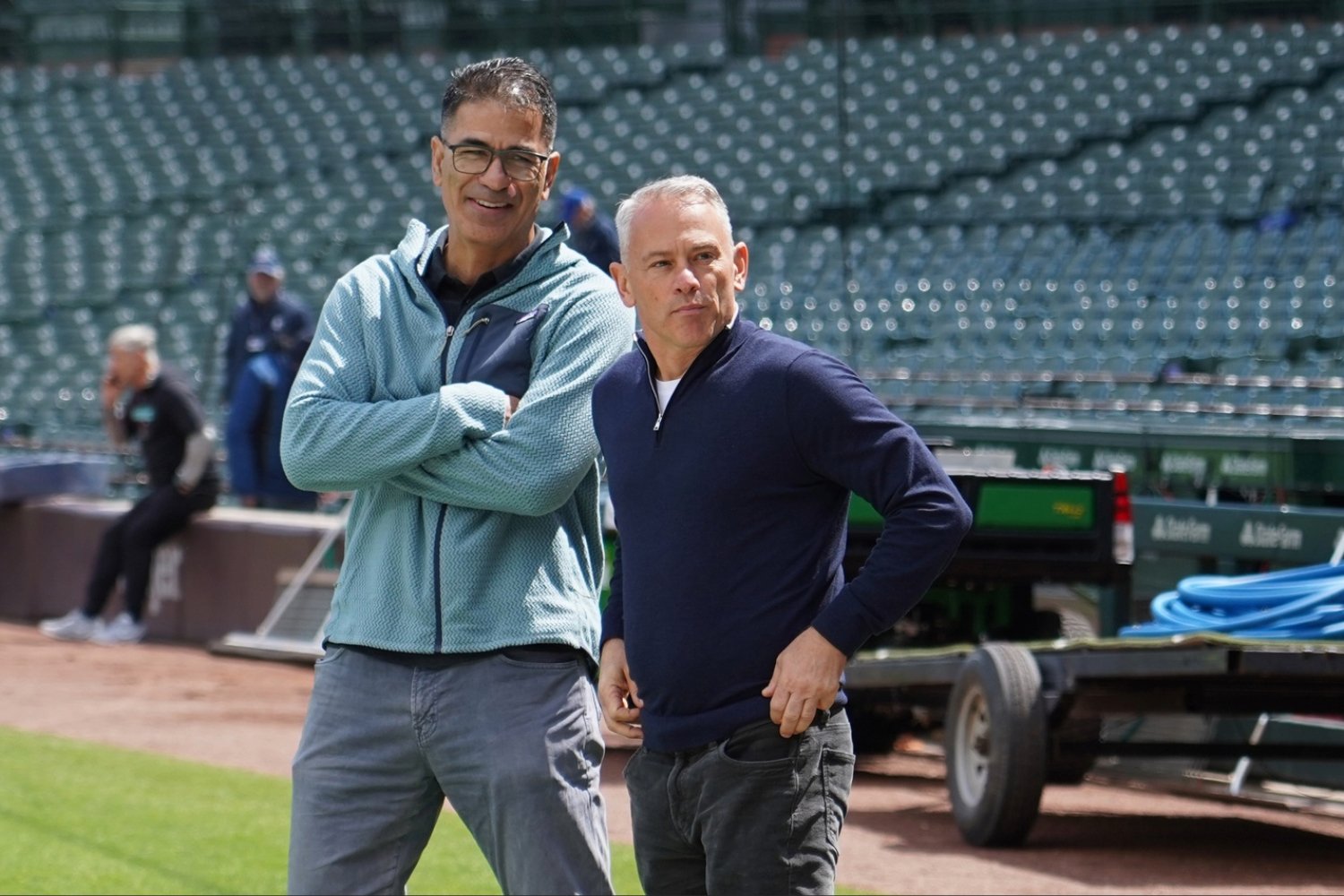 It may seem like wishful thinking for the Chicago Cubs to be buyers at this point, but a lot can change between now and the trade deadline on August 3. Pete Crow-Armstrong's bat is starting to heat up since he’s been moved to the leadoff spot. Ian Happ is barreling toward his first 30 home run campaign of his career. Edward Cabrera and Matthew Boyd are (or nearly are) back. Though they have had their struggles this year, they were some of the team’s better projected options coming into the season. Plus, this is a team that made the playoffs a season ago with many of the same key players intact. They’re still over .500, and until they fall well below that mark, you can bet that the front office will not punt on the season. Though the Brewers have once again proved to be the class of the NL Central, the rest of the division is imperfect and could conceivably be steamrolled by this Cubs team... albeit when everything is clicking. The Cubs need to target pitching, some more pitching, and probably an extra pitcher or two just to be safe. Even with the return of Cabrera and Boyd, and the emergence of Ben Brown, they will likely need two dependable starting pitchers. Every contender shops for relievers at the deadline, but the Cubs need about half a bullpen’s worth of them. Southpaws Hoby Milner and Ryan Rolison have been serviceable, but they, combined with the 39-year-old Caleb Thielbar (who has spent time on the IL already), cannot be the top lefty options in the postseason. Daniel Palencia looks great when he pitches, but he has dealt with injuries this year and it looks like Counsell is hesitant to use him too much. Ethan Roberts and Jacob Webb have pitched well from an ERA standpoint, but they aren’t high-leverage guys. The “big” free-agent addition, Phil Maton, has an ERA over seven. If the Cubs intend to make a deep run in the postseason, they probably need another two or even three relievers, with at least one being a bankable high leverage option. On the offensive side, they need to improve internally because there isn’t anywhere to play a new bat unless they want to get really creative. You may see a utility player or a bench bat join the squad, but the Cubs won’t be in on any of the big-name bats on the market. Here are some of the names being mentioned in rumors you won’t see on the list below: Gleyber Torres, Mike Trout, Luis Arraez, C.J. Abrams, Jarren Duran, Byron Buxton, Ryan Jeffers, or any of the Astros’ bats. Chicago Cubs Top Trade Deadline Targets Without further ado, let's get into the players the front office is most likely to (or should be planning to) target this trade season. The Grand Prize: Tarik Skubal Skubal’s return from his loose bodies procedure is seemingly going to happen sooner rather than later, but the Tigers have been one of baseball’s worst teams and are sitting in the cellar of the AL Central. Even the two-time reigning AL Cy Young winner is not going to help this team unless he starts every other game. Skubal is also an impending free agent, and he will certainly test the market to attempt to earn the largest contract for a free-agent pitcher in MLB history. Other teams can easily strong-arm the Tigers into moving him, since they aren’t contending and don’t seem to have much of a shot at re-signing him. It would be in the best interest of the team to move him, but they won’t get anything close to the return they could have gotten if he was moved before the season. If we see the Cubs revert to their April ways on offense, there are no excuses as to why they shouldn’t be right in the middle of the Skubal conversations. The Tigers might ask for Shaw or Ballesteros as the headliner, but that’s just the price of doing business. Again, Skubal is only a feasible target if the Cubs start hitting like one of the best in baseball again and have a clear path to the playoffs. The Big Fish: Starters & Relievers Freddy Peralta While it’s not out of the realm of possibilities for the Mets to gain ground in the wild-card race, they are currently at the bottom of the division and a whopping 15 games behind the Braves. Should Peralta, who is another impending free agent, become available, he would be the number two option on the market after Skubal. The 30-year-old has been more good than great this season with a 3.80 xERA, accumulating 1.0 fWAR over 13 starts. The Cubs should be able to acquire Peralta without moving anyone off their major-league roster, but Jefferson Rojas, or last year’s first-round pick Ethan Conrad, could be on the table. Reid Detmers The Angels have been one of the worst teams in baseball, but they never want to embrace a full rebuild. Their M.O. for the past decade and a half has been to get Mike Trout to the playoffs, but that goal seems as far away as it’s ever been. Detmers is currently in his second year of arbitration while making a modest $2.6 million (and, as a Super Two player, he has two more years of team control remaining). He is now back in the rotation after spending all of last season in the bullpen. His xERA is 2.92 and he’s accumulated 2.2 fWAR. He ranks fifth in the AL in strikeouts with 88 across 74 innings. If the Cubs continue to meddle in mediocrity this season, Detmers is a great addition for the future. If they bounce back, he is a great addition for right now. The Angels should be listening on Detmers, but his contract status gives them a ton of leverage in negotiations. Joe Ryan The Cubs have been a logical landing spot for Ryan for some time now, but Minnesota did not want to waive the white flag yet. After a hot start to 2026, the Twins have faded as anticipated, and should be open for business. Byron Buxton and Ryan are their biggest trade chips, and should both be in high demand this summer. Ryan is having an excellent year where he has firmly taken over the best pitcher in the Twin Cities title with Pablo Lopez out for the year; he has a 3.06 xERA and 84 strikeouts. Eight of his 14 starts have been quality starts, and he has already reached 2.1 fWAR. Ryan would be the right-handed starter the Cubs desperately need, but if the Twins view Ballesteros as a catcher long term, that might be their non-negotiable ask, because their current starting catcher Ryan Jeffers could also be out the door. Antonio Senzatela Senzatela was one of the more consistent Rockies starters since he broke into the league in 2017, but dealt with injuries after signing a five-year extension, completely breaking down last season with a 6.97 xERA in 30 games (23 starts). He’s made the transition to the bullpen this year and is finding success with a 3.05 xERA over 36.1 innings. The right-hander is posting the highest K/9 of his career at 7.43, and will certainly be one of the most available relievers this July. He comes with a club option for next season too, which is an added bonus. Senzatela isn’t going to single-handedly fix the Cubs' bullpen, but would be a perfect secondary move if they take a bigger swing on one of these next names. Aroldis Chapman This would be a real fun move. Ten years after the Cubs acquired Chapman from the Yankees, he once again fits their needs almost perfectly. With the American League in shambles as a whole, it is far from certain that Boston is going to sell, but if they do, Chapman would be their most in-demand trade chip. The 38-year-old is showing no signs of slowing down, and has cemented himself back in the best reliever in baseball conversation. He has a 0.46 ERA in 19.2 innings while striking out 26. Should he reach 40 innings pitched, a mutual option worth $13 million would kick in for 2027. Who knows if a reunion is on the table all these years later, but it would make for a fun storyline to follow. Josh Hader Houston may decide to sell at the deadline, which, like Boston, is far from a certainty; it would be marking their first deadline as sellers since the 2016 season. The hot names on the market are SS Jeremy Pena, 1B Christian Walker, and 3B Isaac Parades (with some light mentioning of MVP candidate Yordan Alvarez). The reason why Hader hasn’t been mentioned as much as those other guys is because he just started the season earlier this month. Left bicep tendinitis caused him to miss April and May, and upon returning, he has thrown two scoreless frames so far. Hader is currently in the third year of a five year, $95 million contract that represents the largest present-day value for a reliever ever. The Cubs will have some money coming off the books after this season with Jameson Taillon, Shota Imanaga, Seiya Suzuki and Ian Happ all entering free agency. It's likely they try to bring back either or both of Suzuki and Happ, but the pitchers should be gone. Using some of that money to reunite Hader with his first big-league skipper would be a move for both the present and future. Sandy Alcantara In my opinion, the Cubs should stay far away from Alcantara negotiations unless the Marlins would give him away for a few ballpark hot dogs, but he has been one of the more talked about trade candidates of the last few seasons, so I wouldn’t be doing my job if he didn’t get a mention. The 2022 NL Cy Young winner is on the last season of a five-year extension, but there is a club option for next season worth $21 million. Alcantara has made 14 starts this season and has allowed two or less earned runs in eight of them. He also has four starts where he has given up six or more runs. His xERA on the season is 4.05 and he has been worth 1.3 fWAR, but the Marlins have been reluctant to trade him to this point, and it might not make sense for the Cubs to meet a high asking price for a guy who blows up this frequently. The Role Players: Lesser Pitchers Robbie Ray Buster POBO-sey and the Giants seem to be punting on this season already after they fell flat on their face early on. Starting catcher Patrick Bailey was already moved to Cleveland in a rare May trade. They’ve also announced a willingness to move SS Willy Adames, 3B Matt Chapman and OF Jung-Hoo Lee. Don't doubt that they would be happy to move the 34-year-old Ray as well, as he is in his last year of the five-year deal he signed with the Mariners after the 2021 season. The 2021 AL Cy Young winner is not having a great campaign, but at least he is healthy and making his starts. The 4.12 ERA and 1.40 WHIP is not going to scare teams in the playoffs, but this move would make sense for a team like the Cubs, who have been losing starting pitchers to the IL all season. Michael Wacha The Royals and Tigers were supposed to be right up there with the Guardians in the fight for the AL Central. Baseball is a weird sport, so naturally the White Sox are in second place behind the Guardians, while the Royals and Tigers are hanging out in the cellar. The 34-year-old is having another productive season with a 4.19 xERA and 1.2 fWAR. This is another arm that isn’t going to propel the Cubs to the playoffs, but he should provide quality innings at the back of the rotation. If they add a Joe Ryan, Freddy Peralta, or even a Tarik Skubal, Wacha would be a great secondary move. Pete Fairbanks The Cubs might be wary of taking on another struggling arm, especially with the performance of Phil Maton, who was supposed to be one of their dependable, late-inning options. Fairbanks has a 7.41 ERA, but a 3.59 xERA. He has the highest BB/9 of his career so far, and has the second-highest homer rate trailing only his rookie season. He is on a one-year deal and it shouldn’t take much for the Marlins to move him. This addition would not solve the bullpen crisis, but it would give them another major-league arm to play with. A Mets Reliever or Two If the Mets sell, they could accumulate a real asset or two for some of their relievers. Lefties David Peterson, Brooks Raley, and A.J. Minter should all be available. Righties Huascar Brazoban and Luke Weaver could also find themselves on the trade block. To maximize value, David Stearns likely won’t bundle these pitchers together or package one with Peralta, but there is plenty of value here for the Mets to cash in on. Gus Varland Tier: Gus Varland The Cubs can bring Varland home to Chicago and give him a pretty easy red-line commute to Wrigley Field. After missing the entire 2025 season, Varland is quietly putting together a solid season in the Nationals' pen. His 25 appearances lead the team, and his 3.27 FIP show he is a bit better of a pitcher than his 5.14 xERA indicates. Though the Nationals are flirting with a .500 record, they will certainly be selling off some pieces. After joining the Nats as a waiver claim, he has given them enough value to become an under-the-radar trade chip. Plus, some less knowledgeable fans may think they acquired his brother.
 -
Image courtesy of © Charles LeClaire-Imagn Images The Chicago Cubs have always been a team of peaks and valleys, going way back to the Joe Maddon days. The Cubs offense could roll out of bed and outhit any team in baseball. Depending on what kind of streak they’re on, however, they could also make a back-end starter look like a Cy Young contender. Right now, nothing seems to be working. Before salvaging two games to split a series in Pittsburgh, they had lost six straight sets. Health issues have caused the pitching staff to rely heavily on minor-league depth to get through the game, and the hitting… well, that's what I am here to talk about. The Cubs snapped their 10-game skid, their longest since 2022, on Wednesday with an offensive explosion in Pittsburgh, and followed that with a good win on getaway night. Broadly, however, they can still be said to be struggling and lacking consistency, especially at bat. Since the first game of the Rangers series beginning on May 8, the Cubs are 26th in baseball in runs scored, 29th in team batting average, 25th in home runs, 28th in OPS, 27th in wRC+... you get the picture. Ian Happ, Seiya Suzuki, Pete Crow-Armstrong, Dansby Swanson, Moisés Ballesteros, and Nico Hoerner are all hitting under .200 over that span. Happ and Suzuki are striking out in nearly every other at-bat, while combining for four home runs even after Happ hit two to close out his week back at home In Pittsburgh. Even when the Cubs were hitting, they were leaving runners on base at an alarming rate. Below is the list of the top 10 hitters who have stranded the most runners this season: Ian Happ, Chicago Cubs Alex Bregman, Chicago Cubs Colson Montgomery, Chicago White Sox Seiya Suzuki, Chicago Cubs Tyler Soderstrom, Athletics 6. Nolan Schanuel, Los Angeles Angels 7. Pete Alonso, Baltimore Orioles 8. Daylen Lile, Washington Nationals 9. Michael Busch, Chicago Cubs 10. Matt Olson, Atlanta Braves If we expand this list to the top 20 players, the Braves are the only team with a second player on the list. Here we see Cubs occupying three of the first four spots, and four of the top 10. The silver lining here is that, to drive in runs, you need runners on base, so the Cubs are getting themselves into plenty of innings where they have chances to score. Unsurprisingly, the Cubs also lead baseball in runners left in scoring position per game. Putting more runners on and advancing them is going to naturally create more opportunities to strand them, and the Cubs had no issue getting on base prior to May 8. From Opening Day through May 7 (what I like to refer to as the fun part of the season), the Cubs led baseball with an OBP of .353. They were also leading baseball in walks with 179. Even during this not-so-fun part of the season, the Cubs still have the third-most walks in baseball, though their OBP has fallen to 21st. The perpetually expressionless Craig Counsell has been tinkering with the lineup slightly, but is still penciling in Happ in the cleanup spot, followed by Suzuki, for the majority of games. Bregman, who has been the hottest hitter during this humbling month, seems to be firmly entrenched in the three spot, but for most of this month, Michael Busch has been behind hitters that he shouldn’t be. Top position player prospect Pedro Ramirez is up in the big leagues, but he is 22 and was not projected to be a key part of this season. There's not going to be significant outside help joining the squad to ignite the offense, so there are really only two paths forward: this group gets it together, or they continue to fall to the bottom of the division. Until the pitching gets healthy, they are going to have to hit their way to wins, and that is just not happening. We are Cubs fans here, and while it is warranted to be downright baffled by their recent performance, there is a lot of baseball left to be played, and this is still a team that had two 10-game winning streaks this season. In fact, the 2026 Cubs have joined the 2017 Dodgers as the only teams in baseball history with two 10-game winning streaks and a 10-game losing streak in the same season, so the odds are with them to win the pennant this year. (If only this sport was that simple.) This is still a team that can heat right back up again and start mashing baseballs. Optimistically, there is no chance their underwhelming hitters stay in a season-long slump. Hitting is contagious, and this group has proven they can compete offensively with anyone; it’s going to be a matter of getting their heads right. The Cubs round out the month in St. Louis before the real opportunity to gain some ground. The pesky A’s are in town next week, but that's followed by a 12-game stretch split between the Giants and Rockies. Bregman, Busch, and Carson Kelly are all doing their jobs, and the hits will eventually return for the rest of the gang. Regardless of the pitching situation, we should still be in for a fun summer of baseballs flying around Wrigley Field. View full article
-
The Cubs Are Baseball's Leaders in Stranding Runners: Why That's Not All Bad
Paul Niemiec posted an article in Cubs
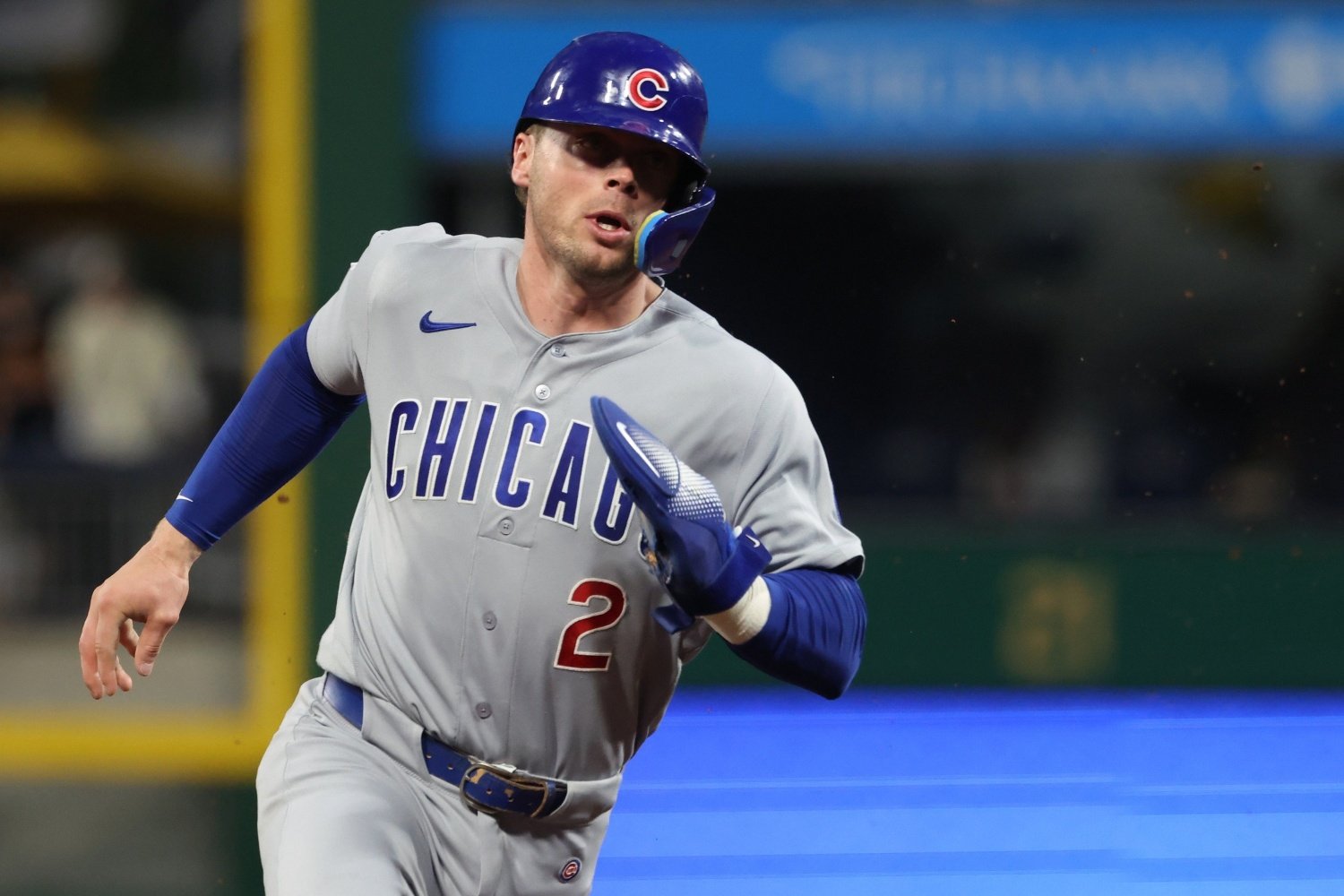 The Chicago Cubs have always been a team of peaks and valleys, going way back to the Joe Maddon days. The Cubs offense could roll out of bed and outhit any team in baseball. Depending on what kind of streak they’re on, however, they could also make a back-end starter look like a Cy Young contender. Right now, nothing seems to be working. Before salvaging two games to split a series in Pittsburgh, they had lost six straight sets. Health issues have caused the pitching staff to rely heavily on minor-league depth to get through the game, and the hitting… well, that's what I am here to talk about. The Cubs snapped their 10-game skid, their longest since 2022, on Wednesday with an offensive explosion in Pittsburgh, and followed that with a good win on getaway night. Broadly, however, they can still be said to be struggling and lacking consistency, especially at bat. Since the first game of the Rangers series beginning on May 8, the Cubs are 26th in baseball in runs scored, 29th in team batting average, 25th in home runs, 28th in OPS, 27th in wRC+... you get the picture. Ian Happ, Seiya Suzuki, Pete Crow-Armstrong, Dansby Swanson, Moisés Ballesteros, and Nico Hoerner are all hitting under .200 over that span. Happ and Suzuki are striking out in nearly every other at-bat, while combining for four home runs even after Happ hit two to close out his week back at home In Pittsburgh. Even when the Cubs were hitting, they were leaving runners on base at an alarming rate. Below is the list of the top 10 hitters who have stranded the most runners this season: Ian Happ, Chicago Cubs Alex Bregman, Chicago Cubs Colson Montgomery, Chicago White Sox Seiya Suzuki, Chicago Cubs Tyler Soderstrom, Athletics 6. Nolan Schanuel, Los Angeles Angels 7. Pete Alonso, Baltimore Orioles 8. Daylen Lile, Washington Nationals 9. Michael Busch, Chicago Cubs 10. Matt Olson, Atlanta Braves If we expand this list to the top 20 players, the Braves are the only team with a second player on the list. Here we see Cubs occupying three of the first four spots, and four of the top 10. The silver lining here is that, to drive in runs, you need runners on base, so the Cubs are getting themselves into plenty of innings where they have chances to score. Unsurprisingly, the Cubs also lead baseball in runners left in scoring position per game. Putting more runners on and advancing them is going to naturally create more opportunities to strand them, and the Cubs had no issue getting on base prior to May 8. From Opening Day through May 7 (what I like to refer to as the fun part of the season), the Cubs led baseball with an OBP of .353. They were also leading baseball in walks with 179. Even during this not-so-fun part of the season, the Cubs still have the third-most walks in baseball, though their OBP has fallen to 21st. The perpetually expressionless Craig Counsell has been tinkering with the lineup slightly, but is still penciling in Happ in the cleanup spot, followed by Suzuki, for the majority of games. Bregman, who has been the hottest hitter during this humbling month, seems to be firmly entrenched in the three spot, but for most of this month, Michael Busch has been behind hitters that he shouldn’t be. Top position player prospect Pedro Ramirez is up in the big leagues, but he is 22 and was not projected to be a key part of this season. There's not going to be significant outside help joining the squad to ignite the offense, so there are really only two paths forward: this group gets it together, or they continue to fall to the bottom of the division. Until the pitching gets healthy, they are going to have to hit their way to wins, and that is just not happening. We are Cubs fans here, and while it is warranted to be downright baffled by their recent performance, there is a lot of baseball left to be played, and this is still a team that had two 10-game winning streaks this season. In fact, the 2026 Cubs have joined the 2017 Dodgers as the only teams in baseball history with two 10-game winning streaks and a 10-game losing streak in the same season, so the odds are with them to win the pennant this year. (If only this sport was that simple.) This is still a team that can heat right back up again and start mashing baseballs. Optimistically, there is no chance their underwhelming hitters stay in a season-long slump. Hitting is contagious, and this group has proven they can compete offensively with anyone; it’s going to be a matter of getting their heads right. The Cubs round out the month in St. Louis before the real opportunity to gain some ground. The pesky A’s are in town next week, but that's followed by a 12-game stretch split between the Giants and Rockies. Bregman, Busch, and Carson Kelly are all doing their jobs, and the hits will eventually return for the rest of the gang. Regardless of the pitching situation, we should still be in for a fun summer of baseballs flying around Wrigley Field.
 -
Image courtesy of © Jerome Miron-Imagn Images As they begin a new week, the Chicago Cubs sit at 27-14, leading the NL Central by 3.5 games. Only the team from the suburbs northwest of Atlanta has a better record. The devastating pitching injury news keeps on coming—last week, 2025 All-Star Matthew Boyd hit the injured list for the second time this season. Despite that, the Cubs are in the midst of a 15-game winning streak at home, and are 8-2 in their last 10 games. This season marks the first time since 2016 that the Cubs are at least 10 games over .500 this early in the season. That's not to say that the 2026 Cubs are on the path to a similar destiny; these are different rosters with varying strengths and weaknesses. Nonetheless, fans are feeling good about this team that finds ways to win while starring down injuries. Here we are going to go position by position, comparing how the starters have fared through the first quarter of the season. (For what it's worth, those Cubs were 29-12 at this same juncture.) Catcher 2016: Miguel Montero/David Ross 2026: Carson Kelly/ Miguel Amaya Before (and after) Willson Contreras held down the position from 2017-2022, the Cubs favored the tandem catcher approach. Montero was penciled in as the starter, but the 39-year-old Ross found himself starting over a third of the team’s games due to his chemistry with the veteran starters and Montero's brutal follow-up to what had been a very strong 2015 campaign. Although Montero hit the team’s first home run of the season, he was largely a non-factor at the plate, hitting .208 with four extra base hits through May 6. Ross was hitting a little bit better, but the two of them together had a combined FanGraphs WAR of 0.7. Ten years later, Carson Kelly’s breakout 2025 is carrying over tolerably well into 2026. Even after going 0-for-Arlington, he's hitting .283/.377/.384 on the campaign. Amaya got off to s slower start, but he's thrived in lighter duty and is now hitting .228/.371/.351. This year's group is certainly out-hitting the 2016 duo, though Ross and Montero were better behind the plate. First Base 2016: Anthony Rizzo 2026: Michael Busch Anthony Rizzo loved life in the middle of a high-octane lineup to start 2016. Through 41 games (a point that came 10 days later that year than this year), he was batting .245/.382/.536, with 11 home runs, 34 RBIs and more walks than strikeouts. This was Peak Rizzo: a Gold Glover, a Silver Slugger, a multi-time All-Star and the heartbeat of the team. Fast-forward to today, and the Cubs have their most prolific first baseman since Rizzo in Michael Busch, but he has not yet found his footing completely. The rust is shaking off nicely as the weather warms, and Busch is now batting .238/.349/.367, but Rizzo was obviously a better player that year than Busch is, at least right now. Second Base 2016: Ben Zobrist 2026: Nico Hoerner Fresh off a 2015 World Series MVP award with the Royals, Zobrist signed a four-year deal as a veteran complement to the Cubs' young offensive core. He was the primary second baseman early in the 2016 season, although he did log nearly 190 innings in the outfield, as needs arose. He hit the ground running for his new team, and the 40-game mark found him flirting with a 1.000 OPS. He wasn't a dazzling defender, but he was good enough. When the first pitch of 2026 was thrown, Nico Hoerner was entering a contract year. By the time the second game of the season started, he had agreed to a six-year extension. Through May 10, Hoerner is showing why he was deserving of this deal. His defense is exceptional, and even mired in a 3-for-22 slump, he's currently hitting .278/.351/.426, with plus baserunning, to boot. This is the first position where one can make a strong case for the 2026 Cubs to top the 2016 crew, so let's give them the nod. Third Base 2016: Kris Bryant 2026: Alex Bregman Here's a question that can sound fun or cursed, depending on your mood: When Bregman's time in Chicago is over, whose impact will have been greater? Bryant ascended from being a top draft choice to the status of the sport's top prospect. He won a Rookie of the Year Award and an MVP Award for the Cubs, and was instrumental in their winning the World Series. Thereafter, though, his career was often disrupted by injuries. Bregman is already past his peak, but is he past his prime—or is this just a standard-issue slow start from a veteran whom you can trust to get untracked any minute? Either way, Bryant then was a much better player than Bregman now, but the skills and the gravitas of the veteran at this moment give him a chance to carve a legacy just as rich as Bryant's before he's done as a Cub. Shortstop 2016: Addison Russell 2026: Dansby Swanson I am tempted to just call this for Swanson and move on, but Russell was another bright spot for the 2016 Cubs. He would end up having an All-Star season and some huge playoff moments, but he started off slowly in April. His .225/.352/.337 slash line does not jump off the page, but as a staple in the bottom of the lineup, he was not counted on to carry much of the offense. His defense was dazzling, though a bit unconventional at times. What he did off the field forever stains his place in the team's history, but he was a linchpin of (arguably) the best defense in baseball history. Swanson is off to a peculiar start to 2026. He's only batting .201, but he's shown power, and he's walking enough to keep his OBP respectable, at .313. Russell was a better defender, but on intangibles on and off the field, it's fair to say Swanson is a better contributor to wins right now than Russell was even then. Left Field 2016: Various 2026: Ian Happ When Kyle Schwarber collided with Dexter Fowler in the first week of the season, the 2016 Cubs' plans for left field were scuppered. That was the Cade Horton injury of the 2016 club. Jorge Soler started 51 games at the position, which led the team, but Bryant made 36 starts there as well, with Willson Contreras and Chris Coghlan also starting over 20 games each. Bryant was the best player who played left in 2016, but none of the players mentioned got off to as hot a start as Ian Happ is having right now. He leads the Cubs with nine homers, and is on pace to surpass his career high of 25. He's also walking at a very high rate, adjusting as well as anyone to the ABS system and the smaller zone that comes with it. The 31-year-old is entering a contract year, and is certainly performing well enough to earn a multi-year deal, but it remains to be seen if the Cubs will be the ones offering it to him. The longest-tenured Chicago athlete gives the 2026 Cubs the advantage in left over the rotation of solid players that Joe Maddon used in 2016, though to be fair, Maddon was scrambling a bit—and he got to backfill a lot of the playing time he gave to others in left by slotting Javier Báez into the lineup. Center Field 2016: Dexter Fowler 2026: Pete Crow-Armstrong Fowler had been a dynamic leadoff man for the 2015 Cubs, but looked poised to leave via free agency—until, suddenly, he showed up at Cubs camp after all. He then got off to a much better start than he'd enjoyed in his first year on the North Side; mid-May found him batting .324/.445/.547. Maddon rightly dubbed him the catalyst of the offense, and he kept their engine firing until more of the sparks caught and his teammates heated up come summer. In the present, Crow-Armstrong is the most exciting center fielder in baseball, but the jury is still out on what kind of hitter he will be. He has one of the lowest walk percentages on the team, and he's pairing it with one of the highest strikeout percentages. He still has the speed to steal bases and stretch hits into extra bases, but he hasn't put that on full display this year. After a Reds series in which he was the game-breaking force the Cubs so often benefited from last season, maybe his bat is warming up in its own right. Either way, his elite defense makes him valuable—but that 2016 version of Fowler was a more complete player. Right Field 2016: Jason Heyward 2026: Seiya Suzuki The top outfielder on the market joined the Cubs on an eight-year prior to 2016, famously taking less money than he was offered by the Nationals. The recipient of the largest free-agent contract in Cubs history struggled to hit throughout the seven seasons he played in Chicago, and was granted his release before the eighth year. If you want to believe the players, it was Heyward’s rally cry during the Game 7 rain delay that ignited the Cubs offense en route to the World Series win, but there sadly isn’t a “speeches given” section on the back of his baseball card. Heyward struggled immediately in 2016, posting a .581 OPS through early May, redeemed only by the respect of his teammates and his sparkling play in right field. Heyward will always have the defensive chops that Suzuki lacks, but Suzuki is a middle of the order hitter who has done nothing but hit since his return from the IL. In 27 games, he’s slashing .293/.403/.535 with 7 homers, anchoring the middle of a lineup that has not gotten much from Crow-Armstrong, Busch, or Bregman yet. Suzuki turned into one of the better hitters in baseball last season, after being more good than great in his first three MLB seasons. Like Happ, the 31-year-old is in a contract year, and could see another large payday if he continues to be a dependable middle-of-the-order bat. The Suzuki over Heyward choice is one of the easiest on this list. Utility 2016: Javier Báez 2026: Matt Shaw Since there was no DH in the NL 10 years ago (and Báez had to make this list somewhere), let's compare him to Shaw as a utility player. Before taking the everyday shortstop job, Báez bounced around the infield in 2016. He played over 300 innings at second and third base, nearly 200 at shortstop, and a few more innings in left field and first base. The 23-year-old had a walkoff home run on Mothers Day, although he fell into a slump thereafter and had just a .277 OBP through 41 Cubs games. He was already showing the ability to make a huge impact defensively. This isn’t a dig on Shaw, as he has seemed to turn a corner with the bat this season while handling multiple positions. After a mixed bag of results in 2025, he is hitting .271 with a .755 OPS this season. The underlying metrics suggest Shaw has made improvements to his hit tool and that should become more apparent as the season goes on, but at this point, the edge is still going to Baez. Starting Rotation 2016: Jon Lester, Jake Arrieta, John Lackey, Kyle Hendricks, Jason Hammel 2026: Shota Imanaga, Edward Cabrera, Colin Rea, Jameson Taillon, Ben Brown/Javier Assad The aspect that sets the 2016 team apart from the 2026 team is the starting pitching. Currently, the rotation has some bright spots and some not-so-bright spots. A healthy Imanaga is leading the bunch, with a 2.28 ERA over eight starts and a high strikeout rate to go with restored velocity. Imanaga always seems to start the season hot, so right now, he is the Cubs’ best starter. Trade addition Edward Cabrera has been as good as advertised, at times—but we've also seen what it looks like when his strange changeup-first arsenal isn't in sync. Colin Rea is back in the rotation due to the Cade Horton injury and has been a solid back-end contributor. Jameson Taillon and Matthew Boyd (who is now hurt again) have not been as sharp as they were last season, though. It’s really unfair to compare the current bunch to their 2016 counterparts, who were one of the most dominant single-season Cubs rotations ever. Lester and Hendricks finished second and third in the NL Cy Young Award voting, with Arrieta also getting support after winning the prize the previous year. Arrieta had already thrown a no-hitter by this time that year. The magnitude of difference here is much larger than between, say, Fowler and Crow-Armstrong or the respective catcher tandems. Closer/Bullpen 2016: Héctor Rondón 2026: Daniel Palencia Led by Rondón and fellow righty Pedro Strop, the 2016 Cubs pen got off to a hot start. Like any contender, they sought to reinforce that group as the summer wore on, but they had depth and high-velocity strikeout options in that group even in April and May. The 2026 bullpen needs reinforcements now, as all of their high-leverage arms outside of Hoby Milner and Brown have spent time on the IL. Current closer and WBC champion Daniel Palencia is a more electric arm than Rondón, but at least Rondón was healthy. There are glimpses of hope for breakout years from just enough guys, but right now, it's easy to pick this part of the 2016 pitching staff over the 2026 version, too. The Verdict C; Carson Kelly/Miguel Amaya 1B: Anthony Rizzo 2B: Nico Hoerner 3B: Kris Bryant SS: Dansby Swanson LF: Ian Happ CF: Dexter Fowler RF: Seiya Suzuki UTL: Javier Báez Rotation: 2016 Bullpen: 2016 In 11 categories, the 2016 Cubs have the advantage in six of them, making this a bit closer of a race than some might have thought. On the other hand, some of the 2016 group's advantages are much greater than those for the 2026 team. This group also doesn't have a farm system likely to yield either a Contreras-caliber midseason boost or a trade package like the one that brought the team Aroldis Chapman in 2016. These are two very different teams, and the game has changed immensely over the past decade, so this is not to say the 2026 team can’t experience the same fate. They are the hottest team in baseball right now, and are still finding ways to win despite their injuries. It will be a fun summer in Chicago, but there probably won’t ever be a Cubs team like the one we saw 10 years ago. View full article
-
How Do the Hot-Starting 2026 Cubs Match Up with the 2016 Version?
Paul Niemiec posted an article in Just For Fun
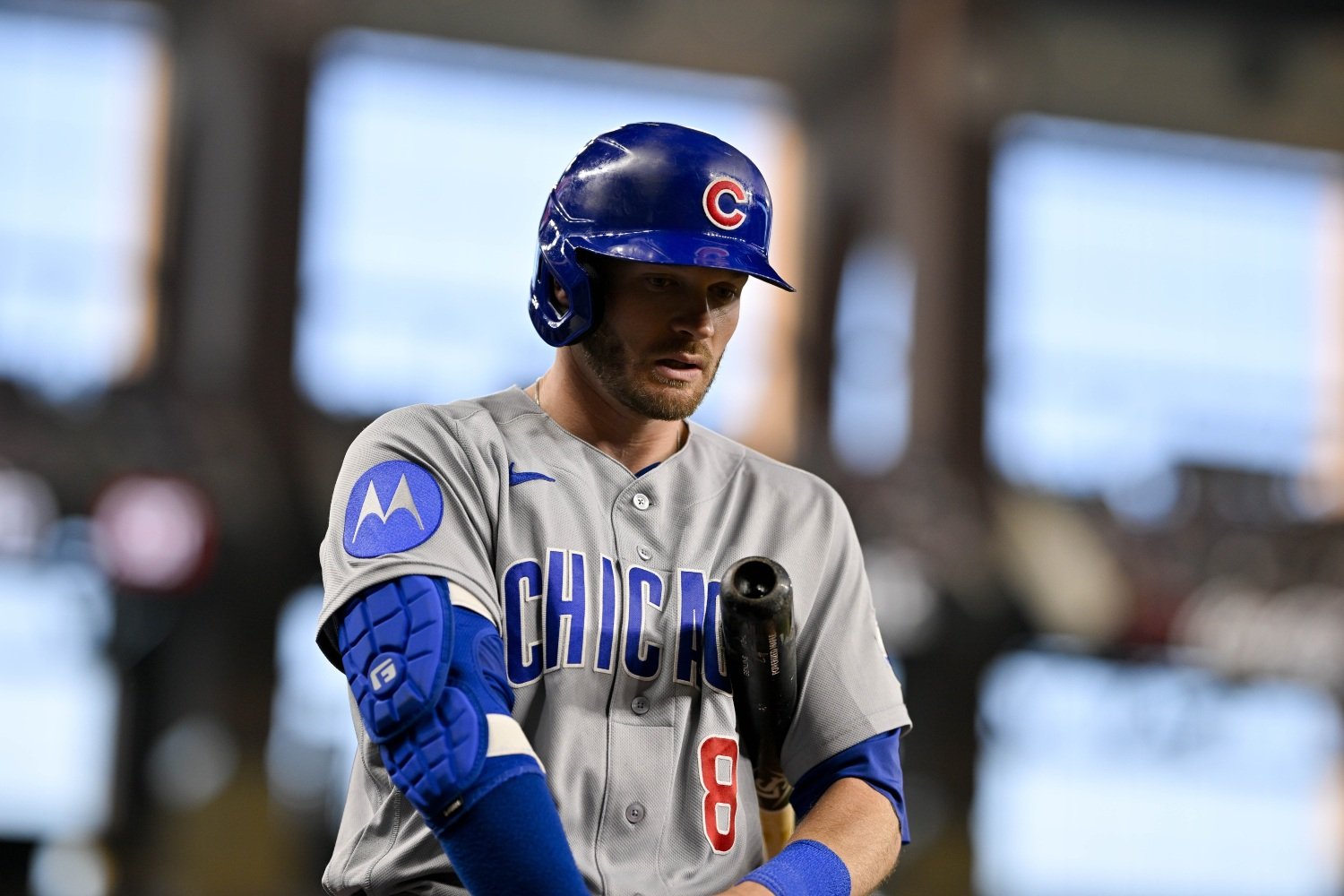 As they begin a new week, the Chicago Cubs sit at 27-14, leading the NL Central by 3.5 games. Only the team from the suburbs northwest of Atlanta has a better record. The devastating pitching injury news keeps on coming—last week, 2025 All-Star Matthew Boyd hit the injured list for the second time this season. Despite that, the Cubs are in the midst of a 15-game winning streak at home, and are 8-2 in their last 10 games. This season marks the first time since 2016 that the Cubs are at least 10 games over .500 this early in the season. That's not to say that the 2026 Cubs are on the path to a similar destiny; these are different rosters with varying strengths and weaknesses. Nonetheless, fans are feeling good about this team that finds ways to win while starring down injuries. Here we are going to go position by position, comparing how the starters have fared through the first quarter of the season. (For what it's worth, those Cubs were 29-12 at this same juncture.) Catcher 2016: Miguel Montero/David Ross 2026: Carson Kelly/ Miguel Amaya Before (and after) Willson Contreras held down the position from 2017-2022, the Cubs favored the tandem catcher approach. Montero was penciled in as the starter, but the 39-year-old Ross found himself starting over a third of the team’s games due to his chemistry with the veteran starters and Montero's brutal follow-up to what had been a very strong 2015 campaign. Although Montero hit the team’s first home run of the season, he was largely a non-factor at the plate, hitting .208 with four extra base hits through May 6. Ross was hitting a little bit better, but the two of them together had a combined FanGraphs WAR of 0.7. Ten years later, Carson Kelly’s breakout 2025 is carrying over tolerably well into 2026. Even after going 0-for-Arlington, he's hitting .283/.377/.384 on the campaign. Amaya got off to s slower start, but he's thrived in lighter duty and is now hitting .228/.371/.351. This year's group is certainly out-hitting the 2016 duo, though Ross and Montero were better behind the plate. First Base 2016: Anthony Rizzo 2026: Michael Busch Anthony Rizzo loved life in the middle of a high-octane lineup to start 2016. Through 41 games (a point that came 10 days later that year than this year), he was batting .245/.382/.536, with 11 home runs, 34 RBIs and more walks than strikeouts. This was Peak Rizzo: a Gold Glover, a Silver Slugger, a multi-time All-Star and the heartbeat of the team. Fast-forward to today, and the Cubs have their most prolific first baseman since Rizzo in Michael Busch, but he has not yet found his footing completely. The rust is shaking off nicely as the weather warms, and Busch is now batting .238/.349/.367, but Rizzo was obviously a better player that year than Busch is, at least right now. Second Base 2016: Ben Zobrist 2026: Nico Hoerner Fresh off a 2015 World Series MVP award with the Royals, Zobrist signed a four-year deal as a veteran complement to the Cubs' young offensive core. He was the primary second baseman early in the 2016 season, although he did log nearly 190 innings in the outfield, as needs arose. He hit the ground running for his new team, and the 40-game mark found him flirting with a 1.000 OPS. He wasn't a dazzling defender, but he was good enough. When the first pitch of 2026 was thrown, Nico Hoerner was entering a contract year. By the time the second game of the season started, he had agreed to a six-year extension. Through May 10, Hoerner is showing why he was deserving of this deal. His defense is exceptional, and even mired in a 3-for-22 slump, he's currently hitting .278/.351/.426, with plus baserunning, to boot. This is the first position where one can make a strong case for the 2026 Cubs to top the 2016 crew, so let's give them the nod. Third Base 2016: Kris Bryant 2026: Alex Bregman Here's a question that can sound fun or cursed, depending on your mood: When Bregman's time in Chicago is over, whose impact will have been greater? Bryant ascended from being a top draft choice to the status of the sport's top prospect. He won a Rookie of the Year Award and an MVP Award for the Cubs, and was instrumental in their winning the World Series. Thereafter, though, his career was often disrupted by injuries. Bregman is already past his peak, but is he past his prime—or is this just a standard-issue slow start from a veteran whom you can trust to get untracked any minute? Either way, Bryant then was a much better player than Bregman now, but the skills and the gravitas of the veteran at this moment give him a chance to carve a legacy just as rich as Bryant's before he's done as a Cub. Shortstop 2016: Addison Russell 2026: Dansby Swanson I am tempted to just call this for Swanson and move on, but Russell was another bright spot for the 2016 Cubs. He would end up having an All-Star season and some huge playoff moments, but he started off slowly in April. His .225/.352/.337 slash line does not jump off the page, but as a staple in the bottom of the lineup, he was not counted on to carry much of the offense. His defense was dazzling, though a bit unconventional at times. What he did off the field forever stains his place in the team's history, but he was a linchpin of (arguably) the best defense in baseball history. Swanson is off to a peculiar start to 2026. He's only batting .201, but he's shown power, and he's walking enough to keep his OBP respectable, at .313. Russell was a better defender, but on intangibles on and off the field, it's fair to say Swanson is a better contributor to wins right now than Russell was even then. Left Field 2016: Various 2026: Ian Happ When Kyle Schwarber collided with Dexter Fowler in the first week of the season, the 2016 Cubs' plans for left field were scuppered. That was the Cade Horton injury of the 2016 club. Jorge Soler started 51 games at the position, which led the team, but Bryant made 36 starts there as well, with Willson Contreras and Chris Coghlan also starting over 20 games each. Bryant was the best player who played left in 2016, but none of the players mentioned got off to as hot a start as Ian Happ is having right now. He leads the Cubs with nine homers, and is on pace to surpass his career high of 25. He's also walking at a very high rate, adjusting as well as anyone to the ABS system and the smaller zone that comes with it. The 31-year-old is entering a contract year, and is certainly performing well enough to earn a multi-year deal, but it remains to be seen if the Cubs will be the ones offering it to him. The longest-tenured Chicago athlete gives the 2026 Cubs the advantage in left over the rotation of solid players that Joe Maddon used in 2016, though to be fair, Maddon was scrambling a bit—and he got to backfill a lot of the playing time he gave to others in left by slotting Javier Báez into the lineup. Center Field 2016: Dexter Fowler 2026: Pete Crow-Armstrong Fowler had been a dynamic leadoff man for the 2015 Cubs, but looked poised to leave via free agency—until, suddenly, he showed up at Cubs camp after all. He then got off to a much better start than he'd enjoyed in his first year on the North Side; mid-May found him batting .324/.445/.547. Maddon rightly dubbed him the catalyst of the offense, and he kept their engine firing until more of the sparks caught and his teammates heated up come summer. In the present, Crow-Armstrong is the most exciting center fielder in baseball, but the jury is still out on what kind of hitter he will be. He has one of the lowest walk percentages on the team, and he's pairing it with one of the highest strikeout percentages. He still has the speed to steal bases and stretch hits into extra bases, but he hasn't put that on full display this year. After a Reds series in which he was the game-breaking force the Cubs so often benefited from last season, maybe his bat is warming up in its own right. Either way, his elite defense makes him valuable—but that 2016 version of Fowler was a more complete player. Right Field 2016: Jason Heyward 2026: Seiya Suzuki The top outfielder on the market joined the Cubs on an eight-year prior to 2016, famously taking less money than he was offered by the Nationals. The recipient of the largest free-agent contract in Cubs history struggled to hit throughout the seven seasons he played in Chicago, and was granted his release before the eighth year. If you want to believe the players, it was Heyward’s rally cry during the Game 7 rain delay that ignited the Cubs offense en route to the World Series win, but there sadly isn’t a “speeches given” section on the back of his baseball card. Heyward struggled immediately in 2016, posting a .581 OPS through early May, redeemed only by the respect of his teammates and his sparkling play in right field. Heyward will always have the defensive chops that Suzuki lacks, but Suzuki is a middle of the order hitter who has done nothing but hit since his return from the IL. In 27 games, he’s slashing .293/.403/.535 with 7 homers, anchoring the middle of a lineup that has not gotten much from Crow-Armstrong, Busch, or Bregman yet. Suzuki turned into one of the better hitters in baseball last season, after being more good than great in his first three MLB seasons. Like Happ, the 31-year-old is in a contract year, and could see another large payday if he continues to be a dependable middle-of-the-order bat. The Suzuki over Heyward choice is one of the easiest on this list. Utility 2016: Javier Báez 2026: Matt Shaw Since there was no DH in the NL 10 years ago (and Báez had to make this list somewhere), let's compare him to Shaw as a utility player. Before taking the everyday shortstop job, Báez bounced around the infield in 2016. He played over 300 innings at second and third base, nearly 200 at shortstop, and a few more innings in left field and first base. The 23-year-old had a walkoff home run on Mothers Day, although he fell into a slump thereafter and had just a .277 OBP through 41 Cubs games. He was already showing the ability to make a huge impact defensively. This isn’t a dig on Shaw, as he has seemed to turn a corner with the bat this season while handling multiple positions. After a mixed bag of results in 2025, he is hitting .271 with a .755 OPS this season. The underlying metrics suggest Shaw has made improvements to his hit tool and that should become more apparent as the season goes on, but at this point, the edge is still going to Baez. Starting Rotation 2016: Jon Lester, Jake Arrieta, John Lackey, Kyle Hendricks, Jason Hammel 2026: Shota Imanaga, Edward Cabrera, Colin Rea, Jameson Taillon, Ben Brown/Javier Assad The aspect that sets the 2016 team apart from the 2026 team is the starting pitching. Currently, the rotation has some bright spots and some not-so-bright spots. A healthy Imanaga is leading the bunch, with a 2.28 ERA over eight starts and a high strikeout rate to go with restored velocity. Imanaga always seems to start the season hot, so right now, he is the Cubs’ best starter. Trade addition Edward Cabrera has been as good as advertised, at times—but we've also seen what it looks like when his strange changeup-first arsenal isn't in sync. Colin Rea is back in the rotation due to the Cade Horton injury and has been a solid back-end contributor. Jameson Taillon and Matthew Boyd (who is now hurt again) have not been as sharp as they were last season, though. It’s really unfair to compare the current bunch to their 2016 counterparts, who were one of the most dominant single-season Cubs rotations ever. Lester and Hendricks finished second and third in the NL Cy Young Award voting, with Arrieta also getting support after winning the prize the previous year. Arrieta had already thrown a no-hitter by this time that year. The magnitude of difference here is much larger than between, say, Fowler and Crow-Armstrong or the respective catcher tandems. Closer/Bullpen 2016: Héctor Rondón 2026: Daniel Palencia Led by Rondón and fellow righty Pedro Strop, the 2016 Cubs pen got off to a hot start. Like any contender, they sought to reinforce that group as the summer wore on, but they had depth and high-velocity strikeout options in that group even in April and May. The 2026 bullpen needs reinforcements now, as all of their high-leverage arms outside of Hoby Milner and Brown have spent time on the IL. Current closer and WBC champion Daniel Palencia is a more electric arm than Rondón, but at least Rondón was healthy. There are glimpses of hope for breakout years from just enough guys, but right now, it's easy to pick this part of the 2016 pitching staff over the 2026 version, too. The Verdict C; Carson Kelly/Miguel Amaya 1B: Anthony Rizzo 2B: Nico Hoerner 3B: Kris Bryant SS: Dansby Swanson LF: Ian Happ CF: Dexter Fowler RF: Seiya Suzuki UTL: Javier Báez Rotation: 2016 Bullpen: 2016 In 11 categories, the 2016 Cubs have the advantage in six of them, making this a bit closer of a race than some might have thought. On the other hand, some of the 2016 group's advantages are much greater than those for the 2026 team. This group also doesn't have a farm system likely to yield either a Contreras-caliber midseason boost or a trade package like the one that brought the team Aroldis Chapman in 2016. These are two very different teams, and the game has changed immensely over the past decade, so this is not to say the 2026 team can’t experience the same fate. They are the hottest team in baseball right now, and are still finding ways to win despite their injuries. It will be a fun summer in Chicago, but there probably won’t ever be a Cubs team like the one we saw 10 years ago.
 -
Image courtesy of © Matt Marton-Imagn Images With roughly a week and change left in April, and roughly 90% of the MLB regular season left to go, it’s time to check in on how the rest of the NL Central is doing. As of 4/21, here are the current standings: Reds: 15-8 Pirates: 13-9 Cubs: 13-9 Cardinals: 13-9 Brewers: 12-9 The Cubs were middling to begin the season, but with the bats propelling them to a series win in Philadelphia, and a sweep of the spiraling Mets over the weekend, they are right back in the thick of things. The only caveat now is the state of the rest of the division, which does not have a team below .500. Even the Cardinals, who were thought to be the bottom dweller this season, have gotten off to a nice start. The technically third-place Cubs are still favorites to win the division, but this season is going to be much more of a gauntlet than originally anticipated, even after Milwaukee and St. Louis made some major subtractions from their rosters over the offseason. Here is a brief look at how the Cubs’ divisional rivals have fared so far. Cubs' NL Central Opponent Check-In Cincinnati Reds The Reds, who made the playoffs last season, are leading the division despite a -3 run differential. Coming off a sweep of the formerly red-hot Minnesota Twins, the team still sits dead last in baseball in wRC+ and batting average. The pitching staff as a whole has a 4.54 xERA, which ranks 24th in the league. Their top two starting pitchers, Hunter Greene and Nick Lodolo, have not thrown a pitch yet, and both have ambiguous injury outlooks at this point. Both should be in the rotation at some point this season, but it is unclear when that will be. Still, the Reds are winning games, although they have not played a team with a current record over .500 besides the Pirates. What’s working: The Reds have exactly two things going right for them on offense: Elly De La Cruz and Sal Stewart. De La Cruz has already reached 1.0 WAR on the young season, with an .859 OPS, six home runs, and five stolen bases. Stewart is doing even better, with a team-leading .978 OPS, seven home runs, and 19 RBI. The 22-year-old is looking like an early frontrunner for the NL ROY award up to this point in the season. After a few seasons with a revolving door at first base, the Reds look like they have another star at the position, their first since Joey Votto retired. Christian Encarnacion-Strand was traded to Baltimore last week, leaving Stewart with little to no competition for playing time, especially with new/old friend Eugenio Suarez taking over the primary DH role. De La Cruz is one of the most exciting young players in the game, but he needed a dependable bat in the lineup to take some weight off his shoulders, and now it looks like he has that. On the pitching side, they’ve gotten quality work out of former first-round pick Rhett Lowder as well as Chase Burns. In the bullpen, Brock Burke, Conor Phillips, Graham Ashcraft and Sam Moll all have ERAs under 3.00, with Tony Santillan yet to give up a run in his 10 innings pitched. Their number 10 organizational prospect Jose Franco has made his debut in the bullpen, and No. 7 prospect Chase Petty is waiting in the wings. If this group can hold things together on the mound until Lodolo and Greene return, the Reds will suddenly have a deep pitching staff going into the second half of the season. What’s not working: The Reds’ offense and pitching rank toward the bottom of MLB in many statistics, and this is because any player I have not mentioned by name yet is off to a rough start. Here is a list of all the players on the Reds with at least 30 plate appearances that are hitting under .200: Tyler Stephenson, Matt McClain, KeBryan Hayes (hitting .058), T.J. Friedl, Noelvi Marte and Will Benson. Another mind blowing offensive stat for this team so far is that outside of the aforementioned Stewart, De La Cruz, Suarez, and Stephenson (due to fielding), not a single player has a positive WAR. The Reds have hitters who have been exciting before in McClain, Spencer Steer and Nathaniel Lowe, but there is definitely something in the water at Great American Ballpark that is causing such an offensive funk for most of the roster. Granted, there is no way this lineup should be this bad the rest of the season, since it is almost identical to the lineup that got them to the post season a year ago. Pitchers Andrew Abbott and Brady Singer are due for some positive regression at some point as well, since both have proven they are better than an ERA over five. The scary thing here for Cubs fans is that this Reds club has had serious problems on both sides of the ball, and is still 15-8. Once they get going, they might be viewed as the biggest threat to the Cubs in the division. Pittsburgh Pirates: We’ve seen this happen in recent memory, but how real is it this time? The Buccos finished April of 2023 with a 13-9 record before the wheels fell off. This team does have a different vibe to it, however. They have the best pitcher in the world in Paul Skenes. 20-year-old phenom Konnor Griffin has made his debut right after signing an extension. Oneil Cruz finally looks like a key offensive piece, and newly acquired Brandon Lowe is mashing with seven home runs. Last season, Pirates starters finished sixth in ERA, and this season, they are currently second at 2.81. Pitching will be a strength as long as Skenes is healthy, but the question once again will be the perennially suspect offense. What’s working: As previously mentioned, the Pirates have one of the highest-upside, young starting staffs in the game. Interestingly enough, Skenes’ 3.27 ERA is the highest of their five starters. 2025 top prospect Bubba Chandler is the only other starter sporting an ERA above 3.00, as Mitch Keller and Braxton Ashcraft are below 3.00. Cameron Mlodzinski, who has quietly been one of the more consistent arms around since 2023, has a dazzling 1.77 ERA through four starts. Jared Jones threw a live bullpen last week and should be joining the rotation sometime in June. The bullpen quartet of Dennis Santana, Yohan Ramirez, Isaac Mattson, and Gregory Soto have been the bright spots in a bullpen that is more good than great to this point. Hunter Barco, who has pitched briefly in the majors this season before being optioned, is one of their higher ranked prospects and should be up again soon. If the offense, which ranks top 10 in runs scored, batting average, home runs, wRC+, and most other categories, is able to stay consistent enough through 162 games, this team could easily win the division. Outside of Cruz and Lowe, free-agent addition Ryan O’Hearn is hitting .329 with a .960 OPS. With Andrew McCutchen in Texas after his somewhat controversial exit, Bryan Reynolds, having been with the team since 2019, is the veteran leader and is enjoying a nice .809 OPS after his substandard 2025. They’re also getting solid contributions from role players Jake Mangum, Spencer Horwitz, and the Nicks: Gonzales and Yorke. Konnor Griffin is not off to the hottest start at the plate, but he has five hits in his last four games, and could be turning a corner. New veteran DH Marcell Ozuna is also seeing the ball better with a pair of homers in the last week, after starting the season ice cold. What’s not working: This is a hard question for this team, because nearly everything seems to be working. Yes, Griffin hasn’t been great through his first few weeks, but the rest of the lineup is getting the job done. They do need a catcher, as 2021 number one overall pick Henry Davis is looking more and more like a bust. Last season, Davis was usurped by another former top prospect Joey Bart, but now they are hitting both under .200. Their No. 9 prospect Rafael Flores made his debut last season, and could fit into the equation this season, but he is hitting .208 with Triple-A Indianapolis. In fact, none of their top prospects in Triple-A are hitting at all, as Jhostynxon Garcia and Termarr Johnson have averages under .160. The Buccos better hope their group at the MLB level can continue to hit, because there doesn’t seem to be a lot of hope in the upper minors right now. There were questions defensively after Cruz had a terrible opening weekend in center field, and O’Hearn was signed to be a makeshift outfielder, but they have been okay, if not better than anticipated. Overall, the vibes are as good as they’ve been in over a decade at PNC Park, so let’s check back later to see how they’re holding up. St. Louis Cardinals The Cardinals were never supposed to be a main character for the 2026 season. They sold veterans Sonny Gray, Nolan Arenado, and Willson Contreras and were set on rebuilding, as their only “significant” addition was RHP Dustin May. Yet, here they are, tied with the Cubs, albeit with a -10 run differential. Cubs fans know the Redbirds have always found a way to remain competitive, and while this is the weakest roster in the division on paper, that could change quickly if some of the early results prove to be no fluke. What’s working: Former top prospect Jordan Walker leads the NL in home runs with eight and all of baseball in WAR with 1.8. He is hitting .305 with a 1.013 OPS and is finally looking like the offensive force he was projected to be. Still only 24 years old, this looks like the breakout Cardinals fans have been waiting for, and if he ends up being the new offensive face of the team for the next half decade, St. Louis will yet again hold one of the best hitters in baseball. Alec Burleson has seemingly found his home at first base after bouncing around from the infield to outfield over his first few seasons. He is hitting .280 with an .820 OPS with more walks than strikeouts. Former seventh overall pick J.J. Wetherholt made his debut on Opening Day and has a .750 OPS, which is third on the team. The pitching has been a bigger question mark, but they have a few young arms off to hot starts, who are auditioning for their role on the present and future Cardinals staffs. Although he is not striking hitters out, righty Michael McGreevy leads the team with a 2.49 ERA in four starts. Andre Pallante and Matthew Liberatore have been solid contributors as well, and should improve as the season progresses. The real treasure here on the Cards’ pitching staff is closer Riley O’Brien. The 31-year-old righty is building off a breakout 2025, where he pitched to a 2.06 ERA in 48 innings. He hasn’t given up a run this season in 12 1/3 innings and has a K/9 over ten. JoJo Romero has also been serviceable in the back end of the bullpen, with a 2.25 ERA. Likewise, 2021 fifth-round draft pick Gordon Graceffo has an ERA under 1.00 in his 10 2/3 innings pitched. Breakout rookie Matt Svanson was their best reliever last season, but has struggled so far in 2026. If he can reign in the walks (7.6/9), he would go a long way toward improving on their 25th-ranked bullpen xERA. In terms of reinforcements on the prospect lists, slugging outfielder Joshua Baez and pitchers Jurrangelo Cijntje and Quinn Mathews should see regular playing time before the season ends. Outfielder Lars Nootbaar should be back by late May or early June, which will certainly improve the offense as well. What’s not working: The underlying stats for the offense (sixth in WAR, 13th in wRC+, 15th in batting average) show that the Redbirds could produce at least league-average offense throughout the whole year, but the pitching is a different story. They have the worst team K/9 in the game at 6.38, and they’re also in the bottom third in the league in BB/9. Free-agent addition Dustin May has given up 15 earned runs in 19 1/3 innings but has an FIP under four, signaling some positive regression could be looming. Kyle Leahy, on the other hand, has an FIP close to six, and does not at all resemble the guy who was one of their most important starters last season. They’ve also gotten lucky, being 5-0 in extra innings, and 5-0 in one run games. O’Brien deserves credit where it's due, but he is not exactly a proven big league arm. The Cards will need a quick turnaround from veteran Ryne Stanek in order to continue winning close contests. Milwaukee Brewers: The defending NL Central champs started the season hot; they swept the White Sox to open the season and followed that up with series victories against the Rays and Royals. Then, they hit a skid on a road trip to the East, where they lost the second and third games of their series in Boston, and were swept by the Nationals. They had a nice rebound last week, winning both series against the spiraling AL champion Blue Jays and the scrappy, but still meh, Marlins. The offense that carried them last season has been middle of the pack in nearly any category you can name, and the pitching is very average as well. The Brewers started slower last year, and came roaring back, much to the dismay of Cubs fans everywhere. With reigning Manager of the Year Pat Murphy at the controls, and young ace Jacob Misiorowski leading the starting staff, there are still many reasons to bet on the Crew again. What’s working: Misiorowski is leading baseball with 42 strikeouts, which is helping fans forget that former ace Freddy Peralta is on the Mets. Brandon Woodruff is having a nice start to the year as well, in what he is surely hoping is going to be his first fully healthy season in a few years. The veteran pitching on the qualifying offer has a 3.42 ERA in his four starts. Speaking of ERA, Chad Patrick’s is under 1.00 in 19 innings pitched. Kyle Harrison, a former top-100 prospect, seems comfortable in his third organization in under a year. The bullpen hasn’t been nearly as effective, but DL Hall, Aaron Ashby and Grant Anderson have kept the group afloat. Offensively, William Contreras and Bryce Turang are each hitting over .300, with Turang’s .437 OBP leading the NL. Garrett Mitchell has an OPS exceeding .800, and Gary Sanchez is tied with Jake Bauers for the team lead in home runs with five. Jackson Chourio is expected back sometime in May, which will be a much-needed boost to this lineup. What’s not working: The Brewers have a few key contributors not working right now. Christian Yelich just hit the IL and is expected to miss about a month. Andrew Vaughn has been out since Opening Day, and pitchers Quinn Priester, Craig Yoho, and Jared Koenig are all out as well. Injuries are a part of the game, and the Brewers are good at finding replacements, but they need Chourio, Yelich, and Vaughn in the lineup as much as possible because they have some guys who are not hitting. Joey Ortiz is hitting below the Mendoza line, along with Sal Frelick, but with Ortiz, it's looking more and more evident that his ceiling is that of a weak hitter. The Luis Rengifo third baseman strategy is flat out not working, as he is currently worth -0.3 WAR while hitting .167. Too bad their other newly acquired infielder, David Hamilton, is also hitting sub-.200, while top prospects Jett Williams and extension recipient Cooper Pratt are struggling in Triple, so it looks like Rengifo is the answer for the foreseeable future. They’re in need of their bullpen reinforcements too, as prospect Brandon Sproat has given up 13 earned runs and already been moved out of the rotation. The biggest issue in their pen is closer Trevor Megill, who has been brutal to start the season. He has an ERA over 10.00 while giving up eight earned runs, while last season, he gave up 13 earned runs in total. With an offense that is not nearly as potent as it was a season ago, the Brewers can’t afford to be coughing up leads late in games. View full article
-
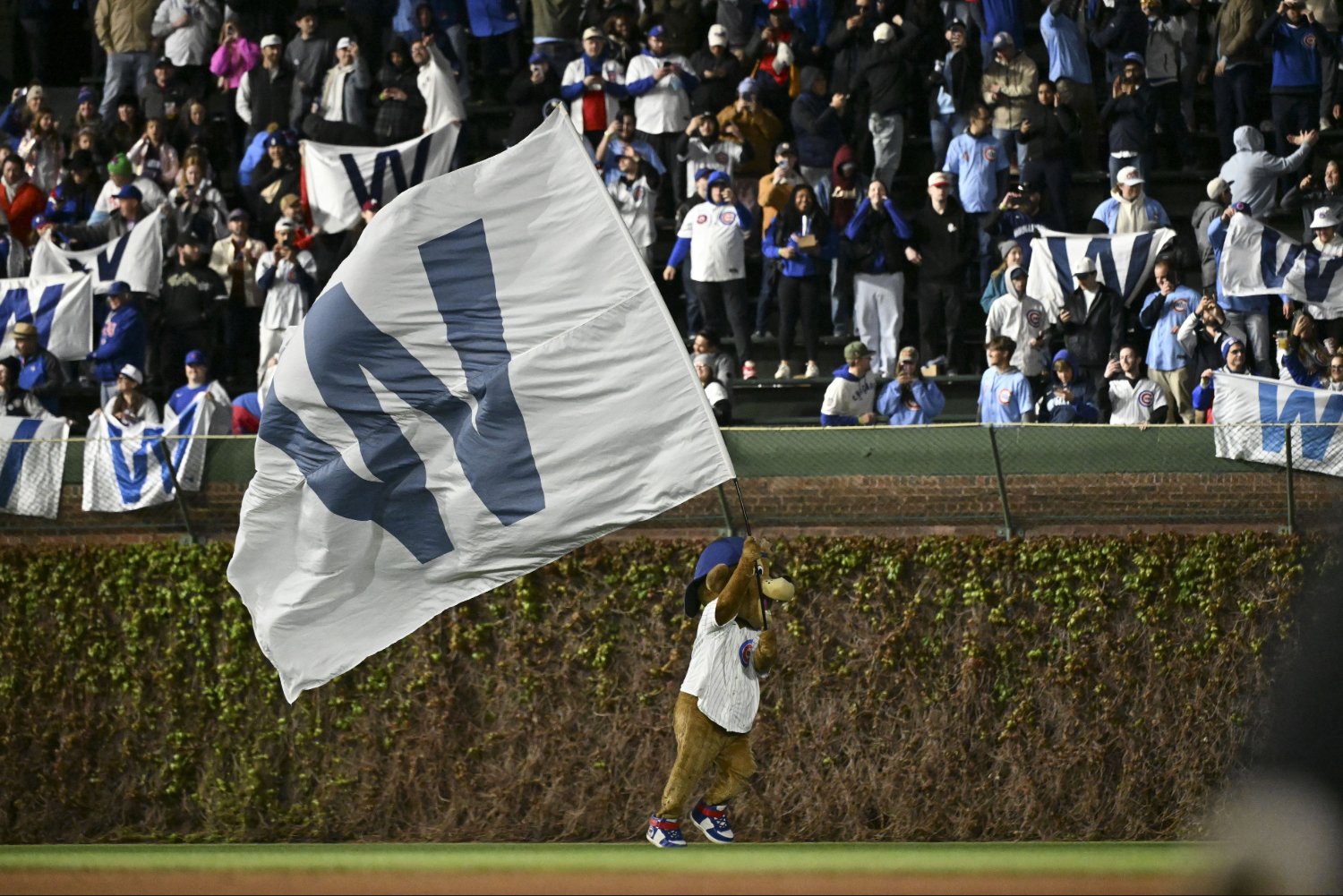 With roughly a week and change left in April, and roughly 90% of the MLB regular season left to go, it’s time to check in on how the rest of the NL Central is doing. As of 4/21, here are the current standings: Reds: 15-8 Pirates: 13-9 Cubs: 13-9 Cardinals: 13-9 Brewers: 12-9 The Cubs were middling to begin the season, but with the bats propelling them to a series win in Philadelphia, and a sweep of the spiraling Mets over the weekend, they are right back in the thick of things. The only caveat now is the state of the rest of the division, which does not have a team below .500. Even the Cardinals, who were thought to be the bottom dweller this season, have gotten off to a nice start. The technically third-place Cubs are still favorites to win the division, but this season is going to be much more of a gauntlet than originally anticipated, even after Milwaukee and St. Louis made some major subtractions from their rosters over the offseason. Here is a brief look at how the Cubs’ divisional rivals have fared so far. Cubs' NL Central Opponent Check-In Cincinnati Reds The Reds, who made the playoffs last season, are leading the division despite a -3 run differential. Coming off a sweep of the formerly red-hot Minnesota Twins, the team still sits dead last in baseball in wRC+ and batting average. The pitching staff as a whole has a 4.54 xERA, which ranks 24th in the league. Their top two starting pitchers, Hunter Greene and Nick Lodolo, have not thrown a pitch yet, and both have ambiguous injury outlooks at this point. Both should be in the rotation at some point this season, but it is unclear when that will be. Still, the Reds are winning games, although they have not played a team with a current record over .500 besides the Pirates. What’s working: The Reds have exactly two things going right for them on offense: Elly De La Cruz and Sal Stewart. De La Cruz has already reached 1.0 WAR on the young season, with an .859 OPS, six home runs, and five stolen bases. Stewart is doing even better, with a team-leading .978 OPS, seven home runs, and 19 RBI. The 22-year-old is looking like an early frontrunner for the NL ROY award up to this point in the season. After a few seasons with a revolving door at first base, the Reds look like they have another star at the position, their first since Joey Votto retired. Christian Encarnacion-Strand was traded to Baltimore last week, leaving Stewart with little to no competition for playing time, especially with new/old friend Eugenio Suarez taking over the primary DH role. De La Cruz is one of the most exciting young players in the game, but he needed a dependable bat in the lineup to take some weight off his shoulders, and now it looks like he has that. On the pitching side, they’ve gotten quality work out of former first-round pick Rhett Lowder as well as Chase Burns. In the bullpen, Brock Burke, Conor Phillips, Graham Ashcraft and Sam Moll all have ERAs under 3.00, with Tony Santillan yet to give up a run in his 10 innings pitched. Their number 10 organizational prospect Jose Franco has made his debut in the bullpen, and No. 7 prospect Chase Petty is waiting in the wings. If this group can hold things together on the mound until Lodolo and Greene return, the Reds will suddenly have a deep pitching staff going into the second half of the season. What’s not working: The Reds’ offense and pitching rank toward the bottom of MLB in many statistics, and this is because any player I have not mentioned by name yet is off to a rough start. Here is a list of all the players on the Reds with at least 30 plate appearances that are hitting under .200: Tyler Stephenson, Matt McClain, KeBryan Hayes (hitting .058), T.J. Friedl, Noelvi Marte and Will Benson. Another mind blowing offensive stat for this team so far is that outside of the aforementioned Stewart, De La Cruz, Suarez, and Stephenson (due to fielding), not a single player has a positive WAR. The Reds have hitters who have been exciting before in McClain, Spencer Steer and Nathaniel Lowe, but there is definitely something in the water at Great American Ballpark that is causing such an offensive funk for most of the roster. Granted, there is no way this lineup should be this bad the rest of the season, since it is almost identical to the lineup that got them to the post season a year ago. Pitchers Andrew Abbott and Brady Singer are due for some positive regression at some point as well, since both have proven they are better than an ERA over five. The scary thing here for Cubs fans is that this Reds club has had serious problems on both sides of the ball, and is still 15-8. Once they get going, they might be viewed as the biggest threat to the Cubs in the division. Pittsburgh Pirates: We’ve seen this happen in recent memory, but how real is it this time? The Buccos finished April of 2023 with a 13-9 record before the wheels fell off. This team does have a different vibe to it, however. They have the best pitcher in the world in Paul Skenes. 20-year-old phenom Konnor Griffin has made his debut right after signing an extension. Oneil Cruz finally looks like a key offensive piece, and newly acquired Brandon Lowe is mashing with seven home runs. Last season, Pirates starters finished sixth in ERA, and this season, they are currently second at 2.81. Pitching will be a strength as long as Skenes is healthy, but the question once again will be the perennially suspect offense. What’s working: As previously mentioned, the Pirates have one of the highest-upside, young starting staffs in the game. Interestingly enough, Skenes’ 3.27 ERA is the highest of their five starters. 2025 top prospect Bubba Chandler is the only other starter sporting an ERA above 3.00, as Mitch Keller and Braxton Ashcraft are below 3.00. Cameron Mlodzinski, who has quietly been one of the more consistent arms around since 2023, has a dazzling 1.77 ERA through four starts. Jared Jones threw a live bullpen last week and should be joining the rotation sometime in June. The bullpen quartet of Dennis Santana, Yohan Ramirez, Isaac Mattson, and Gregory Soto have been the bright spots in a bullpen that is more good than great to this point. Hunter Barco, who has pitched briefly in the majors this season before being optioned, is one of their higher ranked prospects and should be up again soon. If the offense, which ranks top 10 in runs scored, batting average, home runs, wRC+, and most other categories, is able to stay consistent enough through 162 games, this team could easily win the division. Outside of Cruz and Lowe, free-agent addition Ryan O’Hearn is hitting .329 with a .960 OPS. With Andrew McCutchen in Texas after his somewhat controversial exit, Bryan Reynolds, having been with the team since 2019, is the veteran leader and is enjoying a nice .809 OPS after his substandard 2025. They’re also getting solid contributions from role players Jake Mangum, Spencer Horwitz, and the Nicks: Gonzales and Yorke. Konnor Griffin is not off to the hottest start at the plate, but he has five hits in his last four games, and could be turning a corner. New veteran DH Marcell Ozuna is also seeing the ball better with a pair of homers in the last week, after starting the season ice cold. What’s not working: This is a hard question for this team, because nearly everything seems to be working. Yes, Griffin hasn’t been great through his first few weeks, but the rest of the lineup is getting the job done. They do need a catcher, as 2021 number one overall pick Henry Davis is looking more and more like a bust. Last season, Davis was usurped by another former top prospect Joey Bart, but now they are hitting both under .200. Their No. 9 prospect Rafael Flores made his debut last season, and could fit into the equation this season, but he is hitting .208 with Triple-A Indianapolis. In fact, none of their top prospects in Triple-A are hitting at all, as Jhostynxon Garcia and Termarr Johnson have averages under .160. The Buccos better hope their group at the MLB level can continue to hit, because there doesn’t seem to be a lot of hope in the upper minors right now. There were questions defensively after Cruz had a terrible opening weekend in center field, and O’Hearn was signed to be a makeshift outfielder, but they have been okay, if not better than anticipated. Overall, the vibes are as good as they’ve been in over a decade at PNC Park, so let’s check back later to see how they’re holding up. St. Louis Cardinals The Cardinals were never supposed to be a main character for the 2026 season. They sold veterans Sonny Gray, Nolan Arenado, and Willson Contreras and were set on rebuilding, as their only “significant” addition was RHP Dustin May. Yet, here they are, tied with the Cubs, albeit with a -10 run differential. Cubs fans know the Redbirds have always found a way to remain competitive, and while this is the weakest roster in the division on paper, that could change quickly if some of the early results prove to be no fluke. What’s working: Former top prospect Jordan Walker leads the NL in home runs with eight and all of baseball in WAR with 1.8. He is hitting .305 with a 1.013 OPS and is finally looking like the offensive force he was projected to be. Still only 24 years old, this looks like the breakout Cardinals fans have been waiting for, and if he ends up being the new offensive face of the team for the next half decade, St. Louis will yet again hold one of the best hitters in baseball. Alec Burleson has seemingly found his home at first base after bouncing around from the infield to outfield over his first few seasons. He is hitting .280 with an .820 OPS with more walks than strikeouts. Former seventh overall pick J.J. Wetherholt made his debut on Opening Day and has a .750 OPS, which is third on the team. The pitching has been a bigger question mark, but they have a few young arms off to hot starts, who are auditioning for their role on the present and future Cardinals staffs. Although he is not striking hitters out, righty Michael McGreevy leads the team with a 2.49 ERA in four starts. Andre Pallante and Matthew Liberatore have been solid contributors as well, and should improve as the season progresses. The real treasure here on the Cards’ pitching staff is closer Riley O’Brien. The 31-year-old righty is building off a breakout 2025, where he pitched to a 2.06 ERA in 48 innings. He hasn’t given up a run this season in 12 1/3 innings and has a K/9 over ten. JoJo Romero has also been serviceable in the back end of the bullpen, with a 2.25 ERA. Likewise, 2021 fifth-round draft pick Gordon Graceffo has an ERA under 1.00 in his 10 2/3 innings pitched. Breakout rookie Matt Svanson was their best reliever last season, but has struggled so far in 2026. If he can reign in the walks (7.6/9), he would go a long way toward improving on their 25th-ranked bullpen xERA. In terms of reinforcements on the prospect lists, slugging outfielder Joshua Baez and pitchers Jurrangelo Cijntje and Quinn Mathews should see regular playing time before the season ends. Outfielder Lars Nootbaar should be back by late May or early June, which will certainly improve the offense as well. What’s not working: The underlying stats for the offense (sixth in WAR, 13th in wRC+, 15th in batting average) show that the Redbirds could produce at least league-average offense throughout the whole year, but the pitching is a different story. They have the worst team K/9 in the game at 6.38, and they’re also in the bottom third in the league in BB/9. Free-agent addition Dustin May has given up 15 earned runs in 19 1/3 innings but has an FIP under four, signaling some positive regression could be looming. Kyle Leahy, on the other hand, has an FIP close to six, and does not at all resemble the guy who was one of their most important starters last season. They’ve also gotten lucky, being 5-0 in extra innings, and 5-0 in one run games. O’Brien deserves credit where it's due, but he is not exactly a proven big league arm. The Cards will need a quick turnaround from veteran Ryne Stanek in order to continue winning close contests. Milwaukee Brewers: The defending NL Central champs started the season hot; they swept the White Sox to open the season and followed that up with series victories against the Rays and Royals. Then, they hit a skid on a road trip to the East, where they lost the second and third games of their series in Boston, and were swept by the Nationals. They had a nice rebound last week, winning both series against the spiraling AL champion Blue Jays and the scrappy, but still meh, Marlins. The offense that carried them last season has been middle of the pack in nearly any category you can name, and the pitching is very average as well. The Brewers started slower last year, and came roaring back, much to the dismay of Cubs fans everywhere. With reigning Manager of the Year Pat Murphy at the controls, and young ace Jacob Misiorowski leading the starting staff, there are still many reasons to bet on the Crew again. What’s working: Misiorowski is leading baseball with 42 strikeouts, which is helping fans forget that former ace Freddy Peralta is on the Mets. Brandon Woodruff is having a nice start to the year as well, in what he is surely hoping is going to be his first fully healthy season in a few years. The veteran pitching on the qualifying offer has a 3.42 ERA in his four starts. Speaking of ERA, Chad Patrick’s is under 1.00 in 19 innings pitched. Kyle Harrison, a former top-100 prospect, seems comfortable in his third organization in under a year. The bullpen hasn’t been nearly as effective, but DL Hall, Aaron Ashby and Grant Anderson have kept the group afloat. Offensively, William Contreras and Bryce Turang are each hitting over .300, with Turang’s .437 OBP leading the NL. Garrett Mitchell has an OPS exceeding .800, and Gary Sanchez is tied with Jake Bauers for the team lead in home runs with five. Jackson Chourio is expected back sometime in May, which will be a much-needed boost to this lineup. What’s not working: The Brewers have a few key contributors not working right now. Christian Yelich just hit the IL and is expected to miss about a month. Andrew Vaughn has been out since Opening Day, and pitchers Quinn Priester, Craig Yoho, and Jared Koenig are all out as well. Injuries are a part of the game, and the Brewers are good at finding replacements, but they need Chourio, Yelich, and Vaughn in the lineup as much as possible because they have some guys who are not hitting. Joey Ortiz is hitting below the Mendoza line, along with Sal Frelick, but with Ortiz, it's looking more and more evident that his ceiling is that of a weak hitter. The Luis Rengifo third baseman strategy is flat out not working, as he is currently worth -0.3 WAR while hitting .167. Too bad their other newly acquired infielder, David Hamilton, is also hitting sub-.200, while top prospects Jett Williams and extension recipient Cooper Pratt are struggling in Triple, so it looks like Rengifo is the answer for the foreseeable future. They’re in need of their bullpen reinforcements too, as prospect Brandon Sproat has given up 13 earned runs and already been moved out of the rotation. The biggest issue in their pen is closer Trevor Megill, who has been brutal to start the season. He has an ERA over 10.00 while giving up eight earned runs, while last season, he gave up 13 earned runs in total. With an offense that is not nearly as potent as it was a season ago, the Brewers can’t afford to be coughing up leads late in games.
 -
Image courtesy of © Brad Rempel-Imagn Images The injured list keeps getting longer for the Chicago Cubs. The focus over the past few weeks has been the starting rotation—mainly the news that righthander Cade Horton will be out for the remainder of the season. The impact of an injury to a pitcher like Horton, who was on his way to being one of the top young starters in the game, is massive for the Cubs, who lack a true ace. Now, the bullpen is being ripped apart, too, by a series of injuries over the last week or so. Free-agent additions Phil Maton and Hunter Harvey are both on the 15-day IL, and so is Ethan Roberts. On Wednesday, we found out that Porter Hodge will be joining Cade Horton on the injured list for the rest of the season, due to UCL surgery. Though the jury was out on how much Hodge could actually be counted on this season, losing him for the season in mid-April will present the Cubs with another depth-related challenge. After a breakout rookie season in 2024 wherein the 23-year-old posted a 1.88 ERA (2.75 FIP) with a WHIP under 0.90 in 43 innings pitched, he was set to be one of the team’s high-leverage relievers last year. In fact, before the 2025 season started, the armchair general managers in the Cubs subreddit were debating on whether the Ryan Pressly trade made sense, suggesting Hodge should be the answer in the ninth inning. Even though walks were probably always going to be a point of concern, the 6-foot-4 righty boasted a fastball that could touch the upper 90s, and a wipeout slider that made the 2019 13th-round pick a potential weapon for a bullpen lacking a shutdown option. Relief pitching was a strength for the Cubs in 2025, with the bullpen finishing 11th in baseball with an ERA of 3.78. However, Hodge was a surprising non-factor, as he dealt with various injuries, pitching 33 innings in the majors with a ghastly 6.27 ERA. He still missed bats, as evident by his near 11 K/9, but he was hit around otherwise, giving up nine home runs in that small sample. Injuries aside, his fastball and slider velocity were a tick up from 2024, giving Cubs fans hope that Hodge could still overpower hitters, and would eventually work his way back into the pen. He had not yet thrown a pitch in 2026 before we got the news of this latest injury, which will certainly cost him not only 2026, but some of the 2027 season, too. The good news is that he's still pre-arbitration, so he remains a long-term option, but the club hanging onto him is no guarantee. The Cubs have one of the hardest bullpens to project, based on their affinity for making plenty of low-risk signings, so there is a non-zero chance that we have seen Hodge for the last time as a Cub. Moving forward, the Cubs are going to have to find more serviceable right-handed relief options. With all the injuries that have unfolded already, the Cubs are carrying a whopping five lefties in their bullpen: Caleb Thielbar and Hoby Milner have been around since Opening Day, but now, Luke Little is back, along with Ryan Rolison and rookie Riley Martin. Ben Brown has been a nice revelation as a full-time reliever so far, closer Daniel Palencia has not allowed an earned run, and Colin Rea has carried over the effectiveness from last season. Now with Rea needing to join the rotation, another right-handed relief option is gone. Jacob Webb is active, but his ERA is north of 5.00, and the only other righty on the 40-man roster is Gavin Hollowell and his negative career WAR. He's hurt, too, though less severely; he just hit the 7-day IL for Iowa. The 9-9 Cubs can sit tight and hope this lefty-heavy group can hold their own until Maton, Harvey and Roberts are back, but the chase for the NL Central crown is looking a lot tougher with the way Cincinnati and Pittsburgh have opened their seasons. The Cubs will be shopping for relievers come July, but they might need new faces in this group before then. The problem is, they don't have a ton of promising options. As for prospects, Jaxon Wiggins might be up at some point this summer, but his services could be needed in the thinned-out rotation. Their next-best pitching prospect is 19-year-old Kaleb Wing, the club’s No. 12 prospect, according to mlb.com. There is one interesting option who sits on their top 30 prospect list: 26-year-old Grant Kipp, who has thrown 8 1/3 scoreless innings to open the season with Knoxville. He is not an overpowering arm, but what he’s done so far has worked. What’s wrong with riding the hot hand? Out west in Des Moines, there’s not a whole lot to be excited about from righties. There is a 30-year-old, 6-foot-8 reliever named Gabe Klobotsits, who has a 2.08 ERA. Former top prospect turned journeyman Vince Velazquez is trying to make the majors for the first time since 2023 and has the fourth-lowest WHIP on the team (1.05), trailing Paul Campbell, Zac Leigh, and, you guessed it, Gabe Klobosits. The cupboard is bare. Free agency is just as grim, but maybe they can pry Jorge Lopez away from the Saraperos de Saltillo of the Mexican league. Flamethrower Michael Kopech is still out there, but he’s coming off a season wherein he only pitched 11 innings due to injuries and still isn’t healthy. Guys are hitting the waiver wire all the time, and the Cubs shouldn’t be doomed once some of these arms start coming back, but the Hodge injury is a huge blow to their right-handed bullpen depth, something that could be foreseen as an issue this whole season. If there is one silver lining to playing the Mets, Phillies, and Dodgers over their next three series, it is that those lineups are built around their stud lefty hitters, giving the lefty-heavy bullpen a bit of an advantage. They will need to figure out what to do when they head to San Diego at the end of the month and face off against Fernando Tatis Jr., Manny Machado and Xander Bogaerts. View full article
-
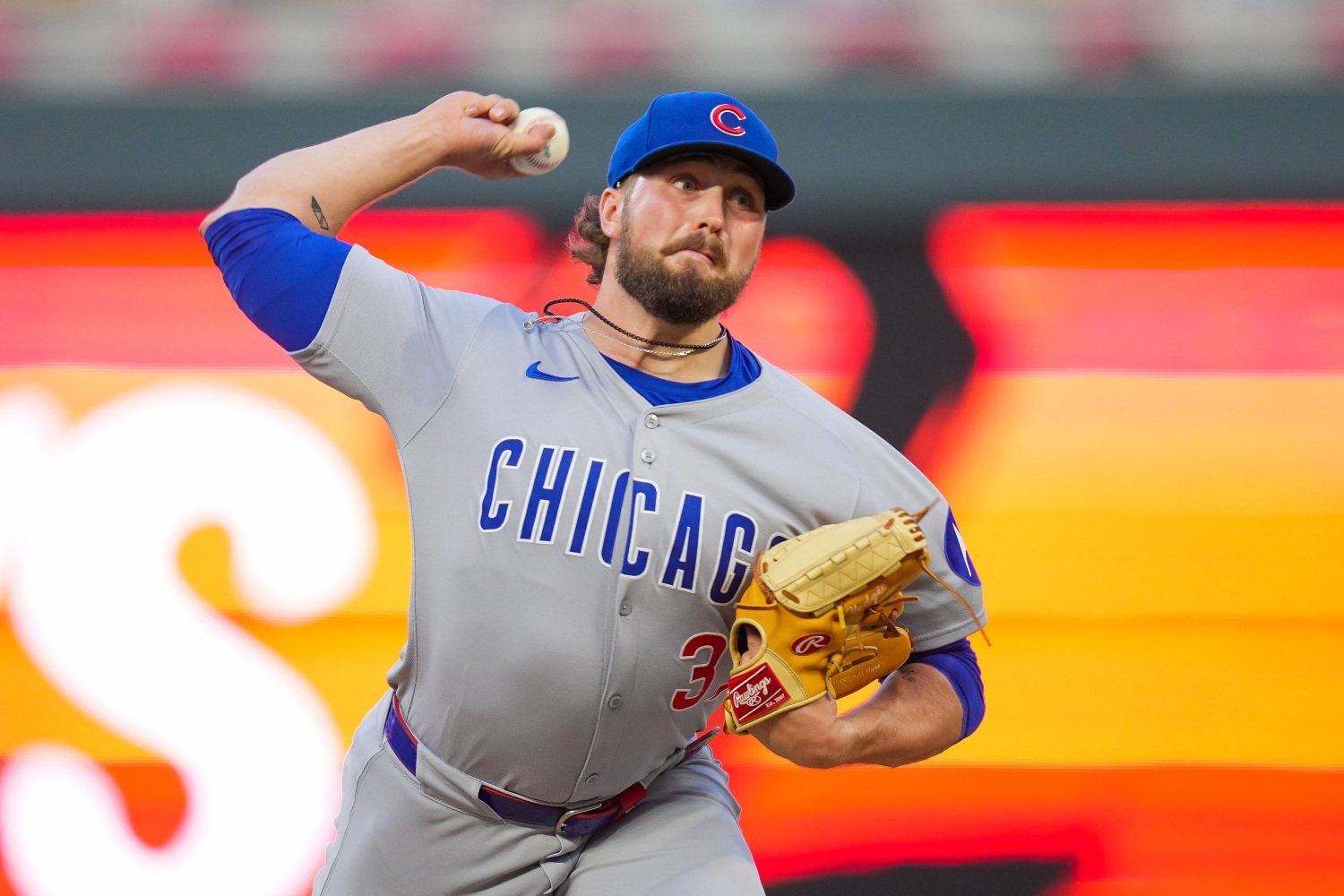 The injured list keeps getting longer for the Chicago Cubs. The focus over the past few weeks has been the starting rotation—mainly the news that righthander Cade Horton will be out for the remainder of the season. The impact of an injury to a pitcher like Horton, who was on his way to being one of the top young starters in the game, is massive for the Cubs, who lack a true ace. Now, the bullpen is being ripped apart, too, by a series of injuries over the last week or so. Free-agent additions Phil Maton and Hunter Harvey are both on the 15-day IL, and so is Ethan Roberts. On Wednesday, we found out that Porter Hodge will be joining Cade Horton on the injured list for the rest of the season, due to UCL surgery. Though the jury was out on how much Hodge could actually be counted on this season, losing him for the season in mid-April will present the Cubs with another depth-related challenge. After a breakout rookie season in 2024 wherein the 23-year-old posted a 1.88 ERA (2.75 FIP) with a WHIP under 0.90 in 43 innings pitched, he was set to be one of the team’s high-leverage relievers last year. In fact, before the 2025 season started, the armchair general managers in the Cubs subreddit were debating on whether the Ryan Pressly trade made sense, suggesting Hodge should be the answer in the ninth inning. Even though walks were probably always going to be a point of concern, the 6-foot-4 righty boasted a fastball that could touch the upper 90s, and a wipeout slider that made the 2019 13th-round pick a potential weapon for a bullpen lacking a shutdown option. Relief pitching was a strength for the Cubs in 2025, with the bullpen finishing 11th in baseball with an ERA of 3.78. However, Hodge was a surprising non-factor, as he dealt with various injuries, pitching 33 innings in the majors with a ghastly 6.27 ERA. He still missed bats, as evident by his near 11 K/9, but he was hit around otherwise, giving up nine home runs in that small sample. Injuries aside, his fastball and slider velocity were a tick up from 2024, giving Cubs fans hope that Hodge could still overpower hitters, and would eventually work his way back into the pen. He had not yet thrown a pitch in 2026 before we got the news of this latest injury, which will certainly cost him not only 2026, but some of the 2027 season, too. The good news is that he's still pre-arbitration, so he remains a long-term option, but the club hanging onto him is no guarantee. The Cubs have one of the hardest bullpens to project, based on their affinity for making plenty of low-risk signings, so there is a non-zero chance that we have seen Hodge for the last time as a Cub. Moving forward, the Cubs are going to have to find more serviceable right-handed relief options. With all the injuries that have unfolded already, the Cubs are carrying a whopping five lefties in their bullpen: Caleb Thielbar and Hoby Milner have been around since Opening Day, but now, Luke Little is back, along with Ryan Rolison and rookie Riley Martin. Ben Brown has been a nice revelation as a full-time reliever so far, closer Daniel Palencia has not allowed an earned run, and Colin Rea has carried over the effectiveness from last season. Now with Rea needing to join the rotation, another right-handed relief option is gone. Jacob Webb is active, but his ERA is north of 5.00, and the only other righty on the 40-man roster is Gavin Hollowell and his negative career WAR. He's hurt, too, though less severely; he just hit the 7-day IL for Iowa. The 9-9 Cubs can sit tight and hope this lefty-heavy group can hold their own until Maton, Harvey and Roberts are back, but the chase for the NL Central crown is looking a lot tougher with the way Cincinnati and Pittsburgh have opened their seasons. The Cubs will be shopping for relievers come July, but they might need new faces in this group before then. The problem is, they don't have a ton of promising options. As for prospects, Jaxon Wiggins might be up at some point this summer, but his services could be needed in the thinned-out rotation. Their next-best pitching prospect is 19-year-old Kaleb Wing, the club’s No. 12 prospect, according to mlb.com. There is one interesting option who sits on their top 30 prospect list: 26-year-old Grant Kipp, who has thrown 8 1/3 scoreless innings to open the season with Knoxville. He is not an overpowering arm, but what he’s done so far has worked. What’s wrong with riding the hot hand? Out west in Des Moines, there’s not a whole lot to be excited about from righties. There is a 30-year-old, 6-foot-8 reliever named Gabe Klobotsits, who has a 2.08 ERA. Former top prospect turned journeyman Vince Velazquez is trying to make the majors for the first time since 2023 and has the fourth-lowest WHIP on the team (1.05), trailing Paul Campbell, Zac Leigh, and, you guessed it, Gabe Klobosits. The cupboard is bare. Free agency is just as grim, but maybe they can pry Jorge Lopez away from the Saraperos de Saltillo of the Mexican league. Flamethrower Michael Kopech is still out there, but he’s coming off a season wherein he only pitched 11 innings due to injuries and still isn’t healthy. Guys are hitting the waiver wire all the time, and the Cubs shouldn’t be doomed once some of these arms start coming back, but the Hodge injury is a huge blow to their right-handed bullpen depth, something that could be foreseen as an issue this whole season. If there is one silver lining to playing the Mets, Phillies, and Dodgers over their next three series, it is that those lineups are built around their stud lefty hitters, giving the lefty-heavy bullpen a bit of an advantage. They will need to figure out what to do when they head to San Diego at the end of the month and face off against Fernando Tatis Jr., Manny Machado and Xander Bogaerts.
 -
Image courtesy of © Dan Hamilton-Imagn Images It isn’t even halfway through April, and the Chicago Cubs’ pitching depth is already noticeably depleted. We got the news last week that the Cubs would be without sophomore starter Cade Horton for the rest of the season, due to a UCL injury. That came after the team placed Opening Day starter Matthew Boyd on the 15-day IL with a biceps strain. Before the season, the Cubs had some of the better rotation depth in baseball. Horton and Boyd were set to lead the rotation, with Shota Imanaga, Jameson Taillon, and Edward Cabrera to follow. Swingman extraordinaire Colin Rea was in the bullpen, but could easily slot into the rotation. The underrated, dependable Javier Assad was stashed in Triple-A, along with top prospect Jaxon Wiggins. Oh, and their ace lefty, Justin Steele, would be showing up midseason. Now, what looked like a deep group has thinned out substantially, and there might be a need for outside reinforcement. It's not just Boyd and Horton. Top offseason relief additions Phil Maton and Hunter Harvey are already on the shelf. Jordan Wicks and Porter Hodge have been sidelined since February. Wiggins has a sore arm. Even some of the way-down-the-list guys in Iowa are out of commission. Well, there is one right-handed pitcher who posted 2.1 bWAR last season and remains unsigned: veteran starter Lucas Giolito. Last season with Boston, he pitched to a 3.41 ERA in 145 innings, but with a more worrisome 4.17 FIP and fanGraphs xERA of 5.01, signaling his good results were a bit better than his actual performance. His 19.7% strikeout rate was his lowest since 2018, before he turned the corner and became a mid-rotation workhorse for the White Sox. Last season marked his return to the mound after a second Tommy John surgery that cost him 2024. Due to that injury, and his age (31), there is more than enough reason to believe that Giolito can be better in 2026—but also enough uncertainty hanging over him to keep his market tepid. So why has he not been signed? There seems to be a pretty large disconnect between what Giolito thinks he's worth and what teams are comfortable paying him. He turned down a $19-million option with the Red Sox, certainly thinking he could secure a longer-term pact. Now that the season has begun, that gamble is looking more and more foolish by the week, especially considering the lack of success for pitchers who sign after Opening Day. No projections have him pitching to an ERA better than 4.50 for 2026, so he's not headed for a multi-year payday or anything. It seems unlikely, though, that he'll play for less than an eight-figure (prorated) salary. Robert Murray of FanSided said the Cubs are “most likely” to move forward with their internal options instead of pursuing Giolito, but if his price tag comes down, then the Cubs should seriously consider the addition. At this point in his career, he's not exactly a sexy addition to the front half of a rotation, but he could provide competitive innings. Imanaga looks great this year so far, but he had injury issues a season ago. Boyd and Cabrera have each spent an unfortunately large portion of their careers on the IL, and Steele is returning from a serious injury that cost him nearly all of last season. This need already feels pressing, and it's likely to get worse, not better. Though Giolito was mostly healthy last season, he was scratched in the postseason due to more elbow troubles, so there is still an injury risk here. But who else can the Cubs turn to? It's (probably) too early in the season for the trade market to take shape, and the remaining free agents not named Giolito include Nestor Cortes, Jon Gray, old friend Marcus Stroman, Alex Cobb and Frankie Montas. Giolito is younger and coming off a better season than all five of those other pitchers, so for the right price, he is really the only legitimate option who can slide into a rotation in the next month—if, indeed, even he can. As of today, the Cubs are 7-8, good for last place in the NL Central. The main focus has been an anemic offense. It's too early to start waiving the red flags with that group, which is just getting up to speed, but it's not too early to explore pitching depth in a depleted rotation. Last year, the Cubs' chief rivals found Quinn Priester in a seemingly desperate April trade to patch holes in their own rotation. The Cubs don't have the Brewers' organizational depth or acuity in moves like those, though, so they have to more seriously consider an expensive alternative. View full article
-
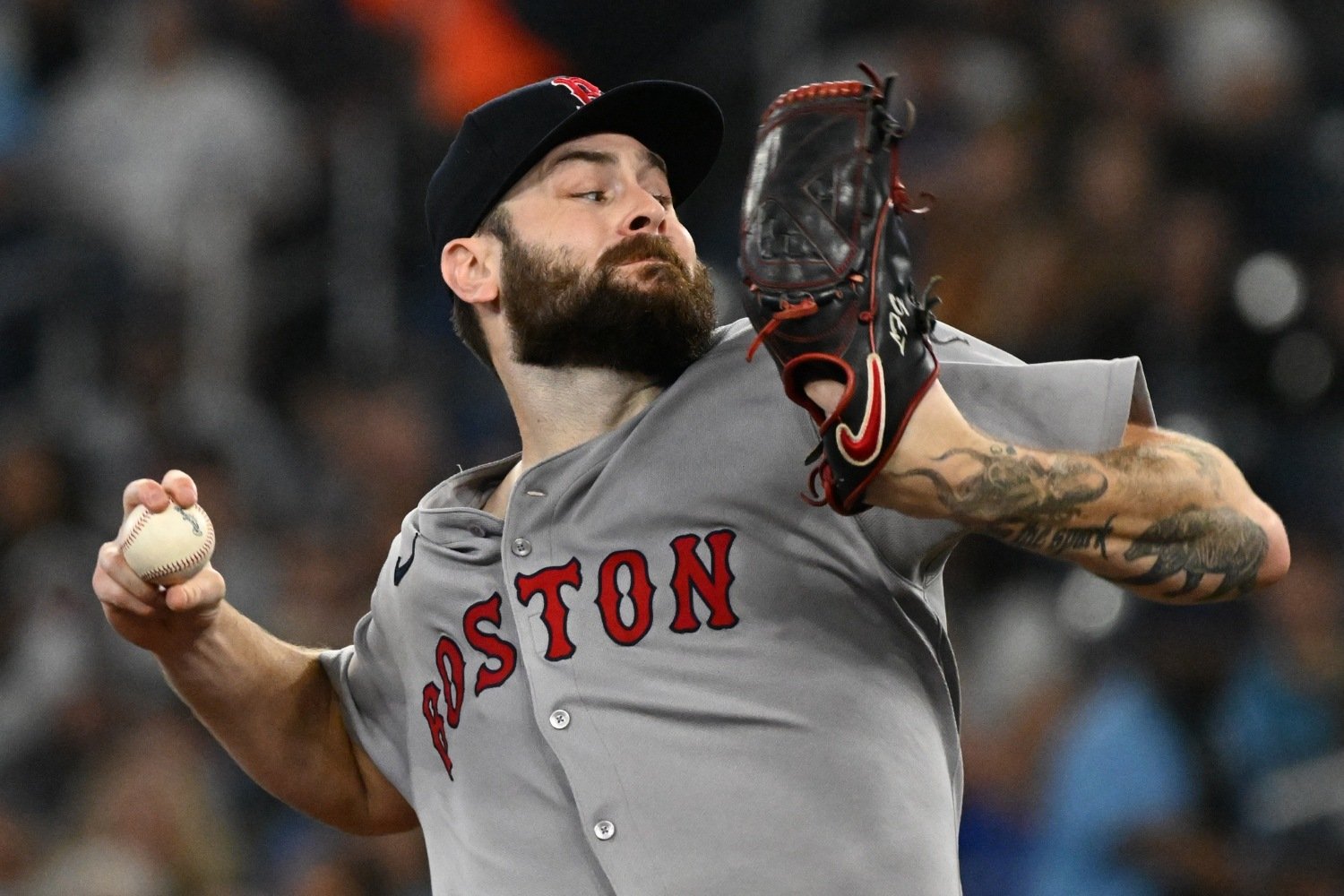 It isn’t even halfway through April, and the Chicago Cubs’ pitching depth is already noticeably depleted. We got the news last week that the Cubs would be without sophomore starter Cade Horton for the rest of the season, due to a UCL injury. That came after the team placed Opening Day starter Matthew Boyd on the 15-day IL with a biceps strain. Before the season, the Cubs had some of the better rotation depth in baseball. Horton and Boyd were set to lead the rotation, with Shota Imanaga, Jameson Taillon, and Edward Cabrera to follow. Swingman extraordinaire Colin Rea was in the bullpen, but could easily slot into the rotation. The underrated, dependable Javier Assad was stashed in Triple-A, along with top prospect Jaxon Wiggins. Oh, and their ace lefty, Justin Steele, would be showing up midseason. Now, what looked like a deep group has thinned out substantially, and there might be a need for outside reinforcement. It's not just Boyd and Horton. Top offseason relief additions Phil Maton and Hunter Harvey are already on the shelf. Jordan Wicks and Porter Hodge have been sidelined since February. Wiggins has a sore arm. Even some of the way-down-the-list guys in Iowa are out of commission. Well, there is one right-handed pitcher who posted 2.1 bWAR last season and remains unsigned: veteran starter Lucas Giolito. Last season with Boston, he pitched to a 3.41 ERA in 145 innings, but with a more worrisome 4.17 FIP and fanGraphs xERA of 5.01, signaling his good results were a bit better than his actual performance. His 19.7% strikeout rate was his lowest since 2018, before he turned the corner and became a mid-rotation workhorse for the White Sox. Last season marked his return to the mound after a second Tommy John surgery that cost him 2024. Due to that injury, and his age (31), there is more than enough reason to believe that Giolito can be better in 2026—but also enough uncertainty hanging over him to keep his market tepid. So why has he not been signed? There seems to be a pretty large disconnect between what Giolito thinks he's worth and what teams are comfortable paying him. He turned down a $19-million option with the Red Sox, certainly thinking he could secure a longer-term pact. Now that the season has begun, that gamble is looking more and more foolish by the week, especially considering the lack of success for pitchers who sign after Opening Day. No projections have him pitching to an ERA better than 4.50 for 2026, so he's not headed for a multi-year payday or anything. It seems unlikely, though, that he'll play for less than an eight-figure (prorated) salary. Robert Murray of FanSided said the Cubs are “most likely” to move forward with their internal options instead of pursuing Giolito, but if his price tag comes down, then the Cubs should seriously consider the addition. At this point in his career, he's not exactly a sexy addition to the front half of a rotation, but he could provide competitive innings. Imanaga looks great this year so far, but he had injury issues a season ago. Boyd and Cabrera have each spent an unfortunately large portion of their careers on the IL, and Steele is returning from a serious injury that cost him nearly all of last season. This need already feels pressing, and it's likely to get worse, not better. Though Giolito was mostly healthy last season, he was scratched in the postseason due to more elbow troubles, so there is still an injury risk here. But who else can the Cubs turn to? It's (probably) too early in the season for the trade market to take shape, and the remaining free agents not named Giolito include Nestor Cortes, Jon Gray, old friend Marcus Stroman, Alex Cobb and Frankie Montas. Giolito is younger and coming off a better season than all five of those other pitchers, so for the right price, he is really the only legitimate option who can slide into a rotation in the next month—if, indeed, even he can. As of today, the Cubs are 7-8, good for last place in the NL Central. The main focus has been an anemic offense. It's too early to start waiving the red flags with that group, which is just getting up to speed, but it's not too early to explore pitching depth in a depleted rotation. Last year, the Cubs' chief rivals found Quinn Priester in a seemingly desperate April trade to patch holes in their own rotation. The Cubs don't have the Brewers' organizational depth or acuity in moves like those, though, so they have to more seriously consider an expensive alternative.
 -
Image courtesy of © Dennis Wierzbicki-Imagn Images The Chicago Cubs wrapped up their second home series of the season earlier this week, taking two of three from the Los Angeles Angels. This early season bout between interleague non-rivals has two points of trivial significance. The first being that the Angels were the Cubs’ opening series of the 2016 season, although that one was in Anaheim. Ten years later, the Cubs are back in a competitive window and have taken advantage of perennially rebuilding Angels squad to jump start 2026. The second point, one that I will be diving into here, has to do with the Angels’ DH: old friend Jorge Soler. The Cuban outfielder and designated hitter defected from Cuba in 2011 and made his debut for the Cubs as a 22-year-old in 2014. He was one of the first prospects called up that would eventually lead them to the 2016 World Series. He was also part of a massive trade following the 2016 season; just over a month after the championship was won, Soler was traded to the Kansas City Royals for their two-time All Star closer Wade Davis, who was hand-picked to replace Aroldis Chapman. At the time, Davis was coming off a year where he transitioned into being a full-time closer, saving 27 games and posting an elite-level ERA of 1.87. Though Davis was a one-year rental, the Cubs needed a proven, high-leverage arm at the back end of the bullpen to properly defend their title. Davis ended up being worth every penny during his lone season in Chicago. He saved 32 games with a 2.30 ERA, struck out 79 hitters in under 60 innings pitched, and made his third consecutive All-Star team. Most notably, he carried the team on his back for 2 1/3 innings to close out game 5 of the NLDS versus the Nationals. After the season, he signed a three-year contract with the Rockies, where he pitched about as well as you’d imagine for a Colorado reliever not named Brian Fuentes. Although the Cubs did not repeat as World Series champs in 2017, that season represents the last time the Cubs had a closer with 30 saves. It has been eight campaigns and counting that the Cubs have been looking for an anchor in the ninth inning. To give them credit, they signed frequently injured flamethrower Brandon Morrow to replace Davis, and he did save 22 games while battling injuries in 2018. In 2019, Craig Kimbrel came aboard in what would eventually become the last major free agent splash orchestrated by Theo Epstein. Kimbrel’s 23 saves in 2021 before his deadline trade to the White Sox represents the highest of any Cubs’ closer since Davis in 2017. His 3.22 ERA with the Cubs from 2019-2021 was a far cry from his time in Atlanta and Boston, but he’s still the only player to lead the Cubs in saves for more than one year since the Hector Rondon days. His tenure remains somewhat forgettable since it happened during the span that we saw the championship core eventually disband, but he was at least a reliable ninth-inning fireman. After Kimbrel was traded and the Epstein era officially ended, we began to see the Jed Hoyer bargain-bin bullpen approach, which is still alive today. After the 2021 roster blow up, it did not make sense to pay for any difference-making relievers. Then. 37-year-old David Robertson joined the bullpen in 2022, saving 14 games, which lead the team, before being traded to the Phillies. That started the Cubs trend of bringing in a few different veterans with closing experience and hoping one of them can hold onto the job. Former Orioles closer Mychal Givens, as well as Chris Martin, were also in the bullpen that season. In 2023, former closer Brad Boxberger and former-top-prospect-turned-reliever Michael Fulmer were meant to compete for the closer job; instead, it ended up going to the first in-house candidate since Hector Rondon. Adbert Alzolay saved 22 games with a 2.67 ERA, and gave the fans a reason to be excited about the 2024 bullpen. The optimism lasted a few weeks, as Alzolay was booted from the closer role before the calendar even turned to May. Arm issues took him out for the rest of 2024 that he suffered in May, and he has not pitched in the majors since. The 2024 Cubs saves leader ended up being veteran Hector Neris with 17, but there was another homegrown reliever making his presence felt: right-hander Porter Hodge. Hodge converted nine saves with a 1.88 ERA in 43 innings and was giving fans the same sense of optimism heading into last season. Instead, the injury bug bit yet again and he regressed to an ERA over 6.00 in only 33 innings. Hodge was never penciled in as the closer, however, as the Cubs made a trade with the Astros to acquire two-time All-Star Ryan Pressly. The problem with Pressly was that he was 36 years old and undeniably washed by the time he made his way to Chicago. After being pulled from the closer role in early May, he was eventually released before the trade deadline. He totaled five saves in his last season before retiring. Now, the buck seemingly has stopped here with the 2025 Cubs saves leader and 2026 WBC champion Daniel Palencia. Team Venezuela’s closer was a mid-range prospect for the Cubs after being acquired in the 2021 Andrew Chafin trade and pitched sparingly in the majors from 2023-2024. As aforementioned, he was not meant to be the closer last season, but Craig Counsell trusted Palencia’s triple-digit fastball enough to replace the out-of-gas Pressly. For the 2025 postseason, he was used as the first reliever out of the pen, with Brad Keller closing out the games. With Keller on the Phillies, Palencia is the only reliever with any closing experience for 2026. Over the first six games of the season, he has no saves (hasn’t had an opportunity) but has not allowed a run in four innings pitched. In those appearances, he has shown more confidence and poise on the mound, which could be attributed to closing out the WBC for Venezuela’s upset win. That injury bug remains a pesky problem, but there's no denying that Palencia has the bravado to finally cross that 30-save threshold... assuming the Cubs can give him enough opportunities to get there. View full article
-
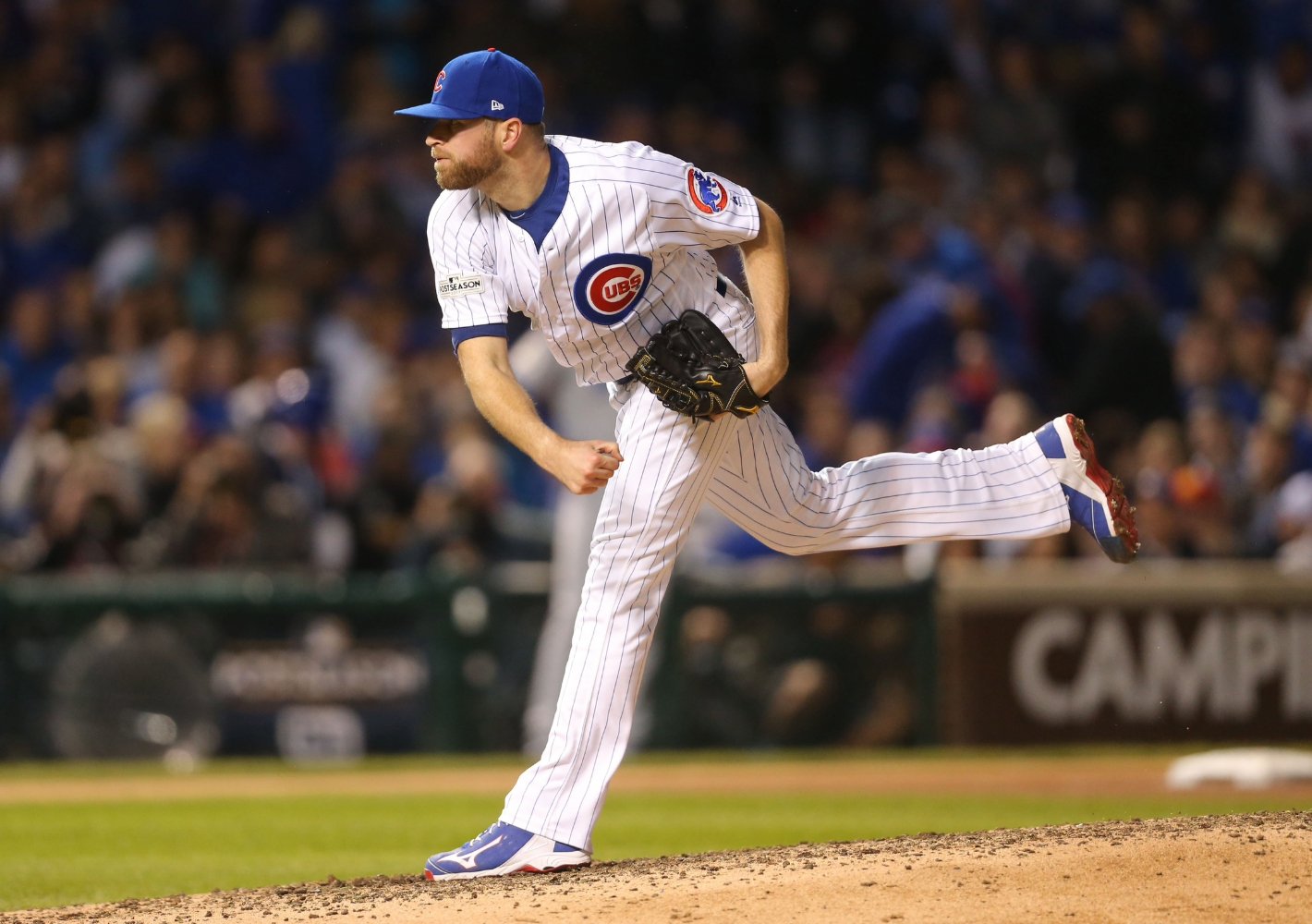 The Chicago Cubs wrapped up their second home series of the season earlier this week, taking two of three from the Los Angeles Angels. This early season bout between interleague non-rivals has two points of trivial significance. The first being that the Angels were the Cubs’ opening series of the 2016 season, although that one was in Anaheim. Ten years later, the Cubs are back in a competitive window and have taken advantage of perennially rebuilding Angels squad to jump start 2026. The second point, one that I will be diving into here, has to do with the Angels’ DH: old friend Jorge Soler. The Cuban outfielder and designated hitter defected from Cuba in 2011 and made his debut for the Cubs as a 22-year-old in 2014. He was one of the first prospects called up that would eventually lead them to the 2016 World Series. He was also part of a massive trade following the 2016 season; just over a month after the championship was won, Soler was traded to the Kansas City Royals for their two-time All Star closer Wade Davis, who was hand-picked to replace Aroldis Chapman. At the time, Davis was coming off a year where he transitioned into being a full-time closer, saving 27 games and posting an elite-level ERA of 1.87. Though Davis was a one-year rental, the Cubs needed a proven, high-leverage arm at the back end of the bullpen to properly defend their title. Davis ended up being worth every penny during his lone season in Chicago. He saved 32 games with a 2.30 ERA, struck out 79 hitters in under 60 innings pitched, and made his third consecutive All-Star team. Most notably, he carried the team on his back for 2 1/3 innings to close out game 5 of the NLDS versus the Nationals. After the season, he signed a three-year contract with the Rockies, where he pitched about as well as you’d imagine for a Colorado reliever not named Brian Fuentes. Although the Cubs did not repeat as World Series champs in 2017, that season represents the last time the Cubs had a closer with 30 saves. It has been eight campaigns and counting that the Cubs have been looking for an anchor in the ninth inning. To give them credit, they signed frequently injured flamethrower Brandon Morrow to replace Davis, and he did save 22 games while battling injuries in 2018. In 2019, Craig Kimbrel came aboard in what would eventually become the last major free agent splash orchestrated by Theo Epstein. Kimbrel’s 23 saves in 2021 before his deadline trade to the White Sox represents the highest of any Cubs’ closer since Davis in 2017. His 3.22 ERA with the Cubs from 2019-2021 was a far cry from his time in Atlanta and Boston, but he’s still the only player to lead the Cubs in saves for more than one year since the Hector Rondon days. His tenure remains somewhat forgettable since it happened during the span that we saw the championship core eventually disband, but he was at least a reliable ninth-inning fireman. After Kimbrel was traded and the Epstein era officially ended, we began to see the Jed Hoyer bargain-bin bullpen approach, which is still alive today. After the 2021 roster blow up, it did not make sense to pay for any difference-making relievers. Then. 37-year-old David Robertson joined the bullpen in 2022, saving 14 games, which lead the team, before being traded to the Phillies. That started the Cubs trend of bringing in a few different veterans with closing experience and hoping one of them can hold onto the job. Former Orioles closer Mychal Givens, as well as Chris Martin, were also in the bullpen that season. In 2023, former closer Brad Boxberger and former-top-prospect-turned-reliever Michael Fulmer were meant to compete for the closer job; instead, it ended up going to the first in-house candidate since Hector Rondon. Adbert Alzolay saved 22 games with a 2.67 ERA, and gave the fans a reason to be excited about the 2024 bullpen. The optimism lasted a few weeks, as Alzolay was booted from the closer role before the calendar even turned to May. Arm issues took him out for the rest of 2024 that he suffered in May, and he has not pitched in the majors since. The 2024 Cubs saves leader ended up being veteran Hector Neris with 17, but there was another homegrown reliever making his presence felt: right-hander Porter Hodge. Hodge converted nine saves with a 1.88 ERA in 43 innings and was giving fans the same sense of optimism heading into last season. Instead, the injury bug bit yet again and he regressed to an ERA over 6.00 in only 33 innings. Hodge was never penciled in as the closer, however, as the Cubs made a trade with the Astros to acquire two-time All-Star Ryan Pressly. The problem with Pressly was that he was 36 years old and undeniably washed by the time he made his way to Chicago. After being pulled from the closer role in early May, he was eventually released before the trade deadline. He totaled five saves in his last season before retiring. Now, the buck seemingly has stopped here with the 2025 Cubs saves leader and 2026 WBC champion Daniel Palencia. Team Venezuela’s closer was a mid-range prospect for the Cubs after being acquired in the 2021 Andrew Chafin trade and pitched sparingly in the majors from 2023-2024. As aforementioned, he was not meant to be the closer last season, but Craig Counsell trusted Palencia’s triple-digit fastball enough to replace the out-of-gas Pressly. For the 2025 postseason, he was used as the first reliever out of the pen, with Brad Keller closing out the games. With Keller on the Phillies, Palencia is the only reliever with any closing experience for 2026. Over the first six games of the season, he has no saves (hasn’t had an opportunity) but has not allowed a run in four innings pitched. In those appearances, he has shown more confidence and poise on the mound, which could be attributed to closing out the WBC for Venezuela’s upset win. That injury bug remains a pesky problem, but there's no denying that Palencia has the bravado to finally cross that 30-save threshold... assuming the Cubs can give him enough opportunities to get there.
 -
Image courtesy of © Mark J. Rebilas-Imagn Images The Chicago Cubs officially have one of the better first basemen in baseball, the first time they can say that since the departure of Anthony Rizzo back in 2021. Things seemed bleak at first base for some time; we saw Frank Schwindel and Patrick Wisdom for too long. Past-their-prime veterans Eric Hosmer and Trey Mancini were supposed to be the bridge to slugging prospect Matt Mervis, but he is long gone as well. Most were a bit stumped prior to the 2024 season when the Cubs traded teenage pitching prospect Jackson Ferris and top outfield prospect Zyhir Hope for an aging prospect without a clear defensive position. Then, when they almost immediately announced he would be transitioning to first, it made their outlook even more confusing. Michael Busch was regarded as one of best hitters of the 2019 draft when the Dodgers selected him out of UNC with the 31st overall pick. He made his debut in 2023 and hit .167 in 81 plate appearances while playing a subpar second and third base. Going into 2024, the Dodgers had Busch, Kike Hernandez, Miguel Vargas, Chris Taylor, Gavin Lux and Miguel Rojas competing for work in the infield behind Mookie Betts, Freddie Freeman and Max Muncy. Although Busch was expendable at that point, he was still the 51st ranked prospect in baseball, and would become the Cubs’ number four organizational prospect behind Cade Horton, Pete Crow-Armstrong, and Owen Caissie. Fast-forward two seasons and now Busch is picking up down-ballot MVP votes and leading the Cubs in home runs. First starting off as a platoon player, Busch began starting everyday early in 2025 and is one of the set-it-and-forget-it players in the lineup. Chicago Cubs First Basemen At A Glance Starter: Michael Busch Backup: Tyler Austin (On IL), Jonathon Long Depth: Moises Ballesteros, Owen Miller (minors), Christian Bethancourt (minors) Prospects: B.J. Murray The Good: Well, Michael Busch is pretty darn good. The 28-year-old lefty broke out massively in 2025, slashing .261/.343/.523 with 34 home runs, 90 RBIs, and serving as the leadoff hitter for the Cubs’ first postseason run since 2020. You’d have to go back all the way to 2019 when Kyle Schwarber hit 38 homers to find a higher total than Busch’s. His 4.6 WAR was tied for third on the team, trailing only Crow-Armstrong and Nico Hoerner. As for first basemen league-wide, he was tied with Bryce Harper and only trailed Matt Olson, Freddie Freeman, Vladimir Guerrero Jr., and Pete Alonso. Under the hood, the statcast numbers show a player who is blossoming into one of the top offensive forces in the game. His average exit velocity of 92.2 was tied for 18th in baseball, his barrel percentage of 17.1 was 11th, and he finished 10th in xwOBA at .378. In a game where luck is certainly a factor, Busch is showing consistent, quality contact that cannot be considered a fluke. In fact, Busch’s wOBA of .369 shows he was a little unlucky last season. Defensively, Busch posted a .996 fielding percentage and 2 DRS that placed top six amongst MLB first basemen. He is not going to win four gold gloves like Rizzo, but he will make the routine plays while bailing out a few bad throws from the Cubs' excellent infield. For 2026, Busch is an integral part of a lineup that is half proven veterans and young studs who need to establish themselves as bona fide contributors. He is the team’s most important left-handed bat who will be relied upon to play 150+ games again (he played in 155 last season). The Bad: Did you notice how the entire previous section only mentioned Michael Busch? That is because he is the the majority of what is good about the Cubs’ first base situation. Across the infield, Matt Shaw is lined up to backup at any of the three other spots, with top prospect Pedro Ramirez looking close to MLB ready. In the outfield, Kevin Alcantara is deserving of an extended look, if one of the starters goes down. But first base? It really seems like Busch or bust, since offseason signee Tyler Austin will be missing the first month or more of the season. Even if Austin was healthy to start the year, he's still a 34-year-old with 0.9 career WAR, who hasn’t played in the majors since 2019. He’s had a cumulative .945 OPS in the NPB over the last six seasons, but banking on any sort of production in his return stateside is wishful thinking. After Austin, the cupboard runs bare very quickly. Craig Counsell’s old friend Owen Miller is down in the minors and has first base experience. He went 8-30 this spring and brings an extra element of speed to the table. One-game wonder Christian Bethancourt is back with the organization and has enough experience at the cold corner to be considered another unexciting option. Moises Ballesteros played four innings of first base last season, but is currently penciled in as the starting DH. From a fan’s perspective, the most exciting option if Busch were to miss time would be prospect Jonathan Long. The Long Beach State alum is coming off an excellent AAA season where he hit .305 with an .883 OPS and 20 homers, but needs to hit the ball in the air more to reach his power potential. Long sits outside of the top 100 MLB prospects and has a long-term outlook of being a potential role player, rather than a difference maker in the middle of the lineup. The point here is that Busch needs to stay healthy or else there becomes a massive hole in the lineup. The Bottom Line: There are depth questions here after Busch, but the Cubs have an ascending star at first base. Even if his home run total isn’t as high as last season, the Cubs are counting on their leadoff hitter to propel them back to the postseason. In terms of his contract, he is still pre-arbitration and has four years of team control remaining. There are few other first basemen in baseball producing like Busch and not taking up a huge portion of their team’s payroll. He won’t be this cheap forever, so fans need to enjoy this while it lasts. First base is a position of strength for the Cubs again. View full article
-
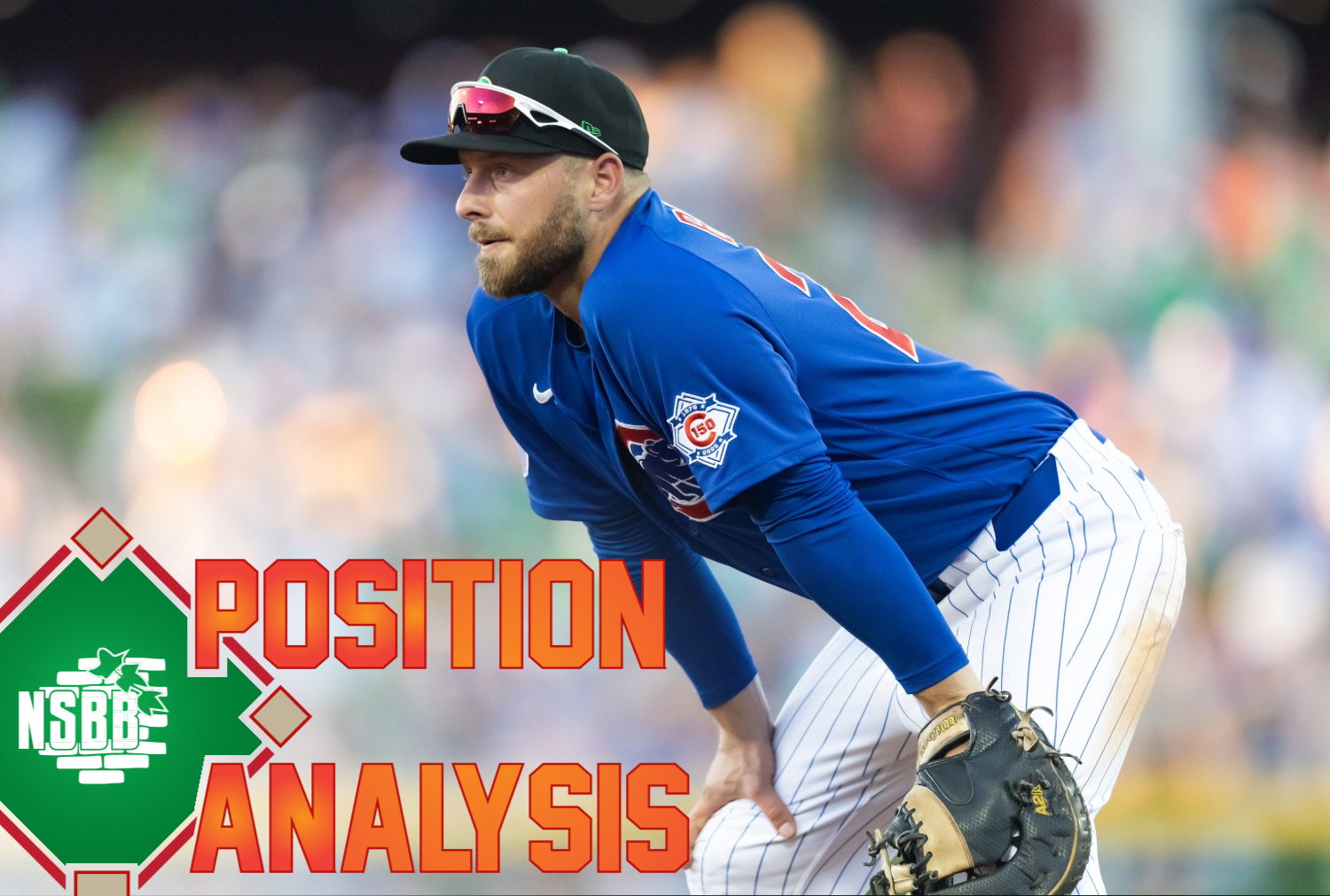 The Chicago Cubs officially have one of the better first basemen in baseball, the first time they can say that since the departure of Anthony Rizzo back in 2021. Things seemed bleak at first base for some time; we saw Frank Schwindel and Patrick Wisdom for too long. Past-their-prime veterans Eric Hosmer and Trey Mancini were supposed to be the bridge to slugging prospect Matt Mervis, but he is long gone as well. Most were a bit stumped prior to the 2024 season when the Cubs traded teenage pitching prospect Jackson Ferris and top outfield prospect Zyhir Hope for an aging prospect without a clear defensive position. Then, when they almost immediately announced he would be transitioning to first, it made their outlook even more confusing. Michael Busch was regarded as one of best hitters of the 2019 draft when the Dodgers selected him out of UNC with the 31st overall pick. He made his debut in 2023 and hit .167 in 81 plate appearances while playing a subpar second and third base. Going into 2024, the Dodgers had Busch, Kike Hernandez, Miguel Vargas, Chris Taylor, Gavin Lux and Miguel Rojas competing for work in the infield behind Mookie Betts, Freddie Freeman and Max Muncy. Although Busch was expendable at that point, he was still the 51st ranked prospect in baseball, and would become the Cubs’ number four organizational prospect behind Cade Horton, Pete Crow-Armstrong, and Owen Caissie. Fast-forward two seasons and now Busch is picking up down-ballot MVP votes and leading the Cubs in home runs. First starting off as a platoon player, Busch began starting everyday early in 2025 and is one of the set-it-and-forget-it players in the lineup. Chicago Cubs First Basemen At A Glance Starter: Michael Busch Backup: Tyler Austin (On IL), Jonathon Long Depth: Moises Ballesteros, Owen Miller (minors), Christian Bethancourt (minors) Prospects: B.J. Murray The Good: Well, Michael Busch is pretty darn good. The 28-year-old lefty broke out massively in 2025, slashing .261/.343/.523 with 34 home runs, 90 RBIs, and serving as the leadoff hitter for the Cubs’ first postseason run since 2020. You’d have to go back all the way to 2019 when Kyle Schwarber hit 38 homers to find a higher total than Busch’s. His 4.6 WAR was tied for third on the team, trailing only Crow-Armstrong and Nico Hoerner. As for first basemen league-wide, he was tied with Bryce Harper and only trailed Matt Olson, Freddie Freeman, Vladimir Guerrero Jr., and Pete Alonso. Under the hood, the statcast numbers show a player who is blossoming into one of the top offensive forces in the game. His average exit velocity of 92.2 was tied for 18th in baseball, his barrel percentage of 17.1 was 11th, and he finished 10th in xwOBA at .378. In a game where luck is certainly a factor, Busch is showing consistent, quality contact that cannot be considered a fluke. In fact, Busch’s wOBA of .369 shows he was a little unlucky last season. Defensively, Busch posted a .996 fielding percentage and 2 DRS that placed top six amongst MLB first basemen. He is not going to win four gold gloves like Rizzo, but he will make the routine plays while bailing out a few bad throws from the Cubs' excellent infield. For 2026, Busch is an integral part of a lineup that is half proven veterans and young studs who need to establish themselves as bona fide contributors. He is the team’s most important left-handed bat who will be relied upon to play 150+ games again (he played in 155 last season). The Bad: Did you notice how the entire previous section only mentioned Michael Busch? That is because he is the the majority of what is good about the Cubs’ first base situation. Across the infield, Matt Shaw is lined up to backup at any of the three other spots, with top prospect Pedro Ramirez looking close to MLB ready. In the outfield, Kevin Alcantara is deserving of an extended look, if one of the starters goes down. But first base? It really seems like Busch or bust, since offseason signee Tyler Austin will be missing the first month or more of the season. Even if Austin was healthy to start the year, he's still a 34-year-old with 0.9 career WAR, who hasn’t played in the majors since 2019. He’s had a cumulative .945 OPS in the NPB over the last six seasons, but banking on any sort of production in his return stateside is wishful thinking. After Austin, the cupboard runs bare very quickly. Craig Counsell’s old friend Owen Miller is down in the minors and has first base experience. He went 8-30 this spring and brings an extra element of speed to the table. One-game wonder Christian Bethancourt is back with the organization and has enough experience at the cold corner to be considered another unexciting option. Moises Ballesteros played four innings of first base last season, but is currently penciled in as the starting DH. From a fan’s perspective, the most exciting option if Busch were to miss time would be prospect Jonathan Long. The Long Beach State alum is coming off an excellent AAA season where he hit .305 with an .883 OPS and 20 homers, but needs to hit the ball in the air more to reach his power potential. Long sits outside of the top 100 MLB prospects and has a long-term outlook of being a potential role player, rather than a difference maker in the middle of the lineup. The point here is that Busch needs to stay healthy or else there becomes a massive hole in the lineup. The Bottom Line: There are depth questions here after Busch, but the Cubs have an ascending star at first base. Even if his home run total isn’t as high as last season, the Cubs are counting on their leadoff hitter to propel them back to the postseason. In terms of his contract, he is still pre-arbitration and has four years of team control remaining. There are few other first basemen in baseball producing like Busch and not taking up a huge portion of their team’s payroll. He won’t be this cheap forever, so fans need to enjoy this while it lasts. First base is a position of strength for the Cubs again.
 -
Image courtesy of © Mark J. Rebilas-Imagn Images With Opening Day a couple weeks away, the Chicago Cubs have some key roster decisions looming. The starting lineup is generally set, and will look a lot like it did last season, but with Alex Bregman replacing Kyle Tucker in either the two or three hole. Here, we are going to look at the Cubs’ outlook at designated hitter for the 2026 season. Last season, Seiya Suzuki started 102 games at DH, with Kyle Tucker taking over in the playoffs after a hairline fracture in his hand was revealed in August. Justin Turner made some starts as a DH, as well as rookie catcher Moises Ballesteros. Since the DH was introduced in the NL in 2020, then again permanently in 2022, the Cubs have used the spot as a way to get players off their feet or mitigate injury risk. Suzuki’s 2025 marks the only time a single player has started over 100 games at the position. With the departure of Tucker, Suzuki is currently pencilled in as the starting right fielder, and the DH will likely revert to a position of flexibility for Craig Counsell. As of now, FanGraphs.com projects a platoon situation for the Cubs, with Ballesteros getting the lion’s share of starts against righties, while Suzuki getting the starts against southpaws (with newly trained outfielder Matt Shaw taking care of right field). Alex Bregman, who turns 32 at the end of this month, will also get work there to allow the defensive-minded Shaw to return to the infield. The rest of the field could include the other catchers, Miguel Amaya and Carson Kelly, since Ballesteros will also get time behind the plate. Tyler Austin will be back into the mix at some point mid-season following knee surgery, and Michael Conforto was added to the room weeks ago, although on a minor-league deal. Cubs Designated Hitters At A Glance Starters: Moises Ballesteros/Seiya Suzuki Backup: Alex Bregman Depth: Miguel Amaya, Carson Kelly, Michael Conforto, Tyler Austin Prospects: Jonathan Long, B.J. Murray The Good: Ballesteros is the Cubs’ number one organizational prospect, and baseball’s 55th ranked prospect according to Mlb.com. The 5-foot-8 22-year-old impressed in 20 games last season, hitting .298 with an .868 OPS, and will get the first crack out of camp. The Cubs seemed like a destination for another bat outside of Bregman, but the front office clearly does not want to block Ballesteros for another year. He has a .289 cumulative batting average across five minor-league seasons and has nothing left to prove. He'll likely bat in the bottom third, which is a lower pressure spot that should allow him to get more comfortable in the big leagues without feeling like he needs to be a top contributor in the lineup right away. FGDC projections are a bit light in terms of games played, at 84, with a slash line of .264/.327/.400; not a bad season by any means, but he seems capable of more. Ballesteros has only four major-league at bats against lefties, which would be too coincidental to not be by design. This brings us to the right-handed tandem of this platoon, Seiya Suzuki. He is going to play nearly everyday (when healthy), splitting between right field and DH. Fresh off a 32-homer campaign, Suzuki is as good of a bet as anyone to repeat those numbers, as he is coming into a contract year at 31 years old. His exit velocity has remained consistent to the rest of his career, but a launch angle improvement in 2025 caused by his barrel rate jump to 16.6%, which ranked 12th in the majors, portends some good days ahead. With Suzuki as a DH in the middle of the lineup against lefties, Shaw, who smashed lefties to the tune of an .808 OPS last year, should be a productive hitter in the bottom of the lineup. Areas of Concern: Ballesteros’ 50-grade power could eventually evolve into 20-plus homers, but he’s going to need to start hitting the ball in the air more. His high batting average and OPS in his major-league sample last season masked a ground ball rate of 62.2%. Even before the call-up, his ground ball rate was hovering close to 50% in 114 Triple-A games. His improved exit velocity and hard-hit rate are not going to translate to as much success if he cannot lift the ball more consistently. He is not exactly a burner out of the batter's box either, so this could also mean double plays galore for opposing defenses. If Ballesteros can improve on his 0.8 degree launch angle that he showed in the majors, and starts hitting more balls in the air and over the wall, it would go a long way in assuring the Cubs can finish near the top of baseball in home runs again. Last season, Suzuki, Michael Busch, and PCA topped 30 home runs for the first time in their careers. How safe is it to expect those numbers again? Especially in the case of PCA, whose power surge was as unexpected as any in baseball. Alex Bregman is more of an all-around hitter than a pure power hitter. For the team that finished sixth in baseball in home runs last season, there’s a lot of variables going into 2026. If Ballesteros continues to struggle with lifting the ball, and home run regression happens from any of the three 30-homer hitters a season ago, there could be instant regret in not bringing in a more established home run hitter at the DH spot. As for a Ballesteros backup plan: Michael Conforto and Dylan Carlson have been tearing up spring training, and first base prospect Jonathan Long should be ready for the majors after he returns from injury. Now here’s the bad news: Although he launched 20 homers with the Giants in 2024, the 33-year-old Conforto has not been a difference making bat since he hit .322 with a 2.1 WAR in the 60-game 2020 season. Carlson has never lived up to his top prospect pedigree to this point in his career and spent the last two seasons bouncing around, playing sparingly. Though Long offers intrigue as an offensive prospect, he is viewed as a higher floor player without difference-maker upside. Tyler Austin will also be in the mix upon returning from injury, but he hasn’t played in majors since 2019, and has a total of 0.9 career WAR over four seasons. He owns a slash line of .293/.377/.568 across six NPB seasons, but still counts as a lottery ticket more than a bankable contributor. The Bottom Line The in-house approach to the DH spot is all going to hinge on Ballesteros making the necessary adjustments to hold that position down. They have a top prospect in a platoon with a slugging outfielder, with Bregman filling in when he needs a day off from the field, which is a good blueprint in theory, but could test the depth of this roster should things go wrong. The plan B would be Suzuki moving back to the full-time DH, with Shaw (or Alcantara or Carlson) taking over in right field. Bregman could also make a large portion of his starts there, but taking a 2024 Gold Glove winner, who just signed a $175 million contract, off the field seems unlikely. We will see within the first couple months of the season whether Ballesteros holds his own or if the Cubs will need to add a power bat to their trade deadline shopping list. View full article
-
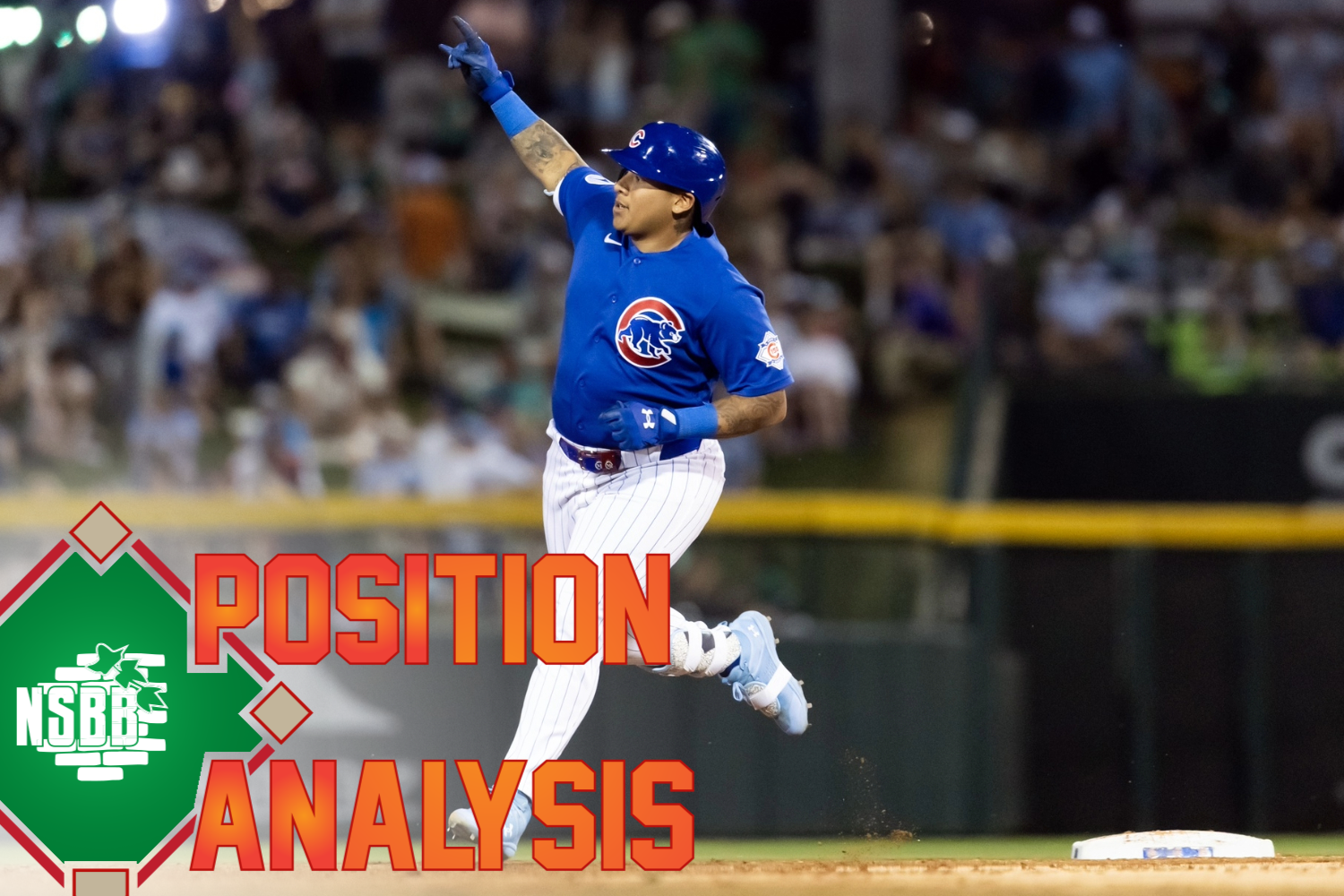 With Opening Day a couple weeks away, the Chicago Cubs have some key roster decisions looming. The starting lineup is generally set, and will look a lot like it did last season, but with Alex Bregman replacing Kyle Tucker in either the two or three hole. Here, we are going to look at the Cubs’ outlook at designated hitter for the 2026 season. Last season, Seiya Suzuki started 102 games at DH, with Kyle Tucker taking over in the playoffs after a hairline fracture in his hand was revealed in August. Justin Turner made some starts as a DH, as well as rookie catcher Moises Ballesteros. Since the DH was introduced in the NL in 2020, then again permanently in 2022, the Cubs have used the spot as a way to get players off their feet or mitigate injury risk. Suzuki’s 2025 marks the only time a single player has started over 100 games at the position. With the departure of Tucker, Suzuki is currently pencilled in as the starting right fielder, and the DH will likely revert to a position of flexibility for Craig Counsell. As of now, FanGraphs.com projects a platoon situation for the Cubs, with Ballesteros getting the lion’s share of starts against righties, while Suzuki getting the starts against southpaws (with newly trained outfielder Matt Shaw taking care of right field). Alex Bregman, who turns 32 at the end of this month, will also get work there to allow the defensive-minded Shaw to return to the infield. The rest of the field could include the other catchers, Miguel Amaya and Carson Kelly, since Ballesteros will also get time behind the plate. Tyler Austin will be back into the mix at some point mid-season following knee surgery, and Michael Conforto was added to the room weeks ago, although on a minor-league deal. Cubs Designated Hitters At A Glance Starters: Moises Ballesteros/Seiya Suzuki Backup: Alex Bregman Depth: Miguel Amaya, Carson Kelly, Michael Conforto, Tyler Austin Prospects: Jonathan Long, B.J. Murray The Good: Ballesteros is the Cubs’ number one organizational prospect, and baseball’s 55th ranked prospect according to Mlb.com. The 5-foot-8 22-year-old impressed in 20 games last season, hitting .298 with an .868 OPS, and will get the first crack out of camp. The Cubs seemed like a destination for another bat outside of Bregman, but the front office clearly does not want to block Ballesteros for another year. He has a .289 cumulative batting average across five minor-league seasons and has nothing left to prove. He'll likely bat in the bottom third, which is a lower pressure spot that should allow him to get more comfortable in the big leagues without feeling like he needs to be a top contributor in the lineup right away. FGDC projections are a bit light in terms of games played, at 84, with a slash line of .264/.327/.400; not a bad season by any means, but he seems capable of more. Ballesteros has only four major-league at bats against lefties, which would be too coincidental to not be by design. This brings us to the right-handed tandem of this platoon, Seiya Suzuki. He is going to play nearly everyday (when healthy), splitting between right field and DH. Fresh off a 32-homer campaign, Suzuki is as good of a bet as anyone to repeat those numbers, as he is coming into a contract year at 31 years old. His exit velocity has remained consistent to the rest of his career, but a launch angle improvement in 2025 caused by his barrel rate jump to 16.6%, which ranked 12th in the majors, portends some good days ahead. With Suzuki as a DH in the middle of the lineup against lefties, Shaw, who smashed lefties to the tune of an .808 OPS last year, should be a productive hitter in the bottom of the lineup. Areas of Concern: Ballesteros’ 50-grade power could eventually evolve into 20-plus homers, but he’s going to need to start hitting the ball in the air more. His high batting average and OPS in his major-league sample last season masked a ground ball rate of 62.2%. Even before the call-up, his ground ball rate was hovering close to 50% in 114 Triple-A games. His improved exit velocity and hard-hit rate are not going to translate to as much success if he cannot lift the ball more consistently. He is not exactly a burner out of the batter's box either, so this could also mean double plays galore for opposing defenses. If Ballesteros can improve on his 0.8 degree launch angle that he showed in the majors, and starts hitting more balls in the air and over the wall, it would go a long way in assuring the Cubs can finish near the top of baseball in home runs again. Last season, Suzuki, Michael Busch, and PCA topped 30 home runs for the first time in their careers. How safe is it to expect those numbers again? Especially in the case of PCA, whose power surge was as unexpected as any in baseball. Alex Bregman is more of an all-around hitter than a pure power hitter. For the team that finished sixth in baseball in home runs last season, there’s a lot of variables going into 2026. If Ballesteros continues to struggle with lifting the ball, and home run regression happens from any of the three 30-homer hitters a season ago, there could be instant regret in not bringing in a more established home run hitter at the DH spot. As for a Ballesteros backup plan: Michael Conforto and Dylan Carlson have been tearing up spring training, and first base prospect Jonathan Long should be ready for the majors after he returns from injury. Now here’s the bad news: Although he launched 20 homers with the Giants in 2024, the 33-year-old Conforto has not been a difference making bat since he hit .322 with a 2.1 WAR in the 60-game 2020 season. Carlson has never lived up to his top prospect pedigree to this point in his career and spent the last two seasons bouncing around, playing sparingly. Though Long offers intrigue as an offensive prospect, he is viewed as a higher floor player without difference-maker upside. Tyler Austin will also be in the mix upon returning from injury, but he hasn’t played in majors since 2019, and has a total of 0.9 career WAR over four seasons. He owns a slash line of .293/.377/.568 across six NPB seasons, but still counts as a lottery ticket more than a bankable contributor. The Bottom Line The in-house approach to the DH spot is all going to hinge on Ballesteros making the necessary adjustments to hold that position down. They have a top prospect in a platoon with a slugging outfielder, with Bregman filling in when he needs a day off from the field, which is a good blueprint in theory, but could test the depth of this roster should things go wrong. The plan B would be Suzuki moving back to the full-time DH, with Shaw (or Alcantara or Carlson) taking over in right field. Bregman could also make a large portion of his starts there, but taking a 2024 Gold Glove winner, who just signed a $175 million contract, off the field seems unlikely. We will see within the first couple months of the season whether Ballesteros holds his own or if the Cubs will need to add a power bat to their trade deadline shopping list.
 -
 Every hidden nook, cranny, and secluded vista at the Chicago Cubs ballpark. By the fans, for the fans. (Updated for 2026!) Welcome! This is the definitive guide to Wrigley Field, by the fans and for the fans. These recommendations were assembled by North Side Baseball writers and community members who frequent the ballpark and have uncovered the best views, values, and secrets to share with you. Whether you're a casual fan visiting the Friendly Confines for the first time and looking for tips, or even if you're a diehard local who wants to make sure they're getting the most out of their experience at the Federal Landmark, we've got you covered. This comprehensive guide will walk you through every step of the Wrigley Field experience, but should you have additional recommendations or suggestions, please use the comment fields found below this article. Enjoy and have a great time at the ballpark! Table of Contents (click to jump to section) Wrigley Field Facts and Specs Best Places to Park & Public Transit Around Wrigley Field Best Seats at Wrigley Field Best Food at Wrigley Field Best Bars & Drinks Around Wrigley Field Fan Favorites at Wrigley Field Wrigley Field Fan FAQs Wrigley Field At A Glance Address: 1060 W Addison St, Chicago, IL 60613 Opened: April 23rd, 1914 Originally opened as Weeghman Park for the Chicago Federals of the Federal League Was renamed “Cubs Park” in 1920, once the Wrigley family bought the team from Charles Weeghman Finally, in 1926, the stadium earned its century-long moniker of “Wrigley Field”, named after William Wrigley Jr., the owner of the Cubs at the time It is the second-oldest ballpark in baseball, behind only Fenway Park of the Boston Red Sox (opened in 1912) Capacity: 41,649 Dimensions (distances from home plate as of 2025) LF: 355 feet LCF: 368 feet CF: 400 feet RCF: 368 feet RF: 353 feet Wall Height: 11.5ft (bleachers); 15ft (corners/foul poles) Parking & Public Transit Around Wrigley Field Whether you plan to drive to the stadium or take public transportation, all your options are below. If you'd like to see a blown-up version of the surrounding area map, scroll down for an interactive map. Parking Around Wrigley Field First things first with parking: you can (and should) reserve a parking spot if you know you're going to a game in advance. You can do so here through the Cubs' SpotHero partnership, which ensures affordable, available parking for all Wrigley Field events. If you can't get a spot with SpotHero (or if your gameday venture is more of the last-minute variety), you have other options. The Cubs offer free remote parking at 3900 N. Rockwell St., just east of the Chicago River and accessed from Irving Park Road. The Cubs' Remote Parking Lot is available for night and weekend games and includes a free shuttle service to and from Wrigley Field. Services begin two hours before first pitch, and returning shuttles board post-game and run approximately one hour after the end of the game. Note that the free shuttle service drops off and picks up fans on Irving Park Road between Clark Street and Seminary Avenue. If you don’t mind a bit of a walk, there are areas with free street parking, but be sure to get to the area early. The closest free parking on the street is north of Irving Park Rd, on Clark St, and on Ashland Ave, between Byron St and Grace St. There are also three other lots supported by the Cubs during game days: Toyota Camry Lot: Season Parking Holders, Game Day. 1126 W. Grace St. Chicago, IL 60613 Toyota RAV4 Lot: Season Parking Holders. 1140 W. Eddy St. Chicago, IL 60613 Irving Park Lot: Season Parking Holders, Combo, Game Day. 1052 Irving Park Rd. Chicago, IL 60613 You’ll also find various smaller private lots with parking available for anywhere from $30-$60. Byron’s Hot Dogs (1017 Irving Park Rd) opens their lot on game days, Residents of the area charge fans to park in their designated parking spots, while this could be expensive, these are some of the easiest spots to get out of after the game. Most of these areas allow fans to leave their car for up to two hours after the game. Public Transit To Wrigley Field Wrigley Field can be accessed by any of the major transportation hubs in Chicago. LaSalle St. Station - CTA: Exit station on Van Buren. Take the elevated brown line at LaSalle/Van Buren north to Fullerton. Transfer to the red line north to Addison. Midway Airport - CTA: Take the eastbound train on the "Orange" rapid transit line to the Lake/State stop. Walk down the stairs to the State Street subway entrance and get on the northbound Howard/Dan Ryan "Red" line. Take this to the Addison Street stop. Walk one block west on Addison, and you're at Wrigley Field. Ogilvie Transportation Center: Exit onto Washington. Take No. 20 or No. 56 Milwaukee east to State and Washington. Head downstairs to the red line. Take the northbound train to Addison. O'Hare Airport - CTA: Take the "Blue" rapid transit line to the Addison Street stop. Transfer to the CTA No. 152 eastbound bus, which lets off at the ballpark. Union Station - CTA: Take the CTA No. 1 Indiana/Hyde Park bus or the No. 151 Sheridan bus to the Jackson/State subway station. Transfer to the Howard/Dan Ryan "Red" rapid transit line northbound to the Addison Street stop, which lets out one block east of the ballpark. Note that there are also rideshare options (e.g., Uber, Lyft, etc.) and accessibility for bikers. All of that information can be accessed here. Best Seats & Gates To Use at Wrigley Field Below is an image that showcases the seating map and entrance and exit gates for Wrigley Field. Gate Names and Locations at Wrigley Field Marquee Gate, formerly known as Gate F, is located at the intersection of Addison and Clark streets. Gallagher Way Gate, formerly known as Gate H, is located on Clark Street on the western side of the ballpark. Horizon Left Field Gate, formerly known as Gate K, is located on Waveland Avenue on the northwest side of the ballpark. (This gate tends to be the least crowded) Budweiser Bleacher Gate is located at the intersection of Sheffield and Waveland avenues. Wintrust Right Field Gate, formerly known as Gate D, is located on Addison Street on the southeast side of the ballpark. C.D. Peacock Premier Entrance is located on Clark Street on the western side of the ballpark. Seating Options at Wrigley Field Time to talk about the fun stuff now: where to sit. Given the nature of its historic (but outdated) architecture, not every seat at Wrigley Field is as optimized for the gameday experience as you might find in a more modern ballpark like Camden Yards or PNC Park. However, that also means there are unique viewing experiences compared to other stadiums and sections of the ballpark, each with its own culture (which we'll get to in a moment). For an even further in-depth look than what we'll discuss here, feel free to use SeatGeek's handy “View-from-Seat tool” to get an idea of your vantage point from every possible seat at Wrigley: SeatGeek Wrigley Field. NOTE: The Chicago Cubs' dugout is on the third-base side. The visitors' dugout is on the first-base side. Also note that the only bathrooms in the stadium are on the ground level. Obstructed Views: Generally, the terrace and upper deck reserved seats often have giant steel beams or overhangs protruding, blocking part of your peripheral vision. For some, it's not enough to ruin the experience, but it's definitely worth looking for a better seat if available. Wrigley Rooftops: If you have a group or event you want to hold while watching the Cubs live, this is the way to do it. You'll have a suite-like experience with tons of food and drinks to share, though your view of the game day action won't be as intimate as a traditional seat. Note that you won't actually be inside the ballpark if you choose this option. You can see more here. The Bleachers: Obviously. If you've ever seen a home run highlight at Wrigley Field, you know what the deal is. Home to the most loyal and die-hard Cubs fans, the Bleachers is an experience you have to have at least once. Suites: As part of the 1060 Project (a renovation undertaken by Cubs ownership to modernize the stadium and the fan experience), the Cubs updated their suites. Now, the club sells suites for the entire season, but you can buy suites for single games through SuiteHop here. Other Popular Options: Seats down the left and right field foul lines are always in high demand, and you can never go wrong with tickets behind the plate (if you can stomach the hit to your wallet). A lot of fans swear by seats with a little more elevation in the upper levels, though your mileage will vary depending on the group you bring. Just be careful if you happen to sit in Aisle 4, Row 8, Seat 113. "The Yard" is a brand-new addition to Wrigley Field for fans seeking a premium game-day experience. The entertainment space offers fans unlimited beer, wine, seltzers, and non-alcoholic drinks, and ballpark meals are included with tickets. It's meant to feel like your own backyard, at least according to Cubs Senior Vice President of Ticketing Cale Vennum. The area is above the batter’s eye in center field and will be available for groups of fans and a maximum of 50 total guests. Access to ‘The Yard’ will be available to fans 90 minutes before first pitch until the end of the game. Expect a difficult time purchasing tickets for its debut season, though brave fans can try on cubssuites.com. Best Food at Wrigley Field An ever-divisive topic, it has fallen upon me to gather up the opinions of millions of Cubs fans and Wrigley patrons to share the best concession options that the home of the Cubs has to offer. HUGE shout-out to the fine folks at Eater Chicago, who compiled a complete guide to Wrigley eating, available here. Specialty Concessions at Wrigley Field Garrett Popcorn: Chicago's most famous popcorn is, of course, available at Wrigley Field. All of their flavors and options will be sold in several locations, mostly on the first level in the ballpark. Hot Doug's: 2014 was a difficult time for Chicagoans: that was the year Doug Sohn closed his restaurant, but its namesake and flavors can still be enjoyed in the bleachers of Wrigley. As Eater Chicago explains: “The menu offers a rotating selection of player-inspired sausage creations. Those who never had the opportunity to experience Hot Doug's in its glory days now have their chance. Just make sure to have a bleacher ticket first. Note: the sausages are Vienna Beef products, which differ from Sohn's Avondale stand. [It is available in] Bleacher Platform 14.” North Side Twist Pretzel: Arguably the most popular item in all of Wrigley, this two-pound pretzel with three dips (chipotle honey mustard, beer cheddar cheese, and cinnamon frosting) is made for sharing. It's a bit on the pricier side (~$16), but it's an appetizer, meal, and dessert all in one. It can be found at the Blue W concession stand between sections 122-125 on the main concourse. Vienna Beef: The official hot dog of Wrigley Field. Need I say more? Vienna sausages are the perfect canvas for the famous Chicago-style dog (normally a complex affair with mustard, relish, chopped raw onion, sliced tomato, a kosher pickle spear, sport peppers, and celery salt), and there's a reason the lines at each concession stand are so long. The locations change over time, but Vienna Beef keeps an up-to-date list here. Marquee Classics (Section 117): The Jibarito Sandwich (juicy roast beef, garlic butter, lettuce, tomato and garlic aioli tucked between two smashed and fried plantains), Kimchi Burger (chargrilled plant-based burger topped with house-made kimchi, hoisin aioli and broccoli slaw, served on a toasted sesame bun), Puffy Tacos (crispy puffed flour tortilla topped with carne asada, lettuce, tomato, sour cream, cheddar jack cheese, cilantro and lime wedge), and Chicken & Waffles (crispy fried chicken served with Belgian waffles, hot honey drizzle and strawberries) are 2025 additions that will be available during various homestands. Classic Food Options at Wrigley Field Looking just for classic ballpark food? Here is every location you can get each. Cheeseburger: Third Base Classics, Aisle 110; Marquee Classics, Aisle 117; First Base Classics, Aisle 123; Upper Deck Classics, Aisles 309 and 324 Chicken Tenders Basket with Fries: Left Field Classics, Aisle 105; Third Base Classics, Aisle 110; Marquee Classics, Aisle 117; First Base Classics, Aisle 123; Right Field Classics, Aisle 128; Sheffield Corner, Aisle 134; Upper Deck Classics, Aisles 309 and 324; Waveland Grill, Lower Bleachers Cubs Kids Meal: Left Field Classics, Aisle 105; Right Field Classics, Aisle 128; Upper Deck Classics, Aisles 309 and 324 Hot Dog: Italian Grill, Lower Bleachers; Waveland Grill, Lower Bleachers; Red Line Grill, Lower Bleachers; Bleacher Bums, Upper Bleachers; Pizza Stands, Aisles 103 and 129; Left Field Classics, Aisle 105; Third Base Classics, Aisle 110; Clark Street Grill, Aisle 112; Marquee Classics, Aisle 117; First Base Classics, Aisle 123; Addison Street Grill, Aisle 126; Right Field Classics, Aisle 128; Upper Deck Classics, Aisles 309 and 324; Portables, Aisles 212, 218, 307, and 327 Nachos: Left Field Classics, Aisle 105; Third Base Classics, Aisle 110; Chicago Dog, Aisles 108, 115, and 119; Marquee Classics, Aisle 117; First Base Classics, Aisle 123; Right Field Classics, Aisle 128; Vienna Beef Grill, Aisle 131; Upper Deck Nacho Portables, Aisles 307 and 327; Upper Deck Classics, Aisles 309 and 324; Bleacher Bums, Upper Bleachers; Red Line Grill, Lower Bleachers New for 2026! Wrigley Field is bringing three new food items to fans, beginning at the start of the 2026 season. First, there is the chicken & churros, which is a play on chicken and waffles. It comes with a crispy churro topped with fried chicken, syrup, and powdered sugar. Then, we have the tostada stack, which is four crispy tostada shells stacked with green-chili beef, pico de gallo, and cotija cheese in between. Lastly, there is the bow wow dog, a hybrid of a hot dog and a bao bun. It consists of a chargrilled Vienna hot dog on a bao bun topped with slaw and tempura sport peppers. Dietary Restrictions Dietary restrictions are becoming more commonplace here in 2025, and the Cubs and Wrigley Field have assembled a fine assortment of options for those who have specific guidelines to follow with their eating habits. Gluten Free Options: Hot Dogs (Marquee Classics in Section 117, Left Field Classics in Section 105, Third Base Classics 110, First Base Classics 123, Right Field Classics 128, Upper Deck Classics in Sections 309 and 324 and Bleacher Bums in the Upper Bleachers); Hamburger (Marquee Classics in Section 117, Third Base Classics 110, First Base Classics 123, Upper Deck Classics in Sections 309 and 324); Chicken Caesar Salad Pizza (Left Field Classics in Section 103 and Right Field Classics in Section 129), Grab N Go Portable (Section 218) Kosher Options: Kosher Cart, Aisle 217 Vegan Options: Beyond Burger w/o Mayo or Bun (Third Base Classics in Section 110, First Base Classics in Section 123, Upper Deck Classics 309/324, Red Line Grill in the Lower Bleachers) Vegetarian Options: Veggie Dog (Chicago Dogs in Sections 108, 115, 119, Bleacher Platform 14, Upper Deck portables 311/323) NOTE: Guests with dietary restrictions are welcome to bring food prepared at home into the ballpark in clear bags or containers. The club also offers a variety of food options at Wrigley Field - for the most up-to-date list of all food and beverage choices and locations, visit the Concessions Guide in the MLB Ballpark app. You can also contact a Wrigley Field associate or contact Fan Services by utilizing the “Ask Fan Services” feature within the MLB Ballpark app, calling 800-THE-CUBS, or emailing fanservices@cubs.com for further information. Best Bars & Drinks Around Wrigley Field Wrigleyville Bars Wrigley Field has a number of bar options, though you may actually be better served going to one of the many popular spots in the surrounding Wrigleyville area. Murphy's Bleachers: One of the most popular sports bars in all of America, Murphy's is a local staple. Even if just as a pregame venture, this bar is worth the visit. Best arrive early to secure a table, though. Address: 3655 N Sheffield Ave, Chicago, IL 60613 The Dugout: A rooftop view of Wrigley Field that opens four hours before game time. There's not much else that needs to be said. Address: 950 W Addison St, Chicago, IL 60613 Rizzo's Bar and Inn: Though not linked to former Cub Anthony Rizzo, this is the most recently opened establishment on this list. It's directly across the street from Wrigley Field and is particularly popular during the Cubs' day games. Address: 3658 N Clark St, Chicago, IL 60613 Nisei Lounge: Wrigleyville's oldest standing bar. It's become a staple of longtime Wrigley patrons and serves as an awesome entertainment center both during and after games. Address: 3439 N Sheffield Ave, Chicago, IL 60657 Sluggers Bar & Grill: Opened in 1985, Sluggers has been one of the Crown Jewels of Clark St for over 40 years. It’s the largest bar in the area, with two downstairs bars, an upstairs complete with a lounge area, arcade games, and of course, the batting cages. If you make your way upstairs on Saturday nights, they have their famed dueling pianos show as well. Try their pizza, too. Address: 3540 N Clark St, Chicago, IL 60657 Tin Roof: Opened at the end of 2013, Tin Roof is one of the newer bars in Wrigleyville. What makes this place stand out is the Nashville-style live bands that play nearly every night and weekend afternoon. For those who prefer a club scene, there's a bar in the back with a dance floor and a DJ setup. Their menu features some interesting Tex-Mex that is honestly way better than it has any right to be. Address: 3519 N Clark St, Chicago, IL 60657 Stolen Saddle: If you like a country vibe, but don’t want to deal with the college-aged crowd that fills up Old Crow, Stolen Saddle is a much better alternative. Formerly a tiki bar and Deuces before that, the Saddle has one of the most iconic patios in all of Wrigleyville, complete with a small pool. Upstairs, you can find line dancing on Thursday nights. They also have a great happy hour deal with $8 margaritas. Address: 3505 N Clark St, Chicago, IL 60657 Cheesie’s Pub: The famous Cheesie’s on Belmont Ave has opened up another location on Clark St, just in time for the 2026 baseball season. If you’re looking for an artery-clogging but absolutely delicious grilled cheese to wash down your beers at the ballpark, head over to Cheesie’s Eat and have a few more beers. Address: 3472 N Clark St, Chicago, IL 60657 BONUS Dimo’s Pizza: If you’re pressed for time and looking for a quick bite, Dimo’s has you covered. The entire place is smaller than a restroom at Wrigley Field, and they don’t sell alcohol, but they have some of the wildest pizza slices you can think of. Some of my favorites include a Chicago hot dog, Korean bahn mi, and chicken alfredo. They also serve a wide selection of vegan slices. Address: 3463 N Clark St, Chicago, IL 60657 If you're just looking for the regular stuff while in the stadium, below is a list of some of the most popular beers and where to find them inside Wrigley Field (once again, courtesy of Eater Chicago). Bud Light: Left Field Classics, Aisle 105; Chicago Dogs Left Field, Aisle 108; Chicago Dogs Third Base, Aisle 115; Chicago Dogs Right Field, Aisle 119; Addison Street Grill, Aisle 126; Pizza Right Field, Aisle 129; Sheffield Corner, Aisle 134; Upper Deck Classics, Aisles 309 and 324; Bleacher Bums, Upper Bleachers; Upper Deck Bars, Aisles 313 and 320; Retro Beer Cave, Aisle 512; Three Fingers, Aisles 514 and 515; Waveland/Red Line Grill, Lower Bleachers; Bud Bar, Lower Bleachers; Portables Concourse, Aisles 101, 121, 129, and 135; Portables Mezzanine, Aisles 203, 209, 214, 222, 226, 227, and 232; Jim Beam Upper Deck, Aisles 306 and 328; Portables Bleachers, Aisles 501, 506, 507, 514, 515, and 540 Corona: Beer & Wine, Aisles 107 and 118; Portables, Aisles 207, 214, 222, 228, 308, 326, 506, and 507 Heineken: Beer & Wine, Aisles 114 and 122; Portables, Aisles 207, 222, 226, 227, and 321 Michelob Ultra: Beer & Wine, Aisles 107 and 114; Mezzanine Portables, Aisles 207, 214, 228, and 232; Portables Upper Deck, Aisles 307, 308, 311, 312, 319, 321, 323, 326, and 327; Portables Bleachers, Aisles 507, 514, and 515; Pizza Left Field, Aisle 103; Third Base Classics, Aisle 110; Marquee Classics, Aisle 117; First Base Classics, Aisle 123; Right Field Classics, Aisle 128; Vienna Beef Grill, Aisle 131; Bud Bar, Lower Bleachers; Three Fingers Bar, Upper Bleachers; Bleacher Bars, Upper Bleachers And of course, Old Style: Beer & Wine, Aisle 107, 114, 118, and 122; Red Line Grill, Lower Bleachers Right Field; Portables Mezzanine, Aisle 207, 222, 228, and 232; Portable Upper Deck, Aisle 321 Fan Favorites at Wrigley Field This list was compiled thanks to the amazing information you all provided. Please continue to use this thread to share your own favorite experiences in and around Wrigley! The Statues: Around the grounds of Wrigley Field, you can find three statues dedicated to some of the most iconic members of the Cubs franchise: “Mr. Cub” himself, Ernie Banks, legendary announcer Harry Caray, and Hall of Famer Billy Williams adorn the different corners of Wrigley in bronze. Running the Bases: On Sundays with day games, kids get to run the bases for free, so be sure to bring the whole family out! Bleacher Shenanigans: During games, the fans out in the bleachers often find a way to spice things up even more beyond the game itself. From literal weddings to world-record cup stacking, if you can find your way to the bleachers during a game, you'll be sure to see something unique. More to come! Wrigley Field FAQs There are always basic questions that fans have regarding certain policies and measurements in place at the events they're attending. While there are some universal guidelines governing all of baseball for the sake of ballpark decorum and safety, every stadium always has its own unique set of rules, too. Below are some of the most commonly asked fan questions for those about to attend a baseball game at Wrigley Field (and here is a link to a complete information guide on Wrigley Field). Q: What are the differences in terms of the rules of the game between Wrigley Field and other ballparks? A: The full set of Wrigley Field ground rules can be found here, but some of the basics include: Fair ball entering vines [ivy] on the bleacher wall and rebounds onto the playing field: In Play. Fair ball striking railing [the home run baskets] or video screen attached to the bleacher wall and rebounding onto the playing field: In Play. A catch may be made on the field tarp (also known as the Rizzo Rule) Q: I'd really like to catch a home run, but my seats are in foul territory. Can I watch batting practice at Wrigley Field? A: Batting practice schedules and times vary before each home game and are at the discretion of either team - be sure to check before each game on social media via the teams' official accounts or their official MLB.com website for further information. For most games, gates will open 90 minutes prior to first pitch. Gates will open two hours before first pitch for Opening Day, Saturday games, and special occasions, unless otherwise specified by the Cubs. Q: What is the bag policy at Wrigley Field? A: All security measurements currently in place at Wrigley Field can be found here (the link is kept up-to-date by the Cubs and MLB). The bag policy is as follows for the 2025 season: “Bag restrictions are in place for the 2025 season. Backpacks (including clear backpacks), hard-sided coolers (regardless of size), and bags larger than 16 x 16 x 8 inches are NOT permitted at Wrigley Field. Other bags (such as wallets, purses, drawstring bags, fanny packs, lunch bags, briefcases, and soft-sided coolers) smaller than 16 x 16 x 8 inches in size are permitted. Exceptions will be made for medical bags and diaper bags that accompany guests with young children. Bags are subject to inspection.” NOTE: There are NO bag or luggage storage options available at Wrigley Field. Plan accordingly before heading to a game! Q: What other items are prohibited/allowed when attending a game? A: The Prohibited Item list is a long one, but the most common household items on the list are: Alcohol, marijuana, and all other “intoxicating and/or inebriating” substances Unmanned vehicles (e.g., drones), selfie sticks, and any and all other professional camera equipment (unless MLB or Chicago Cubs personnel, with the proper permits and ID verification). Also note that any videos or pictures captured by personal equipment may only be used for personal use and may not be distributed in any commercial sense. Firearms, weapons of any kind, and any “tool or item” that ballpark personnel deem dangerous to the safety of other fans and players And, of course, all offensive clothing, crafts, and displayable imagery are strictly prohibited from Wrigley Field grounds Q: What is the hotline/phone number I can reach out to if another fan is interfering with our experience at Wrigley Field? A: “Our fan text messaging service will continue to allow you to call our attention to issues in the ballpark without leaving your seat. If anyone is interfering with your enjoyment of Wrigley Field, please contact the nearest Wrigley Field associate for assistance, or text 773-207-2106 with the keyword "Friendly," including your seat location and a description of your issue. We will respond to your request as soon as possible. Standard message and data rates may apply.” Also note that if you need to reach another fan for emergency purposes, you can go to the Fan Services Booth on the main concourse behind home plate or call Fan Services at 800-THE-CUBS. Q: What is the Wi-Fi situation at Wrigley Field? A: Given the historic nature of the stadium, the speed of internet connectivity may be slower than in other ballparks. However, an expanded free Wi-Fi service powered by Xfinity is available throughout Wrigley Field using the network labeled "XfinityWifi@Wrigley" (no password required). Q: What are the accessibility features available at Wrigley Field? A: Again, you can find a full outline of all the accessibility features at Wrigley Field here, but the most important information is as follows: Accessible Parking: “Parking for persons with a valid disability license plate or placard is available on a game-by-game basis in the Toyota Camry Lot located at 1126 W. Grace St., Chicago, IL 60613. Spaces are subject to availability, and all fan parking in the Toyota Camry Lot is paid parking. We encourage guests with disabilities to reserve accessible parking in advance through the Wrigley Field Ticket Office by calling 800-THE-CUBS or emailing fanservices@cubs.com.” Accessible Seating: “Accessible seating sections are located throughout the ballpark near an elevator, lift, and/or ramp. Guests with mobility disabilities and up to three companions are encouraged to make their purchase in advance. Tickets are subject to availability and can be purchased at the Wrigley Field Ticket Office, by calling 800-THE-CUBS, emailing fanservices@cubs.com, or by visiting Cubs.com/Tickets.” Assistive Listening Devices: “Assistive listening devices are available for use, free of charge, from the Fan Services Booth located on the main concourse behind home plate. A form of identification must be left in exchange for the device [which will be promptly returned once the device is returned to the Fan Services Booth].” First Aid: “The Advocate Health Care First Aid station is located behind home plate on the main concourse. Signage identifies this area. A physician, a registered nurse, and emergency medical technicians are on hand for all games. Automated external defibrillator (AED) machines are located throughout the ballpark, including in First Aid. First Aid also includes a restroom and a dedicated nursing mothers' room.” Wheelchair Services: “For those individuals who require assistance from the gates to their seats, complimentary wheelchair service is available. Upon entering the ballpark, please ask a Wrigley Field associate for assistance. Guests who require wheelchair assistance will receive a ticket from their attendant to arrange a postgame pickup time. Wheelchair service is provided on a first-come, first-served basis, and reservations are not accepted. Wheelchair assistance is provided only to and from the seating location and the gate, and wheelchairs are not permitted off the property. The Club does not provide storage for any personal belongings, including wheelchairs, walkers, and scooters.” And that, my dear friends, is all [for now]. This guide will continue to be updated as Wrigley evolves and us fans continue to discuss the best ways to experience the best stadium in baseball. Thank you to everyone who left comments and suggestions - this guide is truly one for the fans, by the fans.
 -
Image courtesy of © Steven Worthy / USA TODAY NETWORK via Imagn Images We continue our look at the Chicago Cubs' top 20 prospects today, with our eighth-ranked prospect, outfielder Kane Kepley. For a quick refresher, make sure you check out our other articles in the series: Prospects #20-16 Prospects #15-11 Prospect #10 - James Triantos Prospect #9 - Josiah Hartshorn #8 - Kane Kepley (University of North Carolina) The Cubs selected the North Carolina native and former Tar Heel with the 52nd overall pick of the 2025 draft. The 22-year-old signed for $1.4 million and became the second outfielder the Cubs selected in as many rounds. The left-handed outfielder was viewed as a high-floor, defensive-minded player with plus speed. Standing at only 5-foot-8 and weighing 180 pounds, Kepley will not be among the Cubs’ power-hitting prospects, but is one of their best at putting the ball in play. He ranked as the 84th-best prospect in the draft, per mlb.com. What to Like The first aspect of Kepley’s game to highlight is the hit tool. As mentioned earlier, he's probably never going to be much of a home run threat, but he excels at making contact and getting on base. Originally a walk-on at Liberty, Kepley hit .310 with a .457 OBP as a freshman, then .330 with a .482 OBP as a sophomore. Upon transferring to UNC, Kepley slashed an impressive .291/.451/.444 against superior competition in the ACC. He has an excellent eye, and rarely swings and misses. Throughout his college career, he drew 136 walks with only 71 strikeouts. Last season with Low-A Myrtle Beach, he hit .299 with a .914 OPS in 131 plate appearances. He walked 25 times with only 15 strikeouts. According to mlb.com, Kepley is the only player in the pipeline except top prospect Moisés Ballesteros with a 60-grade hit tool. Competition will get much tougher as he works his way through the minors, but the bat has worked at every level for him so far. Kepley’s defense is another strength. He is a natural center fielder with great instincts. Although he doesn’t have the strongest arm, his plus speed allows him to track down difficult fly balls. His speed also translates to the bases as well. His 45 stolen bases in 2025 were good for fourth in all of Division I ball. Once he arrived in A ball, he swiped 16 bags in only 25 games. He should be able to use his contact ability plus his speed to beat out ground balls for infield hits and turn bloops into extra bases. He could fit the “table-setter” description perfectly. What to Work On The 5-foot-6 Jose Altuve has 255 career home runs, and has hit at least 30 twice in his career. We shouldn't, then, blame Kepley's lack of power entirely on his size. He has a flat swing and can hit the ball to all fields, but in 2025, he lifted the ball a bit more than a player without power should. Per FanGraphs, he had a 38.3% fly-ball rate, which is above the major-league average of 35%. For comparison's sake, let's take the fly-ball percentage of two very different hitters: Shohei Ohtani and Luis Arraez. Ohtani has a career fly-ball rate of 37.9%, while Arraez’s is 30.4%. Arraez has been the best high-contact, low-power player in baseball over the last half-decade, and is the type of hitter Kepley should strive to be. He will need to work on his launch angle to produce more line drives, though, and perhaps fewer unproductive, routine flies. What’s Next Kepley is currently with the Cubs in Arizona. In parts of eight games, he’s collected three hits in 12 at bats, walking twice. Last week against the Dodgers, he put his speed on display, legging out this triple on a well-hit ball in the gap. He will surely be sent to minor-league camp in the next week or so, and will continue to develop. He proved himself last season in Low A, though, and could find himself in High A or even Double A to begin the 2026 campaign. According to mlb.com, his major-league ETA is in 2028, which tracks for a college draftee who hasn't played even 30 professional games. By the time Kepley arrives, the outfield could look a lot different. Both Ian Happ and Seiya Suzuki are free agents after this season. Randy Arozarena looks like he will be the top free-agent outfielder in the 2027 class, at 32 years old. Kevin Alcántara and 2025 first-rounder Ethan Conrad will get chances to prove themselves before Kepley, but the point is, there will be room in this outfield for Kepley by the time he's ready—although center field is spoken for. It's not uncommon for hitters with three years of college experience to reach the majors quicker than they're projected to, when they first enter the pros. Should Kepley continue to hit for a high average and draw walks as he progresses through the minors, we could see him end up in Triple-A by the end of this season, potentially setting him up for a 2027 debut. There is some skepticism regarding Kepley's MLB future, mainly because of his size and lack of power, but even if he doesn't become a starter, his defensive prowess and speed would be a great asset off the bench. View full article
-
Chicago Cubs 2026 Top 20 Prospects: No. 8 Kane Kepley
Paul Niemiec posted an article in Minor Leagues
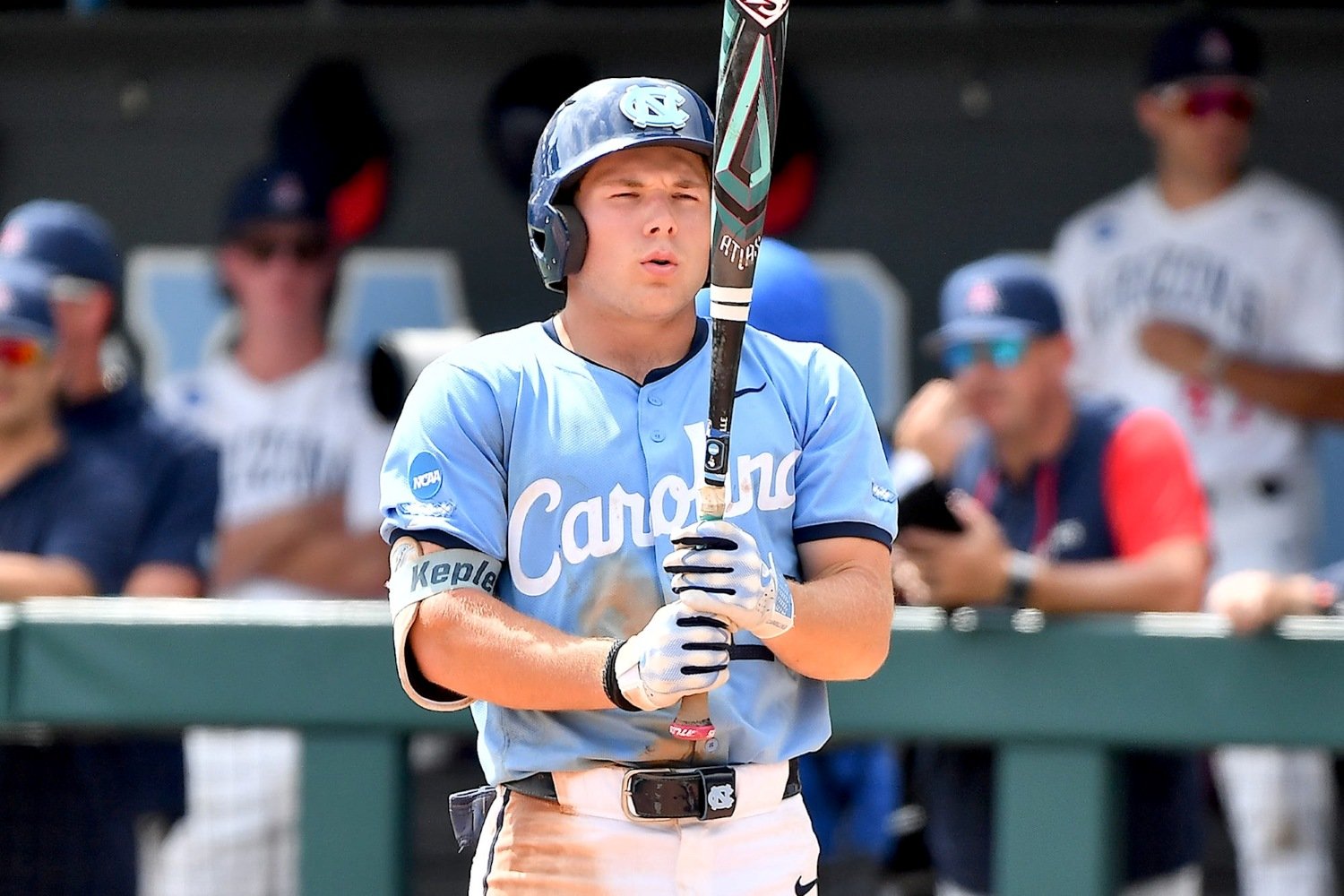 We continue our look at the Chicago Cubs' top 20 prospects today, with our eighth-ranked prospect, outfielder Kane Kepley. For a quick refresher, make sure you check out our other articles in the series: Prospects #20-16 Prospects #15-11 Prospect #10 - James Triantos Prospect #9 - Josiah Hartshorn #8 - Kane Kepley (University of North Carolina) The Cubs selected the North Carolina native and former Tar Heel with the 52nd overall pick of the 2025 draft. The 22-year-old signed for $1.4 million and became the second outfielder the Cubs selected in as many rounds. The left-handed outfielder was viewed as a high-floor, defensive-minded player with plus speed. Standing at only 5-foot-8 and weighing 180 pounds, Kepley will not be among the Cubs’ power-hitting prospects, but is one of their best at putting the ball in play. He ranked as the 84th-best prospect in the draft, per mlb.com. What to Like The first aspect of Kepley’s game to highlight is the hit tool. As mentioned earlier, he's probably never going to be much of a home run threat, but he excels at making contact and getting on base. Originally a walk-on at Liberty, Kepley hit .310 with a .457 OBP as a freshman, then .330 with a .482 OBP as a sophomore. Upon transferring to UNC, Kepley slashed an impressive .291/.451/.444 against superior competition in the ACC. He has an excellent eye, and rarely swings and misses. Throughout his college career, he drew 136 walks with only 71 strikeouts. Last season with Low-A Myrtle Beach, he hit .299 with a .914 OPS in 131 plate appearances. He walked 25 times with only 15 strikeouts. According to mlb.com, Kepley is the only player in the pipeline except top prospect Moisés Ballesteros with a 60-grade hit tool. Competition will get much tougher as he works his way through the minors, but the bat has worked at every level for him so far. Kepley’s defense is another strength. He is a natural center fielder with great instincts. Although he doesn’t have the strongest arm, his plus speed allows him to track down difficult fly balls. His speed also translates to the bases as well. His 45 stolen bases in 2025 were good for fourth in all of Division I ball. Once he arrived in A ball, he swiped 16 bags in only 25 games. He should be able to use his contact ability plus his speed to beat out ground balls for infield hits and turn bloops into extra bases. He could fit the “table-setter” description perfectly. What to Work On The 5-foot-6 Jose Altuve has 255 career home runs, and has hit at least 30 twice in his career. We shouldn't, then, blame Kepley's lack of power entirely on his size. He has a flat swing and can hit the ball to all fields, but in 2025, he lifted the ball a bit more than a player without power should. Per FanGraphs, he had a 38.3% fly-ball rate, which is above the major-league average of 35%. For comparison's sake, let's take the fly-ball percentage of two very different hitters: Shohei Ohtani and Luis Arraez. Ohtani has a career fly-ball rate of 37.9%, while Arraez’s is 30.4%. Arraez has been the best high-contact, low-power player in baseball over the last half-decade, and is the type of hitter Kepley should strive to be. He will need to work on his launch angle to produce more line drives, though, and perhaps fewer unproductive, routine flies. What’s Next Kepley is currently with the Cubs in Arizona. In parts of eight games, he’s collected three hits in 12 at bats, walking twice. Last week against the Dodgers, he put his speed on display, legging out this triple on a well-hit ball in the gap. He will surely be sent to minor-league camp in the next week or so, and will continue to develop. He proved himself last season in Low A, though, and could find himself in High A or even Double A to begin the 2026 campaign. According to mlb.com, his major-league ETA is in 2028, which tracks for a college draftee who hasn't played even 30 professional games. By the time Kepley arrives, the outfield could look a lot different. Both Ian Happ and Seiya Suzuki are free agents after this season. Randy Arozarena looks like he will be the top free-agent outfielder in the 2027 class, at 32 years old. Kevin Alcántara and 2025 first-rounder Ethan Conrad will get chances to prove themselves before Kepley, but the point is, there will be room in this outfield for Kepley by the time he's ready—although center field is spoken for. It's not uncommon for hitters with three years of college experience to reach the majors quicker than they're projected to, when they first enter the pros. Should Kepley continue to hit for a high average and draw walks as he progresses through the minors, we could see him end up in Triple-A by the end of this season, potentially setting him up for a 2027 debut. There is some skepticism regarding Kepley's MLB future, mainly because of his size and lack of power, but even if he doesn't become a starter, his defensive prowess and speed would be a great asset off the bench.
 -
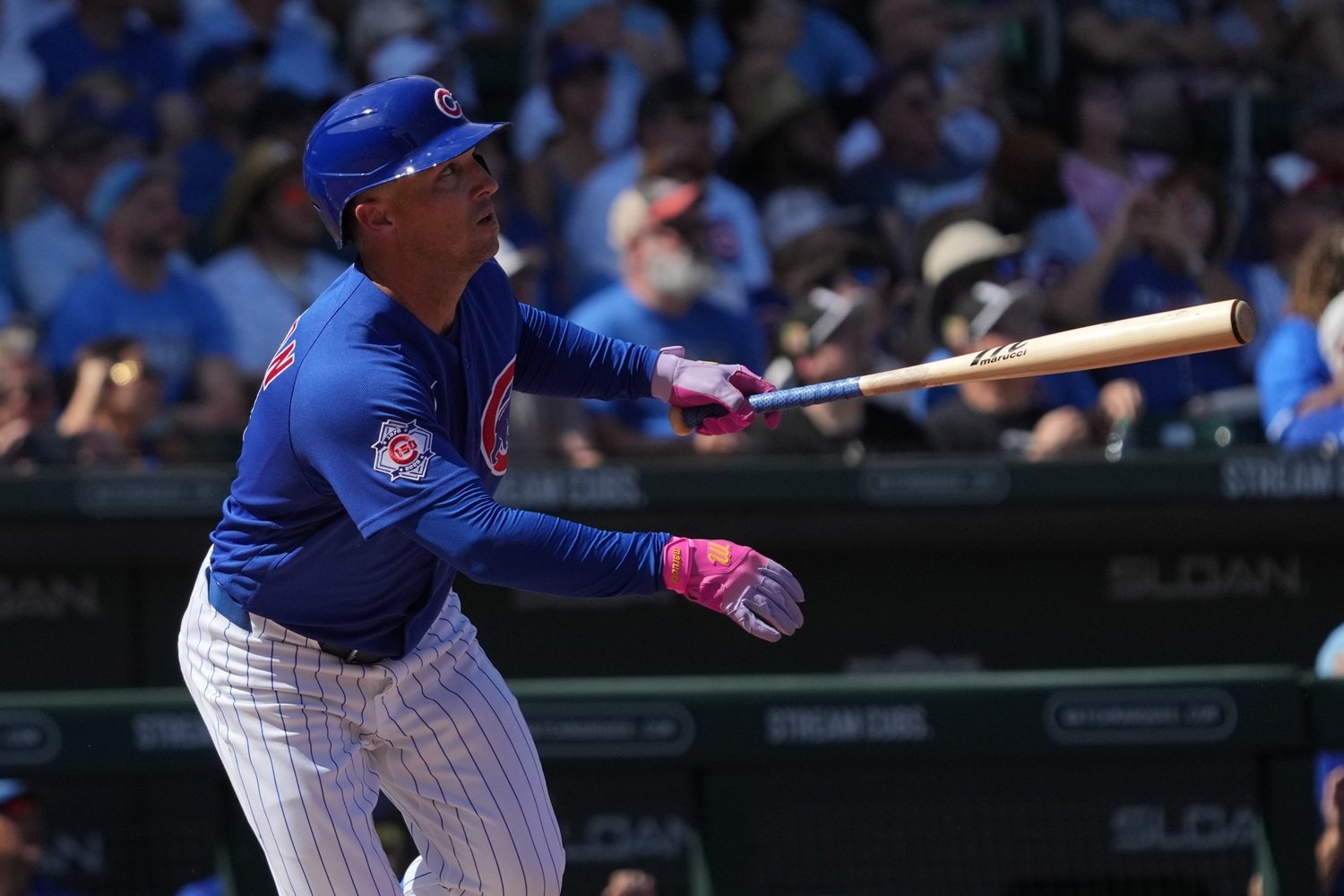 We are back for another Chicago Cubs spring training check-in to see who is hot and who is not. The Cubs are 4-7 in Cactus League play and take on Team Italy next in an exciting round of exhibition games where MLB teams will take on World Baseball Classic participants. Over the last week, we’ve seen more of the main characters on the field, but there are still key parts of the Opening Day roster that remain unclear, so let's get to it. Who's Hot for Cubs? 3B Alex Bregman Spring training stats are of no importance when it comes to superstars like Bregman, but it's hard to ignore the impression he’s made in Arizona thus far. He’s played in five games, going 5-11 with three extra-base hits, including a home run versus the White Sox on Sunday. He’s drawn three walks and has not struck out yet. The Cubs are going to need these red-hot streaks from him to ignite their offense this season. As Joe Maddon used to say to Dexter Fowler: “you go, we go.” The same adage could be applied to Bregman going forward. OF Dylan Carlson There are still a few weeks of spring training left to play, but Carlson seems to be running away with one of the available bench spots for Opening Day. His 1.392 OPS is third in baseball during the exhibition slate, as he’s gone 7-13 with two doubles and five walks. The Michael Conforto signing complicates the outfield picture even further, but with Tyler Austin set to miss significant time, the Cubs need another bench bat. Carlson’s hot spring combined with his switch-hitting will likely give him a leg up on the competition. RHP Javier Assad The Cubs took on the Dodgers on Saturday and held them to only two runs. A big part of this was due to Assad’s three shutout innings in relief of Ben Brown and Colin Rea, each of whom did not allow a run either. Assad allowed one hit and struck out four. He has worked more than one inning and produced multiple strikeouts in both appearances he’s had this spring and is yet to allow a run. Injuries kept him off the mound for most of 2025, but he was one of their most dependable arms in 2023 and 2024, so a return to form would do wonders regardless of his ultimate position in the bullpen or rotation. Who's Not? INF Scott Kingery/OF Justin Dean Kingery and Dean are lumped together because they both made this list last week and have continued to struggle in the regular playing time they’ve been getting. Kingery is 2-18 (.111) with six strikeouts, and Dean is 3-20 (.150) with a whopping ten strikeouts. Both players have never been successful major leaguers for any considerable stretch, and that does not look like it is going to change. They appear to be on the chopping block, barring a turnaround. INF James Triantos Triantos has not been quite as bad as the two aforementioned players, but in a season that seems pivotal for his future with the team, his .200 batting average (4-20) is not going to cut it. Higher-ranked infield prospects Jefferson Rojas and Pedro Ramirez are outperforming Triantos by a wide margin. At this point, it would be surprising to see Triantos find his way up to the big-league roster in the first half of the season. RHP Jameson Taillon Taillon further cemented his spot here Monday afternoon when he allowed six earned runs in 2 1/3 innings pitched against the Reds. He has now made three starts this spring, throwing six innings with an ERA of 19.50, allowing six home runs in the process. Opposing hitters are hitting over .400 against him, and that's in spring training where teams are sparingly playing their studs. Taillon will be in the Cubs rotation this season, so his spring stats don’t mean a ton, but it is still a little worrisome to see these early struggles, especially after he finished last year on such a torrid hot streak.
 -
Image courtesy of © Rick Scuteri-Imagn Images We are back for another Chicago Cubs spring training check-in to see who is hot and who is not. The Cubs are 4-7 in Cactus League play and take on Team Italy next in an exciting round of exhibition games where MLB will take on the World Baseball Classic. Over the last week, we’ve seen more of the main characters on the field, but there are still key parts of the Opening Day roster that remain unclear, so let's get to it. Who' s Hot? 3B Alex Bregman Spring training stats are of no importance when it comes to superstars like Bregman, but it's hard to ignore the impression he’s made in Arizona thus far. He’s played in five games, going 5-11 with three extra base hits, including a home run versus the White Sox on Sunday. He’s drawn three walks and has not struck out yet. The Cubs are going to need these red-hot streaks from him to ignite their offense this season. As Joe Maddon used to say to Dexter Fowler, “you go, we go”; this could be applied to Bregman. OF Dylan Carlson There are still weeks left of spring training left to play, but Carlson seems to be running away with one of the available bench spots for Opening Day. His 1.392 OPS is third in baseball, as he’s gone 7-13 with two doubles and five walks. The Michael Conforto signing complicates the outfield picture even further, but with Tyler Austin set to miss significant time, the Cubs need another bench bat. Carlson’s hot spring combined with his switch hitting will likely give him a leg up on the competition. RHP Javier Assad The Cubs took on the Dodgers on Saturday and held them to only two runs. A big part of this was due to Assad’s three shutout innings in relief of Ben Brown and Colin Rea, each of whom did not allow a run either. Assad allowed one hit and struck out four. He has worked more than one inning and produced multiple strikeouts in both appearances he’s had this Spring and is yet to allow a run. Injuries kept him off the mound for most of 2025, but he was one of their most dependable arms in 2023 and 2024, so a return to form would do wonders regardless of if he is in the bullpen or rotation. Who' s Cold? INF Scott Kingery/ OF Justin Dean Kingery and Dean are lumped together because they both made this list last week and have continued to struggle in the regular playing time they’ve been getting. Kingery is 2-18 (.111) with six strikeouts, and Dean is 3-20 (.150) with a whopping ten strikeouts. Both players have never been successful major leaguers at any point, and that does not look like it is going to change. Look for both to be cut soon. INF James Triantos Triantos has not been quite as bad as the two aforementioned players, but in a season that seems pivotal for his future with the team, his 4-20 is not going to cut it. The higher-ranked infield prospects Jefferson Rojas and Pedro Ramirez are outperforming Triantos by a wide margin. At this point, it would be surprising to see Triantos find his way up to the big league roster this season. RHP Jameson Taillon Taillon further cemented his spot here Monday afternoon when he allowed six earned runs in 2 1/3rd innings pitched against the Reds. He has now made three starts on the young season, throwing six innings with an ERA of 19.50, allowing six home runs in the process. Opposing hitters are hitting over .400 against him, and that's in spring training where teams are sparingly playing their studs. Taillon will be in the Cubs rotation this season, so his Spring stats don’t mean a ton, but it is still a little worrisome to see these early struggles. View full article