matto1233
-
Posts
328 -
Joined
-
Last visited
Content Type
Profiles
Joomla Posts 1
Chicago Cubs Videos
Chicago Cubs Free Agent & Trade Rumors, Notes, & Tidbits
2026 Chicago Cubs Top Prospects Ranking
News
2023 Chicago Cubs Draft Picks
Guides & Resources
2024 Chicago Cubs Draft Picks
The Chicago Cubs Players Project
2025 Chicago Cubs Draft Pick Tracker
2026 Chicago Cubs Draft Tracker: Picks & Bonuses
Blogs
Events
Forums
Store
Gallery
Everything posted by matto1233
-
Image courtesy of © David Banks-Imagn Images Much was said over the offseason about the Chicago Cubs adding more strikeouts to their pitching staff. A lot of this even came from president of baseball operations Jed Hoyer himself: “I felt like we had a very contact oriented pitching staff. Our defense helps that, but, you know, we don’t have that kind of stuff in our rotation other than Cade Horton,” Hoyer said on The Show podcast about the acquisition of Edward Cabrera. We’re now officially about one month into the season, and I hate to tell you this, but the pitching staff is the same as it ever was. Year ERA FIP K% 2025 3.81 4.16 21.4% 2026 3.79 4.16 21.8% I promise, I quadruple-checked those numbers to make sure I wasn’t mixing my years up when creating that table, because having the same FIP seems like an astronomically crazy coincidence. What’s the difference between those two pitching staffs? Nothing. As Pam Beesly says in The Office, they’re the same picture. Or, in our case, they’re the same pitchers. The thing is, they’re not the same pitchers. Matthew Boyd and Shota Imanaga are both, suddenly, strikeout machines. Some of that is probably offset by the loss of Cade Horton, Daniel Palencia, Hunter Harvey, and Phil Maton to injury, though the latter three will be back eventually. The team’s biggest addition, Cabrera, has certainly contributed to the respectable ERA and FIP that the pitching staff is posting. Despite this, his strikeout numbers are down, and they are down considerably. After striking out 25.8 percent of hitters last year, the righty is now striking out just 18.5 percent of hitters. He has gone from the 74th percentile to the 28th. Last season, Cabrera struck out 24.4 percent of left-handed hitters, and 27.5 percent of right-handed hitters. This season, he is still striking out righties at an elite rate of 28.6 percent. It’s his strikeout rate against lefties that has really plummeted, all the way down to a paltry 11.4 percent. The Dominican pitcher attacks lefties with, primarily, his changeup, while also sprinkling in a healthy bit of his four-seam fastball, sinker, and curveball. He likes to get outs with the curve, and typically, he is very successful in doing so. Per Baseball Savant, 90 pitchers threw at least 100 curveballs to left-handed hitters last season. Hitters swung and missed with 48.5 percent of their swings against Cabrera’s curveball, which was seventh among that group of pitchers. This year, though, the story is different. In 2026, 74 pitchers have thrown at least 25 curveballs to lefties. Cabrera now has the third-lowest whiff rate on those pitchers at 11.8 percent. To begin to understand what is wrong with the curveball, let’s take a look at where Cabrera is throwing the pitch. The chart on the left is a heat map for all of his curveballs thrown to lefties last year, while the one on the right is all of them thrown to lefties this season. Charts are courtesy of FanGraphs Labs: Cabrera is suddenly burying a whole lot of curveballs down near the back foot of left-handed hitters. In fact, he has thrown 22 two-strike curveballs to lefties in 2026. Six of them have been thrown to the back foot of the hitter. He only did that 10 times all of last season. For better context: Last season, 8.8 percent of his two-strike curves to lefties were thrown that far low and in. In 2026, he is doing it 27.3 percent of the time, or about three times more often. That is a really difficult place to get swings and misses. Perhaps one reason for the struggle in commanding the curveball; the former Marlin is seeing a pretty significant change in movement on a lot of his pitches to this point in 2026, namely his four-seam fastball and his curve. Between those two pitches, though, the breaking ball really stands out considering its drop in performance. Year Curveball Vertical Drop Curveball Horizontal Break 2025 50.0” 10.9” to the glove-side 2026 45.9” 7.1” to the glove-side This might not seem like a big difference, however, it is the difference between this pitch to Nolan Schanuel from a month ago that started at his knees and inside and only broke further down and more inside: Cabrera 1.mp4 ... and this pitch to Yoan Moncada last May in a game in which he struck out 10 Angels and allowed no runs in 5.2 innings: Cabrera 2.mp4 By starting the pitch that much higher and that much more over the plate, it looks like a strike for longer, and thus, Cabrera is much more likely to get those whiffs that Jed Hoyer so covets. Also note where the pitch to Moncada finishes relative to where the pitch to Schanuel finished. The pitch to Moncada, while very much out of the strike zone, was at least in the same zip code. The pitch to Schanuel almost hit him in the foot, and you don’t often induce swings that way, no matter how nasty the pitch is. It’s important to note that the sky is not falling here. Cabrera has a 2.73 ERA and a 3.66 FIP to this point. He’s just getting there in a radically different way than we all imagined, and if it continues, we’re probably about a month or so away from teams stacking their lineup with left-handed hitters when he takes the bump. View full article
-
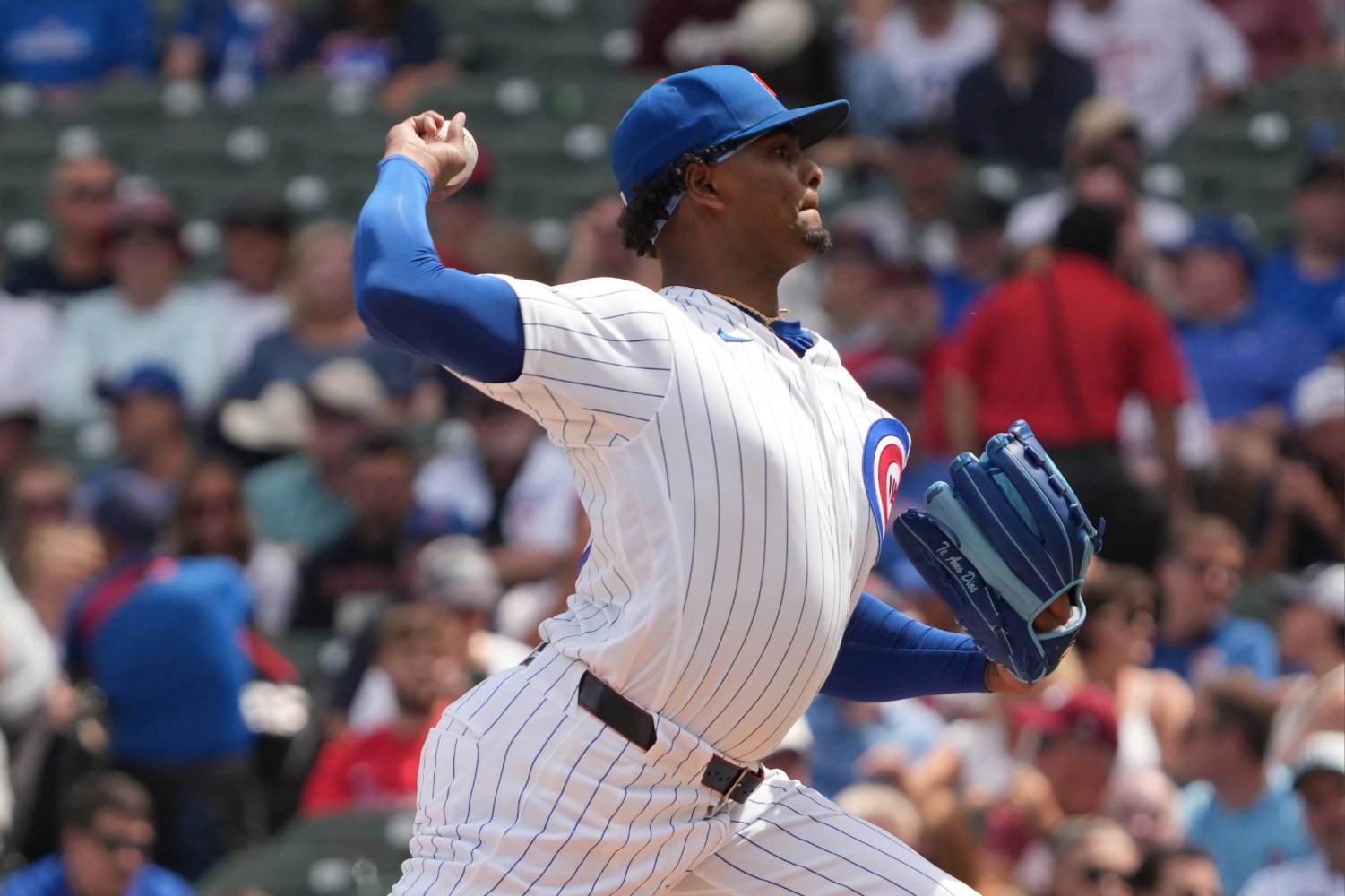 Much was said over the offseason about the Chicago Cubs adding more strikeouts to their pitching staff. A lot of this even came from president of baseball operations Jed Hoyer himself: “I felt like we had a very contact oriented pitching staff. Our defense helps that, but, you know, we don’t have that kind of stuff in our rotation other than Cade Horton,” Hoyer said on The Show podcast about the acquisition of Edward Cabrera. We’re now officially about one month into the season, and I hate to tell you this, but the pitching staff is the same as it ever was. Year ERA FIP K% 2025 3.81 4.16 21.4% 2026 3.79 4.16 21.8% I promise, I quadruple-checked those numbers to make sure I wasn’t mixing my years up when creating that table, because having the same FIP seems like an astronomically crazy coincidence. What’s the difference between those two pitching staffs? Nothing. As Pam Beesly says in The Office, they’re the same picture. Or, in our case, they’re the same pitchers. The thing is, they’re not the same pitchers. Matthew Boyd and Shota Imanaga are both, suddenly, strikeout machines. Some of that is probably offset by the loss of Cade Horton, Daniel Palencia, Hunter Harvey, and Phil Maton to injury, though the latter three will be back eventually. The team’s biggest addition, Cabrera, has certainly contributed to the respectable ERA and FIP that the pitching staff is posting. Despite this, his strikeout numbers are down, and they are down considerably. After striking out 25.8 percent of hitters last year, the righty is now striking out just 18.5 percent of hitters. He has gone from the 74th percentile to the 28th. Last season, Cabrera struck out 24.4 percent of left-handed hitters, and 27.5 percent of right-handed hitters. This season, he is still striking out righties at an elite rate of 28.6 percent. It’s his strikeout rate against lefties that has really plummeted, all the way down to a paltry 11.4 percent. The Dominican pitcher attacks lefties with, primarily, his changeup, while also sprinkling in a healthy bit of his four-seam fastball, sinker, and curveball. He likes to get outs with the curve, and typically, he is very successful in doing so. Per Baseball Savant, 90 pitchers threw at least 100 curveballs to left-handed hitters last season. Hitters swung and missed with 48.5 percent of their swings against Cabrera’s curveball, which was seventh among that group of pitchers. This year, though, the story is different. In 2026, 74 pitchers have thrown at least 25 curveballs to lefties. Cabrera now has the third-lowest whiff rate on those pitchers at 11.8 percent. To begin to understand what is wrong with the curveball, let’s take a look at where Cabrera is throwing the pitch. The chart on the left is a heat map for all of his curveballs thrown to lefties last year, while the one on the right is all of them thrown to lefties this season. Charts are courtesy of FanGraphs Labs: Cabrera is suddenly burying a whole lot of curveballs down near the back foot of left-handed hitters. In fact, he has thrown 22 two-strike curveballs to lefties in 2026. Six of them have been thrown to the back foot of the hitter. He only did that 10 times all of last season. For better context: Last season, 8.8 percent of his two-strike curves to lefties were thrown that far low and in. In 2026, he is doing it 27.3 percent of the time, or about three times more often. That is a really difficult place to get swings and misses. Perhaps one reason for the struggle in commanding the curveball; the former Marlin is seeing a pretty significant change in movement on a lot of his pitches to this point in 2026, namely his four-seam fastball and his curve. Between those two pitches, though, the breaking ball really stands out considering its drop in performance. Year Curveball Vertical Drop Curveball Horizontal Break 2025 50.0” 10.9” to the glove-side 2026 45.9” 7.1” to the glove-side This might not seem like a big difference, however, it is the difference between this pitch to Nolan Schanuel from a month ago that started at his knees and inside and only broke further down and more inside: Cabrera 1.mp4 ... and this pitch to Yoan Moncada last May in a game in which he struck out 10 Angels and allowed no runs in 5.2 innings: Cabrera 2.mp4 By starting the pitch that much higher and that much more over the plate, it looks like a strike for longer, and thus, Cabrera is much more likely to get those whiffs that Jed Hoyer so covets. Also note where the pitch to Moncada finishes relative to where the pitch to Schanuel finished. The pitch to Moncada, while very much out of the strike zone, was at least in the same zip code. The pitch to Schanuel almost hit him in the foot, and you don’t often induce swings that way, no matter how nasty the pitch is. It’s important to note that the sky is not falling here. Cabrera has a 2.73 ERA and a 3.66 FIP to this point. He’s just getting there in a radically different way than we all imagined, and if it continues, we’re probably about a month or so away from teams stacking their lineup with left-handed hitters when he takes the bump.
 -
Image courtesy of © Matt Marton-Imagn Images Since Seiya Suzuki’s return from injury on April 10, the Chicago Cubs’ offense has started to figure things out. Heading into action on that day, the North Siders had a 95 wRC+, according to FanGraphs, meaning that the offense was five percent worse than the league average. Since then, they've hit to the tune of a 136 wRC+. Of course, both the 'before' and the 'after' here are small samples, and this jump is not entirely (indeed, not even mostly) due to Suzuki’s presence. The Japanese outfielder has logged just one extra-base hit since returning, though he's still cobbled together a respectable 94 wRC+. That extra-base hit was this double from the game against the Mets on Friday: WERaNVhfWGw0TUFRPT1fQlZWVVZnQUhVMU1BQ1ZWVFVnQUhBZ0ZYQUZoUUJsVUFCMU5YVlFJREExY0RDRllB.mp4 We’ll all take that result—Suzuki included. Doubles don’t grow on trees. However, a double into the right-field corner is not the Seiya Suzuki we’re all used to seeing. Last season, he managed just six extra-base hits to the opposite field, according to Baseball Savant. None of them looked like that thing. Four of them were to right-center, really. One was a fly ball in West Sacramento last March that just kept carrying over a short wall in the corner. The other was this... thing. NXkyNDFfWGw0TUFRPT1fRDFjRFhRVUVVRlFBRGdSV1ZnQUhVZ0pmQUZnR1dnQUFDMXhYQmxaWENWRlZDQW9G.mp4 Hitting the ball hard has never been an issue for Suzuki. His average exit velocity has been in the top half of baseball every season since he came over from Japan, and in the top quarter for each of the past three seasons. While it's down so far this year, I'm not concerned about that rebounding some time soon. Suzuki broke out two seasons ago, and turned in a career high in home runs last season—when he started hitting more of those hard-hit balls in the air to the pull side of the field instead of on the ground, or to straightaway center field: Year Ground Ball % Fly Ball % Pull Air % Straight Air % 2022 40.7% 25.5% 9.7% 22.8% 2023 43.6% 24.0% 14.8% 24.2% 2024 33.7% 34.0% 15.2% 32.0% 2025 31.8% 34.7% 24.3% 24.8% The one extra-base hit that Suzuki has managed isn’t overwhelmingly concerning by itself, even if it is to the opposite field. Again, any extra-base hit is a good one. It's concerning that it is the only one, though, and it's indicative of the overall issue for the slugger so far this season: he has only pulled one ball in the air so far. That, alone, explains the complete lack of slug. Last season, hitters slugged 1.338 on fly balls to the pull side, and just .284 on fly balls to the opposite field. So how has he managed not to be an abject disaster at the plate? A 14.6% walk rate has yielded a .366 on-base percentage, which will do the trick. He still rarely chases, which is good. His approach doesn’t appear to have changed much. He did admit to Craig Counsell that the strike zone is a little "fuzzy" to him, though, according to the Cubs' broadcast team, and his swing reflects that struggle to see it well. When you have a guy who can’t pull the ball, that usually means there is a timing issue. This makes sense for a guy who had the start of his season derailed by an injury. Suzuki is playing like a guy who's still preparing for Opening Day. Let’s hope he starts to warm up soon. View full article
-
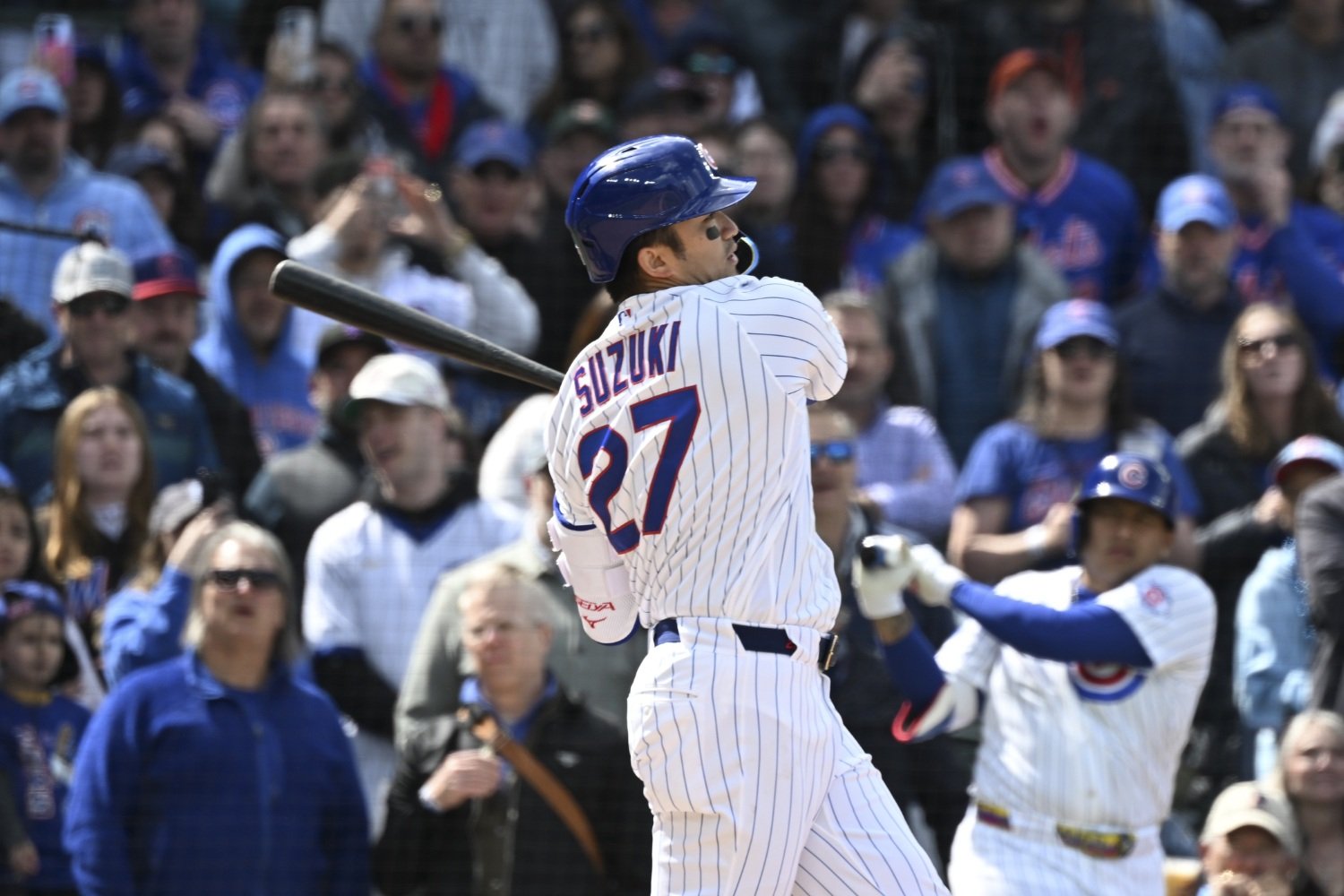 Since Seiya Suzuki’s return from injury on April 10, the Chicago Cubs’ offense has started to figure things out. Heading into action on that day, the North Siders had a 95 wRC+, according to FanGraphs, meaning that the offense was five percent worse than the league average. Since then, they've hit to the tune of a 136 wRC+. Of course, both the 'before' and the 'after' here are small samples, and this jump is not entirely (indeed, not even mostly) due to Suzuki’s presence. The Japanese outfielder has logged just one extra-base hit since returning, though he's still cobbled together a respectable 94 wRC+. That extra-base hit was this double from the game against the Mets on Friday: WERaNVhfWGw0TUFRPT1fQlZWVVZnQUhVMU1BQ1ZWVFVnQUhBZ0ZYQUZoUUJsVUFCMU5YVlFJREExY0RDRllB.mp4 We’ll all take that result—Suzuki included. Doubles don’t grow on trees. However, a double into the right-field corner is not the Seiya Suzuki we’re all used to seeing. Last season, he managed just six extra-base hits to the opposite field, according to Baseball Savant. None of them looked like that thing. Four of them were to right-center, really. One was a fly ball in West Sacramento last March that just kept carrying over a short wall in the corner. The other was this... thing. NXkyNDFfWGw0TUFRPT1fRDFjRFhRVUVVRlFBRGdSV1ZnQUhVZ0pmQUZnR1dnQUFDMXhYQmxaWENWRlZDQW9G.mp4 Hitting the ball hard has never been an issue for Suzuki. His average exit velocity has been in the top half of baseball every season since he came over from Japan, and in the top quarter for each of the past three seasons. While it's down so far this year, I'm not concerned about that rebounding some time soon. Suzuki broke out two seasons ago, and turned in a career high in home runs last season—when he started hitting more of those hard-hit balls in the air to the pull side of the field instead of on the ground, or to straightaway center field: Year Ground Ball % Fly Ball % Pull Air % Straight Air % 2022 40.7% 25.5% 9.7% 22.8% 2023 43.6% 24.0% 14.8% 24.2% 2024 33.7% 34.0% 15.2% 32.0% 2025 31.8% 34.7% 24.3% 24.8% The one extra-base hit that Suzuki has managed isn’t overwhelmingly concerning by itself, even if it is to the opposite field. Again, any extra-base hit is a good one. It's concerning that it is the only one, though, and it's indicative of the overall issue for the slugger so far this season: he has only pulled one ball in the air so far. That, alone, explains the complete lack of slug. Last season, hitters slugged 1.338 on fly balls to the pull side, and just .284 on fly balls to the opposite field. So how has he managed not to be an abject disaster at the plate? A 14.6% walk rate has yielded a .366 on-base percentage, which will do the trick. He still rarely chases, which is good. His approach doesn’t appear to have changed much. He did admit to Craig Counsell that the strike zone is a little "fuzzy" to him, though, according to the Cubs' broadcast team, and his swing reflects that struggle to see it well. When you have a guy who can’t pull the ball, that usually means there is a timing issue. This makes sense for a guy who had the start of his season derailed by an injury. Suzuki is playing like a guy who's still preparing for Opening Day. Let’s hope he starts to warm up soon.
 -
Image courtesy of © Kamil Krzaczynski-Imagn Images Shota Imanaga is back. Both literally, since he signed a qualifying offer this past offseason to remain with the Chicago Cubs, and performance-wise, as he has 2.81 ERA through his first three starts in 2026. Of course, the same caveat that comes with every piece of baseball analysis in mid-April exists here: it’s early. After all, this is the same guy that the Cubs passed over in Game Five of last year’s Division Series after he got rocked in Game Two. Or is it? A look at some of the under-the-hood numbers might give us an idea. [All stats courtesy of FanGraphs.] Year xERA FIP K% BB% 2024 3.36 3.72 25.1% 4.0% 2025 3.73 4.86 20.6% 4.6% 2026 2.68 2.18 33.3% 6.7% Well, okay! All four metrics here would suggest that Imanaga is as good as he has ever been in a Cubs uniform after taking a step back last season. The walk rate is a bit elevated, but if that is coming along with the jump in strikeout rate, the Cubs, and their fans, probably take that trade off. To help understand how repeatable this is for the lefty going forward, we’re going to have to take this a step further. He’s still allowing a ton of fly balls, however, he is allowing less loud contact, as well as more fly balls to the opposite field, where they tend to do less damage. That, plus the increase in strikeout rate, is what is helping to keep those advanced numbers like his xERA and his FIP so low. Let’s get the raw stuff out of the way first: Imanaga’s velocity is up this season. After throwing his four-seam fastball at an average of 90.8 mph last season, that figure is up to 92.2 mph this season, according to Baseball Savant. That might feel like a small difference, but it is a meaningful one. This rise in velocity, plus a higher arm angle (up to 40 degrees this season after sitting at 36 degrees, on average, last year), has resulted in less drop and less arm-side movement on the four-seam fastball, two massive developments for a pitcher who tends to live up in the zone. Combine those two things and we’re seeing a massive increase in quality from Imanaga’s four-seamer. Per FanGraphs, the Stuff+ rating on his four-seam fastball is at 110, which is up from 99 last season and 105 from his rookie year in 2024. The actual results on the four-seam fastball, which plagued him last season, have rebounded accordingly. After hitters slugged .567 on the pitch last year, that number is down to just .217 this year. We can also utilize Location+ to help us evaluate how well a pitcher is locating a pitch. Location plus is measured based on where a pitch should be thrown to based on the count. For example, a fastball is most effective when thrown to certain places in a 2-0 count, but also most effective when thrown to a different place in an 0-2 count. Just like stuff plus, higher is better, and Imanaga is certainly trending in that direction this year. Year Location+ Fastball Location+ Splitter Overall Location+ 2024 111 109 109 2025 108 109 108 2026 126 117 116 Woah! Location plus is suggesting that Imanaga is spotting both his fastball, and his splitter, in much more effective spots this season than he ever has been. Of course, our next step has to be to take a look at where Imanaga is throwing his fastball and his splitter. Thanks to the handy dandy new heat maps pivot feature over at FanGraphs, we can do just that. Here are heat maps for the location of his four-seamer, with 2025 on the left and 2026 on the right. First is against left-handed hitters, and second is against right-handed hitters, with the perspective being from behind home plate. Imanaga is making an effort to keep the ball both up and outside, rather than just up. This is helping him stay off barrels and avoid some of the loud contact in the air that we saw last season. It would also explain the jump we’ve seen in fly balls to the opposite field. Here are the same charts for his splitters: The veteran is staying on the outside part of the plate, just like he is with his fastball; however, his splitter is much further down, and in a lot of cases, even further outside of the strike zone than it was previously. As a result, hitters are chasing more than they ever have against Imanaga. Per Baseball Savant, his 40.5 percent chase rate would be a career high, and that is in the 96th percentile of pitchers this season. There is risk in doing that, of course. That is explained by the bloated walk rate. Throwing more pitches outside of the strike zone is going to result in more walks. Plus, hitters will likely adjust to seeing splitters that low more often, but then again, a splitter properly located down there is just so tough to lay off of when paired with a fastball on the high and outside corner of the strike zone. All of this suggests that while it may be early, Shota Imanaga is either currently as good as he was in the 2024 season, or perhaps even better. The jump in his velocity, as well as better and different execution of both his four-seamer and his splitter, have resulted in a jump in his strikeout rate and less loud contact when hitters do put the ball in play. With Cade Horton’s early season injury bogging down the rotation, this is great news for the Cubs, because they just might need this version of Shota Imanaga for the rest of the season. View full article
-
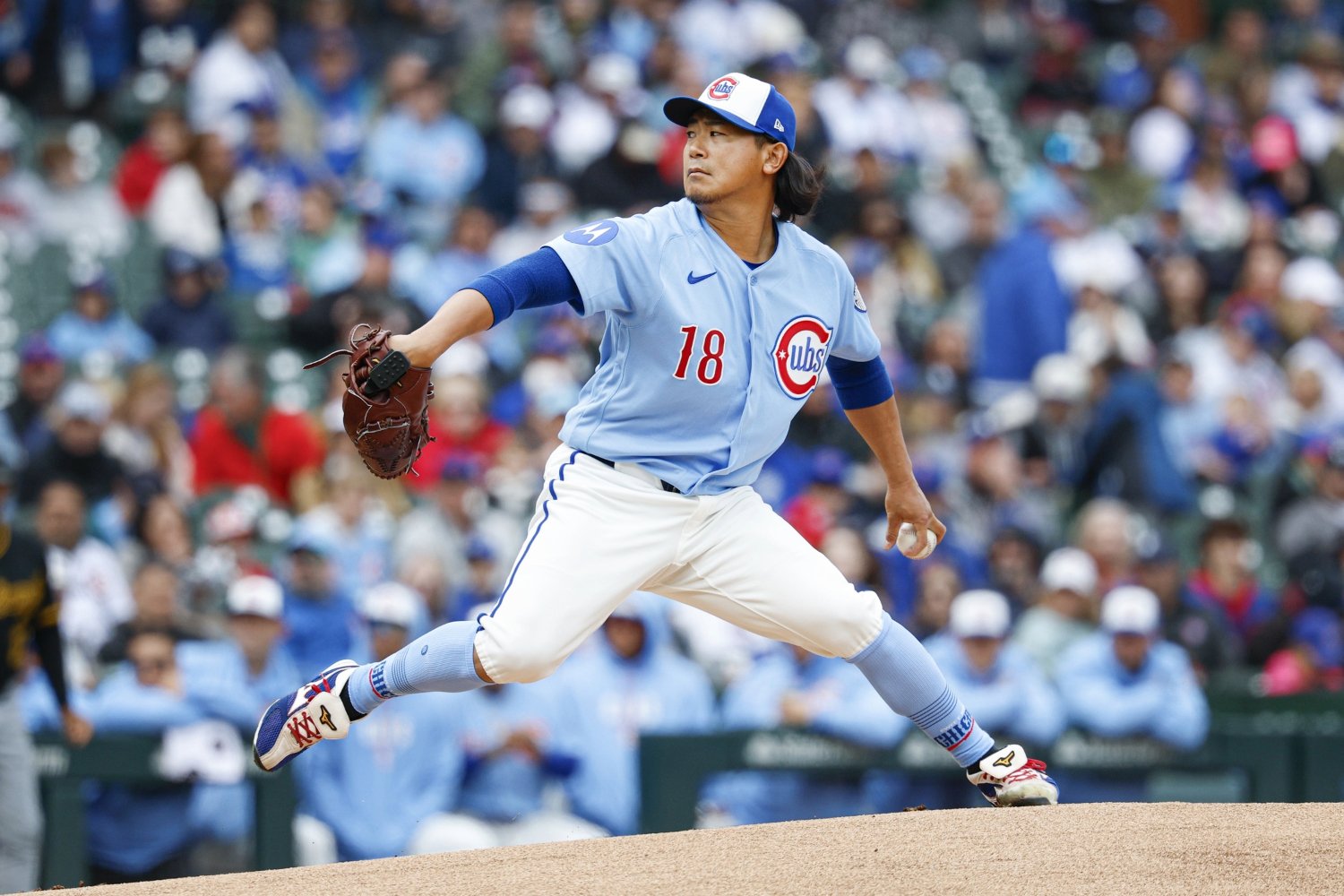 Shota Imanaga is back. Both literally, since he signed a qualifying offer this past offseason to remain with the Chicago Cubs, and performance-wise, as he has 2.81 ERA through his first three starts in 2026. Of course, the same caveat that comes with every piece of baseball analysis in mid-April exists here: it’s early. After all, this is the same guy that the Cubs passed over in Game Five of last year’s Division Series after he got rocked in Game Two. Or is it? A look at some of the under-the-hood numbers might give us an idea. [All stats courtesy of FanGraphs.] Year xERA FIP K% BB% 2024 3.36 3.72 25.1% 4.0% 2025 3.73 4.86 20.6% 4.6% 2026 2.68 2.18 33.3% 6.7% Well, okay! All four metrics here would suggest that Imanaga is as good as he has ever been in a Cubs uniform after taking a step back last season. The walk rate is a bit elevated, but if that is coming along with the jump in strikeout rate, the Cubs, and their fans, probably take that trade off. To help understand how repeatable this is for the lefty going forward, we’re going to have to take this a step further. He’s still allowing a ton of fly balls, however, he is allowing less loud contact, as well as more fly balls to the opposite field, where they tend to do less damage. That, plus the increase in strikeout rate, is what is helping to keep those advanced numbers like his xERA and his FIP so low. Let’s get the raw stuff out of the way first: Imanaga’s velocity is up this season. After throwing his four-seam fastball at an average of 90.8 mph last season, that figure is up to 92.2 mph this season, according to Baseball Savant. That might feel like a small difference, but it is a meaningful one. This rise in velocity, plus a higher arm angle (up to 40 degrees this season after sitting at 36 degrees, on average, last year), has resulted in less drop and less arm-side movement on the four-seam fastball, two massive developments for a pitcher who tends to live up in the zone. Combine those two things and we’re seeing a massive increase in quality from Imanaga’s four-seamer. Per FanGraphs, the Stuff+ rating on his four-seam fastball is at 110, which is up from 99 last season and 105 from his rookie year in 2024. The actual results on the four-seam fastball, which plagued him last season, have rebounded accordingly. After hitters slugged .567 on the pitch last year, that number is down to just .217 this year. We can also utilize Location+ to help us evaluate how well a pitcher is locating a pitch. Location plus is measured based on where a pitch should be thrown to based on the count. For example, a fastball is most effective when thrown to certain places in a 2-0 count, but also most effective when thrown to a different place in an 0-2 count. Just like stuff plus, higher is better, and Imanaga is certainly trending in that direction this year. Year Location+ Fastball Location+ Splitter Overall Location+ 2024 111 109 109 2025 108 109 108 2026 126 117 116 Woah! Location plus is suggesting that Imanaga is spotting both his fastball, and his splitter, in much more effective spots this season than he ever has been. Of course, our next step has to be to take a look at where Imanaga is throwing his fastball and his splitter. Thanks to the handy dandy new heat maps pivot feature over at FanGraphs, we can do just that. Here are heat maps for the location of his four-seamer, with 2025 on the left and 2026 on the right. First is against left-handed hitters, and second is against right-handed hitters, with the perspective being from behind home plate. Imanaga is making an effort to keep the ball both up and outside, rather than just up. This is helping him stay off barrels and avoid some of the loud contact in the air that we saw last season. It would also explain the jump we’ve seen in fly balls to the opposite field. Here are the same charts for his splitters: The veteran is staying on the outside part of the plate, just like he is with his fastball; however, his splitter is much further down, and in a lot of cases, even further outside of the strike zone than it was previously. As a result, hitters are chasing more than they ever have against Imanaga. Per Baseball Savant, his 40.5 percent chase rate would be a career high, and that is in the 96th percentile of pitchers this season. There is risk in doing that, of course. That is explained by the bloated walk rate. Throwing more pitches outside of the strike zone is going to result in more walks. Plus, hitters will likely adjust to seeing splitters that low more often, but then again, a splitter properly located down there is just so tough to lay off of when paired with a fastball on the high and outside corner of the strike zone. All of this suggests that while it may be early, Shota Imanaga is either currently as good as he was in the 2024 season, or perhaps even better. The jump in his velocity, as well as better and different execution of both his four-seamer and his splitter, have resulted in a jump in his strikeout rate and less loud contact when hitters do put the ball in play. With Cade Horton’s early season injury bogging down the rotation, this is great news for the Cubs, because they just might need this version of Shota Imanaga for the rest of the season.
 -
Image courtesy of © Matt Marton-Imagn Images I love early-season baseball, because it allows for some crazy, small sample statistics. These numbers almost certainly don't mean anything, of course, but you can convince yourself that they do. After all, who's going to tell you what's really going on? All we have to go on are these few numbers and vibes, and between those two, the numbers are usually sending a stronger signal—even after a week. For example, if Andy Pages is the best hitter in baseball for eight games later this season, nobody outside of Los Angeles notices. However, Andy Pages was the best hitter in baseball for the first eight games of the season, which means he goes right to the top of a bunch of sorted leaderboards and everybody notices. One scroll through the leaderboards for the Cubs, and the newly extended Nico Hoerner sticks out the most. Entering Sunday's doubleheader, he led Cubs regulars with a 147 wRC+, according to FanGraphs. He had a .400 on-base percentage, buoyed by a 16.7% walk rate. Then he was hit by two pitches in Game 1 of the twin bill and went 1-for-3 with a pair of walks in Game 2, so these numbers ticked up, even on a day when the rest of the Cubs offense did little. Nico Hoerner? A 16.7% walk rate? I love Hoerner, but drawing walks is not his strong suit. Since 2022, his 6.5% walk rate is 228th among 310 qualified hitters. When you think about it, this makes sense. The Gold Glover has also managed just 33 home runs in that time frame, which is 229th of those 310 batters. Pitchers have little reason not to challenge him. If you throw him some hittable strikes, in all likelihood, the worst thing that happens is that he ends up at second with a double. If you don’t throw him strikes and walk him, he just might end up there after a stolen base, anyway. You might as well make him earn it. Not only that, but Hoerner so rarely swings and misses that it’s tough for him to get into a count deep enough to walk. Historically, he rarely strikes out. He succeeds by putting a lot of balls in play. With his speed, putting the ball in play that often makes sense, especially now that he's become a bit more of a line-drive guy, but that plan at the plate means relatively few walks. So, with all of that out of the way, is there any reason for the bump in walk rate this year? For the first week or so of the season, the Cubs’ second baseman has essentially been one of the most patient hitters in baseball. His 38.5% swing rate is 180th out of 204 qualified hitters. His 47.2% swing rate at pitches in the zone is 202nd! These are all significant decreases from last season, according to FanGraphs. (He only swung at 15 of the 42 pitches he saw in the doubleheader Sunday, so these trends haven't changed after another two games.) Year Swing Rate In Zone Swing Rate Out of Zone Swing Rate 2025 48.5% 63.2% 32.3% 2026 38.5% 50.8% 27.0% What specific pitches is Hoerner now laying off of? Here are his swing rates by zone from last season, on the left, compared to this season, on the right: Compare this to his slugging percentage by zone from last season, and it’s clear what the plan is: Hoerner is making a concerted effort to concentrate his swings to the lower inside quadrant of the strike zone—the area where he did the most damage last season. If it’s a strike, and it’s not down there, he is comfortable letting that pitch pass by, even if it means falling behind in the count. He’s so good at making contact that falling behind in the count doesn’t put him at that great a disadvantage, anyway. Not all swings are created equal, even when the pitch is in the strike zone. That's especially true when you’re Nico Hoerner. When he swings, the ball is (in all likelihood) going to be put into play. When he swings at a strike that he can’t do damage with, it’s getting put into play weakly. He’s rarely living to see another pitch. Now, he's isolating the pitches he knows he can hit hard, and the result is a career-high slugging percentage, to go along with the elevated walk rate. Oh yeah, the walk rate! That was, after all, how I noticed all of this. Do I think he’ll keep walking at a Juan Soto-like rate? Of course not! Though I do think it’s possible Hoerner will have a higher-than-usual walk rate this season if he keeps up this level of selectivity, there'll be regression here. The great source of optimism should be that, even when his walk rate comes down, this change in approach will beget more extra-base hits. Hoerner is swinging less, and thus seeing more pitches and working deeper counts. Ultimately, that's resulting in the elevated walk rate. His strikeout rate has also increased a bit as a result, from 7.6 percent to 13.3%, but that’s still incredibly low (and he only struck out once in nine trips Sunday). The Cubs will take that tradeoff for a bit of newfound thump, as well as a few additional walks—especially from a guy that they just decided will be around Wrigleyville for a long time. View full article
-
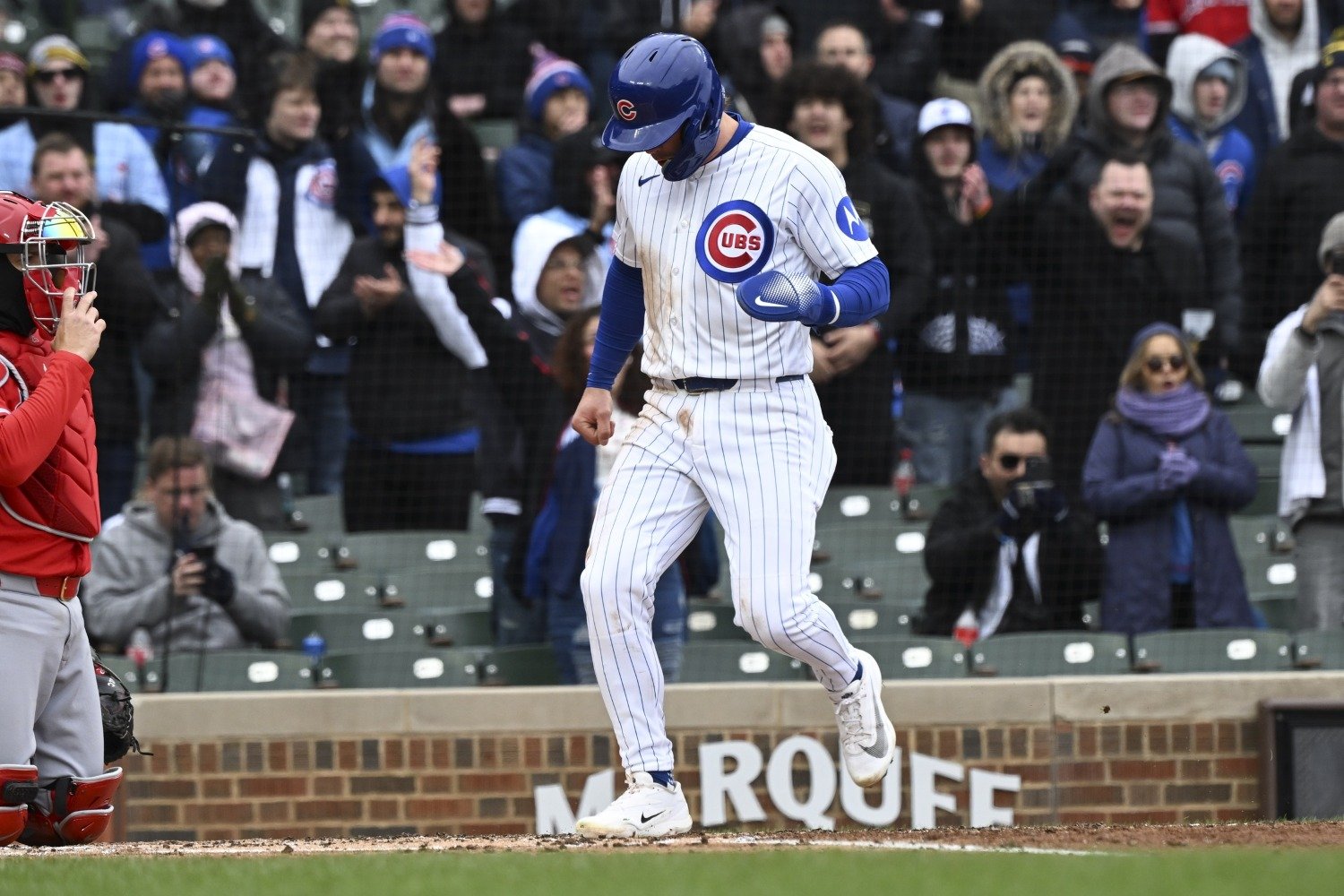 I love early-season baseball, because it allows for some crazy, small sample statistics. These numbers almost certainly don't mean anything, of course, but you can convince yourself that they do. After all, who's going to tell you what's really going on? All we have to go on are these few numbers and vibes, and between those two, the numbers are usually sending a stronger signal—even after a week. For example, if Andy Pages is the best hitter in baseball for eight games later this season, nobody outside of Los Angeles notices. However, Andy Pages was the best hitter in baseball for the first eight games of the season, which means he goes right to the top of a bunch of sorted leaderboards and everybody notices. One scroll through the leaderboards for the Cubs, and the newly extended Nico Hoerner sticks out the most. Entering Sunday's doubleheader, he led Cubs regulars with a 147 wRC+, according to FanGraphs. He had a .400 on-base percentage, buoyed by a 16.7% walk rate. Then he was hit by two pitches in Game 1 of the twin bill and went 1-for-3 with a pair of walks in Game 2, so these numbers ticked up, even on a day when the rest of the Cubs offense did little. Nico Hoerner? A 16.7% walk rate? I love Hoerner, but drawing walks is not his strong suit. Since 2022, his 6.5% walk rate is 228th among 310 qualified hitters. When you think about it, this makes sense. The Gold Glover has also managed just 33 home runs in that time frame, which is 229th of those 310 batters. Pitchers have little reason not to challenge him. If you throw him some hittable strikes, in all likelihood, the worst thing that happens is that he ends up at second with a double. If you don’t throw him strikes and walk him, he just might end up there after a stolen base, anyway. You might as well make him earn it. Not only that, but Hoerner so rarely swings and misses that it’s tough for him to get into a count deep enough to walk. Historically, he rarely strikes out. He succeeds by putting a lot of balls in play. With his speed, putting the ball in play that often makes sense, especially now that he's become a bit more of a line-drive guy, but that plan at the plate means relatively few walks. So, with all of that out of the way, is there any reason for the bump in walk rate this year? For the first week or so of the season, the Cubs’ second baseman has essentially been one of the most patient hitters in baseball. His 38.5% swing rate is 180th out of 204 qualified hitters. His 47.2% swing rate at pitches in the zone is 202nd! These are all significant decreases from last season, according to FanGraphs. (He only swung at 15 of the 42 pitches he saw in the doubleheader Sunday, so these trends haven't changed after another two games.) Year Swing Rate In Zone Swing Rate Out of Zone Swing Rate 2025 48.5% 63.2% 32.3% 2026 38.5% 50.8% 27.0% What specific pitches is Hoerner now laying off of? Here are his swing rates by zone from last season, on the left, compared to this season, on the right: Compare this to his slugging percentage by zone from last season, and it’s clear what the plan is: Hoerner is making a concerted effort to concentrate his swings to the lower inside quadrant of the strike zone—the area where he did the most damage last season. If it’s a strike, and it’s not down there, he is comfortable letting that pitch pass by, even if it means falling behind in the count. He’s so good at making contact that falling behind in the count doesn’t put him at that great a disadvantage, anyway. Not all swings are created equal, even when the pitch is in the strike zone. That's especially true when you’re Nico Hoerner. When he swings, the ball is (in all likelihood) going to be put into play. When he swings at a strike that he can’t do damage with, it’s getting put into play weakly. He’s rarely living to see another pitch. Now, he's isolating the pitches he knows he can hit hard, and the result is a career-high slugging percentage, to go along with the elevated walk rate. Oh yeah, the walk rate! That was, after all, how I noticed all of this. Do I think he’ll keep walking at a Juan Soto-like rate? Of course not! Though I do think it’s possible Hoerner will have a higher-than-usual walk rate this season if he keeps up this level of selectivity, there'll be regression here. The great source of optimism should be that, even when his walk rate comes down, this change in approach will beget more extra-base hits. Hoerner is swinging less, and thus seeing more pitches and working deeper counts. Ultimately, that's resulting in the elevated walk rate. His strikeout rate has also increased a bit as a result, from 7.6 percent to 13.3%, but that’s still incredibly low (and he only struck out once in nine trips Sunday). The Cubs will take that tradeoff for a bit of newfound thump, as well as a few additional walks—especially from a guy that they just decided will be around Wrigleyville for a long time.
 -
Image courtesy of © Matt Marton-Imagn Images When the Cubs signed Alex Bregman in January, much was made about the way he typically gets to his power. The former Red Sox third baseman was famous for pulling fly balls barely over the left-field wall, where the fence—especially at his two former home parks, in Houston and Boston—is quite close. Wrigley Field, with the left-field fence sitting 355 feet away from home plate, has the deepest left-field corner in the majors. After the signing was announced, our own Randy Holt examined Bregman’s tendencies. Randy compared Bregman’s spray chart to that of Isaac Paredes, another third baseman whom the Cubs brought in who had a tendency to pull a lot of fly balls over the left field wall. He ultimately concluded that Bregman would fare just fine at the Friendly Confines. Paredes only hits the ball down the line, while Bregman can, and has, sprayed the ball from gap-to-gap. On Sunday, Alex Bregman hit his first home run in a Cubs uniform, and it basically proved Randy right: He hit a home run to (left-)center field! But I thought he never hit home runs there? Well, you’re not entirely wrong. Here's a spray chart of every home run that Bregman has hit since 2020: That grouping of five home runs that I circled, just to the left of the 400 marker, is where Bregman hit this homer. So, yes, he doesn’t hit many home runs to that area. Typically. Usually. The thing is, Bregman also didn’t typically play baseball games at Wrigley Field. While Wrigley has a very deep left-field corner, the distance to the left-center field wall is incredibly short. Here's every out that Bregman made last year, overlaid onto Wrigley Field’s dimensions: There’s a lot of dots there, but I count about eight fly balls that would have sailed into the bleachers. This doesn’t even take the wind into account. According to Statcast, it gave his home run on Sunday an extra 25 feet of distance. It’ll cost him some home runs, but it will also give a fly-ball hitter like him some cheapies. In his last plate appearance of the game, Bregman stepped to the plate and did it again, this time homering to right-center: This one just feels like an anomaly, but I will leave you with this: Before this season, 17 of Bregman’s 209 career homers were to the opposite field. From 2020-2024, he only hit three. He hit three last season alone, and now in 2026, he already has one. It might be an anomaly. Or maybe he's continuing to adapt. Regardless, I can say one thing with a little bit more confidence after Sunday’s game: Alex Bregman is going to be just fine hitting in Wrigley Field. View full article
-
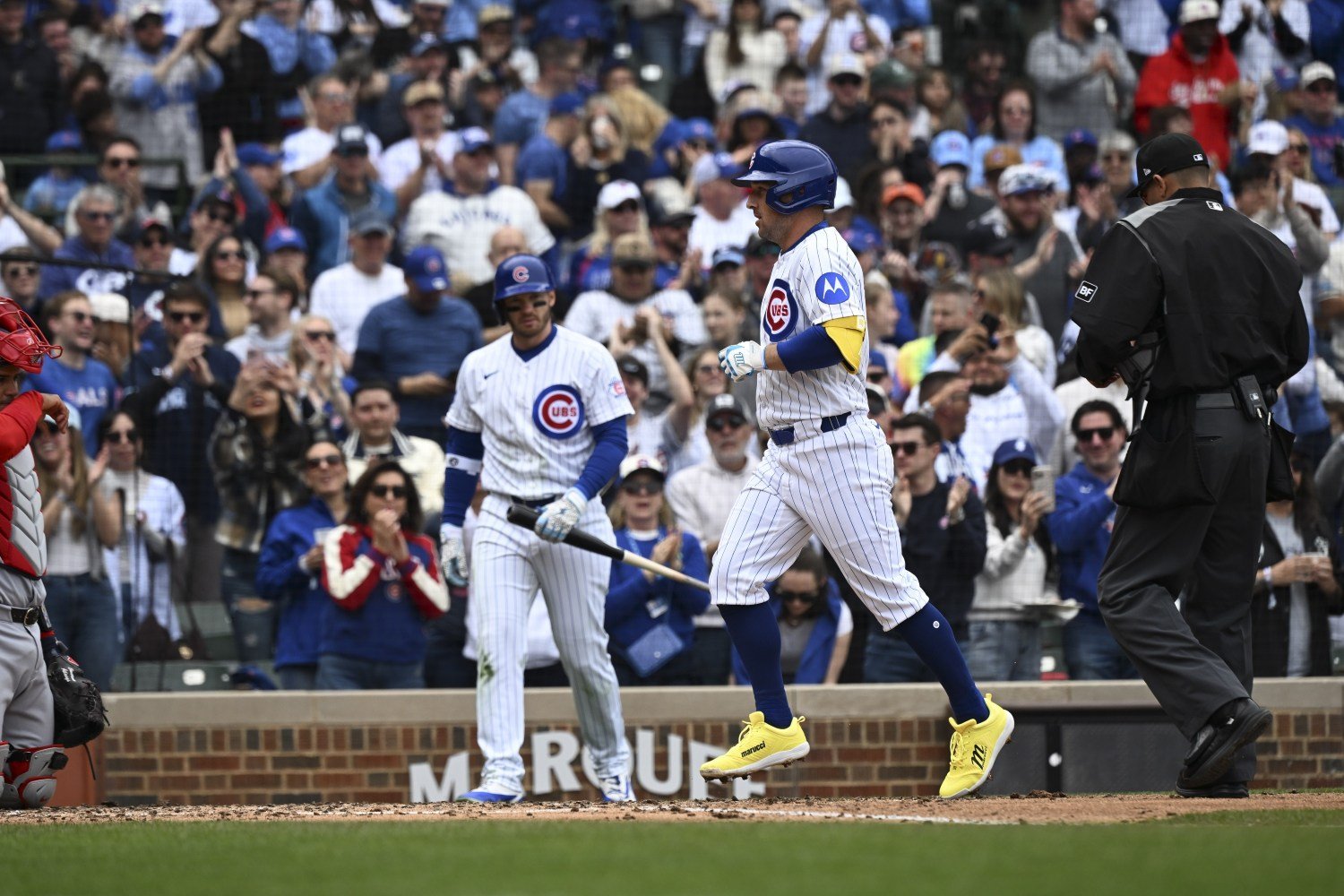 When the Cubs signed Alex Bregman in January, much was made about the way he typically gets to his power. The former Red Sox third baseman was famous for pulling fly balls barely over the left-field wall, where the fence—especially at his two former home parks, in Houston and Boston—is quite close. Wrigley Field, with the left-field fence sitting 355 feet away from home plate, has the deepest left-field corner in the majors. After the signing was announced, our own Randy Holt examined Bregman’s tendencies. Randy compared Bregman’s spray chart to that of Isaac Paredes, another third baseman whom the Cubs brought in who had a tendency to pull a lot of fly balls over the left field wall. He ultimately concluded that Bregman would fare just fine at the Friendly Confines. Paredes only hits the ball down the line, while Bregman can, and has, sprayed the ball from gap-to-gap. On Sunday, Alex Bregman hit his first home run in a Cubs uniform, and it basically proved Randy right: He hit a home run to (left-)center field! But I thought he never hit home runs there? Well, you’re not entirely wrong. Here's a spray chart of every home run that Bregman has hit since 2020: That grouping of five home runs that I circled, just to the left of the 400 marker, is where Bregman hit this homer. So, yes, he doesn’t hit many home runs to that area. Typically. Usually. The thing is, Bregman also didn’t typically play baseball games at Wrigley Field. While Wrigley has a very deep left-field corner, the distance to the left-center field wall is incredibly short. Here's every out that Bregman made last year, overlaid onto Wrigley Field’s dimensions: There’s a lot of dots there, but I count about eight fly balls that would have sailed into the bleachers. This doesn’t even take the wind into account. According to Statcast, it gave his home run on Sunday an extra 25 feet of distance. It’ll cost him some home runs, but it will also give a fly-ball hitter like him some cheapies. In his last plate appearance of the game, Bregman stepped to the plate and did it again, this time homering to right-center: This one just feels like an anomaly, but I will leave you with this: Before this season, 17 of Bregman’s 209 career homers were to the opposite field. From 2020-2024, he only hit three. He hit three last season alone, and now in 2026, he already has one. It might be an anomaly. Or maybe he's continuing to adapt. Regardless, I can say one thing with a little bit more confidence after Sunday’s game: Alex Bregman is going to be just fine hitting in Wrigley Field.
 -
Image courtesy of © Troy Taormina-Imagn Images There’s no sense beating around the bush on this. We all know exactly what Pete Crow-Armstrong has to do in order to become a successful hitter. The man himself seems to know what he has to do in order to become a successful hitter. “It’s definitely the swing decisions. I know what I do well. I know what I don’t do well. I know that I chase. I know I can get away with hitting bad balls and doing damage on bad balls, but there is no consistency there. It’s very sporadic,” he told Sahadev Sharma of The Athletic last month. In fact, according to Baseball Savant, the young center fielder swung at 41.7 percent of pitches outside the strike zone last year, the fifth highest rate in baseball. That alone doesn’t make you an unsuccessful hitter. It just doesn’t give you a whole lot of room for error. What’s neat about this preseason, and the World Baseball Classic, is that we have a small set of meaningful games that we can point to in order to give us a basis of a guy’s improvement from the offseason. Crow-Armstrong, in particular, had a very successful tournament for Team USA. After starting pool play as a late-game defensive substitute, he injected the team with some sorely needed energy with a two home run performance against Team Italy, stealing the primary center field job from Byron Buxton in the process. The Cubs’ slugger ended up being one of eight core guys for Team USA that logged 20 plate appearances. He hit .263/.333/.632, and of those eight guys, his .402 wOBA trailed only Kyle Schwarber and Brice Turang. Was anything different under the hood? Of course, I wouldn’t be writing this article if it wasn’t! Crow-Armstrong saw 40 pitches outside of the strike zone in this tournament, and he swung at 13 of them. That is a chase rate of 32.5 percent. The league average last year, for what it’s worth, was 28.2 percent. So, we’re still not talking about Juan Soto here. Still, that is a meaningful decline, enough to pull him from fifth-worst among qualified hitters to 28th-worst, which is an area where plenty of successful hitters live. It’s the difference between Crow-Armstrong striking out on uncompetitive pitches routinely and working himself back into a few plate appearances. This backs up what we have seen in the less meaningful games, too. Per FanGraphs, he has swung at 30.8 percent of pitches outside of the strike zone in 14 Cactus League plate appearances. Whether all of this will continue into the season remains to be seen. A 162-game season is a long grind, and when you are in the middle of a slump, it’s hard to stick to a process like this. And after all, it should be noted, this is all based on small sample sizes. What is encouraging to me, though, is that the youngster has both acknowledged what needs to change, and has shown a willingness to change it. A more mature Pete Crow-Armstrong would be a terrifying threat against the rest of the league. View full article
-
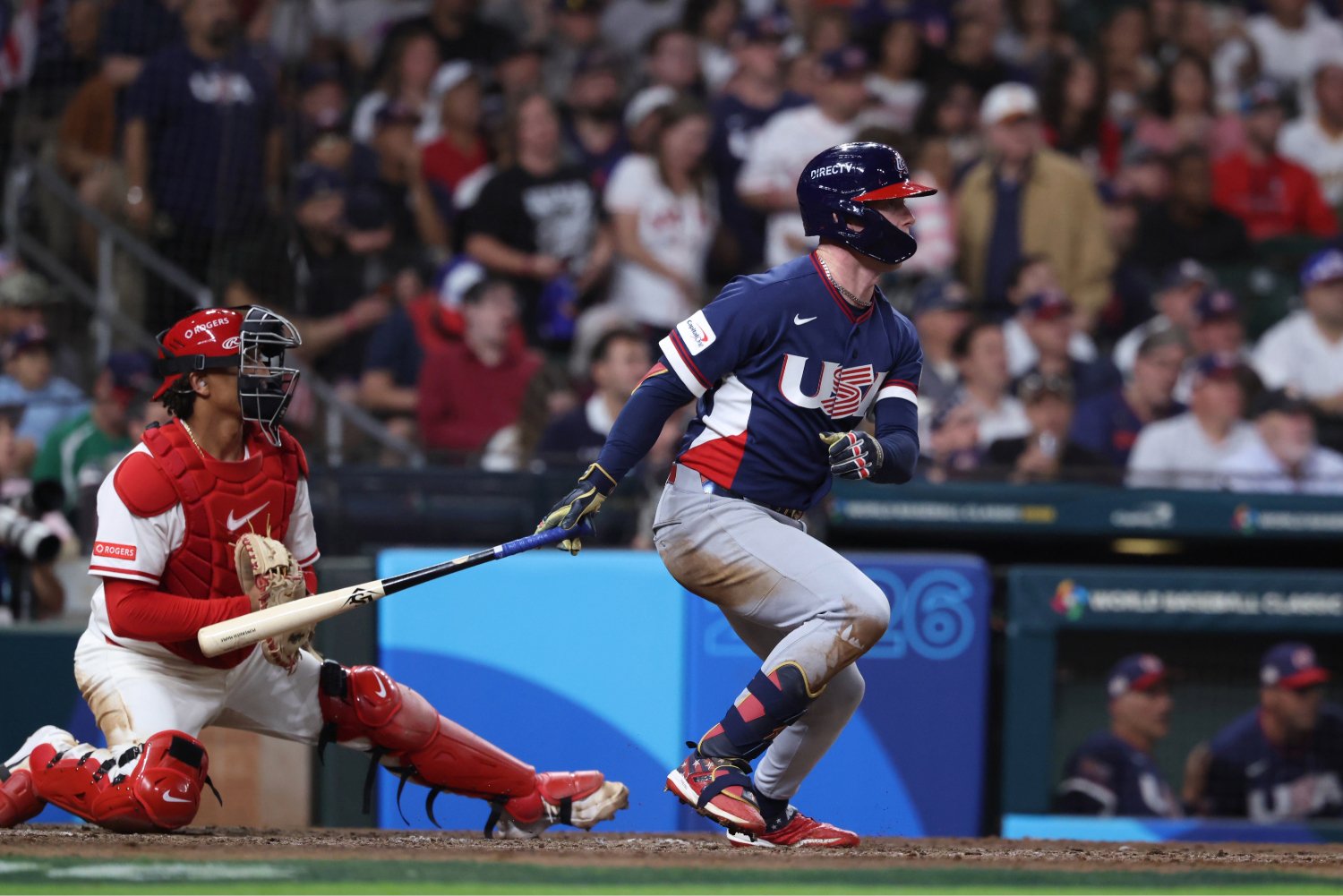 There’s no sense beating around the bush on this. We all know exactly what Pete Crow-Armstrong has to do in order to become a successful hitter. The man himself seems to know what he has to do in order to become a successful hitter. “It’s definitely the swing decisions. I know what I do well. I know what I don’t do well. I know that I chase. I know I can get away with hitting bad balls and doing damage on bad balls, but there is no consistency there. It’s very sporadic,” he told Sahadev Sharma of The Athletic last month. In fact, according to Baseball Savant, the young center fielder swung at 41.7 percent of pitches outside the strike zone last year, the fifth highest rate in baseball. That alone doesn’t make you an unsuccessful hitter. It just doesn’t give you a whole lot of room for error. What’s neat about this preseason, and the World Baseball Classic, is that we have a small set of meaningful games that we can point to in order to give us a basis of a guy’s improvement from the offseason. Crow-Armstrong, in particular, had a very successful tournament for Team USA. After starting pool play as a late-game defensive substitute, he injected the team with some sorely needed energy with a two home run performance against Team Italy, stealing the primary center field job from Byron Buxton in the process. The Cubs’ slugger ended up being one of eight core guys for Team USA that logged 20 plate appearances. He hit .263/.333/.632, and of those eight guys, his .402 wOBA trailed only Kyle Schwarber and Brice Turang. Was anything different under the hood? Of course, I wouldn’t be writing this article if it wasn’t! Crow-Armstrong saw 40 pitches outside of the strike zone in this tournament, and he swung at 13 of them. That is a chase rate of 32.5 percent. The league average last year, for what it’s worth, was 28.2 percent. So, we’re still not talking about Juan Soto here. Still, that is a meaningful decline, enough to pull him from fifth-worst among qualified hitters to 28th-worst, which is an area where plenty of successful hitters live. It’s the difference between Crow-Armstrong striking out on uncompetitive pitches routinely and working himself back into a few plate appearances. This backs up what we have seen in the less meaningful games, too. Per FanGraphs, he has swung at 30.8 percent of pitches outside of the strike zone in 14 Cactus League plate appearances. Whether all of this will continue into the season remains to be seen. A 162-game season is a long grind, and when you are in the middle of a slump, it’s hard to stick to a process like this. And after all, it should be noted, this is all based on small sample sizes. What is encouraging to me, though, is that the youngster has both acknowledged what needs to change, and has shown a willingness to change it. A more mature Pete Crow-Armstrong would be a terrifying threat against the rest of the league.
 -
Image courtesy of MLB.com Welcome to the tenth and final edition of North Side Baseball’s offseason series covering the 1918 Chicago Cubs. You can find the first nine parts here: Part 1 Part 2 Part 3 Part 4 Part 5 Part 6 Part 7 Part 8 Part 9 Last time, we dove into the first three games of the 1918 World Series. The Cubs find themselves down 2-1 and are headed to Boston for the final four games of the series against the Red Sox. A Potential Strike? According to The Society of American Baseball Research, the players were upset about the new revenue sharing plan set to begin with this World Series. Before the season began, the National Commission agreed to share some of the gate receipts from the first four World Series games with the top four teams in each league. Because of this new rule, the reduced ticket prices, and low attendance due to the ongoing war, these shares were set to be much smaller than previous years. The players wanted a guarantee of their shares, and were set to meet with the commission after the fourth game when they knew what the full revenue was going to be. Game Four The Red Sox were sending Game 1’s winner, Babe Ruth, to the mound to go up against the Cubs’ Game 2 starter, Lefty Tyler. The game was tied in the fourth inning with men on first and second and two outs. Babe Ruth, still hitless in his World Series career, stepped up to the plate. Tyler, electing to pitch to the slugger, fell behind 3-0. After coming back to bring the count full, Ruth got a pitch to hit, and let it rip. “Ruth’s smash soared high over Flack’s head and Max was so flustered that at first he took a few steps forward before he realized that the ball was soaring past him,” the New York Times wrote at the time. A triple brought home two runs, and the Red Sox took a 2-0 lead. The score stayed there until the eighth inning. After a leadoff walk to Bill Killefer, which was followed by a single from Claude Hendrix, who hit for Tyler, the Cubs found themselves in business. A groundout from Charlie Hollocher scored the first run, and then a two-out single from Les Mann brought home the tying run, giving the Cubs some life. With Tyler out of the game, the Cubs brought Phil Douglas in to pitch the bottom half of the eighth inning. A leadoff single from Wally Schang, coupled with a passed ball, gave the Red Sox a runner at second with nobody out. Harry Hooper laid down a bunt, and in attempting to throw him out at first base, Douglas threw the ball away, allowing the go-ahead run to score, and the Red Sox to take a 3-2 lead. Even still, the Cubs wouldn’t go away quietly. Fred Merkle began the ninth with a single, and after a walk to Rollie Zeider, Red Sox manager Ed Barrow took Ruth out of the game and put him into the outfield and instead inserted Bullet Joe Bush to pitch. A bunt from Chuck Wortman forced Merkle out at third, and then a ground ball double play from Turner Barber ended the game. The Cubs found themselves just one loss away from losing this World Series. Game Five The players, still seeking a resolution to their shares of the revenue, remained in the locker room after the game was supposed to begin. The game would eventually start an hour late. “The players of both clubs went on a strike because the National Commission refused to guarantee the prize money provided for under the new agreement which gives $2,000 to players of the winning club and $1,400 to those of the losing club. The players were willing to compromise at $1,500 and $1,000, but the receipts of the first four games, in which the players share, leaves only $890 for the winning players and $535 for the losers,” the Times reported. It was agreed upon to reopen the discussion after the series and play the game, which pitted Hippo Vaughn against Sad Sam Jones. In the fourth, Hollocher walked, stole second, and scored on a double from Mann, giving the Cubs a 1-0 lead. The Cubs would eventually extend the lead to 3-0 in the eighth, when Dode Paskert ripped a double to score Flack and Hollocher. From there, Hippo Vaughn did the rest. Vaughn threw another complete game, this time a shutout. He allowed just five hits, one walk, and struck out four. Following nine innings of one-run ball in Game 1, and nine innings of two-run ball in Game 3, this meant that Vaughn had pitched 27 innings in six days and allowed just three runs. What an incredible performance to extend the series for the Cubs, who were still behind 3-2. Game Six The Cubs, still desperate to keep Babe Ruth out of the Red Sox’s lineup, sent the left-handed pitching Lefty Tyler to the mound. This meant that each of the first six games of this series had been started by only Tyler or Vaughn. The Red Sox sent out their Game 3 starter, Carl Mays. The game began with nothing more than a few two-out runners until the bottom of the third. Tyler walked both Mays and Dave Shean, and with two on and two outs, George Whiteman hit a line drive to Flack in right field. According to the Times, “he caught up to the rapidly descending ball and had it entirely surrounded by his hands. Tyler was offering thanksgiving for crawling out of a bad hole when the ball squeezed its way through Flack’s buttered digits. As the ball spilled in a puddle at Flack’s feet, both Mays and Shean were well along on their way home before Flack’s alarm clock went off and woke him up.” The Cubs, with their backs against the wall, notched a lead off single in the top half of the fourth, and after a one out hit by pitch, they had two runners on with just one out. However, Mann was picked off of first base. After a walk to Paskert and an RBI single from Merkle, the Cubs trailed just 2-1, though the inning as a whole felt like a lost opportunity. The Cubs would go down the rest of the game without much incident, managing just one baserunner on a walk after that fourth inning rally. With a 2-1 loss in Game 6 of the 1918 World Series, the Cubs’ season was over. Aftermath Because of the war, there was such little fanfare around this World Series, with the Times reporting in their recap of Game 6 that “baseball’s valedictory this afternoon should have been played to the weary strains of Chopin’s Funeral March. The smallest gathering that ever saw the national game’s most imposing event sat silently about and watched Boston win and Chicago lose. There was no wild demonstration of joy when the last man went out.” The war, it was clear, had taken its toll, and it would take a toll on more than just the atmosphere of this World Series. The previously agreed upon revenue sharing remained, with Cleveland, both New York teams, Pittsburgh, Cincinnati, and Washington all receiving shares, according to the Times. Per SABR, the winning shares ended up being $1,108.45 for the Red Sox, which is the lowest amount ever awarded to the World Series champions. The Cubs received $671 per player. Thankfully, World War I would end just a couple of months later, on November 11. Baseball players returned home, and the 1919 season was shortened to 140 games to accommodate those returning players. Of course, Grover Cleveland Alexander was among those players, as he joined Hippo Vaughn atop the 1919 Cubs’ pitching rotation. Some have since wondered if there was a fix in the 1918 World Series in the aftermath of the Black Sox scandal in the 1919 World Series. John Thorn, the official historian for Major League Baseball, was quoted by the Seattle Times in 2011 that “it seems more likely that there would have been a fix than there would not have been.” A court deposition that was displayed at the Chicago History Museum from Eddie Cicotte, one of the members of the 1919 Black Sox, would suggest that the series was. Cicotte mentioned that his teammates had discussed that “one or several” Cubs were offered $10,000 to fix the series. There were certainly some very costly misplays and errors that ended up costing the Cubs dearly, Flack’s misplay among them. Of course, we’ll never know for sure. The 1918 season was ultimately a successful one for the Cubs, even if they came up short at the end. It was a wild ride that I am sure gave so many fans something to think about other than the happenings in Europe. View full article
-
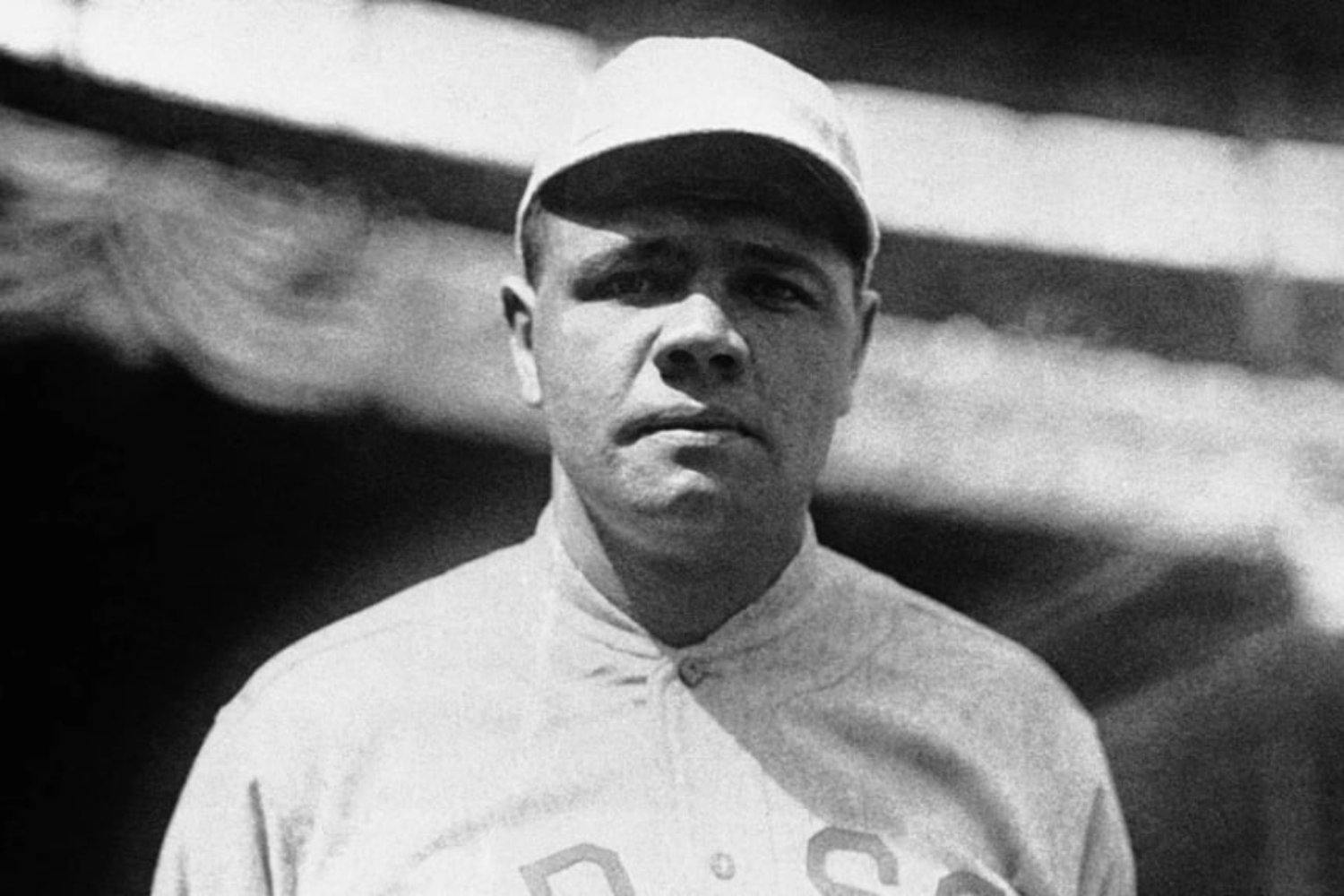 Welcome to the tenth and final edition of North Side Baseball’s offseason series covering the 1918 Chicago Cubs. You can find the first nine parts here: Part 1 Part 2 Part 3 Part 4 Part 5 Part 6 Part 7 Part 8 Part 9 Last time, we dove into the first three games of the 1918 World Series. The Cubs find themselves down 2-1 and are headed to Boston for the final four games of the series against the Red Sox. A Potential Strike? According to The Society of American Baseball Research, the players were upset about the new revenue sharing plan set to begin with this World Series. Before the season began, the National Commission agreed to share some of the gate receipts from the first four World Series games with the top four teams in each league. Because of this new rule, the reduced ticket prices, and low attendance due to the ongoing war, these shares were set to be much smaller than previous years. The players wanted a guarantee of their shares, and were set to meet with the commission after the fourth game when they knew what the full revenue was going to be. Game Four The Red Sox were sending Game 1’s winner, Babe Ruth, to the mound to go up against the Cubs’ Game 2 starter, Lefty Tyler. The game was tied in the fourth inning with men on first and second and two outs. Babe Ruth, still hitless in his World Series career, stepped up to the plate. Tyler, electing to pitch to the slugger, fell behind 3-0. After coming back to bring the count full, Ruth got a pitch to hit, and let it rip. “Ruth’s smash soared high over Flack’s head and Max was so flustered that at first he took a few steps forward before he realized that the ball was soaring past him,” the New York Times wrote at the time. A triple brought home two runs, and the Red Sox took a 2-0 lead. The score stayed there until the eighth inning. After a leadoff walk to Bill Killefer, which was followed by a single from Claude Hendrix, who hit for Tyler, the Cubs found themselves in business. A groundout from Charlie Hollocher scored the first run, and then a two-out single from Les Mann brought home the tying run, giving the Cubs some life. With Tyler out of the game, the Cubs brought Phil Douglas in to pitch the bottom half of the eighth inning. A leadoff single from Wally Schang, coupled with a passed ball, gave the Red Sox a runner at second with nobody out. Harry Hooper laid down a bunt, and in attempting to throw him out at first base, Douglas threw the ball away, allowing the go-ahead run to score, and the Red Sox to take a 3-2 lead. Even still, the Cubs wouldn’t go away quietly. Fred Merkle began the ninth with a single, and after a walk to Rollie Zeider, Red Sox manager Ed Barrow took Ruth out of the game and put him into the outfield and instead inserted Bullet Joe Bush to pitch. A bunt from Chuck Wortman forced Merkle out at third, and then a ground ball double play from Turner Barber ended the game. The Cubs found themselves just one loss away from losing this World Series. Game Five The players, still seeking a resolution to their shares of the revenue, remained in the locker room after the game was supposed to begin. The game would eventually start an hour late. “The players of both clubs went on a strike because the National Commission refused to guarantee the prize money provided for under the new agreement which gives $2,000 to players of the winning club and $1,400 to those of the losing club. The players were willing to compromise at $1,500 and $1,000, but the receipts of the first four games, in which the players share, leaves only $890 for the winning players and $535 for the losers,” the Times reported. It was agreed upon to reopen the discussion after the series and play the game, which pitted Hippo Vaughn against Sad Sam Jones. In the fourth, Hollocher walked, stole second, and scored on a double from Mann, giving the Cubs a 1-0 lead. The Cubs would eventually extend the lead to 3-0 in the eighth, when Dode Paskert ripped a double to score Flack and Hollocher. From there, Hippo Vaughn did the rest. Vaughn threw another complete game, this time a shutout. He allowed just five hits, one walk, and struck out four. Following nine innings of one-run ball in Game 1, and nine innings of two-run ball in Game 3, this meant that Vaughn had pitched 27 innings in six days and allowed just three runs. What an incredible performance to extend the series for the Cubs, who were still behind 3-2. Game Six The Cubs, still desperate to keep Babe Ruth out of the Red Sox’s lineup, sent the left-handed pitching Lefty Tyler to the mound. This meant that each of the first six games of this series had been started by only Tyler or Vaughn. The Red Sox sent out their Game 3 starter, Carl Mays. The game began with nothing more than a few two-out runners until the bottom of the third. Tyler walked both Mays and Dave Shean, and with two on and two outs, George Whiteman hit a line drive to Flack in right field. According to the Times, “he caught up to the rapidly descending ball and had it entirely surrounded by his hands. Tyler was offering thanksgiving for crawling out of a bad hole when the ball squeezed its way through Flack’s buttered digits. As the ball spilled in a puddle at Flack’s feet, both Mays and Shean were well along on their way home before Flack’s alarm clock went off and woke him up.” The Cubs, with their backs against the wall, notched a lead off single in the top half of the fourth, and after a one out hit by pitch, they had two runners on with just one out. However, Mann was picked off of first base. After a walk to Paskert and an RBI single from Merkle, the Cubs trailed just 2-1, though the inning as a whole felt like a lost opportunity. The Cubs would go down the rest of the game without much incident, managing just one baserunner on a walk after that fourth inning rally. With a 2-1 loss in Game 6 of the 1918 World Series, the Cubs’ season was over. Aftermath Because of the war, there was such little fanfare around this World Series, with the Times reporting in their recap of Game 6 that “baseball’s valedictory this afternoon should have been played to the weary strains of Chopin’s Funeral March. The smallest gathering that ever saw the national game’s most imposing event sat silently about and watched Boston win and Chicago lose. There was no wild demonstration of joy when the last man went out.” The war, it was clear, had taken its toll, and it would take a toll on more than just the atmosphere of this World Series. The previously agreed upon revenue sharing remained, with Cleveland, both New York teams, Pittsburgh, Cincinnati, and Washington all receiving shares, according to the Times. Per SABR, the winning shares ended up being $1,108.45 for the Red Sox, which is the lowest amount ever awarded to the World Series champions. The Cubs received $671 per player. Thankfully, World War I would end just a couple of months later, on November 11. Baseball players returned home, and the 1919 season was shortened to 140 games to accommodate those returning players. Of course, Grover Cleveland Alexander was among those players, as he joined Hippo Vaughn atop the 1919 Cubs’ pitching rotation. Some have since wondered if there was a fix in the 1918 World Series in the aftermath of the Black Sox scandal in the 1919 World Series. John Thorn, the official historian for Major League Baseball, was quoted by the Seattle Times in 2011 that “it seems more likely that there would have been a fix than there would not have been.” A court deposition that was displayed at the Chicago History Museum from Eddie Cicotte, one of the members of the 1919 Black Sox, would suggest that the series was. Cicotte mentioned that his teammates had discussed that “one or several” Cubs were offered $10,000 to fix the series. There were certainly some very costly misplays and errors that ended up costing the Cubs dearly, Flack’s misplay among them. Of course, we’ll never know for sure. The 1918 season was ultimately a successful one for the Cubs, even if they came up short at the end. It was a wild ride that I am sure gave so many fans something to think about other than the happenings in Europe.
 -
Thanks! It’s been a lot of work, so I am glad you’re enjoying it and am grateful for your comment. Hope you’ll check out the final piece coming sometime soon!
-
Image courtesy of © Rick Cinclair/Telegram & Gazette / USA TODAY NETWORK via Imagn Images Welcome to part nine of North Side Baseball’s offseason series covering the 1918 Chicago Cubs. You can find the first eight parts here: Part 1 Part 2 Part 3 Part 4 Part 5 Part 6 Part 7 Part 8 When we left off, the National League and the American League had come to an agreement to end the regular season early, in order to play the World Series. This allowed baseball players to respect the 'work or fight' rule, which required all draft-eligible men to engage in essential work, or register to be drafted into the army. The Cubs, who finished 84-45-2, were set to face off with the Red Sox (75-51) for the championship in early September. Today, we’ll take a look at the start of the series. Game One As the teams prepared for Game 1, the Cubs were viewed as the favorites to win the whole series, according to the Society for American Baseball Research. The New York Times concurred: “when the Chicago Cubs and the Boston Red Sox clash in the opening game of the [World Series] at Comiskey Park in Chicago on Wednesday afternoon, baseball fans who base their hopes and figures on form will be sure to favor the National League club as the winner.” The Times went on to predict that the Cubs’ left-handed pitchers, specifically Hippo Vaughn and Lefty Tyler, would play a huge role in the series, neutralizing Boston’s slugging left-handed hitters Babe Ruth and Harry Hooper. This made it an easy decision for the Cubs to start Vaughn in Game 1. He went up against Ruth, who was still both pitching and hitting at the time. After a one-day delay due to rain, Game 1 happened on Sept. 5, with the Red Sox triumphing 1-0. Both Ruth and Vaughn went the distance, with Ruth striking out four and allowing six hits, while Vaughn gave up five hits and struck out six. The lone run was scored in the top of the fourth. After a leadoff walk to Dave Shean, the Red Sox strung together back-to-back singles from George Whitman and Stuffy McInnis with one out to bring Shean home. The Times was quick to note the apparent lack of excitement around the Series, given the circumstances: Nonetheless, the World Series trucked onward. Game Two If a 1-0 game one was considered boring, Game 2 was anything but. In a pitching matchup of Bullet Joe Bush against Lefty Tyler, the Cubs got out to an early 3-0 lead in the second inning on hits from Charlie Deal, Bill Killefer, and the aforementioned Tyler. However, it was what happened after the inning that caused some excitement. According to SABR, Otto Knabe, the Cubs’ first base coach, had been heckling Bush during the Cubs’ rally. Heinie Wagner, the third base coach for the Red Sox, met Knabe out on the field in between innings. Things got heated between the two, who ended up in the Cubs’ dugout. I’ll let The New York Times take it from here: “In a jiffy the two coaches were locked in an embrace which was not one of affection. Like a bird of prey, Knabe perched on top of Wagner as he fell to the ground. They were merrily mauling each other all over the dugout when Claude Hendrix and other Cub players pulled Knabe off his tormentor.” By the time the Boston players reached the dugout to further intervene, “Wagner emerged all mussed up and excited. From the appearance of his uniform it was plain that Knabe had brushed up the floor of the dugout with Wagner, for his uniform looked as if he had been repairing a flivver. The umpires volunteered soothing words to the combatants and a truce was declared.” [Ed. note: I was wondering, and I bet you were, too. A flivver is an old car or aircraft, usually beaten up and worn down. It's a cousin to 'jalopy,' which is only marginally more familiar to our modern ears and eyes but was certainly more common in its heyday.] The game remained 3-0 until the ninth inning. After two leadoff triples made the game 3-1, McInnis grounded back to Tyler, who was still in the game. He completed the out at first without the run scoring. Per SABR, after a walk to Everett Scott, Boston manager Ed Barrow thought about pinch-hitting with Ruth, who wasn’t in the starting lineup due to a left-handed pitcher being on the mound for the Cubs. But Ruth never got a chance. Jean Dubuc pinch-hit instead, and after he struck out, Wally Schang swung (schwung?) at the first pitch and popped out to Charlie Hollocher to win the game for the Cubs and tie the series at one game apiece. Game Three According to Times, most figured the Cubs would be starting Claude Hendrix in Game 3. Instead, surprisingly, they opted for Vaughn again, which also meant that Ruth remained on the bench. On the Boston side, Carl Mays got the start. Vaughn worked out of trouble in the second, though the Red Sox would get to him in the fourth. Following a strikeout of Amos Strunk to start the inning, George Whiteman was hit by a pitch in the next plate appearance. Singles from McInnis and Schang scored the first run of the game; that brought Everett Scott to the plate. Scott laid down a bunt that, according to the Times, Vaughn fielded cleanly, but he simply didn’t throw the ball anywhere. “With the ball in his hand, his arm outstretched ready to throw it, some unknown influence seemed to stay the poised throwing wing. He was within half a dozen feet of McInnis as he scored from third, and was facing toward first base, but he held the ball as if it was a chunk of gold.” This brought home the second run of the game to give the Red Sox a 2-0 lead. A double from Charlie Pick and a single from Bill Killefer in the fifth cut the lead in half at 2-1, where the score remained until the last inning. With Mays still in the game, both Dode Paskert and Fred Merkle grounded out to start the inning. Then, Pick singled and stole second base, putting the tying run just 180 feet away with two outs in the ninth inning. The next pitch from Mays got past the catcher, Schang, and allowed Pick to take third base on a close play. After Pick slid in safely, the ball trickled away from the third baseman, Jackie Thomas. Pick dashed for home with the potential tying run. Alas: “Straight and true and as swift as a bullet the ball went from Thomas’s hand into the waiting mitt of Schang at the plate. As Pick came tumbling into the final bag, stretching his left foot far out as to hook the corner of the rubber platter, the ball clapped against the catcher’s glove, and Schang tagged the runner with the ball. ‘You’re out,’ yelled Umpire Klem, and right then and there the Cubs’ chances in that game were gone forever.” Just like that, the Cubs lost 2-1, and were also down 2-1 in the World Series, when mere seconds ago, fans were ablaze at the potential of a tie game as Pick dashed home. It wasn’t to be. The final four games of the series were set to be played at Fenway Park in Boston, and the Cubs now found themselves in a situation where they needed to win three of those games. Suddenly, their backs were against the wall. View full article
-
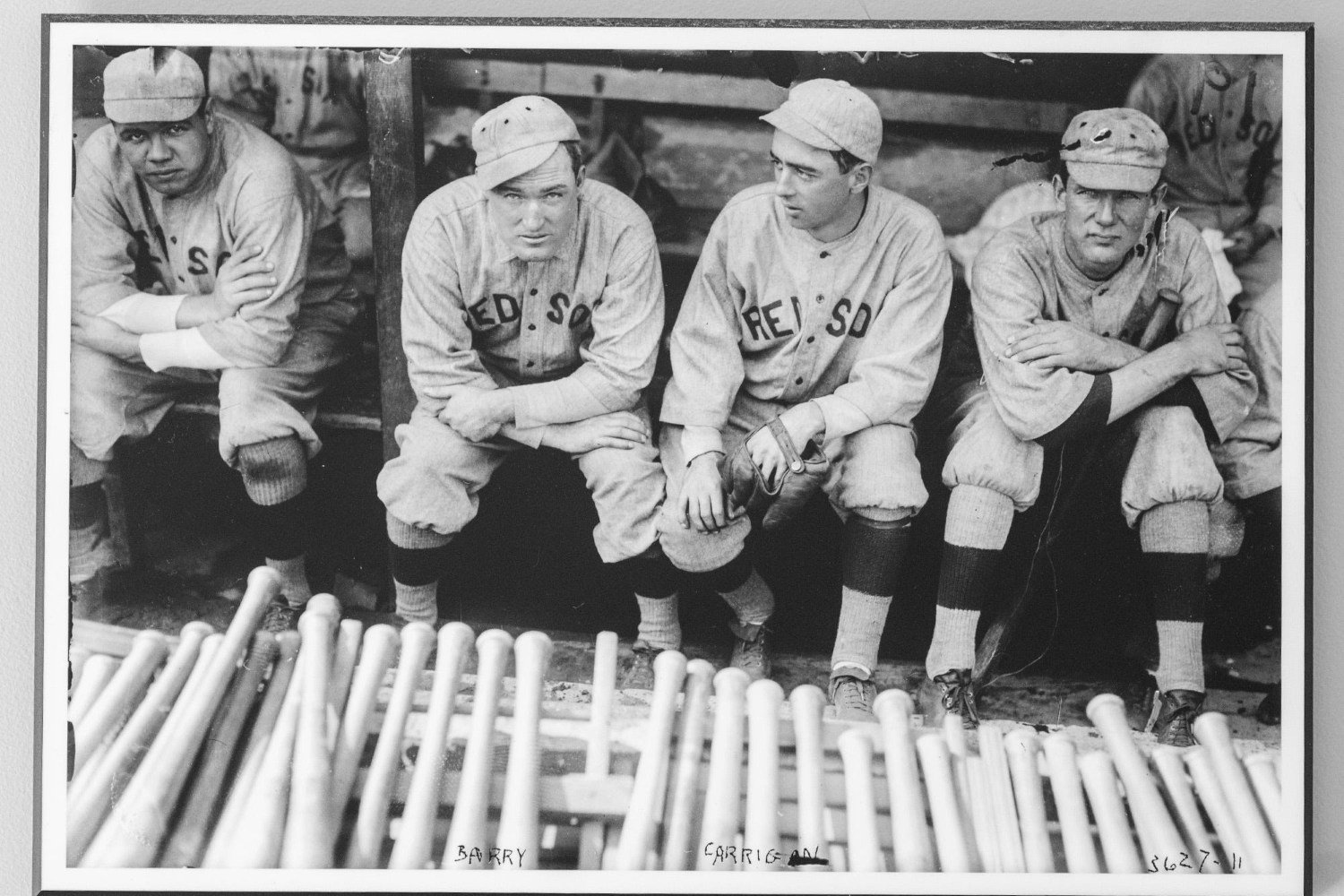 Welcome to part nine of North Side Baseball’s offseason series covering the 1918 Chicago Cubs. You can find the first eight parts here: Part 1 Part 2 Part 3 Part 4 Part 5 Part 6 Part 7 Part 8 When we left off, the National League and the American League had come to an agreement to end the regular season early, in order to play the World Series. This allowed baseball players to respect the 'work or fight' rule, which required all draft-eligible men to engage in essential work, or register to be drafted into the army. The Cubs, who finished 84-45-2, were set to face off with the Red Sox (75-51) for the championship in early September. Today, we’ll take a look at the start of the series. Game One As the teams prepared for Game 1, the Cubs were viewed as the favorites to win the whole series, according to the Society for American Baseball Research. The New York Times concurred: “when the Chicago Cubs and the Boston Red Sox clash in the opening game of the [World Series] at Comiskey Park in Chicago on Wednesday afternoon, baseball fans who base their hopes and figures on form will be sure to favor the National League club as the winner.” The Times went on to predict that the Cubs’ left-handed pitchers, specifically Hippo Vaughn and Lefty Tyler, would play a huge role in the series, neutralizing Boston’s slugging left-handed hitters Babe Ruth and Harry Hooper. This made it an easy decision for the Cubs to start Vaughn in Game 1. He went up against Ruth, who was still both pitching and hitting at the time. After a one-day delay due to rain, Game 1 happened on Sept. 5, with the Red Sox triumphing 1-0. Both Ruth and Vaughn went the distance, with Ruth striking out four and allowing six hits, while Vaughn gave up five hits and struck out six. The lone run was scored in the top of the fourth. After a leadoff walk to Dave Shean, the Red Sox strung together back-to-back singles from George Whitman and Stuffy McInnis with one out to bring Shean home. The Times was quick to note the apparent lack of excitement around the Series, given the circumstances: Nonetheless, the World Series trucked onward. Game Two If a 1-0 game one was considered boring, Game 2 was anything but. In a pitching matchup of Bullet Joe Bush against Lefty Tyler, the Cubs got out to an early 3-0 lead in the second inning on hits from Charlie Deal, Bill Killefer, and the aforementioned Tyler. However, it was what happened after the inning that caused some excitement. According to SABR, Otto Knabe, the Cubs’ first base coach, had been heckling Bush during the Cubs’ rally. Heinie Wagner, the third base coach for the Red Sox, met Knabe out on the field in between innings. Things got heated between the two, who ended up in the Cubs’ dugout. I’ll let The New York Times take it from here: “In a jiffy the two coaches were locked in an embrace which was not one of affection. Like a bird of prey, Knabe perched on top of Wagner as he fell to the ground. They were merrily mauling each other all over the dugout when Claude Hendrix and other Cub players pulled Knabe off his tormentor.” By the time the Boston players reached the dugout to further intervene, “Wagner emerged all mussed up and excited. From the appearance of his uniform it was plain that Knabe had brushed up the floor of the dugout with Wagner, for his uniform looked as if he had been repairing a flivver. The umpires volunteered soothing words to the combatants and a truce was declared.” [Ed. note: I was wondering, and I bet you were, too. A flivver is an old car or aircraft, usually beaten up and worn down. It's a cousin to 'jalopy,' which is only marginally more familiar to our modern ears and eyes but was certainly more common in its heyday.] The game remained 3-0 until the ninth inning. After two leadoff triples made the game 3-1, McInnis grounded back to Tyler, who was still in the game. He completed the out at first without the run scoring. Per SABR, after a walk to Everett Scott, Boston manager Ed Barrow thought about pinch-hitting with Ruth, who wasn’t in the starting lineup due to a left-handed pitcher being on the mound for the Cubs. But Ruth never got a chance. Jean Dubuc pinch-hit instead, and after he struck out, Wally Schang swung (schwung?) at the first pitch and popped out to Charlie Hollocher to win the game for the Cubs and tie the series at one game apiece. Game Three According to Times, most figured the Cubs would be starting Claude Hendrix in Game 3. Instead, surprisingly, they opted for Vaughn again, which also meant that Ruth remained on the bench. On the Boston side, Carl Mays got the start. Vaughn worked out of trouble in the second, though the Red Sox would get to him in the fourth. Following a strikeout of Amos Strunk to start the inning, George Whiteman was hit by a pitch in the next plate appearance. Singles from McInnis and Schang scored the first run of the game; that brought Everett Scott to the plate. Scott laid down a bunt that, according to the Times, Vaughn fielded cleanly, but he simply didn’t throw the ball anywhere. “With the ball in his hand, his arm outstretched ready to throw it, some unknown influence seemed to stay the poised throwing wing. He was within half a dozen feet of McInnis as he scored from third, and was facing toward first base, but he held the ball as if it was a chunk of gold.” This brought home the second run of the game to give the Red Sox a 2-0 lead. A double from Charlie Pick and a single from Bill Killefer in the fifth cut the lead in half at 2-1, where the score remained until the last inning. With Mays still in the game, both Dode Paskert and Fred Merkle grounded out to start the inning. Then, Pick singled and stole second base, putting the tying run just 180 feet away with two outs in the ninth inning. The next pitch from Mays got past the catcher, Schang, and allowed Pick to take third base on a close play. After Pick slid in safely, the ball trickled away from the third baseman, Jackie Thomas. Pick dashed for home with the potential tying run. Alas: “Straight and true and as swift as a bullet the ball went from Thomas’s hand into the waiting mitt of Schang at the plate. As Pick came tumbling into the final bag, stretching his left foot far out as to hook the corner of the rubber platter, the ball clapped against the catcher’s glove, and Schang tagged the runner with the ball. ‘You’re out,’ yelled Umpire Klem, and right then and there the Cubs’ chances in that game were gone forever.” Just like that, the Cubs lost 2-1, and were also down 2-1 in the World Series, when mere seconds ago, fans were ablaze at the potential of a tie game as Pick dashed home. It wasn’t to be. The final four games of the series were set to be played at Fenway Park in Boston, and the Cubs now found themselves in a situation where they needed to win three of those games. Suddenly, their backs were against the wall.
 -
Image courtesy of Library of Congress, via Wikimedia Commons Welcome to part eight of North Side Baseball’s offseason series covering the 1918 Chicago Cubs. You can find the first seven parts here: Part 1 Part 2 Part 3 Part 4 Part 5 Part 6 Part 7 Today, we’ll be doing another player profile, this time on the great Hippo Vaughn. By FanGraphs WAR, Vaughn is the best left-handed pitcher to ever don a Cubs uniform, and he was an essential member of that 1918 Cubs team, leading the pitching staff in fWAR. His 1.74 ERA that season was second among qualified pitchers, behind only Hall of Famer Walter Johnson. Vaughn never made the Hall, but deserves to be recognized for his contributions to the Chicago Cubs. James Leslie “Hippo” Vaughn was born on April 9, 1888, in Weatherford, Texas, a town located about 25 miles outside of Fort Worth. According to his Society for American Baseball Research biography, the young lefty began pitching professionally in the Texas League, where he was eventually recognized and acquired by the New York Highlanders—or, as you likely now know them, the Yankees. Vaughn would become the youngest Opening Day starting pitcher in Yankees history in 1910, at 22 years and five days old—a record that he still holds today. He would go on to post a stellar 1.83 ERA in the 1910 season, but following a more difficult 1911 season that saw him put up a 4.39 ERA, Vaughn was sold to the Washington Nationals, and then to Kansas City of the American Association. After a couple of impressive seasons there, Vaughn wound up on the Chicago Cubs, and it was there where his career really took off. Following a brief debut of 56 innings in 1913, from 1914 to 1920, he never had a season wherein he posted less than 3.8 fWAR, and he never produced an ERA higher than 2.87. From 1914 to 1920, per FanGraphs, his 33.6 WAR was third in baseball, behind only two future Hall of Famers: Walter Johnson and Grover Alexander. The latter, ironically, was Vaughn’s teammate in Chicago for a bit. Vaughn’s 2.16 ERA over those seven seasons was fourth. His 143 wins was third. His 165 complete games, 2,051 innings pitched, and 1,071 strikeouts all also ranked third, behind the aforementioned greats. Any way you slice it, he was one of the best pitchers in baseball for a time. There is no greater illustration of how dominant Vaughn could be than the game he started on May 2, 1917. It featured him against Fred Toney of the Cincinnati Reds. Both pitchers threw no-hitters through nine innings, though, of course, the score was tied at 0-0, so the game persisted into the tenth. In a retrospective on the game from 1953, Arthur Daley at The New York Times wrote the following about Vaughn: “Vaughn, perhaps, pitched a mite better than Toney because only one member of the Reds even stroked the ball beyond the infield.” Daley would go on to describe the top of the tenth inning, when Vaughn finally allowed a hit (and, unfortunately, a run) that led to a 1-0 Reds win. “Larry Kopf sliced a roller between the gloves of Fred Merkle at first and Larry Doyle at second. It was the first hit of the game," Daley wrote. "Then Hal Chase flied out deeply to [Cy] Williams—except that Williams dropped the ball for an error, as Kopf raced to third.” That brought up Jim Thorpe, who hit a little tapper out in front of home plate. Vaughn, likely knowing that he would have a tough play on Thorpe, a former Olympic gold medalist in the classic pentathlon and decathlon, threw home. Art Wilson, the catcher, never saw it coming, and the ball “shot past him to the backstop and Kopf pattered home from third base with the only run of the game.” Toney retired the Cubs without a hit in the bottom half of the tenth, completing his no-hitter and wrapping up the win for the Reds. Still, this is the only known game in baseball history where two pitchers both had no-hitters through nine innings of baseball. Unfortunately for Hippo, who was given that nickname due to his large stature for a player at the time at 6’4”, 215 lbs, he is also commonly known for the way that he left baseball. He was not his usual, dominant self during the 1921 season, and after a start against the New York Giants on July 9, Vaughn disappeared. “Jim walked from the pitchers’ box to the clubhouse at the Polo Grounds on Saturday after being belted for successive home runs by Frank Snyder and Phil Douglas and he has not been seen since by Manager Johnny Evers or any other member of the Chicago Cubs,” the Times reported on July 11. The article said that should Hippo Vaughn return to the team, he would be suspended for his unexplained absence. According to his SABR biography, the Cubs were later ready to reinstate the pitcher, but Kenesaw Mountain Landis, the commissioner of baseball, refused to do so, and suspended Vaughn for the remainder of the season. Interestingly enough, the Times reported in October of that same year that Vaughn was missing again, with his wife having asked the Chicago police to look for him. The same wife, Edna, filed for divorce in 1920, the previous year, only to later drop the proceedings sometime after Edna’s father stabbed Vaughn. Perhaps this all helps explain the sudden decline of Vaughn, who went from one of the best pitchers in the National League in the 1920 season, to a pitcher with a 6.01 ERA in the 1921 season. He would never appear in Major League Baseball again, despite bouncing around several lower-level leagues. Arguably, Vaughn is the best left-handed pitcher that the Chicago Cubs organization has ever seen. Between the double no-hitter and his performance both during and leading up to the 1918 World Series (we’ll get to that in more detail in a future article), his on-field feats deserve greater remembrance. View full article
-
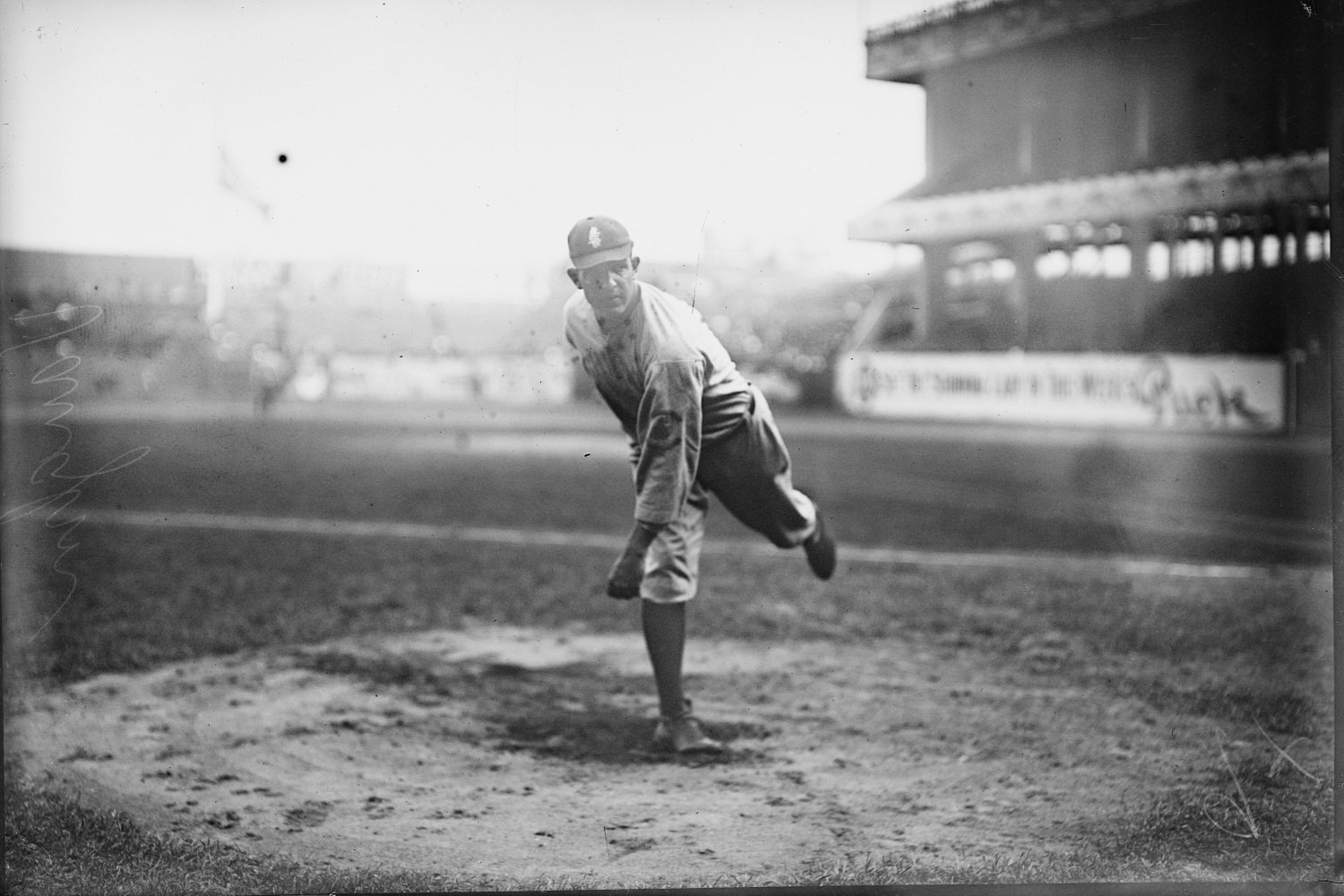 Welcome to part eight of North Side Baseball’s offseason series covering the 1918 Chicago Cubs. You can find the first seven parts here: Part 1 Part 2 Part 3 Part 4 Part 5 Part 6 Part 7 Today, we’ll be doing another player profile, this time on the great Hippo Vaughn. By FanGraphs WAR, Vaughn is the best left-handed pitcher to ever don a Cubs uniform, and he was an essential member of that 1918 Cubs team, leading the pitching staff in fWAR. His 1.74 ERA that season was second among qualified pitchers, behind only Hall of Famer Walter Johnson. Vaughn never made the Hall, but deserves to be recognized for his contributions to the Chicago Cubs. James Leslie “Hippo” Vaughn was born on April 9, 1888, in Weatherford, Texas, a town located about 25 miles outside of Fort Worth. According to his Society for American Baseball Research biography, the young lefty began pitching professionally in the Texas League, where he was eventually recognized and acquired by the New York Highlanders—or, as you likely now know them, the Yankees. Vaughn would become the youngest Opening Day starting pitcher in Yankees history in 1910, at 22 years and five days old—a record that he still holds today. He would go on to post a stellar 1.83 ERA in the 1910 season, but following a more difficult 1911 season that saw him put up a 4.39 ERA, Vaughn was sold to the Washington Nationals, and then to Kansas City of the American Association. After a couple of impressive seasons there, Vaughn wound up on the Chicago Cubs, and it was there where his career really took off. Following a brief debut of 56 innings in 1913, from 1914 to 1920, he never had a season wherein he posted less than 3.8 fWAR, and he never produced an ERA higher than 2.87. From 1914 to 1920, per FanGraphs, his 33.6 WAR was third in baseball, behind only two future Hall of Famers: Walter Johnson and Grover Alexander. The latter, ironically, was Vaughn’s teammate in Chicago for a bit. Vaughn’s 2.16 ERA over those seven seasons was fourth. His 143 wins was third. His 165 complete games, 2,051 innings pitched, and 1,071 strikeouts all also ranked third, behind the aforementioned greats. Any way you slice it, he was one of the best pitchers in baseball for a time. There is no greater illustration of how dominant Vaughn could be than the game he started on May 2, 1917. It featured him against Fred Toney of the Cincinnati Reds. Both pitchers threw no-hitters through nine innings, though, of course, the score was tied at 0-0, so the game persisted into the tenth. In a retrospective on the game from 1953, Arthur Daley at The New York Times wrote the following about Vaughn: “Vaughn, perhaps, pitched a mite better than Toney because only one member of the Reds even stroked the ball beyond the infield.” Daley would go on to describe the top of the tenth inning, when Vaughn finally allowed a hit (and, unfortunately, a run) that led to a 1-0 Reds win. “Larry Kopf sliced a roller between the gloves of Fred Merkle at first and Larry Doyle at second. It was the first hit of the game," Daley wrote. "Then Hal Chase flied out deeply to [Cy] Williams—except that Williams dropped the ball for an error, as Kopf raced to third.” That brought up Jim Thorpe, who hit a little tapper out in front of home plate. Vaughn, likely knowing that he would have a tough play on Thorpe, a former Olympic gold medalist in the classic pentathlon and decathlon, threw home. Art Wilson, the catcher, never saw it coming, and the ball “shot past him to the backstop and Kopf pattered home from third base with the only run of the game.” Toney retired the Cubs without a hit in the bottom half of the tenth, completing his no-hitter and wrapping up the win for the Reds. Still, this is the only known game in baseball history where two pitchers both had no-hitters through nine innings of baseball. Unfortunately for Hippo, who was given that nickname due to his large stature for a player at the time at 6’4”, 215 lbs, he is also commonly known for the way that he left baseball. He was not his usual, dominant self during the 1921 season, and after a start against the New York Giants on July 9, Vaughn disappeared. “Jim walked from the pitchers’ box to the clubhouse at the Polo Grounds on Saturday after being belted for successive home runs by Frank Snyder and Phil Douglas and he has not been seen since by Manager Johnny Evers or any other member of the Chicago Cubs,” the Times reported on July 11. The article said that should Hippo Vaughn return to the team, he would be suspended for his unexplained absence. According to his SABR biography, the Cubs were later ready to reinstate the pitcher, but Kenesaw Mountain Landis, the commissioner of baseball, refused to do so, and suspended Vaughn for the remainder of the season. Interestingly enough, the Times reported in October of that same year that Vaughn was missing again, with his wife having asked the Chicago police to look for him. The same wife, Edna, filed for divorce in 1920, the previous year, only to later drop the proceedings sometime after Edna’s father stabbed Vaughn. Perhaps this all helps explain the sudden decline of Vaughn, who went from one of the best pitchers in the National League in the 1920 season, to a pitcher with a 6.01 ERA in the 1921 season. He would never appear in Major League Baseball again, despite bouncing around several lower-level leagues. Arguably, Vaughn is the best left-handed pitcher that the Chicago Cubs organization has ever seen. Between the double no-hitter and his performance both during and leading up to the 1918 World Series (we’ll get to that in more detail in a future article), his on-field feats deserve greater remembrance.
 -
Image courtesy of National Baseball Hall of Fame Photo Archives Welcome to part seven of North Side Baseball’s offseason series covering the 1918 Chicago Cubs. You can find the first six parts here: Part 1 Part 2 Part 3 Part 4 Part 5 Part 6 Last time, we left off with the World Series in question. The Cubs began August 3.5 games up on the second-place New York Giants. However, with World War I ongoing in Europe, it was declared in July that all draft-eligible men must either sign up for war-related work, or risk being drafted to fight in the war. Of course, this included baseball players. The National League was considering ending its season, and was scheduled to discuss the matter on August 1. Ending the Season Early According to The New York Times, the National League first agreed to end the season early, with the American League later following suit. The two leagues were looking to end their respective regular seasons at the end of August, with a World Series to be played not long after. The issue, according to an August 3 article in The Times, was whether or not the government would approve. “After some discussion, the owners agreed to put the situation to a test by agreeing to close the season Labor Day and then starting a World Series Sept. 4 if permitted by the government.” The National League and American League were essentially hoping that the government would allow for a special exemption for the players playing in the World Series. The work or fight order was scheduled to take effect at the end of the month, and if it still applied to the players in the World Series, they would be at risk of being drafted to fight in the war smack dab in the middle of the championship. National League Champions The Cubs held steady at the start of August, starting 11-7-1 after a doubleheader sweep over the Philadelphia Phillies on August 17. The Giants, though, were in free fall. By the time the Cubs suited up on August 18, they were eight games up on the Giants, who started the month just 6-10. Needing just one win to clinch the pennant on August 25, the Cubs hosted the Brooklyn Robins for a doubleheader. Game one featured little-used Roy Walker against future Hall of Famer Rube Marquard. Led by two hits from Dode Paskert and Bill Killefer, as well as RBIs from Max Flack and Charlie Hollocher, the Cubs won 5-3 and clinched the National League pennant. Over in the American League, the Babe Ruth-led Boston Red Sox were wrapping up their impressive regular season by being officially crowned American League champions. The World Series was set to feature the Cubs vs. the Red Sox. But would it be played? When would it be played? Questions were still abound. Finalizing World Series Plans After submitting for the government to allow for the players competing in the World Series to be exempt from the work or fight rule, The Times officially reported on August 23 that this was approved. “Secretary of War Baker placed the approval of the Government on the [World Series] yesterday. He announced that one of the principal reasons he [believed] the baseball classic should be played was because the American [soldiers] in France are intensely interested in the results.” The Times continued their reporting on August 25 by stating that “the series is expected to contribute between $30,000 and $40,000” to war charities. Admission to the series was also set to be reduced “in order to enable patrons to attend the games at reasonable prices.” Box seats were to be sold for $3 per ticket, down from $5 the previous year, grandstand seats were going to go for $1.50, pavilion seats for $1, and bleacher seats for 50 cents (oh, how times have changed). With the Red Sox having clinched the American League pennant, by the end of the month it was time to officially plan the World Series. It would begin September 5. The first three games would be played in Chicago at Comiskey Park, with the last four games being played in Boston at Fenway Park. Instead of playing at the Cubs’ usual home of Weeghman Park, the team opted to play at Comiskey Park because it had a larger capacity, 30,000, compared to just 16,000 at Weeghman. The dates, teams, and venues were set. The war-related negotiations were over. The Cubs and Red Sox were all set and ready to face off in the 1918 World Series. View full article
-
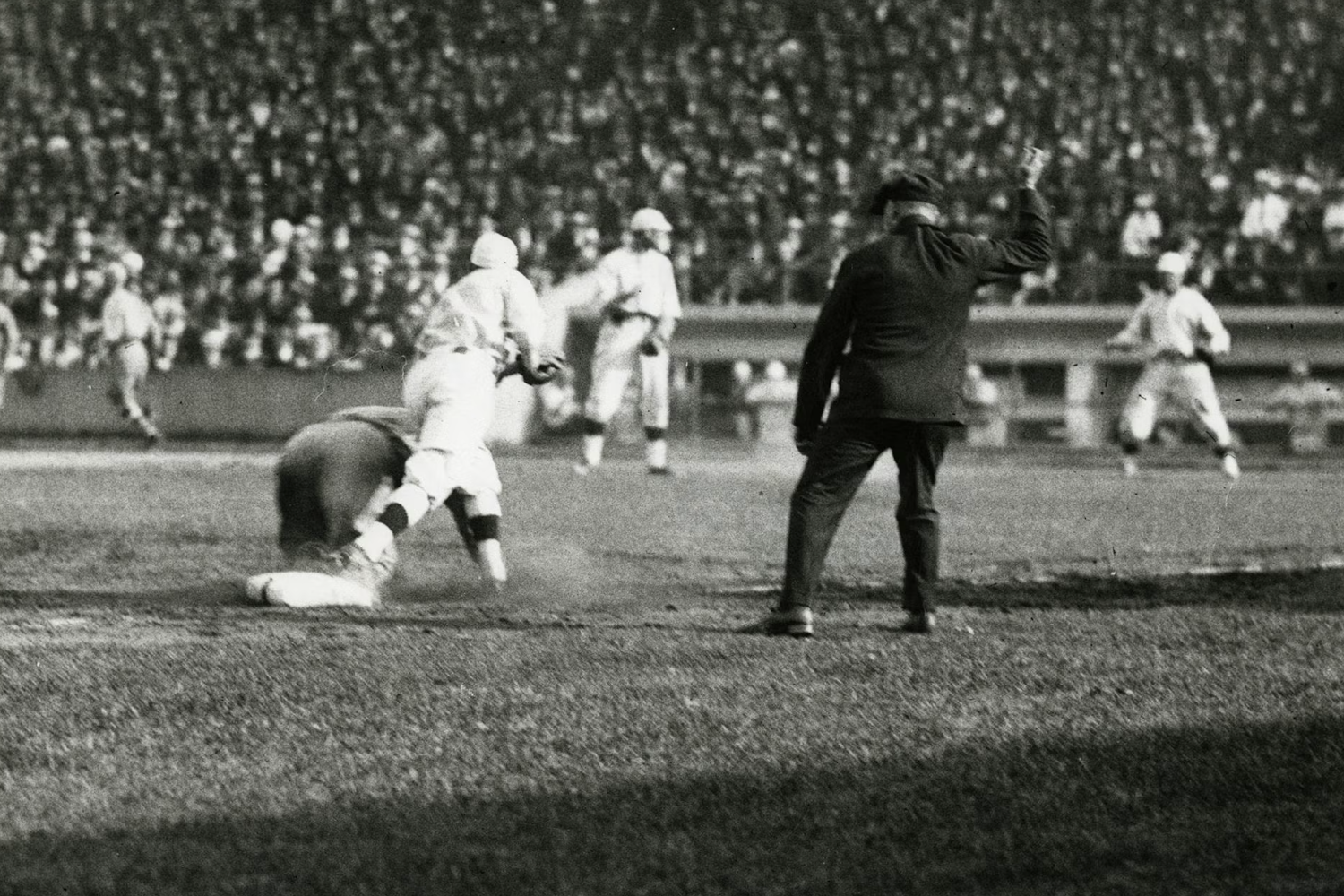 Welcome to part seven of North Side Baseball’s offseason series covering the 1918 Chicago Cubs. You can find the first six parts here: Part 1 Part 2 Part 3 Part 4 Part 5 Part 6 Last time, we left off with the World Series in question. The Cubs began August 3.5 games up on the second-place New York Giants. However, with World War I ongoing in Europe, it was declared in July that all draft-eligible men must either sign up for war-related work, or risk being drafted to fight in the war. Of course, this included baseball players. The National League was considering ending its season, and was scheduled to discuss the matter on August 1. Ending the Season Early According to The New York Times, the National League first agreed to end the season early, with the American League later following suit. The two leagues were looking to end their respective regular seasons at the end of August, with a World Series to be played not long after. The issue, according to an August 3 article in The Times, was whether or not the government would approve. “After some discussion, the owners agreed to put the situation to a test by agreeing to close the season Labor Day and then starting a World Series Sept. 4 if permitted by the government.” The National League and American League were essentially hoping that the government would allow for a special exemption for the players playing in the World Series. The work or fight order was scheduled to take effect at the end of the month, and if it still applied to the players in the World Series, they would be at risk of being drafted to fight in the war smack dab in the middle of the championship. National League Champions The Cubs held steady at the start of August, starting 11-7-1 after a doubleheader sweep over the Philadelphia Phillies on August 17. The Giants, though, were in free fall. By the time the Cubs suited up on August 18, they were eight games up on the Giants, who started the month just 6-10. Needing just one win to clinch the pennant on August 25, the Cubs hosted the Brooklyn Robins for a doubleheader. Game one featured little-used Roy Walker against future Hall of Famer Rube Marquard. Led by two hits from Dode Paskert and Bill Killefer, as well as RBIs from Max Flack and Charlie Hollocher, the Cubs won 5-3 and clinched the National League pennant. Over in the American League, the Babe Ruth-led Boston Red Sox were wrapping up their impressive regular season by being officially crowned American League champions. The World Series was set to feature the Cubs vs. the Red Sox. But would it be played? When would it be played? Questions were still abound. Finalizing World Series Plans After submitting for the government to allow for the players competing in the World Series to be exempt from the work or fight rule, The Times officially reported on August 23 that this was approved. “Secretary of War Baker placed the approval of the Government on the [World Series] yesterday. He announced that one of the principal reasons he [believed] the baseball classic should be played was because the American [soldiers] in France are intensely interested in the results.” The Times continued their reporting on August 25 by stating that “the series is expected to contribute between $30,000 and $40,000” to war charities. Admission to the series was also set to be reduced “in order to enable patrons to attend the games at reasonable prices.” Box seats were to be sold for $3 per ticket, down from $5 the previous year, grandstand seats were going to go for $1.50, pavilion seats for $1, and bleacher seats for 50 cents (oh, how times have changed). With the Red Sox having clinched the American League pennant, by the end of the month it was time to officially plan the World Series. It would begin September 5. The first three games would be played in Chicago at Comiskey Park, with the last four games being played in Boston at Fenway Park. Instead of playing at the Cubs’ usual home of Weeghman Park, the team opted to play at Comiskey Park because it had a larger capacity, 30,000, compared to just 16,000 at Weeghman. The dates, teams, and venues were set. The war-related negotiations were over. The Cubs and Red Sox were all set and ready to face off in the 1918 World Series.
 -
Thanks! Been working hard on these - I’ll check your stuff out!
-
Image courtesy of Bettmann Archive/CNN Welcome to part six of North Side Baseball’s offseason series covering the 1918 Chicago Cubs. You can find the first five parts here: Part 1 Part 2 Part 3 Part 4 Part 5 In part six, we’ll examine how the Cubs performed in the month of July, including a wild, 21-inning affair. Another Showdown with the Giants The Cubs started July by taking five of seven from St. Louis to set up another series with the second-place New York Giants, this time a five-game set. With the Giants having started the month 2-4, the North Siders had a nice four-game cushion over New York in the National League standings. The Cubs took the first game 1-0, entirely thanks to Hippo Vaughn. The left-handed hurler threw 12 shutout innings and then drove in the walk-off run in the bottom of the 12th with a single. Shohei who? The second game was a 6-1 rout in favor of Chicago, with Phil Douglas throwing nine innings of one-run baseball and two hits and two RBIs from second-baseman Rollie Zeider. This put the Cubs six games up on the second-place Giants. The six-game lead would be short-lived. After splitting a double header the next day, the Giants came back from down 6-0 to win in 10 innings on a home run from Jim Thorpe. Yes, the very same Jim Thorpe that won two gold medals in the pentathlon and decathlon in the 1912 Olympics. Despite the couple of losses to finish the series, the Cubs, at 50-23, were still five games up on the Giants and firmly in control of the National League. They proceeded to take four of five games from the Boston Braves, and then dropped two of the first three games in a four-game set with the Philadelphia Phillies. Game four of that series would pit Lefty Tyler against Milt Watson. A Historical Pitching Performance July 17, 1918 started as a normal baseball game. After the Phillies went three up, three down in the top half of the first inning, the Cubs jumped out to a lead in the bottom half. Max Flack walked, Charlie Hollocher singled him over to third, and Flack came around to score on a ground out from Les Mann. The Phillies tied things up in the fourth. An error from Hollocher put Cy Williams on base to start the inning, and he was plated after singles by Fred Luderus and Gavy Cravath. That next run wouldn’t be scored for 16 more innings. The Cubs managed to get runners into scoring position in the fifth, sixth, seventh, 10th, 12th, 13th, 15th, and 19th innings; however, every time, they failed to get even one run across. The Phillies, on the other hand, went without a baserunner in eight of the 17 innings following the fourth inning. Both Tyler and Watson were absolutely dealing. The game was going so long that, according to the Society for American Baseball Research, the umpires informed the teams that the game would be called at 7 P.M. so the Phillies could catch their 8 P.M. train. As the 21st inning got underway, the Cubs got a leadoff single from the seldom-used Turner Barber, who had pinch hit for Zeider. After Bill Killefer got hit by a pitch, the Cubs called on another pinch hitter, this time Bill McCabe, who would notch just 51 plate appearances for the Cubs that season. McCabe laid down a bunt that ended up going for a hit, which set up Flack with the bases loaded, who ended the game after 21 brutal innings. Per SABR, the game lasted approximately four hours. Both Lefty Tyler and Milt Watson pitched the whole thing. Tyler gave up 13 hits and one walk in his 21 innings pitched, allowing just one unearned run. Watson gave up 19 hits and four walks in his 20 innings pitched. Perhaps exhausted from a 21-inning marathon, the Cubs would go on to lose seven of 11 games to close the month. Despite a small rough patch, the team still stood at 60-32 as the calendar flipped to August. They were 3.5 games up on the second-place Giants, and with only two months left in the season, they had to feel good about their chances of playing in the World Series, which, back then, simply pitted the best team in the American League against the best team in the National League. Unfortunately, World War I loomed. Work or Fight At the start of July, Secretary of War Newton Baker issued a “work or fight” order. According to the Baseball Hall of Fame, this meant that all draft-eligible men must sign up for war-related work, or they risked being drafted to fight in the war. The New York Times wrote on July 20 that “both leagues will make an attempt to play out their schedules this season and many of the teams hope that they will be able to get some of their players exempted until the season ends because of the heavy contracts under which they are playing. However, baseball officials believe that under the ruling of Secretary Baker, no time exemption will be granted to any of the players.” The Times followed that up with more reporting on July 31. “While President John K. Turner of the National League is not in favor of playing a [World Series] with the American League this season, he is willing to abide by the decision of the clubs owners of the organization, and has called a meeting in [New York] on next Saturday at 10 o’clock.” With the fate of many of the league’s players up in the air, the National League was considering simply ending its season, with a meeting to happen in early August to discuss how to move forward. While still a far cry from the worldwide issues happening at the time, this was surely a devastating possibility for a Cubs team that currently sat in first place. View full article
-
 Welcome to part six of North Side Baseball’s offseason series covering the 1918 Chicago Cubs. You can find the first five parts here: Part 1 Part 2 Part 3 Part 4 Part 5 In part six, we’ll examine how the Cubs performed in the month of July, including a wild, 21-inning affair. Another Showdown with the Giants The Cubs started July by taking five of seven from St. Louis to set up another series with the second-place New York Giants, this time a five-game set. With the Giants having started the month 2-4, the North Siders had a nice four-game cushion over New York in the National League standings. The Cubs took the first game 1-0, entirely thanks to Hippo Vaughn. The left-handed hurler threw 12 shutout innings and then drove in the walk-off run in the bottom of the 12th with a single. Shohei who? The second game was a 6-1 rout in favor of Chicago, with Phil Douglas throwing nine innings of one-run baseball and two hits and two RBIs from second-baseman Rollie Zeider. This put the Cubs six games up on the second-place Giants. The six-game lead would be short-lived. After splitting a double header the next day, the Giants came back from down 6-0 to win in 10 innings on a home run from Jim Thorpe. Yes, the very same Jim Thorpe that won two gold medals in the pentathlon and decathlon in the 1912 Olympics. Despite the couple of losses to finish the series, the Cubs, at 50-23, were still five games up on the Giants and firmly in control of the National League. They proceeded to take four of five games from the Boston Braves, and then dropped two of the first three games in a four-game set with the Philadelphia Phillies. Game four of that series would pit Lefty Tyler against Milt Watson. A Historical Pitching Performance July 17, 1918 started as a normal baseball game. After the Phillies went three up, three down in the top half of the first inning, the Cubs jumped out to a lead in the bottom half. Max Flack walked, Charlie Hollocher singled him over to third, and Flack came around to score on a ground out from Les Mann. The Phillies tied things up in the fourth. An error from Hollocher put Cy Williams on base to start the inning, and he was plated after singles by Fred Luderus and Gavy Cravath. That next run wouldn’t be scored for 16 more innings. The Cubs managed to get runners into scoring position in the fifth, sixth, seventh, 10th, 12th, 13th, 15th, and 19th innings; however, every time, they failed to get even one run across. The Phillies, on the other hand, went without a baserunner in eight of the 17 innings following the fourth inning. Both Tyler and Watson were absolutely dealing. The game was going so long that, according to the Society for American Baseball Research, the umpires informed the teams that the game would be called at 7 P.M. so the Phillies could catch their 8 P.M. train. As the 21st inning got underway, the Cubs got a leadoff single from the seldom-used Turner Barber, who had pinch hit for Zeider. After Bill Killefer got hit by a pitch, the Cubs called on another pinch hitter, this time Bill McCabe, who would notch just 51 plate appearances for the Cubs that season. McCabe laid down a bunt that ended up going for a hit, which set up Flack with the bases loaded, who ended the game after 21 brutal innings. Per SABR, the game lasted approximately four hours. Both Lefty Tyler and Milt Watson pitched the whole thing. Tyler gave up 13 hits and one walk in his 21 innings pitched, allowing just one unearned run. Watson gave up 19 hits and four walks in his 20 innings pitched. Perhaps exhausted from a 21-inning marathon, the Cubs would go on to lose seven of 11 games to close the month. Despite a small rough patch, the team still stood at 60-32 as the calendar flipped to August. They were 3.5 games up on the second-place Giants, and with only two months left in the season, they had to feel good about their chances of playing in the World Series, which, back then, simply pitted the best team in the American League against the best team in the National League. Unfortunately, World War I loomed. Work or Fight At the start of July, Secretary of War Newton Baker issued a “work or fight” order. According to the Baseball Hall of Fame, this meant that all draft-eligible men must sign up for war-related work, or they risked being drafted to fight in the war. The New York Times wrote on July 20 that “both leagues will make an attempt to play out their schedules this season and many of the teams hope that they will be able to get some of their players exempted until the season ends because of the heavy contracts under which they are playing. However, baseball officials believe that under the ruling of Secretary Baker, no time exemption will be granted to any of the players.” The Times followed that up with more reporting on July 31. “While President John K. Turner of the National League is not in favor of playing a [World Series] with the American League this season, he is willing to abide by the decision of the clubs owners of the organization, and has called a meeting in [New York] on next Saturday at 10 o’clock.” With the fate of many of the league’s players up in the air, the National League was considering simply ending its season, with a meeting to happen in early August to discuss how to move forward. While still a far cry from the worldwide issues happening at the time, this was surely a devastating possibility for a Cubs team that currently sat in first place.
 -
Image courtesy of © Kamil Krzaczynski-Imagn Images Thousands at Soldier Field on Saturday night gathered and cheered to celebrate the biggest news in Chicago sports: the Cubs signed Alex Bregman to a five-year, $175 million deal. I have since discovered that there was also something else going on at the time that resulted in that celebration at Soldier Field, but hey, I am sure this was a nice cherry on top for some. This marks what could be a huge turning point for the Cubs and their front office. For one, Bregman just received the largest average annual value on a contract in team history. Second, a Jed Hoyer-led front office went out and outbid other teams for a guy that they wanted. Finally, they flexed some financial might. It’s not just the use of financial resources that is encouraging, either. Per Mark Feinsand, the Cubs are deferring $70 million of the contract, which will bring the average annual value for luxury tax purposes down slightly. This could help the Cubs stay below the competitive balance tax for this coming season, and finally signals a willingness from the club to take advantage of a modern, club-friendly free agency tactic in deferrals. What makes Bregman the guy that the Cubs were finally willing to do all of this for? It was reported by Patrick Mooney of The Athletic that “although he will be 32 in March, Bregman still lit up the front office’s projection systems as a Gold Glove defender and an elite right-handed hitter.” There are reasons to think that the third-baseman has the type of profile that could age well. Clearly, the Cubs’ would agree. For starters, plate discipline is one of Bregman’s premier skills, and this is a skill that a player typically retains as they age. Perhaps more importantly, a recent blog post at Driveline Baseball concluded that pull-air percentage is one of the skills that ages the best in an offensive player. Pulling the ball in the air has long been a hallmark of the former Astro's game, including a 24.4 percent pull-air percentage just last year, which ranked 37th in baseball, per Baseball Savant. If Bregman can continue doing that, you have to feel pretty good about this contract. On the flip side, swing speed and exit velocity, two skills that don’t typically age well, have never been highlight skills for Bregman. As noted by Davy Andrews at FanGraphs, he has never hit a ball 110 mph, which 308 MLB players did last season. One could look at that and conclude that the veteran is walking a thin line. If he loses even any bat speed, he’s toast. You could also argue that he already knows how to succeed without bat speed, or that he has no bat speed to lose. Clearly, and as reported above, we know where the Cubs’ projection systems stand on that debate. As for the validity of the Cubs’ projection systems, well, let me go ahead and defend those. In the offseason after the 2022 season, the Cubs needed a shortstop, and all four of Carlos Correa, Dansby Swanson, Trea Turner, and Xander Bogaerts were available. The Cubs, of course, signed Swanson. He received the least amount of total money amongst the four shortstops by a good bit. He’s also been worth 2.5 more FanGraphs WAR than Bogaerts since that offseason, and 3.8 more fWAR than Correa. Trea Turner is the only one that has outperformed him since the Great Winter of the Shortstop™. Tying Bregman to Swanson brings me to the second thing the Cubs likely identified with Bregman: leadership and intangibles. According to Jen McCaffrey at The Athletic, last offseason, Bregman was heavily invested in the Red Sox winning, and went on to become a major leader in the clubhouse. “A year ago, Bregman grilled the Red Sox front office with a 16-page document filled with questions on the direction of the organization, the development plan for the club’s top prospects and how Boston planned to invest and spend to bring the organization back to the postseason.” McCaffrey went on to write that “Bregman took a strong interest in mentoring the club’s top prospects like [Roman] Anthony and [Marcelo] Mayer, but he also offered insight to veteran hitters going through slumps and even to pitchers, suggesting how he’d attack them as an opponent to help them better game plan.” Sound familiar? When Dansby Swanson signed with the Cubs, Jed Hoyer reported a similar concern with the direction of the club. “The thing that really stood out to me was that it felt like he was interviewing us. How are you guys gonna win? What’s your plan? What’s your philosophy? What players are you going to surround me with? Who are the prospects that are coming? It was very clear winning was the priority.” After Swanson officially left the Braves and signed with the Cubs, Jeff Schultz of The Athletic noted that “Swanson exerted a lot of influence in the clubhouse, especially with younger players like [Vaughn] Grissom and Michael Harris II.” It’s clear that the Cubs heavily value the leadership qualities that they see in Swanson and Bregman. They also, most likely, project him to age quite gracefully. Age aside, this is still a guy that posted 3.5 fWAR in only 114 games last season. He had a 125 wRC+, meaning he was a 25 percent above the league-average hitter. This is a productive player now. Whether or not you agree with the Cubs’ rationale, whether or not you agree with the importance of Bregman’s apparent leadership abilities, and whether or not you think the contract will age well, the Cubs spent money to make the team better for this season. They identified a guy that they wanted and were willing to outbid others for him. That is not something they have done particularly often under Jed Hoyer, and I think we can all commend them for that. View full article