


Cubs Video
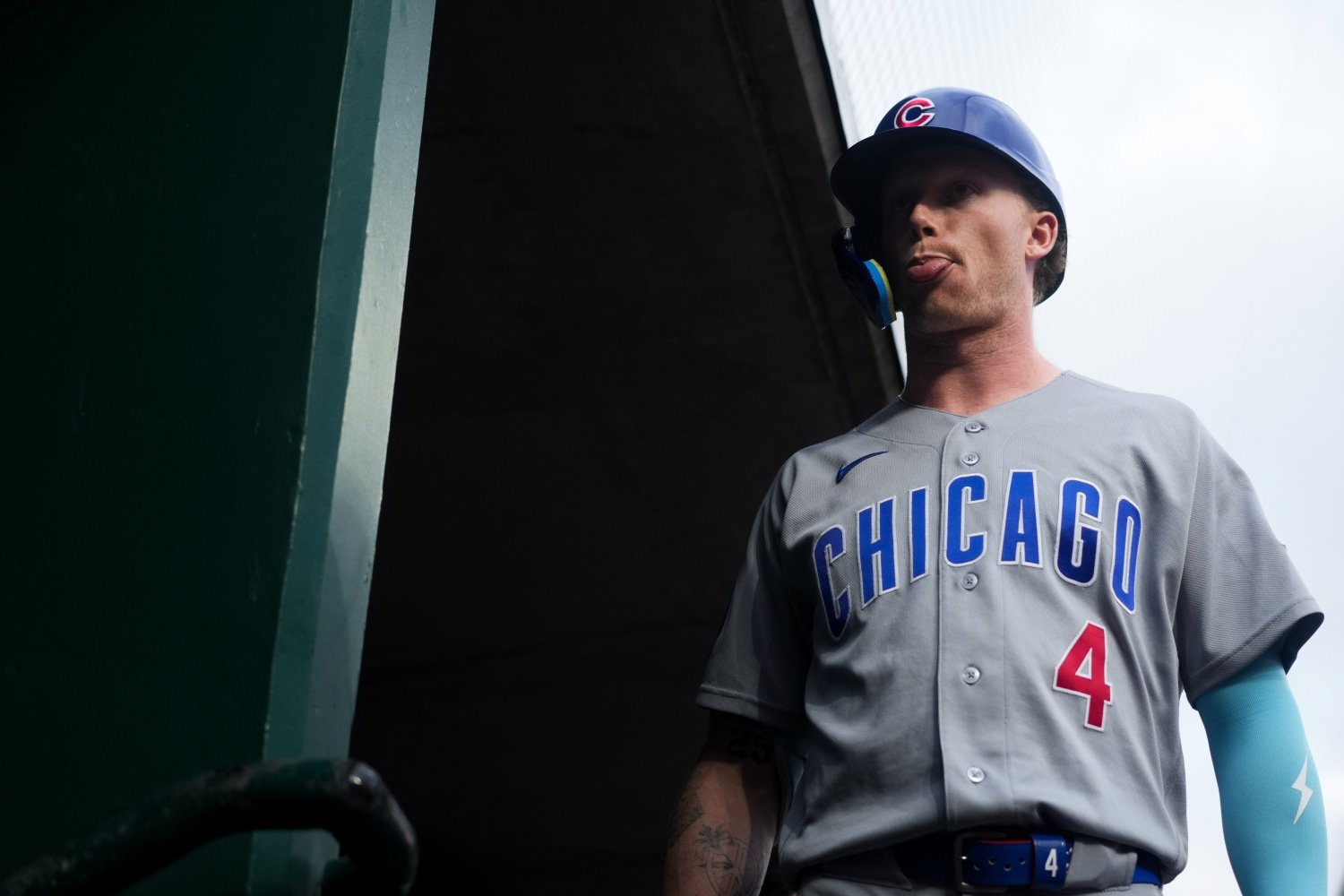
The 2026 Cubs' regular season ended Sunday, with a game that didn't matter. Before they took the field—before any of them got out of bed this morning—they were locked into a matchup with the Padres at Petco Park in San Diego, for a Wild Card Series that will determine whether the team gets to play any more games in front of the crowd at Wrigley Field or not. There was nothing at stake, in other words—nothing but what John Updike called "the tissue-thin difference between a thing done well and a thing done ill". Nonetheless, there he was at the top of lineup card:
- Pete Crow-Armstrong - CF
That made 162 games played for Crow-Armstrong. It made 158 games (and 157 starts) in center field. When Crow-Armstrong stepped into the box for the first pitch of the game, it was his 726th plate appearance of the year. This is just the 16th time a Cubs player has played at least 162 games in a year, and Crow-Armstrong became just the seventh different guy to do it, joining Ernie Banks, Starlin Castro, Juan Pierre, Ron Santo, Sammy Sosa, and Billy Williams. He finished the day in ninth all-time for plate appearances in a season by a Cub, bested only by Pierre in 2006, Don Kessinger in 1969, Billy Williams in 1966, and five guys who played in the inflated offensive environs of the 1930s.
Hardly anyone plays this much anymore, especially at the demanding defensive spots. The only other player to appear in at least 157 games at an up-the-middle defensive spot this year, entering Sunday, was Ozzie Albies. Crow-Armstrong plays a high-intensity, high-energy brand of baseball. He's constantly in demand; he pays a charisma tax in the clubhouse. To do that every day, with pressure slowly accumulating as his team failed to follow his lead during his four-month assault on the record books, is incredible. It's also not free. You have to pay the piper for all those innings, all those swings, all that pregame work and all that emoting.
Yet, to his immense credit, Crow-Armstrong has made it all work. He's been human this month—after posting an OPS over 1.000 in three straight months, he batted .266/.352/.553 in September—but he's still found ways to win games for the team. He's battled. The grind of the season tends to erode plate discipline, but Crow-Armstrong took some of his most patient at-bats of the year during the team's doubleheader Friday in Boston, even in the shadow of their playoff clinch Thursday. It tends to make the legs heavy, but Crow-Armstrong has kept stealing bases and taking the extra base whenever possible, willing his team to help him create runs. It tends to sap bat speed, but he's kept hitting for power. His bat speed hasn't diminished, and his slugging average has only modestly done so. In fact, he's swinging as fast as ever.

So, how can we even tell he's tired? Well, for one thing:
The outcome isn't the point here. Crow-Armstrong pops the ball up relatively frequently even when he's going right, and he's had some success even with this high a leg kick. But, you noticed that kick, right? It hasn't looked like that all year. It hasn't even looked like it all summer. Here's what one swing in August (a more productive one) looked like:
That, in turn, was bigger than on this swing from early June:
It's not as though his swing usually looks exactly the same at all times. Crow-Armstrong is always tinkering, especially in his lower half. Still, his move has gotten extreme lately, and not just on occasion; it's happening almost every time he takes a cut. It's not some change he's made to cover a particular pitch better or to achieve a better line to the ball. It's how he's still finding the same bat speed, as his body feels the grind of the season.
A big leg kick usually means a long stride, and indeed, Crow-Armstrong's stride is a couple inches longer this month than it was in August. It's actually shorter than it was in June, though.
.png.e0ac572b96fb16668992108b83adc1d5.png)
A long stride means something different when you're fresh, though, and when you're achieving it with a lower leg kick. That tends to mean you're fluidly flying forward at contact; it means you can be in rhythm even when you're not quite on time. It allows you to swing fast and get around on the ball, without being early. Right now, as he uses that huge kick to keep his bat speed where it's been all year despite creeping fatigue, Crow-Armstrong is ending up a bit early, because he has to decide whether to cut loose and swing a bit earlier than he did in June (or even August).
Given that he's deciding earlier, Crow-Armstrong is making relatively good swing decisions. That's allowed him to keep drawing walks, even as he clearly feels an urgency to attack and to produce runs himself. He's not whiffing as much as, for instance, he was in July, when he was still operating primarily with the smaller leg kick and got a little bit too all-or-nothing in his approach.

However, as the year's progressed, Crow-Armstrong has steadily—inexorably, even as most of his other stats have fluctuated significantly—tended more and more to get around the ball and hook it. That means he's a bit early most of the time. It can be early in a good way (producing all those pulled fly balls into the bleachers), but it can also be early in a bad way. Either way, his barrel is facing right field more than ever when he gets to the contact point.

Ok, we have a player who's wearing down slightly (through no fault of his own; it's admirable that he's not wearing down more) and who has made a major mechanical adjustment to counteract that. That change means earlier swing decisions, so he's often overcommitted and has his barrel oriented toward right field. Where, then, would we expect to see the loss of efficiency? Why was Crow-Armstrong's OPS down to just over .900 in September, instead of over 1.000? If you remember the article in which I broke down the benefits and costs of his newfound bat speed even before Crow-Armstrong broke out in late May, you already know the answer.

We've come full-circle. It turns out that that pop-up we looked at above actually did matter, in and of itself. It's the inability to consistently line the ball up and hit it in the launch-angle sweet spot that has eluded Crow-Armstrong at times over the last handful of weeks. That, in turn, is because his bat is so often turning off toward right field by the time the ball actually gets to him—the same way he was leaking value with his vicious swing in April and May. He's markedly better now than he was then, but you can see: he's moved back in that direction.
This version of Crow-Armstrong remains dangerous. He's smarter and more well-rounded than he was 140 days ago, in ways that counterbalance whatever efficiency he's given up to maintain his bat speed this deep into such a high-workload season. He's clearly learned a lot from last season, when he hit the same wall and didn't have good ways to solve the problems that tiredness posed. He's a superstar, even if he's not operating at 100%, and hopefully, playing just one plate appearance worth of baseball over a three-day span will have him feeling refreshed come Tuesday night in San Diego. He's done an unbelievable number of impressive things this year. Adjusting in big ways to make up for the little attritions of each mile in a 162-game marathon is just the latest one.





Recommended Comments
Create an account or sign in to comment
You need to be a member in order to leave a comment
Create an account
Sign up for a new account in our community. It's easy!
Register a new accountSign in
Already have an account? Sign in here.
Sign In Now