


Cubs Video
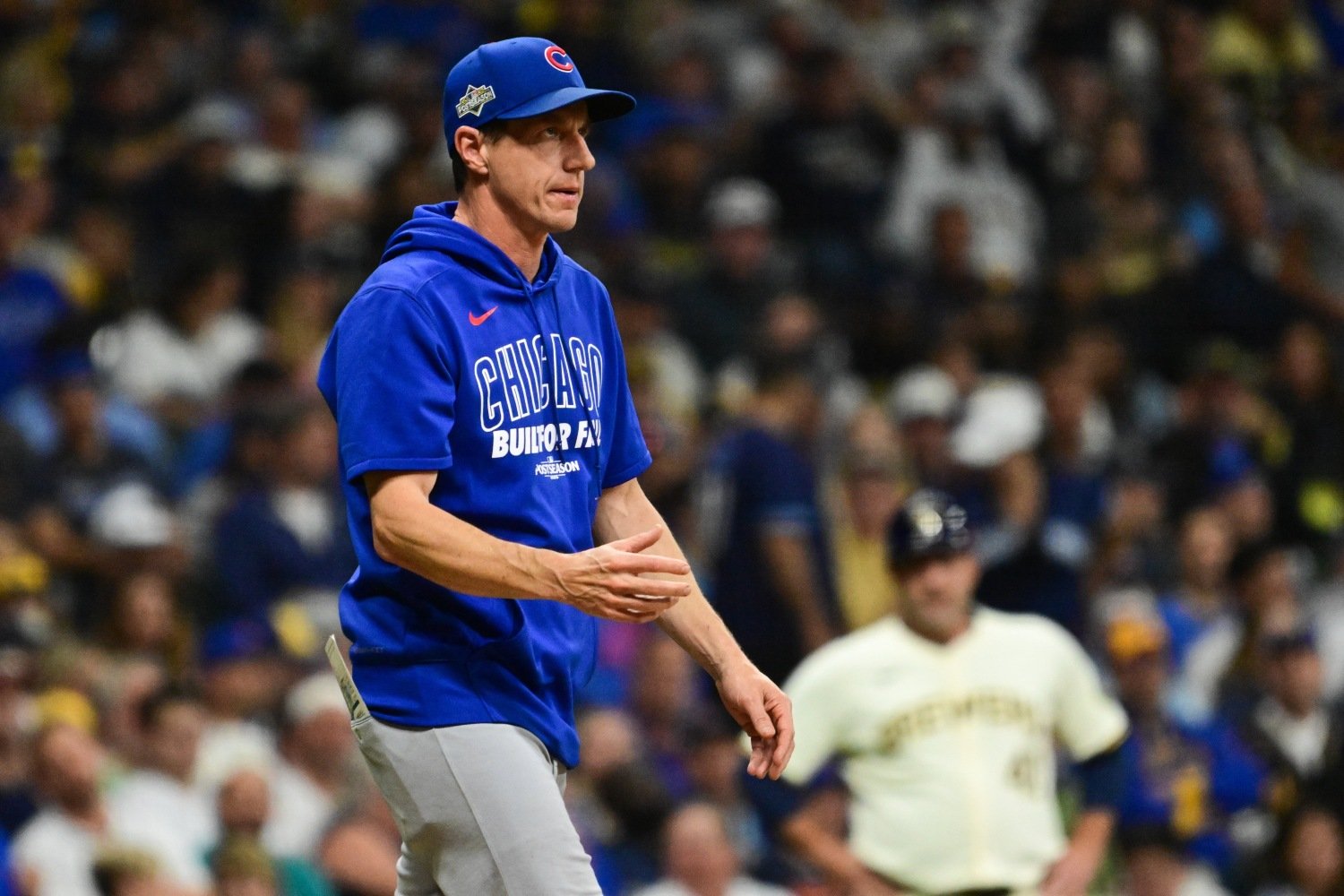
When Pat Murphy slated Aaron Ashby to start Game 2 of the National League Division Series, Craig Counsell's best move seemed clear: start Justin Turner at first base, and let Michael Busch come in only once Milwaukee goes away from Ashby in favor of a right-handed hurler. He did that. Meanwhile, with Shota Imanaga starting, Counsell had some options to consider on his own side. Should he start Willi Castro, a more dynamic offensive presence, in the place of superior third baseman Matt Shaw, and let Imanaga's fly-ball tendencies mute the lost value from the defensive downgrade? When should he lift Imanaga, and should he then try to get through the balance of the game using only his trusted short-relief arms—Brad Keller, Daniel Palencia, Andrew Kittredge, Drew Pomeranz, and Caleb Thielbar—or turn to a multi-inning bulk reliever, in Colin Rea?
He didn't make the right calls in all cases. Shaw over Castro worked out fine, as the rookie drew two more walks and gave the team at least the semblance of a scoring chance in later innings. Then again, his glove never really came into play. Imanaga probably should have come out after one trip through the order, since he'd already given up a three-run home run to Andrew Vaughn by then and it was clear Monday would not be a redemption story amid his brutal final stretch of the campaign. Instead, Counsell tried to stretch him, and the Brewers gained the lead when William Contreras took Imanaga deep. For the second game in a row, the most successful Cubs pitcher (Aaron Civale in Game 1, Rea in Game 2) was the one to whom Counsell turned to close the barn door after the horses had all departed. Turner got one hit in two at-bats against Ashby, but then Busch made no impact in the balance of the contest.
It's possible to nitpick Counsell's handling of the game, then, and even of this entire postseason—but it's a fool's errand. Counsell has done fine. He's been outmanaged by Murphy, who's a better skipper right now than his former protege-turned-boss, but Murphy is on his way to a second straight Manager of the Year Award. The fault isn't in Counsell's deployment of the roster, but (in the context of this series) in his roster itself. The Cubs might be one of the six best teams in baseball, but the Brewers are better than they are. Their lineup is deeper and more well-rounded. Their pitching staff is deeper and better at missing bats. The Brewers organization, including but far beyond the big-league coaching staff, is better at scouting and player development than the Cubs are.
Counsell is out of pitchers who can get the Brewers out when it counts. He had to do some clever contortions just to get past the Padres, whose offense is broken. The trade deadline pickup of Kittredge was a great one, and low-cost veteran reclamation projects (Keller, Pomeranz, even Thielbar and Rea to some extent) have been good for them—as is the case almost every year. Jed Hoyer and company assembled a staff that got them to 92 wins in the regular season, but they're out of steam now. With Justin Steele recovering from Tommy John surgery and Cade Horton sidelined by a fractured rib, they were always going to reach this point some time in the first half of October.
That could have been averted (or at least postponed) if the team had made a bigger acquisition at the trade deadline, but it's not clear that anyone available then would have saved their bacon. Edward Cabrera, MacKenzie Gore, Joe Ryan and Kris Bubic not only stayed with their teams at the deadline, but either pitched dreadfully or got hurt after it. Seth Lugo fell apart, too. Merrill Kelly would have been more like a Band-Aid than a true crutch for the rotation. Even a high-impact reliever probably wouldn't have changed the state of play at this moment.
Of course, two pitchers who could have tilted that balance did pitch Monday. Blake Snell and Jesús Luzardo squared off in the other NLDS in Philadelphia. Snell signed with the Dodgers last winter, and he represents what would be possible if the Ricketts family were much more aggressive than they are. If the Cubs were spending $280 million per year on payroll, as they probably should, Snell would have been a very real and reasonable target. Luzardo, of course, was nearly a Cub over the winter, before medicals scuttled a deal that would have sent Owen Caissie to Miami. He represents, naturally, what it would look like if Hoyer were more aggressive—if he were less wary and more accepting of the risks inherent in acquiring high-end talent.
Having Steele, Horton, Snell or Luzardo would make a huge difference for this team. Having two of them would make them legitimate World Series contenders. Having been better at bringing along young players or scouting and developing top prospects would be a boon, too, although in fairness, the team has gotten good returns on Busch and Pete Crow-Armstrong this year. Counsell is being paid handsomely to make the most of what he has, and while he's doing fairly well, there's room for improvement. It won't matter that much, though, until the team invests in upgrading the range of options Counsell has to survey and utilize. We can't even fairly critique his performance this month, because while he hasn't been nimble or creative enough to win a World Series, he also doesn't have a team that could do so even if he were meeting that high standard.
Are you optimistic about the Cubs right now?

Follow North Side Baseball For Chicago Cubs News & Analysis



-
 1
1


Recommended Comments
Create an account or sign in to comment
You need to be a member in order to leave a comment
Create an account
Sign up for a new account in our community. It's easy!
Register a new accountSign in
Already have an account? Sign in here.
Sign In Now