


Cubs Video
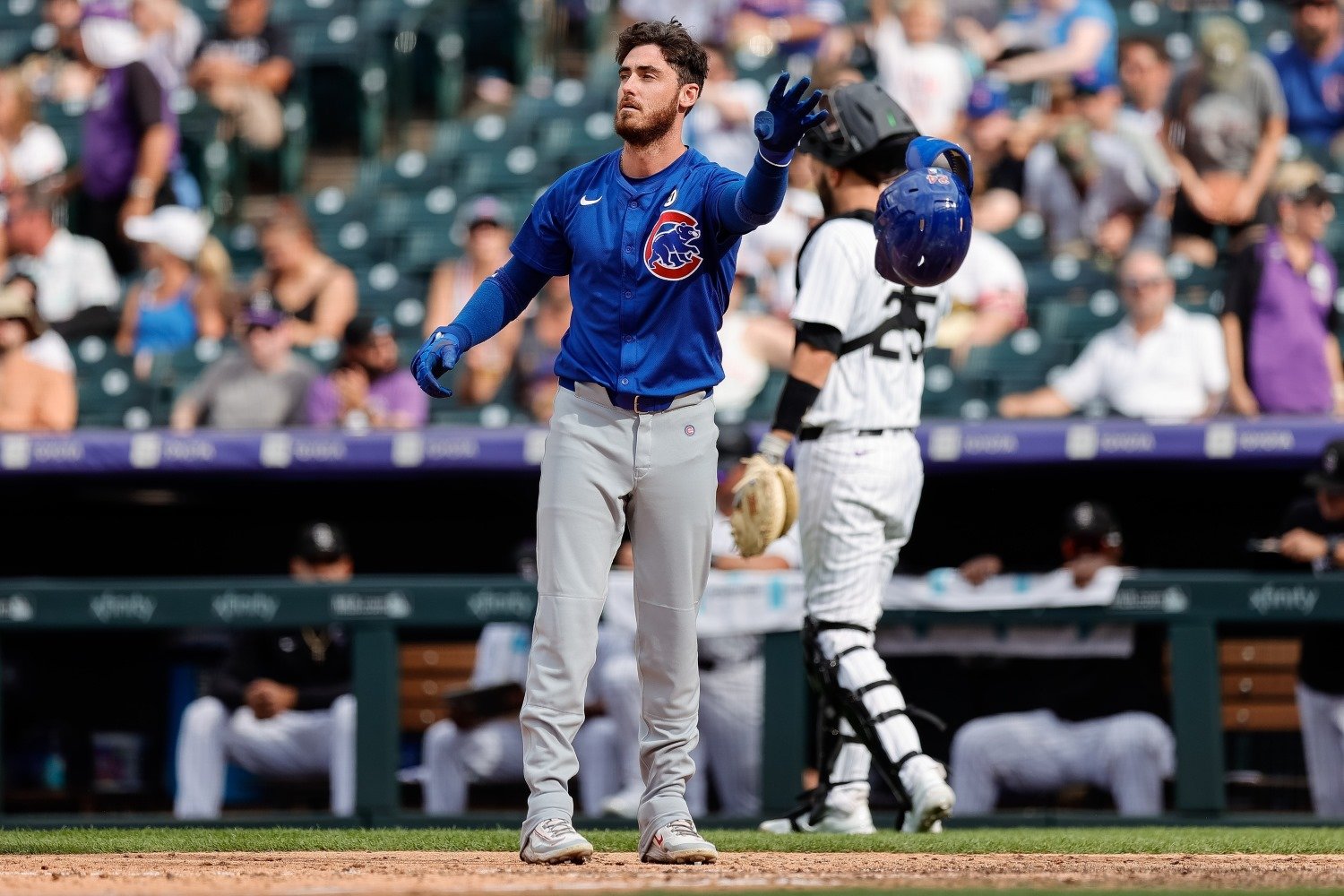
Even with a brief run of success at the end of August into September, it was always going to be a stretch for the Chicago Cubs to be playoff-bound. If you’re like me, you’ve been thinking about the 2025 Cubs for quite a while. With the team’s postseason hopes set to come to an official end within the next handful of days, though, we can start to do so in a bit more earnest fashion. With that, there’s one very significant piece of the discussion at the forefront of the offseason: Cody Bellinger.
There’s been a bit of waffling over Bellinger’s potential value, should he decide to re-enter the free-agent market this winter by exercising his opt-out provision. That's bound to be the case when you’re talking about one of the higher-profile potential free agents. With Bob Nightengale recently reporting that Bellinger is “fully expected” to opt in, however, it’s time to grok just what that looks like for the Cubs.
Bellinger has turned in a solid, if unspectacular 2024 campaign. He’s been above-average by wRC+ (114), and has sustained most of the gains he made last year in his contact and approach. The difference, however, lies in the power. Last year, Bellinger hit 26 homers and posted a .218 isolated slugging. Both were his highest marks since 2019. This year, he sits at 18 and a .168 ISO.
There are a handful of factors we could examine as to why, but our focus here isn’t directly on Bellinger’s offensive output. Overall, we can classify it as… fine. Any number of teams would take that production, even with some subtraction from his 2023 power output--especially when you combine it with his versatility. As of this writing, Bellinger has appeared at first base, center field, and right field on regular bases, plus shorter stints as the DH. He’s been roughly average at each spot, by most analytical measures.
A steady, versatile bat with occasional power is a profile that has some appeal. But assuming Bellinger doesn’t exercise his opt-out–as is currently the industry expectation–is he actually a fit for the 2025 Chicago Cubs? The question is defined more by the emergence of certain players around him, rather than by any shortcoming of Bellinger himself. It’s a logistical question that also lends itself to a financial one, given the payroll context associated with an opt-in.
The logistical one, though, is the more interesting one for me.
As frustrating as the season has been from a contention standpoint, the emergence of Michael Busch and Pete Crow-Armstrong have been exciting. The former would surely get some down-ballot Rookie of the Year votes in less robust rookie classes, thanks to his 20-homer season and increasing maturity as a hitter. The latter has captured fans' imaginations, thanks to a 10/25 season and an explosive second half. Jovial as we may be over their respective developments, it’s precisely those breakouts that are starting to squeeze Bellinger out of the picture.
When Bellinger re-upped with the Cubs, the expectation was that he’d man center until Crow-Armstrong was ready. From there, he could move onto the dirt. Busch’s emergence instead pushed Bellinger over to right field. That, in turn, forced Seiya Suzuki into a more consistent role as the team’s designated hitter--although, that part works out nicely, since Suzuki wasn't looking especially viable in right field anyway.
It’s a configuration that we could reasonably expect to carry into 2025: Bellinger back via (in essence) opting in, Busch and Crow-Armstrong each being pre-arb, and another two years on Suzuki's contract create a lot of inertia that would tend to keep them all where they've been lately. From there, you’re locking in the young guys, making Suzuki a full-timer at DH, and rolling Bellinger out in right almost every day, occasionally rotating him elsewhere only to spell the others or get off his feet.
It’s a scenario that strips the Cubs of any flexibility, however. For one, the splits aren’t so stark in their contrast that you’re regularly moving Bellinger in or out of anywhere other than right, unless it’s a day off or a specific arm that you’d like the others to avoid. Additionally, right field offers the team perhaps their best chance at upgrading the offense in the grander way this team needs to seek this winter. Bellinger’s return would hamstring that effort--and not only on paper.
Which means that, objectively, the best thing to do about Bellinger’s apparent return would be to turn around and trade him. It frees them up to make meaningful additions elsewhere, while giving specific players on your roster who are more crucial to the long-term future a little more freedom to operate. You’re then able to seek out meaningful additions that the lineup needs to generate a more sustained offensive product. Of course, that comes with a major caveat: the contract itself.
I generally try to stay out of financial discussions, but it’s hard to imagine too many teams being eager to take on Bellinger’s $27.5 million figure, given his lack of power and the fact that so few were willing to give legitimate pursuit last winter. Nor are they going to seek out Suzuki’s $19 million, given his rapid trajectory toward DH-only territory and his no-trade clause. So even moving one to open some flexibility in terms of adding impact talent to your roster seems like an extremely unlikely scenario.
The logistical question feeds into the financial one. And one question plus one question equals a problem for the Cubs. They have to navigate their current, unsatisfactory roster construction by attempting to add an impact bat to a spot that doesn’t exist, by moving one of a couple of contracts that nobody is likely to want, all while operating within an internal model that appears to be conservative to a fault. Therein lies the very obvious problem with Cody Bellinger’s impending return.
It’s (for me, at least) feeding into a rather negative perception of an otherwise quality baseball player. If anything, though, it’s more condemnation of the organization than criticism of the player. Because, again, Bellinger is fine. Unfortunately, this team needs to add a player that is multiple levels above fine, so that they may match the offensive output of their contending counterparts in the National League. And while they could do it with a full season of this late-season Crow-Armstrong or this impressive version of Michael Busch, relying on upside is exactly what sank the Cubs in another year of non-contention.
Ultimately, it’s not so much that Bellinger’s return is a minus for the organization, as it is that leadership is ill-equipped to navigate what comes next.





.thumb.JPG.19c99ddd60a76edf810c77d321439828.JPG)


Recommended Comments
Create an account or sign in to comment
You need to be a member in order to leave a comment
Create an account
Sign up for a new account in our community. It's easy!
Register a new accountSign in
Already have an account? Sign in here.
Sign In Now