


Cubs Video
The watchword of this season, for hitters throughout the league, is conviction. As pitchers find new ways to make life in the batter's box hell via velocity and movement, batters need to find ways to get off their 'A' swing consistently; it's their only hope. To do that, they're working harder than ever to get a sense of what's coming—to study pitchers, anticipate their sequences, pick up on tells, and attack as if they'd been tipped off. It's a survival plan that relies on good intelligence. Often, what they're picking up on must actually be seen by a teammate or a base coach, who then relays it. As we've discussed, the Cubs are one of the best teams in the league at this; it's fueled their success at the plate.
In the third inning of Wednesday night's game, though, we saw the flip side of Chicago's operation in this arena. Shota Imanaga fanned the fearsome Ronald Acuña Jr. to begin the frame, but Acuña took some extremely healthy cuts in the at-bat, especially against Imanaga's fastball. He also laid off a couple of splitters in a way that might have worried the Cubs; it was noticeable even for outsiders.
The team has a counterespionage plan in place at all times. When the other team is picking something up and relaying it to batters, the Cubs don't attempt to enforce the unwritten rules and shame or intimidate the opponent into not doing so—as the Cardinals tried to do to the Brewers earlier this year, and as the Diamondbacks tried to do to the Cubs more recently, among other examples. Instead, any of the team's key leaders and decision-makers (a group that includes Craig Counsell and his coaching staff, but also veteran players, led by the incredibly sharp-eyed Alex Bregman) will initiate a conversation about how to thwart the other side's detection efforts. In this case, someone saw something from one of the visitors' base coaches, and a mound visit was commenced. Imanaga was tipping, and they needed to address it.
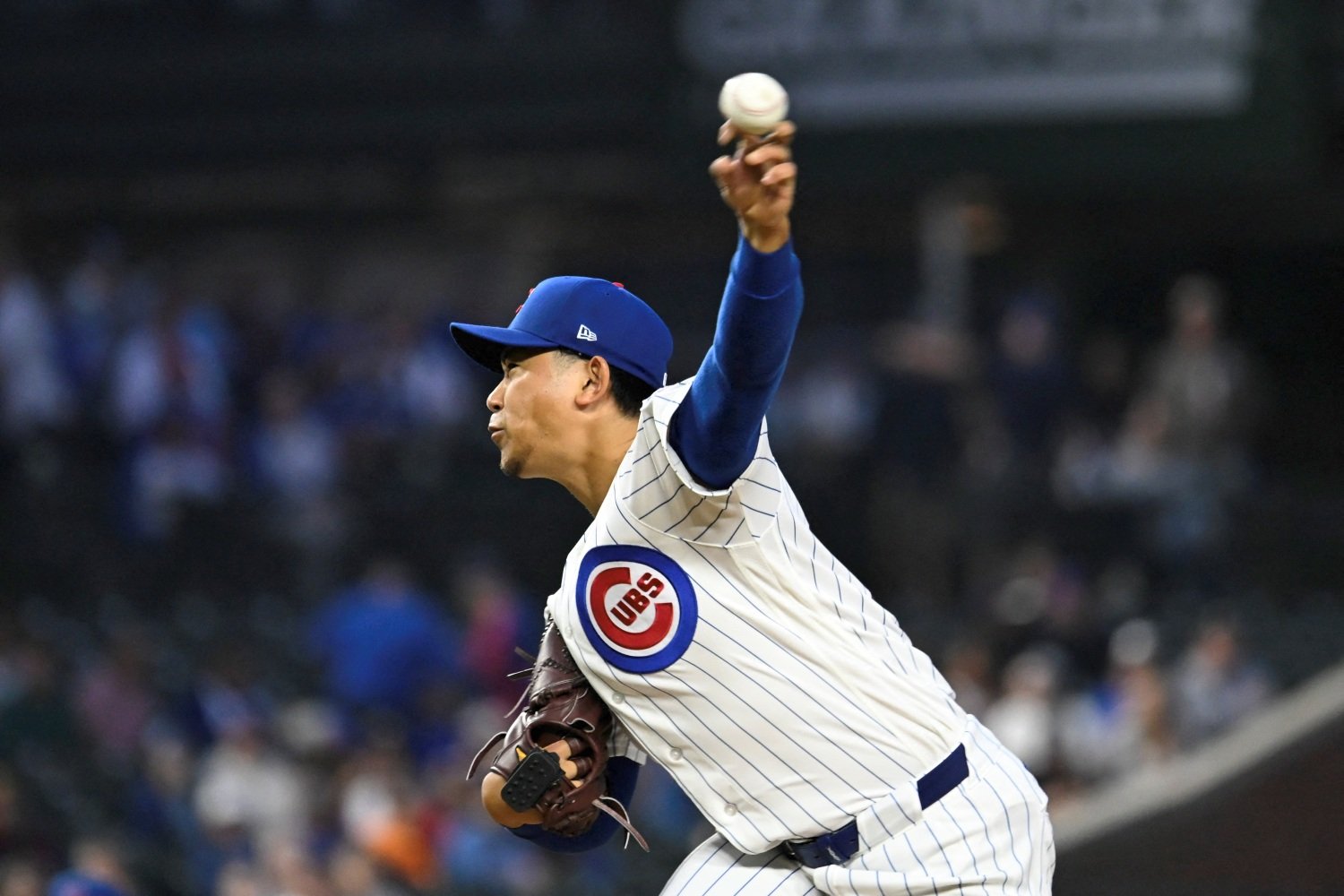
Later in the game, Marquee play-by-play man Boog Sciambi and analyst Jim Deshaies highlighted that Imanaga had changed his ritualistic pre-pitch movement pattern. He'd begun turning away from the batter in an exaggerated way as he reached into the glove to grip the ball before each pitch.
That movement was big and unmissable. Before making the switch to include it between innings, though, Imanaga also made a subtler adjustment within the third inning. There are multiple ways to fix a tell on the mound. He went with the Band-Aid at first, then got the problem properly treated between frames.
The issue came when Imanaga reached into his glove to grip the ball. Setting up in the stretch (with his body facing first base), Imanaga starts with his left hand dangling at his hip. Once he settles on a pitch selection, he brings his hands together right in front of his belt, then brings them up to his chest. That sequence contained a slight giveaway early in his outing Wednesday night. When he was preparing to throw the splitter, he tensed his arms a bit more as he brought the hands together, and the pause at the belt was slightly longer. When he was throwing his fastball or sweeper, that pause wasn't there.
Later in the game, to make it especially hard for players or coaches from the near-Atlantans to get a reliable read, Imanaga went to the more exaggerated set of moves shown above. That also reminded him, physically, not to fall into the pattern the team had identified. In the at-bats just after the mound visit from Tommy Hottovy, though, he had a more improvised fix, He just paused the same way on everything. He became almost imperceptibly more deliberate, and the extra movement opposing players or coaches were noticing with the splitter became indistinguishable from what he was doing otherwise.
Remember Ryan Dempster's career as a starter? He turned the corner for the Cubs in 2008 when he realized that he was flaring his glove open in a noticeable way when he gripped his own splitter. To foil hitters trying to pick up on that, he began a ritual of wiggling his glove back and forth in a big, noisy way to begin his windup, regardless of what pitch he was throwing. It worked like a charm. But as Dempster acknowledged, the flutter was more than was really required. If he felt confident that he could always flare the glove the same way without doing that, he could just as easily have simply done that—something fans at home wouldn't even have seen, but which would have had the same result.
Imanaga made an ad hoc tweak in that third inning, and then went a bit bigger later in the appearance. Whether he'll continue the shoulder turn in his future outings will be interesting to watch, but either way, we gained some insight Wednesday into how opponents try to pick up what's coming from him—and about how quickly and productively the Cubs are capable of responding.





Recommended Comments
Create an account or sign in to comment
You need to be a member in order to leave a comment
Create an account
Sign up for a new account in our community. It's easy!
Register a new accountSign in
Already have an account? Sign in here.
Sign In Now