


-
Posts
55 -
Joined
-
Last visited
Content Type
Profiles
North Side Baseball Article Archive, Part 1
Chicago Cubs Videos
Chicago Cubs Trade & Free Agent Rumors
2026 Chicago Cubs Top Prospect Rankings
Chicago Cubs News, Rumors & Analysis
2023 Chicago Cubs Draft Picks & Signing Bonuses
Chicago Cubs Fan Guides & Resources
2024 Chicago Cubs Draft Picks & Signing Bonuses
The Chicago Cubs Players Project
2025 Chicago Cubs Draft Picks & Signing Bonuses
2026 Chicago Cubs Draft Picks & Signing Bonuses
Blogs
Events
Forums
Store
Gallery
Everything posted by Jeremy Tecktiel
-
 Image courtesy of © Matt Marton-Imagn Images Jameson Taillon is not off to the start the Chicago Cubs had envisioned. A free agent at the end of the year, Taillon’s importance to the team's playoff hopes greatly increased with the early season injuries to Matthew Boyd and Cade Horton, the latter of which is of the season-ending variety. Is it time for the Cubs to worry about Taillon? Entering the fourth and final year of the $68 million contract he originally signed, Taillon has been a steady presence in the rotation over the past two years after a below-average first season in Cubbie blue. Steady is important! Taillon has always been a strike thrower and he is throwing in front of a defense that has been excellent the last two years, a combination for success. The defense still looks to be a top unit, so what's changed in 2026 that's led to his 4.86 ERA and 6.28 FIP? On the surface, the answer is pretty glaring. He has given up a league-leading five home runs so far this season. You can’t rely on your defense if they don’t have a chance to make a play. While three of those home runs came against the Pirates with the wind blowing out, Statcast has him at 4.7 expected home runs, signaling that we can’t necessarily blame the conditions. So. what is behind this trend and can he reverse it? This answer here also seems to be pretty glaring: a fastball that is down almost 1 mph from last season. He is getting less whiffs on his fastball than he ever has and is sporting an alarming .722 slugging percentage against it, backed up by a .809 expected slugging. While he has slightly increased his velocity each start, history suggests that he is not generally a pitcher who eases into the season and gains more velocity as he goes. He has generally shown his top velocity early on, so expecting him to bridge the gap as the season progresses is a dubious proposition at best. If he can’t gain that velocity back, where does he go from here? Luckily, Taillon seems to understand the need to change the way he attacks hitters based on his diminished velocity, as evidenced in his pitch usage. Last year, Taillon primarily used three pitches against both right-handed and left-handed hitters. Against righties, he primarily used his sweeper (32%), four-seamer (31%), cutter (23%); against lefties he was all four-seamer (44%), curve (24%), change (20%). In 2026, he has the same three-pitch mix against right-handers, but he has altered the usage; he has thrown cutter (31%), sweeper (29%) and 4Seam (28%). Against lefties, he has expanded his pitch mix to include the cutter (23%). Clearly, he has intentionally been throwing a lot less four-seamers and a lot more cutters, especially to lefties. The cutter has been dominant so far in 2026, generating a .071 batting average and .286 slugging against. Throwing that in place of his primary heater is probably a good idea, so why are the results less than stellar? Well, right-handed hitters slashed .258/.281/.492 against him last year, while lefties slashed .191/.249/.361, thanks to a new look kick changeup that dominated them to the tune of .161 batting average and a .261 slugging percentage while being responsible for just one home run. The early returns this year on the changeup are much less impressive: a .400 batting average with a 1.000 slug against with two home runs against in just 37 pitches. What changed (forgive the pun)? It looks like a drop in vertical break may be the culprit. Getting that back to his 2025 standard would be a good proxy for additional velocity, if we're to assume he can't repair both at the same time. The book on Taillon has always been about limiting homers and finding a way to stifle lefties. He found the recipe to success down the stretch last year, and a return to to form would be a huge boon for a Cubs team currently ailing in the rotation. View full article
-
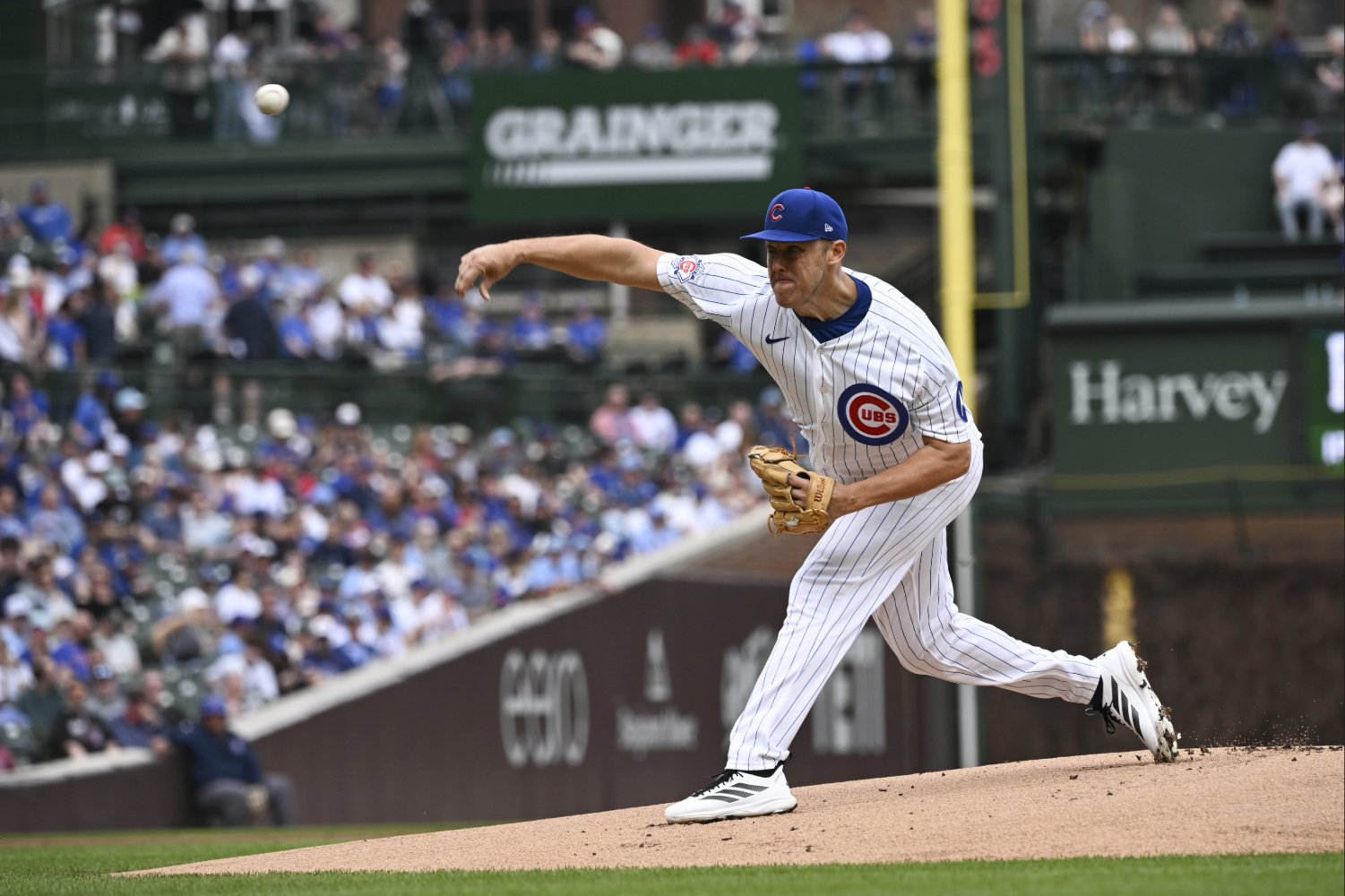 Jameson Taillon is not off to the start the Chicago Cubs had envisioned. A free agent at the end of the year, Taillon’s importance to the team's playoff hopes greatly increased with the early season injuries to Matthew Boyd and Cade Horton, the latter of which is of the season-ending variety. Is it time for the Cubs to worry about Taillon? Entering the fourth and final year of the $68 million contract he originally signed, Taillon has been a steady presence in the rotation over the past two years after a below-average first season in Cubbie blue. Steady is important! Taillon has always been a strike thrower and he is throwing in front of a defense that has been excellent the last two years, a combination for success. The defense still looks to be a top unit, so what's changed in 2026 that's led to his 4.86 ERA and 6.28 FIP? On the surface, the answer is pretty glaring. He has given up a league-leading five home runs so far this season. You can’t rely on your defense if they don’t have a chance to make a play. While three of those home runs came against the Pirates with the wind blowing out, Statcast has him at 4.7 expected home runs, signaling that we can’t necessarily blame the conditions. So. what is behind this trend and can he reverse it? This answer here also seems to be pretty glaring: a fastball that is down almost 1 mph from last season. He is getting less whiffs on his fastball than he ever has and is sporting an alarming .722 slugging percentage against it, backed up by a .809 expected slugging. While he has slightly increased his velocity each start, history suggests that he is not generally a pitcher who eases into the season and gains more velocity as he goes. He has generally shown his top velocity early on, so expecting him to bridge the gap as the season progresses is a dubious proposition at best. If he can’t gain that velocity back, where does he go from here? Luckily, Taillon seems to understand the need to change the way he attacks hitters based on his diminished velocity, as evidenced in his pitch usage. Last year, Taillon primarily used three pitches against both right-handed and left-handed hitters. Against righties, he primarily used his sweeper (32%), four-seamer (31%), cutter (23%); against lefties he was all four-seamer (44%), curve (24%), change (20%). In 2026, he has the same three-pitch mix against right-handers, but he has altered the usage; he has thrown cutter (31%), sweeper (29%) and 4Seam (28%). Against lefties, he has expanded his pitch mix to include the cutter (23%). Clearly, he has intentionally been throwing a lot less four-seamers and a lot more cutters, especially to lefties. The cutter has been dominant so far in 2026, generating a .071 batting average and .286 slugging against. Throwing that in place of his primary heater is probably a good idea, so why are the results less than stellar? Well, right-handed hitters slashed .258/.281/.492 against him last year, while lefties slashed .191/.249/.361, thanks to a new look kick changeup that dominated them to the tune of .161 batting average and a .261 slugging percentage while being responsible for just one home run. The early returns this year on the changeup are much less impressive: a .400 batting average with a 1.000 slug against with two home runs against in just 37 pitches. What changed (forgive the pun)? It looks like a drop in vertical break may be the culprit. Getting that back to his 2025 standard would be a good proxy for additional velocity, if we're to assume he can't repair both at the same time. The book on Taillon has always been about limiting homers and finding a way to stifle lefties. He found the recipe to success down the stretch last year, and a return to to form would be a huge boon for a Cubs team currently ailing in the rotation.
-
Image courtesy of © Matt Marton-Imagn Images Earlier this week, our Matt Trueblood took a look at how a change in stance has allowed Nico Hoerner to tap into more practical power. However, Hoerner is not the only Chicago Cub in 2026 who has bucked conventional trends yet produced much better results based on a stance change. Enter Matt Shaw. The 2025 version of Matt Shaw was a below-average hitter, as a quick look at his Savant page would tell you. Going into the offseason, he had significant work to do to remain in the Cubs' plans in 2026 and beyond. A third baseman with third-percentile exit velocity and 16th-percentile bat speed is no one’s ideal corner infielder. When the Cubs signed Alex Bregman, Shaw was ticketed for a utility role. To say he has embraced that role would be an understatement, but not necessarily in the way you might expect. High offensive expectations generally come with playing the hot corner, regardless of size (see Bregman, Alex). Shaw spent last year trying to fill those expectations. He pulled the ball at a 40.9% clip, including 21.8% of the time in the air. Those are quality numbers, unless your bat speed is below average, which Shaw’s was at just 69.6 mph. At that level, pulling the ball in the air is going to lead to some very low xBA and xSLG figures. Shaw’s offseason plan could have consisted of a lot of work on his bat speed, and many players would have taken that path as bat speed and EV numbers have become highly valued in front offices. Shaw, however, chose an alternative route. In fact, he chose the opposite route. Instead of trying to force his way into the Cubs' plans by swinging faster, the former top prospect has made some slight tweaks and leaned into what defined his profile as a first-round draft pick: his hit tool. As a prospect, Shaw was known for his knack for finding barrels while limiting strikeouts, a very valuable combination. In 2024, Baseball America said as much: “His quick hands, strong forearms, and exceptional barrel accuracy allow him to consistently drive balls hard to all fields.” Yet that wasn't the Matt Shaw the Cubs got in 2025. With his pull rate of nearly 41% and a 21.5% strikeout rate that was considerably higher than in the minor leagues and in college, he looked like a different player altogether. This could very well be due to the difficulty jump to the major leagues, but a 63rd-percentile whiff rate hints otherwise. It could also be due to a change in approach at the big-league level, namely trying to pull the ball in the air and be a slugging corner infielder. The evidence from the early returns on the 2026 season point to the latter. Shaw has moved back in the box more than three inches; only a dozen players are deeper in the box in 2026 than him. That depth has in turn moved his intercept point of the ball back nearly five inches, from 1.9 inches in front of the plate to -2.7 inches in front of the plate. Instead of spending the offseason swinging faster and catching the ball out front, he is letting the ball travel deeper and trusting his barrel accuracy to produce higher EVs. These changes have completely transformed his profile from last year. His pull% has plummeted to a sub-30% mark and he is back to spraying the ball all over the field. In fact, his intercept point looks eerily similar to Luis Arraez, as does his batted ball profile, but with 5 mph more bat speed than Arraez. If that sounds like an unfortunate comparison, think of it like this: Shaw is performing like three-time batting champion Luis Arraez, but with more pop, 90th-percentile sprint speed, and far better defense. That sure sounds like the prospect the Cubs expected to get, and this development should have them very excited for the future. View full article
-
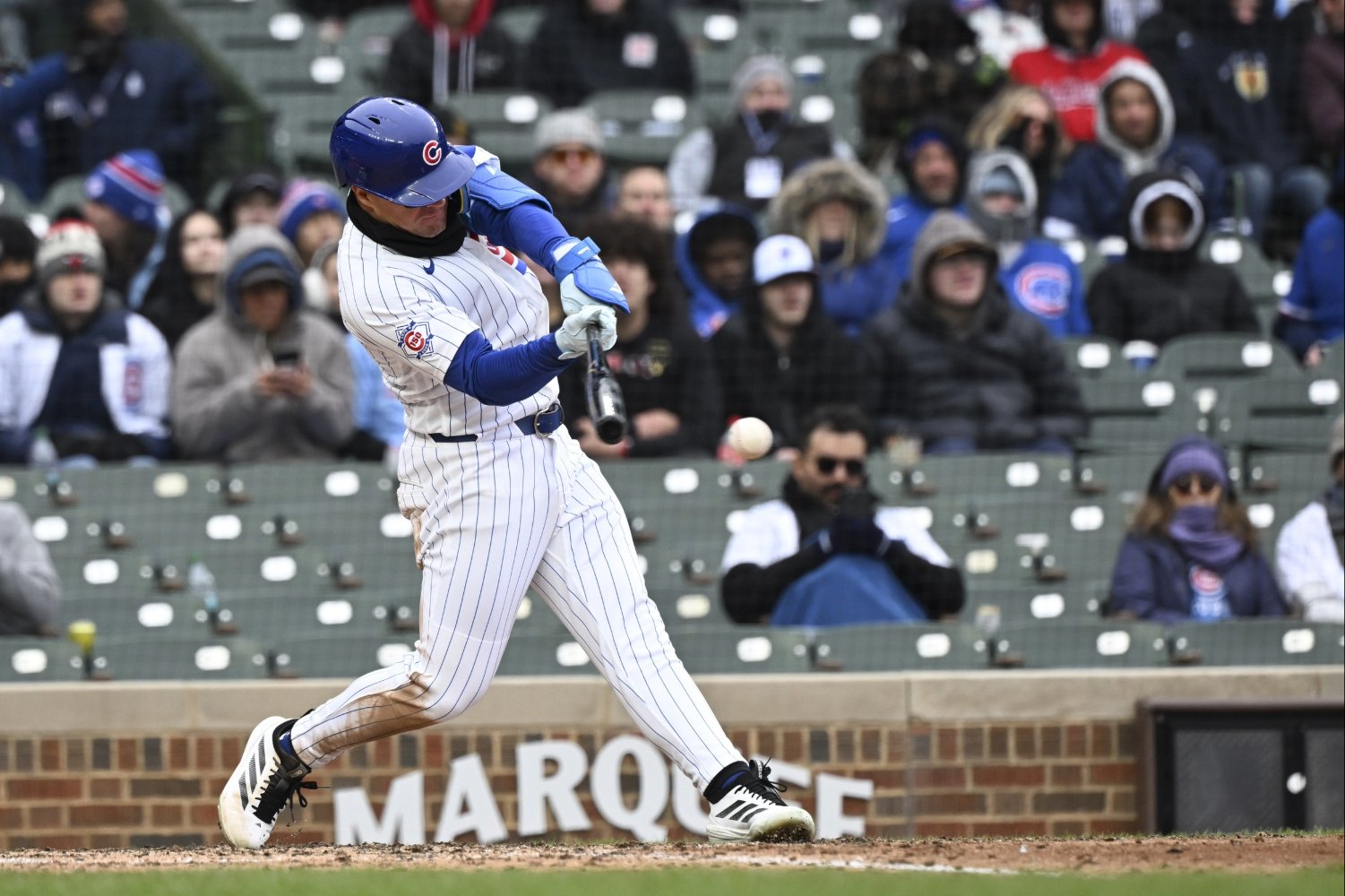 Earlier this week, our Matt Trueblood took a look at how a change in stance has allowed Nico Hoerner to tap into more practical power. However, Hoerner is not the only Chicago Cub in 2026 who has bucked conventional trends yet produced much better results based on a stance change. Enter Matt Shaw. The 2025 version of Matt Shaw was a below-average hitter, as a quick look at his Savant page would tell you. Going into the offseason, he had significant work to do to remain in the Cubs' plans in 2026 and beyond. A third baseman with third-percentile exit velocity and 16th-percentile bat speed is no one’s ideal corner infielder. When the Cubs signed Alex Bregman, Shaw was ticketed for a utility role. To say he has embraced that role would be an understatement, but not necessarily in the way you might expect. High offensive expectations generally come with playing the hot corner, regardless of size (see Bregman, Alex). Shaw spent last year trying to fill those expectations. He pulled the ball at a 40.9% clip, including 21.8% of the time in the air. Those are quality numbers, unless your bat speed is below average, which Shaw’s was at just 69.6 mph. At that level, pulling the ball in the air is going to lead to some very low xBA and xSLG figures. Shaw’s offseason plan could have consisted of a lot of work on his bat speed, and many players would have taken that path as bat speed and EV numbers have become highly valued in front offices. Shaw, however, chose an alternative route. In fact, he chose the opposite route. Instead of trying to force his way into the Cubs' plans by swinging faster, the former top prospect has made some slight tweaks and leaned into what defined his profile as a first-round draft pick: his hit tool. As a prospect, Shaw was known for his knack for finding barrels while limiting strikeouts, a very valuable combination. In 2024, Baseball America said as much: “His quick hands, strong forearms, and exceptional barrel accuracy allow him to consistently drive balls hard to all fields.” Yet that wasn't the Matt Shaw the Cubs got in 2025. With his pull rate of nearly 41% and a 21.5% strikeout rate that was considerably higher than in the minor leagues and in college, he looked like a different player altogether. This could very well be due to the difficulty jump to the major leagues, but a 63rd-percentile whiff rate hints otherwise. It could also be due to a change in approach at the big-league level, namely trying to pull the ball in the air and be a slugging corner infielder. The evidence from the early returns on the 2026 season point to the latter. Shaw has moved back in the box more than three inches; only a dozen players are deeper in the box in 2026 than him. That depth has in turn moved his intercept point of the ball back nearly five inches, from 1.9 inches in front of the plate to -2.7 inches in front of the plate. Instead of spending the offseason swinging faster and catching the ball out front, he is letting the ball travel deeper and trusting his barrel accuracy to produce higher EVs. These changes have completely transformed his profile from last year. His pull% has plummeted to a sub-30% mark and he is back to spraying the ball all over the field. In fact, his intercept point looks eerily similar to Luis Arraez, as does his batted ball profile, but with 5 mph more bat speed than Arraez. If that sounds like an unfortunate comparison, think of it like this: Shaw is performing like three-time batting champion Luis Arraez, but with more pop, 90th-percentile sprint speed, and far better defense. That sure sounds like the prospect the Cubs expected to get, and this development should have them very excited for the future.
