


-
Posts
51 -
Joined
-
Last visited
Jeremy Tecktiel's Achievements




-
 With the first full week of the Arizona Fall League (AFL) ending, let’s take our first look at the nine prospects the Chicago Cubs sent to Mesa to compete. The AFL is primarily a developmental league, but that does not mean the same thing to each team. Some teams send top prospects to get more work against better competition across the six-week league. Other teams use the AFL to make up innings for prospects that missed significant time with injury throughout the regular season. Last year, Owen Ayers began his prospect breakout by taking home the AFL All-League catcher award. As per usual, the Cubs sent five pitchers and three hitters to the Mesa Solar Sox this season, as well as hitter Miguel Useche to Salt River. Can any of them replicate what Ayers did last year? Before we get into the first week of play, let’s take a look at each of the nine prospects the Cubs sent to Arizona. Jhon Cabral Cabral is an interesting AFL selection for the Cubs. Released in June by the Marlins after a fourth straight rough year in Rookie ball, the Cubs signed Cabral and got pretty disastrous results from his 11 innings across the ACL and Carolina League. In those 11 innings, he gave up 11 hits, 14 walks, and 21 runs. While he did have 21 strikeouts, those numbers do not indicate fall league selection to me. Yet, here we are; the 21-year-old just wrapped up his fifth professional season, yet he has never thrown more than 22 innings in a single season. Yoendris Gonzalez Gonzalez finds himself in the AFL after a quality 2026 season split across Myrtle Beach and South Bend. The 23-year-old threw 37.2 innings with a 36% strikeout rate and a 9% walk rate and allowed just 11 runs on 27 hits. Gonzalez seems likely to start the year in the AA bullpen, so a stint in the AFL where he can throw some more innings and face higher competition seems to be a great springboard for him. Dominick Reid A 2025 draftee, Reid is coming off of his first professional season. He spent April and May in Myrtle Beach, but was then placed on the 60-day IL before returning to make one final start in September in South Bend. Reid threw 50 innings in Myrtle Beach with a 23% strikeout rate and a 9% walk rate. The reasons for his inclusion here are likely two-fold: He only threw 53 innings this year and needs more work as he was third-round pick in 2025, and they want to see what he looks like in the AFL setting. Reid likely starts next year back in Myrtle Beach, but the 22-year-old could push for a AA assignment with a strong fall league showing. Luis Rujano This is the second trip to the AFL for the 23-year-old Rujano, as he threw nine innings back in 2024 for Mesa. He has posted back-to-back seasons with a strikeout rate north of 24% since then, split between South Bend and Knoxville. Rujano’s issue is that the punch-outs come with a walk rate north of 15%. He really struggled this year in Knoxville with 25 walks in just 29.2 innings. The Cubs are looking for Rujano to find the zone more consistently and hoping the exposure to the AFL helps build confidence for a player likely returning to Knoxville next season. Anhuar Garcia The Cubs signed Garcia out of the Mexican League before the 2025 season and, as a 21-year-old, he put up a strikeout rate of 24% and a walk rate of 9% across 32 innings while allowing 21 earned runs in Rookie ball. Those are not numbers that jump off the page, especially for his age in the complex league. He followed that up with a strong 2026 split across Myrtle Beach and South Bend where he increased his strikeout rate to 29% and decreased his walk rate to a minuscule 5% while allowing just 17 runs in 43.1 innings. Similar to Reid, this AFL selection seems to aim to get Garcia both more innings and expose him to some higher level competition in preparation for next season. Juan Cabada Cabada made his stateside debut this year with an impressive 14 game sample in the ACL before missing three months and ending the season with promotion to Myrtle Beach in which he scuffled a bit over 17 games. After missing all that time, there is no question he needs more game reps, so his inclusion in the AFL makes sense from that perspective. For the 18-year-old Cabada, though, the AFL selection may also be the Cubs testing the mettle of a prospect they gave a seven-figure bonus to. As one of the youngest players in the league he is likely to struggle, but he can learn a ton by being around older players and the higher level of competition. Kade Snell Snell’s inclusion on the AFL roster makes a ton of sense. He was a fifth-rounder in 2025 and although his draft season debut was a bit lackluster, he rebounded to put together a quality 2026 season in South Bend. However, e only played 81 games due to a broken wrist in May. The AFL allows Snell to get more game reps and at-bats before he aims to open the 2027 season in the Knoxville outfield. Harrison Feinberg The most interesting inclusion on this year’s AFL roster, Feinberg will make his professional debut in the AFL. It is an incredibly aggressive assignment for Feinberg after signing with the Cubs as an undrafted free agent in July. A corner outfielder out of Northeastern University, Feinberg hit 47 career NCAA home runs with a 1.013 OPS across four seasons with a 20% strikeout rate and a 12% walk rate. This will be a fascinating debut for him. Miguel Useche Signed out of Independent Ball last season, Useche had a solid season with an .816 OPS in South Bend before getting promoted and putting up an .861 OPS in Knoxville. He is a little on the older side, but played C/1B/LF/RF for the Cubs this year and provides solid depth for Salt River. Now that we know the nine prospects, how did the first week go? Dominick Reid: 8 IP, 5 hits, 2 runs, 9 strikeouts, 4 walks Reid started the AFL opener for Mesa and delivered four innings with seven strikeouts, one walk, and just one ball hit out of the infield (although it was a home run). He recorded three strikeouts each with his fastball and slider, and one with his sinker. He sat 92-94 with the fastball, slightly lower with the sinker, and 82-85 with both the slider and changeup. He also showed a cutter and a curveball. His second start came in the seventh game for the Solar Sox, though he was not as crisp. Facing the same opponent again, Reid worked through traffic all day and was the recipient of two runners thrown out on the bases (both started by Cubs outfielders, Feinberg and Snell respectively). His stuff looked similar to game one and he did manage to limit the damage to just one run through four innings. Anhuar Garcia: 5 IP, 6 hits, 7 runs (4 ER), 2 strikeouts, 4 walks Garcia was the first man out of the 'pen for Mesa in their opener. He walked the first batter and the second batter hit a 105.9 ground ball for the double play before getting a fly out to end the inning. He got two hard-hit fly-ball outs on four pitches to start the next inning before giving up a soft double and then going 100+ mph homer, four-pitch walk, 100+ mph homer, four-pitch walk and getting pulled. He was 90-92 with his four-seamer and sinker, 86-89 with his cutter, and 84-86 with the slider. He gave up home runs on a slider and four-seam fastball. Garcia got his second appearance over the weekend and was much better. He came in in the second with a runner on, likely much earlier than he expected, and got a ground ball and strikeout to get out of the inning. Across 3.1 innings, Garcia gave up just three singles, including one of the infield variety, while striking out two. Luis Rujano: 2.2 IP, 2 hits, 1 run, 3 strikeouts, 2 walks Rujano got his first appearance out of the Solar Sox 'pen in their third game of the season. He has shown five pitches so far, averaging 95-97 mph on his four-seam and sinker, 92 mph on his cutter, and 82-84 mph on both the curve and slider. He walked one and gave up one hit, but got two ground-outs and three strikeouts. His second appearance came over the weekend and he walked the leadoff hitter before giving up a RBI double with one out. Rujano also has made his own life difficult by making a throwing error in each of his two appearances. Jhon Cabral: 1.1 IP, 0 hits, 0 runs, 1 strikeout, 2 walks Cabral relieved in game two for Mesa. He is out there throwing almost all fastballs and sitting 99-101. He has not shown much other than the fastball in his limited time, but the velocity is quite promising. Yoendris Gonzalez: 1.1 IP, 2 hits, 6 runs, 2 strikeouts, 5 walks Gonzalez also relieved in game two for Mesa, though he did not look great. He sat 94-96 on his four-seam and mixed in a sinker, slider, change, cutter. The results of that first appearance: three walks and a hit by pitch in his six batters, as he couldn’t get out of the inning. He came in late in a few games later and walked back-to-back hitters to start the inning. He struck out the next two but a two-out, RBI infield single was followed by a three-run homer at 100+ mph and he was again yanked before completing an inning. Kade Snell: 19 ABs, 4 hits, 2 runs, 1 double, 4 walks, 2 strikeouts Snell hit leadoff for Mesa for the opener and went 2-4 with a walk and two balls hit over 100 mph. He is just 2-15 since then and has fallen toward the bottom of the lineup. He has hit just two balls in the air in the AFL; everything else has been on the ground. Juan Cabada: 15 ABs, 2 hits, 2 runs, 2 walks, 7 strikeouts, 1 SB The season has started as expected for the 18-year-old. He has started four games and has a 41% k rate. He has hit one ball over 100 mph, but most of his contact has been weak. He did have a two-out, ground-ball RBI single during the week for the Solar Sox, but he has hit just one line drive and one fly ball in his 15 at bats. It is early, but he certainly looks overmatched. Harrison Feinberg: 9 ABs, 3 hits, 2 runs, 3 walks, 1 strikeout, 1 SB Feinberg has only started three games thus far, but two of them were Mesa’s last two games. He didn’t get a start until game three and had a strikeout and two ground-outs before hitting a two-out RBI single at 108.7 mph. In the last two games, he has gone 2-5 with three walks, a 109 mph single, and a stolen base. I would expect him to get some more playing time after those two performances, but he is showing impressive exit velocities in his limited sample. Miguel Useche: 4 ABs, 0 hits, 2 runs, 2 walks, 0 strikeouts Useche has started two games for Salt River so far. He went 0-1 with two walks and a sac fly in his first start and 0-3 in his second. He has yet to play behind the plate, with one start coming at 1B and the other in LF. View full article
 -
 With the first full week of the Arizona Fall League (AFL) ending, let’s take our first look at the nine prospects the Chicago Cubs sent to Mesa to compete. The AFL is primarily a developmental league, but that does not mean the same thing to each team. Some teams send top prospects to get more work against better competition across the six-week league. Other teams use the AFL to make up innings for prospects that missed significant time with injury throughout the regular season. Last year, Owen Ayers began his prospect breakout by taking home the AFL All-League catcher award. As per usual, the Cubs sent five pitchers and three hitters to the Mesa Solar Sox this season, as well as hitter Miguel Useche to Salt River. Can any of them replicate what Ayers did last year? Before we get into the first week of play, let’s take a look at each of the nine prospects the Cubs sent to Arizona. Jhon Cabral Cabral is an interesting AFL selection for the Cubs. Released in June by the Marlins after a fourth straight rough year in Rookie ball, the Cubs signed Cabral and got pretty disastrous results from his 11 innings across the ACL and Carolina League. In those 11 innings, he gave up 11 hits, 14 walks, and 21 runs. While he did have 21 strikeouts, those numbers do not indicate fall league selection to me. Yet, here we are; the 21-year-old just wrapped up his fifth professional season, yet he has never thrown more than 22 innings in a single season. Yoendris Gonzalez Gonzalez finds himself in the AFL after a quality 2026 season split across Myrtle Beach and South Bend. The 23-year-old threw 37.2 innings with a 36% strikeout rate and a 9% walk rate and allowed just 11 runs on 27 hits. Gonzalez seems likely to start the year in the AA bullpen, so a stint in the AFL where he can throw some more innings and face higher competition seems to be a great springboard for him. Dominick Reid A 2025 draftee, Reid is coming off of his first professional season. He spent April and May in Myrtle Beach, but was then placed on the 60-day IL before returning to make one final start in September in South Bend. Reid threw 50 innings in Myrtle Beach with a 23% strikeout rate and a 9% walk rate. The reasons for his inclusion here are likely two-fold: He only threw 53 innings this year and needs more work as he was third-round pick in 2025, and they want to see what he looks like in the AFL setting. Reid likely starts next year back in Myrtle Beach, but the 22-year-old could push for a AA assignment with a strong fall league showing. Luis Rujano This is the second trip to the AFL for the 23-year-old Rujano, as he threw nine innings back in 2024 for Mesa. He has posted back-to-back seasons with a strikeout rate north of 24% since then, split between South Bend and Knoxville. Rujano’s issue is that the punch-outs come with a walk rate north of 15%. He really struggled this year in Knoxville with 25 walks in just 29.2 innings. The Cubs are looking for Rujano to find the zone more consistently and hoping the exposure to the AFL helps build confidence for a player likely returning to Knoxville next season. Anhuar Garcia The Cubs signed Garcia out of the Mexican League before the 2025 season and, as a 21-year-old, he put up a strikeout rate of 24% and a walk rate of 9% across 32 innings while allowing 21 earned runs in Rookie ball. Those are not numbers that jump off the page, especially for his age in the complex league. He followed that up with a strong 2026 split across Myrtle Beach and South Bend where he increased his strikeout rate to 29% and decreased his walk rate to a minuscule 5% while allowing just 17 runs in 43.1 innings. Similar to Reid, this AFL selection seems to aim to get Garcia both more innings and expose him to some higher level competition in preparation for next season. Juan Cabada Cabada made his stateside debut this year with an impressive 14 game sample in the ACL before missing three months and ending the season with promotion to Myrtle Beach in which he scuffled a bit over 17 games. After missing all that time, there is no question he needs more game reps, so his inclusion in the AFL makes sense from that perspective. For the 18-year-old Cabada, though, the AFL selection may also be the Cubs testing the mettle of a prospect they gave a seven-figure bonus to. As one of the youngest players in the league he is likely to struggle, but he can learn a ton by being around older players and the higher level of competition. Kade Snell Snell’s inclusion on the AFL roster makes a ton of sense. He was a fifth-rounder in 2025 and although his draft season debut was a bit lackluster, he rebounded to put together a quality 2026 season in South Bend. However, e only played 81 games due to a broken wrist in May. The AFL allows Snell to get more game reps and at-bats before he aims to open the 2027 season in the Knoxville outfield. Harrison Feinberg The most interesting inclusion on this year’s AFL roster, Feinberg will make his professional debut in the AFL. It is an incredibly aggressive assignment for Feinberg after signing with the Cubs as an undrafted free agent in July. A corner outfielder out of Northeastern University, Feinberg hit 47 career NCAA home runs with a 1.013 OPS across four seasons with a 20% strikeout rate and a 12% walk rate. This will be a fascinating debut for him. Miguel Useche Signed out of Independent Ball last season, Useche had a solid season with an .816 OPS in South Bend before getting promoted and putting up an .861 OPS in Knoxville. He is a little on the older side, but played C/1B/LF/RF for the Cubs this year and provides solid depth for Salt River. Now that we know the nine prospects, how did the first week go? Dominick Reid: 8 IP, 5 hits, 2 runs, 9 strikeouts, 4 walks Reid started the AFL opener for Mesa and delivered four innings with seven strikeouts, one walk, and just one ball hit out of the infield (although it was a home run). He recorded three strikeouts each with his fastball and slider, and one with his sinker. He sat 92-94 with the fastball, slightly lower with the sinker, and 82-85 with both the slider and changeup. He also showed a cutter and a curveball. His second start came in the seventh game for the Solar Sox, though he was not as crisp. Facing the same opponent again, Reid worked through traffic all day and was the recipient of two runners thrown out on the bases (both started by Cubs outfielders, Feinberg and Snell respectively). His stuff looked similar to game one and he did manage to limit the damage to just one run through four innings. Anhuar Garcia: 5 IP, 6 hits, 7 runs (4 ER), 2 strikeouts, 4 walks Garcia was the first man out of the 'pen for Mesa in their opener. He walked the first batter and the second batter hit a 105.9 ground ball for the double play before getting a fly out to end the inning. He got two hard-hit fly-ball outs on four pitches to start the next inning before giving up a soft double and then going 100+ mph homer, four-pitch walk, 100+ mph homer, four-pitch walk and getting pulled. He was 90-92 with his four-seamer and sinker, 86-89 with his cutter, and 84-86 with the slider. He gave up home runs on a slider and four-seam fastball. Garcia got his second appearance over the weekend and was much better. He came in in the second with a runner on, likely much earlier than he expected, and got a ground ball and strikeout to get out of the inning. Across 3.1 innings, Garcia gave up just three singles, including one of the infield variety, while striking out two. Luis Rujano: 2.2 IP, 2 hits, 1 run, 3 strikeouts, 2 walks Rujano got his first appearance out of the Solar Sox 'pen in their third game of the season. He has shown five pitches so far, averaging 95-97 mph on his four-seam and sinker, 92 mph on his cutter, and 82-84 mph on both the curve and slider. He walked one and gave up one hit, but got two ground-outs and three strikeouts. His second appearance came over the weekend and he walked the leadoff hitter before giving up a RBI double with one out. Rujano also has made his own life difficult by making a throwing error in each of his two appearances. Jhon Cabral: 1.1 IP, 0 hits, 0 runs, 1 strikeout, 2 walks Cabral relieved in game two for Mesa. He is out there throwing almost all fastballs and sitting 99-101. He has not shown much other than the fastball in his limited time, but the velocity is quite promising. Yoendris Gonzalez: 1.1 IP, 2 hits, 6 runs, 2 strikeouts, 5 walks Gonzalez also relieved in game two for Mesa, though he did not look great. He sat 94-96 on his four-seam and mixed in a sinker, slider, change, cutter. The results of that first appearance: three walks and a hit by pitch in his six batters, as he couldn’t get out of the inning. He came in late in a few games later and walked back-to-back hitters to start the inning. He struck out the next two but a two-out, RBI infield single was followed by a three-run homer at 100+ mph and he was again yanked before completing an inning. Kade Snell: 19 ABs, 4 hits, 2 runs, 1 double, 4 walks, 2 strikeouts Snell hit leadoff for Mesa for the opener and went 2-4 with a walk and two balls hit over 100 mph. He is just 2-15 since then and has fallen toward the bottom of the lineup. He has hit just two balls in the air in the AFL; everything else has been on the ground. Juan Cabada: 15 ABs, 2 hits, 2 runs, 2 walks, 7 strikeouts, 1 SB The season has started as expected for the 18-year-old. He has started four games and has a 41% k rate. He has hit one ball over 100 mph, but most of his contact has been weak. He did have a two-out, ground-ball RBI single during the week for the Solar Sox, but he has hit just one line drive and one fly ball in his 15 at bats. It is early, but he certainly looks overmatched. Harrison Feinberg: 9 ABs, 3 hits, 2 runs, 3 walks, 1 strikeout, 1 SB Feinberg has only started three games thus far, but two of them were Mesa’s last two games. He didn’t get a start until game three and had a strikeout and two ground-outs before hitting a two-out RBI single at 108.7 mph. In the last two games, he has gone 2-5 with three walks, a 109 mph single, and a stolen base. I would expect him to get some more playing time after those two performances, but he is showing impressive exit velocities in his limited sample. Miguel Useche: 4 ABs, 0 hits, 2 runs, 2 walks, 0 strikeouts Useche has started two games for Salt River so far. He went 0-1 with two walks and a sac fly in his first start and 0-3 in his second. He has yet to play behind the plate, with one start coming at 1B and the other in LF.
 -
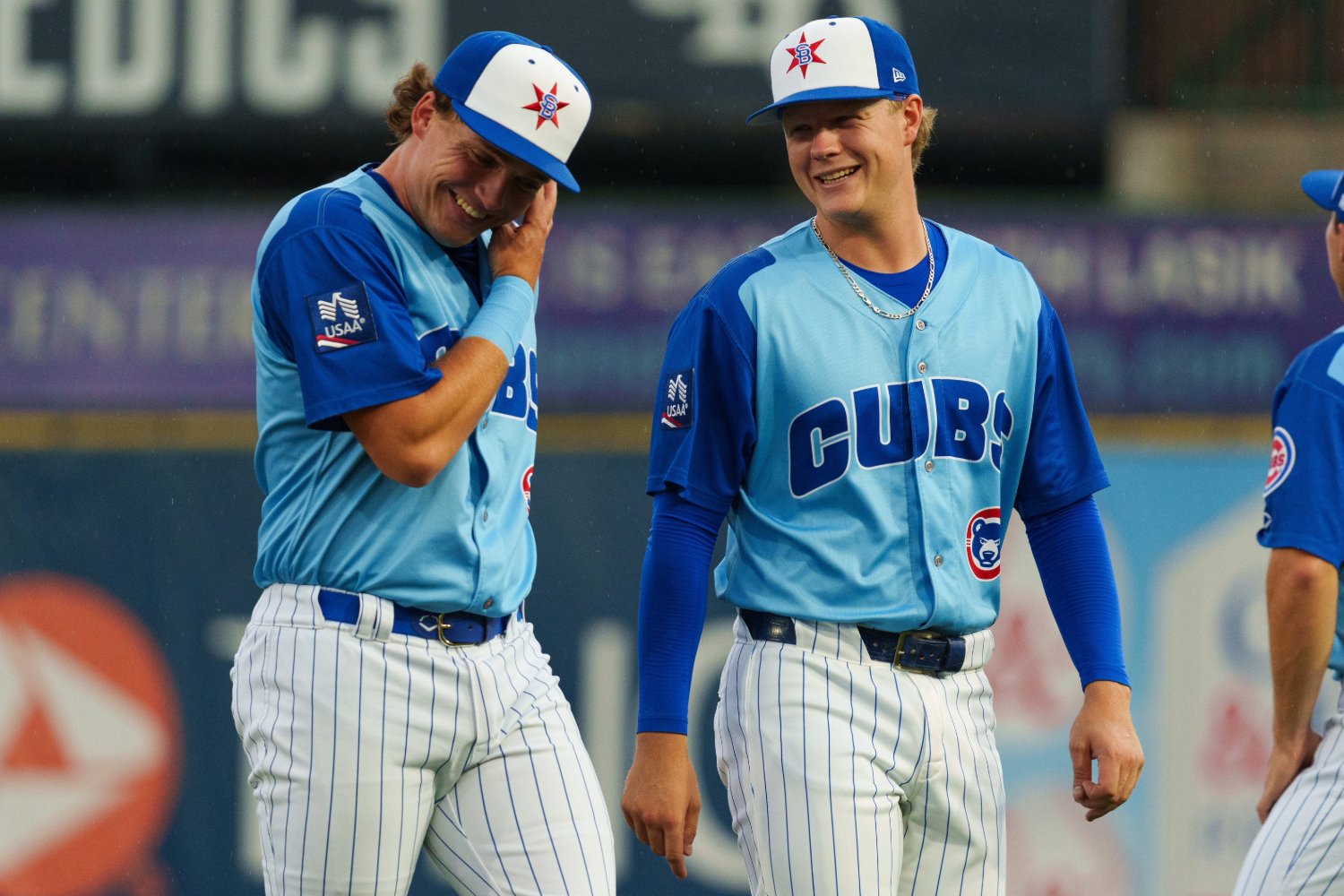
Image courtesy of © Michael Clubb/South Bend Tribune / USA TODAY NETWORK via Imagn Images With the last full month of the minor-league season now behind us, let’s take a look at a few arms in the Chicago Cubs' farm system that are finishing the season strong and heading into the offseason with some confidence. Ranking Cubs' Best MiLB Pitchers In August Honorable Mention: Dawson Netz - RHP - Knoxville An undrafted free agent last season, Netz worked his way to AA in his debut season and has remained there this entire year. He had been solid all season long but hit a bit of a speed bump in July with a 4.82 ERA, albeit still solid peripheral numbers. He rebounded well in August with a 2.65 ERA in four starts. He had 19 strikeouts to just six walks in 17 innings and limited opponents to a .180 batting average. Honorable Mention: Pierce Coppola: LHP - South Bend Coppola has been in pitcher of the month articles all year until he hit a snag in July with a 4.80 ERA. It was an understandable slide, as it coincided with his promotion to High-A South Bend. His first start on July 10 at that level was less than stellar, but he has allowed more than one run one time since then, including a 2.18 ERA over his five August starts. The towering lefty had a strikeout rate of 22% and a walk rate of 8% while allowing just a .186 batting average against in August. Third Place: Brooks Caple - RHP - Knoxville Last month’s winner of this award, Caple followed up his July with a 2.96 ERA across 24.1 innings of work over five August starts. He picked up 22 strikeouts and walked nine while allowing a .227 batting average against. He just topped 100 innings pitched for the season in his last start, a first for Caple. It is really promising to not see him fade at all down the stretch. Runner-up: Jostin Florentino - RHP - South Bend After a dominant showing in Myrtle Beach as a 20-year-old, Jostin Florentino had some of the higher expectations of any Cubs prospect entering 2026. Unfortunately, the young righty has largely struggled to live up to those expectations; coming into the month, he had a 5.68 ERA, 26% strikeout rate, and a 14% walk rate. August was a different story entirely. In four starts, Florentino had a 2.95 ERA backed up by a 30% strikeout rate and a 7% walk rate over 18.1 innings of work. Even though the year hasn’t gone great overall, a strong finish is just what the doctor ordered. Winner: Kohl Franklin - RHP - Iowa Perhaps the most unlikely of winners of this award, Kohl Franklin is deserving nonetheless. Drafted out of high school, Franklin looked great in 2019, his first full pro season. A combination of injuries and ineffectiveness had made him a bit of an afterthought at this point. He was subpar in 2022 (6.88 ERA in South Bend) and 2023 (5.99 ERA in Knoxville) and had thrown a total of eight innings since then. He made his first start in Arizona in July before making three starts with South Bend. At the beginning of August, the 26-year-old was promoted to Iowa. He hadn’t pitched in two full years, and had pitched poorly in AA when he last pitched, and he got promoted past Double-A after just four rehab starts. Clearly, the Cubs saw something. Franklin posted a 2.70 ERA in 16.2 innings over four Iowa starts. Franklin had an 8% walk rate and a 25% strikeout rate and allowed a .611 OPS against. A great story of perseverance, here is hoping he can build on this momentum going into next season. View full article
- 1 reply
-
- 1
-

-
- brooks caple
- jostin florentino
- (and 1 more)
-
Chicago Cubs Minor League Pitchers of the Month: August 2026
Jeremy Tecktiel posted an article in Minor Leagues
 With the last full month of the minor-league season now behind us, let’s take a look at a few arms in the Chicago Cubs' farm system that are finishing the season strong and heading into the offseason with some confidence. Ranking Cubs' Best MiLB Pitchers In August Honorable Mention: Dawson Netz - RHP - Knoxville An undrafted free agent last season, Netz worked his way to AA in his debut season and has remained there this entire year. He had been solid all season long but hit a bit of a speed bump in July with a 4.82 ERA, albeit still solid peripheral numbers. He rebounded well in August with a 2.65 ERA in four starts. He had 19 strikeouts to just six walks in 17 innings and limited opponents to a .180 batting average. Honorable Mention: Pierce Coppola: LHP - South Bend Coppola has been in pitcher of the month articles all year until he hit a snag in July with a 4.80 ERA. It was an understandable slide, as it coincided with his promotion to High-A South Bend. His first start on July 10 at that level was less than stellar, but he has allowed more than one run one time since then, including a 2.18 ERA over his five August starts. The towering lefty had a strikeout rate of 22% and a walk rate of 8% while allowing just a .186 batting average against in August. Third Place: Brooks Caple - RHP - Knoxville Last month’s winner of this award, Caple followed up his July with a 2.96 ERA across 24.1 innings of work over five August starts. He picked up 22 strikeouts and walked nine while allowing a .227 batting average against. He just topped 100 innings pitched for the season in his last start, a first for Caple. It is really promising to not see him fade at all down the stretch. Runner-up: Jostin Florentino - RHP - South Bend After a dominant showing in Myrtle Beach as a 20-year-old, Jostin Florentino had some of the higher expectations of any Cubs prospect entering 2026. Unfortunately, the young righty has largely struggled to live up to those expectations; coming into the month, he had a 5.68 ERA, 26% strikeout rate, and a 14% walk rate. August was a different story entirely. In four starts, Florentino had a 2.95 ERA backed up by a 30% strikeout rate and a 7% walk rate over 18.1 innings of work. Even though the year hasn’t gone great overall, a strong finish is just what the doctor ordered. Winner: Kohl Franklin - RHP - Iowa Perhaps the most unlikely of winners of this award, Kohl Franklin is deserving nonetheless. Drafted out of high school, Franklin looked great in 2019, his first full pro season. A combination of injuries and ineffectiveness had made him a bit of an afterthought at this point. He was subpar in 2022 (6.88 ERA in South Bend) and 2023 (5.99 ERA in Knoxville) and had thrown a total of eight innings since then. He made his first start in Arizona in July before making three starts with South Bend. At the beginning of August, the 26-year-old was promoted to Iowa. He hadn’t pitched in two full years, and had pitched poorly in AA when he last pitched, and he got promoted past Double-A after just four rehab starts. Clearly, the Cubs saw something. Franklin posted a 2.70 ERA in 16.2 innings over four Iowa starts. Franklin had an 8% walk rate and a 25% strikeout rate and allowed a .611 OPS against. A great story of perseverance, here is hoping he can build on this momentum going into next season.
 -
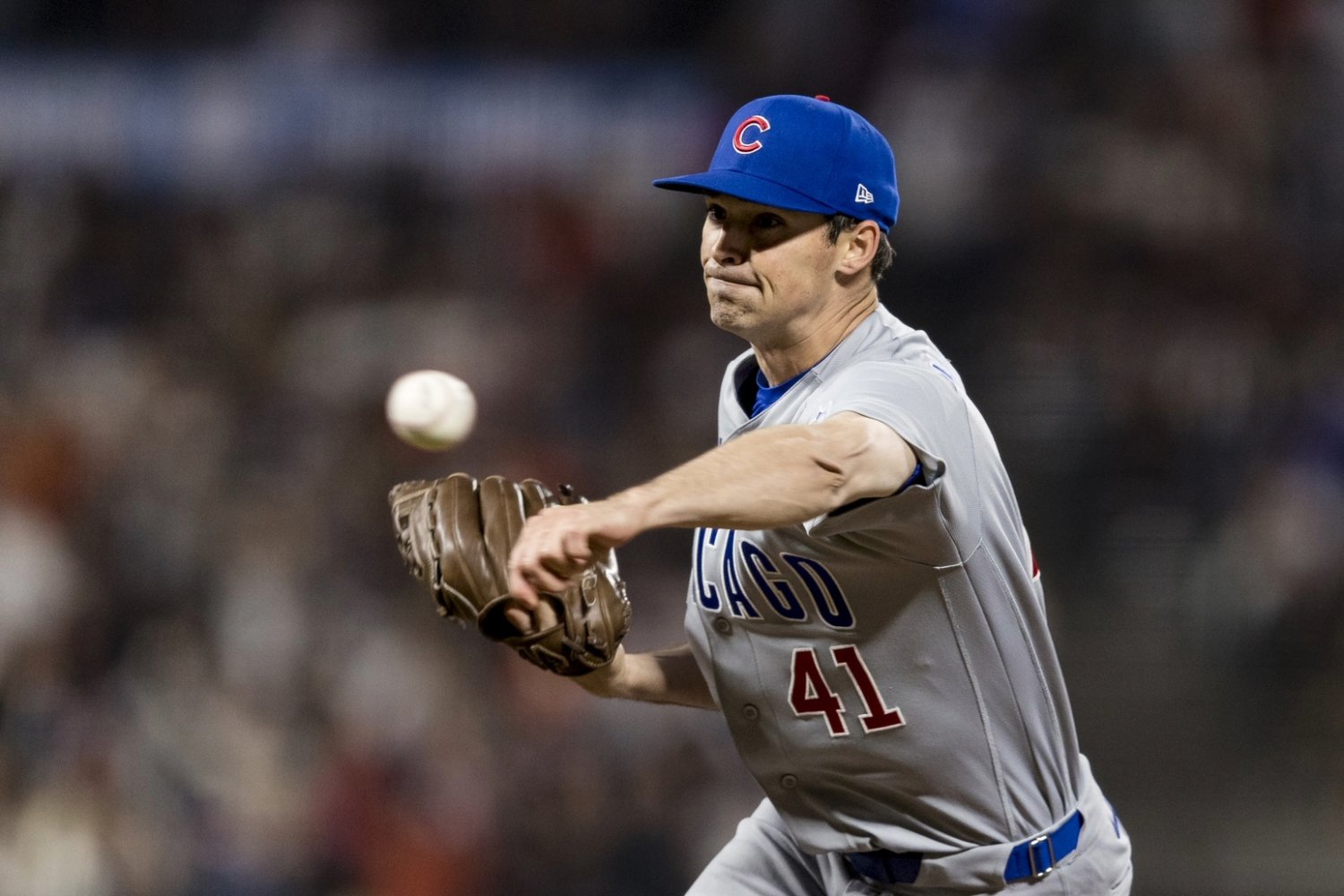
Image courtesy of © John Hefti-Imagn Images Under Jed Hoyer, the Chicago Cubs have rarely spent significant money on relief pitching in the offseason, rather preferring to spread that money among multiple smaller contracts hoping to hit on at least one. That was their plan this offseason as well, with Phil Maton, Hunter Harvey, Caleb Thielbar, Hoby Milner, and Shelby Miller all getting contracts between $2.5m and $7m while Jacob Webb and Trent Thornton got contracts at $1.5m and $1m respectively. Looking at that list, I am sure you are thinking what I am thinking: Maybe the Cubs should only give out ~$1m contracts? Maton didn’t pitch well and is done for the year, as is Harvey who barely pitched at all. Thielbar has struggled all year and has been dreadful in August. Shelby Miller was always expected to miss this season, the first of a two-year contract, but he may actually play a role down the stretch. Which leads us to the last mid-sized contract they gave out: Hoby Milner. The veteran southpaw pitched okay for the first couple months of the season, but most importantly he was available for the Cubs during their early season injury woes. Then, he went through them himself. Milner was nearly back from an injury that sidelined him for a couple of months when the Cubs put him on waivers. It was a very curious decision, so let’s investigate what it may mean. Milner has made 38 appearances this season for the Cubs, not enough to qualify for some leaderboards, but enough to see some trends. For the first time since 2022, Milner is throwing his sinker more than his sweeper, but both pitches have been at least average. Surprisingly, he has not increased his four-seam usage with a team that throws a ton of four seamers; he still throws his changeup more frequently. Either way, flipping his sinker/sweeper usage shows he bought into what the Cubs asked him to do. While Milner wasn’t elite by any stretch of the imagination, he sported a 3.53 ERA and issued just nine walks in 35.2 innings. He did outperform his FIP and saw a pretty drastic drop of 8-10 percentage points in K% and groundball rate. If he qualified, he would be near the very bottom of the league in strikeout rate, fastball velocity, expected batting average, and expected ERA. Not great! Yet even with those declines, there is still a real argument for the Cubs needing him as we round the final turn into September. The pitching lab's ability to get the most out of pitchers that have been discarded by other teams has been a key to their 2026 performance. The injuries stacked up early and often, yet the Cubs were able to lean on guys like Jacob Webb, Trent Thornton, Ryan Rolison, and Gavin Hollowell. Now with the additions of Ryan Zeferjahn and Aaron Civale and the recent return of Daniel Palencia, the Cubs may feel like they have cultivated some depth in the bullpen, regardless of how they have performed recently. With the way the injury bug has hit the roster all year long, it seems like a risky move to potentially jettison a usable veteran arm. While the Cubs do have many bullpen options, only Ryan Rolison and Caleb Thielbar throw from the left side. On the playoff roster, that list probably will also include David Peterson. Rolison certainly has earned a spot, but there is a strong argument to be made that maybe Caleb Thielbar should not be on the playoff roster, especially if his struggles continue into September. Even though Thielbar has a higher strikeout rate than Milner, he is near the bottom of the league in barrel%. When he doesn’t miss bats, he doesn’t miss barrels. Milner also gives opponents a very different look than the others. While Rolison (48°) and Thielbar (55°) are very over the top with their deliveries, Milner is a true sidearmer at -5°. In a National League where the Dodgers, Braves, and Brewers all have big left-handed bats, I would think the Cubs would want that extra southpaw option and different look. Putting Milner on waivers doesn’t mean he won’t play a role down the stretch. In fact, the very team the Cubs are playing this weekend (the Reds) already have two homers from players who were placed on waivers recently (Eugenio Suarez and TJ Friedl). If no team claims him, he will remain a part of the bullpen, unless he's designated him for assignment. The most likely answer is the Cubs don’t feel they need Milner and are attempting to do some cost saving. They might actually benefit if no team claims him and he remains on the roster. They don’t have an arm angle on the team like his, The way the bullpen is performing right now, they could use every arm they can get. View full article
-
 Under Jed Hoyer, the Chicago Cubs have rarely spent significant money on relief pitching in the offseason, rather preferring to spread that money among multiple smaller contracts hoping to hit on at least one. That was their plan this offseason as well, with Phil Maton, Hunter Harvey, Caleb Thielbar, Hoby Milner, and Shelby Miller all getting contracts between $2.5m and $7m while Jacob Webb and Trent Thornton got contracts at $1.5m and $1m respectively. Looking at that list, I am sure you are thinking what I am thinking: Maybe the Cubs should only give out ~$1m contracts? Maton didn’t pitch well and is done for the year, as is Harvey who barely pitched at all. Thielbar has struggled all year and has been dreadful in August. Shelby Miller was always expected to miss this season, the first of a two-year contract, but he may actually play a role down the stretch. Which leads us to the last mid-sized contract they gave out: Hoby Milner. The veteran southpaw pitched okay for the first couple months of the season, but most importantly he was available for the Cubs during their early season injury woes. Then, he went through them himself. Milner was nearly back from an injury that sidelined him for a couple of months when the Cubs put him on waivers. It was a very curious decision, so let’s investigate what it may mean. Milner has made 38 appearances this season for the Cubs, not enough to qualify for some leaderboards, but enough to see some trends. For the first time since 2022, Milner is throwing his sinker more than his sweeper, but both pitches have been at least average. Surprisingly, he has not increased his four-seam usage with a team that throws a ton of four seamers; he still throws his changeup more frequently. Either way, flipping his sinker/sweeper usage shows he bought into what the Cubs asked him to do. While Milner wasn’t elite by any stretch of the imagination, he sported a 3.53 ERA and issued just nine walks in 35.2 innings. He did outperform his FIP and saw a pretty drastic drop of 8-10 percentage points in K% and groundball rate. If he qualified, he would be near the very bottom of the league in strikeout rate, fastball velocity, expected batting average, and expected ERA. Not great! Yet even with those declines, there is still a real argument for the Cubs needing him as we round the final turn into September. The pitching lab's ability to get the most out of pitchers that have been discarded by other teams has been a key to their 2026 performance. The injuries stacked up early and often, yet the Cubs were able to lean on guys like Jacob Webb, Trent Thornton, Ryan Rolison, and Gavin Hollowell. Now with the additions of Ryan Zeferjahn and Aaron Civale and the recent return of Daniel Palencia, the Cubs may feel like they have cultivated some depth in the bullpen, regardless of how they have performed recently. With the way the injury bug has hit the roster all year long, it seems like a risky move to potentially jettison a usable veteran arm. While the Cubs do have many bullpen options, only Ryan Rolison and Caleb Thielbar throw from the left side. On the playoff roster, that list probably will also include David Peterson. Rolison certainly has earned a spot, but there is a strong argument to be made that maybe Caleb Thielbar should not be on the playoff roster, especially if his struggles continue into September. Even though Thielbar has a higher strikeout rate than Milner, he is near the bottom of the league in barrel%. When he doesn’t miss bats, he doesn’t miss barrels. Milner also gives opponents a very different look than the others. While Rolison (48°) and Thielbar (55°) are very over the top with their deliveries, Milner is a true sidearmer at -5°. In a National League where the Dodgers, Braves, and Brewers all have big left-handed bats, I would think the Cubs would want that extra southpaw option and different look. Putting Milner on waivers doesn’t mean he won’t play a role down the stretch. In fact, the very team the Cubs are playing this weekend (the Reds) already have two homers from players who were placed on waivers recently (Eugenio Suarez and TJ Friedl). If no team claims him, he will remain a part of the bullpen, unless he's designated him for assignment. The most likely answer is the Cubs don’t feel they need Milner and are attempting to do some cost saving. They might actually benefit if no team claims him and he remains on the roster. They don’t have an arm angle on the team like his, The way the bullpen is performing right now, they could use every arm they can get.
 -
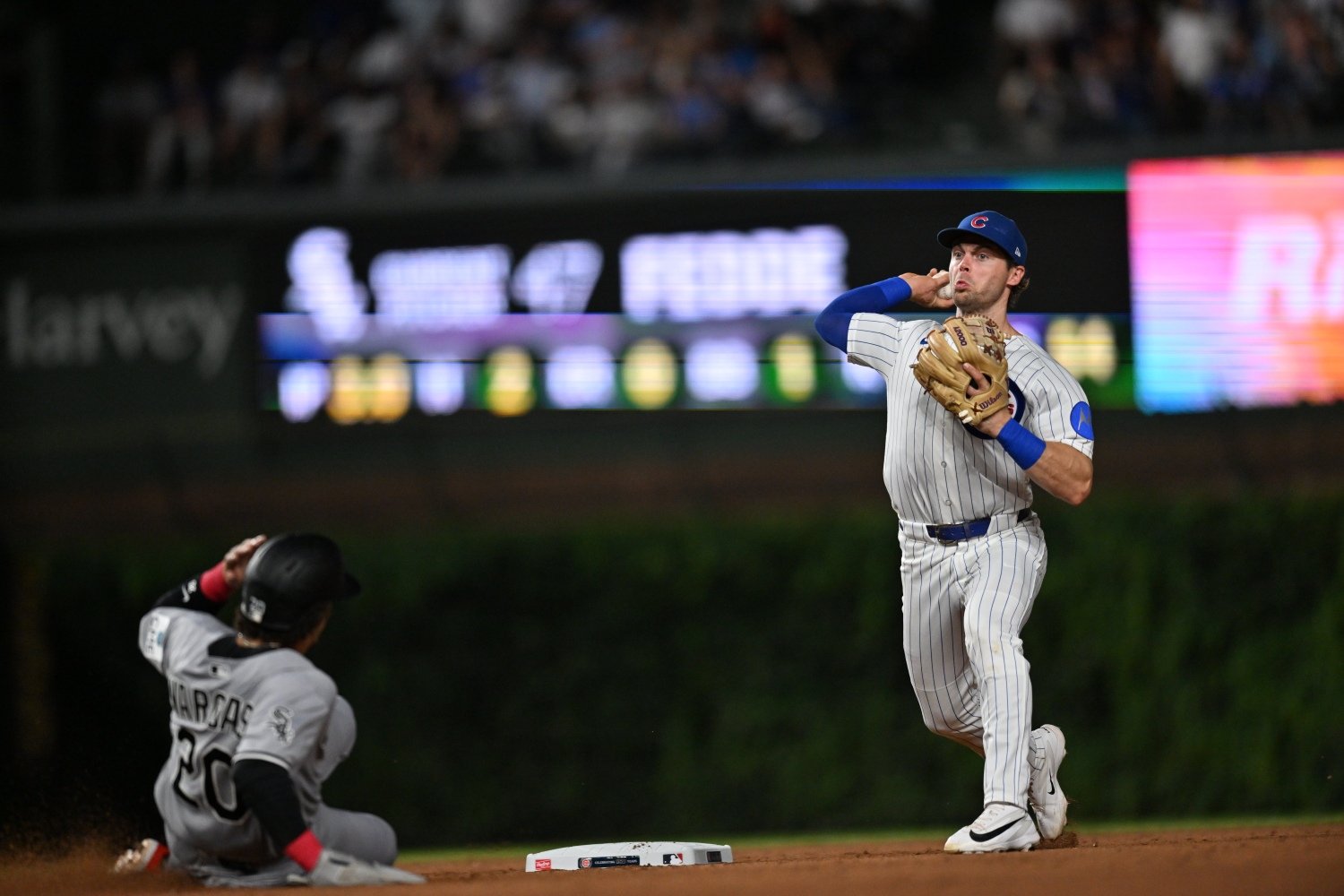
Image courtesy of Patrick Gorski-Imagn Images Each game, the Cubs provide more evidence that they are a special defensive unit. One question has been on my mind for the past few weeks; just how special are they? Defense has always been the trickiest part of baseball to quantify, especially across historical eras, but there are a few different metrics out there that can put what the 2026 Cubs are doing on defense in context. As a unit, the Cubs are on pace for 83 defensive runs saved (DRS), per Sports Info Solutions. Only 20 teams have reached that number over a full season since 2003, as far back as that stat goes. Historical defense, as we noted, is difficult to put in context and is changing regularly, so another way to look at the Cubs' defensive dominance is compared to their 2026 peers. The second-best team this season is the Atlanta Braves, on pace for 62 DRS. That gap of 21 runs between the two best teams has been topped once since 2013, by the 2022 Yankees (41!!). Since 2016, Statcast has provided more in-depth defensive data. Outs Above Average (OAA), from Baseball Savant, encompasses that information. The 2026 Cubs are currently at 60 OAA as a team, on pace for 77 for the full season. The highest single-season OAA a team has recorded was the 2017 Minnesota Twins, at 66. In fact, the 2026 Cubs already have the second-highest OAA ever, and they still have 35 games to play. To add the same historical context to OAA as we did to DRS, the Cardinals and the Diamondbacks are tied with 31 OAA right now, on pace for around 40 for this season. The difference between them and the Cubs, a whopping 37 runs, is shocking. Only 12 teams in the Statcast era have even put up 37 OAA in a single season; the 2025 Cubs finished with 36 OAA. The 2017 Minnesota Twins finished 34 OAA above the second place team that year; they are the only other team to finish the season more than 20 OAA above the competition. Since 2018, Statcast has also given us Fielding Run Value (FRV). The highest team FRV ever recorded was the 2018 Diamondbacks, at 64 FRV. The 2026 Cubs are already at 62 and on pace to easily be #1 here as well. One of the other reasons the Cubs are outliers here is that 61 of the 62 runs saved come from the Cubs' infielders and outfielders, and only 1 from their catchers. The top 20 FRV teams are all buoyed by high catching runs; the Cubs have done it without elite framing. Digging deeper, the IF/OF FRV of 61 is made up of 49 from their range and 11 from their arms. While the 11 runs from their arms ranked just outside the top 5, there is no doubt they will be there by the end of the season, potentially pushing the 2021 Red Sox (17 FRV) for the top spot. As for their range, they already stand alone, clear of the pack. Only the 2021 Cardinals (41 FRV) have put up a full season range FRV over 40, let alone 49. The FRV gap between this year’s Cubs and the second-place Blue Jays (26 runs) is also significant, as teams are normally much closer together. Only the 2018 Diamondbacks finished more than 10 runs clear of the competition, and in 5 of the 7 years of FRV, the difference between first and second was 6 runs or fewer. By any defensive measurements you like, the 2026 Cubs are putting up historic numbers. With contributions from every position, the defense on display every night is worth the price of admission. We can't satisfactorily compare them to the great defensive teams from much earlier eras, like the best of Earl Weaver's Orioles, but it's fair to say that over the last quarter-century, no team has been demonstrably better than the 2026 Cubs at turning balls in play into outs. View full article
-
 Each game, the Cubs provide more evidence that they are a special defensive unit. One question has been on my mind for the past few weeks; just how special are they? Defense has always been the trickiest part of baseball to quantify, especially across historical eras, but there are a few different metrics out there that can put what the 2026 Cubs are doing on defense in context. As a unit, the Cubs are on pace for 83 defensive runs saved (DRS), per Sports Info Solutions. Only 20 teams have reached that number over a full season since 2003, as far back as that stat goes. Historical defense, as we noted, is difficult to put in context and is changing regularly, so another way to look at the Cubs' defensive dominance is compared to their 2026 peers. The second-best team this season is the Atlanta Braves, on pace for 62 DRS. That gap of 21 runs between the two best teams has been topped once since 2013, by the 2022 Yankees (41!!). Since 2016, Statcast has provided more in-depth defensive data. Outs Above Average (OAA), from Baseball Savant, encompasses that information. The 2026 Cubs are currently at 60 OAA as a team, on pace for 77 for the full season. The highest single-season OAA a team has recorded was the 2017 Minnesota Twins, at 66. In fact, the 2026 Cubs already have the second-highest OAA ever, and they still have 35 games to play. To add the same historical context to OAA as we did to DRS, the Cardinals and the Diamondbacks are tied with 31 OAA right now, on pace for around 40 for this season. The difference between them and the Cubs, a whopping 37 runs, is shocking. Only 12 teams in the Statcast era have even put up 37 OAA in a single season; the 2025 Cubs finished with 36 OAA. The 2017 Minnesota Twins finished 34 OAA above the second place team that year; they are the only other team to finish the season more than 20 OAA above the competition. Since 2018, Statcast has also given us Fielding Run Value (FRV). The highest team FRV ever recorded was the 2018 Diamondbacks, at 64 FRV. The 2026 Cubs are already at 62 and on pace to easily be #1 here as well. One of the other reasons the Cubs are outliers here is that 61 of the 62 runs saved come from the Cubs' infielders and outfielders, and only 1 from their catchers. The top 20 FRV teams are all buoyed by high catching runs; the Cubs have done it without elite framing. Digging deeper, the IF/OF FRV of 61 is made up of 49 from their range and 11 from their arms. While the 11 runs from their arms ranked just outside the top 5, there is no doubt they will be there by the end of the season, potentially pushing the 2021 Red Sox (17 FRV) for the top spot. As for their range, they already stand alone, clear of the pack. Only the 2021 Cardinals (41 FRV) have put up a full season range FRV over 40, let alone 49. The FRV gap between this year’s Cubs and the second-place Blue Jays (26 runs) is also significant, as teams are normally much closer together. Only the 2018 Diamondbacks finished more than 10 runs clear of the competition, and in 5 of the 7 years of FRV, the difference between first and second was 6 runs or fewer. By any defensive measurements you like, the 2026 Cubs are putting up historic numbers. With contributions from every position, the defense on display every night is worth the price of admission. We can't satisfactorily compare them to the great defensive teams from much earlier eras, like the best of Earl Weaver's Orioles, but it's fair to say that over the last quarter-century, no team has been demonstrably better than the 2026 Cubs at turning balls in play into outs.
 -
 In his second start in Cubbie blue, Clay Holmes took a perfect game into the sixth and allowed just two total base runners through 6 2/3 innings of work. Still on a pitch restriction while ramping up in his return from the broken fibula, Holmes would have completed seven innings if it were not for a two-out walk to Jordan Walker, likely just not wanting to give in or make a mistake to the Cardinal’s best hitter with first base open and a three-run lead. Game score, a relatively simple metric to quantify a pitcher’s performance, had this as the best start of Clay Holmes career. Granted, that really only encompasses 42 starts over the last two seasons after his transition from the bullpen, but it is still worth noting considering it was his second start with the Cubs and he is still getting back into game shape and knocking the rust off. How has he done it? After throwing his sinker 41% of the time in his first start with the Cubs, that number climbed all the way to 55% against the Cardinals. Holmes threw 35 pitches to right-handed hitters yesterday; a whopping 31 of them were either sinkers (17) or sweepers (14). The most interesting change, however, was his sweeper usage against left-handed hitters. Usually his preferred secondary option, of the 45 pitches he threw to lefties, just one (1!) was a sweeper. In his first start, that number was 14. Instead of throwing the sweeper to lefties, Holmes used his curveball as his primary breaking ball against lefties. Before 2026, he hadn’t thrown a curveball against a lefty since 2021. Aside from the pitch mix itself, two things really stand out so far after Holmes’ pair of starts. First, he is getting more drop on his sinker than he has before. Like, ever. He had never had a drop of more than 30 inches in any game in his career, and he has immediately done so in both of his starts with the Cubs. You may see in the above graphic that this is vertical break including gravity, that is because his induced vertical break is actually down, it’s not in a place it has never been before for him, but it certainly isn’t explaining the increased break. So how is he getting more break on his sinker without necessarily inducing more break? Holmes has dropped his arm angle. Coming into 2026, Holmes had only had four career outings where his arm angle was below 40 degrees on sinkers, with just one of them coming as a starter. Although he made just nine starts before the injury this year, five of them featured arm angles below 40 degrees on the sinker. If you squint, you can see the data point from his first start as a Cub, all the way down in the bottom right at 37.2 degrees, a full degree lower than he has ever been. It appears the Cubs saw this early-season trend and wanted Holmes to lean into it, and I would bet that once the data on his arm angle from 8/14 is released, it will look similar. Why does this matter? Well, that extra break he is getting has helped him get his sinker located where it is most valuable. The vertical strike zone is about 1.5 feet off the ground at the bottom to 3.5 feet at the top. Holmes, like most sinker ballers, thrives when he is living in the bottom half of the zone, as he did for much of his career. The difference in 2025 is very noticeable, not a good trend, and combating that was likely why Holmes had dropped his arm angle early in 2026. Zooming in on 2026, Holmes is back to pounding the bottom of the zone with the Cubs. If you want to live at the bottom of the zone, you can’t do much better than that. Holmes won’t be perfect through five in every start, but if he can continue this trend, he will be exactly what the Cubs need going forward.
 -
Image courtesy of Kamil Krzaczynski-Imagn Images In his second start in Cubbie blue, Clay Holmes took a perfect game into the sixth and allowed just two total base runners through 6 2/3 innings of work. Still on a pitch restriction while ramping up in his return from the broken fibula, Holmes would have completed seven innings if it were not for a two-out walk to Jordan Walker, likely just not wanting to give in or make a mistake to the Cardinal’s best hitter with first base open and a three-run lead. Game score, a relatively simple metric to quantify a pitcher’s performance, had this as the best start of Clay Holmes career. Granted, that really only encompasses 42 starts over the last two seasons after his transition from the bullpen, but it is still worth noting considering it was his second start with the Cubs and he is still getting back into game shape and knocking the rust off. How has he done it? After throwing his sinker 41% of the time in his first start with the Cubs, that number climbed all the way to 55% against the Cardinals. Holmes threw 35 pitches to right-handed hitters yesterday; a whopping 31 of them were either sinkers (17) or sweepers (14). The most interesting change, however, was his sweeper usage against left-handed hitters. Usually his preferred secondary option, of the 45 pitches he threw to lefties, just one (1!) was a sweeper. In his first start, that number was 14. Instead of throwing the sweeper to lefties, Holmes used his curveball as his primary breaking ball against lefties. Before 2026, he hadn’t thrown a curveball against a lefty since 2021. Aside from the pitch mix itself, two things really stand out so far after Holmes’ pair of starts. First, he is getting more drop on his sinker than he has before. Like, ever. He had never had a drop of more than 30 inches in any game in his career, and he has immediately done so in both of his starts with the Cubs. You may see in the above graphic that this is vertical break including gravity, that is because his induced vertical break is actually down, it’s not in a place it has never been before for him, but it certainly isn’t explaining the increased break. So how is he getting more break on his sinker without necessarily inducing more break? Holmes has dropped his arm angle. Coming into 2026, Holmes had only had four career outings where his arm angle was below 40 degrees on sinkers, with just one of them coming as a starter. Although he made just nine starts before the injury this year, five of them featured arm angles below 40 degrees on the sinker. If you squint, you can see the data point from his first start as a Cub, all the way down in the bottom right at 37.2 degrees, a full degree lower than he has ever been. It appears the Cubs saw this early-season trend and wanted Holmes to lean into it, and I would bet that once the data on his arm angle from 8/14 is released, it will look similar. Why does this matter? Well, that extra break he is getting has helped him get his sinker located where it is most valuable. The vertical strike zone is about 1.5 feet off the ground at the bottom to 3.5 feet at the top. Holmes, like most sinker ballers, thrives when he is living in the bottom half of the zone, as he did for much of his career. The difference in 2025 is very noticeable, not a good trend, and combating that was likely why Holmes had dropped his arm angle early in 2026. Zooming in on 2026, Holmes is back to pounding the bottom of the zone with the Cubs. If you want to live at the bottom of the zone, you can’t do much better than that. Holmes won’t be perfect through five in every start, but if he can continue this trend, he will be exactly what the Cubs need going forward. View full article
-
Image courtesy of © Saul Young/News Sentinel / USA TODAY NETWORK via Imagn Images Developing arms is key for any organization looking to win sustainably. As the Chicago Cubs have painfully seen this year, injuries can derail even the best-laid plans. Having a war chest of developable and projectable arms to dip into, whether to use in the majors or as trade pieces, is what good organizations do. Here are some pitchers who improved their stock in July ahead of the trade deadline. And, spoiler alert, unlike the MiLB Hitter of the Month, all of the pitchers featured below are still around. Ranking Cubs' Best Minor League Pitchers In July Honorable Mention: Yoendris Gonzalez - RHP - South Bend Like seemingly every other Cubs pitcher this year, Gonzalez was placed on the IL in March. He started his rehab assignment at the end of May and was in Myrtle Beach by June 13. He had four good outings for Myrtle Beach in June and carried that into July where he put up 10 innings out of the Pelicans bullpen and allowed just two earned runs while striking out 18 and walking just three. Gonzalez was promoted to South Bend by the end of the month. He is a 23-year-old with a fastball that tops 95 and less than 75 total career innings under his belt, making him a pretty intriguing arm to follow. Honorable Mention: Anhuar Garcia - RHP - Myrtle Beach If you know Anhuar Garcia’s name, it is probably not for positive reasons. The 22-year-old was suspended in June of last year for 60 games for testing positive for performance enhancing drugs. He was activated at the end of June and made one appearance for Myrtle Beach before the calendar turned to July. He made seven appearances out of the bullpen and allowed just six hits and five runs in 12 innings. If you remove the one bad appearance he made where he allowed four runs on two homers, he had 10.2 innings of one-run ball with 14 strikeouts, only giving up two hits. He finished the month in the rotation in Myrtle Beach with a solid four-inning start. If he can continue to put up numbers like that while staying out of the news for the wrong reasons, he could be an asset down the line. Third Place: Jackson Brockett - LHP - South Bend A third reliever to get things kicked off. Brockett posted 17 strikeouts to four walks in 13 innings in July for South Bend. Each of his four outings lasted three or more innings and, over his final three outings of July, he had 13 strikeouts over 9.1 innings while giving up just one walk and three singles. He earned a Midwest League Pitcher of the Week award as well. The undrafted free agent continues to have a great season, and would probably be higher on this list had he pitched more than 13 total innings. Runner-up: Ethan Flanagan - LHP - South Bend After a great first professional year in Myrtle Beach last year, Flanagan started the year in South Bend and was… fine. Between April and May, he threw 30 innings, had a 34:10 K:BB ratio, and allowed 13 runs on 33 hits. That is when the Cubs transferred him to the development list on May 24, where he remained until June 21. Whatever they worked on in that month seemed to pay dividends in July. Flanagan threw 20 innings and had a 26:4 K:BB ratio and allowed seven runs on just 13 hits. Batters hit .306 off him in May and .181 in July. Flanagan was a 17th-round pick in 2023, but if he can continue to put outings together like he did last month, the lefty could force his way into the Cubs' future plans. Winner: Brooks Caple - RHP - Knoxville Caple made four starts in Double-A in July and allowed a .613 OPS to opposing hitters in 21 innings of work. He had a 24% strikeout rate and a 6% walk rate and allowed just eight runs total in the month. Caple also spent some time on the development list from 6/23-7/1 after scuffling a bit in three June starts. He came off the DL and rebounded with four pretty solid starts to get back on track. Heading into August, Caple looks to be a front-runner for the organization’s Minor League Pitcher of the Year award. View full article
-
Chicago Cubs Minor League Pitchers of the Month: July 2026
Jeremy Tecktiel posted an article in Minor Leagues
 Developing arms is key for any organization looking to win sustainably. As the Chicago Cubs have painfully seen this year, injuries can derail even the best-laid plans. Having a war chest of developable and projectable arms to dip into, whether to use in the majors or as trade pieces, is what good organizations do. Here are some pitchers who improved their stock in July ahead of the trade deadline. And, spoiler alert, unlike the MiLB Hitter of the Month, all of the pitchers featured below are still around. Ranking Cubs' Best Minor League Pitchers In July Honorable Mention: Yoendris Gonzalez - RHP - South Bend Like seemingly every other Cubs pitcher this year, Gonzalez was placed on the IL in March. He started his rehab assignment at the end of May and was in Myrtle Beach by June 13. He had four good outings for Myrtle Beach in June and carried that into July where he put up 10 innings out of the Pelicans bullpen and allowed just two earned runs while striking out 18 and walking just three. Gonzalez was promoted to South Bend by the end of the month. He is a 23-year-old with a fastball that tops 95 and less than 75 total career innings under his belt, making him a pretty intriguing arm to follow. Honorable Mention: Anhuar Garcia - RHP - Myrtle Beach If you know Anhuar Garcia’s name, it is probably not for positive reasons. The 22-year-old was suspended in June of last year for 60 games for testing positive for performance enhancing drugs. He was activated at the end of June and made one appearance for Myrtle Beach before the calendar turned to July. He made seven appearances out of the bullpen and allowed just six hits and five runs in 12 innings. If you remove the one bad appearance he made where he allowed four runs on two homers, he had 10.2 innings of one-run ball with 14 strikeouts, only giving up two hits. He finished the month in the rotation in Myrtle Beach with a solid four-inning start. If he can continue to put up numbers like that while staying out of the news for the wrong reasons, he could be an asset down the line. Third Place: Jackson Brockett - LHP - South Bend A third reliever to get things kicked off. Brockett posted 17 strikeouts to four walks in 13 innings in July for South Bend. Each of his four outings lasted three or more innings and, over his final three outings of July, he had 13 strikeouts over 9.1 innings while giving up just one walk and three singles. He earned a Midwest League Pitcher of the Week award as well. The undrafted free agent continues to have a great season, and would probably be higher on this list had he pitched more than 13 total innings. Runner-up: Ethan Flanagan - LHP - South Bend After a great first professional year in Myrtle Beach last year, Flanagan started the year in South Bend and was… fine. Between April and May, he threw 30 innings, had a 34:10 K:BB ratio, and allowed 13 runs on 33 hits. That is when the Cubs transferred him to the development list on May 24, where he remained until June 21. Whatever they worked on in that month seemed to pay dividends in July. Flanagan threw 20 innings and had a 26:4 K:BB ratio and allowed seven runs on just 13 hits. Batters hit .306 off him in May and .181 in July. Flanagan was a 17th-round pick in 2023, but if he can continue to put outings together like he did last month, the lefty could force his way into the Cubs' future plans. Winner: Brooks Caple - RHP - Knoxville Caple made four starts in Double-A in July and allowed a .613 OPS to opposing hitters in 21 innings of work. He had a 24% strikeout rate and a 6% walk rate and allowed just eight runs total in the month. Caple also spent some time on the development list from 6/23-7/1 after scuffling a bit in three June starts. He came off the DL and rebounded with four pretty solid starts to get back on track. Heading into August, Caple looks to be a front-runner for the organization’s Minor League Pitcher of the Year award.
 -
Image courtesy of © Bill Streicher-Imagn Images July is an incredibly important month for minor leaguers and their value. With the trade deadline looming, a poor performance can sink trade value while a great performance can boost a players' stock. Which hitters helped the Chicago Cubs, and themselves, most in July? Spoiler alert, the top two players on this list are no longer with the organization. Ranking Cubs' Best Minor League Hitters In July Honorable Mention: Jose Escobar - UTIL - South Bend Jose Escobar has put together a really nice season this year, albeit largely under the radar. Promoted to South Bend at the end of May, Escobar slashed .343/.420/.614 in June and followed that up with a .367/.420./520 line in July to land in last month’s edition. Escobar put up that stat line along with just a 14.6% strikeout rate while being a tad young for the level. The diminutive 21-year-old has mostly played left field but has starts at 2B and in RF as well in South Bend. With a strong finish to his solid season, Escobar has likely earned the chance to start his age-22 season at Double-A Knoxville. Third Place: Josiah Hartshorn - OF - South Bend The year of Hartshorn continued in July. The reason he takes home the bronze and not in one of the top two spots this month is a slight drop off in production compared to previous months, but Hartshorn still managed a .256/.393/.453 slash line with an 18.8% strikeout rate and a 16.9% walk rate. His slugging percentage dipped from June but he paired that with a dip in k-rate and an increased walk rate. The switch-hitting teenager also played more on the dirt this month, starting 12 games at 1B and only 8 in RF, the first time this year he has started more games in the infield than the outfield. If you were looking for signs that Hartshorn is hitting a wall in his first professional season, you won’t find any in July. Runner-Up: Brett Bateman - OF - Iowa Bateman wins the runner-up in July largely on the back of a 18-game stretch from July 2 to July 28. He hit safely in 17 of the 18 games, including a 14-game hitting streak. Bateman recorded multiple hits 11 times, scored 22 runs, and hit .416 with just 10 strikeouts and 12 extra-base hits. He entered July slashing .284/.427/.355, which is passable, but then slashed .358/.430/.547 over the month. In his fourth professional season, Bateman has steadily moved up the ladder due to solid strikeout and walk rates and a solid defense/speed combo in the outfield. The Blue Jays clearly bought into the hype, acquiring him (alongside Ty Southisene) in the Kevin Gausman trade. Winner: Jonathon Long - 1B - Iowa Through June, I think the only way to sum up Jonathan Long’s 2026 season was as a disappointment. He was coming off a solid season in Iowa in 2025 and expected to make a bit of a push for the majors, even if he was blocked by Michael Busch. Long followed up an .883 OPS in AAA last year with an .738 OPS entering July. Long proceeded to hit .371/.446/.652 last month, good for a 1.097 OPS with a walk rate of nearly 11%. He had 17 doubles and 7 home runs over the first three months, and 13 doubles and 4 homers in July. He was weighed down by a really poor May, but got fully back on track just in time for the trade deadline. Like Bateman, Long's boosted stock proved useful on the trade block, as he got shipped to Miami (with Jace Beck) in exchange for Braxton Garrett. View full article
-
Chicago Cubs Minor League Hitters of the Month: July 2026
Jeremy Tecktiel posted an article in Minor Leagues
 July is an incredibly important month for minor leaguers and their value. With the trade deadline looming, a poor performance can sink trade value while a great performance can boost a players' stock. Which hitters helped the Chicago Cubs, and themselves, most in July? Spoiler alert, the top two players on this list are no longer with the organization. Ranking Cubs' Best Minor League Hitters In July Honorable Mention: Jose Escobar - UTIL - South Bend Jose Escobar has put together a really nice season this year, albeit largely under the radar. Promoted to South Bend at the end of May, Escobar slashed .343/.420/.614 in June and followed that up with a .367/.420./520 line in July to land in last month’s edition. Escobar put up that stat line along with just a 14.6% strikeout rate while being a tad young for the level. The diminutive 21-year-old has mostly played left field but has starts at 2B and in RF as well in South Bend. With a strong finish to his solid season, Escobar has likely earned the chance to start his age-22 season at Double-A Knoxville. Third Place: Josiah Hartshorn - OF - South Bend The year of Hartshorn continued in July. The reason he takes home the bronze and not in one of the top two spots this month is a slight drop off in production compared to previous months, but Hartshorn still managed a .256/.393/.453 slash line with an 18.8% strikeout rate and a 16.9% walk rate. His slugging percentage dipped from June but he paired that with a dip in k-rate and an increased walk rate. The switch-hitting teenager also played more on the dirt this month, starting 12 games at 1B and only 8 in RF, the first time this year he has started more games in the infield than the outfield. If you were looking for signs that Hartshorn is hitting a wall in his first professional season, you won’t find any in July. Runner-Up: Brett Bateman - OF - Iowa Bateman wins the runner-up in July largely on the back of a 18-game stretch from July 2 to July 28. He hit safely in 17 of the 18 games, including a 14-game hitting streak. Bateman recorded multiple hits 11 times, scored 22 runs, and hit .416 with just 10 strikeouts and 12 extra-base hits. He entered July slashing .284/.427/.355, which is passable, but then slashed .358/.430/.547 over the month. In his fourth professional season, Bateman has steadily moved up the ladder due to solid strikeout and walk rates and a solid defense/speed combo in the outfield. The Blue Jays clearly bought into the hype, acquiring him (alongside Ty Southisene) in the Kevin Gausman trade. Winner: Jonathon Long - 1B - Iowa Through June, I think the only way to sum up Jonathan Long’s 2026 season was as a disappointment. He was coming off a solid season in Iowa in 2025 and expected to make a bit of a push for the majors, even if he was blocked by Michael Busch. Long followed up an .883 OPS in AAA last year with an .738 OPS entering July. Long proceeded to hit .371/.446/.652 last month, good for a 1.097 OPS with a walk rate of nearly 11%. He had 17 doubles and 7 home runs over the first three months, and 13 doubles and 4 homers in July. He was weighed down by a really poor May, but got fully back on track just in time for the trade deadline. Like Bateman, Long's boosted stock proved useful on the trade block, as he got shipped to Miami (with Jace Beck) in exchange for Braxton Garrett.
 -
Image courtesy of © Vincent Carchietta-Imagn Images The 2015 MLB Draft is well represented on the 2026 Cubs roster. Famously, the Cubs have the top two picks from that draft, in Dansby Swanson and Alex Bregman, and they have their own top-10 pick (Ian Happ, who went 9th). Scott Kingery is in Triple-A. (Ok, that one is a stretch.) In addition to three top-10 picks, though, they have two arms from the 2015 draft with lesser-known names in their bullpen. Tyler Ferguson and Trent Thornton have both had very positive numbers with the Cubs so far, but as the deadline approaches, can the Cubs rely on either of these arms in a playoff race? Let’s start with Ferguson. The Cubs sent cash to the Athletics for Ferguson in May after he had been optioned to Triple-A to start the 2026 season. He was a useful member of the A’s bullpen in 2024; he had a 30% strikeout rate and was reliable when it mattered most. When covering innings 7-9 (which was his primary role), he held opponents to a .500 OPS and just 12 runs in 38 1/3 innings that year. In fact, over the last two seasons, Ferguson has been quite a bit better than average in medium- and high-leverage situations. Oddly enough, his problem has been low-leverage situations. Ferguson was at his best in 2024 throwing fastballs 74% of the time, but mixing between four-seamers, sinkers, and cutters. In 2025, he lost 1+ mph on his fastballs and his strikeout rate dropped to 22%, while his walk rate climbed to almost 14%. Ferguson has always had a hard time getting lefties out. His loss of effectiveness on the fastball turned him into a platoon reliever who doesn't get a ton of ground balls or strikeouts and has a high walk rate—a pretty rough combination, which makes it easy to understand why the A’s sold him to the Cubs. The Cubs were desperate in their search for healthy arms and saw a rebound in velocity from Ferguson. Ferguson is obviously due for regression from his 0% walk rate. Can he survive it? His strikeout rate is back to 30%, largely on the back of a new sweeper that he's been throwing. Per Ferguson, he changed his grip and it seems to have made a difference, as he's getting more horizontal movement on the pitch. He's thrown it 20 times since he came back from the minors on June 24, and outside of the home run to Jordan Walker on July 5, opponents are 0-6 with 4 strikeouts against the pitch. Even though the shape has been inconsistent as he gets comfortable with the new grip, he's getting a 60% chase rate on the sweeper. The emergence of the sweeper has made his fastball more effective, too. He has allowed just 2 singles off fastballs since his return from Iowa. Much like Jacob Webb, Ferguson is still experimenting with his pitch mix, especially against left-handed hitters. He's only thrown 17 total pitches to lefties since June 24, but he's thrown more sweepers than changeups in his search for a secondary pitch he can trust against them. Ferguson looks to be back where he was when he was an effective platoon arm for the A’s, but if he can find results against lefties with his new sweeper, he could be more than just a matchup guy for Craig Counsell. That would be an unconventional path to success, but this is the Cubs bullpen. Unconventional paths are the convention. One round ahead of Ferguson in 2015, Trent Thornton went to the Astros. Thornton reached Double-A in his first full season, before being traded to the Blue Jays after the 2018 season. He made the Jays roster out of spring training and made 29 starts in 2019, leading the team in starts. Injuries limited him and moved him to a bullpen role, where he was less effective, before being traded to Seattle in 2023. After lowering his arm slot, he was solid in the bullpen for a couple seasons, but was non-tendered after tearing his Achilles last July. Less than a year later, Thornton has a 2.63 ERA over 27 1/3 innings, a pretty remarkable comeback. Much like Ferguson, Thornton is trying to rebound and find the success of his 2024 season, where he had a 26% strikeout rate and a 6.5% walk rate and limited hard contact at a pretty high level. Unlike Ferguson, he doesn’t look like the same pitcher with a new wrinkle; he looks like a completely different pitcher. His arm angle is now at 46°, up from 35° in 2024 and closer to what it was with the Blue Jays. The good news is that he's getting more ground balls than ever before. The bad news is that his strikeout and walk rates are the lowest and highest of his career, respectively. The decrease in swing-and-miss is evident in both of Thornton’s breaking offerings and his four-seam fastball. Looking at Thornton’s fastball, he has traded swing-and-miss for weak contact and ground balls. With the higher arm slot, Thornton’s whiff rate on the four-seamer is back to the mid-teens, where it was before he lowered his slot. His ground-ball rate of 50% on the four-seamer is far higher than ever in his career, though. Batters’ average launch angle on his fastball is 8°. Last season was the only other time he has been below 17°. Due to putting the ball on the ground, the four-seamer grades out higher per run value than any other season in his career. Thornton’s curveball has a paltry 5% whiff rate this year, the first time in his career it's been below 20%. He's spinning the ball less from his higher arm slot and has lost 2.5 inches of total movement on it. Batters have not yet swung and missed on a curveball in the zone this season. His whiff rate has also dropped on his slider/cutter, but only against lefties. Thornton has had more luck against lefties with both the sweeper and the cutter than he has with the curve, but he's still throwing the curve 32% of the time against lefties. Therein lies the problem; the same problem that plagues multiple pitchers in this Cubs bullpen. How do we get a lefty bat out? Before the season, Matt Trueblood postulated that Thornton may be adding a kick-change to his arsenal. If there is truth to this conspiracy, we haven’t yet seen it, as Thornton has not thrown a single changeup this year. As Matt explains in that article, changeups are a difficult pitch for a supinator like Thornton to throw, and if we haven’t seen it yet, it's probably not coming. Without that pitch (or recapturing the lost movement on his curveball), he looks like another Cubs pen arm who needs to be hidden from lefties. The reality is that both of these 2015 draftees are likely capped in terms of what value they can provide to the 2026 Cubs. Both are nearing their 33rd birthdays and are unlikely to change much or suddenly become good at getting lefties out. Especially in a Murphy’s Law season like the Cubs arms are having, however, these veteran arms filling their role well is sorely needed, for however long it lasts. View full article
