


Cubs Video
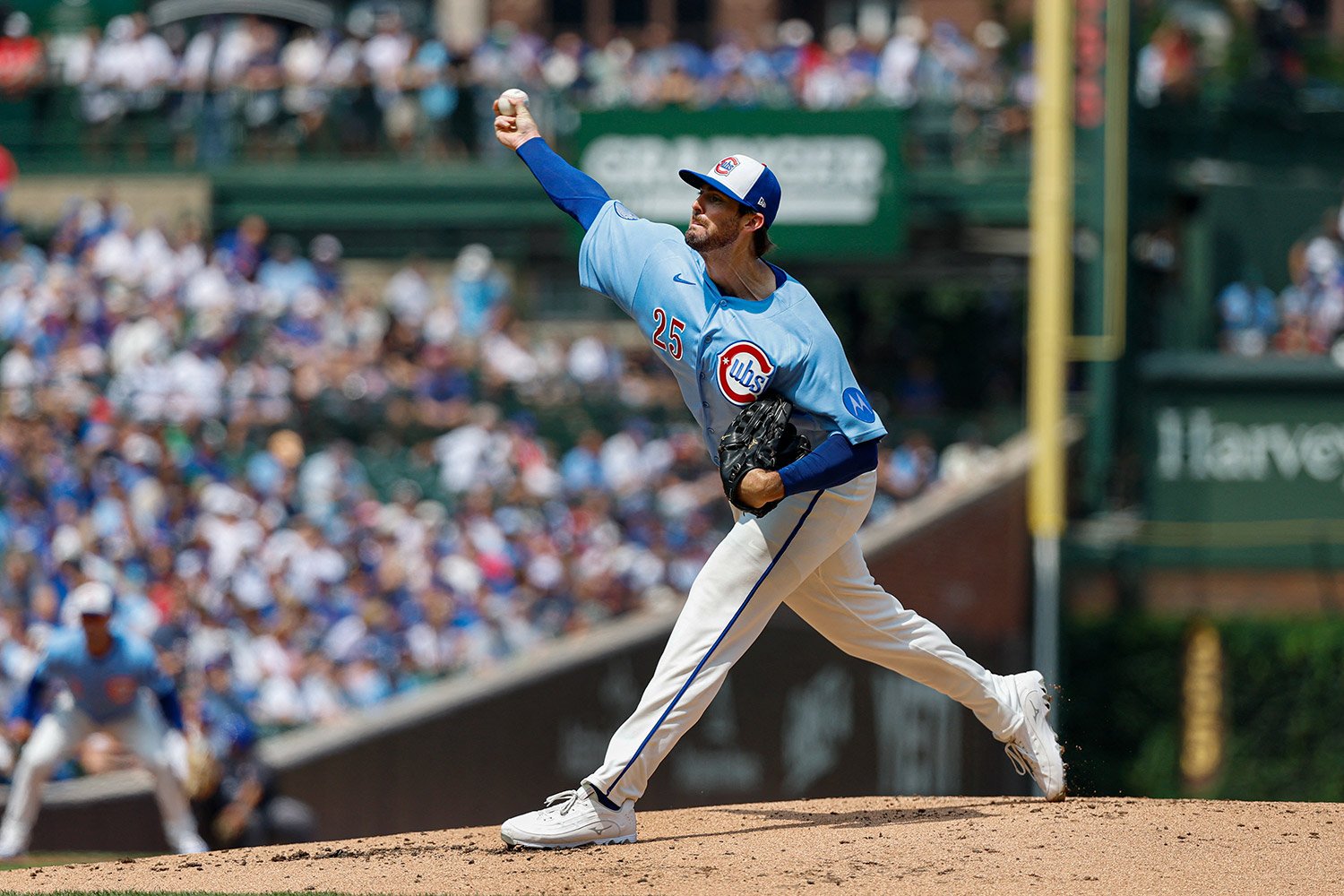
In his second start in Cubbie blue, Clay Holmes took a perfect game into the sixth and allowed just two total base runners through 6 2/3 innings of work. Still on a pitch restriction while ramping up in his return from the broken fibula, Holmes would have completed seven innings if it were not for a two-out walk to Jordan Walker, likely just not wanting to give in or make a mistake to the Cardinal’s best hitter with first base open and a three-run lead.
Game score, a relatively simple metric to quantify a pitcher’s performance, had this as the best start of Clay Holmes career. Granted, that really only encompasses 42 starts over the last two seasons after his transition from the bullpen, but it is still worth noting considering it was his second start with the Cubs and he is still getting back into game shape and knocking the rust off. How has he done it?
After throwing his sinker 41% of the time in his first start with the Cubs, that number climbed all the way to 55% against the Cardinals. Holmes threw 35 pitches to right-handed hitters yesterday; a whopping 31 of them were either sinkers (17) or sweepers (14). The most interesting change, however, was his sweeper usage against left-handed hitters. Usually his preferred secondary option, of the 45 pitches he threw to lefties, just one (1!) was a sweeper. In his first start, that number was 14. Instead of throwing the sweeper to lefties, Holmes used his curveball as his primary breaking ball against lefties. Before 2026, he hadn’t thrown a curveball against a lefty since 2021.
Aside from the pitch mix itself, two things really stand out so far after Holmes’ pair of starts.
First, he is getting more drop on his sinker than he has before. Like, ever. He had never had a drop of more than 30 inches in any game in his career, and he has immediately done so in both of his starts with the Cubs.

You may see in the above graphic that this is vertical break including gravity, that is because his induced vertical break is actually down, it’s not in a place it has never been before for him, but it certainly isn’t explaining the increased break.

So how is he getting more break on his sinker without necessarily inducing more break? Holmes has dropped his arm angle. Coming into 2026, Holmes had only had four career outings where his arm angle was below 40 degrees on sinkers, with just one of them coming as a starter. Although he made just nine starts before the injury this year, five of them featured arm angles below 40 degrees on the sinker.

If you squint, you can see the data point from his first start as a Cub, all the way down in the bottom right at 37.2 degrees, a full degree lower than he has ever been. It appears the Cubs saw this early-season trend and wanted Holmes to lean into it, and I would bet that once the data on his arm angle from 8/14 is released, it will look similar.
Why does this matter? Well, that extra break he is getting has helped him get his sinker located where it is most valuable. The vertical strike zone is about 1.5 feet off the ground at the bottom to 3.5 feet at the top. Holmes, like most sinker ballers, thrives when he is living in the bottom half of the zone, as he did for much of his career.

The difference in 2025 is very noticeable, not a good trend, and combating that was likely why Holmes had dropped his arm angle early in 2026. Zooming in on 2026, Holmes is back to pounding the bottom of the zone with the Cubs.

If you want to live at the bottom of the zone, you can’t do much better than that.
Holmes won’t be perfect through five in every start, but if he can continue this trend, he will be exactly what the Cubs need going forward.






Recommended Comments
There are no comments to display.
Create an account or sign in to comment
You need to be a member in order to leave a comment
Create an account
Sign up for a new account in our community. It's easy!
Register a new accountSign in
Already have an account? Sign in here.
Sign In Now