Maddux31
-
Posts
11 -
Joined
-
Last visited
Content Type
Profiles
Joomla Posts 1
Chicago Cubs Videos
Chicago Cubs Free Agent & Trade Rumors, Notes, & Tidbits
2026 Chicago Cubs Top Prospects Ranking
News
2023 Chicago Cubs Draft Picks
Guides & Resources
2024 Chicago Cubs Draft Picks
The Chicago Cubs Players Project
2025 Chicago Cubs Draft Pick Tracker
2026 Chicago Cubs Draft Tracker: Picks & Bonuses
Blogs
Events
Forums
Store
Gallery
Everything posted by Maddux31
-
There are more reasons not to sign Bellinger than there are reasons to sign him, including the projections and him blocking Busch and PCA, as was mentioned here. But the majority of the fan base almost seems to be demanding it. Are these just casual fans who don’t dig into the numbers? I laugh every time I read where someone has said, “I’m not an analytics guy.” What does that even mean? And if someone says they don’t “trust” analytics, what is the reason they think giving a huge contract to Bellinger would be a good move for the Cubs going forward. Gut instinct? I think some fans simply don’t understand the purpose of the data. It’s an oversimplification, but all these numbers are telling us is what the likely outcomes are based on past performance. Nothing more, nothing less. It is designed to take subjectivity out of the equation.
-
Article: What Did Jed Hoyer Mean By That?
Maddux31 replied to Josh Illes's topic in North Side Baseball Front Page News
I think pitching is still the priority. If you look at the Fangraphs projections, they are not high on the Cubs staff. So I would like to see them go out of their comfort zone and sign Montgomery. In addition to that, I think they can trade for a quality reliever without doing significant damage to the farm system, though the longer you hold on to guys who are mostly blocked anyway, the less sense it makes to me. The Cubs are 6-7 WAR behind the Cardinals, so I think those moves would put them on a par with St. Louis. This also leaves plenty of flexibility for in-season moves and puts them in good position to add a huge bat next offseason. Bellinger is a huge risk, but if his price falls to the point where he could be had for 5/120 or something like that, I would pull the trigger on that. But buyer beware. -
He’s not the best remaining option, for me that is Montgomery, but one big thing he has going for him is that he’s not represented by Boras like Snell and Montgomery, who will both likely get more money than the Cubs are willing to spend.
-
Bellinger scares me. He’s been injury prone and is long and lanky, with a lot going on with his swing that could easily get out of sync. But those batted ball numbers are what scares me the most. There just isn’t anything there to like. And defense often begins to slide when a player hits his early 30s. That all said, it’s not hard to imagine getting to late January with the Cubs still desperate for a bat and Jed overpaying Bellinger in terms of both AAV and years. I guess 6/150 would be palatable (barely), but I think it’s a big risk. The question might end up being, however, “Is it a risk the Cubs can afford NOT to take?”
-
Morel has had some huge hits for the Cubs, and his story is inspiring, but I don’t care for players with that degree of swing and miss in their game. They are rally killers and can generally be exploited in clutch situations (though as mentioned, Morel has had two or three glorious moments in which he has delivered with the game on the line). I wasn’t in love with Javy as much as many were, but if Morel had his glove and baseball instincts, he would be almost impossible to dismiss. But he doesn’t, and since swing and miss issues are very tough to cure, I feel the Cubs need to trade him now and not wait for the league to further adjust and turn him into the Detroit Tigers version of Baez.
-
Another great piece, Matt. This is the kind of nuanced deep dive that you will not often see, even from The Athletic, where there always seems to be a reluctance to attach names and possibilities to the Cubs needs other than the obvious ones. I’m tired of reading recycled stories that don’t offer anything new. On the Ohtani front, it has been my firm belief all along that the risk/long-term implications outweighed the reward. But when you lay those things out, there will always be those seemingly uniformed people who respond by saying how anyone who dare suggest that there might be pros and cons to an Ohtani signing is an idiot because he is the “best player on earth,” without offering any kind of counterpoint beyond that.
-
Nice piece. In most years, I would not be in favor of this signing. Hoskins’ defense is so bad that it negates much of what he gives you offensively, and it’s frustrating that the Cubs keep saying they want to build around pitching and defense, but are then willing to insert the likes of Mancini and Wisdom at first because they need a bat with some pop. That said, if the Cubs can’t sign Ohtani (which I think is a bad idea anyway), and with trade targets such as Juan Soto unlikely to come to fruition, they are backed into a corner and may ended up in a situation where they really need to sign him or risk waiting and hoping the price drops late on 2023 overachiever Cody Bellinger.
-
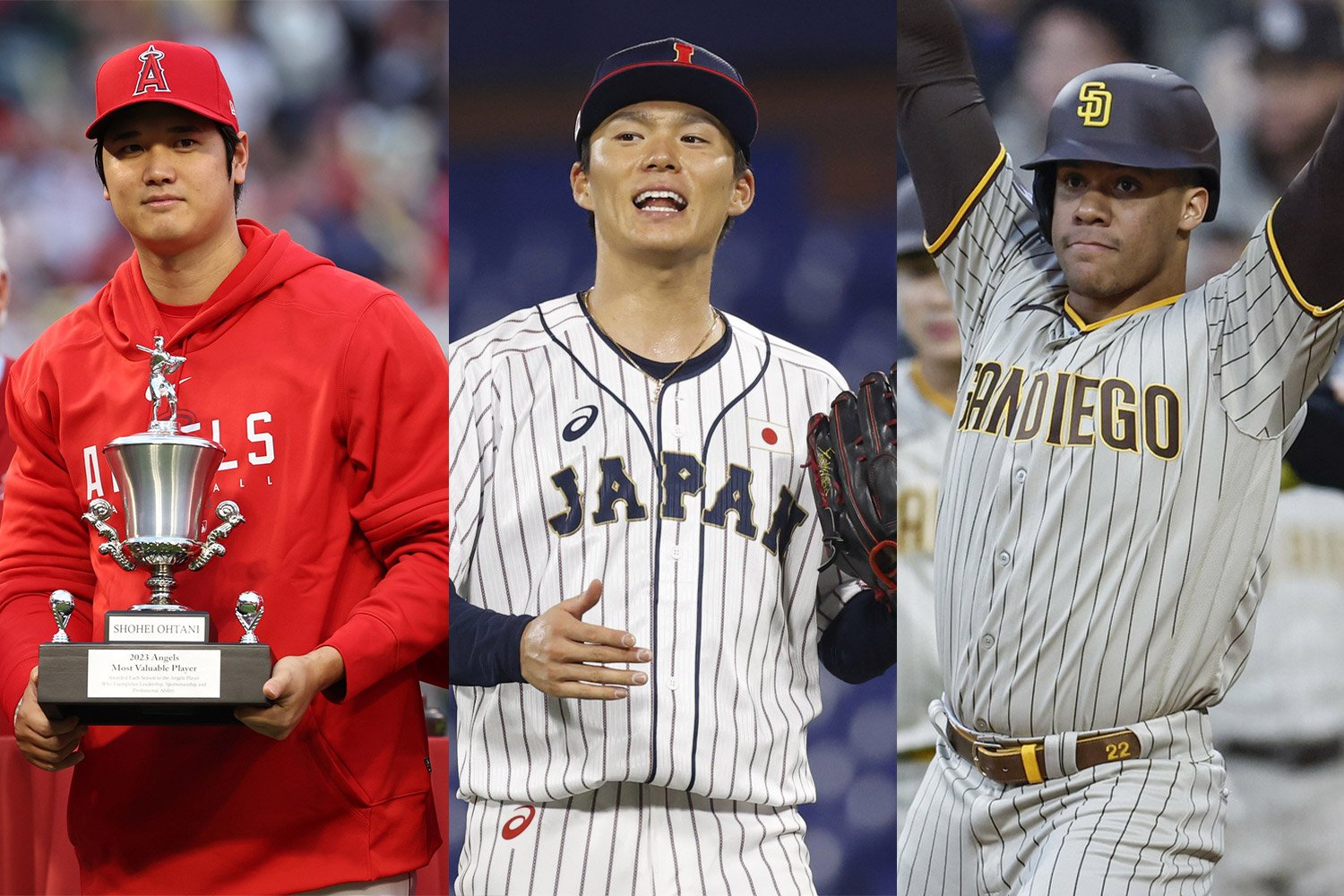 When the Cubs signed Craig Counsell to a five-year, $40-million contract less than a month ago, the assumption among many media members and fans was that it signaled the team would go on a spending spree this offseason--hat President of Baseball Operations Jed Hoyer must have “promised” Counsell something big to lure him to Chicago. Almost from the moment Counsell signed, the talk about what the Cubs might be willing to do this offseason began to center around highly-coveted free agents such as two-way megastar Shohei Ohtani and Japanese pitching sensation Yoshinobu Yamamoto, or a trade for San Diego outfielder Juan Soto. But did Counsell’s signing signal that the Cubs planned to be more aggressive this offseason than previously believed, or did Hoyer bring in the former Brewers manager as part of what he hoped would be a series of lesser moves to make the team better, with the possibility for a big signing only if all the pieces were to come together amid a highly competitive marketplace? The move 90 miles south made sense for Counsell regardless of the answer to that question, given the size of his contract; his desire to stay rooted in the Midwest; and the lure of a new challenge. He also seemed to relish the possibility of working with more available resources, but that could be true without the investment being on the scale of committing hundreds of millions of dollars to land a free agent like Ohtani or Yamamoto. Estimates for what it might take to sign Ohtani, who will play much of next year at age 29, have been as high as 10 years, $600 million, while the general consensus on Yamamoto (who will play most of next year at just 25) is that he will top $200 million in guaranteed money. By contrast, the largest contract the Cubs have ever given out is the eight-year, $184-million deal they doled out to Jason Heyward prior to their 2016 World Series-winning season. Since taking over for Theo Epstein, Hoyer has preached patience and “intelligent spending,” while always keeping the door open for big signings, such as the seven-year, $177-million one that brought Dansby Swanson to Chicago in 2023. In truth, Hoyer has signaled that getting the roster to where he wants it will likely take two offseasons, instead of one, giving the Cubs a chance to see how some of their top prospects develop over the course of 2024. These include Pete Crow-Armstrong, who seems like a good bet to patrol center field beginning as soon as Opening Day, and fellow prospect Matt Shaw, who has the potential to anchor third base in the not-too-distant future. The general consensus is that the Cubs need a big bat; one or two pitchers who can move the needle in their starting rotation; and moves to improve the depth of their bullpen. Two obvious holes for 2024 are first and third base. So, should they commit the kind of money it would take to sign Ohtani, at the expense of making other needed moves? Even signing potential ace Yamamoto would leave some room for Hoyer to maneuver. According to FanGraphs, the Cubs' 2024 payroll for luxury-tax purposes stands at about $186 million, give or take a few million. That leaves them roughly $50 million to spend before they exceed the first tier of the luxury tax and begin incurring penalties. They would have up to $70 million to spend before exceeding the second tier, meaning that unless they were willing to blow past the luxury tax threshold to the point where it would become difficult to eventually get back under the first tier and maintain financial flexibility going forward, Ohtani would likely eat up the majority of what they would have to spend this offseason. What makes the two-time MVP different, unlike any free agent in baseball history, is that he is potentially a top-of-the-line starter and a difference-making bat. However, he is unlikely to pitch next year after having elbow surgery in late September, and it is unknown if he will be able to return to the level he previously attained as a hurler. Without the bonus of what he provides on the mound, Ohtani’s estimated FanGraphs/Steamer WAR projections for 2024 both stand at just 4.0–less than the same figures for the (possibly) departing Cody Bellinger provided in 2023 (4.1). Consider that Justin Steele projects to have a FanGraphs/Steamer WAR of 3.4 this season, while Nico Hoerner is at 3.1 or 3.2. By comparison, Soto--a few years younger than Ohtani–has an expected value for the upcoming year of 6.6/6.4, while Toronto shortstop Bo Bichette is at 4.0/4.2. So, might the Cubs be better off cashing in on their prospect depth and trading for Soto, who has one year of control, or Bichette, who has two? Baseball-Reference projects Ohtani to hit 35 homers this coming year and to hit .279 with an on-base percentage of .377, a slugging percentage of .572, and an OPS of .949. Those are lofty numbers, to be sure, but if signing Ohtani means that many other needs would remain unfilled, is it the right move? The Cubs' history and raw numbers suggest that the answer is no, but the baseball landscape is changing. Many have pointed out that they need a megastar to build around, and Ohtani certainly offers that, with many potential benefits to the team beyond what he does on the field. Given that reality, might the Ricketts family and Hoyer rationalize that the Cubs need to change their thinking on payroll and take more risks to compete for top players going forward? Time will tell, but for many Cubs fans right now, the answer is an unqualified “yes.” It's likely that Counsell, quietly, agrees.
 -
The signing of Craig Counsell as manager started a frenzy among Cubs fans over the prospect of being ultra-aggressive this offseason. But did Counsell’s signing really mean the Cubs are all-in this offseason? And will fans revolt if they are not? When the Cubs signed Craig Counsell to a five-year, $40-million contract less than a month ago, the assumption among many media members and fans was that it signaled the team would go on a spending spree this offseason--hat President of Baseball Operations Jed Hoyer must have “promised” Counsell something big to lure him to Chicago. Almost from the moment Counsell signed, the talk about what the Cubs might be willing to do this offseason began to center around highly-coveted free agents such as two-way megastar Shohei Ohtani and Japanese pitching sensation Yoshinobu Yamamoto, or a trade for San Diego outfielder Juan Soto. But did Counsell’s signing signal that the Cubs planned to be more aggressive this offseason than previously believed, or did Hoyer bring in the former Brewers manager as part of what he hoped would be a series of lesser moves to make the team better, with the possibility for a big signing only if all the pieces were to come together amid a highly competitive marketplace? The move 90 miles south made sense for Counsell regardless of the answer to that question, given the size of his contract; his desire to stay rooted in the Midwest; and the lure of a new challenge. He also seemed to relish the possibility of working with more available resources, but that could be true without the investment being on the scale of committing hundreds of millions of dollars to land a free agent like Ohtani or Yamamoto. Estimates for what it might take to sign Ohtani, who will play much of next year at age 29, have been as high as 10 years, $600 million, while the general consensus on Yamamoto (who will play most of next year at just 25) is that he will top $200 million in guaranteed money. By contrast, the largest contract the Cubs have ever given out is the eight-year, $184-million deal they doled out to Jason Heyward prior to their 2016 World Series-winning season. Since taking over for Theo Epstein, Hoyer has preached patience and “intelligent spending,” while always keeping the door open for big signings, such as the seven-year, $177-million one that brought Dansby Swanson to Chicago in 2023. In truth, Hoyer has signaled that getting the roster to where he wants it will likely take two offseasons, instead of one, giving the Cubs a chance to see how some of their top prospects develop over the course of 2024. These include Pete Crow-Armstrong, who seems like a good bet to patrol center field beginning as soon as Opening Day, and fellow prospect Matt Shaw, who has the potential to anchor third base in the not-too-distant future. The general consensus is that the Cubs need a big bat; one or two pitchers who can move the needle in their starting rotation; and moves to improve the depth of their bullpen. Two obvious holes for 2024 are first and third base. So, should they commit the kind of money it would take to sign Ohtani, at the expense of making other needed moves? Even signing potential ace Yamamoto would leave some room for Hoyer to maneuver. According to FanGraphs, the Cubs' 2024 payroll for luxury-tax purposes stands at about $186 million, give or take a few million. That leaves them roughly $50 million to spend before they exceed the first tier of the luxury tax and begin incurring penalties. They would have up to $70 million to spend before exceeding the second tier, meaning that unless they were willing to blow past the luxury tax threshold to the point where it would become difficult to eventually get back under the first tier and maintain financial flexibility going forward, Ohtani would likely eat up the majority of what they would have to spend this offseason. What makes the two-time MVP different, unlike any free agent in baseball history, is that he is potentially a top-of-the-line starter and a difference-making bat. However, he is unlikely to pitch next year after having elbow surgery in late September, and it is unknown if he will be able to return to the level he previously attained as a hurler. Without the bonus of what he provides on the mound, Ohtani’s estimated FanGraphs/Steamer WAR projections for 2024 both stand at just 4.0–less than the same figures for the (possibly) departing Cody Bellinger provided in 2023 (4.1). Consider that Justin Steele projects to have a FanGraphs/Steamer WAR of 3.4 this season, while Nico Hoerner is at 3.1 or 3.2. By comparison, Soto--a few years younger than Ohtani–has an expected value for the upcoming year of 6.6/6.4, while Toronto shortstop Bo Bichette is at 4.0/4.2. So, might the Cubs be better off cashing in on their prospect depth and trading for Soto, who has one year of control, or Bichette, who has two? Baseball-Reference projects Ohtani to hit 35 homers this coming year and to hit .279 with an on-base percentage of .377, a slugging percentage of .572, and an OPS of .949. Those are lofty numbers, to be sure, but if signing Ohtani means that many other needs would remain unfilled, is it the right move? The Cubs' history and raw numbers suggest that the answer is no, but the baseball landscape is changing. Many have pointed out that they need a megastar to build around, and Ohtani certainly offers that, with many potential benefits to the team beyond what he does on the field. Given that reality, might the Ricketts family and Hoyer rationalize that the Cubs need to change their thinking on payroll and take more risks to compete for top players going forward? Time will tell, but for many Cubs fans right now, the answer is an unqualified “yes.” It's likely that Counsell, quietly, agrees. View full article
-
It’s the long-term ramifications that make signing Ohtani risky. Because Ricketts isn’t going to say, “Jed, Ohtani could bring another $75 million per year into out coffers, so stay over the luxury tax threshold as long as you need to. We’ll just make up the difference with the extra revenue we are getting from Shohei.” If they were to sign Ohtani, and fill their other needs this offseason to avoid a repeat of the Angels situation, they are going to run up against that third threshold. And then the purse strings are going to tighten as they scramble to get back down under the first tier. The other thing nobody is talking about is the fact that the Cubs and Jed don’t have an appetite fo obscenely long contracts that run well past a player’s prime, and I doubt they would make an exception for Ohtani, especially with his uncertain future as a pitcher. I mean, the Cubs have never even topped $200 million on a contract.
-
I appreciate reading an objective article on what it would mean for the Cubs going forward, as opposed to just evaluating an Ohtani signing on a surface level. I’m not sure whether the majority of the Cubs blog/podcast world is just trying to get clicks and listeners, or if they are really that shortsighted. This article lays most of it out there, so great work. A few additional points and slight disagreements with the ones made here. 1. This signing would not only impact signings in the near future, but likely for most of the contract. And it really relies on three or four prospects to pan out so that the Ohtani contract won’t hurt as much in the near future, at least. And that is unlikely. 2. Even if Ohtani performs at a high level into his mid-30s, that still leaves a few years at the end that will likely be ugly. For example, Albert Pujols began a decline from elite to just so-so after his age 31 season, and Ohtani will play this season at 29. 3. We don’t know if Ohtani will pitch again, and even if he does, we don’t know at what level. If he doesn’t, he’s just a $50-60 million per year DH. Which means he has to hit like he did last year just to somewhat justify his contract. 4, Do we know how well he would do playing so many more games in cold weather? 5. He’s likely to have multiple opt outs, which of course he will only use if it’s to his advantage, as opposed to if his production falls off after a couple years or he sustains a serious injury.